


Shocking Truth: Hidden Dangers of Overnight Phone Charging You Must Know!

Introduction
In today’s fast-paced world, where smartphones are essential to daily life, it’s common to plug in a phone before going to bed and leave it charging throughout the night. While this practice is convenient, questions have surfaced regarding the potential negative effects on battery health. Modern smartphones come equipped with lithium-ion batteries, a reliable technology, but they degrade over time based on usage and charging habits. One of the most debated topics is the impact of overnight charging on battery longevity. This article explores whether leaving your phone charging overnight can significantly affect its performance and battery life.
Impact of Overnight Phone Charging on Battery Health
Charging a smartphone overnight has become a standard routine for many users, ensuring the phone is fully charged by morning. But is this habit damaging your phone’s battery? Modern smartphones have built-in mechanisms to prevent overcharging once the battery reaches full capacity. However, the process of trickle charging, where the phone continuously charges in small increments to keep the battery topped off at 100%, can generate heat and contribute to gradual wear and tear over time. While these effects are not immediately noticeable, consistent overnight charging can result in a reduction in battery health over the years.
Why Overnight Charging Is Common
Most smartphone users lead busy lives, and overnight charging is a convenient solution to ensure that their phone is fully charged for the day ahead. As smartphones become more powerful, battery life can sometimes struggle to keep up with heavy usage throughout the day. Users, therefore, turn to the simplicity of plugging in their devices overnight, believing that their phone’s built-in technology will prevent any issues.
Modern Smartphones and Battery Management Systems
Many smartphone manufacturers, including Apple and Samsung, have integrated battery management systems into their devices that protect batteries from overcharging. These systems halt the charging process once the battery reaches 100%. Apple’s Optimized Battery Charging feature is one such example. This technology learns from your charging habits and limits the time your phone spends fully charged, reducing stress on the battery. Despite these innovations, the concern remains that overnight charging could still cause long-term degradation.
Understanding Trickle Charging
Once a phone reaches 100% charge, it doesn’t simply stop charging. Instead, it enters a state known as trickle charging, where the phone repeatedly charges itself in small doses to maintain full capacity. This process generates heat and places stress on the battery’s components. Over time, this can contribute to a loss in capacity, shortening the battery’s lifespan. While manufacturers have designed batteries to handle trickle charging, continuous exposure can still lead to wear.
Lithium-Ion Battery Degradation
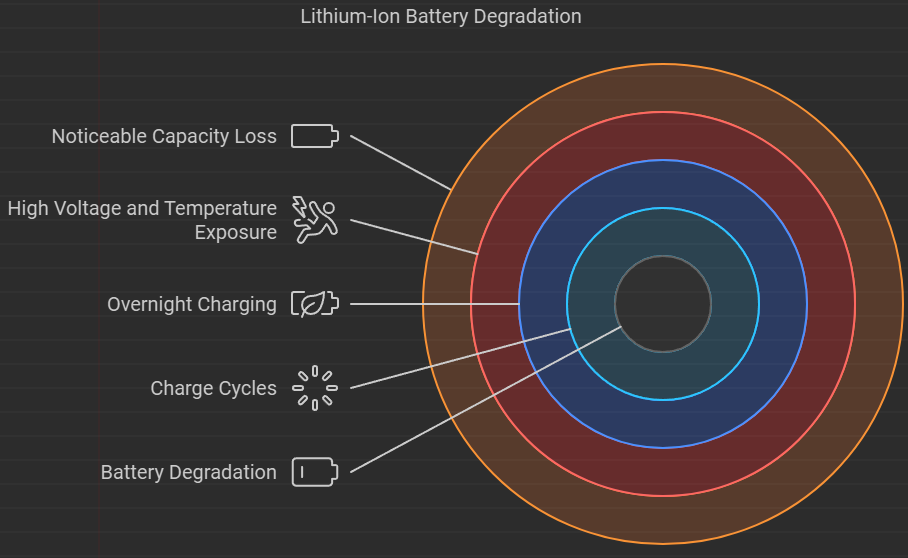
Lithium-ion batteries, the standard in modern smartphones, are known to degrade over time. Each charge cycle—defined as one full 0-100% charge—gradually reduces the battery’s total capacity. While overnight charging may not cause immediate damage, the repeated exposure to high voltage and temperature during trickle charging accelerates this natural degradation. Regular users might notice their phone battery holding less charge after a year or two of consistent overnight charging.
Thermal Stress and Charging
One of the most significant factors impacting battery health during overnight charging is temperature. Batteries perform best when they remain cool. However, during overnight charging, particularly during trickle charging, the phone’s internal temperature can rise. This thermal stress can accelerate the chemical reactions inside the battery, causing its capacity to degrade more rapidly.
📍Locate Us | 📞Call 0280114119 / 0437774119 | 💬Live Chat 👀 | email : 💌 ask+help@SydneyCBDrepairCentre.com.au
Trickle Charging: How it Works
The process of trickle charging occurs once your phone reaches 100%. At this point, the phone periodically tops off its charge to maintain full capacity. Though seemingly harmless, trickle charging keeps the battery under constant pressure, as it undergoes small charging and discharging cycles throughout the night. This stress results in higher temperatures, which can degrade the battery over time. Although the effects are minimal in the short term, consistent trickle charging every night may shorten the overall lifespan of the battery.
Does Charging Stop When the Battery is Full?
One of the most common questions about overnight charging is whether the phone stops charging once it reaches full capacity. While it’s true that modern smartphones stop direct charging when the battery hits 100%, they don’t stay disconnected from power. Instead, they initiate trickle charging to maintain the charge at 100%. This cycle ensures the phone is fully charged when you wake up, but it also contributes to long-term stress on the battery, particularly in terms of heat production.
Optimized Battery Charging: A Solution?
To address the issues associated with overnight charging, many smartphone manufacturers have introduced features like Optimized Battery Charging. Apple’s implementation of this technology, for example, learns your daily charging routine and delays charging past 80% until it predicts you’ll need the phone. This feature significantly reduces the amount of time the battery spends at full charge, minimizing stress on the battery. Android phones also include similar features, making overnight charging safer for the battery by mitigating the effects of trickle charging.
Overnight Charging and Battery Lifespan
It’s undeniable that leaving a phone plugged in overnight can have long-term effects on the battery lifespan. While occasional overnight charging is unlikely to cause significant harm, consistent practice can lead to a reduction in battery health. Batteries are designed to perform optimally when charged between 20% and 80%. Charging beyond this threshold frequently, especially up to 100% during overnight charging, contributes to degradation over time. Though built-in protections reduce immediate risks, consistent overnight charging could accelerate wear.
Is Occasional Overnight Charging Harmful?
Occasional overnight charging is generally harmless. Modern battery technologies are built to withstand infrequent trickle charging without noticeable damage. However, if overnight charging becomes a daily routine, the constant exposure to high voltage and temperature over months and years can start to take a toll on battery health. Many users notice reduced capacity in their batteries after a year of continuous overnight charging, which is the result of this gradual degradation.

Consistent Overnight Charging: Long-term Effects
The long-term effects of consistent overnight charging are primarily related to the gradual decline in battery capacity. Over time, the repeated charge cycles and exposure to higher temperatures accelerate battery degradation. Users may begin to notice that their phone no longer holds a charge for as long as it did when it was new. This is a common result of the phone undergoing frequent, high-voltage charging sessions during the night, which stresses the battery and reduces its longevity.
How Temperature Increases During Overnight Charging
One of the most critical factors in battery health is temperature. Charging a phone, especially while it’s powered on, generates heat. Overnight charging exacerbates this, as the phone is often left in an enclosed space like a nightstand drawer or under a pillow, which traps heat. The increased temperature speeds up the chemical reactions inside the battery, leading to faster degradation. Ideally, phones should be charged in a cool, open space to minimize heat buildup.
Battery Health Metrics: Monitoring Charge Cycles
Most smartphones allow users to monitor their battery health and charge cycles. A charge cycle is completed when a battery goes from 0% to 100%. Monitoring these metrics gives users insight into how their charging habits are affecting their battery’s performance. For example, frequent overnight charging might result in a higher number of charge cycles, which in turn reduces the overall battery lifespan. Many phones also offer built-in software that estimates the remaining battery capacity as a percentage of its original charge.
Battery Drain and Charging Cycles
Battery drain is a natural part of a phone’s lifecycle, and charging cycles are essential to understanding how fast your battery is degrading. Overnight charging, especially if done frequently, can add more charging cycles to your battery than necessary. This is because even when the phone hits 100%, trickle charging keeps the cycle going, thereby shortening the time until the battery requires another full cycle.
Overcharging: Myth or Reality?
The concept of overcharging was a legitimate concern with older battery technologies, but modern lithium-ion batteries and smart charging systems have rendered this issue largely a myth. Today’s smartphones stop charging once the battery is full, protecting it from any additional stress. However, trickle charging still occurs, keeping the battery topped off, which can contribute to minor degradation. Though overcharging in the traditional sense no longer occurs, the continual exposure to full capacity charging remains a potential risk for battery health.
Is Wireless Charging Safe for Overnight Use?
Wireless charging has gained popularity due to its convenience, but is it safe for overnight use? The answer depends on the quality of the wireless charger. Many wireless chargers regulate the flow of energy to the phone, similar to wired chargers. However, low-quality chargers may generate excessive heat, which could harm the battery over time. When using wireless charging overnight, it’s crucial to invest in a reputable charger to minimize the risks of heat buildup and battery degradation.
The Role of Charging Accessories
The accessories you use, such as charging cables and bricks, also play a significant role in battery health. Low-quality or damaged accessories can provide inconsistent charging currents, leading to overheating or slower charge times. This is especially important during overnight charging, as the longer charging duration makes your phone more vulnerable to issues caused by faulty accessories. Always ensure that you’re using certified chargers to reduce any risk of damage to your phone’s battery.
How to Optimize Charging Practices
To protect your phone’s battery health, it’s important to adopt better charging habits. For example:
- Avoid letting your phone’s battery drop below 20%.
- Try not to charge your phone to 100% every time.
- Consider optimized charging features if your phone supports them.
- Charge your phone in a cool, open environment to prevent overheating. These small adjustments can make a significant difference in preserving battery life over time.
Alternative Charging Methods
Rather than relying on overnight charging, consider alternative methods that are kinder to your phone’s battery:
- Daytime charging: Plug in your phone during short intervals throughout the day.
- Battery-saving modes: Use built-in features to prolong your battery life without needing frequent recharges.
- Portable chargers: Use a portable battery pack to charge your phone on the go, reducing the need for overnight charging. These alternatives reduce stress on the battery and help prolong its overall lifespan.
Common Misconceptions About Charging
Many misconceptions surround the topic of smartphone charging. For example, some users believe that fully draining a battery before charging is beneficial—this was true for older battery types, but lithium-ion batteries perform best when they are kept between 20% and 80% charged. Additionally, while overcharging was a concern in older phones, modern devices are equipped with safety mechanisms to prevent this.
What Experts Say About Overnight Charging
Battery experts and smartphone manufacturers agree that overnight charging is generally safe, but they caution against doing it consistently over long periods. Samsung, Apple, and other major brands have released guidelines for optimal charging habits, recommending that users avoid extreme temperatures and high-voltage charging to extend battery life. While overnight charging isn’t an immediate cause for alarm, maintaining a balance in charging habits is essential for longevity.

FAQs
What is trickle charging, and why does it matter?
Trickle charging occurs after a phone reaches 100%, keeping the battery topped off by charging in small increments. This process generates heat and can degrade the battery over time.
Is overnight charging bad for your phone?
Occasional overnight charging is generally safe, but consistent practice may lead to long-term battery degradation due to increased heat and constant high-voltage charging.
Does my phone stop charging once it reaches 100%?
Yes, modern smartphones stop direct charging once they hit 100%, but trickle charging continues to keep the battery fully charged.
Can I use wireless charging overnight?
Yes, but it’s important to use high-quality wireless chargers to prevent overheating, which can accelerate battery degradation.
How can I maintain my phone’s battery health?
To maintain your phone’s battery health, avoid frequent overnight charging, keep your phone in a cool environment while charging, and utilize features like optimized battery charging.
Do I need to fully discharge my battery before charging?
No, lithium-ion batteries perform best when kept between 20% and 80% charged, and frequent full discharges can shorten battery life.
Conclusion
The impact of overnight phone charging on battery health is a nuanced issue. While modern phones are designed to handle overnight charging safely, continuous exposure to trickle charging and the resultant heat can gradually reduce battery capacity over time. Occasional overnight charging is unlikely to cause harm, but consistent use may shorten your battery’s lifespan. By adopting smarter charging habits, such as avoiding 100% charges and charging in a cool environment, users can extend the life of their smartphone batteries and keep their devices running smoothly for years to come.
- Sydney CBD Repair Centre
- Call : 0280114119 or 0437774119
- Address: {Next ANZ} Suite 201, Level 2, 661 George St, Haymarket, NSW 2000
- Email : ask@SydneyCBDrepairCentre.com.au
- OPEN 6 DAYS : Weekdays: 10am – 6pm, Saturday: 10am – 2pm

