



Samsung Expands Its Journey: Galaxy for the Planet with New Goals Through 2030

Key Takeaways
Here are clear takeaways from Samsung’s Galaxy for the Planet update and the expanded 2030 goals.
What happened
– Samsung surpassed its 2025 sustainability goals for Galaxy for the Planet and unveiled a new 2030 phase.
– The initiative is expanding from product/design and operations to broader environmental impact across Samsung’s global footprint.
Progress highlights to date
– Materials and circularity
– 10 types of recycled materials now used in Galaxy exterior and interior components, with third-party verification (ISO 14021).
– Innovations in circularity include recycled plastics from ocean-bound sources and discarded fishing nets, plus a Circular Battery Supply Chain for reuse of materials from used batteries.
– Packaging and energy efficiency
– Single-use plastics eliminated from mobile packaging; ongoing R&D delivering near-zero standby power (less than 0.005W) across multiple charger wattages.
– Waste and operations
– Zero Waste to Landfill achieved across all 10 qualifying mobile manufacturing sites, earning Platinum designation under UL Solutions (100%+ landfill diversion); practices adapted regionally.
– Overall momentum
– With 2025 targets met on schedule, Samsung is accelerating its commitments through 2030 and broadening focus beyond products to operations.
2030 goals and focus areas
– Three core areas
– Advancing Circularity
– Target: incorporate at least one recycled material in every module of every mobile product (modules defined as key components like battery, display, camera, structural parts; excludes some accessories/new form factors).
– Strengthening Water Stewardship
– Target: return 110% of water consumed; pursue the highest level of Alliance for Water Stewardship (AWS) certification.
– Conserving Ecosystems (Biodiversity)
– Target: conserve ecosystems equivalent to the footprint of Samsung’s global mobile operations; protect and restore biodiversity around operations.
– Strategic shift
– 2030 goals extend beyond product and manufacturing improvements to address broader environmental and ecological impacts of Samsung’s global operations.
Implications for teams and actions to consider
– Product and supply chain design
– Plan for at least one recycled material in every module; engage suppliers to secure recycled materials and verify conformity (ISO 14021).
– Packaging and product manufacturing
– Maintain and scale packaging changes; monitor and reduce standby power across all chargers and related accessories.
– Environmental management and governance
– Develop a program to achieve AWS Platinum certification for water, plus ongoing biodiversity initiatives near key facilities.
– Track and report progress against 2030 KPIs; ensure regional adaptation where required.
– Metrics and verification
– Maintain third-party verification for materials; align with UL Solutions ZWTL standards and AWS requirements.
– Stakeholder communication
– Prepare internal and external updates highlighting progress, milestones, and 2030 commitments; leverage available video and sustainability resources for storytelling.
Key references and next steps
– Review the official Galaxy for the Planet resources page and Samsung sustainability site for detailed metrics and verification data.
– Identify owners for each 2030 pillar (Circularity, Water, Biodiversity) and set 12–18 month milestones.
– Determine regional implementation plans and any capital or supplier sourcing needs to meet the 2030 targets.
If you’d like, I can convert these into a one-page briefing for leadership or a slide-ready summary with owner assignments and milestones.
Summary of Samsung Expands Its Journey: Galaxy for the Planet with New Goals Through 2030
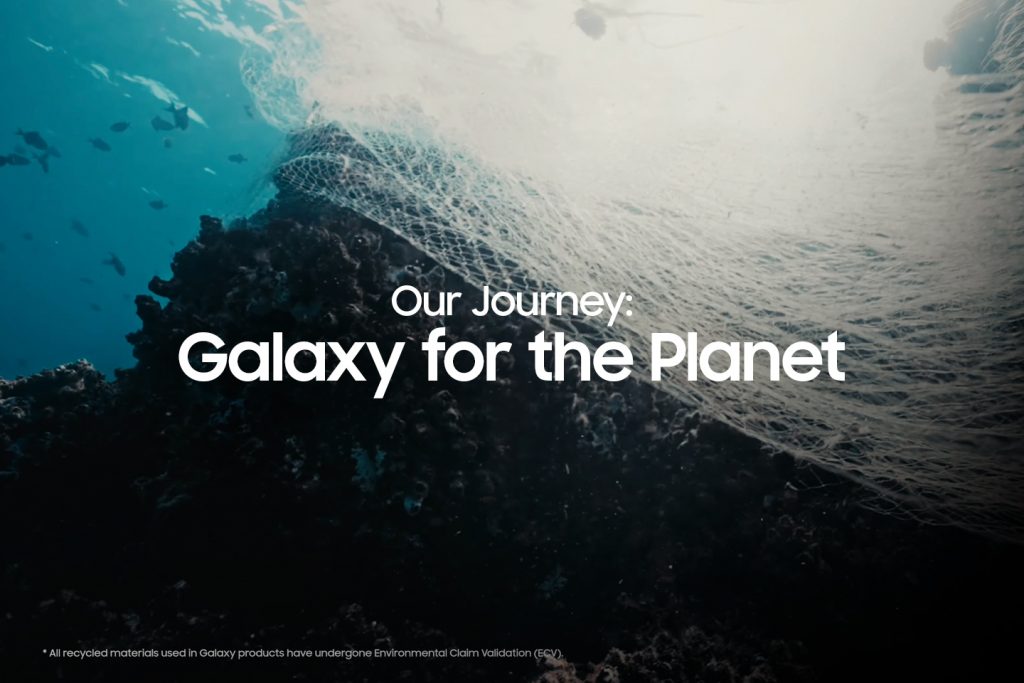
Samsung Electronics Co., Ltd. today announced progress on its Galaxy for the Planet sustainability commitments and introduced the next phase of the initiative with new environmental goals through 2030. Since launching Galaxy for the Planet in 2021, Samsung has achieved all four sustainability goals set for 2025, which were aimed at reducing environmental impact across product design, manufacturing and operations.
Galaxy for the Planet is the sustainability platform for Samsung’s Mobile eXperience(MX) business, guiding its long-term approach to advancing environmental sustainability. Since its launch, the initiative has driven steady progress across multiple focus areas, evolving alongside advances in technology, materials and operational capabilities.
“The progress we have made through Galaxy for the Planet reflects years of consistent effort across our teams and partners,” said TM Roh, CEO, President and Head of the Device eXperience(DX) Division at Samsung Electronics. “Sustainability is central to how we operate and innovate. It informs how we design products, manage resources and create value beyond our devices. As we work toward our 2030 goals, we are expanding our commitments beyond products and operations to address broader environmental impact as we work toward our 2030 goals.”
Progress on Galaxy for the Planet
Samsung has achieved all four of its 2025 sustainability goals for the Galaxy for the Planet initiative, which was designed to reduce the environmental impact of the company’s mobile products and operations.
A core focus has been expanding the use of recycled and responsibly sourced materials across Galaxy products.[1] Today, Samsung has applied 10 types of recycled materials[2] in both exterior and interior components, supported by ongoing research, testing and verification.
One area of progress is enhancing circularity through innovation in materials. Samsung has incorporated recycled plastics recovered from ocean-bound, discarded fishing nets, and continues its efforts in closed-loop systems such as its Circular Battery Supply Chain, which enables the recovery and reuse of materials from previously used Galaxy device batteries.
Samsung also eliminated single-use plastics from its mobile packaging, transitioning to paper-based and recycled alternatives.[3] At the same time, continued research and development in low standby power technology has reduced standby power consumption in Galaxy mobile phone chargers to near-zero levels — an innovation now applied across multiple charger wattages.[4]
Across manufacturing operations, Samsung has advanced landfill waste reduction by implementing Zero Waste to Landfill (ZWTL) practices globally. All 10 qualifying mobile manufacturing sites[5] have achieved the Platinum designation for ZWTL under the UL Solutions standard, reflecting landfill diversion rates of 100 percent or higher. Such waste management practices are adapted to regional regulations and infrastructure, as well.
These achievements reflect Samsung’s progress under Galaxy for the Planet and provide momentum to expand the initiative further. With its initial targets met on schedule, Samsung is expanding its environmental commitments with new goals through 2030.
Deepening Our Commitments to the Environment
For its next phase, Galaxy for the Planet will expand beyond product-level initiatives to address the broader environmental and ecological impact of Samsung’s global operations. The new 2030 goals will focus on three key areas: circularity, water stewardship and biodiversity.
- Advancing Circularity
Samsung will continue to advance circularity across its mobile products, with the aim of incorporating at least one recycled material in every module of every mobile product. This underscores the company’s commitment to more responsible and efficient materials sourcing across the Galaxy ecosystem.[6]
- Strengthening Water Stewardship
Samsung is deepening its approach to water stewardship across its mobile operations,[7] with the goal of returning 110 percent of the water consumed. This includes pursuing the highest level of Alliance for Water Stewardship (AWS) certification for responsible water management practices.[8]
- Conserving Ecosystems
Recognizing that its operations can have an impact on surrounding ecosystems, Samsung has set a goal to conserve ecosystems equivalent to the footprint of its global mobile operations.[9] This goal focuses on protecting and restoring natural environments in ways that strengthen biodiversity and ecological resilience around Samsung’s global footprint.
As Samsung continues its sustainability journey, Galaxy for the Planet reflects Samsung’s belief that environmental responsibility is integral to how the company innovates, operates and creates long-term value, reinforcing its commitment to sustainability as a core part of its business.
The video capturing the journey of Galaxy for the Planet is available at the following link.
For more information about Galaxy for the Planet, visit here. Additional details on Samsung’s sustainability metrics, verification processes and progress are available in the Samsung Electronics Sustainability website.
[1] All recycled materials used in Galaxy products have undergone third-party verification figure based on ISO 14021. These include pre- and post- consumer recycled materials
[2] Includes plastics, glass, aluminum, cobalt, lithium, steel, copper, gold, rare earth elements and tantalum. Recycled material use varies by product. For more information, visit: https://www.samsung.com/global/sustainability
[3] In select markets, limited use of plastic wrapping or sealing labels remains due to local conditions. Some legacy packaging materials produced prior to the transition may still be in distribution. For more information, visit: https://www.samsung.com/global/sustainability
[4] Less than 0.005W standby power technology is based on newly released 15W, 25W and 45W Galaxy mobile phone chargers. Figures and product information are based on internal test and findings
[5] Brazil (SEDA-P(C), SEDA-P(M)), Egypt (SEEG-P), India (SIEL-P(N)), Indonesia (SEIN-P), Korea (Suwon, Gumi), Türkiye (SETK-P), and Vietnam (SEV, SEVT)
[6] “Module” refers to key functional components within a mobile product (such as the battery, display, camera or structural components). The goal applies to Samsung Galaxy phones, tablets, PCs and watches, excluding certain accessories and new or emerging form factors.
[7] Brazil (SEDA-C, SEDA-M), Egypt (SEEG), India (SIEL-N), Indonesia (SEIN), Korea (Suwon, Gumi), Türkiye (SETK), Vietnam (SEV, SEVT)
[8] ‘Highest level’ is defined as achieving the top certification level(‘Platinum’) of the Alliance for Water Stewardship (AWS).
[9] Brazil (SEDA-P(C), SEDA-P(M)), Egypt (SEEG-P), India (SIEL-P(N)), Indonesia (SEIN-P), Korea (Suwon, Gumi), Türkiye (SETK-P), and Vietnam (SEV, SEVT)
from Samsung Newsroom Australia https://ift.tt/OMTSqGl
via IFTTT

