


❤ Apple iPhone 14


Apple loves a good “buzzword” as much as the next company, probably even more. The trendy “r words” arguably get the most love and attention. Words like Reduce, Reuse, Repair, Recycle. But arguably, one of Apple’s greenest practices to date is the repackaging and reselling older designs as new products after a refresh. It’s been done time and time again, be it with iPhone SE models or Macbooks.
The new iPhone 14 sort of fits into this category of product. Just sort of, though, since Apple has redesigned the internals quite a bit to facilitate easier repairability, among other things. Plus, you do get new cameras and a few other new features. Externally, though, the iPhone 14 is essentially the same as the iPhone 13, and so is the core experience these devices offer. If Apple still did “s” models in their naming scheme, the iPhone 14 would probably be the iPhone 13s.

Apple iPhone 14 specs at a glance:
| NETWORK | Technology | GSM / CDMA / HSPA / EVDO / LTE / 5G |
|---|---|---|
| 2G bands | GSM 850 / 900 / 1800 / 1900 – SIM 1 & SIM 2 (dual-SIM) | |
| CDMA 800 / 1900 | ||
| 3G bands | HSDPA 850 / 900 / 1700(AWS) / 1900 / 2100 | |
| CDMA2000 1xEV-DO | ||
| 4G bands | 1, 2, 3, 4, 5, 7, 8, 12, 13, 17, 18, 19, 20, 25, 26, 28, 30, 32, 34, 38, 39, 40, 41, 42, 46, 48, 66 – A2882, A2884 | |
| 1, 2, 3, 4, 5, 7, 8, 11, 12, 13, 14, 17, 18, 19, 20, 21, 25, 26, 28, 29, 30, 32, 34, 38, 39, 40, 41, 42, 46, 48, 53, 66, 71 – A2649, A2881 | ||
| 1, 2, 3, 4, 5, 7, 8, 12, 13, 17, 18, 19, 20, 25, 26, 28, 30, 32, 34, 38, 39, 40, 41, 42, 46, 48, 66 – A2883 | ||
| 5G bands | 1, 2, 3, 5, 7, 8, 12, 20, 25, 26, 28, 30, 38, 40, 41, 48, 66, 70, 77, 78, 79 SA/NSA/Sub6 – A2882, A2884 | |
| 1, 2, 3, 5, 7, 8, 12, 14, 20, 25, 26, 28, 29, 30, 38, 40, 41, 48, 53, 66, 70, 71, 77, 78, 79, 258, 260, 261 SA/NSA/Sub6/mmWave – A2649 | ||
| 1, 2, 3, 5, 7, 8, 12, 14, 20, 25, 26, 28, 29, 30, 38, 40, 41, 48, 53, 66, 70, 71, 77, 78, 79 SA/NSA/Sub6 – A2881 | ||
| 1, 2, 3, 5, 7, 8, 12, 20, 25, 26, 28, 30, 38, 40, 41, 48, 66, 70, 77, 78, 79 SA/NSA/Sub6 – A2883 | ||
| Speed | HSPA, LTE-A, 5G, EV-DO Rev.A 3.1 Mbps |
| LAUNCH | Announced | 2022, September 07 |
|---|---|---|
| Status | Available. Released 2022, September 16 |
| BODY | Dimensions | 146.7 x 71.5 x 7.8 mm (5.78 x 2.81 x 0.31 in) |
|---|---|---|
| Weight | 172 g (6.07 oz) | |
| Build | Glass front (Corning-made glass), glass back (Corning-made glass), aluminum frame | |
| SIM | Nano-SIM and eSIM – International Dual eSIM with multiple numbers – USA Dual SIM (Nano-SIM, dual stand-by) – China |
|
| IP68 dust/water resistant (up to 6m for 30 min) Apple Pay (Visa, MasterCard, AMEX certified) |
| DISPLAY | Type | Super Retina XDR OLED, HDR10, Dolby Vision, 800 nits (HBM), 1200 nits (peak) |
|---|---|---|
| Size | 6.1 inches, 90.2 cm2 (~86.0% screen-to-body ratio) | |
| Resolution | 1170 x 2532 pixels, 19.5:9 ratio (~460 ppi density) | |
| Protection | Ceramic Shield glass |
| PLATFORM | OS | iOS 16, upgradable to iOS 17.2 |
|---|---|---|
| Chipset | Apple A15 Bionic (5 nm) | |
| CPU | Hexa-core (2×3.23 GHz Avalanche + 4×1.82 GHz Blizzard) | |
| GPU | Apple GPU (5-core graphics) |
| MEMORY | Card slot | No |
|---|---|---|
| Internal | 128GB 6GB RAM, 256GB 6GB RAM, 512GB 6GB RAM | |
| NVMe |
| MAIN CAMERA | Dual | 12 MP, f/1.5, 26mm (wide), 1/1.7″, 1.9µm, dual pixel PDAF, sensor-shift OIS 12 MP, f/2.4, 13mm, 120˚ (ultrawide) |
|---|---|---|
| Features | Dual-LED dual-tone flash, HDR (photo/panorama) | |
| Video | 4K@24/25/30/60fps, 1080p@25/30/60/120/240fps, HDR, Dolby Vision HDR (up to 60fps), Cinematic mode (4K@30fps), stereo sound rec. |
| SELFIE CAMERA | Single | 12 MP, f/1.9, 23mm (wide), 1/3.6″, PDAF SL 3D, (depth/biometrics sensor) |
|---|---|---|
| Features | HDR, Cinematic mode (4K@30fps) | |
| Video | 4K@24/25/30/60fps, 1080p@25/30/60/120fps, gyro-EIS |
| SOUND | Loudspeaker | Yes, with stereo speakers |
|---|---|---|
| 3.5mm jack | No |
| COMMS | WLAN | Wi-Fi 802.11 a/b/g/n/ac/6, dual-band, hotspot |
|---|---|---|
| Bluetooth | 5.3, A2DP, LE | |
| Positioning | GPS, GLONASS, GALILEO, BDS, QZSS | |
| NFC | Yes | |
| Radio | No | |
| USB | Lightning, USB 2.0 |
| FEATURES | Sensors | Face ID, accelerometer, gyro, proximity, compass, barometer |
|---|---|---|
| Ultra Wideband (UWB) support Emergency SOS via satellite (SMS sending/receiving) |
| BATTERY | Type | Li-Ion 3279 mAh, non-removable (12.68 Wh) |
|---|---|---|
| Charging | Wired, PD2.0, 50% in 30 min (advertised) 15W wireless (MagSafe) 15W wireless (Qi2) – requires iOS 17.2 update |
| MISC | Colors | Midnight, Purple, Starlight, Blue, Red, Yellow |
|---|---|---|
| Models | A2882, A2649, A2881, A2884, A2883, iphone14,7 | |
| SAR | 1.15 W/kg (head) 1.16 W/kg (body) | |
| SAR EU | 0.98 W/kg (head) 0.98 W/kg (body) | |
| Price | $ 550.00 / € 698.00 / £ 525.50 / ₹ 58,999 |
| TESTS | Performance | AnTuTu: 817125 (v9) GeekBench: 4761 (v5.1) GFXBench: 60fps (ES 3.1 onscreen) |
|---|---|---|
| Display | Contrast ratio: Infinite (nominal) | |
| Camera | Photo / Video | |
| Loudspeaker | -25.2 LUFS (Very good) | |
| Battery (old) |
Disclaimer. We can not guarantee that the information on this page is 100% correct.
The vanilla iPhone 14 even starts at $799 in the US, just like its predecessor, so it occupies the same segment and fills the same shoes if it were. That said, most markets outside the US have a price hike on the iPhone 14, and the iPhone 13 has come down in price since its launch. Even in the US, it is now $100 or so cheaper.
So, we have our work cut out for us, and the real question here is clear as day – is the iPhone 14 better than the iPhone 13 and is it worth shelling out a bit more for it instead?
Unboxing
Before we really dig into the iPhone 14 to see just how much different and potentially better it is, let’s start simple with its retail package. Apple basically created the new standard for the “bare minimum” accessory package and is not about to suddenly become more generous in that department.
We have the typical Apple affair – minimal in and out. The two-piece white cardboard box is very small in every dimension.

Inside the box, you’ll find a relatively short 1-meter long USB Type-C to Lightning cable, a SIM ejector tool (outside the US, where the iPhone 14 is e-SIM only and lacks a physical SIM tray) and some leaflets. That’s it. Nothing more, nothing less.
Alternatives
The iPhone 14 starts at $800 in the US, but if you are outside of the US, there is a price hike compared to the MSRP of the iPhone 13. One in Europe will set you back at least EUR 1,000, barring any carrier or similar deals. That’s a pretty penny to pay for the vanilla iPhone. Apple has decided to still offer the iPhone 13 and 13 mini. If you’ve already gone through the review, then you have probably made up your mind on whether the new iPhone 14 offers enough of an upgrade for you to shell out the extra money. A vanilla iPhone 13 starts at $699, which is a decent bit of savings.

Part of the charm of the iPhone 14 is definitely its size. Now that there is no current “mini,” it is the smallest iPhone in this generation. And indeed, even its size is hard to come by in the Android realm, where display diagonals have only been growing steadily. Still, there are some viable options to consider. If the camera is your first priority or you are into a clean as possible OS experience, then the Google Pixel 6a might be just up your alley. Assuming, of course, that this alley is in a market where Google officially sells its phones.

Left: iPhone 13 • Right: iPhone 14
The same is mostly true of the Asus Zenfone 9. It is compact and still packs a full set of flagship features and hardware, including Qualcomm’s latest and greatest Snapdragon 8+ Gen 1 chipset and a decently large 4,300 mAh battery. Among other things.
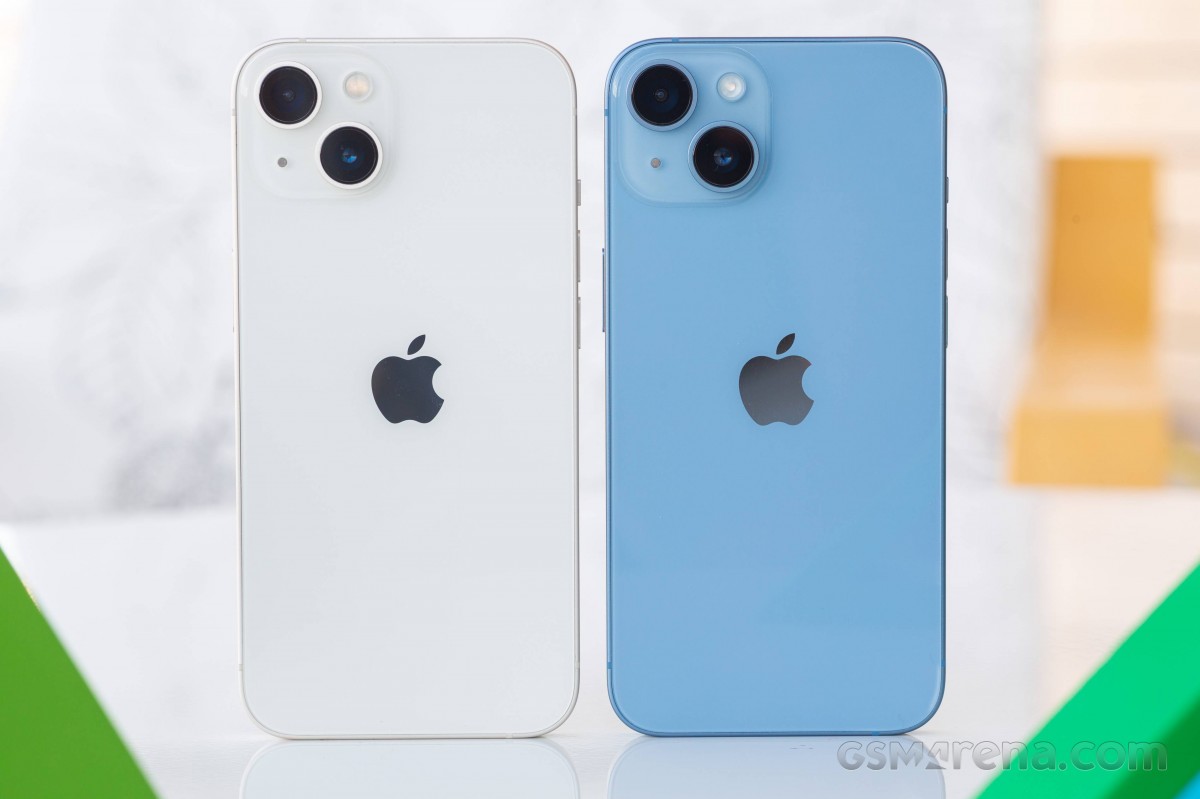
Left: iPhone 13 • Right: iPhone 14
Sort of on the other end of the spectrum, we find the Samsung Galaxy S22 5G. It runs the company’s highly-regarded One UI UX with all of the added high-level features it includes. Plus, you still get the latest generation of Samsung hardware, including excellent cameras.
Our verdict
The iPhone 14 is very much a familiar affair. It is an incremental upgrade over last year’s model. If you didn’t have time to go through the entire review, allow us to list all of the upgrades really quicky.
The iPhone 14 has a major internal redesign that makes it more easily repairable, particularly a back panel or a display swap is now much less of a pain. The iPhone 14 has only a slightly larger battery pack but notably better battery life and even faster charging. The chipset is last year’s A15 Bionic, but with five GPU cores, 6GB of RAM (50% more), Bluetooth 5.3, a more energy-efficient Qualcomm 5G modem, new satellite connectivity for SOS messages and new Crash Detection. The camera department has a new larger 12MP main camera with a 1/1.65″ sensor, 1.9-micron pixels, a new 12MP ultrawide and a new 12MP, f/1.9 selfie camera now with autofocus onboard. There is also the new Action Mode video stabilization, 4K Cinematic mode at 30 fps and a new Photonic Engine for better low-light photos.
It’s not an insignificant list of changes once you really dig in. Some are obviously more impactful than others, and it will be up to the individual user to judge what constitutes enough reason for an upgrade. The way we see it, anybody on an iPhone 13 has little to no incentive to jump ship. Unless you really need autofocus on your selfie cam, all of those other camera improvements only realistically result in shorter capture times in low light. We would even go as far as to say that iPhone 12 users shouldn’t feel too tempted by the 14 and can hold off upgrading for at least another year.

If you are running any iPhone older than that and you are looking to upgrade, then the iPhone 14 is nothing short of a solid and dependable way to go. Sure, it is a bit on the boring side in more ways than one, but you definitely know what you are getting into. For the more adventurous or frugal, there is also the option of picking up an iPhone 13 and potentially banking on some extended software support now that the A15 Bionic has gotten a new lease on life in the iPhone 14. Either way, you will be getting a great phone for the years to come.
Pros
- Major internal redesign for easier repairability.
- Bright OLED screen, HDR10, Dolby Vision and excellent color accuracy.
- Solid battery life.
- Loud stereo speakers, excellent output.
- Great all-around performance from the older but still solid chipset.
- Great photo and video quality across all three cameras.
- Autofocus on the selfies camera and Action Mode are great camera additions.
- Every iPhone comes with at least five years of iOS updates.
Cons
- Minor upgrade over iPhone 13.
- Wider feature gap with the 14 Pro: no 120Hz refresh rate, A16 Bionic, zoom camera or AF on the ultrawide.
- The notch is still a polarizing design element.
- The fast charging isn’t particularly fast, and the charger is not bundled.
- Apple’s iOS restrictions can be off-putting to newcomers to the ecosystem.

