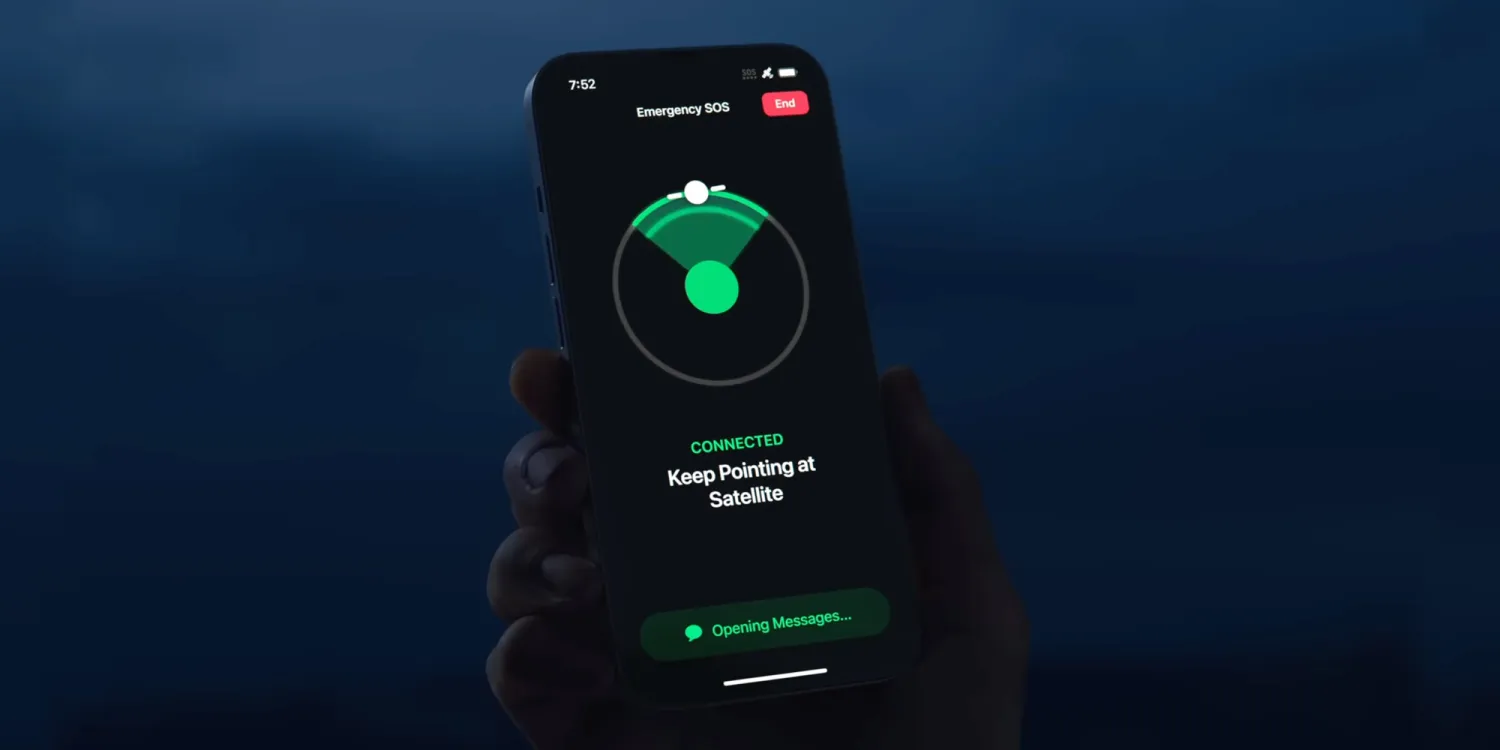
Apple today announced it is extending the free usage period for Emergency SOS satellite features for iPhone 14 users. Previously, Apple gave iPhone 14 customers two free years after device activation, which would have began expiring this time next year.
But now, all current iPhone 14 users will be able to use the service for free for another two years. Apple has not revealed how much it will charge for Emergency SOS via satellite when the free period is up, and today’s announcement means the company can defer any decision making on that further into the future.
The free period for iPhone 15 customers has not been extended. That means iPhone 15 users still currently are working on a two free years model, which will begin to elapse in September 2024.
This means iPhone 14 and iPhone 15 customers will see their free periods expire at roughly the same time, beginning September 2025. It gives Apple more time to decide on pricing plans for these features.
Emergency SOS via satellite allows compatible iPhone users to send short text messages to nearby emergency services even when outside of Wi-Fi or cellular signal range. It allows people to get help if they get into trouble in places where usually they would have no way to contact anyone else.
Users can also update their location in the Find My app using the satellite signal. With iPhone 15, Apple also extended the Emergency SOS feature to include contacting roadside assistance when your car breaks down.
Exit iPhone mini, enter iPhone Plus! Indeed, the rumors came true, and this year Apple launched a bigger non-Pro model instead of a mini one. We can only guess what Apple‘s plans are about the mini model, but today’s review is about Apple’s newest addition to the iPhone series – the iPhone 14 Plus.
We thought the iPhone 13 would go down in history as the most insignificant iPhone update ever, but the iPhone 14 snatched that title. See, the iPhone 14 and iPhone 14 Plus are based on the same Apple A15 Bionic chipset as the iPhone 13 models, and even the screen specs have stayed the same – OLEDs with about 460ppi, 800nits brightness and 60Hz refresh.
In fact, there are only four notable upgrades on the iPhone 14 when compared to the iPhone 13 – the new primary rear camera (lifted from iPhone 13 Pro), the updated selfie camera with the new lens and AF, 2GB more RAM, and the Emergency SOS via satellite feature.
The new iPhone 14 Plus adds a couple of extra ones – the larger screen and the larger battery. The Plus model brings a Max-sized screen to the regular series – even if it’s only 60Hz.
The selfie camera, while retaining its 12MP sensor, has a new brighter aperture lens with optical stabilization, and autofocus. We always wondered why Apple didn’t introduce AF capabilities sooner, as the Face ID tech is there to provide a massive assist to that, but alas, it is finally here.
The iPhone 14 Plus is as waterproofed as the rest of the recent iPhones – it can last for 30minbs in up to 6m deep clean water. And it should be a desirable smartphone for its large screen and yet thin and lightweight design. It is also touted as the iPhone with the best battery life, and we will surely test this out.
Disclaimer. We can not guarantee that the information on this page is 100% correct.
Just like the iPhone 13 and iPhone 14, the iPhone 14 Plus has one glaring omission – high refresh rate support. And the size of the notch is an eyesore you need to put up for a few more years, apparently. At least, it looks subjectively smaller on this large screen.
We are glad the non-Pro iPhones are getting the new software features like Action Mode for the video camera, the improved Cinematic Mode, and the satellite connection, too.
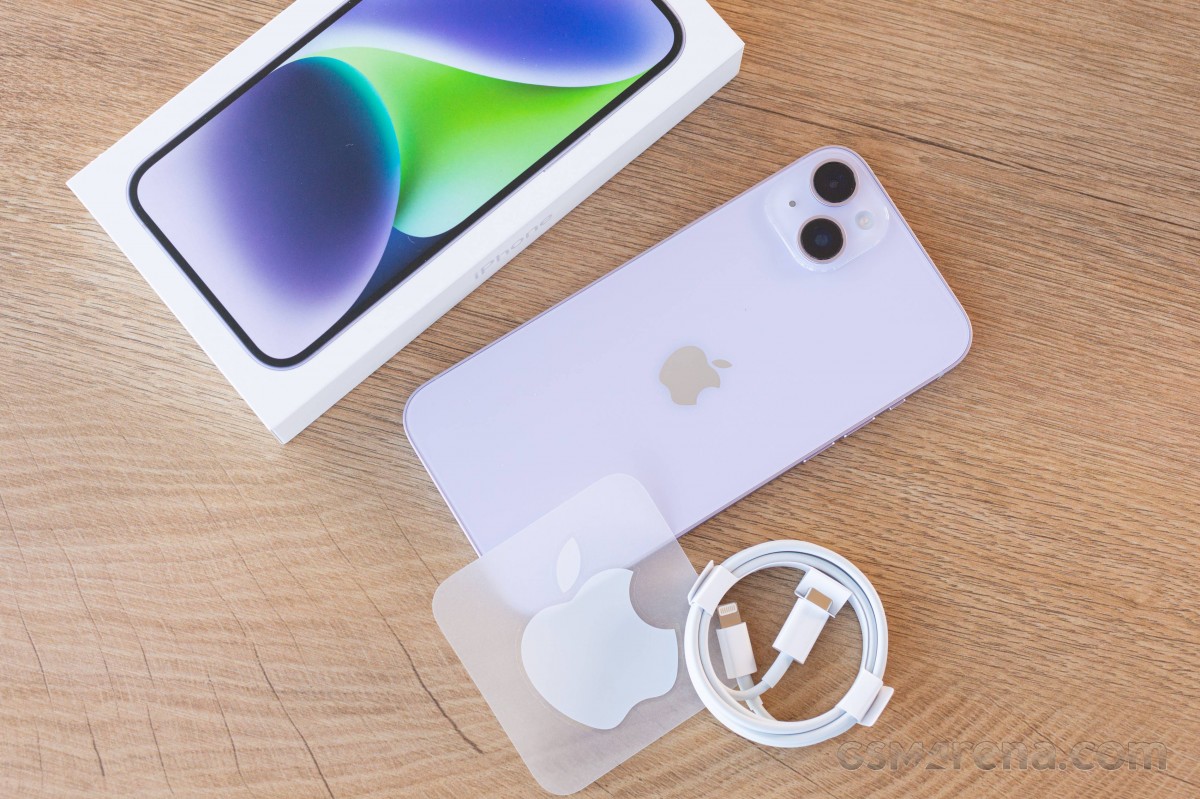
Unboxing the iPhone 14 Plus
The eco-friendly iPhone box contains a USB-C-to-Lightning cable and the iPhone 14 Plus. There is also a SIM ejection pin, some paperwork, and an Apple sticker.
Apple was among the first manufacturers to ditch the headphones and the charger from its boxes.
If you have a 20W+ USB-PD power adapter with a USB-C port, you should be good.
Alternatives
The iPhone 14 Plus makes total sense in the grand Apple design – the maker has turned the SE model into a special mini edition iPhone, and that’s why the mini had to go from the flagship series. In fact, the vanilla iPhone 14 is so compact and lightweight that we can argue it has been the mini one all along.
Meanwhile, the absence of a larger iPhone for the masses has been quite obvious for the last couple of years, and it was only time for Apple to answer that call. And it did, in its own way.
The iPhone 14 Plus is essentially a supersized iPhone 14 and not much else. What you get is a Max-size display of non-Pro quality and better battery life thanks to the larger battery.
Now, all those Apple users who wanted a large iPhone that’s not overweight and ‘oh so premium’ can have the iPhone 14 Plus.
But, if you are still on the fence about this new Plus model, probably because of its €1,150 price tag, we can understand why you would want to explore more options.
For example, you can get the iPhone 13 Pro Max, which is pretty much the same phone but with an additional zoom camera, a better ultrawide shooter with AF, and a 120Hz ProMotion display. It can be purchased for €1,200 – which is quite an offer to consider. Yes, it is heavy because of the stainless-steel frame and the extra parts like LiDAR and the telephoto, but it’s a tradeoff many would take.
The iPhone 14, as we established, is the most compact current iPhone in circulation, and it’s quite the treat despite the 60Hz screen. It has the same specs as the Plus; it’s just smaller in size and incredibly pocketable. Oh, and it’s €150 cheaper.
Finally, Apple is also selling the older iPhone 12, which is basically an iPhone 13, and so on, starting at €800 for the 64GB model at Apple Store, or about €650 from third-party retailers. So, if you want the cheapest premium iPhone officially available, that’s the one.
Apple iPhone 13 Pro Max • Apple iPhone 14 • Apple iPhone 12
Of course, there are plenty of cheaper offers you can consider for their large screens outside Apple’s lineup. The €780 Xiaomi 12T Pro impressed us with its screen, charging speed, all-around performance and camera quality. The same goes for the Motorola Edge 30 Ultra – a phone with a 144Hz OLED screen, one of the first 200MP imagers, a 60MP selfie camera, and 125W fast charging. Finally, the Samsung Galaxy S22+ 5G has a large 120Hz OLED, one of the fastest Android chips, and an excellent trio of cameras on the back, including a zoom one.
The iPhone 14 Plus is one of the best iPhones Apple has ever made, as usual. It does exactly what it is supposed to do – offering the non-Pro experience on a larger display. A big bonus from the new size is the larger battery capacity and hence – the better battery life.
The iPhone 14 Plus is one of the lightest 6.7-inch smartphones around with a flagship-grade design, screen, speakers, battery life, performance and video quality. Meanwhile, its new cameras, including the AF-capable selfie one, are as controversial as usual – it’s like their quality hasn’t changed for generations because of the heavy processing and over-sharpening.
Still, this iPhone 14 Plus finds its way to the hearts and pockets of people despite the lack of a high refresh rate screen or zoom camera. A lot of users won’t mind this.
Its price tag may be too close to the 13 Pro Max for its own good, but last year’s flagship model has been officially discontinued, so you’d have to source it from an independent retailer but it’s definitely the better one between the two.
That doesn’t make the iPhone 14 Plus a bad smartphone and it’s well worth considering if you don’t need the extra features that the Pro models bring.
Pros
Sturdy design and sleek looks.
Excellent OLED, Dolby Vision, HDR10, high brightness.
Very good battery life.
Top-notch stereo speakers.
Flagship-grade performance even if not the latest chipset.c
Dependable photo quality from the main and selfie cameras.
Outstanding video quality and stabilization across the board, great action clips.
Every iPhone gets at least five years of iOS updates.
Cons
Wide feature gap with the 14 Pro family: no 120Hz refresh rate, A16 Bionic, zoom camera or AF on the ultrawide.
Priced too close to last year’s iPhone 13 Pro Max, which has most of the above.
No charger in the box, somewhat slow charging.
Apple’s iOS restrictions can be off-putting to newcomers to the ecosystem.
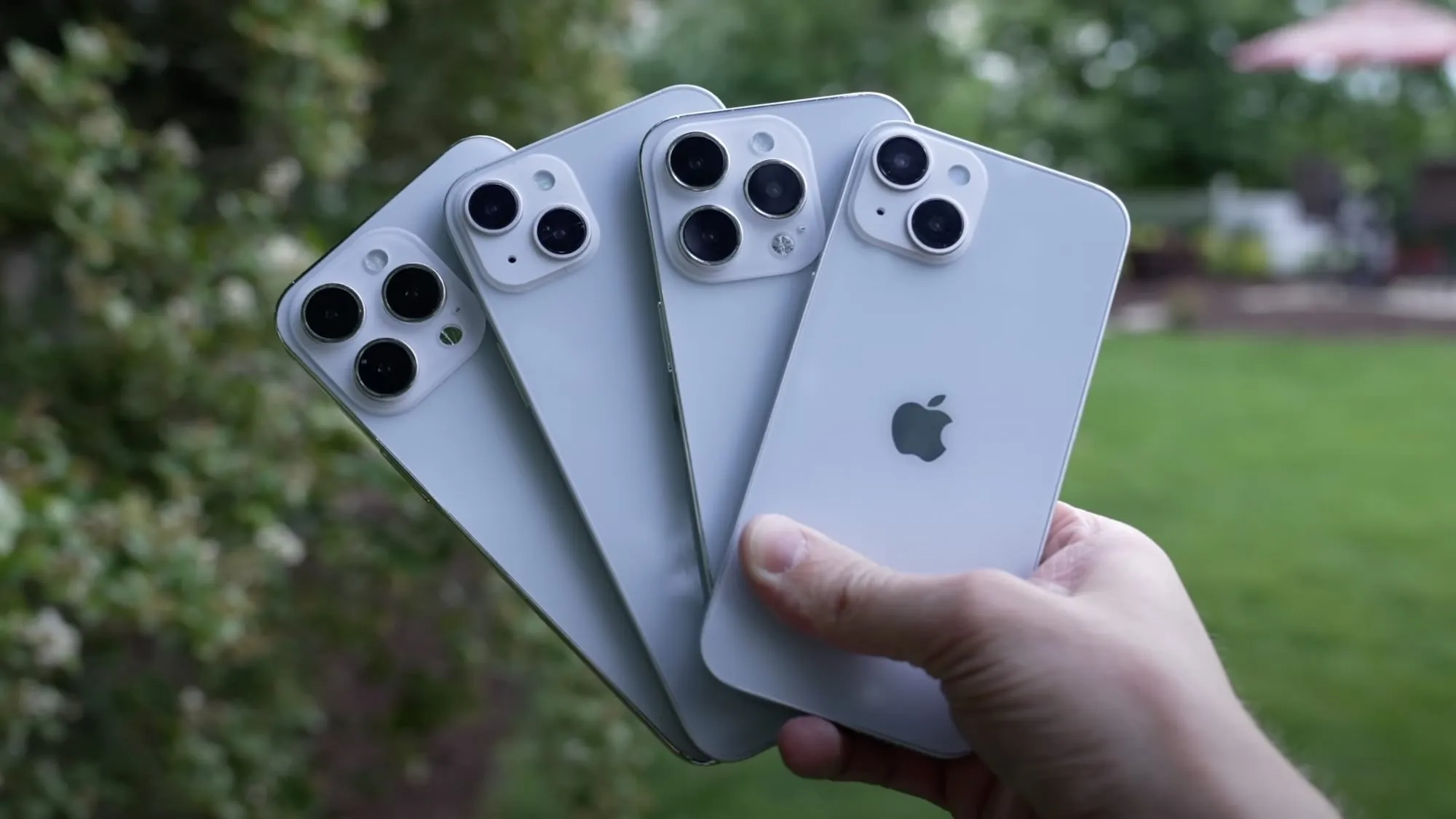
Apple is about to hold its next “Far out” special event tomorrow, and the company is expected to introduce a variety of new products. Among them, there’s the entire iPhone 14 lineup, which is supposed to have four different models: iPhone 14, iPhone 14 Plus, iPhone 14 Pro, and iPhone 14 Pro Max.
When it comes to the iPhone 14 Plus and iPhone 14 Pro Max, they’ll share the same screen size, but that’s about it.
New display technologies
It has been a while since Apple has introduced a new iPhone with the “Plus” branding, but that’s about to change. This year, Apple is rumored to discontinue the mini size of the iPhone, so there won’t be an iPhone 14 mini. Instead, Apple is likely to announce the 6.1-inch iPhone 14 and a new 6.7-inch iPhone 14 Plus.
You may have noticed that iPhone 14 Plus will have the same screen size as iPhone 13 Pro Max (and possibly iPhone 14 Pro Max, which is expected to keep the same screen size as the current generation). However, the similarities between these two models end there.
While iPhone 14 Plus will use the same display technology as iPhone 13 with a 60Hz OLED panel, the display capabilities of iPhone 14 Pro Max will go beyond that.
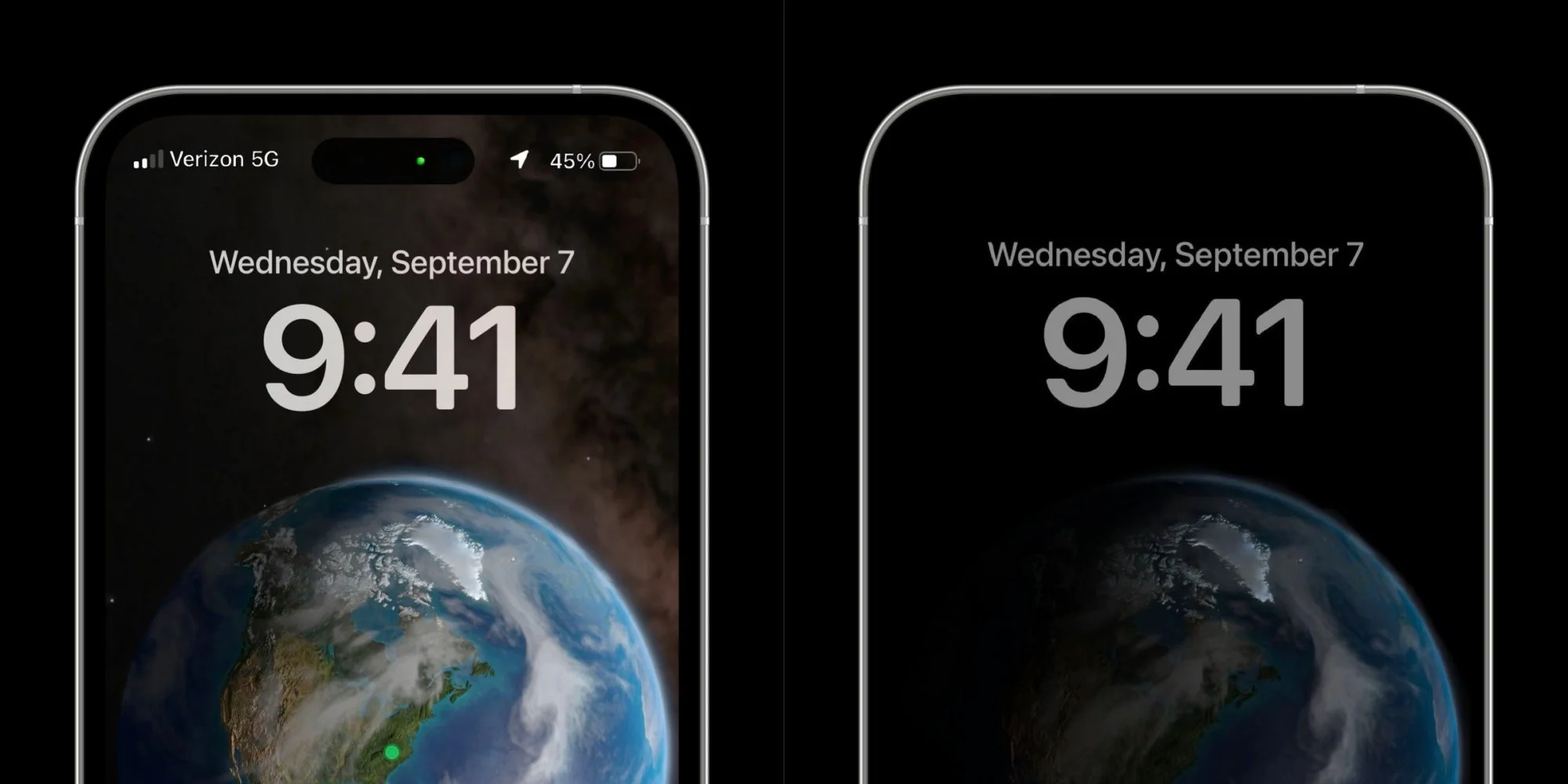
Based on multiple evidence and rumors, iPhone 14 Pro Max will have a new display design without the notch at the top of the screen. Apple will replace the notch with a pill-shaped cutout that houses the Face ID sensors and the new front-facing camera.
More than that, iPhone 14 Pro Max will have a ProMotion display with refresh rates ranging from 120Hz to 1Hz. As a result, the more expensive iPhone model will have an always-on display for the first time, so that it will show some visual elements on the screen even when it’s “off,” just like the Apple Watch.
A16 chip
Every year, Apple introduces new iPhone models with a new, faster chip. However, some iPhone models may not have a brand-new chip this time. As corroborated by 9to5Mac earlier this year, the mid-range iPhone 14 models will be powered by the A15 Bionic, while only the 14 Pro models will have the new A16 chip.
A15 is the chip present in the iPhone 13 lineup. And while rumors point to iPhone 14 having an enhanced version of the A15 Bionic chip with more RAM and perhaps a better GPU, it’s still the same CPU as last year’s iPhone. Consumers who want the best performance on the market will have to pay more for the iPhone 14 Pro or iPhone 14 Pro Max with the A16 chip.
Of course, we’ll have to wait to get our hands on both models to get a better idea of the performance difference between iPhone 14 Plus and iPhone 14 Pro Max in real-life scenarios.
Significant camera upgrades
A recent report suggested that iPhone 14 and iPhone 14 Plus will have minor hardware changes when it comes to the cameras. However, the major upgrades are expected to be exclusive to iPhone 14 Pro and iPhone 14 Pro Max.
For instance, the iPhone 14 Pro models are expected to feature a new 48MP wide lens (versus the current 12MP lens) that will enable new video capabilities, such as 8K video for the first time on an iPhone. Rumors also suggest that the ultra-wide lens on the 14 Pro models will have a larger sensor to capture more light, which should result in better photos and videos in low-light scenarios.
Not to mention that features like ProRAW photos and ProRes videos are exclusive to the Pro models. So if you’re a big fan of photography, you should probably go for the iPhone 14 Pro Max instead of the iPhone 14 Plus.
Wrap-up
So as you can see, although Apple will give less demanding consumers the option of buying a larger screen phone with iPhone 14 Plus, those who want the best hardware will probably end up buying a 14 Pro model.
It’s worth noting that Apple’s “Far out” event begins on 8/9 at 3:00 am AEST. View online at apple.com or on the Apple TV app.
Thank you for using
Themify Popup
This is a sample pop up. Themify Builder or Builder Lite (free) plugin is recommended to design the pop up layouts.