



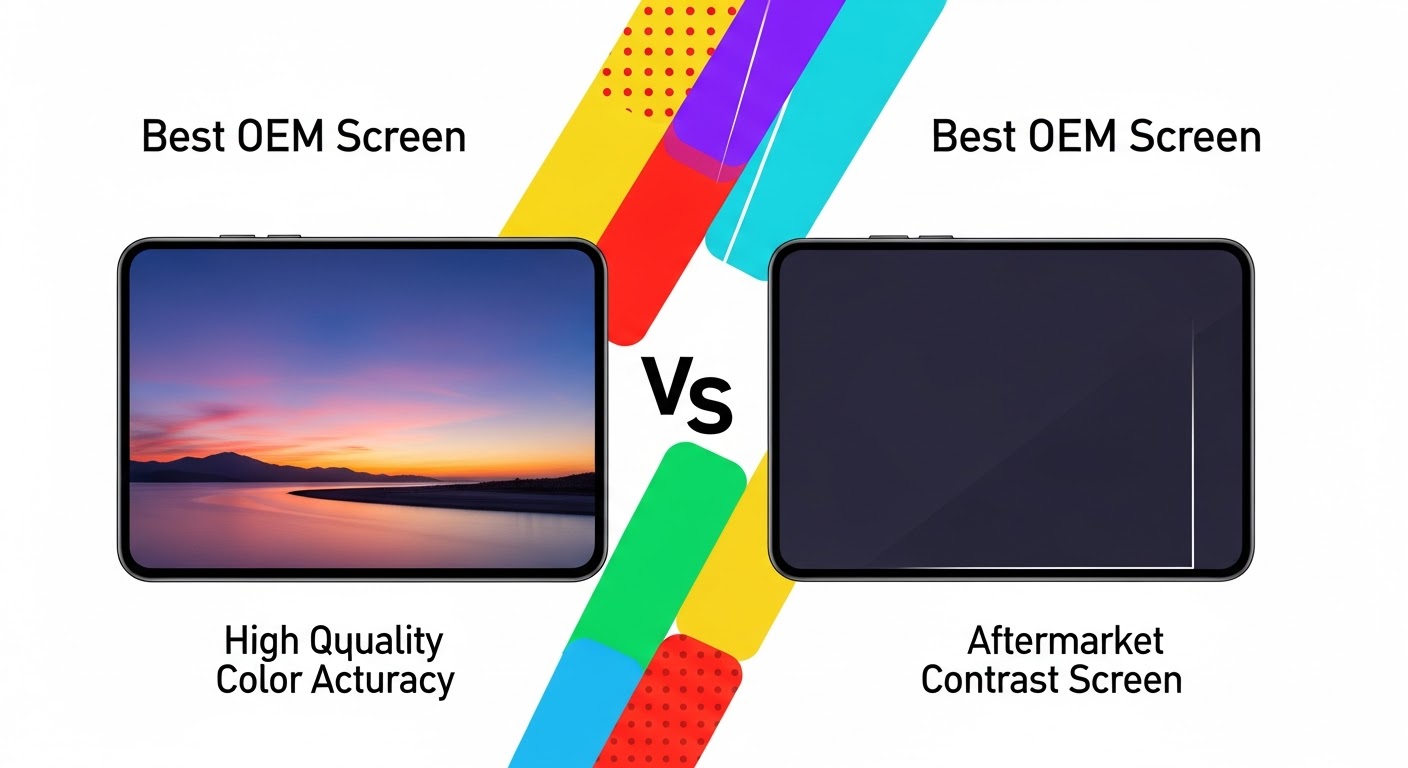
Best OEM vs Aftermarket Screen Comparison

Best OEM vs Aftermarket Screen Comparison: Ultimate Guide + 10 Key Insights
Introduction
Choosing the right replacement screen for your smartphone can be tricky. With options ranging from OEM (Original Equipment Manufacturer) screens to aftermarket alternatives, it’s essential to understand the differences, benefits, and potential drawbacks of each. Your phone’s display isn’t just a visual component—it affects touch responsiveness, color accuracy, durability, and overall user experience. This guide dives deep into the Best OEM vs Aftermarket Screen Comparison, providing insights to help you make a confident, cost-effective decision.

What is an OEM Screen?
OEM screens are produced by the same company that manufactured your original device. For example, an Apple iPhone OEM screen is made by Apple or a certified supplier that adheres to Apple’s exact specifications. These screens are designed to replicate the original performance, appearance, and longevity of your device.
Manufacturing Process
OEM screens undergo strict quality control, using advanced machinery and standardized components to ensure that every display matches the original specifications. This includes high-grade glass, accurate color reproduction, and precise touch sensitivity. Each unit is tested rigorously to minimize defects and ensure consistency.
Benefits of OEM Screens
- Perfect Fit & Finish: OEM screens match the original screen seamlessly.
- High Durability: Resistant to scratches, cracks, and long-term wear.
- Accurate Color & Touch Response: Maintains original brightness, contrast, and responsiveness.
- Warranty Support: Often comes with manufacturer or repair shop warranty.
Common Misconceptions
- “OEM is overpriced.” While it may cost more, the durability and performance often offset replacement frequency.
- “Aftermarket is just as good.” Not always—aftermarket quality can vary significantly.
What is an Aftermarket Screen?
Aftermarket screens are third-party replacements produced by companies that aren’t the original device manufacturer. These screens vary in quality, materials, and price.
Manufacturing Process
Aftermarket screens are often made in bulk with variable quality control standards. Some high-end aftermarket options approach OEM quality, while low-cost alternatives may compromise on materials, display accuracy, or touch responsiveness.
Benefits of Aftermarket Screens
- Lower Cost: Typically 30–60% cheaper than OEM replacements.
- High Availability: Often easier to find, especially for older or discontinued models.
- Multiple Options: Different price points allow users to choose based on budget.
Risks and Limitations
- Inconsistent Quality: Touch response, brightness, and durability may vary.
- Fit & Finish Issues: Edges may not align perfectly with the device frame.
- Warranty Limitations: Many aftermarket screens come with limited or no warranty.
- Potential Compatibility Issues: Certain models may not support features like True Tone or HDR properly.
Key Differences Between OEM and Aftermarket Screens
| Feature | OEM Screen | Aftermarket Screen |
|---|---|---|
| Material Quality | Premium glass, precise digitizer | Variable, sometimes lower quality |
| Touch Sensitivity | Original responsiveness | May feel laggy or inconsistent |
| Color Accuracy | True-to-original | Slight deviations possible |
| Durability | Long-lasting | May wear faster |
| Warranty | Usually included | Often limited or none |
| Price | Higher | Lower |
Material Quality
OEM screens use high-quality glass and digitizers that resist scratches and cracks. Aftermarket options may substitute cheaper materials, which could affect durability and feel. For example, a tempered glass layer in OEM screens is optimized for impact resistance, whereas aftermarket glass may chip or scratch more easily.
Touch Sensitivity & Display Performance
Touch responsiveness is critical, especially for gaming, typing, or scrolling. OEM screens maintain consistent touch latency, while some aftermarket screens can feel slightly unresponsive or have dead zones. Color reproduction and brightness may also differ, with OEM providing true-to-life visuals that aftermarket alternatives may struggle to replicate.
Warranty & Support
When you buy an OEM screen through a certified repair service, you often receive a 90-day to 1-year warranty, protecting against defects and installation issues. Aftermarket screens may offer limited warranties, sometimes only covering manufacturing defects for a short period.
Cost Analysis: OEM vs Aftermarket
While OEM screens may be more expensive upfront, they often save money long-term by lasting longer and reducing the risk of additional repairs. Aftermarket screens are attractive for budget-conscious users but could incur extra costs due to frequent replacements or repair complications.
Example Pricing (iPhone 14 Screen Replacement):
- OEM: $250–$300 AUD
- Aftermarket: $120–$180 AUD
Installation Considerations
Professional installation is highly recommended for both OEM and aftermarket screens. DIY replacements carry risks, including damaging internal components or voiding warranty. Expert repair shops like Sydney CBD Repair Centre ensure proper installation, whether you choose OEM or high-quality aftermarket screens.
Longevity & Durability
OEM screens generally last 2–3 years longer than most aftermarket options due to better materials and precision engineering. Aftermarket screens may degrade faster under daily use, especially with frequent drops or exposure to heat and moisture.
Choosing the Right Screen for Your Phone
Consider these factors:
- Budget: OEM for longevity; aftermarket for short-term cost savings.
- Phone Age: Older devices may not require OEM performance standards.
- Usage Pattern: Heavy users benefit from OEM reliability.
- Repair Shop Expertise: Certified technicians can install either type with high quality.
External Factors Affecting Screen Choice
- Brand Reputation: Trusted repair centers often recommend OEM for flagship devices.
- Repair Service Quality: Proper installation is as important as the screen itself.
- Warranty Coverage: Check what is included before purchase.
FAQs About OEM and Aftermarket Screens
1. Are OEM screens always better than aftermarket?
Generally, yes, in terms of durability, color accuracy, and touch sensitivity. However, high-quality aftermarket screens can sometimes approach OEM performance.
2. Can aftermarket screens damage my phone?
Low-quality aftermarket screens may cause touch issues or interfere with features like Face ID. Professional installation reduces risks.
3. How long do OEM screens last?
Typically 2–3 years under normal use, longer if handled carefully.
4. Is there a price difference?
Yes, aftermarket screens are usually 30–60% cheaper than OEM replacements.
5. Do aftermarket screens have warranty?
Some do, but coverage is often limited compared to OEM screens.
6. Can I install an OEM screen myself?
DIY installation is possible but risky. Professional installation ensures proper fit and function.
Conclusion

When choosing between OEM and aftermarket screens, the decision comes down to priorities. OEM screens offer unmatched reliability, display quality, and long-term value, making them ideal for flagship devices or users who want seamless performance. Aftermarket screens appeal to those with tighter budgets or older devices but may sacrifice durability and accuracy. For the best experience, consult certified repair centers like Sydney CBD Repair Centre, which provide genuine OEM parts, expert installation, and warranty coverage.
David from Sydney CBD Repair Centre – The Best place to fix mobile phones as 6 Years In A Row! Top Mobile Phone Repair In Sydney. More than 2000 Positive Reviews on Google and Same Day Repairs.
Visit us for:
✓ Same Day Express Repairs
✓ Genuine Parts Guarantee
✓ Professional Technicians
✓ Competitive Pricing
✓ 2000+ 5-Star Google Reviews
✓ 6-Time Award Winner for Best Phone Repairs
Call: +61280114119
Website: https://SydneyCBD.repair/locate-us

