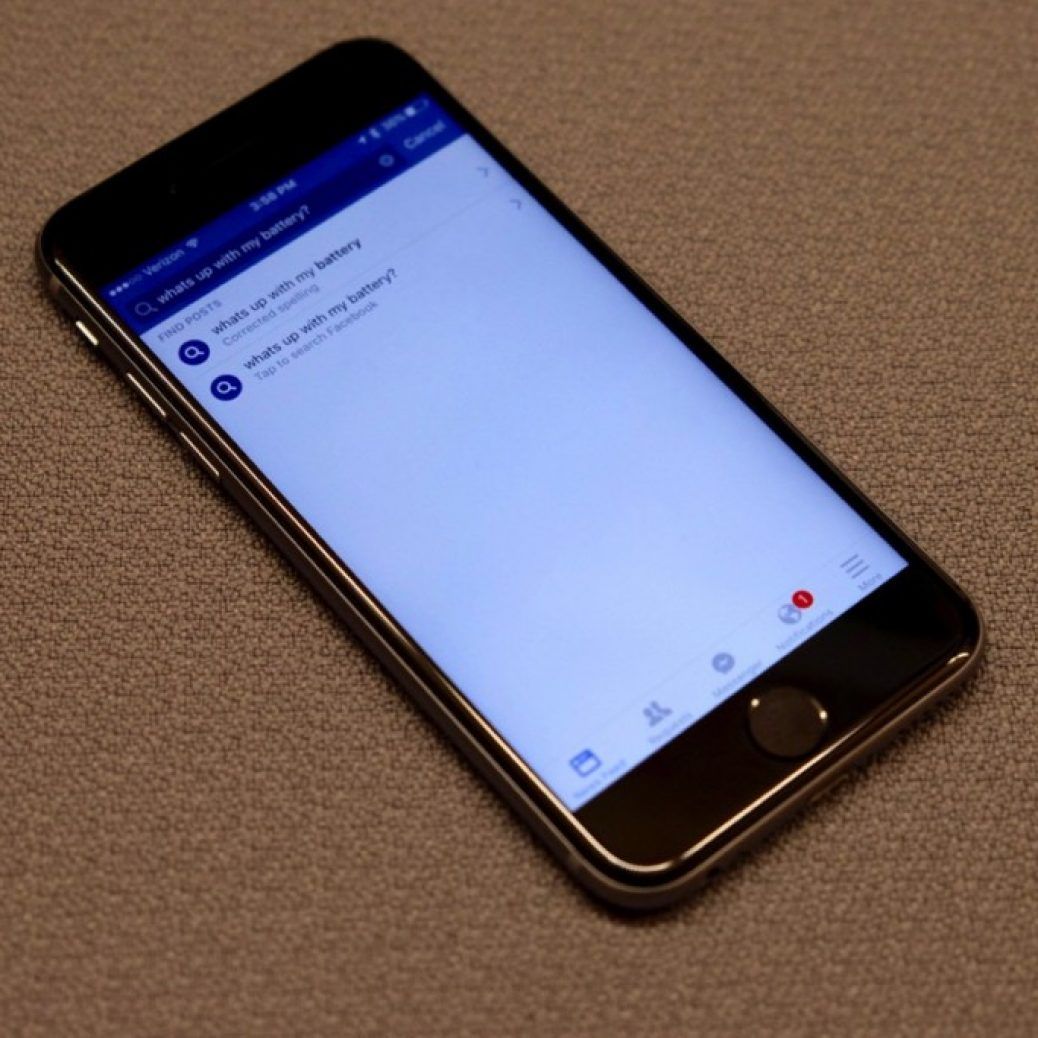
Facebook users on iOS have had a sneaking suspicion that the app was starting to misbehave, to the detriment of their phone’s battery life. After saying it was looking into the issue, Facebook has now confirmed the problem and pushed out an update to the iOS app to help offer some relief. Facebook engineering manager Ari Grant said as much in a post today on (where else) Facebook, saying that the company “found a few key issues and have identified additional improvements, some of which are in the version of the app that was released today.” While there’s more Facebook says it can do to lessen battery draing, updating the app today should provide some immediate relief.
So far, Facebook has identified and fixed two issues. One was what Grant called a “CPU spin” that kept the app pushing out network queries without any response; Grant compared it to a child asking “are we there yet?” repeatedly in the car, something that doesn’t do any good in getting you closer to the destination. The other problem occured when users watched a video and then left the app: sometimes an “audio session” would stay open and use background processing power even though nothing was actually playing.
Both of those issues have been corrected, and Grant was quick to point out that none of the issues Facebook identified were related to location services or the optional location history feature in the app. As for when more improvements might roll out, Facebook has kept to a pretty strict biweekly app update schedule, so hopefully things will get even better in a few more weeks.
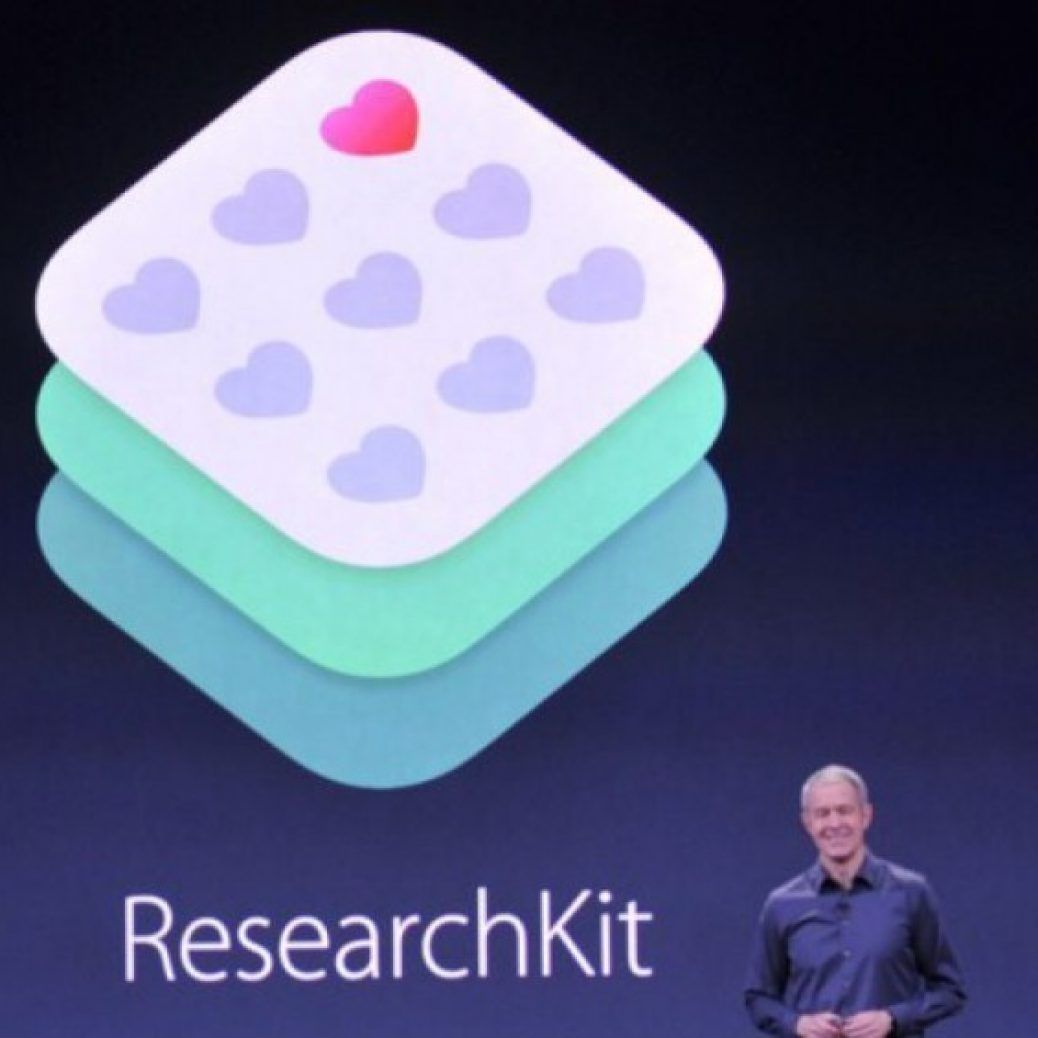
Apple wanted to make data gathering easier for medical researchers with ResearchKit. According to the company, since the launch of the open-source platform earlier this year, over 100,000 participants have already shared their health data with a host of apps that study asthma, diabetes, breast cancer and more. The Kit’s ever-increasing list of studies will now include autism, epilepsy and melanoma.
Duke University has introduced “Autism & Beyond”, an app that uses an emotion detection algorithm to track visible signs of autism in children. The team wants to use the front-facing iPhone camera to see if a user’s reactions to videos can be used to make an early diagnosis. Another app, from Oregon Health & Science University, will look at iPhone images to study moles and melanoma. Participants from all parts of the world will be able to contribute to the research by documenting their mole growth with pictures over time. Based on these collections of photographs, the goal is to build an algorithm that will potentially detect and screen melanoma.
Johns Hopkins, on the other hand, has moved away from the iPhone. Their app, the EpiWatch, will use and test the wearable sensors on the Apple Watch to see if they can predict and detect seizures. The first leg of this epilepsy study will allow users quick, one-touch access to the app that will collect data from both the accelerometer and heart rate sensors in the watch, while it simultaneously alerts a designated contact or caregiver. EpiWatch will maintain a log of the epileptic episodes and will also allow patients to compare notes with other participants. For millions of epilepsy patients across the country, this app hopes to find a way to monitor seizures.
With today’s announcement of the iPhone 6s Plus, it looks like larger-screen iPhones are here to stay. And, while plenty of users jumped on board when the iPhone got a bump to 5.5 inches with the 6 Plus, Apple isn’t going to try and entice anyone with another screen size bump — the 6s Plus’ major upgrades are on the inside. While you’ll have to wait for our full review, we’ve lined up the specs of the 6 Plus and 6s Plus to get a better idea of what improvements you can expect if you pick one up.
Last year, Apple bet big with the launch of the iPhone 6 Plus, finally giving Apple fans the phablet they never knew they wanted. While its size might not be everyone’s cup of tea, it seems that Apple hasn’t tired of the large screen, because it’s decided to do another one: Say hello to the iPhone 6s Plus. Like with the iPhone 6s, the iPhone 6s Plus will also come in a new rose gold aluminum finish, plus the usual gold, silver and space gray. The display is purportedly made out of a stronger kind of glass and it has the same 5.5-inch size as it had before. But the most interesting feature here is a new kind of technology called 3D Touch, which adds pressure-sensitive Force Touch to the phone’s display.
You can do things like press a little deeper to peek at items or open up shortcuts. For example, you can touch on an email to get a preview, or on the camera icon to quickly activate the front-facing camera for a selfie. Craig Federighi, Apple’s iOS lead, also showed this ability in Maps; you can peek at directions or place a pin by force-touching. You’re also able to apply some force to the edge to bring up a whole carousel of open apps that you can then swipe among.
Underneath it all is Apple’s new A9 chip. It’s apparently 70 percent faster at CPU tasks and 90 percent faster at GPU tasks. It also has the M9 motion co-processor built in. As for the rest of the phone, there’s now a second-generation Touch ID fingerprint sensor plus a new 12-megapixel camera. Good news for videophiles: New to the iPhone 6s and the iPhone 6s Plus is the ability to record 4K video. The front-facing cam is also now five megapixels, which is good for those selfies. About those selfies, you’re also now able to take better-lit ones thanks to a new “TrueTone flash” that uses the Retina display as a flash when you’re using the front-facing camera.
Another new trick up the iPhone’s sleeve is a feature called Live Photos, which are a sort of a mesh between still images and video. Tap on a photo, for example, and you’d be able to see the water ripple, or cars moving. The Live Photos can have sound as well. When you’re taking a Live Photo, the camera is essentially extending the capture by a few seconds. You’ll be able to have a Live Photo displayed on your Apple Watch and Facebook is already coming out with an iOS app that would utilize the feature. As far as connectivity goes, both phones have 23 bands of LTE and faster WiFi. And, of course, it runs on iOS9, which is rolling out next week.
The iPhone 6s Plus will have the same price as last year’s iPhone 6 Plus: It starts at $299 on-contract for the 16GB version.
Samsung’s latest smartwatch, the Gear S2, does work with Android devices even though it’s powered by Tizen. It works with non-Samsung Android smartphones too so customers aren’t really limited to a list of compatible smartphones but surely many of the company’s fans might have thought that the company won’t give the same treatment to the iPhone. Turns out it just might.
A spokesperson for the company apparently confirmed to Digital Spy that Samsung is looking to follow in Android Wear’s footsteps and add support for the iPhone to the Gear S2, Android Wear recently added support for Apple’s smartphone. “We are looking at possibilities to open it up to iOS,” the spokesperson said. If this does happen it would be the first time that a Samsung smartwatch gets support for the iPhone, it would also mean that the Apple Watch gets more competition on its home turf, since it already has to compete against Android Wear smartwatches now. The spokesperson didn’t provide a timeframe for this so we might have to wait for a while before Samsung decides to move on this.
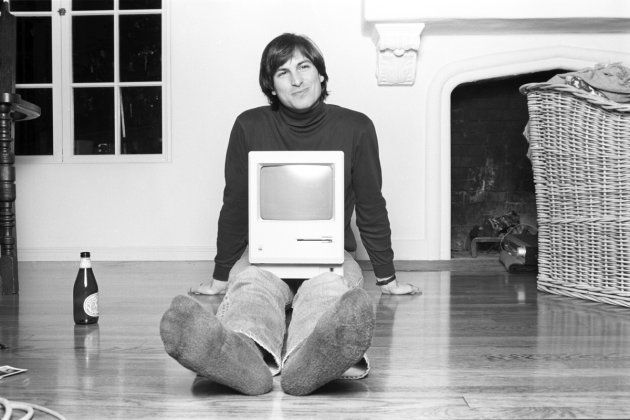
Director Alex Gibney wraps up his latest documentary, Steve Jobs: The Man in the Machine, with an apt encapsulation of the Apple co-founder’s conflicting persona: “He had the focus of a monk, without the empathy.” Jobs, who passed away in 2011 of pancreatic cancer, was the genius who transformed Apple into a pioneer of the PC era; and was then kicked out of his own company before returning to revolutionize the way we listen to music and use phones. But he was also a man who, in the pursuit of fortune, infamously ran away from his responsibility as a father, and is generally known for being a tyrant. So how do you reconcile these two extremes?
Gibney’s doc (available today on iTunes and other streaming services) doesn’t settle on an answer, but throughout its two-hour runtime, he explores what made Jobs tick, and what made millions of consumers admire him. And while The Man in the Machine covers plenty of familiar territory — how many times do we need to see the Apple origin story, really? — Gibney still manages to give us fresh insight into Jobs through newly unearthed footage and interviews.
Gibney says he was driven to make the film after seeing the widespread outpouring of grief for Jobs following his death at age 56. Though Gibney himself was an Apple customer who fully bought into the lifestyle espoused by Jobs, he was still baffled by the reverence for Jobs’ passing — normally something we see in connection with the deaths of notable artists and musicians. For as brilliant as he was, Jobs was still just a businessman, after all.
The Man in the Machine begins by painting Jobs as a young man quick to see the commercial potential of the technology sector. Jobs’ earliest foray into business was selling Blue Boxes — devices used to trick older phone lines into giving free calls — which were elegantly designed by Apple’s other famous co-founder, Steve Wozniak. While this venture was short-lived (mostly because it was very illegal), it stands as evidence of a rebellious Jobs — one who didn’t mind skirting the rules even at a young age.
A story recounted by Wozniak also gives us another look at that brazen business attitude:
For one of their first projects together, Jobs and Wozniak developed the game Breakoutfor Atari. Wozniak was paid $350 for the game, out of the initial $750 Atari initially offered. But what he didn’t realize was that Jobs was also paid a $5,000 bonus due to the efficiency of Wozniak’s design. Jobs didn’t tell Wozniak about that extra money (he also went on to take most of the credit for Breakout). In a clip played during the film, you can see the anguish and disappointment in Wozniak’s eyes as he recounts the tale of deception. Wozniak, for the record, said he would have given Jobs the money if asked, but it was the fact that Jobs lied to him that hurt the most.
The Man in the Machine’s most affecting and illuminating moment occurs during an interview with Bob Belleville, a former Apple engineer from the original Mac team. He describes a fairly demanding work environment, where everyone slaved around the clock to get the Mac up and running. That job eventually cost Belleville his marriage and his relationship with his children. But he also had a special connection with Jobs — they traveled to Japan together several times and worked closely for years. Belleville’s dueling mixture of love and underlying contempt for his former boss are plainly visible when, in tears, he reads a eulogy he wrote for Jobs on camera. There’s been plenty written about Jobs’ death, but Belleville’s tribute is by far the single most emotional response to his passing I’ve seen yet.
Perhaps the greatest paradox of Jobs was his devotion to Zen Buddhism, which conflicted with his increasingly massive ego and ruthless business tactics. The film features footage of Jobs’ Zen teacher, Kobun Otogawa, who noted that Jobs desperately wanted to become a Buddhist monk at several points in his life. Otogawa instead encouraged Jobs to bring Zen ideals into his work. At one point, Otogawa recounts a night where an anguished Jobs came to him soaking wet from the rain, looking for guidance. They go for a walk and end up sitting in a bar, where Jobs shows him a component from an early Mac, which he described as a form of enlightenment.
“His job was to make products,” Gibney said during a Q&A. “Fuck everything else.”
What really separates The Man in the Machine from most other Jobs biographies is its layered approach to the film’s subject. “It’s not about facts, it’s about texture,” Gibney said. As someone who’s directed and produced plenty of acclaimed documentaries in his time, including the war docs No End in Sight and Taxi to the Dark Side, Gibney disagrees with critics who say his films should just be a list of facts. For example, the film shows Jobs arguing with SEC investigators over a stock-backdating scandal in previously unseen deposition footage. On paper, Jobs’ responses might seem tame, but actually seeing his expressions and flippant attitude tells an entirely different story.
Like any effective religious figurehead, Jobs managed to tap into consumers’ capacity for brand devotion.
And, if you were wondering whether Gibney drew any parallels between the cult of Apple and Scientology, the subject of his last film, Going Clear: Scientology and the Prison of Belief, the answer is a definitive yes: “There is this feeling … there is a passion for this person and the products that any criticism can’t be tolerated,” Gibney said. “Can’t we discuss how pitifully paid the people are in China [who build Apple products]?”
Like any effective religious figurehead, Jobs managed to tap into consumers’ capacity for brand devotion, an element that gave Apple products a bit of an extra allure. The Mac wasn’t just a computer; the iPod wasn’t just a music player; the iPhone wasn’t just another smartphone — they existed to make your life more complete.
In the end, the same could be said for Jobs: He became a mythical product of his own invention. He wasn’t just a man and he wasn’t just a savvy tech innovator. He was a god — cold, distant and forever adored.
So, your iPhone has got damaged and you are clueless about what is to be done with it!
Is your iPhone missing a vital part? Did a hard-to-find component of your iPhone get damaged recently? Well, whatever be the case, you needn’t panic. The good news is that a wide range of Apple iPhone replacement parts are now easily available on the internet. These replacement components are available at affordable rates and hence, purchasing them can save you from the trouble of getting costly iPhone repairs done at the local iPhone repair store or the Apple Genius Bar. Your iPhone is an expensive gadget and it would be really stupid if you let it go in the bin without even making a single attempt to get it repaired. But, getting an iPhone repair done is a costly affair. If the damage is high, the repair might even take long. Also note that the cost of Apple iPhone replacement parts and that of repairing at the Apple store is extremely high.
Your iPhone has always been one among the most sought-after handheld electronic devices since a few years now.
Also, it has no match in terms of the number and quality of functionalities and applications till date. But, like all the other sophisticated handsets available in the market today, your iPhone is also prone to several problems, which might interfere with its normal functioning. For example, there have been several instances when the motherboard of the iPhone stopped working all of a sudden. The vital iPhone components, such as logic board, are highly susceptible to damage, and may need an immediate replacement at any time. In such an event, majority of the iPhone owners panic and take their damaged iPhone to the nearest Apple service center. There, they shell out over $200 to get even a small repair done. Do you really think it is worth waiting for more than a week in Apple Care repair queue and finally pay a hefty amount for a repair you can do yourself at home? I bet, definitely not!
Therefore, when you face such a situation, the ideal solution is
to purchase the iPhone replacement parts on the internet and then conduct the repairs yourself at home or get it done at a local repair store.
Ordering for Apple iPhone replacement parts from authorized, trusted websites is very safe and easy. However, make sure you do an extensive research about the retailer or the online seller before buying any part online. You may read the reviews and testimonials given by clients and then contact them for replacement of iPhone. While some stores may send technicians at your home for iPhone repair, some others may call you at their store for iPhone repair. When you buy replacement components, make sure they are genuine and authorized by Apple. Do not go for any duplicate, me-too product as you might end up spending a lot on iPhone repair and replacement. So, while buying iPhone replacement parts is undoubtedly the best solution to iPhone repair, you must exercise extra caution when spending money on products sold outside Apple stores.