Google I/O 2016 came with the announcement of Daydream. This is Google’s first Virtual Reality platform and ecosystem dedicated to bringing more momentum to develop optimized apps for it’s upcoming VR headsets and controllers.
Two years ago, Google launched it’s experimental Google Cardboard for VR on existing user smartphones. For those of you who have not caught up with this hype, Google Cardboard was the first attempt to bring Virtual Reality to many people. The package was so easy to make, a couple of optical glass, some duct tape and an Android smartphone, it sure was a good ground to start this awesome revolution. As a result, many indie developers made apps for this thriving market – and then came the announcement of Daydream.
What is Daydream?
Daydream was a platform for Virtual Reality that is highly integrated with Android N. By the current stage of development, Daydream may not yet be competing with HTC Vive or the Oculus Rift software which are all PC-based software and hardware.
What are the features of Daydream?
Daydream is yet to be tested but let’s start with what we know are the early resemblance of what Daydream apps can do. YouTube started using 360 videos for desktop and mobile devices, Street View let’s you go to maps and places in a full 360 view. The Google Play Store, Play Movies, and Google Photos have been a testing ground for Virtual Reality. The New York Times, HBO, Netflix, Ubisoft, and Electronic Arts are also on board to develop apps for Daydream.
If you like the features of the current apps that use VR on your devices, then think of Daydream as an official backbone to integrate Virtual Reality games and apps right into your smartphone.
Any Daydream headsets?
Yes, there are. In fact, Google’s announcement on the keynote revealed its reference design for a VR headset and controller. This design looks like an HTC Vive but a simplified version. It is said to be wireless, easy to take on and off, and comfortable to wear. Manufacturer partners already have given rights to this reference design for official manufacturing later this year.
Google I/O 2016 brings another batch of innovation to the world of communication. Right at the bare essential of the user experience, Google is trying to bring back the true essence of being connected – with Allo and Duo.
Meet Allo
The new messaging app Allo, but as what was said in the Google IO announcements, a smart messaging app that learns overtime. It means that the more you use Allo, it learns about you – when you give it permission of course. Allo connects with your phone number so you can use your existing contacts from your phonebook for you everyday chats. This messaging app is expressive and creative with Google Assistant built right into it.
Whisper Shout
Whisper Shout is a cool new feature that adds more emotion to your words to let them know how you really feel. Your message changes to a larger font to make a shout, changes to a smaller font to make a whisper.
Ink
Ink can still write directly on your photo before sending it but this time more seamless and optimized for faster performance.
Smart Reply
Smart Reply is built into conversations. It is simple and fast when replying with just one tap. A feature that can be very helpful when you are in a situation where you can’t really type to respond to a text message. Suggesting replies based on your pattern learned by Google Assistant overtime. Allo can provide Smart Replies to photos sent to you. Assessing what the photo is and in what context the photo is in. It can then offer options to make a restaurant reservation when you send a photo of food, for example.
One on One
One on One chat with Google is also useful when you just want an information right out of google without even opening a browser. Search info, play videos and audios, or even play a game with Google Assistant right inside the Allo app!
Incognito Mode
Incognito Mode is based on Google Chrome that let’s you have End2End or E2E Encryption, private notifications, and expiring chats for added privacy. Messages made and received in Incognito Mode will be deleted forever one your thread is deleted.
Meet Duo
Duo, for a start is a video calling app that can work with various phones models and specifications. Even working great on slow connections. This app also manages data signals from either Wi-Fi or cellular depending on what signal is better. And to make the app more intuitive and fast is by using the QUIC platform that makes the latency rate of video calls almost non-existent.
As a one to one video calling app for everyone, Duo is a video companion to Allo. It can work with both Android and iOS. It also have the Knock Knock feature that can make you see the ones who are calling you right before you answer!
Google IO or Google I/O (with a slash) is finally done for this year. Many have been rooting and predicting for a new voice assistant and was not disappointed. Google Assistant is now well-known as the Siri killer.
What is Google IO?
Google Assistant will be the new voice assistant for Android once it is released with the latest version of Android, the Android N.
This was presented on the Google I/O event as the best voice assistant for Android. To back this claim, Google engineers have some pretty tricks to make this one stand out and become a worthy successor to Google Now.
Features of the Google Assistant
More Natural
Google Assistant is more human in its interaction, following the context of your query, even uses your location to get more specific with its search results. Unlike any other voice assistant for Android, Google Assistant answers back to you, gives you follow up answers to your follow up questions for a very natural experience.
Integrations
Google Assistant is not only a search-based app but is also integrated to Allo and Echo, Google’s new chat and video chat apps respectively. An AI that provides a seamless combination of different devices while providing a learning assistant that gets better the more you use it.
Open
Google Assistant is open for integrations on current and new Google developers who would wish to use this AI technology in their own apps. It will be expected that Google Assistant will continue to surpass what Apple’s Siri has started many years ago.
Vivid Sydney 2016 is Australia’s most-awaited festival that brings out the best of light, music and ideas. This year find a bigger, even brighter Sydney as the best engineers, artists, entrepreneurs, and celebrities join together and light up the streets for this 18-day show!
Sydney CBD Repair Centre will bring you updates from Vivid Sydney 2016. This includes Vivid Sydney dates for events, information about Vivid tickets and free events too! Don’t forget the famous and gorgeous Vivid Festival Cruises. Get some ideas and routes, cruise ships and rates that you want to take to Harbour Light. Just like what they say, the best way to see Vivid Sydney is by the Harbour.
The new LG G5 has finally unveiled.
You knew it was coming, but its upgraded features and attractive, playful design is something you would have not expected.
Get busy bringing the excitement into your hands with the LG G5!
*The contents and features that appear on the video may differ from the actual.
LG UX 5.0 is here for a more playful and innovative mobile experience!
Enhanced usability and convenience will offer an enjoyable connection with LG Friends as well as a powerful visual experience on LG G5.
Enjoy the LG G5 and Friends to their maximum potential with LG G5 UX 5.0.
X cam and X screen Offer Unique Features Unavailable on Competing Devices
SEOUL, Mar. 22, 2016 — LG Electronics (LG) will launch its X series, a mass-tier smartphone lineup with premium features
until now only available on LG’s flagship models, starting this week. The X screen and X cam will first be available in South Korea followed by key markets worldwide including Europe, Latin America and Asia.
The X series is designed to deliver exceptional value to those who want a smartphone with unique features such as Dual Cameras or the Second Screen.
Like the LG G5, the X cam inherits a similar 120-degree wide angle lens to complement the standard lens. The 13MP standard angle lens and the 5MP wide angle camera on the rear of the X cam delivers as wide a field of view as the human eye.
The X cam offers Pop-out Picture feature
which combines the two images taken with the standard and wide angle lenses to create a picture-in-a-frame effect. Available only on the X cam, Animated Photo delivers a hybrid video and still photo, one framed by the other (http://on.fb.me/1pPxEd5). And Panorama View automatically scrolls a wide image instead of a static image and the Signature feature allows users to add a caption or byline after taking a photo.
The X screen comes with LG’s Second Screen,
a feature which was first introduced in the LG V10. The Always-on Display allows users to check basic information such as time, date and notifications without having to wake up the phone, the first mid-tier smartphone to offer this unique feature. The X screen’s look is complemented by the crystal-clear glass fiber material that covers the back. The curved edges on its sides create a simple yet elegant design.
“What’s appealing about the X screen and X cam is
that each offers one great feature in a complete package that doesn’t break the bank,” said Juno Cho, president and CEO of LG Electronics Mobile Communications Company. “Starting with the X series, we’re introducing the best in camera and display technology in a mass-tier device, something that has never been done before.”
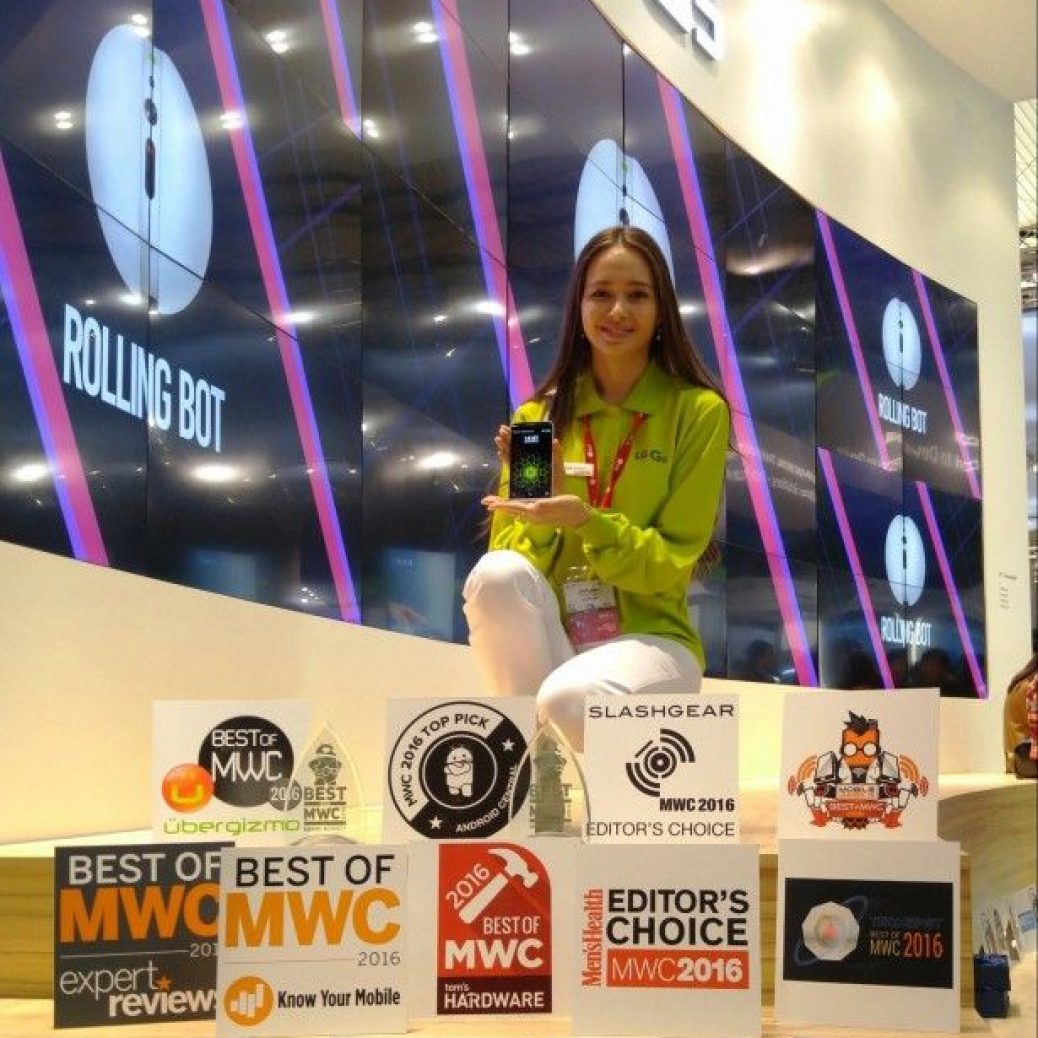
BARCELONA, Feb. 25, 2016― LG Electronics amassed a total of 33 awards at Mobile World Congress (MWC) 2016 including the event’s top honor, Best Mobile Handsets & Devices Award, securing status as the most honored company at the show.
The wins highlighted the Modular Type innovation behind LG’s latest flagship smartphone,
the LG G5 and Friends, demonstrating that the company is at the forefront of mobile communications. LG G5 and Friends earned top honors from Android Authority, Digital Trends, Trusted Reviews and Ubergizmo, among others.
“The initial response to our new LG G5 has been phenomenal and rewards the effort our experts have made to create something genuinely innovative and unique in the smartphone space,” said Juno Cho, president and CEO of LG Electronics Mobile Communications Company. “The G5 and its Friends modules are aimed at giving consumers a more playful smartphone experience and these awards suggest that we have offered something truly different in the market.”
LG unveiled the G5 to a 2,000 strong crowd prior to the main MWC event to high acclaim.
The flagship smartphone is a brand new design with a sleek, metal uni-body featuring a Slide-out Battery and a Modular Type design that gives a greater smartphone experience. Complete with LG Friends, a collection of companion devices, the G5 can be transformed into a digital camera, Hi-Fi player and more.
With an estimated 100,000 attendees, MWC 2016 is the mobile industry’s keynote event.
The IoT is a fast-evolving network of devices which have embedded technology and software allowing them to be interconnected via the internet and centrally controlled. Currently there are 15 billion connected devices across the world and due to consistent technological advancements, this number is predicted to grow to 50 billion by 2020. At this growth rate, the IoT has the potential to become a revolution in modern day living, and Samsung is committed to being at the forefront of this growth.
“The Internet of Things has the potential to transform our society, economy and how we live our lives. It is our job to pull together—as an industry, and across different sectors—to make true on the promise of the Internet of Things”, Chief Executive BK Yoon said during a keynote speech at CES earlier this year.
Offering such an extensive product portfolio of consumer electronics and domestic appliances, Samsung provides the complete home experience to its customers. By 2020, all Samsung products will be IoT-enabled. As homes increasingly transform into smart homes, the range of appliances and home sensors which can enter into this interconnected network will be expanded through the further development of SmartThings, Samsung’s recently acquired open IoT platform.
However, Samsung does not only deliver a technology-driven premium lifestyle of convenience at home to its customers. The company is also directing resources into providing customers the opportunity and the potential to turn their IoT-enabled smart home into a low energy hub.
“Home automation is an early area of adoption (of IoT) because of the potential to reduce energy costs, improve security and increase comfort,” Goldman Sachs Global Investment Research wrote. Research shows that the “IoT can help reduce home energy consumption by over 40 percent”.
Environmental Innovation in Software and Hardware
ECOS, the Energy Cost Optimization Solution powered by Samsung, is designed to empower customers to use the SmartThings IoT platform to its full environmental potential. Homeowners will be able to use ECOS software to measure, plan and improve the services provided by an IoT home to program appliances to run during off-peak hours to reduce energy costs; use occupant sensors to control electrical and natural lighting; optimize heating, cooling and ventilation; and use smart-meters to relay real-time energy data to find ways to cut down on wasted energy, among other limitless possibilities. Lighting, for example, when connected to occupant sensors, becomes smart and has the potential to reduce costs by up to 30 percent, according to EnergyStar, and connected energy systems and smart metering promoted by IoT can save approximately £50 per month on utility bills.
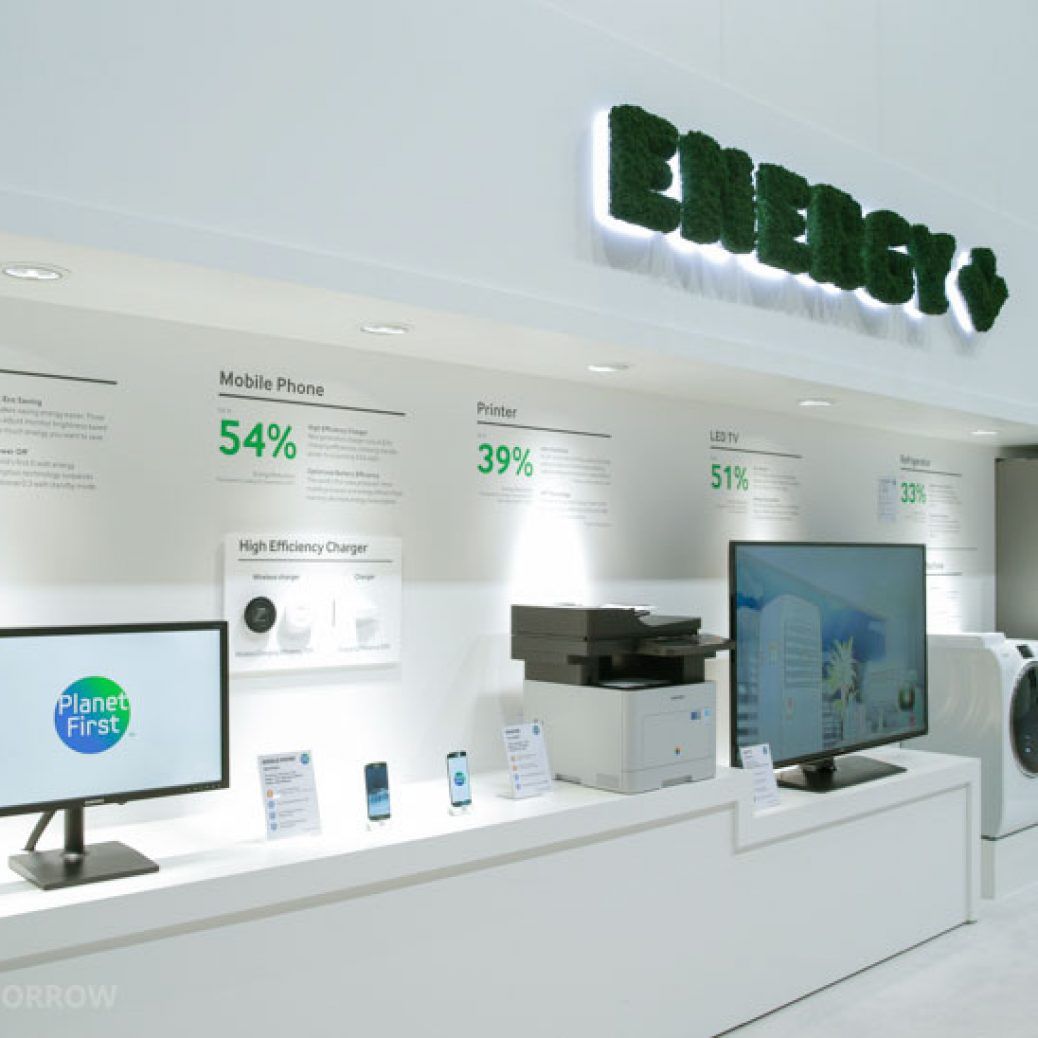
Customers will also be inspired by new advancements in hardware technology. At IFA 2015, the world’s leading trade show for consumer electronics, the Samsung EcoZone is showcasing products with high environmental credentials and reduced environmental impacts. These Samsung products have high energy efficiencies, eco-modes and energy-saving technology which will help customers aspire to use technology to accurately monitor and reduce their home energy consumption and provide them with a convenient, hassle-free way to live an IoT-enabled, low energy lifestyle.
In order to mitigate the impacts of increased device use through the IoT, Samsung has adapted hardware to achieve three major environmental advancements which will ensure the lowest potential environmental impact for customers.
Developing Low Energy Modes
In order for IoT products to constantly be connected, devices must remain on, or on standby mode. Therefore, Samsung has been developing devices with increasingly lower energy consumptions. Eco Sensors and energy saving modes on the latest LED TVs can use up to 51 percent less energy compared to 60-inch models in 2011 and the refrigerator digital inverter compressor adjusts to humidity levels and usage patterns to optimize cooling, providing 33 percent savings compared to 400-liter models in 2011.
Improving Product Energy Efficiency
Samsung has also been proactive in reducing the overall energy consumption of all its products. Since 2008, the entire product portfolio has improved its energy efficiency by 42 percent, allowing consumers to further reduce their energy costs.
Managing Impacts
The expansion of the IoT open platform will spur the creation of new networks and devices. Therefore, in order to respond to the potential environmental impacts of increasing resource use, Samsung has invested a large amount of time researching and developing products that have lower resource consumption. For example, Samsung’s Ecobubble washing machines reduce water consumption by utilizing the latest speed wash setting which reduces washing time by half, thus reducing energy consumption. Additionally, the overall use of recycled plastics and recycled paper packaging has increased throughout the product range.
Samsung understands the importance of the environment to customers and the responsibility of a business to provide innovative environmental solutions in a modern world. Providing an open IoT platform will ensure that SmartThings continues to develop to facilitate these savings through both Samsung and its partners to provide technological inspiration to customers to lessen their environmental impact and empower them to live more responsible lifestyles.
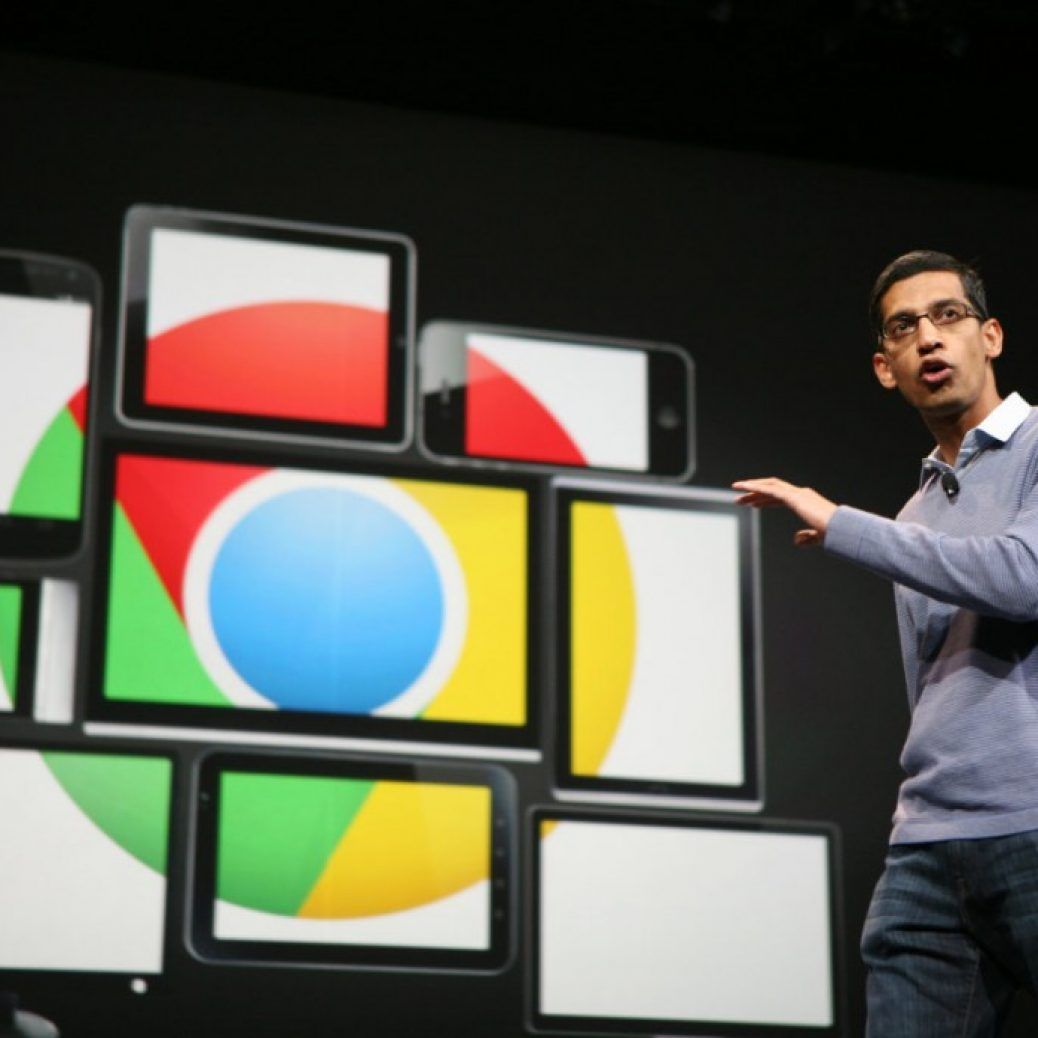
Back in June, Google shared the good news that the Chrome browser would soon be smart enough to “intelligently pause content that aren’t central to the webpage” that you’re visiting. It’s a welcome change that should help to continue marginalizing the annoyance of Flash. Fortunately, that blessed new feature is ready for prime time. On theGoogle+ page for the company’s AdWords advertising program, Google said that a Chrome update coming on September 1st would make Flash-blocking the default state for users.
Google’s recommending that its advertisers switch over to HTML5 ads to avoid them being blocked, but for the rest of us, this only comes as good news. Blocking Flash content that you don’t want to see should hopefully make for a better browsing experience and also increase your computer’s battery life. Chrome has always been a bit of a battery hog, especially when you compare it to Safari on a Mac, but we’re hoping this change evens the playing field a bit. It’s worth noting that you can manually activate this feature now: go into the Chrome settings, select “Show advanced settings,” then select the content settings for “Privacy” and then select “Detect and run important plugin content.”