




The Evolution of Phone Screen Replacement Techniques

The Ultimate Guide to The Evolution of Phone Screen Replacement Techniques: 15 Breakthroughs Every User Should Know
📱 Introduction: How Far We’ve Come
From the chunky phones of the early 2000s to today’s sleek foldables, screen technology has transformed dramatically—and so have the techniques to repair them. In this guide, we’ll walk you through the evolution of phone screen replacement, shedding light on how repair practices have adapted to each technological leap.
At Sydney CBD Repair Centre, we’ve evolved alongside the industry, mastering techniques from the simplest glass swaps to complex AMOLED and foldable screen repairs.
🧱 The Early Days: Basic Glass Replacements
In the beginning, mobile phones used small, non-touch LCD screens protected by a separate layer of plastic or glass. If the outer layer cracked, it could be replaced independently—a relatively simple fix.
Key characteristics:
- No touchscreen integration
- Manual disassembly with limited adhesive
- Minimal risk of internal damage
These screens were cheaper and more forgiving to repair compared to modern devices.
💡 The LCD Era: Simpler Yet Sensitive Displays
As phones evolved, LCDs became the norm, featuring integrated displays with more vibrant colours and responsiveness. These screens required:
- Exact part matching
- Use of anti-static tools
- Basic soldering in some cases
Glass + digitizer + LCD were sometimes still separate, allowing partial replacements—though this varied by brand and model.
👆 Rise of Touchscreens and Digitizer Integration
With the introduction of smartphones like the iPhone in 2007, the industry shifted to fully integrated digitizer + LCD units. This change meant:
- Screen repairs became more delicate
- Replacing just the glass without affecting touch functionality became harder
- Alignment and calibration became crucial to maintain usability
Technicians had to upgrade their tools and skills quickly—or risk damaging customers’ phones.
🛡️ Gorilla Glass and Toughened Displays
Corning’s Gorilla Glass made headlines by making screens more scratch- and shatter-resistant. However, it also introduced new challenges:
- Stronger glass meant tougher removal
- Cracks became more micro-fractured, making separation risky
- OEM replacement parts had to match optical clarity and thickness
Despite better durability, repair complexity increased, making professional repair centres even more essential.
🌈 OLED and AMOLED Panels: A New Challenge for Repair Technicians
When OLED and AMOLED displays became common in Samsung, OnePlus, and Google phones, the repair industry faced a new learning curve:
| Feature | LCD | OLED/AMOLED |
|---|---|---|
| Thickness | Thicker | Ultra-thin and fragile |
| Backlight | Requires one | Self-lighting |
| Risk of Burn-in | Low | High (if handled improperly) |
| Repairability | Easier | Requires professional handling |
The margin for error shrunk. Even slight mishandling could result in dead pixels, ghosting, or unresponsive touch sensors.
🌀 Edge-to-Edge Screens and the Rise of Curved Displays
Phones like the Samsung Galaxy S7 Edge and onward pushed boundaries with curved AMOLED screens, demanding:
- Specialised vacuum laminating machines
- Screen molds and UV-curable adhesives
- Recalibration of touch sensitivity
At Sydney CBD Repair Centre, we invested in high-end repair tools to accommodate these advancements while ensuring same-day service whenever possible.
🔒 The Game Changer: In-Display Fingerprint Sensors
Integrating the fingerprint sensor into the display raised the bar for precision:
- Replacements now had to retain biometric accuracy
- Cheap or misaligned parts could disable fingerprint features
- Software recalibration and firmware compatibility became essential
We’ve mastered this at Sydney CBD Repair Centre—using only genuine parts and performing fingerprint testing before sealing the device.
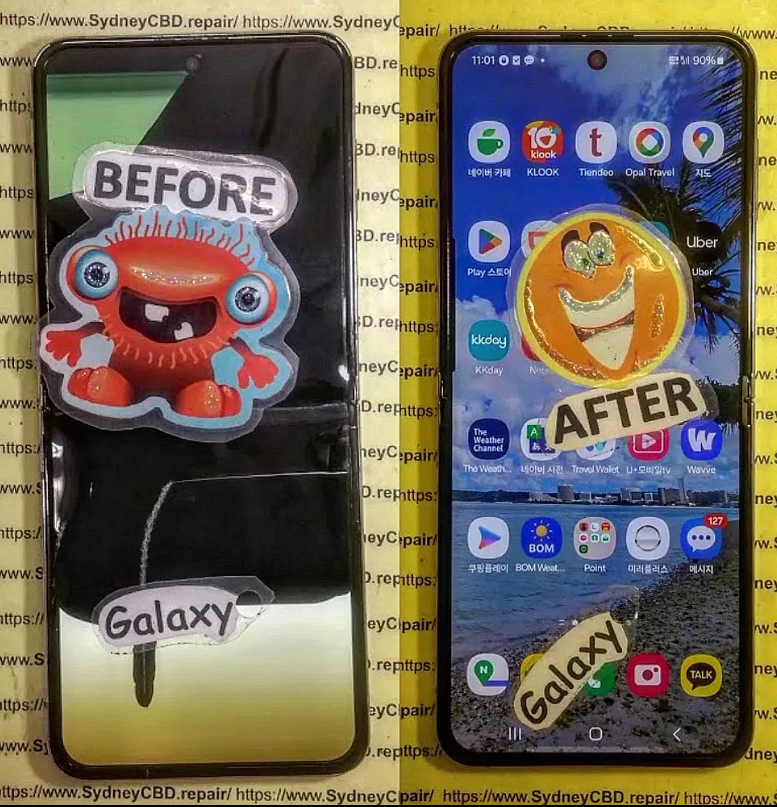
📱 Foldable and Flip Screens: Next-Level Repairs
Phones like the Galaxy Z Fold 5 and Z Flip 5 introduced flexible screens. These are extremely delicate and involve:
- Layered OLED structures
- Ultra-thin glass (UTG) and hinge sensitivity
- Expensive parts and specialised tools
Our team handles foldable screen repairs with extreme precision, using Samsung-authorised techniques to preserve flexibility and performance.
🧰 Tools of the Trade: Then vs Now
Let’s compare the tools used in early vs modern screen repairs:
| Time Period | Tools Used |
|---|---|
| Early 2000s | Screwdrivers, plastic spudgers |
| 2010–2015 | Heat gun, suction cups, anti-static mats |
| 2016–2020 | Laminating machines, microscopes |
| 2021–Present | Laser separators, ultrasonic cleaners, OLED calibrators |
As screen tech advances, so must the toolkits and technician expertise.
🔍 Genuine Parts vs Aftermarket Screens: Quality Matters
The demand for cheap repairs has flooded the market with aftermarket screens—but not all are equal. Key differences include:
- Touch sensitivity
- Fingerprint sensor support
- Display brightness and colour
- Durability over time
At Sydney CBD Repair Centre, we only use OEM or manufacturer-authorised parts, giving our customers peace of mind with every repair.
🧠 The Role of Software in Modern Screen Calibration
Modern screens often require software-level calibration post-repair to restore:
- Brightness levels
- Touch response mapping
- Fingerprint sensor accuracy
- Face ID and proximity sensor alignment
Our technicians use brand-specific software tools to guarantee the display performs like new—even after complex repairs.
🛠️ Sydney CBD Repair Centre’s Evolution in Screen Repair Services
We’ve come a long way from simple glass swaps. Our journey includes:
- Adopting foldable screen repair early
- Investing in laser and lamination technology
- Training technicians to handle fingerprint and biometric calibration
- Winning 6 awards and earning 2000+ 5-star reviews
We continue to innovate, making us Sydney’s top choice for advanced phone screen repairs.
🚀 What’s Next? The Future of Phone Screen Repairs
Looking ahead, we expect to see:
- Self-healing screens
- Transparent displays on dual-sided phones
- Modular screen components for easier replacement
- More AI-driven diagnostics and calibration tools
At Sydney CBD Repair Centre, we’re committed to staying ahead of the curve, ensuring your future devices get the expert care they deserve.
❓ FAQs About Modern Screen Repair Techniques
Q1: Are modern screens harder to repair?
Yes. With components like OLED layers and under-display sensors, screen repairs today require expert precision.
Q2: Can cracked foldable screens be repaired?
Absolutely. We repair Galaxy Z Fold and Flip series using specialised tools and genuine Samsung parts.
Q3: Is it safe to use aftermarket displays?
They may work, but often lack the brightness, touch accuracy, and fingerprint compatibility of genuine parts.
Q4: How long do modern screen repairs take?
Standard OLED screen replacements take 1–2 hours, while foldables may take 3–4 hours depending on part availability.
Q5: Does screen repair affect waterproofing?
Yes, but professional repair shops like ours use OEM-grade adhesives to restore water resistance.
Q6: Will my fingerprint or Face ID still work after a screen replacement?
Yes—if done properly using the right parts and tools, which we ensure at Sydney CBD Repair Centre.
✅ Conclusion: Why Expert Repairs Matter More Than Ever

As screen technology becomes more advanced, so do the challenges of replacing them. Gone are the days of easy glass swaps—today’s repairs require technical knowledge, precision tools, and genuine parts.
At Sydney CBD Repair Centre, we blend innovation with experience, ensuring every screen replacement meets factory standards. Whether you own a classic iPhone or the latest Galaxy Fold, we’re here to help—fast, reliable, and trusted.
📞 Call us today at +61280114119 or visit our store for expert screen repair solutions you can trust.

