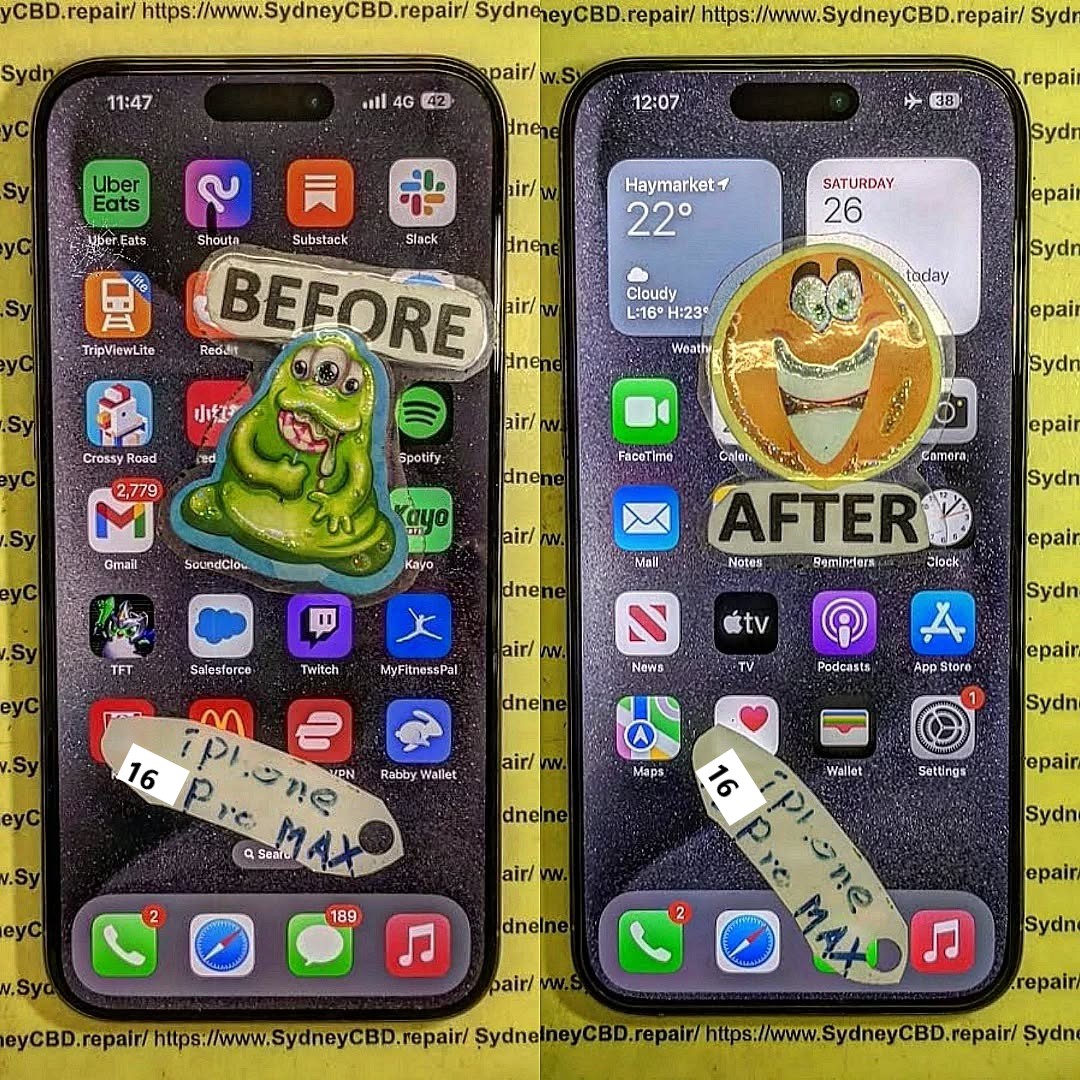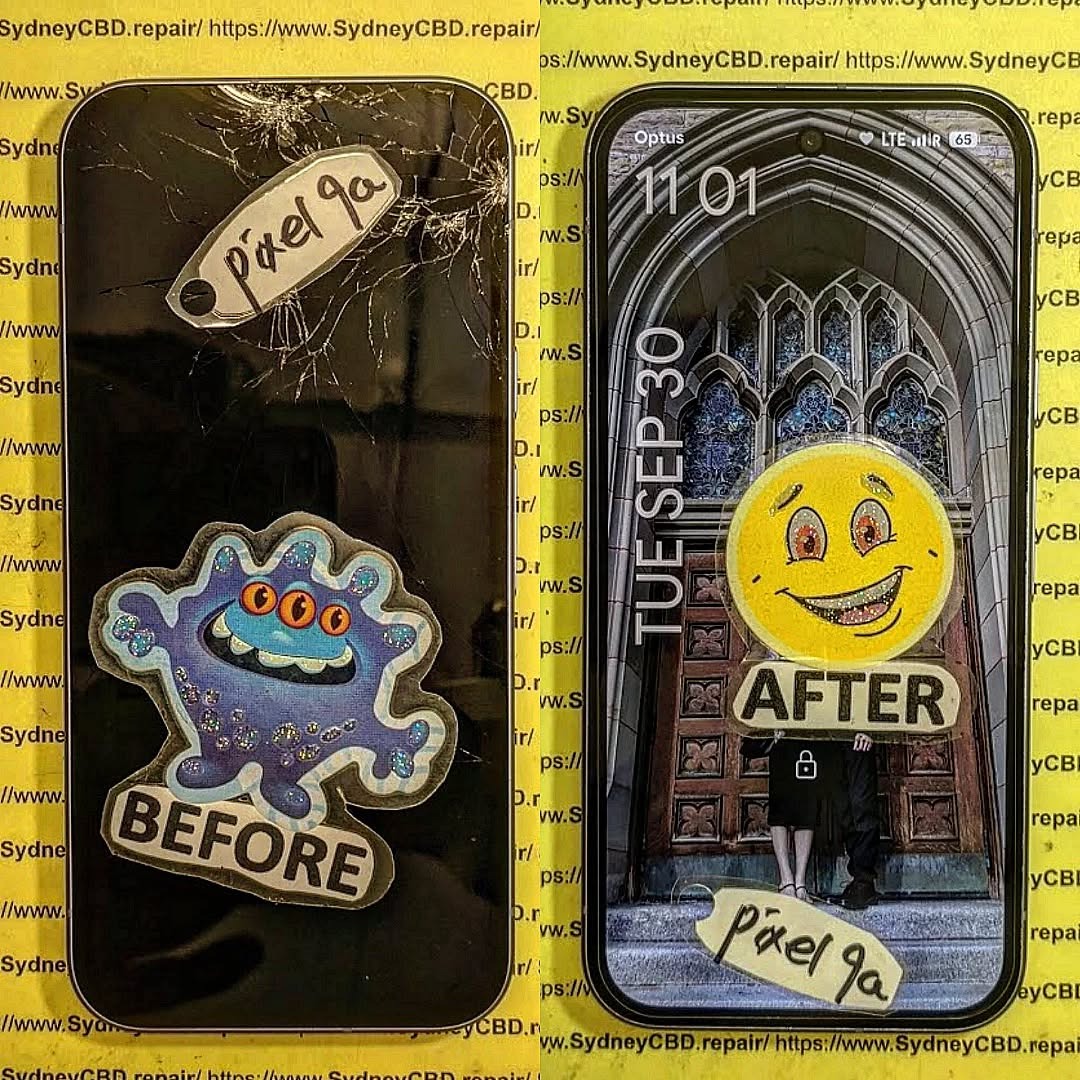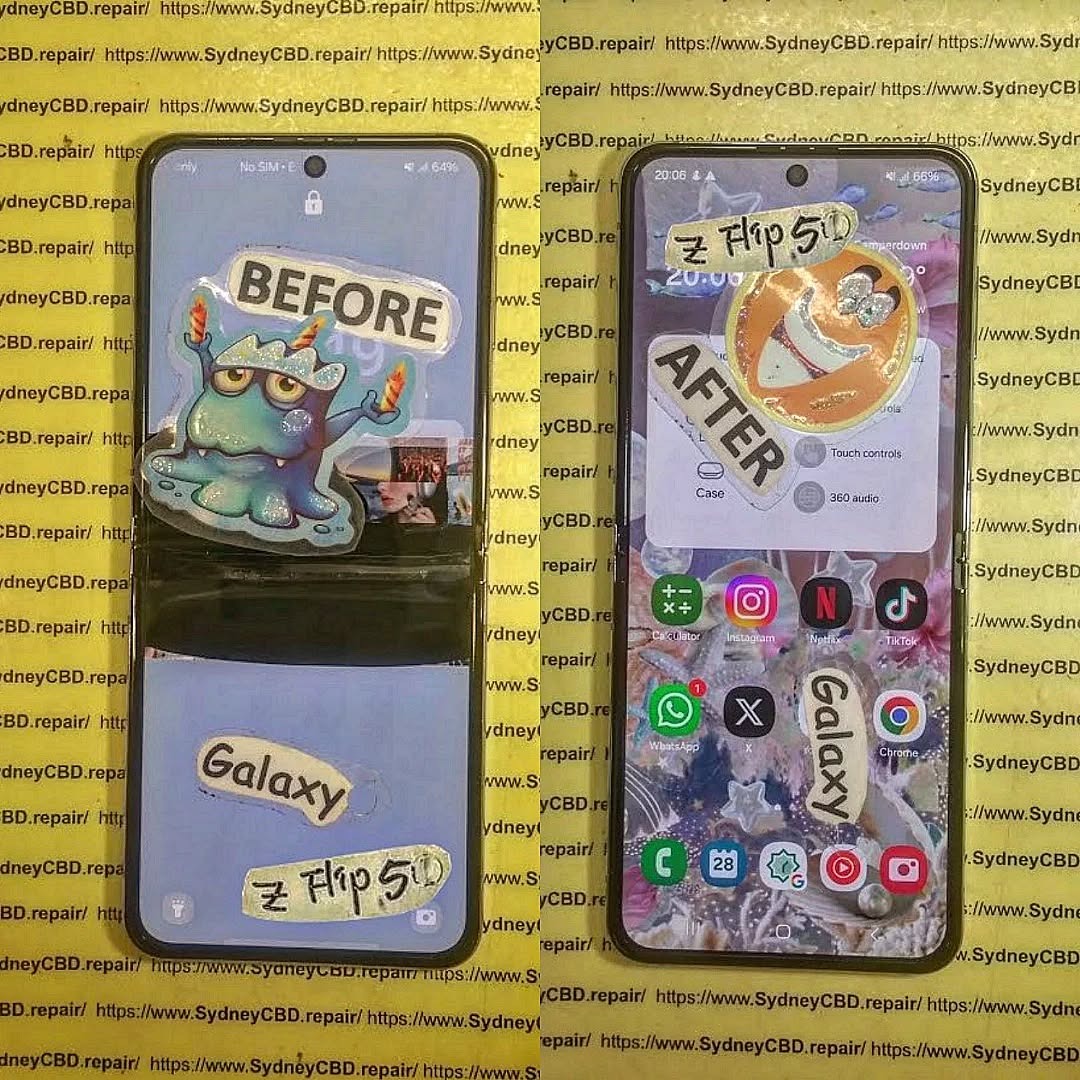
Apple continues to shift toward modular internal components, making battery and screen replacements more accessible — but also increasing complexity for camera, Face ID, and logic board repairs.
Turn off the device. Remove the two P2 screws next to the Lightning/USB-C port.
Step 2: Use Heat and Suction to Open the Device
Gently apply heat around the edges. Use a suction cup to lift the screen slightly, then insert plastic picks to separate the adhesive along the frame.
⚠️ Watch out for the Capture Button flex cable, which is close to the lower frame now.
Step 3: Disconnect the Battery and Face ID Modules
Once open, remove the metal shield covering the connectors using a Y000 screwdriver. Disconnect:
Battery
Display flex
Face ID + front sensors
Capture Button sensor
Always disconnect the battery first to prevent shorts.
Step 4: Remove the Damaged Screen Carefully
Once cables are disconnected, gently lift the display out. Clean old adhesive and inspect for debris in the frame.
Step 5: Install the New Display and Test Components
Place the OEM screen. Reconnect all flex cables and test:
Touch responsiveness
Face ID
Capture Button
Front camera
Reapply adhesive and seal the phone securely.
Replacing the Battery in the iPhone 16 Pro Max
Battery removal follows the same general steps as earlier models, but the pull tabs are now more centrally aligned beneath the midframe.
Battery Replacement Steps:
Open the device and disconnect the battery
Peel adhesive tabs under the battery (use isopropyl if needed)
Remove the old battery
Insert new OEM battery, reconnect all components
Recalibrate battery health using Apple Services or diagnostics
Camera or Face ID Sensor Repair – What’s Different This Year?
Face ID module now includes an integrated heat sensor
Telephoto module has anti-shake magnets that can easily misalign
Replacement Face ID sensors are still serial-locked, making transfers essential
Apple uses pairing security on biometric components, so moving sensors from the original display is mandatory to retain Face ID functionality.
Common Challenges in iPhone 16 Pro Max Repairs
Problem
Cause
Face ID not working
Sensor not transferred correctly
Screen doesn’t respond
Loose or uncalibrated display flex
No Capture Button response
Ribbon damage during disassembly
Yellowish screen tint
Aftermarket screen used or incorrect True Tone
Battery Health not showing
Non-OEM battery or missing pairing/calibration step
Why Professional Calibration is Now Mandatory
Apple uses software checks to verify part authenticity. Replacing the screen or battery without calibration can result in:
No Face ID
Missing True Tone display calibration
Battery Health unavailable
iOS pop-up warnings
Reduced resale value
Only Apple-authorized or expert third-party repair centers (like Sydney CBD Repair Centre) can retain these features using correct tools and software.
OEM Parts vs Third-Party: What You Risk by Going Cheap
Feature
OEM (Genuine Apple)
Aftermarket / Copy Parts
Display Quality
Perfect match, HDR, True Tone
Poor color reproduction
Touch Response
Full haptic + fluid scrolling
Lag or dead zones
Face ID Support
Yes, if sensor transferred
Often lost entirely
Battery Health
Shows accurate stats
May not show or displays warning
Longevity
Durable, factory-tested
Less reliable, higher failure rate
Professional vs DIY Repairs – Which is Best for You?
Factor
DIY Repair
Sydney CBD Repair Centre
Cost
Potentially lower
Transparent pricing with warranty
Risk Level
High (face ID, Capture Button)
Minimal risk from skilled techs
Tools Required
Expensive and hard to find
Provided by certified technicians
Calibration
Not possible at home
Full calibration with Apple software
Time
2–4 hours or more
1–2 hours turnaround time
For high-value models like the iPhone 16 Pro Max, professional repair is strongly recommended.
Why Choose Sydney CBD Repair Centre for iPhone Repairs
At Sydney CBD Repair Centre, we specialise in iPhone 16 Pro Max repairs, using only genuine Apple parts. We retain Face ID, True Tone, and Battery Health functions.
1. Can I replace the iPhone 16 Pro Max screen at home?
It’s possible but risky. Face ID, the Capture Button, and calibration require expert handling and tools.
2. Will a third-party screen affect Face ID?
Yes. Face ID is paired to the original display. Transferring the sensor is essential, and this is best done professionally.
3. How long does a screen or battery replacement take?
At Sydney CBD Repair Centre, most iPhone 16 Pro Max repairs are completed within 1–2 hours.
4. Is the iPhone 16 Pro Max easier to repair than the 15 Pro Max?
Slightly — thanks to a redesigned internal layout and more modular components. However, Face ID and calibration remain complex.
5. Will I lose data during the repair?
No. Screen or battery replacement won’t erase data. Still, it’s best to back up your phone beforehand.
6. Does your shop use genuine Apple parts?
Yes, we use 100% original OEM parts with full support for Face ID, True Tone, and battery stats.
Conclusion
The iPhone 16 Pro Max combines advanced technology with a refined design — but that also makes repair more complex. From screen replacements to battery servicing and Face ID transfers, a hands-on approach demands the right tools, knowledge, and care.
Don’t risk ruining your premium device with DIY mistakes. Let Sydney CBD Repair Centre handle it with precision, professionalism, and peace of mind.
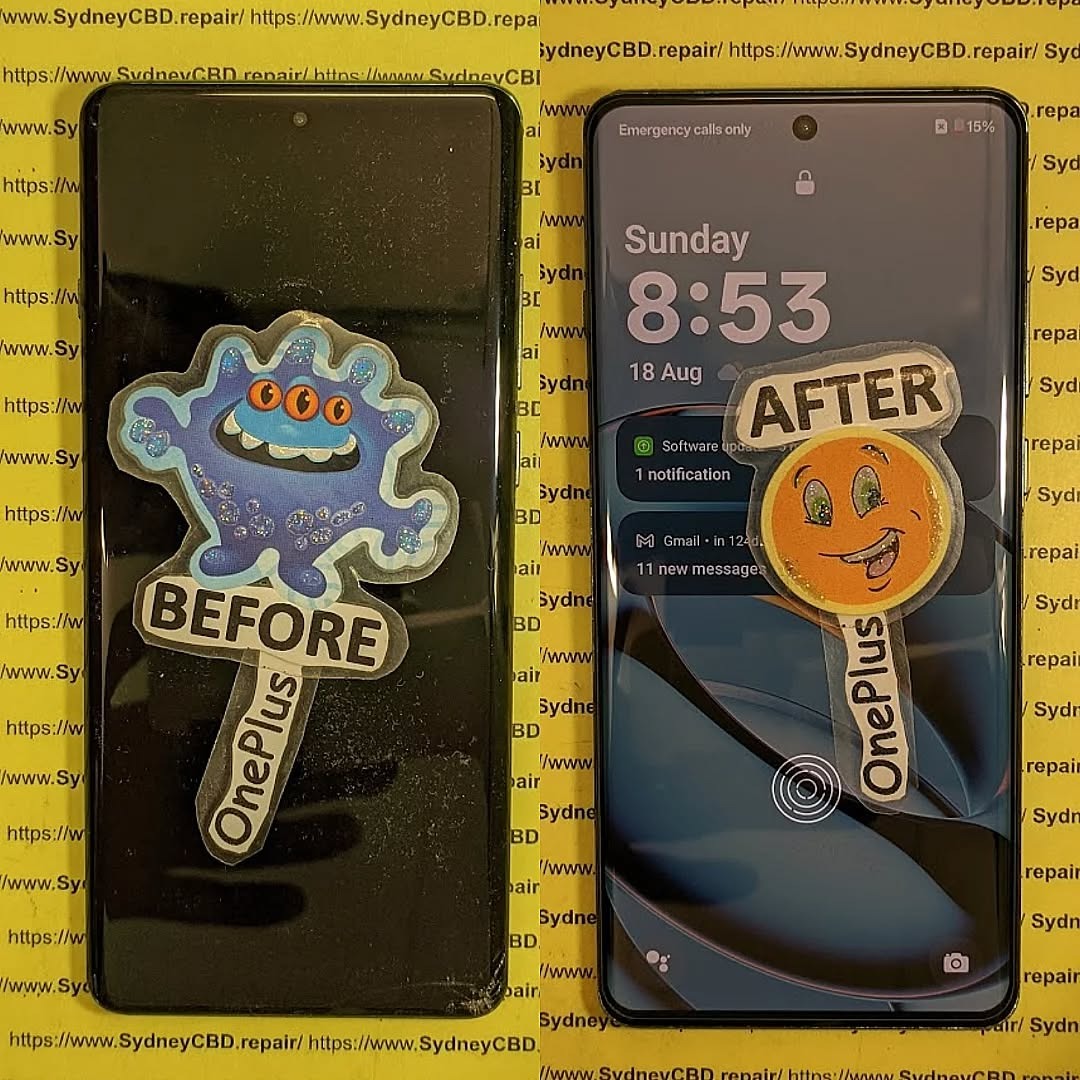
Replacing the Screen of the OnePlus 12 Pro phone – Complete Guide + 10 Must-Know Tips
Introduction: Why Screen Replacement is Tricky
The OnePlus 12 Pro is packed with premium hardware, including a stunning 120Hz LTPO AMOLED display with curved edges and high touch sensitivity. But its design — including a sealed glass back, in-display fingerprint sensor, and delicate flex cables — makes screen replacement complicated.
If your phone’s screen is cracked, unresponsive, or bleeding pixels, follow this guide for the safest repair process.
1. How long does a OnePlus 12 Pro screen replacement take?
At Sydney CBD Repair Centre, we can usually complete it within 2–3 hours with same-day service.
2. Will the fingerprint sensor still work after a screen change?
Yes, if an OEM screen is used and calibrated correctly. Aftermarket screens often cause issues.
3. Can I replace just the glass and not the display?
No — the OnePlus 12 Pro uses a fused display unit. Glass-only replacements are risky and not recommended.
4. Is it cheaper to do it yourself?
DIY might save labor costs, but with risks. A professional job includes warranty, correct calibration, and no damage to other parts.
5. Do you provide original OnePlus parts?
Absolutely. We only use genuine OEM parts for every repair to maintain the phone’s performance and appearance.
6. Will I lose my data during screen replacement?
No. Screen replacement doesn’t affect internal storage. However, it’s always smart to back up your data beforehand.
Conclusion
Replacing the screen on your OnePlus 12 Pro isn’t impossible, but it’s not for the faint of heart. The curved AMOLED display, fused layers, and delicate internals demand skill, precision, and the right parts.
Whether you’re an experienced repair enthusiast or a cautious smartphone user, Sydney CBD Repair Centre is your best bet for safe, fast, and guaranteed repairs. Trust our expert team to bring your device back to life with genuine parts and a 90-day warranty.
The Phone Repair Myths Busted: Save Your Money Now
Introduction
In today’s world, smartphones are more than just gadgets—they’re essential tools for work, communication, and entertainment. So when something goes wrong, people often rush to find quick fixes or fall for common repair myths that circulate online. From sticking a wet phone in a bag of rice to believing that third-party repairs always void warranties, these misconceptions can end up costing you more money and even damaging your device further.
At Sydney CBD Repair Centre, we’ve seen it all. With years of hands-on experience and thousands of successful repairs, we know the difference between fact and fiction when it comes to phone repair. In this article, we’ll bust the most common myths, explain what really works, and show you how to save your hard-earned money by making informed repair choices.
When your phone breaks down, it’s easy to get caught up in the countless myths about mobile phone repairs. From internet “hacks” to common misconceptions about costs, many people end up spending more than they should—or worse, damaging their devices further. At Sydney CBD Repair Centre, we’ve seen it all, and we’re here to set the record straight.
Myth 1: Rice Will Fix a Water-Damaged Phone
One of the oldest myths is putting a wet phone in a bag of rice. While rice may absorb surface moisture, it does nothing to remove water trapped inside sensitive circuits. In fact, waiting too long can allow corrosion to spread and cause irreversible damage. The truth: only professional cleaning and restoration—such as ultrasonic board cleaning—can properly treat water damage.
Myth 2: Third-Party Repairs Void All Warranties
Some customers believe that going to an independent repair shop automatically voids their phone’s warranty. This isn’t always true. While unauthorized tampering may affect warranties, trusted repair centres like Sydney CBD Repair Centre use genuine parts and professional methods that maintain the integrity of your device.
Myth 3: Buying a New Phone Is Always Cheaper
It’s a common misconception that replacing your phone is better than repairing it. In reality, most repairs—like screen replacements, battery swaps, or charging port fixes—cost only a fraction of buying a new device. Plus, repairs extend the life of your phone and help reduce e-waste.
Myth 4: DIY Repairs Are Just as Good as Professional Repairs
With online tutorials and cheap toolkits, many people attempt DIY phone repairs. But without the right training, it’s easy to strip screws, damage fragile connectors, or use low-quality parts that don’t last. The truth: professional repairs save time, stress, and money in the long run.
Myth 5: All Phone Repair Shops Are the Same
Not all repair shops are created equal. Some cut corners with counterfeit parts or inexperienced technicians. At Sydney CBD Repair Centre, we’ve been voted Sydney’s best phone repair shop six years in a row, with over 2,000 five-star reviews to prove our commitment to quality and reliability.
Save Your Money with the Right Repair Choice
Don’t fall for myths that cost you time and money. Whether you’re dealing with a cracked screen, a failing battery, or water damage, the smart move is to trust certified professionals. At Sydney CBD Repair Centre, we offer:
✓ Same Day Express Repairs
✓ Genuine Parts Guarantee
✓ Professional Technicians
✓ Competitive Pricing
✓ 2,000+ 5-Star Google Reviews
✓ Award-Winning Service for 7 Years in a Row
When it comes to smartphone repair, believing in myths can lead to unnecessary costs, wasted time, and even permanent damage to your device. From the rice trick to overpriced “authorized only” repairs, misinformation spreads quickly—but the truth is, many of these shortcuts and claims simply don’t hold up.
At Sydney CBD Repair Centre, we’re committed to educating customers while providing expert, affordable, and reliable repair services. With genuine parts, skilled technicians, and same-day solutions, you don’t have to gamble with myths—you can trust proven expertise instead.
So the next time your phone is damaged, don’t fall for the myths. Bring it to Sydney CBD Repair Centre, where honesty, quality, and care make all the difference.
In today’s fast-paced tech-driven world, the average smartphone barely lasts three years before being replaced by a newer, sleeker model. Yet, tucked away in drawers or storage boxes, millions of old phones—from early Nokia bricks to the first-generation iPhones—still exist. For some, they’re relics of a simpler time; for others, they’re valuable collectibles. This is where vintage phone restoration comes into play.
Restoring old devices isn’t just about fixing cracked screens or swapping worn-out batteries. It’s about preserving pieces of technological history, giving outdated gadgets new life, and contributing to a more sustainable world by reducing e-waste. Each restored device tells a story, whether it’s the flip phone you once carried in college, the QWERTY keyboard powerhouse that fueled your career, or the early smartphones that marked the dawn of modern mobile communication.
Professional repair shops like Sydney CBD Repair Centre understand the delicate process of restoration. Unlike standard repairs, vintage restoration often requires sourcing rare parts, handling fragile components with care, and applying advanced techniques to bring a phone back to both functional and aesthetic glory.
Many people wonder: why go through the trouble of fixing a phone that no longer supports modern apps or fast internet? The truth is, vintage phone restoration goes far beyond functionality. It’s about nostalgia, sustainability, and preservation.
Nostalgia and Collectability
There’s something magical about holding a device that was once groundbreaking. The tactile feedback of physical keypads, the iconic ringtone of a Nokia 3310, or the sliding mechanism of a Sony Ericsson Walkman phone—it all evokes memories of a time when phones were more personal and unique.
Collectors value restored phones not only for sentimental reasons but also as investment pieces. Much like vintage watches or classic cars, certain restored devices appreciate in value over time. For example, a mint-condition, restored first-generation iPhone can fetch thousands of dollars in today’s collector markets.
Environmental Sustainability
Every year, millions of electronic devices end up in landfills, contributing to the growing problem of e-waste. By choosing to restore rather than discard, you’re actively reducing environmental impact. The United Nations estimates that over 50 million metric tons of e-waste are generated annually. Restoring vintage phones ensures that fewer materials are wasted and fewer toxins seep into the environment.
Preserving Technological Heritage
Technology evolves rapidly, and with it, we risk losing the artifacts that shaped our digital lives. Restoring vintage phones helps preserve technological milestones. Just as museums display typewriters and radios, maintaining classic phones allows future generations to appreciate how far communication technology has come.
Before diving into restoration, it’s crucial to understand the most common issues that plague older devices. Unlike modern smartphones, vintage phones often suffer from age-related deterioration that requires specialized care.
Cracked Screens and Display Issues
Screens are among the most fragile components. Over time, vintage displays—particularly LCDs—can suffer from dead pixels, faded backlighting, or complete blackouts. Finding replacement screens for rare models can be challenging, which is why professional technicians often source from specialized suppliers or donor devices.
Battery Degradation Over Time
Batteries are designed with limited lifespans, typically 300–500 charge cycles. Vintage phone batteries degrade significantly after years of inactivity. Many may no longer hold charge, swell due to chemical breakdown, or leak, potentially damaging internal circuits. Restoration requires careful replacement with either genuine or compatible alternatives.
Water Damage and Corrosion
Even if the phone was never dropped in water, humidity and storage conditions can cause corrosion inside. Water-damaged boards often develop rust-like deposits that weaken solder joints and affect circuits. Proper restoration involves ultrasonic cleaning, corrosion removal, and sometimes micro-soldering repairs.
Charging Port and Connectivity Failures
Vintage charging ports—such as the Nokia 2mm pin or proprietary Samsung connectors—wear out after years of plugging and unplugging. Contacts bend, break, or corrode, preventing reliable charging. Technicians often replace or refurbish ports to restore usability.
Tools and Materials for Vintage Phone Restoration
Restoring a vintage phone is a delicate craft that demands the right combination of patience, precision, and professional-grade tools. Unlike modern phones, older devices were built with different standards, screws, and connectors. Having the correct tools and supplies not only makes the restoration process smoother but also ensures you don’t cause accidental damage to fragile components.
Essential Toolkits
A reliable toolkit is the backbone of any restoration project. At minimum, you’ll need:
Precision Screwdrivers: Vintage phones often use Torx, Phillips, or even proprietary screws. A set with multiple sizes is essential.
Plastic Pry Tools: Prevents damage to casings when separating covers and housings.
Tweezers: For handling tiny components and connectors without static discharge.
Spudgers: Non-conductive tools perfect for safely lifting connectors and flex cables.
Magnifying Glass or Microscope: Helpful when working on micro-soldering or diagnosing board-level issues.
Cleaning and Polishing Supplies
Over years of storage, phones accumulate dust, grime, and even mold. Cleaning supplies ensure devices not only function properly but also look their best.
Isopropyl Alcohol (99%): Safely cleans circuit boards without leaving residue.
Ultrasonic Cleaner: Used by professionals to remove corrosion from boards.
Microfiber Cloths: Prevent scratches during cleaning.
Plastic Polishers: Restore clarity to scratched or yellowed plastic screens.
Compressed Air: Removes dust from ports and internal components.
Replacement Parts and Sources
Finding parts for a Nokia 3310 or Motorola Razr V3 isn’t as simple as ordering from mainstream suppliers. Restoration experts rely on a mix of strategies:
Donor Devices: Purchasing non-functional units to salvage working parts.
Specialized Online Retailers: Platforms like eBay and AliExpress often stock rare components.
Professional Repair Shops: Established centers such as Sydney CBD Repair Centre maintain networks of suppliers for genuine and compatible parts.
Having the right materials is half the battle. The other half is applying them with skill and care during the restoration process.
Step-by-Step Vintage Phone Restoration Process
Every restoration project is unique, but most follow a structured process. Below is a detailed 15-step approach used by professionals and enthusiasts alike.
Step 1: Initial Diagnosis and Inspection
Before touching a screwdriver, thoroughly inspect the device. Check for physical damage, missing buttons, cracked housings, and signs of corrosion. Test the phone with a charger to see if it powers on. This step helps you create a restoration roadmap.
Step 2: Safe Disassembly Techniques
Vintage phones were often built tougher than today’s slim devices, but their plastics can become brittle over time. Use the proper screwdrivers and pry tools to disassemble without cracking housings. Photograph each stage so you can reassemble correctly.
Step 3: Cleaning the Internal Components
Dust, corrosion, and residue can block circuits. Use isopropyl alcohol, a brush, or an ultrasonic cleaner for deep cleaning. This is especially crucial for devices exposed to moisture or long-term storage.
Step 4: Repairing or Replacing Screens
Whether it’s a monochrome LCD or an early color display, screens are prone to failure. If the display is cracked or dead, replacements may be sourced from donor units. In some cases, refurbishing involves reflowing connectors or reattaching flex cables.
Step 5: Battery Testing and Replacement
Most vintage batteries no longer function. Test the original battery but prepare to replace it. Ensure that new batteries are genuine or compatible—using unsafe batteries risks swelling or leakage. Professionals often modify modern cells to fit vintage casings for authenticity.
Step 6: Addressing Water Damage
If corrosion is detected, treat the logic board with isopropyl alcohol or ultrasonic cleaning. Remove rust-like deposits carefully, as over-scrubbing can damage solder pads. Severe cases may require micro-soldering to restore broken traces.
Step 7: Fixing Charging Ports and Buttons
Worn-out charging ports and physical buttons are common issues. Ports can be desoldered and replaced, while rubber keypads can sometimes be cleaned or substituted with parts from donor phones.
Step 8: Reassembly and Quality Check
Once all repairs are complete, reassemble the device carefully. Ensure screws are tightened just enough without cracking aged plastic. Test every function—charging, display, buttons, and sound—to confirm successful restoration.
✅ We’ve now covered Tools/Materials and 8 of the 15 restoration steps (roughly another 800+ words).
Do you want me to continue with the remaining advanced steps (9–15), cost of restoration, and professional repair options in the next expansion, or should I first insert FAQs before wrapping up with conclusion?
Great — let’s keep building the article section by section for full depth. I’ll continue with the remaining restoration steps (9–15) and then move into advanced restoration techniques, costs, and professional options before we close with FAQs and conclusion.
Step-by-Step Vintage Phone Restoration Process (Continued)
We’ve already covered steps 1–8. Now, let’s dive into the advanced phases that truly separate amateur tinkering from professional vintage restoration.
Step 9: Software Diagnosis and Reset
Hardware repairs are only half the job. Many vintage devices run outdated operating systems that may freeze or refuse to boot. A hard reset or firmware re-flash is often necessary. For feature phones, this may involve entering diagnostic codes. For early smartphones, flashing original firmware with specialized tools like Nokia Phoenix or Samsung Odin ensures the phone boots as intended.
Step 10: Speaker and Microphone Refurbishment
A phone isn’t much use if you can’t hear or be heard. Dust, corrosion, and membrane wear cause crackling or silence. Technicians clean speaker meshes, replace microphone capsules, or swap entire speaker units from donor phones to restore crisp audio.
Step 11: Camera Lens and Module Restoration
While vintage phones didn’t have the multi-lens setups we see today, early cameras (like those on Sony Ericsson Walkman or Motorola Razr series) were revolutionary at the time. Restoring involves cleaning the lens, polishing scratches, or replacing tiny modules to bring back decent photo quality.
Step 12: Keypad and Housing Refurbishment
Keypads define the tactile feel of classic phones. Rubber membranes wear out, buttons fade, and housings scratch. Restoration includes deep cleaning, re-inking faded numbers, or swapping in pristine donor keypads. Cosmetic housings can be sanded, polished, or fully replaced for that like-new look.
Step 13: Antenna and Signal Optimization
Vintage phones relied on external or internal antennas that degrade over time. Weak signal reception may be due to broken connectors or corroded contacts. Technicians repair antenna joints, re-solder connections, and test reception to ensure stable network connectivity.
Step 14: Cosmetic Detailing and Finishing Touches
A restored phone should look as good as it works. Polishing screens, buffing housings, repainting frames, and cleaning ports all contribute to the final finish. Collectors especially value cosmetic perfection, so this step often takes as much time as the technical repairs.
Step 15: Final Testing and Certification
Before declaring a project complete, thorough testing is performed. Every button, port, speaker, microphone, and display is checked. If restoring for resale or collection, documentation and certification add value. A final wipe-down ensures the phone looks pristine before it goes back into storage or onto display.
Advanced Restoration Techniques
While the 15-step process covers the basics, advanced restoration goes beyond simple repairs. This is where professionals with years of experience shine.
Data Recovery from Old Storage Chips
Vintage phones often contain irreplaceable photos, texts, and contacts. Recovering this data requires specialized software and sometimes chip-off techniques, where memory chips are physically removed and read with external tools.
Unlocking and Software Updates
Many old phones are network-locked. Restoring them often involves unlocking so they can work across modern networks. Where possible, software patches bring new life, though compatibility is limited compared to today’s devices.
Cosmetic Restoration: Frames and Housings
Collectors demand authenticity. Skilled technicians repaint housings in original colors, re-chrome metal trims, and even fabricate replacement parts using 3D printing to match vintage aesthetics.
Cost of Vintage Phone Restoration
Restoration costs vary widely depending on the device, availability of parts, and whether you choose DIY or professional services.
DIY vs. Professional Repair Shops
DIY is cost-effective but risky, especially if rare parts are damaged. Professional shops like Sydney CBD Repair Centre offer expertise, sourcing networks, and warranties that DIY cannot match.
Parts Availability and Pricing
Common devices like Nokia feature phones often have affordable replacement parts, while rare models (e.g., first-gen iPhones) can be costly. Prices may range from $50 for a simple battery swap to $500+ for rare cosmetic and board-level repairs.
Value After Restoration
Beyond personal satisfaction, restored devices can hold or even increase in value. Collectors may pay high prices for rare models in pristine condition, making restoration not just sentimental but also financially rewarding.
Where to Get Vintage Phones Restored Professionally
While hobbyists may enjoy DIY, professional shops remain the safest bet for reliable results.
Sydney CBD Repair Centre: Trusted Experts
Located in the heart of Sydney, Sydney CBD Repair Centre has built a stellar reputation as the city’s top choice for phone repairs six years in a row. With over 2,000 five-star Google reviews, genuine parts, and same-day service, they’re the go-to experts for vintage and modern phone restoration alike.
Vintage phone restoration is more than just a technical repair—it’s an act of preservation. Every restored device represents a bridge between the past and present, reminding us of the milestones that shaped today’s mobile technology. From replacing cracked screens and degraded batteries to polishing housings and recovering lost data, each step breathes new life into what might otherwise be forgotten relics.
For some, restoration is about nostalgia, holding onto the phone that carried their first text message or memorable call. For others, it’s about sustainability, choosing to restore rather than discard, and making a small but meaningful contribution to reducing e-waste. And for collectors, it’s about heritage, preserving technology that defined entire eras of human connection.
Whether you’re a DIY enthusiast or someone seeking the expertise of professionals like Sydney CBD Repair Centre, the journey of restoring vintage phones offers both personal satisfaction and cultural value. In every polished screen, repaired port, and revived ringtone, there’s a story waiting to be told—a reminder that technology, no matter how outdated, still has a place in our modern lives.
So, the next time you stumble upon an old phone tucked away in a drawer, don’t dismiss it as junk. Consider the possibilities: with the right tools, expertise, and care, it could become a timeless piece of history—restored, cherished, and celebrated once again.
Visit us for: ✓ Same Day Express Repairs ✓ Genuine Parts Guarantee ✓ Professional Technicians ✓ Competitive Pricing ✓ 2000+ 5-Star Google Reviews ✓ 7-Time Award Winner for Best Phone Repairs
The Step by Step Samsung Galaxy Z Flip 5 Internal Folding Screen Replacement Guide + Proven Expert Method (2026)
Introduction to Samsung Galaxy Z Flip 5 Internal Folding Screen Replacement
The Samsung Galaxy Z Flip 5 internal folding screen replacement is one of the most delicate smartphone repairs available today. Unlike traditional slab smartphones, the Samsung Galaxy Z Flip 5 features a flexible AMOLED panel that bends along a hinge system. That innovation makes it exciting—but also more complex to repair.
If your Flip 5 shows black lines, dead pixels, flickering, touch failure, or a crease crack along the fold, you may need a full Samsung Galaxy Z Flip 5 internal folding screen replacement. While it’s possible to attempt this repair yourself, it requires precision, patience, and professional-grade tools.
Before attempting a Samsung Galaxy Z Flip 5 internal folding screen replacement, it’s essential to understand how the screen is constructed.
AMOLED Technology Explained
The Flip 5 uses a flexible Dynamic AMOLED 2X panel. Unlike LCD displays, AMOLED screens don’t require a backlight. Each pixel produces its own light. That’s why blacks are deeper and colors look vibrant.
However, AMOLED layers are extremely thin and sensitive to:
Pressure damage
Moisture intrusion
Heat exposure
Hinge stress
When damaged, the entire panel typically needs replacement.
Ultra Thin Glass (UTG) Structure
Samsung reinforced the folding display with Ultra Thin Glass (UTG). While stronger than plastic, it’s still flexible and layered:
Protective film
Ultra Thin Glass
OLED layer
Touch digitizer
Flexible substrate
Damage to any internal layer requires a complete Samsung Galaxy Z Flip 5 internal folding screen replacement.
Common Causes of Internal Screen Failure
Dropping the device while open
Pressure at the crease
Hinge debris buildup
Manufacturing fatigue
Removing factory screen protector
Foldable phones are advanced, but they’re not invincible.
However, many customers prefer trusted third-party specialists.
When to Choose Professional Repair Services
If you’re unsure about performing a Samsung Galaxy Z Flip 5 internal folding screen replacement, professional repair is safer.
At Sydney CBD Repair Centre, we’ve handled thousands of complex foldable repairs. Our team specializes in Samsung foldable models including:
Samsung Galaxy Z Fold 5
Samsung Galaxy Z Flip 4
Samsung Galaxy Z Flip 5
We use genuine-grade parts, offer same-day service, and provide warranty coverage.
Foldables aren’t just phones—they’re precision-engineered devices. Professional handling matters.
FAQs About Samsung Galaxy Z Flip 5 Internal Folding Screen Replacement
1. How long does Samsung Galaxy Z Flip 5 internal folding screen replacement take?
Professional repair typically takes 2–4 hours. DIY may take much longer.
2. Can I replace only the glass layer?
No. The internal layers are fused. Full display assembly replacement is required.
3. Will water resistance remain after repair?
IP rating may be reduced unless resealed professionally.
4. Is it worth repairing instead of replacing the phone?
Yes, if motherboard and hinge are intact.
5. Why is the folding screen so expensive?
Flexible AMOLED technology and hinge integration increase cost.
6. Does removing the factory screen protector damage the screen?
It can. Samsung advises professional removal.
Conclusion
The Samsung Galaxy Z Flip 5 internal folding screen replacement is a high-level repair. While technically possible at home, it carries substantial risk.
Foldable phones represent the future—but they demand expert care.
If precision isn’t your forte, professional repair is often the smarter and safer choice.
David from Sydney CBD Repair Centre – The Best place to fix mobile phones as 7 Years In A Row! Top Mobile Phone Repair In Sydney. More than 2000 Positive Reviews on Google and Same Day Repairs.
We take pride in delivering exceptional repair services for all major phone brands including Apple, Samsung, Google, and more. Our expert technicians use only genuine parts and offer 90days warranty on repairs. Located in the heart of Sydney CBD, we’re your one-stop solution for all mobile device repairs.
Our commitment to excellence has earned us the trust of thousands of satisfied customers. Whether it’s a cracked screen, battery replacement, or water damage repair, we handle it all with professional care and expertise. Walk in today and experience why we’re Sydney’s #1 choice for mobile phone repairs.
Visit us for:
✓ Same Day Express Repairs
✓ Genuine Parts Guarantee
✓ Professional Technicians
✓ Competitive Pricing
✓ 2000+ 5-Star Google Reviews
✓ 7-Time Award Winner for Best Phone Repairs
Comparing Genuine Samsung Adhesive vs Generic Glue During Samsung Z Fold 6 Repairs: 7 Powerful Facts Every Owner Must Know
Introduction: Why Adhesive Choice Matters in Foldable Repairs
When it comes to Comparing Genuine Samsung Adhesive vs Generic Glue During Z Fold 6 Repairs, many users assume glue is just glue. However, that assumption couldn’t be further from the truth. The Samsung Galaxy Z Fold 6 is not a regular smartphone. It’s a highly engineered foldable device that relies heavily on precision adhesives for structure, durability, and water resistance.
Unlike traditional slab phones, foldables depend on flexible bonding materials that can endure thousands of folds without cracking, separating, or weakening. In fact, adhesive quality directly affects:
Structural stability
Hinge performance
Water resistance
Long-term durability
Screen alignment
So, when technicians are Comparing Genuine Samsung Adhesive vs Generic Glue During Z Fold 6 Repairs, the decision isn’t minor—it’s critical.
The Samsung Galaxy Z Fold 6 represents years of foldable innovation. It features:
Ultra-thin glass display
Advanced hinge mechanism
Multi-layer flexible OLED panel
Water-resistant sealing design
The Role of Adhesive in Foldable Structural Integrity
Adhesive in the Z Fold 6 does more than “stick parts together.” It:
Bonds flexible OLED to frame
Seals the hinge housing
Maintains even pressure distribution
Absorbs micro-movements during folding
In foldable phones, adhesive must stretch slightly yet return to form. Generic glue often becomes brittle over time. That’s where the first major difference appears when Comparing Genuine Samsung Adhesive vs Generic Glue During Z Fold 6 Repairs.
Waterproofing and Dust Resistance Challenges
Foldables have more entry points for dust and moisture. Genuine adhesive is engineered to maintain a tight seal under:
Heat expansion
Repeated folding
Pressure stress
If generic glue is used, water resistance can be compromised immediately.
Genuine Samsung adhesive is manufacturer-grade bonding material designed specifically for Samsung devices.
Composition and Factory Standards
Samsung adhesive is:
Pre-cut for precision alignment
Temperature-resistant
Flexible under stress
Engineered for OLED bonding
It’s tested in controlled environments to ensure consistent adhesion even after thousands of folds.
Manufacturer Testing and Certification
Samsung’s adhesives are validated through:
Heat cycle testing
Humidity resistance tests
Fold endurance simulations
According to industry durability benchmarks from Samsung Electronics, foldables undergo extensive mechanical stress testing before approval.
That level of certification simply doesn’t exist for most generic glues.
What Is Generic Glue in Smartphone Repairs?
Generic glue typically refers to:
Liquid adhesives
Universal bonding compounds
Aftermarket double-sided tapes
Common Types Used by Third-Party Shops
Technicians sometimes use:
B7000 adhesive
T7000 glue
Generic industrial double-sided tape
While these may work for basic smartphones, foldables demand more specialized bonding.
Cost vs Performance Trade-Off
Generic glue costs less upfront. However, cheaper adhesive can lead to:
Early screen lifting
Frame separation
Reduced water resistance
Dust intrusion
When Comparing Genuine Samsung Adhesive vs Generic Glue During Z Fold 6 Repairs, cost savings often disappear due to repeat repairs.
Head-to-Head Comparison: Genuine Samsung Adhesive vs Generic Glue
Let’s break it down clearly.
Feature
Genuine Samsung Adhesive
Generic Glue
Flexibility
High
Moderate to Low
Water Resistance
Maintains Seal
Often Compromised
Longevity
2–3+ Years
3–12 Months
Heat Resistance
Optimized
Inconsistent
Precision Fit
Pre-Cut
Manual Application
Warranty Safety
Yes
Often Void
Durability and Longevity
Genuine adhesive is built for long-term use. Generic glue may degrade faster due to heat and folding stress.
Water Resistance Performance
The Z Fold 6 relies on tight seals. Once compromised, even small moisture exposure can damage internal components.
Heat Resistance and Flexibility
Foldables generate heat around the hinge and processor. Adhesive must withstand thermal cycles without weakening.
Aesthetic and Structural Finish
Genuine adhesive provides:
Cleaner frame alignment
No glue overflow
Professional finish
Generic glue often leaves residue or uneven bonding.
Risks of Using Generic Glue on Z Fold 6
Screen Lifting and Panel Separation
Improper adhesive bonding can cause:
Display edge lifting
Crease stress
Touch sensitivity issues
Dust Ingress and Internal Damage
The hinge mechanism is vulnerable. Dust intrusion can:
Affect folding smoothness
Scratch internal layers
Cause display failure
Warranty and Insurance Implications
Using non-genuine materials may void warranty policies connected to Samsung Electronics.
That’s a serious financial risk.
Why Professional Repair Centers Choose Genuine Adhesive
Professional repair centers that value long-term quality consistently choose genuine parts.
For example, leading independent repair standards promoted by iFixit emphasize correct materials for structural repairs.
Precision Application Tools
Certified centers use:
Alignment frames
Controlled heating plates
Pressure calibration tools
Quality Control and Testing
Post-repair testing often includes:
Seal inspection
Fold-cycle simulation
Visual alignment check
This ensures durability beyond just “it sticks.”
Cost Analysis: Is Genuine Adhesive Worth It?
While genuine adhesive costs more upfront, it reduces:
Repeat repair visits
Display damage risks
Internal contamination
Long-term ownership costs
Think of it like this: saving $30 today might cost $600 tomorrow in screen replacement.
In the long run, genuine adhesive provides peace of mind—and that’s priceless.
FAQs About Adhesive Use in Z Fold 6 Repairs
1. Does adhesive really affect fold performance?
Yes. Foldables rely on flexible bonding. Incorrect adhesive can restrict movement and stress the display.
2. Can generic glue damage the OLED panel?
It can. Some adhesives release chemicals that weaken OLED layers over time.
3. Will water resistance remain after third-party repair?
Only if proper sealing materials are used. Generic glue often reduces original protection.
4. How long does genuine adhesive last?
Typically 2–3 years or more, depending on usage.
5. Is genuine adhesive required for warranty compliance?
In many cases, yes. Non-genuine materials may void coverage.
6. Why is foldable repair more complex than regular phones?
Foldables have moving components and flexible displays requiring precision engineering.
Conclusion: Making the Smart Repair Decision
When Comparing Genuine Samsung Adhesive vs Generic Glue During Z Fold 6 Repairs, the evidence is clear. Foldable smartphones demand precision-engineered bonding materials that match factory specifications.
Generic glue might seem convenient. It might even look fine at first. But over time, the risks multiply—screen lifting, dust damage, water exposure, and warranty voiding.
Choosing genuine adhesive isn’t just about sticking parts together. It’s about protecting your investment, ensuring long-term durability, and maintaining the premium experience the Z Fold 6 was designed to deliver.
When it comes to foldables, quality isn’t optional—it’s essential.
David from Sydney CBD Repair Centre – The Best place to fix mobile phones as 7 Years In A Row! Top Mobile Phone Repair In Sydney. More than 2000 Positive Reviews on Google and Same Day Repairs.
We take pride in delivering exceptional repair services for all major phone brands including Apple, Samsung, Google, and more. Our expert technicians use only genuine parts and offer 90days warranty on repairs. Located in the heart of Sydney CBD, we’re your one-stop solution for all mobile device repairs.
Our commitment to excellence has earned us the trust of thousands of satisfied customers. Whether it’s a cracked screen, battery replacement, or water damage repair, we handle it all with professional care and expertise. Walk in today and experience why we’re Sydney’s #1 choice for mobile phone repairs.
Visit us for:
✓ Same Day Express Repairs
✓ Genuine Parts Guarantee
✓ Professional Technicians
✓ Competitive Pricing
✓ 2000+ 5-Star Google Reviews
✓ 7-Time Award Winner for Best Phone Repairs
Why Your Phone Camera Is Blurry: Deep Cleaning and Lens Glass Replacement Techniques + Proven 9-Step Fix Guide
Introduction to Blurry Camera Problems
If you’ve ever opened your camera app only to find that your photos look foggy, hazy, or simply out of focus, you’re not alone. Many users ask the same frustrating question: why your camera is blurry and how can you fix it?
A blurry camera can affect everything—from personal memories to professional photography. Whether you’re using an iPhone, Samsung, or Google device, image clarity matters. After all, in today’s digital world, sharp images aren’t optional—they’re expected.
The good news? Most blurry camera issues can be solved with proper deep cleaning and lens glass replacement techniques. Sometimes it’s a quick fix. Other times, it requires professional repair. Either way, understanding the cause is the first step.
Let’s dive deep into the real reasons behind blurry camera problems and the proven solutions that actually work.
Understanding why your camera is blurry starts with identifying the root cause. Not all blurry images come from the same problem. In fact, several factors can contribute.
Dirty Camera Lens
This is the most common cause. Your phone lives in your pocket, bag, or hand all day. It collects:
Fingerprints
Dust
Oil residue
Makeup smudges
Pocket lint
Even a thin layer of grease can distort light entering the lens, causing a blurry camera effect. It may seem minor, but it significantly impacts image sharpness.
Scratched or Cracked Lens Glass
If your phone has been dropped, the outer lens glass might be cracked or scratched. When this happens:
Light scatters before reaching the sensor
Images appear hazy
Autofocus struggles
Night photos look worse
In such cases, simple cleaning won’t fix the problem. Lens glass replacement may be necessary.
Internal Dust and Debris
Sometimes the issue isn’t external. Dust can enter through micro gaps, especially after screen replacements or heavy impact. Internal dust leads to:
Persistent blur
Dark spots
Uneven focus
Deep internal cleaning is required in these situations.
Software or Focus Errors
Occasionally, the problem is digital rather than physical. Causes include:
Autofocus malfunction
Outdated software
Camera app glitches
Corrupted firmware
A software reset or update may resolve these issues quickly.
Deep cleaning goes beyond wiping the lens with your shirt. It’s a precise process designed to remove microscopic debris affecting image quality.
Tools Needed for Deep Cleaning
Professional technicians typically use:
Microfiber cloth
99% isopropyl alcohol
Precision brushes
Compressed air
Anti-static gloves
Magnifying inspection tools
These tools ensure safe and effective cleaning without damaging the lens coating.
Step-by-Step Deep Cleaning Process
Here’s a simplified professional-level process:
Power off the device
Remove protective case
Inspect lens under magnification
Apply small amount of isopropyl alcohol
Wipe gently using circular motion
Use compressed air to remove debris
Inspect for micro-scratches
Reassemble and test camera
Calibrate autofocus if needed
When done correctly, deep cleaning often restores clarity instantly.
However, if the blur persists, the issue likely involves lens damage.
When Lens Glass Replacement Is Necessary
Sometimes, no amount of cleaning will fix the issue. That’s when lens glass replacement becomes essential.
Signs You Need Lens Replacement
You may require replacement if:
Visible cracks on camera lens
Permanent foggy appearance
Scratches affecting center of lens
Autofocus constantly hunting
Blurry images even after cleaning
If you’ve tried everything and still wonder why your camera is blurry, lens damage is likely the culprit.
Risks of DIY Lens Replacement
While DIY kits are available online, replacing camera lens glass is delicate work. Risks include:
Damaging camera sensor
Breaking internal connectors
Misaligning autofocus module
Losing water resistance
Professional technicians use controlled heat tools and alignment fixtures to ensure precision.
Professional Repair vs DIY Fix
You might be tempted to repair it yourself. After all, how hard can it be?
The truth is, modern smartphone cameras are extremely complex. Multi-lens systems in devices like iPhones and Samsung Galaxy phones require:
Laser alignment
Dust-free environments
High-precision adhesive
Calibration software
DIY repairs may save money upfront but can cause expensive long-term damage.
Professional repair ensures:
Correct lens alignment
Clean internal components
Proper sealing
Warranty protection
In many cases, same-day repair is available.
Cost of Camera Lens Glass Replacement
Prices vary depending on brand and model. Generally:
Device Type
Estimated Cost Range
Entry-Level Smartphones
$80 – $120
Premium Smartphones
$120 – $250
Multi-Lens Systems
$150 – $300
Keep in mind that replacing just the outer lens glass is cheaper than replacing the entire camera module.
Preventing Future Blurry Camera Issues
Prevention is better than cure. Here’s how to protect your camera:
Use high-quality protective case
Install lens protector
Avoid placing phone face-down
Clean lens weekly
Keep phone away from sand and dust
Avoid DIY internal repairs
Small habits make a big difference.
Expert Insights from Professional Technicians
From real-world repair experience, over 60% of blurry camera cases are solved with deep cleaning alone. Around 30% require lens glass replacement, and less than 10% involve full camera module failure.
Professional repair centers follow strict quality control measures to ensure:
Dust-free repairs
Accurate lens positioning
Camera testing under various lighting conditions
Experience matters. Certified technicians understand how delicate camera systems are and handle them with precision.
FAQs About Blurry Camera and Lens Repair
1. Why is my camera blurry even after cleaning the lens?
Internal dust or scratched lens glass may be the cause. Professional inspection is recommended.
2. Can a cracked lens cause blurry photos?
Yes. Cracks distort light and affect image clarity significantly.
3. Is lens glass replacement expensive?
It depends on the model, but it’s usually more affordable than replacing the entire camera module.
4. Can software updates fix a blurry camera?
If the issue is software-related, updates can resolve autofocus problems.
5. How long does lens replacement take?
Most professional repair shops complete it within 1–2 hours.
6. Is it safe to use alcohol to clean the camera lens?
Yes, but only 99% isopropyl alcohol and in small amounts.
Conclusion
If you’ve been wondering why your camera is blurry, now you know the real causes and solutions. In most cases, deep cleaning restores clarity. When damage is present, lens glass replacement is the best long-term solution.
Don’t ignore blurry images. Clear photography isn’t just about aesthetics—it preserves memories.
With proper care, professional repair when needed, and preventive habits, your camera can stay sharp for years.
David from Sydney CBD Repair Centre – The Best place to fix mobile phones as 7 Years In A Row! Top Mobile Phone Repair In Sydney. More than 2000 Positive Reviews on Google and Same Day Repairs.
We take pride in delivering exceptional repair services for all major phone brands including Apple, Samsung, Google, and more. Our expert technicians use only genuine parts and offer 90days warranty on repairs. Located in the heart of Sydney CBD, we’re your one-stop solution for all mobile device repairs.
Our commitment to excellence has earned us the trust of thousands of satisfied customers. Whether it’s a cracked screen, battery replacement, or water damage repair, we handle it all with professional care and expertise. Walk in today and experience why we’re Sydney’s #1 choice for mobile phone repairs.
Visit us for:
✓ Same Day Express Repairs
✓ Genuine Parts Guarantee
✓ Professional Technicians
✓ Competitive Pricing
✓ 2000+ 5-Star Google Reviews
✓ 7-Time Award Winner for Best Phone Repairs
ULTRA THIN GLASS! Samsung Galaxy Z Flip 7 Inner Screen Repair Sydney – Ultimate 10 Expert Facts You Must Know
Introduction to Samsung Galaxy Z Flip 7 Inner Screen Repair Sydney
The Samsung Galaxy Z Flip 7 Inner Screen Repair Sydney service has become increasingly important as more Australians embrace foldable smartphones. Samsung continues to improve its foldable technology every year, but even the newest devices remain more delicate than traditional smartphones because of their complex hinge mechanism and Ultra Thin Glass (UTG) display.
Unlike conventional phones, the Galaxy Z Flip 7 folds hundreds of times every week. Every opening and closing movement creates tiny amounts of stress across the flexible display. Samsung engineered the screen to withstand years of use, yet accidents, impacts, manufacturing fatigue, and unexpected failures can still happen.
When the inner display develops issues, many owners worry they’ll have to replace the entire phone. Fortunately, that’s rarely necessary. Professional technicians can replace the damaged inner display while preserving the rest of the handset.
A quality repair restores:
Crystal-clear OLED colors
Responsive touch functionality
Smooth folding operation
Original viewing experience
Reliable daily performance
Professional repair centres also inspect the hinge, internal flex cables, battery connections, and frame alignment during the repair process. This comprehensive approach helps ensure the repaired device performs as expected after reassembly.
Throughout this guide, you’ll learn how Ultra Thin Glass works, why foldable displays fail, what warning signs to watch for, and how professional technicians perform safe and reliable repairs.
Understanding Ultra Thin Glass Technology
Samsung revolutionized foldable smartphones by introducing Ultra Thin Glass (UTG). Instead of relying entirely on plastic, modern Galaxy Z Flip devices combine extremely thin glass with flexible protective materials to achieve durability while maintaining flexibility.
This technology allows users to enjoy a premium glass-like feel while still enabling the display to fold thousands of times.
What Makes UTG Different?
Traditional smartphone screens are built using rigid glass. If you attempt to bend regular smartphone glass, it immediately cracks.
Ultra Thin Glass is different because it undergoes specialized manufacturing processes that reduce its thickness dramatically while increasing flexibility. The glass is then combined with several protective layers that work together to distribute stress across the fold.
The Galaxy Z Flip 7 display is actually made from multiple components working together.
Layer
Purpose
Protective Film
Scratch resistance
Ultra Thin Glass
Structural strength
Flexible OLED
Image generation
Touch Digitizer
Touch recognition
Adhesive Layers
Flexibility and bonding
Metal Support Plate
Structural reinforcement
Each layer must align perfectly. If one layer becomes damaged, the entire display assembly usually requires replacement.
Flexible OLED and Protective Layers
Beneath the Ultra Thin Glass lies Samsung’s flexible OLED technology.
OLED displays produce exceptional:
Deep black levels
High contrast
Excellent brightness
Vibrant colors
Wide viewing angles
Unlike LCD panels, OLED screens don’t require a backlight. Each pixel produces its own light, allowing thinner construction that’s ideal for foldable devices.
The Galaxy Z Flip 7 also includes an upgraded protective film engineered specifically for repeated folding. This outer layer helps reduce scratches while distributing pressure more evenly during everyday use.
Although improvements continue every generation, no foldable display is completely immune to accidental damage.
Even with Samsung’s latest engineering improvements, foldable displays remain among the most sophisticated smartphone components ever produced.
Understanding why failures occur helps owners prevent unnecessary damage and recognize early warning signs before problems become severe.
Everyday Wear and Tear
Every time you fold your Galaxy Z Flip 7, the display bends along the center crease.
This constant movement creates microscopic stress within the flexible display assembly.
Over months or years, this repetitive motion may contribute to:
Crease deepening
Protective film lifting
Touch sensitivity changes
Pixel deterioration
Flex cable fatigue
Samsung designs these devices for extensive durability testing, but real-world conditions vary from laboratory environments.
Dust, pocket lint, pressure, temperature fluctuations, and accidental drops all influence long-term reliability.
Accidental Damage
One of the most common reasons customers seek Samsung Galaxy Z Flip 7 Inner Screen Repair Sydney services is accidental damage.
Common accidents include:
Dropping the phone while open
Closing the phone on small debris
Heavy impacts
Pressure inside bags
Sitting with the phone in a back pocket
Water exposure
Hinge contamination
Because the display folds inward, even tiny particles trapped between the two halves can create pressure points that eventually crack the OLED underneath the Ultra Thin Glass.
Many users don’t even notice the debris before folding the device.
Manufacturing Improvements
Samsung has significantly improved foldable durability over recent generations.
Enhancements include:
Stronger hinge construction
Improved shock absorption
Better dust resistance
More durable protective films
Enhanced display adhesives
Refined UTG manufacturing
These improvements help reduce failures compared to early foldable phones, yet professional repair services remain essential when accidental damage occurs.
Rather than attempting risky DIY repairs, experienced technicians use specialized tools designed specifically for foldable smartphones.
Signs Your Inner Screen Needs Repair
Recognizing the early warning signs can save your Samsung Galaxy Z Flip 7 from further damage. Many display issues start small but become more severe if the phone continues to be folded and used without professional inspection.
If you notice any of the following symptoms, it’s best to stop using the device and have it examined by an experienced technician.
Green Lines Appearing on the Display
One of the most common OLED failures is the appearance of one or more bright green vertical lines across the screen.
These lines often:
Appear suddenly
Remain permanently visible
Increase in number over time
Affect viewing quality
Indicate OLED panel failure
The issue may occur after a drop, but sometimes it develops from internal display fatigue or hinge-related stress.
Black Spots That Continue Growing
Black spots usually indicate internal OLED damage.
Initially, the affected area may be tiny, but after repeated folding it often spreads.
Signs include:
Small dark circles
Ink-like spreading
Loss of nearby pixels
Reduced touch response
Complete screen failure if ignored
Unlike surface scratches, black spots cannot be repaired individually. The complete display assembly must typically be replaced.
Flickering Screen
Screen flickering may occur because of:
OLED damage
Loose display connections
Flex cable wear
Internal impact damage
Moisture intrusion
Some users notice flickering only when adjusting brightness, while others experience flashing whenever the device is opened.
Professional diagnostics determine whether the issue originates from the display itself or another internal component.
Dead Touch Areas
Sometimes the screen still displays images normally, but touch input stops responding.
Common symptoms include:
Unable to unlock phone
Keyboard not responding
Swipe gestures failing
Random ghost touches
Touch working only on one side
Because the touch digitizer is integrated into the flexible display assembly, replacing the inner screen generally restores normal touch functionality.
Visible Crease Damage
Although every foldable phone has a visible crease, certain changes should never be ignored.
Warning signs include:
Raised bubbles
Cracks along the fold
Peeling protective film
Bright crease line
Clicking noises while folding
These symptoms usually indicate the display assembly is under excessive stress.
Prompt repair reduces the likelihood of additional internal damage.
Professional Repair Process
Professional Samsung Galaxy Z Flip 7 Inner Screen Repair Sydney services involve far more than simply replacing the display.
Foldable smartphones require specialized tools, manufacturer-approved procedures, precision alignment, and extensive testing to ensure the repaired phone performs reliably.
Experienced technicians follow a structured repair workflow.
Initial Diagnostic Inspection
Every repair begins with a comprehensive assessment.
Technicians inspect:
Display condition
Frame alignment
Hinge operation
Outer screen
Cameras
Charging port
Speakers
Microphones
Wireless charging
Battery health
This diagnostic process identifies hidden problems that may not be immediately visible.
If multiple issues exist, customers receive a clear explanation before repairs begin.
Safe Device Disassembly
Foldable smartphones require careful disassembly.
Unlike conventional phones, technicians must work around:
Flexible display cables
Multiple battery cells
Precision hinge components
Delicate adhesives
Thin internal brackets
Specialized heating equipment softens factory adhesives without damaging nearby components.
Using professional tools helps prevent accidental tearing of flex cables or distortion of the aluminum frame.
Every screw, bracket, and connector is organized carefully during disassembly to ensure accurate reassembly.
Removing the Damaged Display
The damaged inner screen is separated using manufacturer-approved procedures.
Technicians carefully:
Disconnect the batteries.
Remove internal protective covers.
Disconnect display flex cables.
Separate the damaged display.
Clean residual adhesive.
Prepare the frame.
Inspect hinge alignment.
This preparation ensures the replacement display sits perfectly flat without introducing unnecessary stress.
Installing the New Screen
Installing a foldable OLED display requires exceptional precision.
Technicians verify:
Display alignment
Adhesive positioning
Flex cable routing
Hinge clearance
Frame integrity
Connector security
Even slight misalignment may affect folding performance or reduce the lifespan of the replacement display.
This is why experienced repair centres invest heavily in specialized equipment for foldable devices.
Extensive Quality Testing
Before returning the phone to the customer, technicians perform multiple quality checks.
Testing includes:
Inspection
Purpose
OLED Display Test
Image quality
Touch Test
Full responsiveness
Brightness Test
Uniform lighting
Hinge Test
Smooth folding
Camera Test
Image quality
Charging Test
Wired charging
Wireless Charging
Charging coil function
Speaker Test
Audio performance
Microphone Test
Voice clarity
Sensor Test
Normal operation
Only after successfully completing every inspection is the phone considered ready for collection.
Why Genuine Samsung Parts Matter
Choosing genuine replacement components makes a significant difference to the quality and longevity of a repair.
Although aftermarket screens may appear similar, they often differ in important ways.
Benefits of genuine parts include:
Accurate colors
Original brightness levels
Better touch sensitivity
Improved durability
Factory-like folding performance
Higher compatibility
Reliable adhesive bonding
Inferior replacement parts may develop problems such as:
Reduced brightness
Poor viewing angles
Faster OLED degradation
Uneven touch response
Premature crease wear
Increased battery consumption
Professional repair centres prioritize high-quality replacement components because they provide a better overall user experience and reduce the likelihood of repeat repairs.
DIY Repair vs Professional Repair
Some online videos make foldable screen replacement appear simple.
In reality, repairing a Galaxy Z Flip 7 is one of the most technically demanding smartphone repairs available.
DIY Repair
Professional Repair
High risk of damage
Specialized expertise
No calibration tools
Professional equipment
Limited quality testing
Comprehensive diagnostics
Potential warranty issues
Repair warranty provided
Adhesive challenges
Proper factory-grade bonding
Greater chance of repeat failure
Long-lasting results
Attempting a repair without the proper tools can easily damage:
Flexible OLED panel
Display flex cables
Hinge mechanism
Battery connectors
Internal frame
Waterproof seals
Professional technicians are trained to work with these delicate components safely, minimizing the risk of additional damage.
Preventing Future Screen Damage
After investing in a Samsung Galaxy Z Flip 7 Inner Screen Repair Sydney service, you’ll naturally want to keep your foldable phone in excellent condition. While Samsung has made significant improvements to the durability of the Galaxy Z Flip series, a little extra care goes a long way toward extending the lifespan of the Ultra Thin Glass display.
Keep the Inner Screen Clean
Dust and debris are among the biggest enemies of foldable smartphones. Small particles trapped inside the folding area can create pressure points that may damage the OLED display beneath the Ultra Thin Glass.
Good cleaning habits include:
Wiping the display with a clean microfiber cloth
Avoiding paper towels or rough fabrics
Removing lint from pockets before storing the phone
Keeping sand and dirt away from the hinge
Never closing the phone if an object is on the display
These simple habits help reduce unnecessary stress on the folding screen.
Open and Close the Phone Gently
The Galaxy Z Flip 7 hinge is engineered for thousands of folds, but smooth and controlled movements are always better than forcing the device open or shut.
Avoid:
Snapping the phone closed
Twisting the display
Opening with excessive force
Applying pressure directly on the crease
Instead, open and close the device using steady movements that allow the hinge to operate as designed.
Use a Quality Protective Case
A well-designed case protects the aluminum frame and absorbs impact during accidental drops.
Look for a case that offers:
Hinge protection
Raised edges
Shock absorption
Lightweight construction
Secure grip
Compatibility with wireless charging
While no case can prevent every type of screen failure, it significantly reduces the risk of impact damage.
Avoid Extreme Temperatures
Foldable displays perform best within normal operating temperatures.
Extreme heat may:
Soften adhesives
Affect OLED performance
Accelerate battery aging
Extreme cold may:
Reduce display flexibility
Increase material stress
Make accidental damage more likely
Whenever possible, avoid leaving your phone inside hot vehicles or in freezing outdoor conditions for extended periods.
Leave the Factory Screen Protector Installed
Samsung installs a specially engineered protective film over the Ultra Thin Glass.
This layer is designed specifically for the folding mechanism.
Do not:
Peel it off
Replace it with generic protectors
Scratch it with sharp objects
If the protector begins bubbling or peeling, have it professionally replaced instead of attempting to remove it yourself.
Choosing an experienced repair centre provides peace of mind that your foldable smartphone is handled correctly.
Professional technicians understand the unique engineering of foldable devices and use specialized equipment designed for delicate OLED assemblies.
Benefits include:
Experienced foldable phone specialists
Genuine-quality replacement parts
Professional diagnostic equipment
Precision installation
Careful hinge inspection
Comprehensive testing
Fast turnaround times
Repair warranty for added confidence
Professional repairs don’t simply restore the display—they help ensure the entire device continues operating safely and reliably.
Frequently Asked Questions
1. Can the Samsung Galaxy Z Flip 7 inner screen be replaced?
Yes. In most cases, the damaged inner display assembly can be professionally replaced without replacing the entire phone.
2. How long does an inner screen replacement usually take?
Depending on parts availability and the extent of the damage, many professional repair centres can complete the repair on the same day or within a short turnaround period.
3. Will replacing the screen remove my data?
No. A screen replacement generally does not affect your photos, contacts, apps, or files. However, it’s always recommended to back up important data before any repair.
4. Why are foldable screen repairs more expensive than standard phone repairs?
Foldable phones use advanced technologies such as Ultra Thin Glass, flexible OLED panels, precision hinges, and specialized adhesives. These components require expert handling and premium replacement parts.
5. Should I continue using my phone if black spots appear?
It’s best not to. Black spots usually indicate internal OLED damage, which can spread with continued folding. Prompt repair helps prevent further deterioration.
6. Are genuine replacement parts worth it?
Absolutely. Genuine-quality components provide:
Better color accuracy
Improved brightness
Reliable touch performance
Longer lifespan
Better compatibility with the device
They also help maintain the premium experience expected from a flagship Samsung foldable.
Conclusion
The Galaxy Z Flip 7 showcases just how far smartphone innovation has come. Its Ultra Thin Glass display, flexible OLED technology, and refined hinge mechanism deliver a unique user experience that combines style with practicality. However, this advanced engineering also means that the inner screen requires specialized care when damage occurs.
Whether you’re dealing with green lines, black spots, flickering, unresponsive touch, or accidental impact damage, seeking a professional Samsung Galaxy Z Flip 7 Inner Screen Repair Sydney service is the safest and most reliable solution. Experienced technicians use precision tools, high-quality replacement parts, and thorough testing procedures to restore your device to excellent working condition.
Regular maintenance, careful handling, and timely repairs can significantly extend the life of your foldable phone. By addressing problems early and trusting qualified repair professionals, you can continue enjoying the convenience and innovation of your Galaxy Z Flip 7 for years to come.
For more information about Samsung devices and foldable technology, visit the official Samsung Australia support website: https://www.samsung.com/au/support/
Foldable smartphones represent the future of mobile technology, and the Galaxy Z Flip 7 is a prime example of Samsung’s commitment to innovation. Protecting your investment with professional repairs and preventative care ensures you continue to enjoy its cutting-edge features without compromise. When your foldable phone needs expert attention, choosing a trusted repair specialist is the smartest decision you can make.
David from Sydney CBD Repair Centre – The Best place to fix mobile phones as 7 Years In A Row! Top Mobile Phone Repair In Sydney. More than 2000 Positive Reviews on Google and Same Day Repairs.
We take pride in delivering exceptional repair services for all major phone brands including Apple, Samsung, Google, and more. Our expert technicians use only genuine parts and offer 90 days warranty on repairs. Located in the heart of Sydney CBD, we’re your one-stop solution for all mobile device repairs.
Our commitment to excellence has earned us the trust of thousands of satisfied customers. Whether it’s a cracked screen, battery replacement, or water damage repair, we handle it all with professional care and expertise. Walk in today and experience why we’re Sydney’s #1 choice for mobile phone repairs.
Visit us for:
✓ Same Day Express Repairs
✓ Genuine Parts Guarantee
✓ Professional Technicians
✓ Competitive Pricing
✓ 2000+ 5-Star Google Reviews
✓ 7-Time Award Winner for Best Phone Repairs
Sydney CBD Repair Centre – Where Quality Meets Reliability.
Is a Samsung Galaxy Note 20 Ultra Screen Repair Worth It in 2026?Ultimate Guide with 7 Key Insights
Introduction: Why This Question Still Matters in 2026
The Samsung Galaxy Note 20 Ultra may have launched years ago, but it continues to hold a special place among power users, professionals, and loyal Samsung fans. In 2026, many owners are asking the same practical question: is a Note 20 Ultra screen repair worth it, or is it finally time to move on?
Smartphones aren’t cheap. Even in 2026, flagship devices command premium prices, and not everyone is eager to upgrade every two years. A cracked or unresponsive display doesn’t necessarily mean the end of the road. In fact, a well-executed Note 20 Ultra screen repair can breathe new life into a device that still performs admirably.
This guide takes a clear, honest, and expert-driven look at costs, value, performance, and real-world usage. We’ll weigh the pros and cons, factor in market trends, and help you make a confident decision without the guesswork.
When Samsung released the Note 20 Ultra, it was packed with top-tier technology. Even by 2026 standards, many of these features remain impressive. The 6.9-inch Dynamic AMOLED 2X display is still one of the phone’s biggest selling points. It delivers rich colours, deep blacks, and smooth scrolling that cheaper modern phones struggle to match.
The S Pen is another standout. For professionals, creatives, and students, it’s more than a gimmick. Note-taking, sketching, document signing, and precise navigation still feel natural and productive. That alone gives the device ongoing relevance.
From a hardware perspective, the premium build quality means most units age gracefully. If the internals are sound, a Note 20 Ultra screen repair can restore the phone to near-original condition.
Performance and Software Support in 2026
Performance is often a concern with older phones. However, the Note 20 Ultra’s processor and RAM configuration still handle everyday tasks smoothly in 2026. Browsing, streaming, productivity apps, and even light gaming remain comfortable experiences.
While official software updates may be limited, security patches and optimized apps keep the device usable. For users who don’t chase the latest features, performance alone is a strong argument in favour of a Note 20 Ultra screen repair rather than a full replacement.
The Note 20 Ultra uses an advanced AMOLED display, which integrates touch sensors, display layers, and fingerprint recognition into a single unit. This means a screen replacement isn’t just swapping glass. A proper Note 20 Ultra screen repair requires precision, expertise, and the right tools.
Genuine AMOLED panels preserve colour accuracy, brightness, and responsiveness. Cheaper alternatives may function, but they often compromise display quality and longevity.
Common Types of Screen Damage
Not all screen damage is the same. The most common issues include:
Cracked or shattered glass
Dead pixels or lines
Touch responsiveness failure
Display flickering or black screens
In many cases, internal components remain unaffected. That’s good news, because it means a screen replacement alone can fully restore functionality.
Cost Breakdown of Note 20 Ultra Screen Repair in 2026
Genuine vs Aftermarket Screens
In 2026, the cost of a Note 20 Ultra screen repair largely depends on the type of replacement screen used. Genuine Samsung displays cost more, but they deliver the original look and feel. Aftermarket screens are cheaper, yet they may suffer from lower brightness, colour inconsistency, or reduced durability.
Choosing genuine parts often makes sense if you plan to keep the phone for another year or two. It protects usability and resale value.
Labour and Time Considerations
Professional repair centres typically complete a Note 20 Ultra screen repair within a few hours. Same-day service is common, which minimises downtime. Labour costs reflect the skill required to safely remove and replace such a complex display.
While DIY kits seem tempting, mistakes can lead to higher costs later. We’ll cover that in more detail shortly.
Repair vs Replacement: Financial and Practical Comparison
Depreciation and Resale Value
Smartphones depreciate quickly. By 2026, the Note 20 Ultra has already absorbed most of its value loss. Investing in a screen repair can actually stabilise its resale price. A cracked screen significantly reduces market value, while a repaired device is far more attractive to buyers.
From a purely financial standpoint, a Note 20 Ultra screen repair is often cheaper than buying a new mid-range phone with similar capabilities.
Environmental Impact
There’s also the environmental angle. Repairing instead of replacing reduces electronic waste and the demand for raw materials. Many users appreciate that a Note 20 Ultra screen repair aligns with more sustainable technology habits. It’s a small choice that makes a meaningful difference.
Professional Repair vs DIY Screen Replacement
Risks of DIY Repairs
DIY repairs promise savings, but they come with real risks. AMOLED displays are fragile, and one wrong move can damage internal components. Lost waterproofing, broken fingerprint sensors, and loose connectors are common DIY mistakes.
In the end, failed DIY attempts often lead to professional repairs anyway, increasing overall cost.
Benefits of Certified Repair Centres
Certified technicians use proper tools, controlled environments, and tested parts. A professional Note 20 Ultra screen repair usually includes a warranty, giving peace of mind. You’re not just paying for the part, but for experience, reliability, and accountability.
When a Note 20 Ultra Screen Repair Is Worth It
Ideal User Scenarios
A Note 20 Ultra screen repair is absolutely worth it if:
The phone meets your performance needs
Battery health is still good
You rely on the S Pen
The rest of the device is in solid condition
For business users, students, or anyone who values productivity, repairing the screen keeps a familiar and capable tool in service.
When It’s Time to Upgrade Instead
Signs Repair Is No Longer Cost-Effective
There are cases where repair doesn’t make sense. If your device has multiple issues—battery failure, motherboard problems, or severe water damage—costs add up quickly. In such situations, upgrading may be the smarter long-term choice.
If you crave new camera technology, extended software support, or 5G improvements, a newer device might better suit your needs.
Frequently Asked Questions
1. Is a Note 20 Ultra screen repair cheaper in 2026 than before?
Yes. As parts become more available, prices have generally stabilised, making repairs more affordable than at launch.
2. Does a repaired screen affect performance?
No. A quality Note 20 Ultra screen repair restores full visual and touch performance when done correctly.
3. Are aftermarket screens worth considering?
They can be, but quality varies. Genuine screens are recommended for long-term use.
4. How long does a professional repair take?
Most repairs are completed the same day, often within a few hours.
5. Will repairing the screen improve resale value?
Absolutely. A repaired screen significantly increases buyer interest and value.
6. Where can I learn more about Samsung display technology?
You can explore Samsung’s official display innovations at the Samsung website: https://www.samsung.com
Conclusion: Final Verdict for 2026
So, is a Note 20 Ultra screen repair worth it in 2026? For many users, the answer is a confident yes. The device still offers premium features, solid performance, and unique productivity tools that remain relevant today. When the rest of the phone is in good shape, repairing the screen is a cost-effective, practical, and environmentally responsible choice.
That said, every situation is different. Weigh the repair cost against your usage needs and future plans. If the Note 20 Ultra still fits your lifestyle, a professional screen repair can give it a strong second life in 2026 and beyond.
David from Sydney CBD Repair Centre – The Best place to fix mobile phones as 7 Years In A Row! Top Mobile Phone Repair In Sydney. More than 2000 Positive Reviews on Google and Same Day Repairs.
We take pride in delivering exceptional repair services for all major phone brands including Apple, Samsung, Google, and more. Our expert technicians use only genuine parts and offer 90days warranty on repairs. Located in the heart of Sydney CBD, we’re your one-stop solution for all mobile device repairs.
Our commitment to excellence has earned us the trust of thousands of satisfied customers. Whether it’s a cracked screen, battery replacement, or water damage repair, we handle it all with professional care and expertise. Walk in today and experience why we’re Sydney’s #1 choice for mobile phone repairs.
Visit us for:
✓ Same Day Express Repairs
✓ Genuine Parts Guarantee
✓ Professional Technicians
✓ Competitive Pricing
✓ 2000+ 5-Star Google Reviews
✓ 7-Time Award Winner for Best Phone Repairs
Reason Why Your Charging Port Failed After a Screen Repair: Avoid This DIY Disaster with 7 Proven Fixes
Introduction: When a Simple Screen Repair Turns Into a Charging Nightmare
You fixed your cracked screen. Everything looks perfect. Then suddenly, your phone won’t charge. If your charging port failed after screen repair, you’re not alone. This frustrating issue happens more often than most people expect.
At first glance, a screen replacement seems unrelated to charging. However, modern smartphones—like the iPhone 15 Pro and Samsung Galaxy S24 Ultra—are built with tightly integrated internal components. One small mistake during disassembly can affect multiple systems.
When a charging port failed after screen repair, it’s rarely a coincidence. Smartphone components are interconnected. During screen replacement, technicians must disconnect several flex cables and remove internal brackets. The charging assembly often sits near the display connectors.
What Happens During a Screen Replacement?
Screen repair involves:
Powering down the device
Opening the housing
Disconnecting battery connectors
Removing display flex cables
Detaching protective shields
Reassembling in reverse order
If any connector is misaligned or damaged, problems arise.
How the Charging Assembly Is Connected
In many phones, the charging port connects via:
Flex ribbon cable
Daughterboard assembly
Soldered motherboard connections
For example, devices running Android often use modular charging boards, while iOS devices may integrate components more tightly.
That’s why a charging port failed after screen repair can be traced back to assembly errors.
Even a millimeter misalignment can break connectivity.
2. Damaged Charging Port Ribbon
During screen removal, prying tools can accidentally nick the ribbon cable. The damage may not be visible immediately but can worsen over time.
3. Pin Misalignment or Debris Intrusion
If debris enters during repair:
Charging becomes inconsistent
Cable won’t sit properly
Sparks may occur
4. Short Circuit from Improper Reassembly
Failure to disconnect the battery before screen removal can cause a short circuit. This is a leading reason why charging port failed after screen repair incidents occur.
5. Low-Quality Replacement Parts
Cheap screens may:
Draw incorrect voltage
Cause overheating
Affect motherboard stability
6. Static Discharge Damage
Without ESD protection, static electricity can damage microcomponents.
7. Hidden Motherboard Damage
In worst cases, the charging IC (Integrated Circuit) gets damaged. This requires advanced microsoldering repair.
DIY vs Professional Repairs: The Hidden Risks
When DIY Makes Sense
DIY may work if:
You have proper tools
You’ve repaired devices before
You follow manufacturer guides
However, even experienced hobbyists sometimes face issues where the charging port failed after screen repair.
When to Call the Experts
Professional technicians:
Use diagnostic tools
Test voltage flow
Ensure secure cable seating
Offer warranties
At established repair centers, quality checks reduce risk dramatically.
How Professionals Prevent Charging Port Failure
Diagnostic Testing Procedures
Before returning a device, experts:
Run charging cycle tests
Measure voltage output
Inspect flex connections
Quality Control and Warranty Standards
Trusted repair centers use:
Genuine parts
ESD-safe equipment
Post-repair testing
This dramatically lowers the chance that a charging port failed after screen repair.
Step-by-Step Troubleshooting Guide
If your charging port failed after screen repair, follow this safe checklist:
Visual Inspection Checklist
Check charging cable
Inspect port for debris
Look for bent pins
Software Reset Options
Restart device
Perform factory reset
Update firmware
Safe Hardware Checks
⚠️ Only attempt if confident.
Reopen device
Reseat connectors
Inspect ribbon cables
If unsure, stop immediately.
The Role of Genuine Parts in Long-Term Performance
Genuine parts:
Match original voltage specs
Fit precisely
Reduce overheating
Third-party components may save money short-term but cause long-term issues.
Preventive Measures Before and After Screen Repairs
Before repair:
Backup data
Power off device
Use anti-static protection
After repair:
Test charging immediately
Monitor battery performance
Avoid cheap cables
Cost Comparison: DIY Mistakes vs Professional Repairs
Repair Type
Average Cost
Risk Level
DIY Screen Replacement
Low
High
Professional Screen Repair
Moderate
Low
Charging IC Repair
High
Very High
Fixing a charging port failed after screen repair often costs more than the original screen repair.
FAQs About Charging Port Failed After Screen Repair
1. Why did my phone stop charging after screen replacement?
Most likely a loose connector or damaged ribbon cable.
2. Can a screen replacement damage the charging port?
Yes. Internal components are closely linked.
3. Is this covered under warranty?
Only if performed by authorized technicians.
4. Can I fix it without reopening the phone?
Sometimes cleaning or restarting helps, but often internal inspection is needed.
5. How much does charging port repair cost?
It varies by model and damage severity.
6. Should I replace the charging port or motherboard?
A technician must diagnose first. Motherboard repair is more complex.
Conclusion: Protect Your Device the Smart Way
When your charging port failed after screen repair, it’s not just bad luck. It’s often the result of internal misalignment, component damage, or improper assembly.
The good news? It’s preventable.
Choose skilled technicians, use quality parts, and avoid rushed DIY repairs. Your smartphone is an investment—treat it like one.
External Resource:
For more technical repair insights, visit the official iFixit repair guides.
David from Sydney CBD Repair Centre – The Best place to fix mobile phones as 7 Years In A Row! Top Mobile Phone Repair In Sydney. More than 2000 Positive Reviews on Google and Same Day Repairs.
We take pride in delivering exceptional repair services for all major phone brands including Apple, Samsung, Google, and more. Our expert technicians use only genuine parts and offer 90days warranty on repairs. Located in the heart of Sydney CBD, we’re your one-stop solution for all mobile device repairs.
Our commitment to excellence has earned us the trust of thousands of satisfied customers. Whether it’s a cracked screen, battery replacement, or water damage repair, we handle it all with professional care and expertise. Walk in today and experience why we’re Sydney’s #1 choice for mobile phone repairs.
Visit us for:
✓ Same Day Express Repairs
✓ Genuine Parts Guarantee
✓ Professional Technicians
✓ Competitive Pricing
✓ 2000+ 5-Star Google Reviews
✓ 7-Time Award Winner for Best Phone Repairs