FIX THE FOLDABLE! Samsung Galaxy Z Flip 5 Hinge Repair That Lasts – 2025 Guide
Introduction: Why the Samsung Z Flip 5 Hinge Matters
The Samsung Z Flip 5 represents the pinnacle of foldable smartphone innovation, merging cutting-edge technology with sleek design. However, the heart of its functionality—the hinge—is also its most delicate component. The hinge allows the phone to fold and unfold seamlessly, giving it its signature versatility. When it fails, the entire device’s usability and display integrity are compromised.
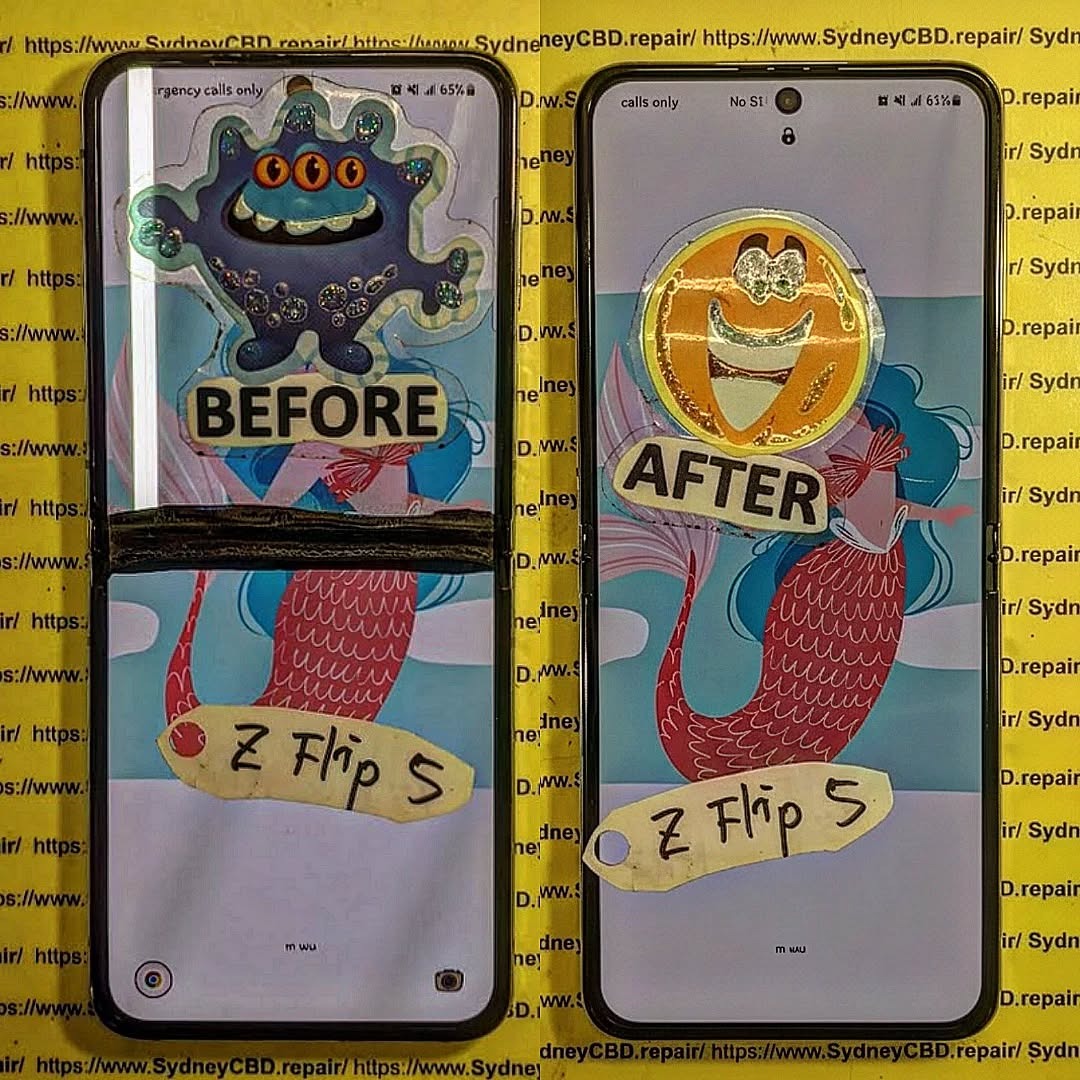
At Sydney CBD Repair Centre, specialists have seen an increasing number of Z Flip 5 owners struggling with hinge stiffness, grinding noises, and misaligned screens. If you’re experiencing these symptoms, a professional hinge repair isn’t just a fix—it’s a rescue for your phone’s longevity and usability.
Understanding Common Hinge Problems in the Samsung Z Flip 5
Hinge Stiffness or Looseness
Over time, the hinge may become too stiff or too loose due to wear and debris buildup. A stiff hinge can strain the internal flex cable, while a loose one compromises the folding angle and stability. This issue often signals that internal tension springs or lubricants need servicing.
Cracking Sounds and Folding Resistance
If you hear cracking or clicking sounds while folding, it’s a red flag. These noises could indicate fractured hinge components or misaligned gear teeth inside the mechanism. Ignoring it could worsen the problem, leading to hinge lockup or display separation.
Screen Crease and Misalignment
A visible crease or uneven alignment between the two halves of the screen often stems from hinge distortion. The Z Flip 5’s hinge works in tandem with the flexible AMOLED display, so any mechanical misalignment directly affects screen performance.
Samsung introduced its “Flex Hinge” system to reduce the visible gap between folded halves, enhancing durability and water resistance. The hinge contains multiple interlocking plates and micro-gears, offering a balance between flexibility and firmness.
Materials and Mechanism Explained
The Z Flip 5’s hinge utilizes a combination of aluminum alloy, stainless steel, and high-grade lubricants to ensure smooth movement. However, constant folding over time (up to 200,000 folds, per Samsung’s claim) can degrade these materials, making expert maintenance essential.
Does your phone close unevenly or make strange sounds? This could mean internal misalignment or a cracked hinge plate. Early detection can prevent further damage to the display and frame.
Screen Gap or Lifting Edge
If the screen edge lifts slightly or doesn’t sit flush, it’s a classic symptom of hinge fatigue. Ignoring it can lead to display delamination or moisture intrusion.
Why You Shouldn’t Delay Hinge Repair
Delaying a hinge repair may seem harmless at first, but over time, it accelerates wear on both the screen and frame. The stress caused by a malfunctioning hinge can lead to irreversible display damage—often more expensive than the hinge repair itself.
A prompt visit to Sydney CBD Repair Centre ensures your device is inspected by certified technicians who specialize in Samsung foldable devices. They’ll provide a quick, accurate diagnosis and restore your phone to factory condition.
Professional vs DIY Hinge Repair: Which Is Better?
DIY Challenges and Risks
Online tutorials may make hinge repair look simple, but the Z Flip 5 hinge system is incredibly intricate. Attempting DIY fixes can result in torn display cables, broken seals, or even total device failure.
Why Professional Repair Is Worth It
At Sydney CBD Repair Centre, technicians use genuine Samsung hinge assemblies and precision tools to maintain structural integrity. Repairs are completed on the same day, ensuring minimal downtime. Each hinge replacement comes with a 90-day warranty—a testament to their confidence in quality.
The Samsung Z Flip 5 Hinge Repair Process at Sydney CBD Repair Centre
Step 1: Initial Diagnosis
Technicians conduct a full diagnostic test to check hinge alignment, screen tension, and internal cable condition.
Step 2: Genuine Part Replacement
The old hinge assembly is carefully removed, and a genuine Samsung hinge is installed. This ensures perfect compatibility and smooth folding action.
Step 3: Calibration and Testing
After installation, the device undergoes calibration and multiple fold tests to confirm proper alignment and tension.
Cost of Samsung Z Flip 5 Hinge Repair in Sydney
At Sydney CBD Repair Centre, hinge repair costs vary depending on the extent of damage but generally range between AUD $299 to $399. This includes genuine parts, labor, and testing—offering far greater value than unauthorized repair shops.
Most hinge repairs are completed within the same day, thanks to their express service. Walk-in customers can usually pick up their phones in under two hours, depending on part availability and device condition.
Warranty and Quality Assurance
Every hinge repair at Sydney CBD Repair Centre includes a 90-day warranty covering workmanship and parts. The use of genuine Samsung components ensures that the repair meets or exceeds original factory standards.
Tips to Extend the Life of Your Z Flip 5 Hinge
Proper Folding Habits
Avoid snapping the phone shut quickly.
Always fold along the center axis without pressure on corners.
Avoiding Heat and Moisture Exposure
Keep the device away from direct sunlight and humid environments.
Avoid using the phone while charging for extended periods—it generates excess heat.
Why Choose Sydney CBD Repair Centre
2000+ 5-Star Reviews and 6-Time Award Winner
Sydney CBD Repair Centre has earned the trust of thousands of customers through consistency and quality. With 2000+ Google reviews and six consecutive awards for “Best Phone Repair in Sydney,” the reputation speaks for itself.
Same Day Repairs and Genuine Parts
Their same-day repair service, professional technicians, and genuine parts guarantee make them Sydney’s most reliable choice for Samsung Z Flip 5 hinge repairs.
FAQs About Samsung Z Flip 5 Hinge Repair
Q1: How do I know if my Z Flip 5 hinge is damaged?
A: Watch for stiffness, cracking noises, or uneven folding. These are early signs your hinge may need repair.
Q2: Can I still use my phone if the hinge feels loose?
A: It’s risky. Continued use can damage the internal display and cables, leading to costly repairs.
Q3: Does hinge repair affect my Samsung warranty?
A: Only authorized service centers like Sydney CBD Repair Centre use genuine parts and processes that maintain warranty compatibility.
Q4: Is hinge repair covered under warranty?
A: It depends on Samsung’s assessment of physical damage. If not covered, Sydney CBD Repair Centre offers affordable options.
Q5: How long will a new hinge last?
A: With proper care, a professionally replaced hinge can last several years, supporting over 200,000 folds.
Q6: Can I get the hinge replaced on the same day?
A: Yes, most hinge repairs are completed within hours at Sydney CBD Repair Centre.
Conclusion: Restore the Fold. Restore the Magic.
Your Samsung Z Flip 5 is more than a phone—it’s a technological marvel. Don’t let a faulty hinge compromise its beauty and performance. At Sydney CBD Repair Centre, certified experts ensure your foldable returns to its original form and function, with quality you can trust and service you can rely on.
Sydney CBD Repair Centre – Where Quality Meets Reliability.
📞 Call: +61280114119
🌐 Visit Us
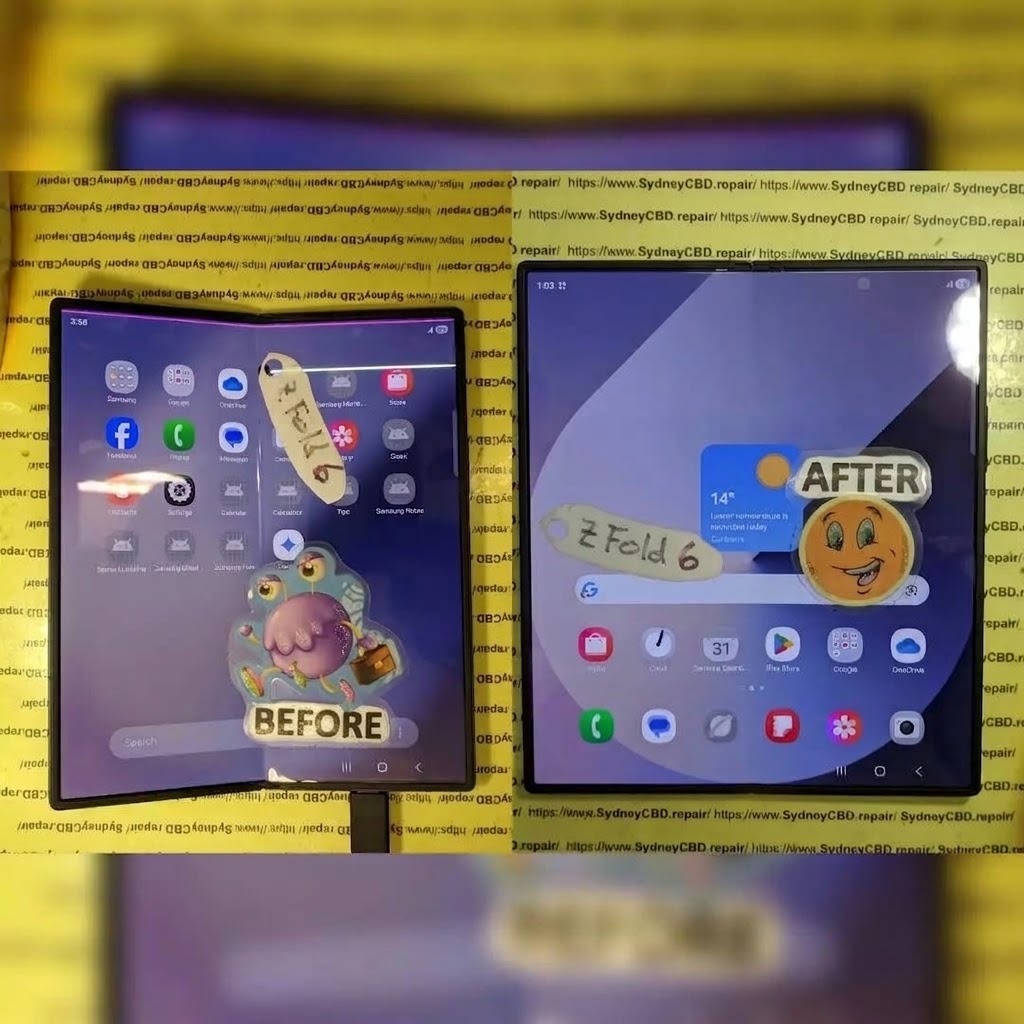
Foldable Stress Test: Replacing a Samsung Galaxy Z Fold 6 Screen After 200k Folds – Ultimate Durability Guide #1
Introduction to Foldable Stress Testing
The phrase foldable stress test: replacing a Galaxy Z Fold 6 screen after 200k folds might sound like something straight out of a lab experiment—but in reality, it’s becoming increasingly relevant for everyday users. Foldable smartphones are no longer futuristic gadgets; they’re part of daily life. Still, with innovation comes curiosity—and concern.
People often ask: How long will a foldable screen really last? Manufacturers claim durability of up to 200,000 folds, but what happens after that threshold? Does the screen fail completely, or does it show gradual wear and tear?
This article dives deep into what happens when a device reaches that milestone. More importantly, it explains the process of replacing a foldable display, what challenges you might face, and how to extend the life of your device afterward.
Foldable displays are engineered with flexibility in mind. Unlike traditional rigid screens, these displays use ultra-thin glass layered with plastic polymers, allowing them to bend repeatedly without cracking—at least in theory.
What sets them apart is the hinge mechanism working in tandem with the display. Every fold introduces stress, and over time, that stress accumulates.
Materials Used in Foldable Displays
Modern foldables rely on:
Ultra-Thin Glass (UTG)
Flexible OLED panels
Protective polymer layers
Reinforced hinge systems
These materials are designed to withstand repeated folding. However, after extensive use—like the foldable stress test: replacing a Galaxy Z Fold 6 screen after 200k folds—even the best materials begin to show fatigue.
Most foldable phones are tested under controlled environments. Robots repeatedly fold and unfold the device at consistent speeds and angles. The goal? Reach 200,000 folds without catastrophic failure.
That translates to:
About 5 years of use (100 folds/day)
Controlled conditions (no dust, no pressure)
Real-World Usage vs Lab Testing
Here’s the catch—real life isn’t a lab.
In daily use:
Dust enters the hinge
Pressure varies
Users fold at different speeds
Temperature fluctuates
So while 200k folds is impressive, real-world performance may vary. That’s why many devices begin to show issues slightly before or after this mark.
Signs Your Foldable Screen Needs Replacement
Visual Damage Indicators
You might notice:
Crease deepening in the center
Dead pixels or black spots
Flickering display
Visible cracks along the fold
These are early warning signs that the screen is nearing the end of its lifespan.
Functional Issues
Beyond visuals, performance can degrade:
Touch sensitivity loss
Ghost touches
Screen unresponsiveness
Partial display failure
If you’re experiencing these after heavy use, you’re likely approaching a scenario similar to the foldable stress test: replacing a Galaxy Z Fold 6 screen after 200k folds.
Step-by-Step Replacement Process
Tools Required
Replacing a foldable screen isn’t your average DIY job. You’ll need:
Heat gun or separator machine
Precision screwdrivers
Plastic pry tools
Adhesive strips
Anti-static equipment
Screen Removal
This step is delicate:
Heat the device to soften adhesive
Carefully separate the display
Disconnect internal flex cables
Remove damaged panel
One wrong move, and you could damage the hinge or motherboard.
Installing the New Display
Once removed:
Align the new foldable display
Reconnect all cables
Apply adhesive precisely
Reassemble and test
It’s a meticulous process requiring skill and patience.
Cost of Replacing a Foldable Screen
Parts Pricing
Foldable screens are expensive—no sugarcoating it.
Typical price range:
Component
Cost Range
Foldable OLED Screen
$400 – $700
Protective Layers
$50 – $100
Labor Costs
Professional repair adds:
$100 – $300 depending on expertise
Total cost can easily exceed $800, making it one of the most expensive smartphone repairs today.
Risks and Challenges in Foldable Repairs
Repairing foldables isn’t just costly—it’s risky.
Challenges include:
Fragile internal components
Complex hinge mechanisms
Limited availability of genuine parts
High failure rate in DIY repairs
That’s why professional handling is strongly recommended.
Preventing Screen Damage After Replacement
Once you’ve gone through the foldable stress test: replacing a Galaxy Z Fold 6 screen after 200k folds, prevention becomes key.
Here’s how to protect your investment:
Avoid excessive folding
Keep the hinge clean
Use protective cases
Don’t press hard on the screen
Keep away from extreme temperatures
Small habits can significantly extend lifespan.
Expert Tips from Technicians
Experienced technicians often say:
“Treat it like a laptop, not a regular phone.”
“Fold gently, don’t snap it shut.”
“Regular cleaning prevents long-term damage.”
They’ve seen countless cases where minor care could’ve avoided major repairs.
Comparing Foldable vs Traditional Smartphone Repairs
Feature
Foldable Phones
Traditional Phones
Repair Cost
Very High
Moderate
Complexity
Advanced
متوسط
Durability
Improving
Stable
Repair Time
Longer
Faster
Foldables offer innovation—but at a price.
Environmental Impact of Screen Replacement
Replacing a foldable screen contributes to electronic waste. However, repairing instead of replacing the entire device still reduces environmental impact.
Consider:
Recycling old components
Using certified repair centers
Extending device lifespan
Sustainability matters more than ever.
FAQs
1. How long does a foldable screen last?
Typically up to 200,000 folds, but real-world usage may vary depending on care.
2. Can I replace a foldable screen myself?
It’s possible but not recommended due to complexity and risk.
3. Why are foldable screen repairs so expensive?
The technology is advanced, and parts are costly and delicate.
4. What happens after 200k folds?
The screen may show wear like creases, dead pixels, or reduced responsiveness.
5. Is it worth repairing a foldable phone?
Yes, if the device is still functional and valuable. Otherwise, replacement might be considered.
6. How can I extend my foldable screen’s lifespan?
Handle gently, keep it clean, and avoid extreme conditions.
Conclusion
The journey through the foldable stress test: replacing a Galaxy Z Fold 6 screen after 200k folds reveals both the brilliance and limitations of modern smartphone innovation. Foldable devices are engineering marvels—but they require care, patience, and sometimes a hefty repair budget.
Still, with proper handling and timely maintenance, you can enjoy the benefits of foldable technology without constantly worrying about durability. And if the time comes for a screen replacement, knowing what to expect makes all the difference.
🔗 External Resource
For more technical insights into foldable durability testing, visit: https://www.samsung.com
David from Sydney CBD Repair Centre – The Best place to fix mobile phones as 7 Years In A Row! Top Mobile Phone Repair In Sydney. More than 2000 Positive Reviews on Google and Same Day Repairs.
We take pride in delivering exceptional repair services for all major phone brands including Apple, Samsung, Google, and more. Our expert technicians use only genuine parts and offer 90days warranty on repairs. Located in the heart of Sydney CBD, we’re your one-stop solution for all mobile device repairs.
Our commitment to excellence has earned us the trust of thousands of satisfied customers. Whether it’s a cracked screen, battery replacement, or water damage repair, we handle it all with professional care and expertise. Walk in today and experience why we’re Sydney’s #1 choice for mobile phone repairs.
Visit us for:
✓ Same Day Express Repairs
✓ Genuine Parts Guarantee
✓ Professional Technicians
✓ Competitive Pricing
✓ 2000+ 5-Star Google Reviews
✓ 7-Time Award Winner for Best Phone Repairs
Complete Teardown of the Samsung Galaxy Z Flip 7 Internal Hinge and Display Layers – Ultimate Deep Dive Guide (2026)
Introduction to the Galaxy Z Flip 7 Teardown
The complete teardown of the Galaxy Z Flip 7 internal hinge and display layers reveals just how far foldable smartphone technology has come. At first glance, this device looks sleek and compact. However, beneath its stylish exterior lies a highly complex system of moving parts, layered displays, and precision engineering.
Foldable phones aren’t just regular smartphones that bend. They’re mechanical marvels. When you open and close the device, dozens of components move in perfect harmony. That’s why understanding the internal hinge and display layers is crucial—not just for technicians, but also for everyday users who want to know what they’re paying for.
In this guide, we’ll break everything down step-by-step. From removing the outer panels to exposing the hinge system and analyzing the delicate display layers, you’ll get a full picture of how the device works. Along the way, we’ll also highlight common failure points and repair considerations.
Foldable phones have evolved rapidly over the past few years. Early models were fragile, prone to damage, and expensive to repair. But with each generation, improvements have been made in hinge durability, display flexibility, and overall reliability.
The Galaxy Z Flip 7 represents a major leap forward. It combines stronger materials, better folding mechanics, and improved display layering to deliver a smoother user experience.
Why the Hinge Matters Most
If there’s one component that defines a foldable phone, it’s the hinge. Without a reliable hinge, the entire device becomes unusable. The hinge:
Before performing a complete teardown of the Galaxy Z Flip 7 internal hinge and display layers, you’ll need the right tools.
Essential Tools
Precision screwdriver set
Plastic pry tools
Heat gun or heating pad
Tweezers
Suction cup
Isopropyl alcohol (for adhesive removal)
Safety Precautions Before Starting
Teardowns can be risky if done incorrectly. Here’s what you should keep in mind:
Always power off the device
Avoid overheating the display
Handle the flex cables with care
Use anti-static protection
Skipping these steps could lead to permanent damage.
Step-by-Step Teardown Process
Removing the Outer Glass Panels
The teardown begins with removing the rear glass panels. These are held in place with strong adhesive, so heat must be applied evenly.
Once heated:
Use a suction cup to lift the panel
Insert a plastic pry tool
Slowly separate the adhesive
Take your time here—rushing can crack the glass.
Disconnecting Internal Components
After removing the back panel, you’ll see protective covers over the motherboard and connectors.
Steps include:
Unscrewing shielding plates
Disconnecting battery connectors
Removing flex cables
Each connection is delicate, so precision is key.
Accessing the Battery Modules
Unlike traditional phones, the Galaxy Z Flip 7 uses dual batteries—one in each half of the device.
These are connected via flex cables that run through the hinge. Removing them requires careful handling to avoid tearing the cable.
Deep Dive: Galaxy Z Flip 7 Internal Hinge Mechanism
Structure of the Hinge
The hinge system is the most fascinating part of the teardown. It consists of:
Multiple interlocking gears
Support brackets
Sliding plates
Flexible cable routing channels
These components work together to create a smooth folding motion.
Materials Used
The hinge is built using:
Reinforced aluminum
Stainless steel components
High-strength polymers
These materials are chosen for durability and flexibility.
Durability Improvements
Compared to earlier models, the Galaxy Z Flip 7 hinge offers:
Better dust resistance
Reduced wobble
Increased fold cycles
This means longer lifespan and improved reliability.
Display Layers Explained
Ultra-Thin Glass (UTG)
At the core of the display is ultra-thin glass. This layer provides:
Scratch resistance
Structural integrity
Improved touch sensitivity
Despite being glass, it’s flexible enough to bend.
Protective Polymer Layers
Above the UTG, there are polymer layers that:
Absorb stress during folding
Prevent cracking
Enhance durability
These layers are essential for long-term performance.
OLED Panel Structure
The OLED panel sits beneath the protective layers and includes:
Organic light-emitting diodes
Pixel matrix
Flexible substrate
This is what produces the vibrant display.
Common Issues Found During Teardown
Hinge Failures
Even with improvements, hinge issues can still occur:
Dust buildup
Misalignment
Wear and tear
These problems can affect folding performance.
Display Creasing Problems
Over time, users may notice:
Visible crease lines
Reduced touch sensitivity
Pixel distortion
These are common in foldable displays.
Repairability and Replacement Insights
Repairing a foldable phone is more complex than a standard device. The complete teardown of the Galaxy Z Flip 7 internal hinge and display layers shows that:
Parts are tightly integrated
Repairs require specialized tools
Costs can be higher
However, modular improvements in newer models make repairs slightly easier.
Pros and Cons of Foldable Design
Pros
Compact form factor
Innovative design
Large screen in small body
Cons
Higher repair costs
More fragile components
Limited repairability
Future of Foldable Technology
Foldable phones are here to stay. Future advancements may include:
Self-healing displays
Dust-proof hinges
Lower repair costs
As technology evolves, these devices will become more durable and accessible.
FAQs
1. Is the Galaxy Z Flip 7 hinge durable?
Yes, it’s designed for thousands of folds, but like any mechanical part, it can wear out over time.
2. Can the display be replaced easily?
No, the display is complex and requires professional tools and expertise.
3. Why does the screen crease?
Creasing happens due to repeated folding stress on the display layers.
4. Is the hinge repairable?
In most cases, yes—but it’s often expensive and requires skilled technicians.
5. Are foldable phones worth it?
They offer unique benefits, but users should consider durability and repair costs.
6. How long does a foldable phone last?
With proper care, it can last several years, though hinge and display wear are factors.
Conclusion
The complete teardown of the Galaxy Z Flip 7 internal hinge and display layers highlights just how advanced modern smartphones have become. From the intricate hinge mechanism to the multi-layered display, every component is engineered with precision.
While foldable devices still have some limitations, they represent the future of mobile technology. With continued innovation, we can expect even more durable, reliable, and affordable foldable phones in the years ahead.
For now, understanding how they work gives you a deeper appreciation—and helps you make smarter decisions when it comes to repair and maintenance.
David from Sydney CBD Repair Centre – The Best place to fix mobile phones as 7 Years In A Row! Top Mobile Phone Repair In Sydney. More than 2000 Positive Reviews on Google and Same Day Repairs.
We take pride in delivering exceptional repair services for all major phone brands including Apple, Samsung, Google, and more. Our expert technicians use only genuine parts and offer 90days warranty on repairs. Located in the heart of Sydney CBD, we’re your one-stop solution for all mobile device repairs.
Our commitment to excellence has earned us the trust of thousands of satisfied customers. Whether it’s a cracked screen, battery replacement, or water damage repair, we handle it all with professional care and expertise. Walk in today and experience why we’re Sydney’s #1 choice for mobile phone repairs.
Visit us for:
✓ Same Day Express Repairs
✓ Genuine Parts Guarantee
✓ Professional Technicians
✓ Competitive Pricing
✓ 2000+ 5-Star Google Reviews
✓ 7-Time Award Winner for Best Phone Repairs
The Complete Teardown Of The New Samsung Galaxy Z Flip 7 Internal Folding Components – Ultimate Breakdown Guide (2026 Edition)
🔍 Introduction to the Galaxy Z Flip 7
The Samsung Galaxy Z Flip 7 represents another leap forward in foldable smartphone engineering. As foldable devices continue to mature, Samsung has refined both durability and usability. But what really lies beneath that sleek folding design?
This teardown focuses specifically on the Samsung Galaxy Z Flip 7 internal folding components, revealing how the device achieves flexibility without sacrificing strength.
Right from the start, it’s clear that Samsung has made serious improvements. The hinge feels tighter, the display crease is less noticeable, and internal reinforcements appear stronger than ever. So let’s dive deep and see what’s really going on inside.
Before cracking it open, the external build deserves attention.
Key Features:
Armor aluminum frame
Gorilla Glass Victus exterior
Slim hinge housing
Symmetrical folding alignment
The compact design hides a surprisingly complex interior system, especially within the hinge area.
🛠️ Tools Required for Teardown
Teardown isn’t for the faint-hearted. You’ll need:
Heat gun or iOpener
Plastic pry tools
Precision screwdrivers
Isopropyl alcohol
Suction cup
⚠️ Important: The Samsung Galaxy Z Flip 7 internal folding components are extremely delicate. One wrong move can damage the display permanently.
🔧 Step-by-Step Disassembly Process
🔹 Removing the Back Glass
The back panel is glued firmly. Heat softens the adhesive, allowing careful prying.
🔹 Battery Extraction
The dual battery setup is split across both halves. Pull tabs help, but adhesive remains strong.
🔹 Display Separation
This is the most dangerous step. The foldable display is thin and fragile, especially near the crease.
⚙️ Internal Folding Components Explained
This is where things get interesting.
🧪 Ultra-Thin Glass Layer
Samsung uses Ultra-Thin Glass (UTG), which provides flexibility and strength. It’s not truly glass in the traditional sense—it’s engineered for bending.
🧴 Protective Polymer Layers
Multiple plastic layers sit above the UTG. These protect against scratches and absorb stress.
🔩 Folding Hinge Mechanism
The hinge is the heart of the Samsung Galaxy Z Flip 7 internal folding components.
🏗️ Hinge Engineering Deep Dive
Samsung has significantly improved hinge durability.
🔹 Dual Rail System
This ensures smooth folding and even pressure distribution.
🔹 Shock Absorption Features
New cushioning elements reduce stress during folding.
💡 Result: Less visible crease and longer lifespan.
📺 Display Technology Analysis
🌈 AMOLED Panel Structure
The flexible AMOLED panel is layered like this:
Protective film
Polymer layer
UTG
OLED panel
Support plate
📉 Crease Reduction Improvements
Samsung redesigned the hinge curvature to reduce stress at the fold.
🛡️ Durability Enhancements
Samsung claims improved durability—and teardown confirms it.
Improvements:
Stronger hinge materials
Better dust resistance
Reinforced display layers
Still, foldables remain more fragile than traditional phones.
⚠️ Common Failure Points
Even with upgrades, risks remain.
Typical Issues:
Display crease cracking
Dead pixels near hinge
Hinge stiffness over time
Dust intrusion
The Samsung Galaxy Z Flip 7 internal folding components are robust—but not invincible.
🧰 Repairability Score and Challenges
Repairing this device is tough.
Challenges:
Fragile display removal
Complex hinge assembly
Expensive replacement parts
Estimated Score:
4/10 (Difficult)
🔄 Comparison with Previous Flip Models
Feature
Z Flip 5
Z Flip 7
Hinge Strength
Good
Excellent
Crease Visibility
Moderate
Reduced
Durability
Improved
Further Enhanced
Repairability
Low
Slightly Better
👍 Pros and Cons of Internal Design
Pros:
Advanced hinge system
Improved durability
Reduced crease
Cons:
Hard to repair
Expensive parts
Still fragile
👨🔧 Professional Repair vs DIY
Let’s be real—DIY is risky here.
DIY Risks:
Permanent display damage
Warranty void
Misalignment issues
Professional Benefits:
Proper tools
Experience handling foldables
Warranty on repairs
If you’re unsure, always go pro.
❓ FAQs About Samsung Galaxy Z Flip 7 Internal Folding Components
1. What makes the hinge different in the Z Flip 7?
It uses a refined dual-rail system with improved shock absorption.
2. Is the folding screen real glass?
Partially. It uses Ultra-Thin Glass with plastic layers.
3. Can the screen be replaced easily?
No, it’s one of the hardest repairs.
4. Does the crease disappear over time?
No, but it’s less noticeable than older models.
5. Is the phone waterproof?
It’s water-resistant, but not dustproof.
6. How long does the hinge last?
Samsung claims hundreds of thousands of folds under normal use.
The Samsung Galaxy Z Flip 7 internal folding components showcase just how far foldable technology has come. Samsung has refined the hinge, improved display durability, and reduced common issues like creasing.
However, the complexity of the design still makes repairs difficult and costly. While it’s a marvel of engineering, it’s also a reminder that innovation often comes with trade-offs.
If you’re using—or planning to repair—this device, understanding its internal structure is key. And honestly, when it comes to foldables, precision matters more than ever.
David from Sydney CBD Repair Centre – The Best place to fix mobile phones as 7 Years In A Row! Top Mobile Phone Repair In Sydney. More than 2000 Positive Reviews on Google and Same Day Repairs.
We take pride in delivering exceptional repair services for all major phone brands including Apple, Samsung, Google, and more. Our expert technicians use only genuine parts and offer 90days warranty on repairs. Located in the heart of Sydney CBD, we’re your one-stop solution for all mobile device repairs.
Our commitment to excellence has earned us the trust of thousands of satisfied customers. Whether it’s a cracked screen, battery replacement, or water damage repair, we handle it all with professional care and expertise. Walk in today and experience why we’re Sydney’s #1 choice for mobile phone repairs.
Visit us for:
✓ Same Day Express Repairs
✓ Genuine Parts Guarantee
✓ Professional Technicians
✓ Competitive Pricing
✓ 2000+ 5-Star Google Reviews
✓ 7-Time Award Winner for Best Phone Repairs
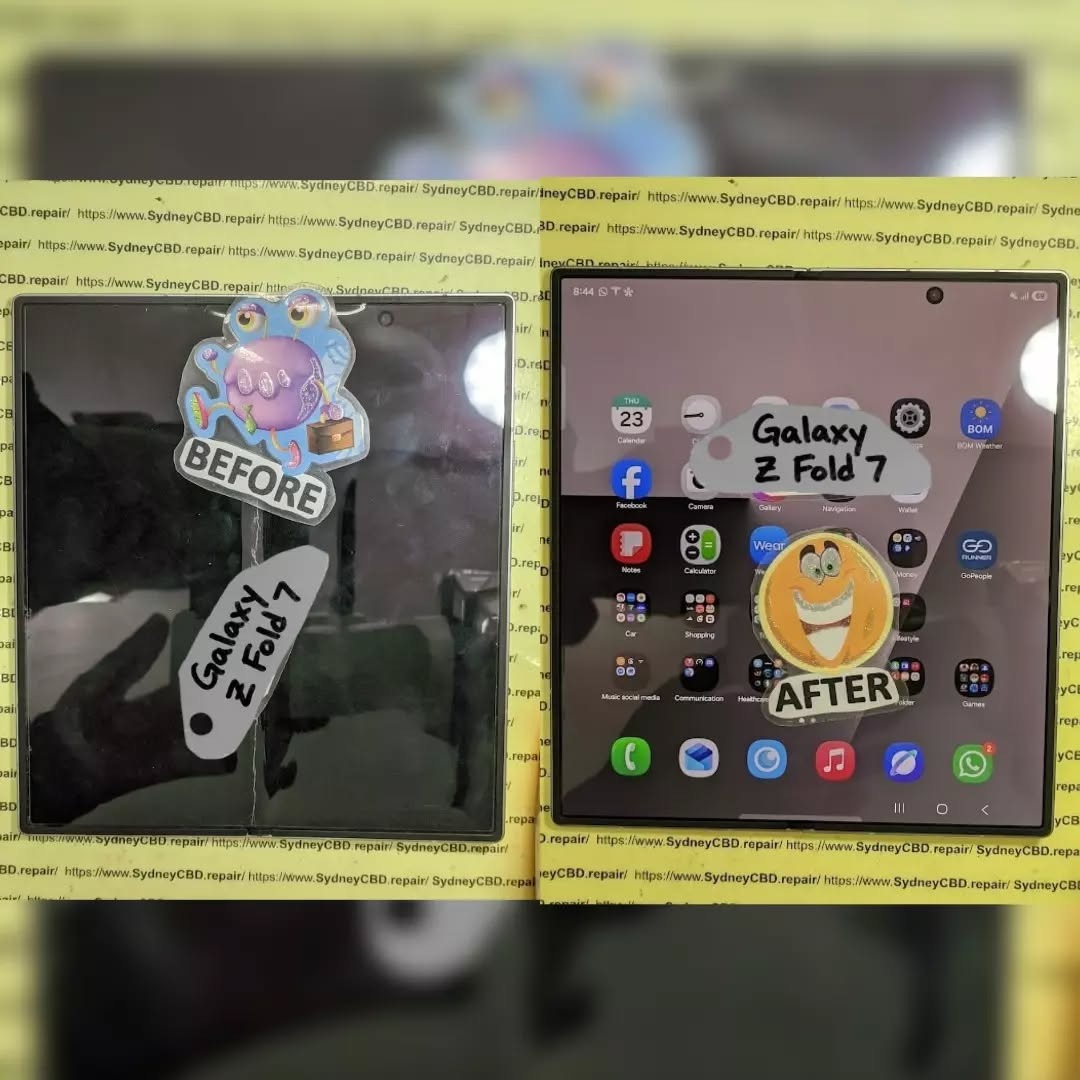
Step by Step Samsung Galaxy Z Fold 7 Inner Screen Assembly and Display Replacement: 11 Essential Steps
Introduction
Replacing the inner display on a foldable smartphone is very different from replacing a conventional flat phone screen. The Samsung Galaxy Z Fold 7 inner screen assembly and display replacement process involves a flexible AMOLED panel, precision adhesives, delicate connectors, and a hinge area that requires careful handling.
The Galaxy Z Fold7 features an 8-inch Dynamic AMOLED 2X main display with a 2184 × 1968 resolution and adaptive refresh rate up to 120Hz. Samsung also redesigned the device around a thinner, lighter structure and an updated hinge system.
Because of that construction, an inner-screen replacement should generally be treated as a specialist repair rather than a casual DIY project. The steps below are intended to explain the professional workflow, preparation, inspection, and testing involved. Always use the appropriate manufacturer-approved procedures and replacement components for the exact model.
The Galaxy Z Fold7 isn’t built like a standard slab-style smartphone. Its main screen is a flexible foldable display designed to repeatedly bend around the device’s central hinge. Samsung lists the main display as an 8-inch Dynamic AMOLED 2X panel with 120Hz adaptive refresh.
That construction creates several important repair considerations.
A traditional smartphone screen can often be separated from its frame using controlled heat and appropriate prying techniques. A foldable display, however, has a much more complicated structure. Excessive pressure, incorrect tool placement, contamination, or improper adhesive handling can turn a simple display replacement into additional damage.
The inner screen is also significantly more expensive than many conventional smartphone displays. Samsung’s current U.S. repair pricing page lists separate Fold7 inner-screen repair and inner screen-module replacement prices, illustrating how the selected repair method and component can affect the final cost. Prices vary by region, service type, warranty status, and repair provider.
Key Galaxy Z Fold7 Display Specifications
Feature
Galaxy Z Fold7 Main Display
Display size
8.0 inches
Technology
Dynamic AMOLED 2X
Resolution
2184 × 1968
Refresh rate
Up to 120Hz adaptive
Display type
Foldable/flexible main display
Cover display
6.5-inch Dynamic AMOLED 2X
Main display purpose
Folded/unfolded multitasking and media
These specifications matter because replacement testing shouldn’t stop at simply checking whether the screen turns on. A properly completed repair should also be evaluated for touch response, brightness, color uniformity, folding behavior, refresh behavior, and general display stability.
Diagnosing the Problem Before Replacing the Screen
Before beginning a Samsung Galaxy Z Fold 7 inner screen assembly and display replacement, diagnose the actual failure.
A black screen doesn’t automatically mean that the display assembly is defective. The problem could involve a connector, software issue, board-level fault, physical impact, or another component.
Start with a visual inspection.
Look for:
Cracks or visible damage
Black spots or ink-like spreading
Vertical or horizontal lines
Flickering
Dead pixels
Touch failures
Display discoloration
Brightness abnormalities
Damage around the center fold
Display problems that appear only when folding
If the phone still displays an image, test as many functions as possible before opening it.
Check Touch Response
Open a drawing application or another suitable touch-testing interface and slowly move a finger across the entire inner display.
Pay particular attention to the central folding region and edges.
If certain areas don’t respond, document their location before the repair.
Check the Display While Folding
A foldable display should be assessed in several positions rather than only when completely open.
Observe whether:
The display works while fully open.
The display remains stable while partially folded.
The image changes unexpectedly around the hinge.
Touch input remains consistent.
Flickering occurs during movement.
This information can help determine whether the problem is isolated to the panel or related to another part of the foldable assembly.
Tools and Replacement Components
A professional repair environment should use appropriate precision tools and manufacturer-compatible parts.
Typical equipment may include:
Precision screwdrivers
Plastic opening tools
Approved opening picks
Suction equipment where appropriate
ESD-safe equipment
Tweezers
Magnification
Cleaning materials approved for electronics
Replacement adhesive
Display assembly or appropriate replacement component
Protective work mat
Inspection lighting
The exact tools and disassembly sequence can vary according to the service documentation and replacement assembly being used.
Why Genuine or Approved Parts Matter
The replacement component should match the Galaxy Z Fold7 model and regional variant where required.
Samsung’s Philippine support information states that its authorized service centers use genuine Samsung parts for repairs.
This is particularly important for a foldable phone because the display isn’t simply a piece of glass. Compatibility involves the panel, electronics, flex connections, physical dimensions, adhesives, and interaction with the phone’s software and hardware.
Before opening the device, protect the customer’s data and establish a record of the phone’s condition.
Back up important data whenever the device is operational.
Record:
Existing cracks
Frame damage
Camera condition
Cover-screen condition
Inner-screen condition
Buttons
Charging function
Speakers
Microphones
Cameras
Wireless connectivity
General device condition
If the phone is being handed to a service center, Samsung recommends using Maintenance Mode to restrict access to personal data during repair.
Step 1: Power Down and Secure the Device
The phone should be shut down using the appropriate procedure before internal work begins.
Remove external accessories and keep the work area clean.
Avoid placing unnecessary pressure on the inner display. A foldable screen can be damaged by pressure even when there isn’t obvious external cracking.
A clean, organized workspace also reduces the chance of losing tiny components.
Step 2: Carefully Access the Device
Professional disassembly begins by gaining access to the internal structure using the approved procedure for the Galaxy Z Fold7.
This is where repair technicians need to be especially careful.
The Fold7 is only about 4.2 mm thick when unfolded, excluding the main-screen frame, and 8.9 mm when folded. Samsung lists its weight at 215 grams.
That thin construction leaves less room for careless tool movement.
Never force an opening tool into an unknown area. A tool inserted too deeply can damage internal components, flex cables, or other layers.
Step 3: Disconnect the Relevant Connections
Once the correct internal access point has been reached, the relevant connectors must be identified and handled carefully.
The general principle is simple:
Disconnect power and relevant display connections before attempting to remove the damaged display assembly.
Connectors should be lifted using appropriate tools rather than pulled by their cables.
This is one of those moments where patience pays off. A connector that seems stubborn should be inspected rather than forced.
Step 4: Remove the Damaged Inner Display Assembly
The damaged display assembly is then separated according to the appropriate service procedure.
This is the most delicate stage of the operation.
A foldable display should not be treated like a conventional rigid glass panel. Avoid bending, twisting, puncturing, or applying concentrated pressure to the flexible display layers.
Important Safety Principle
Never use excessive force simply because an assembly isn’t separating.
If a component doesn’t release as expected, stop and identify what is still holding it.
Potential causes include:
Remaining adhesive
A connector
A retaining component
A frame section
An overlooked attachment point
Trying to “muscle through” the process can cause secondary damage.
Step 5: Inspect the Frame and Hinge
Once the damaged assembly has been removed, inspect the supporting structure before installing the replacement.
Look for:
Bent frame sections
Foreign particles
Adhesive residue
Hinge-area damage
Deformation
Liquid contamination
Damaged connectors
Missing or damaged fasteners
Samsung says the Fold7 uses an Armor FlexHinge with a multi-rail structure designed to distribute stress and support the thinner foldable design.
That makes hinge inspection an important part of the repair.
If the underlying structure is damaged, simply installing another display may not provide a reliable long-term repair.
Step 6: Prepare the Replacement Display Assembly
Before installation, compare the replacement assembly with the removed component.
Check:
Model compatibility
Physical dimensions
Connector arrangement
Visible damage
Flex cable condition
Display surface
Frame alignment
Protective films
Adhesive condition
Don’t remove protective material unnecessarily early.
Keeping the replacement component protected until the installation stage reduces the chance of scratches, dust contamination, or accidental handling damage.
Keep the Work Area Dust-Free
Dust is a small problem that can become a big problem beneath a display assembly.
Even a tiny particle can create:
A visible bump
Uneven pressure
Poor adhesive contact
Cosmetic defects
Localized stress
Therefore, cleanliness isn’t just about appearance. It can directly affect the quality of the finished repair.
Step 7: Position and Align the New Display
The replacement display should be positioned carefully according to the appropriate repair procedure.
Alignment is critical.
Before final adhesion or securing, verify that:
Edges are correctly positioned.
The central fold area is correctly aligned.
Connectors can reach their mating points.
The display sits evenly.
No flex cable is trapped.
No debris is underneath the assembly.
Don’t rush this stage.
A few extra minutes spent checking alignment can prevent the need to repeat a complicated repair.
Step 8: Reconnect the Display and Internal Components
After the replacement assembly is correctly positioned, reconnect the required components in the prescribed sequence.
Each connector should sit correctly before pressure is applied.
Never press directly on delicate flex cables.
After connections are restored, inspect the work visually before proceeding with final reassembly.
Connector Inspection Checklist
Check
What to Look For
Connector seating
Fully and evenly seated
Flex cable
No tears, sharp bends, or crushing
Contact area
Clean and free of debris
Routing
Cable follows the intended path
Nearby components
Nothing trapped underneath
Step 9: Test the New Inner Display
Testing before final closure is one of the most valuable steps in any screen replacement.
Power the device using the approved service procedure and test the replacement display.
Check the following:
Image Quality
Display a white, black, red, green, and blue screen if suitable diagnostic tools are available.
Look for:
Dead pixels
Lines
Flickering
Uneven brightness
Color abnormalities
Black spots
Image retention or other unexpected behavior
Touch Response
Test the entire panel.
Move across:
Top edge
Bottom edge
Left edge
Right edge
Center
Fold region
The touch system should respond consistently.
Refresh and Motion
Where applicable, verify smooth scrolling and normal display behavior.
The Fold7 main display supports an adaptive refresh rate up to 120Hz.
Step 10: Reassemble the Device
Once the replacement display has passed preliminary tests, complete the remaining reassembly according to the appropriate service instructions.
Check every component before closing the device.
A good technician doesn’t simply put the screws back and call it a day.
The final inspection should include:
Screw placement
Connector seating
Adhesive positioning
Flex routing
Frame alignment
Hinge movement
Cover display condition
Camera condition
External buttons
Step 11: Perform Final Functional Testing
After complete reassembly, perform another full test.
This second test is important because a device can work before final closure but develop an issue if something is incorrectly positioned during reassembly.
Test:
Inner display
Cover display
Touchscreen
Folding/unfolding
Charging
Cameras
Speakers
Microphones
Wi-Fi
Bluetooth
Cellular connectivity
Buttons
Fingerprint functionality where applicable
Folding Test
Open and close the phone carefully.
Do not repeatedly cycle the hinge unnecessarily. A small number of controlled checks should be enough to confirm normal operation.
Watch the inner screen while changing the device position.
The display should remain stable without unexpected flickering, lines, or touch failures.
Common Samsung Galaxy Z Fold7 Screen Replacement Mistakes
Even experienced technicians need to work carefully on foldable devices.
Here are some common mistakes to avoid.
Using Excessive Heat
Foldable displays contain sensitive components and materials. Excessive heat can create additional problems.
Use only the approved service method and temperature guidance applicable to the specific repair.
Prying Too Deeply
An opening tool should never be inserted farther than necessary.
Deep insertion can damage internal components.
Touching Display Surfaces Unnecessarily
Fingerprints, dust, and oils can complicate final inspection.
Use appropriate clean handling practices.
Ignoring Frame Damage
If the frame or hinge has been damaged by the original impact, installing a new screen alone may not resolve the underlying problem.
Skipping the Pre-Repair Test
Without a baseline test, it can be difficult to determine whether another component developed a problem during the repair.
Skipping the Post-Repair Test
A screen that turns on isn’t necessarily a successful repair.
Touch, brightness, color, folding behavior, connectivity, and other functions should also be checked.
Inner Screen Assembly vs Display-Only Replacement
One important consideration is whether the repair provider is replacing only the screen or an entire display assembly/module.
These approaches can differ in:
Parts availability
Labor requirements
Repair complexity
Price
Warranty terms
Expected turnaround time
Samsung’s published U.S. repair pricing demonstrates that Fold7 inner-screen repairs and inner screen-module replacement can have different prices.
Because prices and service options differ by country, the best approach is to obtain a repair quotation based on the exact damage and model.
How Much Does Galaxy Z Fold7 Inner Screen Repair Cost?
There isn’t one universal worldwide price.
The cost can depend on:
Country
Repair provider
Warranty status
Insurance or protection plan
Display-only versus module replacement
Additional frame or hinge damage
Availability of replacement components
For example, Samsung’s U.S. support page currently lists separate pricing for the Galaxy Z Fold7 inner display repair and inner screen-module replacement.
Those U.S. prices shouldn’t be used as a direct quotation for Australia, the Philippines, or another market.
For an official repair route in the Philippines, Samsung provides a service-center locator and states that its authorized centers use genuine Samsung parts.
Professional Repair vs DIY Replacement
The Galaxy Z Fold7 inner screen is not an ideal beginner repair.
A professional repair is especially worth considering when:
The phone contains important data.
The display has severe physical damage.
The hinge is damaged.
The frame is bent.
The replacement part is expensive.
You don’t have foldable-phone repair experience.
The device may still be under warranty or protection coverage.
You need a repair warranty.
A DIY attempt may appear cheaper initially, but a damaged replacement display, connector, hinge component, or frame can increase the total repair cost.
In short, this is a job where the cheapest approach isn’t always the least expensive approach.
How to Find an Authorized Samsung Repair Center
Samsung Philippines provides an official service-center locator for mobile devices. Its support page states that there are more than 100 authorized service centers across the Philippines and explains how to search by city, town, or postal code.
When requesting service, provide the technician with a clear description of:
What happened
Whether the phone was dropped
Whether the inner display still works
Whether touch works
Whether the cover screen works
Whether the phone has liquid exposure
Whether the hinge feels normal
This information can make diagnosis more efficient.
Samsung Galaxy Z Fold7 Inner Screen Replacement Checklist
Use this checklist when evaluating a completed repair.
Test
Pass Condition
Inner display
Clear image
Touch
Responsive across panel
Brightness
Consistent
Colors
No obvious abnormalities
Pixels
No unexpected dead areas
Fold area
Stable during movement
Hinge
Opens and closes normally
Cover display
Fully operational
Cameras
Working
Speakers
Working
Microphones
Working
Charging
Working
Connectivity
Working
Physical assembly
No gaps or loose parts
Frequently Asked Questions
1. Can the Galaxy Z Fold7 inner screen be replaced?
Yes, the inner display can be serviced, but the procedure is significantly more complicated than replacing a conventional smartphone screen. Samsung provides repair options for the Fold7 inner screen in supported markets.
2. Is Galaxy Z Fold7 inner screen replacement a DIY repair?
It’s possible to find repair procedures and replacement components, but the inner foldable display is delicate. For most users without professional foldable-device repair experience, an authorized or experienced repair technician is the safer option.
3. What size is the Galaxy Z Fold7 inner screen?
The Galaxy Z Fold7 has an 8-inch main display with a 2184 × 1968 resolution and a maximum adaptive refresh rate of 120Hz.
4. Can I replace only the cracked surface layer?
The correct repair method depends on the nature of the damage and the available service parts. A cracked or malfunctioning foldable display may require an appropriate screen or display-module replacement rather than a simple glass replacement.
5. How do I know whether my display or motherboard is damaged?
A complete diagnosis is required. If the phone has image, touch, or connector-related symptoms, a technician should test the display and associated hardware before ordering replacement parts.
6. Does screen replacement restore water resistance?
You shouldn’t assume that a repaired phone has exactly the same water-resistance performance as a factory-sealed device. The outcome depends on the repair method, components, seals, and service procedure. Samsung lists the Galaxy Z Fold7 as IP48-rated, but that rating should not be interpreted as a guarantee after third-party repair.
7. Should I repair the hinge at the same time?
If the hinge or frame has visible damage, it should be inspected before installing a replacement display. A damaged supporting structure may cause problems with a new display.
8. Is the Galaxy Z Fold7 display covered by warranty?
Warranty coverage depends on the market, warranty terms, cause of damage, and condition of the device. Accidental physical damage is often treated differently from manufacturing defects. Check the warranty terms applicable to your country and device.
9. How long does a Fold7 screen repair take?
Turnaround time varies according to the repair provider, part availability, diagnosis, and whether additional components are damaged. Some service providers offer same-day service, while others may require more time.
10. Where can I get official Samsung Fold7 repair support?
Samsung Philippines provides an official service-center locator and repair-support information.
Conclusion
The Samsung Galaxy Z Fold 7 inner screen assembly and display replacement is a precision repair that requires significantly more care than a standard smartphone screen replacement.
The most important principles are straightforward: diagnose the fault before replacing parts, protect the flexible display, use compatible components, keep the work area clean, avoid excessive force, inspect the hinge and frame, and thoroughly test the phone after installation.
The Galaxy Z Fold7 combines an 8-inch flexible Dynamic AMOLED 2X inner display with a thin foldable structure, making careful handling especially important.
For users without professional foldable-phone repair experience, an authorized Samsung service center or qualified specialist can reduce the risk of additional damage. Samsung’s Philippine service network provides an official starting point for customers seeking repair assistance.
A successful repair isn’t simply about making the screen light up again. It’s about restoring reliable display performance, touch response, folding behavior, structural integrity, and overall functionality while protecting the rest of the device.
For professional assistance with Samsung Galaxy Z Fold7 and other mobile-device repairs, Sydney CBD Repair Centre provides repair services for major smartphone brands.
David from Sydney CBD Repair Centre – The Best place to fix mobile phones as 7 Years In A Row! Top Mobile Phone Repair In Sydney. More than 2000 Positive Reviews on Google and Same Day Repairs.
We take pride in delivering exceptional repair services for all major phone brands including Apple, Samsung, Google, and more. Our expert technicians use only genuine parts and offer 90days warranty on repairs. Located in the heart of Sydney CBD, we’re your one-stop solution for all mobile device repairs.
Our commitment to excellence has earned us the trust of thousands of satisfied customers. Whether it’s a cracked screen, battery replacement, or water damage repair, we handle it all with professional care and expertise. Walk in today and experience why we’re Sydney’s #1 choice for mobile phone repairs.
Visit us for:
✓ Same Day Express Repairs
✓ Genuine Parts Guarantee
✓ Professional Technicians
✓ Competitive Pricing
✓ 2000+ 5-Star Google Reviews
✓ 7-Time Award Winner for Best Phone Repairs
Sydney CBD Repair Centre – Where Quality Meets Reliability.
Before and After: Extreme Phone Screen Damage Transformations by Our Technicians + 10 Stunning Cases
Introduction:
A shattered phone screen can feel like a disaster. From accidental drops to heavy impacts, extreme screen damage not only ruins the appearance of your device but can also affect its functionality, making it difficult—or even impossible—to use. Many people underestimate just how complex a repair can be until they attempt a DIY fix or visit a repair service without the right expertise.
At Sydney CBD Repair Centre, we specialize in transforming even the most damaged devices. Our skilled technicians restore shattered screens to like-new condition, using genuine parts, precision tools, and advanced techniques. In this article, we’ll take you through the causes of extreme screen damage, the meticulous repair process, real-life transformations, and tips to prevent future damage—all backed by the experience that has earned us thousands of satisfied customers and 7 consecutive years as Sydney’s top mobile repair center.
Whether you’re dealing with a cracked iPhone, a water-damaged Samsung, or a foldable device in pieces, this guide shows how professional care turns disaster into perfection.
Few things are as frustrating as a severely cracked or shattered phone screen. Whether it’s a devastating drop, accidental impact, or water exposure, extreme screen damage can disrupt your day, compromise device functionality, and create costly repair bills. At Sydney CBD Repair Centre, we specialize in restoring even the most damaged devices to like-new condition. This article explores the full spectrum of extreme screen transformations carried out by our expert technicians, highlighting the care, skill, and technology involved.
Screen damage is not just about a cracked surface. It can involve layers of the display, touch sensitivity, and even internal components. Understanding the type of damage is key to ensuring a proper repair.
Minor vs. Major Screen Damage
Minor Damage: Surface scratches, small cracks, or minor dead pixels.
Major Damage: Shattered glass, malfunctioning touch, black spots, or complete LCD failure. Extreme damage often renders the device unusable.
Causes of Extreme Damage
Drops and Impacts: Accidental drops from height are the leading cause of screen shattering.
Pressure Damage: Sitting on a phone, heavy objects pressing on the screen.
Water and Liquid Exposure: Moisture can warp screens and affect internal components.
Thermal or Chemical Exposure: Extreme heat or corrosive substances may compromise the screen.
Extreme screen damage doesn’t have to mean the end of your device. With Sydney CBD Repair Centre’s professional repairs, shattered screens are transformed back to pristine condition. Our expert technicians, genuine parts, and state-of-the-art equipment ensure your device not only looks amazing but works flawlessly. Walk in today and witness the transformation for yourself!
David from Sydney CBD Repair Centre – The Best place to fix mobile phones as 7 Years In A Row! Top Mobile Phone Repair In Sydney. More than 2000 Positive Reviews on Google and Same Day Repairs.
We take pride in delivering exceptional repair services for all major phone brands including Apple, Samsung, Google, and more. Our expert technicians use only genuine parts and offer 90days warranty on repairs. Located in the heart of Sydney CBD, we’re your one-stop solution for all mobile device repairs.
Our commitment to excellence has earned us the trust of thousands of satisfied customers. Whether it’s a cracked screen, battery replacement, or water damage repair, we handle it all with professional care and expertise. Walk in today and experience why we’re Sydney’s #1 choice for mobile phone repairs.
Visit us for:
✓ Same Day Express Repairs
✓ Genuine Parts Guarantee
✓ Professional Technicians
✓ Competitive Pricing
✓ 2000+ 5-Star Google Reviews
✓ 7-Time Award Winner for Best Phone Repairs
Foldable Phone Screen Repair Costs: Viable or Time for a New One? 7 Key Insights
Introduction
Foldable phones have revolutionized the smartphone industry, offering users the convenience of a tablet and the portability of a phone in a single device. With their sleek, futuristic designs and versatile displays, they have captured the attention of tech enthusiasts worldwide. However, this innovation comes with a significant downside: repair costs. Unlike traditional smartphones, foldable phones have delicate, multi-layered screens and complex hinge mechanisms that can make repairs both challenging and expensive.
If you’ve ever dropped a foldable phone or noticed a crease forming on the display, you may have wondered whether it’s worth repairing or if it’s time to invest in a new device. Understanding the costs, risks, and benefits of foldable screen repair is crucial for making an informed decision. In this article, we will explore foldable phone screen repair costs, compare repair versus replacement, discuss DIY and professional repair options, and provide practical tips to protect your device for the long haul.
By the end, you’ll have a clear roadmap to decide whether fixing your foldable screen is a smart choice—or if it’s time to upgrade to a newer model without the financial stress of repeated repairs.
Foldable phones are undeniably one of the most innovative pieces of tech today, merging smartphone portability with tablet functionality. But as amazing as they are, they come with unique challenges, particularly when it comes to screen repairs. With the first signs of a crack, crease, or unresponsive touch, many users face the question: should I repair my foldable screen or just invest in a new phone?
In this article, we’ll break down foldable phone screen costs, the risks of DIY repair, professional options, and whether repairing your device is a practical choice. We’ll cover brand-specific insights, factors affecting repair costs, and expert tips on maximizing your foldable phone’s lifespan.
Foldable screens primarily rely on flexible OLED technology, which allows the display to bend without breaking. Unlike traditional glass screens, these are made with ultra-thin glass or plastic polymers. Hinge mechanisms, which let the phone fold seamlessly, are often the most vulnerable points.
Modern foldables, such as Samsung’s Galaxy Z Fold series or the Google Pixel Fold, feature multiple layers: a protective layer, the touch-sensitive digitizer, and the OLED panel itself. The combination provides stunning visuals and foldability, but also creates higher repair costs if any layer is damaged.
Key Considerations:
OLED vs AMOLED: AMOLED offers more vibrant colors but may cost more to replace.
Hinge durability: Mechanical failures can accompany screen issues.
Software calibration: Foldable phones may need recalibration after a screen repair.
Foldable phones, while innovative, are prone to unique problems:
Screen Cracks: Even minor drops can cause creases or cracks.
Touch Malfunction: Folding repeatedly can disrupt touch sensitivity.
Hinge Wear: Over time, the hinge can become stiff or loose.
Color Distortion: Uneven backlighting or folding lines may appear.
Screen Delamination: Layers of the display may separate under stress.
Average Foldable Phone Screen Repair Costs
Repair costs vary widely by brand, model, and repair location. For high-end devices, parts alone can exceed $500–$800 USD. Labor and warranty services can add another $150–$300 USD.
Samsung Foldable Phones
Galaxy Z Fold 5: ~$650–$750 for a screen replacement
Galaxy Z Flip 5: ~$450–$550
Professional repair is recommended due to the complexity of the hinge and display layers.
Google Pixel Fold
Pixel Fold screen repair costs approximately $600–$700.
Limited repair centers make DIY risky.
Huawei and Other Brands
Huawei Mate X series: ~$700–$900
Oppo Find N: ~$500–$650
Availability of genuine parts is a major factor in pricing.
Factors Affecting Repair Costs
Screen type: Plastic vs ultra-thin glass affects durability and cost.
Warranty: Devices under manufacturer warranty may get free or discounted repair.
Age of device: Older models may require sourcing harder-to-find parts.
Availability of parts: Limited supply can drive up prices significantly.
DIY vs Professional Repair
While DIY repairs may seem tempting, foldable phones are not forgiving:
DIY Risks:
Further screen damage
Void warranty
Poor alignment leading to touch malfunction
Professional Benefits:
Trained technicians
Genuine parts guarantee
Warranty on repairs (e.g., Sydney CBD Repair Centre offers 90-day warranty)
Insurance and Warranty Options
Manufacturer warranty: Usually covers defects, not accidental damage.
Extended warranty plans: Often worth it for foldables due to repair costs.
Accidental damage insurance: Can significantly reduce out-of-pocket costs for screen replacement.
How to Determine if Repair is Worth It
Perform a cost-benefit analysis:
Repair Cost / Current Device Value: If repair exceeds 50–60% of device value, replacement may be better.
Device Age: Newer models often justify repairs; older models may be phased out soon.
Resale Value: A repaired device may retain resale value if professionally done.
Steps to Protect Your Foldable Screen
Use a flexible screen protector
Avoid over-folding or twisting
Store in a protective case
Regular software updates to maintain display calibration
Avoid extreme temperatures that can warp the display
Latest Trends in Foldable Phone Durability
Manufacturers are improving hinge mechanisms and ultra-thin glass technology. Consumer Reports indicate the latest foldables survive up to 200,000 folds without screen issues. Samsung, Oppo, and Huawei continue to invest heavily in durability enhancements, reducing long-term repair frequency.
FAQs About Foldable Phone Screen Repairs
Q1: Can all foldable phones be repaired?
A1: Most can, but availability of genuine parts and professional repair expertise is crucial.
Q2: How long does a professional repair take?
A2: Typically 2–5 hours in authorized service centers; same-day repairs possible at specialized centers.
Q3: Will my warranty cover accidental damage?
A3: Usually not; accidental damage requires extended warranty or insurance.
Q4: Is DIY repair safe for foldables?
A4: Not recommended. Complex layers and hinges can be easily damaged without proper tools.
Q5: How much does a Samsung Galaxy Z Fold screen replacement cost?
A5: Approximately $650–$750, depending on service provider and region.
Q6: Are newer foldables more durable?
A6: Yes, with improvements in hinge design and flexible glass, they can survive hundreds of thousands of folds.
Conclusion: Repair or Replace?
Deciding whether to repair your foldable screen or invest in a new phone comes down to costs, warranty, and device age. If your phone is relatively new and the repair cost is below 60% of the device value, professional repair is a wise choice. Otherwise, investing in a new model may be more practical, offering updated technology and longer longevity.
For professional foldable screen repairs in Sydney, Sydney CBD Repair Centre is the trusted solution. They offer genuine parts, same-day repairs, and a 90-day warranty to give you peace of mind.
David from Sydney CBD Repair Centre – The Best place to fix mobile phones as 7 Years In A Row! Top Mobile Phone Repair In Sydney. More than 2000 Positive Reviews on Google and Same Day Repairs.
We take pride in delivering exceptional repair services for all major phone brands including Apple, Samsung, Google, and more. Our expert technicians use only genuine parts and offer 90days warranty on repairs. Located in the heart of Sydney CBD, we’re your one-stop solution for all mobile device repairs.
Our commitment to excellence has earned us the trust of thousands of satisfied customers. Whether it’s a cracked screen, battery replacement, or water damage repair, we handle it all with professional care and expertise. Walk in today and experience why we’re Sydney’s #1 choice for mobile phone repairs.
Visit us for:
✓ Same Day Express Repairs
✓ Genuine Parts Guarantee
✓ Professional Technicians
✓ Competitive Pricing
✓ 2000+ 5-Star Google Reviews
✓ 7-Time Award Winner for Best Phone Repairs
The REAL Cost of Smartphone’s Repair: Screen, Battery, and Beyond! ⚡ 9 Shocking Truths
Introduction
Smartphones have become essential tools in everyday life, but when something goes wrong, the smartphone repair cost often comes as an unpleasant surprise. A cracked screen, fast-draining battery, or charging issue can instantly turn a useful device into a costly problem. In 2026, smartphone repairs are no longer simple or cheap—modern designs, advanced materials, and sealed components have significantly changed the repair landscape.
Many users assume repairing a phone is always cheaper than replacing it, yet the real cost of smartphone repair goes far beyond the price quoted at the counter. Labor expertise, part quality, brand policies, and long-term reliability all play a role. In this in-depth guide, we break down the real costs of smartphone repair—from screens and batteries to hidden fees and long-term value—so you can make informed, confident decisions and avoid overpaying for fixes you may not actually need.
Smartphone repair costs have become a hot topic, especially as modern devices push past the $1,000 mark. Many people assume repairs are cheap—until they’re staring at a cracked screen or a phone that won’t charge. The smartphone repair cost today isn’t just about replacing a part; it includes labor, diagnostics, part quality, and even future device reliability.
In the first 10% of this article, let’s be clear: smartphone repair cost is influenced by technology complexity, brand policies, and consumer habits. And yes, prices in 2026 are very different from what they were even three years ago.
What “Smartphone Repair Cost” Really Means
At its core, smartphone repair cost includes:
Replacement parts (screen, battery, ports)
Skilled labor
Diagnostic testing
Post-repair quality checks
Warranty coverage
What most users don’t realize is that newer phones are harder to open, sealed with industrial adhesives, and packed with fragile components. This increases both time and risk for technicians—and cost for customers.
Why Repair Prices Vary So Much
Repair pricing varies due to:
Brand policies (Apple and Samsung parts cost more)
Phone model (flagships cost more than budget phones)
Part quality (OEM vs aftermarket)
Location and labor rates
For example, an iPhone Pro Max screen replacement can cost more than replacing an entire mid-range Android phone.
Screens are the most commonly repaired component—and the most expensive.
OLED vs LCD Screens
OLED displays offer better color and power efficiency but are costly to produce. This drives up smartphone repair cost significantly. LCD screens are cheaper, but they’re becoming rare in premium devices.
Average screen repair costs (2026 estimates):
OLED flagship: High
LCD budget phone: Low to moderate
Foldable screens: Extremely high
Foldable and Curved Display Repairs
Foldable phones look futuristic, but their repair costs are brutal. Hinges, flexible glass, and dual-layer screens mean repairs can rival the cost of a new device.
Curved screens, while stylish, are more prone to edge damage and harder to replace—adding to smartphone repair cost.
Battery Replacement Costs and Value
Battery issues are inevitable. Lithium-ion batteries degrade over time, regardless of brand.
Lithium-Ion Degradation Over Time
After 500–800 charge cycles, batteries lose efficiency. Symptoms include:
Sudden shutdowns
Slower performance
Overheating
Battery replacement is one of the best value repairs, often restoring near-new performance for a fraction of replacement cost.
Fast Charging and Battery Wear
Fast charging is convenient, but it accelerates battery wear. Heat is the enemy. Over time, this increases the likelihood of battery-related smartphone repair costs.
Hidden Smartphone Repair Costs You Should Know
Not all costs are obvious upfront.
Diagnostic Fees
Some repair centers charge diagnostic fees, especially for complex issues like motherboard faults. These fees are often waived if you proceed with the repair—but not always.
Water Damage and Corrosion
Water damage repairs are unpredictable. Corrosion can spread silently, meaning:
Multiple components may fail later
No long-term guarantee
Higher overall smartphone repair cost
Manufacturer vs Third-Party Repair
Choosing where to repair matters.
Authorized Repair Centers
Pros:
Genuine parts
Maintains warranty
Brand-certified technicians
Cons:
Higher costs
Longer wait times
Independent Repair Shops
Pros:
Lower smartphone repair cost
Faster turnaround
Flexible part options
Cons:
Quality varies by shop
Reputable third-party shops often match or exceed manufacturer repair quality at better prices.
Is Smartphone Repair Worth It in 2026?
This is the million-dollar question.
Repair vs Replacement Comparison
Scenario
Repair
Replace
Cracked screen
✅ Yes
❌ No
Battery issue
✅ Yes
❌ No
Motherboard failure
⚠️ Maybe
✅ Often
Older than 4 years
⚠️ Depends
✅ Often
Environmental and Sustainability Factors
Repairing instead of replacing:
Reduces e-waste
Lowers carbon footprint
Saves rare materials
From a sustainability standpoint, repair wins almost every time.
How to Reduce Smartphone Repair Costs
A little prevention goes a long way.
Protective Accessories
Tempered glass screen protectors
Shock-absorbing cases
Camera lens covers
These can reduce repair risk by up to 70%.
Maintenance Habits
Avoid extreme heat
Don’t overcharge overnight
Keep ports clean
Update software regularly
Healthy habits mean fewer repairs—and lower smartphone repair cost over time.
Frequently Asked Questions (FAQs)
1. Why is smartphone repair so expensive now?
Because modern phones use advanced materials, sealed designs, and complex components that require skilled labor.
2. Is repairing a phone better than buying a new one?
In most cases, yes—especially for screen and battery issues.
3. Does third-party repair void warranty?
It can, depending on the manufacturer. Always check warranty terms.
4. How long should a smartphone last with repairs?
With proper maintenance, 4–6 years is realistic.
5. Are aftermarket parts safe?
High-quality aftermarket parts can be safe and cost-effective when installed by professionals.
6. What’s the most cost-effective repair?
Battery replacement offers the best performance-to-cost ratio.
Conclusion: The Real Truth About Smartphone Repair Costs
The real cost of smartphone repair goes far beyond the price tag. It’s about value, longevity, sustainability, and smart decision-making. In 2026, repairing your phone is often the wiser, greener, and more economical choice—especially when done by experienced professionals.
David from Sydney CBD Repair Centre – The Best place to fix mobile phones as 7 Years In A Row! Top Mobile Phone Repair In Sydney. More than 2000 Positive Reviews on Google and Same Day Repairs.
We take pride in delivering exceptional repair services for all major phone brands including Apple, Samsung, Google, and more. Our expert technicians use only genuine parts and offer 90 days warranty on repairs. Located in the heart of Sydney CBD, we’re your one-stop solution for all mobile device repairs.
Our commitment to excellence has earned us the trust of thousands of satisfied customers. Whether it’s a cracked screen, battery replacement, or water damage repair, we handle it all with professional care and expertise. Walk in today and experience why we’re Sydney’s #1 choice for mobile phone repairs.
Visit us for:
✓ Same Day Express Repairs
✓ Genuine Parts Guarantee
✓ Professional Technicians
✓ Competitive Pricing
✓ 2000+ 5-Star Google Reviews
✓ 7-Time Award Winner for Best Phone Repairs
Beyond the Screen Green Line: When to Repair or Replace Your Foldable Phone
Introduction: The Rise of Foldable Phones
Foldable phones have revolutionized the smartphone landscape, combining the convenience of a compact device with the functionality of a tablet. Companies like Samsung, Huawei, and Google have pushed boundaries with sleek, foldable displays that promise flexibility and enhanced multitasking.
However, with great innovation comes unique challenges. Unlike traditional smartphones, foldable phones involve intricate hinge mechanisms and flexible screens that can be susceptible to wear over time. Recognizing when to repair or replace your foldable device is crucial not only for performance but also for preventing permanent damage. By understanding these warning signs, you can make informed decisions to maximize your investment.
Foldable phones aren’t just regular smartphones with hinges—they incorporate advanced materials and engineering. Most modern devices feature AMOLED or OLED flexible panels combined with precision-engineered hinges that allow repeated folding and unfolding.
Foldable Display Types
AMOLED (Active Matrix Organic Light-Emitting Diode): Known for vivid colors and deep blacks, it’s commonly used in foldable devices. Susceptible to burn-in if left on static images.
OLED (Organic Light-Emitting Diode): Slightly more flexible but may show creasing over time.
LTPO (Low-Temperature Polycrystalline Oxide): Offers energy efficiency and adaptive refresh rates, ideal for foldables.
Understanding your display type helps in predicting durability and repair costs.
Hinge Mechanisms Explained
Hinges are the backbone of foldable phones. They can be:
Multi-link mechanical hinges: Smooth folding but can accumulate dust.
Rotating axis hinges: Durable but prone to stiffness over time.
Invisible hinges: Sleek design, harder to repair if damaged.
Regular maintenance and careful handling can prolong hinge life.
While innovative, foldable phones face challenges that traditional smartphones don’t.
Screen Creases and Cracks
Repeated folding can create visible creases or micro-cracks. Over time, these may worsen, affecting touch responsiveness and display quality.
Hinge Wear and Tear
Hinges may become stiff, noisy, or even loose. Ignoring these issues can lead to internal damage, including screen detachment.
Battery Degradation
Due to larger and flexible displays, foldables often consume more power. Reduced battery life, swelling, or charging issues indicate it’s time for attention.
Software Glitches and Performance Lag
Software may lag due to OS updates, app incompatibility, or aging hardware. While some issues can be fixed with updates, persistent problems may warrant replacement.
10 Signs It’s Time to Repair or Replace
Identifying these signs early can save money and prevent further damage.
Visible Screen Damage: Cracks, dead pixels, or display discoloration.
Hinge Stiffness or Noise: Difficulty opening or closing the device.
Battery Life Dropping Significantly: Rapid charge loss or swelling.
Overheating During Use: Device becomes uncomfortably hot.
Charging Problems: Slow or inconsistent charging.
Frequent App Crashes: Apps freeze or crash often.
Touchscreen Malfunctions: Dead zones or erratic input.
Camera Failures: Blurry images or sensor issues.
Water or Dust Damage: Signs of corrosion or residue.
Repairing foldable phones can be costly. Screen replacement often ranges from $400–$900, depending on model and parts availability. Compare this with a replacement phone’s current value before deciding.
Longevity and Future Updates
Older foldables may stop receiving software updates, affecting security and app compatibility. In such cases, replacement may be more practical.
Environmental Impact
Repairing devices reduces e-waste and supports sustainability. Replacing unnecessarily contributes to electronic waste accumulation.
Choosing the Right Repair Service
Selecting a qualified repair service is crucial:
Expertise: Technicians must be trained in foldable devices.
Genuine Parts: Avoid third-party components that may fail quickly.
Warranty Coverage: Ensure repairs come with guarantees.
Keep device away from water, dust, and extreme temperatures.
Charge with recommended chargers to prevent battery stress.
Frequently Asked Questions (FAQs)
Q1: How long do foldable phones typically last?
A: With proper care, most foldable devices last 2–3 years before hinge or screen issues emerge.
Q2: Can a crease in the screen be repaired?
A: Minor creases are usually cosmetic, but severe creases may require a full display replacement.
Q3: Are all hinge noises a sign of damage?
A: Not always; light clicking is normal. Persistent stiffness or grinding suggests repair is needed.
Q4: How can I prevent battery swelling?
A: Avoid overcharging, high temperatures, and use only certified chargers.
Q5: Is repair always cheaper than replacement?
A: Not necessarily. Evaluate repair costs relative to device age and current market value.
Q6: Can water-damaged foldables be fully restored?
A: Sometimes. Immediate professional attention increases chances of successful repair, but complete restoration is not guaranteed.
Conclusion
Foldable phones are a marvel of modern engineering, but they require careful maintenance and timely interventions. By understanding the key warning signs, you can decide whether repair or replacement is the best course of action. Remember, proactive care extends device life, maintains performance, and saves money in the long run.
For professional repairs and expert guidance, Sydney CBD Repair Centre offers top-tier foldable phone services with genuine parts, same-day repairs, and a 90-day warranty.
David from Sydney CBD Repair Centre – The Best place to fix mobile phones as 6 Years In A Row! Top Mobile Phone Repair In Sydney. More than 2000 Positive Reviews on Google and Same Day Repairs.
We take pride in delivering exceptional repair services for all major phone brands including Apple, Samsung, Google, and more. Our expert technicians use only genuine parts and offer 90days warranty on repairs. Located in the heart of Sydney CBD, we’re your one-stop solution for all mobile device repairs.
Our commitment to excellence has earned us the trust of thousands of satisfied customers. Whether it’s a cracked screen, battery replacement, or water damage repair, we handle it all with professional care and expertise. Walk in today and experience why we’re Sydney’s #1 choice for mobile phone repairs.
Visit us for:
✓ Same Day Express Repairs
✓ Genuine Parts Guarantee
✓ Professional Technicians
✓ Competitive Pricing
✓ 2000+ 5-Star Google Reviews
✓ 6-Time Award Winner for Best Phone Repairs
Samsung Galaxy Z Fold 6 vs. Huawei Mate X4: Repairability Showdown at Sydney CBD – Ultimate 2026 Breakdown
Introduction: Why Repairability Matters More Than Ever
Foldable smartphones are no longer futuristic novelties—they’re daily drivers. In 2026, devices like the Galaxy Z Fold 6 vs. Huawei Mate X4 dominate premium smartphone conversations. However, beyond glossy screens and powerful processors, one critical factor often gets overlooked: repairability.
At Sydney CBD Repair Centre, we see firsthand how repair-friendly designs save customers time, money, and stress. A foldable phone isn’t cheap, so repairing instead of replacing just makes sense. In this in-depth comparison, we’ll break down how the Galaxy Z Fold 6 and Huawei Mate X4 stack up when it comes to real-world repairs, costs, durability, and long-term ownership—especially for users in Sydney CBD.
Foldable phones combine cutting-edge engineering with delicate components. Unlike slab phones, they include:
Flexible OLED displays
Complex hinge mechanisms
Dual battery systems
Ultra-thin glass layers
These features are impressive, but they also increase repair complexity. A minor drop can affect multiple components at once. That’s why repairability is such a big deal when choosing between the Galaxy Z Fold 6 vs. Huawei Mate X4.
Why Sydney CBD Users Care About Repairs
Sydney CBD professionals rely on their phones daily. Downtime isn’t an option. Quick access to genuine parts, same-day repairs, and skilled technicians can make or break the ownership experience. That’s where local expertise truly shines.
Samsung has refined its foldable design over several generations, and the Galaxy Z Fold 6 shows it.
Internal Layout and Component Access
From a technician’s perspective, the Z Fold 6 is surprisingly structured. Samsung uses modular components where possible, which helps during repairs. The hinge assembly, while still intricate, is more accessible than earlier models.
Key repair notes:
Screen replacements are still complex but more standardized
Battery modules are easier to isolate
Charging ports are less prone to board-level damage
Common Repair Issues Seen in 2026
At Sydney CBD Repair Centre, the most common Galaxy Z Fold 6 repairs include:
Inner screen protector wear
Hinge debris buildup
Battery degradation after heavy use
Thankfully, Samsung’s global presence ensures steady parts availability, reducing repair turnaround time.
Huawei Mate X4: Design, Build, and Repair Overview
Huawei takes a different approach with the Mate X4, focusing on premium materials and sleek aesthetics.
Internal Architecture and Materials
The Mate X4 features a robust hinge and high-grade materials, but this comes at a cost. Components are tightly packed, making disassembly more time-consuming.
Technician observations:
Adhesive-heavy construction
Delicate flex cables
Limited modularity
Frequent Repair Problems in Real Use
Common Huawei Mate X4 issues include:
Outer screen impact damage
Hinge stiffness over time
Limited software-region support affecting diagnostics
While the build quality is excellent, repairs often take longer compared to Samsung.
Galaxy Z Fold 6 vs. Huawei Mate X4: Parts Availability in Australia
Parts availability is a huge factor in repairability. Samsung has a clear advantage here.
Galaxy Z Fold 6: Widely available genuine parts in Australia
Huawei Mate X4: Parts often need special sourcing
For Sydney CBD customers, this means faster repairs and lower costs with Samsung devices. According to industry insights shared by iFixit (a global authority on device repairability), supply chain accessibility directly impacts repair success rates.
Repair Cost Comparison at Sydney CBD Repair Centre
When comparing Galaxy Z Fold 6 vs. Huawei Mate X4, repair costs can vary significantly.
Repair Type
Galaxy Z Fold 6
Huawei Mate X4
Inner Screen
Moderate
High
Battery Replacement
Moderate
Moderate–High
Charging Port
Low–Moderate
Moderate
Hinge Service
Moderate
High
Samsung’s standardized components help keep costs predictable. Huawei repairs, while possible, often involve longer labor times.
Durability Testing and Long-Term Reliability
Durability affects repair frequency. Samsung’s hinge testing has improved year over year, reducing failure rates. Huawei’s Mate X4 feels solid but is less forgiving during accidental drops.
In long-term use:
Galaxy Z Fold 6 shows fewer hinge-related repairs
Mate X4 excels in material quality but struggles with repair logistics
Software Support and Its Impact on Repairs
Software matters more than people think. Diagnostic tools, calibration, and updates all affect repair outcomes.
Samsung offers extensive software support globally
Huawei’s ecosystem can be restrictive in Australia
This gives the Galaxy Z Fold 6 an edge in post-repair reliability.
Environmental Impact and Sustainability
Repairability isn’t just about money—it’s about sustainability. Easier repairs mean fewer devices end up as e-waste. Samsung’s commitment to longer software support and accessible repairs aligns better with eco-conscious ownership.
Professional Technician Insights from Sydney CBD
After hundreds of foldable repairs, our technicians agree:
Samsung foldables are more repair-friendly
Huawei devices require higher skill and time investment
That doesn’t make Huawei bad—it just means planning ahead.
Frequently Asked Questions (FAQs)
1. Which phone is easier to repair: Galaxy Z Fold 6 or Huawei Mate X4?
The Galaxy Z Fold 6 is generally easier to repair due to better parts availability and modular design.
2. Are foldable phones worth repairing?
Absolutely. Repairs extend device lifespan and cost far less than replacement.
3. How long does a foldable repair take in Sydney CBD?
Most Galaxy Z Fold 6 repairs are same-day. Huawei Mate X4 repairs may take longer.
4. Do repairs affect water resistance?
Yes, but professional resealing restores protection effectively.
5. Are genuine parts important?
Yes. Genuine parts ensure performance, durability, and warranty protection.
6. Can hinge issues be fixed?
In many cases, yes—especially when addressed early by professionals.
Conclusion: Which Foldable Wins the Repairability Showdown?
When it comes to Galaxy Z Fold 6 vs. Huawei Mate X4, both are premium foldables with unique strengths. However, from a repairability standpoint—especially in Sydney CBD—the Galaxy Z Fold 6 takes the lead. Better parts access, faster repairs, and lower long-term costs make it the smarter choice for users who value reliability and serviceability.
That said, with expert technicians, both devices can be kept running smoothly for years.
David from Sydney CBD Repair Centre – The Best place to fix mobile phones as 6 Years In A Row! Top Mobile Phone Repair In Sydney. More than 2000 Positive Reviews on Google and Same Day Repairs.
We take pride in delivering exceptional repair services for all major phone brands including Apple, Samsung, Google, and more. Our expert technicians use only genuine parts and offer 90days warranty on repairs. Located in the heart of Sydney CBD, we’re your one-stop solution for all mobile device repairs.
Our commitment to excellence has earned us the trust of thousands of satisfied customers. Whether it’s a cracked screen, battery replacement, or water damage repair, we handle it all with professional care and expertise. Walk in today and experience why we’re Sydney’s #1 choice for mobile phone repairs.
Visit us for:
✓ Same Day Express Repairs
✓ Genuine Parts Guarantee
✓ Professional Technicians
✓ Competitive Pricing
✓ 2000+ 5-Star Google Reviews
✓ 6-Time Award Winner for Best Phone Repairs