The Unseen water damage fix: Samsung Galaxy S25 Ultra! 7 Expert Secrets to Save Your Device
Introduction
Water and smartphones have never been the best of friends — even when it comes to the most advanced flagship like the Samsung Galaxy S25 Ultra. While Samsung promotes its premium device with an impressive IP68 water-resistance rating, the truth is that unseen moisture can still find its way into delicate internal circuits. Over time, this hidden water damage can quietly corrode connectors, weaken the battery, and cause unpredictable malfunctions.
At Sydney CBD Repair Centre, we’ve seen it all — phones that look perfectly fine on the outside but are silently deteriorating within. This article reveals the unseen side of water damage and how you can identify, fix, and prevent it before it’s too late. Whether your Galaxy S25 Ultra took an unexpected dip or simply absorbed moisture from the air, understanding the signs and solutions could save you hundreds in repair costs — and possibly your data.
Let’s dive deep into the expert-approved ways to restore your Samsung Galaxy S25 Ultra to its peak condition and ensure it stays safe from the hidden dangers of water exposure.
Water damage remains one of the most deceptive phone issues — especially with modern flagships like the Samsung Galaxy S25 Ultra. Despite its premium IP68 waterproof rating, your device can still suffer from unseen moisture intrusion, slowly degrading components over time.
In this guide, we’ll uncover 7 expert secrets for identifying and fixing hidden water damage, straight from the professionals at Sydney CBD Repair Centre, Sydney’s most trusted name in phone repairs for over six consecutive years.
Even with its cutting-edge design and water-resistant features, the Galaxy S25 Ultra isn’t immune to the physics of moisture. Water damage often sneaks in through charging ports, speaker grills, SIM trays, or micro-cracks invisible to the naked eye.
Common Causes of Hidden Moisture Damage
Using your device in the rain or bathroom
Exposure to steam or humidity (e.g., kitchens or saunas)
Quick temperature shifts causing internal condensation
Improper sealing after third-party repairs
While your phone might appear dry, internal circuits could already be corroding.
How Samsung’s IP68 Rating Really Works
Samsung’s IP68 certification guarantees water resistance — not waterproofing. It protects the phone for up to 30 minutes in 1.5 meters of freshwater, but saltwater, soap, or chlorinated water can easily compromise seals. Once damaged, these seals lose effectiveness permanently.
Early Signs of Unseen Water Damage
Recognizing water damage early can be the difference between a quick fix and a costly replacement.
Software Glitches Caused by Moisture
Water can short internal connections, triggering:
Random restarts
Screen flickering
Ghost touches or unresponsive gestures
System lag and erratic battery readings
Corrosion and Battery Problems
Internal corrosion silently eats away at battery terminals and charging ICs. Common symptoms include:
Slow or failed charging
Overheating during use
Battery drain even on standby
Ignoring these warning signs could lead to permanent motherboard damage.
DIY Steps Before Visiting a Repair Centre
Before rushing to a technician, follow these safe, data-preserving steps.
What Not to Do After Water Exposure
❌ Don’t power on your device immediately.
❌ Don’t plug it in or attempt wireless charging.
❌ Don’t use a hair dryer — it spreads moisture internally.
❌ Avoid rice — it’s ineffective and can leave debris.
Drying Techniques That Actually Work
✅ Turn off your phone and remove the SIM card.
✅ Pat dry gently with a lint-free cloth.
✅ Place the device in a silica gel pack (or desiccant bag).
✅ Leave it for at least 24–48 hours.
✅ If available, use isopropyl alcohol to displace residual moisture on circuit boards (by professionals only).
Professional Repair: Inside Sydney CBD Repair Centre’s Process
When at-home fixes fail, expert intervention becomes essential. Here’s how the Sydney CBD Repair Centre restores your Galaxy S25 Ultra to full working order.
Expert Diagnostic Techniques
Technicians use thermal imaging cameras and microscopic inspections to detect corrosion points and trapped humidity. They assess:
Logic board damage
Battery health
Camera lens fogging
Charging port integrity
Genuine Parts & Advanced Equipment
Unlike generic repair shops, Sydney CBD Repair Centre uses Samsung-authorized components and precision reflow tools. This ensures:
Reliable, lasting repairs
No data loss during diagnostics
Restored waterproof sealing
Cost of Water Damage Repairs in 2025
Pricing varies depending on the damage level, but here’s a breakdown of average repair costs in Sydney for 2025:
Repair Type
Estimated Cost (AUD)
Turnaround Time
Water Damage Diagnostic
$89
1–2 hours
Cleaning & Drying
$149–$199
Same day
Board-Level Repair
$250–$400
1–3 days
Component Replacement
$150–$350
Same day
What Affects the Price
Type of water (fresh, salt, chlorinated)
Duration of exposure
Parts requiring replacement
Warranty and After-Service Benefits
All repairs come with a 90-day warranty covering workmanship and parts — another reason customers rate Sydney CBD Repair Centre 5 stars across 2,000+ Google reviews.
How to Prevent Future Water Damage
A few proactive measures can save you hundreds in future repairs.
Protective Gear & Habits
Use IP68-rated waterproof cases during beach or pool trips
Avoid using phones in high-humidity environments
Keep charging ports clean and dry
Regular Checkups & Professional Cleaning
Schedule bi-annual cleanings at professional centers like Sydney CBD Repair Centre. Regular diagnostics ensure seals remain tight and corrosion-free.
FAQs
1. Can the Galaxy S25 Ultra survive water exposure?
It’s water-resistant, not waterproof. Short-term freshwater exposure may be fine, but long-term or saltwater contact causes internal damage.
2. How can I tell if my Samsung phone has water damage?
Check for fogged cameras, unresponsive buttons, or charging issues. You can also look at the Liquid Damage Indicator (LDI) near the SIM tray — it turns red when wet.
3. Will Samsung warranty cover water damage?
No. Water damage is considered user-induced, even with an IP68 rating.
4. Is water damage repair worth it?
Absolutely — if done by a professional. At Sydney CBD Repair Centre, most water-damaged phones are fully recoverable when brought in early.
5. How long does it take to repair water damage?
Same-day service is possible for minor corrosion. Severe damage may take up to 3 days for full recovery.
6. Can rice really dry out my phone?
No. Rice only absorbs surface moisture. It cannot remove internal humidity or prevent corrosion.
Conclusion
Even the mighty Samsung Galaxy S25 Ultra isn’t invincible to unseen water damage. But with quick action and expert help from Sydney CBD Repair Centre, your device can be restored safely and effectively.
Whether you’ve dropped your phone in water or suspect slow corrosion, don’t wait. Visit Sydney CBD Repair Centre, where quality meets reliability — and your Galaxy S25 Ultra gets the professional care it deserves.
Data Recovery: The Broken Phone, All Files Safe! | Proven Solutions & Expert Tips (2025)
Understanding Data Loss from a Broken Phone
When your smartphone suddenly slips from your hands, crashes onto the pavement, or refuses to turn on after getting wet — panic sets in. Your first thought? “Are my photos and files gone forever?” Fortunately, data recovery for broken phones has advanced dramatically, and most of your information can still be retrieved.
Common Causes of Data Loss
Physical Damage – Cracked screens, broken ports, or damaged motherboards.
Water Damage – Corrosion can interrupt power and data access.
Software Errors – System crashes, failed updates, or malware infections.
Battery or Power Failure – When a phone won’t turn on but the data remains intact.
Factory Reset or Accidental Deletion – User error leading to wiped data.
Why Immediate Action Matters
The longer you wait, the more likely it is for your data to become irretrievable due to continued damage or automatic overwriting. Always power off a damaged phone and avoid DIY repairs that can worsen internal issues.
Modern smartphones have sophisticated storage systems. Even if the device doesn’t power on, data often remains safe within its memory chip.
Internal vs External Storage Explained
Your phone’s internal storage holds essential system files, contacts, messages, and app data, while the external SD card stores images, videos, and documents. Professional repair centres can access both safely using specialized tools.
How Recovery Software Extracts Data
Recovery software works by scanning memory sectors for recoverable fragments. Advanced programs like Dr.Fone, Tenorshare UltData, and iMobie PhoneRescue can reconstruct missing files even from damaged partitions.
Step-by-Step: Recovering Data from a Broken Android Phone
If your Android device has a cracked screen or doesn’t respond, there are still options before you lose hope.
Using Google Backup & Sync
Log into your Google Account on another device.
Visit Google Photos, Drive, or Contacts.
Restore all synced data with a single click.
If syncing was enabled before damage occurred, your data is already safe in the cloud.
Using Android Recovery Tools
Software like Dr.Fone for Android, Tenorshare UltData, or iMobie DroidKit allows USB connection to access files even from an unresponsive phone. These programs can extract:
Photos and videos
WhatsApp messages
Contacts and call logs
App data and documents
When to Visit a Professional Repair Centre
If your phone suffers from hardware failure, DIY software might not help. At this point, it’s best to visit a trusted service provider such as Sydney CBD Repair Centre — where certified technicians safely extract your data without risking further damage.
Apple’s ecosystem simplifies recovery. Log in to iCloud.com or connect your iPhone to iTunes/Finder on your computer to retrieve your:
Photos
Contacts
Messages
App Data
Using Third-Party iPhone Data Recovery Tools
Programs like iMobie PhoneRescue, Dr.Fone iOS, and Tenorshare UltData for iPhone can recover data even if backups are incomplete or the device is unresponsive.
Professional Data Recovery Services in Sydney
When software isn’t enough, professional help is the safest path forward.
Why Choose Sydney CBD Repair Centre
🧰 Same Day Express Repairs
🔋 Genuine Parts with Warranty
💼 Expert Technicians with years of experience
⭐ 2000+ 5-Star Google Reviews
🏆 6-Time Award Winner for Best Phone Repairs
Sydney CBD Repair Centre specializes in data recovery for Apple, Samsung, Google, and other major brands. Whether your device has a shattered display, water exposure, or a faulty motherboard — they can help retrieve your valuable files safely.
Avoid using phones during charging to prevent overheating.
Regularly transfer data to your PC or external drive.
Top Data Recovery Tools in 2025
Tool Name
Supported Devices
Free Trial
Key Features
Dr.Fone
Android/iOS
✅
Deep scan, full backup restore
Tenorshare UltData
Android/iOS
✅
WhatsApp & file recovery
iMobie PhoneRescue
Android/iOS
✅
Data extraction from dead phones
DiskDigger
Android only
✅
Lightweight photo recovery
EaseUS MobiSaver
Android/iOS
✅
Full file recovery with UI wizard
FAQs – Broken Phone Data Recovery
1. Can I recover data from a phone that won’t turn on?
Yes, as long as the internal storage is intact, professionals can recover your data using specialized tools.
2. Is data recovery expensive?
Prices vary by damage type, but Sydney CBD Repair Centre offers affordable rates and free assessments.
3. How long does recovery take?
Most recoveries are completed within the same day, depending on damage severity.
4. Can I recover WhatsApp messages from a broken phone?
Yes. Recovery tools and cloud backups can restore WhatsApp chats easily.
5. Is DIY recovery safe?
Only for minor issues. For physical or motherboard damage, always consult experts.
6. What if my screen is black but the phone vibrates?
That means it’s still powered. Technicians can connect to your phone and retrieve files safely.
Conclusion – Get Your Files Back Safely Today!
A broken phone doesn’t mean your memories, photos, and documents are lost forever. With advanced tools and professional repair services like Sydney CBD Repair Centre, you can recover your data quickly, securely, and affordably. Don’t let panic take over — take the right steps today to get your files back and your phone working again.
David from Sydney CBD Repair Centre – The Best place to fix mobile phones as 6 Years In A Row! Top Mobile Phone Repair In Sydney. More than 2000 Positive Reviews on Google and Same Day Repairs.
📍 Visit us today for:
✓ Same Day Express Repairs
✓ Genuine Parts Guarantee
✓ Professional Technicians
✓ Competitive Pricing
✓ 2000+ 5-Star Google Reviews
✓ 6-Time Award Winner for Best Phone Repairs
WHAT HAPPENS NEXT? Unseen Damage From Phone Screen Repair + 7 Critical Mistakes You Must Avoid
Introduction: The Hidden Side of Screen Repairs
Screen damage can happen to anyone. A sudden drop, an accidental bump, or even sitting on your phone can lead to a cracked screen that demands immediate attention. But what most users don’t realize is that screen repair is more than just replacing the glass—it involves delicate electronic systems that require precision and expertise.
At first glance, your phone might look and function perfectly after a repair. However, beneath the surface, unseen damage can develop over time—affecting your phone’s responsiveness, display brightness, and even battery life.
When done incorrectly, even minor missteps during a screen replacement can cause long-term harm. Let’s explore the unseen damage that can happen during or after screen repairs and how to avoid it.
Replacing a screen isn’t just a matter of swapping out parts. Modern smartphones are built with integrated circuits, touch sensors, proximity detectors, and other intricate components that work in harmony.
The Role of Micro-Connections and Internal Components
Every tap, swipe, and gesture depends on micro-connections between the digitizer (the touch layer) and your phone’s logic board. When a repair technician mishandles these components, even slightly, it can lead to problems like:
Ghost touches or unresponsive screens
Dimming or color inconsistency
Delayed touch feedback
This is why proper disassembly tools and expertise are crucial during screen repair.
Common Issues After Screen Replacement
Unseen damage often manifests gradually. Users may experience:
Battery draining faster than usual
Front camera malfunction or misalignment
Face ID or fingerprint sensor issues
Display flickering under sunlight
These problems often stem from cheap replacement parts or improper installation, both of which can compromise your device’s performance.
After a repair, your phone must undergo a full diagnostic check. Skipping this step is one of the most common yet dangerous mistakes.
How Skipping Testing Can Cause Long-Term Issues
Without diagnostics, small problems like sensor misalignment, loose connectors, or temperature irregularities go unnoticed. Over time, these can lead to:
Display freezing or lag
Accelerated battery wear
Internal corrosion from unnoticed microdamage
Professional repair centers like Sydney CBD Repair Centre perform a 20-point diagnostic test after every repair to ensure every component functions perfectly before handing the device back.
Mistake #2: Using Non-Genuine Parts
Many repair shops cut corners by using aftermarket or counterfeit screens that mimic OEM quality. While they may look the same initially, the differences become obvious after a few days of use.
The Difference Between OEM and Aftermarket Screens
Feature
OEM Screen
Aftermarket Screen
Brightness
True-to-original
Dull or tinted
Touch Sensitivity
Perfectly responsive
Laggy or inconsistent
Durability
Tempered and tested
Prone to cracks
Compatibility
100% match
May cause software conflicts
At Sydney CBD Repair Centre, only genuine parts are used—backed by a 90-day warranty for complete peace of mind.
Mistake #3: DIY Screen Repairs Without Expertise
You might think you’re saving money by fixing your phone yourself, but DIY repairs often lead to hidden internal damage that costs more to fix later.
The Hidden Costs of Attempting It Yourself
Cable tears during disassembly
Overheating due to improper adhesive removal
Waterproofing seals broken permanently
Battery punctures, which can cause dangerous short circuits
Without proper training and tools, even a small mistake can destroy a device worth hundreds of dollars.
Mistake #4: Overlooking Battery and Sensor Calibration
When your screen is replaced, battery and sensor calibration must be redone to ensure optimal performance.
How Improper Calibration Impacts Device Performance
Without proper calibration, your device might:
Show incorrect battery percentages
Have auto-brightness issues
Experience inaccurate proximity detection (like the screen staying on during calls)
Professional repair centers use specialized diagnostic software to recalibrate these systems—something DIY kits or unqualified shops can’t do.
Mistake #5: Failing to Address Water and Dust Resistance
Most modern smartphones come with IP67 or IP68 water resistance ratings, which can be compromised after screen replacement.
How Repairs Affect Your Device’s IP Rating
Improper resealing after repair allows microscopic water or dust particles to enter the device, causing corrosion, speaker damage, and short circuits over time.
Expert technicians reapply factory-grade waterproof seals, ensuring your device maintains its protection standards.
Mistake #6: Not Choosing a Certified Repair Centre
Your choice of repair shop determines whether your phone lasts or fails prematurely.
Why Expertise and Experience Matter
Certified technicians understand manufacturer repair guidelines, use anti-static environments, and follow strict part-handling protocols.
At Sydney CBD Repair Centre, over 2000 customers have rated their experience 5-stars for quality, speed, and reliability.
Mistake #7: Ignoring Early Warning Signs Post-Repair
Even after a seemingly successful repair, subtle issues can indicate hidden damage.
Common Symptoms That Indicate Deeper Damage
Screen flickers under dim light
Face ID or fingerprint not registering
Battery drains unusually fast
Phone heats up during idle
If you notice any of these, return to your repair centre immediately for inspection.
FAQs: Everything You Need to Know About Screen Repairs
1. How long does a professional screen repair take?
Most high-quality screen repairs take 30–60 minutes at trusted centres like Sydney CBD Repair Centre.
2. Does screen repair affect water resistance?
Yes, if not done properly. Always ensure resealing is done with factory-grade adhesives.
3. Are aftermarket screens really that bad?
They often compromise brightness, responsiveness, and longevity. OEM parts ensure the best results.
4. Can a bad screen repair affect my battery life?
Yes, poor installation or calibration can cause increased battery drain.
5. Will my warranty be voided after third-party repair?
Only if the repairer is unlicensed or uses non-genuine parts.
6. How do I know if my phone has unseen damage?
Look for performance changes—like slow touch response, camera blur, or sudden restarts.
Conclusion: Protect Your Investment with Expert Repairs
Your smartphone is more than a device—it’s your connection to work, family, and daily life. Don’t risk it with unqualified repairs. Unseen damage from screen repair can cost more in the long run than the repair itself. Always choose certified professionals who use genuine parts, perform full diagnostics, and provide post-repair support.
Why Sydney CBD Repair Centre Is the Trusted Name in Screen Repairs
🏆 6 Years in a Row – Sydney’s Best Phone Repair Service
📍 Located in the heart of Sydney CBD
📱 Genuine parts, expert technicians, and same-day service
⭐ 2000+ Google 5-Star Reviews
🛠️ 90-Day Warranty on All Repairs
THE UNFIXABLE? When A Phone Screen Replacement Fails – 7 Shocking Reasons & How to Fix It
Introduction: When a Screen Replacement Goes Wrong
Few things feel more frustrating than realizing your brand-new screen replacement has failed. Whether it’s flickering, unresponsive touch, or sudden blackouts, these issues can make you feel like your phone is beyond repair. But here’s the truth — most screen replacement failures aren’t unfixable.
At Sydney CBD Repair Centre, we’ve seen it all: from iPhones that wouldn’t turn on after a screen change to Samsung devices losing display brightness. The good news? With the right diagnosis and genuine parts, every “unfixable” problem often has a surprisingly simple solution.
Let’s uncover the 7 shocking reasons why screen replacements fail — and how you can fix them for good.
The most common reason behind a failed screen replacement is low-quality or counterfeit parts. Many third-party repair shops cut costs by using cheaper aftermarket screens, which may look identical but perform far worse.
How Cheap Screens Cause More Harm
Poor Touch Response: You might notice lag, ghost touches, or sections of the screen not responding.
Dim or Oversaturated Display: Inconsistent color calibration affects viewing comfort.
Frequent Cracks: Subpar glass materials tend to break easily even with minor drops.
At Sydney CBD Repair Centre, every repair uses genuine OEM or high-grade refurbished screens — never copies. We back every replacement with a 90-day warranty, ensuring your phone feels brand new again.
Even the best screen can fail if it’s not installed properly. Screen replacement requires precision — aligning connectors, ensuring adhesive pressure, and sealing frames evenly.
Signs of Improper Installation
Screen lifts from edges
Flickering display
Touch irregularities
Gaps letting dust or moisture inside
A skilled technician uses calibrated tools, anti-static mats, and factory-level adhesives. That’s why all our repairs are handled by certified experts with over 6 years of experience.
3. Damaged Flex Cable or Connectors
The flex cable connects your screen to the motherboard — and it’s fragile. A small bend or static shock during installation can render the screen non-functional.
Identifying a Broken Connector
Phone powers on but screen stays black
Random screen flashes or vertical lines
Display cuts off after a few minutes
Repairing this often means replacing the flex cable or re-soldering connectors. It’s delicate work that should always be done by professionals.
4. Software or Firmware Incompatibility
Not every screen failure is hardware-related. Sometimes, the issue stems from a software mismatch — especially after major iOS or Android updates.
How to Recalibrate or Reset Properly
Update to the latest system firmware
Perform a screen calibration in settings
Use recovery mode to reset display settings
When hardware meets new firmware, sensors and display controllers may miscommunicate. Expert calibration restores optimal touch and brightness levels.
5. Battery or Power Supply Issues
If your phone doesn’t power on after a screen replacement, don’t rush to blame the screen. The battery or power IC chip may be the culprit.
How Battery Health Affects the Screen
Weak voltage can cause the screen to flicker
Faulty power delivery may result in random shutdowns
Some devices throttle display brightness under low power conditions
Our technicians always run a complete diagnostic test before replacement — ensuring power components are stable before installing a new screen.
6. Aftermarket Frames and Fit Issues
Using non-original phone frames can lead to screen misalignment or stress cracks. Aftermarket housings often have incorrect tolerances, causing pressure on the glass.
Precision and Pressure Points
When a screen is forced into a slightly off-sized frame, the corners bear stress — making cracks inevitable. That’s why we recommend using genuine frames and bezels to maintain screen longevity.
7. Moisture or Static Damage During Repair
Tiny traces of moisture or static electricity can silently kill a screen during installation. This type of damage often appears hours or days later.
Safe Workbench & ESD Precautions
Professional repair centers use:
Anti-static gloves and mats
Controlled humidity environments
ESD-safe tools
At Sydney CBD Repair Centre, we maintain clean, static-free workspaces to ensure long-lasting repairs every time.
Expert Tips: How to Avoid Failed Screen Replacements
✅ Always choose authorized repair centers
✅ Ask if genuine OEM parts are used
✅ Ensure a warranty covers your repair
✅ Avoid DIY kits unless you’re trained
✅ Check for after-service diagnostics
A reliable repair isn’t just about replacing a screen — it’s about restoring your device to factory standard.
Real-Life Case Study: Sydney CBD Repair Centre Success Stories
A customer brought in a Samsung Galaxy S22 that had gone dark after a third-party repair. The previous technician claimed it was unfixable. Within two hours, our experts diagnosed a damaged connector pin and replaced it using precision micro-soldering.
Result? The phone powered up with a flawless display — proving again that no repair is truly unfixable when handled by professionals.
FAQs: Fixing Screen Replacement Failures
1. Why does my new screen stop working after a few days?
It’s likely due to a loose connector or poor-quality replacement screen. Always go to verified repair centers using genuine parts.
2. Can a faulty battery damage my new screen?
Yes. Unstable power flow can cause flickering, ghosting, or even display failure. Always test battery health first.
3. Are aftermarket screens safe?
They may work temporarily but often lack durability and color accuracy. OEM screens are always more reliable.
4. What should I do if my screen doesn’t respond after repair?
Try a soft reset first. If unresponsive, visit a technician — it could be a flex cable issue.
5. Is water damage repairable after a failed replacement?
Yes, but it depends on corrosion level. Professional cleaning and drying can often save the device.
6. How long should a screen replacement last?
A properly installed genuine screen can last as long as the phone itself — often 2–4 years or more.
Conclusion: Why Trust Sydney CBD Repair Centre
When your screen replacement fails, don’t give up. The issue might not be “unfixable” — it might just need the right hands.
At Sydney CBD Repair Centre, we’ve been the Top Mobile Phone Repair Shop in Sydney for 6 years in a row, earning 2000+ 5-star reviews from satisfied customers.
The Rescue Mission: Recovering Precious Photos From a Completely Smashed Google Pixel 10 Pro XL + Ultimate Guide 2026
📱 Introduction to Data Recovery Challenges
When your Google Pixel 10 Pro XL gets completely smashed, panic often sets in immediately. Photos—those irreplaceable memories—suddenly feel lost forever. But here’s the good news: recovering photos from a completely smashed Google Pixel 10 Pro XL is often possible, even when the damage looks catastrophic.
Modern smartphones are surprisingly resilient when it comes to data storage. Even if the screen is shattered or the phone won’t turn on, your photos might still be safe inside the internal storage chip. That’s why understanding your recovery options is critical before taking any drastic steps.
In many cases, users assume that physical damage equals data loss. That’s simply not true. Data loss depends more on internal damage than external appearance. So even if your device looks like it’s been run over, there’s still hope.
If you didn’t back up your device, don’t worry—there are still options.
USB Debugging Method
If USB debugging was enabled:
Connect phone to PC
Use ADB tools
Extract DCIM folder
This method works even if the screen is unusable.
OTG Mouse Trick
For broken screens:
Connect USB OTG adapter
Attach a mouse
Unlock phone manually
Transfer files
Simple, effective, and often overlooked.
🛠️ Professional Data Recovery Solutions
When to Seek Experts
If your phone:
Won’t power on
Has motherboard damage
Is water-damaged
…it’s time for professionals.
Cost Expectations
Service Type
Estimated Cost
Basic recovery
$100–$300
Advanced recovery
$300–$800
Chip-level recovery
$800+
Prices vary depending on damage severity.
💻 Using Recovery Software Tools
Popular Tools Comparison
Tool
Best For
Difficulty
Dr.Fone
Beginners
Easy
iMobie PhoneRescue
Deep scans
Medium
Tenorshare UltData
Quick recovery
Easy
These tools work best when the phone is still partially functional.
🔬 Motherboard-Level Recovery Explained
Chip-Off Technique
This advanced method involves:
Removing the storage chip
Reading data directly
Rebuilding file systems
It’s highly technical but incredibly effective when done by experts.
🔐 Preventing Future Data Loss
Backup Best Practices
To avoid future stress:
Enable automatic backups
Use multiple backup solutions
Regularly export important files
Think of backups as insurance for your memories.
⚠️ Common Mistakes to Avoid
Ignoring backups
Using untrusted repair shops
Attempting DIY motherboard repair
Waiting too long after water damage
Each mistake reduces recovery success rates.
❓ FAQs
1. Can I recover photos from a completely smashed Google Pixel 10 Pro XL?
Yes, in most cases. As long as the storage chip isn’t damaged, recovery is possible.
2. What if my phone won’t turn on?
You can still recover data using professional services or chip-level recovery.
3. Are recovery apps safe?
Some are, but only use trusted tools. Avoid unknown apps that may overwrite data.
4. How long does recovery take?
Basic recovery: 1–2 days
Advanced recovery: 3–7 days
5. Is data recovery expensive?
It depends on the damage. Costs range from affordable to premium for complex cases.
6. Can water damage destroy my photos permanently?
Yes, if corrosion reaches the storage chip. Immediate action is crucial.
🏁 Conclusion
Recovering photos from a completely smashed Google Pixel 10 Pro XL isn’t just possible—it’s often highly successful when done correctly. The key lies in acting quickly, avoiding common mistakes, and choosing the right recovery method.
Whether you rely on cloud backups, DIY solutions, or professional services, your precious memories are rarely truly lost. With the right approach, you can bring them back safely.
🔚 Post-Article Message
David from Sydney CBD Repair Centre – The Best place to fix mobile phones as 7 Years In A Row! Top Mobile Phone Repair In Sydney. More than 2000 Positive Reviews on Google and Same Day Repairs.
We take pride in delivering exceptional repair services for all major phone brands including Apple, Samsung, Google, and more. Our expert technicians use only genuine parts and offer 90days warranty on repairs. Located in the heart of Sydney CBD, we’re your one-stop solution for all mobile device repairs.
Our commitment to excellence has earned us the trust of thousands of satisfied customers. Whether it’s a cracked screen, battery replacement, or water damage repair, we handle it all with professional care and expertise. Walk in today and experience why we’re Sydney’s #1 choice for mobile phone repairs.
Visit us for:
✓ Same Day Express Repairs
✓ Genuine Parts Guarantee
✓ Professional Technicians
✓ Competitive Pricing
✓ 2000+ 5-Star Google Reviews
✓ 7-Time Award Winner for Best Phone Repairs
Rescuing a Saltwater Damaged Samsung Galaxy S25 Ultra: Professional Component Level Cleaning + 7 Proven Techniques
Introduction
Saltwater exposure is a smartphone owner’s worst nightmare, especially for a high-end device like the Galaxy S25 Ultra. Unlike freshwater, saltwater is highly corrosive and conductive, which means even a brief contact can wreak havoc on the phone’s delicate circuits, connectors, and microchips. Many users panic when their devices accidentally take a dip in the ocean or get splashed while boating, often resorting to ineffective home remedies that can worsen the damage.
Professional intervention is critical. Component-level cleaning, a precise process performed by trained technicians, can remove corrosive salt deposits, restore damaged connections, and significantly improve the chances of full device recovery. In this guide, we’ll walk you through everything you need to know about rescuing a saltwater-damaged Galaxy S25 Ultra—from immediate emergency steps to professional cleaning techniques, component inspection, repair decisions, and preventive measures.
By understanding the risks, acting quickly, and relying on expert care, you can dramatically increase the likelihood of bringing your device back to life. Whether you’re dealing with a minor splash or full immersion, this guide provides actionable insights and practical advice to save your Galaxy S25 Ultra from permanent damage.
Saltwater is notorious for causing rapid and irreversible damage to smartphones like the Galaxy S25 Ultra. Unlike fresh water, saltwater contains dissolved minerals and salts that are highly conductive. When a phone comes into contact with saltwater, it can create short circuits and initiate corrosion within minutes. This corrosion gradually eats away at internal circuitry, connectors, and microchips, often leading to permanent failure if left untreated.
How Saltwater Corrodes Circuitry
Saltwater accelerates chemical reactions between metals and oxygen, leading to oxidation and corrosion. For instance, copper traces on the motherboard can oxidize within hours, and solder joints may weaken, causing intermittent connections or complete failure. Additionally, salts leave mineral deposits that can retain moisture, further promoting corrosion over time.
Recognizing these signs early increases the likelihood of a successful recovery.
Immediate Steps to Take After Saltwater Exposure
Swift, precise action can save a Galaxy S25 Ultra from irreversible damage.
Powering Off and Disconnecting
Never attempt to use the device after saltwater exposure. Immediately power it off. Active circuits in contact with saltwater accelerate corrosion and shorting.
Removing the Battery and SIM Cards
If removable, take out the battery, SIM card, and microSD card. Isolating these components reduces further risk of damage and protects your personal data.
Initial Rinse Myths: Do’s and Don’ts
Do: Rinse gently with distilled water if done immediately, as it removes surface salt.
Don’t: Use tap water or attempt to dry with heat (hair dryers can warp components).
Do: Pat dry with a lint-free cloth and avoid pressing buttons.
Professional Component Level Cleaning Explained
For a saltwater-damaged Galaxy S25 Ultra, professional intervention at the component level is often the only way to restore full functionality.
Ultrasonic Cleaning Techniques
Technicians place the disassembled motherboard and micro-components in an ultrasonic cleaning bath. Ultrasonic waves penetrate microscopic gaps, dislodging salt particles and corrosion residues without damaging delicate circuits.
Specialized Solvents for Corrosion Removal
Safe solvents, such as high-purity isopropyl alcohol, dissolve mineral deposits and oxidation layers. Professionals use these alongside precision brushes and air nozzles to clean every connection point meticulously.
Inspection of Micro Components
After cleaning, each component is inspected under magnification to detect remaining corrosion, burnt traces, or damaged solder joints. Reflowing or micro-soldering may be applied if needed to restore continuity.
Repair vs Replacement Decisions
Even with professional cleaning, some components may be irreparably damaged.
Commonly Affected Components in Galaxy S25 Ultra
Mainboard ICs and traces
Charging port and connectors
Battery cells and PCB
Cameras and sensors
Cost vs Value Analysis
Repairing individual components is often cheaper than replacing the entire device. However, if multiple boards or ICs are corroded beyond repair, full replacement may be more cost-effective. Professional technicians can advise based on inspection.
Recovery and Testing Process
After cleaning and any necessary repairs, thorough testing ensures reliability.
Functional Testing Checklist
Power-on consistency
Display clarity and touch response
Camera operation
Battery charging and endurance
Audio and sensor functions
Data Recovery Considerations
If the phone was exposed for a prolonged period, professional data recovery may be necessary to salvage photos, contacts, and documents. Using specialized tools prevents overwriting corrupted sectors.
Preventive Measures Against Future Saltwater Damage
Prevention is always better than cure.
Waterproofing Accessories and Cases
High-quality waterproof cases or pouches rated IP68 or above provide excellent protection for saltwater environments. Even short-term submersion is safer with these cases.
Handling Tips for Outdoor Use
Avoid placing phones near open water without protection
Keep pockets and bags separate from wet gear
Use wrist straps or lanyards for phones on boats or beaches
Frequently Asked Questions (FAQs)
Q1: Can a Galaxy S25 Ultra survive saltwater immersion?
A1: Yes, if acted upon immediately with professional cleaning. Delays reduce chances of full recovery.
Q2: Can I dry my phone at home after saltwater exposure?
A2: Not safely. DIY drying often leads to corrosion. Component-level cleaning is recommended.
Q3: Is ultrasonic cleaning safe for Galaxy S25 Ultra components?
A3: Yes, when performed by trained technicians using proper solvents and equipment.
Q4: How long does professional recovery take?
A4: Typically 1–3 business days, depending on corrosion severity and parts availability.
Q5: Will repaired devices have warranty?
A5: Reputable repair centers provide a 90-day warranty on water damage repairs.
Q6: Can data be fully recovered after saltwater damage?
A6: Most often yes, but depends on exposure duration and component damage. Early professional intervention improves success.
Conclusion
Rescuing a saltwater-damaged Galaxy S25 Ultra is challenging but achievable with professional component-level cleaning. Immediate action, proper inspection, and expert repair significantly improve recovery chances. Combining these measures with preventive practices ensures longevity and protection against future accidents. If your device has suffered saltwater exposure, seek professional services immediately to maximize recovery potential.
David from Sydney CBD Repair Centre – The Best place to fix mobile phones as 7 Years In A Row! Top Mobile Phone Repair In Sydney. More than 2000 Positive Reviews on Google and Same Day Repairs.
We take pride in delivering exceptional repair services for all major phone brands including Apple, Samsung, Google, and more. Our expert technicians use only genuine parts and offer 90days warranty on repairs. Located in the heart of Sydney CBD, we’re your one-stop solution for all mobile device repairs.
Our commitment to excellence has earned us the trust of thousands of satisfied customers. Whether it’s a cracked screen, battery replacement, or water damage repair, we handle it all with professional care and expertise. Walk in today and experience why we’re Sydney’s #1 choice for mobile phone repairs.
Visit us for:
✓ Same Day Express Repairs
✓ Genuine Parts Guarantee
✓ Professional Technicians
✓ Competitive Pricing
✓ 2000+ 5-Star Google Reviews
✓ 7-Time Award Winner for Best Phone Repairs
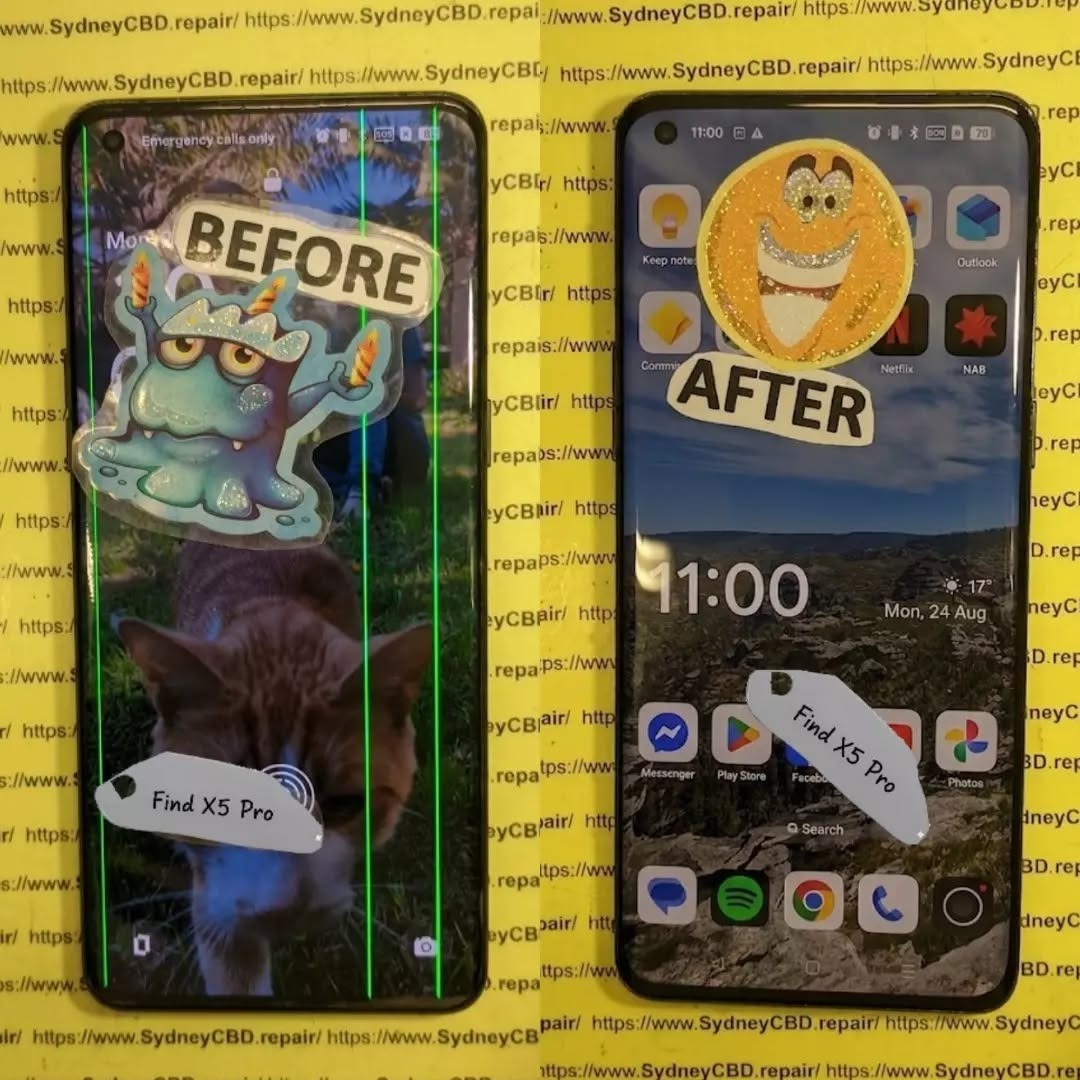
Diagnosing Black Screen And Green Line Glitches On Damaged OPPO Find X5 Pro Displays: 11 Powerful Fixes
Introduction
The OPPO Find X5 Pro is equipped with a high-end 6.7-inch curved AMOLED display designed for detailed images, smooth motion, and rich colour reproduction. OPPO’s specifications describe the panel as a 1 Billion Colour Bionic Display with a 120Hz dynamic refresh rate, while the company also lists Gorilla Glass Victus protection and WQHD+ resolution. (OPPO)
However, even a premium display can develop problems after a drop, impact, pressure, liquid exposure, overheating, or internal component failure. Two symptoms that deserve particular attention are a completely black screen and a persistent green line running vertically or horizontally across the display.
If your phone still vibrates, rings, receives notifications, or connects to a computer while the screen remains black, the problem may be concentrated in the display assembly rather than the entire phone. Likewise, a green line that remains visible after restarting the device can indicate a hardware-related OLED panel problem.
This guide explains how to diagnose these symptoms safely, distinguish software glitches from physical display damage, and determine when professional repair is the sensible next step.
The first step in diagnosing a display problem is understanding what you’re dealing with.
The OPPO Find X5 Pro uses a curved AMOLED display. Its official specifications list a 6.7-inch panel, 3216 × 1440 resolution, 10-bit colour depth, and an adaptive refresh rate that can operate up to 120Hz. OPPO also highlights its 1 Billion Colour Bionic Display technology and 8192-level brightness control. (OPPO)
That technology produces an excellent viewing experience, but an AMOLED panel isn’t indestructible.
A modern smartphone display consists of several layers and components working together. Depending on the exact fault, damage can affect:
The outer protective glass
Touch-sensitive layers
The AMOLED/OLED panel
Display driver circuitry
Flexible display cables
Connectors
Power circuitry
Mainboard display components
Software responsible for rendering images
A phone can therefore have a display that looks physically acceptable but has internal damage.
For example, a small impact near the edge of a curved screen may damage the panel underneath the glass. You might initially notice only a tiny line or flicker. Over time, however, additional pixels may stop working.
On the other hand, a phone that suddenly goes black after a fall may have suffered connector damage, panel damage, or a failure in the display power circuit.
That’s why simply looking at the glass isn’t always enough.
Why AMOLED Damage Can Look Different
AMOLED technology produces light at the individual pixel level. This means panel damage can create distinctive symptoms.
A damaged OLED panel might show:
Green or pink lines
Black spots
Flickering
Partial screen failure
Brightness abnormalities
Unusual colour patches
Ghost-like images
A completely black display
The symptom can also change depending on how much pressure the phone has experienced.
For example, if the display briefly works when the phone is flexed or squeezed, that’s not a sign that pressing the device is a good repair method. Instead, it may indicate an unstable internal connection or damaged panel.
In short, don’t press, bend, twist, or heat the phone to make the display work again.
That can turn a repairable fault into a more serious one.
1. Common Causes of Black Screen And Green Line Glitches
When diagnosing black screen and green line glitches on damaged OPPO Find X5 Pro displays, technicians generally begin by establishing what happened immediately before the problem appeared.
Accidental Drops and Impacts
Drops are among the most obvious causes.
The Find X5 Pro has a premium curved screen, and an impact can transfer force through the glass into the display assembly. Even when there isn’t a dramatic crack, the AMOLED panel underneath can be affected.
A drop onto:
A corner
A hard floor
The screen surface
The frame
A raised object
can produce different forms of damage.
A phone may continue operating normally while the display develops a green line or black section.
Pressure Damage
Pressure can be just as troublesome as an obvious drop.
Sitting on the phone, carrying it tightly in a pocket, or placing heavy objects on it can put stress on the curved panel.
This type of damage may initially appear as a thin line or flickering area.
Liquid Exposure
The OPPO Find X5 Pro has an IP68 rating under specified laboratory conditions, but water resistance isn’t the same as permanent waterproofing. OPPO itself describes the device as water and dust resistant. (OPPO)
Seals can deteriorate with age, previous repairs, impacts, or physical wear.
If the display problem appeared after liquid exposure, avoid repeatedly charging or powering the phone until it has been assessed.
Heat and Component Failure
Heat doesn’t automatically mean a screen is damaged, but excessive heat can contribute to electronic instability.
If a green line appears alongside:
Severe overheating
Random restarts
Charging problems
Display flickering
Battery swelling
the device should be inspected rather than repeatedly used.
Previous Screen Repair
A previous repair can also be relevant.
If the phone has already had a display replaced, possible causes include:
Damaged flex cable
Poor connector seating
Incompatible replacement part
Installation damage
Contamination around the connector
Defective replacement panel
This doesn’t mean every replacement screen is problematic. It simply means repair history should form part of the diagnosis.
A black screen doesn’t necessarily mean the entire phone has failed.
Before assuming the display needs replacement, determine whether the device itself is still operating.
Step 1: Check for Signs of Life
Try calling the phone from another device.
Listen for:
Ringing
Vibration
Notification sounds
Charging sounds
Haptic feedback
If the phone responds but the screen stays black, that’s useful diagnostic information.
It suggests that the motherboard and operating system may still be functioning.
Step 2: Perform a Forced Restart
A temporary system crash can make a perfectly functional display appear dead.
Use the manufacturer’s recommended restart procedure for your particular software version and device configuration.
If the phone restarts and the screen returns to normal, the original problem may have been software-related.
If the display remains completely black, continue with hardware-focused checks.
Step 3: Connect a Charger
Connect the phone to a known-good charger and cable.
Allow some time for charging.
However, don’t assume that a black screen automatically means the battery is empty. If the phone produces other signs of operation, the display itself may be the problem.
Step 4: Look for Faint Images
In a darker environment, inspect the screen carefully.
Don’t use excessive pressure.
If you can barely see an image under certain lighting conditions, the display may have a brightness or panel problem rather than a total software failure.
Step 5: Check for Recent Physical Damage
Think about what happened immediately before the failure.
Did the phone:
Fall?
Get squeezed?
Get wet?
Become unusually hot?
Receive a previous repair?
Develop a line before going black?
The timeline can provide valuable diagnostic evidence.
3. Diagnosing Green Line Glitches on the Display
A green line can be alarming because it often appears suddenly.
The most important question is whether the line is present across different screens and after restarting the phone.
A Persistent Green Line
If a green line appears:
On the lock screen
In apps
During startup
After restarting
At different brightness levels
there’s a stronger reason to suspect a display hardware issue.
A line that remains in exactly the same location is particularly important to document.
A Temporary Green Line
If the line appears briefly and disappears, possible causes can include:
Temporary software rendering issues
Display-driver instability
A loose or compromised connection
An emerging panel fault
Further testing is needed before deciding on a repair.
Take a Screenshot
A useful diagnostic trick is taking a screenshot while the green line is visible.
Then view that screenshot on another device.
If the line appears in the screenshot, the issue may involve software or the rendered image.
If the screenshot looks normal elsewhere while the physical phone still shows the green line, that points more strongly toward the physical display path.
This test isn’t perfect, but it’s useful evidence.
4. Software Problems Versus Hardware Display Damage
Not every display problem requires a screen replacement.
That’s why diagnosis matters.
Symptom
Possible Software Cause
Possible Hardware Cause
Temporary flicker
Yes
Yes
Persistent green line
Less likely
More likely
Completely black screen
Yes
Yes
Screen works after restart
Possible
Possible
Cracked glass with no image
Unlikely
Very likely
Touch works but image doesn’t
Unlikely
Likely
Green line after impact
Unlikely
Strong possibility
Problem only in one app
Possible
Less likely
Display changes when physically moved
Unlikely
Possible
This table isn’t a substitute for professional testing. It simply helps narrow down the possibilities.
Software Troubleshooting Worth Trying
Before paying for a repair, reasonable software checks can include:
Restarting the phone.
Installing available system updates when the display remains usable.
Checking whether the issue occurs in different applications.
Testing display behaviour at different brightness levels.
Taking screenshots.
Removing recently installed software if the problem began after an app installation.
Backing up important data.
If the phone has obvious physical damage and the display remains faulty across the operating system, don’t waste hours repeatedly resetting it.
A factory reset won’t repair a physically damaged OLED panel.
5. Safe Troubleshooting for Black Screen Problems
When a display is damaged, the goal is to gather information without making the problem worse.
Avoid Pressing the Screen
It can be tempting to press around a green line or black area to see whether it disappears.
Don’t.
Pressure can damage the OLED layers or cause cracks to spread.
Avoid DIY Heating Methods
Online repair videos sometimes suggest heating a phone to manipulate adhesives or connections.
That’s a job for trained technicians using controlled equipment.
A household hair dryer doesn’t provide the precision needed for professional display work.
Avoid Opening the Phone Without Experience
The Find X5 Pro has a carefully assembled internal structure.
Opening the device incorrectly can damage:
Back-cover materials
Flex cables
Wireless charging components
Battery
Display connectors
Water-resistant seals
If you’re not experienced with smartphone repair, professional diagnosis is safer.
Back Up Your Data
If the display still works intermittently, back up your important information immediately.
Prioritize:
Photos
Contacts
Messages
Documents
Authentication information
Important application data
A display that works today may stop working completely tomorrow.
6. When Does the OPPO Find X5 Pro Need a Screen Replacement?
A screen replacement may be appropriate when the AMOLED panel itself has suffered physical damage.
Common signs include:
Persistent green lines
Large black areas
No image despite phone activity
Severe flickering
Display bleeding
Dead sections of the panel
Touch and image failure after impact
Cracked display combined with visual problems
The key point is that the entire display assembly may need replacement even when the outer glass isn’t badly cracked.
Glass Damage Versus Display Damage
These are not always the same thing.
Glass-only damage may leave:
Image quality normal
Touch function normal
No lines
No black areas
Panel damage may cause:
Lines
Flickering
Black patches
Missing image
Touch problems
Colour distortion
If you have both cracked glass and display symptoms, replacing only the outer glass generally isn’t enough.
7. What Happens During a Professional Display Diagnosis?
A professional repair technician should diagnose the device before replacing expensive components.
A typical assessment may include:
Visual Inspection
The technician checks the:
Frame
Display
Back cover
Camera area
Charging port
Signs of liquid exposure
Functional Testing
The phone can be checked for:
Power
Charging
Touch
Display brightness
Colours
Cameras
Speakers
Microphones
Buttons
Connectivity
Connector Inspection
The display connection may be inspected for visible damage or contamination.
Test Display
Where appropriate, a known-good test display can help determine whether the original panel is responsible for the problem.
This is one of the most useful diagnostic methods because it separates display faults from motherboard-related faults.
Mainboard Assessment
If a test display doesn’t solve the issue, technicians may investigate display power and board-level circuitry.
That’s where professional tools and experience become especially valuable.
8. Choosing a Quality Replacement Display
If the diagnosis confirms panel failure, the replacement component matters.
A poor-quality screen can create new problems, including:
Inaccurate colours
Lower brightness
Poor touch response
Uneven illumination
Reduced refresh performance
Compatibility problems
Premature failure
For a premium device such as the Find X5 Pro, the display isn’t just a basic glass panel. OPPO’s official specifications emphasize its high-resolution AMOLED technology, 10-bit colour capability and adaptive refresh rate. (OPPO)
Ask the repair provider what type of replacement component will be installed and what warranty applies.
A reputable repair service should also explain whether the repair affects any water-resistance characteristics.
Warranty Matters
A written repair warranty provides useful protection if the replacement component develops a fault.
Before approving a repair, ask:
How long is the repair warranty?
Does it cover the display?
Are labour charges covered?
What happens if the replacement screen develops a line?
Is accidental damage excluded?
Will the device be tested before collection?
Clear answers are a good sign of professional repair practices.
9. Protecting Your Data Before a Screen Repair
Data protection is often overlooked when people focus on the broken display.
If the phone is still usable, back it up before handing it over.
If the display is only partially functional, you may still be able to transfer important files.
If the display is completely black, recovery options depend on whether the phone remains operational and what security features are enabled.
Don’t Automatically Factory Reset
A factory reset erases user data.
It doesn’t fix a physically damaged display.
Therefore, don’t reset the phone simply because the screen is black unless there is a specific reason to do so and your important information has already been backed up.
Use Official Support Where Appropriate
OPPO provides regional support and service-centre information. Its Philippines support site includes service-centre and warranty resources, while OPPO’s International Warranty Service information specifically lists the Find X5 series among supported products in applicable markets. (OPPO Support)
10. Preventing Future Green Lines and Black Screens
You can’t eliminate every possible display failure, but you can reduce avoidable damage.
Use a Protective Case
A good case should provide protection around the phone’s corners and edges.
This is especially important for a curved display.
Add Screen Protection
A suitable screen protector can help reduce scratches and minor surface damage.
However, no protector guarantees protection against a major impact.
Avoid Extreme Pressure
Don’t keep your phone underneath heavy objects.
Also avoid placing it in a pocket where it can be heavily compressed.
Keep the Phone Away From Unnecessary Heat
Don’t leave the phone in direct sunlight for long periods or expose it to avoidable high temperatures.
Deal With Damage Early
If a green line appears after an impact, don’t wait for the screen to become completely black.
Early diagnosis can help determine whether the issue is limited to the display or accompanied by other damage.
11. When Should You Stop Troubleshooting?
There’s a point where continued troubleshooting isn’t productive.
Consider professional assessment if:
The screen remains black after restarting.
The phone responds to calls but shows no image.
A green line remains after rebooting.
The problem began immediately after a drop.
The screen flickers continuously.
Touch works inconsistently.
The display has black patches.
The phone has been exposed to liquid.
A previous repair was performed.
The device becomes unusually hot.
In particular, a black screen combined with physical impact should be treated as a hardware problem until testing proves otherwise.
Trying random internet fixes can sometimes make things worse.
12. Black Screen And Green Line Repair: A Practical Decision Guide
Here’s a simple way to approach the problem.
Situation
Recommended Next Step
Phone works normally after restart
Monitor and check software
Green line disappears after restart
Investigate software first
Green line remains everywhere
Professional display diagnosis
Phone rings but screen stays black
Display and connector diagnosis
Screen broke after a drop
Hardware inspection
Display is black after liquid exposure
Stop unnecessary use and seek inspection
Touch works but image doesn’t
Display diagnosis
Previous screen repair was performed
Check replacement and connections
Phone is hot and display is failing
Stop use and seek professional assessment
This approach saves time because it starts with the simplest explanations before moving toward component-level diagnosis.
Frequently Asked Questions
1. Why does my OPPO Find X5 Pro have a green line?
A persistent green line can be associated with an OLED display fault, particularly when it remains after restarting and appears across multiple screens. Physical impact, pressure, panel failure, or internal display-related damage can be possible causes.
2. Can a software update remove a green line?
It depends on the cause. If the line is produced by a software rendering problem, an update may help. However, a physical OLED panel fault won’t normally be repaired by a software update.
3. My OPPO Find X5 Pro screen is black but the phone still rings. What does that mean?
If the phone rings or vibrates but doesn’t display an image, the operating system may still be functioning. The display assembly, connection, display power circuit, or another hardware component may need to be tested.
4. Can a black screen be fixed without replacing the display?
Sometimes. If the problem is caused by a temporary software crash or a connection issue, a display replacement may not be necessary. If the AMOLED panel itself is physically damaged, however, replacement is commonly required.
5. Should I press the screen when the green line appears?
No. Pressing or bending the display can worsen internal damage. It is better to document the symptom and have the device professionally assessed.
6. Does a cracked screen always need replacement?
Not necessarily. A cracked outer glass surface can sometimes leave the display and touch functions working. However, if the OLED panel has lines, black areas, flickering, or image failure, a more comprehensive display repair may be required.
7. Is the OPPO Find X5 Pro display repairable after a drop?
It can often be repaired, but the exact solution depends on the damage. A technician should determine whether the issue involves the screen assembly, connector, frame, or motherboard before recommending a replacement.
8. Will a factory reset fix a black screen?
A factory reset is not a reliable solution for physical display damage. If the screen became black after a drop or shows other hardware symptoms, professional diagnosis is more appropriate.
9. Can water damage cause display problems?
Yes. Liquid exposure can affect electronic components and connections. Although the Find X5 Pro has an IP68 rating under specified conditions, water resistance can be affected by physical damage, wear, age, or previous repairs. (OPPO)
10. Should I repair the phone immediately after a green line appears?
Prompt diagnosis is sensible, particularly if the line appeared after an impact or is accompanied by flickering, black areas, touch problems, or overheating. Getting the issue assessed early can help identify the actual cause before additional symptoms develop.
Conclusion
Diagnosing black screen and green line glitches on damaged OPPO Find X5 Pro displays requires more than simply looking at the glass.
The phone’s premium AMOLED panel contains multiple components that can fail independently. A green line may indicate a display-panel problem, while a completely black screen can result from software instability, display failure, connector damage, or another hardware issue.
Start with safe checks such as restarting the device, checking whether it responds to calls, testing the charger, and documenting when the problem occurs. If the issue began after a drop, pressure, liquid exposure, or previous repair, hardware damage should receive particular attention.
Most importantly, avoid pressing, bending, heating, or opening the phone without appropriate tools and experience.
If the display remains black or the green line persists, professional diagnosis can establish whether the problem requires a screen replacement or whether another component is responsible. Choosing a repair provider that explains the diagnosis, uses an appropriate replacement component, and offers a clear repair warranty can also help protect your investment.
The OPPO Find X5 Pro was designed around a high-resolution 120Hz AMOLED display, so restoring the correct display performance requires attention to both the replacement component and the repair process. (OPPO)
A damaged screen doesn’t necessarily mean your phone is beyond repair. With the right diagnosis and careful repair, many display problems can be resolved while preserving the rest of the device.
Final Repair Checklist
Before approving an OPPO Find X5 Pro display repair, ask:
Has the phone been fully diagnosed?
Is the problem definitely the display?
Has the connector been inspected?
Will the replacement panel be tested?
What warranty is included?
Will touch and display functions be tested after repair?
Will cameras, speakers, charging, and buttons be checked?
Has the condition of the frame been assessed?
Will the technician explain any limitations regarding water resistance after repair?
Taking a few minutes to ask these questions can save you from unnecessary expense and help ensure that the underlying problem—not just the visible symptom—is properly addressed.
David from Sydney CBD Repair Centre – The Best place to fix mobile phones as 7 Years In A Row! Top Mobile Phone Repair In Sydney. More than 2000 Positive Reviews on Google and Same Day Repairs.
We take pride in delivering exceptional repair services for all major phone brands including Apple, Samsung, Google, and more. Our expert technicians use only genuine parts and offer 90days warranty on repairs. Located in the heart of Sydney CBD, we’re your one-stop solution for all mobile device repairs.
Our commitment to excellence has earned us the trust of thousands of satisfied customers. Whether it’s a cracked screen, battery replacement, or water damage repair, we handle it all with professional care and expertise. Walk in today and experience why we’re Sydney’s #1 choice for mobile phone repairs.
Visit us for:
✓ Same Day Express Repairs
✓ Genuine Parts Guarantee
✓ Professional Technicians
✓ Competitive Pricing
✓ 2000+ 5-Star Google Reviews
✓ 7-Time Award Winner for Best Phone Repairs
Sydney CBD Repair Centre – Where Quality Meets Reliability.
Call : +61280114119
Website: Sydney CBD Repair Centre
Can We Revive a Water-Damaged Google Pixel 9 After 24 Hours? Ultimate Guide + 10 Proven Solutions
Introduction
Water damage is one of the most frustrating and stressful problems a smartphone owner can face. For users of the Pixel 9, a high-end device with premium features, the thought of losing valuable data, apps, and memories due to liquid exposure can be alarming. While the Pixel 9 is designed with an IP68 rating, offering resistance against water and dust, this protection has its limits. Extended exposure—especially beyond 24 hours—can cause severe internal damage that isn’t always visible from the outside.
The first question many Pixel 9 owners ask is: “Can we revive a water-damaged Pixel 9 after 24 hours?” The answer depends on multiple factors, including the type of water, the extent of exposure, and the steps taken immediately after the incident. In this guide, we’ll explore everything you need to know about water damage in Pixel 9 devices. From recognizing early warning signs to DIY and professional recovery methods, data recovery solutions, and preventive measures, this article offers a comprehensive roadmap for saving your device.
Whether you’re dealing with a phone that was accidentally dropped in a pool, spilled with coffee, or submerged in rain, the tips and strategies in this guide will give you hope—and actionable steps—to recover your Pixel 9 as quickly and safely as possible. By following expert recommendations, you can maximize your chances of reviving a water-damaged phone and avoid permanent damage.
Water damage is one of the most dreaded issues for smartphone users, especially for a high-end device like the Pixel 9. If your phone has been submerged or exposed to water for more than 24 hours, you might be wondering: is revival even possible? The answer isn’t black and white—it depends on several factors including water type, device exposure, and the steps you take after the incident.
In this guide, we’ll explore how water damages your Pixel 9, immediate actions to take, professional recovery techniques, and preventive strategies to safeguard your device in the future.
Water doesn’t just ruin your phone visually—it infiltrates delicate internal components. The Pixel 9 is rated IP68, meaning it can withstand dust and water submersion up to 1.5 meters for 30 minutes. However, once water exposure exceeds this limit, internal corrosion can begin quickly.
How Water Damages the Internal Hardware
Logic Board: Water can short-circuit microchips and connectors.
Battery: Liquid can cause swelling, overheating, or failure.
Screen & Display: Water causes flickering, touch sensitivity issues, or blackouts.
Connectors & Ports: Corrosion can prevent charging or accessory usage.
Signs Your Pixel 9 is Water-Damaged
Screen flickering or unresponsiveness
Random reboots or complete shutdown
Corrosion residue or discoloration near ports
Strange odors or heat from the battery
Difficulty charging or connecting peripherals
Immediate Steps to Take Within 24 Hours
Taking the right actions in the first 24 hours dramatically increases your Pixel 9’s survival chances.
Powering Off and Disconnecting
Turn off your phone immediately.
Remove SIM and memory cards.
Disconnect any chargers or headphones.
Drying Techniques: DIY vs Professional
DIY Methods:
Silica Gel Packs: Absorbs moisture more effectively than rice.
Air Drying: Place phone in a dry, ventilated area.
Avoid: Heat guns or microwaves—they damage circuitry.
While Pixel 9’s IP68 rating is robust, 24-hour submersion is beyond its designed tolerance.
Factors Affecting Survival
Water Type: Saltwater and chlorinated water accelerate corrosion.
Duration: Prolonged exposure increases the risk of permanent damage.
Device Condition: Age, prior repairs, and battery health influence outcomes.
Professional Water Damage Repair
If DIY drying fails, professional repair is the next best option. Experts have tools and experience to save devices thought beyond recovery.
Internal Component Cleaning
Ultrasonic PCB cleaning removes microscopic water and corrosion.
Corrosion inhibitors prevent long-term damage.
Part Replacement Options
Screen replacements for display failure
Battery swaps for water-compromised cells
Logic board repair or replacement for shorted circuits
Data Recovery Options
Even if your Pixel 9 fails to power on, there may still be hope for data recovery.
Using Google Backup Services
Check Google Photos, Drive, and Contacts for automatic backups.
Restore your device after repair or replacement.
Third-Party Data Recovery Tools
Tools like Dr.Fone or EaseUS can extract data from partially functional devices.
Hardware recovery services can retrieve data from damaged PCBs.
Preventing Future Water Damage
Prevention is better than cure.
Waterproof Cases and Screen Protectors
Cases rated IP68 or above
Screen protectors with edge sealing
Safe Usage Tips
Avoid phone use near pools, sinks, or rainy conditions
Use dry hands when handling the device
Cost of Repair and Replacement
Repair costs vary based on damage severity.
DIY Repair Costs vs Professional Services
Service
Approximate Cost
DIY drying
$0–$30
Screen replacement
$150–$250
Battery replacement
$80–$120
Logic board repair
$200–$400
Full professional water damage recovery
$250–$500
Real-Life Pixel 9 Recovery Stories
Many users have successfully revived their phones after prolonged water exposure. Common success factors include immediate action, professional intervention, and having backups ready. Conversely, neglect or delayed repair often results in irreparable damage.
FAQs
1. Can a Pixel 9 survive 24 hours in water?
It’s unlikely, but immediate drying and professional intervention can increase survival chances.
2. Should I turn on my Pixel 9 after water exposure?
No, powering on can cause short circuits. Always turn it off first.
3. Is rice effective for drying?
Rice helps minimally; silica gel or professional drying is far superior.
4. How long does professional water damage repair take?
Typically 1–3 days depending on the severity of internal damage.
5. Can data be recovered from a completely dead Pixel 9?
Yes, using professional data recovery tools and techniques.
6. Does insurance cover water damage?
Some policies or Google’s protection plan may cover repair or replacement costs.
Conclusion
Reviving a water-damaged Pixel 9 after 24 hours is challenging but not impossible. Swift action, proper drying methods, and professional repair services greatly improve your phone’s survival odds. Always back up your data, use protective cases, and practice safe handling to avoid future water damage.
David from Sydney CBD Repair Centre – The Best place to fix mobile phones as 7 Years In A Row! Top Mobile Phone Repair In Sydney. More than 2000 Positive Reviews on Google and Same Day Repairs.
We take pride in delivering exceptional repair services for all major phone brands including Apple, Samsung, Google, and more. Our expert technicians use only genuine parts and offer 90days warranty on repairs. Located in the heart of Sydney CBD, we’re your one-stop solution for all mobile device repairs.
Our commitment to excellence has earned us the trust of thousands of satisfied customers. Whether it’s a cracked screen, battery replacement, or water damage repair, we handle it all with professional care and expertise. Walk in today and experience why we’re Sydney’s #1 choice for mobile phone repairs.
Visit us for:
✓ Same Day Express Repairs
✓ Genuine Parts Guarantee
✓ Professional Technicians
✓ Competitive Pricing
✓ 2000+ 5-Star Google Reviews
✓ 7-Time Award Winner for Best Phone Repairs
Foldable Screens Repair Myths Busted: Samsung Galaxy Z Fold and Samsung Galaxy Z Flip Fixes + Essential Insights
Introduction
Foldable smartphones like the Samsung Z Fold and Z Flip have completely transformed the way we think about mobile devices. Combining the portability of a standard phone with the expansive display of a tablet, these devices offer unmatched versatility. Yet, with innovation comes uncertainty. Many users worry that a cracked screen, malfunctioning hinge, or minor damage means a costly, irreversible repair—or worse, that the device cannot be fixed at all.
In reality, foldable screen repairs are not only possible, but increasingly reliable when handled by experienced technicians. Advances in flexible OLED technology, hinge mechanisms, and professional repair methods have made it possible to restore foldable phones to near-original condition. From understanding the true costs of repair to debunking common myths about DIY fixes, this guide will clarify everything you need to know to keep your Z Fold or Flip in top shape.
By separating fact from fiction, this article will help you make informed decisions about repairs, maintenance, and preventive care, ensuring your foldable device continues to deliver the cutting-edge experience it was designed for.
Foldable smartphones like the Samsung Z Fold and Z Flip have revolutionized mobile technology. Their futuristic design combines portability with large-screen usability, offering a device that folds in half yet expands when needed. However, this innovation comes with concerns about repairability, durability, and the myths surrounding maintenance. Many users fear that a cracked screen or hinge issue means a costly replacement—or even that the device cannot be fixed at all.
The truth is far from these assumptions. Foldable screen repairs are entirely possible, and with proper care, your Z Fold or Flip can last for years without major issues. In this guide, we’ll debunk the most common foldable repair myths, explain the realities of fixing these devices, and provide practical tips for keeping them in peak condition.
Foldable phones use flexible OLED displays, which are thin and bendable, paired with an advanced hinge mechanism that allows the device to fold and unfold seamlessly. Unlike traditional smartphones, foldables integrate a dual-screen structure without compromising touch sensitivity or display quality.
Key technical components include:
Flexible OLED layer: Allows bending without breaking, but susceptible to scratches and impact damage.
Hinge assembly: Precision-engineered for hundreds of thousands of folds; improper handling can wear it down.
Protective layers: Thin polymer layers protect the OLED from dust and pressure but are more delicate than standard glass.
Understanding these components is crucial because repairs differ significantly from conventional screen replacements.
Despite growing popularity, foldable devices are shrouded in misconceptions. Let’s address the most widespread myths:
Myth 1: Foldable Screens Cannot Be Repaired
Many users believe once a foldable screen cracks, it’s game over. This isn’t true. Professional repair centers can:
Replace flexible OLED screens
Fix minor screen scratches and delamination
Repair hinge issues without replacing the screen entirely
Modern repair techniques allow precise handling of foldable displays, making previously “irreparable” damage manageable.
Myth 2: DIY Repair Is Safe
Attempting to repair a foldable at home can be disastrous. The flexible OLED and hinge system require delicate tools and proper adhesive application. DIY risks include:
Irreversible screen damage
Touch sensitivity loss
Voiding warranty
A professional technician ensures the device is dismantled and reassembled without permanent harm.
Myth 3: Only Samsung Can Fix Foldables
While Samsung-authorized centers provide OEM parts, experienced third-party repair specialists also offer genuine replacements and competitive pricing. These certified technicians are equipped to handle complex repairs with high success rates.
Myth 4: Cracks Always Mean Total Replacement
Not all cracks necessitate a full screen replacement. Minor scratches or small edge cracks can often be fixed using precision polish or localized glass repair, depending on severity.
Realities of Foldable Screen Repairs
Understanding the real repair process can relieve anxiety for foldable owners. Repairs typically involve:
Screen Replacement Process
Device is powered off and disassembled carefully.
Damaged OLED layer is removed.
New flexible display is applied with precision adhesives.
Device undergoes touch calibration and hinge testing.
Professional centers like Sydney CBD Repair Centre follow strict protocols to ensure original display quality.
Hinge Mechanism Repairs
Hinge issues, like stiffness or misalignment, can be corrected without touching the screen. Repairs may include:
Lubricating hinges
Replacing small mechanical parts
Tightening internal screws
Water Damage and Flex Screen Issues
Water exposure can affect foldable phones differently than standard smartphones. Rapid drying and corrosion treatment can often save the device if addressed immediately.
Cost Considerations for Foldable Repairs
Repair costs depend on several factors:
OEM vs Third-Party Parts
Part Type
Pros
Cons
OEM
Guaranteed fit, color, and durability
Higher cost
Third-party
Lower price, quicker availability
Potential mismatch, shorter lifespan
Warranty and Insurance Implications
Professional repairs usually maintain warranty if OEM parts are used. Third-party repairs may affect coverage but are often cheaper and faster.
Tips to Prevent Foldable Screen Damage
Handling Your Z Fold/Flip Safely
Open and close gently
Avoid bending beyond natural hinge limits
Keep away from sharp objects
Using Screen Protectors and Cases
Apply flexible polymer protectors
Use cases specifically designed for foldables to prevent dust and pressure damage
Regular Maintenance and Cleaning
Clean hinges and edges with microfiber cloths
Lubricate hinges when needed
Inspect for small cracks to prevent worsening
Frequently Asked Questions (FAQs)
Q1: Can a foldable screen be repaired after water damage? A: Yes, if addressed promptly. Specialized repair centers can dry, clean, and restore the device without full replacement.
Q2: How long does a typical foldable screen repair take? A: Most repairs can be completed in 1–2 hours, depending on the complexity.
Q3: Are third-party replacement screens reliable? A: High-quality third-party screens are often reliable, but OEM screens ensure perfect color accuracy and durability.
Q4: Does DIY repair void the warranty? A: Yes, attempting to repair a foldable yourself usually voids the manufacturer’s warranty.
Q5: How can I protect my Z Fold or Flip from damage? A: Use a dedicated foldable case, avoid excessive pressure, and maintain the hinge mechanism.
Q6: Are hinge repairs expensive? A: Hinge repairs are typically less expensive than screen replacements, especially if handled before severe damage occurs.
Conclusion
Foldable phones are remarkable devices, combining innovation and practicality. While myths and misconceptions abound, the reality is that professional repairs are entirely possible, whether for screen cracks, hinge issues, or water damage. By understanding your device, taking preventative measures, and trusting certified technicians, you can extend the life of your Z Fold or Flip and enjoy its unique capabilities for years.
Foldable screen repair myths are busted—your device is far more resilient than you might think.
David from Sydney CBD Repair Centre – The Best place to fix mobile phones as 7 Years In A Row! Top Mobile Phone Repair In Sydney. More than 2000 Positive Reviews on Google and Same Day Repairs.
We take pride in delivering exceptional repair services for all major phone brands including Apple, Samsung, Google, and more. Our expert technicians use only genuine parts and offer 90days warranty on repairs. Located in the heart of Sydney CBD, we’re your one-stop solution for all mobile device repairs.
Our commitment to excellence has earned us the trust of thousands of satisfied customers. Whether it’s a cracked screen, battery replacement, or water damage repair, we handle it all with professional care and expertise. Walk in today and experience why we’re Sydney’s #1 choice for mobile phone repairs.
Visit us for:
✓ Same Day Express Repairs
✓ Genuine Parts Guarantee
✓ Professional Technicians
✓ Competitive Pricing
✓ 2000+ 5-Star Google Reviews
✓ 7-Time Award Winner for Best Phone Repairs
Before and After: Extreme Phone Screen Damage Transformations by Our Technicians + 10 Stunning Cases
Introduction:
A shattered phone screen can feel like a disaster. From accidental drops to heavy impacts, extreme screen damage not only ruins the appearance of your device but can also affect its functionality, making it difficult—or even impossible—to use. Many people underestimate just how complex a repair can be until they attempt a DIY fix or visit a repair service without the right expertise.
At Sydney CBD Repair Centre, we specialize in transforming even the most damaged devices. Our skilled technicians restore shattered screens to like-new condition, using genuine parts, precision tools, and advanced techniques. In this article, we’ll take you through the causes of extreme screen damage, the meticulous repair process, real-life transformations, and tips to prevent future damage—all backed by the experience that has earned us thousands of satisfied customers and 7 consecutive years as Sydney’s top mobile repair center.
Whether you’re dealing with a cracked iPhone, a water-damaged Samsung, or a foldable device in pieces, this guide shows how professional care turns disaster into perfection.
Few things are as frustrating as a severely cracked or shattered phone screen. Whether it’s a devastating drop, accidental impact, or water exposure, extreme screen damage can disrupt your day, compromise device functionality, and create costly repair bills. At Sydney CBD Repair Centre, we specialize in restoring even the most damaged devices to like-new condition. This article explores the full spectrum of extreme screen transformations carried out by our expert technicians, highlighting the care, skill, and technology involved.
Screen damage is not just about a cracked surface. It can involve layers of the display, touch sensitivity, and even internal components. Understanding the type of damage is key to ensuring a proper repair.
Minor vs. Major Screen Damage
Minor Damage: Surface scratches, small cracks, or minor dead pixels.
Major Damage: Shattered glass, malfunctioning touch, black spots, or complete LCD failure. Extreme damage often renders the device unusable.
Causes of Extreme Damage
Drops and Impacts: Accidental drops from height are the leading cause of screen shattering.
Pressure Damage: Sitting on a phone, heavy objects pressing on the screen.
Water and Liquid Exposure: Moisture can warp screens and affect internal components.
Thermal or Chemical Exposure: Extreme heat or corrosive substances may compromise the screen.
Extreme screen damage doesn’t have to mean the end of your device. With Sydney CBD Repair Centre’s professional repairs, shattered screens are transformed back to pristine condition. Our expert technicians, genuine parts, and state-of-the-art equipment ensure your device not only looks amazing but works flawlessly. Walk in today and witness the transformation for yourself!
David from Sydney CBD Repair Centre – The Best place to fix mobile phones as 7 Years In A Row! Top Mobile Phone Repair In Sydney. More than 2000 Positive Reviews on Google and Same Day Repairs.
We take pride in delivering exceptional repair services for all major phone brands including Apple, Samsung, Google, and more. Our expert technicians use only genuine parts and offer 90days warranty on repairs. Located in the heart of Sydney CBD, we’re your one-stop solution for all mobile device repairs.
Our commitment to excellence has earned us the trust of thousands of satisfied customers. Whether it’s a cracked screen, battery replacement, or water damage repair, we handle it all with professional care and expertise. Walk in today and experience why we’re Sydney’s #1 choice for mobile phone repairs.
Visit us for:
✓ Same Day Express Repairs
✓ Genuine Parts Guarantee
✓ Professional Technicians
✓ Competitive Pricing
✓ 2000+ 5-Star Google Reviews
✓ 7-Time Award Winner for Best Phone Repairs