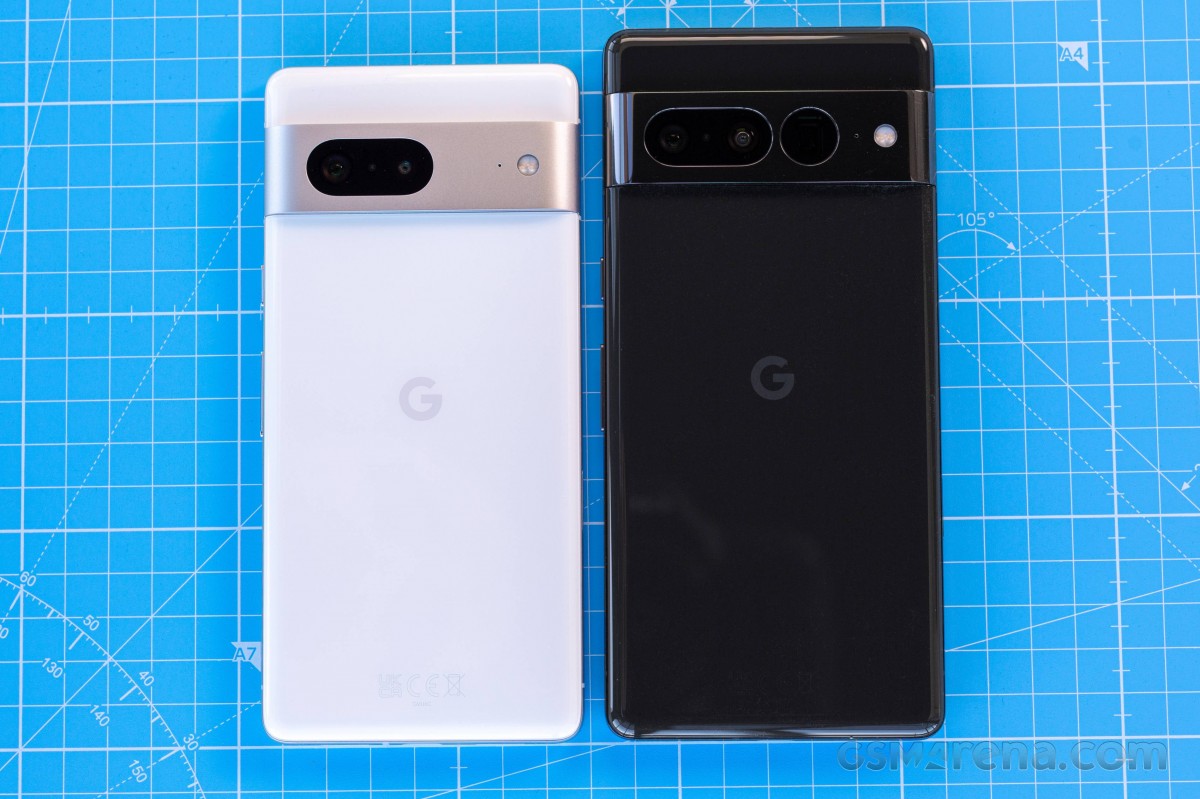
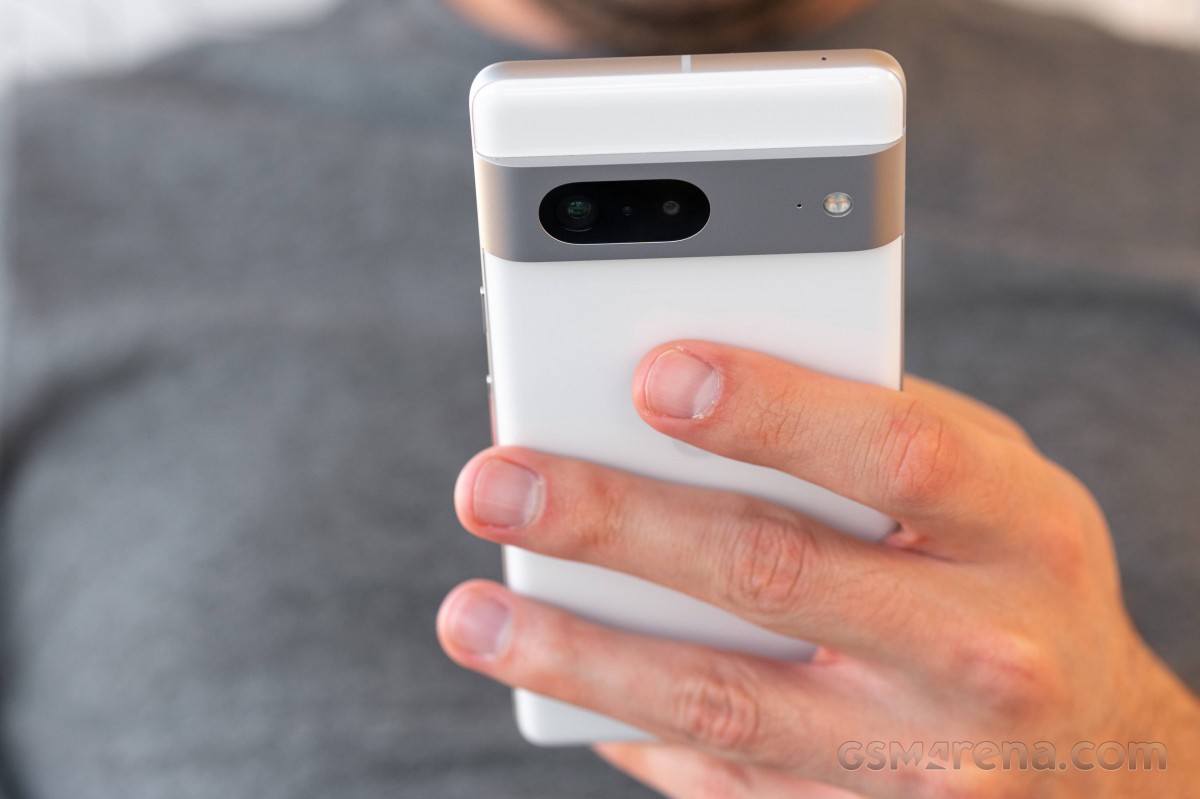
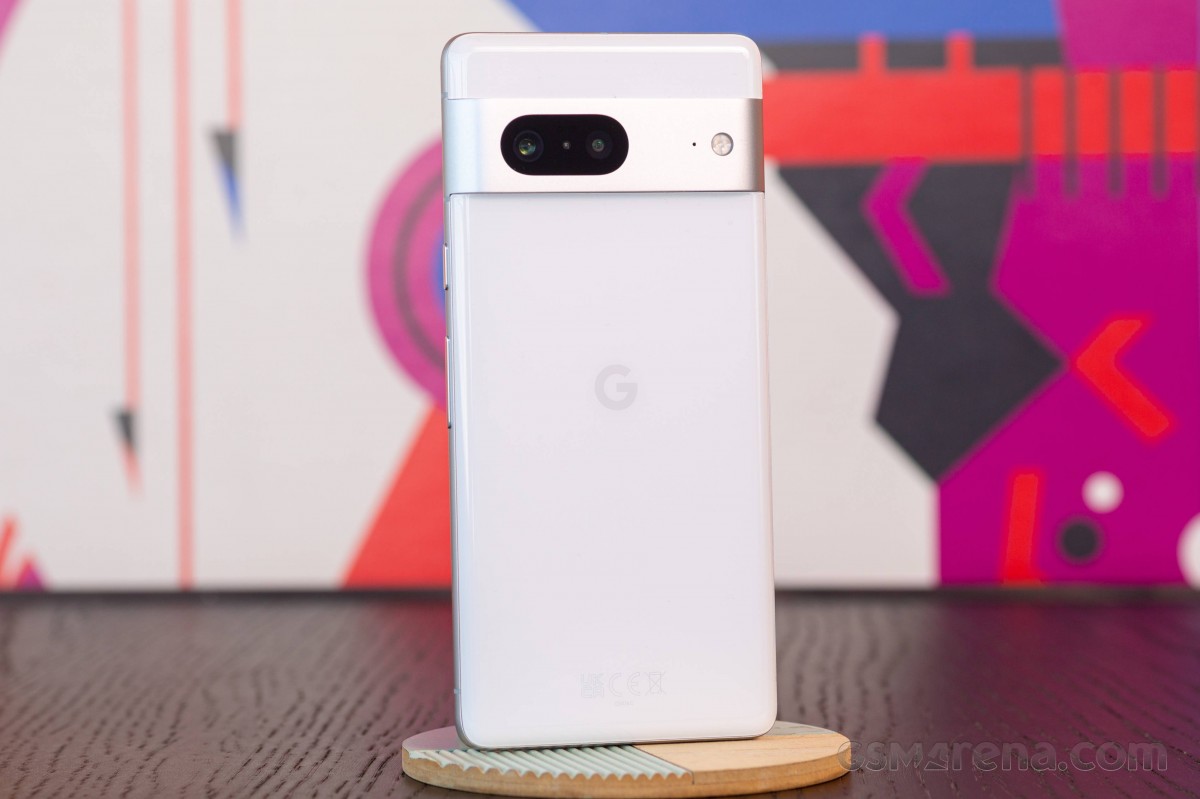
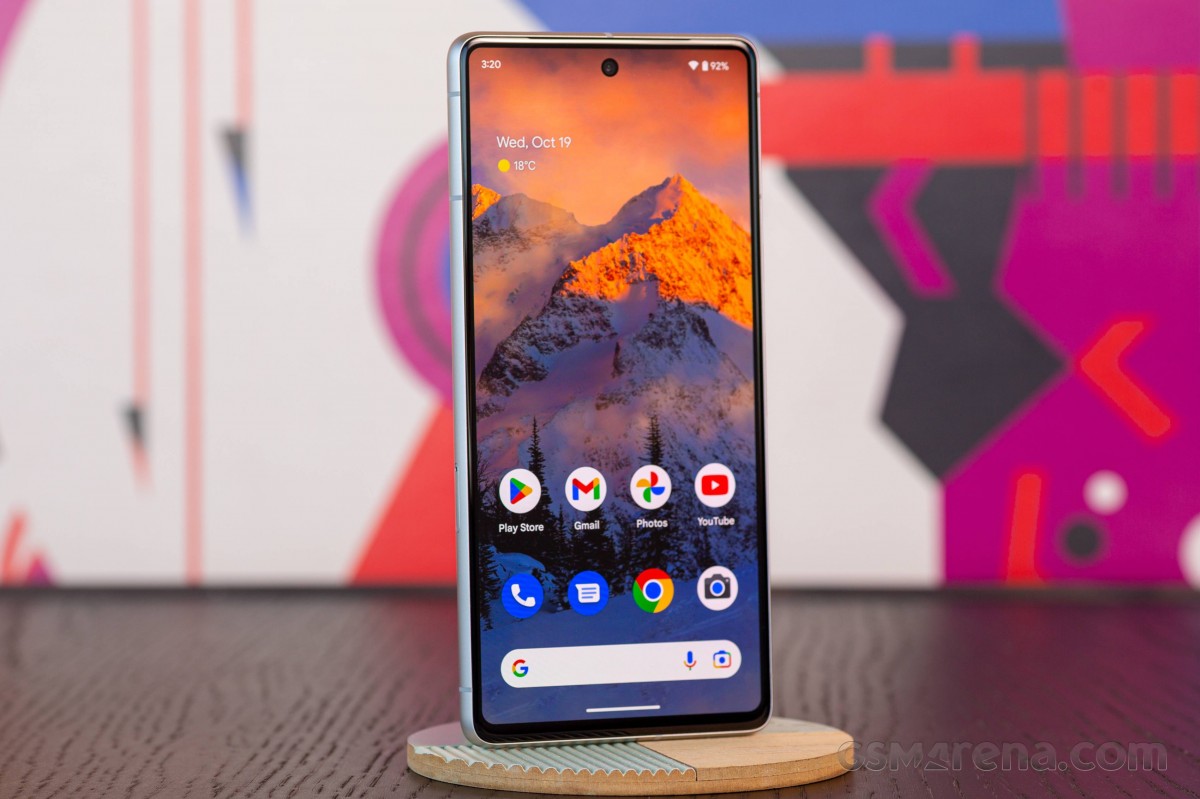
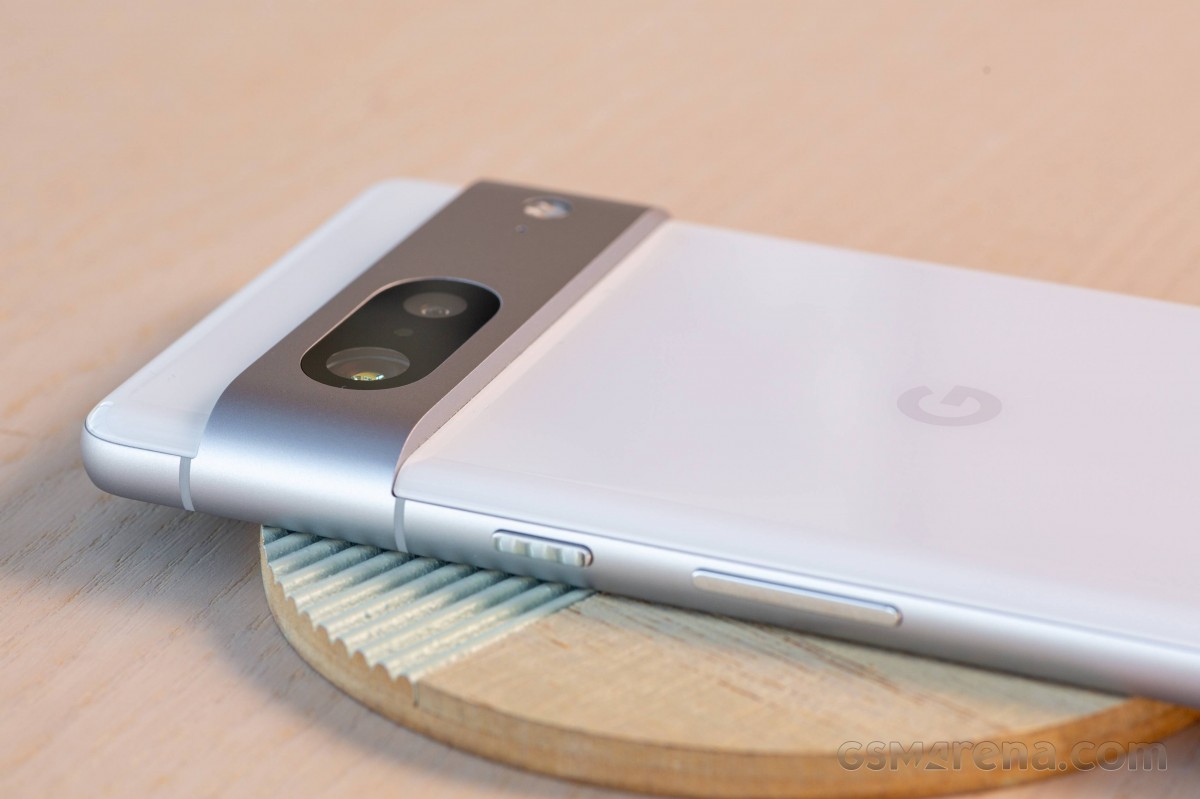
With the Pixel 7 and 7 Pro last October 2022, Google reintroduced Face Unlock to its phones after abandoning the Pixel 4’s approach.
At the launch event, it was announced as such:
And the front camera has another role to play. Pixel 7 and 7 Pro’s front camera uses our advanced machine learning models for face recognition, to power Face Unlock. So you have the faster, more secure under-display fingerprint reader, and now you have the convenience of unlocking your phone with a glance.
Instead of using a dot projector, flood illuminator, and IR cameras in conjunction with the Soli radar, Google turned to a front-facing camera that supports DPAF (dual-pixel auto-focus) to presumably create a depth map to be used with the aforementioned ML models. I find it slightly weird that Google has yet to detail the technology behind this Face Unlock approach in an AI/Research blog post, like it did before.
For the most part, the experience has been fine. It’s not better than the dedicated hardware of the Pixel 4 or Face ID on the iPhone. That approach lets face recognition operate in all lighting conditions, including the absence of any. My usage of the fingerprint sensor definitely picks up at night, resulting in a two-tiered security experience throughout the day.
Of course, the more stark tiering is how face recognition is not considered a secure unlock method by Android for things related to payments, passwords, and passkeys. In that regard, today’s Face Unlock is less secure than what came before in an unfortunate and uncharacteristic step backward. Assuming Google decided to continue the Pixel 4 lineage rather than reorienting, the Pixel 5 would have probably not had a hole punch and instead opted for an iPhone-esque cutout in order to avoid a thick upper bezel. The design would have presumably shrunk by now. That’s one big shame with the Pixel restart.
Going back to reality, the Face Unlock we do have today on the Pixel 7, 7 Pro, 7a, and Fold is best summarized as a convenience. I’ve been using it a bit more with the Pixel Fold as a way to transition from an under-display to a side-mounted fingerprint sensor. Having used the former for two generations now, I’ve come to like how you’re literally interacting with the UI for unlocking. I’m amused at the hardware/software synergy.
In optimal conditions, Face Unlock on the Fold works quite fast and lets you start doing things on your phone pretty quickly, which is arguably what’s most important.
That said, the security and environmental conditions will always stop it from becoming ubiquitous. I wonder whether the primarily software-driven approach to Face Unlock is something that has a future. The roadmap behind the IR approach that Apple uses is more straightforward in that ideally all those components can be placed and work underneath the display.
Namely, for Google, will the recognition algorithms get foolproof enough that it cannot be tricked and gets elevated to a secure unlock method? Does this require a front-facing camera upgrade, more on-device processing, or another innovation entirely?
Or will the future of Face Unlock on the Pixel be a return to IR? That would be great from a security and convenience perspective but would make the current feature feel one-off.
Even though the Google Pixel lineup gets much media attention, it’s still rather niche due to its limited market availability. However, Google has been trying really hard for the last couple of generations to appeal to a wider audience by delivering some unique features. Even the stock Android running on today’s Pixels isn’t exactly stock, as it has some neat tweaks and exclusive features. There are even reports that Google plans to ship a record number of Pixels next year.
On the surface, the Pixel 7 and 7 Pro aren’t much different from the Pixel 6 series while introducing some small but notable upgrades. Maybe that’s part of the reason why we think the 7th generation has a good chance of winning over new fans around the globe. Although “the globe” might not be the best choice of words given the limited availability as usual.
The Pixel 7 offers a few key improvements over its predecessor, the Pixel 6. It’s now running on an improved Google Tensor G2 chip with better AI capabilities, Gorilla Glass Victus build all-around, a better selfie camera and a smaller display. As a result, the Pixel 7 is slightly smaller than the Pixel 6, which is a clear indication that Google is aiming for the compact flagship niche. And although smaller, the Pixel 7’s display is considerably brighter.
Google Pixel 7 specs at a glance:
Body: 155.6×73.2×8.7mm, 197g; Glass front (Gorilla Glass Victus), glass back (Gorilla Glass Victus), aluminum frame; IP68 dust/water resistant (up to 1.5m for 30 mins).
The camera setup on the back remains unchanged. We’ve got a big 50MP sensor doing the heavy lifting and a 12MP ultrawide camera helping out. There’s still no telephoto camera, but to be fair, that’s a rare find in the compact flagship class. Still, Google promises better image processing and improved overall camera quality through machine learning algorithms and better ISP capabilities.
It was quite the surprise to see the Pixel 7 go down in battery capacity coming from the Pixel 6 – 4,355 mAh vs. 4614 mAh, but in theory, Google could have offset the loss with other hardware improvements, such as display and chipset power draw. As we all know, specs sheets never paint a complete picture, so let’s find out what the new Pixel 7 is capable of and whether it is really the right phone for you.
Unboxing the Google Pixel 7
As one would expect, the Google Pixel 7‘s retail box is relatively small and contains only the user manuals, USB-C to USB-C cable for PD charging and a USB-C to USB-A dongle in case you find yourself with a standard charger that doesn’t have a USB-C connector.
Speaking of the charger, there is none. The device supports up to 20W Power Delivery charging, so finding one that works with the Pixel 7 shouldn’t be a big issue.
Competition
While the Pixel 7 Pro has a tough job competing in the ultra-premium segment where behemoths like Samsung and Apple dominate, the vanilla Pixel 7 has a niche of its own. The Pixel 7’s price remains €650, which is pretty good for a flagship phone with superb camera performance and capable hardware. The vanilla Pixel 7 is one of the few premium options for users to choose from. Or is it?
After a quick market research, we found quite a few compact alternatives to the Pixel 7. The Samsung Galaxy S22 and the Oppo Find X5 are both within the €600-650 range with excellent camera performance, top-notch display and heavily customized software. The Galaxy S22 even has a capable 3x optical zoom camera, while the Find X5 has a 2x zoom one, while the Pixel 7 relies on cropping from its main sensor. Its display lags behind with 90Hz refresh rate and considerably slower charging too. Its key advantages are the good battery life and the software features, which are best utilized in a handful of countries/languages. Maybe aside from the telephoto camera omission, the Pixel 7 has a slight advantage over its competitors in terms of overall camera quality.
In case you are willing to go up the price ladder, the Asus Zenfone 9 may entice you with a similar feature set. The Zenfone 9 is asking about €780 right now, and it’s even smaller than the Pixel with its 5.9-inch display. Asus’ contender doesn’t have a telephoto either, and it doesn’t offer the level of photography proficiency as the Pixel, but it can run for longer on a single charge and supports faster charging. Software-wise, the two are very similar. The Zenfone 9 is also on the “stock Android” path with a handful of Zenfone-specific, geeky software features.
Conversely, you can go down in price and consider the Xiaomi 12 instead. It’s priced around the mid-€500 with a 6.28-inch display, 120Hz at that. The 12 has a similar camera setup and prowess. And although battery life isn’t as good, it blows the Pixel 7out of the water when it comes to charging speed. The big difference in the software approach is what sets those two handsets apart the most. The MIUI is highly customizable and has a ton of niche features. At the same time, the Pixel 7 relies on Android-intrinsic features and a wide range of AI-powered functionalities, most of which are limited to certain markets.
Realme GT2 Pro
Perhaps the Realme GT2 Pro deserves mention as it’s an extremely well-rounded phone with only one big omission – no telephoto camera. Aside from that, the GT2 Pro is a bang for the buck, a true flagship killer costing a little over €600 with all the bells and whistles. But it’s easy to overlook if you need a compact phone because the GT2 Pro is anything but. It has a huge 6.7-inch display, which puts it in an entirely different category.
Verdict
The Pixel 7 is definitely one of the best options in the €600-700 range. It has a flagship-worthy performance, although a bit lower than you’d expect; it’s one of the best phones for mobile photography, if not the best-in-class, and it has bright OLED, great-sounding stereo speakers, long battery life (with the size category in mind) and exceptional software ensuring timely updates and smart features.
Sadly, there are a few caveats to consider here. There’s no true telephoto camera; the display is limited to 90Hz; some of the most advanced software features are region-dependant, and the charging solution is just way too outdated for a 2022 flagship release.
All things considered, the Pixel 7, along with the Pixel 7 Pro, are the best smartphones from Google, and that means something in this context. We’ve seen Google messing up smartphone releases more than once. Luckily, the Pixel 7 isn’t one of those times.
So, do we recommend it? Yes, for sure! At that price, the Pixel 7 offers a unique combination of ultra-premium camera experience, long battery life and AI-based features that make it the smartest kid on the block.
Pros
Compact and premium build, easy to handle, unique-looking design, dust- and water-resistant.
Sharp, bright, color-accurate display.
Good battery life considering the phone’s size.
Android from the source, exclusive feature set, unrivaled perception of smoothness on this side of the OS divide.
Superb stereo speakers.
Overall, great camera quality with an unmatched character that has a loyal following.
Cons
The display is just 90Hz as opposed to competitors pushing beyond 120Hz.
Very slow charging by the standards of the day.
Certain software and hardware features are regionally limited – 5G, VoLTE, and much of the onboard AI stuff (though admittedly, so is the phone’s availability, to begin with).
Ultrawide camera is underwhelming in low light.
Selfies rarely come out tack sharp.
Thank you for using
Themify Popup
This is a sample pop up. Themify Builder or Builder Lite (free) plugin is recommended to design the pop up layouts.