Google is rolling out Android 15 Beta 1.2 only three days after the last patch that addressed the lack of NFC tap-to-pay.
AP31.240322.027 (compared to AP31.240322.023) with the April 2024 security patch is available for all supported devices: Pixel 6, Pixel 6 Pro, Pixel 6a, Pixel 7, Pixel 7 Pro, Pixel 7a, Pixel Tablet, Pixel Fold, Pixel 8, and Pixel 8 Pro.
Fixed an issue that sometimes caused apps to freeze and display an “Application Not Responding” message. (Issue #328865524)
7 years of updates. It’s something that’s still borderline unbelievable, but Google set as the new standard for software updates with its latest Pixel releases. But months later, some still seem to not understand what this update promise means?
For a long time, Android phones didn’t have very good commitments for software updates. Some devices would get a couple of major Android updates while others would be months behind schedule if they were updated at all. Over time, that Wild West of updates was tamed, with the industry standard for a while settling on two years of major Android updates and three years of security updates after launch. That crept higher for a while, but Google really changed the game last year with the launch of Pixel 8 and Pixel 8 Pro.
With its latest flagships, Google promised 7 years of updates. That’s a number that not even Apple guarantees.
But what does that promise mean? There seem to be mixed opinions out there.
Some seem to be under the impression that this will mean every single feature Google launches over the next near-decade will be available on the hardware released today. Others are skeptical Google will live up to the promise at all.
But, ultimately, this is incredibly simple.
Google has explained that 7 years of updates will include Android OS updates and security updates for a total of seven years, with Pixel Feature Drops “may or may not” being included in that timeline.
Pixel 8 and 8 Pro will get updates for at least 7 years from when the device first became available on the Google Store in the US. These updates include security, software, and may also include feature drops.
That’s it. You can take that at face value. For the next seven years, Google Pixel 8 and Pixel 8 Pro will get every Android OS version and every monthly security update. They might get new features in those updates too, but it’s not guaranteed. But in terms of keeping the phone usable with modern apps over the next several years and keeping it secure from exploits, it’ll just keep chugging along.
I think it’s a little crazy that there’s been a debate over this, especially when what Google is doing here is almost exactly the same as what Apple has been doing. Apple, without setting a specific timeline on it, has been delivering long-term updates to iPhones for a long time, and it’s not uncommon for a new feature to exclude an older model even though that device got the latest iOS version.
Why is it different when it’s Google?
As we look forward to the Pixel 8a launching soon, presumably with a similar, if not identical promise, there’s nothing to be stressed or worried about. Long-term updates are a win for everyone as long as you don’t expect more than was promised.
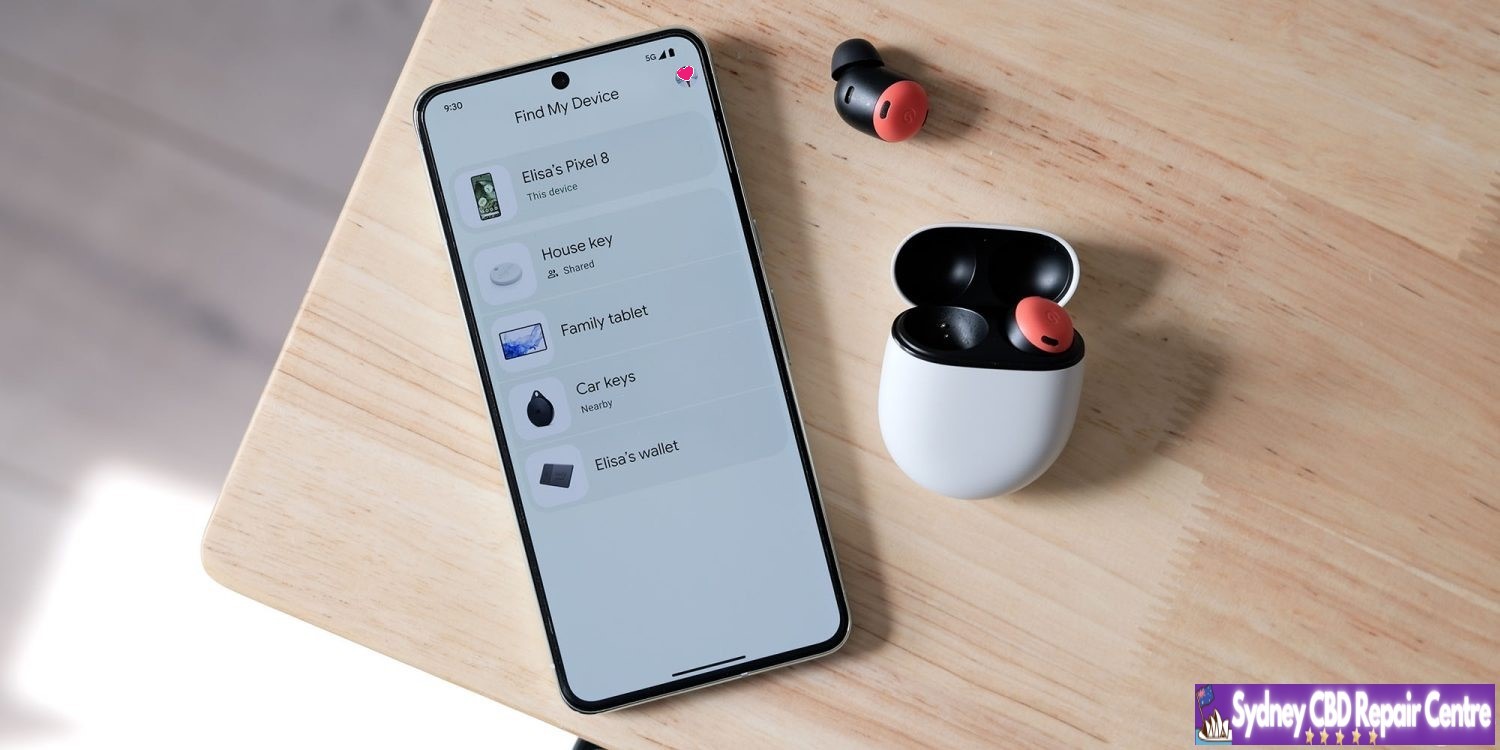
Google is rolling out an expansion to the Find My Device network, which allows your devices to be located even when they’re offline. If that doesn’t seem like something you’re interested in, it can be turned off; this guide will show you how.
What’s new with Find My Device?
Google has long had an app called called Find My Device. It’s very similar to iOS’s Find My app, which allows you to find your phone’s last online location. It even included options that would allow you to lock it up or wipe it completely.
While the app didn’t necessarily have glaring flaws, it was short-sighted simply because devices needed to be connected to the internet for an accurate location.
A new update to Find My Device now changes that, allowing devices to be located even if they’re offline. The update really comes as an infrastructural overhaul – something that has been in the works for a long time. It essentially utilizes other online Android devices to detect where your device is, whether that device is an Android phone like the Pixel 8, trackers, or even headphones.
The reason the rollout took so long is that Google had to work with Apple to develop an industry standard, ensuring the tech couldn’t be used to track individuals against their wishes – a problem Apple faced when it released the Air Tag.
Opting out of the Find My Device network
Even with Google’s security measures in place and encrypted data transfers between devices, you still may wish to opt out of the network. The update brought along options to allow you to do that in a matter of several steps.
On your Android device, open the Find My Device app.
Tap your profile picture.
Hit FInd My Device settings.
Tap Find your offline devices.
Choose what level of access the app has.
Note: This is a per-device setting.
This is where the Find My Device app allows you to tailor your security. There are two options that will limit the service – Off and Without network.
Off means that you’re entirely opting out of Find My Device’s network capabilities to find an offline device. When this is off, every time you open the Find My Device app, it’ll have to request one of your device locations at that moment – it will not store location data while the phone is online.
Without network means Find My Device will store location data for your devices while they’re online, and you’ll be able to see where it last was even if the battery is dead or it has no signal.
Both of these options opt you out of the network, which means your phone will not participate in locating other lost devices or vice versa.
At which level you decide to opt-out is up to you. Google notes that all location data is encrypted from device to device, but the tech might not interest everyone.
According to a new report, Google’s upcoming Pixel hardware including the Pixel 9 series, Pixel Fold 2, and a 5G-connected Pixel Tablet will be getting a new cellular modem, an overdue upgrade.
Since the big Tensor reboot, Google has shifted away from Qualcomm’s proven modems paired with Snapdragon processors over to Samsung modems which work with the Exynos base that Tensor relies on. Google first upgraded the modem paired with Tensor on the Pixel 7 series but leaned on the same modem (albeit a slightly newer refresh of it) on the Pixel 8 series. And while the modem is reasonably sufficient, it still struggles in areas with low connection, and is less power efficient.
Now, it seems Google is planning to equip Pixel 9, and other devices, with an updated modem.
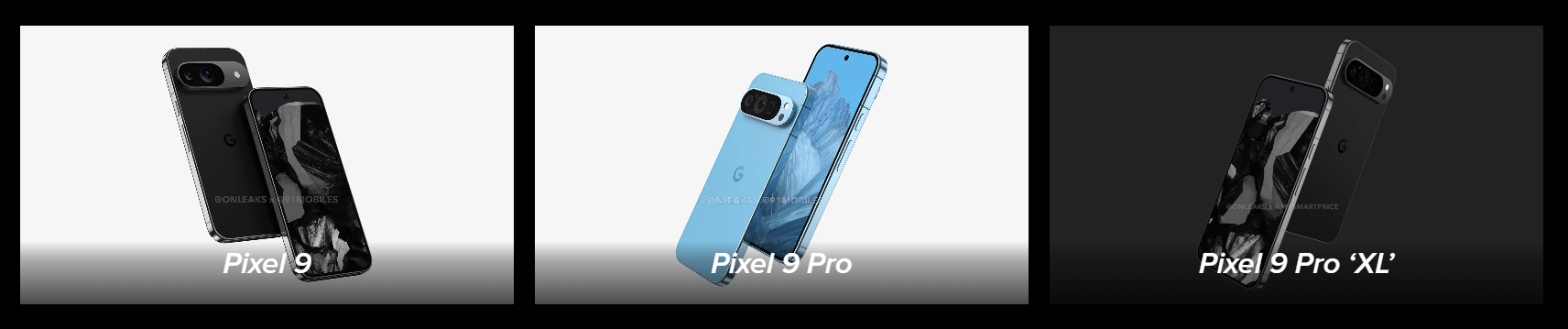
Android Authority reports that Pixel 9, Pixel 9 Pro, and Pixel 9 Pro “XL” will be equipped with a new modem. However, that modem, which will be a part of Tensor G4, will still be provided by Samsung – the new generation is signified 5400, up from the 5300 paired with Tensor G3.
The same modem will apparently be used in the upcoming Pixel Fold 2 as well as a previously unknown 5G-connected Pixel Tablet. In February, it was reported on possible Pixel Tablet 2 codenames, including the “clementine” codename mentioned in this report, confirming that this is in fact a sequel to the Pixel Tablet. The current Pixel Tablet offers no cellular connectivity.
The new modem is reportedly upgraded on the software side, but it’s unclear how the hardware is changing. The only clear upgrade is support for the 3GPP Rel. 17 5G spec which supports satellite connectivity. Technically, the existing modem in Pixel devices does also support satellite, but it’s not yet been used, and it does use an older version of the 5G spec.
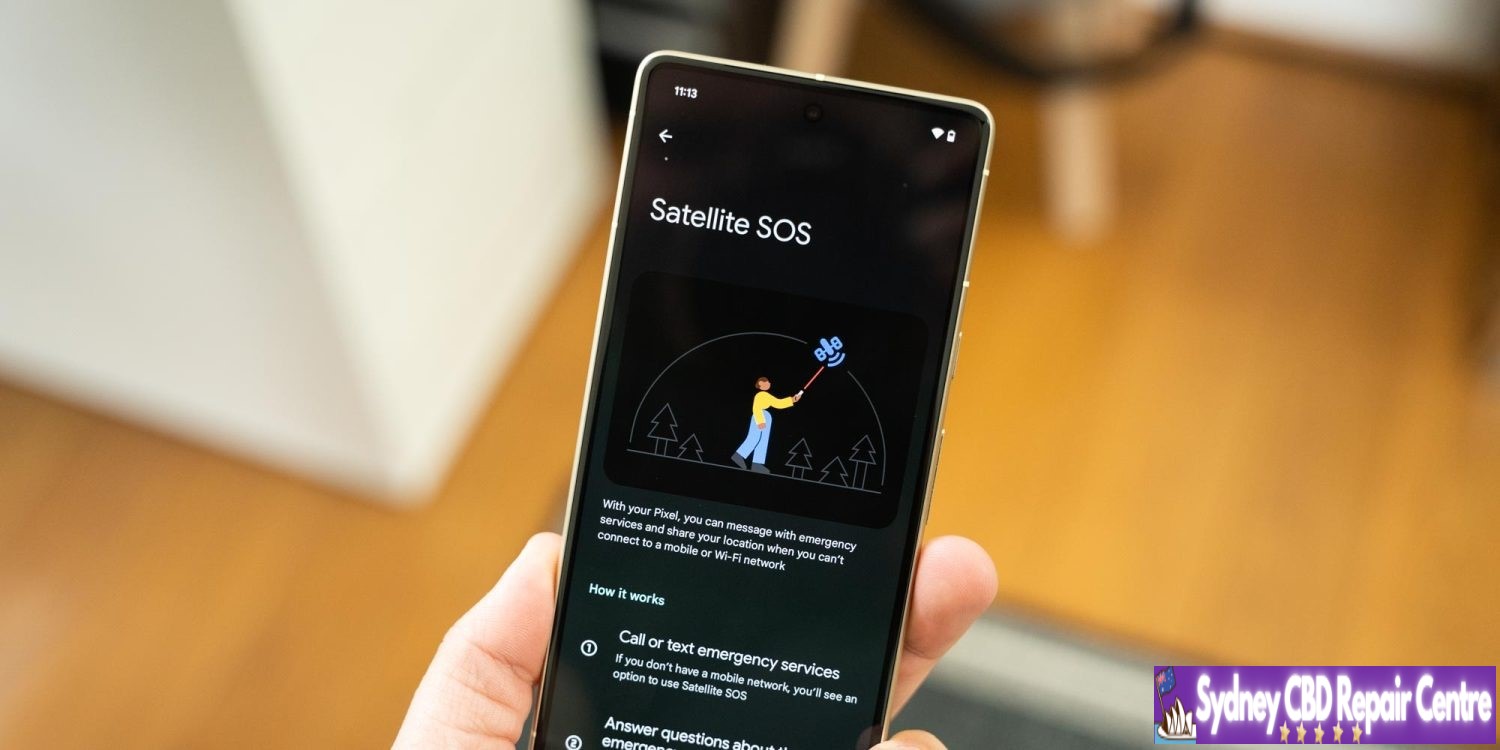
Alongside this added support, Pixels with satellite support would use a “Satellite Gateway” app which, to the user, would be used through Emergency SOS. According to this report, users will be asked basic questions to identify the emergency situation, given a choice to notify contacts, and send messages with emergency services.
Some of the questions, which may have multiple-choice answers, include:
What happened?
[Are you/Are they/Is everyone] breathing?
In total, how many people are [missing/trapped]?
What best describes your situation?
What is on fire?
Are there weapons involved?
What type of vehicle or vessel?
Do any of these apply?
A new preview clip, as seen below, signifies there will be a UI to help align with a satellite.
Code also suggests that Pixel Fold 2 may need to be unfolded to do this.
Google has been working on “Satellite SOS” on Pixel devices as of late, but no functionality is live today.
How this new modem sticks the landing will be interesting, but there’s a pretty low bar for success here. Google is expected to shift to a TSMC-produced Tensor chip in 2025, but it’s unclear if the company will change modems at that point. Tensor G4 is, beyond this modem, expected to be a relatively minor change.
Custom Android ROMs aren’t nearly as common as they once were, but many were still useful for getting additional functionality or changing up the experience on the device. “Pixel Experience,” a custom Android ROM that echoed the UI and features of Google Pixel on other devices, is sadly now shutting down.
“Pixel Experience” launched in 2017, around a year after the first Google Pixel smartphone made its debut. The project aimed to copy the UI and best parts of using a Pixel on other Android smartphones. It became one of the more popular custom Android ROMs in recent years, but the project is now shutting down.
In a post today, José Henrique, the founder of “Pixel Experience,” says that active development on the custom ROM is coming to an end. Older builds will continue to be available and the website will remain online, but development is over.
The post explains:
This project has been an incredible journey filled with innovation, collaboration, and unwavering dedication from both the team and the community. From the inception of PixelExperience, our goal has always been to provide users with a seamless, customizable, and feature-rich Android experience, tailored to a wide array of devices.
As we bid farewell to active development, I want to express my deepest appreciation to every member of our community, testers, contributors, and all supporters. Your passion and commitment have been the driving force behind every milestone we’ve achieved.
As it stands today, Pixel Experience is available on Android devices from Asus, Google, Lenovo, Motorola, Nokia, Nothing, Nubia, OnePlus, Razer, Realme, Samsung, Teracube, and Xiaomi. Android 14 builds were made available in beta in late February.
The Find My Device network will be able to find the Pixel 8 and 8 Pro “if they’re powered off or the battery is dead.” The former might help when a device is stolen. “Specialized Pixel hardware” is credited as making this possible.
Google tells us that support for this is already available without owners needing to take any action. It will be working with other OEMs and chipmakers on expanding this capability to premium Android devices.
Meanwhile, Google last year said that “Pixel Buds” will be updated to support the new offline Find My Device capabilities. Google confirmed today that this is coming to the Pixel Buds Pro in the future. JBL and Sony will release similar updates “soon.”
This support for headphones is coming after the initial launch for phones and tablets. Support for Bluetooth tracker tags will coincide with some product launches in May.
The Find My Device network is first rolling out in the US and Canada, with end users prompted by email and on-device alerts.
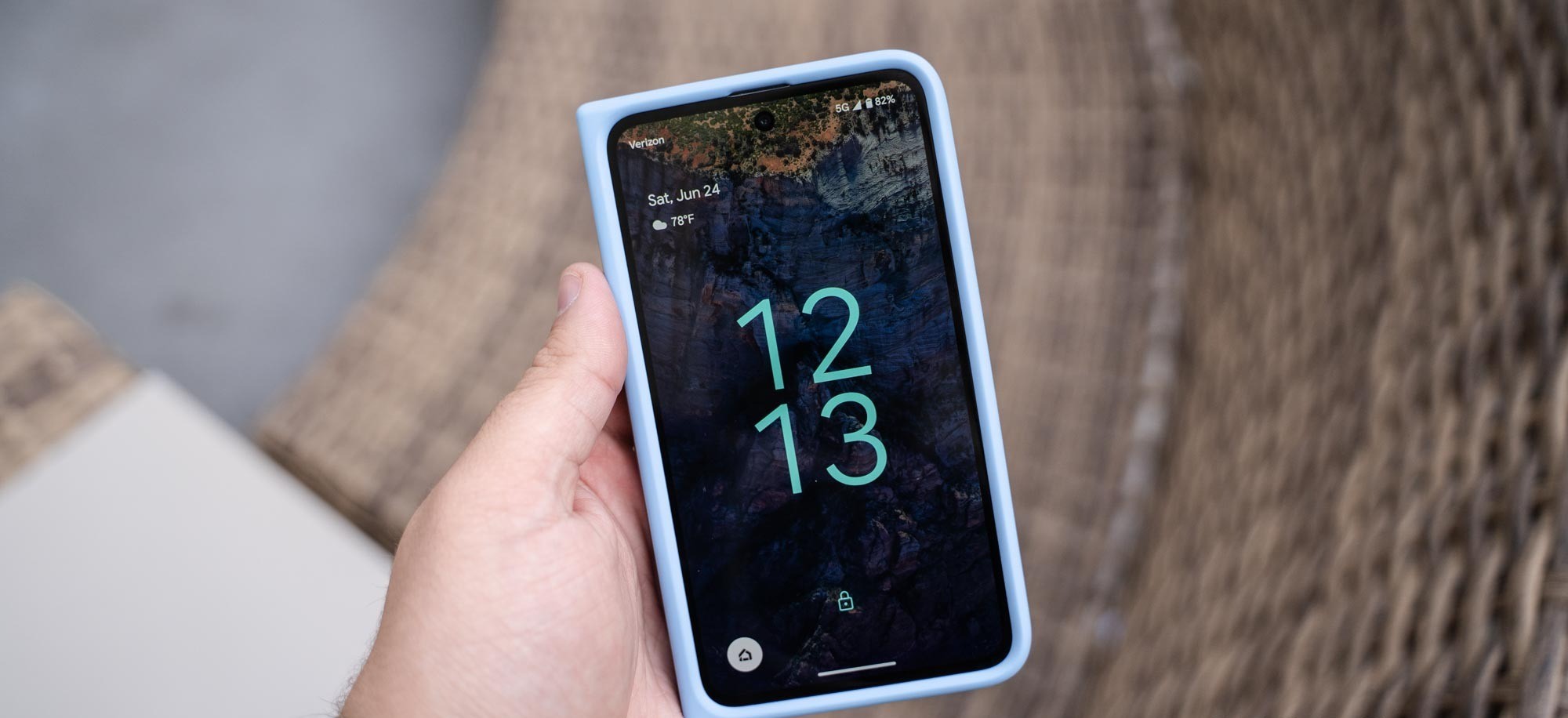
Amid new leaks of the Pixel 9 this week, there are many still asking Google for a “Mini” device, forgetting that small phones are dead.
Over the past decade, smartphones have gotten really big. Where the average phone used to be tiny by modern standards, many of us are basically walking around with tablets nowadays – in some cases literally, thanks to foldables. But as phone screens have settled into the realm of 6-7 inches in size, there’s always been a vocal group of those asking for smaller smartphones.
And, repeatedly, it’s been clear that small phones are essentially dead.
One recent reminder of this has been the Asus Zenfone 11, which tacked an “Ultra” onto its name and super-sized the package, doing away with what was the last flagship-tier Android phone with a screen size under 6-inches. It came as no surprise as, realistically, a small phone was just never going to survive in today’s market. The Pixel Fold, too, had a very small outer display that was a pleasure to use, but Google is moving away from that on the sequel.
The people have spoken, and they overwhelmingly prefer big phones. Heck, if Apple can’t make a “Mini” work, no Android manufacturer is going to do so, Back in 2022.
Amid new leaks of the Pixel 9 series which have revealed that Google will have three devices to choose from, there are some still asking for a “Mini” in Google’s lineup. Don’t think it’s ever going to happen, not just because the market doesn’t exist for it, but also because, for most people asking for small phones, the Pixel 9 series is already going to be pretty close to what they’re asking for.
The Pixel 9 and Pixel 9 Pro are both expected to be on the lower end of 6-inch displays, with both devices apparently measuring in at 152.8 x 71.9 x 8.5mm. That’s only a hair bigger than the Pixel 8, which our Abner Li praised for being the “small phone of my dreams” in a review last year.
And, really, think that’s about a small as a modern phone should be. The vast, vast majority of people are going to be thrilled to get a flagship-tier experience in a device that size, because it does a good job of splitting the difference between something truly “small” like, say, an iPhone 13 Mini, and something that’s big enough by modern standards.
In short, that “Pixel Mini” you’re dreaming about will (probably) never happen, so let’s just be glad that it looks like we’re getting a full-featured “Pro” that’s smaller.
After “hardware limitations” were cited as the reason that the Pixel 8 isn’t getting Gemini Nano earlier this month, Google announced today that the on-device LLM is coming after all.
The Pixel 8 will get Gemini Nano, in developer preview, to power Summarize in Recorder and Gboard Smart Reply. The latter allows for “higher-quality smart replies” that have “conversational awareness” and should be generated faster. On the Pixel 8 Pro, it works with WhatsApp, Line, and KakaoTalk. Meanwhile, Summarize can take a recording and generate bullet points.
RAM — 8 GB versus 12 GB — is the main hardware difference between the two Tensor G3 phones. Google today says “running large language models on phones with different memory specs can deliver different user experiences, so we have been testing and validating this on Pixel 8.”
It looks like Google found a way to run the LLM on less RAM without impacting the rest of the user experience, with the smaller Galaxy S24 doing the same. As a reminder, Google only ever said Gemini Nano was coming to the Pixel 8 Pro in December. Meanwhile, the comment earlier this month came from an engineer outside the Pixel team.
Gemini Nano is coming to the Pixel 8 with the next Pixel Feature Drop, which should be Android 14 QPR3 in June (if previous timelines remain in place). Besides end users getting those two Google app features, developers with the Pixel 8 will be able to use AICore for their own applications.
The work to make Gemini a better phone assistant continues, with Google recently updating it to automatically start Maps navigation “when you ask for directions.”
“Navigate to [place]” or “take me to [x]” commands first show a brief summary with the route, how long it will take, and how many miles, as well as a map and link to “directions.” This is one capability that Gemini can handle natively with the Google Maps Extension instead of having to punt to the legacy Assistant.
After a few seconds, Gemini now opens Google Maps with the route underway to save you a step and improve the hands-free experience. This is according to the latest Play Store release notes for the Gemini app/icon, which also include:
“You can now use your voice to set reminders and calendar entries with the Gemini app if your Workspace extension is turned on in your Gemini app settings. Workspace extension availability varies by country. See more details here: https://support.google.com/gemini/answer/14579631#workspace_extension“
“We updated voice commands to include auto submit. No need to hit the ‘send’ button anymore.”
Meanwhile, we’re still waiting for the ability to issue “play music” commands. Google implies that this is coming: “Media service providers: Podcasts, news and radio stations, and third-party music providers aren’t currently supported in Gemini.”
The official line from Google is that “not all Pixel 4a (5G) and later phones work on all 5G networks.” Google maintains a list of countries where 5G is available on the Pixel and it was recently updated.
Pixel phones work with all major carriers. But not all Pixel 8 Pro, Pixel 8, Pixel Fold, Pixel 7a, Pixel 7 Pro, Pixel 7, Pixel 6a, Pixel 6 Pro, Pixel 6, Pixel 5a (5G), Pixel 5 and Pixel 4a (5G) phones work on all 5G networks. Check with your carrier to make sure your phone works on its 5G network.
As of December 2023, the map had 31 countries. Google’s “5G on your Pixel” list is currently up to 38 countries with these seven new European additions:
Croatia
Greece
Hungary
Iceland
Latvia
Liechtenstein
Slovakia
The full list is as follows, with big availability gaps remaining.
It comes as the Pixel 8 series is only available in 20 (Google Store) countries: Austria, Australia, Belgium, Canada, Denmark, Ireland, France, Germany, Italy, Japan, Netherlands, Norway, Portugal, Singapore, Spain, Sweden, Switzerland, Taiwan, United Kingdom, and United States. This allows traveling Pixel owners to hopefully get a similar connectivity experience.
Since 2020, people have complained that Pixel 5G availability is not universal, and that remains the case today. Certification and testing is presumably the reason.