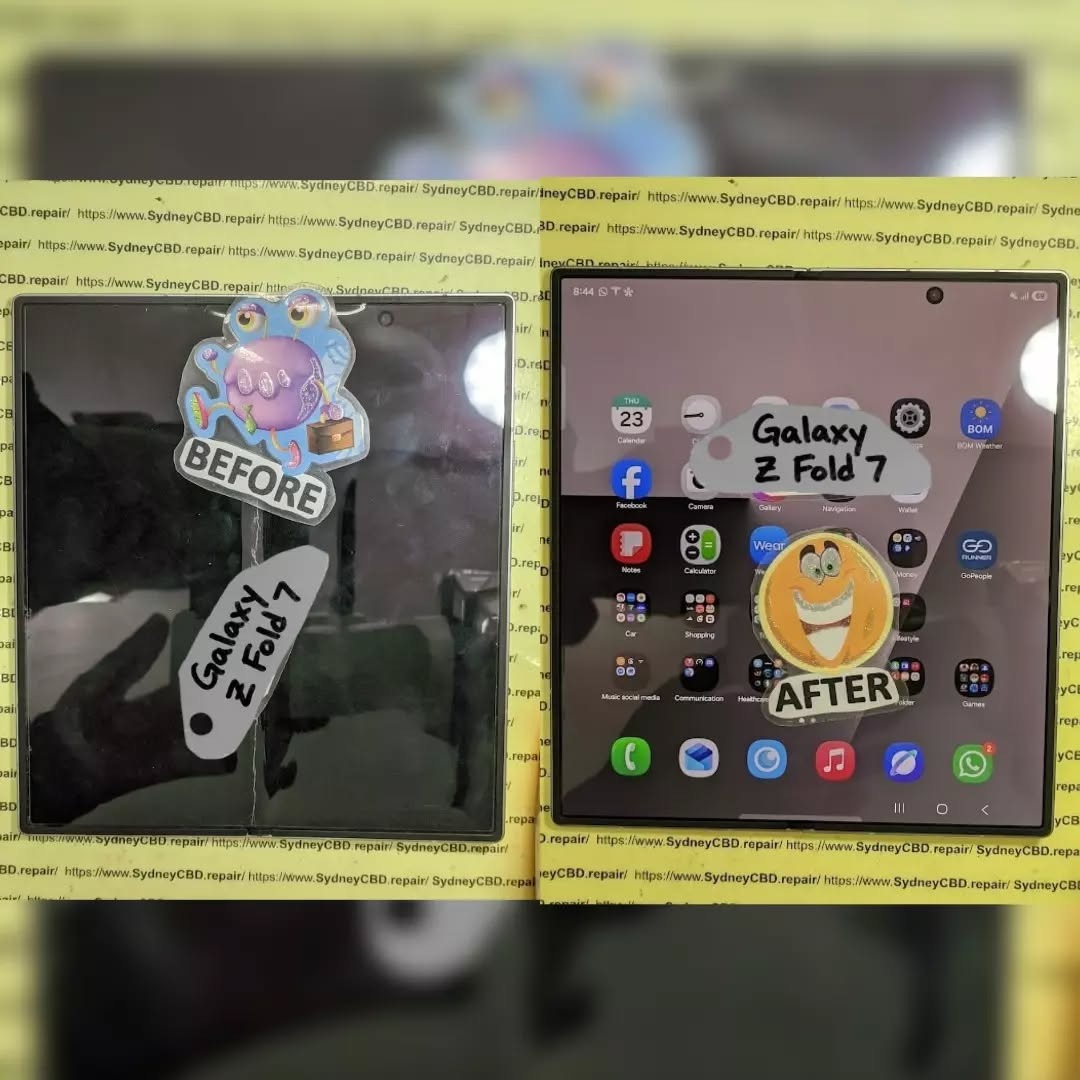
Samsung Galaxy Z Fold 7 Teardown: What Hidden Repairs Await?
Samsung’s Galaxy Z Fold 7 is one of the most advanced foldable smartphones ever released, blending cutting-edge design with powerful performance. But like any intricate piece of technology, it hides a complex network of parts that can wear down, break, or require delicate repairs over time. A teardown not only reveals the device’s engineering marvels but also shows where hidden repair challenges might be lurking.
While Samsung has improved hinge durability, it’s still one of the first points of failure in foldables. Dust intrusion, drops, or wear can cause stiffness or misalignment. Repairing the hinge often means partial or full disassembly of the phone — a complex and time-consuming task.
2. Inner Display Vulnerabilities
The foldable screen is more delicate than traditional glass displays. Crease wear, dead pixels, and touch sensitivity issues may arise. Even replacing the inner screen demands careful handling to avoid damaging the folding mechanism.
3. Adhesive-Heavy Construction
Samsung uses strong adhesives to secure the Z Fold 7’s internal parts for water resistance. While this helps in daily use, it makes repairs trickier, requiring heat tools and precision to avoid breaking other components during disassembly.
4. Battery Placement and Risks
The Z Fold 7 houses two separate batteries — one in each half of the device. Replacing them involves disconnecting flex cables routed around the hinge, increasing the risk of accidental damage.
5. Under-Display Camera Repairs
The Z Fold 7’s under-display camera is hidden beneath the foldable screen. Accessing it requires removing the display, making even small repairs more complicated.
The Importance of Professional Repair for Foldables
DIY repair on a Z Fold 7 is risky. Without the right tools, you could damage the flexible OLED, snap ribbon cables, or compromise the hinge’s dust protection. That’s why Sydney CBD Repair Centre is the go-to choice in Sydney for delicate foldable repairs.
Our technicians:
Use genuine Samsung parts for reliable performance.
Follow manufacturer-recommended repair processes to preserve water resistance.
Offer same-day service for common Z Fold repairs where possible.
Sydney CBD Repair Centre – Your Foldable Experts
David and his expert team have years of experience repairing Samsung Galaxy Z Fold models, from early versions to the latest Z Fold 7. Whether it’s a screen replacement, hinge service, or camera repair, we deliver results that meet or exceed factory standards.
Final Thoughts – What to Expect in Z Fold 7 Repairs
The Samsung Z Fold 7 is a remarkable piece of technology — but its complexity makes professional repair essential. From the intricate hinge to the ultra-thin glass display, every component demands precision. Choosing a trusted repairer like Sydney CBD Repair Centre ensures your foldable stays in peak condition for years to come.
The Future Proofing Repairs: Adapting to Next-Gen Smartphone Designs + Ultimate Guide + 15 Strategies
Introduction: The New Era of Smartphone Repairs
The world of smartphones is evolving at lightning speed. Every year, manufacturers push the envelope with sleeker designs, foldable displays, under-display cameras, and advanced chipsets. While these innovations bring incredible user experiences, they also present new challenges for repair technicians. The days of simply swapping out a battery or replacing a cracked screen are becoming rarer.
Future-proofing repairs means staying ahead of these changes—both in terms of tools and skills. It’s not just about fixing what’s broken; it’s about anticipating the next wave of technology and ensuring your repair business or personal device maintenance can keep up. This guide will cover the top strategies, tools, and insights for adapting to next-gen smartphone designs while maintaining quality, efficiency, and customer trust.
By the end of this guide, technicians, repair shops, and even tech-savvy users will understand how to tackle the complexities of modern smartphones, from foldable screens to under-display sensors, ensuring they remain competitive and effective in a rapidly changing market.
The evolution of smartphones has introduced features that drastically change the repair landscape. Understanding these technologies is the first step in future-proofing repairs.
Foldable and Flexible Displays
Foldable smartphones have introduced a new level of complexity. Unlike traditional glass screens, these devices use ultra-thin flexible OLED panels. While they allow phones to transform in size, their mechanical hinges, flexible substrates, and layers of protective coatings create new points of failure.
Repairs for foldable devices require precision heat application, careful adhesive removal, and specialized replacement screens. Even minor misalignments during repairs can result in screen bulges, dead pixels, or touch sensitivity issues.
Under-Display Cameras and Sensors
Another major innovation is under-display camera technology. This allows front-facing cameras and sensors to sit beneath the display, giving devices a true full-screen experience.
Repairing these systems requires extreme precision. Misalignment can cause image distortion or touch sensitivity problems, and replacing the display often means carefully recalibrating the camera module and the surrounding display pixels.
5G and Advanced Chipsets
Modern smartphones feature 5G connectivity and advanced AI chipsets, making them more powerful than ever. While this improves performance, it complicates diagnostics and repair. Chip-level faults, network module failures, and software compatibility issues can all impact repair outcomes. Technicians need advanced diagnostic tools and software updates to troubleshoot these issues effectively.
The shift towards slimmer, waterproof, and more integrated devices has created a series of challenges that repair professionals must navigate.
Slim and Compact Designs
Today’s phones are slimmer, which means components are densely packed, leaving minimal room for error during repairs. A single misplaced screw or slight bend in the frame can damage adjacent components. Precision tools and microscopy for inspection are often necessary to avoid collateral damage.
Water and Dust Resistance
Many modern devices are rated IP68 or higher, meaning they are water and dust-resistant. Repairing these devices often involves dealing with adhesives, seals, and gaskets. Even a minor misapplication of adhesive or improper resealing can compromise the device’s protection, leading to future failures or customer complaints.
Non-Modular Batteries and Parts
Non-removable batteries, glued-in displays, and integrated circuit boards have become standard. This reduces modularity and increases replacement costs. Technicians must balance careful disassembly with cost-effective repairs, often using heat, precision tools, and specialized adhesives to prevent damaging other components.
Tools and Techniques for Future-Proof Repairs
Keeping up with modern smartphones requires the right tools, equipment, and techniques.
Precision Equipment and Microscopy
High-resolution microscopes, micro-soldering kits, and precision screwdrivers are essential for modern repairs. Chip-level repairs, particularly on AI and 5G modules, demand accurate soldering and inspection. These tools help prevent errors that could render the device unusable.
Thermal Management Tools
Heat guns, reflow stations, and hot plates allow technicians to safely remove glued or soldered components without causing damage. Temperature control is critical, as overheating can destroy delicate OLED layers, chips, and sensors.
Software Diagnostics and Updates
Modern devices require software intervention as much as hardware repairs. Firmware updates, AI-assisted diagnostics, and proprietary manufacturer software allow technicians to troubleshoot and verify repairs. A device may appear functional physically but still fail software-level diagnostics if updates are missed.
Training and Skill Development
Tools alone aren’t enough. Technicians must continually upgrade their skills to handle complex devices.
Technician Certification Programs
Certification programs from manufacturers or independent institutions ensure that technicians are trained to handle the latest technologies. Certified technicians have in-depth knowledge of new designs, repair protocols, and safety procedures.
Continuous Learning and Workshops
Workshops, webinars, and online tutorials allow technicians to practice on cutting-edge devices before attempting real-world repairs. Staying informed on new releases and repair strategies is critical for maintaining efficiency and credibility.
Cost Management in Next-Gen Repairs
Adapting to modern designs often means higher costs due to tools, training, and parts.
Balancing Genuine vs Third-Party Parts
Using genuine parts ensures compatibility and reliability, but at a higher cost. Third-party parts may be cheaper but can introduce risks like reduced touch sensitivity, shortened lifespan, or warranty conflicts. Educating customers on these differences is crucial.
Time and Labor Optimization
Efficient workflows, pre-diagnosis procedures, and template repair strategies can reduce repair time while maintaining quality. Optimized labor management ensures profitability despite rising costs of parts and training.
Customer Education and Communication
Modern repair services also involve managing customer expectations.
Transparent Pricing and Processes
Customers are more likely to trust a repair shop that explains costs upfront, including challenges posed by advanced technologies. Transparency reduces disputes and increases satisfaction.
Explaining Repair Limitations
Not all repairs are feasible—some foldable screen replacements or under-display sensor fixes may be impossible without manufacturer intervention. Clear communication ensures realistic expectations.
Case Studies: Adapting to Next-Gen Designs
Real-world examples highlight best practices and lessons learned.
Foldable Phone Repairs in Sydney
At Sydney CBD Repair Centre, technicians have developed techniques for foldable smartphone screens, including layer separation, hinge alignment, and adhesive application, achieving high success rates without damaging displays.
Under-Display Camera Fixes
By combining precision alignment and software calibration, technicians ensure under-display camera functionality after repairs. These procedures require microscopy inspection and specialized software tools.
Future Trends in Smartphone Repairs
Looking ahead, the repair landscape will continue to evolve.
AI-Assisted Diagnostics
Artificial intelligence can predict component failure, suggest repair workflows, and optimize diagnostics, reducing time and error rates. Repair centers integrating AI can enhance efficiency and accuracy.
Modular and Eco-Friendly Designs
Future devices may return to modular designs, allowing easy replacement of batteries, screens, and cameras. This not only simplifies repairs but also supports environmentally friendly practices by reducing e-waste.
Frequently Asked Questions
Q1: Are foldable phones more prone to damage than regular phones?
A1: Yes, foldable phones have moving parts and flexible displays that are more delicate, requiring careful handling during daily use and repairs.
Q2: Can under-display cameras be repaired at home?
A2: No, repairing under-display cameras requires professional tools and software calibration. Attempting home repairs can damage the display or sensor.
Q3: Do water-resistant phones lose their seal after repairs?
A3: They can. Proper resealing with manufacturer-approved adhesives is necessary to maintain water resistance.
Q4: Is using third-party parts safe for next-gen devices?
A4: Some parts are reliable, but they may compromise performance or void warranties. Genuine parts are recommended for complex repairs.
Q5: How can repair shops stay ahead of new smartphone technologies?
A5: Continuous training, adopting precision tools, attending workshops, and monitoring industry updates are essential for staying competitive.
Q6: Will modular designs become standard again?
A6: Industry trends suggest a push toward modularity for easier repairs and sustainability, though design choices will balance aesthetics and functionality.
Conclusion: Staying Ahead in Smartphone Repairs
Future-proofing repairs isn’t just a strategy—it’s a necessity. The rise of foldable screens, under-display cameras, advanced chipsets, and water-resistant designs demands investments in tools, training, and customer communication. By understanding these challenges, adopting cutting-edge equipment, and staying informed on industry trends, technicians and repair centers can deliver high-quality repairs, maintain customer trust, and thrive in a competitive market.
Adapting to next-gen smartphone designs ensures that repair professionals remain relevant, skilled, and trusted in a world where technology evolves faster than ever.
David from Sydney CBD Repair Centre – The Best place to fix mobile phones as 7 Years In A Row! Top Mobile Phone Repair In Sydney. More than 2000 Positive Reviews on Google and Same Day Repairs.
We take pride in delivering exceptional repair services for all major phone brands including Apple, Samsung, Google, and more. Our expert technicians use only genuine parts and offer 90 days warranty on repairs. Located in the heart of Sydney CBD, we’re your one-stop solution for all mobile device repairs.
Our commitment to excellence has earned us the trust of thousands of satisfied customers. Whether it’s a cracked screen, battery replacement, or water damage repair, we handle it all with professional care and expertise. Walk in today and experience why we’re Sydney’s #1 choice for mobile phone repairs.
Visit us for:
✓ Same Day Express Repairs
✓ Genuine Parts Guarantee
✓ Professional Technicians
✓ Competitive Pricing
✓ 2000+ 5-Star Google Reviews
✓ 7-Time Award Winner for Best Phone Repairs