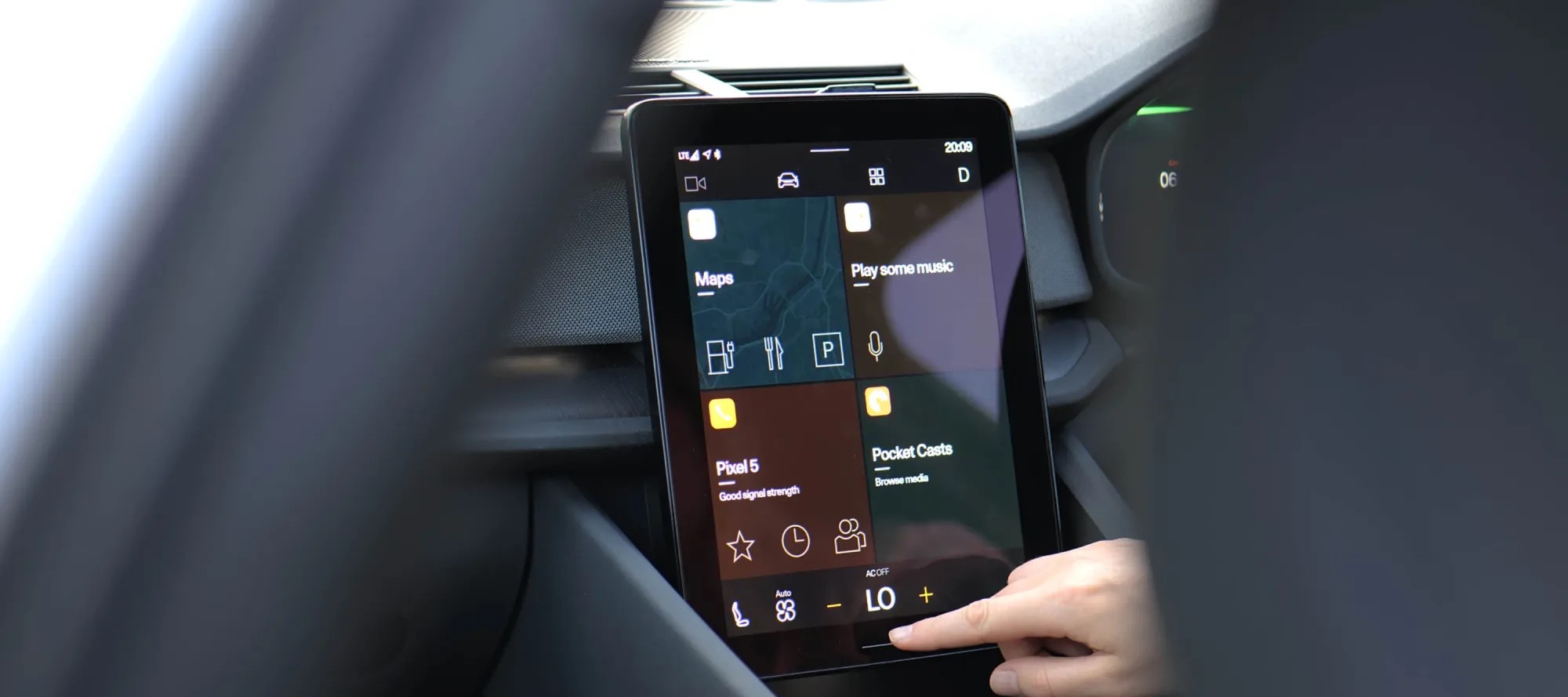
You can now share your car key in Apple Wallet with Android users,
starting with Google Pixel
If you happen to be an owner of one of the very few cars on the market with Car Key support, you are now able to share that car key credential with non-iPhone users for the first time.
Apple is working with the IETF and industry members to standardize cross-platform car key sharing. The first implementation of this support has landed today for Google Pixel owners. Google is working on rolling out support for all Android 12+ devices soon.
The Car Key feature allows Apple Wallet to treat unlocking your car in the same manner as you can conduct contactless payments with Apple Pay: Walk up to your car and then present your iPhone or Apple Watch to unlock it.
You can share car keys by using the Share button inside the Wallet app. You could previously send the key to other iPhone users. On iOS 16.1 or later, the Wallet app generates keys that also work with other supporting platforms, most notably Android users.
Share using the system share sheet with your favorite app like Messages, Mail, and WhatsApp. You can secure the process using an optional one-time code.
At any later time, you can revoke access to a shared car key. Simply open the Wallet app, select your car key and tap on the People icon to manage the current list of shared keys for that vehicle.
Apple’s partnership with the IETF was first announced at this year’s WWDC. The group is still working on a final specification to make publicly available for adoption by anyone. But for now, only Apple and Google have access to the necessary protocols and are working on the respective implementations privately.
It’s a really cool technology that furthers Apple’s goal to replace the wallet in your pocket, alongside other initiatives like Digital ID and Apple Pay. Hopefully, more Car Key compatible vehicles will be available soon.
Apple releases iOS 16.2 beta 4 to developers ahead of expected launch this month
Following the release of iOS 16.1.2 to iPhone users on Wednesday, Apple released iOS 16.2 beta 4 to developers on Thursday. Along with iOS 16.2, Apple has also been testing new betas for watchOS 9.2, tvOS 16.2, and macOS Ventura 13.1. Read on as we detail what’s new in these updates.
iOS 16.2 and iPadOS 16.2 include some notable changes. The Freeform collaboration app is now available to iPad, iPhone, and Mac users. There are also changes to the Home app, updates to the Weather app, and more.
On November 28, Apple also released a “Rapid Security Response” update for users running iOS 16.2 beta. Once the feature becomes available to everyone, Apple will be able to quickly fix security exploits without having to release a new version of iOS just for this.
In addition to iOS 16.2 beta 4, Apple has also made the following updates available to all developer beta testers:
Android Sound Amplifier updated with new UI as Lookout adds Images mode
In addition to Gboard updates today, Google is updating two of its accessibility apps. Android’s Sound Amplifier gets a redesign and accuracy improvements, while Lookout now offers a new mode for analyzing images.
Introduced in 2019, Sound Amplifier uses the microphones on your Android phone to enhance and filter “important sounds around you.” Google says the latest update improves background noise reduction, while there’s now “faster and more accurate sound.”
There’s also a new Material You UI with a waveform that’s similar to the Recorder app on Pixel phones. A carousel lets you pick input from the phone mic or playing media with cards below to fine-tune noise reduction and boost quiet sounds.
Meanwhile, Lookout uses your phone’s camera to “provide information about the world around you with a variety of modes.” A new Images mode — currently in beta — leverages Google’s latest image understanding ML model to let you “hear a description of an image by simply opening it from just about any app.” Users specifically get a generated caption, details of what’s present in the scene, and any text that appears.
More clearly access labels, menus and receipts in real life using just your Android device’s camera.
Meanwhile, the modes for Text and Documents now offer improved reading order for formatted text, like menus and receipts. The Explore mode “detects objects more accurately,” while the Food Label/barcode reader is better at recognizing products in Brazil and India.
Lastly:
Lookout now also works offline without the need for Wi-Fi or data service. Download or update Lookout in Google Play to get the new features.
Android Automotive OS 12L brings Quick Controls, notification and Bluetooth upgrades, more
Besides tablets, Android 12L also brings a slew of features to Android Automotive OS as Google quietly detailed last month during I/O 2022, which mostly focused on the upcoming Android Auto redesign.
In terms of System UI improvements, Android Automotive OS 12L introduces Quick Controls that allow OEMs to add selected settings, like Bluetooth toggles, to the Status bar or other SysUI elements. This lets users “change key settings safely while driving, without opening the Settings app,” and is dependent on car maker adoption. Each will likely offer their own UI and approach.
There’s also a “notification visual overhaul” that improves grouped notifications, while support for rotary controllers (hardware knob) get bug fixes.
Other highlights include improved Bluetooth reconnection performance that will see AA OS “connect to devices more often and under the right circumstances.” Car OEMs will be able to “preview from automotive camera services, while said manufacturers can now remotely enable ADB and other Android developer options remotely. This could be used for “crypto token access mechanisms and remote web service.”
The full developer-facing changelog for Android Automotive OS 12L is below:
System UI and core apps improvements
Quick Controls feature. Enables OEMs to add selected settings (for example, Bluetooth toggles) to SysUI (for example, the Status bar) to enable users to change key settings safely while driving, without opening the Settings app.
UI Customization. Enabled plugin architecture for custom classes. See Car UI Plugins for details.
Notification visual overhaul. UX overhaul and grouped notifications improvements.
Bluetooth
Improved Bluetooth reconnection performance. Automatically connect to devices more often and under the right circumstances. To learn more, see Bluetooth connection management.
Messaging database. Support for using a messaging database through the Message Access Profile (MAP) to provide more flexibility to messaging apps that rely on Bluetooth.
Connectivity
Per-Application Network Selection (PANS). Enable the creation and enforcement of a dynamic network policy that determines which applications can use OEM_PAID networks.
Dual STA. Enable the IVI to connect to an OEM restricted Wi-Fi network, concurrently with a primary connection to a Wi-Fi network.
Audio
Audio ducking signal. Provides HAL with audio focus state and information on what output devices to duck.
Volume improvements. Enable for finer control of volume, including providing and API to get active volume groups.
Muting per volume group. Enable per volume group muting and enhance HAL and UI communication about the mute states.
AIDL migration for the AudioControl HAL. Migrated the AudioControl HAL from HIDL to AIDL to fully use AIDL functionality.
Power policy handling for Audio. Enabled power handling functionality for the car audio service, including disable and enable focus requests, and mute and unmute volume groups on power policy changes for audio.
Camera
CarEvsManager. Enables OEMs to implement Android Activity that shows the preview from automotive camera services.
System reliability and stability
Car watchdog flash memory management. Manages system flash memory by limiting the amount of data written to storage. Enables OEMs to define the write thresholds (for OEM, media, and maps packages) and collect statistics for OEM applications. Disables and terminates non-critical applications and services that exceed defined thresholds.
Security
Vehicle bound encryption. Android storage encryption can now be configured to store some key encryption parameters on an external ECU. This prevents the harvesting of data by removing the head unit from the car (for example, due to theft or relegated to a junkyard).
Secure developer options. Android developer options and ADB can be remotely enabled exclusively by an OEM. Reference implementation provides crypto token access mechanisms and remote web service.
Location
Advanced driver-assistance systems (ADAS) location switch. Access to device location for apps used for ADAS can now be controlled with a separate location switch in the Settings app.
Telemetry
Edge-based analytics capability. Enables the ability to perform more edge-based metrics processing on Android Automotive devices. Android infotainment and vehicle property metrics can be configured in scripts written in the Lua language and processed on-device to be sent to the backend of OEM choosing.
Compliance
Compliance fixes. A number of patches ensure compliance with the Android certification test suites. The Android 12L AAOS Release is 100% compliant on CTS, CTS-Verifier, and STS test suites on our internal reference platform with no additional fixes needed in the AOSP software.
Thank you for using
Themify Popup
This is a sample pop up. Themify Builder or Builder Lite (free) plugin is recommended to design the pop up layouts.