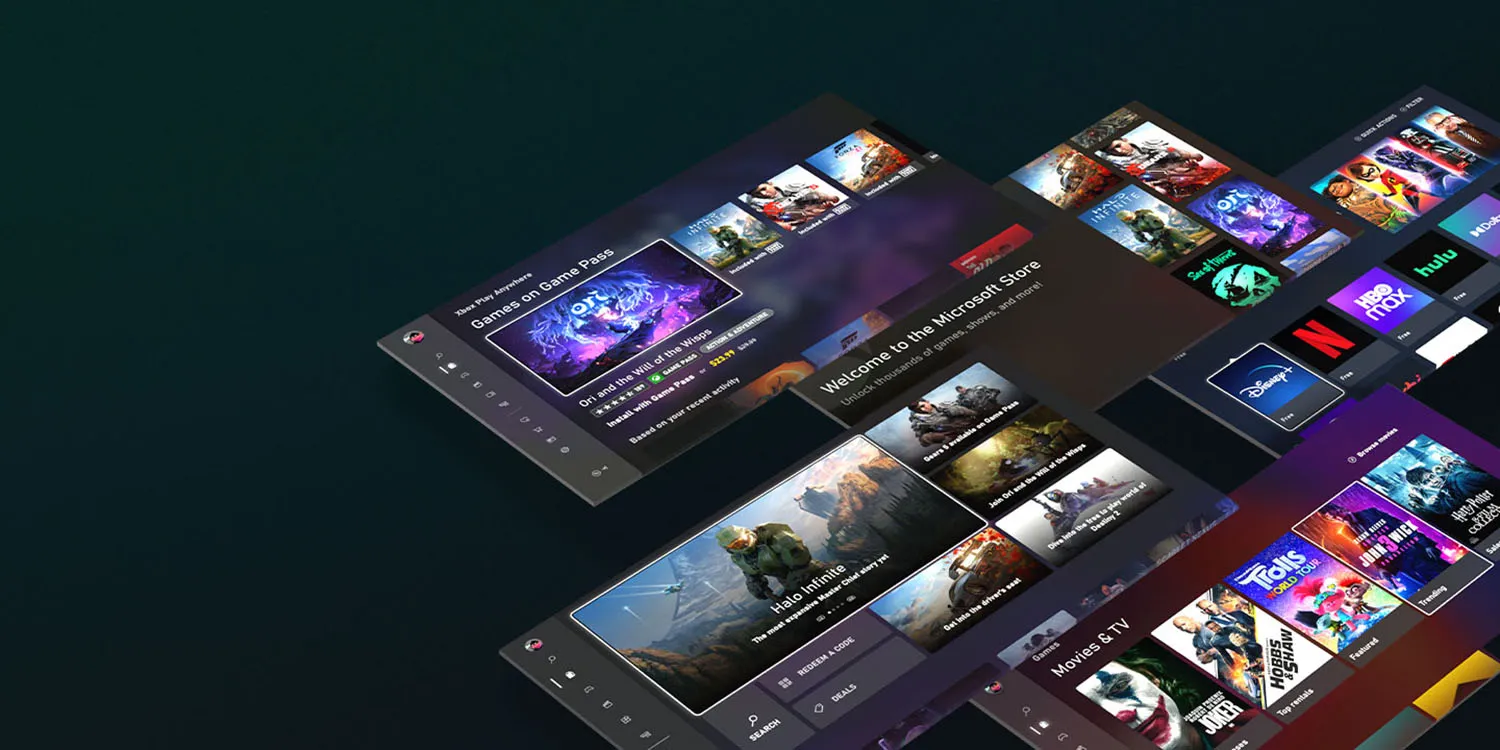
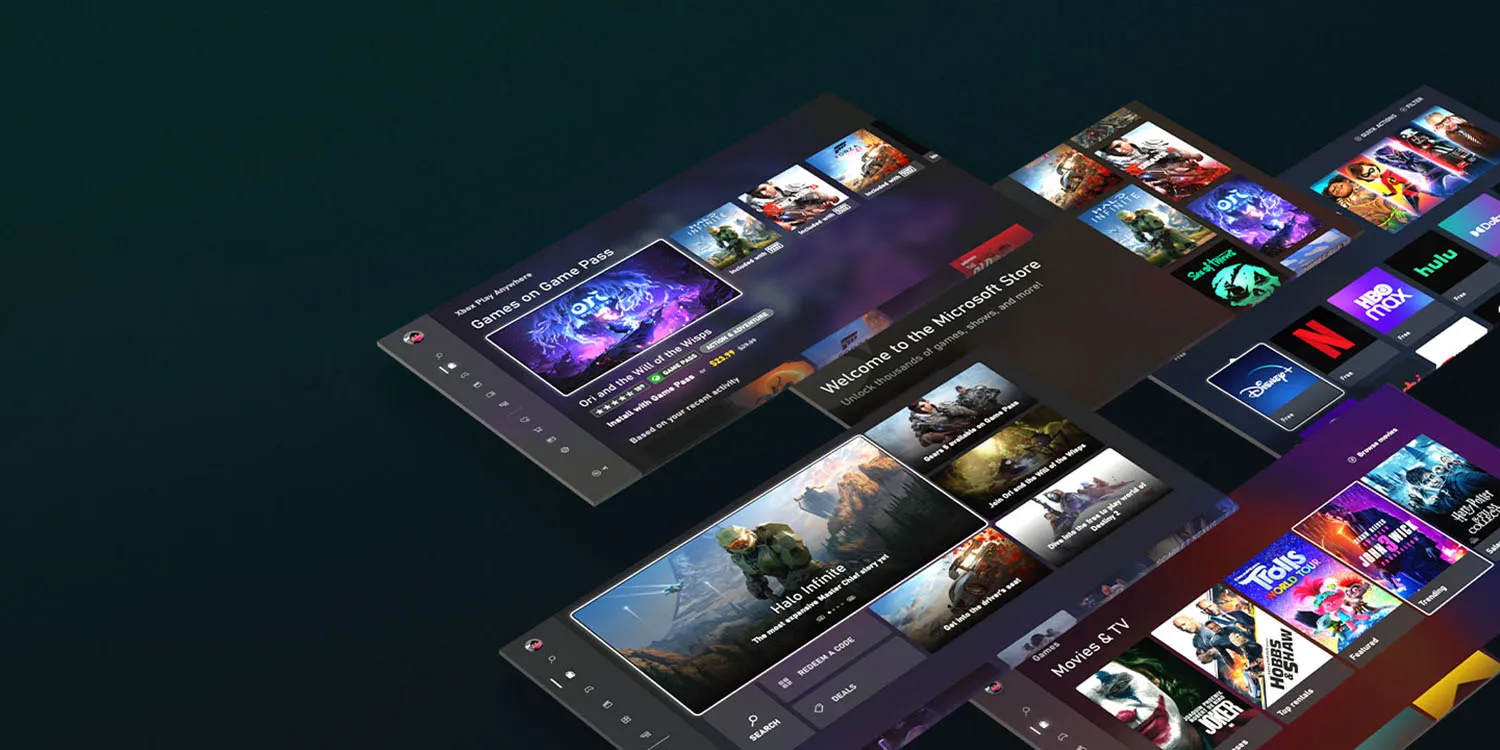
We learned late last year that a Microsoft iOS app store was in the works, and the company has now announced that this will launch in July.
Initially, it will be limited to Microsoft’s own games, but will later open up to other iPhone game developers, giving them an alternative outlet to Apple’s official App Store …
Background
The EU’s Digital Markets Act (DMA) requires Apple to allow third-party app stores on the iPhone, and the company responded by announcing its compliance plans.
It’s as yet unclear whether or not these plans actually meet the requirements of the antitrust law, but it does at least pave the way for third-party iOS app stores.
Altstore is one of the first of these – making the switch from unofficial to official status – and Microsoft also revealed back in December of last year that it would launch its own mobile games app store.
Microsoft iOS app store launches in July
At the time, the company declined to say when its own app store would launch, but Bloomberg reports that Microsoft has now revealed that it will open for business in July.
Also new is the announcement that the app store will take the form of a website, rather than an app.
Microsoft Corp. will launch its own online store for mobile-game consumables in July, creating an alternative to Apple Inc. and Google’s app stores and their fees.
The browser-based store will debut with Microsoft’s own games, offering discounts on in-game items associated with titles like Candy Crush Saga. Xbox President Sarah Bond announced the move Thursday at the Bloomberg Technology Summit. Later, Microsoft will open the store to other publishers.
The Candy Crush franchise was originally created by King Digital and later acquired by Activision Blizzard, which was subsequently bought by Microsoft.
The company made the decision to go with a website, as that allows it to offer games for all platforms from the same place.
Microsoft saw an opportunity to create a store that “goes truly across devices — where who you are, your library, your identity, your rewards travel with you versus being locked to a single ecosystem,” Bond said. The company’s intention is to facilitate gaming across consoles, computers and mobile devices.
Over the last several weeks, a number of reports on social media have surfaced from iPhone users claiming their alarms don’t properly play a sound. Apple has since confirmed that it’s aware of this problem, and says it is working on a fix.
Apple confirmed the problem to the Wall Street Journal’s Joanna Stern this morning. The company said that it is aware of a problem causing some iPhone alarms to not play the expected sound and working on a fix.
Today Show called me last night and said iPhone alarms aren't working! I hadn't heard that but Apple confirmed this AM that it is aware of an issue causing some alarms not play a sound and that it's working on a fix.
My iPhone alarm woke me up right on time at 6:50AM! Anyone out…
On social media, some users have found that the problem relates to the Attention Aware features on iPhone. This feature is designed such that if you’re looking at your device, it will lower the volume sound of your alerts.
Social media users speculate that the Attention Aware feature is incorrectly detecting attention and lowering the volume of alarms, even when the iPhone user is asleep. Apple hasn’t confirmed whether this is actually the cause of the problem.
To disable Attention Aware Features, open the Settings app, tap Face ID & Passcode, then toggle off Attention Aware Features.
A news report from the TODAY Show below highlights the problem below.
Apple will reveal its AI cards on June 10 at WWDC, and Siri is surely going to be a key component. Generally, people want Siri to get good. You can’t just replace Siri intelligence with generative AI, however, but the two technologies make a powerful combination. What we want to see from an AI-infused Siri is actually simple.
Siri as it exists today is actually good at certain specific things.
We use Siri daily to send messages, make calls, create reminders, add things to my shopping list, play music, control lights, check the weather, check sports scores, start navigation, make voice memos, and much more.
Those are all rock solid. Siri is less reliable at summoning information. When kids ask knowledge questions all the time, and Siri should be the smoothest way to find the answer. We know in our bones that Siri is hit or miss on finding answers.
A simple test for Siri in iOS 18 is if it can eliminate punting to the web for search results as the answer. That’s where large language models excel. LLMs can be like hyper focused search engines that provide answers and not search results.
If Siri can provide more answers and less redirection, We can consider that a solid start.
Some other thoughts on this topic:
Siri is good about sourcing information when it does provide answers.
LLMs, on the other hand, will provide plausible answers that may be inaccurate.
Siri, Amazon Alexa, and Google Assistant competed on feature parity before; now the competition is over how best integrates generative AI.
Humane, the startup behind the Ai Pin hardware, has shown how generative AI should work with a voice assistant.
However, Ai Pin’s limited capabilities around actions shows where Siri + AI can excel.
Separately, the Rabbit R1 bespoke AI hardware has a different approach to actions that looks competitive.
In sum, throwing out Siri and starting over from scratch is not a serious solution. Instead, Siri should maintain its functionality while using generative AI to patch its weak spots.
iOS provides developers with an API to lock apps with Face ID or Touch ID. However, not every app has this option, and there’s no way to completely hide apps from your device. Luckily, “App Lock” is a simple but powerful app that helps users protect and even hide any apps on their iPhone and iPad. Read on as we detail how the app works.
Lock and hide apps on your iPhone with App Lock
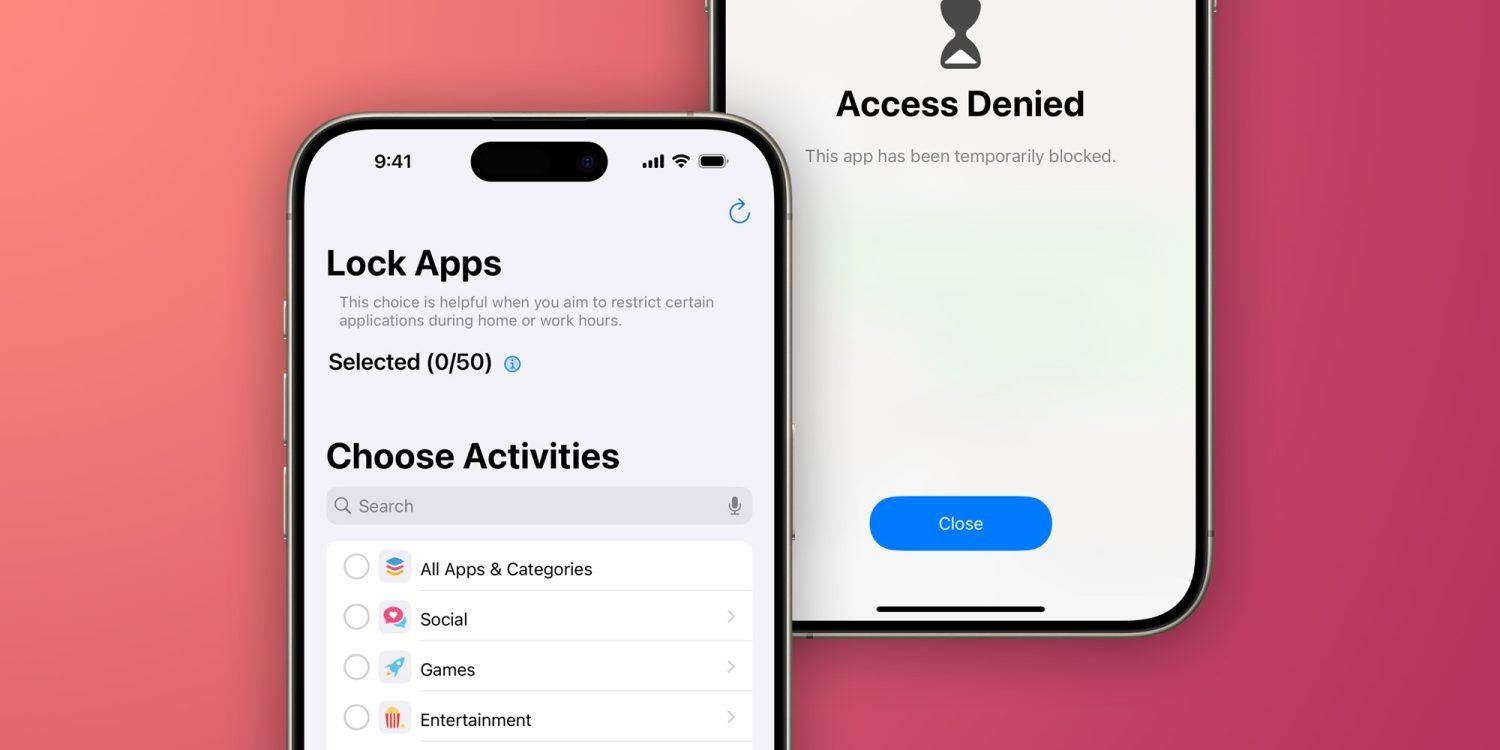
App Lock essentially brings a long-awaited feature for iOS users: the option to completely hide apps or lock them with Face ID or Touch ID. The app doesn’t rely on complex modifications or tricks. Instead, it uses the Screen Time API to control access to apps and system settings.
Once you open App Lock, you’ll see a list of all the apps installed on your iPhone or iPad. Just like the Screen Time settings, App Lock will show your apps organized by category, making it easy to hide or lock multiple apps at once. For example, you can hide all your banking apps with just a few taps by selecting the Productivity & Finance category.
The first tab of the app lets you lock your apps with biometrics, while the second “Conceal” tab completely hides the apps you’ve chosen – even from the App Library. Once you’ve chosen the apps you want to lock or hide, tap Start and you’re done.
In addition to being more intuitive than Screen Time’s native settings, a major advantage of App Lock is that it immediately locks apps, whereas Screen Time forces users to set a time limit for apps before locking them. Of course, to access or unhide apps, you must open App Lock again – which is protected by biometrics and a PIN code.
App Lock also has advanced options for blocking the installation and removal of apps, disabling in-app purchases, and restricting changes to iOS settings.
You can try App Lock for free. However, unlocking the full app requires a paid subscription. It’s a bit pricey, but it can be worth it for its privacy and security features. It’s worth noting that it requires an iPhone or iPad running iOS 16 or later.
Besides using Gemini to power features in its apps and services, Google offers its LLM to third-party developers. Apple is reportedly in talks with Google to license Gemini for the iPhone.
According to Bloomberg, there are “active negotiations to let Apple license Gemini, Google’s set of generative AI models, to power some new features coming to the iPhone software this year.” Apple has also talked with OpenAI, which powers Microsoft’s AI capabilities.
Apple is specifically looking to partner on cloud-based generative AI, with today’s report citing text and image generation as examples of what Gemini could be used for. At the same time, Apple is working on offering its own on-device AI models and capabilities with the upcoming iOS 18 release.
The discussions are still underway, and it’s unclear how the AI agreement will be branded. This would be a significant expansion of the existing relationship — default search engine — between the two companies.
Looking at the rest of the industry, Google announced a partnership with Samsung in February to have Gemini power summarization features in the Galaxy S24’s notes and voice recording apps, as well as keyboard. Samsung is also using Imagen 2 text-to-image diffusion for a generative editing feature in the photo gallery app. Those features all require server-side processing, but Samsung is also using an on-device version of Gemini.
Google offers Gemini in three sizes, with Pro being used by most first and third-party apps. Gemini 1.0 Pro powers the free version of gemini.google.com, while 1.0 Ultra is used in the paid Gemini Advanced tier.
Gemini 1.0 is available in stable, but Google in mid-February previewed Gemini 1.5 with a greatly expanded context window that allows for more information to be absorbed. This can make the “output more consistent, relevant and useful.”
Gemini Ultra: Largest and most capable model for highly complex tasks
Gemini Pro: Best model for scaling across a wide range of tasks
Gemini Nano: Most efficient model for on-device tasks
Bloomberg does not expect a deal to be announced until WWDC in June, with Apple opting for OpenAI or even multiple providers offered as possibilities in today’s report.
It’s official: Apple will add support for the RCS messaging standard in iOS. This won’t happen until the end of next year, and we don’t have many details about how Apple will implement RCS. In the meantime, we can reflect on the impact this will have on Android and iPhone users – and honestly, I don’t think it will be as huge as people might think.
A look back at Apple’s history with RCS
RCS, or Rich Communication Services, is a communication protocol created in 2007. Still, it only gained traction recently when Google implemented RCS in Android’s native messaging app. It was designed to replace the old SMS standard, which is quite limited by today’s standards.
Compared to SMS, RCS supports messages with audio, video, and other file formats and is not limited to 160 characters. It also supports better group messaging, typing indicators, and read receipts.
iMessage users are probably already familiar with all these features. However, when iPhone users send messages to Android users using the system’s native messaging app, they’re limited to the basic features of the old SMS standard since the iPhone never had RCS support. At the same time, Apple has never been interested in making iMessage available on Android.
In the US, where the iPhone dominates the smartphone market share, many people use iMessage daily. This has resulted in Android users not being able to have a good messaging experience when chatting with iPhone users, and vice versa. This created the debate known as the “green bubbles vs. blue bubbles.”
Apple executives have already secretly admitted that they have no reason to make messaging between iPhones and Android more seamless because it would hurt iPhone sales. Some people buy an iPhone just because of iMessage, and there are even cases of teenagers being bullied at school for not being included in group chats because they have an Android phone.
Adding RCS to iOS would fill this gap, as communication would be similar to the experience that users have when chatting via iMessage. But again, that wouldn’t benefit Apple in any way.
So what happened?
With all this in mind, what has changed to make Apple finally adopt RCS? Is Apple being a good company that loves to support open industry standards? Well, not really.
Apple has been under scrutiny from regulators around the world in recent years because of its dominance and strict rules when it comes to iOS. The company is accused of using its power to undermine competition with the App Store and iMessage (built into the native iOS messaging app also used to send SMS).
With the approval of the Digital Market Acts antitrust law by the European Union, Apple would be forced to not only open iOS to sideloading but also make iMessage interoperable with other messaging apps. This would certainly hurt Apple in markets where iMessage has a large user base.
By adopting RCS, Apple can argue that it supports an open messaging standard, so there’s no need to bring iMessage to other platforms or make it compatible with third-party apps. It’s a painful way to avoid even more damage, which seems inevitable at this point. But will RCS change anything for most iPhone users?
RCS won’t have much impact on iPhone users
Apple adopting RCS on the iPhone is a huge thing. But at the same time, it won’t change anything for the vast majority of users, and here’s why.
The “green bubbles vs. blue bubbles” discussion is very niche to a few countries, especially the US. Again, because in those places, Apple dominates the market with the iPhone. But there’s more to it: in the US, people are already used to sending SMS, so many people have no idea they’re using iMessage when texting someone with an iPhone.
To be honest, I think the title should be “…but will it change anything for anyone outside North America?”
Data from multiple research firms, such as Similarweb and Sinch Engage, show that WhatsApp has become the most popular messaging app in the world. It is notably strong in some European and Latin American countries. In Brazil, WhatsApp is used by 96% of people who own a smartphone. In China, everyone uses WeChat.
In these places, smartphone users are not worried about iMessage or RCS. They already use third-party messaging apps and will probably continue to do so.
Even in countries where iMessage dominates, the impact may not be as significant as some people might think. That’s because we don’t know how Apple will implement RCS. Perhaps RCS will still have green bubbles. Maybe RCS group chats will be one thing, and iMessage group chats will be another.
It’s great to see Apple finally supporting another industry standard, especially when SMS is so outdated and extremely vulnerable to security breaches. But at the end of the day, things will be the same for a lot of people.
RCS messages will use green bubbles, Apple confirms
Last November 16,2023, Apple announced its plans to bring RCS support to the iPhone in 2024. Since I published my story on the news this morning, there’s one thing everyone wants to know: is the blue bubbles vs green bubbles debate coming to an end?
I’m happy to say I now have an official answer: nope. RCS will use green bubbles just like SMS.
More details on iPhone’s RCS features
RCS (Rich Communication Services) will bring a number of iMessage-style features to texts between Android and iPhone users. This includes things such as read receipts, typing indicators, and higher-quality images and videos.
The one thing that won’t be changing, however, is the color of the messaging bubbles.
Apple has confirmed to me that blue bubbles will still be used to represent iMessages, while green bubbles will represent RCS messages. The company uses blue bubbles to denote what it believes is the best and most secure way for iPhone users to communicate, which is iMessage.
The green vs blue bubbles debate has become a cultural staple over the years. Google and Samsung have both used the color of bubbles in advertising campaigns criticizing Apple for not supporting RCS.
This news shouldn’t come as a surprise. As I reported this morning, iMessage isn’t going anywhere. Apple is adding RCS as an upgrade to SMS and MMS, while iMessage will exist separately. Again, today’s news is not Apple opening up iMessage to other platforms.
On Android, SMS texts are denoted by a light blue color, while RCS messages are denoted by a dark blue. Based on what we know now, Apple’s implementation will be blue for iMessage and green for RCS and SMS.
For more details on Apple’s plans to bring RCS to the iPhone in 2024, check out our complete coverage from November 16,2023. Our friends over at 9to5Google also have new details on Google’s response to today’s news.
Nonetheless, the green bubbles vs blue bubbles debate is here to stay. Is this the right decision on Apple’s part? Let us know in the comments.
Amid all the OpenAI drama, the team has still been doing some work, it seems! The company’s newly-reinstated co-founder Greg Brockman has just tweeted that ChatGPT Voice is rolling out to everyone, not just paying subscribers …
OpenAI has announced that it is releasing a dedicated iPhone app for its ChatGPT service. The app, which is available via the App Store, gives users the ability to use ChatGPT through a native app on their iPhone. The app is free to download and includes no ads. It’s currently only available in the United States, but OpenAI says availability will expand “in the coming weeks” […]
The app will also sync your ChatGPT history across all your devices, including the web. It also includes support for Whisper, OpenAI’s open-source speech-recognition system. This integration with Whisper enables voice input for the ChatGPT app on iPhone. The ChatGPT app is also completely ad-free.
At that time, you could use voice to ask questions, though there wasn’t any real benefit in doing so over using the iPhone’s built-in keyboard dictation feature, and answers could only be displayed on-screen.
Shortcuts and Siri support was added in July.
ChatGPT Voice
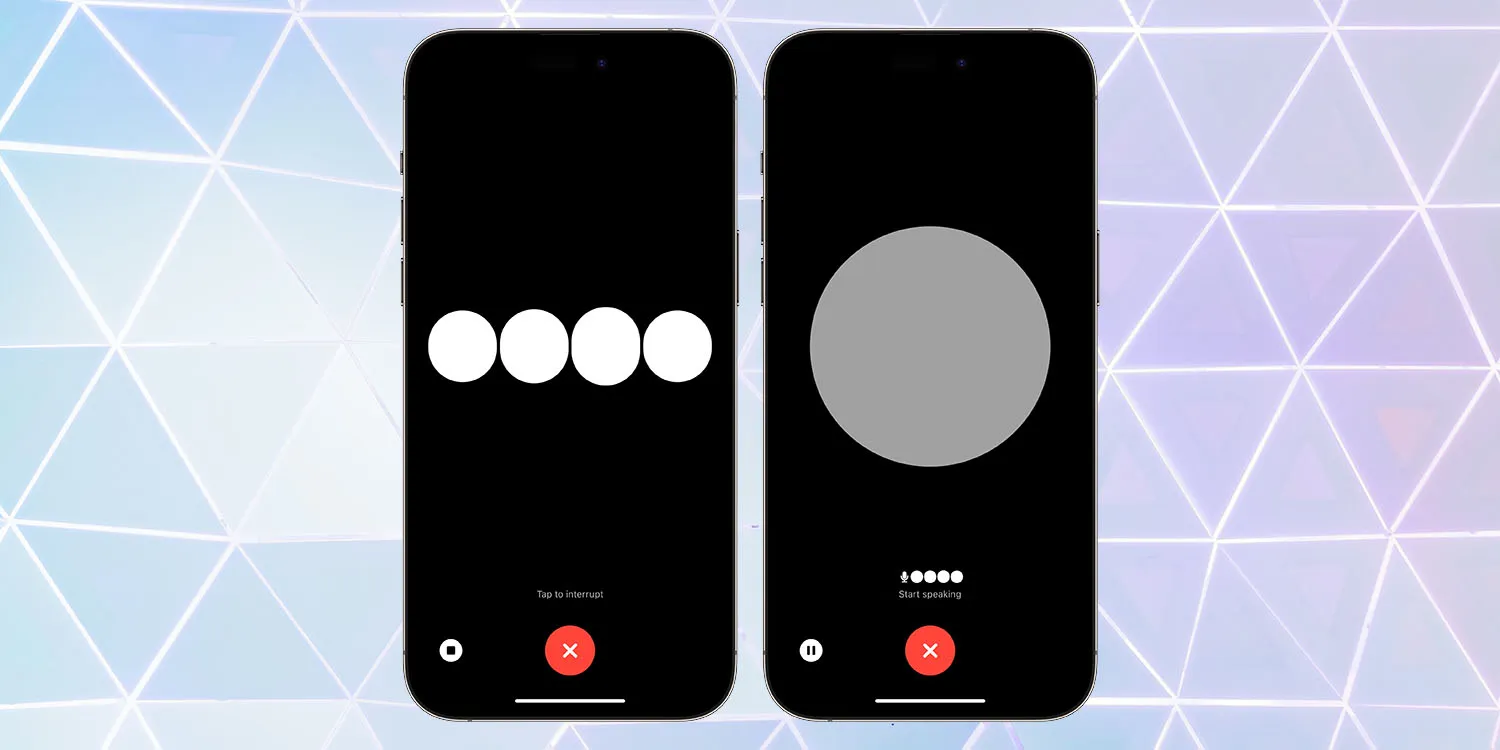
Two-way voice interaction was later launched, but only for paying subscribers. The company now says it is available to all, with Brockman urging people to try it.
ChatGPT Voice rolled out for all free users. Give it a try — totally changes the ChatGPT experience.
You can choose between five different voices.
ChatGPT Voice rolled out for all free users. Give it a try — totally changes the ChatGPT experience: https://t.co/DgzqLlDNYF
I found I had to delete the app and then re-install it from the App Store to get the update. Please be careful if you need to do the same, as there are many scam apps which come up in a search for ChatGPT.
It’s also worth noting that demand for the feature is apparently extremely high, as I’ve experienced long delays at the ‘connecting’ stage, and some failures.
It was confirmed back in September that Apple will need to comply with antitrust requirements relating to app sales, and it seems most likely this will require the company to allow third-party app stores on iPhones. Microsoft has now indicated its intention to run one of these.
One key driver for the plan is likely Microsoft’s $69 billion acquisition of mobile gaming giant Activision Blizzard …
The App Store is officially a monopoly
Currently, the only place you can buy and download iOS apps is from the App Store. Apple had argued that consumers and developers were free to buy and sell Android versions of apps, therefore it didn’t have a monopoly on mobile apps as a whole – but the European Union rejected this as irrelevant, as Apple has an undeniable monopoly on the sale of iPhone and iPad apps.
Apple eventually conceded the point, and the matter was finally settled in September. The EU named the companies which will be subject to the Digital Markets Act (DMA) antitrust law, with the iPhone maker on the list.
Apple will likely have to allow third-party app stores
We still don’t know for certain what action Apple will have to take to comply with the DMA.
As a minimum, Apple must allow developers to use third-party payment platforms for European app sales, and in-app purchases. However, it seems more likely that it will need to permit third-party app stores to fully comply.
All indications are that Apple has reluctantly accepted this. The company has for some time had a senior team working on permitting third-party app stores.
This work is being spearheaded by Andreas Wendker, a software engineering vice president within Apple. Wendker reports directly to Craig Federighi. In addition to the engineering teams, Apple’s services team is also involved. Jeff Robbin, Apple’s “top engineering manager for its services,” is leading the effort on that side. Robbin reports to Eddy Cue.
Apple has until March 6 2024 to comply.
It’s not known whether the company will limit the changes to EU countries, or make the change globally. Apple faces similar antitrust pressures in the US and elsewhere, so may decide it’s best to bite the bullet and make one change worldwide.
Microsoft plans to offer an app store for games
Bloomberg reports that Microsoft has confirmed reports that it plans to offer an iOS app store for games.
Microsoft Corp. is talking to partners to help launch a mobile gaming store that will take on Apple Inc. and Google’s dominant position in the business, according to Phil Spencer, who leads the company’s Xbox video-game division.
“It’s an important part of our strategy and something we are actively working on today not only alone, but talking to other partners who’d also like to see more choice for how they can monetize on the phone,’’ Spencer said in an interview in Sao Paulo during the CCXP comics and entertainment convention.
Earlier reports said that it plans to launch the store next year, and the company more-or-less confirmed this.
The executive declined to give a specific date for a launch of the online store, which earlier reports suggested could be next year. “I don’t think this is multiple years away, I think this is sooner than that,’’ he said.
What does this mean for iPhone users?
What will likely happen is that you’ll be able to go to Apple’s App Store, and download apps for third-party app stores, like the planned Microsoft one.
If you do, you’ll then be able to choose where to buy your apps – either from the official App Store, or from any of the third-party ones.
You may pay the same price or different ones; that will be up to developers. However, the most likely outcome is that third-party stores will offer lower commissions to developers, and they will pass on at least some of the savings or offer other incentives to encourage you to use the stores which charge them the lowest commissions.
But most iPhone owners likely to stick to Apple
However, while the law will give you the option of buying apps from other stores, the choice will be yours. We’d expect most iPhone owners to stick to Apple’s own store, for three reasons.
First, interia. The average iPhone user probably won’t even know that third-party app stores exist, and even those who do will likely continue to use the App Store out of habit.
Second, comfort with Apple. If you need a refund, or want to cancel a subscription, you know that Apple will take care of that for you. If you buy elsewhere, you’d be dependent on the third-party store to handle those issues.
Third, security. Apple has long argued that it does more than other app stores to exclude scam apps. Even if that might be a somewhat questionable claim, people may be less inclined to trust Microsoft.
After launching a big overhaul of the Apple Support app in May and expanding it to Vietnam, Apple has released a small but useful update for the app today that brings more details about nearby locations.
Along with performance improvements and bug fixes, the new feature is store hours, accesssibility details, and specialty services showing up for nearby locations.
Apple Support 5.1 release notes:
Added helpful information about nearby locations, including store hours, accessibility details, and specialty services available
Performance enhancements and bug fixes
This release follows Apple Support 5.0 which launched in May with a new UI, the ability to browse nearby Apple service providers, improvements to managing calls, chats, reservations, and more.
Apple Support app overhauled with new layout, quicker access to nearby providers, more
Apple is rolling out a notable update to the Apple Support app for iPhone and iPad today. The update brings a revamped layout that makes it easier to manage your activity, expands the app to new regions, and more. Head below for the full details.
Apple says that the revamped Apple Support app layout streamlines the process of viewing and managing your support account, including calls, chats, reservations, and more. There’s also a new feature that allows customers to easily browse the providers in their area to find the quickest way to get support and service for their devices.
Today’s update to the Apple Support app also brings the app to Vietnam and adds Vietnamese as a supported language. In total, Apple says the app is now available in 32 languages and 174 regions.
Here is the full changelog:
Browse the providers in your area to see what’s nearby.
New layout makes it easier than ever to view and manage your calls, chats, reservations, and other activity.
Expanded region availability to Vietnam and added Vietnamese as a supported language. The Apple Support app is now available in 32 languages and 174 regions.
Performance enhancements and bug fixes.
The Apple Support app is a useful resource for finding help for any problem you might face with your Apple hardware or your Apple ID. You can download it on the App Store for free. Today’s new update is still rolling out, so you might not see it right away in the App Store on your device.
Google at I/O 2023 announced that it would leverage the over 1 billion Android devices in use to find your lost items. The Find My Device (FMD) network was originally supposed to launch this summer, but Google is now delaying it.
Back in May, Google said Bluetooth trackers from Tile, Pebblebee, and Chipolo would be compatible with the Find My Device network. The two latter brands already opened pre-orders, but Chipolo communicated a delay two weeks ago.
Google announced today that it’s delaying the launch of the Find My Device network. It comes down to unknown tracker alerts that automatically warn you if somebody is monitoring your location with a nefariously placed tag. While Google already said that all Bluetooth tags compatible with the FMD network will support Android’s unknown tracker alerts, the iPhone does not have similar detection capabilities.
Google is not launching the Find My Device network “until Apple has implemented protections for iOS.” By making sure iPhone owners can find FMD-compatible trackers, this should hopefully reduce and help prevent the Google network from being used to track Apple devices without awareness from their owners. That would reflect badly on the FMD network and associated products, which is an ongoing occurrence for AirTags.
Notably, Google confirmed to us that the unwanted AirTag tracker alerts that Android is rolling out starting today are based on a custom implementation that is different from the upcoming spec. Android is implementing the alerts now to allay customer concerns since the Apple tracker is widely available.
In terms of when the Find My Device network will launch, Google only mentions the expected end of 2023 finalization of the spec. There will presumably be another waiting period for Apple to update iOS.
What is the Find My Device network
Today, Find My Device can locate lost phones and watches that are connected to the internet. (There’s also support for some Bluetooth headphones based on their last known connection to your phone/tablet.)
The new Find My Device network can “locate devices that are offline or that don’t have location capabilities.” This works by having the 1+ billion Android devices in the world periodically check for nearby devices to crowdsource the location of missing ones.
Behind the scenes, Google says “location data crowdsourced from the network is end-to-end encrypted, and that it “can’t see or use it for any other purposes.” The Find My Device network can locate phones and tracker tags, as well as headphones, including Pixel Buds, as well as those from Sony and JBL.