iOS provides developers with an API to lock apps with Face ID or Touch ID. However, not every app has this option, and there’s no way to completely hide apps from your device. Luckily, “App Lock” is a simple but powerful app that helps users protect and even hide any apps on their iPhone and iPad. Read on as we detail how the app works.
Lock and hide apps on your iPhone with App Lock
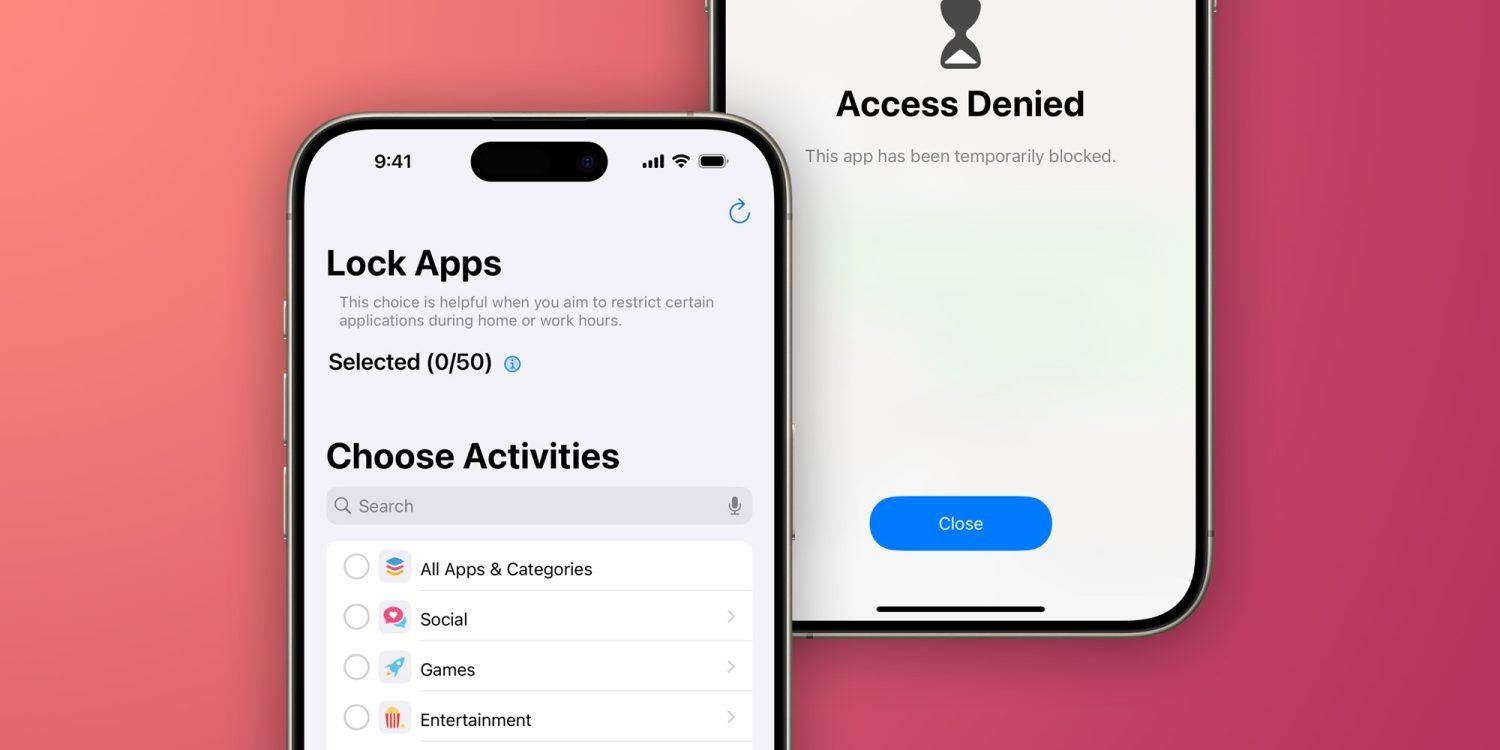
App Lock essentially brings a long-awaited feature for iOS users: the option to completely hide apps or lock them with Face ID or Touch ID. The app doesn’t rely on complex modifications or tricks. Instead, it uses the Screen Time API to control access to apps and system settings.
Once you open App Lock, you’ll see a list of all the apps installed on your iPhone or iPad. Just like the Screen Time settings, App Lock will show your apps organized by category, making it easy to hide or lock multiple apps at once. For example, you can hide all your banking apps with just a few taps by selecting the Productivity & Finance category.
The first tab of the app lets you lock your apps with biometrics, while the second “Conceal” tab completely hides the apps you’ve chosen – even from the App Library. Once you’ve chosen the apps you want to lock or hide, tap Start and you’re done.
In addition to being more intuitive than Screen Time’s native settings, a major advantage of App Lock is that it immediately locks apps, whereas Screen Time forces users to set a time limit for apps before locking them. Of course, to access or unhide apps, you must open App Lock again – which is protected by biometrics and a PIN code.
App Lock also has advanced options for blocking the installation and removal of apps, disabling in-app purchases, and restricting changes to iOS settings.
You can try App Lock for free. However, unlocking the full app requires a paid subscription. It’s a bit pricey, but it can be worth it for its privacy and security features. It’s worth noting that it requires an iPhone or iPad running iOS 16 or later.
According to a new analyst note from Jeff Pu at Haitong International Tech Research, Apple is planning changes to the A18 Pro chip specifically for on-device artificial intelligence. Pu also writes that Apple is ramping up A18 Pro chip production earlier than usual.
The news comes as we continue to learn more about Apple’s plans for AI features this year, including how it will balance on-device versus cloud-based solutions.
iPhone 16 Pro’s new AI-focused chip
In the investor note, Pu, who is often a reliable source for Apple chip rumors, says:
According to our supply chain checks, we are seeing growing demand for Apple’s A18, while its A17 Pro volume has stabilized since Feb. We note Apple’s A18 Pro, the 6-GPU version, will feature a larger die area (compared to A17 Pro), which could be a trend for edge AI computing.
Increasing the die area of a chip means that it can accommodate more transistors and specialized components, generally allowing increased. On the other hand, as die size increases, so do the risks of defects and design flaws. It could also impact energy efficiency and heat dissipation. This is the balance Apple will have to strike as it ramps up A18 Pro production ahead of the iPhone 16’s launch later this year.
Edge AI computing, meanwhile, refers to artificial intelligence that is processed directly on device as opposed to in the cloud. Apple is believed to be taking a split approach to its AI features this year, relying on cloud infrastructure (potentially in partnership with Google) for some features, while running other features completely on device.
Simply stated, edge AI, or “AI on the edge“, refers to the combination of edge computing and artificial intelligence to execute machine learning tasks directly on interconnected edge devices. Edge computing allows for data to be stored close to the device location, and AI algorithms enable the data to be processed right on the network edge, with or without an internet connection. This facilitates the processing of data within milliseconds, providing real-time feedback.
This isn’t the first report to suggest Apple has changes to the A18 chip planned particularly focused on artificial intelligence. A report last month suggest that the A18 will “greatly increase the number of built-in AI computing cores” with a more powerful Neural Engine.
Both the iPhone 16 and iPhone 16 Pro are rumored to are expected to feature a version of the A18 chip this year. Currently, the iPhone 15 uses the A16 chip and the iPhone 15 Pro uses the A17 Pro chip. Jeff Pu’s report today seems to suggest that only the A18 Pro, destined for the iPhone 16 Pro and iPhone 16 Pro Max, will feature the AI-focused changes.
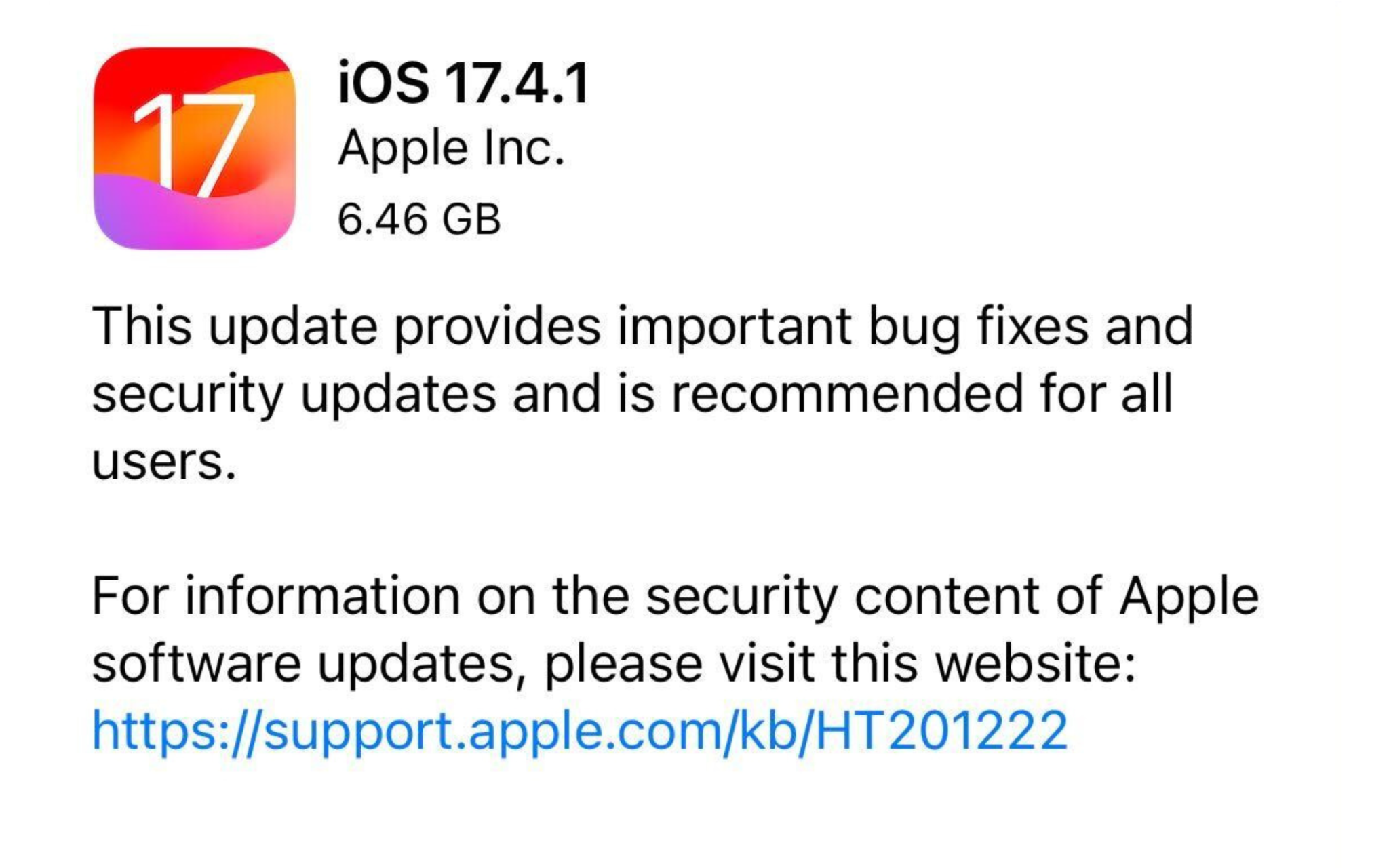
Last week, Apple released iOS 17.4.1 with rather vague release notes claiming to include important bug fixes and security patches. Now, two days later, the company has not yet added any specifics. This is unusual for Apple, which typically lists important security patches hours after a release, and suggests that the ones in iOS 17.4.1 could be significant or something else entirely.
The update comes two weeks after the release of iOS 17.4, which brought major changes to the iPhone in the European Union, mostly around the App Store, with support for alternative app marketplaces.
The release notes for iOS 17.4.1 simply say, “This update provides important bug fixes and security updates and is recommended for all users,” with a message to visit an Apple support page for additional information. The page, however, notes that details on the update are still “coming soon.”
This is not a coincidence. And could mean several things.
It’s possible Apple doesn’t want to disclose details about the iOS 17.4.1 security patches before the company has concluded its own investigation, which could point to something more significant. The update we received may have been a fix to prevent further exploitation.
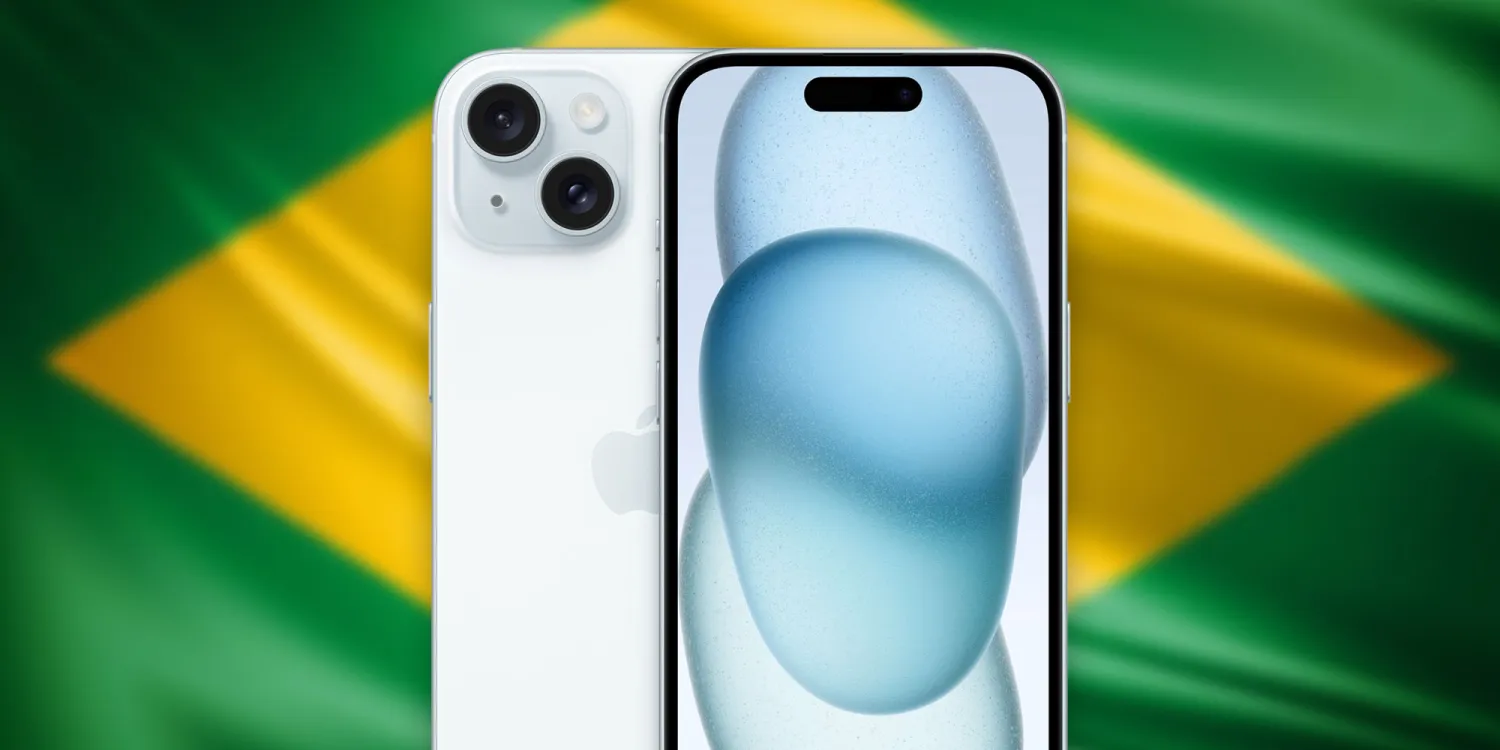
While China is still responsible for manufacturing most of Apple’s devices, the company does have some assembly facilities around the world. One of these facilities is Foxconn Brazil, located in São Paulo. There, Apple is now assembling the 6.1-inch iPhone 15.
iPhone 15 now assembled in Brazil
As noted by the Brazilian blog MacMagazine, Apple seems to be shipping iPhone 15 units assembled in Brazil. The company has not confirmed the news and there’s no explicit evidence of this on Apple’s website. However, Apple’s online store in Brazil gives customers a clue as to which model they’re getting.
When checking the URL of the checkout webpage for the iPhone 15, customers will now notice the part number ending with “BR/A,” which is used to identify Apple products assembled in Brazil. Most products are identified with “BE/A” or “BZ/A” to indicate that they’ve been imported to be sold in the country.
Interestingly, Apple has once again chosen to only assemble the 6.1-inch iPhone model in Brazil. The iPhone 15 Plus and both Pro models sold in the country are still imported from China. This may be due to the entry-level model likely being the most popular in Brazil, given the high prices of the iPhone in the South American country.
Brazil imposes high taxes on imported products. For that reason, some companies invest in assembling their products in Brazil, as this grants a reduction in taxes to sell those products. The 128GB iPhone 15 was launched for R$7,299 (around $1,460) in Brazil, but can now be found for as low as R$5,399 (about $1,080) in certain retail stores.
Apple diversifying its assembly chain
While assembling iPhones in Brazil benefits Brazilian customers, it also benefits Apple – and not just because of the opportunity to sell more iPhones. Having assembly facilities in other regions allows Apple to depend less on China and can help the company avoid supply shortages in the local market.
In addition to Brazil, Apple has also been investing in its assembly facilities in India and Vietnam. Last year, Indian customers were able to buy iPhone 15 models assembled in India on the very first day of sales.
AirPods today offer a handful of different features related to hearing health and Accessibility. A new report today, however, says Apple has big plans for iOS 18: a new “hearing aid mode” for AirPods Pro.
AirPods Pro with iOS 18
In the latest edition of his Power On newsletter, Bloomberg’s Mark Gurman writes that AirPods Pro aren’t set to see any hardware changes in 2024. Instead, he says that the “big news will be a major new hearing aid mode, coming alongside iOS 18.”
AirPods already offer a feature called Live Listen, which launched as part of iOS 12 in 2018. This feature essentially turns an iPhone into a directional microphone, transmitting the audio captured by that iPhone to AirPods in real time. A handful of testimonials over the years have shown how useful this feature can be.
Apple also introduced a Conversation Boost capability to AirPods Pro in 2021, which boosts mic pickup from directly in front of you, to better hear someone talking to you. A study in 2022 showed that some of these existing AirPods Pro features already compare well to much more expensive dedicated devices.
Also notable: in 2022, the FDA established new guidelines to allow for a category of hearing aids that can be purchased over-the-counter. Hearing aids within this category can be sold directly to consumers in stores or online without a medical exam or a fitting by an audiologist.
More details on this new iOS 18 feature for AirPods Pro users are unclear. This isn’t the first time Gurman has written about Apple’s plans to bring new hearing health features to AirPods, though. Last year, he reported that Apple is also working on a hearing test feature for future AirPods as well.
Apple is widely rumored to be working on a new fourth-generation iPhone SE with a modern design refresh. New CAD files obtained by 91mobiles this week claim to offer our clearest look yet at this update, showing an iPhone SE 4 with an iPhone 14-style design.
The current iPhone SE was released in 2022 and features a 4.7-inch display with a Home button, similar to the iPhone 8. It’s powered by the A15 Bionic chip inside, features Touch ID instead of Face ID, and retails for $429.
These CAD renders suggest the iPhone SE 4 will feature a 6.1-inch display with a notch along the top that houses new Face ID sensors and the front-facing camera. On the back, there is a single camera cutout alongside a flash sensor.
According to 91mobiles, the iPhone SE 4 will measure 147.7 x 71.5 x 7.7mm. The current iPhone SE measures 138.4 x 67.3 x 7.3 mm. These dimensions show just how bigger the iPhone SE 4 will get to accommodate the bigger 6.1-inch display.
Previous rumors have also suggested that the iPhone SE 4 will have USB-C instead of Lightning. There’s even been one rumor claim it will feature the Action button – which is currently exclusive to the iPhone 15 Pro.
There’s still no exact details on when Apple might release the iPhone SE 4, but the current expectation is that it likely won’t be until 2025. The device has been rumored off and on for the past 18 months. Ming-Chi Kuo reported last April that Apple had paused development of the iPhone SE 4.
Verdict
It’s a sad day for everyone who had hoped the iPhone SE 4 would be based on the iPhone 12 mini and iPhone 13 mini form factor.
iOS 17.4 is a massive new iOS update for iPhone users, and includes new features to support European Union regulations, which makes it possible for to use alternative app marketplaces. However, the recent changes aren’t just limited to those who fall under EU jurisdiction. iOS 17.4 has tons of new changes and features, like new emoji, new Apple Music and Apple Podcasts updates, an updated “Hello” screen, and much, much more.
Notable iOS 17.4 updates
Podcast transcription
My favorite iOS 17.4 change relates to the Podcast app. I appreciate it even more since I recently launched a brand new podcast called 9to5Mac Overtime with my colleague Fernando Silva. The Podcast app now has text transcriptions that work similarly to the lyrics view in Apple Music. As the hosts talk, you’ll see each word from the transcription highlighted, and the highlights will adjust in real-time based on playback speed.
Another nice thing about text transcription in Apple Podcasts is the ability to search for a term quickly and jump directly to a specific part of the show with just a tap. I’m impressed with the accuracy of podcast transcription, and I was surprised at how well it accommodated my Kentucky twang.
iOS 17.4 RC changes and features
Apple Cash virtual card numbers and Safari autofill
Apple Cash gets more valuable thanks to the new virtual card numbers that can be regenerated on the fly in iOS 17.4. These numbers let you use your Apple Cash balance at merchants that don’t use Apple Pay. It also includes the ability to autofill card numbers in Safari and will even reflect your Apple Cash balance on the autofill button so that you know if you’ll be able to cover the balance in advance.
Music recognition
Updated integrated Shazam music recognition can now add a song directly to your Apple Music library or a specific playlist. Music recognition will also let you add classical music songs to Apple Music Classical.
Stolen Device Protection update
Stolen Device Protection gains additional security in iOS 17.4 thanks to a new option that lets you enforce the 1-hour delay at all locations before you can access critical areas of your iPhone. In previous versions of iOS, the security delay was only enforced when not in a familiar location.
Battery Health
Apple updated battery health by decoupling Battery information from Charging Optimization. It also instituted a new, more straightforward Battery Health status, similar to what Mac users have. In addition, pertinent battery information like cycle count, manufacture date, and first usage date now reside directly within Settings → Battery → Battery Health.
Full list of what’s new in iOS 17.4
Updated “Hello” Screen
New emoji
18 new right-facing body emoji
City Digital Clock Widget
Apple Podcasts full episode text
Apple Podcasts transcripts
Podcast app Home tab replaces Listen Now
Music recognition update
Music app “Home” tab replaces “Listen Now”
Apple Music Classical Music Recognition
Updated Lock Screen song title animation
Siri announces messages in any supported language
Stolen Device Protection update
Battery Health decoupled from charging
Battery Health Status
Additional Battery data
Passkeys Access for Web Browsers
Apple Cash virtual card numbers
Apple Cash autofill in Safari
Updated dialer background for unknown calls
Quantum Computer Protection for iMessage
Support for game streaming apps
Updated TV app channel links
Updated “How to Watch” in TV app
Updated iCloud glyph in Files app
Updated App Store user settings
Other iOS 17.4 bug fixes
CarPlay Updates
Beats Solo 4 Headphones
iOS 17.4 isn’t all about EU regulatory changes, but there are noteworthy updates that all users, regardless of location, will benefit from. Highlighted a few in this post, but as you can see from the bullet point list above, there are tons of new changes and features in iOS 17.4, not to mention the various bug fixes and security updates.
iOS 17.4 RC was stable in my brief hands-on time with the release. This is likely the version that Apple will launch next week. We’ll know if next week’s release sports the same 21E217 build number.
Apple’s non-Pro lineup is arguably the most cost-effective way for consumers to keep up with the most recent and polished Apple experience without breaking the bank. The newly introduced iPhone 15 and 15 Plus models come with a handful of meaningful updates. There’s little to no difference between the two feature-wise, so screen size, battery size and price seem to be the major differentiators.
Last year, the large screen and the large battery were not enough to justify the 14 Plus’ high price, and its sales were the lowest in the family. The Plus lineup may not have a much longer lifespan than the iPhone mini if the 15 Plus’ sales are as unexciting as the 14 Plus’. The future of the entire Plus series may be hanging on the success of this device that we have for review today.
It’s not like Apple set it up for success this year, either. Its launch price is €50 lower in Europe, which is a nice start, but the US pricing remains the same. And the fact that last year’s 14 Plus remains officially on sale will add an extra dimension to the inter-sibling rivalry that the 15 Plus will have to endure. In other words, if you are looking for a big-screen iPhone, you have an even wider choice this year.
But this year’s changes are a step above the usual yearly update cycle. This year marks the shift to USB-C port for the iPhone, and we couldn’t be happier. The convenience of sharing the same charging connector as every other phone brand out there is unsurpassed. Not to mention the wide host of accessories you can plug directly into the phone, allowing you to easily transfer files, output video to a TV/monitor or even reverse charge your smartwatch or earphones.
Disclaimer. We can not guarantee that the information on this page is 100% correct.
Aside from the USB-C, the main camera is now a more advanced 48MP sensor with pixel binning, promising substantial improvement in image quality, with Apple promising great 2x zoom photos as well.
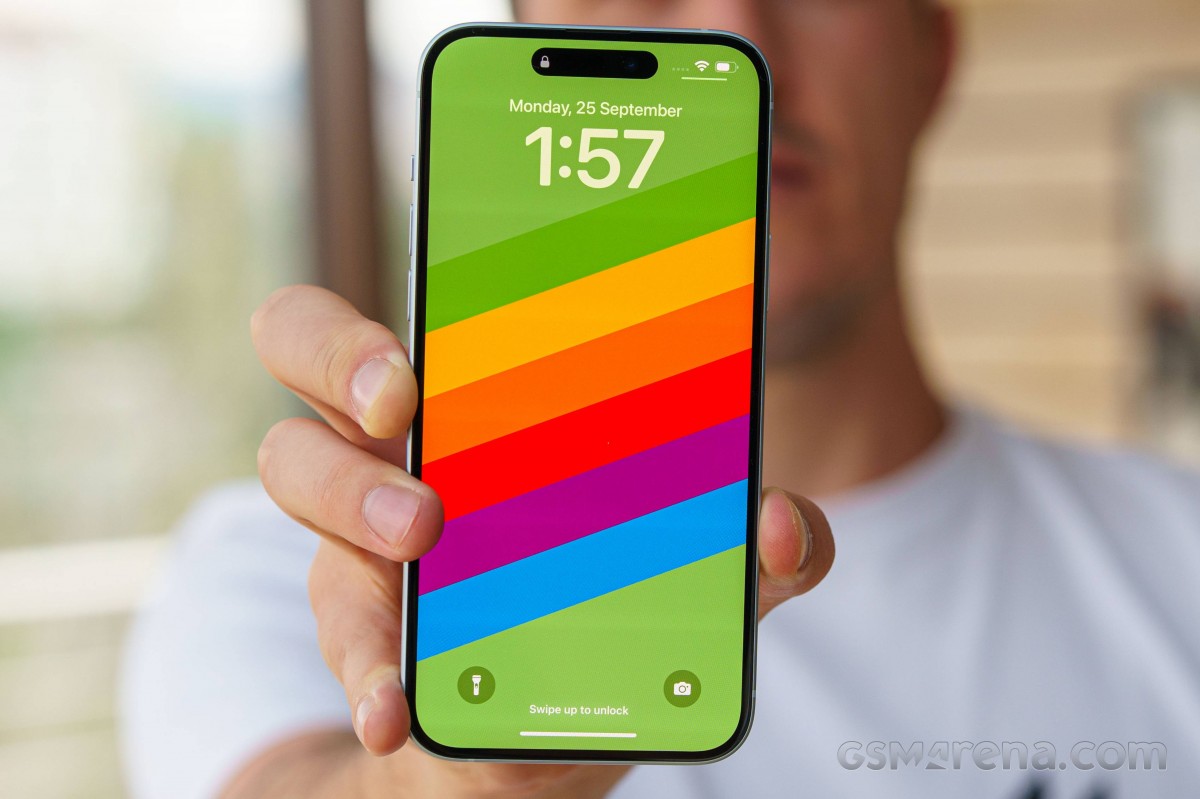
Although screen size remains the same – 6.7″, the iPhone 15 Plus now boasts almost twice as bright an OLED panel and finally replaces the old notch with the pill-shaped Dynamic Island. Even if you are not a fan of the software features revolving around the Dynamic Island, you can still appreciate the more modern and Pro-like look of the homescreen now that the sightly notch is gone.
Under the hood is last year’s pro chipset – the A16 Bionic. The chipset is still a powerful and well-optimized piece of hardware, and it offers faster performance than what the 14 Plus had.
Besides these changes, you still get the same ultra-wide camera without autofocus, and the screen is still 60Hz without an Always-On Display, which is a feature reserved for the Pro models. Speaking of Pro-only features, the USB-C port here provides only USB 2.0 speeds, and we don’t get the new customizable Action key on the left side of the device.
Unboxing the iPhone 15 Plus
Just like the rest of the iPhones, the iPhone 15 Plus comes in a modest box containing just some user manuals, a SIM ejector tool and a USB-C to USB-C cable for charging. US buyers don’t even have the pin for the SIM card tray as these iterations rely only on eSIM.
Even though you have to buy a new charger if you don’t already have one, the good news is you are not obligated to buy an iPhone charger. Any PowerDelivery charger should do the job. The recommended power output is 20W, but a 30W charger should provide even faster charging in the first 40-50min.
Competition
We’d consider the iPhone 15 Plus a big step up from its predecessor. The move to the universal USB-C port is landmark moment for the iPhones in its own right. The performance jump from the A15 Bionic chipset to the A16 Bionic is substantial; the new OLED panel is brighter, the full charge is considerably faster now, the battery life is longer, and the new 48MP main camera makes a sensible difference in daylight and low-light photography.
The iPhone 14 Plus remains officially available alongside the 15 Plus at a discounted price, so despite its poor market sales up until now, it will readily cater to consumers who find the 15 Plus too expensive but would like the same formula.
An even tougher choice would be between the iPhone 15 Plus and last year’s iPhone 14 Pro Max. The latter now costs €1,100, just about the same as the 15 Plus, but delivers a more premium experience – 120Hz display, better cameras all-around with proper 3x optical zoom shooter, longer battery life and the same SoC.
But as always, we also need to look at the market as a whole in case you are one of those rare breed of users looking for the best option available at a certain price instead of staying within your ecosystem. Sure, in iPhone terms, the 15 Plus is a nice phone with more upgrades than initially expected. However, the handset falls short of its direct Android rivals.
Right now, the Samsung Galaxy S23 Ultra is a slightly cheaper flagship phone with a better and more versatile camera system, better display, similar battery life and stylus as a nice bonus.
The same goes for the Xiaomi 13 Pro, which is cheaper and checks a flagship phone’s boxes. The 15 Plus is no match for cameras, and its 60Hz display doesn’t sit competitively on its spec sheet either.
There are other notable mentions in the sub-€1,000 category from Android manufacturers, which give the iPhone 15 Plus a good run for its money, like the Pixel 7 Pro (with the 8 Pro release just around the corner), OnePlus 11, Sony Xperia 1 V, etc. So, if you are not married to iOS just yet and you are within this price bracket, you should check out the Android-based alternatives.
Verdict
Overall, the iPhone 15 Plus boasts a significant upgrade over its predecessor in a couple of key departments – display, battery life, performance, main camera and charging.
It’s still nowhere near the Pro lineup, and it’s missing features such as this year’s chipset, the optical zoom camera, the autofocus on the ultra-wide camera, the 120Hz high-refresh-rate screen that comes with Always-On Display, or the new customizable Action key. Depending on your priorities, the lack of some of these might be a deal-breaker for you.
More importantly, however, Apple might have hindered the 15 Plus market odds the same way it did with the 14 Plus by placing it in a limbo where it has the feature set of the cheaper-tier iPhone but it’s priced way too close to the Pro-tier iPhones for its own good.
There is nothing inherently wrong with the iPhone 15 Plus; in isolation, we’d be happy to give it our full recommendation in an instant. But the market realities mean it will be a hard sell at its current price, regardless of whether you are comparing it to current or previous-gen iPhones or Android devices. This puts this particular device in a really tight spot and makes us less than optimistic for the future of the Plus lineup as a whole.
Pros
Excellent build quality, IP68 certified.
Brighter OLED panel with Dolby Vision and Dynamic Island.
Even better battery life than last year.
Nice-sounding stereo speakers.
Flagship-grade performance even if not the latest chipset.
Improved main camera performance, nice selfies.
Outstanding video quality and stabilization across the board, great action clips.
Standout charging speed to 100% for an iPhone.
Every iPhone gets at least five years of iOS updates.
Finally USB-C.
Cons
Considerably more expensive than corresponding Android alternatives.
The display is 60Hz; there is no Always On option.
No charger in the box, still rather slow charging overall.
No dedicated telephoto camera and disappointing performance out of the ultrawide.
Apple’s iOS restrictions can be off-putting to newcomers to the ecosystem.
For years, it’s been possible to share a playlist you’ve made on Apple Music with others. However, a new feature allows for shared, editable playlists in iOS 17.2. Here’s how to use Apple Music collaborative playlists.
Two new features come to Apple Music with iOS 17.2 (currently in beta) – collaborative playlists and a new automatic “Favorites” playlist.
To find the latter, you can head to Library > Playlists in Apple Music and swipe down to find the new auto-generated Favorites playlist.
While Spotify has often led Apple Music in terms of social features, it’s great to see collaborative playlists arrive with iOS 17.2, let’s dig into how they work.
How to use Apple Music collaborative playlists
iOS 17.2 is available now in beta – read more on how to install it for free on your device
Running the iOS 17.2 beta, open Apple Music on iPhone or iPad
Choose the Library tab at the bottom, then tap Playlists
Select a playlist that you’ve created (or create a new one – this does not work for now with Apple Music’s playlists that you’ve saved)
Tap the … icon in the top right corner
Now choose Collaborate (second from the top)
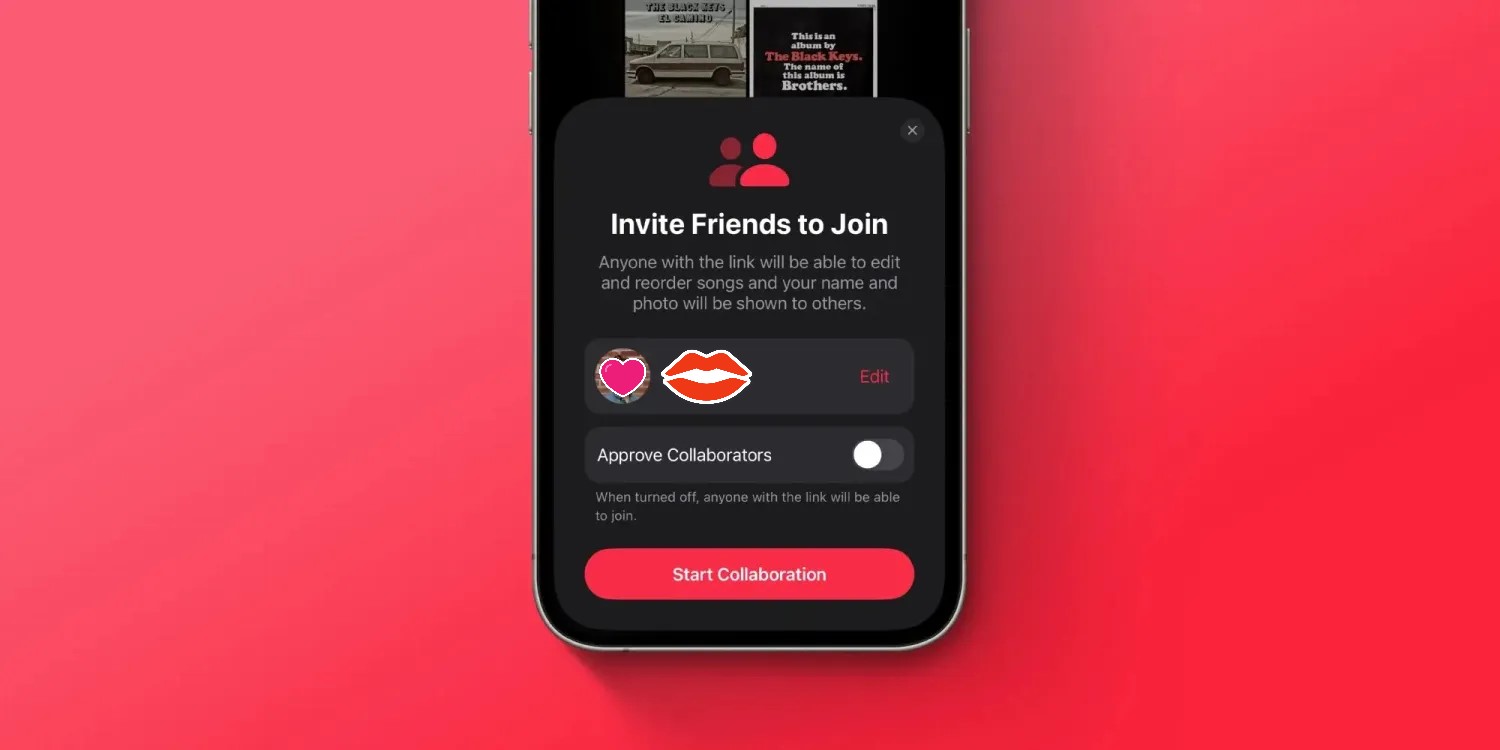
You can choose if collaborators need to be approved or not
Tap Start Collaboration to invite people
You can head back to the playlist and tap the … icon to get the Manage Collaboration option
Here’s how the process looks to use Apple Music collaborative playlists on iPhone:
Now you’ll see the new Collaborate option. Apple notes anyone you share a collaborative playlist link with will be able to edit and reorder songs and change the name and photo of the playlist.
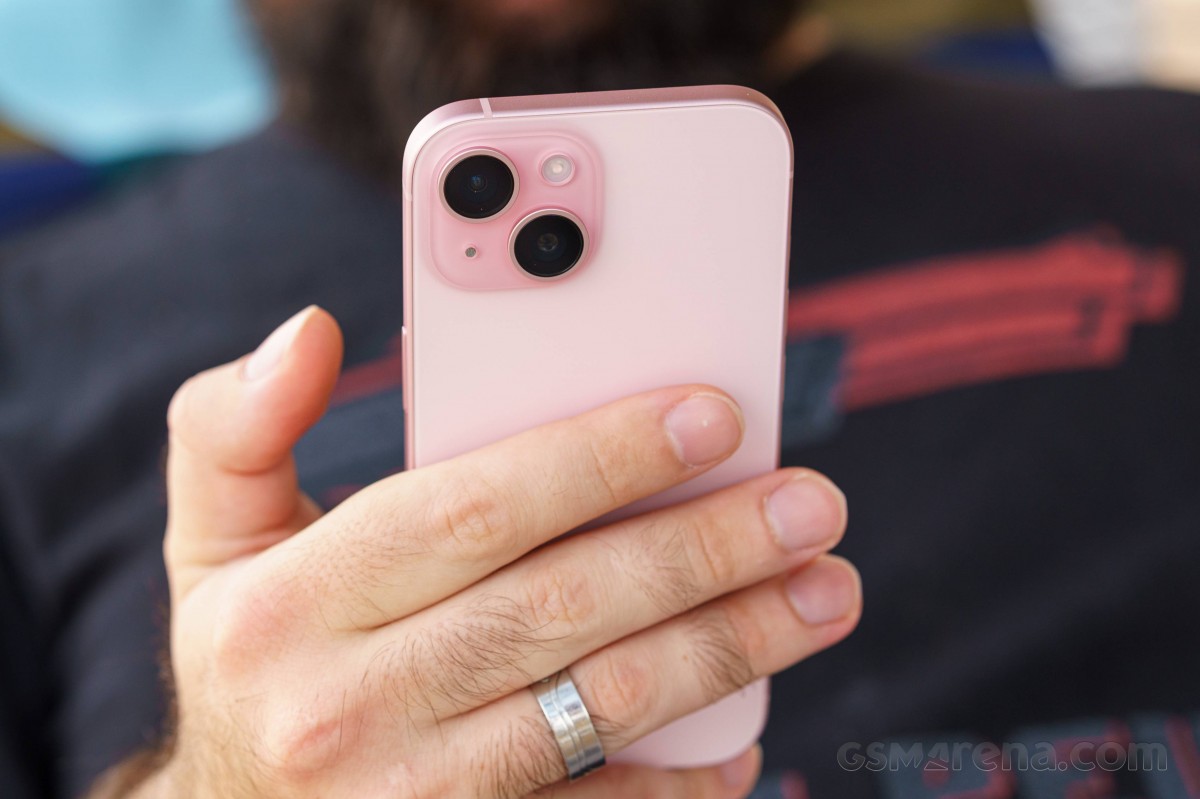
It’s yet another year of incremental refinement for the vanilla iPhone. Not that anybody expects any major changes at this point. The iPhone 15 offers a few steps forward compared to the 14 without altering the formula in any significant way.
Still, there are a few changes worth noting. The vanilla iPhone finally gets the Dynamic Island from its Pro siblings. In fact, the display is all new this year with significantly improved max brightness. You also get a new 48MP main camera, again bringing the vanilla closer to the Pro models. This includes a new 24MP default resolution for photos, as well as next-gen portraits and 4K@60fps HDR video capture.
Disclaimer. We can not guarantee that the information on this page is 100% correct.
The new iPhone 15 also brings about a new Apple A16 Bionic chipset. As is tradition, this is not the latest and greatest Apple has to offer and is shipping with the Pro models, but rather last year’s flagship chip. This might be a blessing in disguise since the new Apple A17 Pro chip is currently amidst a thermal-throttling controversy. The A16, on the other hand, is tired and true. The iPhone 15 also gets a few other “minor” changes, like the inclusion of an Ultra Wideband 2 (UWB) chip for more precise precision finding for the Find My Friends feature.
Oh, and last but not least, Apple has finally moved to USB Type-C. Cupertino was kind of forced to do so due to mounting regulatory pressure, but regardless, the switch is finally a reality. So, if you are in the market for an iPhone 15 series device, you might also need to change out some cables you own.
Left: iPhone 15 • Right: iPhone 15 Plus
However, The real question is how popular the iPhone 15 will be and whether it is worth picking up. It seems that most of you are rather unenthused about the new Dynamic Island and lukewarm at best towards the new 48MP main shooter and Type-C port. Even so, in both relative and absolute terms, we still expect the iPhone 15 to sell very well. Perhaps not as well as its Pro Max and Pro sibling, but most likely better than the iPhone 15 Plus. So, without further ado, let’s dive into the iPhone 15.
Unboxing
Apple pays plenty of attention to packaging, and rightfully so. Cupertino tends to focus on reduction and reuse in this department, which is always great to see. The boxes have become smaller still, allowing Apple to fit more units in any single shipment, saving on transport and carbon emissions. In terms of materials, the box is made entirely out of cardboard (even the sturdy phone cradle on the inside) and thus is recyclable.
Inside the box, you’ll find a relatively short 1-meter-long USB Type-C to Type-C cable, a SIM ejector tool (outside the US, where the iPhone 15 is eSIM only and lacks a physical SIM tray) and some leaflets. That’s it. Nothing more, nothing less. Apple started the whole “less accessories” trend and is not about to backtrack now. The good news is that if you already have a decent USB Type-C charger, you might only need to swap some Lightning cables and not actually purchase a new charging brick. You just need at least 20W of power to charge the iPhone 15 optimally, ideally a bit more, perhaps in the 30W ballpark just to be safe.
The competition
Apple has been consistent with its base phone pricing, at least in the last few years. The iPhone 15 is no exception. Its MSRP for a base 128GB model is USD 799/GBP 799/EUR 949/INR 79,900/CNY 5,999/JPY 124,800 in the US, UK, Germany, India, China and Japan, respectively. In fact, looking at some historical pricing, in the UK and Germany, the base iPhone 15 and 15 Plus are now £50/€50 cheaper than the 14 and 14 Plus. Even so, that’s a pretty hefty price tag, and there are plenty of alternatives to consider.
Left: iPhone 15 • Right: iPhone 13
To be perfectly frank, if you are after an iPhone, chances are that you won’t just go for an Android phone instead. At least, that’s what most statistics nowadays claim. So, when examining the market alternatives, the first and probably most obvious choice would be to consider last year’s iPhone 14 Pro model. It is currently selling for about as much as the vanilla iPhone 15. And sure, it is last year’s model, which means that in relative terms, you will be getting shorter software support in the future. However, that’s about the only downside to picking the iPhone 14 Pro instead of the iPhone 15. Well, that and buying into the now effectively defunct Lightning port. Other than that, you get the same A16 Bionic chipset on the inside and practically the same performance. Being a Pro model, however, the 14 Pro gets a few extra goodies like a 120Hz display refresh rate, a dedicated 3x, an OIS-enabled telephoto camera and extra camera features like ProRes.
Of course, if you’ve already made peace with using an older model with a Lightning port, then the other obvious choice would be the iPhone 14. You can save a substantial amount of money by going for it, but you will be missing out on some of the new additions and upgrades of the iPhone 15. Notably, the iPhone 14 has an older and less bright display with the signature notch design instead of the Dynamic Island. You will also have to settle for the old 12MP main camera instead of the fancy new 48MP one and its superior default 24MP stills.
Apple iPhone 14 Pro • Apple iPhone 14
Moving on to the Android realm and probably the most obvious competitor – the Samsung Galaxy S23. It is noticeably cheaper to buy than the iPhone 15, which is a plus. Besides that, it is roughly the same physical size and well-endowed as a proper flagship with various quality-of-life extras like great stereo speakers and an IP68 ingress protection rating. Compared to the iPhone 15, the Galaxy S23 does offer a 120Hz refresh rate on its Dynamic AMOLED 2X display, which doesn’t get quite as bright as the panel on the iPhone but is still in the same ballpark. The Galaxy S23 also gets a dedicated 3x, OIS-enabled telephoto camera and a larger battery, which does result in slightly better battery life, but not by a lot.
While on the subject of Samsung flagships, it is worth noting that the Galaxy S23 Ultra can be had for about as much as a vanilla iPhone 15. Though, we can’t exactly say that the two devices are good direct competitors, given the massive size difference.
It’s back to compact devices then, and the Xperia 5 V. It is yet another proper flagship, housed in a relatively small chassis. The Xperia 5 V has a particularly interesting 6.1-inch OLED display with a 120Hz refresh rate, 10-bit color, BT.2020 HDR support and a 21:1 cinematic aspect ratio. You get excellent stereo speakers and a powerful dual rear camera system to accompany the display. Last but not least, the Xperia 5 V has a massive 5,000 mAh battery.
Left: iPhone 15 • Right: iPhone 13
Speaking of compact Android flagships, we can’t fail to mention the Asus Zenfone 10. Its 5.92-inch display is smaller still than the iPhone’s and not as bright, but it does offer a 144Hz refresh rate. Despite the small size, Asus still managed to fit in stereo speakers, a 4,300 mAh battery and a powerful dual-rear camera system with a gimbal-OIS setup on the main cam.
Samsung Galaxy S23 • Sony Xperia 5 V • Asus Zenfone 10 • Xiaomi 13
Finally, we should also mention the Google Pixel 7a, which is equally compact and has a similar set of cameras. It represents the best Google currently offers, including clean and snappy AOSP OS and some of the best computational photography around. It’s also considerably cheaper than the iPhone 15, and it’s got a 90Hz refresh rate screen. Its battery life, however, is a bit behind the iPhone’s.
Over in camp Xiaomi, the Xiaomi 13 seems like a good competitor to the iPhone 15. It has a slightly larger 6.36-inch, 120Hz AMOLED display that also gets extremely bright. There are stereo speakers on board, as well as IP68 ingress protection. In terms of cameras, the Xiaomi 13 is rocking three on the back, including a 50MP main snapper, a 3.2x OIS-enabled telephoto and a 12MP ultrawide. The onboard battery is a hefty 4,500 mAh pack, and the Xiaomi 13 gets very speedy 67W wired fast charging.
verdict
As much as we like offering Android-powered alternatives to the iPhone, by all major accounts and statistics, Apple’s smartphone lineup is currently, more or less, an isolated island. That is to say that not many people are jumping ship one way or the other with Android. If we assume that is indeed the case and that an iPhone user will inevitably also be an iPhone buyer at some point, then it makes sense to mostly look at the iPhone 15 in the context of Apple’s own selection of devices.
If historical data is anything to go by, the vanilla iPhone 15 won’t be the most popular of the iPhone 15 lot. That title will likely go to the iPhone 15 Pro Max. That doesn’t mean it will be unpopular, though. Quite the contrary. Apple has one of the most robust market research operations, and you can rest assured that if Apple deems it so, there is definitely an iPhone 15-shaped spot in its lineup.
As far as innovations go, the iPhone 15 brings a lot more to the table compared to its predecessor. The all-new and incredibly bright OLED display is a great step forward, and we appreciate Apple finally unifying its design with Dynamic Island across all models. And speaking of unification, Type-C was a long-overdue change. The other major novelty this year must be the new 48MP main camera. We found it to be excellent all-around and a noticeable improvement over last year’s 12MP cam.
The bottom line here is that, in our view, Apple has again managed to strike the delicate balance between familiarity and meaningful innovation – enough to justify an upgrade to the iPhone 15 from an older vanilla iPhone model. And as usual, the Android realm has better hardware and overall value to offer, though that almost seems irrelevant and beside the point.
Pros
Subtle redesign makes it more comfortable to hold and use; we like the new colors.
Great build quality, water-resistant up to 6m deep, industry-leading front glass scratch and shatter resistance.
Extremely bright OLED screen, HDR10, Dolby Vision and excellent color accuracy, and now the more modern-looking Dynamic Island.
USB-C is here, and we love it.
Solid battery life for the size.
Excellent loudspeaker quality.
Great all-around performance.
Great photo and video quality across all three cameras.
Every iPhone comes with at least five years of iOS updates.
Cons
A lot more expensive than corresponding Android alternatives.
The display is 60Hz; there is no Always On option, and the bezels are thicker than the Pro models.
No charger in the box, and charging isn’t particularly fast.
Apple’s iOS restrictions can be off-putting to newcomers to the ecosystem.
No dedicated telephoto camera or autofocus on the ultrawide.