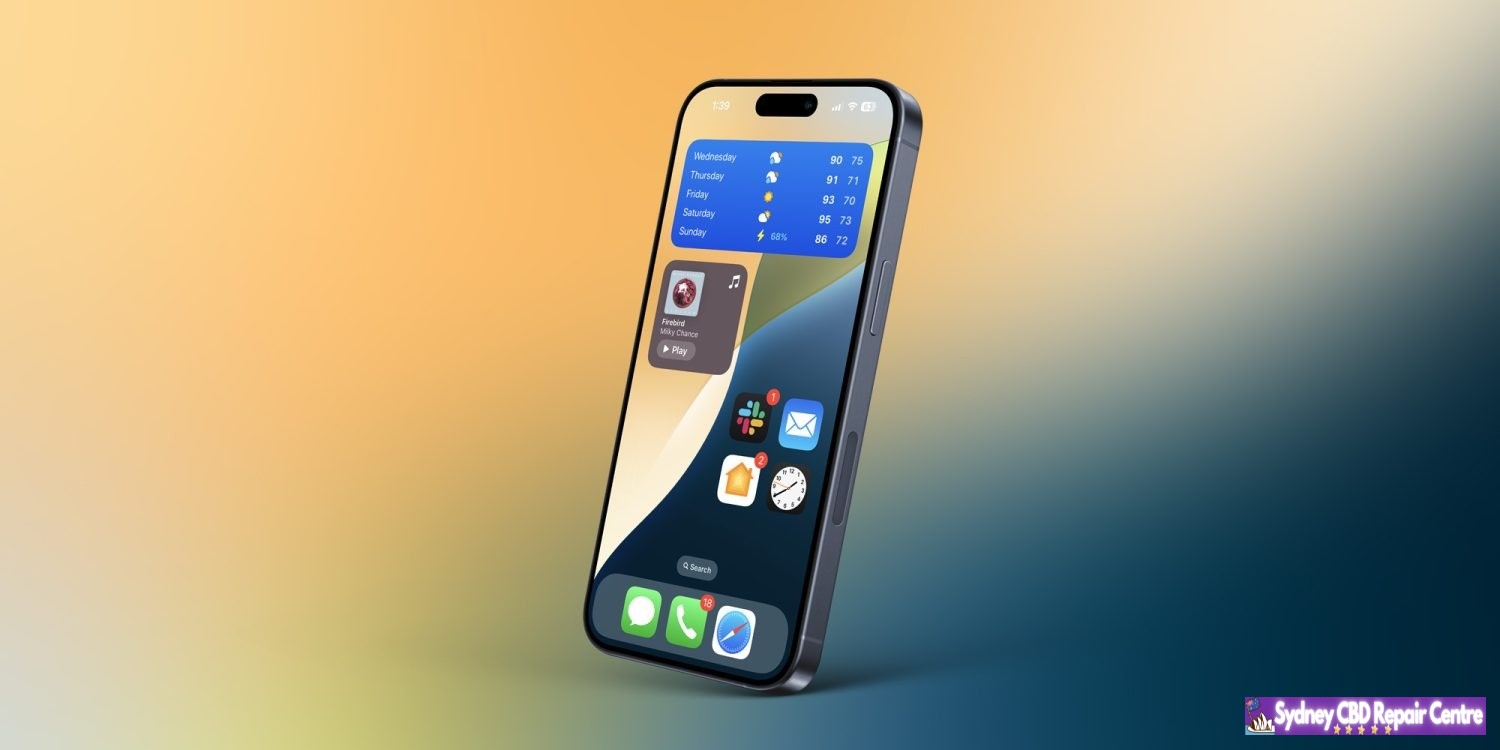
Along with letting users customize app colors, organize them anywhere, and more natively, iOS 18 brings a subtle new feature that cleans up the Home Screen. Here’s how to hide app names on iPhone in iOS 18.
iOS 18 takes iPhone customization further with new options to natively create a theme, a more robust and versatile Control Center, and more.
And joining the ability to place apps and widgets anywhere on your screen, you can create a more minimal aesthetic by choosing to hide app names on your Home Screen which also apply to widgets and folders.
Apple first hid names for apps in the Dock starting with iOS 11. But now you can have all apps, widgets, and folders with the same minimal look no matter where they’re placed.
How to hide app names on iPhone with iOS 18
Make sure you’re running the iOS 18 beta on your iPhone.
Long-press on a blank space on your Home Screen
Tap Edit in the top left corner
Choose Customize
Now tap Large
Tap on the screen to leave the Customize menu
That’s it!
There doesn’t appear to be a way to hide app names while keeping the default small icon size for now. But we’ll be keeping our eye out.
Here’s how it looks to hide app names on iPhone:
After you tap Edit and Customize, look at the bottom of your iPhone.
Tap the Large button (just above the app color buttons):
Do you think you’ll hide app names in iOS 18 or are you already? Or do you prefer to keep them?
WWDC this year was packed with new features for Apple’s suite of software platforms. The company introduced a lot of enhancements coming this fall in iOS 18, visionOS 2, macOS Sequoia, and more.
Apple also showcased features that are not coming this fall. But it wasn’t always clear what will arrive in 18.0, and what’s being saved for later this year or even some time in 2025.
Here’s the full list of features we know won’t arrive until iOS 18.1 or later.
New Siri’s on-screen awareness and in-app actions
Apple Intelligence’s fall arrival will bring with it a new Siri interface and select new capabilities, but some of the most powerful Siri upgrades will be added some time over the coming year.
Siri abilities coming later include having on-screen awareness of what you’re doing at any given time so that you can say, for example, “Use this as their contact photo” and it will understand the context and perform the action accordingly.
Similarly, Siri’s deeper knowledge of in-app functions and ability to, say, play the podcast that your significant other sent you, won’t arrive until some time in the year ahead.
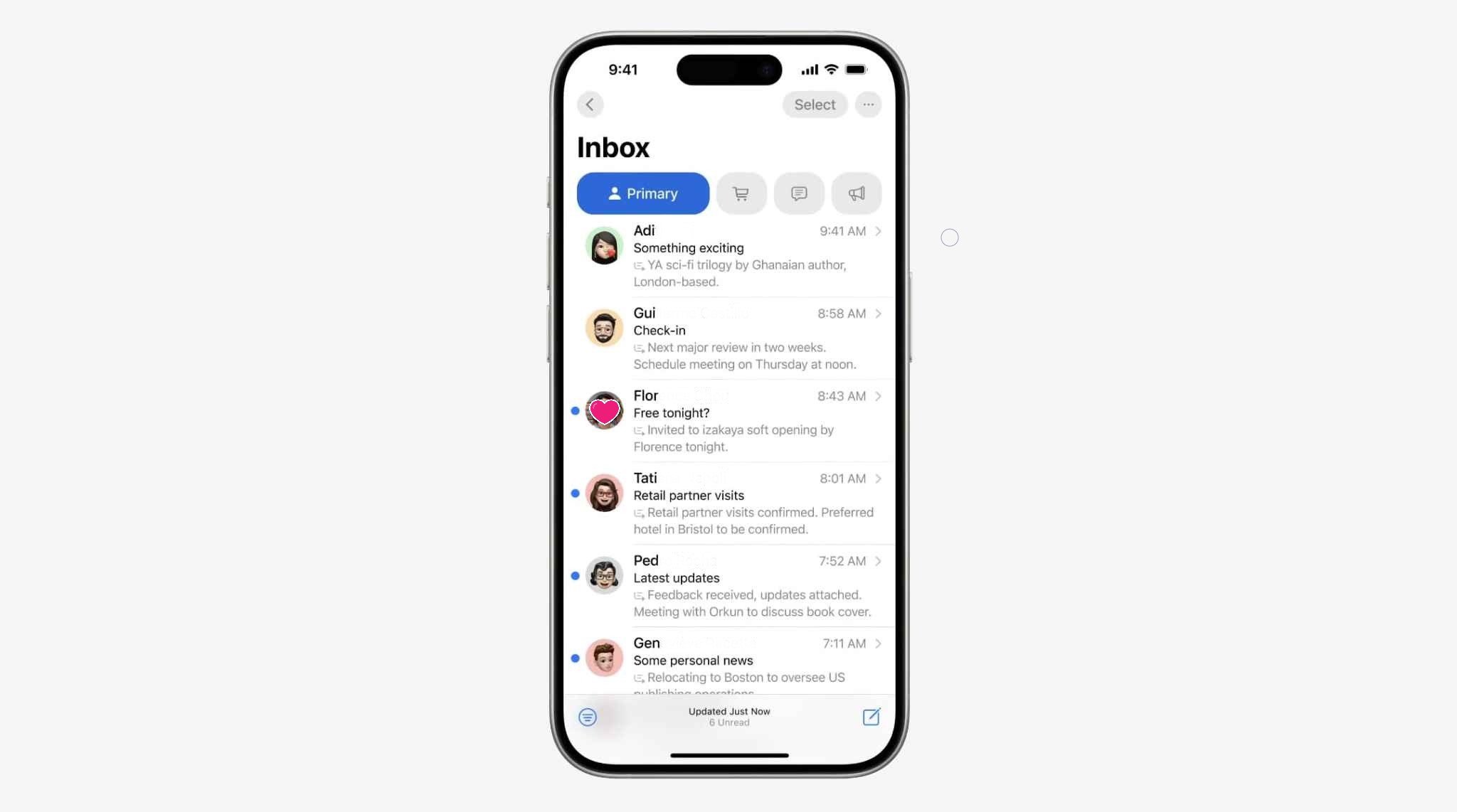
Apple Mail upgrades
Apple has big updates coming for popular apps like Notes and Messages this fall. Another core app getting some nice upgrades is Mail, with new features like the auto-categorization of messages in your inbox. Unlike those other apps though, Mail’s improvements won’t arrive until later in the year.
Vision Pro enhancements including Mac Virtual Display
This one shouldn’t be too surprising, since the Vision Pro first launched just a few months ago, but some of the best visionOS 2 features won’t arrive until later this year.
Here are the features coming in visionOS 2.1 or 2.2:
Upgraded Mac Virtual Display: A fan favorite feature, Mac Virtual Display is getting better with the ability to have an Ultrawide view that provides the equivalent of having two 4K displays side by side.
Multiview: Sports fans will be able to watch up to five different games at the same time using the Apple TV app, each with their own dedicated view.
Spatial video editing: This is partially a macOS feature, but the ability to import your spatial video to the Mac, edit it there in Final Cut Pro, and export it back to your Vision Pro won’t arrive until late 2024.
New emoji, including the best exhausted face
Compatible devices will be able to create custom emoji (Apple calls them Genmoji) when iOS 18 debuts in the fall. But every year there is a set of new built-in emoji added to iOS, and this year’s additions were recently previewed but they won’t arrive on your devices until later in 2024 or early in 2025.
Non-beta versions of Apple Intelligence
The biggest news for Apple’s software this year is Apple Intelligence. While the core Apple Intelligence features are set to arrive this fall as part of iOS 18 and more, it’s important to know that Apple is labeling this initial AI release as a beta feature. So expect issues and inconsistencies to get worked out in the weeks and months following the fall release.
Drag and drop from your iPhone to Mac, and vice versa
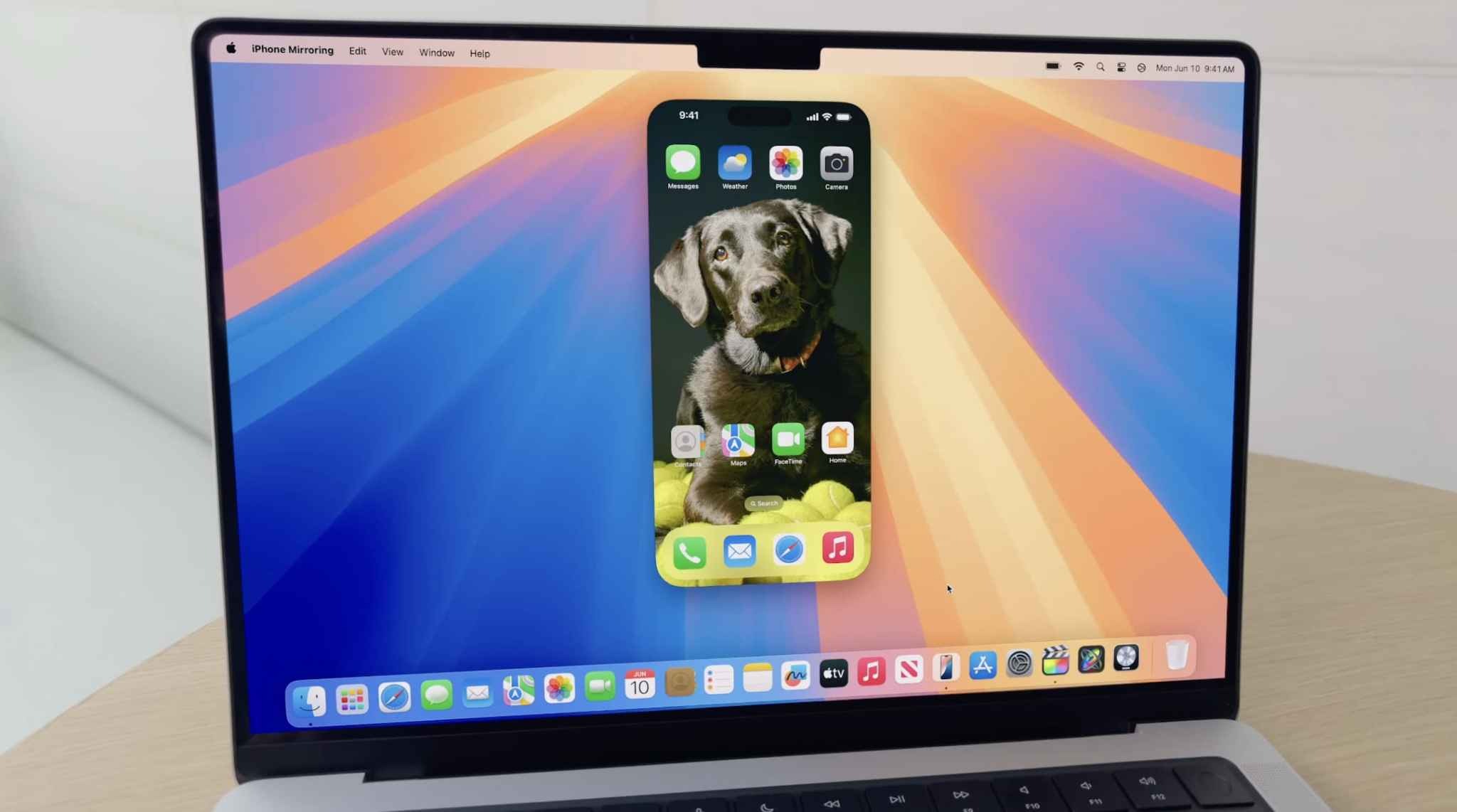
A tentpole feature of macOS Sequoia is the ability to mirror your iPhone on your Mac and interact with it there. But one feature of this new ability won’t arrive until later: the ability to seamlessly drag and drop files and photos between your two devices. Once it debuts, this feature is set to be an even quicker way to transfer files than AirDrop is, but we’ll have to wait just a bit longer.
Home app improvements
The Home app in iOS 18 is getting some nice upgrades, but most of them won’t arrive until later. The two main features coming later this year are support for adding robot vacuum cleaners as compatible devices, and the ability to view your home electricity use inside the app.
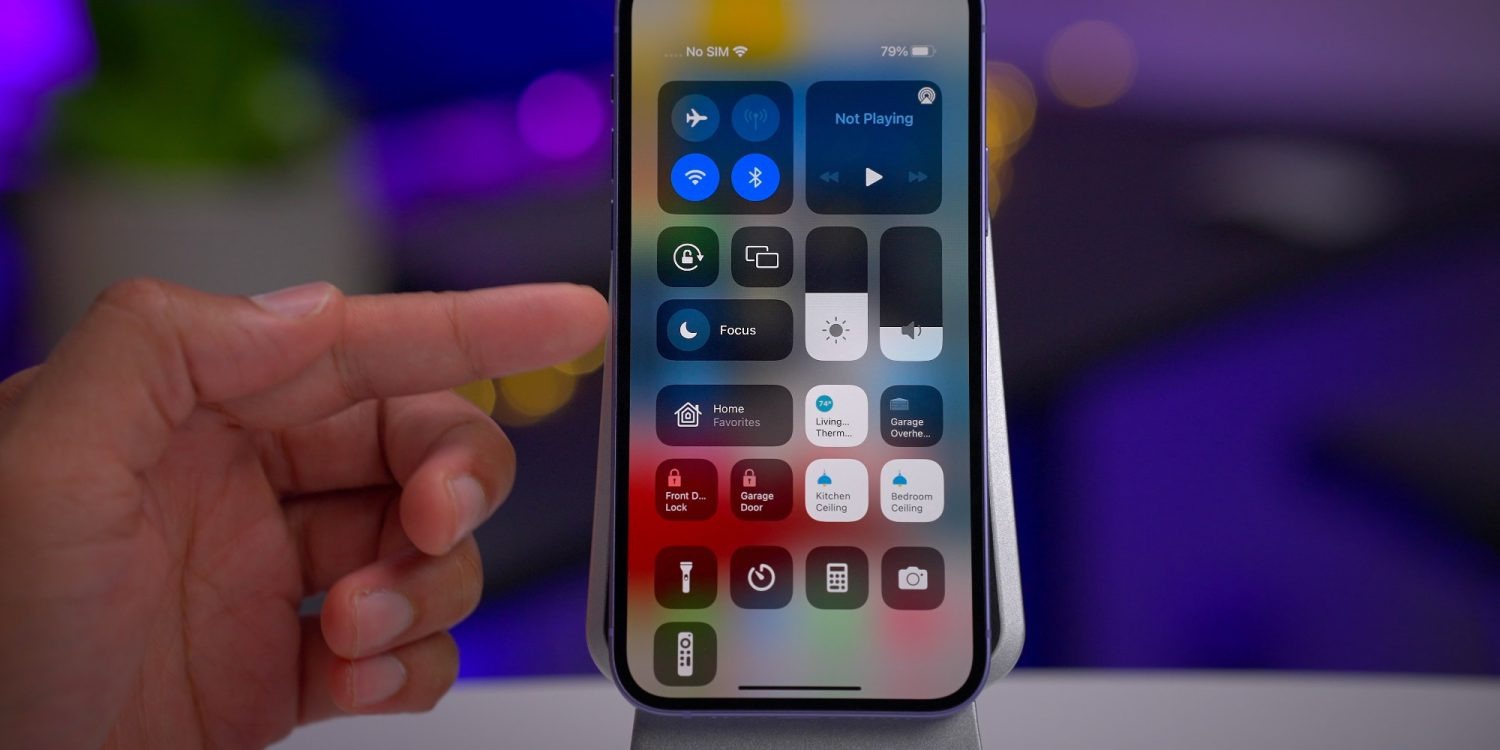
New Control Center in iOS 18 will have multiple pages, here’s what that means for you
iOS 18will be fully unveiled today at the WWDC keynote. According to one of the late breaking rumors, the iPhone update will introduce a redesigned Control Center.
One core feature of the new Control Center is the ability to place controls on multiple separate pages, rather than the single-page view currently available. Here’s what that means for you.
Control Center…will get an updated interface that allows shortcut buttons to be rearranged within the Control Center view itself and placed across multiple pages. It will also have a new music widget and an updated interface for controlling smart home appliances.
All the way back in iOS 10, Apple introduced a version of Control Center that spanned multiple pages. You could swipe between three different sets of controls. Unfortunately, those controls were not at all customizable.
What Apple has planned for iOS 18 will, in a small way, harken back to that long-forgotten design. Mostly though, it will be a brand new thing that’s more powerful than ever.
Creating your own multi-page Control Center in iOS 18
Currently in iOS 17, Control Center has some customization options. You can open Settings ⇾ Control Center and modify which particular controls show up in Control Center. But certain controls can’t be adjusted—elements like the Now Playing, Focus, and connectivity controls are all static. Their location can’t be changed, and they can’t be removed.
In iOS 18, reports like Gurman’s indicate that a lot more customization power is coming to users.
Consider what Apple has done with the iOS widget system over the past few years. Widgets can be placed and organized on your Home screen and Lock screen to provide exactly the controls you care about most.
It sounds like something similar is coming to Control Center.
Like when you enter ‘jiggle mode’ on the iPhone’s Home screen, in iOS 18 you will be able to rearrange, add, and delete controls right from the Control Center interface. No more going into Settings first.
A core component of this newfound freedom will be the ability to create multiple pages of controls. Unlike the static options in iOS 10’s design, with iOS 18 you should be able to create fully customizable pages that suit your needs—just like you can with Home screen pages using apps and widgets.
This additional screen real estate should pair nicely with the reported changes to the Now Playing and Home controls, which could take up more space than before. Apple could also stop hiding extra control layers behind a long-press. This would benefit not only the Now Playing and Home controls, but also Focus, volume controls, and more.
Will third-party apps be able to tap into Control Center?
This may be a bit radical, but it would be amazing to see Apple open Control Center up to third-party developers, too, so apps can offer up their own custom controls there.
Building on the foundation established by widgets, enabling third-party controls makes a ton of sense. It’s very much in line with what the company has done in recent years with widgets.
Wrap-up
I’m really excited about the possibilities for Control Center in iOS 18.
Apple could promote this newly capable, redesigned Control Center as part of a broader push toward greater customization options for iPhone users. You’ll be able to customize your Home screens in more ways than ever in iOS 18, so why not Control Center too?
Report: iOS 18 will tint iPhone app icons in dark mode, allow users to lock apps behind Face ID
On the day before WWDC, we have a couple more reports about some non AI-related iPhone software, which Apple will officially announce tomorrow as part of iOS 18.
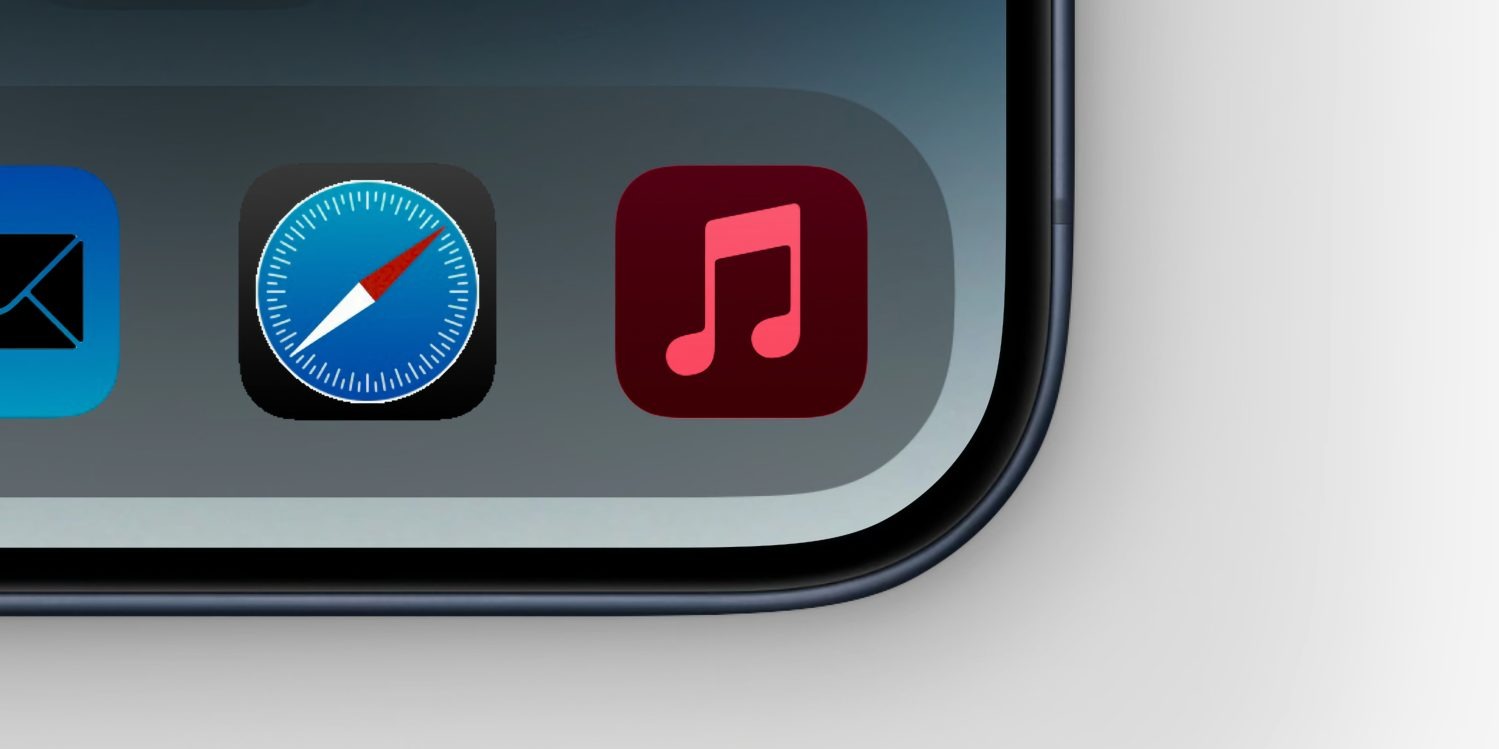
MacRumors reports that app icons will change color in Dark Mode for the first time, with a dark tint to match the darkened system chrome. The site also reports that the system will gain the ability to lock access to apps behind Face ID or Touch ID biometrics, on every app launch.
The idea of recoloring app icons has already been rumored for iOS 18, in the context of it being presented to the user as an option to personalize their device, as part of wider some screen layout changes.
What MacRumors suggests is that apps may also be able to opt-in to automatically changing their icon when the phone is in its Dark Mode appearance. The exact implementation method is not known. Perhaps developers will be able to choose a light icon and a dark icon, and the OS automatically switches when the system Appearance setting changes. Or, maybe the OS uses the single asset and renders a dark theme tint to it programatically, like changing the white background on many app icons to black.
MacRumors talks about the feature in the context of Apple’s app like Music and Mail, but presumably there would also be a way for third-party developers to support the feature as well.
Locking apps behind biometrics authentication or a passcode has been a feature on Android for a long time. It allows people to hand off their unlocked phones to others — perhaps to show them a website or a photo they just took — without fear of prying eyes.
Up to now, Apple has implemented this concept in select apps. For instance, with iOS 17, Private Browsing mode in Safari can prompt for Face ID authentication to access, as well as the ‘Recently Deleted’ and ‘Hidden’ album in the Photos app. Individual notes in Notes can also be locked with biometrics/passcode.
For iOS 18, it sounds like Apple will move on from this piecemeal approach to instead offering a system feature that allows users to choose which apps will require an additional authentication step before they will open. It’s currently unclear if this feature will only work with the built-in Apple apps, or if third-party apps from the App Store will also be able to be locked down.
We’ll know for sure today, when Apple’s WWDC keynote event kicks off at 10 AM Pacific Time ( 3:00 AM Monday, in Sydney NSW, Australia ). Expect iOS 18, watchOS 11, tvOS 18, visionOS 2 and a new version of macOS to be unveiled. A big theme of the event will be AI, with Apple launching a combination of on-device and cloud-powered artificial intelligence features under the collective brand of ‘Apple Intelligence‘.
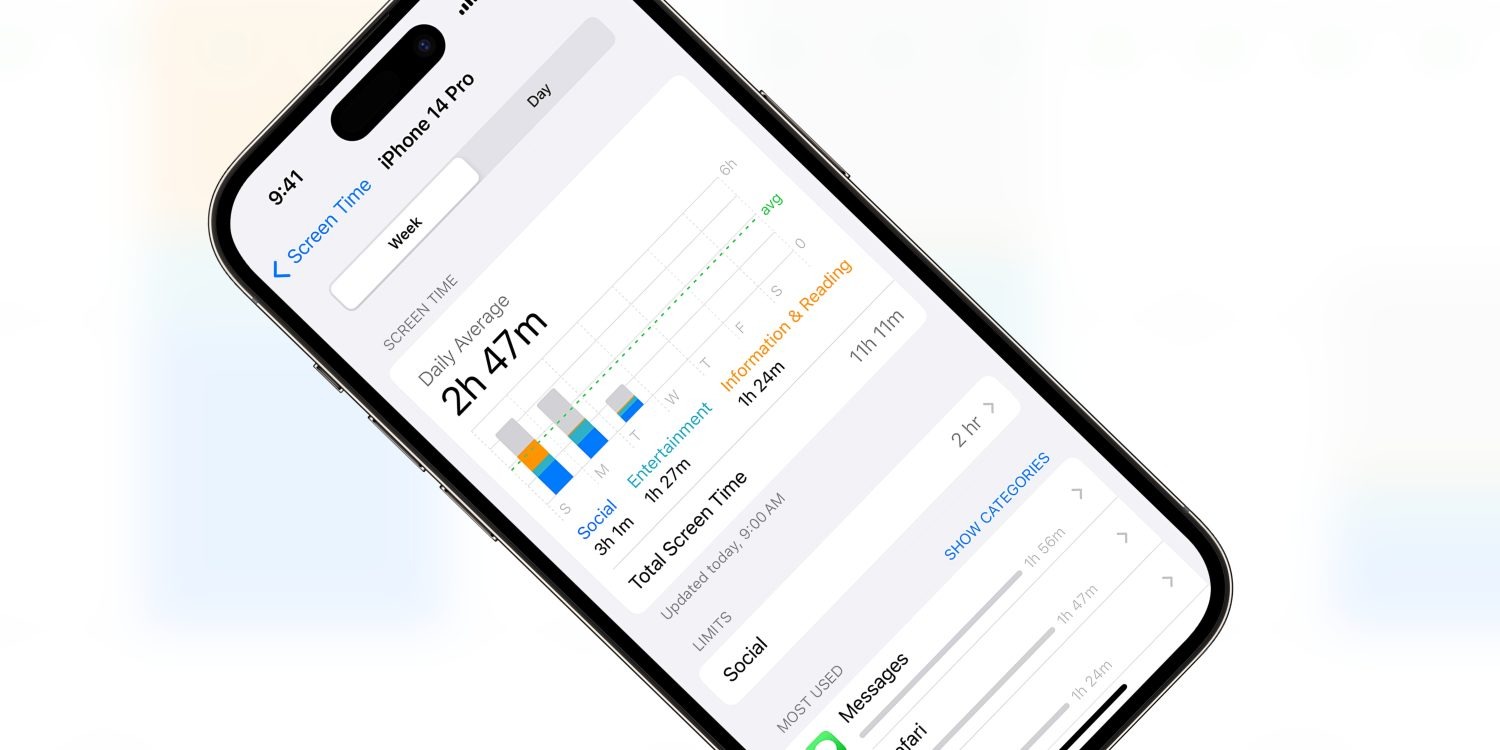
Screen Time promises to allow parents to restrict access to various apps, website and content on their children’s devices. However, ever since Screen Time launched with iOS 12, Apple has been playing whack-a-mole as users discovered new workarounds to avoid the enforced restrictions.
As reported by the Wall Street Journal, Apple will be fixing yet another one of these bugs in the next iOS software update. Security researchers had reported this particular bug to Apple multiple times over the last three years, but Apple had rebuffed or ignored them until now.
In the wake of the Wall Street Journal investigation by Joanna Stern, Apple has now committed to fixing the issue. In a statement, the company said it “takes reports of issues regarding Screen Time very seriously and have been consistently making improvements”, including “substantial Screen Time fixes” in the latest iOS 17.5 release.
However, the fact that Apple has left this escape hatch unaddressed for so long reinforces concerns that Apple does not take Screen Time seriously. For many parents, the features of Screen Time are simply too unreliable to trust in them.
In this particular case, the workaround allowed users to evade web browsing content restrictions, if they had been set. The trick involved typing a series of special characters into the Safari browser URL. It doesn’t seem like this particular trick was well known, unlike some other Screen Time exploits that have blown up on social media sites as children look for ways around their device lockdowns.
Nevertheless, parents who want to enable these restrictions going forward should explore the various Screen Time settings panes in the Settings app.
To manage content restrictions, open ‘Screen Time’ and select ‘Content & Privacy Restrictions’. You can choose preferences for apps, websites and system features like access to location services or the photo library. For web content, devices can be denied access to adult content based on an automatic filter, or choose an explicitly specified list of approved websites.
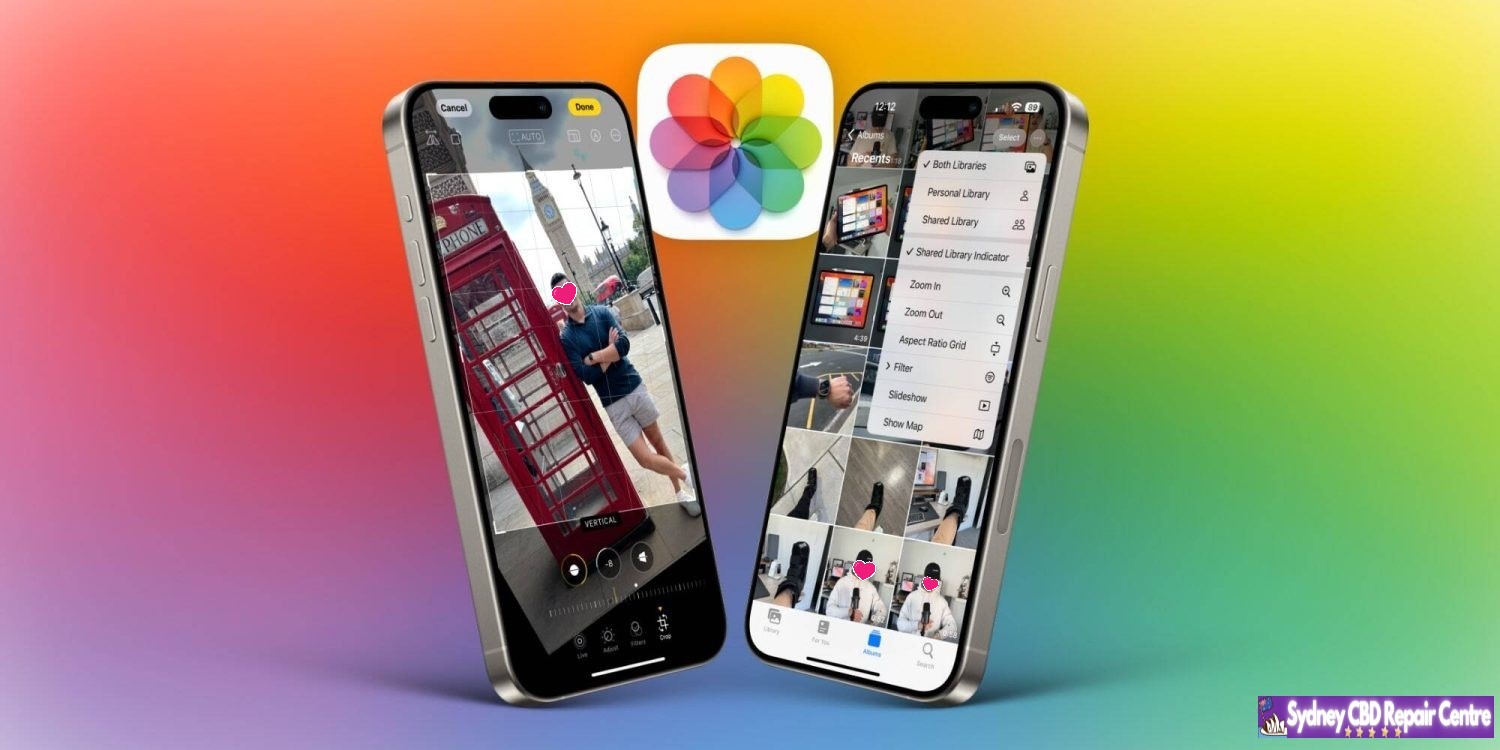
Earlier last week, Apple released iOS 17.5.1 to address a rare problem where deleted photos would reappear on a user’s device after installing iOS 17.5. In the release notes, Apple said this was caused by “database corruption.”
iCloud’s involvement
One question many people had is how images from dates as far back as 2010 resurfaced because of this problem. After all, most people aren’t still using the same devices now as they were in 2010. Apple confirmed to me that iCloud Photos is not to be blamed for this. Instead, it all boils to the corrupt database entry that existed on the device’s file system itself.
According to Apple, the photos that did not fully delete from a user’s device were not synced to iCloud Photos. Those files were only on the device itself. However, the files could have persisted from one device to another when restoring from a backup, performing a device-to-device transfer, or when restoring from an iCloud Backup but not using iCloud Photos.
Photos reappearing on sold devices? Nope.
In a now-deleted post, a Reddit user last week alleged that their photos reappeared on an iPad they sold to a friend, despite them having erased the content of that iPad prior to selling it. Apple tells me that this claim was false.
The company says that after a device has been completely erased using the steps below, all files and content are permanently deleted.
Open “Settings”
Choose “General”
Choose “Transfer or Reset”
Choose “Erase All Content and Settings”
Following these steps, everything is permanently deleted from the user’s device and there is no chance of old photos resurfacing down the line. In the Reddit user’s situation, they likely didn’t follow the correct steps when resetting their device before selling it … or they fabricated the situation hoping to earn some Reddit karma.
A rare problem
Top comment
Liked by 2 people
I actually intended to install iOS 17.5 just want to trigger this bug. I have an old 2018 iPad Pro, never factory reset during my 5 years of use. Used to have some photos that I either deleted or exported but lost forever. Last week I transferred data directly from that 2018 iPad to the new M4 iPad Pro that runs iOS 17.5. Haven’t seen anything yet.
Maybe I should try update my 2018 iPad Pro to 17.5 as well, but according to this article, if the bug appears, the old photos should appear on my new iPad as well.
Apple repeatedly emphasizes that this problem was rare and affected a small number of users and a small number of photos. The company did not and does not access a user’s photos or video.
This is still a disconcerting issue, but there is comfort to be taken in the fact that the photos in question were not stored in iCloud and could not have resurfaced on a device after it was properly erased and sold.
Also to note: iOS 17.5.1 doesn’t automatically re-delete photos that reappeared after updating to iOS 17.5. If you were affected by this problem, you’ll need to go to the Photos app and manually delete those images. The images will then be moved to the “Recently Deleted” album in the Photos app, where they will remain for 30 days. You can choose to immediately delete those images by choosing “Delete from All Devices” in the “Recently Deleted” album.
We’ve been hearing a lot of rumors about the next generation iPhone SE, which is expected to be announced sometime next year with a major redesign compared to the current model. Of course, one of the main selling points of the iPhone SE is the more affordable price – and there’s some news about that.
Apple rumored to increase iPhone SE price
According to leaker @Revegnus1, the iPhone SE could be around 10% more expensive in the US following the launch of its next generation next year. Currently, Apple sells the iPhone SE 3 for prices starting at $429 for the 64GB version. A 10% increase would take the starting price to around $469.
At the same time, the leaker also claims that Apple wants to keep the price of the new iPhone SE below the $500 mark. There’s also a chance that the company will keep the same $429 price as the current generation.
For comparison, these are the starting prices for iPhones that Apple currently sells:
iPhone SE 3: $429
iPhone 13: $599
iPhone 14: $699
iPhone 14 Plus: $799
iPhone 15: $799
iPhone 15 Plus: $899
iPhone 15 Pro: $999
iPhone 15 Pro Max: $1199
Apple has a history of increasing the price of products when they receive a major redesign. This happened with the entry-level iPad in its 10th generation, which went from $329 to $449. More recently, the company brought the price back to $349.
Verdict
According to the latest rumors, the iPhone SE 4 will have the same design as the iPhone 14, with a 6.1-inch OLED display, flat edges, and Face ID. The current SE model is still based on the iPhone 8 design with a 4.7-inch LCD display and Home Button with Touch ID.
A price increase for the iPhone SE 4 to $469 or even $499 won’t come as a surprise. However, how Apple will differentiate the new SE from the iPhone 14 (which is expected to cost $599 when Apple launches the iPhone 16 later this year) remains unclear. The company could phase out the iPhone 14, for example.
Recent reports have revealed that Apple is working on a new ultra-slim iPhone for 2025 that would cost even more than the current Pro Max model. If that’s the case, we might see higher prices for the entire iPhone lineup next year.
The Information says Apple plans to introduce iPhone SE 4 in spring 2025.
In sum, that would make the new Pro lineup composed of black, white/silver, rose and natural titanium options. For the base iPhone 16 and iPhone 16 Plus, Kuo expects black, white, green, pink, and blue colorways.
These predictions generally match earlier expectations, although there had been some talk of a purple iPhone 16 model. Kuo does not mention purple in his message today.
The iPhone 16 lineup is expected to be officially announced in the fall, likely at a September media event. The phone’s design will mostly resemble their iPhone 15 counterparts, although the screen sizes on the Pro models is getting a smidge bigger. The dual-camera module on the 15 and 15 Plus is changing from a diagonal to a straight ‘traffic light’ arrangement.
The big new feature is expected to be the addition of a Capture Button, which will assist with taking videos and photos. The button is expected to be capacitive and respond to different levels of force pressure as input. For instance, users will be able to focus the camera in the viewfinder with a half-force press, and then press to actually take the camera. This is similar to how a traditional camera behaves.
Apple has officially released iOS 17.5 to the general public. The update brings a handful of new features and changes for iPhone users. Head below for everything we know right now.
iOS 17.5 is now available
iOS 17.5 is now available to the public. You can head to the Settings app on your device, then choose General, then Software Update to install the update.
What’s new in iOS 17.5?
While iOS 17.5 isn’t quite as big of an update as other iOS 17 updates, it still includes its fair share of new features and updates.
Web Distribution in the EU
Within the European Union, the latest iOS 17.5 update introduces the capability to install applications directly from a developer’s website. Apple unveiled this new “Web Distribution” feature last month, explaining that it allows developers to distribute their iOS apps straight from their own websites.
To utilize this functionality, developers must opt into the updated App Store business terms, which requires paying a Core Technology Fee of €0.50 for every first annual installation exceeding one million in the preceding 12 months.
Any application disseminated through the web will still need to adhere to Apple’s notarization guidelines. Apps can only be installed from a website domain that the developer has registered in App Store Connect. Apple will also provide a range of APIs for developers to integrate with system functionality.
New Quartiles game for Apple News+
In the Apple News app, Apple News+ subscribers in the United States and Canada will find a new “Quartiles” word game after updating to iOS 17.5. The game prompts players to select from a grid of tiles to form words.
Quartiles is the third game to come to Apple News+, following the addition of daily crossword and crossword mini-games that were added last year.
iOS 17.5 also adds Game Center integration to all three of the Apple News+ games. With this feature, you can now see leaderboards for each of the three games for Daily Solve Time and Daily Score stats.
Apple News offline
Also for Apple News+ subscribers, iOS 17.5 introduces a new “Offline Mode.” This feature “makes it easy to access the hundreds of magazines, newspapers, narrated articles, and more included in a News+ subscription — no matter where you are,” according to Apple.
Apple News+ subscribers can now enjoy Offline Mode on iPhone and iPad to automatically download Top Stories, Apple News Today audio briefings, full magazine issues and narrated articles from News+ publishers, and puzzles to access later, without Wi-Fi or a cellular connection. When the device is back online, downloaded content will automatically refresh, and downloads will be optimized to maximize space on the device.
Design changes
iOS 17.5 also includes a few small design changes that are worth pointing out:
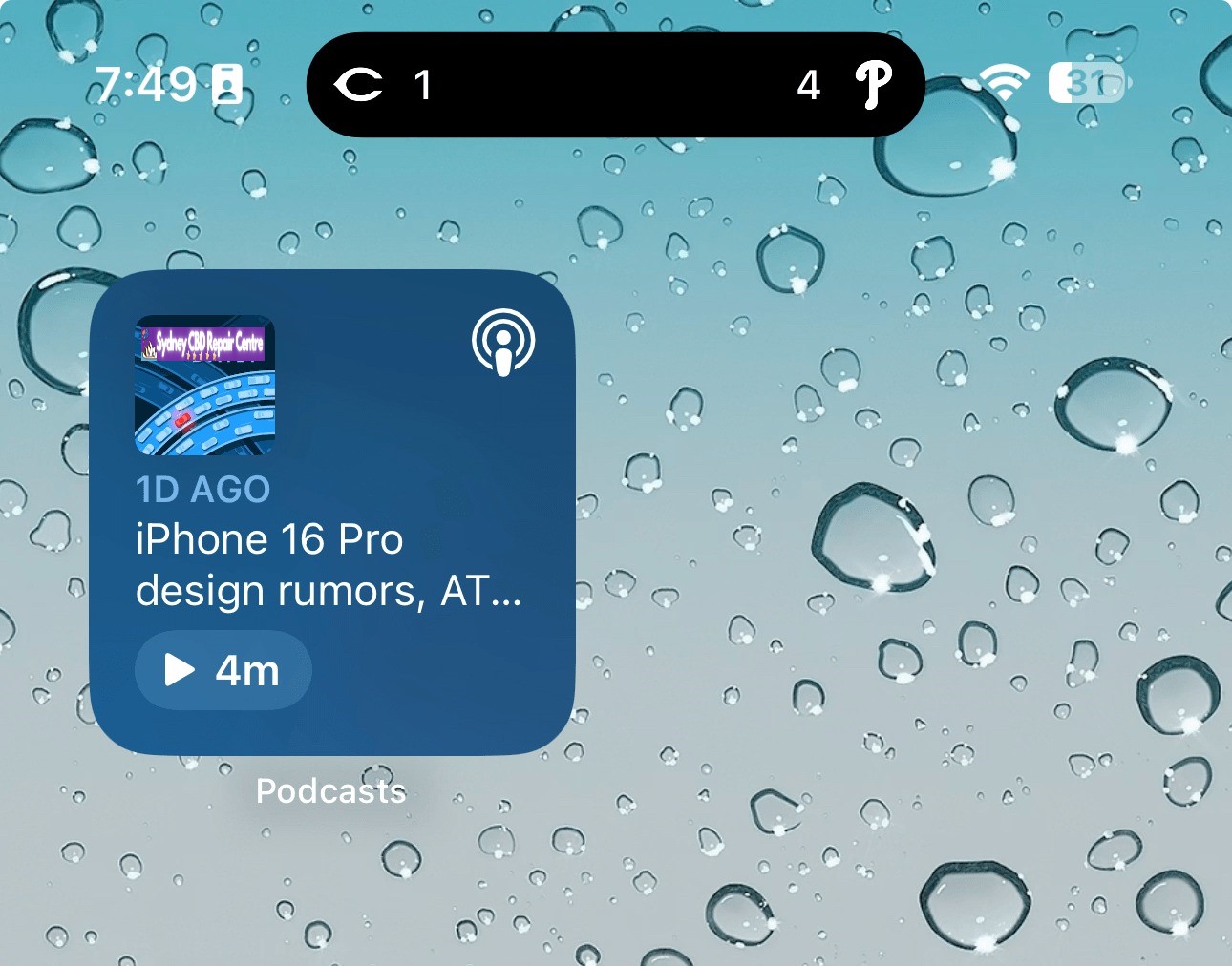
The Podcasts widget has been updated to have a new dynamic color that changes based on the artwork of the podcast you’re currently playing.
In the Apple Books app, Apple has redesigned the “Reading Goal” icon in top navigation bar.
In the Settings app, there is a new glyph for the “Passkeys Access for Web Browsers” menu under “Privacy & Security.”
New Pride wallpaper
iOS 17.5 also includes a new Pride Collection of wallpapers for iPhone and iPad users, as is tradition. The new dynamic wallpapers come as part of Apple’s goal to “champion global movements to protect and advance equality for LGBTQ+ communities.”
As explained by Apple, iOS 17.5 includes a new system centered around anti-stalking capabilities for accessories like AirTags. This development follows Apple’s announcement last year of a partnership with Google to collaborate on a new “industry specification to combat unwanted tracking.”
Strings added to the Find My app reveal that iOS will be able to identify tracking accessories, even those that are not Apple or Find My certified, and assist users in disabling them.
One of the new strings states, “This item lacks certification on the Apple Find My network. You have the option to disable this item and prevent it from sharing its location with the owner. To proceed, follow the instructions provided on a website by the manufacturer of this item.”
These changes come as Google started rolling out its new Find My Device network for Android on April 8.
New ‘Repair State’
Also in iOS 17.5, Apple has added a new “Repair State” feature to Find My. This feature lets users confirm with their Apple ID and password that they’re about to send their iPhone in for a repair. As a result, Apple technicians can confirm that the person owns the iPhone and then proceed with the repair without the need to turn off Stolen Device Protection and Find My.
Essentially, this ensures that users can still track their device using Find My while it’s being repaired. Previous, Apple required users to disabled Find My altogether.
iOS 17.5’s security fixes
Finally, in addition to all the new features and changes, iOS 17.5 also includes 15 notable security patches for iPhone users. Notably, none of the 15 vulnerabilities were reported as previously exploited.
You can find the full list of these changes in our dedicated coverage. Even if none of the new features in iOS 17.5 are tempting for you, we recommend updating as soon as possible for those security fixes.
Every now and then, Apple forces you to choose between more than just size when you’re out for this year’s “best iPhone ever” – there have been instances where the Max one-ups the ‘regular’ Pro in that one line in the camera specsheet. Such is the case with the iPhone 15 Pro which only gets a moderate telephoto camera and not the longer reach of the Pro Max.
But, really – does 3x vs 5x make a world of a difference? Particularly with iPhones, where Apple goes to great lengths to standardize the experience across one generation, but also from one generation going into the next? We reckon not, at least for the sake of this reviewer who opted for a Pro, instead of a Pro Max.
The 15 Pro otherwise gets the same treatment as the 15 Pro Max in all the other key areas – like the titanium in the frame that makes it a lot lighter than last year’s model. This is, in fact, perhaps even more of an important development on the smaller model, and it now makes it a more viable option for those looking for a pocketable Pro iPhone.
Naturally, a chipset upgrade is also part of the generational changes and there the Pro is as Pro as the Pro Max, of course – the 3nm A17 Pro is standard equipment. Not quite so is the storage situation, where the regular Pro’s 128GB base trim level isn’t befitting the name – the Pro Max starts at 256GB and that’s a lot more like it.
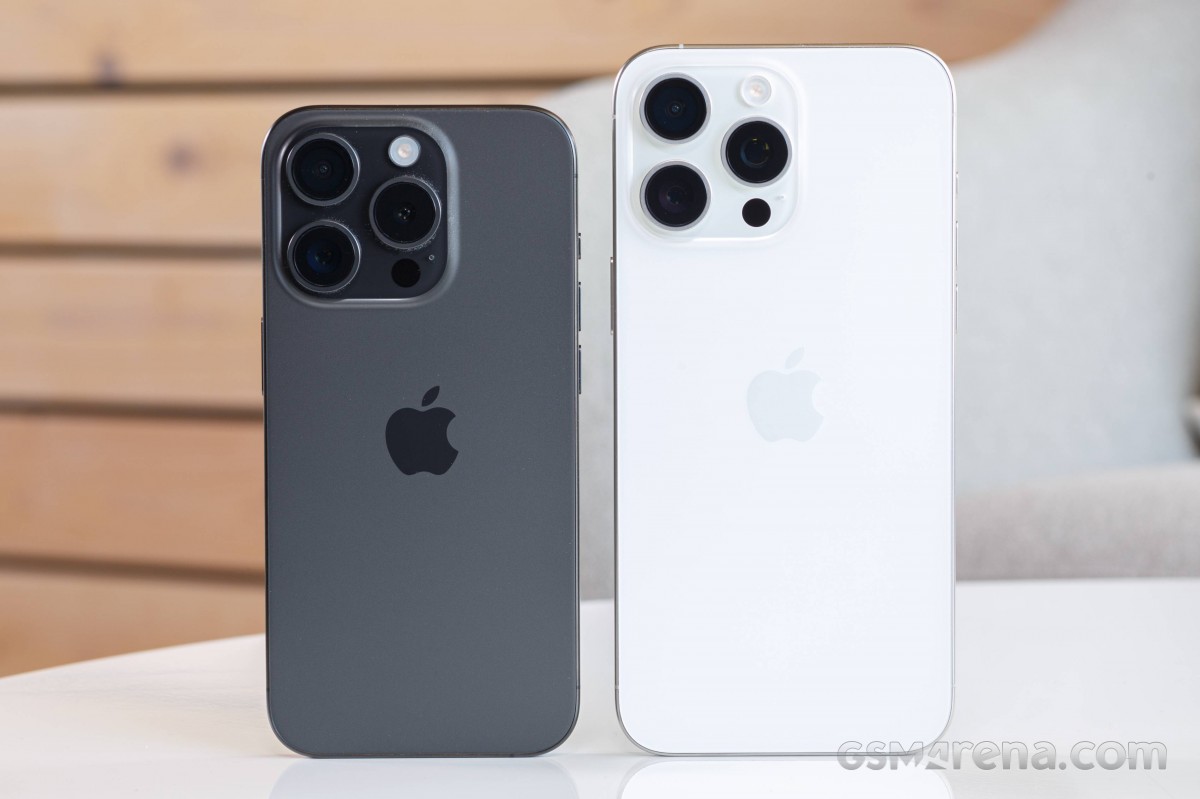
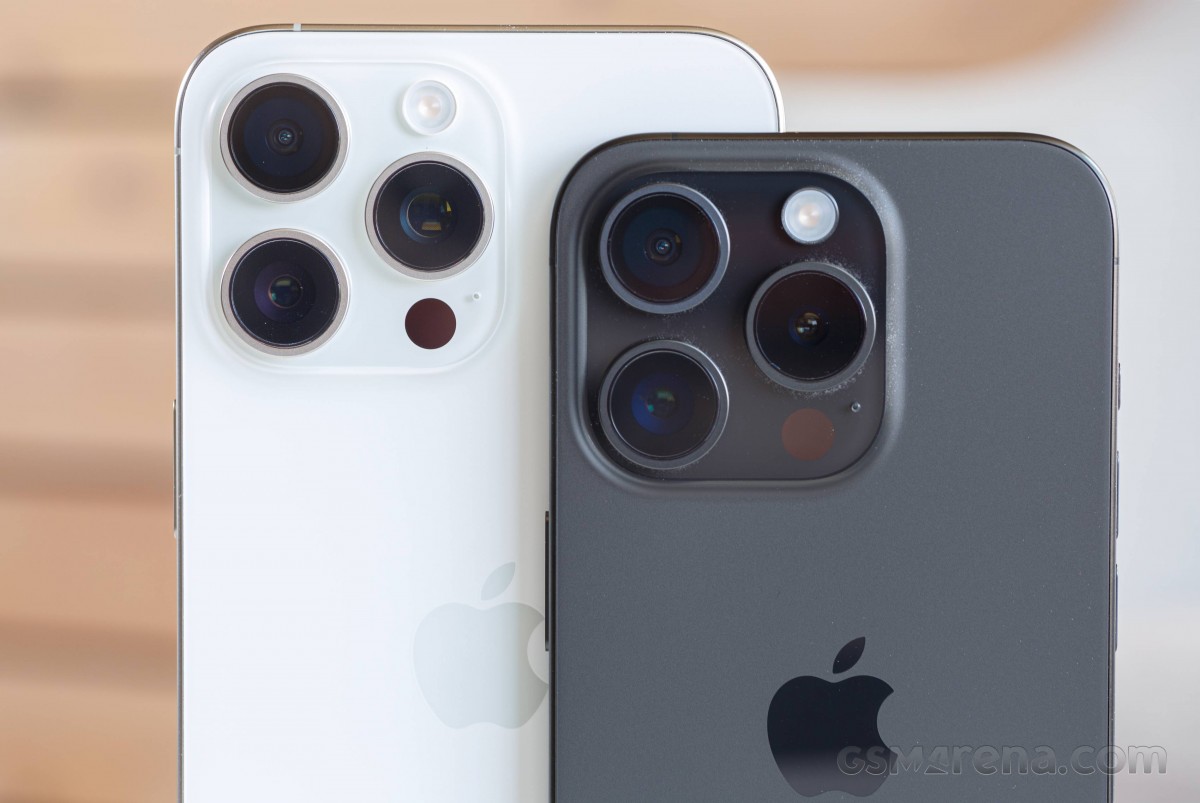
iPhone 15 Pro (left) next to iPhone 15 Pro Max
Circling back to the cameras (because it’s not all about the telephotos), the iPhone 15 Pro also gets the 24MP jpegs (or heifs, if that’s your thing) and the two intermediate pretend-focal lengths – there’s so much more parity in the imaging department than there are differences, after all.
Apple also invented USB-C this year, perhaps nudged in the right direction by the EU, but why not out of their own accord? (Because probably not.) Not strictly a Pro feature this one, since the vanilla iPhone 15 and the 15 Plus also use the industry-standard connector, but a most welcome development either way.
Then there’s some more of the usual stuff, the usual good stuff. The Pro iPhones have some of the best displays in the business, and the one on the 15 Pro is no different – in the same compact 6.1-inch size Apple settled on in 2020 with the 12 generation. While we’d say that underdisplay fingerprint readers should be mature enough for Apple to finally add one into the mix, Face ID remains a solid option for authentication. The autofocusing selfie camera that’s in that same vicinity has proven great in the past too.
iPhone 15 Pro (left) next to iPhone 15 Pro Max
Battery life has been a strong suit of iPhones for a while and we’re seeing little reason why that would change now. We do sense we’ll be complaining about the 15 Pro‘s charging speeds though, as usual. Have a look at this quick rundown of the specs before we tear the paper tabs on that white box.
Disclaimer. We can not guarantee that the information on this page is 100% correct.
Apple iPhone 15 Pro unboxing
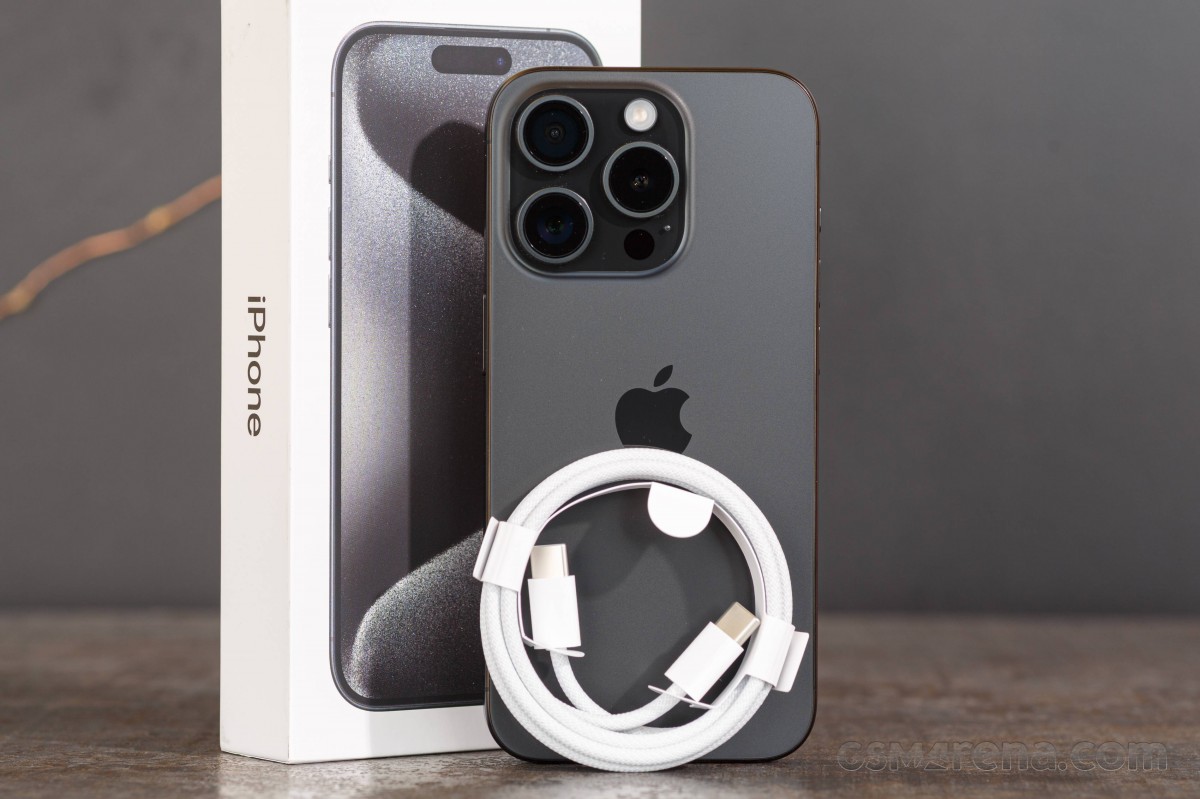
As expected, the iPhone 15 Pro ships in a half-height retail box, with little inside other than the phone itself. The less important bits that are still included are a SIM ejection tool, an Apple sticker, and some documentation.
The one bundled accessory that’s of more practical significance is the new USB cable (C-C) which is now braided. That should help make it last longer than the plain Apple cables of yesteryear, though we’re not sure the white fabric will be looking pristine a few weeks down the road. The cable is also USB 2.0 spec, so if you’re after the fastest possible transfer speeds, you’d need to get a different one. On to the phone itself we go now.
Competition
An iPhone‘s competition most often comprises other iPhones – be they older ones, the other size from the same lineup, or one from the other lineup. In that sense, you need to have your priorities all figured out when picking the right iPhone for you.
iPhone 15 Pro in front of iPhone 15 Pro Max
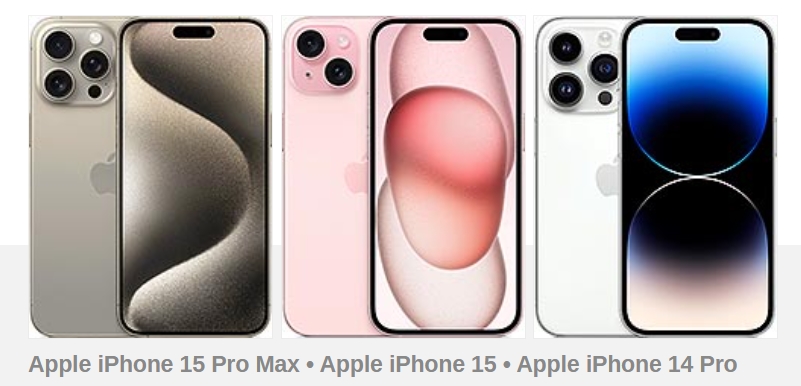
For example, if you want the absolute best iPhone on the market, the 15 Pro isn’t that. The 15 Pro Max will get you a longer-reaching telephoto camera, better battery life and more screen estate, though conversely, it will take up more room in your pocket, and it’s also more expensive (€250/$200).
On the other hand, if you’re looking to save some money (€300/$200), you could give up on the Pro and get the vanilla iPhone 15 – not only is it the same size as the 15 Pro, but it’s tangibly lighter, which can be a priority. The 15 is nowhere as good a cameraphone as the 15 Pro – no telephoto, no AF on the UW, and less fancy main camera.
An interesting middle ground is the iPhone 14 Pro. Apple may have discontinued it, but we reckon there’s ample stock at third-party retailers, and for €150 less you can have almost the same phone as the 15 Pro – minus the USB-C port, the latest intermediate zoom modes, the newest chipset (last year’s is fine), and the titanium frame (which may actually be an advantage for the previous generation).
If you’re OS-agnostic or just like jumping ship every now and then, or you may want something that Apple doesn’t make yet, there are plenty of Android options you could entertain.
Samsung’s two foldables easily come to mind – there’s no bendy iPhone just yet. The Galaxy Z Fold5 is perhaps the best bet if you’re after the ultimate smartphone for productivity, while the Z Flip5 is more of a fashion statement with the benefit of some form of pocketability. If that last bit is a top priority, then the Zenfone 10 just might be able to entice you, while an Xperia 1 V could appeal to the right crowd with its extensive video recording chops.
Verdict
The iPhone 15 Pro is a logical if not quite exciting, evolutionary step for the lineup. Small advancement in key areas go with continued refusal to improve on others, but Apple will be Apple. Perhaps that statement alone explains the fact that the new 5x telephoto only comes on the Pro Max and not the Pro, and we’re bummed about it on principle, even if it’s objectively not a big deal.
The high price, scant retail bundle, iOS quirks, and heavy throttling sound like cons we’ve listed before and will continue to do so. On the other hand, traditional strong points of the iPhone are only getting stronger – like the upmarket build and in-hand feel, spectacular display, versatile camera system and great speakers. We’re more than happy to welcome the USB-C port this year on iPhone too.
Ultimately, the iPhone 15 Pro is what you’d expect it to be – the best one to date in size small. As usual, if you’ve already got an iPhone 14 Pro, there’s no truly compelling reason to get a 15 Pro. However, if you’re on an iPhone 13 Pro or older, or on one of the other branches of iPhone (like a vanilla 14 maybe), the 15 Pro will more easily make a convincing case for itself.
Pros
Exquisite and now lighter design, water-resistant up to 6m deep.
Outstanding OLED display – super bright, color-accurate, Dolby Vision capable.
Superb speaker loudness, balance, sound quality.
Top-notch performance.
Every iPhone comes with at least five years of iOS updates.
Upgraded connectivity across the board, UWB2 too.
USB-C is here, and we love it.
Class-leading video capturing and stabilization, impressive Pro modes.
Superb daylight and nighttime photos from all cameras.
Cons
A lot more expensive than corresponding Android alternatives.
No charger in the box, and charging isn’t particularly fast.
Apple’s iOS restrictions can be off-putting to newcomers to the ecosystem.
The photo processing could benefit from less sharpening at times.
Limiting the 5x telephoto to just the Max feels arbitrary (and so is the 256GB base storage).
The rear glass is reportedly much more shatter-prone than before.
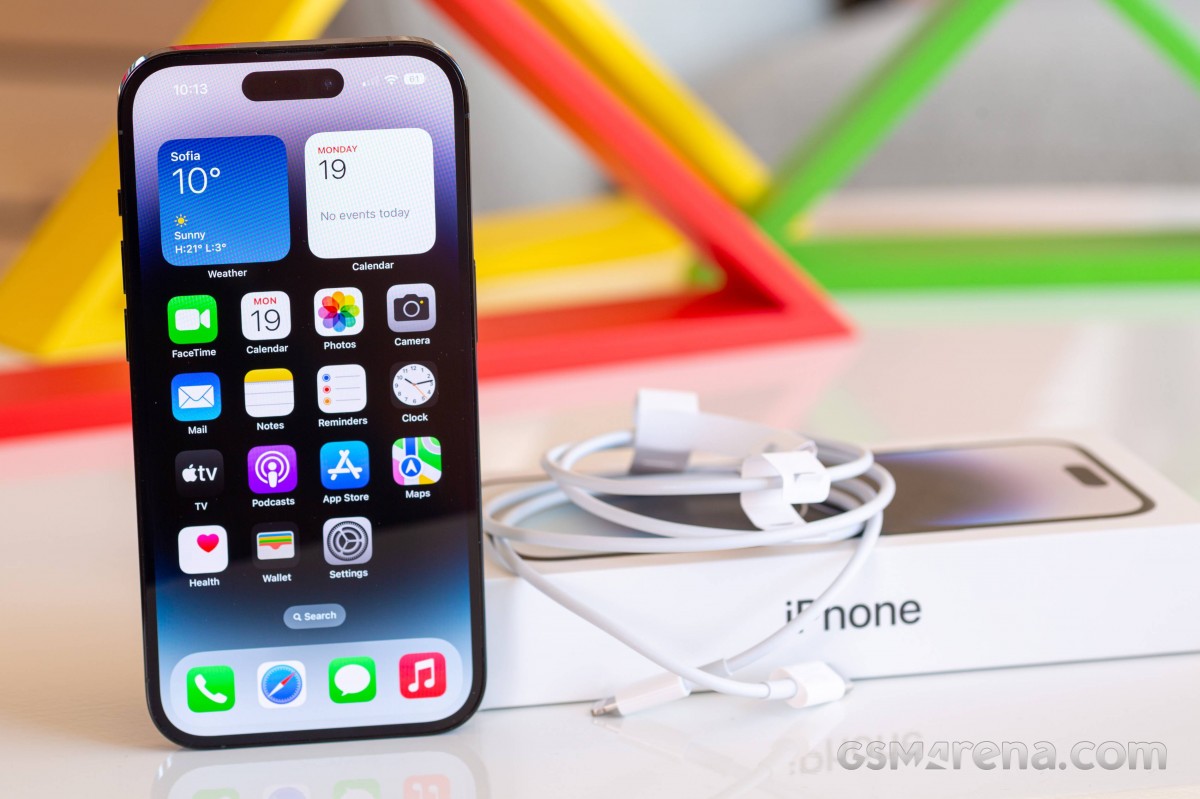
An improved display. Better cameras. A faster chip. This is the new iPhone. A phone that’s often criticized for being behind-the-curve in certain ways, but often copied. A polarizing device that sets the trends in more ways than one. The iPhone 14 Pro is as controversial as any high-profile iPhone to come before it, if not more.
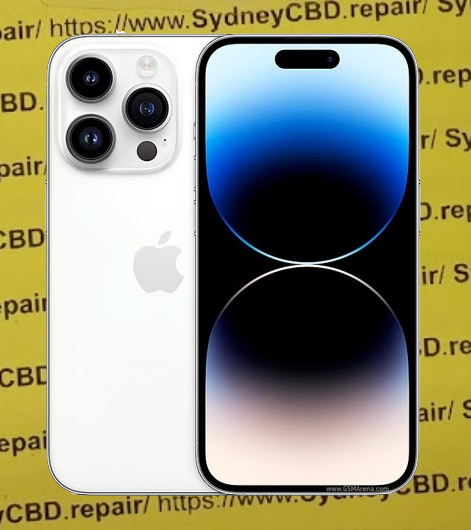
The iPhone 14 Pro follows Apple’s formula to a T – it brings an even brighter Super Retina XDR OLED with an Always On option and a smaller pill-shaped cutout. Apple has done it again – turning weakness into strength. Once an eyesore, the infamous notch is now the Dynamic Island, a unique feature other brands are considering copying.
There are other improvements across the cameras, courtesy of new sensors, lenses and ISP. And, of course, Apple’s A16 Bionic chipset is faster and more energy-efficient than the A15, just as expected.
Let’s start with the screen. While it’s still a 6.1-inch OLED, it has a smaller pill-shaped cutout, can be as bright as 2,000nits, and supports Always On thanks to new more energy-efficient panel. The cutout is arguably the most iconic iPhone 14 Pro series feature, which actually comprises of two small cutouts – one pill-shaped and one round. Apple has turned this into a feature with various cool animations for notifications and calls it Dynamic Island.
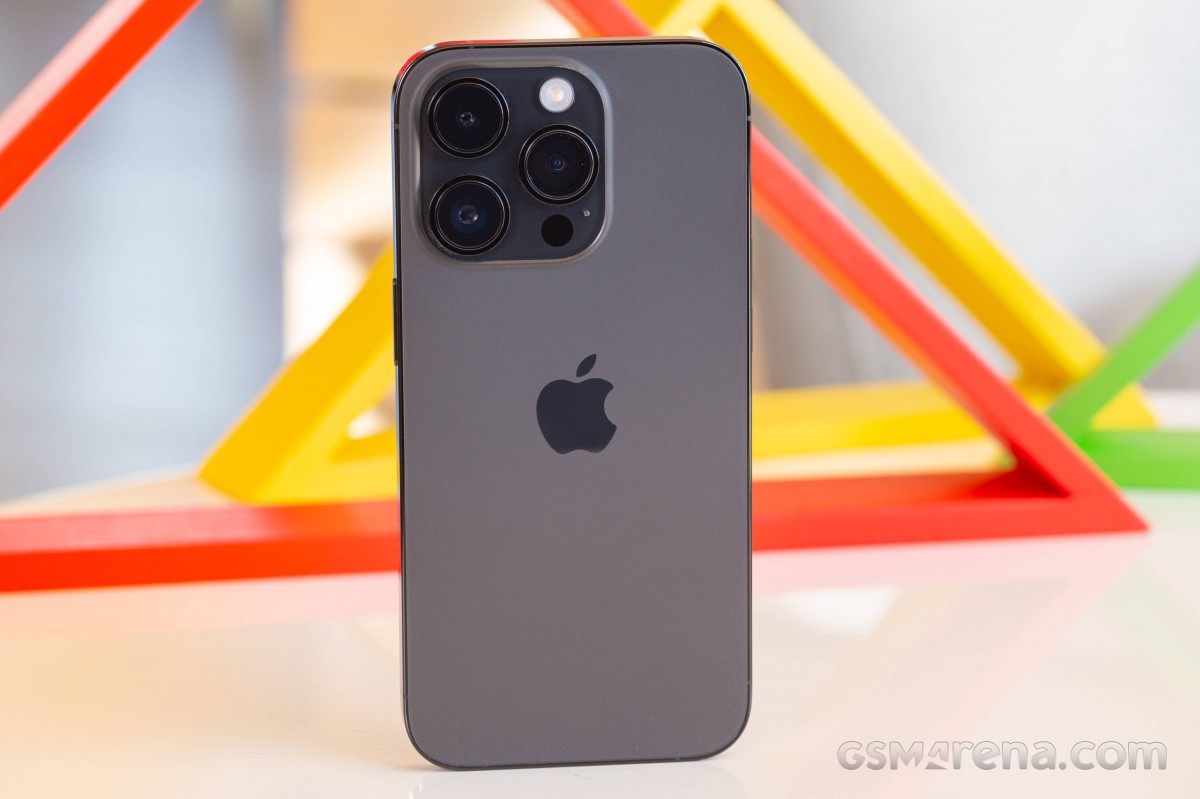
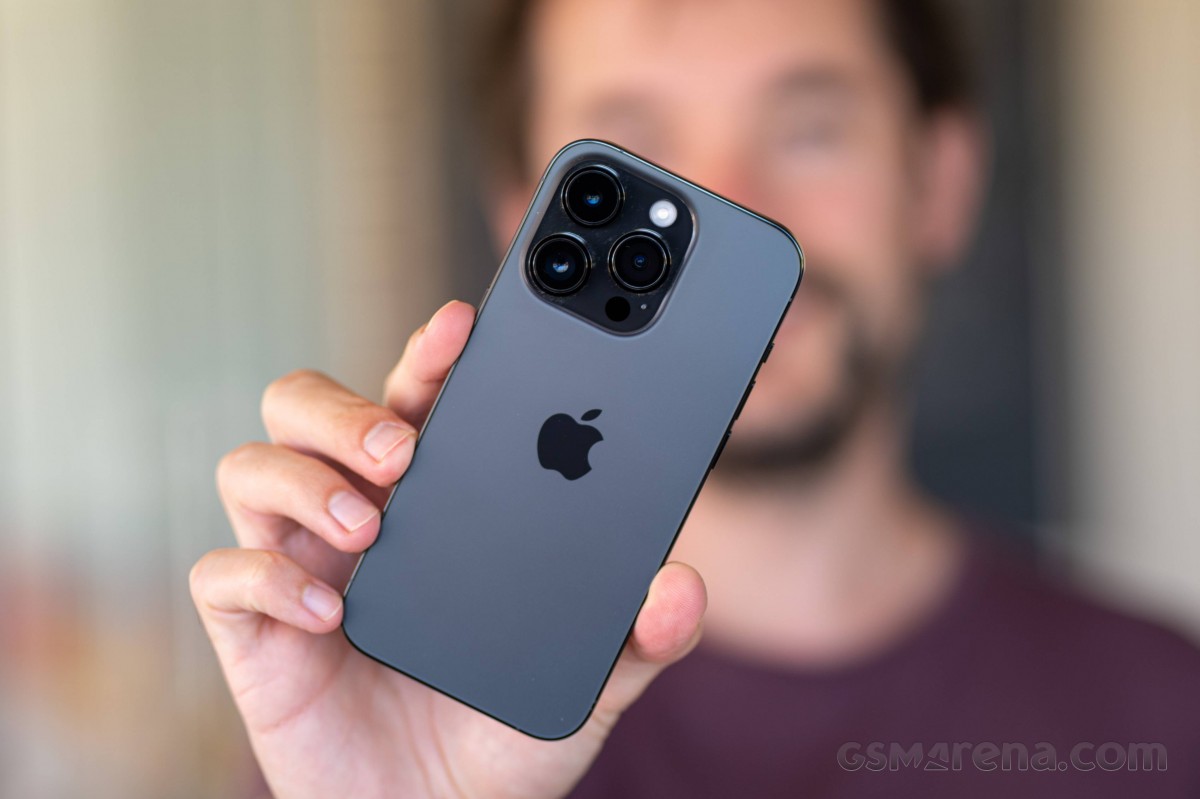
Then come the cameras. The rear camera is still a triple-setup with a LiDAR scanner, but now the main shooter features a 48MP sensor with second-gen sensor-shift stabilization and a 2x lossless zoom option. The 12MP ultrawide camera got a new larger sensor and improved lens. Then there is the front camera, which now has a brighter lens, autofocus and even optical stabilization. There is also a better image processing called Photonic Engine and a new 9-LED flash.
The Apple A16 Bionic chipset offers an even faster processor and graphics though it still features a similar 6-core CPU and 5-core GPU architecture. It does support LPDDR5 RAM now and has higher memory bandwidth. Finally, a new ISP and DSP are present, of course.
Another new introduction as part of the new hardware is the Emergency SOS via satellite – a feature that allows you to send a message to emergency services wherever you are around the world – no need for SIM or network coverage. And thanks to a bunch of new sensors, the new iPhones now support Crash Detection and can automatically send for help if they detect you were in a crash.
This is the first iPhone series to come without a SIM slot in the US, which means the trial run for the SIM slot retirement has officially begun – at least as far as Apple is concerned. If successful, like it was with the nano-SIM, get ready for a smartphone world without SIM cards in a few years.
What hasn’t changed is the design – it’s the same as on the iPhone 12 and 13 series, and just as tough with Ceramic Shields and improved IP68 ingress protection. Battery and charging capabilities have also stayed unchanged.
Disclaimer. We can not guarantee that the information on this page is 100% correct.
So, what’s missing on the new iPhone 14 Pro? A proper file manager! Just kidding, this ain’t happening. It seems Apple has addressed many of the omissions from the past generations, and we have the best iPhone ever. Until USB-C-featuring iPhone 15 comes, that is.
Unboxing the Apple iPhone 14 Pro
The thin paper box contains the iPhone and a USB-C-to-Lighting cable. We were disappointed Apple didn’t retire the Lightning port on the iPhones this year, as it already did on its other devices. We guess that’s a task for the next one.
Other than the cable, you will get a SIM ejection tool for models with a SIM slot and one Apple logo sticker. While Apple has ditched the plastic wrapping from the boxes, the plastic sticker remains.
Alternative options
The new iPhone 14 Pro has a lot of upgrades over the iPhone 13 Pro, even if only a single one is visible at first sight – the Dynamic Island. There are new cameras, a new chipset, a new satellite connection and crash detection, and higher brightness for the screen, plus an always-on display option. But even with these novelties, upgrading from an iPhone 13 Pro to the 14 Pro makes little sense.
In fact, Apple has never been a company that wants you to upgrade every year and the 5-year software support plus the aggressive battery care are both statements for that. People still do that more often than not, of course, and if you’ve set your eyes on the new iPhone, be it this one, or another, there is nothing that will change your mind.
The new iPhones have seen a price increase everywhere but the US, which will surely lift a few eyebrows. This is the world we live in right now, with inflation and an ongoing war raging in Europe, unfortunately.
We still have to conclude this review like any other, and we will certainly do it. So, let’s suggest a few iPhones you can buy if this €1,300 iPhone 14 Pro is not your love at first sight.
The iPhone 14 Pro Max is a good alternative with a larger display and better battery life. It starts at €1450, which is hefty premium.
Smaller and lightweight iPhones are available, too. We certainly won’t suggest the new iPhone 14 unless you want the satellite feature, as it is the most insignificant update the iPhones have ever seen. Apple is selling both the €900 iPhone 13, the €800 iPhone 13 mini, and the €800 iPhone 12, so we’d suggest thinking about those if you want a light and compact iPhone and don’t mind not having a zoom camera or a 120Hz display.
The Android market is thriving, too, and you can now both have compact yet flagship smartphones. Samsung has the €700 Galaxy S22 and the foldable €900 Galaxy Z Flip4, a couple we encourage exploring. The €800 Asus Zenfone 9 will give you an all-around flagship package within an incredibly compact body. And you may want to consider the €1,050 Sony Xperia 5 IV for its superb camera kit and natural processing.
Our verdict
The Apple iPhone 14 Pro is the best iPhone Apple has made so far, as the maker just loves to point out. And it is – it has the best screen, cameras, performance, speakers and durability not only among the iPhones but across all flagship smartphones.
It introduces more than enough upgrades over the previous generation to make it interesting – an improved OLED with higher brightness, a smaller cutout with cool animations, and always-on option. The cameras have been updated all around, but the primary with its 48MP sensor and 2x lossless zoom is the showstopper, of course.
The new generation comes with interesting additions like global satellite connection for emergency and crash detection with automatic emergency call. The new faster chipset with improved stability is also worth mentioning.
Even with so many updates, the iPhone 14 Pro looks like the old iPhones, and if it weren’t for the new Deep Purple color and the pill-shaped cutout, you wouldn’t even know. And this design stasis may not be everyone’s favorite, even if this design is a self-proclaimed toughest in the world.
And it’s an iPhone, so not having a top-notch battery life and full OS access is something you choose to accept and live with for the foreseeable future.
Expensive or not, you will love the iPhone because it’s as good as advertised. The iPhone 14 Pro does make little sense as an upgrade over the 13 Pro, the 12 Pro even. But who are we to judge. The heart wants what it wants, right? And that’s the new iPhone. So, you should probably go and get it.
Pros
Class-leading design, water resistance and durability.