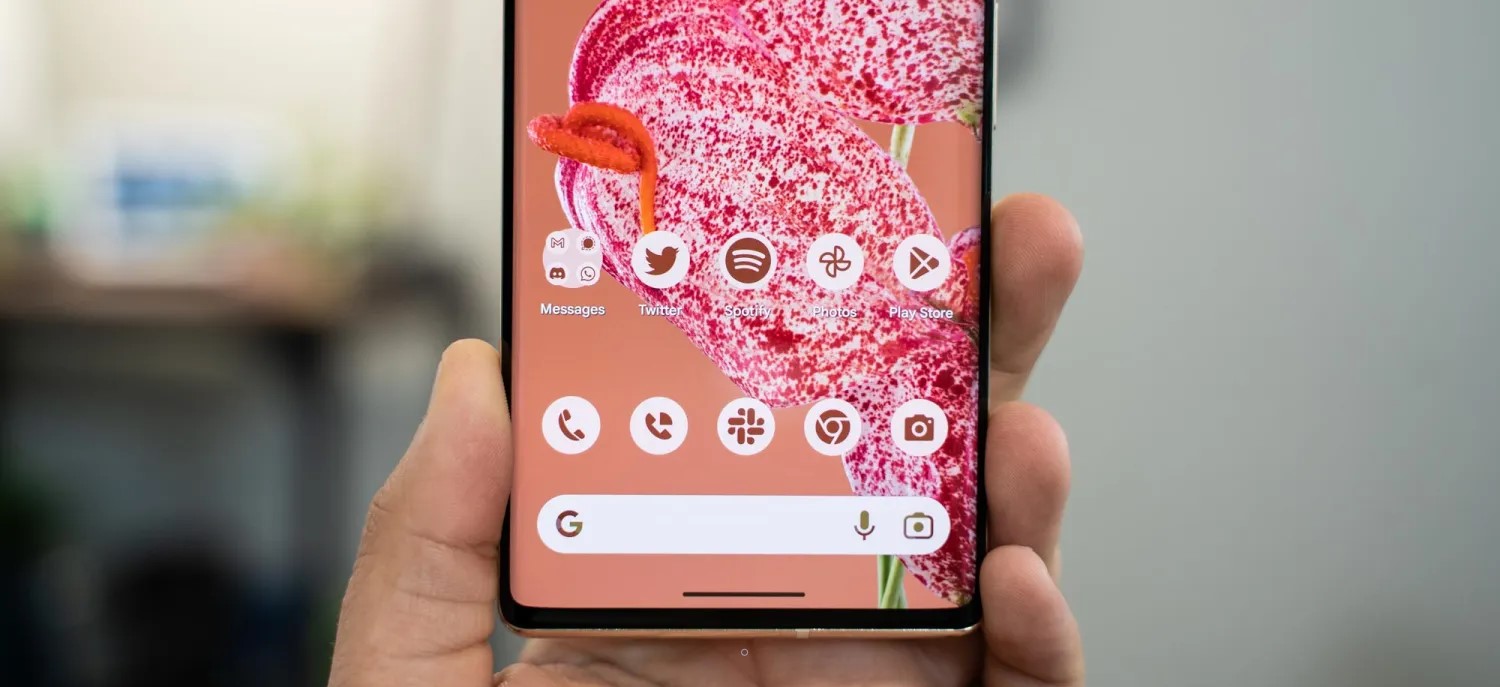
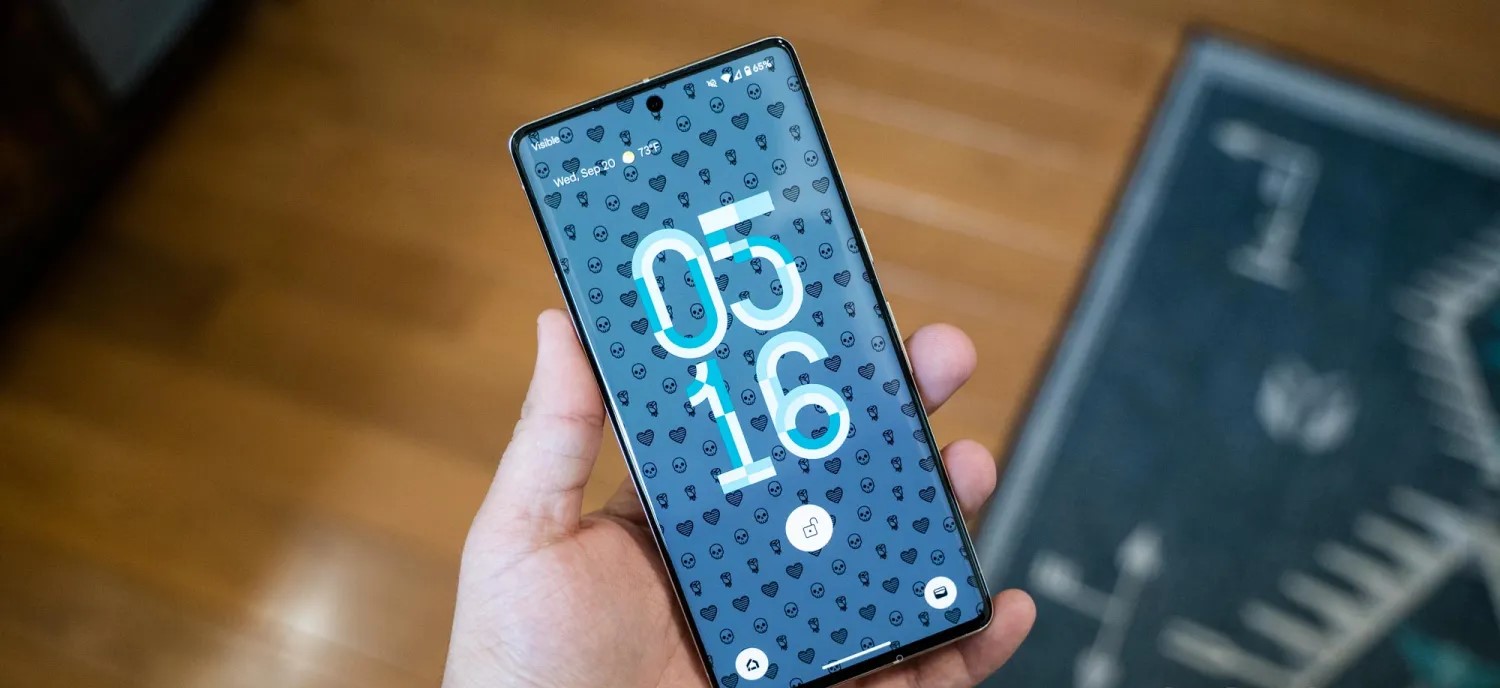
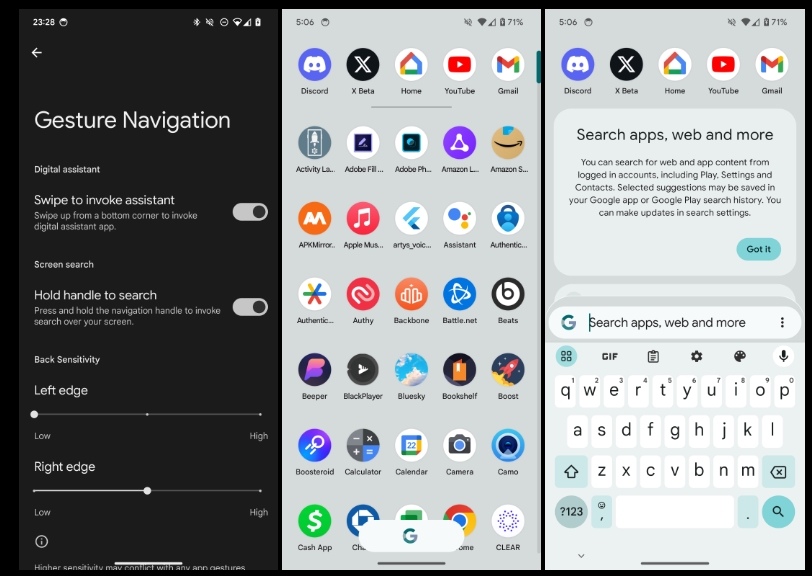
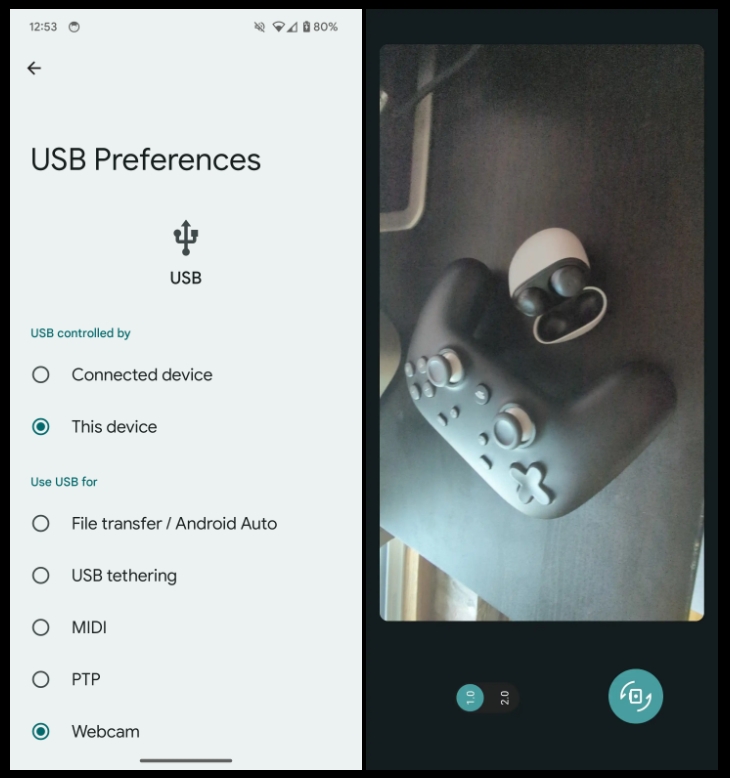
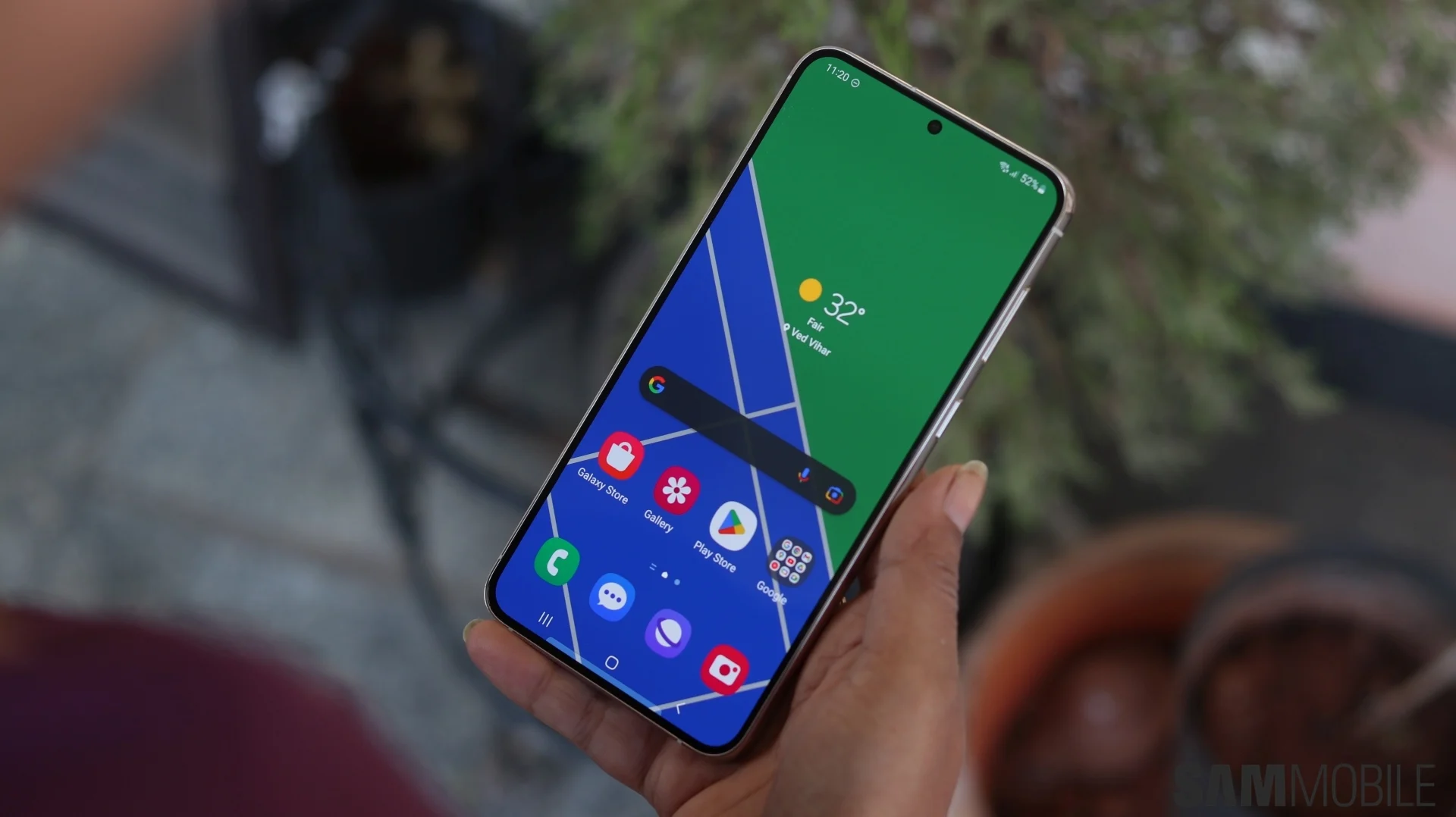
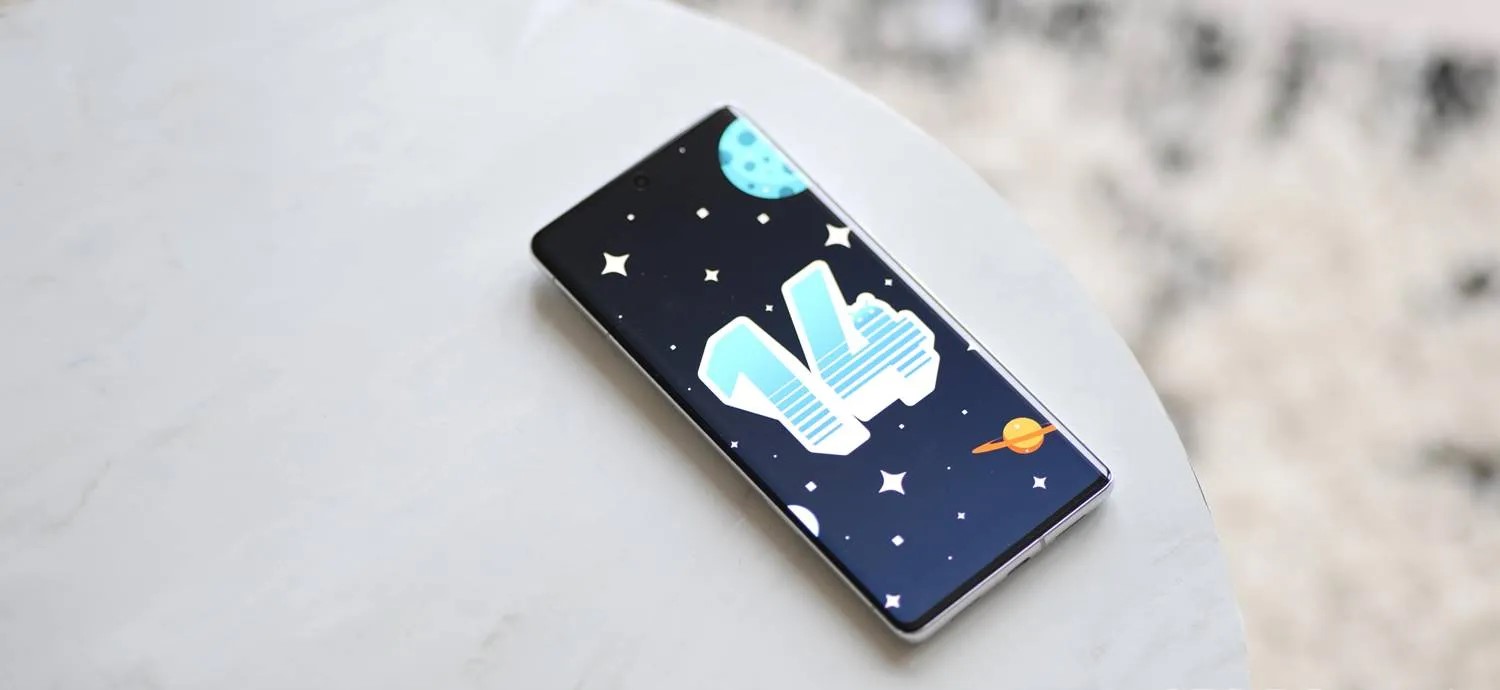
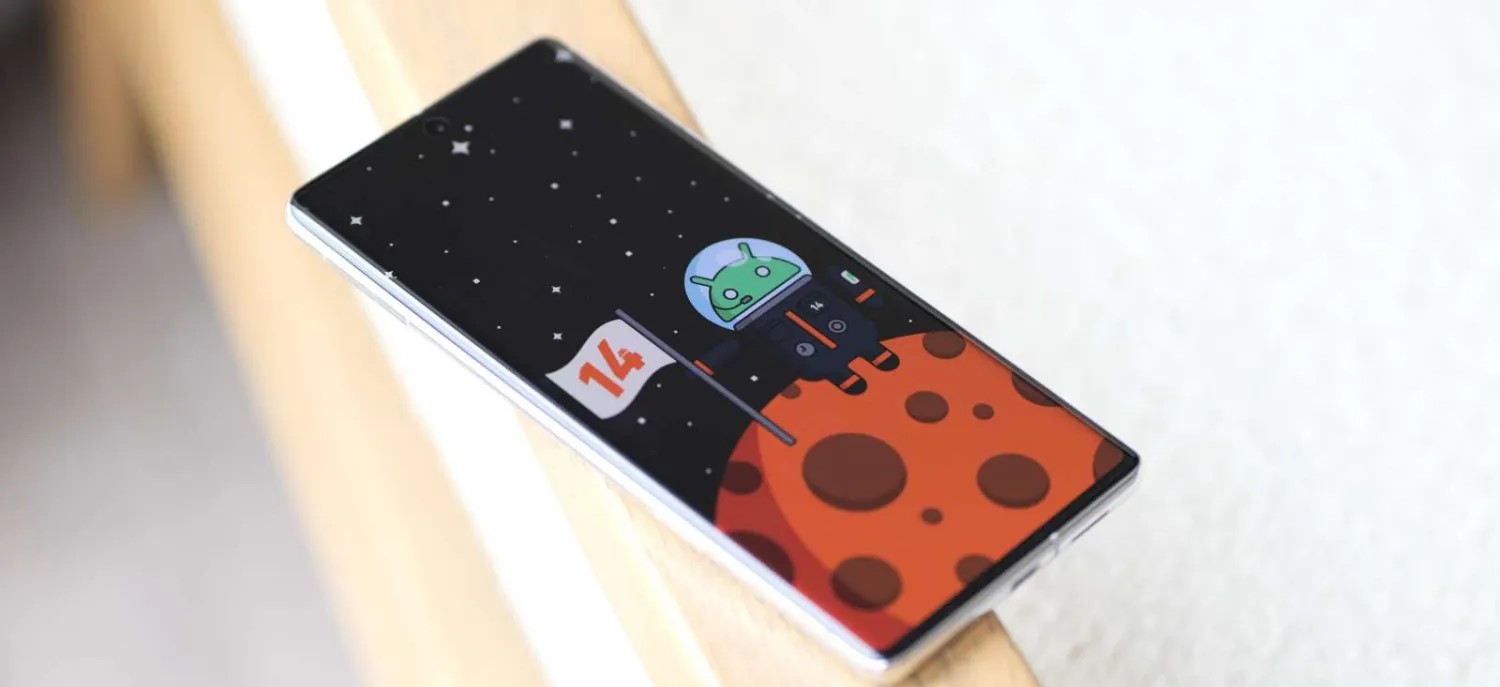
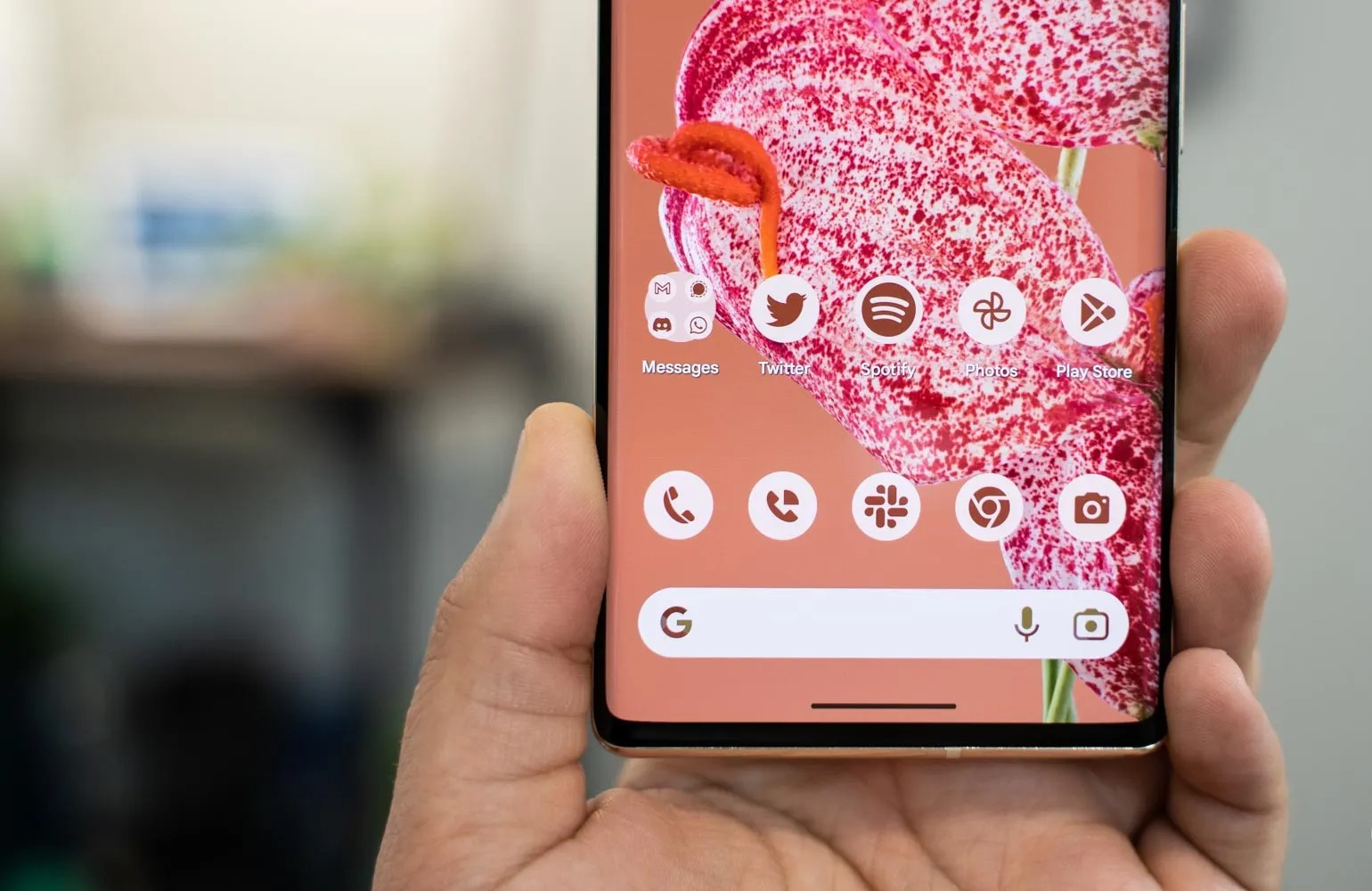
With Android 14, Google removed the ability to long press an icon on the homescreen to quickly see notifications from that app.
Previously, you’d be able to see any available notifications from an app by holding down on the icon in the launcher or grid. Only one was shown in its entirety with a counter in the corner if there were more. Besides opening it from there, you could also swipe it away.
This was useful if your notification tray was overflowing with alerts, while it went hand-in-hand with the notification dot, which continues to feel like an iOS trait more than an Android one.
In Android 14, long pressing on an icon just shows app shortcuts, as well as App info, Pause app, and Widgets. In fact, now that notifications no longer appear there, Google made it so that those three shortcuts appear as a full list at the top instead of being merged together. The Android team presumably decided to remove notifications and then introduced the tall list.
Android 13 vs. 14
This change was brought up during the Android 14 Beta Program over the summer. In August 2023, Google said the removal of notifications was the new intended behavior and that it “won’t fix.” There’s no reason behind this change, but the company presumably has usage stats.
With the stable launch of Android 14 on Pixel last month, there have been over a hundred new comments requesting the capability be brought back.
Personally, I didn’t notice the removal and have never used that app menu for anything beyond shortcuts and quick access to the App info page. Most users are presumably all in on the notification tray. However, Google does not seem to really be doing anything major with the app long press menu in Android 14, so the restoration of notifications doesn’t seem like it would be overly disruptive.
There are 34 bug fixes in U1B2.230922.013, which is still on the October 2023 security patch. This release is available for all devices out of the gate, with the on-device Android 14 QPR1 Beta 2.2 OTA coming in at 40.35 MB on a Pixel Fold.
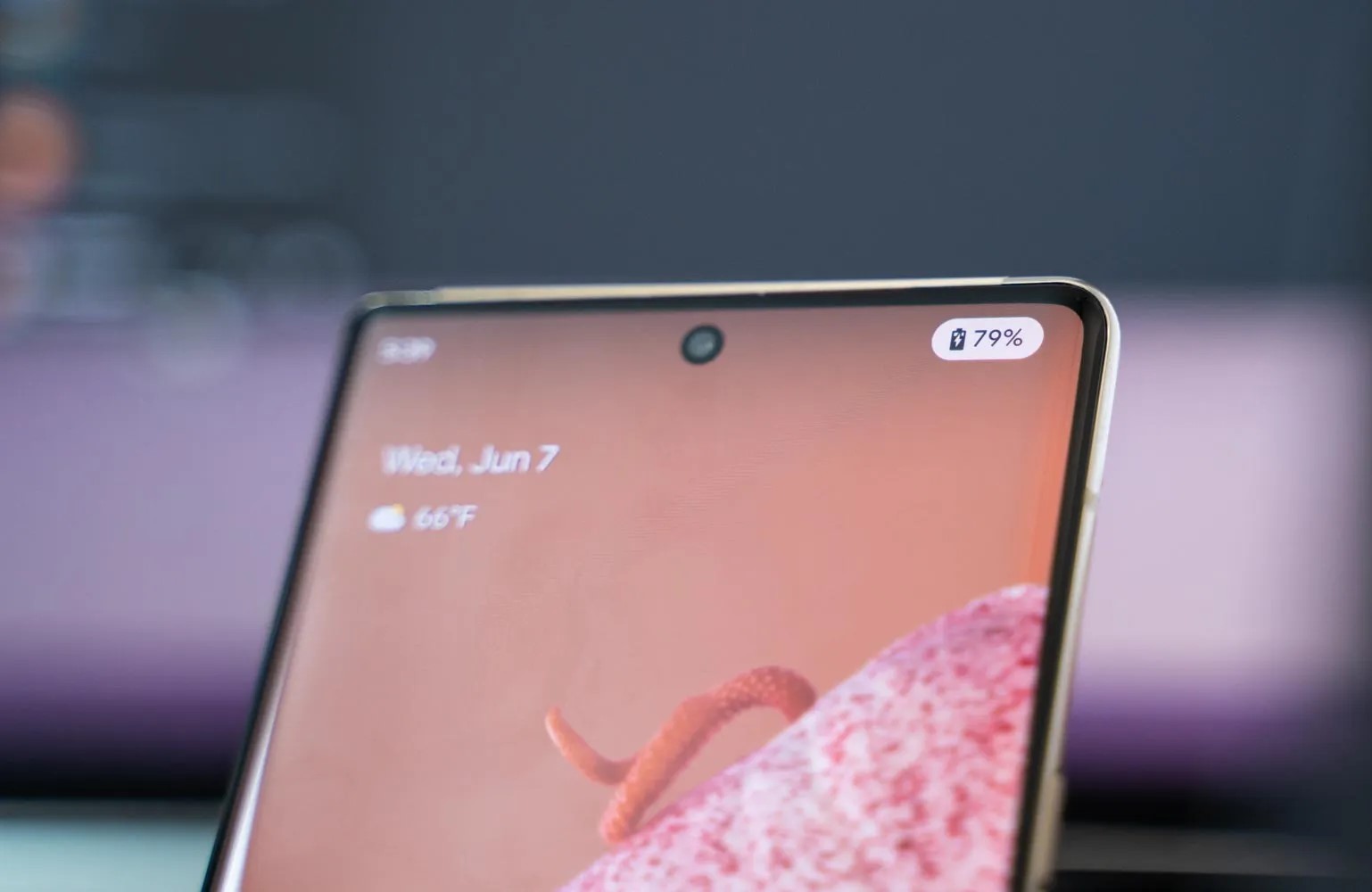
There’s a fix for the pink text issue on the Pixel 8 Pro AOD.
Fixed an issue that sometimes prevented devices from receiving calls. (Issue #298747690)
Fixed an issue where tapping or long-pressing a Quick Settings tile sometimes failed to launch the corresponding app or settings menu. (Issue #302147272)
Fixed an issue that sometimes caused the Settings app to crash when checking for system software updates. (Issue #303739210)
Fixed an issue that sometimes caused the Camera HAL to apply the wrong tuning profile when an app requested a certain camera mode.
Fixed an issue that sometimes caused the system UI or device to crash if accessibility magnification mode was toggled rapidly.
Fixed an issue that sometimes caused the package installer to crash due to a null pointer exception.
Fixed an issue that sometimes caused the system launcher to crash due to a null pointer exception.
Fixed an issue that interfered with Bluetooth and Wi-Fi connectivity until the device was rebooted.
Fixed issues with Face Unlock reliability.
Fixed an issue that sometimes caused the device unlock animation to stutter.
Fixed an issue that sometimes caused the screen to flicker when transitioning from always-on display mode to the lock screen.
Fixed an issue that caused the animation to display incorrectly when a user gestured to open the notification shade.
Fixed an issue that sometimes caused the system UI to crash or consume more memory than necessary.
Fixed an issue that caused the picture-in-picture window to stop displaying with rounded corners after locking and unlocking the device.
Fixed an issue that sometimes caused device-to-device transfer data to be saved to an incorrect account.
Fixed an issue that caused some UI elements to render incorrectly when the device font scale was increased.
Fixed an issue that sometimes caused the work profile badge for an app icon to be displayed in the wrong place while viewing the list of recent apps.
Fixed an issue that caused some text to display in the wrong colors when always-on display features were enabled.
Fixed issues that sometimes caused a device to crash and reboot.
Fixed an issue where additional power was still being consumed by mobile network connectivity even after a device connected to Wi-Fi.
Fixed an issue where audio failed to play back or was interrupted if Adaptive Sound was enabled.
Fixed issues with audio playback when using spatial audio.
Fixed an issue that sometimes caused Wi-Fi service to be interrupted and fail to connect until the device was restarted.
Fixed an issue where the battery level in the status bar sometimes displayed temporarily as 0%.
Fixed an issue for Pixel Fold and Pixel Tablet devices where the “All Apps” button on the taskbar was slow to appear immediately after launching an app.
Fixed an issue for Pixel Fold devices where the lock screen was sometimes still displayed if the device was unlocked and unfolded at the same time.
Fixed an issue for Pixel Tablet devices where a primary user’s live wallpaper selection would sometimes be overridden after a secondary user selected a different live wallpaper.
Fixed an issue for Pixel Tablet devices that caused an unsmooth animation when tapping to return to an app from the list of recent apps.
Fixed an issue for Pixel Tablet devices that caused audio to pop when adjusting the volume if a wired headset was connected.
Fixed an issue for Pixel Tablet where a user was returned to the Home screen instead of the app that was open when the device was locked if they unlocked the device using their fingerprint while a screen saver was active.
Fixed an issue that caused memory corruption in rare cases.
Fixed various issues that were impacting system stability, performance, and connectivity.
Most will install via the Android Beta Program, but you can also flash or sideload. If you need help, here’s our full guide on installing Android 14. Google says:
Your device will be automatically updated to Android 14 QPR1 Beta 2.2 within 5 days.
Exactly two weeks after the previous release, Android 14 QPR1 Beta 2.1 is rolling out today with a handful of bug fixes, but the Pixel 8 and 8 Pro aren’t getting updated right away.
There are just three fixes for Pixel devices, which are getting U1B2.230922.010 today with the October 2023 security patch:
Fixed issues with biometric authentication, such as an issue that sometimes prevented the under-display fingerprint sensor from activating while always-on display features were enabled.
Fixed an issue where, in some cases after swapping SIM cards on a device, the device couldn’t connect to cellular service.
Fixed various issues that were impacting system stability and performance.
Google says the “Pixel 8 and 8 Pro will receive this update at a later time.” The initial Beta 2 update rolled out a week ago.
The OTA and factory images are now available, while the on-device OTA is also rolling out immediately (66MB on the Pixel Fold and 7 Pro).
Google wants every Android version to be ‘higher quality than the previous release’
Dave Burke, VP of Engineering for Android, was interviewed during The Android Show today and shared a lot of interesting tidbits, especially around quality and performance.
In the context of Android releases, Burke considers quality the “number one feature” given how much we use our phones:
If you think about how much we depend on our devices and how much we use them [in] a day, it’s just really important that the device runs really, really well. Really, really reliably. The highest performance, highest fidelity.
The Android team has a “pledge” internally to “ensure that every release was higher quality than the previous release by a set of expanding metrics that we measure in the lab and in the field.”
We’ve been holding ourselves to that. It’s difficult, I can tell you, because you’re only as good as the weakest metric. So you’ve got to chase everything down, but it’s really causing us to force the bar higher and higher.
Burke described one way the team is doing that:
Even internally, we’re looking at actually changing some of our developer practices in 2024 where rather than sort of go[ing] off for a year and work[ing] on a release for a very long time, we break that up into chunks internally so that we sort of keep the branch green as we go.
From the description we have today, this just seems to be an internal change rather than anything that would impact the yearly cycle.
On Android 14, Burke highlighted expression (gen AI wallpapers, lockscreen clocks, and shortcuts) and performance as the big tentpoles. Burke said the team “may not have talked enough” about performance. (Frankly, Google should have discussed it on-stage at I/O in May.)
We’ve done a ton of work to reduce CPU activity of background apps, and the result is that there’s 30% less cold starts now on Android 14. Cold starts are when you have to literally read the code pages off the flash and read them into memory before you execute them. A 30% reduction is pretty dramatic, and you feel that as a user.
This involved increasing the number of cached processes, but doing so risks increased CPU usage and, therefore, battery drain. Android 14 does a better job of properly freezing the processes.
Burke also mentioned how large-screen-related work, like the transient taskbar, was originally part of Android 14 but moved up into Android 13 (QPR2) as Google worked to be more competitive in the space and to support foldables.
Google’s first preview of Android 14 QPR1 is now available and we are diving into the Beta 1 release to find what new features have been introduced.
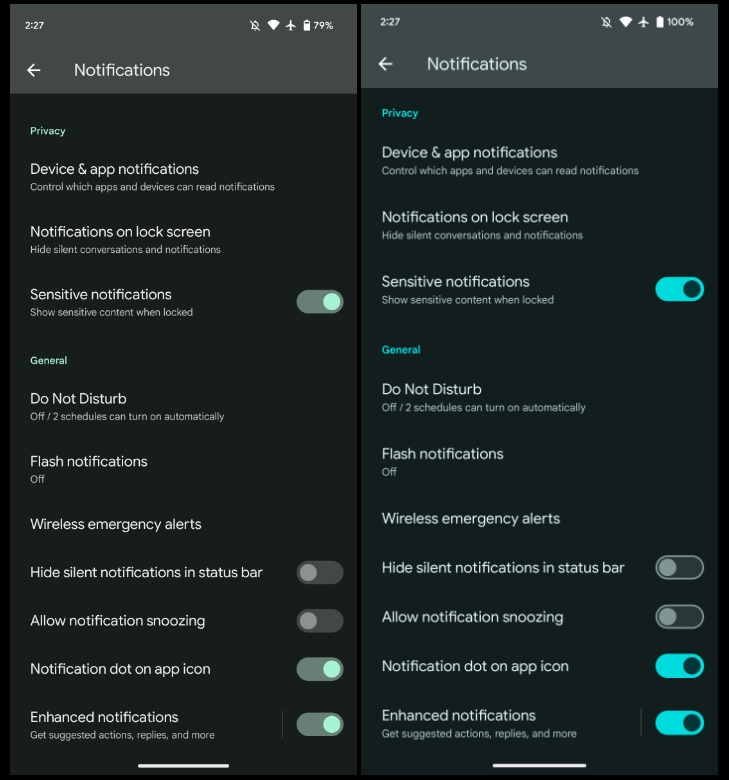
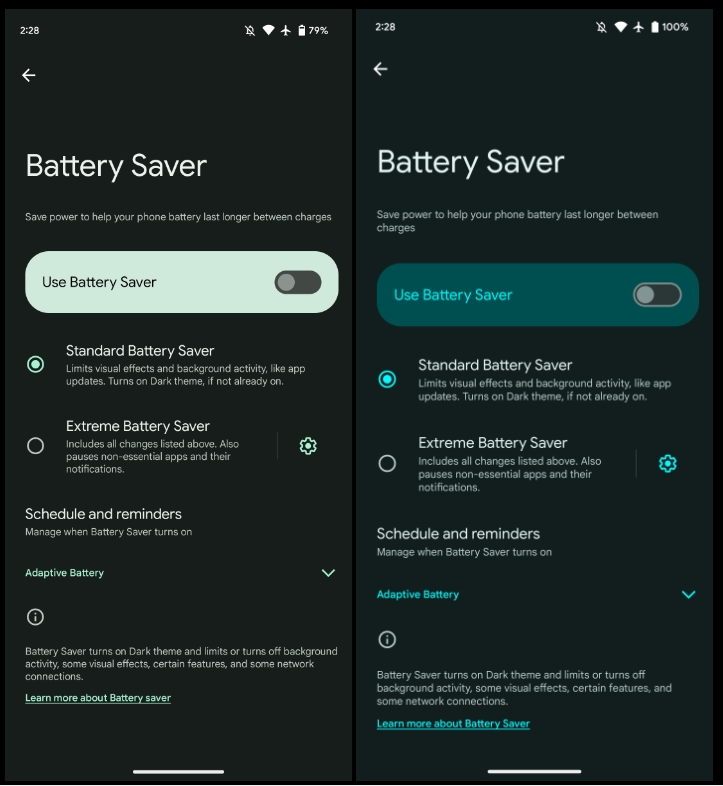
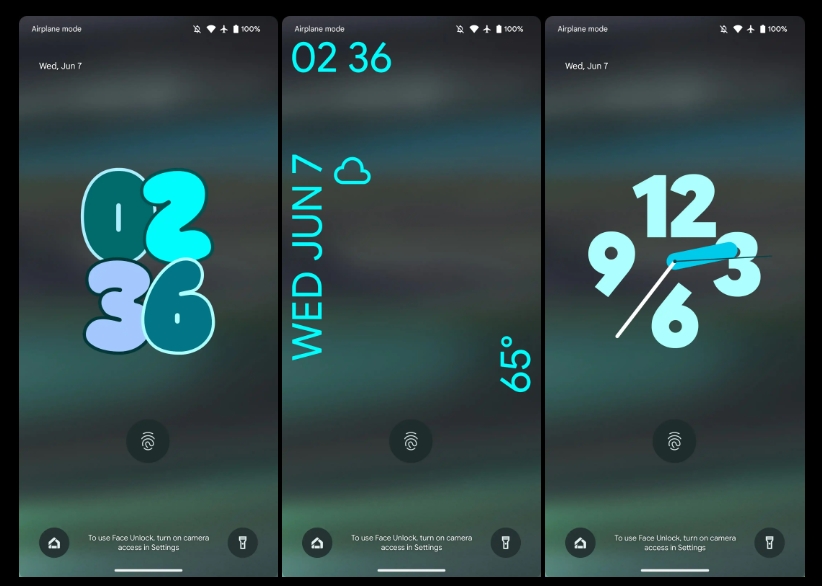
Over the coming hours, we’ll dive into all of Android 14 QPR1 Beta 1’s new features and every single change. (The newest updates will be at the top of this list. Be sure to check back often and tell us what you find in the comments below.) Android 14 Beta 5.3 screenshots appear on the left and QPR1 Beta 1 at the right.
Google should release two more betas before the Pixel launch in December. If you want to quickly install the Android 14 QPR1 Beta 1 on your compatible Pixel 5a, Pixel 6, Pixel 6 Pro, Pixel 6a, Pixel 7, Pixel 7 Pro, Pixel 7a, Pixel Tablet, and Pixel Fold.
Audio Device Type in Bluetooth settings
Toast message on Screen saver
On Android 13, the “Fingerprint not recognized” message appears on the lockscreen. It shows up as a message bubble in 14 QPR1.
<string name=”repair_mode_summary”>Secure environment for device repair</string>
More distinctive Quick Settings background
New particle effect when changing wallpapers
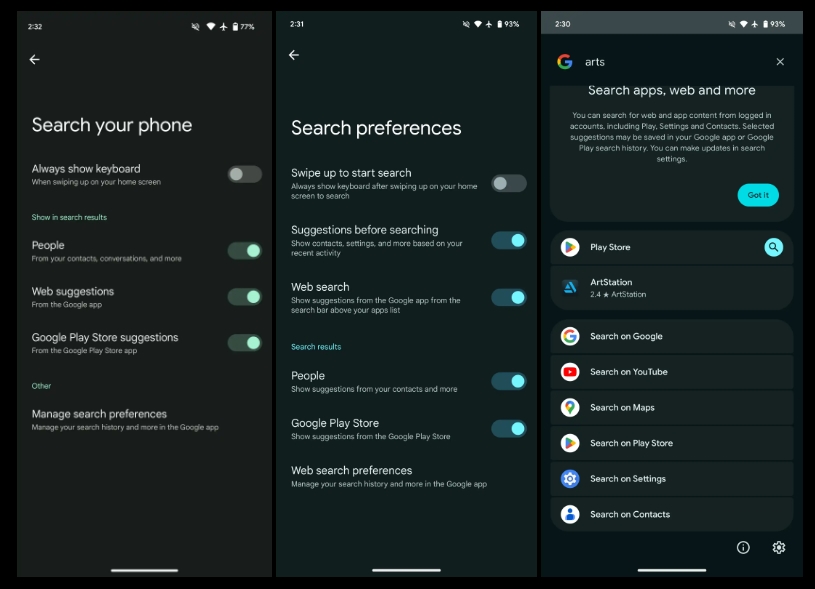
Pixel Launcher Search preferences
Tweaked settings toggles
New “Suggestions before searching” preference
Shortcut to settings at the bottom of Pixel Launcher search
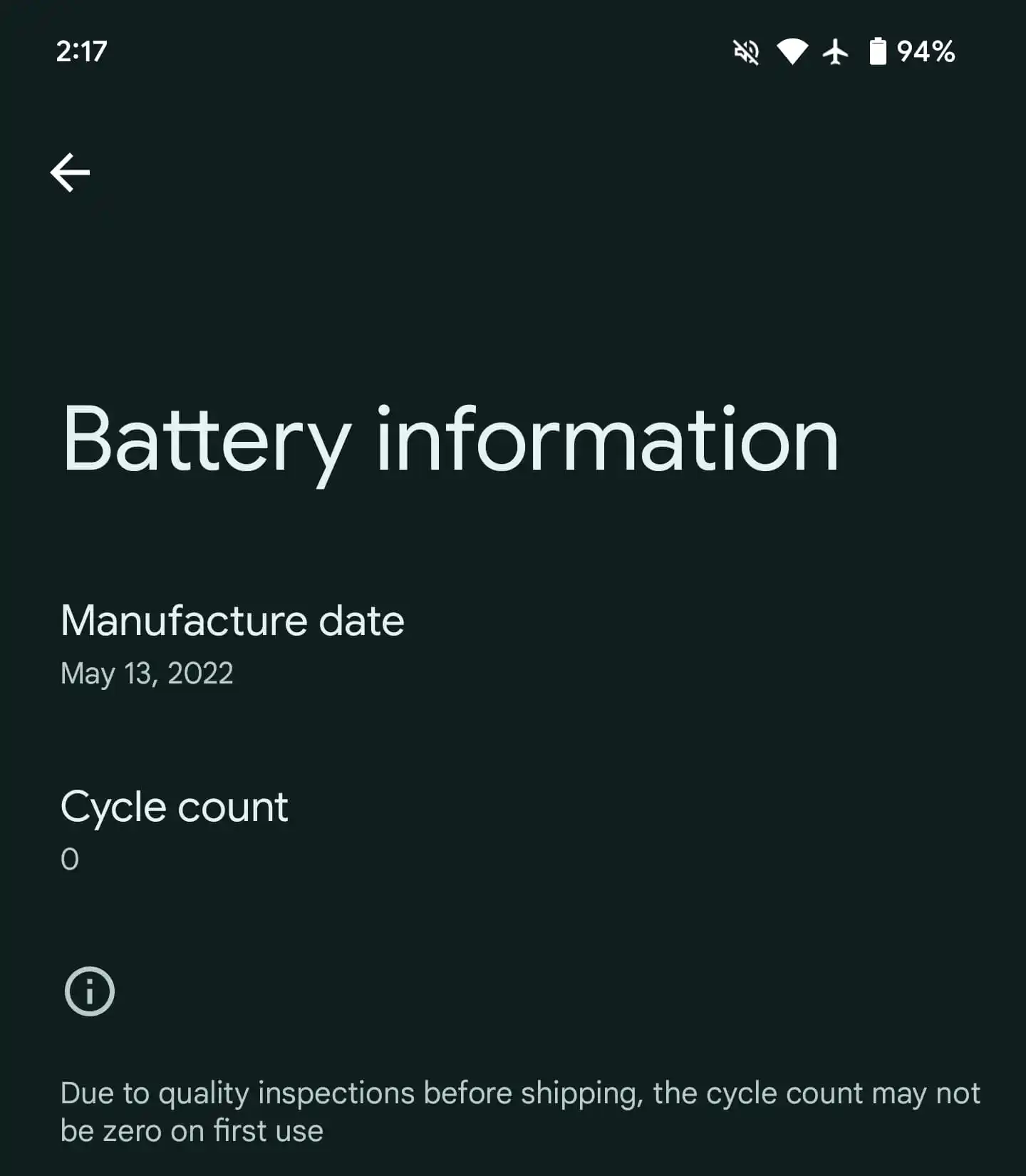
Settings > About phone > Battery information
New Metro clock
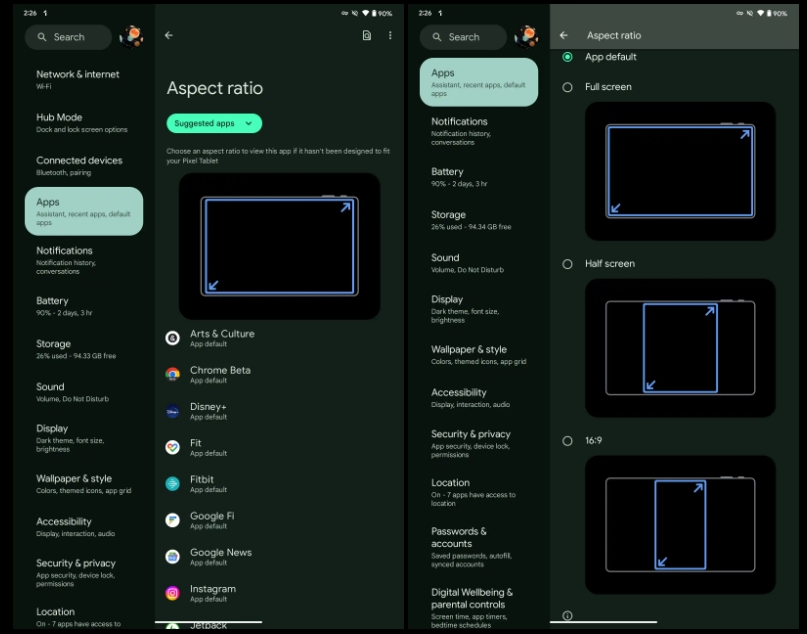
Large screen user per-app overrides
Settings > Apps > Aspect ratio
Options include: App default, Full screen, Half screen, 16:9
“Device original equipment manufacturers (OEMs) apply overrides to selected apps on specific large screen devices. Android 14 QPR1 introduces user overrides, which enable users to apply overrides to apps through device settings.”
Google introduced support for an app taskbar along the bottom of the screen for big-screen Android devices not long ago, but the feature has already changed with time to only show part of the time. With Android 14, Google seems to be preparing a tweak to the taskbar that lets it appear constantly.
When the taskbar first debuted in Android 12L, it was designed effectively as a larger version of the existing navigation bar. Directly above that area, you’d get a list of apps that you could instantly switch between or open in multitasking. You could then hide the taskbar by long-pressing the navigation bar.
But, with Android 13, Google tweaked this to a “transient” design that hides the taskbar when it’s not actively being used. This is virtually identical to the iPad’s taskbar, which is probably why Google made the change. It works well enough, but it’s not as powerful for quickly switching between apps.
In Android 14, though, this may change. Android Police cites a flag in the latest Android 14 beta labeled “ENABLE_TASKBAR_PINNING.” Further context around the flag reveals that it will allow users to choose between the transient or persistent taskbar. The change can be made by long-pressing an empty space on the taskbar itself, as shown in the video below.
Notably, Samsung currently defaults to the “persistent” taskbar design with no transient option, but it will certainly be nice to have the choice.
Currently, this option isn’t available to end users, but there’s a good chance it may arrive before Android 14’s final release – there are still a couple more betas to go. The next release is expected pretty soon.
Samsung’s first Android 14 beta could launch in late July
Google is pushing along with Android 14 for Pixel phones, with the third beta out. But, soon, Samsung might join in on the fun, with a new report claiming the company’s first Android 14 beta could arrive in late July.
Samsung has been opening public beta programs for new Android versions for the past few years, with customers able to get in on the latest version of One UI a few months ahead of the formal launch. And, each year, it’s been happening earlier and earlier.
According to the folks over at SamMobile, we can expect the first Android 14 beta with One UI 6.0 from Samsung sometime next month. Specifically, the outlet claims, in the third week of July. That’d put the release sometime between July 17 and July 21.
That’s a couple of weeks ahead of last year, with the Android 13/One UI 5.0 beta from Samsung having opened on August 5, with an official announcement a day later. It was also just days ahead of the launch of the Galaxy Z Fold 4 and Flip 4. And, not so ironically, the same thing is happening this time around. The Galaxy Z Fold 5 and Flip 5 are confirmed to be coming at an event during the last week of July, apparently on July 27.
We still don’t know much about Samsung’s take on Android 14, but an app update teased new colors for the company’s version of Material You, and Samsung previously confirmed it was working with Google to improve how One UI handles background apps with this update. The update will likely be made available first to the Galaxy S23 series.
How to install the Android 14 Beta on Google Pixel
After a few early developer previews, the Android 14 Beta program has officially arrived. Here’s how to get Android 14 on your Google Pixel smartphone.
What Pixel devices can install the Android 14 Beta?
Android 14 will drop another set of Pixel smartphones out of active support, but several will still be eligible. The following Pixel smartphones will be eligible for the Android 14 Beta program.
Pixel 4a 5G
Pixel 5
Pixel 5a
Pixel 6
Pixel 6 Pro
Pixel 6a
Pixel 7
Pixel 7 Pro
What’s the latest Android 14 Beta build?
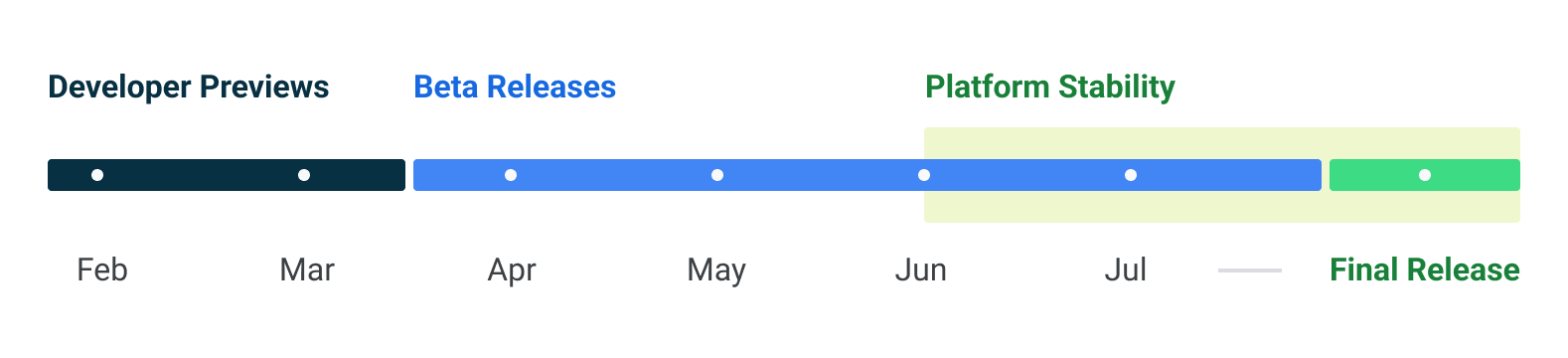
As of June 7, 2023, Google has just opened the third beta release of Android 14. Google has scheduled a total of five beta releases through May, June, and July, with the final release likely to arrive in August.
Beta 1 (April): Initial beta-quality release, over-the-air update to early adopters who enroll in Android Beta.
Beta 2 (May): Incremental Beta-quality release.
Beta 3 (June): First Platform Stability milestone, including final APIs and behaviors. Play publishing also opens.
Beta 4 (July): Near-final builds for final testing.
Beta 5 (July): Near-final builds for final testing.
Final release: Android 14 release to AOSP and ecosystem.
This adds one additional beta compared to Android 13’s release schedule, which only had four beta releases.
Notably, some users have noticed that the first two beta releases of Android 14 have been a bit more erratic compared to previous years. We’d certainly advise caution if you plan to try the beta on a daily device. As usual, proceed at your own risk.
How to get Android 14 with the Android Beta Program
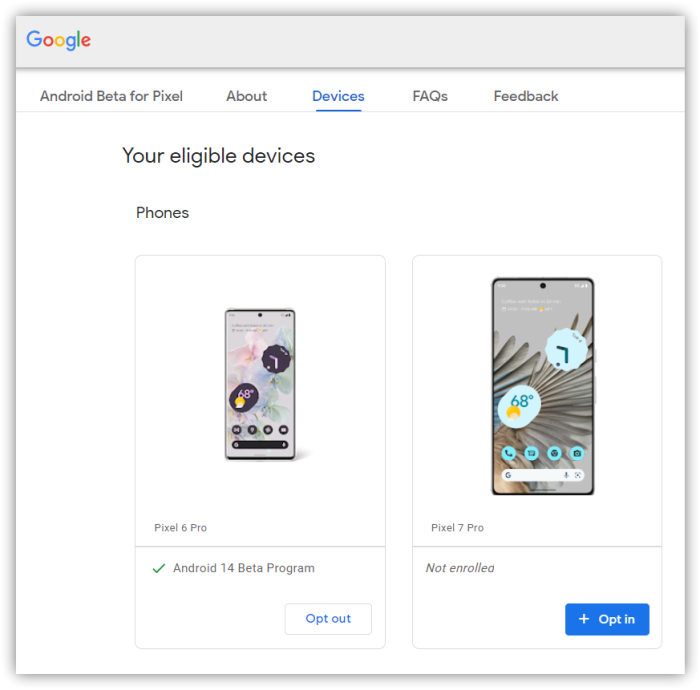
The easiest way to get Android 14 on your Google Pixel device today is through the Android Beta Program.
This automated program allows you to “opt-in” to Android beta updates and install them as you would a normal system update. There’s no computer or fancy tools required, and you can roll back to Android 13 any time you’d like by simply opting out.
Notably, for Beta 3, this is the easiest way to currently get in on the update. Google has not yet released files for sideloading (the process described below), but it has released the beta through the Android Beta Program. If you go into settings and manually check for updates, it should appear quickly.
How to sideload Android 14 Beta on Google Pixel
By far, the fastest way to get a new version of Android on your Pixel is to sideload it. It’s a relatively easy process, but you’ll need to get set up to do it. Here’s how.
Download the needed files.
Boot into Recovery mode.
Navigate to ADB sideload.
Connect the handset to a computer with ADB tools installed.
Enter the sideload command.
Reboot your phone.
1. Download Android 14 Beta files
To get started, you’ll first need to download the files needed to actually put the Android 14 Beta on your Pixel. There are two ways to do so. First, you can install a Factory Image, which wipes your phone and starts everything from scratch. Alternatively, and the way we’ll detail here, there’s an OTA file, which installs over your current version of Android without wiping your phone.
You can download the beta OTA file from Google’s Full OTA Image hosting site. That site contains OTA downloads for sideloading different updates, including the Android 14 Beta, on every Pixel and Nexus device, so you’ll need to scroll down to ensure you are downloading the file that associates with your device. OTA downloads are available here.
For the Android 14 Beta, only Pixel 4a 5G, Pixel 5a, Pixel 5, and Pixel 6/Pro are available.
You won’t be able to install it on the original Pixel/XL, Pixel 2/XL, Pixel 3/XL, Pixel 3a/XL, Pixel 4/XL, or Pixel 4a.
Note: This process (using OTA) won’t wipe your device, but it’s good practice to back up any irreplaceable data in case something goes wrong.
2. Boot into Recovery mode
Next, you’ll boot your Pixel into Recovery mode. To do this, fully power down your handset. Then hold down on the Power button and the Volume down button at the same time until you get to the Bootloader page. You will know you’re in the right place when you see an Android figure lying down on the screen.
Using your volume buttons, scroll down to Recovery mode. Select this by clicking the power button. Alternatively, if you’re already connected to a computer with ADB, you can use the reboot recovery command.
Now, you should see a smaller Android lying down with an exclamation mark over it. From here, press the Power button and the Volume up button for about a second to fully enter Recovery mode. Releasing the Volume up button will send you into Recovery.
3. Navigate to ADB sideload
Using the volume buttons, scroll down to Apply update from ADB and select it with the power button. This will launch a mostly blank screen with text near the bottom directing you on how to sideload an OTA, such as this one for the Android 12L Beta.
4. Connect the handset to a computer with ADB tools installed
This step is important as it’s the only way to transfer the downloaded OTA file to your handset. You’ll need to have ADB and Fastboot tools in a handy place. You can download ADB tools from the Android Developers website. You can also use the Universal ADB Drivers from ClockWorkMod, which can make the process a bit easier on Windows devices.
5. Enter the sideload command
As long as everything is in place, you can now sideload the OTA file. On Windows, ensure your Command Prompt is directed to the ADB tools folder and type in adb sideload. If you’re on macOS or Linux, do the same thing in Terminal (use “cd” and “ls” commands to make sure your Terminal is pointed at the right folder – Google it if you need help) but type in ./adb sideload. You’ll then need to insert the file name of the .zip folder you downloaded from Google and hit enter to start the process.
If everything is working properly, you should see some dialog on your computer and handset that shows the process of the sideload and installation process.
6. Reboot your phone
Once the OTA is done installing, you will be taken back to Recovery Mode. The last step to jump into the new update is to select the Reboot now option with your power button.
Android 14 preparing better stylus support that might help out the Pixel Tablet
Google’s Pixel Tablet is riding a wave of renewed interest in Android tablets, and, in Android 14, Google appears to be working on better stylus support.
There are a huge number of Android devices out there that support stylus input, but generally this is handled by each device maker. Android itself doesn’t really have particularly robust support. That may be changing in Android 14, though.
When you connect a stylus to your device on Android 14 and go to the "device details" page, you'll be able to see new stylus-specific settings: A shortcut to change the "default notes app" and a toggle to "ignore all stylus button presses." pic.twitter.com/dhg1tllxuR
As Mishaal Rahman highlights and demos in the image below, Google has a few key improvements in store. On the user-facing side, connecting a smart stylus to Android 14 now has new settings, including the ability to set a default app for notes, an option to ignore stylus button presses, and more.
Behind the scenes, Google has further improvements. It appears that Android is working to better support multiple buttons on a stylus, including “Primary,” “Secondary,” “Teriary,” and “Tail.” Interestingly, there’s a specific message about the “tail” button not generally corresponding “to the function of an eraser.” Rather, a message in Android mentions setting a default app for notes, which hints this button might be used for launching your notes app of choice.
Although the API diff isn't up yet, I spotted new key code constants in the KeyEvent documentation: KEYCODE_STYLUS_BUTTON_PRIMARY, KEYCODE_STYLUS_BUTTON_SECONDARY, KEYCODE_STYLUS_BUTTON_TERTIARY, and KEYCODE_STYLUS_BUTTON_TAIL.
These improvements sound welcome for stylus use, and it’s unfortunate they won’t be in place for the Pixel Tablet’s debut. While Google isn’t selling an official stylus, the Pixel Tablet does support USI 2.0 stylus options, so these added controls may end up benefitting the tablet in the long run.
Samsung’s first Android 14 beta could launch in late July
Google is pushing along with Android 14 for Pixel phones, with the third beta out. But, soon, Samsung might join in on the fun, with a new report claiming the company’s first Android 14 beta
could arrive in late July.
Samsung has been opening public beta programs for new Android versions for the past few years, with customers able to get in on the latest version of One UI a few months ahead of the formal launch. And, each year, it’s been happening earlier and earlier.
According to the folks over at SamMobile, we can expect the first Android 14 beta with One UI 6.0 from Samsung sometime next month. Specifically, the outlet claims, in the third week of July. That’d put the release sometime between July 17 and July 21.
That’s a couple of weeks ahead of last year, with the Android 13/One UI 5.0 beta from Samsung having opened on August 5, with an official announcement a day later. It was also just days ahead of the launch of the Galaxy Z Fold 4 and Flip 4. And, not so ironically, the same thing is happening this time around. The Galaxy Z Fold 5 and Flip 5 are confirmed to be coming at an event during the last week of July, apparently on July 27.
We still don’t know much about Samsung’s take on Android 14, but an app update teased new colors for the company’s version of Material You, and Samsung previously confirmed it was working with Google to improve how One UI handles background apps with this update. The update will likely be made available first to the Galaxy S23 series.
Galaxy S23 One UI 6 beta coming the 3rd week of July!
Samsung fans have been waiting patiently to get a taste of Android 14. Google released the developer beta of the next major iteration earlier this year. Since Samsung has its own beta program, users have to wait for the One UI 6.0 beta to arrive.
The company’s beta program may be beginning sooner rather than later this year. We hear that the One UI 6.0 beta for the Galaxy S23 series will start rolling out in the 3rd week of July. Other compatible devices will receive the beta soon thereafter.
Time to start counting down the days for the One UI 6.0 beta!
We reported a few days ago that it’s possible that the first One UI 6.0 beta update may be released as soon as the Android 14 betas achieve stability. With Android 14 Beta 3, the software has now reached Platform Stability level, meaning that Samsung can now go ahead and launch its beta program.
Based on what we hear, it’s likely that Samsung will release the first One UI 6.0 beta build for the Galaxy S23 series in the third week of July. The beta will gradually be rolled out for other devices as well. July is shaping up to be a busy month for Samsung as the company will also be unveiling its new foldable phones on July 27.
The One UI 6.0 beta launch in late July means that we’re definitely looking at a One UI 6.0 public release before the end of this year. If last year’s pace is any indication, Samsung may not make us wait more than a couple of months from the time the beta is rolled out to the final public release.
As always, we’ll dive deep into all the new changes as soon as we’re able to test the One UI 6.0 beta. Stay tuned!
Samsung app update teases incoming Android 14 beta and new Material You colors
Android 14 is still in development but chugging along on Pixel phones and select other devices. Behind the scenes, though, Samsung is also working up Android 14, which is expected to be called One UI 6.0, and a recent app update is giving some hints on the company’s progress.
As spotted by Tarun Vats on Twitter, an update to the Samsung Calculator directly offers some hints at Samsung’s work on Android 14.
Breaking News :: OneUI 6 Beta
We can expect OneUI 6 Public beta launch by June end or July starting as we got Major hint from Samsung as they starts upgrading their apps to support Android 14. Also OneUI 6 may bring new color Pallete 🥳🥳#OneUI6#GalaxyS23#GalaxyS23Ultrapic.twitter.com/bGIw8ciO6V
The update’s changelog, seemingly since removed from the Galaxy Store, mentions that the app now supports Android 14’s API level. The timing here suggests that Samsung’s earliest Android 14 releases may not be too far away, but there’s no indication on when at this point. One UI 5’s early betas launched in early August 2022.
The changelog also hints that Samsung’s take on Material You – Color Palette – will get at least one new option in One UI 6. It’s not clear what that option might be, but we previously reported that Android 14 would add a new “Fidelity” style that brings out bold colors. It could be that Samsung is adopting that style too.
Samsung has also confirmed, with Google, that its Android 14 builds will also focus on improving the handling of background apps, a long-standing problem with the company’s software.
Samsung commits to killing background apps less often with Android 14, One UI 6.0
One complaint that Android app developers (and end users) have are the differing “restrictions on foreground services and background work” across devices. Google is addressing background inconsistencies with Android 14 and will be getting buy-in from Samsung.
Right now, some OEMs are very aggressive about killing background apps to save battery life. This can lead to applications breaking and end users blaming developers for a poor experience. Said app devs are already following Android’s guidance, but working around each OEM restriction/inconsistency is not feasible or even possible.
Google’s goal starting with Android 14 is to “make it easier for developers to create apps that work consistently across different Android devices.”
Looking to solve these consistency challenges, we are announcing deeper partnerships with Android hardware manufacturers to help ensure APIs for background work are supported predictably and consistently across the ecosystem.
—GOOGLE
Samsung is described as the “first partner” today, with One UI 6.0 making it so that “foreground services of apps targeting Android 14 will be guaranteed to work as intended so long as they are developed according to Android’s new foreground service API policy.”
To strengthen the Android platform, our collaboration with Google has resulted in a unified policy that we expect will create a more consistent and reliable user experience for Galaxy users.
—SAMSUNG
With Android 14, Google (with DP1) announced a trio of changes:
“The new user-initiated data transfer job type, which makes the experience of managing large user-initiated uploads and downloads smoother by leveraging JobScheduler’s constraints (e.g. network constraints such as unmetered WiFi).”
“New Google Play policies to ensure appropriate use of foreground services and the user-initiated data transfer jobs.”
Developers are encouraged to send feedback (Issue Tracker) on the Android 14 APIs, as well as contribute CTS-D tests to “help catch consistency issues.”
Lastly, If you see behavior differences across Android devices, be sure to file a ticket using goo.gle/devicespecificissue to bring it to our attention.
Pixel phone Here’s everything new in Android 14 Beta 3
Android 14 Beta 3 for Pixel phones is now available after the last update four weeks ago was somewhat quiet.
We’re diving into all of Android 14 Beta 3’s new features and every single change. (The newest updates will be at the top of this list. Be sure to check back often and tell us what you find in the comments below.) Beta 2 screenshots appear on the left and Beta32 at the right.
Expect at least three more releases before the consumer launch later this year to Pixel phones. If you want to quickly install the Android 14 Beta 3 on your compatible Pixel 4a 5G, Pixel 5, Pixel 5a, Pixel 6, Pixel 6 Pro, Pixel 6a, Pixel 7, and Pixel 7 Pro be sure to check out our step-by-step guide.
For reference, here’s everything new in Android 14 Developer Preview 1, DP2, Beta 1, and Beta 2.
Tapping the time in Quick Settings opens the Google Clock Alarm tab
New charging indicator
More color in themed icons
Rounded buttons in screenshot preview
‘UpsideDownCake’ to Android 14
Gesture navigation tutorial
‘Touch’ to ‘Tap & click sounds’
More Material You toggles
Customizable lockscreen clocks and shortcuts
Chrome prototyping Android 14 Predictive Back support to show last page
Predictive Back will be one of the most apparent user-facing changes this fall. As work continues, Google at I/O 2023 shared how some developers, including Chrome, might adopt Predictive Back in Android 14.
Predictive Back shows a preview of the homescreen as you swipe away from the edge and the current app shrinks. According to a study Google conducted, back-to-home animations “significantly reduces users accidentally leaving apps and feels more premium.”
You can test it today in Android 13 (Settings app > System > Developer options > Predictive back animations). Google is set to enable it by default with Android 14, but it’s still optional as of Beta 2.
Android 14 adds in-app Predictive Back, where you can get a preview of what screen you’re returning to when navigating within an app. In addition to the cross-activity animation Calendar demo, Google provided “key moment” examples at I/O:
Reddit is experimenting with collapsing a post as you swipe back to the feed.
Chrome is “prototyping previewing the previous web page as [you] swipe back.”
To aid adoption, developers can now “opt in to predictive back system animations per-Activity instead of for the entire app.”
Meanwhile, Material components are also leveraging Predictive Back animations in:
Side Sheets (nav drawer): “Side sheet detaches from the top and bottom edges of the screen to signal it will close.”
Search: Fullscreen search page shrinks and snaps back into pill-shaped bar on previous screen.
Bottom Sheets: Sheet shrinks and drops down.
It’s also soon coming to the bottom navigation bar and nav rail.
Passkeys are coming up soon as a way of using your phone and its biometrics in place of traditional passwords, and Android 14 is set to bring native support for passkeys to apps, including Dashlane.
In a blog post today, Dashlane explained that it will add native support for passkeys in Android 14. The upcoming version of Android unlocks support for passkeys within third-party apps, meaning that Dashlane likely won’t be the only app picking up support when the update debuts later this year. 1Password also announced support for passkeys recently.
Mobile platforms such as Android and iOS will require changes to enable third-party applications such as Dashlane to manage passkeys. These are the very changes that have been included in this developer preview of Android 14. The user can simply create a passkey using their fingerprint instead of entering a password. The fingerprint ties the authentication action to the user of the device, which prevents anyone else from creating and using passkeys on this specific device.
In a tweet, Dashlane also showed what passkeys will look like in its app on Android 14, with a system prompt appearing similar to what we see with biometric authentication in Android today.
Support for passkeys in Dashlane on Android will come with the final release of Android 14, which is currently scheduled to arrive around August of this year, barring any unexpected delays.
Android 14 release timeline matches last year’s pace, adds one beta
There are two developer previews, with the only other one coming in March:
Developer Preview 1 (February): Early baseline build focused on developer feedback, with new features, APIs, and behavior changes.
Developer Preview 2 (March): Incremental update with additional features, APIs, and behavior changes.
Like the last release, the Android 14 Beta will start in April, which is a month earlier than usual. Historically, the first beta launch is timed to I/O in May, after the consumer-facing features are announced on stage.
Platform Stability, with “final SDK/NDK APIs and also final internal APIs and app-facing system behaviors,” is coming in Beta 3. Google says, “From that time you’ll have several weeks before the official release to do your final testing.”
After that, in July, expect two more betas before the final release. There was no Beta 5 last year.
The final release looks set for August, with Google last year opting for a midmonth launch.
Beta 1 (April): Initial beta-quality release, over-the-air update to early adopters who enroll in Android Beta.
Beta 2 (May): Incremental Beta-quality release.
Beta 3 (June): First Platform Stability milestone including final APIs and behaviors. Play publishing also opens.
Beta 4 (July): Near-final builds for final testing.
Beta 5 (July): Near-final builds for final testing.
Final release: Android 14 release to AOSP and ecosystem.
More details on the Android 14 release timeline for developers is available here.
Android 14 prepares for physical keyboards and touchpad gestures
In its latest tweak to improve the experience of tablets and large-screen devices, Android 14 includes early work to better support physical keyboards and new gestures for touchpads.
For years now, Android tablet makers have offered keyboard accessories that can often be attached directly to a device, making it easier to use a tablet like a laptop. With Google’s recent efforts to improve Android for tablets, foldables, and more, it should be no surprise to see that Android 14’s Settings app includes a revamped menu for keyboard settings.
The new menu isn’t available by default (and isn’t guaranteed to launch with Android 14 this fall) but our team managed to forcibly enable it, to show the progress. On Android 13 today, the “Physical keyboard” menu is hidden away under System > Languages & input, but Android 14 moves this to System > Keyboard.
Inside, you’ll find the familiar option to enable/disable the on-screen keyboard when a physical keyboard is connected, along with the list of available shortcuts. What’s new here is the addition of a “Modifier keys” option, which allows you to remap a handful of common keyboard keys — Caps Lock, Ctrl, Meta, and Alt. Android users coming from ChromeOS may be particularly excited by the ability to remap Caps Lock, as Chromebooks typically have a Meta (or Search) key where Caps Lock is located.
Many keyboard accessories for tablets also include a touchpad/trackpad to offer the full laptop-like experience. Android 14 also includes preparations for new gestures you can perform through a touchpad. We haven’t yet enabled these gestures, but some of them should look familiar to anyone who’s deeply familiar with ChromeOS.
For example, on a Chromebook touchpad, you can swipe left-to-right with two fingers to go back one page. A three-finger swipe upward opens ChromeOS’s Overview, while four-finger swipes left or right quickly switch between desks. Digging deeper into Android 14, we’ve found descriptions of the new settings and how each touchpad gesture should work.
Like most platforms, Android will let you switch the direction of scrolling, tune the cursor’s movement speed, and enable/disable tap-to-click.
<string name=”trackpad_tap_to_click”>Tap to click</string>
As for the gestures, you’ll use a three-finger swipe left or right to go back, just like you can trigger the back gesture on a touchscreen from either side of a device. Quickly swiping upward with three fingers will bring you to the home screen, but if you swipe upward and hold, the Overview menu will open instead. As you may have guessed, a three-finger downward swipe will open Android’s notification shade.
<string name=”trackpad_go_back_summary”>Swipe left or right with three fingers</string>
<string name=”trackpad_go_home_summary”>Swipe up with three fingers</string>
<string name=”trackpad_recent_apps_summary”>Swipe up with three fingers, then hold</string>
<string name=”trackpad_notifications_summary”>Swipe down with three fingers</string>
Similar to ChromeOS, you can swipe left or right on the touchpad with four fingers to quickly switch between apps, just like sliding your finger on Android’s touch gesture navigation bar today. The final gesture introduced in Android 14 code involves tapping the bottom-right corner of the touchpad to get “more options.” It’s not entirely clear what this will do, perhaps acting similar to a right-click on ChromeOS or a tap-and-hold on Android.
<string name=”trackpad_switch_apps_summary”>Swipe left or right with four fingers</string>
<string name=”trackpad_bottom_right_tap_summary”>Tap the bottom right corner of the touchpad for more options</string>
Android 14 will show apps that your smartphone or carrier installed in the background
The first developer preview of Android 14 dropped yesterday, and it brought a handful of new features along with it. Under the hood, though, there’s more on the way, including the ability for Android 14 to show apps that were installed in the background by your smartphone manufacturer or carrier – or by potentially a malicious party.
“Bloatware” has long been a blight on Android smartphones, especially those sold through US carriers. It’s common for devices to be preloaded with a bunch of apps and games that don’t necessarily need to be there and are often duplicates of other apps anyway. It’s also not uncommon for apps to be added in the background, often without the user’s knowledge, by carriers or smartphone makers.
This could also be useful for finding out if a piece of malware or some other malicious party manages to install an app.
With Android 14, Google is making it easier for users to keep track of apps that were installed in the background, with the company specifically saying those apps might come from their “device manufacturer” or carriers. Google explains:
Your device manufacturer may install apps on your device in the background, or allow your carrier and other partners to do so.
Any apps listed here aren’t required for your device to function normally. You can uninstall apps you don’t want.
Next to each app, there’s an easy uninstall button, and apps are listed if they were installed in the background within the past six months.
The change was first highlighted by Mishaal Rahman, and our Dylan Roussel has also managed to get it up and running. His device, as seen below, shows Google Play Services for AR and Spotify in that list, which seems to be in error, perhaps as the feature isn’t finished just yet. But Inware was installed over ADB, which backs up the idea that malicious installations could be caught by this new tool.
Android 14 DP1: Dual-SIM can now automatically switch mobile data to the best option
Dual-SIM has been around for years, but it has always required users to manually switch their active choice for mobile data and SMS. But with Android 14, Google is adding the ability for Dual-SIM to automatically switch to the best mobile data option.
Introduced in Android 14 Developer Preview 1, a new option in SIM settings allows your phone to automatically switch between the two SIM cards, depending on when one has “better availability for calls and internet.”
This feature essentially allows users to designate a secondary SIM as a backup for when their primary line doesn’t have good coverage. At that point, Android will automatically switch mobile data over to the secondary SIM.
If you’ve ever used Dual-SIM on Android, you’re probably familiar with the juggling act that is trying to switch over to your other SIM card when mobile data is scarce on the usual choice. In theory, this new toggle should save a lot of time, and we’ll be curious to see how often it switches when Android 14 drops in full later this year.
Notably, this feature doesn’t have to be manually enabled and works immediately on Android 14 Developer Preview 1 when you have two SIMs on board (physical or eSIM).
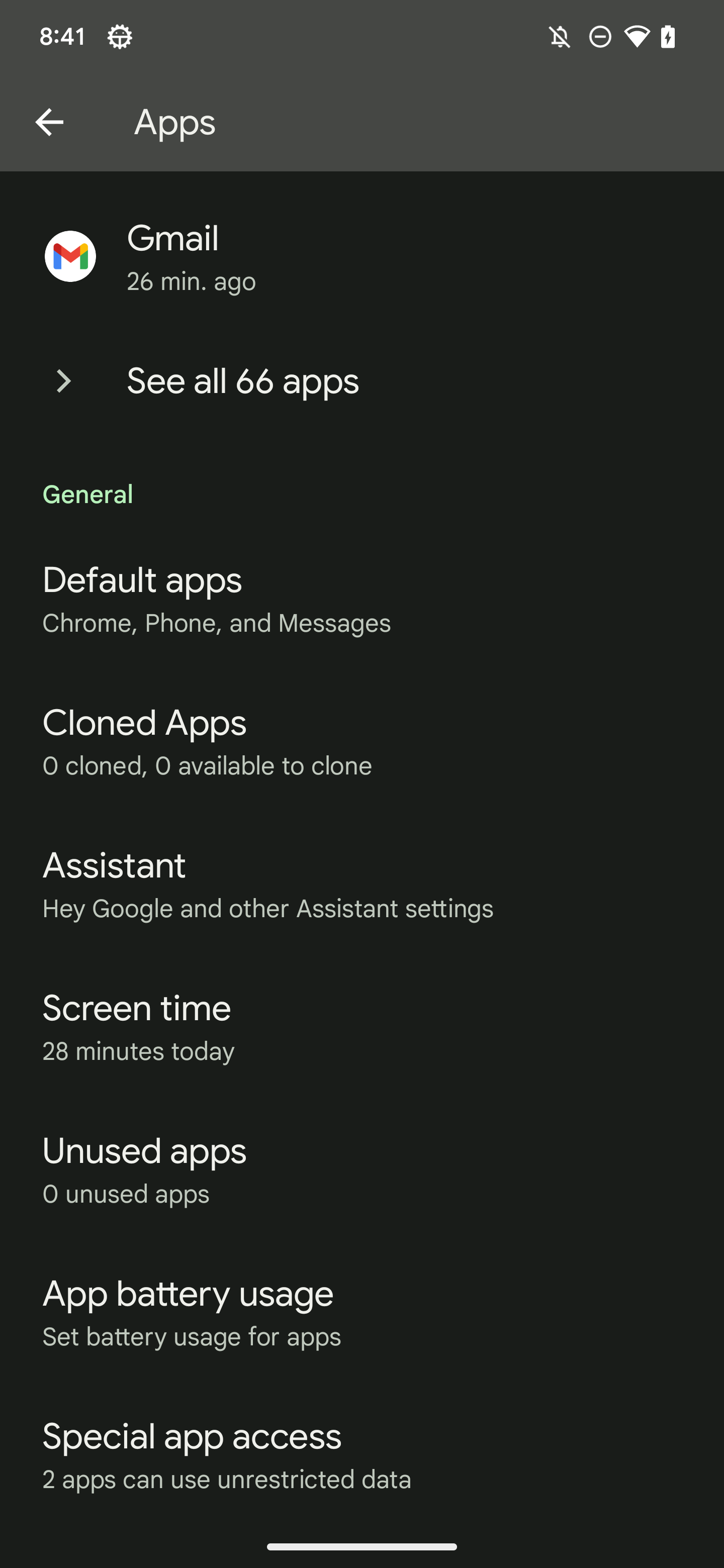
Android 14 DP1 preps ‘Cloned Apps’ to easily duplicate apps
Hidden in the first preview of Android 14, Google is preparing “Cloned Apps” as a more official option for having duplicate copies of an app on your phone or tablet.
About APK Insight: In this “APK Insight” post, we’ve decompiled the latest version of an application that Google uploaded to the Play Store. When we decompile these files (called APKs, in the case of Android apps), we’re able to see various lines of code within that hint at possible future features. Keep in mind that Google may or may not ever ship these features, and our interpretation of what they are may be imperfect. We’ll try to enable those that are closer to being finished, however, to show you how they’ll look in the case that they do ship. With that in mind, read on.
On Android, it can sometimes come in handy to have multiple copies of a particular app installed, usually allowing you to be logged in to more than one account simultaneously. To do this today, you need to use a third-party app to create and manage a “Work Profile” on your phone/tablet, which creates a separate place to install apps.
With Android 14 Developer Preview 1, we’ve found Google is preparing an official way to clone apps without needing any third-party apps or even a Work Profile. Instead, you’ll be able to head to the new “Cloned Apps” menu (seen below) and select which Android apps you’d like to duplicate.
Notably, Google and other manufacturers of Android 14 devices are able to choose the apps that are not allowed to be cloned. In the case of Pixel phones, Google is blocking many of its own apps from being cloned, including media apps like YouTube and YouTube Music.
Android Auto
Calendar (AOSP)
Camera (AOSP)
Chrome
Clock
Contacts (AOSP)
Files
Gallery
Gmail
Google Calendar
Google Camera
Google Contacts
Google Play Movies & TV
Google Search
Maps
MDS (Modem Diagnostic System)
Messages
Personal Safety
Phone
Photos
Pixel Tips
Play Store
Printer
Recorder
Stk (SIM Toolkit)
YouTube
YouTube Music
Android 14 DP1: Screen time is now prominently shown in battery usage stats
With the first developer preview of Android 14, Google is bringing back the ability to see screen time in battery usage stats.
Google redesigned the battery usage stats screen in Android 12, a change which led to quite a bit of confusion. Instead of showing battery usage since the last full charge, Google showed stats based on the last 24 hours.
The change was walked back in later updates, with the QPR1 update on Pixel phones delivering a change to show statistics from the last full charge instead of the last 24 hours. But even then, it was still somewhat difficult to see your screen time, which many use as a core metric to see how long their phone lasts in active use – there are, of course, many other contributing factors to battery life, but being able to see screen time is helpful nonetheless.
In Android 14’s first developer preview, Google has redesigned the battery usage page with a prominent “screen time since last full charge” section. It does, well, exactly what the name suggests.
While this might not be a big deal for everyone, it’s certainly a change that will be appreciated by enthusiasts.
The new page also now has a dropdown menu to show battery usage by apps or by system elements. This is technically unchanged from previous versions, the dropdown just makes it slightly more obvious on how to switch between the two sections.
Thank you for using
Themify Popup
This is a sample pop up. Themify Builder or Builder Lite (free) plugin is recommended to design the pop up layouts.