Dual camera systems on smartphones have been around for several years now. Some of the earliest examples include the weird 3D camera on the HTC EVO 3D. Then it was HTC again who introduced it in a different form on the One m8. Then LG decided to drop in with its cool wide-angle lens with the G5 and the same year, Apple decided to take in the other direction by adding a telephoto lens on the iPhone 7 Plus. Meanwhile, Huawei had other ideas, with its Leica branded monochrome camera on the P9.
But just how many types of dual camera systems are out there and how do they differ from each other? Most importantly, are they any good or is it just a passing fad? Let’s find out.
The Depth Sensor
We will start with this as this is the most basic form of dual camera system. In this system, the primary camera is accompanied by a second camera whose only function is to 3D map the area in front of the camera. As you may know, we are able to see in 3D because we have two eyes with slightly different perspectives that help us convey depth, especially for things that are close to us.
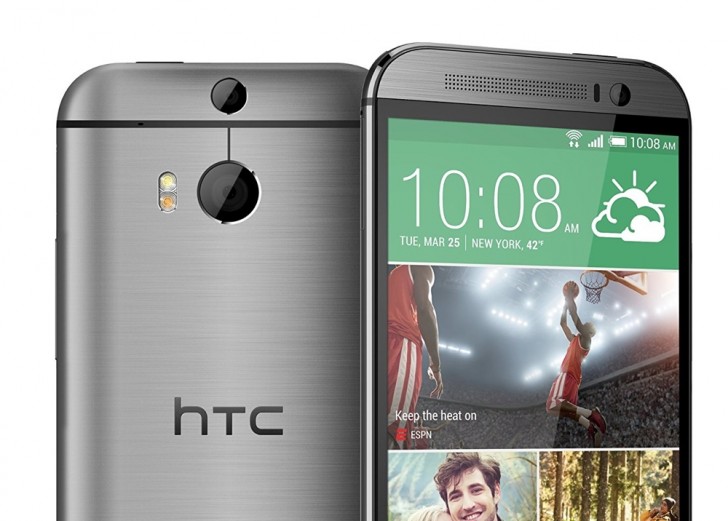
The HTC One m8
The secondary camera in this system works similarly. With the second camera, the system can now tell roughly how far the objects in front of it are with respect to each other. This information is then used to separate the foreground subject from the background.
The most common use of this technique is to create a shallow depth of field effect. While it’s something that comes naturally to DSLR cameras with their big sensors and big lenses, the small smartphone cameras cannot achieve the same shallow depth of field. So instead, this technique is used to first figure out the borders of the foreground subject and then apply an iris blue effect on everything else. This gives the illusion of shallow depth of field.
Sample from the HTC One m8. Didn’t always work this well.
While sound in theory and occasionally in practice, this technique has its pitfalls. Unless your subject is a cardboard cutout, it will have depth to it and because this depth is not as much as the depth between the entire subject and the background, the camera occasionally ends up blurring the edges of the subject as well. Even when it does work reasonably well, it never quite looks natural, especially since most smartphone cameras that have this feature apply an even blur on everything in the background whereas with a DSLR, the intensity of the blur increases with the distance from the focus point.
Camera systems with a dedicated depth sensor is one of the rarest types of dual camera systems. The first popular use of it was seen on the HTC One m8 but these days only the most basic smartphones, such as the Honor 6X or the Lenovo K8 Plus, can be seen using a dedicated depth sensor lens.
The Monochrome Camera
A slightly more popular implementation of the secondary sensor is the monochrome camera. In this method, the primary camera is accompanied by a mostly identical secondary camera. Both cameras usually have identical sensors, apertures, lenses and focusing systems. The main and usually only difference between the two is that the second sensor lacks an RGB color filter. This means that the sensor cannot capture color information but on the upside, because there is one less thing blocking the sensor, the monochrome camera can capture more light.
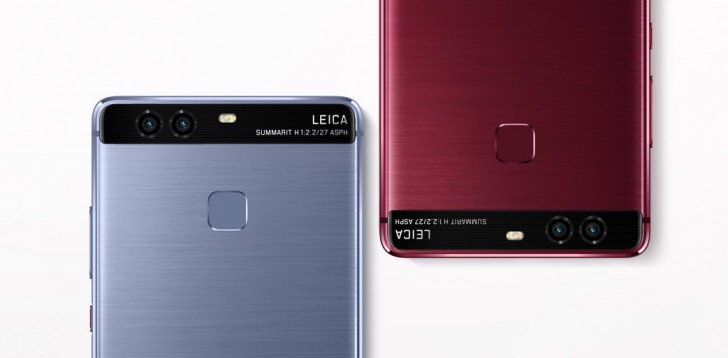
Huawei P9
Every time you take a picture, the camera system combines the output of both cameras and layers them into one image. In theory, the two images when combined will have greater detail and reduced noise. Alternately, you can also just shoot from the monochrome camera and get slightly better image quality at the cost of all the color information.
One of the first examples of this system was the Huawei P9 and since then, few other devices have also shipped with this system. To us, the advantages of this system are nebulous at best. While sound in theory, we can’t really say for sure if the feature does really work as advertised. We have seen some good results with this system in the past but its hard to tell if it was the dual camera doing all the work or it was just good image processing system.
Monochrome image from P9
There is no real disadvantage to this system and we do appreciate that it’s the only one of the systems discussed here that tries to do anything about the actual image quality instead of adding additional features but still, we would rather take some zooming ability over marginally improved image quality.
The Wide-Angle Camera
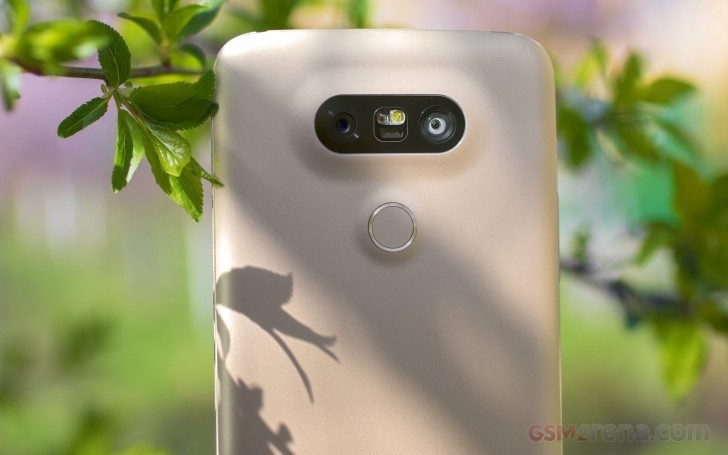
Debuted first on the LG G5 early last year, the wide-angle camera is pretty much what it sounds like. To take LG’s example, the phone had a 16 megapixel, 29mm equivalent f1.8 primary camera and 8 megapixel, 12mm equivalent f2.4 secondary camera. The 12mm focal length gave the secondary camera a crazy wide field of view that allowed the user to capture a much wider area without having to move back or capture interesting perspectives afforded by such a wide-angle lens.
LG G5
We have mainly seen this on LG phones, with Motorola recently incorporating it in the X4, and we are fans of how it works. The wide-angle lens gives a very unique perspective that you simply don’t get at all on smartphone cameras and apart from having practical value (capturing a large group of people from up close) also lets you capture some really cool looking shots.
The early iterations of this system did have its disadvantages. On the G5 and V20, the ultra wide-angle lens image quality was nowhere near as good as the primary camera and also had significant barrel distortion that made it look like the footage from a GoPro with a fish-eye lens. However, LG has been steadily improving the system with every iteration and in its latest avatar on the V30, the secondary lens not only has highly respectable image quality but also significantly less distortion around the edges, making it far more useful.
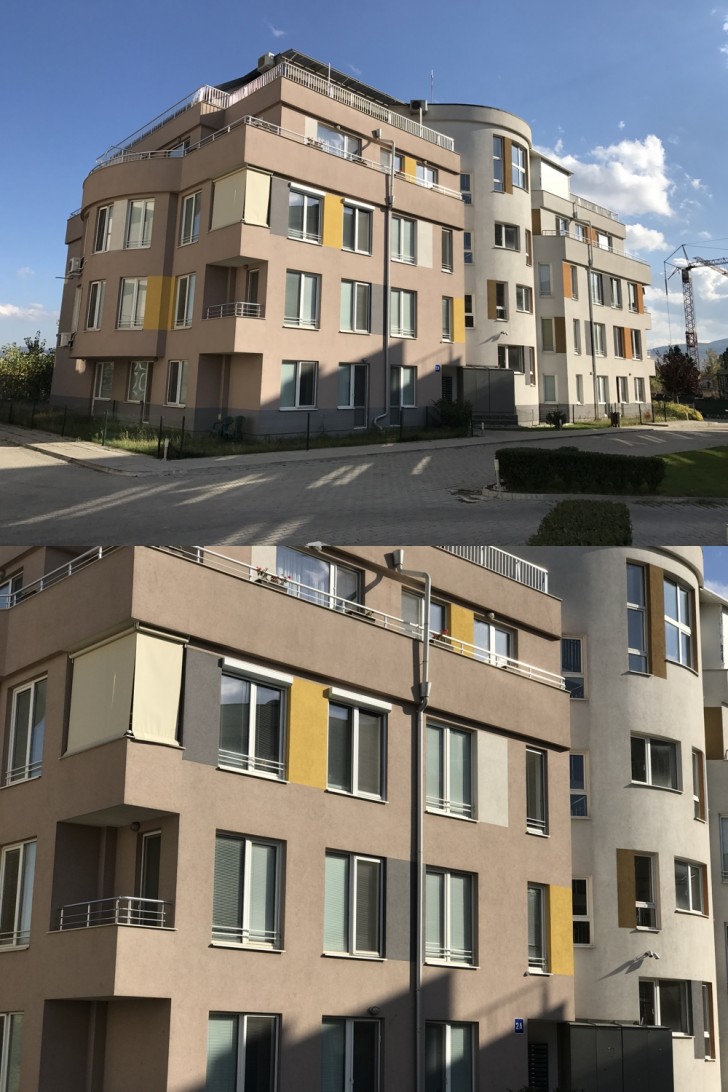
Wide-angle on top and ultra wide-angle below from G5
With good implementation, this system does have the potential to be a really cool second camera system for particular scenarios and we wish more manufacturers adopted it.
The Telephoto Camera
The most common of all the dual camera systems today is the telephoto camera. In this, the primary camera is paired with a second camera that has a telephoto lens. As you can tell, this is the exact opposite of the wide-angle camera system, wherein it actually lets you zoom into your subject instead of zooming out.
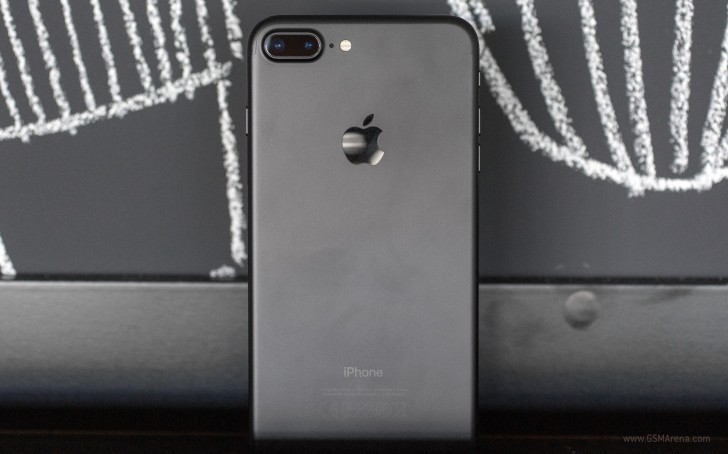
Apple iPhone 7 Plus
Since the iPhone 7 Plus, manufacturers have stuck to using a 2x factor for the second telephoto lens. This means the secondary lens has twice the focal length of the primary lens, giving you an instant 2x optical zoom.
There are many advantages of this system. First is the most obvious, where you get 2x lossless optical zoom. Zooming on smartphones has largely been digital until now but with this you get to quickly move 2x closer to your subject with very little quality loss. Any further zooming is done digitally still but because the digital zoom is now being applied on top of 2x optical zoom, it gives much better results.
Wide-angle above and telephoto below from the iPhone 7 Plus
Shooting with a telephoto lens also has other advantages. Telephoto lenses are more suitable for portraits than wide angle as they have less distortion and is more flattering to the subject. Most manufacturers go one step ahead and also implement the background blur effect that we saw with the very first system we talked about today (the primary lens now acts as the depth sensor). The combination of a telephoto lens and background blur gives far superior results than just applying background blur on wide-angle images.
Of course, this system too has its disadvantages. So far none of the manufacturers have been able to get complete parity between the two cameras. When the iPhone 7 Plus launched last year, it had a much smaller aperture (f2.8) compared to the main camera (f1.8) and no OIS on the secondary sensor. The iPhone 8 Plus ships with similar arrangement (although the sensors are better this year) and even the iPhone X still has f2.4 for the second camera (although it does have OIS). The Note8 was the first phone with a telephoto camera to have OIS but even then it’s still f2.4 (compared to f1.7 on the main lens) and the second sensor is slightly worse even if it has the same resolution.
iPhone 8 Plus Portrait Mode with Studio Lighting
Due to this, there is generally a quality difference when shooting with the telephoto lens. It’s even worse in lowlight, where due to the small aperture, most manufacturers just choose to disable the telephoto camera entirely, and instead when the user taps the 2x button, the camera just does a 2x digital zoom on the primary wide-angle lens. Needless to say, any further zooming is also digitally done on the primary lens. There are ways to force the camera to use the second lens on some phones but the results are generally not worth it.
Still, most of these limitations seem to be temporary and something year after year advancements should take care of eventually. This is still by far the most practical solution of all the systems we discussed today. Not only does it give the user a much needed optical zoom ability but at a pinch also lets them take some pretty decent looking shallow depth of field images.
That’s pretty much it for the dual camera systems. Let us know in the comments which one do you prefer, and if you have any further queries or other topics you’d like us to discuss in the future.
From a phone that packs a molecular scanner to a phone with an integrated thermal camera, you can’t say that the world of Android does not include some weird devices. The niche train waits for no one, however, and LG decided to buy a ticket with the K7i, the first phone that tries to keep away the mosquitos.
The feature, which LG calls “Mosquito Away,” uses the K7i’s big hump at the bottom to emit ultrasound waves that theoretically keep the mosquitos away from your delectable skin and blood. LG has used Mosquito Away in its air conditioners and TVs, but this is the first time one of its phones incorporates it.
For the record, I’m just as skeptical about this as you might be, and for good reason. Per the BBC, a 2010 article that examined 10 field studies concluded that ultrasound mosquito repellent devices “have no effect on preventing mosquito bites” and “should not be recommended or used.”
In other words, LG’s Mosquito Away seems more like a marketing gimmick than a legitimate function. Still, I’ll give LGsome credit for advertising such a feature in India, which has its fair share of mosquitos.
Even if you find Mosquito Away at least a bit interesting, the K7i seems pretty weak on paper. Equipped with a 5-inch, 1280 x 720 resolution display and a 2,500 mAh battery, the K7i also features an unnamed quad-core processor clocked at 1.4 GHz and 2 GB of RAM. The 16 GB of internal storage can be bumped up by an additional 156 through the microSD card slot, with an 8 MP camera around back and a 5 MP sensor up front.
Finally, the K7i runs Android 6.0 Marshmallow. The K7i’s 7,990 rupee ($121) price tag does not take away the fact that the phone runs software that is over two years old. Making things worse, there are no plans to update the K7i to Nougat or Oreo.
Who knows why, but Google just extended the security update life of the Nexus 6P and Nexus 5X. According to their dedicated support page that shows the schedule of guaranteed updates for both Nexus and Pixel devices, the 6P and 5X will now receive an extra two months worth of security patches.
Previously, Google set the end date for both the Nexus 6P and Nexus 5X at September 2018, or three years from the time that each device first became available on the Google Store. This morning, that date changed to November 2018, giving both phones an additional couple of months of security.
Google hasn’t updated their Android versions months for the 6P or 5X, so you still shouldn’t expect many big updates past the Android Oreo update you just got. However, an extra couple of months of security support is never something you’ll see us complain about.
In mid-2016, Google provided specific timeframes for when Nexus devices would stop receiving new Android version updates. Today, Google is back to update us again, but this time, for when security updates will specifically cease for all current Nexus and Pixel devices.
Before today, all Google provided was a not-so-technical timeframe. The exact words were, “For the longer of 3 years from availability or 18 months from when the Google Store last sold the device.” Yeah, that’s some backwards gibberish, not even sure if it’s English.
Anyway, we now know specifically when all current Nexus and Pixel devices will no longer receive security updates.
Here are the details you’ll need to know. In layman’s, the below dates are when you phone is officially unsupported and you should really consider upgrading.
According to a recent report from South Korea citing unnamed industry sources, CEOs of LG Display and Huawei will attend a top management meeting on October 3 in order to lay down the plans for a long-term collaboration on small and mid-sized OLED (organic light-emitting diode) panels. The need for this collaboration has apparently been partly fueled by Samsung Display’s inability to meet the high demand for OLED panels in China, which prompted Huawei to follow a two-way strategy and secure both South Korean tech giants as its main OLED suppliers.
Recent reports suggest that the possible collaboration between LG Display and Huawei should not only secure a stable supply chain for the Chinese smartphone maker but should also help in establishing a mutual growth strategy for both companies in the future. Next year, LG Display is said to supply Huawei with two to three million small to mid-sized OLED panels which will be manufactured at its E2 and E5 plants in Paju, but the company intends on increasing its OLED manufacturing capacity at its E5 and E6 plants as well. The transaction is supposedly worth between 200 and 300 billion won, which translates to between $176 and $265 million, and the amount of panels required from LG Display by Huawei will increase as the OEM continues to adopt OLED technology in more smartphone models moving forward.
The report also suggests that Samsung Display is currently experiencing difficulties with supplying OLED panels to its own smartphone branch as well as its largest client Apple and due to the company’s “clear supply priority,” some Chinese OEMs have had issues with receiving their OLED modules in time, according to industry sources cited by BusinessKorea. In any case, Huawei is expected to continue collaborating with Samsung Display, and the company’s upcoming Mate 10 smartphone will apparently be equipped with non-flexible OLED panels manufactured by LG’s closest competitor. Judging by recent developments, Huawei intends on adopting OLED technology for more smartphones next year, indicating that the demand for LCD smartphone panels could continue to decline, assuming that the increasingly high demand for OLED panels can be met by the industry’s biggest players, including LG and Samsung.
LG will reportedly manufacture OLED displays for Xiaomi, Huawei, Oppo, and Vivo. The OLED displays are said to be shipped by early 2018.
LG is the second largest manufacturer of OLED panels in the world and according to a report by Business Korea, the South Korean company will soon start supplying its OLED panels to Xiaomi, Huawei, Oppo, and Vivo. We can hope to see the above-mentioned companies using LG’s new OLED panels in their upcoming flagship smartphones.
About 20 to 30 percent of the small and mid-sized LG OLED displays have already been ordered by the above-mentioned companies and the company is said to start shipping the OLED displays in early 2018. LG has been using its OLED panels on its smartphones for quite some time now. Both of LG’s flagships this year, the LG G6 and LG V30 will come with FullVision OLED screen
With the launch of the iPhone X, Apple has also adopted the OLED display whereas Samsung has been using OLED panels in its smartphones from quite some time. Samsung’s flagships Galaxy S8 and S8 Plus and the recently launched Galaxy Note 8, all featuring an AMOLED display.
A recent report confirms that Google’s upcoming flagship smartphone, the Pixel 2 XL will be manufactured by LG.
OLED displays are less power consuming than traditional displays and result in longer battery life for smartphones. OLED displays have significantly better refresh rate compared to LEDs or LCDs. OLED panels also support the Always-On feature as seen on the Samsung Galaxy S8.
Earlier we reported that Google has confirmed the big reveal date for the new Pixel 2 smartphones will be October 4th. Thanks to a new entry spotted in the FCC database, we are now able to also confirm that LG is indeed the manufacturer of the larger of the two devices dubbed the Pixel XL 2. This is not really surprising as all signs up to now were pointing to LG being the manufacturer with this latest discovery merely making things official. The smaller Pixel 2 phone was spotted in the FCC database a few weeks ago with HTC as the manufacturer.
The FCC documents did not reveal much else of note regarding the forthcoming device, although one bit of disappointing news was discovered. In examining the bands to be supported by the Pixel XL 2, it appears the device will not work with T-Mobile’s new 600MHz spectrum. For those interested in model numbers, it appears the new Pixel XL 2 will be model G011C.
While many details about the new device are unknown, we do know that LG ended up sticking with a Snapdragon 835 for the processor instead of being upgraded to the now-delayed Snapdragon 836. We also anticipate the display should be similar to what LG developed for the LG G6 and the LG V30 devices that have screens with minimal bezels.
Apple’s 2017 iPhones will inevitably influence the top end of the smartphone market. Here’s how it looks at the moment, with a number of key launches expected soon.
Smartphones are the focus of most people’s digital lives these days, and are likely to remain so until computing becomes truly ‘ambient’ — probably involving some seamless combination of wearables (particularly augmented reality [AR] goggles), IoT devices, cloud services and artificial intelligence (AI).
Following the launch of the iPhone 8, 8 Plus and X, it’s a good time to take stock of the current state of the smartphone market by examining the vital statistics of leading vendors’ flagship handsets.
Apple‘s new iPhones, and Samsung‘s Galaxy S8/S8+ and Galaxy Note 8, show the general direction in which top-end smartphones are heading: powerful, attractive (and expensive) handsets whose user experiences increasingly leverage AI and AR, integrated with an ecosystem of add-on devices and services in various sectors including gaming, AR and VR, smart home, healthcare, shopping and office productivity.
Following last year’s well-publicised Galaxy Note 7 debacle and strong fourth-quarter performance from Apple, Samsung briefly ceded first place to its main rival in the Q4 2016 smartphone market. However, the Korean company swiftly returned to the number-one spot in 2017 (see chart). Apple‘s new iPhones face stiff competition from Samsung, Huawei and other top-five vendors, and from several manufacturers in the ‘Others’ category — including Google, HTC, LG, Motorola, Nokia, OnePlus and Sony — that also offer premium smartphones.
“Despite some key launches in the second quarter from some well-known players, all eyes will be on the ultra-high-end flagships set to arrive this fall,” said Anthony Scarsella, research manager with IDC’s Worldwide Quarterly Mobile Phone Tracker, when the Q2 2017 figures were released at the beginning of August. “With devices like the iPhone 8, Pixel 2, Note 8, and V30 in the pipeline, the competition will be fierce come September. We expect all the key players to promote their latest and greatest flagships with an assortment of deals, bundles, and trade-in offers across a variety of channels in most key markets,” he added.
Here’s how the flagship smartphone market looks following Apple‘s 2017 iPhone launch, presented as far as possible in graphical form. (Note: we’ll update this article as new handsets from Google, Huawei, LG and any other leading vendors are released.)
DESIGN
Screen size & Pixel density
Screen size — measured in inches across the diagonal — is a smartphone’s defining design characteristic, and the range on offer from leading vendors is now very wide. BlackBerry‘s 4.5-inch keyboard-equipped KEYone is the smallest, while Samsung‘s Galaxy Note 8 currently leads the field at 6.3 inches, with 16 out of the 25 handsets covered here falling between 5.5 and 6 inches. Display technologies are split between IPS LCD (Apple, BlackBerry, Huawei, HTC, LG [G6], Sony) and various species of OLED (Apple [iPhone X], Google, HP, Huawei [Mate 9 Pro], LG [V30], Motorola, OnePlus and Samsung).
Recent developments in smartphone displays include curved minimal-bezel screens with on-screen home buttons, 18:9 aspect ratio, Gorilla Glass 5 screen protection and — in the HTC U Ultra — a small secondary screen for notifications and other useful information (an idea recently dropped by LG when updating the V20 to the V30). Samsung‘s Note 8 is the only handset covered here that offers a stylus (the S-Pen). Apple‘s 2017 iPhones add True Tone technology (first seen in the 2016 9.7-inch iPad Pro) that automatically adjusts colour temperature and intensity to the ambient light, while the iPhone X made more space for the screen by removing the home button (and Touch ID) altogether.
The other key statistic here is pixel density, measured as pixels per inch (ppi), which factors in the display resolution. The graph below shows that Samsung (Galaxy S8) and LG (G6) lead the mainstream field with pixel densities of 567 and 564ppi respectively. The outlier is Sony‘s 5.5-inch Xperia XZ Premium, which offers a maximum 4K resolution of 3,840 by 2,160 for a massive 807ppi. This looks extremely impressive, but note that, for much of the time, the Xperia XZ Premium works at 1,080p resolution to save battery life, resulting in a much more mundane 403.5ppi.
Not everyone is comfortable with a large-screen handset, but if you want a leading-edge device, that’s increasingly what you’re being offered. If you’re happy with a large screen (>5.5in.) and also want high pixel density (>500ppi), you should be looking at Samsung‘s Galaxy Note 8 and Galaxy S8+, LG‘s V30 or, if you’re happy to run Windows 10 Mobile, the HP Elite x3. If your hands are on the small side, the 5.3-inch Nokia 8 offers a good combination of moderate screen size and high resolution (550ppi).
Screen-to-body ratio & Thickness
Another key smartphone design metric is the screen-to-body ratio, which measures how much of a handset’s fascia is occupied by screen compared to non-display elements like bezels, camera lenses and control buttons.
If low screen/body ratios are ‘old-fashioned’, then Apple’s 2016 iPhone 7 and 7 Plus were showing their age at 65.5 percent and 67.5 percent respectively — and their 8 and 8 Plus successors have done nothing to change that. Apart from BlackBerry‘s KEYone, only four other handsets have sub-70 percent ratios: Google Pixel, HTC U Ultra, Nokia 8 and Sony Xperia XZ Premium. The 4.5-inch KEYone is an outlier at 55.9 percent because, of course, it has a hardware keyboard, which decreases the screen-to-body ratio (and also increases the thickness compared to touchscreen-only handsets — see below).
At the other end of the scale, Samsung‘s Galaxy S8, S8+ and Note 8 handsets, with their curved Infinity Display screens and on-screen home buttons, lead the field with screen/body ratios of 83-84 percent. LG‘s V30 and Apple‘s new iPhone X are the only other flagship handsets with screen/body ratios over 80 percent.
Smartphone vendors often make much of the slimness of their handsets, and it’s clear from the chart below that Huawei is particularly keen on this design feature. Conversely, Samsung and Google (and BlackBerry) deliver notably thicker handsets:
Motorola‘s modular Moto Z2 Force, at 6.1mm with no Mods fitted, is the thinnest handset here. There are trade-offs though: the camera lens housing protrudes from the rear, and the device’s body is too thin to accommodate a 3.5mm headset jack. With the increasing use of glass on both the front and back of premium handsets (to accommodate wireless charging), most people immediately put their expensive and shiny new handset in a protective case, which renders the quest for extreme slimness somewhat pointless.
Volume & Weight
As you’d expect, there’s a clear relationship between a smartphone’s physical volume and its weight, although the variation around the trendline is interesting.
For example, the handsets that are thick for their screen/body ratio — notably the HTC-designed Google Pixel and Pixel XL, HTC U Ultra and U11 — are also relatively light for their volume, suggesting that there’s plenty of room for components inside the case. Another handset that’s below the weight/volume trendline is Samsung‘s Galaxy Note 8 — evidence, perhaps, of design changes following the Note 7 debacle (especially as the Note 8 also packs a smaller-capacity 3,300mAh battery than its ill-fated predecessor, which ran on a 3500mAh unit). Conversely, it’s noteworthy how Apple‘s iPhone 8 Plus is particularly heavy (at 202g) for its volume, that the iPhone 8 and 8 Plus are slightly bulkier and heavier than their predecessors, and that the 5.8-inch iPhone X is considerably lighter and more compact than Samsung’s 6.3-inch Galaxy Note 8.
Dust and water resistance
Another key smartphone design factor is resistance to the ingress of foreign matter, as commonly indicated by a two-digit IP rating: the first number describes dust resistance on a 1-6 scale, while the second describes water resistance on a 1-8 scale. The highest rating among the flagship handsets covered here is IP68, where ‘6’ indicates that the device is ‘dust tight’ and ‘8’ signifies that it can withstand immersion in water (usually at least 30 minutes to depth of at least 1m).
An IP rating of 5 for dust means the device is merely ‘dust protected’, while 7 for water means it can withstand immersion in up to 1m for 30 minutes, 4 means it can resist ‘splashing water’ and 3 means it can handle ‘spraying water’, both of the latter for at least 10 minutes.
IP ratings are not available for the BlackBerry KEYone, Huawei (and Honor) handsets, HTC U Ultra, Motorola Moto Z2 Force (although it does claim a ‘water repellent nano-coating’) and OnePlus 5. However, two of the flagship smartphones — the LG V30 and HP Elite X3 — also boast a military-grade MIL-STD 810G ruggedness certification.
Somewhat surprisingly, Apple‘s 2017 iPhones did not bump up their IP ratings from IP67 to IP68, to match Samsung‘s Galaxy S8/8+/Note 8. Looking ahead, it will be surprising if Google‘s second-generation Pixel handsets don’t move beyond IP53.
PLATFORM
Chipsets, CPU & GPU performance
A flagship smartphone should do its job — launching, running and switching between apps, and displaying on-screen content — quickly and smoothly, without any delays or glitches that would mar the user experience. It shouldn’t become uncomfortably hot in operation either — or, of course, burst into flames.
Chipsets from four main vendors power the handsets covered here:
Apple‘s 4-core A10 Fusion (iPhone 7/7 plus) and 6-core AI- and AR-optimised A11 Bionic(iPhone 8/8Plus/X)
Samsung‘s 8-core Exynos 8995 in the Galaxy S8/S8+/Note 8 (worldwide versions)
Qualcomm’s mid-range 8-core Snapdragon 625 (BlackBerry KEYone); 4-core 820 (HP Elite x3) and 821 (Google Pixel/XL, HTC U Ultra, LG G6); and top-end 8-core 835 (HTC U11, LG V30, Moto Z2 Force, OnePlus 5, Galaxy S8/S8+/Note 8 [US/China versions], Sony Xperia XZ Premium)
HiSilicon’s Kirin 960 in the Huawei and Honor handsets.
Here’s how these platforms shape up in terms of processor and graphics performance, as measured by the Primate Labs’ multi-core Geekbench 4 (Gb4) and Futuremark’s 3DMark Ice Storm Unlimited (ISU) benchmarks respectively:
The top-performing chipset — on these measures at any rate — is the Qualcomm Snapdragon 835, with Gb4 and ISU scores of up to 6500 and 40000 respectively. Note that the Exynos 8995 versions of the Samsung S8 and S8+ deliver better CPU results but weaker GPU performance (benchmarks are currently only available for the Exynos 8995 version of the Galaxy Note 8).
Apple‘s A10 Fusion-powered iPhone 7 and 7 Plus were strong performers, with scores of around 5400 (Gb4) and 37000 (ISU), and the new A11 Bionic-powered iPhones are sure to see a significant speed bump when benchmarks appear (here’s a leaked report). At the 2017 launch, Apple claimed that the A11 Bionic’s two performance CPU cores are 25 percent faster than the A10, while its four high-efficiency cores are 70 percent faster. Apple‘s 2nd-generation performance controller is reportedly 70 percent faster for multithreaded workloads, while the A11’s GPU is 30 percent faster and delivers A10-level performance at half the power, according to Apple.
Also prominent are the Kirin 960-powered handsets from Huawei and Honor, which cluster around the 6000 (Gb4)/27000 (ISU) mark. Again, we expect to see a performance boost when the AI-optimised Kirin 970 chipset becomes available in the Huawei Mate 10 and Mate 10 Pro in October.
The remaining Snapdragon 821-powered smartphones on this chart — notably Google‘s Pixel and Pixel XL — are well behind the 2017 curve, and will certainly be updated with the 835 chipset in due course. Very much in last place in this company is BlackBerry‘s KEYone, which is powered by Qualcomm’s mid-range 8-core Snapdragon 625 SoC.
RAM & Storage
When it comes to memory, the clear leader of the pack is the OnePlus 5, which is currently unique in offering 8GB or 6GB of RAM. Next come seven flagship handsets with a maximum of 6GB, all of which bar the Samsung Galaxy Note 8 also have a 4GB variant. The most common RAM complement is 4GB, which is the only choice with 11 handsets and the maximum for BlackBerry‘s KEYone (which also comes with 3GB).
Apple has always fitted less RAM in its iPhones than the Android competition, and that hasn’t changed with its 2017 handsets: the iPhone X and 8 Plus have 3GB (like the iPhone 7 Plus), while the iPhone 8 has 2GB (like the iPhone 7).
As far as internal storage is concerned, Apple‘s 2017 iPhones stand out with their maximum complement of 256GB — a feature that betrays the company’s disdain for external storage expansion via a MicroSD card slot. Samsung‘s Galaxy Note 8 also offers a maximum of 256GB (in some territories), but has a MicroSD card slot too, making it the top choice for the data-hungry.
Google‘s Pixel handsets and the OnePlus 5 also lack MicroSD expansion and, like the previous-generation iPhone 7 and 7 Plus, provide up to 128GB rather than 256GB of internal storage.
The most common maximum internal storage complement is 128GB, which is offered by 13 of the 25 handsets covered here.
CAMERAS
Rear cameras
Cameras have become a key battleground for smartphone makers, and several approaches are currently on view among the flagship population. Although it wasn’t the first to do so, Apple kick-started a trend last year by offering dual rear cameras on the iPhone 7 Plus: a primary 12-megapixel (MP) camera with an f/1.8 wide-angle lens and optical image stabilisation (OIS), and a secondary camera with an f/2.8 telephoto lens with 2x optical zoom but no OIS.
As well as adding telephoto capability, Apple‘s dual-camera system allowed depth information to be calculated, enabling features like bokeh — sharp foreground and blurred background — to be supported on portrait shots that were previously the province of expensive digital SLR cameras with high-end optics.
Apple‘s 2017 dual-camera phones, the iPhone 8 Plus and iPhone X, remain at 12MP but the sensors are bigger, faster and deliver better low-light performance, according to Apple. The iPhone 8 Plus has the same basic lens specs as the 7 Plus (f/1.8 wa + OIS, f/2.8 tele), while the iPhone X has an f/2.4 aperture on the telephoto lens and implements OIS on both cameras. Apple also takes advantage of A11 Bionic chip’s machine-learning optimisation and custom ISP to deliver a (beta) Portrait Mode feature called Portrait Lighting: here, depth sensing and facial mapping are combined to deliver real-time analysis of the light on a subject’s face and provide alternative lighting schemes — either pre- or post-capture.
For dual-camera handsets, the top bar is the wide angle or colour camera, while the bottom bar is the telephoto or black-and-white camera.
Huawei‘s Leica-branded camera system pairs 12MP RGB and 20MP monochrome sensors with 27mm f/2.2 lenses (f/1.8 in the P10 Plus), supporting OIS on the primary colour camera. As well as enabling true monochrome shooting and adding detail to blended RGB/mono shots, the 20MP secondary camera supplies depth information for bokeh-style images. The Honor 8 Pro has a similar (non-Leica-branded) system, but the secondary mono camera is 12MP rather than 20MP and there’s no support for OIS.
LG uses two 13MP sensors on the G6, one coupled with an f/1.8 autofocus lens with OIS and the other with an f/2.4 wide-angle lens lacking both OIS and autofocus. The LG V30 takes a similar approach, but uses a 16MP primary sensor with an f/1.6 lens (with AF and OIS) and a 13MP secondary sensor with an f/1.9 lens (no AF or OIS).
Both Motorola and Nokia take the Huawei approach, with colour and monochrome cameras: the Nokia 8’s Zeiss-branded system supports OIS on the colour camera, but the Moto Z2 Force does not offer OIS on either.
OnePlus and Samsung (Galaxy Note 8) go for the wide-angle/telephoto dual camera design, OnePlus with 16MP (wa) and 20MP (tele) cameras and electronic image stabilisation (EIS) rather than OIS, and Samsung with two 12MP cameras, both with OIS. Samsung also introduces a couple of neat dual-camera features: Live Focus lets you adjust the bokeh effect pre- and post-capture, while Dual Capture simultaneously captures photos from both the wide-angle and telephoto cameras.
Single rear cameras are an increasing rarity among the flagship population, but are headed (in resolution terms) by Sony and HP, with 19MP and 16MP units in the Xperia XZ Premium and Elite x3 respectively.
Front cameras
The fashion for ‘selfies’ and authentication via face recognition means that front-facing cameras, once something of an afterthought with a nod to video calls, have seen significant recent evolution.
Samsung, for example, offers both face recognition and iris scanning on its Galaxy S8, S8+ and Note 8 handsets, as well as a capable 8MP camera, while the Nokia 8’s Dual Capture feature lets you take pictures with the front and rear camera simultaneously (a.k.a. ‘Bothies’). Even more recently Apple more than matched Samsung’s functionality with the front-facing TrueDepth camera system and Face ID on the new iPhone X:
Apple’s True Depth camera system occupies a notch at the top of the iPhone X’s OLED screen.
To analyse your physiognomy, the flood illuminator detects your face, the infrared camera takes an IR image, and the dot projector places than 30,000 IR dots on your face. These data are fed into a neural network (in the A11 Bionic chip) to create a mathematical model of your face, which is then checked against the stored model on the handset — all in real time. The True Depth camera also enables Portrait Mode selfies with Portrait Lighting, and animated emoji called ‘Animoji’.
Here are the front camera megapixel counts for the 25 handsets under consideration, 12 of which are 8MP units:
Video
Video capture is becoming an increasingly important smartphone camera feature — witness the fact that all bar one of the handsets covered here can record 4k (2160p) video with at least a frame rate of 30fps. The exception is BlackBerry‘s KEYone, which doesn’t support 4k video capture at any frame rate. Apple‘s new iPhones just upped the ante by supporting 4k video at 60fps, which will doubtless kick off another round of feature catch-up.
Slow-motion video is another popular feature, and Sony‘s Xperia XZ Premium leads the field here, supporting HD (720p) video capture at a startling ‘super-slo-mo’ 960fps. The current ‘standard’ for slo-mo video is 720p at 240fps, although Apple has again pushed the boundary by supporting full HD (1080p) video at 240fps in the iPhone 8, 8 Plus and X.
As resolutions and frame rates rise, image stabilisation — either optical or electronic — will become ever more important. It’s noticeably absent from Motorola‘s Moto Z2 Force, for example.
BATTERY
Battery capacity
As flagship smartphones pack in faster processors, more memory, larger and higher-resolution screens, and ever more functions, so the toll on the handset’s battery increases. There are multiple trade-offs here: no smartphone user wants to have to recharge during a typical day’s usage, but manufacturers cannot simply fit ever higher-capacity batteries into designs that need to be as lightweight and elegant as possible in order to keep buyers interested. Get it wrong and a vendor can have a Galaxy Note 7-style debacle on its hands.
The state of the art in smartphone batteries is currently around 4,000mAh, while 14 of the 22 handsets charted here have battery capacities between 3,000 and 4,000mAh. Apple has not divulged the battery specs for the iPhone 8, 8 Plus and X, and we’re awaiting the teardown analyses that will supply them.
Battery life
A bigger battery obviously means longer battery life, as the chart below clearly shows. But given that design and safety constraints preclude the shoehorning of big batteries into tight-fitting cases, manufacturers also need to make it as convenient as possible for users — especially ‘power’ users who subject their devices to heavy workloads — to recharge their handsets.
Following LG‘s decision to drop the removable battery when updating the V20 to the V30, this feature is now absent from all of the top-end smartphones covered here. Fast charging is supported on all but the now-outdated iPhone 7 and 7 Plus, while wireless charging is available on Apple‘s new iPhones (8, 8 Plus and X), HP‘s Elite x3, the LG G6 and V30, and Samsung‘s Galaxy S8, S8+ and Note 8.
PRICES
High-end smartphones are never going to be cheap, but Apple‘s newly launched iPhone X has broken new ground — the combination of Apple‘s historically high margins and a significant amount of new technology have seen to that. The entry-level 64GB iPhone X configuration costs $999, and if you must have the top-end 256GB model, be prepared to part with a princely $1,149 (and the same figure in UK pounds).
That’s a record for a mainstream flagship handset, although you can spend even sillier money on specialist secure/luxury devices like Sirin Labs’ Solarin if you really want to (although, as it turned out, few did).
Here are the list prices in US dollars for most of the premium handsets covered in this feature:
Notes: the LG V30 prices are converted from Korean won; the Nokia 8 price is converted from euros. The following handsets are not officially available in the US: Honor 8 Pro, Huawei Mate 9 Pro, Huawei P10 and P10 Plus. Where available, prices for entry-level and top-end configurations are shown.
Outlook
Recent launches from Samsung and Apple have highlighted the increasing importance of artificial intelligence and augmented reality in high-end smartphones, with the underlying chipsets and developer resources evolving appropriately. At least for now, the smartphone will remain the portable hub for your digital life, and the flow of new devices will continue apace.
We aim to keep this roundup updated as new products, specification details and benchmarks appear. The next big launches expected are Google‘s second-generation Pixel handsets, Huawei‘s Mate 10 and 10 Pro, and LG‘s G7. Check back for updated information on these and other devices.
When LG unveiled its new high-end smartphone, the V30, at the IFA last week, there was a bit of excitement about the new (or newish) things that this new device can bring to potential users’ digital life. From taking advantage of the AMOLED display to a whole bunch of photo and video features to audio and app tools, the video shows off what new user experience (UX) related things you will enjoy. And while the secondary screen is no more, there is a new feature that replaces part of it.
The always-on display works pretty well with the AMOLED display of the V30, and here you get 9 different types of screens to choose from, image widgets, and a seamless flow between the various home screens. The floating bar is the phone’s “always accessible custom tools” which includes capture and draw tools (with GIFs!), app shortcuts, a music player, contacts, as well as call handling. The quad DAC has software presets and filters, while Google Assistant helps you get answers to your questions and help in managing your digital life. You can also use voice recognition to unlock your phone with your own secret, magic words/phrase.
A lot of the UX features highlighted pertains to the camera. For video, you have the point zoom feature which lets you zoom into certain parts of the screen that you marked for dramatic effect. You also have Cine Effect or more popularly known as filters, with the HDR sensor giving it a better-looking quality. In case you need to edit your videos, no need for a 3rd party app as it has a built-in video editing feature. For photos, you have graphs or user made manual camera presets in case you have a hard time tinkering with all the tools available.
The LG V30 will be amiable in South Korea by September 21 and will expand to North America, Asia, Europe, Africa, and the Middle East. There are no price details announced yet but we’ll probably hear about it soon.
LG’s Third V Smartphone Ups the Ante for Design and High-end Content Creation with Unmatched Package of Features and Options
LG Electronics (LG) today took the wraps off the eagerly anticipated LG V30, the latest iteration of the company’s V series flagship smartphones. The LG V30 improves on the strengths of the V series phones in providing a whole new mobile experience and offering optimal multimedia features. The V30 features many industry innovations – the first F1.6 aperture camera lens, the first glass Crystal Clear Lens, the first OLED FullVision display, Cine Video mode for producing movie-quality videos, premium sound with advanced Hi-Fi Quad DAC, sound tuning by B&O PLAY, and Voice Recognition. The V30 sets a new standard in the evolution of premium smartphones.
Videos Like a Pro with F1.6 Crystal Clear Lens and Cine Video
The LG V30 features powerful video capabilities that make it a leader in the era of smartphone videography. The main camera on the rear of the V30 features an F1.6 aperture that lets in more light for brighter, more dynamic shots. Paired with the glass Crystal Clear Lens which delivers more accurate colors and clearer images than a plastic lens, the V30 is the most capable image capturing device in a smartphone. The second lens in the V30 dual camera is an upgraded 13MP wide angle lens with two-thirds less edge distortion than in the V20.
LG’s new Cine Video mode allows anyone to produce movies like a pro, thanks to its powerful Cine Effect and Point Zoom features. Users can now take high-quality videos enhanced by the cinematic hues of various movie genres with only a smartphone. While typical cameras only allow one to zoom in on the center of the frame, Point Zoom allows users to zoom in on any subject smoothly using the zoom slider, regardless of its position in the frame, another industry first. And Cine Effect provides a palette of 15 presets to give videos a unique movie-like look, from romantic comedy, summer blockbuster, mystery, thriller and classic movie, among others.
LG V30 supports LG-Cine Log which allows for greater creative flexibility when capturing videos. With the ability to preserve a wide dynamic range and color gamut, LG-Cine Log videos files can save far more accurate image details. LG-Cine Log also allows for recording video using log gamma curve for maximum flexibility in producing the look the user wants during post-production.
Photo capturing is even more advanced with the new V30. The camera’s Manual Mode takes on a whole new level of capability with Graphy. With Graphy, any shutterbug can produce quality photos simply by choosing the image and pressing the shutter. Available in Manual Mode, users can select professional images from the Graphy website or mobile app and apply the same presets such as white balance, shutter speed, aperture and ISO to photos taken with the V30.
Slim, Lightweight Design and OLED FullVision Display in Compact Body
The LG V30 builds on the strengths of the OLED FullVision display in a body that is surprisingly compact, slim and light. Even with a large 6-inch 18:9 OLED FullVision display, the V30 is 8mm shorter and 3mm narrower than its predecessor, resulting in a firmer, more confident grip. With a thickness of only 7.3mm and tipping the scale at 158g, the V30 is the lightest among smartphones in the 6-inch and over category. The tempered glass that covers both the front and back is curved all the way around the edge, resulting in a sleek, integrated look and feel.
The advanced dual camera module featuring a 16MP standard angle camera and a 13MP wide angle camera is smaller than the module in the V20, resulting in the near flat rear profile of the V30. For the smoothest and sharpest images, the main standard angel camera is supported by Optical Image Stabilization (OIS), Electronic Image Stabilization (EIS) and Hybrid Auto Focus that combines both Laser Detection Auto Focus and Phase Detection Auto Focus.
The QHD+ (2880 x 1440) OLED FullVision display offers faster response time with minimal afterimages when viewing an action-packed movie or playing a game with quick movements. The V30 takes full advantage of this rapid response time and the exceptional graphics delivered by the robust Qualcomm®Snapdragon™ 835 Mobile Platform to support Daydream, Google’s platform for high quality, mobile VR. With Daydream, users can explore new worlds, enjoy personal VR cinema and play games that put them in the center of the action.
Personalized Superior Sound Backed by Hi-Fi Quad DAC
LG has equipped the V30 with a Hi-Fi Quad DAC with audio tuning by sound engineers from world renowned audio brand B&O PLAY – delivering an authentic and superior acoustic experience – as well as a set of earphones by B&O PLAY, also finely tuned for an optimal listening experience. Digital filters adjust the pre- and post-ringing of the impulse response of music with three filters which users can select. Four pre-programmed presets mix and match sound frequencies and decibel scales to produce the quality of audio found in professional earphones.
The V30 is the first global smartphone to support MQA (Master Quality Authenticated) technology that allows for the streaming of high-resolution audio. MQA captures the sound of the original studio master and folds it into a small file to make high-resolution audio easy to stream. The V30’s recording capability is upgraded as well, with a receiver that doubles as a microphone to capture a broader sound spectrum, from gentle chimes to thunderous drums.
Equipped with Google Assistant and Voice Recognition
The Google Assistant on the LG V30 will feature unique capabilities specific to the phone. Saying “Ok Google, take a romantic Cine Video” will activate Cine Video preset to Romantic. Say “Ok Google, take a wide angle selfie” to launch the camera app with the setting on the front-facing camera wide angel mode. The Google Assistant on the V30 takes advantage of advanced signal processing enabling users to use the voice command, “Ok Google” even when loud music is being played. In addition, select LG appliances including a washing machine, dryer, refrigerator, air purifier, oven, air conditioner and robot vacuum are compatible with the Google Assistant when using the V30 and Google Home. Users can say, “Ok Google, talk to LG to wash my clothes” to start a load of laundry.
The convenience of the Second Screen which was introduced in past V series smartphones has evolved into a new Always-on Display (AOD) feature and Floating Bar. When the display is off, the AOD replaces the Second Screen by providing shortcuts to Quick Tools and Music Player without having to turn on the display. The optional semi-transparent Floating Bar can be customized with up to five apps for easy access to the most used applications. When not needed, the Floating Bar can be dragged off to the side so it doesn’t take up any screen space.
Now with four different options, security on the LG V30 is more advanced than ever. With Face Recognition, the V30 can be unlocked instantaneously using the front facing camera and without pressing any buttons even when the phone’s display is off. Voice Recognition uses a combination of the user’s voice and user-defined keywords (optimally three to five syllables) to unlock the V30. The reliable Fingerprint Sensor resides on the rear of the phone for fast, accurate security and Knock Code allows tapping a pattern on the screen to unlock the V30.
Inheriting Legacy of LG Premium Phones, Solid Durability and Safety
The V30 combines solid durability with safety with a slim and light design. One of the design aspects in the V30 that enhances durability and makes for tensile strength is an H-Beam structure, a construction technique found in modern buildings that integrate the edge with a metal frame. The phone also features Gorilla® Glass 5, Corning’s most advanced tempered glass, on both the front and rear. The V30 meets U.S. Department of Defense requirements for durability, having passed 14 categories of the MIL-STD 810G Transit Drop Test making it compliant for military operations.
LG applied a heat pipe and a cooling pad in the V30 to dissipate heat quickly. The V30 can be used in any situation without worry thanks to its IP68 water and dust resistance. The phone is perfectly sealed from dust and can be immersed in up to 1.5 meters of water for as long as 30 minutes without impacting the function. With Quick Charge 3.0, the V30 charges from empty to 50 percent in around 30 minutes. The V30 also offers wireless charging for the ultimate in convenience.
“The V series has always been demonstrating new practical mobile technologies that contribute to high quality content creation and the V30 has not lost sight of its roots,” said Juno Cho, president of LG Electronics Mobile Communications Company. “With its F1.6 Crystal Clear Lens Camera and Cine Video mode, the LG V30 is designed to help create professional-looking content without professional-level complexity.”
Customers of LG V30 will receive USD 100 worth of in-game purchases when downloading and installing the popular game Beat Fever by WRKSHP. The games take full advantage of the phone’s immersive OLED FullVision display and high-quality audio capability.
The V30 will become available to consumers in South Korea starting on September 21 and will be followed by key markets in North America, Asia, Europe, Africa and the Middle East. The V30 with 64GB ROM will come in four beautiful elegant hues: Aurora Black, Cloud Silver, Moroccan Blue and Lavender Violet 2 while the LG V30+ with 128GB of storage will be available in limited markets.
Visitors to IFA 2017 are encouraged to stop by LG’s booth in Hall 18 of Messe Berlin to see the exciting LG V30 for themselves.
Key Specifications:
Chipset: Qualcomm® Snapdragon™ 835 Mobile Platform
3 Specification may vary depending on the particular market.
Qualcomm and Snapdragon are trademarks of Qualcomm Incorporated, registered in the United States and other countries. Quick Charge is a trademark of Qualcomm Incorporated.
Qualcomm Snapdragon and Qualcomm Quick Charge are products of Qualcomm Technologies, Inc.