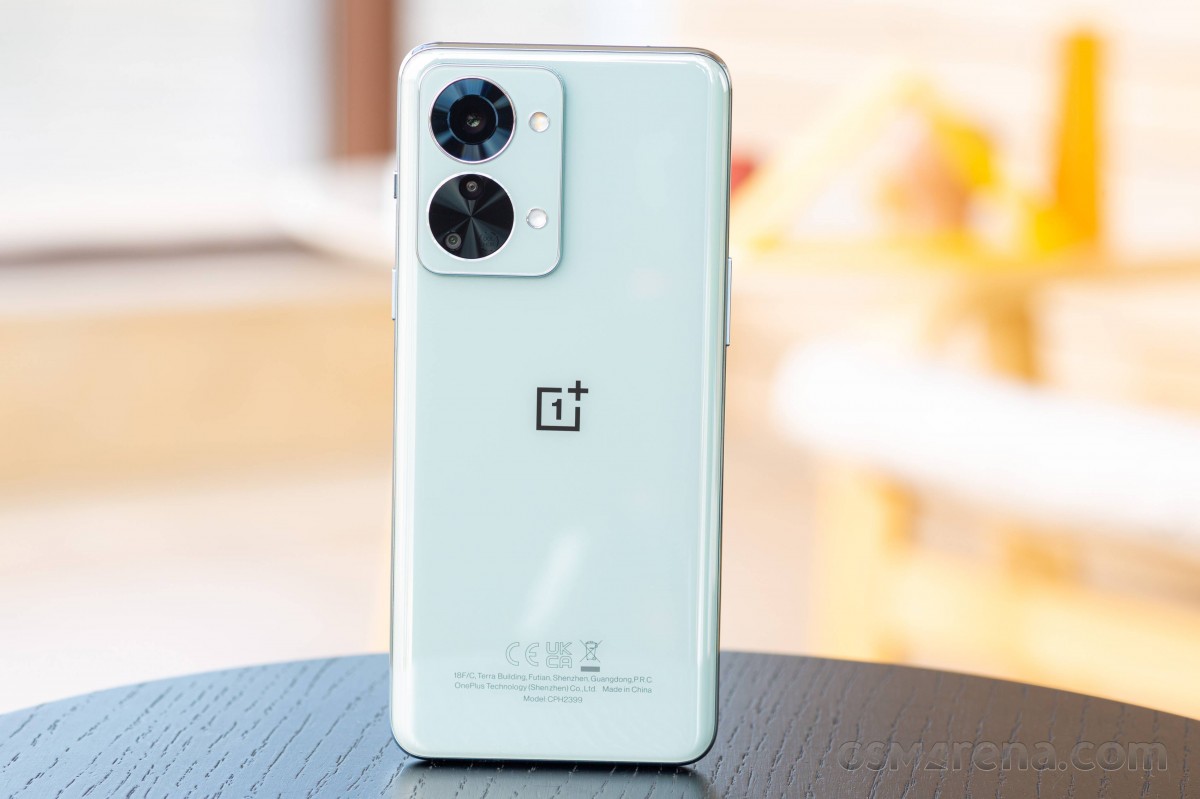
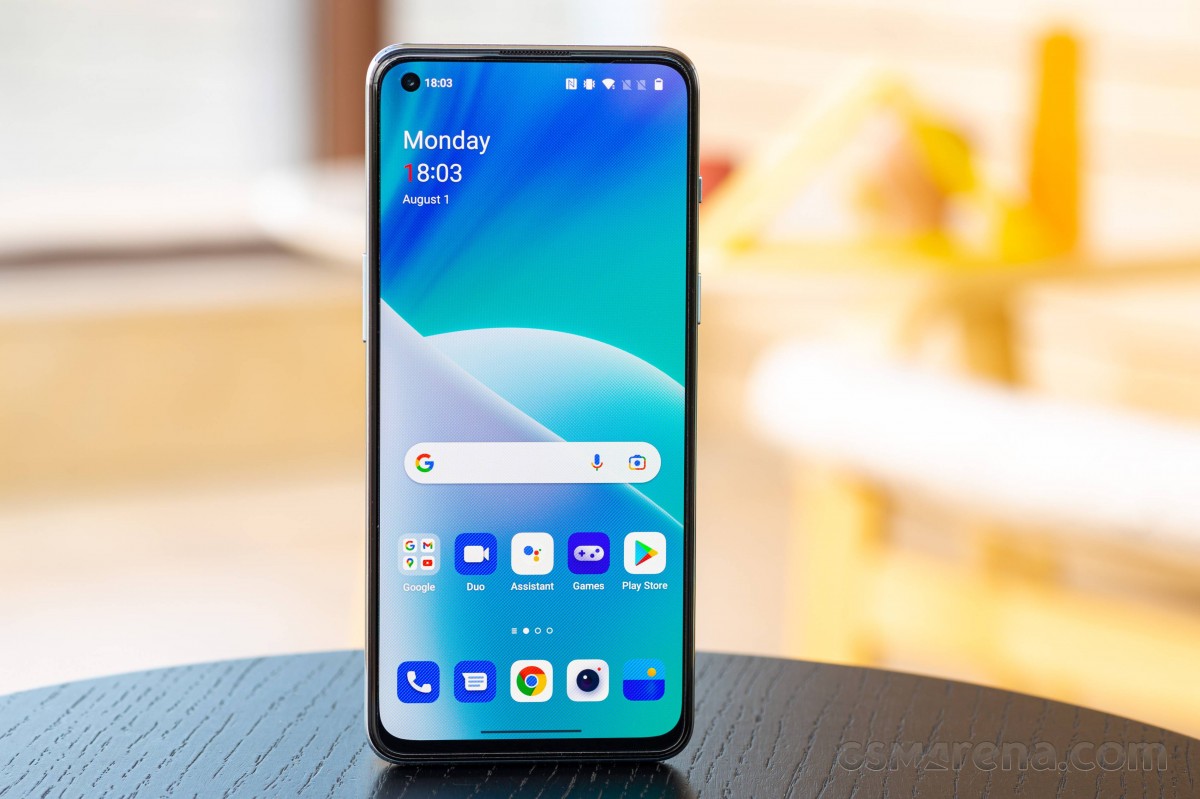
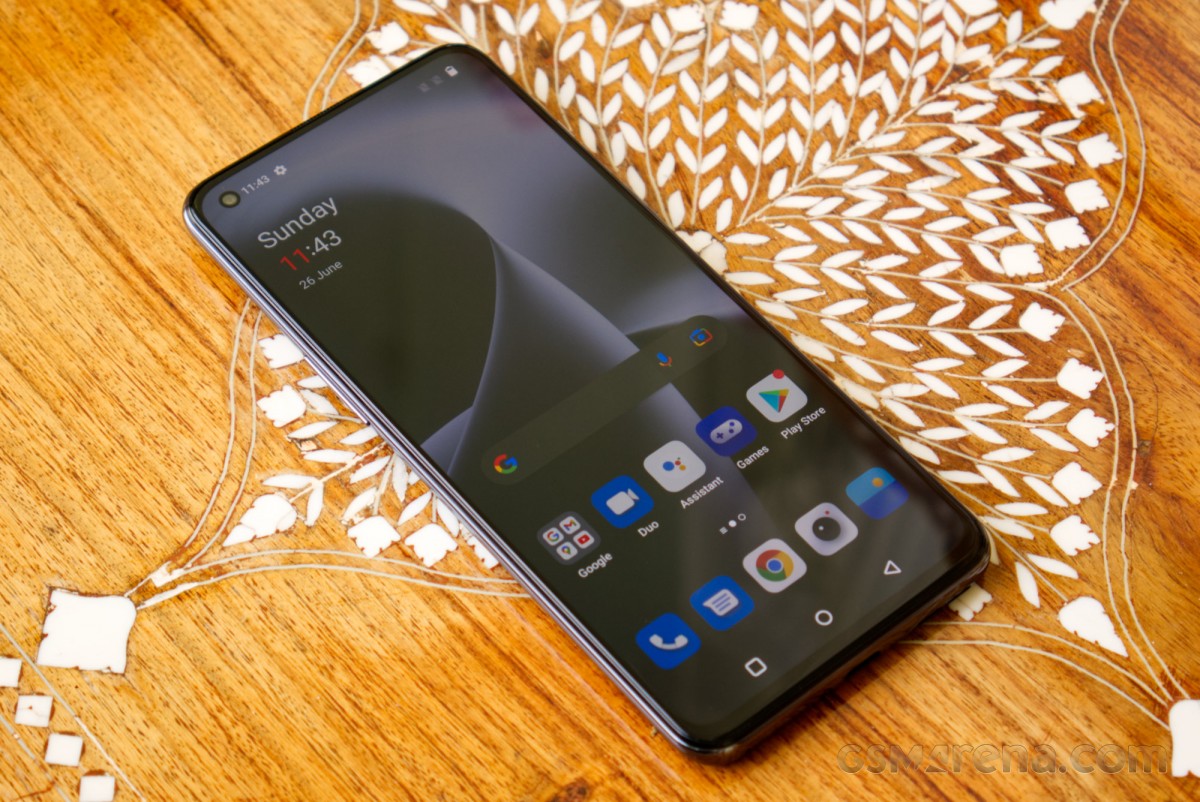
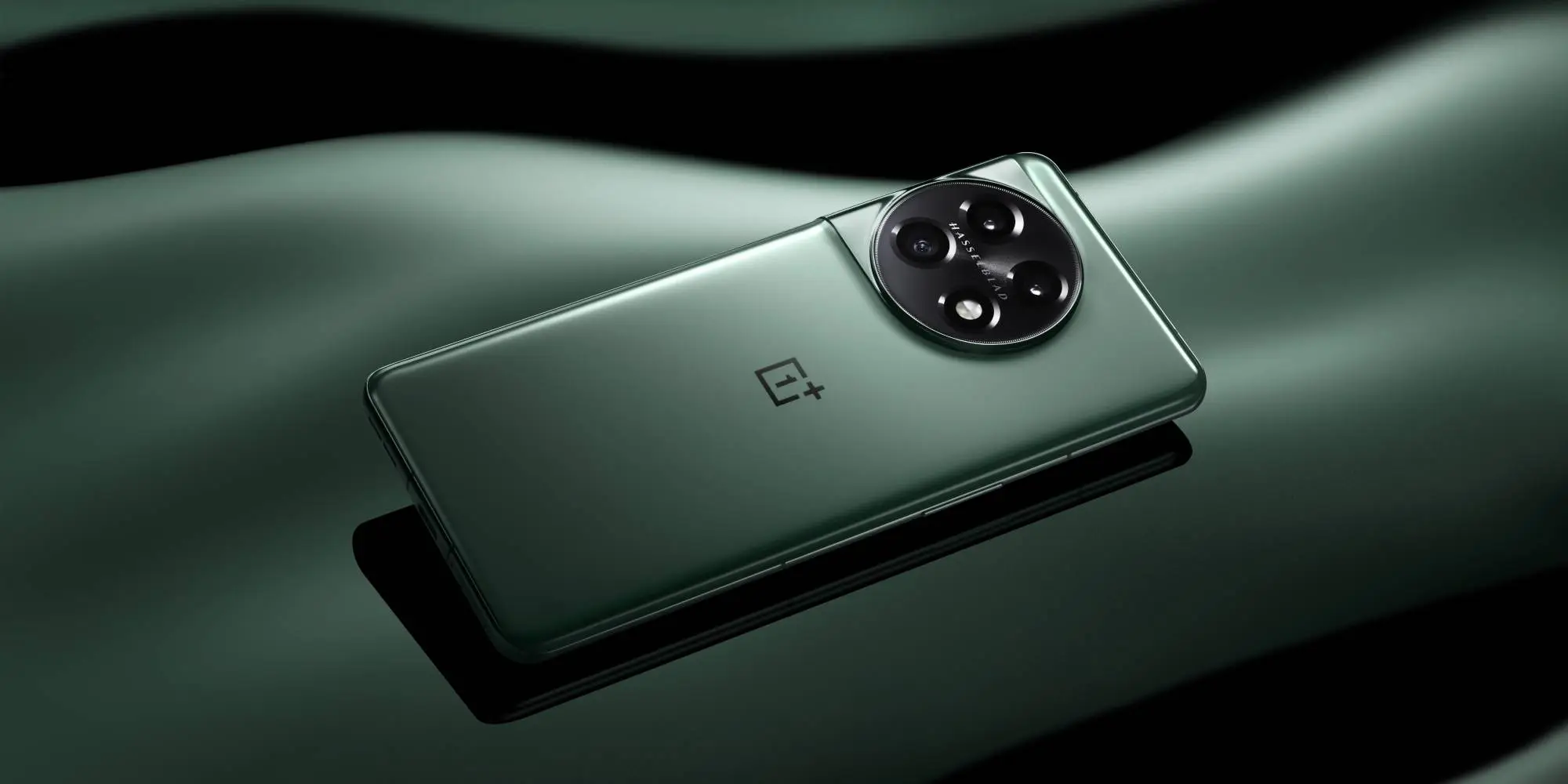
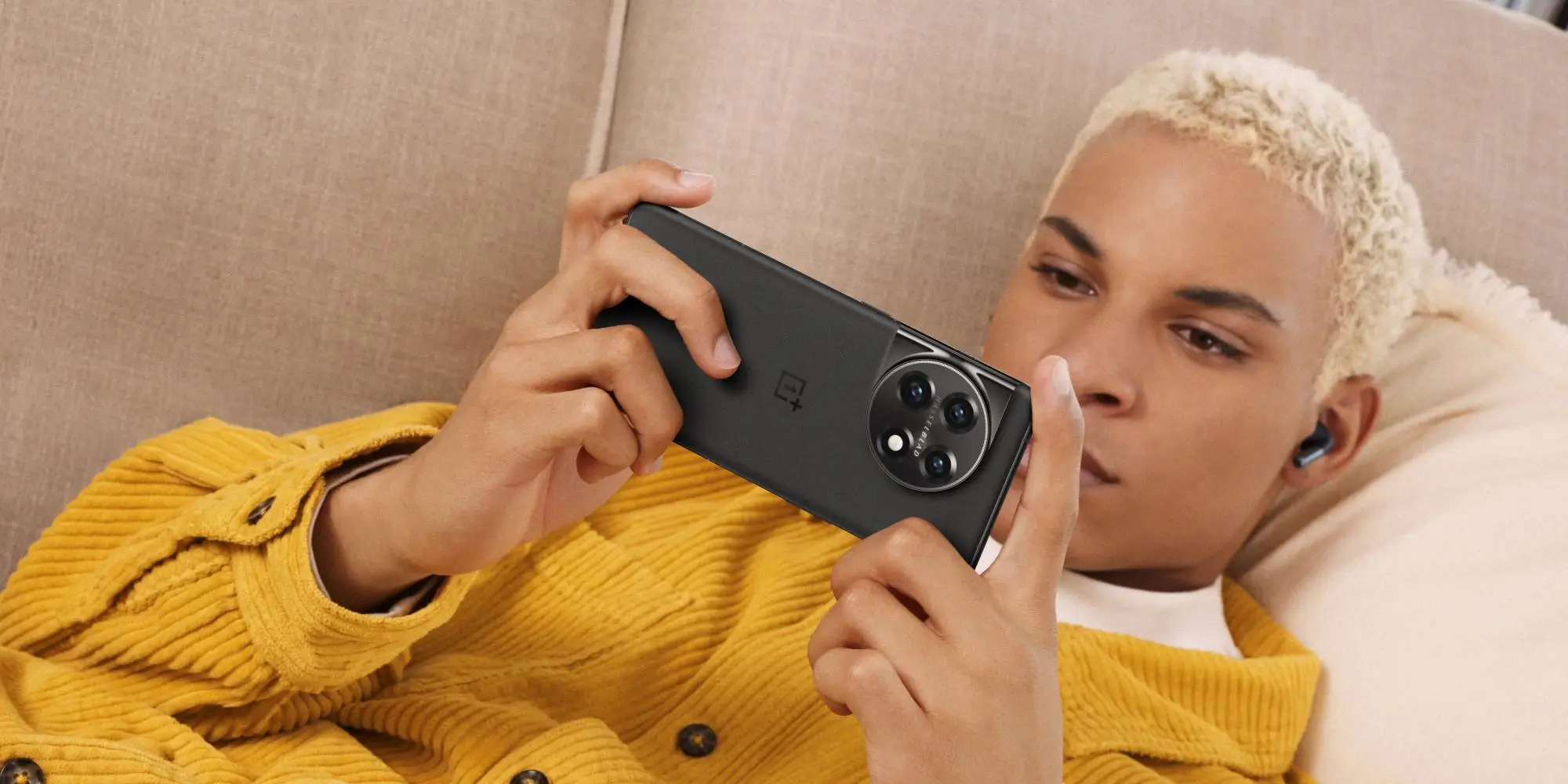
OnePlus 9 is a premium smartphone with a stunning AMOLED display.
However, accidents happen, and your phone screen may crack or break. In such situations, choosing a professional for your OnePlus 9 screen replacement can offer numerous benefits compared to DIY repairs or choosing an inexperienced technician.
Firstly, professionals have the necessary skills and experience to handle delicate electronic devices like OnePlus 9 without causing further damage.
They use specialized tools and techniques to replace the screen without affecting other components or causing any harm to the phone’s functionality.
Secondly, professionals use high-quality parts that are compatible with your OnePlus 9 model.
Using cheap or substandard parts may seem like a quick fix, but it can cause significant problems in the long run. Low-quality screens may have compatibility issues and affect the phone’s performance or even lead to more damage.
Thirdly, professional repair services offer warranty coverage for their workmanship and parts used in the repair process.
This means that if any issues arise after replacing the screen, you can return it to them for free repairs within the warranty period.
Fourthly, choosing a professional for your OnePlus 9 screen replacement saves you time and effort.
DIY repairs require extensive research about your phone model and its components along with purchasing specialized tools required for repairing it. On the other hand, professional repair services are equipped with all necessary tools and expertise required for efficient and timely repairs.
Lastly, hiring a professional ensures that your personal data on your device remains secure during the repair process.
Reputable repair shops follow strict privacy policies to protect their customers’ data from unauthorized access or theft during repairs.
In conclusion, choosing a professional for your OnePlus 9 screen replacement offers numerous benefits such as reliable workmanship using quality parts compatible with your device model along with warranty coverage if anything goes wrong after repairs.
It saves you time and effort while ensuring that personal data on your device remains secure during repairs. Therefore it is highly recommended to opt for a professional repair service for your OnePlus 9 instead of DIY repair or inexperienced technicians.
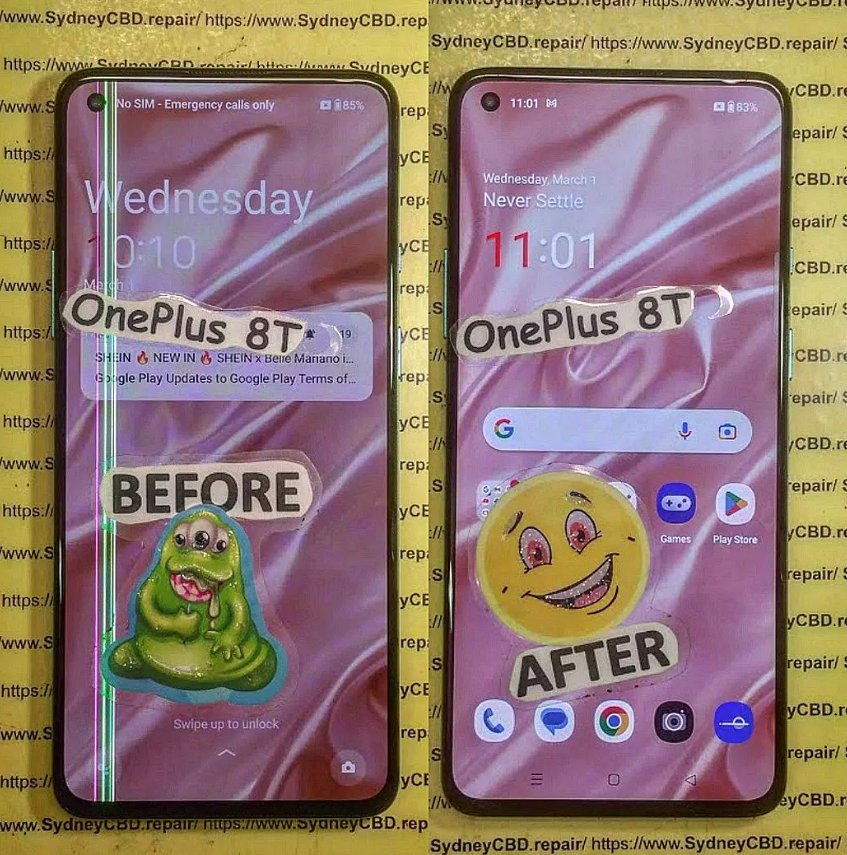
This video will show how David performed a OnePlus 8T screen replacement. We know that you don’t really need a OnePlus 8T screen replacement if you’re willing to put on a back case for your smartphone. However, if you are not keen on using a case for your phone, then a screen replacement is a good option. There are some benefits to have a OnePlus 8T screen replacement. One, you can maintain the form factor of your smartphone. Two, you can have a robust cover for the internal components of the smartphone. Lastly, you could use NFC or wireless charging better without any cover or cracks on the screen of your OnePlus 8T.
Sydney CBD Repair Centre is the go-to repair shop for all your electronic gadgets. Whether it’s a smartphone, tablet, or laptop, they have the expertise to handle all types of repairs. Among their specialties is OnePlus screen repair services.
OnePlus phones are known for their high-end features and robust build quality. However, accidents can happen, and screens can crack or shatter. If you are in such a situation, Sydney CBD Repair Centre has got you covered.
Their team of highly skilled technicians has years of experience in repairing OnePlus screens. They use only genuine parts to ensure that your device functions as good as new after the repair.
At Sydney CBD Repair Centre, they understand that time is precious. That’s why they offer same-day repairs for most OnePlus models. You don’t have to wait for days or even weeks to get your phone back.
Their repair process is straightforward and transparent. Once you bring in your device, one of their technicians will diagnose the problem and provide you with an accurate quote for the repair cost.
If you agree with the quote, they will proceed with the repair work using state-of-the-art equipment and tools. They will keep you updated throughout the process to ensure that you are aware of what’s happening with your device.
Apart from screen repairs, Sydney CBD Repair Centre also offers other OnePlus-related services such as battery replacement, camera repairs, charging port repairs among others.
In addition to their expertise in repairing electronic devices, Sydney CBD Repair Centre is also known for its excellent customer service. Their friendly staff will answer any questions that you may have and guide you through the entire repair process.
They also offer a 90-day warranty on all their repairs which gives customers peace of mind knowing that if anything goes wrong within this period; they can bring back their device for free troubleshooting and fixing without additional charges.
In conclusion, if you need a reliable shop offering high-quality OnePlus screen repair services in Sydney, look no further than Sydney CBD Repair Centre. Their team of skilled technicians, same-day repairs, use of genuine parts and excellent customer service make them your one-stop-shop for all OnePlus repairs.
oneplus 8t
oneplus 8t screen replacement oneplus screen replacement sydney
oneplus screen replacement australia
sydney cbd
sydney cbd repair centre oneplus 8t repair
oneplus repair
oneplus 8t review
oneplus 8t unboxing
oneplus 8t camera
A big trend in smartphones over the past few years has been the “periscope” zoom camera, and it seems OnePlus will finally adopt the tech in an upcoming release.
Periscope lenses in smartphones allow for zoom that goes beyond 2-3x. Google uses the technique in Pixel phones to hit up to 5x optical zoom, while Samsung uses it for the 10x telephoto lens on its Ultra devices, and countless other brands have been jumping on board too. Even Apple is rumored to introduce a periscope lens on its next iPhone.
But OnePlus, surprisingly, has yet to use a periscope zoom lens in its smartphones. The OnePlus 10 Pro and OnePlus 11 both maxed out with traditional zoom methods at 3.3x and 2x respectively.
It seems that may soon change, though. Digital Chat Station reports on Weibo that OnePlus has a “periscope arrangement” in the pipeline, with testing underway. It’s unclear what optical zoom level OnePlus is aiming for, but the simple fact the brand is finally jumping on board is great to see.
Presumably, this would make its debut in the OnePlus 12 sometime next year. OnePlus’ next smartphone is expected to be its first foldable, which would be a relatively odd place for the tech to debut. Periscope lenses are quite rare in foldables, with Google’s new Pixel Fold offering the tech, as well as Huawei’s Mate X3 and some others. But most stick with rather basic camera hardware for the sake of space.
Kuo: Upgraded optical zoom to be exclusive to iPhone ‘Pro Max’ cameras until at least 2025. Apple is expected to release its first iPhone with a periscope lens with this year’s iPhone 15 lineup, but rumors say it’ll be limited to only the highest-end iPhone 15 Pro Max. According to a new report from Apple analyst Ming-Chi Kuo, the current expectation is that this exclusivity won’t change for the foreseeable future…
(3/5) Only one/the highest-end model of the new 2H24 iPhone 16 series may have a periscope camera, not the two models of market expectation. It's detrimental to Largan and Genius since the demand for lens upgrades will fall below expectations.
Periscope lens for iPhone 15 and beyond. A periscope lens is one that relies on a prism to reflect light to multiple internal lenses at 90 degrees to the camera sensor. What this means is that the length of the lens can be much longer than a traditional telephoto lens, which in turn means that periscope lenses can offer much better optical zoom capabilities.
For example, the iPhone 14 Pro and iPhone 14 Pro Max both have a telephoto lens that offers 3x optical zoom and 15x digital. Samsung has already made the switch to a periscope lens in its flagship Galaxy S22 Ultra, which offers 10x optical zoom and 100x digital zoom.
The expectation is that the iPhone 15 Pro Max this year will be the first iPhone to switch to a periscope lens. According to Ming-Chi Kuo, Apple’s implementation of the technology will include a 1/3″ sensor that has a 12-megapixel resolution with f/2.8 aperture, sensor-shift stabilization, and up to 6x optical zoom.
Rumors initially indicated that while the periscope lens would be exclusive to the highest-end iPhone 15 model this year, Apple would expand it to the smaller “Pro” phone in 2024. Now, that no longer appears to be the case.
Kuo reports that he now expects only the highest-end iPhone 16 model in 2024 will offer a periscope lens, whether this is called the “iPhone 16 Pro Max” or “iPhone 15 Ultra.”
There are two reasons Apple may have made this decision. It could be that the company views the periscope lens as a way to differentiate the iPhone 16 Pro Max from the iPhone 16 Pro, giving people a reason to spend more on the high-end model. Alternatively, it could be a technical or engineering limitation.
In the past, the switch to a periscope lens could be one of the biggest changes to the iPhone camera hardware in several years. The lack of greater optical zoom (and digital zoom, to a lesser degree) is the major advantage Samsung’s latest flagship devices have over the iPhone lineup.
The fact that the periscope lens will be limited to the big-screen iPhone until at least 2025 is disappointing for people who prefer smaller phones. The bifurcation here is similar to the days of the iPhone 6s, where the iPhone 6s Plus included an optical image stabilization sensor for video and still pictures, unlike the iPhone 6s.
OnePlus tipped to launch its first foldable in August
2023 is quickly turning into the year of the foldables, and now we’re hearing more about when OnePlus will launch its first entry.
With Oppo being one of the biggest names pushing foldable smartphones, it was only a matter of time until OnePlus took the plunge. Earlier this year, alongside the debut of its latest flagship, the OnePlus 11, the company teased a foldable smartphone to debut later in the year. The company then reiterated that at MWC.
Now, reliable tipster Max Jambor is adding a date to that. Apparently, the first OnePlus foldable will make its debut in August of this year.
That timeline doesn’t come as much of a surprise, really. Last year, OnePlus launched its OnePlus 10T in August, and years prior have seen similar timelines as well. An unveiling in August would also put OnePlus in a good spot as far as the competition goes, with Samsung expected to launch the Galaxy Z Fold 5 in July, a date it has pushed up from previous years. Google is also preparing to launch its first foldable, which is expected to go on sale in June.
Leaks of the first OnePlus foldable have been relatively minor thus far, with one past leak revealing the possible “OnePlus V Fold” name for the product. A recent tweet also made the rounds claiming the device would have an 8-inch inner display, Snapdragon 8 Gen 2, and triple-camera array comprised of a 50MP main sensor, 48MP ultrawide, and 64MP telephoto. There hasn’t been anything to back up that rumor, but it seems reasonable to expect, especially given that we know the OnePlus foldable won’t be an exact copy of the Oppo Find N2.
During its first launch event of 2023 earlier this month, OnePlus offered a somewhat cryptic teaser that, in Q3 of this year, it would host another launch. The brand offered no context at the time, but it was pretty clear what was coming – foldables.
Now, OnePlus is explicitly confirming that, yes, it will launch its first foldable smartphone in 2023.
During a session at MWC in Barcelona today, OnePlus confirmed that it will launch a foldable smartphone in the “second half of 2023,” likely referring to the previously teased Q3 timeline. The brand offered no further insight into what to expect, beyond saying that more information would be released the months to come.
OnePlus COO Kinder Liu said:
Our first foldable phone will have the signature OnePlus fast and smooth experience. It must be a flagship phone that doesn’t settle because of its folding form, in terms of industrial design, mechanical technology, and other aspects. We want to launch a device that aims to be at the pinnacle experience of today’s foldable market.
It’s notable that OnePlus is referring to this as a singular device, as many expected the company to launch both “book” and “clamshell” foldables. The brand at one point trademarked the names “OnePlus V Fold” and “OnePlus V Flip,” furthering the idea of two devices. That would also make sense, given OnePlus’ parent company Oppo also sells two foldables.
OnePlus hasn’t confirmed if this first foldable will be a “book” like the Galaxy Z Fold 4 or a “clamshell” like the Galaxy Z Flip 4, but given recent leaks it sounds like it will be of the Fold variety. Just last week, a leak claimed the device would have less in common with Oppo’s Find N2 than expected, which supports the idea that OnePlus is aiming for that form factor first.
Whatever the case, it’s certainly exciting, as a OnePlus foldable would bring more competition to Samsung, especially if it ends up launching in North America.
An update to the phone that never was, the OnePlus 10T arrives in late summer to fill a slot a notch below the 10 Pro. There was no OnePlus 10 to be succeeded, and there’s no 10T Pro now either, so the 10T is in somewhat of weird spot – superior to the 10 Pro is some ways, not quite as good in others.
The upgrades come in areas that one easily associates with OnePlus. On the one hand, is performance – the new model uses the latest Snapdragon 8+ Gen 1 chipset, the TSMC-made version coming with improved speed and efficiency. It’s coupled with the most advanced cooling system the company has made, so it can make the most out of that chip. And then there’s charging speed – the 150W charging capability of the OP10T sounds excessive on paper, but it does make it one of the fastest charging handsets we’ve seen.
Not being a Pro, the 10T does make some concessions in other areas, key among them being the camera. The rather unimpressive setup is missing a zoom camera (a 3x one present on the 10 Pro), and the ultrawide one is a midrange-grade unit (if even that). That only leaves the main camera with some proper imaging chops, but it, too, is hardly cutting edge.
A similarly not-quite-flagship bit is the display – sure, it’s a 120Hz capable OLED, but it omits the granular adaptive refresh rate we’ve come to expect from top-end models.
But framing the 10T as a flagship and pointing out ways in which it misses the mark may be unfair to its aspirations. There’s a reason why there’s no Pro in its name, and with a starting price of $650/€740 it’s fighting a different battle. Let’s see how it does.
Disclaimer. We can not guarantee that the information on this page is 100% correct.
OnePlus 10T unboxing
There are no surprises in the presentation – the 10T arrives in a familiar bright red cardboard box. It’s a full-size one, too – it has to be in order to fit the chunky power adapter. There’s a 160W stamp on it, but the phone will max out at just 150W, as mentioned before. In the US, the power output will be capped at 125W, too – bummer. It’s worth mentioning that the charger is also USB PowerDelivery compliant and will put out up to 45W through its USB-C port.
There’s little more in terms of accessories inside the box other than the adapter and cable to go with it. There are a couple of 1+ stickers, for what it’s worth.
There’s no bundled protective case, but OnePlus sent us a couple from their case roster that you can purchase at an extra cost. One of them is black and mimics the sandstone texture of earlier models by the company – from when they still did things to stand out from the pack. The other one is the cooling type, similar to the one we had for the Oppo Find X5 Pro. It has cutouts in a striped pattern, and with some imagination, you could see stylized lightning bolts in there.
Competition
The OnePlus 10T‘s base price of $650/€740 (for an 8GB/128GB version) makes it reasonably competitive, both in the US and Europe, while the INR 50K asking price sounds like a bargain in India.
A Galaxy S22 is nominally $800 but now runs for $700 (for the same base 8GB/128GB configuration), while it’s €750 or less in Europe. It comes with a few advantages to make up for the small premium in the US, while the level playing field in Europe makes it a fight on the merits entirely. At INR 75K, the Galaxy is in a very different price bracket in India.
The IP68 rating is among the S22’s pros in this head-to-head, as is the more versatile camera system (3x tele, higher-res ultrawide, AF-capable selfie camera). The OP counters with better battery life and way quicker charging, though the S22’s wireless charging could settle it in the opposite direction for some buyers. The 10T does have a brawnier chipset, though it goes to waste with the gaming fps caps – the Galaxy does allow high fps gaming. The S22 could be too small for some folks looking at the OP 10T, and the plus-size model can be out of budget.
If, however, small is good, there’s always the Zenfone 9, retailing for €800 in Europe. At less than 10% more expensive than the 10T, this one too has its advantages – the IP68 rating and superior camera setup (though missing a tele) aren’t surprising, but the Zenfone also has its own solid implementation of the SD8+ Gen 1, making it one better than the Galaxy. There’s no matching the 10T’s charging speed, however, and if you want big, the Asus is not it.
In a way, you might be able to get a Xiaomi 12 Pro for OnePlus 10T money in Europe – if you’re eyeing the 16GB/256GB OP at €820. A 12GB/256GB Xiaomi goes for as much and is a proper flagship – with the cameras and display of one. It also charges about as fast as the 10T, which is quite the achievement, though the OnePlus still wins for endurance. In India, even a base 8GB/256GB 12 Pro is more than 10% pricier than the top-of-the-line 10T, but it may still be worth the extra money if you’re after a more competent cameraphone.
Meanwhile in the US, Google will sell you a Pixel 6 Pro for the same $650 that OnePlus charges for the 10T – admittedly, it’s a temporary discount from the usual $900, but it’s the number we’re looking at right now. The Pixel has more and better cameras, software from the very source, wireless charging, and an IP68 rating. It matches the 10T’s battery life, though the 10T obviously takes the wind for wired charging speed. If you’re on this side of the Atlantic, the Pixel 6 (non-Pro) for €650 can be a reasonable alternative to the 10T as well.
With the close ties between the brands, can the Realme GT2 Pro count as a rival? Well, why not – it’s different enough and is priced in the same ballpark wherever the two share markets. We got significantly better battery life out of the Realme, perhaps thanks to its more advanced display, and while the OP maintains an advantage in charging speed, the Realme is no slouch either. Main cameras are similar, but the Realme’s fisheye ultrawide and microscope are infinitely more interesting than the 10T’s meh ultrawide and pointless macro.
Samsung Galaxy S22 5G • Asus Zenfone 9 • Xiaomi 12 Pro • Google Pixel 6 Pro • Realme GT2 Pro
Verdict
The OnePlus 10T is hardly an exciting release, and it makes it easy on us to pick on it for its missteps. For the most part, those were already there in the spec sheet – the so-so camera system and lack of wireless charging and IP rating weren’t exactly surprises, and the press images readily reveal the absence of the alert slider too. That last bit, coupled with the fact that OnePlus and Oppo Android overlays have been steadily converging, may also put off long-time fans of the brand.
But the 10T doesn’t have to be all things to all people quite like a ‘proper’ flagship does, and the 10 Pro is still there to cater to a more demanding audience. The 10T’s main selling points were also right there on the official product pages, and the phone does deliver top-level performance and charging speed. For its conservatively specced camera, it delivers an okay experience, the display is solid in its average-ness, battery life is similarly middle-of-the-road – all of these to be taken in a good way if that makes any sense.
In its essence, the OnePlus 10T is an upper-midrange phone with a top-tier chipset and class-leading charging capability. We’d say it’s priced accordingly and is worth what OnePlus is asking – perhaps you can read that as sort of a recommendation.
Pros
Bright 120Hz display.
Competent main camera for both stills and video, in good light and at night alike.
Some of the fastest charging in the business, solid battery life.
Nice sounding stereo speakers.
Fastest Android chipset on the market, great sustained performance.
Reviewing the OnePlus 9R feels like a deja vu. Except it’s not just a fleeting feeling. We have reviewed this phone before. Back then it was known as the OnePlus 8T.
It’s not often that we see a manufacturer launch pretty much the same phone twice in a row, but that appears to be the case here. Calling the OnePlus 9R similar to the OnePlus 8T would be an understatement. For all intents and purposes, they are almost exactly the same phone.
Disclaimer. We can not guarantee that the information on this page is 100% correct.
Okay, there are a few differences. Perhaps the most important one is the fact that the OnePlus 9R is currently exclusive to India, with no announced plans to release it elsewhere. Also, the OnePlus 9R is launching at a lower price than the OnePlus 8T did, starting at INR 39,999 versus the INR 43,999 of the OnePlus 8T.
The other differences are less meaningful. The OnePlus 9R runs on the new Snapdragon 870 instead of the 865. Calling it “new” is greatly exaggerating the situation, as it is essentially the same part as the 865 but with an overclock on the CPU and GPU. And finally, the OnePlus 9R has also received a slight facelift and comes in two new color options.
Is that enough for the OnePlus 9R to be a separate phone? We’ll just have to find out.
Unboxing
The OnePlus 9R comes with a fairly standard OnePlus packaging, consisting of the phone, charger, cable, and a clear silicone case. The packaging is identical to the OnePlus 8T, except for one major difference.
Both the OnePlus 9R and 8T claim to come with the Warp Charge 65 charger, but they are not the same models. The OnePlus 8T comes with WC065A21GB in India, while the OnePlus 9R comes with WC065B22GB. The difference is that while both can send 65W of power to a compatible OnePlus device, the OnePlus 8T charger can also send up to 45W to a USB-Power Delivery (PD) and Programmable Power Supply (PPS) compatible devices.
OnePlus 8T charger on the left and OnePlus 9R charger on the right
On the other hand, the OnePlus 9R charger will fall back to standard 10W charging when connected to a non-OnePlus device. It also has a standard USB-A port, unlike the USB-C port on the 8T charger, which is necessary to support USB PD. This doesn’t change anything for charging the OnePlus 9R itself. Still, if you also intend to use the charger for other devices around you, especially USB PD devices, then the OnePlus 9R charger isn’t going to be anywhere as good as the OnePlus 8T’s charger.
Competition
The OnePlus 9R faces some pretty severe competition, including some from other BBK brands.
The toughest competition comes from the Xiaomi Mi 10T Pro. This phone has a 108MP camera, Snapdragon 865, 144Hz LCD, and a 5000mAh battery and costs less than the OnePlus 9R in India. Then there’s the Mi 10T, which swaps out the 108MP camera with a still fairly impressive 64MP one and costs even less.
Next is the Samsung Galaxy A72. Samsung doesn’t try as hard in the specs department, with a relatively tame 90Hz display and Snapdragon 720G but it does have a 64MP main camera, a proper telephoto camera, and a 5000mAh battery. It’s also a fair bit cheaper than the 9R.
The older Galaxy S20 FE 5G is still quite a good option. It’s a bit more expensive than the OnePlus 9R but it does have all the bells and whistles, including a 120Hz AMOLED display, an impressive triple camera system, Snapdragon 865, and a 4500mAh battery.
Finally, there’s the Realme X7 Pro 5G. This phone is a lot cheaper than the OnePlus 9R but has a surprisingly similar spec sheet, including a 120Hz AMOLED display, MediaTek Dimensity 1000+ chipset that is fairly close in performance to the Snapdragon 870, 64MP main rear camera, and 65W fast charging.
Conclusion
The OnePlus 9R is an unusually lazy product, so much so that we are left wondering why OnePlus didn’t just drop the price on the 8T and continue selling it. It’s like showing up to the class with the same homework two days in a row and expecting the teacher to not notice.
It’s not that the OnePlus 9R is a bad product; we thought the 8T was quite good overall and being largely the same phone, the OnePlus 9R is also a good smartphone for most users. However, it doesn’t exactly push the needle forward in terms of innovation, technology, or even value.
Yes, the 9R is cheaper now than what the 8T launched for in India but after six months, that is to be expected. In the meantime, the competition has gotten much more aggressive and many of them are now better value.
Of course, OnePlus still holds an advantage in terms of the software experience over its rivals. It’s something that one can only experience first-hand and not something that can be quantified on a spec sheet. However, the company has continued to push the limits of what the users might find annoying in terms of promotional content by masquerading it as value-added services. The whole host of features that were added over the course of a couple of years also tend to be quite nagging and attention-hungry. These may seem like small things, especially if you are coming from other manufacturers but when your entire brand is built on a reputation for clean and distraction-free software, it will always be the little thing that breaks the camel’s back.
As lazy as it is, we do still recommend the OnePlus 9R for buyers in India as it is still a more robust complete package compared to some of its rivals. However, there’s some good competition out there right now and you can’t really go wrong with any of it.
OnePlus continues to find its place in the smartphone industry with the OnePlus 9 duo. The 9 and 9 Pro establishes OnePlus with a new partnership in the camera space – every major Chinese OEM has one, after all. With the new smartphones bearing the “Hasselblad” name, does the OnePlus flagship finally have a camera experience free of compromises? OnePlus uses the tagline “Your best shot” so we are setting our expectations high for the cameras’ performance.
OnePlus has entered into a three-year cooperation agreement with Hasselblad and the first phones to benefit from that are the OnePlus 9 and 9 Pro. For these phones, Hasselblad and OnePlus collaborated on calibrating the contrast and color processing with a view of tuning them to Hasselblad’s distinct style.
OnePlus 9 • OnePlus 9 Pro
In this review, we’ll focus on the larger of the two phones. The OnePlus 9 Pro‘s overall look does not deviate far from its predecessors, but it does dial back on a couple of design elements that help to improve the phone’s ergonomics. The centered linear arrangement of cameras is no more, and the 9 Pro now has a more conventional camera placement in a rectangular setup.
OnePlus 9 Pro next to OnePlus 9
The display on the 9 Pro uses a new display technology that OnePlus promises should reduce the power consumption of the panel by up to 50 percent. The savings is credited to a new LTPO backplane in the AMOLED panel. This enables the new ‘Smart 120Hz’ feature that variably adjusts the refresh rate all the way down to 1Hz if it needs to.
Debuting with the OnePlus 8T last year, the 9 Pro now sports the same dual-cell battery system compatible with an included 65W charger, capable of fully replenishing the 9 Pro’s battery in just about a half-hour but with improved charging software and lower internal battery resistance, they’ve been able to provide even faster initial charging from flat. OnePlus is also debuting a faster Warp Wireless charger with the 9 Pro that outputs 50W and we’ll be giving that a test as well.
Disclaimer. We can not guarantee that the information on this page is 100% correct.
Apart from the screen size and resolution, the main difference between the 9 and 9 Pro‘s camera systems is the addition of a dedicated telephoto camera on the OnePlus 9 Pro. The main camera gets an updated IMX789 Sony sensor which still supports omnidirectional Phade Detection auto focus and dual native ISO, and the ultra-wide now gets a 50MP sensor and a new type of lens to reduce lens distortion.
Video recording has been beefed up to support 8K video at 30 frames, and 4K video at 120 fps. There’s also a new Nightscape Video 2.0 which promises better low-light video so we’re looking at all-around improvements to the camera system on the 9 Pro.
We’re excited to see how much the image quality has improved on the camera trio (main, tele, wide) of the 9 Pro with this new Hasselblad partnership. We’ll also be looking to see how much battery life will improve despite having the same 4,500 mAh capacity as its predecessor. The lower-power display and Snapdragon 888 with integrated Qualcomm X60 modem should help in this regard.
Tag along as we look over the ins and outs of OnePlus‘ new flagship device. If you’re looking to upgrade from an older OnePlus device, we’ll give you the scoop on whether the 9 Pro is improved in all the right places or if it’s more like a scoop of ice cream you’ve already tasted before.
Unboxing
The media package that we received from OnePlus included both the OnePlus 9 and 9 Pro, along with one protective case for each, and the Warp Charge 50 Wireless Charger. This time around, some may be happy to learn that the new Wireless charging dock does come with a removable connector and supports any 50W USB-C PD charger.
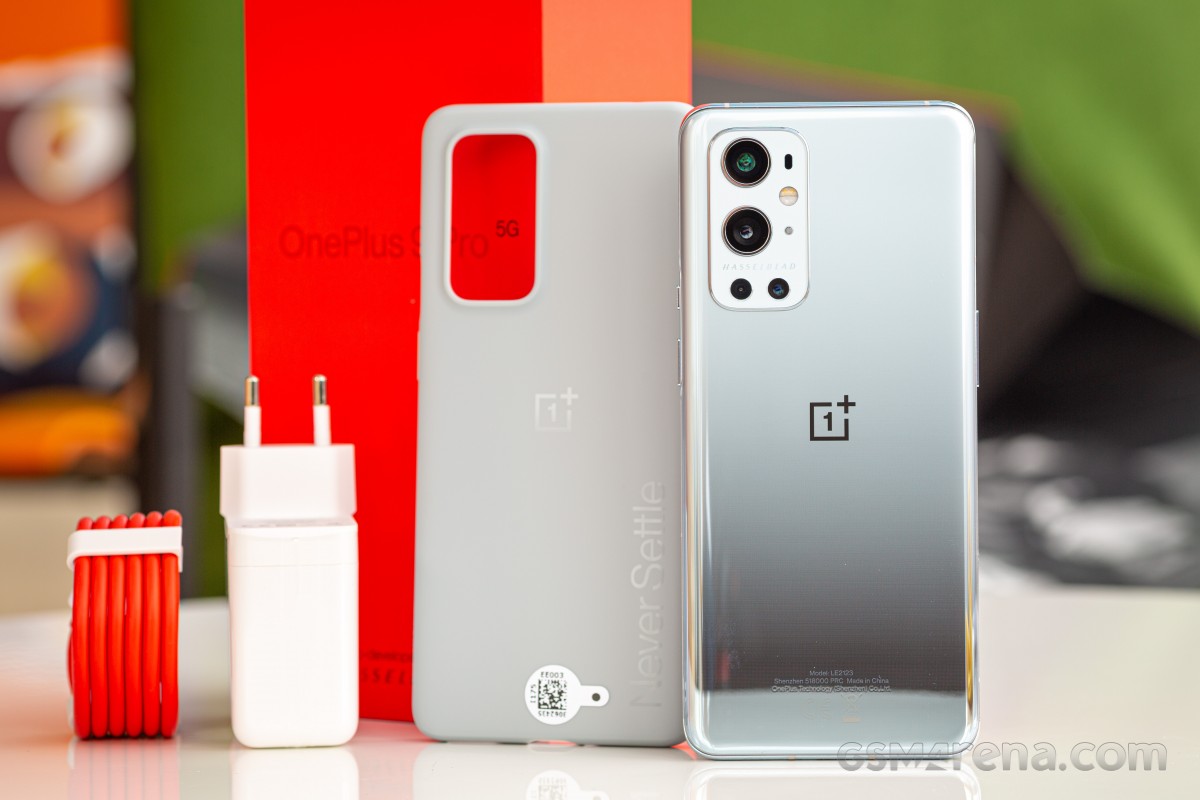
The OnePlus packaging has become a standard fare and the 9 Pro is no exception. Inside the now familiar red box is the phone at the top layer, followed by some paperwork, a silicone case in some markets, the 65W Warp Charge power adapter, and the usual red Type-C to Type-C USB 2.0 cable.
The silicone case this year has been switched to an opaque design. It’s not clear yet why OnePlus chooses to omit this accessory in some markets and decides to leave it in elsewhere. There will be aftermarket cases, obviously, along with some first-party options from OnePlus.
Two things that we can always count on OnePlus smartphones to come with are a set of OnePlus stickers, and a letter from the company’s founder Pete Lau that encourages customers to participate in the OnePlus community forums. A SIM tool is attached to this letter.
As usual, there are no audio accessories inside the package. Not even an audio adapter.
The competition
With prices going up and the OnePlus 9 Pro starting at a lofty $969, there’s no shortage of quality alternatives on the market.
We will start off with the toughest competitor of all, the Samsung Galaxy S21 Ultra. While the phone is technically priced at $1199, as per Samsung tradition it can frequently be available below that. At the time of writing, the price was down to just $900 with a special coupon, which is handily undercutting the OnePlus 9 Pro launch price.
The Galaxy S21 Ultra is one of the most accomplished smartphones we have tested. Whether it’s build quality, display performance, camera performance, or battery life, the S21 Ultra has you covered on all fronts. The camera performance, in particular, is most impressive and we think that the S21 Ultra has one of the most versatile camera systems on the market.
Samsung Galaxy S21 Ultra 5G
Another great option is the recently launched Xiaomi Mi 11, which is Xiaomi’s implementation of the ‘everything but the kitchen sink’ smartphone. While not available in all regions, the Mi 11 does undercut the OnePlus 9 Pro in pricing in regions where it is available. That’s not to say it’s compromised in any way, as the Mi 11 is packed to the gills with all the bells and whistles. Sure, MIUI may still be an acquired taste but in every other aspect it is a very strong contender in this segment.
Xiaomi Mi 11
Next is the Find X3 Pro from OnePlus‘ sister company, Oppo. The Find X3 Pro combines a stunning industrial design, top-notch feature set, and an excellent set of cameras, great display quality, and the same sort of blazing fast charging speeds that OnePlus is known for (it’s essentially the same tech). At $1099, the Oppo Find X3 Pro comes at a premium but one that may be worth paying, especially if you’re already considering spending over $900 on a phone.
Oppo Find X3 Pro
If you’re more into gaming, you might want to consider the ASUS ROG Phone 5. While marketed as primarily a gaming phone, the ROG Phone 5 is an extremely accomplished phone even outside of gaming, with great build quality, a quality display, terrific loudspeakers, great battery life with fast charging, and relatively clean build of Android. And while the camera quality may not be quite on par with some of the other flagships, it’s still very impressive and has come a long way from the original model. On top of all that, it’s also the cheapest phone in this bunch.
Asus ROG Phone 5
Lastly, there’s the Apple iPhone 12 Pro Max. There was a time when it wouldn’t have made any sense to compare a OnePlus phone with an iPhone due to the large gulf in price tags, but those days are long gone now. As for the phone itself, it combines exceptional industrial design, class-leading display color performance with Dolby Vision support, an excellent set of cameras all-round, best in class performance, great battery life, easy to use software with unparalleled software and game library, legendary customer support and a high resale value to boot.
Few devices can match the complete package that the iPhone is and the 12 Pro Max is the best of its kind. Sure, the 60Hz display isn’t quite modern and the lack of fast charging in the box (or any kind of charging) is disappointing after paying so much but these may be things worth sacrificing if you want one of the most well-rounded smartphones on the market and aren’t tied to the Android platform.
Apple iPhone 12 Pro Max
Verdict
The OnePlus 9 Pro is pretty much what we have now come to expect from OnePlus, a likable, dependable smartphone with almost all the bells and whistles one could ask for but not one that’s particularly exciting or game changing. It’s as if the company is content with making smaller changes rather than doing something disruptive or potentially controversial.
You can see this in the year over year growth of the Pro line. Whether you look back one year to the OnePlus 8 Pro or even two years to the OnePlus 7 Pro, you aren’t going to be seeing a remarkable difference. And that’s the crux of the matter here as there is a palpable sense of staleness in the air surrounding the brand that we can’t quite shake off.
But this staleness, this sense of contentment with slow progress, is at odds with the steady increase in the price year over year. OnePlus fans and critics over the years have lamented the company’s slow but sure move upward on the pricing ladder, turning from the hero who rallied against the oligarchs to living long enough to becoming the villain.
But with a $969 starting price, the company is now truly into the upper echelon of the smartphone market. We are talking about a market of discerning buyers where there is no room for missteps, misgivings, and certainly no room for slacking or slowing down. Even brands like Samsung have to sweat it out every year to keep customer attention in check and companies like Google who couldn’t keep up with the pressure had to fall back and reevaluate.
Is the OnePlus 9 Pro good enough to compete in this segment? Not quite. Sometimes, it’s not enough to just dress for the job you want. You also have to be good at it.
Pros
Great display performance
Relatively clean software and great UI performance
Powerful loudspeakers
Good performance from the main wide and ultra-wide cameras
Excellent 4K 120fps mode
Fast charging
Cons
Rear camera performance still behind the competition
Outdated front camera
No pro video features or true HDR recording
Hasselblad partnership mostly a marketing gimmick
Telephoto camera lacks Nightscape and 4K video support
Worse battery life performance than previous models
OnePlus Nord 2T premiered last May 2022, coming to replace the Nord 2 on store shelves. This is the first time we see a ‘T’ model for the Nord series, these refreshed models previously reserved for the flagship OnePlus series.
The formula is retained though and this T iteration also focuses on speed improvements – performance and charging. The Nord 2T comes with a newer Dimensity 1300 chipset and faster 80W wired charging. These, together with the slightly altered design, are the only differences to the original Nord 2. Certainly not a model to make Nord 2 owners jealous, the Nord 2T is meant to keep the line relevant as competition improves.
And on paper the OnePlus Nord 2T is certainly a very tempting smartphone, one that’s made our Flagship Killer Buyers’ Guide category. It offers a solid dual Gorilla Glass 5 build with beautiful frosted black or glossy mint back covers. Then there is a 90Hz Fluid AMOLED on top of a capable Dimensity 1300 5G chipset.
The triple-camera on the back has been carried over from the Nord 2 and is in line with most of the Nord 2T’s competitors – a 50MP primary camera with OIS for most of your shooting, an 8MP ultrawide for the rare more dramatic perspective, and a 2MP depth sensor that’s mostly there for marketing purposes. The 32MP selfie camera within the punch hole is also unchanged from the Nord 2.
This OnePlus Nord 2T features a 4.500mAh battery split into two separate cells, which now allows for an even faster 80W charging. The 80W adapter ships with the phone, naturally.
Finally, the new Nord 2T runs on the Android 12 with OxygenOS 12.1 launcher. OxygenOS 13 has been announced already, so we guess it will make it to this Nord 2T later this year, too.
Disclaimer. We can not guarantee that the information on this page is 100% correct.
The OnePlus Nord 2T, just like the Nord 2, is not IP rated and officially it features no ingress protection whatsoever. Unofficially, we noticed rubber insulation where on certain openings, so it is not entirely unprotected. Still, if the maker is not making any promises about its survival when submerged we wouldn’t risk it.
Now let’s proceed with the unboxing!
Unboxing the OnePlus Nord 2T
The OnePlus Nord 2T ships within a thick black box. It contains an 80W power adapter, a 10A-rated USB-A-C cable, and a cool protective case with two different textures.
The phone also arrives with a thin protective film applied on its screen. While it’s not of the highest quality, it’s not bad enough to make it immediately want to peel it off either.
Alternative offers
The OnePlus Nord 2T doesn’t bring many updates over the Nord 2. But that’s not entirely OnePlus fault, as the industry hasn’t enjoyed its finest days lately with all the supply shortages and economic challenges. Plus the Nord 2T was never intended for the Nord 2 users, but for those looking for a decent smartphone on a reasonable price.
The 128GB model of the Nord 2T is currently priced around €380, while the 256GB one will set you back €470-€480. Let’s see what else you can get within the same price bracket.
The first smartphone that we could think of was the Xiaomi 12 Lite. Its 256GB version costs the same as the 256GB Nord 2T and we found this 12 Lite to be one of the best phones you can buy around the €450-€500 mark. It offers a magnificent AMOLED with Dolby Vision support, 120Hz refresh and 12-bit native colors. The 12 Lite runs on a similarly powerful Snapdragon 778G chipset and features a similar triple-camera on the back sans the OIS for the primary. If you fancy one of the best screens on the market and don’t mind using MIUI, you may want to consider the Xiaomi 12 Lite.
The Realme GT Neo 3T has a more powerful Snapdragon 870 chipset, a faster 120Hz OLED screen and longer battery life. The OnePlus Nord 2T on the other offers slightly better camera quality and OIS. The base 128GB version of this Realme is slightly more expensive than the Nord 2T, but the 256GB pricing is a match.
The Galaxy A53 is a good alternative if you want a water-resistant smartphone. The starting price of the A53 is about €40 cheaper than the Nord 2T and it comes with a faster 120Hz Super AMOLED screen. The performance is inferior to the Nord 2T, but you will get a more versatile camera experience with a higher resolution ultrawide camera.
And, finally, we want to mention the Nothing Phone (1). It has a great OLED screen with 120Hz refresh and 10-bit color, there is also one of a kind Glyph LED notification system, similar performance, and excellent camera experience. The weak points of the Nothing Phone (1) are the lack of a charger in the box and the mediocre audio quality through wired headphones. The 128GB Nothing Phone (1) is about €80 more expensive than the Nord 2T, but it may be worth the extra money for the better screen, cameras and the Glyph LEDs.
The OnePlus Nord 2T is an excellent smartphone with all-round balanced specs, one that delivers on every promise that was made on its official website. The Nord 2T has a beautiful design, solid 90Hz OLED screen and great performance courtesy of the Dimensity 1300 chipset.
We also enjoyed its excellent main camera and the loud stereo speakers. The long battery life and the fast charging are also worthy of mentioning, even if the 80W speeds aren’t actually faster than 65W.
Finally, the Nord 2T costs about €380, which is an attractive price tag, and one we’d say makes it a great deal.
The lack of official water protection is an important downside to mention as well as the fact that you can get 120Hz panels in this price range.
Pros
Attractive dual-glass design – frosted or glossy back panel.
Bright enough OLED, 90Hz refresh.
Loud speakers.
Fast charging.
Great CPU and GPU speed.
Excellent photo and video quality.
Cons
Minor update over the Nord 2.
The speakers’ audio output could have been better tuned.
Average sustained performance, limited HFR gaming.
A decade after launching its first smartphone, OnePlus is finally making its first Android tablet in the “OnePlus Pad,” coming in just a couple of short weeks.
Rumors have been swirling of OnePlus making its own tablet for quite some time, and earlier this morning leaked renders even offered a first look at the upcoming Android tablet. But now, OnePlus has explicitly confirmed that the “OnePlus Pad” is right around the corner.
Speaking to TechRadar, OnePlus confirmed that the OnePlus Pad, its first Android tablet, will be launching on February 7 alongside the OnePlus 11. The company also shared the first official teaser image for the tablet, which confirms this morning’s leak.
OnePlus says that its tablet is built from an aluminum body that has a slightly cambered frame (aka it’s rounded) along the sides. Apparently, that design choice was made to ensure the tablet was comfortable to hold for hours at a time. The company also points out that the circular rear camera module was placed in its central location rather than the more typical corner position because it is “more lined up with your own view.” Makes us wonder why the same isn’t true of the OnePlus 11.
The image above also gives an indication of the display compared to its bezels, which appear to be relatively thin, but big enough to house a front-facing camera. OnePlus’ tease that the tablet will be “smooth without equal” also hints that it might include a high refresh rate display.
The OnePlus Pad will launch on February 7 alongside the OnePlus 11, sporting a “Halo Green” color. There’s not much known about the spec sheet or any special features of the tablet, or even where it will be sold.
I turn 46 today so as Bday gift, I bring you the very first look at the #OnePlusPad!🥳
Here are the official specs and your first look of OnePlus 11
The OnePlus 11 is coming up quickly, and after announcing a launch event in India coming in February, the brand has now confirmed more details. The OnePlus 11 will launch in China on January 4, and the first official pictures have arrived.
Earlier this month, OnePlus announced its “Cloud 11” event which is set to take place in February. The event is confirmed to see the launch of the OnePlus 11 and the OnePlus Buds Pro 2 at least in India, but presumably also confirming some global details on top of that.
Shared on Weibo, OnePlus has added a few more details.
First and foremost, the initial launch of the OnePlus 11 will take place on January 4. That’s when the phone will launch in China exclusively ahead of its expansion to other countries.
OnePlus has also confirmed quite a few details regarding the specs of the OnePlus 11. The official specs include 12GB or 16GB of LPDDR5X RAM and up to 512GB of storage using the new UFS 4.0 standard. Android 13 will also be on board out of the box, though with Oppo’s ColorOS for this Chinese model, which all comes alongside the Snapdragon 8 Gen 2 that’s already been confirmed. OnePlus has yet to announce what the camera specs will include on OnePlus 11.
Alongside all of that, OnePlus has also shared the first official images of the OnePlus 11.
And, finally, 91Mobiles has published a handful of OnePlus 11 hands-on images. While there’s a bit of room for doubt on the authenticity of these, they do line up with the official shots quite well.
Qualcomm just announced the Snapdragon 8 Gen 2 yesterday, and we already know one of the first phones that will use it. Unsurprisingly, the OnePlus 11 will use the Snapdragon 8 Gen 2.
OnePlus confirmed on Weibo that the OnePlus 11 “will be the first” to offer the Snapdragon 8 Gen 2. It remains to be seen if the device will truly be the first smartphone using Qualcomm’s new chip, but it will certainly be the first from OnePlus.
There aren’t any other teasers of the device, but one thing that stands out as notable is that the device is simply called the “OnePlus 11” rather than the “OnePlus 11 Pro.” This would point to OnePlus perhaps going back on last year’s choice to launch the OnePlus 10 Pro but never formally launching a “OnePlus 10” – the closest we got was the OnePlus 10T, which was a starkly different device.
According to a rumor from earlier this year, OnePlus may end up releasing the OnePlus 11 in some capacity by the end of 2022. That’s well ahead of schedule – the OnePlus 10 Pro launched in China this past January and arrived globally in March.
Leaks have also shown off the design of a “OnePlus 11 Pro” with a circular camera module and an otherwise familiar design, as pictured above.
The Snapdragon 8 Gen 2 was just announced with a new layout, Arm’s new Cortex-X3 cores, Wi-Fi 7 support, AV1 decoding, and other big upgrades as well as a focus on power efficiency.
Qualcomm announces Snapdragon 8 Gen 2 with AV1, raytracing, 1+4+3 core config
Qualcomm today announced the Snapdragon 8 Gen 2 as its new flagship Android chip with a big focus on AI performance.
This chip is built on a 4nm process with a different core configuration than last year. There’s the “Prime” Arm Cortex X3 clocked at 3.2GHz with four “Performance” (2.8GHz) and three “Efficiency” cores (2GHz). It was previously three and four, respectively, with Qualcomm finding a boost for multi-thread executions with this approach. Another optimization sees two of the Performance cores support both 64- and 32-bits operations so that older apps can run efficiently.
There’s support for up to 16GB of LP-DDR5x 4200 MHz RAM. Overall, Qualcomm says this Kryo CPU is up to 35% faster as new microarchitecture results in 40% more power efficiency (compared to 8 Gen 1).
The Adreno GPU touts up to 25% faster performance and 45% better power efficiency with Vulkan 1.3 support, while the “Adreno Display” features “OLED Aging Compensation” to combat burn-in. The other highlight is hardware-accelerated ray tracing when gaming that better simulates how light physically behaves in the real world from accurate reflections to better shadows.
The Snapdragon X70 5G model supports 5G+5G/4GDual-SIM Dual-Active, while the FastConnect 7800 powers low-latency Wi-Fi 7 and dual-Bluetooth connectivity. Other features include 4x carrier aggregation downlink and Snapdragon Satellite two-way messaging support. There’s also support for audio with dynamic head tracking.
The Qualcomm AI Engine is the other big focus with up to 4.35X increased AI performance thanks to a 2x bigger tensor accelerator. It features a dedicated power delivery system that doubles the connection between the Hexagon Processor and the Adreno GPU, as well as Spectra ISP, for higher bandwidth and lower latency. For AI tasks, the faster connection reduces the dependency on the system DDR memory. There’s also INT4 AI format support for 60% performance/watt improvement during sustained AI inferencing.
Meanwhile, the Sensing Hub features dual AI processors for audio and other sensors with a 2x performance increase and 50% more memory. Last year’s always-on camera has been rebranded to the Always-Sensing camera, with one possible use case being a phone reading a QR code in the background.
The Snapdragon 8 Gen 2 features what Qualcomm calls a “Cognitive ISP” that can run real-time semantic segmentation to identify and then optimize for faces, hair, clothes, sky, and other common layers in a scene. This is made possible by the new power delivery system. There’s support for Samsung’s ISOCELL HP3 image sensor (200MP) and AV1 codec for up to 8K HDR at 60FPS video playback.
The Snapdragon 8 Gen 2 will appear in commercial devices by the end of 2022 with adoption from Asus ROG, Honor, iQOO, Motorola, Nubia, OnePlus, Oppo, Redmagic, Redmi, Sharp, Sony Corporation, Vivo, Xiaomi, Xingi/Meizu, and ZTE.