We have known for a while now that the Galaxy J3 is coming out in the near future, a couple of weeks back the handset was spotted on GFXBench and just earlier this week the Galaxy J3 got its FCC certification which is always a big indication that a launch isn’t that far off. Today photos of the Galaxy J3 have appeared online and they show that it’s business as usual, the new handset doesn’t bring any major changes as far as the design is concerned against its predecessor the Galaxy J2.
The photos have been published by TENAA, China’s Telecommunications Equipment Certification Center, it’s version of the FCC basically. Given that the handset has now sailed through TENNA as well it most certainly is only a matter of time before Samsung officially announces the Galaxy J3. The handset (SM-J3109) is powered by a Snapdragon 410 processor with Adreno 306 GPU, it has 1GB RAM and 8GB internal storage. An 8-megapixel rear and 5-megapixel camera are likely to be onboard alongside Android 5.1.1. No word as yet on how much the Galaxy J3 will cost when it does arrive.
The best of Latin American culture will be celebrated in Sydney Park this Saturday during a folk festival supported by the City of Sydney.
The Urban Latin Folk Festival will showcase art and cuisine in exhibitions, cultural displays, workshops and live performances at Sydney Park Pavilion thanks to grants from the City.
The inaugural event will include the launch of an original music single and video clip, Latin foods, wines and accessories presented by renowned Sydney-based suppliers.
“The City is delighted to support the Emigro Festival and help it bring the best of Latin America to Sydneysiders,” Lord Mayor Clover Moore said.
“The surrounding communities of Erskineville, Alexandria, Newtown and Marrickville are renowned for their unique character, and I’m sure they will enjoy the colour and rhythm of Latin folk.”
Latin American band Libelle, which will release its new single Emigro during the Saturday night event, will get hips swinging with folkloric rhythms, while folk band Pukara will combine guitars, bamboo flutes, Andean pipes and Latin percussion.
Music students from Concord West Public School will also play original Latin songs when their school band performs with professional Sydney-based musicians.
The Latin Store from Sydney’s Queen Victoria Building will exhibit colourful products from Chile, Peru, Argentina, Ecuador and Mexico as painter Tamara Martinez and fellow visual artist Anton Olea display their works.
“We will be showcasing upcoming artists to educate Sydneysiders about the urban Latin folk cultural movement in Sydney and around the world,” event organiser Olga Vega said. “The festival is a great night for people of all ages to come along and get a big taste of Latin America.”
Angove Wines is sponsoring the event and Dubology studios, directed by Ivan Ordenes, is the producer.
The grant is part of the City’s latest $1.2 million funding program, which in 2015 is supporting 57 projects that meet the City’s long-term social, economic, cultural and environmental goals. It is part of a $13 million grants program linked to the 10 directions of the City’s community-supported 2030 program.
Over the past 10 years, the City has supported thousands of projects through the Community Grants program valued at $11 million.
Where and when: Sydney Park Pavilion on Saturday 7 November from 5.30pm to 11pm.
Tickets: $15 on the night or contact Olga Vega olga.vega@live.com or phone 0405 537 173.
Apple and GT Advanced Technologies Inc. agreed to part ways back in 2014, after the latter filed for bankruptcy. Now the two have reached a deal that will eradicate GT’s $439 million loan from Cupertino, according to The Wall Street Journal. Apple originally tapped GT to make sapphire screens for its devices, but it became obvious that trouble was brewing when the iPhone 6 launched without one. It’s unclear what really happened behind the scenes, but GT accused Apple of shifting specs and requiring the company to manufacture millions of units the iPhone-maker wasn’t obligated to buy. Apple, on the other hand, said GT couldn’t meet its goals. Either way, GT ended up not having any clients that can sustain its business. Under the terms of the deal, the manufacturer will have to auction pieces of equipment, including some of its 600 sapphire-making furnaces, by November 23rd. It will then hand everything it couldn’t sell to Apple, which promised to nuke its debt completely
From the dawn of electronic music right up to the current digital DJing age of today, artists around the world have continuously sought out the best tools and equipment to fine-tune their skills and produce inventive tracks to excite music lovers everywhere. Samsung’s Soundcamp makes achieving these goals not only possible, but easy, too. And with the app’s new features and compatible third party apps, musicians—both amateurs and professionals—can play, compose, mix and “spin” right from the screen of their Samsung smart devices without any additional equipment.
Soundcamp, a mobile DAW and MIDI sequencer application, functions as an easy-to-use studio recording system that gives musicians access to an ensemble of built-in virtual instruments, including keyboards and drums, as well as an audio recorder equipped with sound effects. The app’s plug-in style, open-concept structure also gives users the option to connect to and record with various third-party music apps.
Tracks are then edited from the mobile workstation’s soundboard. Soundcamp’s well-organized and straightforward Multitrack View lets users record up to eight tracks in MIDI or stereo audio. In other words, they can add five additional components, such as Unique’s synth patches, even after recording their tunes on the drums, classic guitar and keyboard, to create a richer sound. For more advanced users, MIDI Editor View allows for PC-level MIDI editing. Likewise, Soundcamp’s Mixer View resembles the mixing consoles used in recording studios, so users can easily combine, route and change the level and dynamics of audio signals from one screen.
New Features for a New Sound
Nowadays, more and more people are opting to create their own music and DJing their own events. As such, Samsung has responded to the growing demand for professional grade music editing tools by adding two new features to Soundcamp, specifically in conjunction with the launch of the Galaxy S6 edge+ and Galaxy Note5, thus making it easier for musicians to achieve the sound they desire.
Looper, the first new feature, lets users create loops, short sections of tracks that have been edited to repeat seamlessly, which are commonly used in a number of genres, including hip hop, trip hop, techno and contemporary dub. Users can select from over 250 free, studio-quality audio loops from Loopmasters, the world’s leading producer of sample libraries; download a number of compatible, paid extension loop kits to create unique tracks in a variety of styles; or incorporate and mix their own sources.
The function utilizes an easy-to-use XY-pad with controllable effects that can be used to enhance live performances, while the Galaxy Gear app, when used in conjunction with the Gear S2, provides gestural control of the effects and loop arrangements. The end result is one that is sure to impress audiences, just as it did at IFA earlier this year, when DJ Raik showcased Looper. Check out his performance below.
Originally developed by experimental musicians, sampling is the act of taking a portion, or sample, of one sound recording and reusing it as an instrument or a sound recording in a different song or piece. The Sampler function allows for sound sample import, record and playback functions, converting any sound—including the human voice—into a custom instrument.
Along with the addition of the Sampler and Looper features, new third-party apps have been made compatible with Soundcamp for the Galaxy S6 edge+ and Note5. Among these are the Unique synthesizer and WOW2 filter by Sugar Bytes, as well as the Phase84 phase synthesizer by Retronyms and iLectric Piano and iGrand Piano by IK Multimedia.
In an age when just about anyone can be a run-of-the-mill digital DJ, Soundcamp offers all the tools an artist needs to unleash their creativity and create unconventional tracks that go above and beyond the expectations of the music world. Soundcamp is now available for the Galaxy S6 edge+, S6 edge, S6, S5, Note5, Note4, Note edge, Tab S2, S and Galaxy View. Download Soundcamp in Galaxy Apps or the Google Play store.
Tizen developers should be interested to hear that Samsung has released the source code for the Tizen Z3 (Z300HDDU0AOJ4), which reveals all the internals of the device’s software. In a world with growing privacy concerns, this is very good as it allows a developer to take a look at what exactly happens behind the closed doors in the Tizen OS.
This move will help developers in releasing more apps, putting aside the fact that Samsung is also offering 100 percent of their app revenue to developers. It looks like Tizen is truly gaining traction as Samsung declares that its OS is the 2nd largest smartphone operating system in the budget segment in India.
It’s important that Samsung keeps an open source approach to things, and this is a good step forward. If you plan on downloading the source code then prepare for a hefty download as all the files weigh in at about 1.8GB.
It hasn’t really been a secret that carriers in the United States will offer the cellular version of the Gear S2 smartwatch, the Gear S2 itself went on sale in the country last month and today the second largest carrier in the United States has confirmed when it’s going to start taking pre-orders for Samsung’s new smartwatch. Mark your calendars for November 6.
The Gear S2 happens to be one of the two smartwatches that are going to get support for AT&T’s NumberSync feature which it launches in early 2016, the feature will allow subscribers to share their smartphone number across multiple devices which includes smartwatches. So users will easily be able to receive and make calls/texts from the Gear S2 on AT&T without having to carry the smartphone with them. Pre-orders for the Gear S2 being November 6 on AT&T, the carrier is selling it for $199.99 with a two year contract or for $0 down with equal monthly installments of $15 per month for 20 months. It will be available from AT&T retail stores from November 20.
An online game that tests preschool children’s hearing, a new wifi network that lets parents limit kids’ screen time and an online pet-sitting service are some of the innovative startups that call Sydney home.
To nurture talented entrepreneurs like these, the City has produced a Tech Startups Action Plan, packed with ideas for encouraging the sector – from creating an entrepreneurship centre, to offering ‘how to code’ classes in local libraries and cutting through planning red tape to encourage more co-working spaces.
The plan is on public exhibition until 10 November so the City is calling on the industry to comment before the deadline.
Lord Mayor Clover Moore said Sydney was home to the nation’s highest concentration of tech startups, with a growing reputation for innovation.
“Whether it’s a tablet based game that tests the hearing of preschool children or an online pet-sitting service, these six startups have the potential to reach large global audiences,” the Lord Mayor said.
“The next billion dollar company to follow in the footsteps of success stories like Canva or Atlassian is already being developed, we want to make sure those companies see the benefits of setting up and staying here in Sydney.”
“I’m proud the City is involved in so many initiatives to help these entrepreneurs create innovative products that will make a positive difference in people’s lives.”
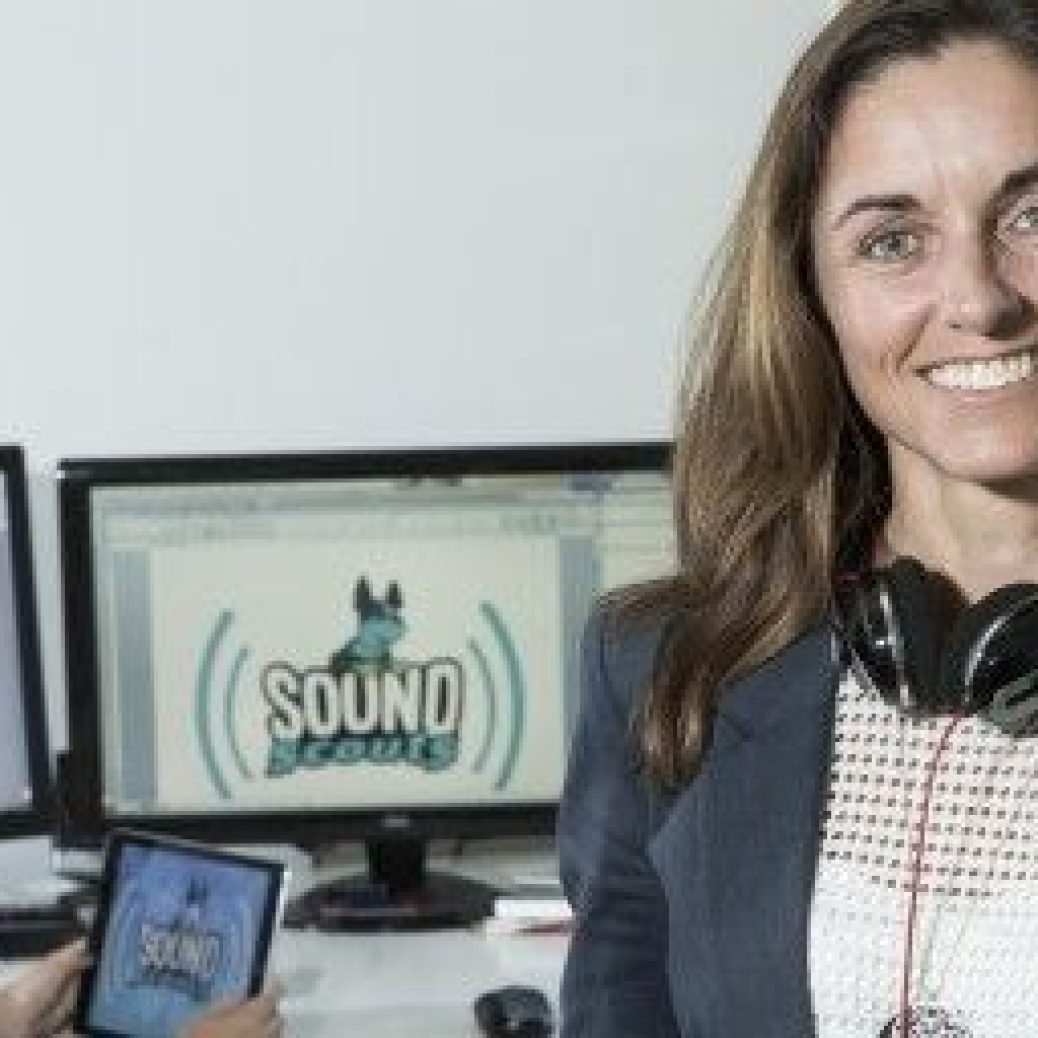
Carolyn Mee is the founder of Sound Scouts, a tablet-based game that tests the hearing of preschool children in collaboration with the National Acoustic Laboratories.
Former TV presenter Ms Mee is a graduate of Springboard AUS, an international incubator, a program that helps grow female-led startups sponsored by the City.
“Sound Scouts has already identified a number of children with hearing loss,” Ms Mee said.
“After receiving treatment as a result of the program, one little girl asked her mum why the vacuum was now so noisy. She was hearing properly for the first time!”
Central Sydney currently has the largest concentration of tech startups in Australia. The startup economy2013 reportby PricewaterhouseCoopers found the Australian tech startup sector could generate more than 500,000 jobs by 2033.
The City’s draft Tech Startups Action Plan is available to view and comment on at sydneyyoursay.com.au. You can also join the conversation with #startupsyd
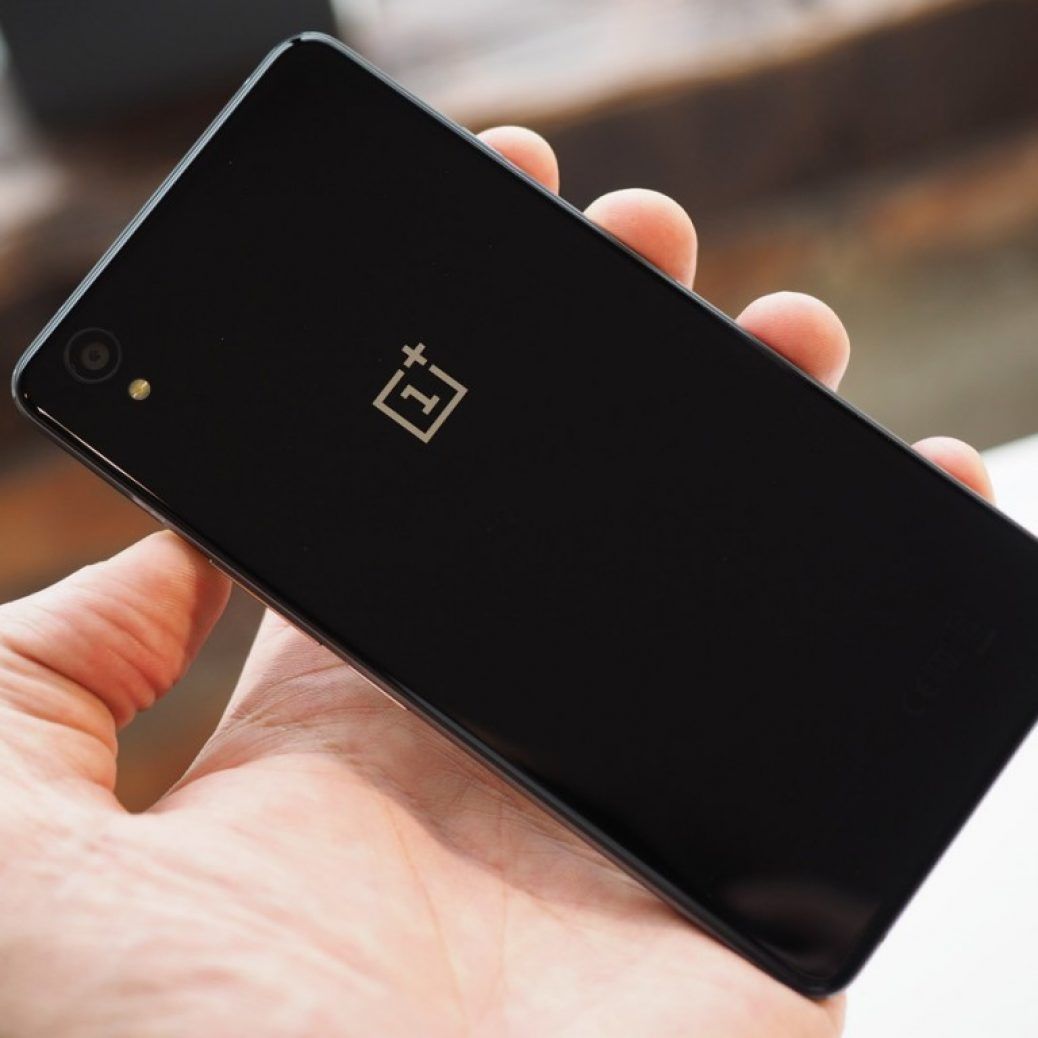
With its first two phones, OnePlus proved that it could deliver flagship-level devices at a cheaper price-point than most of its rivals. Neither were exactly design duds, but for its third handset — and the second to be unwrapped in 2015 — OnePlus is focusing on style in particular. It’s called the OnePlus X and yes, it has a hint of both the iPhone 4 and iPhone 5 about it. There are two models: the $249/£199 Onyx, which sports a sheet of black glass on the back, and a £269 Ceramic version, which won’t be available in the US. In fact, OnePlus is only making 10,000 Ceramic handsets full-stop, so you’ll have to be quick if you want one of the company’s lucrative invites. Yep, you read that correctly. Once again, OnePlus will be using an invite system to carefully manage customer demand and shipments.
So what’s inside? Premium components, but nothing that will give this year’s crop of Android flagships any trouble. Underneath the 5-inch Full HD AMOLED panel is a Snapdragon 801 processor, which was common in 2014 flagships like the Sony Xperia Z3 and LG G3. There’s also 3GB of RAM, a 2,525 mAh battery and a tray for two SIM cards. Space might have been a concern, but thankfully the 16GB of onboard storage is backed up with microSD support up to 128GB. On the reverse you’ll find a 13-megapixel camera — no 4K video recording though — coupled with an 8-megapixel snapper up front. Turn the phone on its side and you’ll find the same alert slider pioneered on the OnePlus 2 — this lets you switch between three different notification profiles on the fly, all without taking the device out of your pocket. That’s not to say the OnePlus X is without some compromises though. There’s no physical home button — so you can forget about fingerprint recognition — and charging is handled over micro-USB, rather than USB-C like the OnePlus 2.
As for the software, OnePlus is sticking with OxygenOS, a mostly clean take on Android 5.1.1. It boasts all of the same software features as the OnePlus 2, save for one new addition — OnePlus Radio. The app lets you connect to FM stations, which is no doubt aimed at users in emerging markets. It’s not exciting, but we’re happy with OnePlus’ approach here — there’s just 16GB of onboard storage after all, so the less bloatware the better.
The OnePlus X isn’t a replacement for the OnePlus 2. The company is treating this as entirely new smartphone line, aimed at people that are happy to sacrifice some power for a little more craftsmanship. At $249 (£199), it doesn’t have much in the way of direct competition — in Europe, its closest rivals will be the Wileyfox Storm, the Honor 7 and possibly the Moto X Play. The OnePlus X is more than a mid-range handset, but it’s not quite another “flagship killer.” It’s somewhere in between, and that makes it all the more interesting. The device is set to launch in Europe and India on November 5th and comes to the US two weeks later. The Ceramic edition will be available from November 24th, although of course, both are dependent on you getting an invite. Even if you manage to snag one, there’s no telling how long it’ll take to actually arrive on your doorstep.
The Galaxy S7 might get the camera sensor featured on the Sony Xperia Z5, as Samsung is currently in talks with the Japanese tech company. The IMX300 sensor is a very important piece which apparently impressed Samsung, and if things go right we might see it on the Galaxy S7 next January, when it is rumored to be launching. DxOMark puts the IMX300 among the top camera sensors, claiming that it’s the best they’ve ever tested which says a lot. Sony’s initial plans were to keep this camera sensor exclusive to the Xperia line but Samsung is negotiating for it right now and they might strike a hard bargain.
Should Sony accept the deal it will be pretty profitable for them because the Galaxy S7 will probably sell millions of units. There’s a lot to be said about the IMX300 in terms of specifications, but word has it that the camera sensor has a 25-megapixel and a 192-point hybrid autofocus system, which turned out to be brilliant on the Xperia Z5 with a focusing time of 0.03 seconds.
Microsoft’s Outlook mobile apps got a solid revamp last year, thanks to its acquisition of the email app Acompli. Now, it’s ready to integrate the spoils of another mobile acquisition: the calendar app Sunrise. The latest versions of the Outlook apps, launching on iOS today and Android in November, feature several design updates that would be familiar to Sunrise users. The calendar portion of the app now has a daily view that puts all of your activities in an easily scrollable list, and event entries now display their relevant information more clearly. On the email side of things, event invites are highlighted in your inbox, and you can even RSVP to them without opening up the message. For most users, these sorts of changes will be subtle experience upgrades, but it’s nice to see Microsoft integrate some of the design elements that made people fans of Sunrise. The new app also makes it clear what Microsoft is trying to do with Outlook on mobile: Bring all of the best design decisions from disparate apps into a single location. (One email app to rule them all, yadda yadda…)
Eventually, Microsoft plans to bring over more elements from Sunrise into Outlook, including more integration with other apps and easier event creation. That also means that Outlook will eventually replace the Sunrise app, according to Microsoft’s Outlook VP Javier Soltero (who came over as CEO of Acompli). That’s the sort of news that Sunrise fans were probably dreading following Microsoft’s acquisition of the app, but Soltero says Microsoft won’t sunset Sunrise (hah) until all of its key features are in Outlook. Really, though, the move makes sense: Outlook on the desktop focused on being your single app for your mail, calendar and contacts, so why not do the same with Outlook on mobile?
It also looks like consumers are buying into Microsoft’s new Outlook mobile strategy. It now has more than 30 million people using Outlook on iOS and Android once a month, making for more than 1.2 billion monthly sessions. Additionally, around 20 percent of those people have more than one account linked to Outlook, which is a sign that they may be relying on it for both work and personal email.
“There are a lot of tools to satisfy different scenarios of collaboration, but the one truly horizontal, ubiquitous and fundamentally open scenario is email,” Soltero said in an interview. “I joke, probably too often, that I can send you an email from my super awesome Surface Pro 4 using Outlook 2016 … and you can be reading it in Pine, if you’re a Unix nerd like I was, or maybe Eudora, if you want to go really old school… That flexibility, along with the structural flexibility of email as a communications tool, is both the reason why it’s still popular and still around, but also the reason why we hate it. The way you fix that … you don’t make it a tools conversations, you really dig deep into what exactly is not great about email…. And it turns out email would be better if people would use it better.”
Despite many tools that advertise themselves as email killers, like Microsoft-owned Yammer and the popular collaboration tool Slack, email isn’t really going anywhere anytime soon. So the best option for tech companies now is to figure out new ways to help people wrangle their email better — not by piling on features, but by focusing on usability. That’s what Microsoft is focusing on now with its new Outlook apps, and so far, it seems to be paying off.