The Asus ZenFone 4 Max series includes two budget-focused Android handsets. The two phones share most design characteristics and many specs, with the screens (5.2 inches and 5.5 inches) serving as the biggest differentiator. These unlocked devices are available online if you’re looking for an affordable alternative to today’s carrier fare. Here are our first impressions.
The ZenFone 4 Max series handsets are practically the same phone. We’re talking about sub-$200 Android smartphones with metal rear panels and glass fronts. They have the basic, budget design language that we’ve come to expect from phones from Asus and competitors Blu, Coolpad, and others.
The ZenFone 4 Max 5.2 has a 5.2-inch screen, 4,100mAh battery, and Snapdragon 425 processor, while the ZenFone 4 Max 5.5 has a 5.5-inch screen, 5,000mAh battery, and Snapdragon 430 processor. The Max 5.2 is of course packaged in a slightly smaller chassis than the Max 5.5, but otherwise these devices are the same.
The phones don’t look too different from the iPhone 7 Plus or Pixel XL. They have mid-sized displays with the 16:9 aspect ratio and plenty of bezel above and below the screen. The front glass is curved where it meets the main chassis along the side edges. The four corners are rather generic in their curve and the phones come across as somewhat plain.
ZenFone Max 5.5
They are nearly the same size. Where the Max 5.5 is taller than 6 inches and wider than 3 inches, the Max 5.2 falls just below those measurements in a slightly more comfortable zone. The phones are about the same thickness. There’s no question the Max 5.2 is slightly easier to get a grip on and use. The Max 5.5 may be more difficult to cram into pockets.
Materials are befitting of the price tags. I wasn’t expecting to see stainless steel. The rear shells are made from thin aluminum. The chassis forms the rear panel and wraps around to create the side edges. The glass panel and innards rest within the metal chassis. Some grooved accents that cross the rear panel give the phones some semblance of personality. The Max 5.2 and 5.5 are not going to bowl you over with their quality, but you won’t be disappointed, either.
The phones’ foreheads have some easy-to-spot components, including the earpiece, user-facing camera, and selfie flash. Below the display, you’ll spot the capacitive home button and flanking back/switcher keys for controlling the user interface. The home button is indented a bit, which helps your thumb find it. I found it to be responsive. The same is true for the back and app switcher buttons to either side. I wish the chin and forehead were a bit less obvious, but you can’t ask for everything at this price point.
ZenFone Max 5.2
Asus positioned the screen lock button right where I like it, about the middle of the phone’s right edge. The button has a decent profile and acceptable travel and feedback. The volume button is a bit higher up. It also has a nice profile and average travel and feedback. I wish the toggle had nubs or some sort of texture at the ends to make them easier to differentiate. The SIM/memory card tray is on the left edge of the phone, fairly close to the top. Asus selected microUSB ports for both phones, and you’ll find them on the bottom.
I was not super impressed with either of the LCD displays. Both share the same 720p HD resolution. Brightness and color wasn’t even close to even when I held the phones side-by-side. The larger 5.5 was brighter and displayed richer colors, but the pixel density wasn’t that attractive. The smaller 5.2 was more dull, but the pixel density a hair better. You can spot pixels here and there on each of the screens. We didn’t get to test them outside, but each was bright enough for indoor use.
The rear panels are only slightly different. Asus kept the chassis one piece, so there’s no removing the back to access the battery. Both phones position the dual camera module in the upper left corner, but the Max 5.5 has an oval frame giving its camera module a bit more visual pop. The two-tone flash is just off to the right.
The samples Asus had on hand were running Android 7.1, but an outdated version of ZenUI. Even so, the user interface appeared to run smoothy on both phones. I had no complaints with the speed of the home screens and apps in the time I spent evaluating either.
At first blush, the Asus ZenFone 4 Max 5.2 and ZenFone 4 Max 5.5 are decent devices. At $169 and $199, respectively, they are incredibly affordable. You can snag them unlocked from Amazon, BestBuy, and B&H PhotoVideo. With decent support for AT&T/Cricket and T-Mobile/MetroPCS, the Zenfone 4 Max series is a fine alternative to what you might find on carrier shelves.
Asus’ mid-range ZenFone 4 and high-end ZenFone 4 Pro may look alike, but they differ quite a bit under the hood. Where the former is an affordable handset, the latter is closer in price to today’s flagships. If you’re looking for a finer Android phone from Asus, the ZenFone 4 and ZenFone 4 Pro are where you should start. Here are our initial thoughts.
The ZenFone 4 and ZenFone 4 Pro may look nearly identical, but they differ significantly when it comes to internal components. The ZenFone 4 is a sub-flagship handset with mid-range specs while the ZenFone 4 Pro is a full flagship with top specs. Telling them apart from a distance may be difficult, but you’ll know which is which once you pick them up.
The ZenFone 4 is a fine piece of hardware. The phone’s shape is similar to that of the ZenFone 4 Max series, but it is larger and made from different materials. The phone has a classy aluminum chassis that is sandwiched between two glass panels. Curved Gorilla Glass forms the front and back surface of the phone and fits into the metal frame seamlessly. The frame has a diamond-cut chamfer along the edges that gives the phone a classy, high-end look. The overall look of the phone is minimalistic in a good way.
ZenFone 4
It’s a fairly large device, standing more than 6.1 inches tall and sitting 3 inches wide. Some people may find it is too big for them. It’s close in size to the iPhone 7 Plus and Google Pixel XL. The rounded shape helps improve hand feel and it feels comfortable when gripped. I was pleased with the general weight and experience of using the phone. The profile will help the device slip into pockets quite easily.
The materials are very, very good. Asus did a great job matching the glass and metal components, which fit together flawlessly. I have absolutely no misgivings about the phone’s quality.
Asus kept the ZenFone 4‘s face simple and in-line with the appearance of the ZenFone 4 Max series handsets. The screen has a 16:9 aspect ratio and fairly good-sized bezels above and below. In the forehead you’ll see a slit for the earpiece and the user-facing camera, while the chin holds the combined home button / fingerprint reader and capacitive back/switcher controls. The home button is indented a bit and is capacitive, not physical. I liked the overall effect of using it. The back and app-switcher buttons that flank the home button are easy to find and use and functioned well.
The buttons, ports, jacks, and trays are about where you expect to find them along the phone’s side edges. The screen lock button is on the right edge, positioned about in the middle. It has a nice profile and good travel and feedback. The longer volume toggle is located just about the screen lock button. It’s profile could be better, but travel and feedback were great. The USB-C port and 3.5mm headphone jack are both on the bottom edge, as are the cutouts for the speakerphone. The SIM/memory card tray is located high up on the phone’s left edge.
I really like the phone’s rear panel. It’s made of glass, sure, but Asus created a radial pattern under the glass that looks amazing when it catches the light. I love when phone makers do this sort of thing. It gives the phone a nice visual pop. The entire panel is flat, even the dual camera module in the upper-left corner. The two-tone flash is just to the right of the twin cameras. Asus’ logo is painted on in chrome in the middle of the glass. It goes without saying that the glass cannot be removed, nor can the battery.
The LED screen measures 5.5 inches across the diagonal and offers full HD resolution. I thought the display looked really nice. It’s plenty bright and viewing angles were quite good. The size/resolution work well in delivering a sharp experience.
Let’s talk about specs for a second. The phone is powered by a Snapdragon 630 processor with 4 GB of RAM. It has a 3,300mAh battery and 64 GB of internal storage. The phone runs Android 7.1 Nougat with a new version of Asus’ ZenUI. It looks pretty slick and modern, and less chromey than older versions of ZenUI. The ZenFone 4 costs $399, which I think is reasonable considering all the phone offers. It includes decent support for AT&T/Cricket and T-Mobile/MetroPCS, though it lacks Bands 66 and 71 for T-Mo. The phone is already available from Amazon.com and Asus.com. It’s a fine option if you’re looking for something a bit different.
The ZenFone 4 Pro differs mostly under the hood, but there are a few hardware changes worth discussing briefly.
ZenFone 4 Pro
You’ll notice that the design is practically indecipherable from the that of the ZenFone 4. The 4 Pro has a metal chassis with glass panels on front and back. Where the 4 has Gorilla Glass 3, the 4 Pro has Gorilla Glass 5 on both surfaces. The size is slightly different at 6.17 inches tall and 2.96 inches wide. It also weighs a bit more. The hand feel and build quality are at about the same level as the 4, though the 4 Pro feels a bit more sleek to me.
Perhaps the most obvious design difference is the 4 Pro‘s rear panel: it lacks the awesome radial pattern of the less-expensive ZenFone 4. Asus offered no explanation for this design change. The 4 Pro‘s rear panel is a solid color with no snazzy effects. That’s a bit of a bummer, but obviously not a dealbreaker of any sort. The 4 Pro is still a fine, fine piece of hardware.
The 4 Pro‘s AMOLED screen measures 5.5 inches across the diagonal and offers full HD resolution. I thought the display looked really nice. There’s no question that it pops a bit more than that of the ZenFone 4. It’s very bright, and I was pleased with viewing angles. The size/resolution are a good combination to ensure the screen looks sharp.
ZenUI
As far as the specs go, the 4 Pro steps up to a Snapdragon 835 processor with 6 GB of RAM and 64 GB of storage. The battery is slightly bigger at 3,600mAh, and the ZenFone 4 Pro adds camera features such as laser and phase-detection autofocus. The 4 Pro also tosses in support for a few more LTE bands, though it still lacks Bands 71/66.
You’ll pay more for these improved specs. The Asus ZenFone 4 Pro costs $599, which puts it squarely in the flagship zone. Even so, it costs less than competing top phones from Apple, LG, and Samsung.
The Asus ZenFone 4 Pro is available unlocked online. It is a pretty alternative to what you’ll find at your local wireless ship and may be worth considering if you’re looking for a flagship experience at a slightly more affordable price point.
Treat yourself by checking out this collection of gorgeous red phones
The supply of smartphones is never-ending, as hundreds of new smartphones are announced every year. But the majority of these handsets are usually offered in drab black or gray colors. Throw a white version here and there and you’re done!
Fortunately, some device manufacturers like to experiment with colors and seldom produce unique looking models. And since the holiday season is coming right up, we thought you might want to gift yourself or a loved one with a unique looking smartphone. Red is also the color of Christmas, so a fiery handset might make for the perfect gift. We know there are still two months to go before Santa arrives, but it never hurts to start planning early. That’s how you’ll ensure you’ll be able to deliver the right gifts.
So check out some of the hottest red phones right now:
The HTC U11 in Solar Red is an exquisite looking smartphone, although quite prone to smudging. The flagship boasts some seriously capable specs including a Snapdragon 835 processor, 4GB of RAM and 64GB of storage and also takes advantage of a high-rated main singular camera.
As a bonus it includes the quirky pressure sensitive frame Sense Edge which lets you squeeze the smartphone to trigger a pre-set action. The phone is available for $649 or for $28/month for 24 months with HTC Financing.
For the selfie enthusiasts, the ASUS Zenfone 4 Selfie Pro is an interesting proposal. The device takes advantage of a 5.5-inch display with fullHD resolution and a Snapdragon 625 aided by 3/4GB of RAM and 64GB of storage.
It includes a primary 16-megapixel camera with EIS, phase detection autofocus, and dual-LED flash, while on the front it takes advantage of a dual 12-megapixel+8-megapixel camera setup for gorgeous selfies.
The phone should retail $379, but it has yet to launch on the US market. Hopefully, it is coming soon.
In recent days Sony announced the Xperia XZ Premium is getting a new color option dubbed “Rosso” which means Red in Italian.
At launch, the phone will be available in Japan and Malaysia, but a quick look at Sony’s global website reveals this particular color version has been added to the list of available colors. So maybe there’s a chance the phone will make it in select Western markets too.
The Sony Xperia XZ Premium is a high-end phone which boasts a 4K display, Snapdragon 835 processor and a tremendous 19-megapixel camera capable of shooting ultra-slow-motion video footage at 960 fps. The phone is offered for $649.99 a pop.
Want a red phone on the cheap? Xiaomi just unveiled a Red version of the Mi 5X (which served as the blueprint for the Xiaomi’s first Android One phone).
The device comes equipped with a 5.5-inch display with fullHD resolution, a Snapdragon 625, as well as 4GB of RAM and 64GB of storage. It offers the services of a primary dual-camera setup which pairs two 12-megapixel sensors with f/2.2 and f/2.6 respectively, as well as phase detection autofocus, 2x optical zoom, and dual-LED flash.
The device ships out with MIUI instead stock Android and will be sold for approximately $226, but unfortunately, it’s a China-exclusive device.
The Ulefone Gemini Pro is another affordable Chinese Red phone. It rocks the same 5.5-inch display with fullHD resolution like the Xiaomi Mi 5X but relies on a MediaTek Helio X20 instead. It bundles 4GB of RAM and 64GB of built-in storage, as well as a primary dual 13-megapixel camera. You can grab it from Gearbest for around $300.
Crave a red phone with an 18:9 aspect ratio? UMIDIGI has your back. Just check out the sleek S2. The phone comes with a 6-inch bezel-less display and takes advantage of a Mediatek Helio P20 chipset to keep things flowing on board.
Customers can purchase it with a 4GB of RAM + 64GB of storage configuration, but UMIDIGI also offers a version with 6GB of RAM + 128GB storage which is marketed as the S2 Pro. The phone is currently available for $199 (for a limited time) from web stores like Geabest.
This phone is probably coming soon, as an image showing a Red version of the Elephone S8 leaked out a few months ago.
The device takes advantage of a 6-inch display with a QHD resolution and includes a MediaTek Helio X25 chipset, alongside 4GB of RAM and 64GB of internal storage. Online stores like Gearbest currently offer the Black and Blue version, but the Red model doesn’t seem to be available yet.
The Nokia 3310 3G just made it to US shores and it’s available in a bright Red color option too. If you had had it with smartphones and want to relieve the good days of old, the Nokia 3310 is just what you need. Oh, and you’ll be able to play the timeless Snake game on it too! Pre-order it from Best Buy for $59.99.
Compared to last month, several products have been added to our best Android tablets and 2-in-1s list, including Amazon’s new Fire HD 10 tablet, and the Pixelbook, Google’s newest hybrid which was announced next to the company’s new Pixel phones. The Amazon Fire HD 10 tablet is available for purchase as we speak, while the Pixelbook is up for pre-order at the time, but will become available soon. There are quite a few of additional, interesting products listed down below, so read on if you’re interested.
10. Google Pixel C
The Google Pixel C is Google’s very own tablet which was announced back in October 2015. Even though it has been two years since this tablet was announced, it’s still relevant due to the fact how slow the tablet market is these days, and after all, it’s still a rather good tablet, though it’s still quite pricey, it costs $499 over at Amazon at the moment. The device is made out of metal, it sports a 10.2-inch 2560 x 1800 display, and in addition to that, you’re also getting 3GB of RAM and 32GB / 64GB of native storage here. NVIDIA’s Tegra X1 quad-core SoC fuels this device, and Android 6.0.1 Marshmallow comes pre-installed on it, though you will be offered an update to Android 8.0 Oreo when you start using it, as Google did release the latest version of Android for this device.
The Sony Xperia Z4 Tablet is definitely not one of the newer tablets out there, but it’s still quite compelling if you’re looking for a sleek-looking tablet, and are not really looking to get the newest product out there. This tablet is made out of metal and glass, while it sports a 10.1-inch 2560 x 1600 display. The Xperia Z4 Tablet comes with Android 5.0 Lollipop out of the box, but it is upgradeable to Android 7.0 Nougat. This tablet comes in both Wi-Fi and 4G LTE variants, though only the 4G LTE model seems to be available for purchase from Amazon.
The Huawei MediaPad M3 tablet was announced back in September last year, and it’s actually a rather solid offering by this China-based company. The device is made out of metal, and it sports a front-facing fingerprint scanner which doubles as a home key. The MediaPad M3 sports an 8.4-inch 2560 x 1600 IPS LCD display, while it is fueled by the Kirin 950 64-bit octa-core processor. This tablet sports an 8-megapixel camera on both its front and back sides, while Android 6.0 Marshmallow comes pre-installed on it, though you’ll find Emotion UI (EMUI) on top of it. The 32GB storage variant of this tablet is currently priced at $299 at Amazon, while the 64GB storage model costs $347.87.
The Amazon Fire HD 10 tablet was announced in September 2017, and it actually comes in two variants, one variant sports 32GB of storage, while the other one comes with 64GB of native storage. This tablet sports a 10.1-inch 1920 x 1200 display, while you’re also getting 2GB of RAM here. Dolby audio is also a part of the package here, and those of you who are interested in getting the tablet, should also know that it is fueled by a quad-core processor clocked at 1.8GHz. The Amazon Fire HD 10 tablet is currently available over at Amazon in Black, Marine Blue and Punch Red color variants. The 32GB storage model of the Amazon FIre HD 10 is priced at $149.99, while the 64GB storage variant costs $189.99.
The Galaxy Tab S2 might not be the latest or greatest ‘Galaxy Tab S’ tablet at the moment, but it’s considerably more affordable than the Galaxy Tab S3. This tablet comes in both 8 and 9.7-inch variants, while it sports 3GB of RAM. The device comes with a front-facing fingerprint scanner / home key, and it is currently available from Amazon, well, at least its Wi-Fi models are, for both 8 and 9.7-inch tablets. The Galaxy Tab S3 is made out of metal, and it there are two capacitive keys included on its front side, next to the tablet’s home key. The Galaxy Tab S2 comes in Black, Gold and White color variants.
The ASUS Chromebook Flip C302 is one of the newer Chromebooks out there. This device sports a 12.5-inch fullHD (1920 x 1080) display, while it comes with 4GB of RAM. The device is made out of metal, while it is fueled by the Intel Core M3 processor. This Chromebook, much like every other Chromebook which got announced in 2017, is capable of running Android apps, and it is currently priced at $459.99.
The Lenovo Yoga Book sports a 10.1-inch 1920 x 1200 display, while this tablet comes with 4GB of RAM and 64GB of internal storage. Intel’s Atom X5-Z8550 SoC fuels the Lenovo Yoga Book, while Android 6.0 Marshmallow comes pre-installed on this device. Those of you who are interested in getting this tablet should know that it is currently discounted by 32 percent over at Amazon, as it costs $339.99, it is quite a bit more affordable than it originally was.
The Samsung Chromebook Plus and Pro are the two Chromebooks Samsung introduced earlier this year. The Samsung Chromebook Pro is the more powerful of the two, it comes with a fairly more powerful processor, while both devices can run Android apps without a problem, if that’s something you’re looking for. It’s also worth noting that both of these devices come with a touchscreen, so you can, essentially, use them as tablets as well. The Samsung Chromebook Plus can be purchased for $437, while the Samsung Chromebook Pro costs $499.
The Google Pixelbook is Google’s newest Chromebook which was announced next to the company’s Pixel phones. This device is made out of metal, and it is actually quite powerful. The device is fueled by either the Intel Core i5 or Core i7 SoC (two variants are available), while it comes with 8GB or 16GB of RAM and 128GB / 512GB of native storage. The Pixelbook also comes with a stylus, and its display is touch sensitive, so it can be used as a tablet as well. The 8GB RAM model of the device is priced at $1,199 over at Amazon (ships on October 31), while the 16GB RAM model with Core i7 SoC is still not available.
The Galaxy Tab S3 is the most powerful tablet Samsung has to offer at the moment. This tablet is made out of metal, while it sports a front-facing fingerprint scanner. The device sports a 9.7-inch 2048 x 1536 display, 4GB of RAM, and it is fueled by the Snapdragon 820 64-bit quad-core processor. Android 7.0 Nougat comes pre-installed on this tablet, and on top of it, you’ll find Samsung’s custom UI. This tablet comes with an S Pen stylus, and it is currently priced at $498 over at Amazon. The Galaxy Tab S3 is currently one of the more powerful Android-powered tablets out there, if not the most powerful one.
Asus has unveiled some impressive hardware this year, including their flagship Zenfone 4 Pro and Zenfone AR, the latter having both Tango and Daydream compatibility baked in. Although better known in the US for their portfolio of laptops, Asus continues to march forward with new Android smartphones, bringing us a Verizon exclusive seemingly out of nowhere – the Zenfone V. Let’s see how it stacks up to the competition.
Design
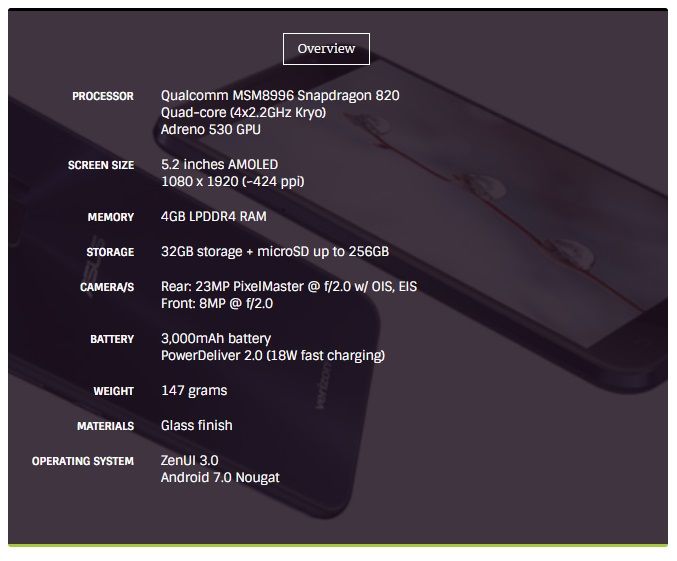
The Zenfone V looks a lot like the Zenfone 4 and 4 Pro, but has a square camera hump on its glass back. There is a wide, rounded fingerprint sensor/home button on the front and the design seems to have been somewhat inspired by Samsung’s Galaxy S6. Top and bottom bezels are approaching iPhone large, but reasonable side bezels flank a 5.2 inch full HD AMOLED panel. The frame is unfortunately plastic, giving it a less than premium feel in the hand, but it doesn’t feel cheap, either. Contoured front and back 2.5D Corning Gorilla Glass help redeem it.
A wide chamfer surrounds the screen, but stops on the right side above the volume rocker and below the power button, with a much smaller chamfer running between them and the screen. It’s a subtle but cool detail.
On the bottom is a single speaker and USB-C port with fast charging (included in the box, Apple), and Asus thankfully didn’t have the courage to ax the headphone jack, which is on the bottom left. A nano SIM/MicroSD tray sits flush on the left side with only a small microphone port on the top.
The fingerprint scanner/home button sits between off-screen capacitive keys and up top, the front facing camera is to the right of the earpiece. Overall, it’s an inoffensive design, if not a bit dated, and comes in only one color, sapphire black (which is more of a dark blue on the back).
Hardware
Performance
Last year, the Zenfone V would’ve had near flagship specs, but a year has passed and we’re now in solid mid-range territory. But phones aren’t automatically obsolete after a year and its aging Snapdragon 820 CPU coupled with 4GB of RAM is still running on all eight cylinders. Apps open quickly and daily tasks (web browsing, email, watching videos, etc.) are fluid and lag free. Demanding games like Asphalt 8 run without hiccup and multitasking is a breeze. Keep in mind that the still formidable Galaxy S7 also has a Snapdragon 820 and 4GB of RAM… It’ll take a lot to slow this Asus down.
The 5.2 inch Full HD AMOLED display is good. Great even. Colors pop and viewing angles are excellent, but it doesn’t get as bright as many competitors this year or even last. Outdoor viewing isn’t terrible, but direct sunlight will have you looking for shade. It does have a “Glove Mode”, however, which is nice during winter months. Samsung’s and Motorola’s recent panels have it beat, but it’s still a very admirable offering given the Zenfone’s price.
The single bottom-firing speaker gets plenty loud and there’s an “Outdoor Mode” that cranks it up even more, but base is lacking and it sounds tinny next to a Galaxy S8’s bottom speaker. According to Asus, there’s a NXP Smart Amp inside for lower distortion and deeper base, but in my experience, that sounds a little better on paper than in actual use. Audiophiles will likely be disappointed. It works great for speakerphone calls, however, and I never had trouble hearing callers on the other end. Overall volume seems to have been the priority here.
Battery
Battery life has been a pleasant surprise. Packing a 3,000 mAh lithium polymer battery, I easily made it through a full day with moderate to heavy use, plugging in at night with around 20% left. If you ever find yourself needing to top up during the day, the phone supports “BoostMaster” quick charging. Clever name or not, it delivers. Asus claims a 60% charge in a half hour and that about matches my experience.
Software
Well, it’s Asus… You’re not getting stock Android. On offer here is Android 7.0 Nougat buried under ZenUI 4, which isn’t all that bad, actually. An app drawer comes standard (unlike many Asian rivals) and if you dive a little into settings, the look and feel can become very familiar.
A long press on the home screen brings up some much appreciated options, such as changing the scroll effect, home screen grid size, icon appearance (with or without frames), animations, folder themes and more. After just a few minutes, my home screens were clean and unencumbered. Tinker a little and it’s an easy skin to live with.
There’s a “ZenMotion” section in settings that allows a variety of gestures to be set, starting with tap to wake and tap to sleep. You can also assign up to six apps with a “letter gesture”, allowing you to draw a letter on the screen (when off) to go directly to that app. For example, drawing a “C” with your finger will open the camera, “e” can open email and so on. It’s a nice addition.
Asus takes battery life seriously and there are several power management options to choose from – High Performance, Normal, Power Saving, Super Saving and Custom. You can maximize performance or all but cripple the phone to squeeze out every last drop of power. It’s great to have options, but I suspect most users will stick with the “Normal” setting. The Zenfone’s specs, coupled with Android 7.0 Nougat, will keep the lights on for a full day and night for most.
Software updates are up in the air, unfortunately. As of late September, it’s still on Android 7.0 (not 7.1.1) and stuck on the August 1 security patch. A future upgrade to 8.0 Oreo is questionable. I’m sure Asus will continue support for at least a year, but don’t expect timely updates. It’s a carrier exclusive, rocking a custom skin and sitting at the lower end of the Asus totem pole. Buy it for what it is today, not what it could be tomorrow.
Camera
The 23 MP rear camera uses a Sony IMX 318 sensor with optical image stabilization (OIS) and it’s proven to be a competent shooter, indoors and out. I was impressed with how well it handled exposure in mixed lighting conditions, not blowing out the sky or burying details in shadows. Colors were vibrant without being oversaturated. We’re not in Galaxy S8 territory, but this one rises above the majority of lower priced phone cameras.
Indoor shots were equally impressive… When there was adequate light. Noise levels were low and the sensor again handled exposure well in mixed lighting conditions.
Digital noise does creep in when indoor lights go down, but not to unacceptable levels. I rarely had exposure problems, although focus tended to be soft, but users who most often email their shots or post to social media will be more than satisfied.
Night shots are acceptable. You won’t be printing out large masterpieces, but for social media and onscreen viewing, they’re perfectly fine. A little noise, but decent overall exposure. There’s also a “Night Mode” setting that lowers the shutter speed to capture more light. You’re warned to keep as still as possible to avoid blurring.
The camera app itself has a surprising number of options, rivaling some of the best smartphones out there. There are full manual controls, including ISO, shutter speed, white balance and focusing, and HDR is onboard. There’s a beauty mode for selfies, low light and night mode (which either drops the resolution or shutter speed), panorama mode and something called “Time Rewind”, which lets you go up to three seconds back (or one second forward) from the moment the shot was taken, just in case someone blinked.
For those who like filters, there’s a smorgasbord that can be applied either before or after the shot is taken.
Video can be shot in 4K and slowed down to 60 frames per second at 1080p. There are again a lot of options in settings, including manual controls, and electronic image stabilization (EIS) does a respectable job at keeping things steady.
The front facing shooter has an 8 MP sensor and can record video at 1080p. If you’re seeing a trend here, it also has a ton of options, including manual controls for exposure, white balance, ISO, etc. Filters and beautification controls are also onboard.
To be clear, this is not a flagship level camera, but like a Chihuahua that barks at Rottweilers, it aspires to be bigger than it is. The level of customization available is impressive for the price and the overall results don’t disappoint. There’s OIS, 4K video, slow motion and full manual controls, all wrapped in a phone that’s half the price of many flagships. If the Zenfone V is the only camera in your pocket, odds are you’ll walk away happy.
Closing
I’ve got a soft spot for mid-rangers that dress in flagship suits. And that’s mostly what we get with the Zenfone V (although it’s wearing sneakers). The Verizon exclusive retails for only $384 or just $16/mo, a far cry from the $756 ($31.50/mo) price of the Galaxy S8 or $549.99 ($22.91/mo) for the aging Pixel. I’m still not sure if the “V” stands for the number five or just Verizon, but whatever the case, it’s the solid, scrappy little brother to the flagship Zenfone 4 Pro.
Is anything missing? Very little, actually. Waterproofing is absent, so don’t take this into the pool and be careful in the rain. There’s no wireless charging, either. The plastic frame and dated design might also turn off design aficionados. NFC, MicroSD and a headphone jack are all present, however, which isn’t always the case for “budget” smartphones.
Would I recommend the Zenfone V for the budget conscious consumer? Absolutely, but… It doesn’t live in a vacuum. For a few dollars more, Verizon’s Moto Z2 Play has a better AMOLED screen, more premium aluminum build and support for a growing number of Moto Mods. Best Buy is currently offering last year’s Galaxy S7 edge for only $14.99/mo, which is a much more premium device for less than the Zenfone V. Unlocked Motorola phones like the Moto G5 Plus are more than $100 less outright (with lesser specs to match).
If you’re a Verizon customer looking for a solid smartphone that won’t break the bank, the Zenfone V is an excellent choice. Just remember to look at all of your options before committing.
An ASUS phone on an American carrier only comes once in a blue moon and there always has to be a catch to it. Remember the PadFone X on AT&T? What fun we had. And then Verizon took on the ZenFone AR — Google Tango phone number two… only to be made to feel obsolete with ARCore technology.
Normal is a unicorn for ASUS phones in the United States. But the “Verizon exclusive” ZenFone V may be the on-ramp that the Taiwanese manufacturer needs to gain some support.
While it does utilize last year’s Snapdragon 820 from Qualcomm, it does have a competitive AMOLED display, USB 3.0 with Type-C and NXP Smart AMP technology on its five-magnet stereo speakers.
All that’s missing is a price tag — Verizon has yet to issue a press release or a product page.
Like many manufacturers, ASUS has its own Android skin – ZenUI. Version 4.0 of the skin was introduced alongside the company’s ZenFone 4 lineup, but ASUS also promised to bring the new version to the existing ZF3 series. The update process has now begun, with the ZF3 Zoom becoming the first device to be updated.
If you’re not familiar with it, ASUS is advertising ZenUI 4.0 as “smarter and smoother than ever.” The new version trims down the number of pre-installed apps from 35 to 13, and it has a new minimalist interface. It doesn’t look any closer to stock Android, but it’s not terrible by any means. And in case you were wondering, this isn’t Android Oreo, but Oreo on the ZenFone will also use ZenUI 4.0
ASUS says the system update will roll out globally over the next week. You can find more information at the source link below.
In our Android Phone Guide, we rank the best Android phones for most people. We recognize that those phones, while good for most people, are not the best for all people. As a companion to the Best Android Phones, we’ve rounded up the Android Phones with the Best Battery Life. If you need a big battery to get through the day, these are the phones for you.
Note: These phones have been ranked by battery capacity, but that is not the only factor we considered for being included in the list.
The Huawei Mate 9 is huge, both in physical size and battery capacity. It has a gigantic 6-inch 1080p display to go along with the 4000 mAh battery. The display is super bright and gorgeous, and the battery life is exceptional. Huawei also includes a fingerprint scanner on the back sitting beneath a dual Leica setup, plus it comes with Android Nougat.
The Zenfone 3 Max has one of the biggest batteries available in a smartphone. All that battery makes for a hefty device, but it’s surprisingly thin. Just think of it like a permanent battery case. The Zenfone 3 Max also has a 16MP camera with laser focus, 720p display, 3Gb of RAM, and the Snapdragon 430 processor.
The Samsung Galaxy S7 Edge takes the solid foundation built by the standard Galaxy S7 and improves upon it in a few important ways. Battery life is the main improvement. If you want the Galaxy S7, you should absolutely spend the extra money on the Edge model. You’ll thank yourself when you enjoy the all-day battery life.
The Moto Z Force’s 3,600mAh battery combined with top notch battery optimization means the device lasts long enough to keep you connected throughout a busy day. The device also has all the makings of a flagship, including an insane 21-megapixel camera, Snapdragon 820 chipset, and more. Those improvements over the Moto Z’s 2,600mAh battery pack makes it worth considering.
BlackBerry’s KEYone doesn’t have a whole lot of bells and whistles, but perhaps that’s to its benefit. Its 3,505 mAh pack combines with the power-sipping (and amazingly efficient) Snapdragon 625 chipset to provide battery life that should get any busy person through a day or two. Add that iconic BlackBerry keyboard and this is a BlackBerry fanatic’s dream come true.
Samsung took a hit on the chin with their 2016 smartphones in regards to battery life, but they’ve once again found a way to fit big batteries in a pocktable form factor. The Samsung Galaxy S8 Plus is sporting a roomy 3,500mAh battery that help you achieve a full day of battery life with above moderate usage. Combine that with all the other great qualities — including a gorgeous Infinity Display — and you can feel comfortable with this one.
The Pixel XL has plenty of room inside its 3,450mAh battery pack to make it onto this list, and with the optimizations Google has made to Android — both in general and in their Pixel-specific tweaks — it’s one of the most impressive devices on the market in terms of longevity. Add even more quality traits in allmost every other area and this is once to consider if you need an all day beast.
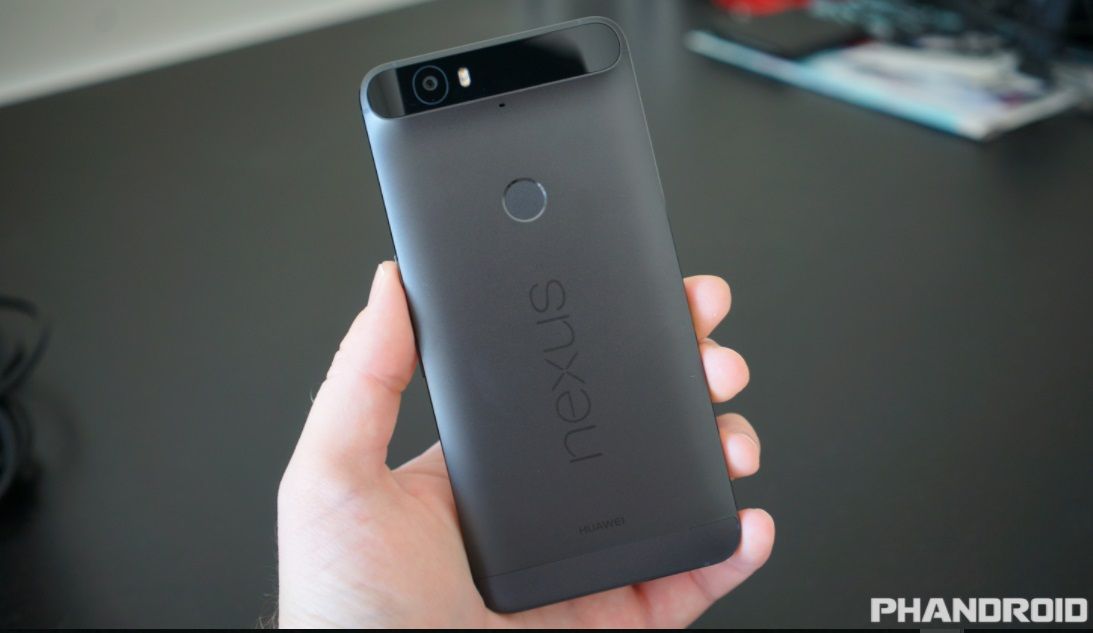
The Nexus 6P is Huawei’s first attempt at a Nexus device, and they knocked it out of the park. This is the first time a Nexus can truly claim the title of best Android phone. It has an excellent camera, beautiful, big display, and a charming design. If you don’t mind big phones, this is the one to get.
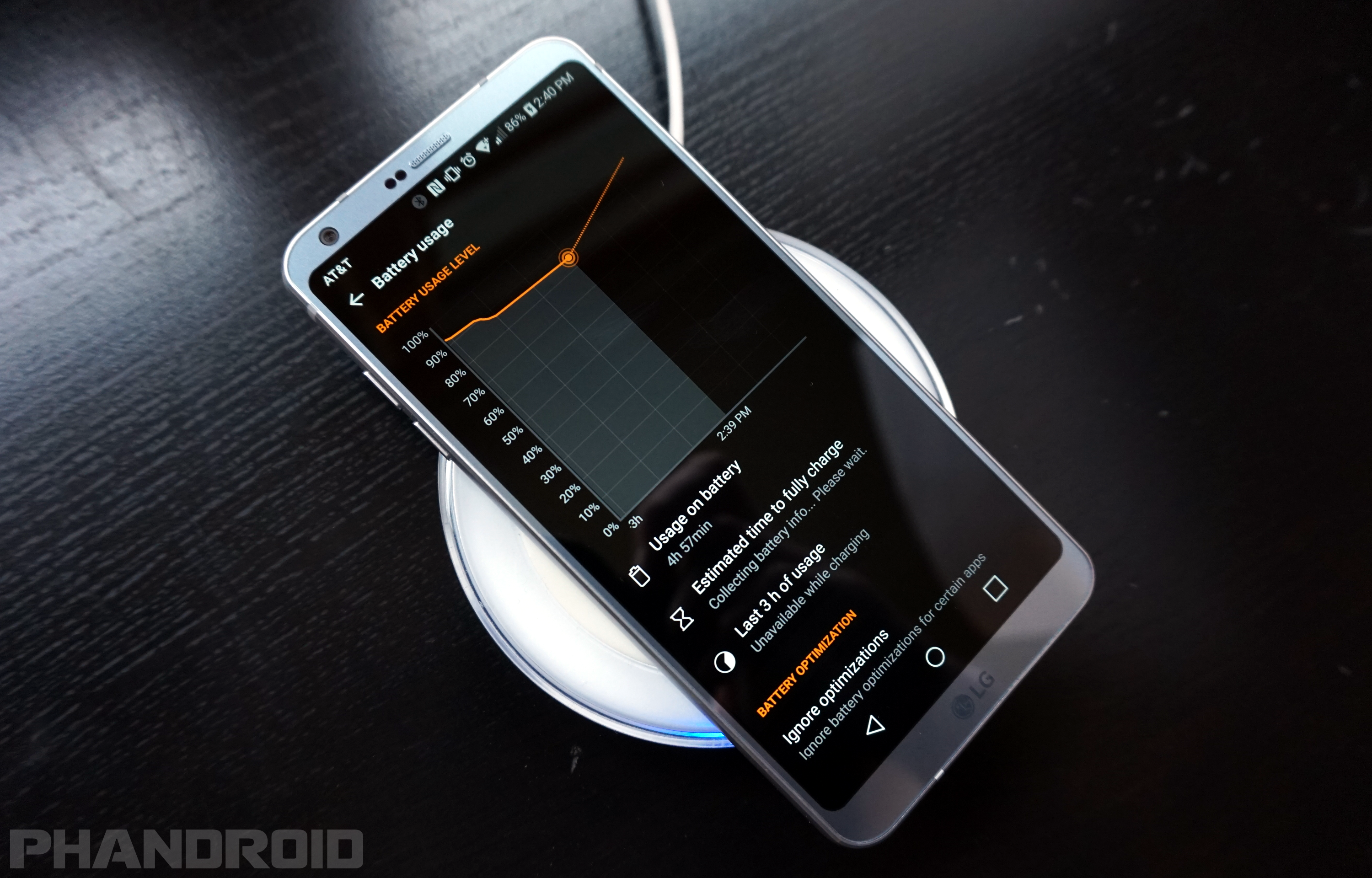
The battery in LG’s latest phone benefits from improved engineering prowess. LG was able to fit a bigger battery in it than its predecessors despite having a similar overall profile. That, combined with a beautiful display, solid hardware, and efficient software make it a long-lasting contender.
The V20 sports a roomy battery pack to make sure it lasts all day. It also employs neat tricks like the use of always-on display and a secondary ticker display to keep you from having to turn your phone on every time a notification comes in, something that surprisedly does wonders for battery life.
Battery: 3200 mAh
Key Features:
Great dual camera
Sharp display
Innovative features
HONORABLE MENTION
There are plenty of Android phones that offer great battery life. We only have so much room in our list, but there are a few extra devices you should consider. Here are five phones that just missed the top ten.
Asus ZenFone 3 Deluxe, ZenWatch 3 and ZenPad 3S 10 – all will be out for the US market with the new Snapdragon 821 chipset. Just shy behind Google’s Pixel.
As far as what we can see, Asus just got overtaken by Google in releasing the first smartphone available in the US with Snapdragon 821 chipset with the release of Google Pixel and Pixel XL. However, it won’t be a definitive win for Google as Asus have some tricks up its sleeves with more RAM and high tier internal storage. With microSD expansion of up to 256GB, Pixel just have a tough competition with the Zenfone 3 Deluxe.
The Asus Zenfone 3 Deluxe is not cheap with a price tag of $800 dollars when it hits stores by the end of October. With 6GB of RAM, this premium smartphone is indeed worthy to be looked at by consumers. But for a lesser known smartphone brand in the US, is it worth that much cash?
Well, you won’t have to spend that much anyway. Asus have some lower cost version of the Zenfone 3 Deluxe:
$400 – with Snapdragon 625
5.5-inch 1080p display
16MP camera
4GB RAM
64GB Internal storage
$500 – with Snapdragon 820
5.7-inch 1080p display
23MP camera
4GB RAM
64GB Internal storage
$200 – Asus ZenFone 3 Laser
$230 – ZenWatch 3
$300 – ZenPad 3S 10
All will be available once officially released from the factory in Asus e-store, Amazon, B&H, and other authorized resellers.
We knew it wouldn’t be long before ASUS rolls out its latest smartphonesafter the Computex unveiling, but it turns out the company has saved a little surprise for us. At the Taiwan and Hong Kong launch event today, ASUS revealed that its flagship 5.7-inch ZenFone 3 Deluxe has been given a chipset upgrade — from Snapdragon 820 to the speedier Snapdragon 821 announced yesterday. And yes, it’s officially the world’s first device to feature this 2.4GHz processor, while still benefiting from the same old Cat 13 LTE radio, a slightly faster Adreno 530 GPU, dual-SIM support (Micro SIM plus Nano SIM) and Quick Charge 3.0.
The metallic ZenFone 3 Deluxe comes in three flavors, with its top model offering pretty much all the best possible specs to date: 6GB of DDR4 RAM plus 256GB of UFS 2.0 internal storage (expandable by up to 128GB via microSD using the second SIM slot). But this will cost you NT$24,990 or about US$780. The remaining two variants are still based on the 2.15GHz Snapdragon 820, and you get either 4GB RAM with 32GB storage (NT$15,990 or about US$500) or 6GB RAM with 64GB storage (NT$17,990 or about US$560). It’s worth mentioning that these are certified for Google’s Daydream VR platform.
The rest of the features are identical, including their 1080p Super AMOLED touchscreen (with glove mode), Gorilla Glass 4, a 3,000 mAh battery, NFC, 23-megapixel f/2.0 main camera (with OIS, laser AF and dual-tone flash). 8-megapixel f/2.0 front camera and fingerprint reader on the back. The series will become available in Taiwan and Hong Kong as early as August, though we’re also told to expect the Snapdragon 821 variant to arrive later.
Also announced today is the ZenPad 3S 10 (Z500M). This is a mid-range 9.7-inch tablet featuring a 2,048 x 1,536 LCD, 4GB of RAM, 32GB of storage (with microSD expansion), an 8-megapixel main camera, a 5-megapixel front imager and Android 6.0. It runs on a hexa-core MediaTek chip (MT8176; dual 2.1GHz Cortex-A72 and quad 1.7GHz Cortex-A53) so it should be more than enough for general usage, plus it has a fingerprint reader, 802.11ac WiFi, DTS Headphone:X audio, a 5,900 mAh battery, USB Type-C port and Quick Charge 3.0 (but charger sold separately). The tablet will be available in Taiwan for NT$10,990 or about US$340 in August.