Since its first generation, Samsung has forced users of its Galaxy Fold series to enroll their fingerprint with the device in its opened state. Finally, that’s come to an end.
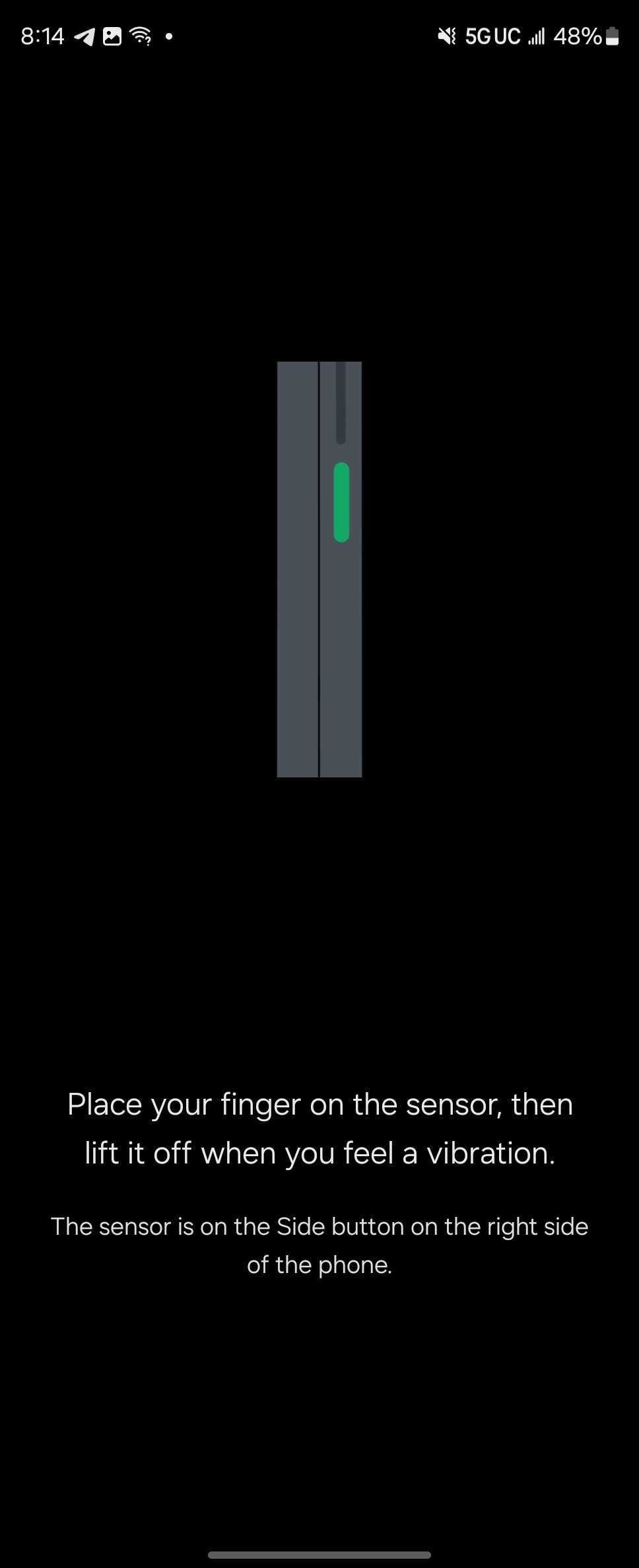
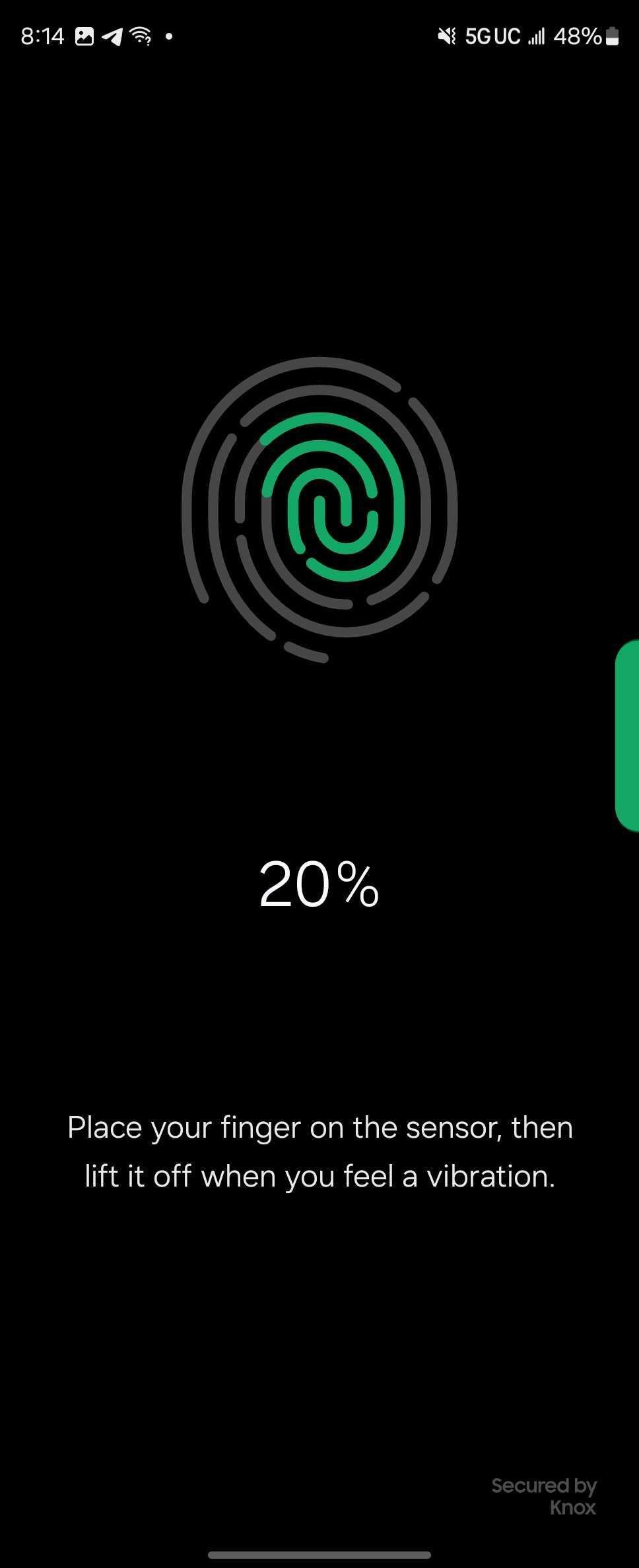
Starting with the Galaxy Z Fold 6 series, Samsung has tweaked the fingerprint enrollment process for its book-style foldable to allow users to add their fingerprint whether the display is closed or open. The animation has even been updated to properly show this.
Previously, and with every prior Fold, Samsung required users to open the device to add a new fingerprint, whether during or after setup. This was still in place on the Galaxy Z Fold 5.
Samsung’s reasoning for this was requirement was never particularly clear, but we’re glad it’s finally come to an end. While adding one fingerprint while the device is open makes sense, it prevents the user from naturally placing their second fingerprint for the grip they have while the device is closed. As such, this new setup should allow for faster, and potentially more accurate enrollment.
Meanwhile, though, a bug in Samsung’s software prevents users from setting up the fingerprint during the initial device setup process.
The Galaxy Z Fold 6 and Flip 6 are available for pre-order now with up to $1,200 in trade-in value, doubled storage for free, and other perks. You can also get up to $150 more offer with our link to the Galaxy Z Fold 6 at Samsung.com.
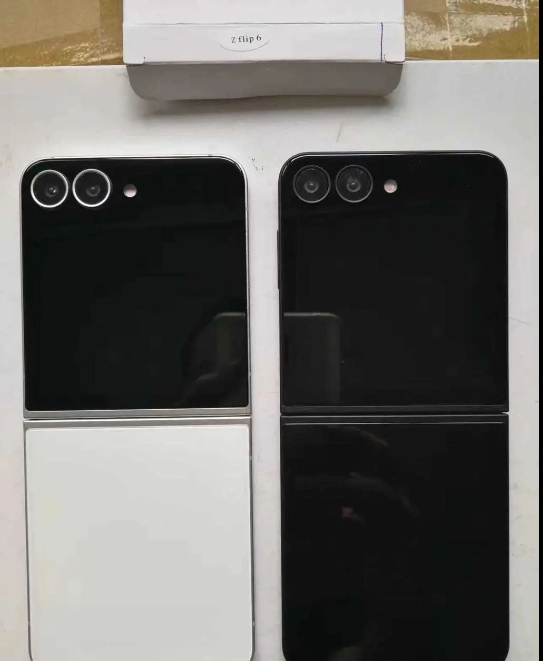
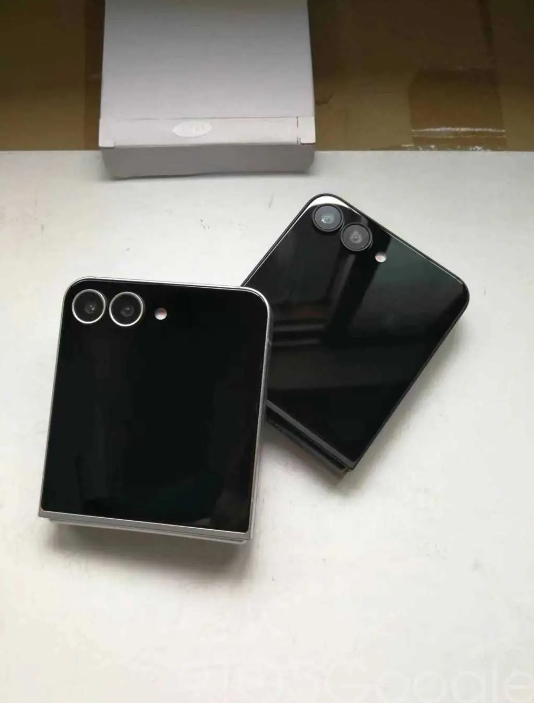
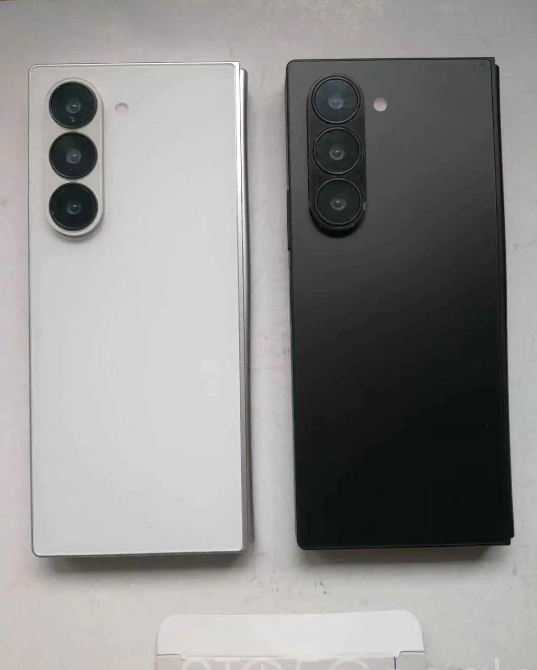
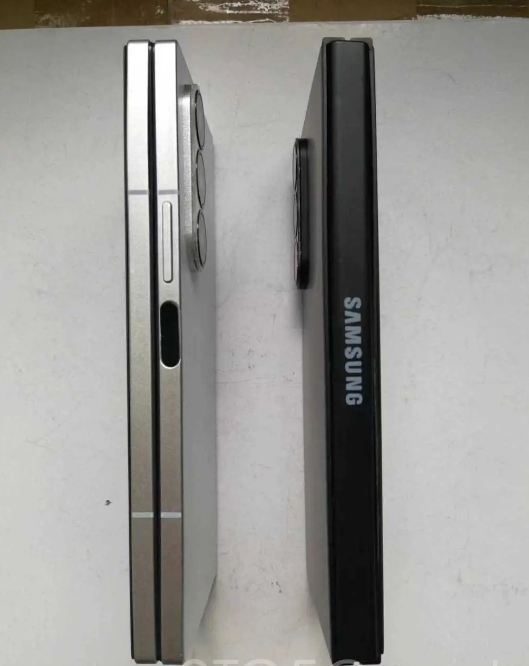
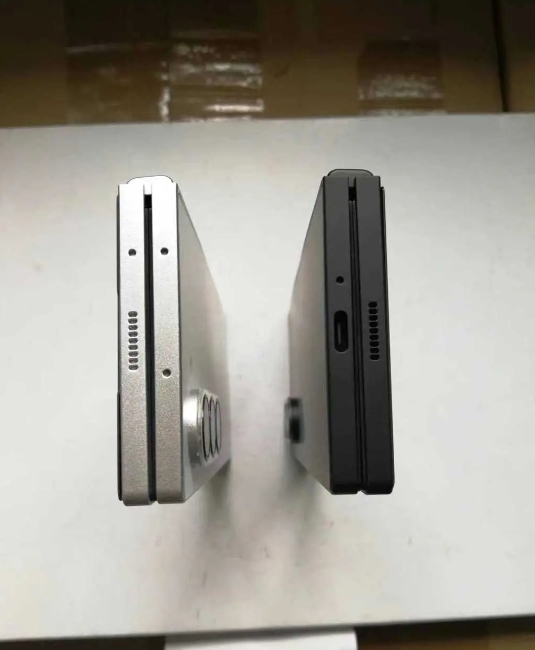
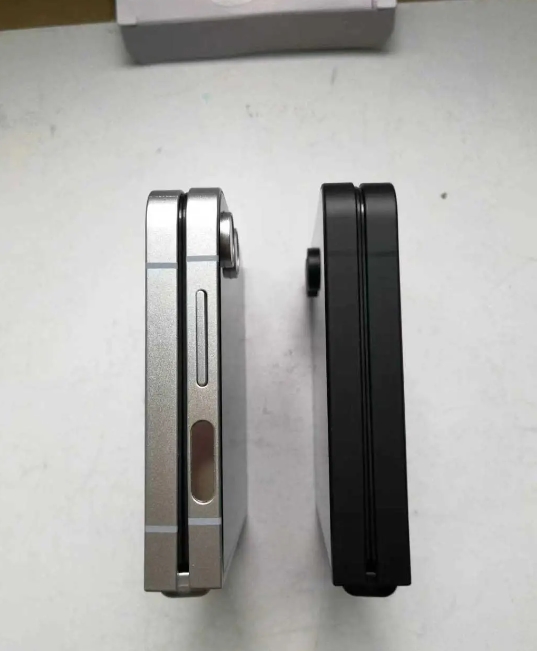
New images of a prototype Galaxy Z Fold 6 and Flip 6 have emerged, showcasing an even deeper look at the Samsung foldable and internal display crease.
Images of prototype Galaxy Z Fold 6 or even Flip 6 units are not new, and we’ve seen almost every angle available through previous leaks. They showcase the entirety of the device, detailing the new boxier design on both foldable, as well as camera array changes this time around.
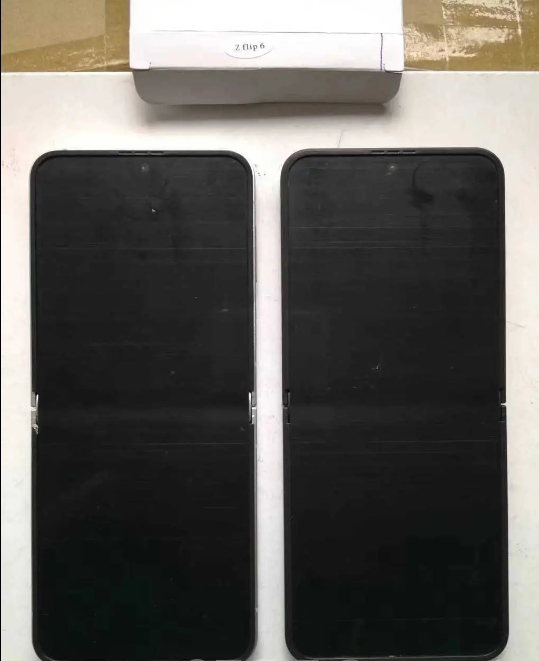
Photos credited to Sonny Dickson of further Galaxy Z Fold 6 and Flip 6 prototype photos. The images exhibit both the outer and inner displays of each device, and it looks like generation six still carries a significant display crease.
The units in the photos are both prototypes or “dummy” units. Essentially, it means each is subject to extensive changes throughout the design process. These images could be showing off a display that carries a larger seam down the middle than the final version will, or Samsung may have equipped these units with an older display to simply show off the silhouette and overall profile of each phone. Still, users have been hoping for a less significant bend when the Galaxy Z Fold and Galaxy Z Flip are open 180 degrees.
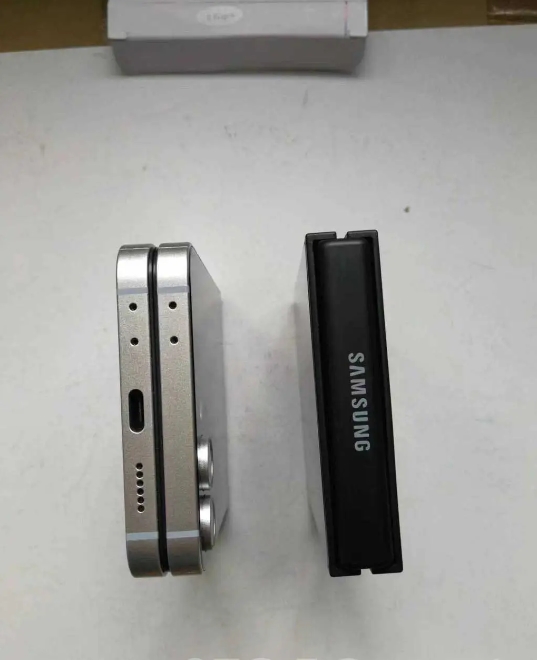
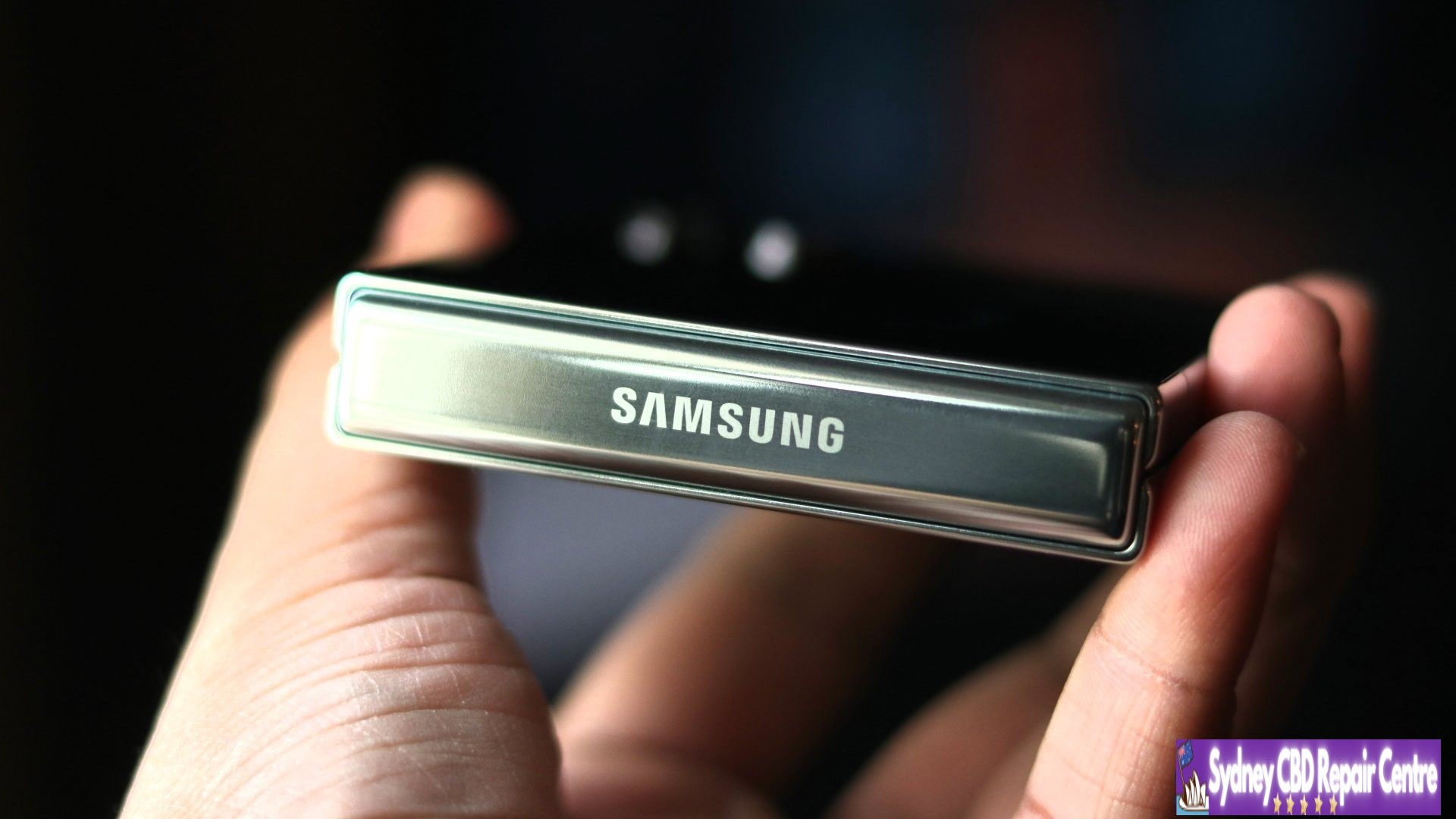
The images also show off a black prototype variant, which has “Samsung” crudely stamped on the hinges of both devices. It’s possible Samsung will ditch the etched logo we’ve seen on past Fold and Flip devices and instead opt for a stamped logo, much like in the images here. The etched logo is the preferable option, giving the $2,000 devices a little touch of quality.
Another small possible detail is the way the hinge protection plate flares out at the top and bottom of the Galaxy Z Fold 6. It’s very hard to see, and the lighting in these images could be playing tricks on our eyes, but it looks like the hinge is a couple of millimeters further from the main phone panels at the ends than it is in the middle, where the Samsung logo is. There is no such angle for the Flip 6.
Besides a couple of small tidbits, Samsung’s design changes can be appreciated in these prototype units. Each phone looks to be carrying a smaller bezel around the internal display, and the overall footprint looks a little nicer than last year’s model.
Samsung is set to announce the Galaxy Z Fold 6 and Galaxy Z Flip 6 on July 10 in Paris.
According to new reports, Samsung is planning to exclusively use Qualcomm’s Snapdragon 8 Gen 3 in its new Galaxy Z Fold 6 and Flip 6 foldables.
The Elec reports that Samsung will solely use Snapdragon 8 Gen 3 chips in the Galaxy Z Fold 6 and Flip 6 globally. Previously, it was thought that Samsung might use Exynos chips in some Galaxy Z Flip 6 models.
Realistically, this doesn’t come as a huge surprise.
Since the first generation, Samsung has been using exclusively Qualcomm chipsets in its foldables, even in regions where Galaxy S devices have been sold with Exynos chips instead. According to this latest report, gearing a new foldable model with Exynos instead of Snapdragon would actually raise the cost due to scale. “Only when foldable phones ship as many units as the S series” would it be a benefit to include Exynos, the report claims.
Samsung’s strategy around the chips in its phones have been going back and forth over the past few years. After many generations using Exynos or Snapdragon depending on the region, Samsung signed a deal with Qualcomm that saw all variations of the Galaxy S23 series sold with Snapdragon around the globe. But, merely a year later, the Galaxy S24 series re-introduced Exynos variants in some countries, though the S24 Ultra uses exclusively Snapdragon 8 Gen 3.
Galaxy Z Fold 6 and Flip 6 are expected to launch in July.
Samsung’s next Galaxy launch event reportedly takes place July 10 in Paris
Samsung is gearing up for a pretty big Summer launch event, with a new report pinpointing the next Galaxy Unpacked event for July 10.
Rumors have been floating around for a couple of months now that Samsung would be hosting a launch event in July for its next batch of Galaxy devices, but a specific date was never mentioned.
SamMobile now claims that the launch date in question will be July 10.
That date, a Wednesday, lines up perfectly with Samsung’s usual pattern even though it is a couple of weeks early compared to the year prior. That said, Samsung has good reason for moving things up a couple of weeks – the location.
According to this report, Samsung will host its next Galaxy Unpacked event in Paris, France.
That’s also the location of the 2024 Olympics, so getting things wrapped up well ahead of the torch’s lighting is definitely in Samsung’s best interest. The Olympics begin on July 26. That also lines up well with Samsung’s usual sponsoring of the Olympic Games, as the company has created special-edition devices numerous times for the Games.
Last year, Samsung hosted its foldable launch event from South Korea.
Samsung’s July 10 event is expected to see the debut of the Galaxy Ring, new foldables, and more. The Galaxy Watch 7, new tablets, and more could be incoming. There’s also a good chance Samsung introduces its first Snapdragon-powered laptop at the event.
If this July 10 date is legitimate, Samsung will likely be making some official announcements by the end of May.
Samsung Galaxy Z Flip 6 may borrow design elements from the S24
The Galaxy Z Flip series saw one of its most significant design upgrades last year when the Galaxy Z Flip 5 model introduced the folder-shaped cover screen, replacing the comparatively tiny 1.9-inch panel with a 3.4-inch screen.
Samsung is now preparing to announce the sequel to the Galaxy Z Flip 5, but judging from all the leaks, the Galaxy Z Flip 6 won’t reinvent the wheel.
Instead of bringing another leap in design, the upcoming Galaxy Z Flip 6 will most likely refine the existing formula. It won’t rewrite what the Z Flip series stands for but could borrow some design elements from the newer Galaxy S24.
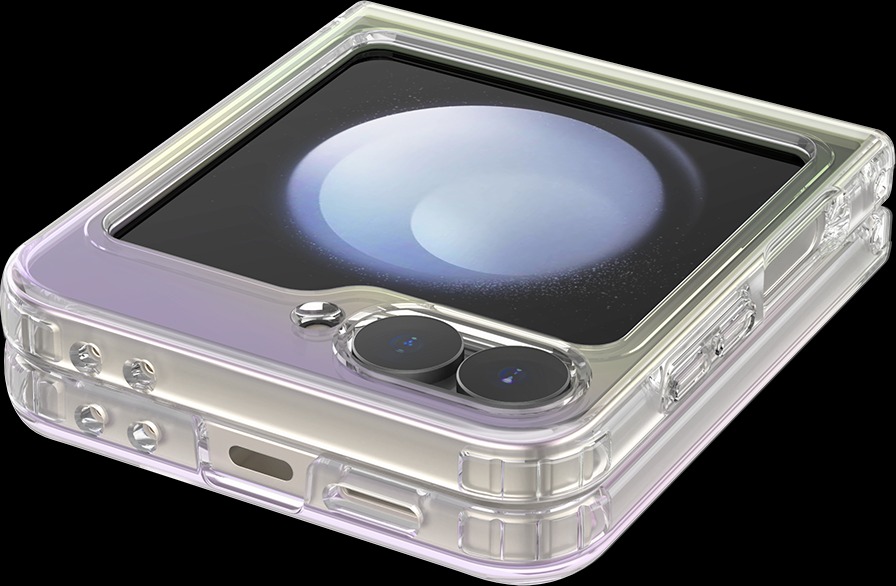
New renders (via @rquandt) belonging to a third-party case manufacturer reveal a few such minor design changes the Galaxy Z Flip 6 might boast.
According to these case renders, which may or may not reflect the Galaxy Z Flip 6’s final design with precise accuracy, the upcoming model may have an even flatter frame than the ongoing Z Flip 5. The Galaxy S24 went through a similar process earlier this year, admittedly inspired by the Z Flip 5.
Another design element the Galaxy Z Flip 6 might borrow from the Galaxy S24 lineup is the speaker grille. This element might now consists of one wide cutout instead of multiple smaller holes.
Finally, these renders suggest that the circular camera cutouts might have a slightly larger circumference for the Galaxy Z Flip 6 or that the space between the two cameras might be thinner.
However, once again, since the renders supposedly originate from a third-party case manufacturer, these finer design design details might not be entirely accurate.
An upgraded camera and a powerful Snapdragon chip
As far as hardware specs go, previous rumors indicate that the Galaxy Z Flip 6 will have an upgraded 50MP primary camera, which could explain the larger cutouts.
The phone will also share its Snapdragon 8 Gen 3 chip with the Galaxy S24 series. And only the Snapdragon chip, regardless of region. A recent report claims that Samsung is not ready to divide its foldable phones between Snapdragon and Exynos markets yet.
Samsung should lift the veil off the next-gen Galaxy Z Flip 6 in early July at Unpacked. The tech giant is expected to host the event in Paris — the host city of the 2024 Olympic Games. Which is fitting, given that Samsung is an Official Olympics Partner.
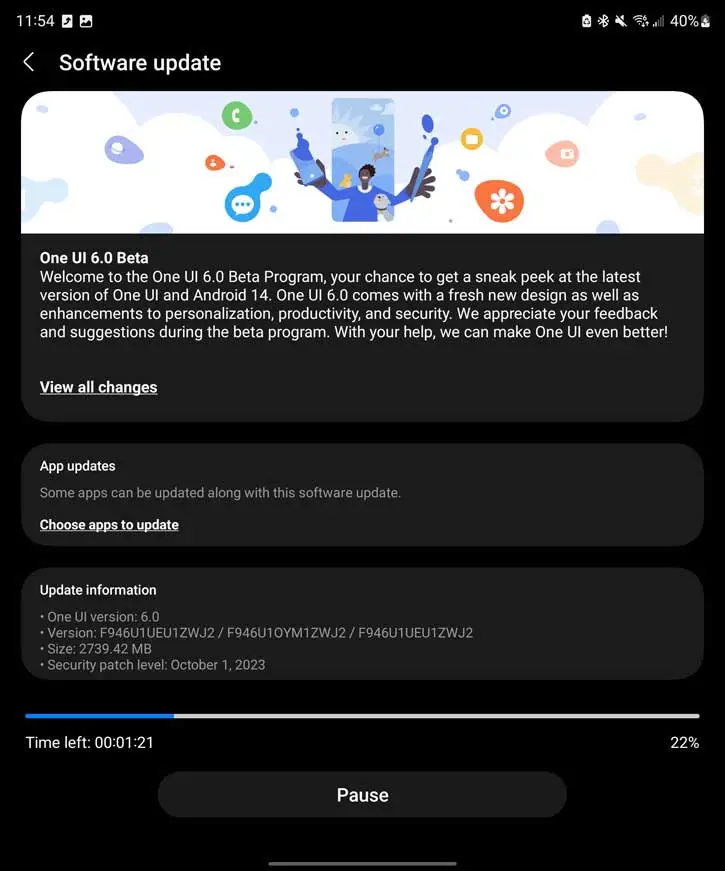
After being next in line for quite some time, the Galaxy Z Fold 5 and Flip 5 are both eligible for the One UI 6 beta.
One UI 6 beta has been available for well over a month. Galaxy lineups like the S23 series and even some A series devices have already been included in that beta, which brings a refinement of the previous version with general improvements made in Android 14.
For some time after the initial release, it was thought that the Galaxy Z Fold 5 and Z Flip 5 would see One UI 6 beta sooner than others, but that hasn’t been the case. At least, until today.
One UI 6 for the Fold 5 has officially rolled out first (via SamMobile). The beta for the Flip 5 was later spotted on Reddit. The beta rollout looks to be coming to the Fold 5 in the US and India, whereas it isn’t entirely clear where the Flip 5 is seeing the new beta version. We were able to pull the beta card up in the Members app on the Fold 5.
Both devices will see One UI 6 beta version 1, which comes with the version number F946BXXU1ZWJ2 for the Fold 5 and F73U1EU1ZWJ2 for the Flip 5. Each also includes the October security patch.
Samsung hasn’t detailed a timeframe for other phones in its foldable lineup. Considering it took this long to bring the One UI 6 beta to the Fold 5 and Flip 5, it could be a little longer. Even still, One UI 6’s stable release isn’t far away.
After years of being the lone option, Samsung finally has some foldable competition in the US, and that partially takes the form of Google’s Pixel Fold, which comes in at the same price as Samsung’s brand-new Galaxy Z Fold 5. But after using both devices, there’s a clear better option.
Galaxy Z Fold 5 vs. Pixel Fold: How they compare on paper
When you look at the spec sheet alone, Google’s Pixel Fold and Samsung’s Galaxy Z Fold 5 are rather similar. Both have 7.6-inch inner displays, plenty of RAM and storage and hinges that are rated for at least 200,000 folds.
The differences really come down to the details. The Pixel Fold has a wider aspect ratio to both of its displays. The 17.4:9 ratio of the outer display is short and wide compared to the Fold 5’s 23.1:9 ratio, which is extremely tall and narrow. The Pixel is also considerably thinner at 12.1mm to the Fold 5’s 13.4mm. Despite that, Pixel Fold also has a bigger battery at 4,821 mAh.
Google Pixel Fold
Galaxy Z Fold 5
Outer display
5.8 inch, 17.4:9 ratio
6.2 inch 23.1:9 ratio
Inner display
7.6 inch, 6:5 ratio
7.6 inch, 21.6:18 ratio
Processor
Google Tensor G2
Snapdragon 8 Gen 2 for Galaxy
Storage/RAM
256GB/512GB UFS 3.1 + 12GB RAM
256/512GB/1TB UFS 4.0 + 12GB RAM
Hinge rating
200,000 open/close
200,000 open/close
Thickness
12.1mm folded/5.8mm unfolded
13.4mm folded/6.1mm unfolded
Battery
4,821 mAh
4,400 mAh
Cameras (rear)
48MP/10.8MP 5x/10.8MP UW
50MP/10MP 3x/12MP UW
Price
$1,799
$1,799
How the two compare, though, really comes down to actually using them.
The Galaxy Z Fold 5 is boring in the best way
If you’ve looked into a foldable before now, you’ve likely looked at the Galaxy Z Fold series. And through that eye, the Galaxy Z Fold 5 doesn’t seem all that new, and that’s because it isn’t. The design of the device hasn’t really changed much at all over the past three years, and compared to the Galaxy Z Fold 4 before it, the Fold 5 really only has a new hinge, and that’s about it.
But the lack of major upgrades in Samsung’s flagship foldable has led to something perhaps more important.
Samsung’s foldable tech has just gotten really, really polished over the past couple of generations. The company has spent its time addressing the little problems, like improving the screen brightness, extending battery life, and improving the hinge, rather than hitting bigger issues like the display crease and cameras. In Samsung’s eyes, it seems, those aspects are “good enough,” where others still need work. And after using the Fold 5 for a few weeks, I mostly agree. The Galaxy Z Fold 5 really just feels like it’s as good as this particular form factor can get without bigger changes. And if you like this overall package, it’s really just a great refined product.
Beyond that, another strength of the Galaxy Z Fold 5 is its software. While One UI is a heavy skin on top of Android, it’s packed with features that are useful on the Fold 5’s bigger display and ones that Google’s cleaner Android build just doesn’t have.
Of course, none of this is to say the Galaxy Z Fold 5 isn’t without its flaws. The tall and narrow outer display isn’t great for typing and doesn’t play very well with some apps. The inner display’s taller nature also means that a lot of apps never trigger a tablet interface, which makes some apps feel less optimized for the form factor.
Pixel Fold is undeniably good – it’s just not as good
That’s why the Pixel Fold falls – death by a thousand cuts.
The Pixel Fold’s downsides really just outweigh the good. The Tensor chip inside is plenty powerful, but it’s prone to overheating very easily, which is a really hard pill to swallow at this price point.
The screens also aren’t nearly as bright as Samsung’s, and Google’s crease isn’t any better either. Samsung’s crease still isn’t good, and it’s very noticeable, but Google’s is wider and thus felt more often.
There’s also the hinge. While I stand by the opinion that the Pixel’s hinge not easily sitting at 180 degrees isn’t a problem, I’ve much enjoyed not having to apply the bit of extra pressure on the hinge when using the Fold 5. It’s just a much more consistent feel. Similarly, the Fold 5’s inner display is much easier to type on because Google’s phone is just way too wide.
Battery life is also another sore point for the Google device. Whereas Samsung’s latest generation has pulled off some kind of miracle by upping endurance significantly compared to the last model, the Pixel Fold suffers from mediocre battery life. Often I find the device struggling to make it through a long day, whereas the Galaxy just seems to keep on chugging along.
Really, the perks of Pixel Fold come down to just two aspects.
Firstly, there’s the aspect ratio. Google’s device has a short and wide outer display that makes way for a very wide inner display. This means that the outside is far more usable than Samsung’s, and the inner display triggers more tablet apps. I still think this leads to too many poor app experiences (like Instagram, Reddit, and so on), but when it works, it just works really nicely.
Google Weather on the Pixel Fold
The other point is, of course, the camera. Google’s Pixel line has built its entire legacy on the camera, and that translates wonderfully to the Fold. The 48MP primary camera takes shots that look great and that, more importantly, I can trust. The Galaxy Z Fold 5 will pump out a good shot now and then, but it’s not consistent enough. Two shots taken back to back can look drastically different, for example. Plus, the Pixel Fold has a much better 5x telephoto camera that absolutely destroys the Galaxy Z Fold 5’s camera setup at range. There’s just no competition there: Google has the way better camera.
Tensor is a real problem in a pricey foldable
Google’s Tensor processor is unique to Pixel phones, and it’s not a terrible chip. It has plenty of power, and Google uses its AI strengths to optimize a few features and the camera experience too. However, Tensor is just not as good as a modern Snapdragon chip.
Tensor tends to overheat quickly and struggles with battery efficiency when on a cellular network, especially if signal is spotty. The Snapdragon 8 Gen 2 in the Galaxy Z Fold 5, though, is as good as it gets in an Android phone. It’s exceptionally powerful and extremely efficient, which leads to great battery life on the Fold 5.
Personally, I’m usually willing to put up with Tensor’s deficiencies because Pixel phones are usually a lot cheaper than the competition, but that’s not the case with the Pixel Fold. Google’s foldable costs $1,799, the same as Samsung’s device, and Google doesn’t offer the same discounts and trade-ins to go with that. Tensor shouldn’t be a deal-breaker for a normal Pixel phone, but it is absolutely a valid killer on the Fold.
Galaxy Z Fold 5 is the better foldable
Where the Pixel’s aspect ratio and cameras are genuine improvements in many ways, the Galaxy Z Fold 5 makes strides where it counts. The screen is brighter and better. The hinge is smoother and tougher. The chip inside is stronger and much less prone to overheating. And there are perks Google just can’t match, like stylus support and a much more fleshed-out accessories ecosystem.
Don’t think it can be argued. Objectively, the Galaxy Z Fold 5 is the better foldable.
But…
Why some still using the Pixel Fold
Despite the Pixel Fold’s many shortcomings, it’s the one some going to keep using. Why? It really boils down to one thing – the camera.
Samsung’s Galaxy Z Fold 5 gets a whole lot right, but its camera is a deal-breaker for me. It’s too unreliable, and as such, I’ve always dual-wielded a Pixel phone alongside a Galaxy Z Fold device for the past three years. But now that I have the option to get a foldable Pixel, that’s what I choose to carry because, most of the time, I only want to carry one device.
Thank you for using
Themify Popup
This is a sample pop up. Themify Builder or Builder Lite (free) plugin is recommended to design the pop up layouts.