Apple has released a neat new rich resource today to help writers publish their content on its Apple Books platform. The new website walks through writing, publishing, marketing, and looking at analytics with Apple Books and since it’s web-based works with both Mac and Windows.
Apple Books for Authors guides you through every step of your journey as an author, from structuring your story to packaging your digital book and selling it on our store. Even established authors will find valuable resources on how to grow sales and track performance.
The comprehensive guide walks authors through using Pages and iBooks Author apps as well as other popular options like Microsoft Word and Scrivener for the writing process. But there’s much more than that as Apple takes writers through preparing, publishing, audiobooks, marketing, and sales and reporting.
Apple also highlights some benefits to publishing with Apple Books compared to Amazon’s Kindle Direct Publishing like consistent royalty rate at all price points, no delivery fees, no limits on free book offerings, and no third-party ads.
Submissions for the Swift Student Challenge Are Now Open Through May 17
Apple has announced that its first-ever virtual WWDC will start on June 22 this year and that it will be free for all developers through its Developer app and Developer website. There’s also a new event this year, a Swift Student Challenge for young developers 13 and older.
We learned back in March that Apple would still hold WWDC this June but as a virtual event. However, it didn’t share an actual date.
Today Apple unveiled the June 22 start date for the online WWDC in a Newsroom post and gave a few more details on this year’s developer conference that’s being impacted by the coronavirus pandemic.
Going virtual this year means it’s the first time that the event is free for all developers. Traditionally, it’s a paid event for most attendees after submitting for tickets through a lottery system.
Showcase your love of coding by creating an incredible Swift playground on the topic of your choice. Winners will receive an exclusive WWDC20 jacket and pin set. This challenge is open to students around the world.
SVP of Software Engineering Craig Federighi highlighted the importance of students at WWDC:
“Students are an integral part of the Apple developer community, and last year WWDC saw attendance from more than 350 student developers spanning 37 different countries,” said Craig Federighi, Apple’s senior vice president of Software Engineering. “As we look forward to WWDC20, although our gathering will be virtual this year, we want to recognize and celebrate the creative contributions of our young developers from around the world. We can’t wait to see this next generation of innovative thinkers turn their ideas into a reality through the Swift Student Challenge.”
Apple’s SVP Phil Schiller shared positivity around the opportunity to take WWDC online:
“WWDC20 will be our biggest yet, bringing together our global developer community of more than 23 million in an unprecedented way for a week in June to learn about the future of Apple platforms,” said Phil Schiller, Apple’s senior vice president of Worldwide Marketing. “We can’t wait to meet online in June with the global developer community and share with them all of the new tools we’ve been working on to help them create even more incredible apps and services. We look forward to sharing more details about WWDC20 with everyone as we get closer to this exciting event.”
Apple didn’t share specifics about how exactly the virtual WWDC will work beyond accessing it through its Developer app and website. Fortunately, the company still has a month and a half to figure out the logistics of converting everything to a digital format while preserving key elements of the WWDC experience.
Cupertino, California — Apple today announced it will host its annual Worldwide Developers Conference virtually, beginning June 22, in the Apple Developer app and on the Apple Developer website for free for all developers. The company also announced the Swift Student Challenge, an opportunity for student developers to showcase their love of coding by creating their own Swift playground. Now in its 31st year, WWDC20 will be an opportunity for millions of creative and innovative developers around the world to get early access to the future of iOS, iPadOS, macOS, tvOS, and watchOS, and to learn from Apple engineers as they work to build app experiences that enrich the lives of Apple customers around the globe.
“WWDC20 will be our biggest yet, bringing together our global developer community of more than 23 million in an unprecedented way for a week in June to learn about the future of Apple platforms,” said Phil Schiller, Apple’s senior vice president of Worldwide Marketing. “We can’t wait to meet online in June with the global developer community and share with them all of the new tools we’ve been working on to help them create even more incredible apps and services. We look forward to sharing more details about WWDC20 with everyone as we get closer to this exciting event.”
“Students are an integral part of the Apple developer community, and last year WWDC saw attendance from more than 350 student developers spanning 37 different countries,” said Craig Federighi, Apple’s senior vice president of Software Engineering. “As we look forward to WWDC20, although our gathering will be virtual this year, we want to recognize and celebrate the creative contributions of our young developers from around the world. We can’t wait to see this next generation of innovative thinkers turn their ideas into a reality through the Swift Student Challenge.”
Swift Playgrounds is a revolutionary app for iPad and Mac that makes learning the Swift programming language interactive and fun. Now through 11:59 p.m. PDT on May 17, student developers from all over the world can submit to the Swift Student Challenge by creating an interactive scene in a Swift playground that can be experienced within three minutes. Winners will receive an exclusive WWDC20 jacket and pin set. For more information, visit developer.apple.com/wwdc20/swift-student-challenge.
Developers are encouraged to download the Apple Developer app where additional WWDC20 program information — including keynote and Platforms State of the Union details, session and lab schedules, and more — will be shared in June. Information will also be made available on the Apple Developer website and by email.
The App Store, now in 175 countries and regions, is the world’s safest and most vibrant app marketplace, with more than half a billion people visiting each week. It is the best place for users to discover new apps and allows developers of all sizes to distribute their apps to customers around the world. The App Store features many ways for developers to build their businesses, and since its launch in 2008, developers have been creating innovative apps that influence culture and change lives.
Apple revolutionized personal technology with the introduction of the Macintosh in 1984. Today, Apple leads the world in innovation with iPhone, iPad, Mac, Apple Watch, and Apple TV. Apple’s five software platforms — iOS, iPadOS, macOS, watchOS, and tvOS — provide seamless experiences across all Apple devices and empower people with breakthrough services including the App Store, Apple Music, Apple Pay, and iCloud. Apple’s more than 100,000 employees are dedicated to making the best products on earth, and to leaving the world better than we found it.
Some been a customer of 1Password for as long as they can remember. They love being able to have a dedicated application/service for password management, rotating one-time passwords, storing secure information like social security numbers. They know they have a dedicated place to manage all my data in a place they know is safe and easy to access. On the other hand, iCloud Keychain works well and is built-in on all of the devices. Is it time for Apple to release a dedicated app for iCloud Keychain, so it’s easier to manage and interact with that data?
iCloud Keychain remembers things, so that you don’t have to. It auto-fills your information—like your Safari usernames and passwords, credit cards, Wi-Fi passwords, and social log-ins—on any device that you approve. You can also use iCloud Keychain to see your saved passwords.
We’re all struggling with password management. The FIDO Alliance was created to help rethink how passwords should look going forward, and Apple is one of the newest members of the alliance. It joins other major technology companies like Microsoft and Google. It’s in the best interest of all vendors to make it easier to create and manage passwords.
The problem with managing passwords on iOS and macOS at the moment is the functions are scattered around. Some of the syncing happens on in the backend with no way to quickly see (especially on iOS). A prime example of this is the syncing of Wi-Fi passwords. It’s easy to remove old networks on the Mac, but on iOS, it’s all happened without being able to remove anything.
Apple should release a dedicated app for iCloud Keychain
As our devices continue to store ever more personal information, Apple should release a dedicated app to view, add, change, or delete anything being stored in iCloud Keychain. We’ve already seen rumors of iOS 14 bringing new features to iCloud Keychain, so this would be a natural next step. This app would help promote the security of iOS (it would be behind a second round of Face ID scanning) as a place where you can store your most personal data like social security numbers, PIN codes, etc. It would also allow you to view, update, or delete anything password related for website logins.
Right now, website passwords are stored inside of the Safari settings on macOS and inside of the Settings app on iOS. A dedicated app would put this front and center.
On top of a dedicated app for managing personal information, I’d like to see Apple help promote two-factor authentication. Right now, Apple has its own flavor of how it uses two-factor authentication to set up a new device or log in to iCloud.com on the web, but most websites use another format.
Security on the internet has become more important with each passing year. It seems like every other month there is a major data breach from major retailers or online properties. One of the key things that you can do to minimize the effect these breaches will have on you is to set up and use two-factor (or multi-factor) authentication. Two-factor authentication can be explained as something you know (your password) and something you have (a smartphone or another authorized device). With most implementations, you will log in to a website using your normal login, and you will then prompted to input a secondary code. The secondary code can be generated in multiple ways (more on that later) and changes every thirty seconds. By enabling two-factor authentication on websites that support it, a hacker wouldn’t be able to log in just using your username and password. They’d need access to your two-factor authentication database in order to access the current code.
Apple has two-factor authentication built right into iOS and macOS, but they implement it in a slightly different way. Instead of using a third-party solution to generate a code, you’ll receive an alert on another one of your registered devices. Once you approve the login, a six-digit code will pop up, and you’ll input that on the new device.
When saving a password to iCloud Keychain, a dedicated app could help facilitate the set up of a one time password for individual websites. Apple could even create an API that works with Sign in with Apple or just general website logins.
Wrap-up
What do you think? Should Apple release a dedicated keychain application to bring the security of iCloud to the front and center? I think removing it from the Settings application would make it easier for people to look up their passwords if logging into a public computer, manually add new information in a secure way, and just generally have a better understanding of where all of the information lives.
Apple Music has started a $50 million COVID-19 advance fund for indie labels. Through this fund, Apple will be able to ensure that artists still get paid despite the coronavirus pandemic.
Apple announced the new fund in an email to independent record labels this afternoon. Those labels who have a direct Apple Music Distribution deal and earn at least $10,000 in quarterly Apple Music earnings will qualify for the advances on future royalties.
Apple says that this program is in good faith that advances will be funneled to “arts and label operations based on financial need.” The email explains:
Royalty advances will be offered to independent labels with a direct Apple Music distribution deal who meet a minimum quarterly threshold of $10,000 in Apple Music earnings. Each advance will be based on the label’s past earnings, and will be recoupable against the label’s future earnings. This offer is in good faith that labels will channel funds to artists and label operations based on financial need.
In the email, Apple says that this is its way of helping during what are “difficult times for the music industry globally.”
These are difficult times for the music industry globally. Livelihoods are at risk, with multiple sources of income that our industry relies on vanishing overnight. Apple has a deep, decades-long history with music, and we are proud to be in close partnership with the best labels and artists in the world. We want to help.
As Rolling Stone points out, the music industry has been hit hard by the COVID-19 pandemic. Concert tours and major festivals like Coachella have been delayed or canceled entirely. “Most musicians rely on live touring revenue, as do venue workers, tour managers and many other live crew members who are now out of work,” the report explains.
Apple Music is the latest company to offer industry relief amid the coronavirus pandemic. It told independent record labels Tuesday that it is launching a $50 million advance royalty fund to make sure their artists get paid.
According to a letter sent to the labels and obtained by Rolling Stone, independent labels that earn at least $10,000 in quarterly Apple Music earnings will qualify for the royalty advances. To qualify, the indie labels must have a direct Apple Music distribution deal.
“These are difficult times for the music industry globally,” the letter says. “Livelihoods are at risk, with multiple sources of income that our industry relies on vanishing overnight. Apple has a deep, decades-long history with music, and we are proud to be in close partnership with the best labels and artists in the world. We want to help.”
The music industry at large has been hit hard by the ongoing pandemic. The live music industry has indefinitely been put on hold, and many concert tours — as well as major music festivals like Coachella and South by Southwest — have been postponed or canceled. Most musicians rely on live touring revenue, as do venue workers, tour managers and many other live crew members who are now out of work.
The recorded music business has been impacted as well. Access to recording studios while under lockdown can be challenging, and with much of the country at home because of physical distancing recommendations, music streaming is down and artists are pushing back release dates for upcoming albums.
Apple’s initiative is just the latest industry power player move to bolster the struggling business. The Recording Academy started a $2 million COVID-19 Relief Fund with its non-profit arm MusiCares, and it’s gotten several million dollars more in donations from high-profile music companies including Spotify, StubHub, Universal Music Group and Warner Music Group. Promotion giant Live Nation committed $10 million to its new relief fund Crew Nation to help live workers currently out of a job.
Apple is also one of several media platforms set to air Global Citizen and the World Health Organization’s One World: Together at Home broadcast, which will feature performances from Elton John, Billie Joe Armstrong and Billie Eilish among several others.
Read a full copy of the email below :
These are difficult times for the music industry globally. Livelihoods are at risk, with multiple sources of income that our industry relies on vanishing overnight. Apple has a deep, decades-long history with music, and we are proud to be in close partnership with the best labels and artists in the world. We want to help.
Today Apple Music is announcing the creation of a $50 million-plus fund available as advances on future royalties to independent labels, to help them pay artists and maintain operations.
Royalty advances will be offered to independent labels with a direct Apple Music distribution deal who meet a minimum quarterly threshold of $10,000 in Apple Music earnings. Each advance will be based on the label’s past earnings, and will be recoupable against the label’s future earnings. This offer is in good faith that labels will channel funds to artists and label operations based on financial need.
Label agreements for the advances will be posted in iTunes Connect, in the Agreements, Tax, and Banking module, on April 10. To receive an advance you will need to accept the Royalty Advance agreement and be on the latest Apple Music distribution agreement before May 8, 2020, at 11:59 p.m. PDT.
We hope that together we can help provide stability for artists by sustaining an enduring and vibrant music sector. If you have additional questions, please contact us.
Some iPad Pro users report the touch screen is unresponsive at random. This can mean sometimes iPad Pro is not responding to any touch at all, or sometimes it may intermittently ignore touches or swipes or gestures, or the screen may appear to stutter or freeze after a touch, or even drop deliberate touches like typing letters on the onscreen touch keyboard of iPad Pro.
If you are experiencing random unresponsive touch screen issues with iPad Pro, try the tips below to see if they can help to improve or resolve the problem for you.
1: Clean the Screen
Before doing anything else, clean the iPad Pro screen. Press the screen lock button so that you don’t accidentally tap on anything you don’t want to, and then you just need a simple cloth and a tiny amount of water.
You can use a lightly damp cloth, don’t use any abrasive chemicals or cleaner products.
Sometimes gunk, grease, or food smudges on the iPad Pro screen can make the screen unresponsive to touch, thus cleaning the screen can be an easy solution to resolve this problem.
2: Remove the Case and/or Screen Protector
Many iPad Pro users use a case with their iPad Pro to protect it, and often those cases either include a screen protector or have a screen protector built in.
Lock the device screen, then try removing the case and screen protector from iPad Pro and seeing if the unresponsive touch screen issue continues.
Oftentimes simply removing an ill-fitting case or screen protector will resolve touch screen issues.
It’s worth pointing out that iPad Pro users with both glass and plastic screen protectors report this issue, so it’s not entirely clear if either type of the screen protector makes the problem any better or worse, or is even related at all, because there are reports of users without screen protectors that also have the randomly unresponsive iPad Pro touch screen issue.
3: Update System Software on iPad Pro
Back up to iCloud (or a computer with iTunes, or both), and then install any system software updates that are waiting on the iPad Pro by going to Settings > General > Software Update.
It’s possible that the intermittently unresponsive touch screen issue is a bug or some other issue specific to some versions of iOS / iPadOS, so updating to the latest version of system software on the iPad Pro may help.
4: Turn on Touch Accommodations
If the iPad Pro screen is still randomly unresponsive to touch, you can try enabling a system setting option called Touch Accommodations.
For iPadOS 13 and later: Go to Settings > Accessibility > Touch Accommodations > turn on “Touch Accommodations”
For iOS 12 and earlier: Go to Settings > General > Accessibility > Touch Accommodations, then turn on ‘Touch Accommodations’
Apparently you don’t need to enable or toggle any other setting within the Toufh Accommodations section, simply turning the feature on can resolve the unresponsive touch screen issue for some iPad Pro users. Thanks to a user on Apple discussions forum for offering this particular suggestion.
5: Turn Off Tap to Wake
Some users report that disabling Tap to Wake has improved their unresponsive touch screen problems on their iPad Pro.
Go to Settings > General > Accessibility > find “Tap to Wake” and turn that OFF
6: Forcibly restart the iPad Pro
Some users have reported that forcibly rebooting the device will temporarily resolve the unresponsive touch screen issue with iPad Pro. If you’re not familiar with the procedure, here’s how you can do this:
Force restarting iPad Pro (new models without Home buttons): Press and release Volume Up, press and release Volume Down, press and hold Power button until you see the Apple logo on the screen.
Force restart older Home button models of iPad Pro: Press and hold the Power button and Home button until you see the Apple logo on screen
When the device boots back up again, the touch screen should be responsive and work as expected again, at least for a while.
7: Have an Apple Pencil? Disconnect and Reconnect it
Curiously, some users have reported that disconnecting and reconnecting the Apple Pencil to their iPad Pro can improve the unresponsive touch screen issue.
Of course if you don’t have an Apple Pencil, this will not be relevant to you.
8: Backup and Restore
Backing up and restoring may resolve the issue as well. I know this is the lamest advice for troubleshooting, but it’s also a step that Apple will require of you before you have a device serviced through warranty programs, so whether you want to do it or not, you should. Just backup your iPad Pro to iCloud or iTunes, then restore it from iTunes, or reset it and restore from backup using iCloud.
Misc other tips to try resolving unresponsive touch screen
issues on iPad Pro
If the touch screen problem only happens in some apps, try deleting those apps and reinstalling them on ipad Pro
Make sure the iPad Pro has sufficient storage available on the device, if the iPad Pro is completely full performance may suffer
Make sure the iPad Pro display is not cracked or damaged
Inspect the entire iPad Pro for physical damage, as any physical damage may impact the performance of the device and would have to be fixed before regular behavior may resume
You can also try some of the other tips and solutions for when iPhone touch screen is not working and there is some crossover between the two, like cleaning the screen, updating system software, and so on.
iPad Pro touch screen still unresponsive randomly? Consider contacting Apple Support
If you have tried all of the above solutions and the unresponsive touch screen problem still persists on your iPad Pro, then you may want to contact official Apple Support directly and have them try and work the issue out with you.
Anyone with an AirPort Express like this one should install the latest security update.
Apple discontinued the AirPort line of wireless routers last year but continues to support them, including efforts to keep out hackers. The US government’s Cybersecurity and Infrastructure Security Agency (CISA) released a statement urging users of networking equipment to install a new firmware patch to block attacks.
Even though Apple stopped selling the AirPort line in 2018, and quit designing new models well before that, there are doubtless many still in use around the world. These should all get the new security patch.
A warning from the US federal government
The CISA’s statement about this update reads:
“Apple has released security updates to address vulnerabilities in AirPort Express, AirPort Extreme, and AirPort Time Capsule wireless routers with 802.11n. A remote attacker could exploit some of these vulnerabilities to take control of an affected system.
“The Cybersecurity and Infrastructure Security Agency (CISA) encourage users and administrators to review the Apple security page for AirPort Base Station Firmware Update 7.8.1 and apply the necessary updates.”
Apple’s own description of this update is couched in general terms, just saying that version 7.8.1 “improves the security of your base station.” The company’s support website has instructions on how to install this firmware update.
This update doesn’t bring any new features, but one released last year surprisingly added AirPlay 2 support to the AirPort Express.
What to do when you get inappropriate suggestions from the iOS autocorrect feature.
You’re tapping along on your iPhone or iPad, and suddenly an ordinary letter or word gets replaced by something bizarre. We’re all used to autocorrect picking up weird expansions, which happens partly because Apple has introduced machine learning into how it predicts what you might intend to type.
However, you might also be the victim of a prank, and if you have children or people with child-like humor around you, you probably know who did it, too. A Macworld reader whose identity I shall wisely keep secret in order to spare them further embarrassment, wrote in with this question:
When I type in the letter I, I get the following “i see dem jeanzzz”, and when I type in the word “hi”, I get “You a big green stankie bugger”. How do i stop this from happening?
While it’s possible iOS’s autocorrect learned this from repeated entries, it’s more likely that someone gained access to your device and set a shortcut. While I don’t want to impugn young people, a young friend admitted this when I mentioned prank autocorrect substitutions:
Once, I made “Hello” autocorrect to “Salutations” on my mom’s phone
You can check one main method for this kind of substitution through these steps:
Open Settings > General > Keyboards > Text Replacements.
Review the list of items.
If you see something that looks ridiculous, swipe left on it, and then swipe Delete.
That takes care of obvious things. It’s possible to retrain autocorrect to substitute words automatically, too. Sometimes on my iOS device, it will try to replace an ordinary word, like “and”, and something seeming off base and disturbing appears, like “Ahahahahahahahah”. I must have typed that in once and it decided it’s what I meant all the time. This seems kind of sinister.
Autocorrect is usually helpful, suggesting a sensible replacement.
Typically, when autocorrect wants to drop a replacement in without enough confidence it’s what you mean, you’ll have a popover menu appear with suggestions that you can tap before you tap space or return, which accepts the word that’s been dropped in. Tapping that popover helps retrain autocorrect, and you may only need to type the word a few times and pick your preferred replacement (which might the actual word typed!) before it’s back to normal. You can also double tap a word, select Replace, and the popover menu with suggestions should appear.
If this is all too much, you can reset the dictionary, which drops all the words and replacements learned (Settings > General > Reset > Reset Keyboard Dictionary), or disable autocorrect (Settings > General > Keyboards > Auto-Correction to off).
Bloomberg reports that Apple is going to oust Intel from Macs in the next few years.
Apple Inc. is planning to use its own chips in Mac computers beginning as early as 2020, replacing processors from Intel Corp., according to people familiar with the plans.
The initiative, code named Kalamata, is still in the early developmental stages, but comes as part of a larger strategy to make all of Apple’s devices — including Macs, iPhones, and iPads — work more similarly and seamlessly together, said the people, who asked not to be identified discussing private information. The project, which executives have approved, will likely result in a multi-step transition.
The shift would be a blow to Intel, whose partnership helped revive Apple’s Mac success and linked the chipmaker to one of the leading brands in electronics. Apple provides Intel with about 5 percent of its annual revenue, according to Bloomberg supply chain analysis.
Intel shares dropped as much as 9.2 percent, the biggest intraday drop in more than two years, on the news. They were down 6.4 percent at $48.75 at 3:30 p.m. in New York.
Apple could still theoretically abandon or delay the switch. The company declined to comment. Intel said, “We don’t comment on speculation about our customers.”
For Apple, the change would be a defining moment. Intel chips remain some of the only major processor components designed by others inside Apple’s product portfolio. Currently, all iPhones, iPads, Apple Watches, and Apple TVs use main processors designed by Apple and based on technology from Arm Holdings Plc. Moving to its own chips inside Macs would let Apple release new models on its own timelines, instead of relying on Intel’s processor roadmap.
“We think that Apple is looking at ways to further integrate their hardware and software platforms, and they’ve clearly made some moves in this space, trying to integrate iOS and macOS,” said Shannon Cross, an analyst at Cross Research. “It makes sense that they’re going in this direction. If you look at incremental R&D spend, it’s gone into ways to try to vertically integrate their components so they can add more functionality for competitive differentiation.”
Stand Out
The shift would also allow Cupertino, California-based Apple to more quickly bring new features to all of its products and stand out from the competition. Using its own main chips would make Apple the only major PC maker to use its own processors. Dell Technologies Inc., HP Inc., Lenovo Group Ltd., and Asustek Computer Inc. use Intel chips.
By using its own chips, Apple would be able to more tightly integrate new hardware and software, potentially resulting in systems with better battery life — similar to iPads, which use Apple chips.
While the transition to Apple chips in hardware is planned to begin as early as 2020, the changes to the software side will begin even before that. Apple’s iPhones and iPads with custom chips use the iOS operating system, while Mac computers with Intel chips run on a different system called macOS. Apple has slowly been integrating user-facing features over the past several years, and more recently starting sharing lower-level features like a new file management system.
‘Marzipan’ Platform
As part of the larger initiative to make Macs work more like iPhones, Apple is working on a new software platform, internally dubbed Marzipan, for release as early as this year that would allow users to run iPhone and iPad apps on Macs, Bloomberg News reported last year.
The company has also previously released Macs with ARM-based co-processors, which run an iOS-like operating system, for specific functions like security. The latest MacBook Pro and iMac Pro include the co-processors. Apple plans to add that chip to a new version of its Mac Pro, to be released by next year, and new Mac laptops this year, according to a person familiar with the matter.
Intel has dominated computing processors for more than a decade, taking market share from Advanced Micro Devices Inc., its only rival in the market. Intel also designs and builds modem chips for some iPhone models so that they can connect to cellular networks and make calls. While Apple is down the list of computer sellers by unit shipments, it’s third when measured by revenue last year, highlighting the premium status of its products.
Apple’s decision to switch away from Intel in PC’s wouldn’t have a major impact on the chipmaker’s earnings because sales to the iPhone maker only constitute a small amount of its total, said Kevin Cassidy, an analyst at Stifel Nicolaus & Co. A bigger concern would be if this represents part of a wider trend of big customers moving to designing their own components, he said.
In 2005, Apple announced a move to Intel chips in its Macs, an initiative that put former Intel Chief Executive Officer Paul Ottelini on stage with Apple co-founder Steve Jobs. It was a partnership that shook up the PC industry and saw Apple shift away from chips co-developed by IBM and Motorola.
Apple’s current chip designs made their name in thin and light mobile devices. That would indicate Apple will start the transition with laptops before moving the designs into more demanding desktop models. Apple has to walk the fine line of moving away from Intel chips without sacrificing the speed and capabilities of its Macs.
A decision to go with ARM technology in computers might lend it credibility where it has failed to gain a foothold so far. Qualcomm Inc., the biggest mobile phone chip provider, is working with PC makers to introduce new thin and light laptops based on its chips in another attempt to steal share from Intel. Microsoft Corp. is supporting that effort by providing a version of its Windows operating system for ARM technology-based chips.
Intel’s dominance of the market has been based on its ability to use leading manufacturing technology to produce processors that are more powerful than those of its competitors. Its would-be rivals haven’t yet produced designs that have displaced Intel’s products when it comes to crunching data quickly.
Apple’s custom processors have been recently manufactured principally by Taiwan Semiconductor Manufacturing Ltd. Its decision may signal confidence that TSMC and other suppliers such as Samsung Electronics Co. have closed the gap on Intel’s manufacturing lead and can produce processors that are just as powerful.
Intel is starving for a chunk of iPhone’s chip business.
A (very brief) report from Ian King and Mark Gurman at Bloomberg states that Apple will begin using its own chips in Macs, replacing processors from Intel, beginning in 2020. The report only cites “people familiar with the plans,” but Gurman has a very good track record for Apple rumors.
Of course, predicting the moves of any major tech company two years out is sketchy at best; even if you’re accurate at the time, plans can and do change.
The report is very brief and developing, but it says the initiative is code-named Kalamata and is part of a larger effort to get iOS devices and macOS devices to work together better. The plan has been approved by company executives, and the transition away from Intel chips will probably happen in multiple steps.
The impact on you at home: If this comes to pass, it’s an absolute bombshell. Apple is absolutely capable of producing some incredibly speedy chips—many have noted that the A11 in the iPhone 8 and iPhone X is already as fast as some Intel CPUs used in MacBooks. Creating chips for use in larger, more powerful Macs (iMacs and Mac Pros) is a bigger challenge, but one that Apple’s engineers seem up to.
This would herald a major shift on the software side, though. MacOS and the myriad of applications made for it are simply not compatible with the architecture of Apple’s current chips. Apple has three options: it can completely change macOS to only support its own ARM-compatible architecture (breaking compatibility with all current apps), it can prefer apps for its own architecture but emulate the x86 instruction set to run “legacy” applications (somewhat similar to the Qualcomm Snapdragon Windows 10 PCs), or it can produce its own x86-compatible chips (which seems unlikely if the goal is to make Macs and iPhones/iPads move closer together). The last two options may involve tricky licensing agreements that Intel may not want to agree to.
Apple has made major changes to its operating system in the past, requiring significant updates from developers, but the company is now much bigger with greater reach. Such a major shift in the way Macs operate and the way developers write applications for them will have to be managed very carefully.
Apple is changing its strategy when it comes to iOS launches.
The biggest launch features for iOS 12 will reportedly involve allowing a single set of apps to work across both iOS and macOS, a Digital Health tool for monitoring screen time, and improvements to Animojis, a new report claims.
Apple will meanwhile hold off on introducing a redesigned home screen and revamped Photos app until 2019. This marks a new strategy for Apple, in which software engineers won’t have to rush to finish features in time for each year’s iOS refresh around the time of the new iPhone launch.
Bloomberg claims that, from here on out, Apple will instead start focusing on the next two years of updates for iPhone and iPad, rather than the “relentless” push to have everything ready for day one of each new iOS launch. “The company will continue to update its software annually, but internally engineers will have more discretion to push back features that aren’t as polished to the following year,” the report notes.
This isn’t the first time we’ve heard about Apple’s change in policy. “Apple has shaken up its iOS software plans for 2018, delaying some features to next year in an effort to put more focus on addressing performance and quality issues,” reporter Ina Fried wrote for Axios recently.
Software boss Craig Federighi reportedly told employees about the revised plan earlier this month, prior to a company offsite with top execs. It comes on the back of a number of high profile bugs discovered in Apple software.
Big new features for iOS 12
According to today’s Bloomberg report, iOS 12 is code-named “Peace” internally. The single biggest change will be the ability to make apps work on both iOS devices and Macs. This could also include some of Apple’s iPhone apps, such as smart home hub Home, to Macs.
Animojis will meanwhile get new characters and a new, more easily navigated menu. They will also be available on iPad for the first time, courtesy of an iPad update that will include Apple’s depth-sensing Face ID camera.
Other updates will supposedly include the aforementioned parental screen time-tracking app (something Tim Cook has already confirmed is on the way), a redesigned version of Apple’s Stocks app, and an updated version of the Do Not Disturb service for automatically rejecting phone calls. It is possible that we will get a more deeply integrated Siri search and the ability to have multiple people play ARKit games at the same time.
Later upgrades (not this year) will reportedly include new features for Apple Pencil, an email toggle for muting notifications, tabbed windows for multitasking inside apps, and the ability to run two tabs from the same app side by side on iPad.
Amid the battles over bezels, screens, and battery life, there’s one thing that all iPhones have in common: They’re powerful enough to replace your PC. Now before you start yelling at your screen, I’m not talking about the iMac Pro or the HP Omen. If you use your laptop or desktop to do something you can’t do on your phone, the point is moot. PCs and Macs still have their place in the world, and it’s going to be a long while before our mobile devices can handle the more strenuous tasks we call on our PCs to do.
But for the majority of people, an iPhone is enough. Apple knows this. It’s already marketing the iPad as a computer, and the iPhone is just a stone’s throw away, with the same processor, OS, and storage capacity. The only real problem is that the screen is too small for doing lengthy work.
When Steve Jobs unveiled the MacBook Air 10 years ago, it’s main selling point was extreme portability. It wasn’t the fastest machine or the most capable, but people flocked to it for its thinness and lightness. At just 3 pounds and less than an inch thick, the MacBook Air ushered in a new era of portability years before the iPad made its debut.
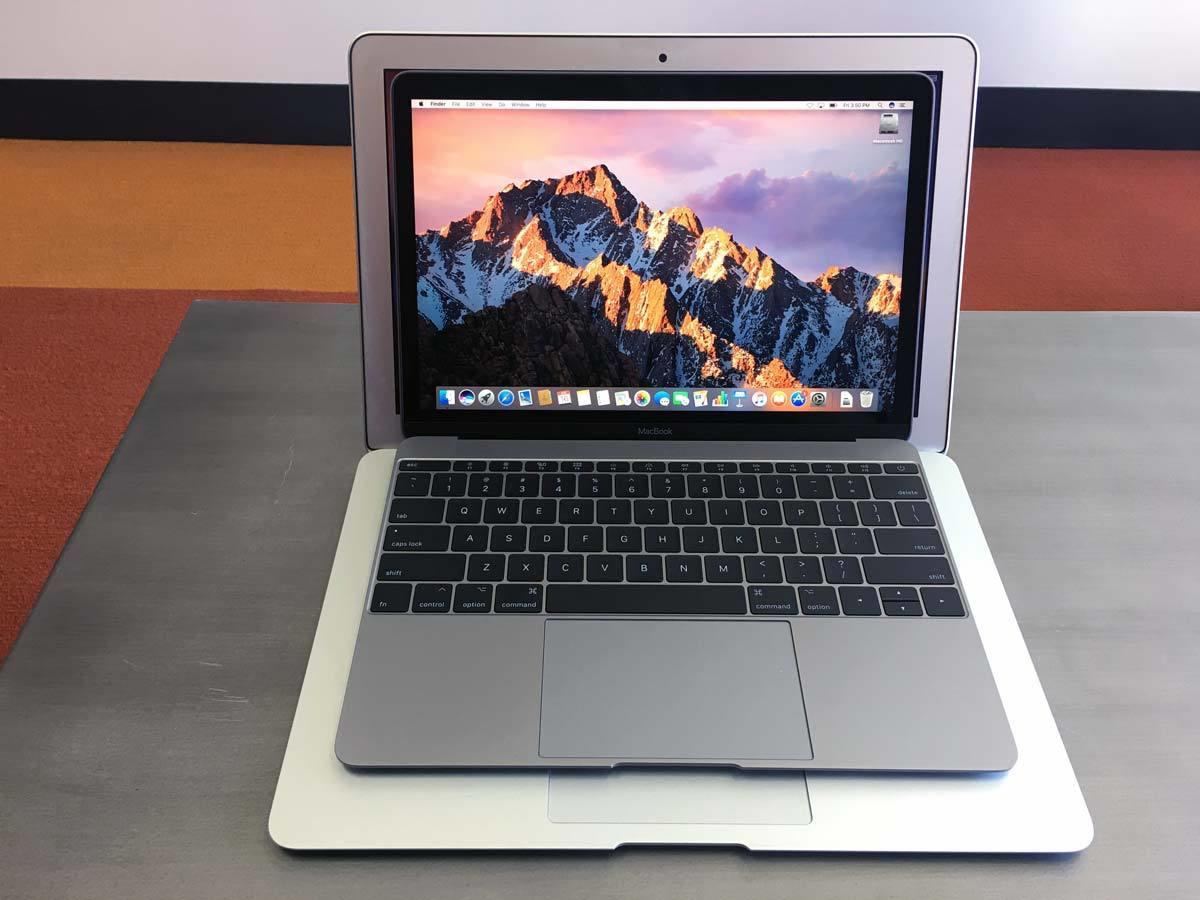
The MacBook Air isn’t the smallest, thinnest, or lightest MacBook anymore.
But Apple’s strategy for the MacBook Air has hit something of a wall. It hasn’t been received a meaningful update in years (despite a spec bump at last year’s WWDC), and no longer holds the claim as the company’s lightest or thinnest laptop in Apple’s lineup. Essentially, it’s the Mac mini of the notebook line.
Ten years later, Apple’s ultimate portable isn’t the MacBook Air anymore. Nor is it the MacBook. In fact, it’s not a Mac at all: It’s the iPhone. Apple may still sell some 20 million Macs a year, but it ships twice as many iPhones in a down quarter. Simply put, the iPhone has become the MacBook Air for a generation of Apple users who have no use for the processing power of a PC. It’s more than capable for most tasks—messaging, web browsing, streaming, social media—has a great camera and lasts all day.
Screen with a view
The one thing the iPhone doesn’t have, however, is a large screen. The largest iPhone screen is just 5.8 inches, which isn’t exactly conducive to getting work done. Apple will happily sell you an iPad or a MacBook to fill that need, but otherwise there’s no way to expand the screen and no real multitasking, at least not like Split View or Picture in Picture on the iPad. And as long as the iPhone stays in the 6-inch range, it’s going to stay that way.
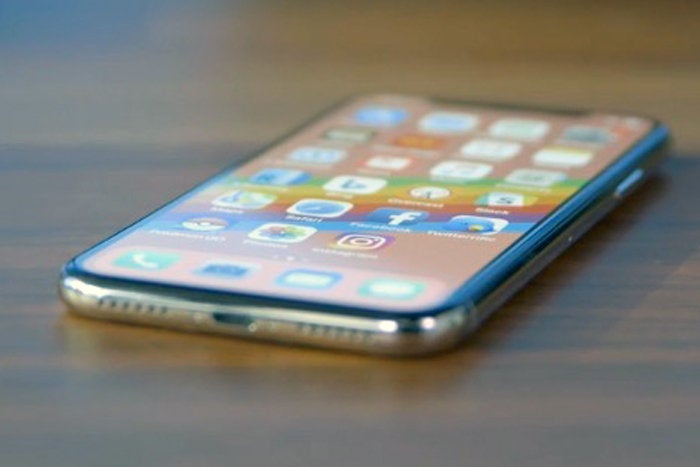
iPhone X has more screen than ever, but it’s still not built for work.
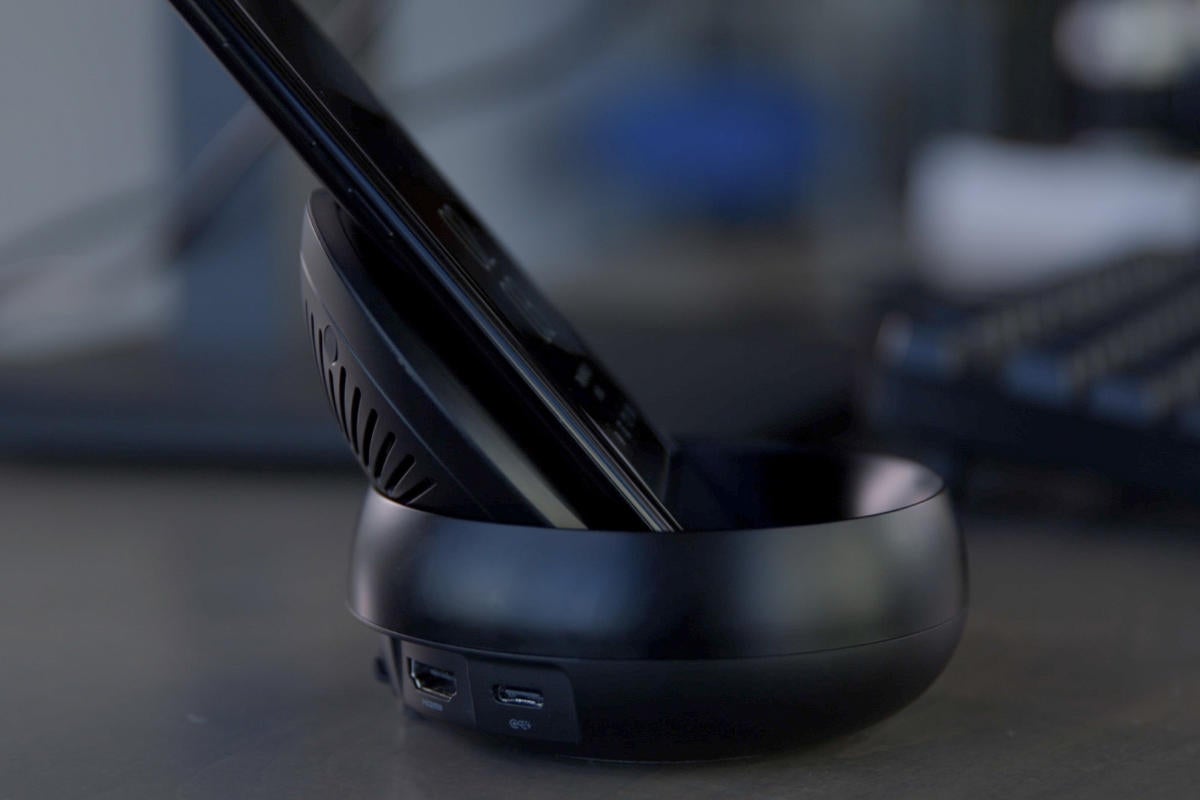
But it doesn’t have to. Back when it unveiled the Galaxy S8, Samsung also took the wraps off an innovative companion dock that transformed how we think of our smartphones. Called DeX, it allows the S8 to attach to a monitor for a full-sized workspace. It’s a true innovation that pushes the smartphone into new territory, and it’s a delight to use.
It’s easy to dismiss as a gimmick, but once you pop the S8 into the DeX dock, you can instantly see the potential. It might not be as polished as it could be, but Samsung has designed a legit desktop interface for the S8 that does for the phone what Chrome OS did for laptops. There’s no setup or preferences to speak of, but phone apps feel more like full PC ones than mobile apps, with resizable windows, robust interfaces, and traditional multitasking. Once you plug it in, it doesnt feel like you’re using a phone at all.
Samsung’s DeX dock turns your Galaxy S8 into a PC.
And other phone makers have taken notice. Huawei does something similar with the Mate 10 Pro, letting users connect a standard USB-C-to-HDMI cable to enter PC mode, but it was something Razer showed off at CES that really piqued my interest. It was just a prototype, but instead of a small dock, it was a full-sized laptop with a slot for the phone to slide into. And I wonder if there isn’t a prototype of something similar floating around Jony Ive’s laboratory.
macOS for the win
No matter what you use your iPhone to do, there are times when we all could use a break from holding our phones. And that’s where a dock could be a killer accessory. Unlike Samsung, Huawei, and Razer, however, Apple has a built-in advantage here: the Mac. Remember, iOS is built on OS X, so building a “lite” version of macOS for the iPhone would be a natural extension of iOS. But Apple could go a step further than a mobile operating system by incorporating Mac-like functions too: a full iCloud-based Apple File System, Spotlight search, dynamic notifications, powerful security, and of course, desktop-caliber apps.
A big screen would give iOS on the iPhone room to breathe—and give us room to work.
People have been clamoring for a hybrid Mac for years, and this would be the next best thing: essentially, a Mac that can fit in your pocket. The iPhone is evolving faster than the Mac ever did, so much so that it’s beginning to reach the limits of what it can do on our phone. Each new iteration of iOS might bring a couple new features, but for the most part, iOS is constrained by the limitations of the iPhone screen. And unless Apple plans on making a 10-inch iPhone in the near future, iOS won’t be able to break out of its mold.
The next step
If Apple were to expand and modify iOS to fit on a big screen and work with a trackpad and a mouse, it would turn the iPhone into a sort of modern MacBook Air. Except it would be even more mobile, more versatile, and more advanced.
So what would an iPhone dock look like? Apple could go the way of the S8 and create a portable desktop dock that connects to a monitor. Or maybe a wireless charging pad that delivers data once it rests on it. Or it could do something like what Razer demonstrated: A full-on laptop with an iPhone slot. That’s probably not viable (or affordable), but it would be the coolest way to bring the iPhone to the desktop. I know I’d buy one.
Whatever the method, it seems inevitable that Apple develops some kind of a way to bring iOS to the big screen. As cool as iPhone X is, it’s still just an iPhone, and until Apple embraces its full potential, that’s all it’s going to be. But while the MacBook Air may be on its last legs, its spirit is alive and well. All Apple needs to do is harness it. By combining the mobile prowess of the iPhone and the MacBook Air, Apple would create the ultimate mobile device, one that works as well in your hand as it does when you hook it up to a 20-inch screen.





 Apple is changing its strategy when it comes to iOS launches.