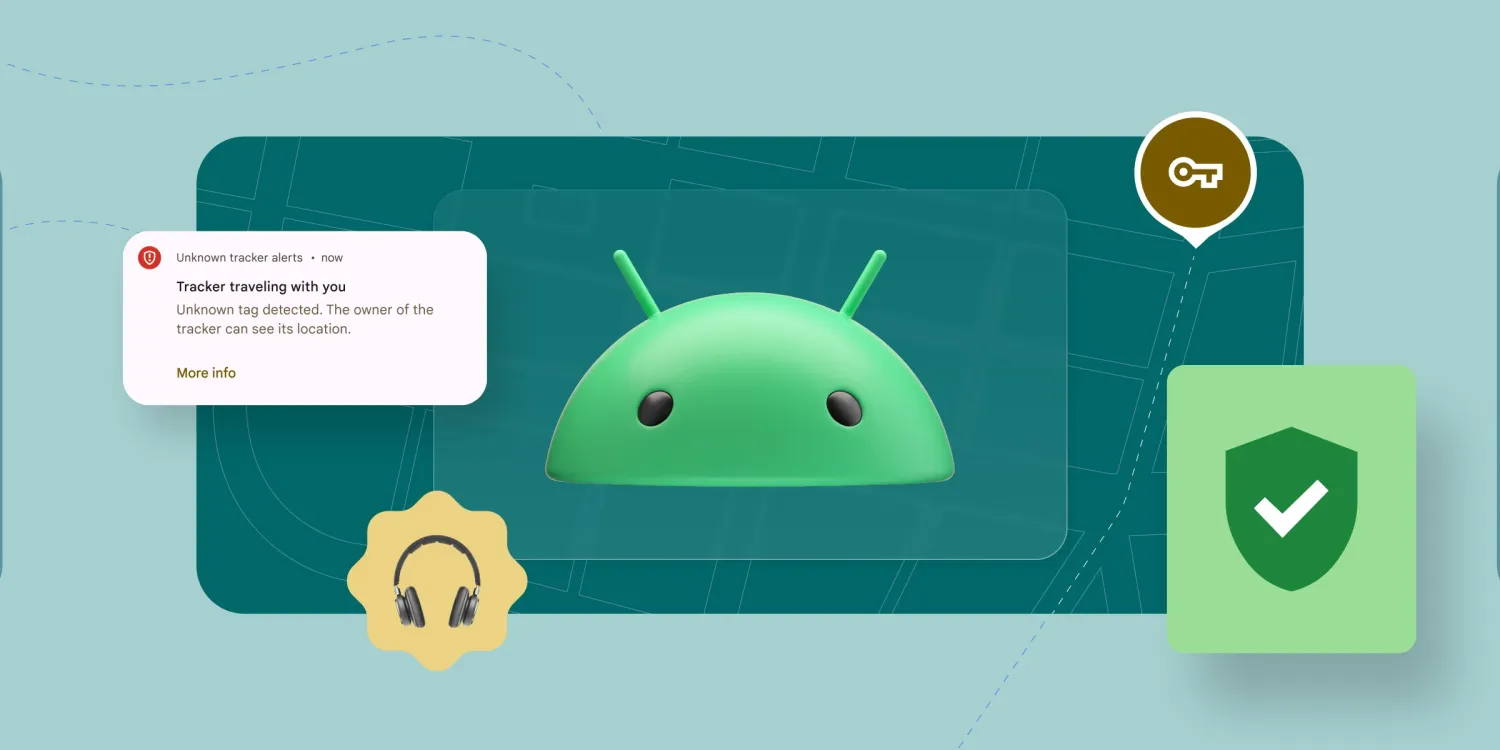
The Find My Device network will be able to find the Pixel 8 and 8 Pro “if they’re powered off or the battery is dead.” The former might help when a device is stolen. “Specialized Pixel hardware” is credited as making this possible.
Google tells us that support for this is already available without owners needing to take any action. It will be working with other OEMs and chipmakers on expanding this capability to premium Android devices.
Meanwhile, Google last year said that “Pixel Buds” will be updated to support the new offline Find My Device capabilities. Google confirmed today that this is coming to the Pixel Buds Pro in the future. JBL and Sony will release similar updates “soon.”
This support for headphones is coming after the initial launch for phones and tablets. Support for Bluetooth tracker tags will coincide with some product launches in May.
The Find My Device network is first rolling out in the US and Canada, with end users prompted by email and on-device alerts.
Google’s Find My Device (FMD) network was originally supposed to launch in the summer of 2023, but it was delayed until Apple implements unknown tracker alerts. The upcoming iOS 17.5 update is adding that support.
Apple released iOS 17.5 Beta 1 and strings detailing how the iPhone will be able to detect third-party trackers. Once found, iOS will direct users to instructions on how to disable them.
For example: “This item isn’t certified on the Apple Find My network. You can disable this item and stop it from sharing its location with the owner. To do this, follow the instructions provided on a website by the manufacturer of this item.”
As of today’s release, this capability is not yet enabled and there’s no user-facing UI. It might go live with later betas and ultimately be ready when iOS 17.5 hits stable.
Looking at past schedules, iOS 17.5 might launch in May. After that update sees wide adoption, Google’s FMD network will be clear of any obstacles.
Google has been waiting “until Apple has implemented protections for iOS,” so that FMD devices cannot be used to track iPhone owners without warning. This delayed the original summer 2023 launch of the network that will leverage over 1 billion Android to periodically check for nearby devices to crowdsource the location of missing ones. The new Find My Device network can “locate devices that are offline or that don’t have location capabilities.”
Several tracker tags were delayed as a result of Google’s safety stance, while phones and earbuds, like Pixel Buds, have also been prevented from adding these capabilities.
iOS 17.5 to introduce new system to disable unwanted tracking accessories
Apple last year announced a partnership with Google to work on a new “industry specification to address unwanted tracking” after many concerns about stalkers using accessories like AirTags to silently track people. Now it seems that Apple is planning to launch these new anti-stalking features with iOS 17.5.
Detecting and disabling unwanted tracking accessories
As found evidence of these new anti-stalking features in the internal code of iOS 17.5 beta, which was released to developers on Tuesday. Strings added to the Find My app reveal that iOS will identify tracking accessories, even when they’re not Apple or Find My certified, and help users disable them.
“This item isn’t certified on the Apple Find My network. You can disable this item and stop it from sharing its location with the owner. To do this, follow the instructions provided on a website by the manufacturer of this item,” reads one of the new strings.
The feature doesn’t seem to be enabled for beta users for now, but this is strong evidence that it may become available with the official release of iOS 17.5. Companies including Samsung, Tile, Chipolo, Eufy, and Pebblebee have expressed interest in supporting this technology.
At the time, Apple and Google said they would create a new universal system for iOS and Android to detect and alert users about unwanted tracking accessories. Currently, iOS is already able to detect unwanted Bluetooth location-tracking devices, but only when they’re Find My certified. The company also offers an Android app to detect AirTags.
More about iOS 17.5
iOS 17.5 beta 1 doesn’t seem to bring any significant changes, as we’ve only seen a few minor tweaks so far. Apple is likely to release iOS 17.5 to the public next month, as the company is also rumored to launch new iPads and accessories in May.
iOS 17.5 beta 1: Here’s everything new
Apple released iOS 17.5 beta 1 to developers, after a month-long gap with zero beta releases. While iOS 17.5 beta 1 is a relatively minor update, there are a few things worth pointing out. Head below for more.
iOS 17.5 beta details
iOS 17.5 beta 1 features build number 21F5048f. It’s available now to registered developers, who can update via the Settings app by going to “General” and then choosing “Software Update.” We expect iOS 17.4 to be released to public beta testers sometime later this week or next week.
What’s new in iOS 17.5 beta 1?
Web installation
In the European Union, iOS 17.5 enables support for installing apps directly from a developer’s website. Apple announced this new “Web Distribution” feature last month, explaining that it lets developers distribute their iOS apps directly from their website.
To use this feature, developers will have to opt into the new App Store business terms, which means they will pay the Core Technology Fee of €0.50 for each first annual installation over one million in the past 12 months.
Any app distributed through the web will still be required to meet Apple’s notarization guidelines. Apps can only be installed from a website domain that the developer has registered in App Store Connect. Apple will also make a number of APIs available for integration with system functionality for developers.
While iOS 17.5 beta 1 lays the groundwork for this feature, there currently aren’t any developers offering their apps via this new Web Distribution feature. We don’t expect this to change until iOS 17.5 is released to the general public in May.
Design changes
iOS 17.5 beta 1 also includes a few small design changes throughout the operating system.
In the Settings app, there is a new glyph for the “Passkeys Access for Web Browsers” menu under “Privacy & Security.”
The Podcasts widget has been updated to have a new dynamic color that changes based on the artwork of the podcast you’re currently playing.
New unwanted tracking system
According to code found, iOS 17.5 appears to include a new system based around anti-stalking features for accessories like AirTags. This comes after Apple last year announced a partnership with Google to work on a new “industry specification to address unwanted tracking.”
Strings added to the Find My app reveal that iOS will identify tracking accessories, even when they’re not Apple or Find My certified, and help users disable them.
“This item isn’t certified on the Apple Find My network. You can disable this item and stop it from sharing its location with the owner. To do this, follow the instructions provided on a website by the manufacturer of this item,” one of the new strings says.
More
According to Aaron Perris on Twitter, iOS 17.5 also includes an update for MDM users: “MDM solutions can now enforce a beta version during automated device enrollment.”
New in iOS/iPadOS 17.5 and macOS 14.5: MDM solutions can now enforce a beta version during automated device enrollment!
Whether Apple has more changes planned for iOS 17.5 beyond what was launched today remains to be seen. The focus is clearly on the European Union, where Apple continues to adapt to the Digital Markets Act being enforced by the European Commission.
iOS 17.5 will likely be released to the broader public sometime in mid-to-late May. It will be the last iOS 17 update released before Apple unveils iOS 18 at WWDC in June.
This summer, Google will leverage the over 1 billion Android devices out there to locate tracker tags and headphones. As part of this, Find My Device is getting a new logo.
For the past several years, the icon for the Find My Device app on Android has been a white pin with a phone at the center against a green background. It conveyed the map-based nature of the application. Google in 2022 did tweak it to remove shadows and better match other modern logos.
The obvious visual downside is that the logo will blend into the sea of other blue/red/yellow/green icons on your phones. Staying green, which evoked a sense of security and Android to a degree, would have better distinguished the app, especially since it’s one that you might be looking for in a panic. As of late, Google has shown a willingness to not bring the four-color design to apps like Play Books. That said, Google Authenticator and Arts & Culture clearly went the other direction.
This icon will presumably make an appearance when the Find My Device network launches later this summer. Google will let you view the location of tracker tags, headphones (launching later), and your mobile devices. The app will guide you when something is close with the ability to play a sound.
Google says “location data crowdsourced from the network is end-to-end encrypted, which ensures Google can’t see or use it for any other purposes,” with more details on the built-in privacy safeguards coming before the launch.
Android launching ‘Find My Device network’ for tracker tags, headphones, more
Google has just publicly unveiled its plans for a “Find My Device network” on Android that can seamlessly locate tracker tags (including Tile products), headphones, and phones.
While Google has long offered the “Find My Device” app, it’s currently only able to roughly locate devices via an internet connection or based on where they were last connected with Bluetooth. This can be useful for locating a lost phone, but it doesn’t help much for finding missing earbuds.
Beyond that, there’s a vast market of Bluetooth tracker tags, useful for making everyday objects locatable. Just last week, Google and Apple announced a partnership to make Bluetooth trackers and AirTags safer by alerting you to the presence of an unwanted tracker on your person. This functionality is now set to launch later this summer.
At Google I/O 2023, the company is finally announcing its (long in development) “Find My Device network,” which massively overhauls the way that lost objects can be found. If your phone joins the Find My Device network, it will periodically check for nearby devices to help crowdsource the location of any missing devices.
Importantly, Google emphasizes that “the Find My Device network was built with user privacy as a key priority.” To that end, the data used is end-to-end encrypted, “which ensures Google can’t see or use it for any other purposes.” The company says it will detail more of the network’s security and privacy safeguards ahead of launch this summer.
The Find My Device network is also expanding to two new classes of gadgets: headphones and Bluetooth trackers. Following firmware updates coming soon to headphones from Sony and JBL – as well as “existing Pixel Buds” – your headphones will be locatable via the massive network of over 1 billion Android devices worldwide.
Meanwhile, tracker tags from Tile, Chipolo, and Pebblebee will soon be fully integrated into the Find My Device network, potentially making tracking more robust while also removing the need for a brand-specific app. Notably, Google’s announcement makes no mention of the frequently-rumored Nest locator tag, aka “Grogu.”
Apple and Google team up to bring AirTag-like unwanted tracking alerts to all item trackers on iPhone and Android
Apple has announced a major new partnership with Google today to lead an “industry specification to address unwanted tracking.” Through the partnership, Apple and Google will create a “draft specification” to alert users about possible unwanted tracking by AirTags and other Bluetooth item trackers.
Currently, iOS offers a robust set of features to counter unwanted tracking and stalking with AirTag item trackers. The native iOS features, however, aren’t open to third-party item tracker companies such as Tile. Apple does offer a “Tracker Detect” application to locate nearby AirTags with an Android device, the app doesn’t scan for nearby accessories in the background. Instead, it only scans a user’s surroundings when the user initiates the scan.
The new technology developed by Apple and Google aims to address those limitations.
Apple revealed the news in a press release on Tuesday morning. As part of this partnership, Apple and Google have submitted a “proposed industry specification” to help combat the misuse of item trackers. The specification created by Apple and Google has been submitted as an Internet-Draft via the Internet Engineering Task Force.
The technology created by the two companies will allow Bluetooth location-tracking devices to be compatible with unauthorized tracking detection and alerts across iOS and Android.
In addition to Apple and Google, companies including Samsung, Tile, Chipolo, Eufy, and Pebblebee have expressed interest in supporting this technology. Apple says that it and Google will solicit feedback from other players in the industry as they continue to develop and refine the technology.
Today Apple and Google jointly submitted a proposed industry specification to help combat the misuse of Bluetooth location-tracking devices for unwanted tracking. The first-of-its-kind specification will allow Bluetooth location-tracking devices to be compatible with unauthorized tracking detection and alerts across iOS and Android platforms. Samsung, Tile, Chipolo, eufy Security, and Pebblebee have expressed support for the draft specification, which offers best practices and instructions for manufacturers, should they choose to build these capabilities into their products.
Ron Huang, Apple’s vice president of Sensing and Connectivity, explained:
“Apple launched AirTag to give users the peace of mind knowing where to find their most important items. We built AirTag and the Find My network with a set of proactive features to discourage unwanted tracking — a first in the industry — and we continue to make improvements to help ensure the technology is being used as intended. This new industry specification builds upon the AirTag protections, and through collaboration with Google results in a critical step forward to help combat unwanted tracking across iOS and Android.”
Apple and Google will release a production implementation of the specification for unwanted tracking alerts by the end of 2023. The technology will then be supported in future versions of iOS and Android.
Find My Device rolls out Material You redesign with dark theme [U]
While the Find My Device app on Android gets the occasional update, Google has not revamped its UI in several years. That’s now changing with a big Material You redesign for Find My Device that also includes a dark theme.
Update 2/8: An updated version (2.5.011) of Find My Device is widely rolling out via the Play Store today. The changelog notes:
Refreshed app design
Find My Device can now help you locate devices, even if they’re offline by encrypting and storing your device’s most recent location with Google
Original 1/18: Upon updating to version 2.5.001, you’re finally greeted with a dark theme and modern account picker. This Find My Device redesign does away with the green accent for Dynamic Color throughout the UI.
After signing in, you’re now greeted with a list of devices associated with your account. Google has removed the integrated map view where your devices appear at the top underneath the app bar. The new list approach is much easier to browse with larger icons than before and more friendly thanks to the device name being listed next to each picture.
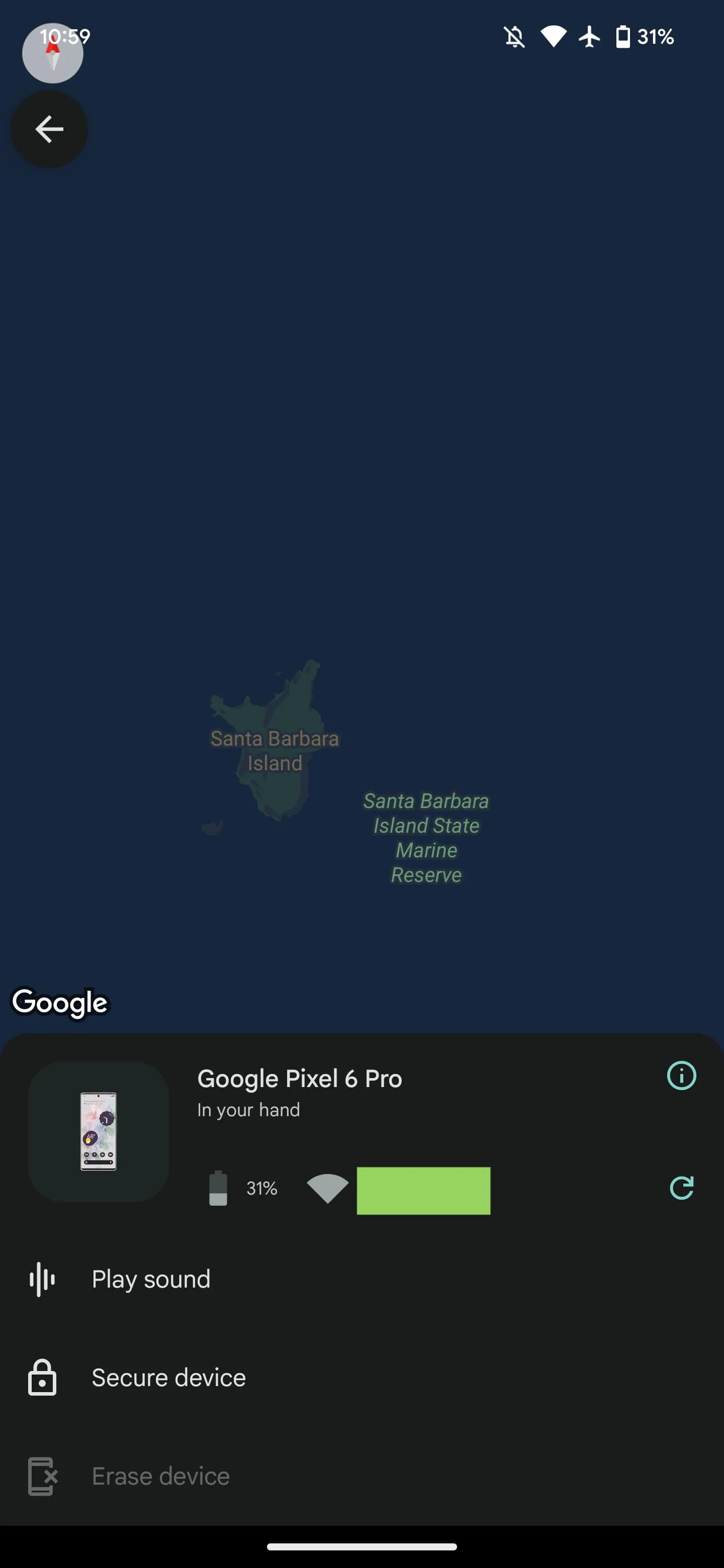
Once you make a selection, the map takes up more of the screen, while you get the same device information as before, including battery percentage and network. You can then Play sound, Secure device, and Erase device from the bottom of the sheet.
Tap the arrow in the top-left to return to all your devices, while the other corner is home to a modern Google Account switcher. Settings just links to Google Play services.
It’s somewhat surprising that Google didn’t use this redesign as an opportunity to release a new icon that will presumably be four-colored. Logo tweaks were made early last year. Meanwhile, the Find My Device website is unchanged today and still green.
The Find My Device redesign with version 2.5.001 is not yet widely rolled out via Google Play.
Thank you for using
Themify Popup
This is a sample pop up. Themify Builder or Builder Lite (free) plugin is recommended to design the pop up layouts.