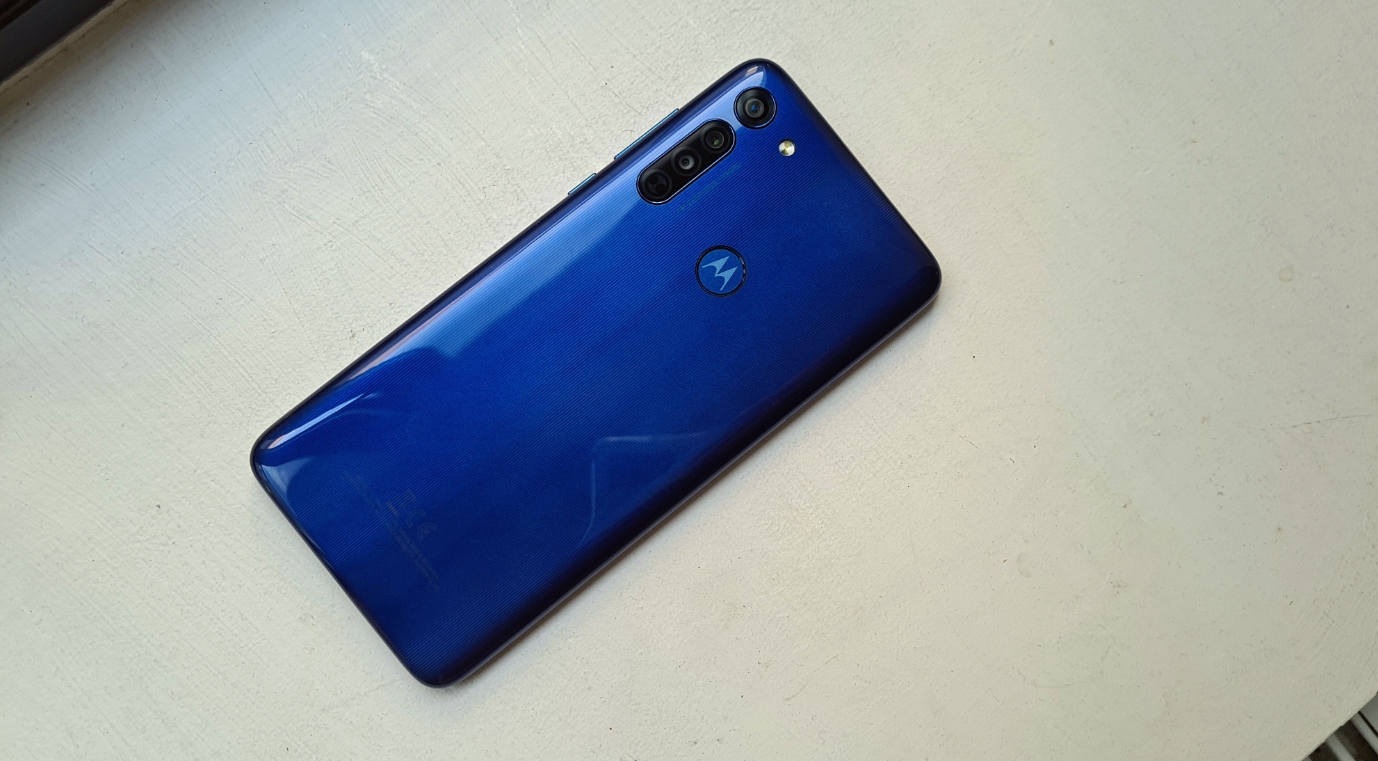
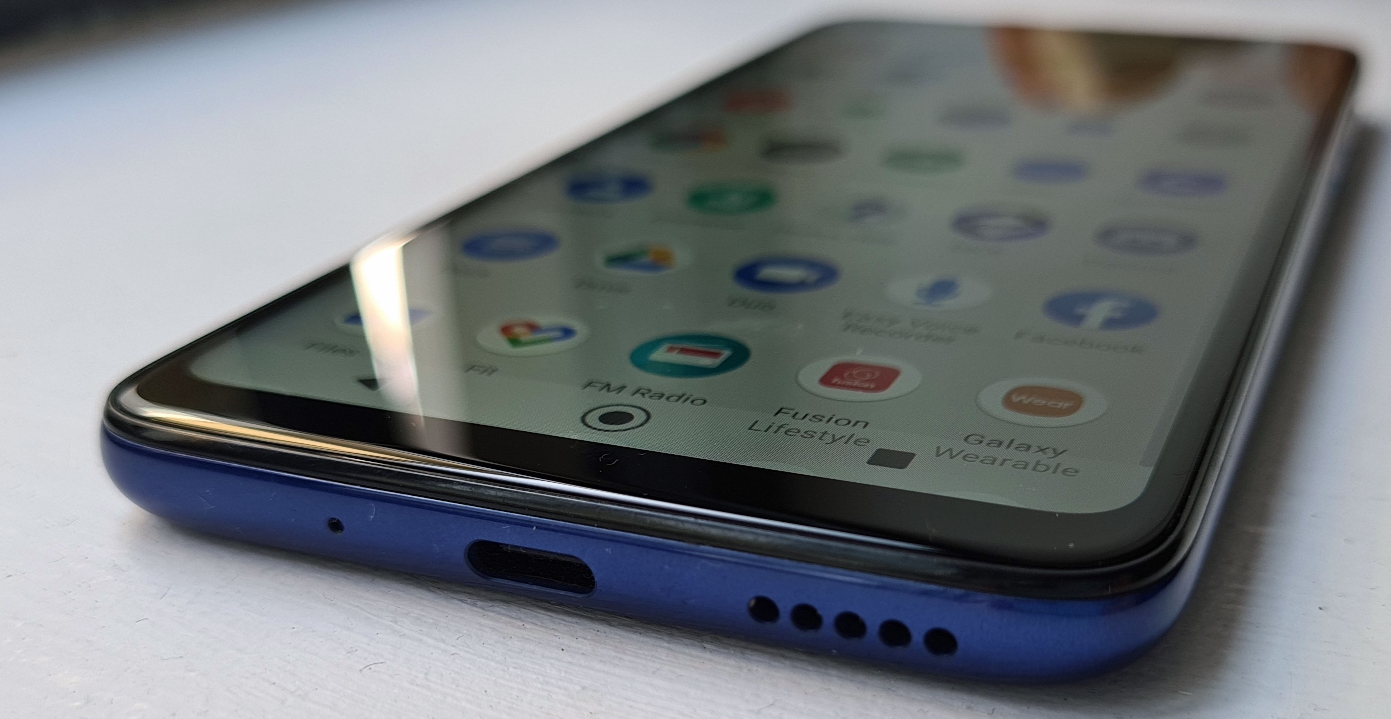
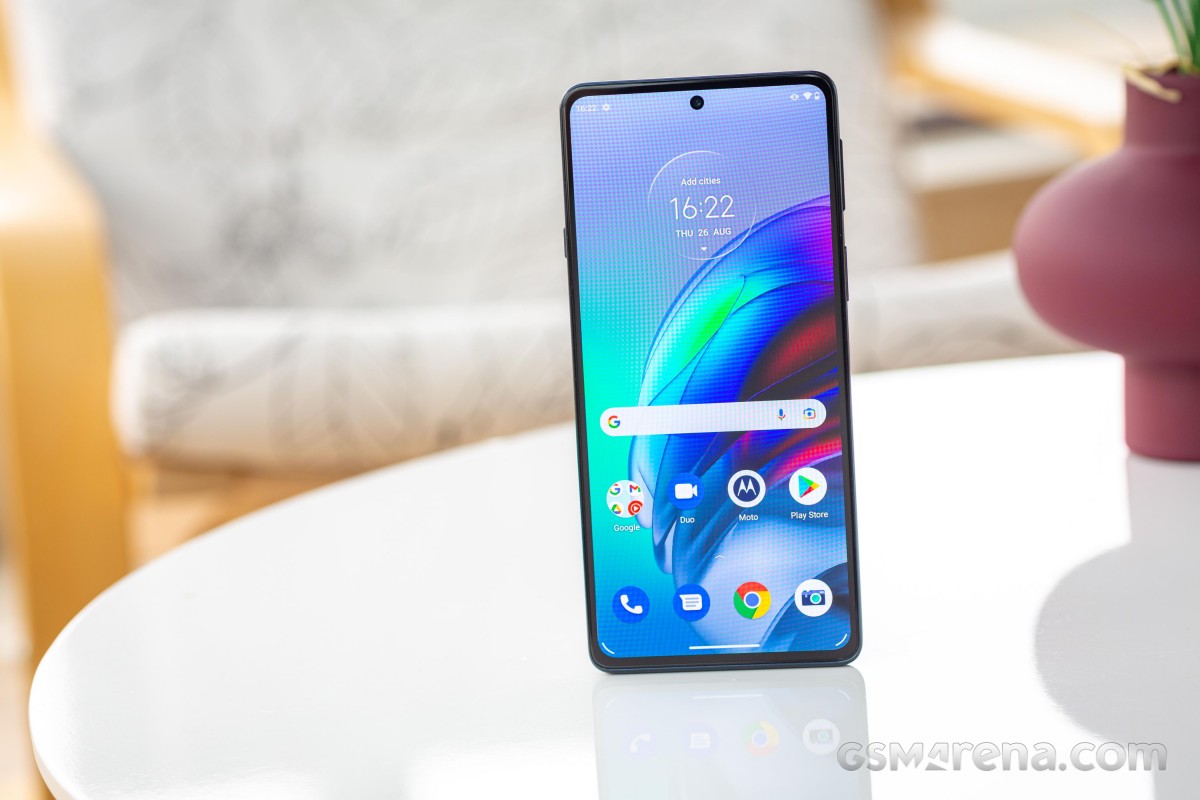
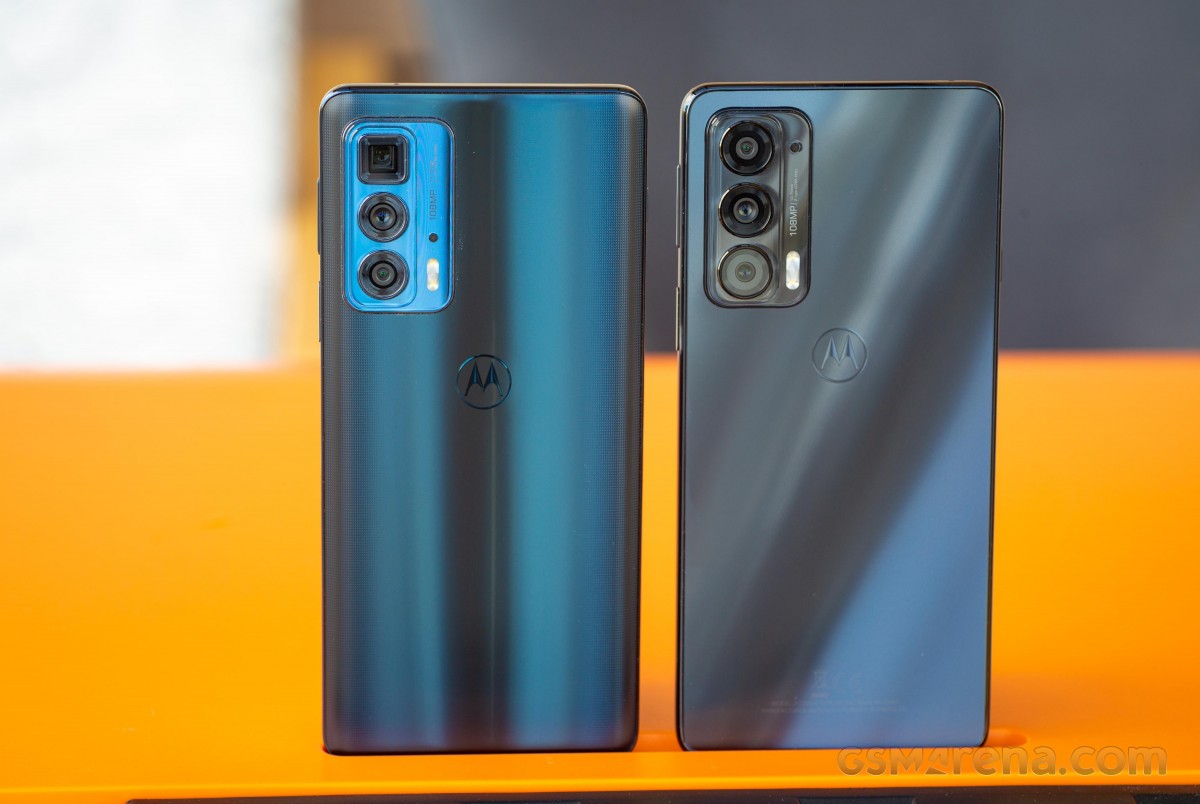
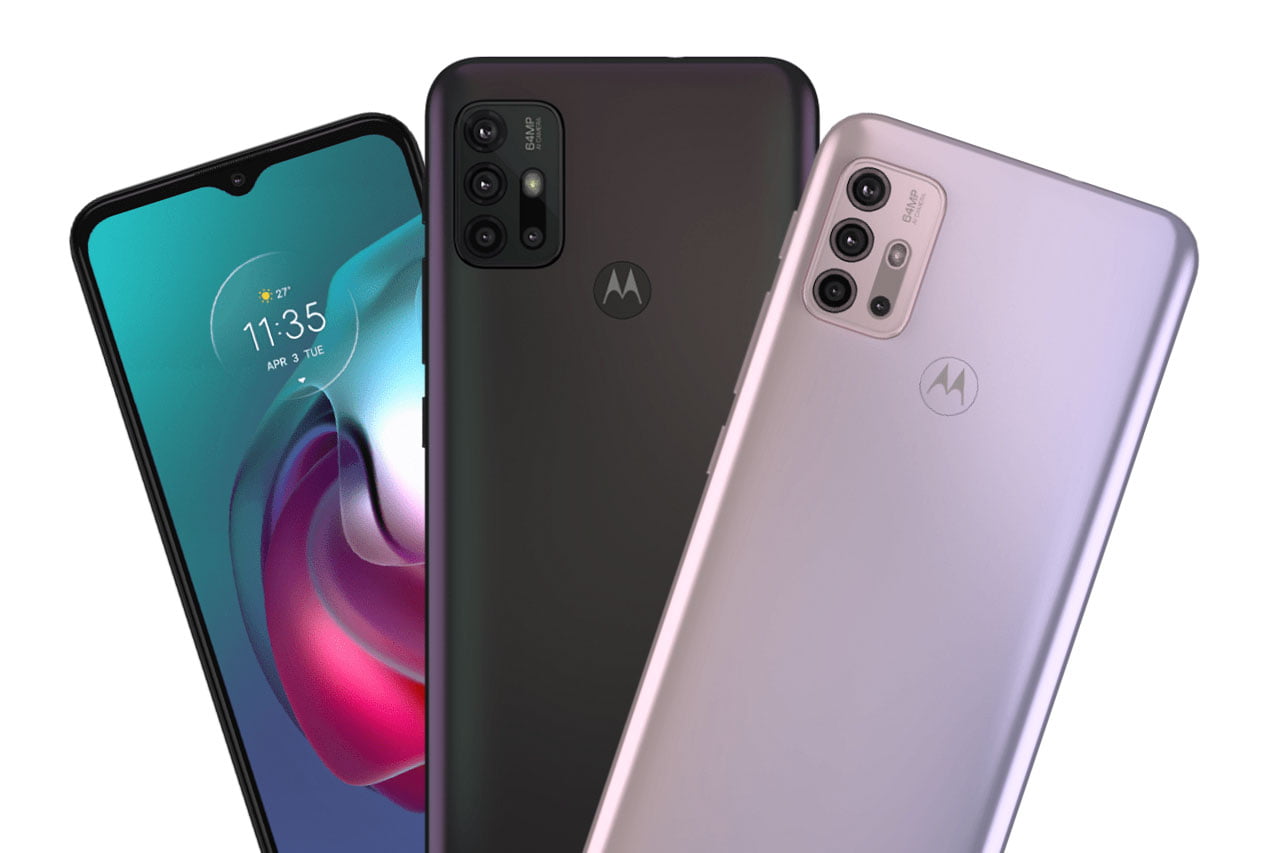
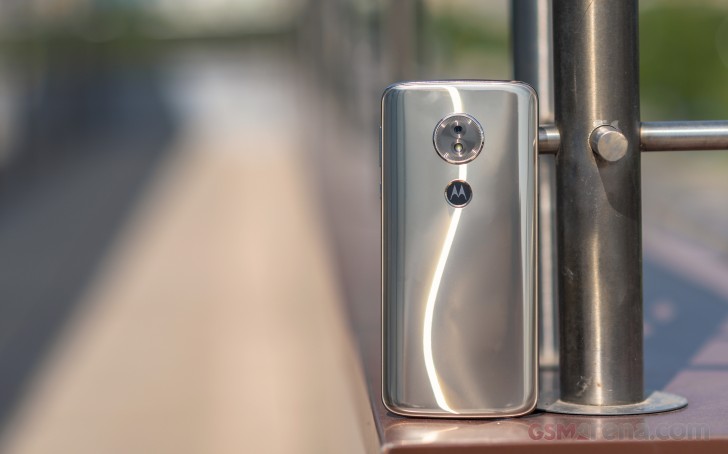
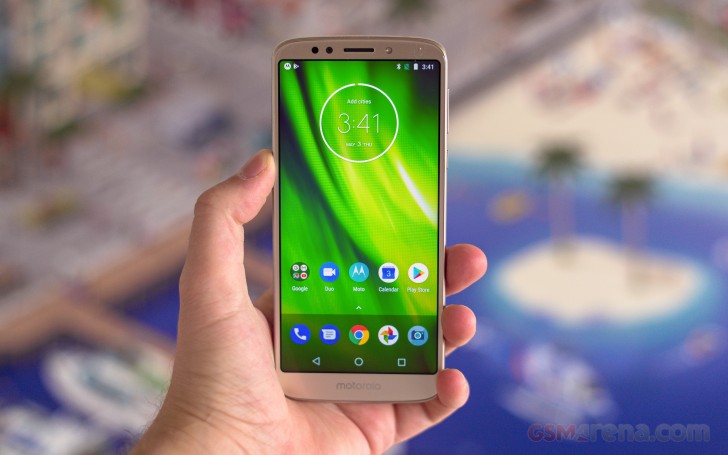
The Moto G series has become a staple of the affordable phone market, and Motorola has managed to make an even cheaper than normal base device for 2020 in the form of the Moto G8.
It doesn’t have as much of a specs jump as new numbered models usually do (and in some ways it’s even a step down), but instead the company is aiming to give you the most bang for your buck in the Moto G8, and it mostly achieves that.
You shouldn’t expect a handset that is going to amaze you, but considering how low the price is you shouldn’t be disappointed by what’s on offer either.
The Moto G8’s design feels premium for the type of device we’re talking about, and it has a big display (although the resolution isn’t as good as we’d like).
The battery meanwhile will last you for a full day even with extensive usage, and if you’re not going to be using the phone much each day you should find that it can last even longer. It’s slow to charge, but the 4,000mAh cell performs well.
The camera can hold its own too. There are three elements – a 16MP main shooter, an 8MP ultra-wide one, and a 2MP macro one, with the former two allowing you to take some impressive shots considering the price of the device.
And that’s what it all comes down to; the price of the Moto G8 is – as noted above – even cheaper than the last few generations of Moto G phones. That in itself is impressive, and while you may be missing a few specs that some will be desperate for, this is a perfect cheap phone for others.
The Moto G8’s release has been complicated as the company unveiled a variety of handsets in the range at different times. The standard Moto G8 was unveiled in March 2020, and it went on sale in Europe soon after that.
The phone costs £179.99 / AU$329 (about $220) but it isn’t coming to the US (though you can buy the Moto G Power and Moto G Stylus there, both of which are part of the same range). Exactly why Motorola chose not to bring the G8 to this market is currently unclear.
There’s only one variant of the Moto G8 that you can buy, and it comes with 64GB of space and 4GB of RAM. It’s remarkably cheaper than the Moto G7 that launched at $299 / £239 / AU$399 but it’s important to note that the spec is a little lower here in some regards.
For example, the screen tech on the Moto G8 is a little weaker when compared to the Moto G7.
Design
This is an affordable phone, and if you consider that when handling it then you’ll likely be pleasantly surprised with how the Moto G8 feels in the hand.
It has a plastic frame and rear, so it isn’t going to feel as svelte in your hands as a modern day flagship phone like the Motorola Edge Plus does.
If you’ve got smaller hands, you may not appreciate how large this phone is. It comes with dimensions of 161.3 x 75.8 x 9mm, making it a larger device than a lot of other cheap phones, which could make it a struggle for some to hold.
That said, we enjoyed the size of the device as it allows for a substantial screen (which we’ll dive into more in a moment) as well as a large battery inside.
Buy it if…
You need a cheap phone
For the price, the Moto G8 is a fantastic choice. You will miss out on a few features that you get on the Moto G8 Plus and some other budget phones, but some won’t mind missing these considering the Moto G8 is less than £200 / AU$350.
You want long battery life
The Moto G8 Power is the phone that will impress you when it comes to battery life, but this device is also capable of lasting for two days with light usage and should certainly last you a full day even if you’re using your phone a lot.
You want a 3.5mm headphone jack
A lot of top-end devices like the Samsung Galaxy S20 and iPhone 11 series have dropped this legacy technology. Having a 3.5mm headphone jack means you’re still able to listen to music on a wired headset with ease on the Moto G8.
Don’t buy it if…
You want a beautiful display
The 720 x 1560 display on the Moto G8 is noticeably lacking when compared to rival devices that tend to have Full HD panels. If you’re looking for a phone that will display videos in all their glory, this isn’t going to be it.
You need a powerful rear camera
This isn’t going to blow your mind with its camera, but it’s suitable for the average person that is looking for an affordable phone. Just don’t expect this to take beautiful photos that floor your friends and family when they’re uploaded to Instagram.
You want to be able to make mobile payments
As we’ve said, the Moto G8 lacks NFC so it isn’t capable of using Google Pay. That isn’t a feature that everyone needs, but it’s something worth noting if you’re considering the Moto G8 for your next smartphone.
The Moto G8 Power Lite is an affordable counterpart to the Moto G8 Power, which is in turn one of the Moto G8 siblings along with that phone, the Moto G8 Plus and G8 Play. It’s also arguably a more apt successor to the Moto G7 Power than the G8 Power, as it’s cheaper than the 2019 smartphone, rather than pricier as the G8 Power is.
The key selling point of the G8 Power Lite is, as the name suggests, its battery capacity: with a 5,000mAh power pack this is a phone that’s built to keep going for a long time, and thanks to its middling chipset and low screen resolution, it’ll see you through two days of use in a pinch. One downside, though, is its micro USB port, which only allows for modest charging speeds and data transfer speeds compared to the standard USB-C, and means that charging your phone back up again will feel like it takes two days. In some ways, it feels like Motorola is trying to prove something with the Moto G8 Power Lite’s specs. There are three rear cameras, although only the 16MP main snapper feels useful, and its 2MP macro and depth-sensing buddies feel tacked on. Similarly the 6.5-inch screen is as big as a plus-size premium phone’s display, but it’s only HD, and content looks so low-res blown up to this size that arguably a smaller screen would be better.
That’s not to say the Moto G8 Power Lite does a poor job of being a cheap phone that’s trying to be a mid-ranger, but the extra elements feel tacked on, while the phone nails the elements that are more common in cheaper phones: the rear fingerprint scanner feels intuitive to use, the plastic frame feels sturdier than those of other phones that use the same material, and the 3.5mm headphone jack is a welcome addition.
All in all, the Moto G8 Power Lite is one of the best phones you can buy at its price point, thanks to its long-lasting battery and the aforementioned design elements. We just think that Motorola could make an even better phone by fully embracing its low-end nature and cutting out some of the superfluous elements.
The Moto G8 Power Lite lives up to its name, and it’s one of the longest-lasting smartphones out there, so you won’t need to charge it up that frequently.
You don’t need top-end processing power
Many people don’t need smartphones that are as powerful as your average laptop, and while the Moto G8 Power Lite is pretty underpowered, you don’t need top-end performance if you’re only going to send texts and make calls, and check social media from time to time.
You don’t use all the newest tech
The Moto G8 Power Lite sports older tech, from its micro USB port and 3.5mm headphone jack to the Android 9 software on board, but some of this helps to keep the price down, and if you’re upgrading from an older phone you may be perfectly happy with what’s on offer here.
Don’t buy it if
You have smaller hands
The Moto G8 Power Lite is a big handset, in terms of both screen size, and weight and dimensions, and if you’re looking for a compact phone, or one that you can easily use one-handed, this phone probably isn’t right for you.
You need a great camera
You’re getting what you paid for with the Moto G8 Power Lite’s camera setup – that is, you’re not getting much. If you’re not a frequent phone-camera user, either because you’ve got a dedicated camera or you just don’t take many pictures, it’ll be fine for you, but if you want to be able to take good-looking photos with your phone you’ll need to look elsewhere.
You like playing mobile games
Because of its weak processor the Moto G8 Power Lite isn’t exactly a gaming powerhouse, unless you consider Sudoku the only game worth playing; you’ll need something with a more advanced chipset if you’re looking to play the likes of PUBG: Mobile or Fortnite.
Verdict
The Moto G8 Power Lite is cheap and has a long-lasting battery, and if that’s all you’re looking for from your phone, it’s likely a device you’ll be happy with. In some ways Motorola has tried too hard to hide the phone’s ‘budget’ roots, notably with the large screen and three rear cameras, and these attempts fall a little flat, but look past the pretences and this is one of the best cheap phones you can buy.
Motorola unveiled an exciting trio of Edge 20 smartphones with a few shared key features – HRR OLED screens, 108MP primary shooters, 5G connectivity, and 30W fast charging.
Today, we will be exploring the Motorola Edge 20. With a powerful Snapdragon 778 chipset and a 3x tele camera, the regular Edge 20 model is the most balanced one of the trio. There is a Pro model with a flagship Snapdragon 870 SoC and 5x periscope camera, while the Lite model runs on the basic Dimensity 720 platform and has no zoom camera.
Before we continue, we want to warn you not to confuse this Motorola Edge 20 with the US-exclusive Motorola Edge (2021) that is a reworked Edge 20 version, or the India-exclusive Motorola Edge 20 Fusion, which is based on the international Edge 20 Lite model.
So, the first thing you will immediately notice about this new Motorola Edge 20 is that it is not a curved smartphone like the original Edge, just on the contrary. It has lovely flat sides, screen and rear panel and is incredibly thin at 7mm. As usual, the Edge 20 is splash-proof thanks to its water-repellent build.
The Motorola Edge most impressive feature is the 6.7″ OLED screen with 10-bit colors and 144Hz refresh rate. It supports a dynamic refresh rate too, but we will talk more about this in our display section. For now, let’s say it sure looks great on paper.
This Edge 20 model is based on the Snapdragon 778G 5G chipset, which offers a powerful processor and GPU. It should be enough for smooth HRR gaming, and there is 5G connectivity, too. The Edge 20 Pro is the one with the flagship-grade Snapdragon 870 SoC, but it sure sounds like a bit overkill for a 1080p screen, don’t you think?
Anyway, the rear camera of the Edge 20 is thoroughly interesting. It has a 108MP primary snapper with Samsung’s ISOCELL HM3 sensor, followed by an 8MP camera with 3x optical zoom and a 16MP ultrawide shooter with autofocus for cool macro photos. The selfies are handled by a front 32MP camera. The Pro model offers 5x zoom instead of 3x, while the Lite model has no tele camera.
The Motorola Edge 20 also shines with 30W fast charging and clean-ish Android 11 with some cool Moto tricks.
Video capture:Rear camera: 4K@30fps, 1080p@30/60/120/240fps, 720p@960fps, gyro-EIS; Front camera: 1080p@30fps.
Battery: 4000mAh; Fast charging 30W.
Misc: Fingerprint reader (side-mounted); NFC.
Looking at the specs of the Motorola Edge 20, we can think of only two possible issues – the omission of stereo speakers and the battery capacity. Other mid-range smartphones are offering dual speakers and 4,500mAh or more capacity, especially larger phones like the Edge 20.
Without further ado, here is the Motorola Edge 20.
Unboxing the Motorola Edge 20
Motorola Edge 20 ships within a thin blue box, which contains a 30W power adapter with a USB-C port and a USB-C cable.
The phone also arrives with a transparent silicone case, and it’s already put on for your convenience.
The competition
The Motorola Edge 20 seems like a great smartphone with thoughtfully picked features and a competitive price of €480. It is one of the few devices to offer 144Hz refresh rate support for its OLED screen; there is powerful enough hardware, a versatile camera on the back, and a clean Android package with a cool Ready For desktop-like experience.
Unfortunately, there are plenty of €500 smartphones with flagship-grade features ready to fight for a spot on the market. Let’s look at some of these and see if the Motorola Edge 20 can stand its ground next to them.
The first offer that comes to mind is the nubia Red Magic 6R – the only handset that can offer a similar 144Hz OLED screen at €500. It trumps the Edge 20 with a flagship Snapdragon 888 5G chip, pressure-sensitive shoulder triggers for gaming, stereo speakers, and faster charging. It omits splash protection, a zoom camera and a Ready For alternative. We guess you should decide on which package makes more sense to you.
The Realme GT Master Explorer is about to launch in Europe at about €500, and it’s one of the best phones you can get at that price with one of the worst names. The GT ME has a unique design, the current second-best chip in the world – the Snapdragon 870, and a tri-camera rear setup with an impressive 50MP primary with OIS with good 2x lossless zoom and 4K at 60fps capturing. There are also stereo speakers and impressively fast 65W charging. The Edge 20’s inferior in almost all aspects but the splash resistance, the longer zoom, and the Ready For support. If you like the Realme GT ME, but you don’t want to wait for its release, the Realme GT is even faster but not as fancy as far as cameras are concerned.
The recently launched Galaxy A52s by Samsung runs on the same Snapdragon 778G 5G SoC and offers a large 120Hz Super AMOLED screen. Its quad-camera omits a zoom snapper, but the 64MP primary has OIS, which helps a lot at night. The Galaxy A52s is fully water-resistant, packs two loudspeakers, an under-display fingerprint scanner; then there are rarities like a 3.5mm jack and a microSD slot. If only the A52s had DeX support, it would have been the better choice. Alas, it doesn’t, so once again, it’s up to you to weigh on the pros and cons.
Finally, the €300 splash-proofed Poco F3 is a budget offer worth considering. It packs a couple of flagship essentials such as a 120Hz AMOLED and Snapdragon 870 5G chip, loud stereo speakers, and long-lasting battery life. It cannot match the Edge’s software experience and camera versatility, but at that price, it’s something you should at least consider.
ZTE nubia Red Magic 6R • Realme GT Explorer Master • Samsung Galaxy A52s 5G • Xiaomi Poco F3
Obviously, no other than Motorola can offer Read For support, so let’s see the in-house competition.
The Moto G100 was the Ready For pioneer, and it’s still quite attractive. It has a slower 90Hz LCD screen but has a more powerful Snapdragon 870 5G chip and a much better battery life. There is no zoom camera on the G100, but you do get a second ultrawide selfie camera for what’s that worth. The G100 costs about the same as the Edge 20, so unless you need the more powerful SoC or you find the G100 at a bargain price, we’d choose the Edge 20.
The other two Edge 20 phones are good alternatives. The Edge 20 Lite relies on the budget Dimensity 720 5G chip with support for up to 90Hz refresh rate and drops the zoom camera, but it is about €150 cheaper at €340 and offers much better battery life. We are not sure if we’d be okay with that entry-level chip, but the price difference is sensible, and the Lite should be considered for that.
Motorola Edge 20 Plus and Motorola Edge 20
Then there is the Edge 20 Pro, which will bring three upgrades for €200 on top of the Edge 20 – a more powerful Snapdragon 870 chip, a 5x telephoto camera, and a beefier battery. Seems a bit overpriced, though, doesn’t it?
Motorola Moto G100 • Motorola Edge 20 Lite • Motorola Edge 20 Pro
Our verdict
The Motorola Edge 20 seems like the most balanced smartphone among the Edge 20 trio. It has the most reasonable pick of features – a 144Hz OLED, powerful but not overkill Snapdragon 778G 5G chip, a versatile triple camera going from 0.5x up to 3x, and a large enough battery with fast charging.
We loved the display, and it is indeed a flagship-worthy one, the Edge 20 can handle games very well, including high framerate ones, and its camera is dependable despite its weird resolution handling.
One of the key features of this Motorola Edge 20 is the vanilla-like Android OS with Ready For desktop-like experience, and it runs well, delivers on the promises, and can be a powerful tool for those of you who multi-task heavily on a number of devices.
The Edge 20 is not ideal – it doesn’t have stereo speakers, the battery life is subpar, and the camera app and processing are in need of a few tweaks.
But even that doesn’t take away from the fact that it is the best offer within the Edge 20 trio, and among the best €500 phones you can get.
Pros
Attractive splash-proofed design.
Excellent 144Hz OLED display.
Fast charging.
Clean Android 11, and Ready For is not a gimmick.
High-framerate gaming supported and dependable sustained performance.
Good photo camera quality, day and night.
Great daylight videos.
Cons
No stereo speakers.
Average battery life.
Poor low-light videos.
Photo resolution settings don’t make a lot of sense.
Motorola recently announced its new lineup of mid-range smartphones in the form of the Motorola Edge 20 Fusion and Edge 20. Today, we’re gonna take a look at the Motorola Edge 20 Fusion, with a 6.7-inch 8-bit color, 90Hz OLED display, a MediaTek Dimensity 800U processor, and a 108MP main rear camera.
It shares a few similarities with the Motorola Edge 20 Lite, even with the design, but this is an even more toned-down variant. Despite that, as we’ve been using this for quite some time now, we think it’s worth checking out.
The Motorola Edge 20 Fusion feels and looks like it has a robust build. It’s quite chunky though due to its large battery capacity, but it’s not as heavy as it looks. The body is entirely made of plastic, yet it doesn’t feel cheap at all. Its matte finish at the back is a nice touch, making it a little less prone to smudges—just less. At the back, there’s a subtle M logo sitting in the middle, while on the upper left is its triple rear camera setup along with an LED flash in a square protruding module. The camera bump is quite thick so we suggest slapping a case on to avoid accidental scratches on the lenses. We’re glad to say that for its range, the Motorola Edge 20 Fusion is IP52 dust and water-resistant so a few water splashes shouldn’t be a problem. It’s available in two colors: there’s Cyber Teal and Electric Graphite, which is the one we have. On the right are the volume rockers and power button that also doubles as a fingerprint scanner. Meanwhile, on the left is a dedicated Google Assistant button, along with a card tray for two nano-sized SIM cards and a microSD card in a hybrid setup. On top we have the secondary microphone, then at the bottom are the 3.5mm audio jack, USB-C port, main microphone, and loudspeaker.
Display and Multimedia
Flipping upfront, we get a 6.7-inch FHD+ 90Hz OLED display with 8-bit color, sizable bezels, and a punch-hole notch on the upper middle. Right above that is the earpiece. The front camera notch doesn’t really bother us, but by default, whenever you launch an app, a black bar will cover the top area unless you allow it to fill the full screen in the settings.
If you like to watch movies or binge-watch your favorite Netflix series on your smartphone, then the Motorola Edge 20 Fusion’s OLED display will really impress you. It’s HDR10 certified, has good viewing angles, colors are punchy, and we get inky blacks. Its system-wide dark mode gives a satisfying experience that reminds me of using a Pixel phone. And since we get an option for a 90Hz refresh rate, scrolling through the UI is definitely a smooth experience. However, do note that this display is highly prone to fingerprint smudges. Audio-wise, sound only comes out through its down-firing loudspeaker and it can get loud enough for a medium-sized room. The quality isn’t really impressive but it’s not the worst either. There’s quite a balance of highs and mids, but like most mid-rangers, it’s lacking on bass. We still suggest taking advantage of the headphone port for better sound quality.
Cameras
The Motorola Edge 20 Fusion has impressive-looking specs on paper. Its triple rear camera setup is composed of a 108MP (main), an 8MP (ultrawide and macro vision lens), and a 2MP (depth) sensor. Upfront is a 32MP selfie camera. By default, its standard mode uses the main 108MP lens to produce 12MP shots. And looking at some samples, they’re fairly decent. Under good lighting conditions, we often get sharp and vibrant photos with an acceptable dynamic range. However, it’s rather disappointing to see that it is inconsistent when it comes to color reproduction and saturation. Sometimes it excessively processes the colors green and blue. Although we don’t always get muddy or shaky photos, we still suggest taking multiple shots and tapping to focus to get better outputs. Since we get a high 108MP lens, you can take ultra-quality shots but with still the same picture quality as in standard mode. You can turn this on in the settings. The ultra-wide lens is deliverable and can still be very useful but it does have tendencies to look shadowy and with a fish-eye look. As for night photography, photos come out soft and a bit muddy when you’re not using the night mode feature. But with the night mode on, it will slightly enhance the sharpness and shadows. Overall, it’s actually not that bad with the light work. Macro photography, on the other hand, impressed us. It’s easy to focus when taking a shot and the details on the subject are on point. Its portrait mode is also flexible to use as it allows you to adjust the blur before taking a photo, and we like how the effect looks clean in separating the subject from the background. Now when it comes to selfies, it can be a hit or miss. Skin tones can be a little bit too dark, and sometimes, photos can come out noisy even in well-lit conditions. Hopefully, this can be fixed with a software update.
For videos, you can shoot up to 4k at 30fps but if you want to use its stabilization you can toggle it down to 1080p at 60fps. Also, take note that files are set to H.265/HEVC encoding by default. There are other camera features onboard that you can play around with including pro, macro video, spot color, panorama, cinemagraph, live filter, timelapse, and dual capture.
OS, UI, and Apps
Motorola Edge 20 Fusion runs on stock Android 11 with a few Motorola personalization features—making this one of its biggest key takeaways.
You can expect a straightforward Google-centric interface with the brand’s Moto app that allows you to tweak the shortcut gestures, icon style, and audio effects. You can also choose from a number of nicely designed wallpapers, some are even interactive. There are some notable features here that you might find useful such as Gametime which is like Game Mode. Then there’s Attentive Display that prevents the screen from going to sleep while you’re looking at it, and there’s also Peek Display that gives quick access to interactive notifications while you’re screen is locked. All of the settings can be accessed through the general settings menu like what we’re used to, and of course, pre-installed apps are kept to a minimum. Out of the 128GB of storage space that we get, we’re left with 108GB of usable space out of the box. If it’s still not enough, you can expand it up to 512GB via a microSD card.
Performance and Benchmarks
Powering the Edge 20 Fusion is a MediaTek Dimensity 800U 5G processor, with 6GB / 8GB of RAM, and 128GB of internal storage. The experience is highly deliverable as it can handle all the basic tasks we throw at it like web browsing, video streaming, and social media scrolling. It is pretty smooth and responsive, thanks also to its 90Hz refresh rate. You can also manually set it to 60Hz if you want to save more battery life.
Its gaming performance is nothing over the top, but still very playable. We were able to play heavy games such as Asphalt 9 and Genshin Impact, but it’s best to lower the settings for more seamless gameplay. The phone does warm up quite a bit during heavy usage, but it never reaches a point where it’s uncomfortable.
For some numbers, here are the benchmark scores that we got:
For biometrics and security, there is a side-mounted fingerprint sensor that’s embedded in the frame and it reliably works well alongside the face unlock. The lock button even has a quirky feature called power touch that you can turn on in the settings. This will allow you to double-tap on the power button to trigger your quick app shortcuts.
Connectivity and Battery Life
Quickly on connectivity, it has support for 4G LTE, 5G, GPS Bluetooth 5.0, WiFi 6, NFC, OTG, and a native FM Radio app. Now one of the things we liked about this phone is its long-lasting battery. We have a 5,000mAh capacity which might seem average today, but its display and internals are thankfully not very high consuming. When we ran it through the PCMark Work 3.0 battery test under a 90Hz refresh rate, the device yielded 16 hours and 6 minutes. Meanwhile, in our standard video loop test which involves playing a 1080p video on loop under 60Hz refresh rate, 50% brightness and volume, wired headset plugged in, and Airplane mode turned on, we got a very good 24 hours and 1 minute. Charging on the other hand takes about an hour and a half from 0 to 100% with its 30W fast charger.
The famed Moto G has gone double-digits this year – Motorola is offering three numbered entrants in the lineup to go with the G Stylus, G Power and G Play from January, and we now have the Moto G10, G10 Power and Moto G30. Abandoning continuity in search for diversity, the trio occupies different levels of the midrange, with the Moto G30 being the highest-specced one. Let’s start with that one then.
The Moto G30‘s standout feature in this confusing crowd of phones is the high-refresh-rate display – moderately high at 90Hz, but certainly higher than the others. Otherwise, it’s not really a head-turner – an LCD with a 720p resolution on a 6.5-inch diagonal is about as pedestrian as they come.
You could say the same of the Snapdragon 662, though we prefer to frame it more positively – as a balanced mid-tier performer that’s both powerful and frugal, and a noticeable step up from the SD460s of the G10s.
The 64MP main camera, too, puts the Moto G30 above its immediate family, which top out at 48MP. The 8MP ultra-wide appears to be shared with the G10, G10 Power, and the G Stylus, going strictly by the numbers though there could be nuances to that. In any case, we have a G10 for side-by-side comparisons – all in due time.
Video capture:Rear camera: 1080p@30/60fps; Front camera: 1080p@30fps.
Battery: 5000mAh; Fast charging 20W.
Misc: Fingerprint reader (rear-mounted); NFC; FM radio; 3.5mm jack.
Other less standout but still feel-good bits on the Moto G30 include the 5,000mAh battery (which, it seems, has quietly become the standard capacity across many segments) and the 20W charging capability. A classic rear-mounted fingerprint sensor is a nice throwback to simpler times, as are the FM radio and headphone jack. Additionally, you’d be getting Android 11 out of the box, which remains something worth pointing out even some six months after the OS’ release. Speaking of that box.
Motorola Moto G30 unboxing
The Moto G30 ships in Motorola‘s default one-piece navy packaging. Inside lies the phone, already in the supplied transparent soft case – protected even before you take it outside of the box.
You get a 20-watt charger (compare that to the 10W one supplied with the G10) that’s rated at 5V/3A, 10V/2A, and 12V/1.67A. Also included is a USB-A-to-C cable. There is no headset in the bundle, as has been the norm with recent Motos.
Competition
The Moto G30 retails for about €180 in Europe (where you can find one) for a model with 4GB of RAM and 128GB of storage, up to €220 for the top-spec 6GB/128GB version. Meanwhile, at the time of reviewing, the base 4GB/64GB version is priced at INR11000 in India, a discounted number from the INR15K MSRP.
The Realme 7 starts at around €180, but that sum will only get you 64GB of storage, albeit 6GB of RAM. The Realme wins for display resolution and fast charging, but it’s a tie for display quality and battery life. Perhaps most importantly, however, the Realme has a vastly more powerful chipset, and that should settle it if you’re into gaming, or 4K recording. The Moto does counter with a newer Android and a more stock look, if that’s your thing. The Realme 7 is comparatively more expensive in India, where it’s the 7i that sells for Moto G30 money, and that’s mostly a tie all around unless you count small victories like Android 11 in the G30’s favor vs. the 7i’s dedicated microSD slot.
The Poco X3 (NFC) is another compelling counter-offer if you’re looking at the Moto G30. It’s got a beefier chipset and a higher-res display, too, but spices things up further with an even higher refresh rate than the Moto’s, plus stereo speakers. The Moto has slightly better battery life and Android 11 already, while the Poco charges faster and has an IR blaster. Again, the Poco X3 NFC makes more sense in Europe for Moto G30 money, while the non-NFC version sold in India is pricier than the G30.
Another Xiaomi, the Redmi 9T, is an interesting alternative as well. It may not have a high refresh rate display, but it’s 1080p. The Redmi also scores points for its stereo speakers and dedicated microSD slot and, in typical Xiaomi fashion, the IR emitter. The Moto, while not flawless, would still be our choice if the camera quality is a priority.
If you’re looking to get a Samsung around the Moto G30’s price point, the Galaxy A21s is perhaps the closest. The Moto wins for performance, for a change, and has the better display (higher contrast, high refresh rate), while battery life and charging speeds are similar, as is camera performance. The Galaxy has the brand name going for it, and perhaps the dedicated microSD slot.
The Moto G30 is not the Moto G from late 2013, which you could recommend as the universal best option for a full-featured smartphone on a budget. The Moto G gradually evolved from that one phone to an entire lineup, and none of the lineup members today is the no-brainer purchase that the original was.
But as current Moto Gs go, the G30 is, in fact, a rather reasonable buy. It stands out from its stablemates thanks to its 90Hz display, which also happens to be one of the highest-contrast LCDs we’ve tested. Photo quality, while not great at night, is actually pretty pleasing in good light, and it’s not like competitors in the price range have spectacular low-light performance anyway. Add to that the current, near-stock Android 11, with just the right amount of features added on top, and the top-notch battery endurance, and the Moto G30 is looking like a very well-rounded package for the money. We wouldn’t straight-up recommend it, but we’d keep it on our shortlist.
Pros
High-contrast, high-refresh rate display.
Excellent battery life.
Solid camera performance in good light.
Clean Android 11 experience with a few nice proprietary features on top.
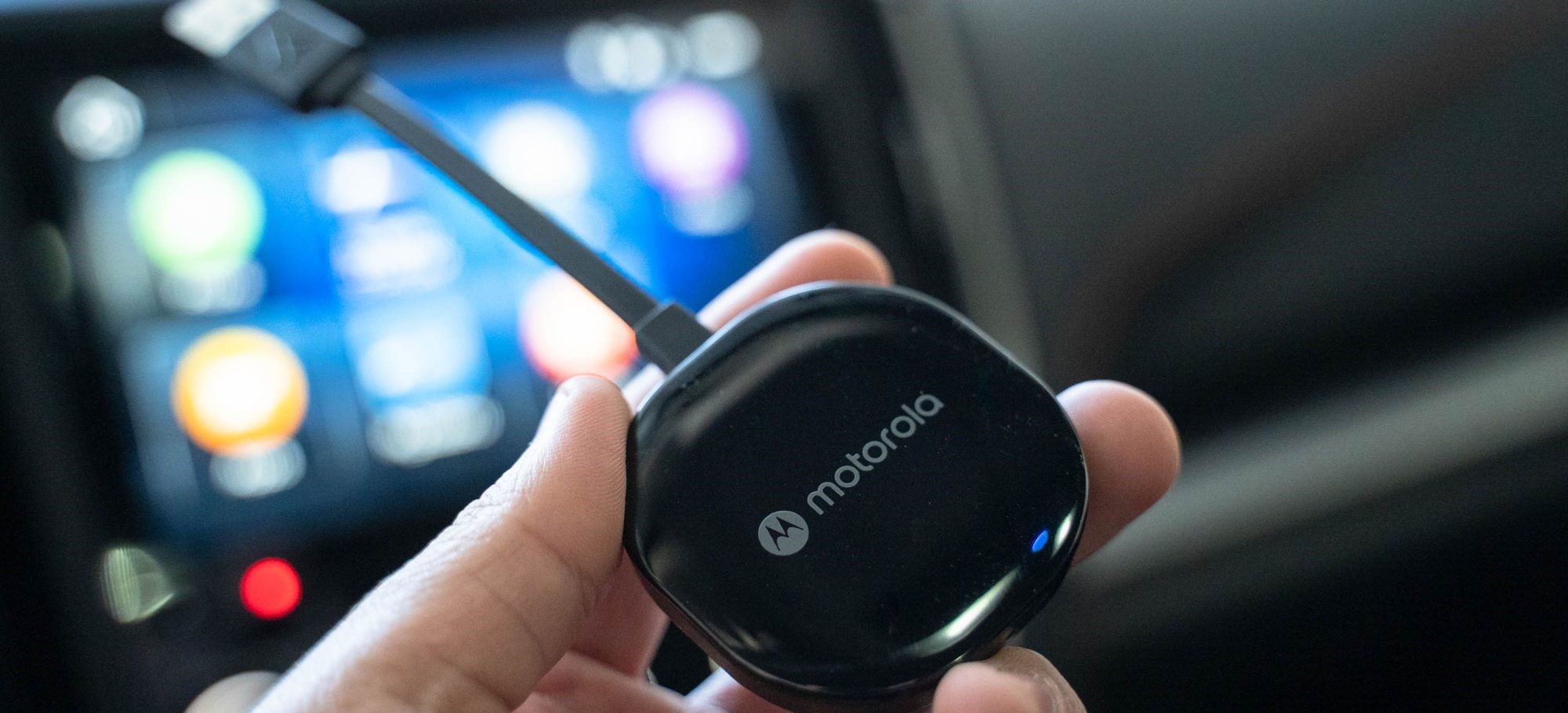
Wireless Android Auto support is something rarely seen built into cars, but the rise of third-party dongles has made it much easier to bring this functionality to cars that don’t already have it. Tomorrow, a new wireless Android Auto dongle under the Motorola brand will officially launch, and – based on our brief first impressions – the Motorola MA1 seems like a great option.
The Motorola* MA1 is a simple USB dongle with one key purpose — to add wireless Android Auto support to any car that already supports the wired form. It’s a goal that AAWireless and other projects have accomplished but with some rough edges during setup due to the nature of “hacking in” this functionality.
The MA1 is the first dongle that’s officially certified by Google to accomplish this goal, and even after just a few minutes of use, its advantages are clear. This dongle is quick to pair and simple to understand. In short, it lacks the extra steps other products currently require.
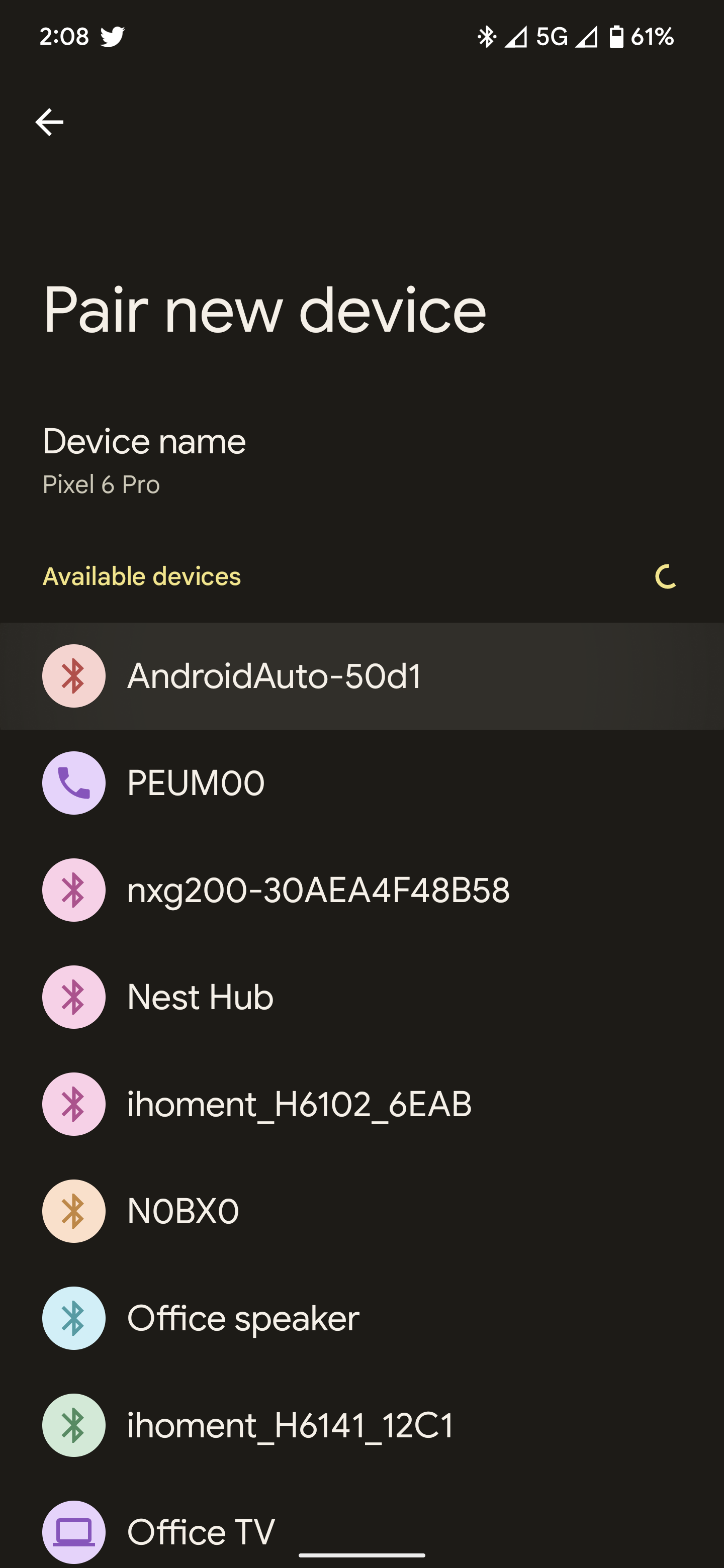
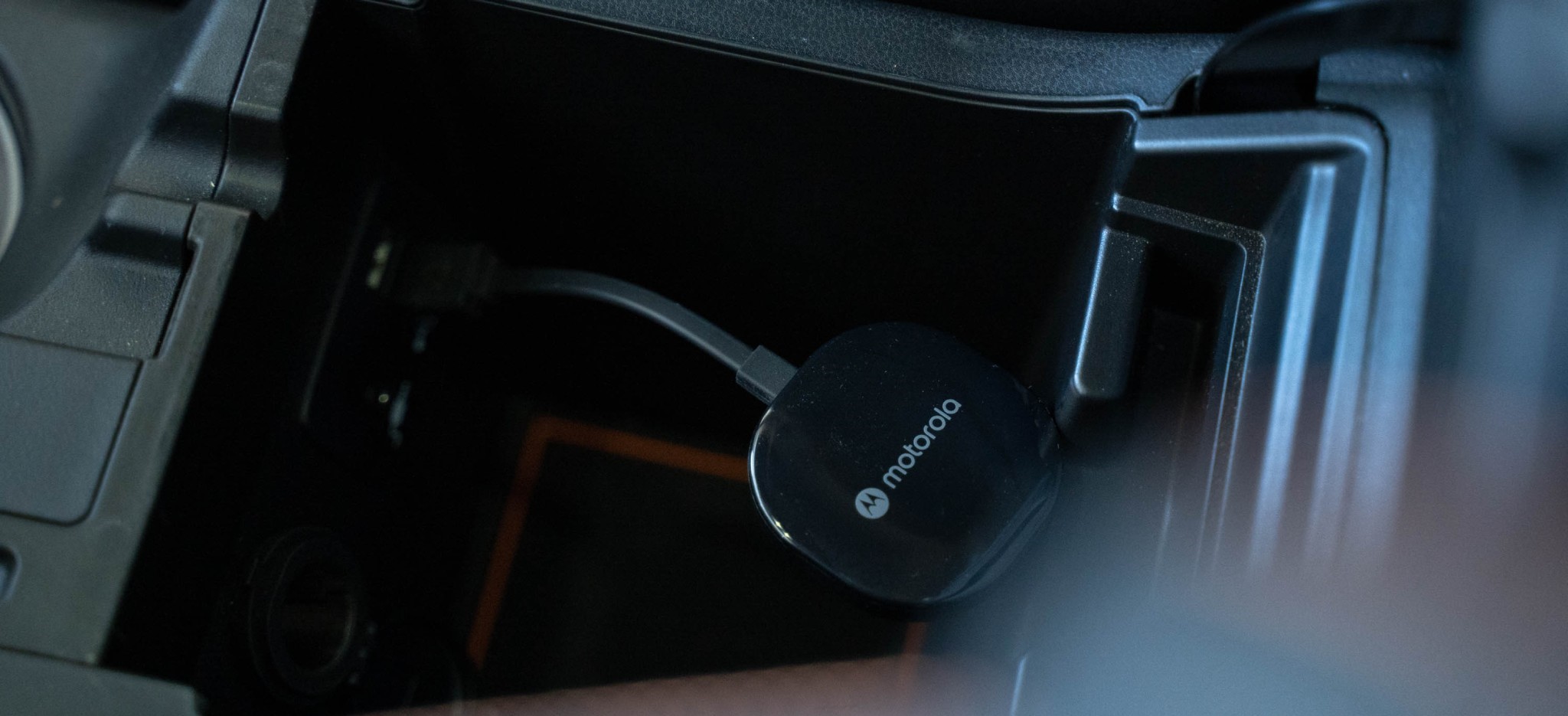
Setting up the MA1 is as simple as plugging it into your car’s USB port — your car must have a USB-A port, as the dongle’s cable is not removable. Once plugged in, the next step is to pair the dongle through your phone’s Bluetooth menu. It appears under the name AndroidAuto with some additional characters. Unfortunately, there’s no automatic prompt for this, such as Google’s Fast Pair would provide. The only change you may have to do on your phone is ensure the toggle for Wireless Android Auto is enabled, which should be the case by default on modern phones.
Not long after pairing to Bluetooth, the dongle will automatically trigger the Android Auto wireless setup process on your phone and your car, with prompts appearing on both screens to help you get started.
All in all, I was able to get the Motorola MA1 paired and running in a matter of two or so minutes. Reconnecting to the dongle after the car has been powered off takes around 30 seconds on my Subaru Crosstrek.
In terms of the hardware itself, the MA1 is simple, but it works. It feels well built and not cheap. The rough plastic back seems like it won’t pick up any damage easily, though the top glossy portion certainly looks as though it’s going to pick up scuffs very quickly and easily if it’s sitting in a center console, as mine will by necessity. At the very least, it’s a total dust magnet. There’s only one button, a pairing button on the side that triggers the ability to pair a new device.
I’ve only used the Motorola MA1 for a very brief time at this point, so it’s not fair to talk about it in the context of a full review. We’ll have more to share on that front, as well as a comparison to AAWireless, in the coming weeks.
Motorola MA1 for wireless Android Auto will be available starting tomorrow, January 28 on Amazon.
If you haven’t been able to get in on previous orders, though, it’s important to note that the device has already sold out twice on Amazon according to the company, so further shipments may end up delayed. As of the time of this article going up, pre-orders are once again open, but with no set shipping date.
*The Motorola MA1 isn’t made directly by Motorola. The device is rather only using the brand as a license, while the product is actually manufactured by a Chinese company known as SGW Global. This has been done before, such as with the latest Moto 360 smartwatch.
With the Motorola G 5G Plus, the company ushers its most popular series in the 5G era. The company aims to rekindle its old glory by delivering the best value for money mid-ranger much like the original Moto G did back in its day.
For starters the Moto G5 5G Plus is supposed to be one of the most, if not the most, affordable 5G-compatible smartphone in the European market and at a price of around €350. Of course the 5G penetration greatly varies from market to market, so it can’t rely on that alone to propel it to fame. Here’s what else it has going for it:
Motorola G 5G Plus
Body: 168.0×74.0x9.0mm, 207g; Plastic frame and back; Splash resistant.
Video capture:Rear camera: 4K@30fps, 1080p@30/60fps; Front camera: 1080p@30fps.
Battery: 5000mAh; Fast charging 20W.
Misc: Fingerprint (side-mounted), NFC; FM radio.
The huge 6.7-inch LCD panel offers 90Hz refresh rate and HDR10 support, it has two cameras on the front and a generous 5,000 mAh battery with fast charging support and last. That’s an area where Motorola was behind for the past couple of years often using older, less competitive chipsets.
In fact, the Moto G 5G Plus costs as much as Xiaomi’s phones with the same chipset, which hasn’t been the case for a while. We now need to run our usual tests, because specs can often be deceiving.
Unboxing the Motorola G 5G Plus
The box contains all the usual user manuals along with the 20W-rated charging brick and a USB-A to USB-C cable for charging and data transfer. There’s also a transparent, silicone protective case in the box. Not a bad set of accessories, considering the price point.
Competition
As we said earlier, the Moto G 5G Plus is here to take the affordable lineup to 5G land, so support for the next gen networks is one of its biggest selling points. Its availability is limited to Europe for now but will likely reach other markets soon. This comes with a key advantage because there’s a shortage of affordable 5G phones in Europe, but on the other hand the 5G penetration isn’t nearly the same as in China or the US.
The most obvious alternative is the Xiaomi’s Mi 10 Lite 5G. It sports the same chipset, the same set of cameras, but has far inferior battery life. The Xiaomi phone trades the 90Hz smoothness for the superior contrast of an OLED display with HDR10+ support. Oh, and also costs €50, which is no small sum in these price tiers. At the end of the day picking between those two will probably largely depend on your preference of lighter stock Android and the feature-heavy but occasionally clumsy MIUI.
There’s also the freshly released OnePlus Nord. With essentially the same chipset and camera setup, the Nord offers a 90Hz OLED panel and faster charging, but smaller battery. Its UI looks similar to what Moto G 5G Plus has, even if underneath OxygenOS is customized beyond recognition. You’ll be losing the 3.5mm jack and splash resistance too, while you’ll also need to pay €50 more and, again, that can make a difference in this price range.
Xiaomi Mi 10 Lite 5G • OnePlus Nord
Of course, dropping 5G from your priority list would open up some more options like the Realme 6 Pro. It’s a great all-rounder, perfectly fitting in the €350 price category with a proper telephoto camera in addition to the 64MP regular and 8MP ultrawide cameras, faster charging, similar battery life and still has that 90Hz smoothness. Its Snapdragon 720 is inferior to the 765, even without accounting for the modem, though.
Then there’s the Snapdragon 730G-powered Xiaomi Mi Note 10 Lite, which offers an OLED screen and better camera than the Moto G 5G Plus and a similar battery life. It’s €50 cheaper too, but only has a 60Hz screen and the question of MIUI versus stock will inevitably come up again.
Realme 6 Pro • Xiaomi Mi Note 10 Lite
Verdict
If you are in market for a 5G phone now, but have a limited budget the Moto G 5G Plus is certainly shaping as a very sensible all-rounder. You get a decent 90Hz IPS panel, great battery life, clean Android with a couple of cool customizations and features on top and a capable chipset. And if the cameras didn’t need some extra work and the screen was OLED, this phone would have been an outright steal at that price.
As things stand now it’s trading blows with competitors from Xiaomi and Realme, which in itself is a great achievement for Motorola. The stock Android, 90Hz panel and great battery life will be enough to entice a lot of potential buyers, while a small price reduction similar to what Xiaomi did after the launch of its phones has every chance of turning this into a proper box office hit.
Pros
Rather sturdy build.
Smooth 90Hz IPS panel without visible halos around the cutout or the bezels.
Great battery life, adequate fast charging.
The main camera snaps good daylight photos, records great videos.
Clean Android but with more Moto features and customizations than ever before.
The Edge series is Motorola‘s return ticket to the major league. The company gave up making flagships some three years ago. The Moto series remained focused solely on budget and mid-range devices. Until the Motorola Edge duo came to be.
The vanilla edition of the Motorola Edge seems nicely balanced and it may as well earn a place among the renowned flagship killer niche, while its Edge+ sibling is a full-fledged flagship, complete with the premium price tag.
So, the Motorola Edge, one very curved smartphone by the name and the looks of it, features a large OLED with steep slopes, topped with 90Hz refresh rate. The selfie cutout is quite small, and we are already intrigued by the panel for sure.
Motorola Edge next to the Motorola Edge Plus
The vanilla Edge is still cutting edge when it comes to the choice of chipset. The Snapdragon 765G is one of the most recent mid-range Qualcomm chipsets and it’s got promising performance, as well as 5G connectivity.
The chipset is one of the major differences between Edge and Edge+ – the more expensive Plus model comes with the flagship Snapdragon 865 chip instead. The storage is also of a different kind – UFS 2.1 on the Edge vs. UFS 3.0 for Edge+ – but a sort of a silver lining is that only the regular Edge offers a microSD slot.
Finally, the quad-camera on the back is worthy of a flagship even if there is no OIS on either of snappers. There is a 64MP primary, a 16MP ultrawide, an 8MP tele for 2x zoom, and a 3D ToF camera.
Typically for Moto, the Edge comes with a handsomely sized battery and stereo speakers. It also offers a 3.5mm jack – a rarity nowadays, and it runs on vanilla-looking Android 10 with promised major updates for the next 2 years.
The only thing we are missing on this spec sheet is the rated water and dust resistance. The Motorola edge has P2i water-repelling coating on its internals, but so do much cheaper Moto phones so perhaps IP67 would sit better with the target audience. Well, the Moto Edge is priced reasonably, so it deserves a pass for that.
Unboxing the Motorola Edge
The Motorola Edge comes in a stylish black box that contains the 18W charger and the USB-C cable. Inside you will also find in-ear pair of Moto headphones.
If you look inside the top paper compartment, you will find a thin silicone case to go with your new Motorola Edge. Because of its curved screen, there will be few, if any, third-party case makers, so we appreciate the bundled accessory.
Wrap-up
The Motorola Edge is a long overdue step forward and breaks ground for future premium mid-rangers and flagships. Sure, the Edge doesn’t have anything we haven’t seen before – the screen included – but it is a breath of fresh air after a long streak of not very inspiring budget phones.
The Motorola Edge has the right screen and hardware for gaming and the battery to keep doing that for a long time. Its camera kit is quite good, too, and shows real potential in daytime. We were also happy to find a few hard-to-find features – the audio jack, the memory expansion, and the FM radio.
The design of the Motorola Edge is, well, edgy, and we think it will spark some controversy. But we are convinced this particular design feature will be one of the phone’s biggest draws. Along with the attractive pricing, of course.
Granted, the Motorola Edge is not without its faults – most of them fixable. The zoom camera should save photos in its native resolution, and then Moto has to come up with better low-light processing. The popular streaming services should start streaming hi-def content as they do for the Moto Edge+. Overall, there’s nothing a software update can’t easily resolve.
Alternatives
The first alternative that comes in mind is the brand-new Samsung Galaxy A71 5G. It costs the same as the Motorola Edge, has a similarly large Super AMOLED, and matches the Edge’s performance. The A71 lacks a zoom camera but on a positive note – it charges faster.
The OnePlus 8 is probably the biggest threat to the Motorola Edge. The new OnePlus 8 has a similar 90Hz OLED screen, runs on the flagship Snapdragon 865 chip, and recharges much faster. The camera on the back is less impressive and can’t do 2x optical zoom but has OIS and performs much better at night. The OnePlus 8 is €100/$100 more expensive, so it is not an easy pick for sure.
The Mi 10 5G also impresses with the fastest chip on the market plus it does an excellent job at night with its main camera. Then again, the Mi 10 5G has no zoom camera, and it costs €200 over the Edge. Not the best deal for sure.
Finally, the Realme X50 Pro, where available, costs €600 – the same as the Edge. It tops the Edge with a faster Snapdragon 865 chip. It’s got a similar camera on the back but with superior low-light performance. The X50 Pro also brags with a dual-selfie cam, but quite a few screen pixels had to go because of it. Still, the X50 Pro makes a good case, but its limited market availability along with the fact that it comes from a relatively unknown challenger brands puts it at disadvantage.
Even with its omissions, the Motorola Edge is shaping as one of the hottest deals of the season. It has the performance, the battery, and the camera to go with its great looks. It also runs Android 10 buttery-smooth on the 90Hz OLED, so there is a lot to like.
The vanilla Edge is great on that price, and we do recommend it. Motorola‘s recent sabbatical from the upper mid-range tier could be the only thing standing in the way of the new Edge series. The company has to convince consumers it’s got what it takes to make a great high-end phone. The Motorola Edge is certainly a nice step in this direction.
Pros
Beautiful design, splash-proof
Large and curvy OLED HDR10 screen with 90Hz refresh rate and small cutout
Excellent battery life
Stereo speakers with excellent audio quality
The fastest midrange chipset
Versatile cameras that excel during the day
We loved the selfies
MicroSD slot, 3.5mm jack, FM radio
Cons
No 1080p streaming support for now
Not the fastest charging
The telephoto camera saves upscaled images
Neither of cameras is particularly good at nighttime, though Night Vision helps
Motorola has announced which of its phones will receive an update to Android 11, along with some of the new features to expect. The list of phones is long; if you purchased a Motorola device in the past 12 months or so, chances are you’re covered.
Here’s the full list:
motorola razr 5G
motorola razr 2019
motorola edge
motorola edge+
motorola one 5G
motorola one action¹
motorola one fusion
motorola one fusion+
motorola one hyper
motorola one vision
moto g 5G
moto g 5G plus
moto g fast
moto g power
moto g pro
moto g stylus
moto g9
moto g9 play
moto g9 plus
moto g9 power
moto g8
moto g8 power
Lenovo K12 Note
According to Motorola, Moto users should expect features like Chat Bubbles, streamlined device and media controls, and improved privacy settings. We also confirmed earlier this month that as part of Motorola’s Android 11 update, some of its phones will support a new Desktop Mode.
It’s unclear which Motorola devices will support the new mode, but we got a brief glimpse at it possibly running on the Moto G 5G Plus. Either that or it was the company’s upcoming Snapdragon 865-powered “nio” handset.
The plan right now is for Motorola to roll out Android 11 “in the coming months.” Unfortunately, we have no exact dates, and Motorola warned that its current plans could change. “This information communicated is not a commitment or an obligation to deliver any product, product feature, software update or functionality and Motorola Mobility reserves the right to change the content and timing of any product, product feature or software release,” Motorola wrote in a blog post.
Motorola said that the rollout of Android 11 is also influenced by partner support. Hopefully, we’ll see Motorola release Android 11 sooner rather than later. There’s a long list of devices expected to get the update, and we’re hoping Motorola can hit every one on the list.
Motorola released a list devices it plans to update to Android 11.
All of the phones on the list came out in either 2019 or 2020.
After all the disappointment 2020 brought with it, you might have hoped a company like Motorola would have tried to end the year on a high note. But that’s not to be the case. The company shared its Android 11 upgrade plans, and they’re no better than anything Motorola has put together over the past couple of years.
As you can see from the list below, if you own a Motorola phone that came out before 2019, don’t expect the company to push the latest version of Google’s operating system to your device. What’s more, even if you own a Moto phone from 2019 or 2020, you may end up waiting a while to get anything. Motorola says it will begin rolling out Android 11 “starting in the coming months, pending partner support.” In other words, expect a potentially long wait, particularly if you don’t own one of the higher-end devices on the list like the Razr 5G or Edge.
If you happen to own a Motorola One Action you bought in North America, you’re also out of luck. Motorola only plans to update the Latin American and European variants of that phone to Android 11 since it’s included in Google’s Android One program in those places. Even by Motorola’s lacklustre support standards, this is not a great showing for the company.
Thankfully, update lists like the one above may become less common in the future. Google and Qualcomm recently announced a partnership to deliver four years of support to future Snapdragon-equipped devices. That pledge is likely to help low-end and mid-range devices the most.
Few brands can boast such a monumental legacy as Motorola – one of the original forefathers and titans on the mobile scene. And it’s not just the brick-like phones of the past that contribute to this special status either. You only need to turn the clock back five years or so from now to see the original Moto G at the forefront of a budget smartphone revolution. One that is continuing to this day, compelling manufacturers to constantly push the envelope on what is possible with a budget device.
Of course, financial turmoils, several buyouts, management and business changes later, these historic Motorola glory days appear to be in the past. But even so, Moto lives on and so does the Moto G. Now in its sixth generation and a sprawling family of three – the G6, G6 Plus and last, but not least, the G6 Play.
All that being said, at $200, the latter can’t really hope for the instant recommendation, many of its predecessors got back in the day. Especially in 2018, with good quality value offers flying in left and right and seriously mounting competition from the likes of Xiaomi, Huawei and even a resurrected Nokia.
Motorola Moto G6 Play
Body: Plastic back; 154.4×72.2x9mm; 175 grams; p2i water repellent nano coating on some markets
Screen: 5.7-inch, 18:9, HD+, IPS LCD, MAX Vision
Rear Camera: 13MP, f/2.0 lens; Secondary 5MP; LED flash; 1080p@30fps video recording
Front Camera: 8MP, 1080p@30fps video recording; LED selfie flash
However, don’t do kicking the Moto G6 Play to the side quite so hastily. The proverbial runt in the Moto G litter still has a lot going for it, besides a legendary reputation. Lenovo managed to cram a massive 4,000 mAh battery, inside the 9mm thin handset and even throw in snappy 15W fast charging support in the mix.
Just like its bigger sibling, the G6 Play has an extra-tall Max Vision display. It’s even complete with rounded corners, for a truly contemporary look. All the while, the Moto G6 Play remains a lot truer to the original Moto G spirit than the rest of the family.
A clean front, with no controls and only on-screen navigation and a the familiar “M” dimple on the back, make for a rather classic experience, that long-time fans of the series might actually prefer. Of course, that’s also complimented by the traditional Vanilla approach to Motorola‘s Android ROMs. Another integral and well-known part of the Moto G mix.
Join us on the following pages, as we explore the new, yet familiar Moto G6 Play in more detail.
Back in the day, the Motorola Moto G had a pretty clear angle going for it. It was the go-to, budget and vanilla Android device of choice for many. Since then, things have become a bit more complicated within the Motorola lineup. Now, there’s a sprawling Moto E family, a growing Moto C and even a Moto E, all filling up the proverbial nooks and crannies of the budget niche as best they can.
While choice is hard to complain about, this new-found market saturation and segmentation do require some involved choices on the user’s end. Thankfully, for the most part, the Moto G6 Play brings a balanced mix of design and features to the table. Just like its older predecessors, the G6 Play is plastic all around and it still works just as well.
There are plenty of advantages to using the relatively light and less dent-prone material. Lenovo has even put in the extra effort to coat the central frame in a metal-like fashion. We’ve seen more believable finishes out there, but still, a good effort.
In place of the more traditional unibody approach, Motorola decided to go for a modern look this time around and a glossy, curved back surface. Naturally, just like the rest of the body, it’s plastic as well, but actually does a pretty convincing job of imitating metal.
This could potentially spell out trouble if you tend to bang and slap your phone around a lot. Plus, chances are you’ll never get to see the surface fingerprint-free from the moment you first pick up the Moto G6 Play. Still, it does make for a decent hand feel.
On a more positive note, the signature Motorola splash-resistant nano coating on the electronics inside is still part of the mix. We are kind of hesitant to get the phone deliberately wet to test it out. But then again, that’s missing the point entirely. It’s just meant to be the extra piece of mind in case of rainy weather or an accidental splash of water.
Hardware overview
In many ways, the Moto G6 Play has a traditional setup on the front – no capacitive navigation keys or fingerprint reader, a fairly wide bottom chin, with the entire surface covered by an undisclosed version of Gorilla Glass.
At the same time, however, the new Moto G look is trendier than ever, mostly thanks to an extra-tall, 18:9, LCD panel, shared by all three siblings. It even has rounded corners, in keeping with the trends of the day. Just like the regular Moto G6, the G6 Play gets a decently sized 5.7-inch display – fairly large for a “Play” device.
The only real difference in the display department between the two devices is the resolution – it’s 720 x 1440 pixels on the G6 Play. However, fewer pixels mean less strain on the GPU for on-screen rendering task. A bonus that is sure to shine through in the benchmark section of the review.
We can’t fail to mention that Motorola didn’t find it necessary to fit a notification LED on the front of the G6 Play, but there is still an LED selfie flash.
Like we mentioned earlier, the curved back side of the Moto G6 Plus is plastic and thus not necessarily the most sturdy surface out there. We would definitely recommend using the provided case, which also offers the bonus of not having to deal with the almost unnatural amount of dirt and grease the back accumulates.
The camera module protrudes a bit, but it’s nothing major. One would hope so, considering the G6 Play is 9mm thick. It has this watch dial effect going for it and the lack of a second camera module allowed Motorola to go for a vertical arrangement. So, there are no shocked and surprised smiley configurations on this one.
Right underneath the familiar circular camera module is an even more familiar and traditional “M” dimple. Long-term fans will remember the little signature detail was mostly for show back in the day. Now, it also doubles as a home for the fingerprint reader. Getting the dimple once again looks retro fancy in just the right way. Resting your index finger there during calls feels right.
The fingerprint reader itself is pretty reliable, but not exactly what we would consider speedy. It is more versatile than before now that Motorola can use it as an authentication to manage and auto-fill passwords in apps and websites and even log-on to Windows devices.
There’s not a lot to mention about the sides of the Moto G6 Play. The bottom is almost entirely empty, housing only the dated microUSB port and the main microphone. So, where are the speakers then you ask? Well, turns out the phone only has one and it’s the earpiece. It’s pretty quiet as well, but more on that later.
The top is equally barren, with a pair of holes – one for the secondary, noise-canceling microphone and the other the tried and true 3.5mm audio jack. The left-hand side has a single cut-out for the card tray. Motorola could have done a better job slicing it out and then dampening it since it doesn’t really sit flush and rocks in place a little bit when nudged. However, these are all petty complaints that get dwarfed by the fact that the tray has three whole slots (two in the Single SIM models). Two for SIM cards and a dedicated microSD one. That means you don’t have to choose between another phone line and memory – always a plus in our book.
All the buttons sit pretty high up on the right side of the device. Perhaps a bit too high for comfort, if you have smaller hands. Other than that, they are nice and clicky and well-defined. The power button, while on the slim side, even has an edged pattern going for it, so its very easy to feel around.
Overall, as far as controls go, no real complaints. It seems Motorola has handled the transition to a new extra-tall aspect ratio pretty well.
Display
Extra-tall displays are an increasingly common sight on budget devices nowadays. Even though the new aspect ratios typically leave you with less horizontal real estate, it is still hard to complain or argue against the practical benefits of more vertical room for most everyday tasks. Especially, when the deal does not include a notch.
Just like many of its competitors, Motorola decided to hunker down and bring 18:9 to the masses, including as part of the affordable Moto G6 Play package.
Users looking to same a few bucks from the regular Moto G6 won’t have to sacrifice on screen diagonal at all.
The Play does come with a slight bump down in resolution. But, 720 x 1440 pixels and a density rating of 282ppi is still pretty decent for an entry-level phone.
Display test
100% brightness
Black, cd/m2
White, cd/m2
Contrast ratio
Motorola Moto G6 Plus (Max Auto)
0.564
776
1376
Motorola Moto G6 Plus
0.418
610
1459
Motorola Moto G5S (Max Auto)
0.415
582
1402
Xiaomi Redmi 5 Plus
0.548
555
1013
Motorola Moto G6 Play (Max Auto)
0.419
554
1321
Xiaomi Mi A1
0.351
551
1570
Huawei P Smart
0.356
531
1492
Samsung Galaxy A3 (2017) max auto
0
518
∞
LG Q6
0.288
510
1771
Xiaomi Redmi 5
0.378
503
1331
Nokia 6 (Global version)
0.364
484
1330
Samsung Galaxy J7 (2017) Max Auto
0
482
∞
Motorola Moto G6 Play
0.339
476
1404
Huawei Honor 7X
0.236
458
1941
Motorola Moto G5S
0.266
415
1560
Samsung Galaxy A3 (2017)
0
408
∞
Huawei P8lite
0.45
362
802
Samsung Galaxy J7 (2017)
0
348
∞
The IPS LCD panel Moto managed to acquire and fit inside the G6 Play budget is decent, if not particularly impressive. Under normal conditions, its brightness tops off at 476 nits, with respectable enough contrast. Max Auto allows it to shine at up to 554 nits, at the cost of some contrast.
The Moto G6 Play offers a less than stellar experience under strong sunlight, but it’s still usable in most cases.
On a more positive note, color accuracy is surprisingly good, if a few conditions are met. In it’s default mode, the whites on the G6 Play screen have a distinct blue hue. Switching between the Standard and Vivid color modes does little to correct that. The maximum deltaE sits at 6.4, with a maximum of 13.3 in the blue.
However, setting the color temperature from the default setting to Warm does yield tangible results. This way, you can get the color deviation down to a respectable average deltaE of 3.8 and a maximum of 6.5. Almost what we would consider color-accurate.
Moto G6 Play Battery Life
At 9mm thick, the Motorola Moto G6 Play is quite a chunky phone, no question about it. Still, it does compensate for it’s girth, at least to some extent, with a large 4,000 mAh battery. Sure, you could justifiably argue that a lot of the juice end up kind of wasted on the inefficient 28nm Snapdragon chipset. Undoubtedly, something newer, like the Snapdragon 450 would do a better job, with its 14nm node. Failing that, the older and now likely more affordable Snapdragon 625 is tried and true and still a solid choice.
But, we might be getting a bit too picky. The Snapdragon 430 (non-US) review unit, we tested at the office still did a solid job, stretching the 4,000 Mah battery pack to its full extent.
It scored an overall endurance rating of 92 hours – more than respectable.
Looking at the particular numbers in detail, Motorola appears to have done a bang-up optimization job all-around. The near-vanilla Android OS definitely helps a fair bit and as a result, the Moto G6 Play easily breaks the 200-hour barrier in standby.
Even with its older 28nm development process, the Snapdragon 430 and its X6 LTE modem, in particular, manage to clock in over 30 hours of call time. Google’s Chrome browser and File app/video player don’t disappoint either. Both manage to keep pushing content on the HD+ display for over 14hours on a single charge. Overall, while the Moto G6 Play is a bit on the chunky side, it feels quite comfortable away from a power outlet for prolonged periods of time.
Motorola was also considerate enough to include support for its own Turbo power fast charging standard in the Moto G6 Play. It is actually one of the cheapest phones out there, with quick top-off support.
The Moto G6 Play is, theoretically capable of sucking in power at up to 15W. However, we can’t really confirm is a compatible Turbo Power charger will be provided in the box. Package contents frequently differ from market to market and Lenovo has a pretty bumpy track record in this area. So, the best way to go about it is to check with your local retailer of choice.
Loudspeaker
Motorola was definitely generous in the battery department, but the loudspeaker setup is a whole other story. The Moto G6 Play only has a single speaker – the earpiece, above the display. It is powered to pump out some volume and that’s about it.
Speakerphone test
Voice, dB
Pink noise/ Music, dB
Ringing phone, dB
Overall score
Samsung Galaxy J3 (2016)
64.1
65.3
68.5
Below Average
Motorola Moto G6 Play
62.6
68.0
71.0
Average
Moto M
64.5
72.9
72.0
Good
Motorola Moto G6 Play (Dolby audio)
66.1
70.0
76.2
Good
Nokia 2
66.7
70.6
75.0
Good
LG Q6
67.0
69.3
76.1
Good
Xiaomi Redmi 5
66.1
68.4
82.1
Good
Huawei P Smart
65.9
70.8
85.8
Very Good
Huawei Honor 7X
66.4
71.1
85.1
Very Good
Motorola Moto G5S
76.1
72.7
81.0
Excellent
Sony Xperia L2
67.4
72.2
91.6
Excellent
Motorola Moto G5S Plus
91.5
74.9
86.9
Excellent
The G6 Play is a bit quiet, especially in its default mode, with the audio equalizer turned off. Speaking of which, it’s a bit odd that Motorola decided to provide a really in-depth audio equalizer, for the single, underwhelming speaker. It even bears the Dolby audio branding.
Still, we can’t complain too much, unlike most smartphone audio tuning suit, this one did not reduce the overall output volume. On the contrary, it increased it slightly, while also managing to open up the soundstage noticeably. If configured correctly, that is.
If you spend enough time tweaking the sliders and toggles, for your content of choice, you can actually achieve tangible results, like a clearer voice in movies or richer simulated bass, if that’s your thing.
Audio quality
Motorola Moto G6 Play matched the splendid clarity of its Plus sibling in the active external amplifier part of the test. Its loudness fell seriously short though, giving away its lower standing.
Loudness remained below average when we hooked up our headphones too, but the clarity was downright impressive. The Moto G6 Play delivered a performance that would be worthy of a device with a much higher price tag. Unless you have high impedance headphones and the volume is actually a deal-breaker, you really can’t wish for much more than that.
Test
Frequency response
Noise level
Dynamic range
THD
IMD + Noise
Stereo crosstalk
Motorola Moto G6 Play
+0.06, -0.03
-89.0
86.6
0.0052
0.019
-87.3
Motorola Moto G6 Play (headphones)
+0.06, -0.03
-90.5
87.1
0.0054
0.028
-77.3
Motorola Moto G6 Plus
+0.00, -0.03
-93.6
93.5
0.0050
0.011
-94.6
Motorola Moto G6 Plus (headphones)
+0.02, -0.02
-93.5
93.4
0.0067
0.033
-81.0
Oppo F7
+0.01, -0.10
-92.5
92.7
0.0019
0.0077
-91.2
Oppo F7 (headphones)
+0.50, -0.20
-91.4
91.8
0.0079
0.402
-51.5
Nokia 6 (2018)
+0.10, -0.20
-37.5
80.4
0.0018
4.735
-93.3
Nokia 6 (2018) (headphones)
+0.05, -0.03
-94.3
90.2
0.0027
0.019
-58.6
Nokia 7 Plus
+0.02, -0.31
-38.8
81.7
0.0013
4.690
-95.9
Nokia 7 Plus (headphones)
+0.25, -0.23
-93.3
90.4
0.0045
0.227
-53.9
Honor View 10
+0.02, -0.01
-92.6
92.6
0.0021
0.012
-94.4
Honor View 10 (headphones)
+0.17, -0.03
-92.0
92.1
0.0023
0.092
-52.8
Synthetic benchmarks
The Motorola Moto G6 Play was never meant to be a performance powerhouse in any way, shape or forms. Still, in 2018, we are finally a bit past the days when you had to take anything you could get for $200, or so. That being said, we approached the Snapdragon 430, 3GB RAM review unit with clear expectations of a smooth overall experience. Definitely not unreasonable, especially considering the near-stock Moto Android ROM.
To our surprise, however, the Moto G6 Play experiences some noticeable performance dips, even when dealing with everyday tasks.
Frankly, it’s an odd position to find a current Moto G device in. While far from ideal, we know for a fact that the Snapdragon 430 has plenty of power to drive a fluent UI experience, if nothing else. The raw performance numbers out of the Moto G6 Play indicate the same as well. So, we can only surmise, the occasional hiccups and dropped animation frames while browsing the menus and opening apps are due to some odd optimization issue. Hopefully one that gets cleared up quickly.
Before we move on to the actual scores, it is worth noting that certain US carriers and retailers will be offering the Moto G6 Play with an even less-powerful Snapdragon 427 chipset. You should probably stay away from it, if possible. It only has four Cortex-A53 cores and the GPU is downgraded from the Adreno 505 to the Adreno 308. Definitely not ideal.
Speaking of the CPU, the non-US Moto G6 Play, we are testing, has eight Cortex-A53 cores at its disposal, clocked at 1.4 GHz. While that overall configuration is pretty popular in the budget market segment, 1.4 GHz is a pretty low clock.
Single 13MP camera
Unlike its two bigger siblings, the Moto G6 Play doesn’t get the privilege of a fancy dual-camera setup. It is stuck with a single 13MP snapper, with 1.12µm pixels. It sits behind an f/2.0 lens. Nothing really too spectacular. There are still a couple of extras sprinkled in, like phase detection autofocus and a surprisingly decent EIS stabilization for video.
While on the subject, not only does the stabilization work surprisingly well, but it even comes with a real-time preview during capture.
Just like the stills, the 1080p clips, themselves, are actually quite usable. These get recorded in a standard AVC, plus AAC stream, inside an MP4 file, with a bit rate of about 18 Mbps and stereo audio. A bit more detail wouldn’t hurt and the same goes for the dynamic range. Still, we can’t nitpick too much.
Competition
The original Moto G from some 5 years ago was a real game-changer in terms of value and an easy instant recommendation. A lot has changed since then. The legendary American brand has been changing ownership quite a bit over the last few years. Internal turmoil and brand-identity aside, the sprawling budget scene the phone launches on looks quite different in 2018.
There are a lot more options to explore. Perhaps even too many. Even Motorola‘s own lineup now features a trio of Moto G devices. And that’s on top of other viable affordable devices, like the Moto E line. Which brings us to our first couple of contenders – the Moto G5S and G5S Plus. Sure, neither features a trendy new 18:9 display, but other than that, specs-wise the Moto G5S is an almost perfect match to the G6 Play. Its bigger brother – the G5S Plus is even more alluring, complete with a much more-potent and power-efficient Snapdragon 625 chipset, as well as a dual 13MP camera setup.
Samsung has some well-rounded devices up on offer around the $200 mark as well. The budget Galaxy J7 (2017) pairs a sizeable battery, with another battery-efficient chipset – the Exynos 7870 and a Super AMOLED panel – sharp, colorful and also easy on the battery. There are some interesting accompanying options as well, like the option for the more compact and slightly more premium Galaxy A3 (2017) instead. Or even saving a few bucks with the older J7 (2016), which still offers most of the models highlights.
The resurrected Nokia has been soaking up quite a bit of attention lately and rightfully so. HMD is putting a lot of effort into build quality and producing reasonably priced devices with a great bill of material and overall durability. The original Nokia 6 from last year seems to match the Moto G6 Play almost spec to spec even down to the overall clean approach to Android. Price-wise the two aren’t far apart either.
Moto G5S Plus • Samsung Galaxy J7 (2017) • Nokia 6 • Xiaomi Redmi Note 5 Pro • Huawei Honor 9 Lite
Of course, we can’t glance over Xiaomi’s constantly growing lineup for affordable models. The trendy Chinese brand has become amazingly quick in adopting new tech in its products. The most obvious competitor to the Moto G6 Play would be the Android One running Mi A1. A Snapdragon 625 and dual camera setup make for a more potent hardware platform for pretty much the same price tag. The soon-to-hit-markets Mi A2 looks even more enticing but might be a little outside the budget. Currently, the Redmi Note 5 Pro seems to offer the best value for your buck, with a trendy exterior and pretty potent internals.
Last, but not least, Huawei and its Honor sister-brand have a stable finger on the pulse of the market and some really competitive devices to offer. You can pretty much match the Moto G6 Play spec for spec with the new Huawei Y7 Prime (2018) and potentially even save a few bucks in the process. However, devices like the Huawei P smart and the Honor 9 Lite arguably have even more value to offer, within roughly the same budget.
Verdict
It’s really hard to make any noticeable dent in today’s highly-competitive and overcrowded budget smartphone scene. Adapting as you go seems to be the only path to survival and Motorola has been doing plenty of it lately. The company’s excellent reputation backed by Lenovo’s distribution network helps it along its way too.
Pros
Combines a classic Moto control layout with a trendy new extra-tall display on the cheap
There’s a dedicated MicroSD cars slot on the SIM tray, so you can have to SIM cards and and SD at the same time.
Display has decent brightness, contrast and sunlight legibility. It is surprisingly color-accurate, when set propperly. The only thing you are really loosing compared to the regular G6 is resolution.
Great battery endurance at 92 hours. Quick top-offs, thanks to Turbo Power charging support, up to 15W.
Good, clean audio quality through the 3.5mm jack. A bit quiet, though.
A fine blend of vanilla Android and just the right amount of useful proprietary customizations
Good photo and video quality. Full-featured manual mode. LED selfie flash. EIS for video is a great little bonus and it works surprisingly well.
Cons
No notification LED and MotoDisplay isn’t quite like an always on display (not that it automatically renders the LED redundant)
The speaker is not particularly loud or clear. Audio output though the 3.5mm jack is also on the quiet side.
Some noticeable performance dips (skipped transition animation frames and micro-stutters) are observable even while just browsing the UI. Likely an optimization issue that should get fixed, since the Snapdragon 430 can drive a smoother experience.
Video capture is limited to 1080p@30fps.
The selfie fixed focus sweet spot is a bit distant, which resuts in the faces getting blurry at times.
Despite the few minor issues we found with the Moto G6 Play, it definitely won’t steer you wrong. It’s a dependable phone with a nice feature set. However, in this price range you can (and should!) get hardware that provides hiccup-free performance. So if you shop around a bit, there is more value to be had elsewhere. We hope Lenovo sorts things out with the Moto G6 Play performance, otherwise as things stand right now, it’s hard for it to get the recommendation it deserves.