




Is Replacing A Broken Foldable Display Really Worth The High Cost?

Is Replacing a Broken Foldable Display Really Worth the High Cost? 7 Powerful Facts to Know
Introduction: Why Foldable Display Damage Creates a Difficult Decision
Foldable smartphones offer something traditional phones can’t: a large display that folds into a compact device. From multitasking on a book-style phone to slipping a clamshell device into a small pocket, foldables deliver a unique mobile experience.
However, that convenience comes with a trade-off. Their flexible displays, delicate internal layers, specialised hinges and complex construction can make repairs more expensive than standard smartphone screen replacements.
If you’ve dropped a Samsung Galaxy Z Fold, Galaxy Z Flip or another foldable phone and discovered a black screen, coloured lines or an unresponsive inner display, you’re probably asking one important question: Is replacing a broken foldable display really worth the high cost?
The answer depends on several factors, including the age of your phone, the extent of the damage, the replacement display’s quality, and the price of repairing or replacing the entire device.
In some cases, professional repair can restore an otherwise excellent phone and extend its useful life. In others, the repair bill may be high enough to make a newer device a more sensible option.
The key is to look beyond the initial price. A cheap replacement that develops problems soon after installation may cost more in the long run than a properly completed repair using a compatible, high-quality display.
Let’s examine seven powerful facts that can help you decide what to do next.
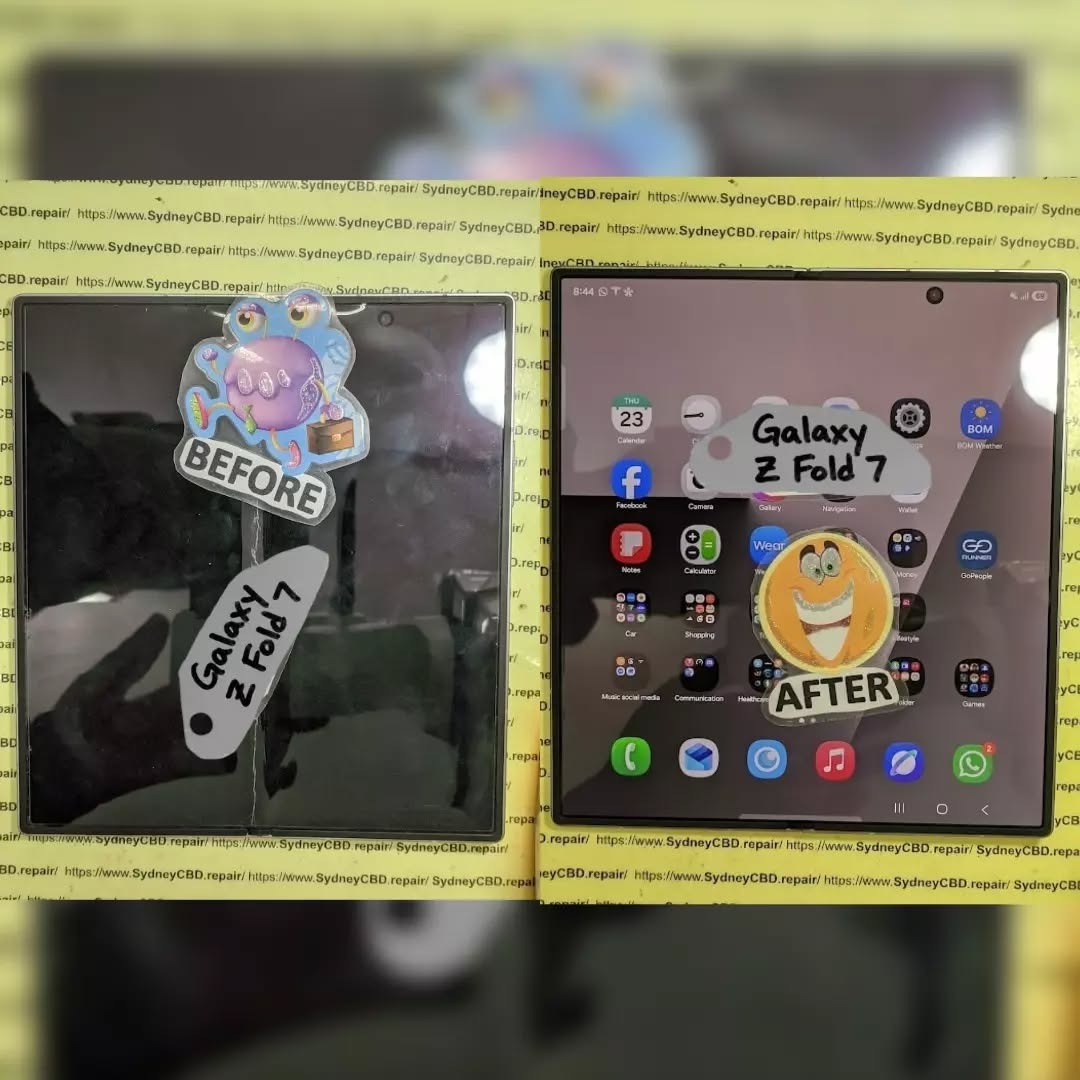
1. Understanding Foldable Display Technology
Before deciding whether a replacement is worth the cost, it helps to understand why a foldable display differs from a conventional smartphone screen.
How flexible OLED displays work
Most modern premium foldable smartphones use flexible OLED display technology. OLED stands for organic light-emitting diode. Unlike conventional LCD screens that rely on a separate backlight, OLED pixels produce their own light.
This technology allows manufacturers to build thin displays that can bend within carefully designed limits.
A foldable display, however, isn’t simply a normal glass screen with a hinge in the middle. It’s a layered assembly that may include:
-
A flexible OLED panel that produces the image.
-
An ultra-thin protective glass layer or other flexible protective materials.
-
Touch-sensitive components that register finger movements.
-
Protective films and supporting layers.
-
A frame and hinge system designed to support repeated folding.
The exact design varies by model and generation. That’s why a replacement part for one foldable phone usually can’t be substituted for another, even if the devices look similar.
Why the inner screen is vulnerable
The inner display must repeatedly bend while remaining capable of showing clear images and responding to touch. That creates special engineering challenges.
A sharp object pressing against the screen, excessive pressure, a hard impact or debris trapped near the folding area can damage the display layers. Damage may occur even when the phone’s outer housing appears to be in good condition.
For example, a phone might open normally but display a thin green line down the middle. Another device might show an image on one half of the screen while the other half remains black.
These symptoms can indicate damage to the OLED panel, display connections or associated components. A technician needs to diagnose the cause rather than assume every display problem has the same solution.
The hinge and display work together
The hinge controls how the device opens and closes. If the hinge or surrounding frame is bent, loose or damaged, installing a new display alone may not solve the underlying problem.
A replacement screen could be exposed to uneven pressure if the phone’s structure isn’t correctly aligned. Therefore, professional diagnosis should include an assessment of the hinge, frame and folding mechanism.
The important point: foldable display repair involves more than replacing a piece of glass. It’s about restoring a carefully engineered assembly while protecting the phone’s other components.
2. Why Foldable Screen Repairs Cost More
The high cost of foldable display replacement isn’t necessarily evidence that a repair centre is overcharging. Several technical and commercial factors can influence the final quote.
Specialised replacement parts
Foldable displays are complex components, and suitable replacement assemblies can be expensive. The cost depends on the device model, parts availability, supply arrangements and whether additional components are included.
For example, a display assembly supplied with a frame may have a different price from a replacement that requires the technician to transfer components from the original housing.
The repair centre must also verify that the part is compatible with the exact model and regional variant.
Skilled labour and specialist equipment
A foldable phone can be more difficult to dismantle and reassemble than a conventional smartphone.
Technicians may need to remove adhesives carefully, disconnect delicate flex cables, protect the battery and other internal components, and reinstall the replacement without disturbing the hinge mechanism.
The work can require specialised tools and experience with the particular device design. Rushing these steps increases the risk of further damage.
Additional damage can increase the quote
A cracked inner display may not be the only problem.
Depending on the impact, a technician may also discover:
-
A bent frame or damaged hinge.
-
Torn or stressed display flex cables.
-
Problems with the touch layer.
-
Damage to the outer display.
-
Battery or connector issues.
-
Signs of liquid entering the device.
Not every repair requires these additional parts, but they can change the total cost considerably.
Typical repair cost considerations
The table below explains the main factors that influence pricing. It isn’t a live price list; exact quotes should be obtained for your model and location.
| Cost factor | Why it matters |
|---|---|
| Phone model | Different foldables use different display assemblies |
| Inner vs outer screen | The inner folding display is often more expensive to replace |
| Parts availability | Newer or less common models may have limited supply |
| Frame condition | Additional structural damage may require extra work |
| Part quality | Original-service parts and third-party alternatives can differ in cost |
| Labour | Complex disassembly and testing require specialist skills |
| Warranty | The repair provider’s coverage can affect overall value |
Is the highest quote always the best?
Not necessarily. A high quote may reflect quality parts, skilled labour and proper testing, but price alone doesn’t prove that the repair will be better.
Ask what the quote includes, which display will be installed, whether the frame or hinge will be inspected, and what warranty applies to the completed repair.
A clear, itemised quote is much more useful than a vague promise to fix the screen cheaply.
3. Seven Powerful Facts About Whether a Foldable Display Replacement Is Worth It
These seven facts can help you weigh the benefits of repairing your device against the expense.
Fact 1: The phone’s current value matters
Start by estimating the value of your foldable phone in good working condition.
Then compare the repair quote with the cost of purchasing a comparable replacement device. Consider the phone’s age, storage capacity, battery condition and overall condition.
If your device is relatively new and otherwise works perfectly, a screen replacement may preserve considerable value.
However, if the phone is several generations old and already has battery problems or hinge damage, a costly display repair may be harder to justify.
Fact 2: The inner display often deserves special consideration
On book-style foldables, the inner screen is typically the main attraction. If it fails, you lose much of the device’s value and functionality.
A successful repair can restore the large working area you originally purchased the phone for.
Clamshell foldables have a different balance. If the inner display fails but the cover screen remains functional, you may still be able to access some features temporarily. Nevertheless, a working cover screen doesn’t remove the need to assess the inner display’s condition.
Fact 3: The quality of the replacement part matters
A replacement screen should be assessed on compatibility, display quality, touch performance and expected reliability.
Original manufacturer service parts may offer the closest match to the device’s original specifications, but availability and pricing vary. Third-party parts also vary in quality, so it’s important not to treat every aftermarket display as identical.
Ask whether the proposed part is new, refurbished or reclaimed, and whether it meets the specifications required for your exact model.
Fact 4: The hinge and frame must be checked
A replacement display cannot compensate for a bent frame or a hinge that doesn’t operate correctly.
If the phone no longer opens smoothly, sits unevenly or has visible gaps around the folding area, mention these symptoms before accepting a quote.
The technician should determine whether the display alone can be replaced safely or whether structural repairs are also needed.
Fact 5: Delaying repair can create more problems
A damaged screen may continue to function for a while, but that doesn’t mean it is safe to ignore.
Cracks, exposed layers and damaged edges can allow debris to reach vulnerable areas. Continued folding, pressure or impact may worsen an existing fault.
If the screen is lifting, the device is unusually hot, or the battery appears swollen, stop using and charging the phone and seek professional advice promptly. Don’t press the screen back into place or attempt to flatten the device.
Fact 6: Warranty coverage changes the calculation
A repair with a clear written warranty can offer greater peace of mind than an undocumented repair.
Check whether the warranty covers the replacement part and installation, how long it lasts, and what exclusions apply. Accidental damage and subsequent impacts may not be covered.
Also check your original manufacturer’s warranty or any applicable accidental-damage protection before authorising third-party work. Repairing a device through an unauthorised provider may affect some coverage, depending on the terms and local consumer law.
Fact 7: The total ownership cost matters more than the repair bill alone
Consider the full cost of keeping your current phone for another year or two.
A simple comparison is:
| Option | What to calculate |
|---|---|
| Repair your current phone | Repair quote plus any likely additional repairs |
| Buy a replacement phone | Purchase price minus any trade-in or resale value |
| Buy a used foldable | Purchase price plus inspection, battery and warranty risks |
| Delay the decision | Possible additional damage and the cost of temporary phone access |
If the repair is reasonably priced and the rest of the device is in good condition, fixing it may be the more economical choice.
If the repair approaches the price of a reliable replacement, especially when other components are damaged, replacing the phone may make more sense.
The right decision isn’t always the cheapest immediate option. It’s the option that offers the best combination of reliability, functionality and total cost.
4. Repair or Replace? How to Make the Right Financial Decision
When faced with a costly foldable screen repair, it’s tempting to choose the lowest-priced option or immediately buy another phone. However, neither decision is automatically the best one.
The smarter approach is to compare the device’s condition, repair cost and expected usefulness after the repair.
When repairing your foldable phone makes sense
Professional repair may be worthwhile when:
-
Your phone is relatively new and still meets your needs.
-
The battery holds its charge well.
-
The hinge opens and closes normally.
-
The frame isn’t bent or badly damaged.
-
The repair quote is substantially lower than purchasing a comparable replacement.
-
A suitable replacement display and clear warranty are available.
For example, imagine a premium foldable phone that has suffered an accidental screen impact but has no other faults. If a technician can replace the display at a reasonable cost, repairing it may be more sensible than paying for an entirely new device.
You also avoid the time and effort involved in transferring data, reinstalling applications and setting up a new phone.
When replacement may be the better option
Buying another device deserves serious consideration when:
-
The phone has extensive hinge and display damage.
-
The battery is deteriorating significantly.
-
Previous repairs have failed repeatedly.
-
The total repair quote approaches the cost of a comparable replacement.
-
Important replacement components are unavailable.
-
The device is already near the end of its practical service life.
A repair that restores the display but leaves an unreliable hinge or failing battery might only postpone another expensive repair.
Calculate the real difference
Consider this illustrative example. These figures are hypothetical, not current market quotes.
Example repair vs replacement budget
Foldable display repair
A$650
Comparable replacement phone
A$1,500
Difference before other costs
A$850
In this example, repairing the phone costs A$850 less than buying the replacement. Actual value depends on the phone’s condition, repair coverage and expected remaining life.
The calculation is only a starting point. You should also consider whether the repaired device will meet your needs and whether other repairs are likely soon.
5. Genuine vs Aftermarket Foldable Displays: Does Quality Justify the Price?
The replacement part is one of the most important factors in the success of a foldable screen repair.
A low quote can be appealing, particularly when the original display costs a significant amount. However, it’s important to understand precisely what you’re being offered.
Original-service displays
Original manufacturer service parts are designed for the relevant device model and may provide the closest match to its original display specifications.
Depending on the part and model, these can offer appropriate image quality, touch response, brightness and physical compatibility.
However, ask whether the part is new or refurbished. An original part isn’t necessarily new simply because it came from the manufacturer originally.
Aftermarket displays
Aftermarket displays are manufactured outside the original manufacturer’s service-parts supply chain. Their quality, construction and compatibility can vary significantly.
Some may perform adequately, while others may differ in brightness, colour accuracy, touch response, folding behaviour or durability.
Foldable displays need special care because their construction must accommodate repeated bending. A replacement that looks acceptable during a brief inspection may not necessarily deliver the same long-term experience as a well-matched part.
Questions to ask before approving the repair
| Question | Why it matters |
|---|---|
| Is the display original, refurbished or aftermarket? | Helps establish what you’re paying for |
| Is it compatible with my exact model? | Reduces the risk of incorrect parts |
| Does the quote include installation? | Avoids unexpected labour costs |
| Will touch and display functions be tested? | Helps identify faults before collection |
| What warranty is provided? | Clarifies your options if a covered fault develops |
| Will the hinge and frame be inspected? | Helps identify related damage |
Be cautious of absolute promises about every replacement display. No part type guarantees that a phone will never develop another problem.
The goal is to choose a suitable component, have it installed correctly and receive a clear explanation of the work performed.
For general manufacturer guidance, you can visit Samsung Australia Support and look for information relevant to your specific Galaxy foldable model.
6. Warning Signs That Your Foldable Display Needs Professional Attention
Some screen problems are obvious, while others develop gradually. Recognising the warning signs can help you avoid further damage.
Black or blank display
If the inner screen is black but the phone still vibrates, rings or receives notifications, the display assembly or its connections may be faulty.
However, a blank screen can also result from other hardware problems. A technician should confirm the cause before recommending replacement.
Green, pink or white lines
Coloured lines may indicate damage to the OLED panel or its electronic connections.
If a line appears after a drop, pressure or folding incident, don’t assume it will disappear on its own. Photograph the symptom if possible and arrange an assessment.
Flickering or uneven brightness
A display that flickers, flashes or changes brightness unexpectedly may have a panel, connection or software issue.
Restarting the phone can sometimes help identify a temporary software problem, but repeated flickering following physical damage warrants professional diagnosis.
Touchscreen failure
Dead zones, ghost touches and unresponsive areas may indicate damage to the touch-sensitive layer or another component.
If the phone registers touches you aren’t making, avoid entering passwords or making financial transactions until the issue has been resolved.
A visible crease change or unusual folding resistance
Foldable displays naturally have a crease, but a sudden change in its appearance, bubbling, lifting or resistance when opening the phone can signal a problem.
Don’t force the device flat or try to remove protective layers yourself. If the hinge feels obstructed, stop folding it repeatedly and seek advice.
7. What Happens During a Professional Foldable Display Replacement?
Understanding the repair process helps you evaluate whether a repair provider is taking the right precautions.
Step 1: Initial inspection
A technician examines the phone’s exterior, screen, frame and hinge. They may ask when the problem started and whether the device was dropped, exposed to liquid or previously repaired.
Step 2: Diagnostic testing
Where the device’s condition permits, the technician checks relevant functions, such as display output, touch response, cameras, buttons and charging.
If the screen is completely dead, some functions may not be testable until the display issue is addressed.
Step 3: Repair planning
The technician identifies the correct replacement assembly and explains any additional work that may be required.
You should receive a quote and understand the proposed part, expected turnaround time and warranty terms before approving the repair.
Step 4: Careful disassembly and replacement
The phone is opened using appropriate tools and procedures. Delicate cables and internal components must be protected while the damaged assembly is removed.
Depending on the design, the repair may involve transferring components or replacing a larger assembly.
Step 5: Reassembly and testing
After installation, the technician checks the display, touch functionality and other relevant features. The folding mechanism and alignment should also be assessed.
Where appropriate, the technician should explain any limitations concerning water resistance after repair. A previous water-resistance rating shouldn’t be assumed to remain unchanged after the phone has been opened.
Step 6: Final quality check
Before collecting the device, ask what has been tested and whether the repair warranty is documented.
Check the screen, touch response, brightness, folding action and other accessible features. Keep your repair receipt and warranty information in a safe place.
A careful process won’t eliminate every possible future fault, but it can help reduce avoidable installation problems.
8. Practical Ways to Reduce Foldable Screen Repair Costs
You don’t necessarily need to choose the cheapest repair to control your spending. A better strategy is to make an informed decision before committing to the work.
-
Get an itemised quote. Confirm whether the price includes parts, labour and testing.
-
Compare reputable repair providers. Look at their foldable-phone experience, part information and warranty terms.
-
Check manufacturer coverage. Your warranty or accidental-damage plan may offer a repair option, subject to its conditions.
-
Avoid repeated folding when the display is damaged. Further pressure can make an existing problem worse.
-
Back up your data if possible. Do so only if the phone can be operated safely and reliably.
-
Ask about repair alternatives. A technician can explain whether a smaller repair is technically appropriate or whether a full assembly is required.
-
Compare the total cost of ownership. Consider the battery, hinge and general condition, not just the screen.
Avoid attempting a complex inner-screen replacement without suitable training and tools. Flexible displays, adhesives and internal cables can be damaged during disassembly, potentially increasing the final repair cost.
Prevention also matters. Use a suitable case, keep debris away from the folding area and follow the manufacturer’s care instructions. A case can’t prevent every impact, but sensible handling may reduce some risks.
9. Foldable Phone Models and Their Repair Considerations
Not all foldable smartphones present the same repair challenges.
These devices provide a large inner display for multitasking and productivity. Inner-screen damage can significantly affect their usefulness. The hinge, frame alignment and inner display assembly should all be assessed before repair.
These compact foldables combine an inner display with an external cover screen. Repair planning depends on which screen is damaged and whether the hinge or surrounding frame has been affected.
These devices also require model-specific parts and repair procedures. Before approving work, confirm the replacement assembly’s compatibility and the provider’s experience with the particular model.
Other manufacturers offer foldable phones with different display designs, hinge systems and parts availability. Even within one brand, components can change between generations.
Always provide the exact model number when requesting a quote. A model name alone may not be enough to identify the correct replacement component.
10. Frequently Asked Questions About Foldable Display Replacement
1. Is replacing a broken foldable display really worth the high cost?
It can be worthwhile if your phone is relatively new, the battery and hinge are in good condition, and the repair costs significantly less than replacing the device. If several major components are damaged, buying another phone may offer better long-term value.
2. Why is a foldable phone screen more expensive to repair than a regular screen?
Foldable phones use specialised flexible display assemblies, complex internal structures and carefully designed hinges. Replacement parts can cost more, and installation often requires specialist tools and experience.
3. Can I continue using my foldable phone with a cracked inner screen?
It depends on the damage, but continued use may make the problem worse. Avoid pressing the damaged area or repeatedly folding the phone. If the display is lifting, the device is overheating or the battery appears swollen, stop using it and seek professional assistance.
4. Is an aftermarket foldable display a good alternative?
Some aftermarket displays may be suitable, but quality and compatibility vary. Ask about the part’s origin, condition, specifications and warranty before agreeing to the repair. Compare the complete repair cost rather than choosing based on price alone.
5. How long does a foldable screen replacement take?
Turnaround times vary depending on the phone model, part availability, the extent of the damage and the repair centre’s workload. Some repairs may be completed the same day when parts and technicians are available, while others require additional time.
6. Will replacing the screen restore water resistance?
Not automatically. Water resistance depends on the phone’s design, the condition of its seals and the quality of the repair. Ask whether the repair provider performs appropriate sealing procedures and whether any post-repair testing is available. Don’t assume the original water-resistance rating is guaranteed after repair.
7. Should I repair my Samsung Galaxy Z Fold or buy a new one?
Compare the repair quote with the price of a comparable replacement. If the display is the only damaged component and the rest of the phone is working well, repair may be sensible. If the hinge, frame and battery also need attention, replacement deserves closer consideration.
8. Can I replace a foldable display myself?
It’s possible for trained repair professionals and experienced specialists with appropriate equipment, but it’s not an easy beginner project. Flexible panels, adhesives, delicate cables and the folding mechanism create risks. Professional repair is generally the safer choice if you lack the necessary experience.
Conclusion: Make the Smart Choice Before Spending on a Foldable Screen
So, is replacing a broken foldable display really worth the high cost?
In many cases, yes — provided the repair cost, component quality and overall condition of the phone make financial sense.
A foldable phone with a damaged inner screen may still have years of useful life remaining. Replacing the display can restore its functionality without requiring you to purchase an entirely new device.
However, the decision shouldn’t be based on the screen alone. Consider the hinge, frame, battery, replacement-part quality and repair warranty. Get a clear quote, compare your alternatives and ask a qualified technician to assess the full extent of the damage.
Most importantly, don’t let an unusually cheap quote be the only reason you choose a repair provider. A compatible replacement, careful installation and appropriate testing are essential parts of a satisfactory repair.
If you’re in Sydney and need help assessing a damaged foldable phone, Sydney CBD Repair Centre can help you explore your repair options. A professional assessment is a sensible first step toward deciding whether to repair your current device or invest in a replacement.
Protect your investment, understand your options and make an informed decision before spending your money.
Your foldable phone deserves a repair decision based on quality, reliability and value. Before replacing an expensive device, arrange an assessment to understand the damage, available replacement parts and expected repair cost.
Sydney CBD Repair Centre is here to help you explore practical repair options for your mobile device.
David from Sydney CBD Repair Centre – The Best place to fix mobile phones as 7 Years In A Row! Top Mobile Phone Repair In Sydney. More than 2000 Positive Reviews on Google and Same Day Repairs.
We take pride in delivering exceptional repair services for all major phone brands including Apple, Samsung, Google, and more. Our expert technicians use only genuine parts and offer 90days warranty on repairs. Located in the heart of Sydney CBD, we’re your one-stop solution for all mobile device repairs.
Our commitment to excellence has earned us the trust of thousands of satisfied customers. Whether it’s a cracked screen, battery replacement, or water damage repair, we handle it all with professional care and expertise. Walk in today and experience why we’re Sydney’s #1 choice for mobile phone repairs.
Visit us for:
-
✓ Same Day Express Repairs
-
✓ Genuine Parts Guarantee
-
✓ Professional Technicians
-
✓ Competitive Pricing
-
✓ 2000+ 5-Star Google Reviews
-
✓ 7-Time Award Winner for Best Phone Repairs
Sydney CBD Repair Centre – Where Quality Meets Reliability.
Call: +61280114119
Website: https://SydneyCBD.repair/locate-us

