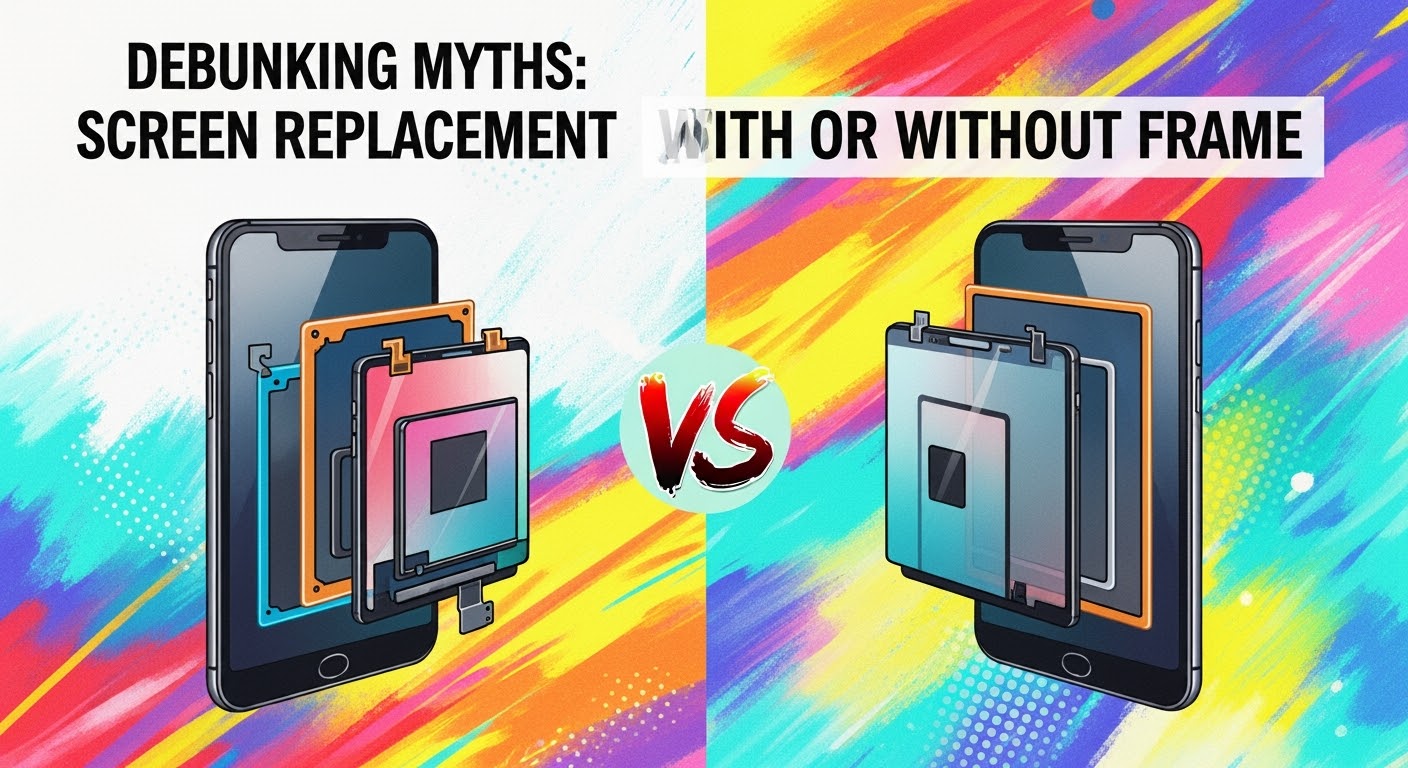

Screen Frame vs Screen Only: Which Repair Method Does Your Phone Actually Need

Screen Frame vs Screen Only: Which Repair Method Does Your Phone Actually Need? + Ultimate Guide + 7 Critical Facts
Introduction to Screen Frame vs Screen Only Repairs
When your phone screen cracks, the first question you’ll likely ask is simple: should I choose a screen frame vs screen only repair? It sounds technical, but don’t worry. Once you understand the difference, the decision becomes much clearer.
In today’s smartphones—whether it’s an iPhone, Samsung Galaxy, or Google Pixel—the display is more than just glass. It’s a layered system including the digitizer, OLED or LCD panel, adhesives, and sometimes the metal frame that supports everything. If one part fails, the repair approach matters.
The debate around screen frame vs screen only repair isn’t just about cost. It’s about durability, alignment, touch sensitivity, and overall phone performance. Choosing the wrong option can lead to gaps, loose screens, poor waterproof sealing, or even recurring cracks.
Let’s break it down clearly and professionally, so you can make an informed decision with confidence.

What Is a Screen Only Repair?
A screen only repair involves replacing just the damaged display panel while keeping the original phone frame intact.
This method is commonly used when:
- The glass is cracked
- The touch still works
- The frame is straight and undamaged
- There are no bends or dents
When Screen Only Repair Is Recommended
Technicians typically suggest this repair when:
- The phone hasn’t been dropped heavily
- The metal housing shows no warping
- The screen sits evenly on all sides
- There’s no separation from the frame
For example, many modern devices from Apple and Samsung can undergo a screen-only replacement if the structural integrity is intact.
Pros and Cons of Screen Only Replacement
Pros:
- Lower cost
- Faster turnaround
- Keeps original housing
- Environmentally friendlier (less material replaced)
Cons:
- May not restore factory waterproofing fully
- Adhesion depends on technician skill
- Not suitable for bent devices
In short, screen-only repair is cost-effective—but only if the frame is perfect.
What Is a Screen Frame Repair?
A screen frame repair, also called a “full assembly replacement,” replaces both the display and the supporting frame.
This is more comprehensive. Instead of separating the broken display from the existing housing, technicians install a new display already mounted onto a new frame.
When Screen Frame Replacement Is Necessary
You’ll likely need this repair if:
- The phone is bent
- Corners are dented
- The screen doesn’t sit flush
- The device suffered a heavy drop
- There’s internal alignment damage
Many flagship devices, especially those with ultra-thin designs like models from Google, are more vulnerable to structural shifts after impact.
Pros and Cons of Screen Frame Repair
Pros:
- Restores original alignment
- Stronger long-term durability
- Cleaner internal fit
- Better chance of maintaining water resistance
Cons:
- Higher cost
- Slightly longer repair time
It’s more expensive, yes—but it’s also more comprehensive.
Screen Frame vs Screen Only: 7 Critical Differences

Now let’s dive into the real comparison of screen frame vs screen only repairs.
1. Structural Integrity
Screen-only keeps the original frame. Frame replacement restores the entire structural shell.
2. Cost Comparison
Screen-only repairs are typically 20–40% cheaper.
3. Durability
Frame replacements last longer when structural damage exists.
4. Waterproof Sealing
Full frame replacements often provide better resealing results.
5. Repair Complexity
Screen-only repairs require careful adhesive work. Frame replacements involve part transfers.
6. Resale Value
A properly aligned phone with a frame replacement often looks newer.
7. Risk Factor
If the frame is even slightly bent, screen-only repairs may fail early.
How Technicians Decide the Right Repair
Professional technicians follow a strict checklist:
Diagnostic Checklist
- Inspect frame corners
- Check for micro-bends
- Test display seating
- Evaluate adhesive integrity
- Examine internal brackets
- Measure structural alignment
This isn’t guesswork—it’s precision.
Risks of Choosing the Wrong Repair Method
Choosing incorrectly in the screen frame vs screen only debate can lead to:
- Screen lifting after weeks
- Light bleeding at edges
- Touch dead zones
- Repeat cracks
- Reduced resale value
Worse still, moisture may seep in if sealing fails.
Brand-Specific Considerations
Different brands design screens differently.
Devices from Apple use tight integration between display and housing. Samsung devices often feature curved OLED panels that require precise alignment.
That’s why experienced repair centers matter.
For additional technical guidance on smartphone display structures, you can review iFixit’s professional teardown resources:
https://SydneyCBD.repair/locate-us
Cost Breakdown Table
| Repair Type | Average Cost Range | Repair Time | Best For |
|---|---|---|---|
| Screen Only | $120–$280 | 1–2 hours | Minor cracks |
| Screen + Frame | $200–$450 | 2–3 hours | Bent or dented phones |
Prices vary depending on model.
Frequently Asked Questions
1. Is screen-only repair safe?
Yes, if the frame is undamaged.
2. How do I know if my frame is bent?
Look for gaps, uneven edges, or lifted glass corners.
3. Does frame replacement improve durability?
Yes, especially after heavy drops.
4. Will my phone remain waterproof?
It depends on technician skill and adhesive quality.
5. Which repair lasts longer?
Frame replacement generally offers stronger structural integrity.
6. Is screen-only cheaper?
Yes, but only suitable for minor damage.
Conclusion

The choice between screen frame vs screen only repair ultimately depends on your phone’s structural condition. If the damage is purely cosmetic and the frame is straight, screen-only replacement can save you money.
However, if there’s any bend, dent, or alignment issue, a full screen frame repair is the smarter investment. It protects your phone’s longevity, durability, and performance.
When in doubt, consult experienced technicians who can perform a proper diagnostic. That way, you won’t just fix your screen—you’ll protect your entire device.
David from Sydney CBD Repair Centre – The Best place to fix mobile phones as 7 Years In A Row! Top Mobile Phone Repair In Sydney. More than 2000 Positive Reviews on Google and Same Day Repairs.
We take pride in delivering exceptional repair services for all major phone brands including Apple, Samsung, Google, and more. Our expert technicians use only genuine parts and offer 90days warranty on repairs. Located in the heart of Sydney CBD, we’re your one-stop solution for all mobile device repairs.
Our commitment to excellence has earned us the trust of thousands of satisfied customers. Whether it’s a cracked screen, battery replacement, or water damage repair, we handle it all with professional care and expertise. Walk in today and experience why we’re Sydney’s #1 choice for mobile phone repairs.
Visit us for:
✓ Same Day Express Repairs
✓ Genuine Parts Guarantee
✓ Professional Technicians
✓ Competitive Pricing
✓ 2000+ 5-Star Google Reviews
✓ 7-Time Award Winner for Best Phone Repairs
Sydney CBD Repair Centre – Where Quality Meets Reliability.
Call : +61280114119
Website: https://SydneyCBD.repair/locate-us