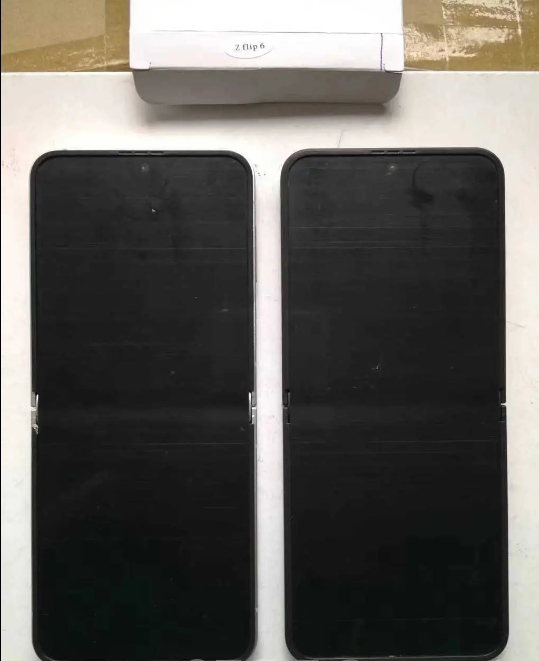
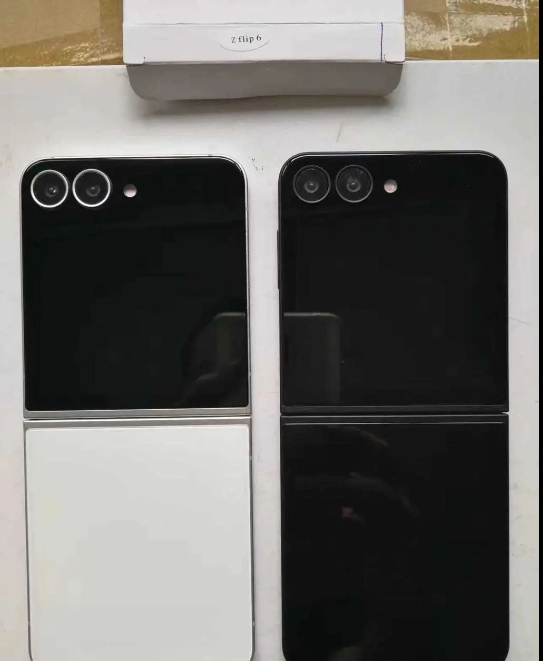
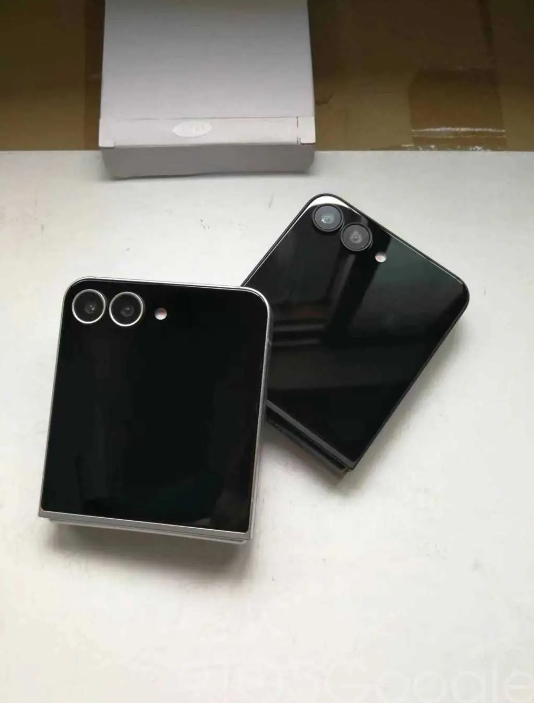
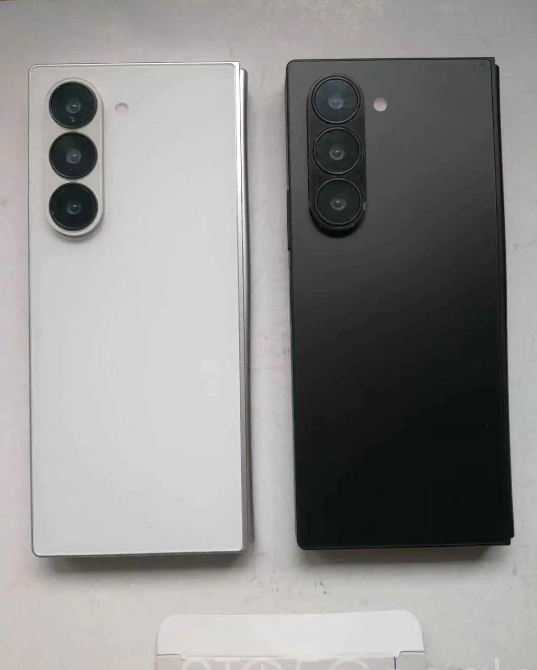
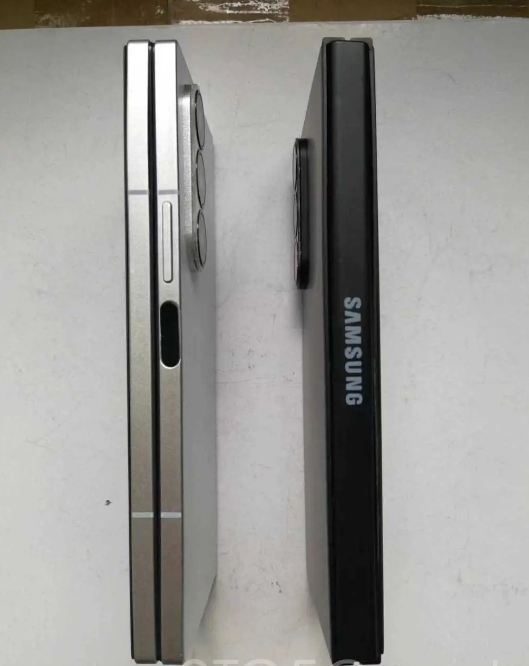
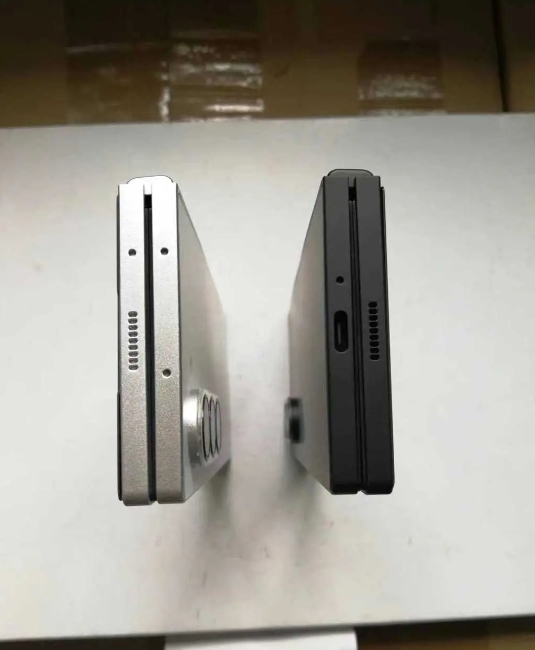
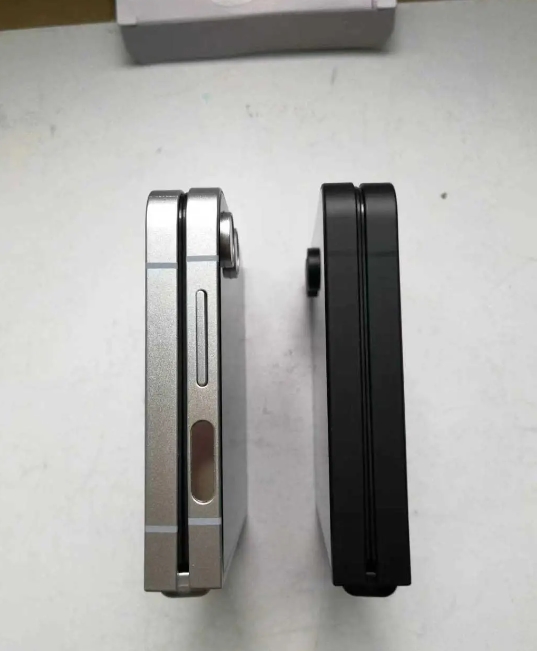
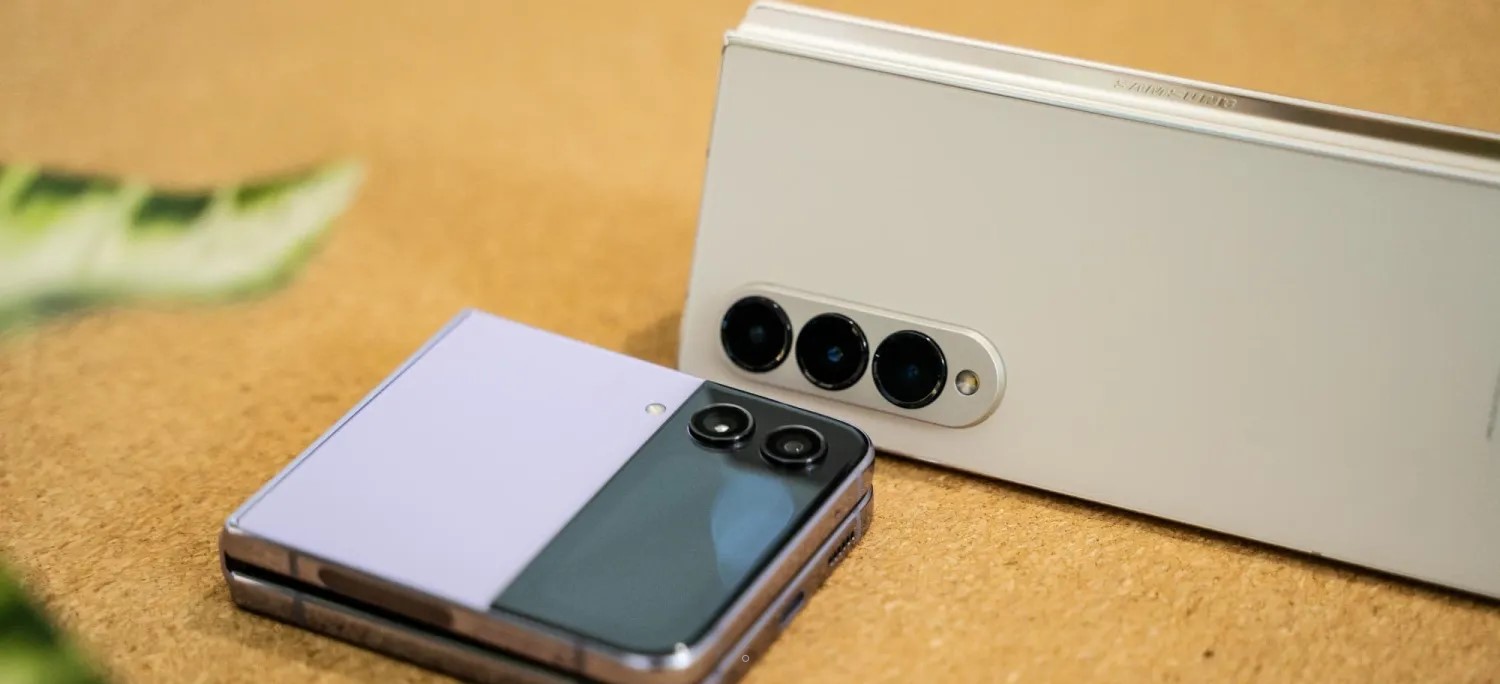
New images of a prototype Galaxy Z Fold 6 and Flip 6 have emerged, showcasing an even deeper look at the Samsung foldable and internal display crease.
Images of prototype Galaxy Z Fold 6 or even Flip 6 units are not new, and we’ve seen almost every angle available through previous leaks. They showcase the entirety of the device, detailing the new boxier design on both foldable, as well as camera array changes this time around.
Photos credited to Sonny Dickson of further Galaxy Z Fold 6 and Flip 6 prototype photos. The images exhibit both the outer and inner displays of each device, and it looks like generation six still carries a significant display crease.
The units in the photos are both prototypes or “dummy” units. Essentially, it means each is subject to extensive changes throughout the design process. These images could be showing off a display that carries a larger seam down the middle than the final version will, or Samsung may have equipped these units with an older display to simply show off the silhouette and overall profile of each phone. Still, users have been hoping for a less significant bend when the Galaxy Z Fold and Galaxy Z Flip are open 180 degrees.
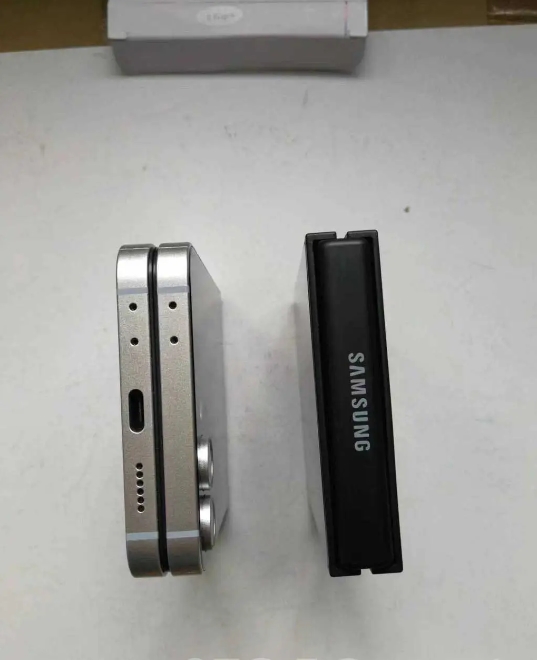
The images also show off a black prototype variant, which has “Samsung” crudely stamped on the hinges of both devices. It’s possible Samsung will ditch the etched logo we’ve seen on past Fold and Flip devices and instead opt for a stamped logo, much like in the images here. The etched logo is the preferable option, giving the $2,000 devices a little touch of quality.
Another small possible detail is the way the hinge protection plate flares out at the top and bottom of the Galaxy Z Fold 6. It’s very hard to see, and the lighting in these images could be playing tricks on our eyes, but it looks like the hinge is a couple of millimeters further from the main phone panels at the ends than it is in the middle, where the Samsung logo is. There is no such angle for the Flip 6.
Besides a couple of small tidbits, Samsung’s design changes can be appreciated in these prototype units. Each phone looks to be carrying a smaller bezel around the internal display, and the overall footprint looks a little nicer than last year’s model.
Samsung is set to announce the Galaxy Z Fold 6 and Galaxy Z Flip 6 on July 10 in Paris.
Another Samsung Unpacked event has come to pass, and this one brought us the fourth generation of foldable Galaxy smartphones. Quite expectedly, Samsung announced the fourquels of the Fold and Flip, the first being more like a foldable tablet, while the Flip – a nostalgia-sprinkled flip phone.
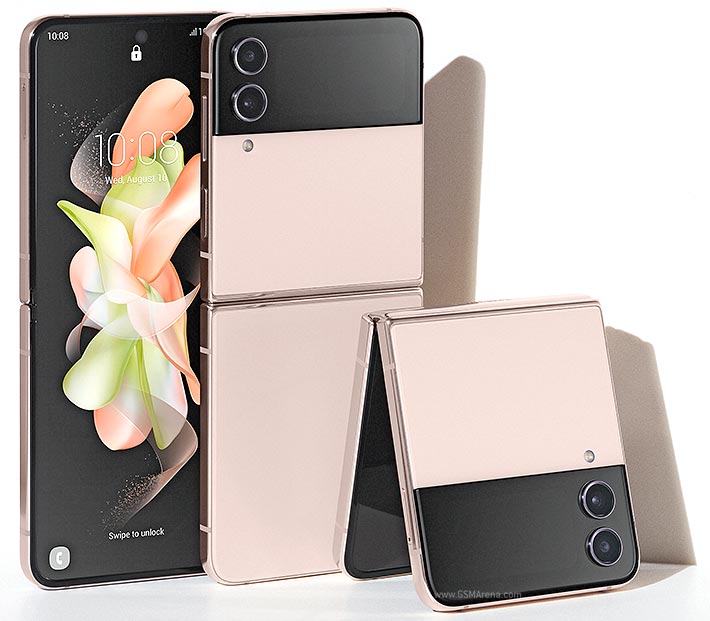
Today, we will be exploring the Samsung Galaxy Z Flip4, which is much like the Galaxy Z Flip3, but better. This is a formula that’s been in use for years now as the technology cannot advance as fast as makers are bringing a new version of their phones. But while the new Z Flip4 won’t make many (if any) Z Flip3 owners upgrade, it improves enough bits to make even more people think of getting this new foldable flagship.
Samsung has improved on the Galaxy Z Flip3 by tweaking all weak points both reviewers and users have agreed upon – low-light camera performance, battery life, charging speed. And, of course, the new Z Flip4 gets to boast the most current Android chip – the Snapdragon 8+ Gen 1.
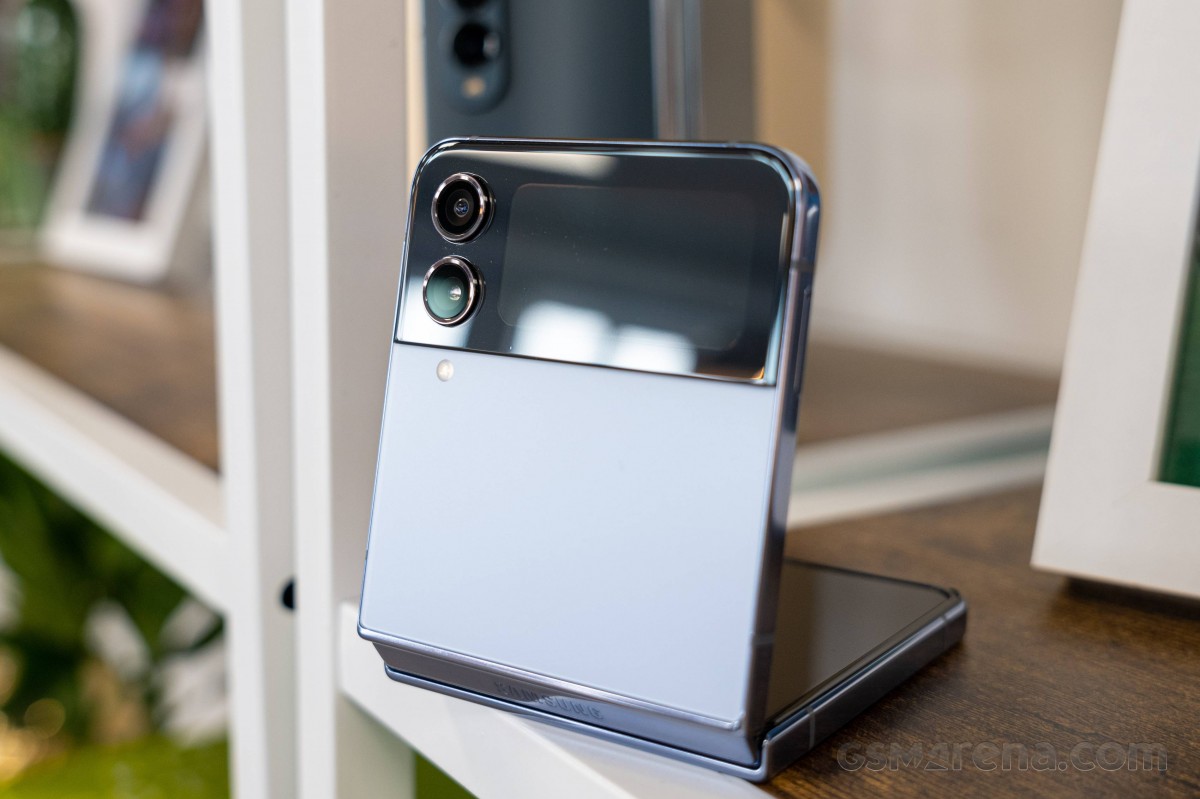
The new Galaxy Z Flip4 features the same internal Dynamic AMOLED 2X and external Super AMOLED screens as the Z Flip3. But thanks to reduced bezels around the foldable screen and a flatter aluminum frame, the Z Flip4 is now a bit shorter and with a thinner hinge.
The Foldable Dynamic AMOLED 2X remains equally adaptive with up to 120Hz refresh rate and equally bright with a peak brightness up to 1200 nits. The crease in the middle is here to stay for now and so is the perforation for the selfie camera.
The Z Flip4 is IPX8-rated for water resistance – a feature that only Samsung offers across its third and fourth generation of foldable devices. Samsung and Sony are the only two makers that aim to offer water protection on most of their phones, and we truly appreciate the effort.
Besides the chipset upgrade, the Galaxy Z Flip4 also features an improved camera system on the back. It is still a dual-camera setup, but the main shooter now relies on a larger 12MP sensor with 1.8µm pixels coupled with a wider 24mm f/1.8 OIS lens. This new sensor should allow for a 65% improvement in light gathering and improve the low-light performance. The 12MP ultrawide and 10MP selfie cameras remain the same as on the Flip3.
The Galaxy Z Flip4 is powered by a 12% larger battery – it now packs a 3,700mAh cell, up from 3,300mAh within the Flip3. And even better, the phone now supports 25W fast charging, up from the sluggish 15W. The wireless fast charging has been sped up, too, now up to 15W.
And that’s about it – a new chipset, main camera, battery, and improved charging speed. And the latest Android version with the most current One UI, of course.
Disclaimer. We can not guarantee that the information on this page is 100% correct.
Going through the specs sheet, there is little missing – a zoom camera comes at the top of our head. The improved hinge should be fine for at least 200,000 cycles, and we appreciate the improved Gorilla panels and the tougher aluminum frame, even if by small margins.
Unboxing the Galaxy Z Flip4
The Galaxy Z Flip4 ships with an incredibly thin and lightweight box. It is lying open, face-down in there, waiting for its first user. A thin paper compartment houses the USB-C cable and the SIM ejector. And that’s all you will find.
There is no charger or case within the retail box, and if you don’t own Samsung’s 25W power adapter, it’s probably a good idea to buy one so you can use that fast charging.
Alternatives
The Galaxy Z Flip4 is a minor upgrade over the Flip3 even if it introduces some important improvements like a larger battery, faster charging, and better low-light performance for the main camera. We did appreciate the option to shoot in full resolution with the rear camera when taking selfies, too.
Obviously, these won’t make any Galaxy Z Flip3 user upgrade to Flip4. But by addressing most of the Flip3 concerns, Samsung has made the Z Flip4 an even more attractive and desirable offer.
The new Flip4 launches at €1080/$999, which is a flagship price, but not as high as €1800 like the Fold4. And for that, we’d consider it a reasonable price for features/money ratio.
There are a handful of foldable smartphones on the market, fewer even if we are to list foldable smartphones like the Flip and exclude foldable tablets like the Fold.
If you are keen on getting a phone like the Flip, but the price of the Flip4 does not fit your budget, you may want to consider the Galaxy Z Flip3 as it is now €400 cheaper than the Flip4. It is pretty much the same device with less inspiring battery life, charging speed and so-so low-light performance.
The recently announced Motorola Razr 2022 will launch any moment now in China, but we are not sure if it will make it to other markets yet. It is based on a 6.7-inch foldable screen, like the Flip4, but it’s got 1B colors and a 144Hz refresh rate. The chipset is the same, and the camera experience is similar. The Razr has an iconic form factor and a larger external display that allows for even more control while the phone is closed.
The rest of the foldable phones are rather large – like the €1800 Galaxy Z Fold4. It’s an all-powerful smartphone with one of the largest OLED screens on a smartphone and an under-display camera for video chats; it’s got a whole bunch of cameras, and the external display is as good as the market offers, large at that. If you don’t mind having a phone this thick (16mm) and heavy (263g), the Fold4 could be your next phone.
Xiaomi has recently announced its Mix Fold 2 – which is even thinner than the Fold4 with larger screens and Leica-powered camera setup. It has a sleeker design and charges faster, but for now, it’s a China-only device.
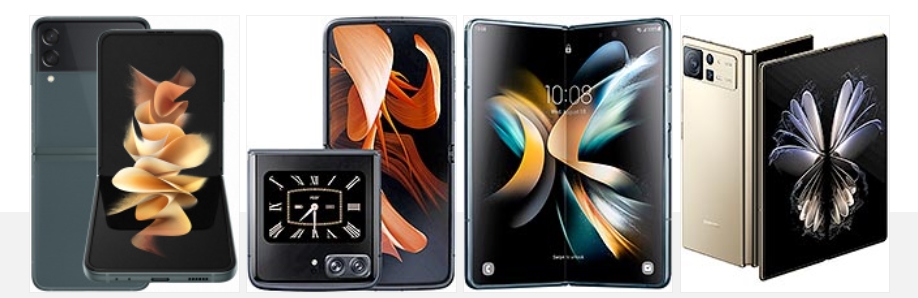
Samsung Galaxy Z Flip3 5G • Motorola Moto Razr 2022 • Samsung Galaxy Z Fold4 • Xiaomi Mix Fold 2
If you are eyeing the Flip4 because of its compact shape, you may also want to consider some of the compact bars that are available right now. Like the €700 Galaxy S22, which has a 6.2-inch Dynamic AMOLED 2X screen, powerful hardware, and its triple-camera on the back has a 3x telephoto.
The €800 Zenfone 9 is even smaller with a 5.9-inch 120Hz Super AMOLED screen, the most recent Snapdragon chipset, and a similar dual-camera that is capable of high-quality digital zoom though. The Zenfone 9 also offers outstanding battery life!
There is also the small iPhone 13 mini, which is the smallest flagship on the market based on a 5.4-inch screen. It is the most powerful small phone in the world right now, and the only major setback is the 60Hz OLED screen.
Samsung Galaxy S22 5G • Asus Zenfone 9 • Apple iPhone 13 mini
verdict
The Galaxy Z Flip went from a fashion-centric device to a full-blown flagship in just a couple of generations. The Flip4 is what the Flip3 should have been from the get-go – a powerful foldable smartphone with excellent camera performance, decent battery life and charging speed.
And indeed, we can say a lot of positive things about the new Z Flip4 – it has a superb water-proofed design that will hit the nostalgia notes across many users. It’s a compact flip phone, one that clicks simply great.
The Z Flip4 offers an excellent AMOLED screen, good battery life, good charging speed, and the speakers are nice. It also packs the most powerful Android chip to date, though the thermals lead to throttling.
Finally, the camera performance is superb across the board, photo and video, day and night.
We consider the Flip4 as the most affordable foldable smartphone of the current generation, and for its thousand euros, it delivers an outstanding set of features.
It’s not an ideal smartphone – it takes a while to get used to its design and form factor. Then you need to live with the crease and the plastic screen protector over the screen. Dust gets in various places, too.
Then there is the heavy throttling just after five minutes of peak loads. And there is no zoom camera.
While durability concerns remain with regular reports of bubbles forming under the screen protector along the crease, solid warranty coverage from Samsung has those reasonable fears taken care of.
The fourth generation Z Flip is moving the series into a bright future, and it does everything right with the technology it has at its disposal. We are recommending it to people who’d like to own a unique phone, small, and yet powerful and capable; to users that will take it with all of its good and not so good aspects.
The big upgrade on Samsung’s new Galaxy Z Flip 5 is the debut of a new, much larger cover display that’s actually capable of doing some useful things. But, what can you actually do on it? Here’s a quick look at all of the built-in features.
The clockface is customizable
When you first turn on the display, you’ll see a customizable clockface that has tons of different styles and features. Samsung allows users to customize the style pretty heavily, from fonts to colors and more. That background color will be visible throughout widgets as a transparent backing, too.
You’ll have the option to customize the clockface only from the inner display, though. That’s where most settings live, but you can change your preset on the fly through the outer display in a rolodex-style interface.
Widgets are still the focus
Like on past Galaxy Flip models, the core of what you’ll be using on the Galaxy Z Flip 5’s cover display comes from widgets. There are a dozen widgets by default which include:
Calendar
Weather
Alarm
Step counter
Recent calls
Stopwatch
Direct Dial
Timer
SmartThings scenes
Galaxy Buds controls
Finance Watchlist (powered by Google Finance)
Apps
These are all powered by Samsung’s apps, with no option to add custom Android widgets from other apps. But, functionally, they work rather well and take advantage of the screen space made available. Notably, Samsung places all navigation in the bottom section that’s next to the camera. When on widgets, it’s gestures, but if you have navigation buttons enabled, you’ll see those when you open an app.
Flip 5’s weather widget
Yes, there’s a full keyboard
The biggest upgrade from Samsung’s bigger display here might just be interacting with messages. When you get a notification, or trigger any other text box, the Galaxy Z Flip 5’s cover display will show a full-size QWERTY keyboard.
Flip 4, notably, would only show preset replies or allow for voice-to-text or emoji replies. Oppo’s Find N2 Flip is similarly limited, despite having a much bigger display compared to the Flip 4. Samsung’s approach on Flip 5 is most similar to Motorola’s Razr+, though with a big restrction.
The full keyboard on Galaxy Z Flip 5 cover display is currently locked to the official Samsung Keyboard. You can’t use Gboard, SwiftKey, or anything else on the outer display. However, this can work independently of the inner display. If you’re using Gboard on the inside, for instance, Samsung Keyboard will still apply on the outside.
Can the Galaxy Z Flip 5 cover display run full apps?
Since rumors first started swirling, the big question has been whether or not the Galaxy Z Flip 5 cover display can run full Android apps. The good news is that yes, it can, but it’s a little complicated.
By default, there are no full apps on the Flip 5’s outer display. Through the “Labs” option in the Settings menu, you’ll be able to turn on the ability to run a limited list of full apps. That is disabled by default, but once turned on it can enable the following apps on the outer display:
Google Messages
Samsung Messages
WhatsApp
Google Maps
Netflix
YouTube
Samsung tells us that more apps may be added to this list in the future, but for the time being that’s all you’ll be able to use. The apps run as normal, just in a condensed layout. Why Netflix is included, we don’t know.
Google Maps on the Galaxy Z Flip 5 cover display
In any case, the other option is to use Good Lock. While we haven’t been able to test this out just yet, Samsung says that a Good Lock module will allow users to run any app they choose on the outer display.
Galaxy Unpacked is mere days away, but we know what to expect from Samsung – another round of foldables that offer generational improvements. But is that enough for you to pull the trigger on a new Galaxy Z Fold 5 or Flip 5?
What do the Z Fold 5 and Z Flip 5 bring to the table?
Depending on what device you own right now, you’re looking at some improvements, just like you would with any device year over year. While the Galaxy Z Fold 5 and Galaxy Z Flip 5 haven’t technically been announced, we have enough reliable information from both leaks and the company itself to get a general idea of what the new foldables improve on.
Galaxy Z Flip 5 improvements
The first thing that comes to mind is the Z Flip 5‘s completely revamped external display. It is the foremost change and center of attention in terms of Galaxy foldables prior to launch. That display is said to come in at 3.4 inches across with a resolution of 748 x 720. By comparison, the Galaxy Z Flip 4 utilizes a 1.9-inch display with a resolution of 260 x 512. That’s a 55% increase in size, and the leaked images show just how much of a difference that makes.
As for the internal panel, that AMOLED 2X display is set at 6.7 inches and can hit up to 120 frames per second. That resolution clocks in at 2640 x 1080 – no surmisable difference on paper.
With the same 8 GB of RAM and 256 GB / 512 GB loadout, the only other stark difference is the superior Snapdragon 8 Gen 2, which should bring a slight performance increase over the previous generation.
Galaxy Z Fold 5 improvements
The step up from Fold 4 to Fold 5 is a little less pronounced. Each generation’s core display specs look to be, on paper, identical to each other. That includes size, resolution, and refresh rate.
Internally, the battery and memory options are the same, including 12 GB of RAM with 256 GB / 512 GB of internal storage. The only major difference here is the CPU. Just like the Flip 5, the Fold 5 will run a Snapdragon 8 Gen 2 for that increase in processing power and connectivity.
Physically, the Z Fold 5 sits at 0.8 mm thinner than the Z Fold 4. That matches up with what Samsung stated before the launch.
Getting ‘slimmer and lighter’
A major change affecting both the Galaxy Z Fold 5 and Flip 5 is the way Samsung designed the connection between the two sides of the device. In the center, it’s expected that Samsung is incorporating a new hinge system that does away with the “hinge gap” we’re used to in the Fold/ Flip 4 and prior devices. The tiny space that’s visible when the devices are closed may not exist on the Fold 5 and Flip 5, though that’s uncertain for now.
Samsung also hints at the foldables achieving a new minimum weight. It’s been reported that the Z Fold 5 will weigh a few grams more than the Galaxy S23 Ultra. The S23 Ultra isn’t exactly light as a feather, though it’s on the expected end for a solid device. For a foldable that houses two displays and a long center mechanism for smooth operation, that’s an encouraging benchmark.
Galaxy Z Fold 5 and Z Flip 5 might take on a heavier price tag
Another area of consideration for those looking to upgrade hardware is the price at which those new foldables will be sold. Both the Galaxy Z Fold 3 and Fold 4 had the same launch price – $1,799. While it’s no rainy-day money, it’s mostly understandable for relatively nascent technology, which has always followed a certain pattern. That trend generally says new tech is much more expensive, with subsequent generations getting more reasonably priced as time goes on.
That trend might have broken in 2023, as many other things have.
It’s looking like the Galaxy Z Fold 5 and Z Flip 5 will see a price increase of approximately €100 each – at least in France. That said, the report is limited to European pricing, leaving US pricing currently unknown.
Google and OnePlus want your attention
The last couple of years have seen Samsung crowned as the most successful foldable manufacturer, but Google and OnePlus are vying for that title with new and upcoming devices that offer up some competition.
The Pixel Fold has gone through its announcement and release, meaning the device has stirred up some publicity – good and bad. Overall, the Pixel Fold is a solid phone with some serious potential, especially considering this is Google’s first attempt at a product the general market knows very little about. The glaring error on Google’s part is the pricing, unfortunately. At $1,799, it’s hard to justify the Pixel Fold when the Galaxy Z Fold 5 is sitting around the corner at (probably) the same price.
The OnePlus Open, on the other hand, is set to debut sometime in August. The 8-inch foldable is expected to pack a Snapdragon 8 Gen 2, following in Samsung’s footsteps. While there’s no word on pricing, we’re more than confident that it will not be cheap, but it may not be as expensive as Google and Samsung feel is right.
Are you upgrading?
Let’s say you own a Galaxy Z Fold or Flip of any generation – are you trading it in or selling it to grab a Z Fold 5 or Flip 5?
It’s worth noting that those who do upgrade are more than likely to trade in, whether that’s through a carrier or directly from Samsung. At launch, Samsung has historically been more generous with trade-in values, offering more than any other buyer simply because it can recycle or resell older devices with relative ease. However, that trend has changed recently as well. The company is still running a $50 gift credit and up to $340 enhanced trade-in credit for anyone who reserves before the announcement.
We’re hoping that trading in a Galaxy Z Fold 4 for a Fold 5 means heavy savings. If trade-in values are as attractive as we’ve seen in the past, those who pre-order are likely to see a final price tag of a few hundred rather than close to $2,000. Unfortunately, there’s no telling where Samsung will set trade-in values, though it’s still a no-brainer for some looking to upgrade.
The improvements are there, but that still means an expensive device. On top of that, Google and OnePlus are becoming viable contenders. Depending on which form of Android you prefer, a foldable with OxygenOS or stock Android might sound even more appealing than Samsung’s extremely popular OneUI.
In any case, let us know your thoughts. We’re genuinely curious about how users are feeling about Samsung’s foldable prior to the official announcement. Things could change, and the Z Fold 5 or Flip 5 might be housing a bombshell improvement we know nothing about. If that isn’t the case, are you upgrading?
This is the next version of its Android powered flip phone, which is expected to feature a pair of 4.2-inch AMOLED displays (one internal, and one external), a dual camera setup in back (one camera could sport a variable f/1.5-2.4 aperture, and the second might carry a telephoto lens with 2X zoom capabilities), and the Snapdragon 845 Mobile Platform under the hood. Of course, there is no QWERTY keyboard as T9 is used instead, and a 3000mAh battery keeps the lights on.
When TENAA certified Sammy’s W2019, the agency’s website shared the usual four photos it takes of every phone that it gives a thumbs up to. Now, Slashleaks has posted a short video of the phone along with some still images of the device (some of which came from the video itself). You can check out the photos by clicking on the slideshow below. The video can be found at the top of this article.
The W2019 is expected to be released only in China. This series has always been rather expensive, and the W2019 is no exception. There is speculation that the phone will cost the equivalent of $2,500 when it is launched later this year.
Samsung has been pushing out a very expensive, high-end Android flip phone every year. Last year’s model, the W2018, was the first smartphone to feature a camera with an aperture as wide as f/1.5. The newest phone in this line, the W2019, has now been certified in China by regulatory agencies MIIT and TENAA. As much as you feel inside that you must own this phone, we do need to point out that this line has only been available in China. And those entering text will have to use the old T9 system to type.
The TENAA certification doesn’t mention any specs, but does show images of the phone from all angles. Considering that last year’s W2018 was powered by the Snapdragon 835 Mobile Platform and carried 6GB of RAM, it wouldn’t be a stretch to expect the Snapdragon 845 Mobile Platform under the hood of the W2019, along with 8GB of RAM. Bluetooth 4.2 is said to be onboard the new model. The pictures from TENAA appear to show a dual-camera setup on back of the handset. The buzz around the water cooler suggests that Android 8.1 Oreo will be pre-installed.
The W2019, like its predecessors, will have both an internal and external screen. Last year’s model had a pair of 4.2-inch displays, each with a resolution of 1080 x 1920 (FHD).
A new Samsung device has just received certification from the National Radio Agency based in Samsung’s hometown of South Korea.
The device has the model number SM-G888N0 and is said to be known as the Galaxy X, which is set to be the company’s first foldable phone that has been heavily rumored Samsung has been working on. Now the device has received formal certification, it would suggest that the Samsung Galaxy X could be launching very soon, albeit in South Korea to begin with.
The Wi-Fi alliance lists the device as Bluetooth 4.2 and running Android 6.0.1 Marshmallow which would be slightly disappointing. I suspect this may be outdated given the profile of the Galaxy X in the lineup for Samsung and would expect similar specs to that of the rest of the Galaxy line.
The foldable smartphone is said to be being developed under codename Project Valley and points to a late 2017 or early 2018 release.
A device that folds up is an interesting concept and one that if executed correctly, would open the door for Samsung to further increase the display size on a smartphone without increasing its physical footprint.
Foldable phones were all the rage pre-smartphone but could Samsung be using the Galaxy X to reignite that trend or has it finally figured out foldable displays?
If the rumors are true we won’t have long to find out as we could see something launched in South Korea at the tail end of the year.
Thank you for using
Themify Popup
This is a sample pop up. Themify Builder or Builder Lite (free) plugin is recommended to design the pop up layouts.