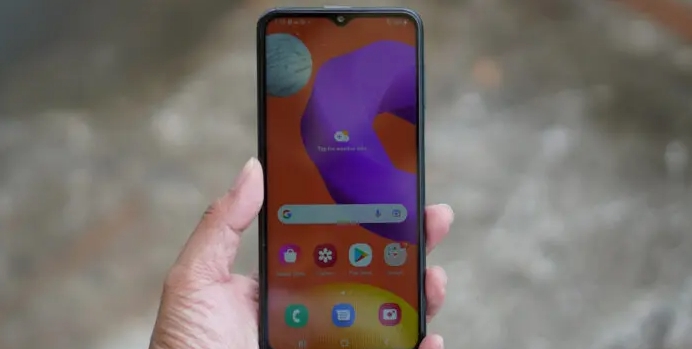
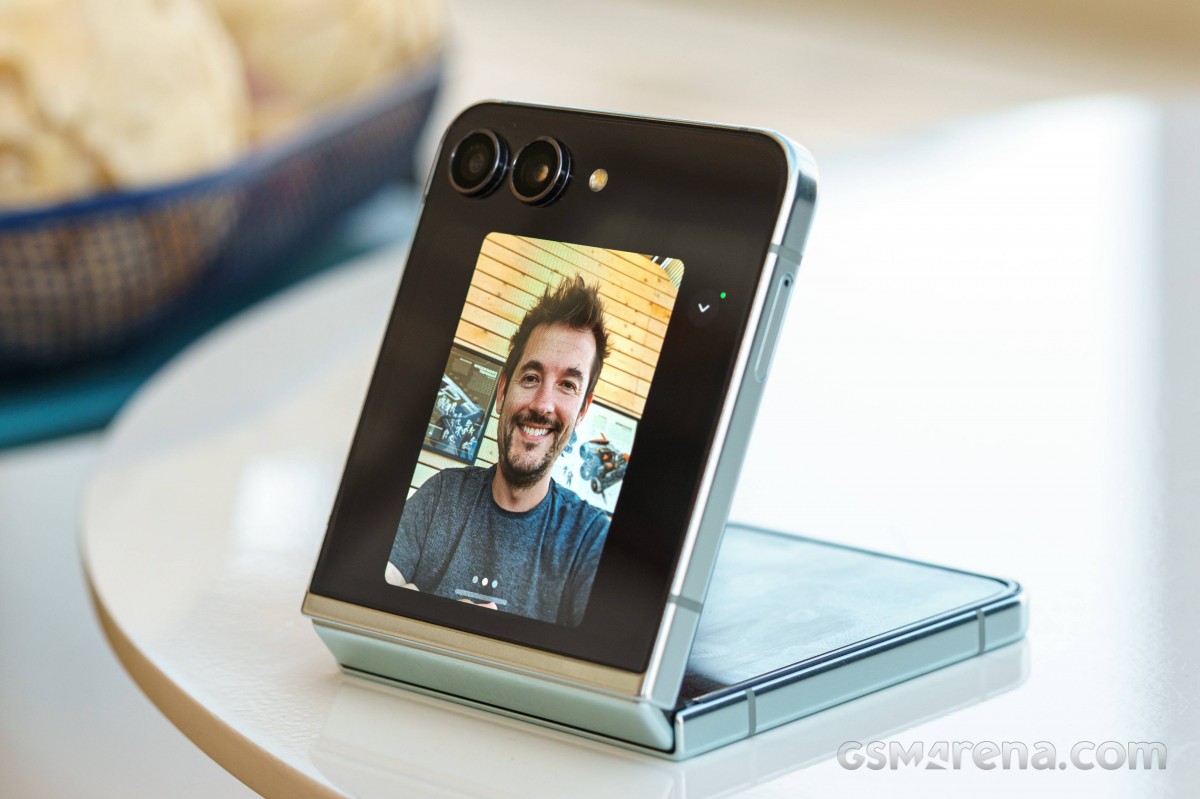
Overshadowed by the Galaxy S24 Ultra, the Galaxy S24 hasn’t received much attention. Some recent leaks of the base model Galaxy S24 flagship show a minimal change over the S23 of earlier this year in its four main color options.
The Galaxy S24 lineup has seen its fair share of leaks. Most have revolved around the more expensive S24 Ultra, which packs better cameras and, supposedly, a much more premium build. As for the base S24 and S24+, there hasn’t been as much hype building around them.
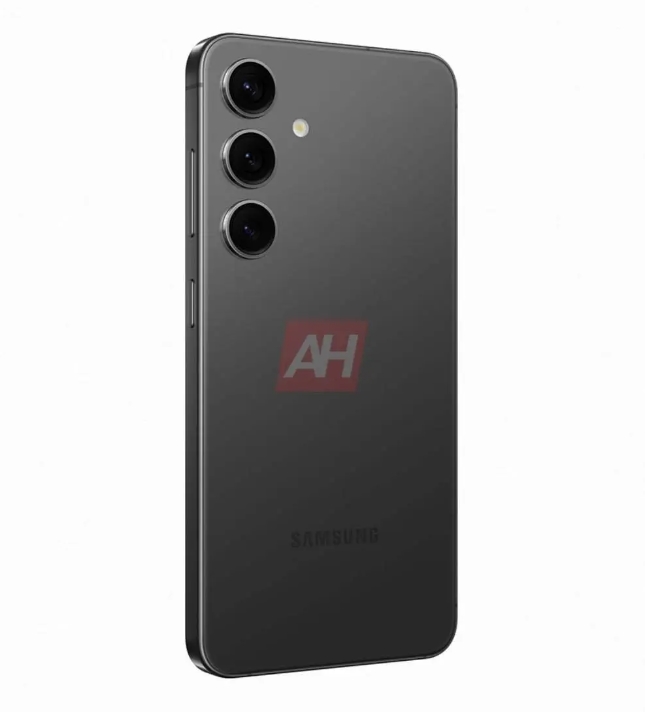
Previous leaks note that the Galaxy S24 won’t house a titanium body like the S24 Ultra. It will, however, retain an aluminum frame with several colors. The Galaxy S24 will come in “Onyx Black,” “Marble Grey,” “Cobalt Violet,” and “Amber Yellow” color choices.
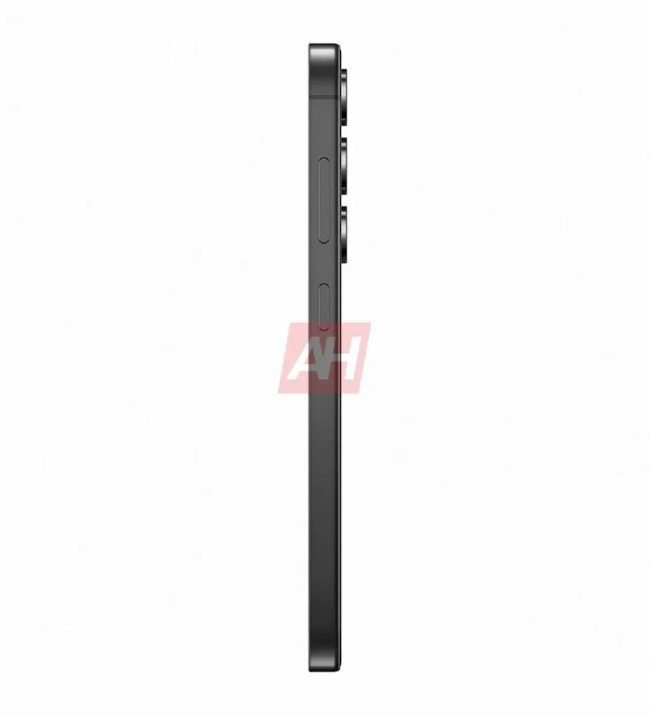
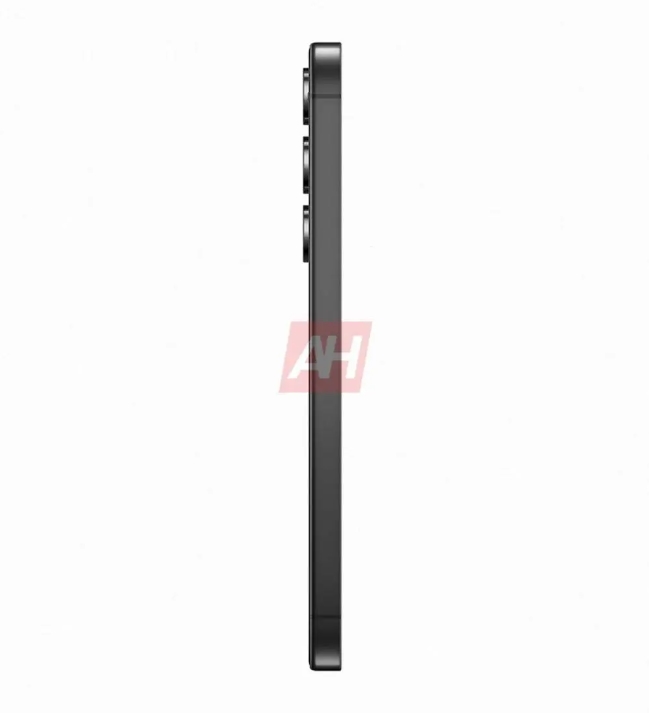
Per Android Headlines, new official-looking renders are available for the Galaxy S24. The renders showcase the colors listed above, as well as a high-definition look at the device from several angles.
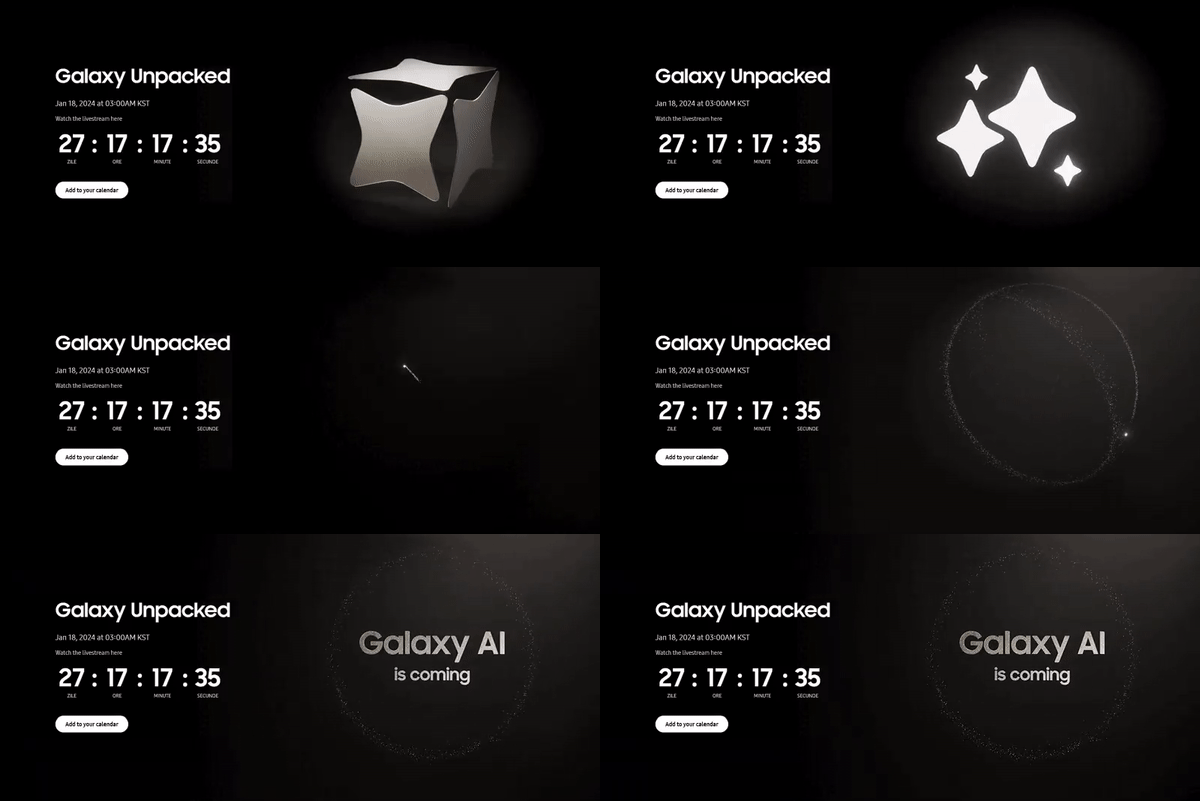
Samsung S24 Series Unpacked sets on January 18,2024 3:00AM KST ( Korean Standard Time )
One of the biggest differences between the S24 and Galaxy S23 is the thickness and radius of the aluminum frame. The S23 had a thicker frame that imposed on the rear and front glass. It was also somewhat rounded. In this generation, the metal recedes a little more and gives the phone the appearance of a metal bezel. Each Galaxy S24 also carries a color-matched frame, which redeems the design a bit.
The Galaxy S24 also retains the same camera design, with no panel surrounding each lens. The phone also retains the same basic and sometimes boring look, at least from the back of the phone.
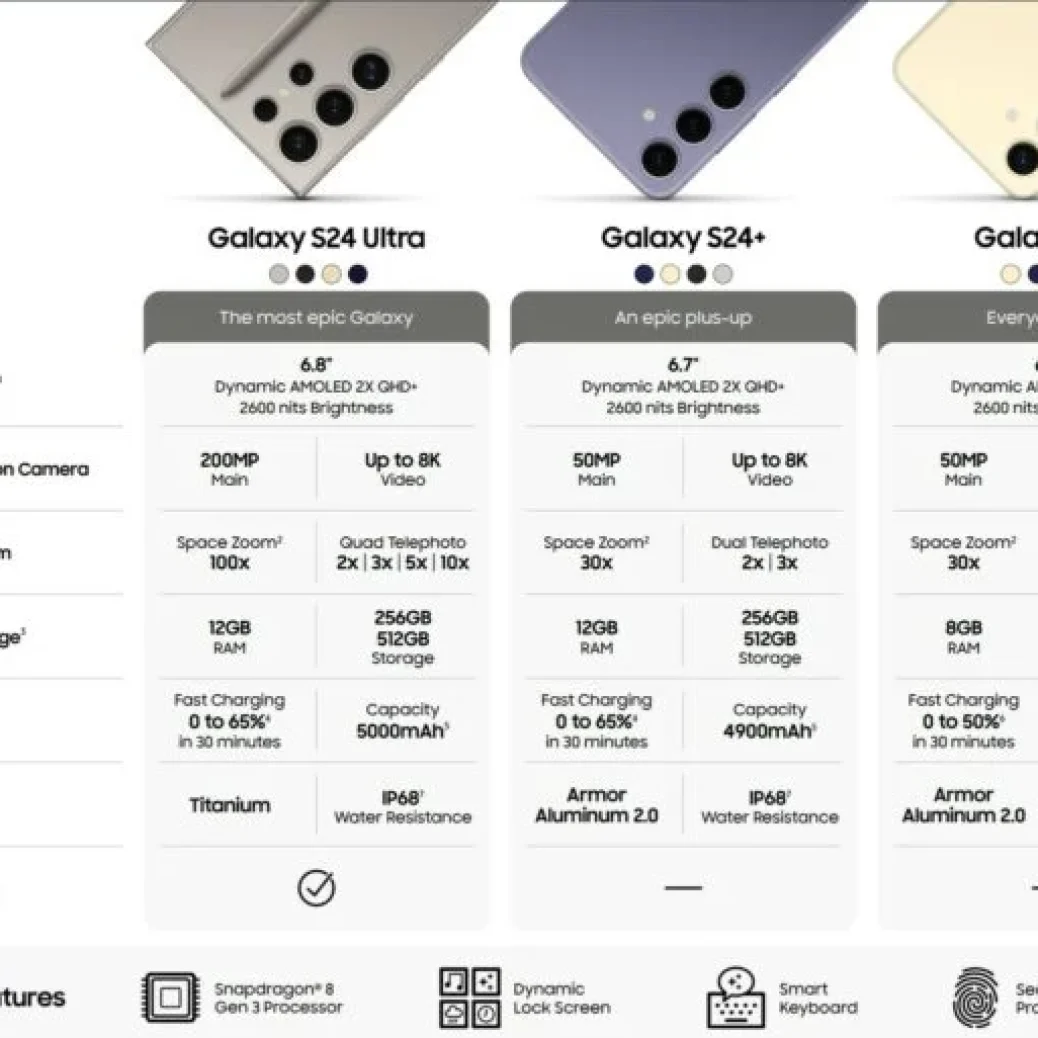
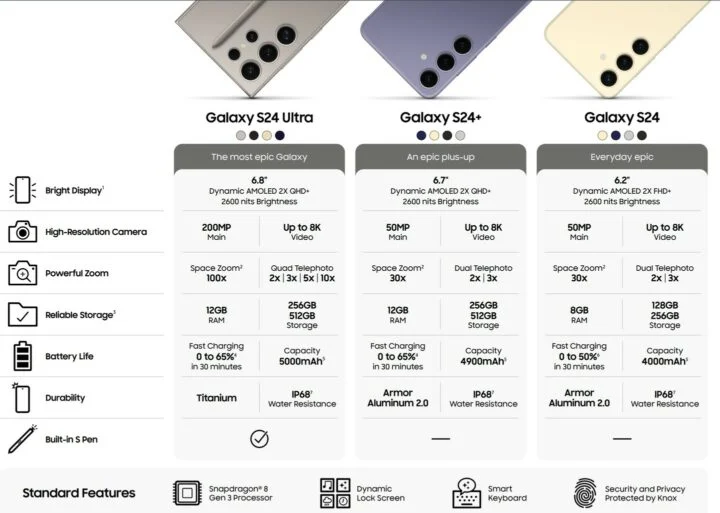
The Galaxy S24 is rumoured to house 8 GB of RAM starting at 128 GB, while the S24+ may house 12 GB of RAM. Respectively, the phones will carry a 4,000 mAh and 4,900 mAh cell. The Galaxy S24+ will house the same SoC as the Ultra – Snapdragon 8 Gen 3 – while the Galaxy S24 base model will carry an Exynos 2400 in some European markets and a Snapdragon 8 Gen 3 in the US.
Galaxy S24 launch event to happen on January 17, 2024, in the US
Leakster Evan Blass has published an image on X (formerly Twitter) that reveals the Galaxy S24 launch event’s date. According to the leaked image, the next Galaxy Unpacked event will be held on January 18, 2024, at 3:00 AM (1 PM EST/6 PM GMT/11:30 PM IST, January 17). The image also says, “Galaxy AI is coming.” Galaxy AI refers to the suite of AI-powered features that will debut with the Galaxy S24 series. The sparkles emoji animation (✨) on the invite is similar to Google Bard, which may mean that Google Bard-like features are coming to Galaxy S24 series smartphones.
Moreover, the model numbers of the carrier-locked and factory-unlocked versions of the Galaxy S24, Galaxy S24+, and Galaxy S24 Ultra were spotted on AT&T’s website. You can view them in the image embedded below.
Galaxy S24 Locked: SM-S921U
Galaxy S24 Unlocked: SM-S921U1
Galaxy S24+ Locked: SM-S926U
Galaxy S24+ Unlocked: SM-S926U1
Galaxy S24 Ultra Locked: SM-S928U
Galaxy S24 Ultra Unlocked: SM-S928U1
Galaxy S24 series to feature Galaxy AI with several AI features
AI will likely be the most important talking point of the Galaxy S24 series. Powered by the Exynos 2400 or the Snapdragon 8 Gen 3, both of which have on-device AI processing capabilities, Galaxy S24 series phones are expected to offer several AI features, including real-time language translation during calls, voice-to-text for up to 10 people in voice recordings, text conversion and summarization in Samsung Notes for both typed and handwritten text, image expansion, wallpaper generation, and more.
The Galaxy S24, Galaxy S24+, and Galaxy S24 Ultra have OLED screens with a 120Hz refresh rate, up to 2,600 nits peak brightness, and Gorilla Glass Armor. The Galaxy S24 and the Galaxy S24+ have aluminum frames, while the Galaxy S24 Ultra has a titanium frame. All three phones have an IP68 rating, an under-display fingerprint reader, Samsung Knox, Samsung Pay, and Wireless DeX. The Galaxy S24 Ultra also has a bundled S Pen.
The Galaxy A34 is here and is doing its best to continue building on top of a successful value formula. The A34 is not unlike the A33 5G before it, but there are a few noteworthy differences.
The A34 has grown noticeably. It now has a 6.6-inch diagonal, up from 6.4 inches in last year’s model, and it’s now got a larger and heavier body. This means the A34 is now bigger even than the current Galaxy A54.
The display on the new A34 is not only bigger but is now also faster at a 120Hz refresh rate. It is also shorter and wider at a 19.5:9 aspect ratio with smaller bezels.
Another notable change is the chipset. Instead of relying on an in-house Exynos chipset like last year, Samsung went for a MediaTek Dimensity 1080 chip this time. That’s one interesting development, given that the Galaxy A54 did get a new Samsung Exynos 1380 chip.
Disclaimer. We can not guarantee that the information on this page is 100% correct.
Aside from these changes, the Galaxy A34 makes sure to stick closely to an already-established formula without major deviations. Some important specs highlights still include an IP67 ingress protection rating and a stereo speaker setup. The Galaxy A34 also retains its large 5,000 mAh battery with 25W fast charging. Its camera looks mostly unchanged from last year, with a 48MP main camera, 8MP ultrawide, a 5MP macro cam and a 13MP selfie. No depth sensor this time around, though.
So, that’s the Galaxy A34 in a nutshell. The question now is whether it is as good as its predecessor and good value in general. Join us on the following pages as we try to find that out.
Unboxing
The Galaxy A34 comes in a thin two-piece cardboard box like its predecessor.
Samsung does not include a charger with the A34. That’s not exactly a new development, but one that still deserves mention, especially in the midrange.
You do still get a USB Type-C to Type-C cable in the box inside the thin paper compartment. The cable is compatible with Samsung‘s 25W fast charging, so that bit is covered.
Alternatives
The Galaxy A34 has a pretty reasonable launch MSRP of right around €400/INR 30,999/KRW499,400. That would be for a base 128GB 6GB RAM unit. As you can probably imagine, there is no shortage of competition in this price bracket.
An instantly viable option would be to consider an alternative Samsung device. While the Galaxy A52s 5G remains viable and a favorite of ours for its superior chipset, it is getting on in age at this point, and we would rather go for the Galaxy A53 5G instead. But only if you find a good deal on it since it is not decidedly any better specs-wise than the A34. It does offer a higher-resolution camera setup with arguably slightly better EIS, but that’s about it. And on the flip side, you will have to settle for briefer software support since it is a 2022 model.
One line that instantly comes to mind is Xiaomi’s Redmi Note 12. It has become fairly confusing with all of the models being released under it, but that should be okay with potential buyers since there is a lot of value to be had. The vanilla Redmi Note 12 is one option that can save you quite a big chunk of change since it retails for under €300. The Redmi Note 12 Turbo is another very popular device in our database that deserves a mention. It might, however, be harder to find at retailers. Hence, we are going to recommend the Redmi Note 12 Pro, which we have already reviewed. For a little over €300, it delivers features like IP53 ingress protection, Gorilla Glass 5 on the front, stereo speakers, a large 5,000 mAh battery with 67W charging, 6.67-inch, 10-bit, 120Hz, Dolby Vision and HDR10+ certified OLED display and a versatile camera system with a 50MP OIS snapper at the helm.
Samsung Galaxy A53 5G • Xiaomi Redmi Note 12 Pro • vivo V27 • Google Pixel 6a
The vivo V27 is another interesting direct competitor to the Galaxy A34. Retailing for about as much, it offers a 10-bit, HDR10+ certified display, a superior Dimensity 7200 chipset with more RAM (8GB) in its base tier and a more versatile camera setup, especially when it comes to video capture, where the V27 has gyro-EIS and 4K@60fps recording. Its 50MP selfie cam also has autofocus and a pair of front-facing LED flash modules, making the V27 a selfie powerhouse. The slightly smaller 4,600 mAh battery on the vivo is also capable of much faster 66W charging. On the flip side, however, you will be giving up on ingress protection by going with the vivo V27.
Why not consider the Google Pixel 6a as well? It offers a premium build with an aluminum frame and Gorilla Glass 3 front, complete with IP67 ingress protection, just like the Galaxy A34. It also comes packing stereo speakers and an HDR OLED panel. Though one that is just 60Hz and notably smaller. While far from a powerhouse, Google’s custom Tensor chipset also offers some nice features like 4K@60fps video capture and Wi-Fi 6e. The main camera on the Pixel 6a also comes with OIS, dual-pixel PDAF and pixel shift technology. It is also backed up by Google’s computational photography algorithms. And last but not least, there is the potential appeal of AOSP software, which is a major draw for many buyers.
The verdict
The Galaxy A34 is a great mid-range device. No question about that. It is not too dissimilar from its predecessor, which is frankly a good thing. Certain staples of the model are here to stay, like the IP67 ingress protection rating, the stereo speakers and the large battery.
This year, in particular, the A34 has grown considerably. With a 6.6-inch panel, it is now bigger than both its predecessor and the Galaxy A54. The new display is 120Hz as well, which is a nice little upgrade over last year’s 90Hz. Even though the A34 lacks automatic refresh rate switching, we still appreciate the jump-up in smoothness. Add the excellent maximum brightness to the mix, and the A34 manages to almost match the display of its more-expensive A54 sans the HDR capabilities.
The chipset choice on the Galaxy A34 is also seemingly working in its favor. While the new Samsung Exynos 1380 does manage to offer a bit higher performance on the A54, the Dimensity 1080 inside the Galaxy A34 holds its own. Plus, it offers great power efficiency, contributing towards the excellent battery life of the A34.
The Galaxy A34 doesn’t improve much over its A33 5G predecessor in the camera department, but it offers a very well-rounded mid-range camera experience. The triple main camera setup is versatile, too.
Struggling to find any major faults with the Galaxy A34. It is an excellent device that deserves plenty of praise and a hearty recommendation.
Pros
IP67-rated design, attractive & sturdy design.
Larger and brighter 120Hz AMOLED screen.
Excellent battery life.
Stereo speakers with good quality.
Latest Android and One UI.
Good performance for this price range and perfect thermal behavior.
Great photo and video quality, lossless 2x zoom, great selfie photos&videos.
Samsung has officially launched its Android 14 update, One UI 6, with new features, updated design, and more. Here’s everything that’s new, a list of Samsung Galaxy devices getting Android 14, and everything else you’ll need to know.
What’s new in Android 14 on Samsung Galaxy?
Android 14 is, in itself, a not-so-major update, but it does bring some key changes to the world’s most popular smartphone operating system. Those changes, which we’ve previously detailed, include additions such as support for UltraHDR, improvements to the share menu, lockscreen changes, official support for flash notifications, and more.
Many of the features new on Pixel phones, though, have been in place already on Samsung smartphones, such as the new lockscreens. So what’s new on Galaxy?
One UI 6 is Samsung’s latest Android skin, and built on top of Android 14 it brings some notable changes such as the new “Quick Panel” design for Quick Settings, an option to change the wallpaper based on the time of day or certain modes, expansions to the lockscreen customization options, a new camera widget, new weather widgets, as well as new emoji and a new default system font.
Samsung devices with Android 14 – The full list
On October 30, 2023, Samsung officially launched its Android 14 update to its current flagship phones, just 26 days after Google Pixel devices were updated. That’s six days after last year’s release, but much faster given Pixels were updated much earlier in 2022.
Here’s the full list of Samsung Galaxy devices that currently have Android 14.
This list will be continuously updated over the coming months with the latest additions marked in bold text. Check back regularly!
Galaxy S devices with Android 14
In October 2023, Samsung started pushing One UI 6 to the Galaxy S23, S23+, and S23 Ultra in select countries across the globe. This primarily started in Europe, but has since expanded globally including the United States. In mid-November, Samsung expanded the update to the Galaxy S22 series, as well as to the newly-released Galaxy S23 FE, but only on Exynos models, and the update has also shown up on Galaxy S21 devices.
Galaxy S23 – Available globally
Galaxy S23+ – Available globally
Galaxy S23 Ultra – Available globally
Galaxy S23 FE – Exynos models only
Galaxy S22 – Available globally
Galaxy S22+ – Available globally
Galaxy S22Ultra – Available globally
Galaxy S21 – Available in Europe
Galaxy S21+ – Available in Europe
Galaxy S21 Ultra – Available in Europe
Galaxy S21 FE – Available in Europe, US carriers
Galaxy Foldables with Android 14
On November 21, Samsung started rolling out Android 14 to its latest foldables, the Galaxy Z Fold 5 and Galaxy Z Flip 5, but only on Verizon Wireless in the US so far.
The first Galaxy A series device to get the One UI 6 update was the Galaxy A54, which picked up the update on AT&T in the US on November 21. A day later, the Galaxy A73 was updated in Iran, and the super-affordable Galaxy A34 and Galaxy A14 5G weren’t too far behind. Samsung has also since released Android 14 for the Galaxy A24 and Galaxy A53.
Galaxy A54 – Available on AT&T US
Galaxy A53 – Available in UK
Galaxy A34 – Available in Europe
Galaxy A24 – Available in Middle East, North Africa
Galaxy A14 – Available globally
Galaxy A73 – Available in Iran
Meanwhile, in Samsung’s Galaxy M series, the Galaxy M53 has been updated in Germany thus far.
Galaxy M53 – Available in Germany
Galaxy Tablets with Android 14
On November 22, Samsung released its first Android 14 update for a tablet, with the Galaxy Tab S9 series now eligible to be updated in most countries, as is the Galaxy Tab S8 series in select regions.
In December, Samsung has also released the One UI 6 update for its newest tablets, the Galaxy Tab S9 FE and Tab S9+ FE, as well as expanding it to other regions on Tab S8.
Galaxy Tab S9 – Available in Europe, US, Canada
Galaxy Tab S9+ – Available in Europe, US, Canada
Galaxy Tab S9 Ultra – Available in Europe, US, Canada
Galaxy Tab S9 FE – Available in Europe
Galaxy Tab S9+ FE – Available in Europe
Galaxy Tab S8 – Available in Europe, US, Korea
Galaxy Tab S8+ – Available in Europe, US, Korea
Galaxy Tab S8 Ultra – Available in Europe, US, Korea
Will my Galaxy device get Android 14?
Of course, not every Samsung smartphone or tablet will get Android 14. The update is being provided in line with Samsung’s current update policy. That means any flagship released since 2021 is eligible, as they all have at least four major Android OS updates. The 2020-released Galaxy S20 series, Galaxy Note 20 series, Galaxy Z Fold 2, and Galaxy Z Flip/5G however, will not be updated as Samsung has confirmed following a slip-up on the company’s part.
Generally speaking, any Samsung smartphone or tablet released in the past two years will be updated to Android 14. For slightly older devices, the update will still be available, but only to the more expensive hardware such as the Galaxy S, Galaxy Z, and Galaxy Tab S lineups.
Samsung Android 14 update schedule
The state of Samsung’s official schedule for Android 14 and One UI 6 updates has been a little hit or miss, with one schedule being removed early on. But, in November, the company posted a pretty official-looking schedule to its Samsung Members app in some countries, which gives us a good idea of what to expect.
The list below is based on Samsung’s official Android 14 schedule, and we’re constantly updating it as new devices are updated.
If last year’s Android 13 update is anything to go by, Samsung will likely blow through its core lineup well before 2024 rings in.
After a week off, Samsung is expanding its Android 14 update yet again, with OTAs hitting several Galaxy A devices as well as the Galaxy Tab S9 FE and Galaxy S21 FE.
Samsung has already launched Android 14 and One UI 6 for over a dozen devices, with more and more to come. This week that includes several more affordable devices, starting with the recently launched Galaxy Tab S9 FE.
The Galaxy Tab S9 FE series is seeing updates across both the smaller and larger Tab S9+ FE models, but only in Europe so far. Cellular models and other regions are sure to follow in the weeks to come.
Meanwhile, Samsung is giving another Fan Edition device a boost with Android 14, specifically with the Galaxy S21 FE getting One UI 6 this week. The update has appeared on the Verizon-specific Galaxy S21 FE in the US, with unlocked models and other regions likely around the corner as well.
Also, a bunch of Galaxy A devices are being updated. The Galaxy A52s is being updated in select European countries, as is the Galaxy A33. Following its 5G sibling getting the update in recent weeks, too, the Galaxy A14 LTE is now getting One UI 6 in Kazakhstan.
Samsung‘s journey toward updating all eligible Galaxy devices to One UI 6.0 continues, and the company has just added two new tablets to the list. The Galaxy Tab S9 FE and Tab S9 FE+ are now getting One UI 6.0.
The Android 14-based update is available for the Fan Edition tablets in Europe. Users can identify the update by firmware versions X516BXXU1BWK9 and X616BXXU1BWK9. The new release includes the November 2023 security patch.
The Galaxy Tab S9 FE and Tab S9 FE+ are Samsung’s first Fan Edition tablets in more than two years. They went on sale in October with Android 13 and One UI 5.1 out of the box, and One UI 6.0 is the first major OS update of the promised four.
The Fan Edition tablets barely got any use out of One UI 5.1
Samsung released its new tablets at an awkward moment in time, when One UI 5.1 was on its way out, and One UI 6.0 was readying for a widespread public release. It almost feels like one of the four promised OS upgrades went to waste. Nevertheless, One UI 6.0 is here and should enable an improved user experience.
One UI 6.0 brings better multi-tasking and redesigns some UI elements, such as the quick toggle area. Many Samsung apps have new features or slight UI enhancements.
If you own the Galaxy Tab S9 FE or Tab S9 FE+ in Europe, you should be able to download the One UI 6.0 update via the Settings app on the tablet. Navigate to “Software update” and tap “Download and install.” You can also download the official firmware files from our website and install the update manually using a PC.
AI has taken over just about every new tech product, and Samsung is officially joining in with “Gauss,” a generative AI model that will run on-device starting with the Galaxy S24 series.
Announced today in Korea, Samsung “Gauss” is a generative AI model that, as reported by The Korea Times, will launch the Galaxy S24 series in the “first half of 2024. The AI model was developed by Samsung Research and includes image generation alongside typical text generation, with use cases including editing photos, composing emails, and summarizing documents.
Samsung explains that the AI would be used for “core functions.”
We plan to apply generative AI to core functions used by customers daily. This is aimed at providing more meaningful and innovative experiences based on individual usage patterns and preferences starting from 2024.
The name “Gauss,” Samsung explains in a blog post, is inspired by Carl Friedrich Gauss, the “legendary mathematician who established normal distribution theory, the backbone of machine learning and AI.”
Where Samsung’s generative AI differs from the likes of Google Bard is in that, at least in part, it can run on-device for tasks such as summarizing small portions of text, correcting grammar, and more. “Gauss” would also be applied outside of smartphones, with Samsung saying it “will be expanded to a variety of Samsung product applications to provide new user experience in the near future.”
Samsung is expected to put a heavy focus on AI as a selling point of the Galaxy S24 series, with its own Exynos 2400 chip as well as the “Snapdragon 8 Gen 3 for Galaxy” touting stronger AI capabilities. This also comes after Google’s debut of the Pixel 8 series, which ships with a large list of AI features and more on the way. Many of Google’s AI features run through the cloud, but the company is set to expand on-device offerings.
The Samsung Galaxy S24 series is expected to debut in mid-January 2024.
Samsung Galaxy S24 series reportedly launches on January 18
Samsung might be moving up the release date of its next flagship, the Galaxy S24 series, to January of next year.
Over the past several years, Samsung’s launch events for Galaxy S flagships have moved around a lot. Prior to the COVID-19 pandemic, the launch events were largely in March, but have creeped up earlier in the year every year. Following last year’s Galaxy S23 series debuting in mid-February 2023, the Galaxy S24 series will apparently move into the earliest release date yet.
Ice Universe reports on Weibo that Samsung is aiming for January 18 as the release date (or at least the rough timing for the launch event) for the Galaxy S24 series. That’s a month earlier than last year, and a couple of weeks earlier than the last January launch for Samsung, the Galaxy S21 series.
Why the early date? Really, that’s not clear, but it is worth remembering that Samsung moved up the launch of the Galaxy Z Fold 5 and Galaxy Z Flip 5 by a few weeks to land in July, where the company’s foldables have traditionally debuted in August. Notably, this early date still doesn’t put Samsung within the timing of the annual Consumer Electronics Show (CES) in Las Vegas, which in 2024 will run from January 9 through January 12, but that doesn’t really come as a surprise – CES hasn’t really ever been about phones.
Translated Weibo post
Also rumored to launch with the Galaxy S24 series is the “Galaxy Ring” health tracker, and the event also presents Samsung with a fresh opportunity to show off its anticipated XR headset.
One UI 6 is finally available for some users in full, bringing a list of changes to the OS. One change is the addition of a new security tool called “Auto Blocker” which acts as additional security for Samsung Galaxy phones.
According to Samsung, Auto Blocker is intended to be somewhat of an expansion of additional and optional security tools at your disposal. Heading into the settings with bring you to a new page with a suite of options that are entirely a matter of preference, similar to how some would use malware protection on a computer.
One security option on this page is the familiar “Block app installation from unauthorized sources” feature. Normally, that option would be on a different page, but has since moved with One UI 6/ The option is now also off by default, which is a big change from previous versions of One UI where the first time users tried to sideload an app, it was blocked.
Now, users can sideload as much as they want with the knowledge that it’s not always entirely safe. The option will act as a prevention tool whenever apps are not being sideloaded intentionally.
Auto Blocker also brings app security checks to keep third-party programs in check, as well as a blocker for USB commands. Turning Samsung’s Auto Blocker on with the toggle at the top of that page looks to enable all three of these features at the same time. Below is an “Advanced” section with more tools that can be turned on and off individually, like Message Guard, to protect users from Zero Click attacks and malicious code in direct messages.
Auto Blocker is available for every Samsung Galaxy device running One UI 6, which is rolling out globally now.
Samsung confirms a list of over 20 Galaxy smartphones that will get Android 14
Earlier today Samsung officially announced that its Android 14 update is now rolling out to the Galaxy S23 series, and the company has also confirmed the first few Galaxy smartphones that will be eligible for Android 14 in the coming months.
Android 14 for Samsung devices comes in the form of One UI 6.0, an update that delivers platform improvements from Google as well as updates to Samsung’s skin. Those updates include a bunch of new camera features, updated emoji, and more. But, to start, it’s all exclusive to the Galaxy S23 series which is getting the update now.
What comes next?
According to a small list that Samsung has provided, other Galaxy smartphones getting Android 14 will begin with the past few years of flagships, foldables, and a couple of A-Series devices.
In talking about the new features coming to “Enhance-X,” Samsung also confirmed over 20 devices that will be updated to One UI 6.0, many of which come as no surprise. That initial list includes devices released in 2020 and newer, starting with Galaxy S series devices.
Galaxy S23 series
Galaxy S22 series
Galaxy S21 series
Galaxy S20 series
Beyond that, almost every Samsung foldable is going to get One UI 6.0 except for the original Galaxy Fold.
Galaxy Z Fold 5
Galaxy Z Fold 4
Galaxy Z Fold 3
Galaxy Z Fold 2
Galaxy Z Flip 5
Galaxy Z Flip 4
Galaxy Z Flip 3
Galaxy Z Flip 5G
Galaxy Z Flip
And, finally, Samsung has also confirmed that Galaxy Note 20, Galaxy A54, and Galaxy A53 will all be eligible, as well as some M-series devices.
Galaxy Note 20 series
Galaxy A54
Galaxy A53
Galaxy A34
Galaxy A33
Galaxy M54
Galaxy M53
Galaxy M34
Galaxy M33
Update: To address the elephant in the room, the Galaxy S20 series, Note 20 series, Flip/5G, and Fold 2 were not expected to get One UI 6.0, but Samsung’s wording here is pretty clear. The quote below is a footnote on Samsung’s blog post and refers to a new camera feature which requires One UI 6.0 or higher, meaning that the devices listed would need to be getting the update.
Available on Galaxy S23 series, S22 series, S21 series, S20 series, Note20 series, Z Fold5, Z Flip5, Z Fold4, Z Flip4, Z Fold3, Z Flip3, Z Fold2, Z Flip 5G and Z Flip LTE, A54, A53, A34, A33, M54, M53, M34, M33 devices operating on One UI 6.0 or above.
We have reached out to Samsung for comment on the status of 2020 device updates.
These devices will all get One UI 6.0 in time, and likely pretty quickly if last year’s Android 13 rollout serves as any indication. For now, though, we’re still waiting on Samsung to release Android 14 to the Galaxy S23 series in the US, which is coming “soon.”
This initial list, notably, is by no means complete. Samsung’s current policy for software updates means that many more smartphones and tablets will be updated to Android 14, but the company has not officially confirmed anything outside of this initial list.
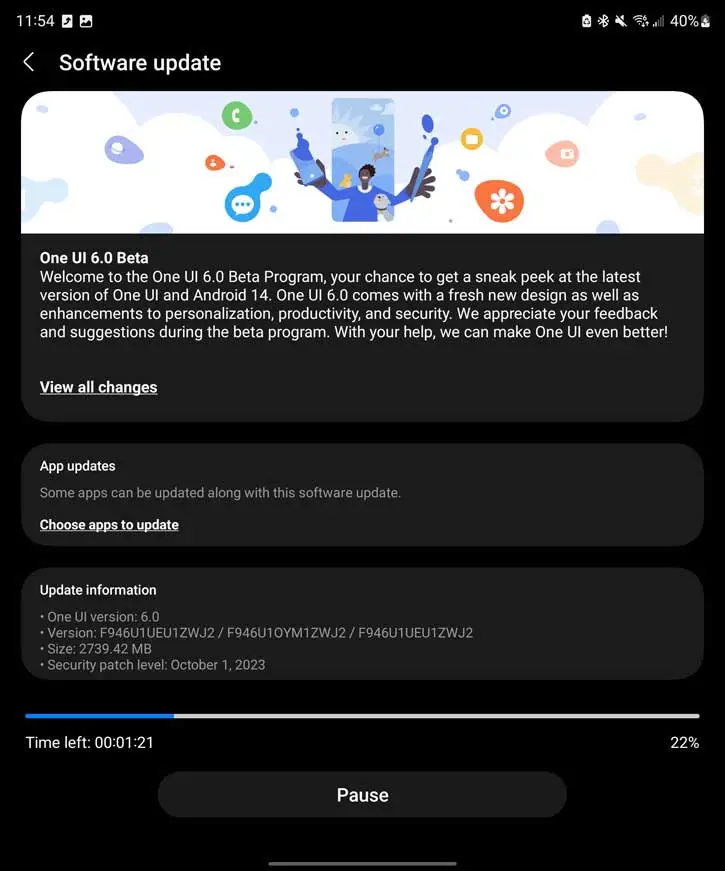
After being next in line for quite some time, the Galaxy Z Fold 5 and Flip 5 are both eligible for the One UI 6 beta.
One UI 6 beta has been available for well over a month. Galaxy lineups like the S23 series and even some A series devices have already been included in that beta, which brings a refinement of the previous version with general improvements made in Android 14.
For some time after the initial release, it was thought that the Galaxy Z Fold 5 and Z Flip 5 would see One UI 6 beta sooner than others, but that hasn’t been the case. At least, until today.
One UI 6 for the Fold 5 has officially rolled out first (via SamMobile). The beta for the Flip 5 was later spotted on Reddit. The beta rollout looks to be coming to the Fold 5 in the US and India, whereas it isn’t entirely clear where the Flip 5 is seeing the new beta version. We were able to pull the beta card up in the Members app on the Fold 5.
Both devices will see One UI 6 beta version 1, which comes with the version number F946BXXU1ZWJ2 for the Fold 5 and F73U1EU1ZWJ2 for the Flip 5. Each also includes the October security patch.
Samsung hasn’t detailed a timeframe for other phones in its foldable lineup. Considering it took this long to bring the One UI 6 beta to the Fold 5 and Flip 5, it could be a little longer. Even still, One UI 6’s stable release isn’t far away.
Samsung has been continually expanding both the A-series and the M-series lineup of smartphones. They might compete in the same pricing but the M-series is different as this one packs different specs inside also this smartphone series is online-only. Today, we’re gonna review the Samsung Galaxy M23 5G, one of their most affordable smartphones with 5G inside.
Disclaimer. We can not guarantee that the information on this page is 100% correct.
Design and construction
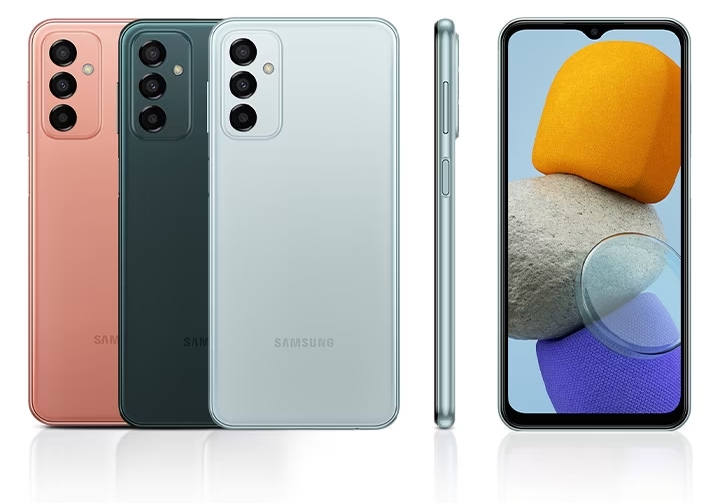
The one that we got for review comes in Green and I do like the shade that they used here as it doesn’t look cheap and despite having a plastic build on the smartphone, I do like the feel of it when I’m holding the smartphone.
Speaking of holding the smartphone, the ergonomics are pretty good as we got here the curves on the side and it’s also light to the hand. However, the frame of this one is also plastic which makes it less premium just like the A-series smartphones.
On the right, the smartphone comes with the power button and also the volume rocker and the power button of the smartphone also serves as the fingerprint scanner for security.
For the ports, the smartphone comes with USB-C port, and it also supports up to 25W of fast charging which might not be the fastest in the market, but it will do its job definitely along with the 5000mAh battery of the smartphone.
As for the battery, they did a pretty good job as well as we’re getting a long battery life and it can definitely last up to a day or two depending on your usage. But as for me, I was only able to use the smartphone for a single day due to heavy usage. But it still is a heavyweight in the battery series. In our PC Mark Work 2.0 Battery test, we got a score of 11 hours and 57 minutes which is great
Software and performance
The Samsung Galaxy M23 5G runs on the latest One UI 4.1 based on Android 12 and I can say that this one does have a smooth and carefree UI. Everything was smooth and the colors and icons on the smartphone were really fine and easy to the eyes. Thankfully, there were less apps that are preinstalled on the smartphone.
For the performance, the Samsung Galaxy M23 5G comes with Snapdragon 750 5G. It’s not new and we’ve seen this before on other smartphones from Samsung as well and it was initially pegged for midrangers to have a 5G connectivity inside and while the chipset might fall a little bit behind the Snapdragon 695, the Snapdragon 750 5G is still a very decent one for its affordable price tag.
Verdict
The Samsung Galaxy M23 5G is a very decent smartphone from the Korean company. While there are some drawbacks including the lack of the AMOLED display, the performance that we got on the smartphone is decent enough. We got 5G inside and the camera of the smartphone is decent enough to be used for everyday usage.
The battery of the smartphone is pretty good as well and the competitive pricing of this one makes it more interesting.
What do you improve on a phone that’s already the default option in its class and competition is either very region-limited or, if widely available, just not popular enough to be a serious threat? Well, not a lot, Samsung says with its Galaxy Z Flip5.
The latest-gen foldables from the Korean company tread carefully, but the Flip does still feel like the more meaningful generational step up. That’s mostly due to the fact that the clamshell is treated to a much-needed cover screen upgrade, the new larger unit greatly improving usefulness (with some caveats). The other major development is in the hinge design, so the Flip5 finally folds flat, as opposed to forming an edge. And that’s mostly it.
Sure, the Flip5 comes with a new chipset – the Snapdragon 8 Gen 2 goes without saying. The base storage has been doubled to 256GB, which is also a most welcome change. Minor tweaks can be spotted in the camera system, but it remains essentially the same. Similarly, the internal display may have gotten a brightness boost, but that too is hardly a groundbreaking update.
But perhaps expectations for disruptive changes are unrealistic, and the Z Flip5 brings just the right amount of differences and improvements to make it a worthy successor. That’s what we’ll be trying to find out on the following pages.
Disclaimer. We can not guarantee that the information on this page is 100% correct.
Samsung Galaxy Z Flip5 unboxing
The Z Flip5’s retail package packs no surprises. The half-height black box features a small stylized likeness of the handset, color-matched to the actual unit inside.
The list of accessories included is predictably short, too. After the removal of the charger from the box with the S21 generation, Galaxies typically ship with just a USB-C cable and nothing else. Well, that, and a SIM eject pin, of course. But let’s shift our focus where it belongs – on to the handset.
Competition
We kicked this review off, stating that the Galaxy Z Flip5 has no real competition, but that’s only sort of true. While it is, indeed, the go-to option if you’re out for a clamshell foldable, the breed does offer alternatives. And depending on what got you zeroing in on the small bendy Samsung in the first place, you might find what you’re looking for in a conventional bar phone.
The Z Flip5 technically starts at $1000/€1200, but still-ongoing pre-order discounts, bundles, and promotions can sweeten the deal. Indeed, when you consider that a Z Flip4 now goes for a little over half that, it’s hard to swallow paying the full MSRP for a Z Flip5. Admittedly, the new cover display is a lot more useful, the gapless design looks nicer, the extra battery life is appreciated, and the cameras are a tiny bit better if still the same. But the last generation is about as cool and is almost as good in most respects. Perhaps the Flip4 could still build a case for itself, with price at the foundation.
Old one vs. New one
The Razr 40 Ultra (or Razr+ 2023 in North America), on the other hand, won’t be saving you any cash. It does have some pros over the Galaxy, though – for example, larger, higher-refresh rate displays in and out, plus the fact that the cover one is fancier-looking and the internal one has a smoother crease. The Razr arguably has a better software implementation for the outer display too, if you want to run real apps there. The Ultra’s ultrawide is more versatile thanks to its autofocusing capability, but that’s about all the camera advantages the Moto has – we’d pick the Galaxy for cameraphone use. The Galaxy’s IPX8 water resistance is also a solid argument in its favor, as is the beefier chipset and, believe it or not, the faster charging.
That just about exhausts the list of globally available high-end clamshell foldables, but there are a couple of other options from China that you could entertain getting – conveniently, each of them called Flip.
The vivo X Flip has unmatched battery life in the class, and is quite likely the best camera system on a small-size foldable. Those two points might make it worthwhile to go through the hoops needed for importing one from China, though unforeseeable issues in long-term use may end up ruining the experience. The Find N2 Flip sounds less enticing. White it does snatch a victory in battery life, the Find’s camera isn’t as capable as the Galaxy’s, and we reckon it’s not worth the trouble.
Which then brings us to the plain old flat non-bendable phones – if you’re after a Z Flip5, maybe you just don’t like to stuff large handsets in your pockets, and a foldable is only one of the ways to avoid that. Another road to that destination is the Galaxy S23 – Samsung’s smallest-size conventional high-end phone. You’ll get everything that’s good about the Flip, plus a slightly better zoom camera, a bit longer battery life, and DeX. And money in the bank too – the S23 starts at around €650, but you can splurge and get the 256GB version for €100 more, and be far from the Flip5’s price tag.
Samsung Galaxy Z Flip4 • Motorola Razr 40 Ultra • vivo X Flip • Oppo Find N2 Flip • Samsung Galaxy S23
Verdict
Samsung may not be having the leading market share in the Chinese foldable scene, but we can’t imagine the bendy Galaxies are anything close to being threatened elsewhere. In that sense, Samsung didn’t have to bring dramatic improvements to this year’s lineup, so they didn’t.
That said, the Z Flip5, in particular, comes with two meaningful and significant upgrades. The gapless folding design is finally here, so the handset no longer looks like a prototype – it’s sexier this way but also simply more compact. The other thing is the cover display – the new one is large enough to actually be useful for a change.
Alongside those two major developments, we’re getting a handful of small ones that add up. The new chipset deserves a mention even if it was a given, but it’s also at least partially responsible for the improved battery life compared to the previous generation – it has to be, since battery capacity has remained the same. Similarly, the camera hardware is unchanged, yet the 5 takes better pictures than the 4.
The Galaxy Flips have been steadily evolving, and with the Z Flip5, Samsung is approaching that point where it would need to do something big soon. For this year, however, we think a cover display and hinge will do. We’d be happy recommending the Galaxy Z Flip5 – just be sure to either grab one of the early promos or wait a couple of months for the inevitable price drops.
Pros
Finally – gapless design.
IPX8-rated for water resistance.
Large and useful cover display with potential for further software tweaks.
While the Pixel 6 ushered in three years of major Android OS version updates and an additional two for security patches, that’s still nowhere near the longevity of the iPhone. Google hopes to change that on the Pixel 8 and 8 Pro with noticeably more OS updates.
Looking at the mobile Android landscape, three years of OS updates – which was also the case on Qualcomm-powered Pixel phones from 2017-2021 – is less than Samsung’s promise of four, which started last year with the Galaxy S21, S22, Flip 3, and Fold 3 and continued through devices released this year, including some of the company’s more affordable releases.
Other Android-powered devices like the Nvidia Shield are up to eight years of updates in large part because Nvidia wholly controls the (aging) Tegra X1 and X1+ chips. Google is moving in that direction with Tensor, though the first three generations of Tensor are heavily based on Samsung Exynos.
Google touts “5 years of Pixel updates” on existing Tensor-powered devices as, after Android 13, 14, and 15 (for example), the Pixel 6 will get two more years (24 monthly security patches) that should let you comfortably keep using your phone albeit without major operating system updates during those last two years. Of course, many new features on Android are delivered via app updates and Google Play services, so your phone will not be left too far behind.
Then there’s Apple, with the iPhone XS released in September 2018 with iOS 12 that will get iOS 17 this fall. The iPhone 6S (and 7) from 2015 is still getting security releases on iOS 15 and currently stands at just shy of 8 years of updates.
Android’s update story paling in comparison to the iPhone has been an easy knock, and Google is working to address that with the Pixel 8 and 8 Pro. We’re hearing that Google plans to competitively boost how many years of OS updates the Pixel 8 series and presumably future devices will get.
From what we’re hearing, Pixel 8’s update promise should surpass Samsung’s current policy on flagships and meaningfully match the iPhone. Of course, the devil is in the details, especially in those later years. For example, the Galaxy line has, in the past, adopted a quarterly approach towards the end. Even a bump to just five years of OS updates for Pixel would be enough and let the Google phone be at the top of the ecosystem, with anything beyond that squarely going after the iPhone’s record.
Google says last 2021 that Pixel 6 and Pixel 6 Pro stick with 3 years of major OS updates, 5 years of security
The new Pixel 6 series delivers the company’s in-house Tensor chip which is supposed to upgrade how long these phones last. While it does do that, it’s a bit disappointing to see that the Pixel 6 and Pixel 6 Pro will only get 3 years of major Android OS updates.
Confirmed to Ron Amadeo at ArsTechnica, Google says that the Pixel 6 and Pixel 6 Pro will get 3 years of major Android updates, on par with the company’s current Qualcomm-powered Pixels. That’s not to say there won’t be any upgrades past then, as Google will be offering 5 years of security updates.
We build Pixel phones to get better over time with software and feature updates, so starting with Pixel 6 and Pixel 6 Pro Pixels will now receive security updates for at least 5 years. Users will still get at least 3 years of OS updates, after which we’re committing to ensure that Pixels will stay up-to-date and secure. The frequency and categories of updates will depend on the capabilities and needs of the hardware.
On a support page, Google provides more specific dates.
While this is still a bit disappointing, it’s still in stark contrast to the rest of Google’s competition on Android. Most OEMs are hesitant to provide long-term support. Samsung, for instance, only offers a maximum of 4 years of support for its devices, and that’s a new policy that only applies to a select few devices.
Hopefully, Google will expand this policy in future generations.