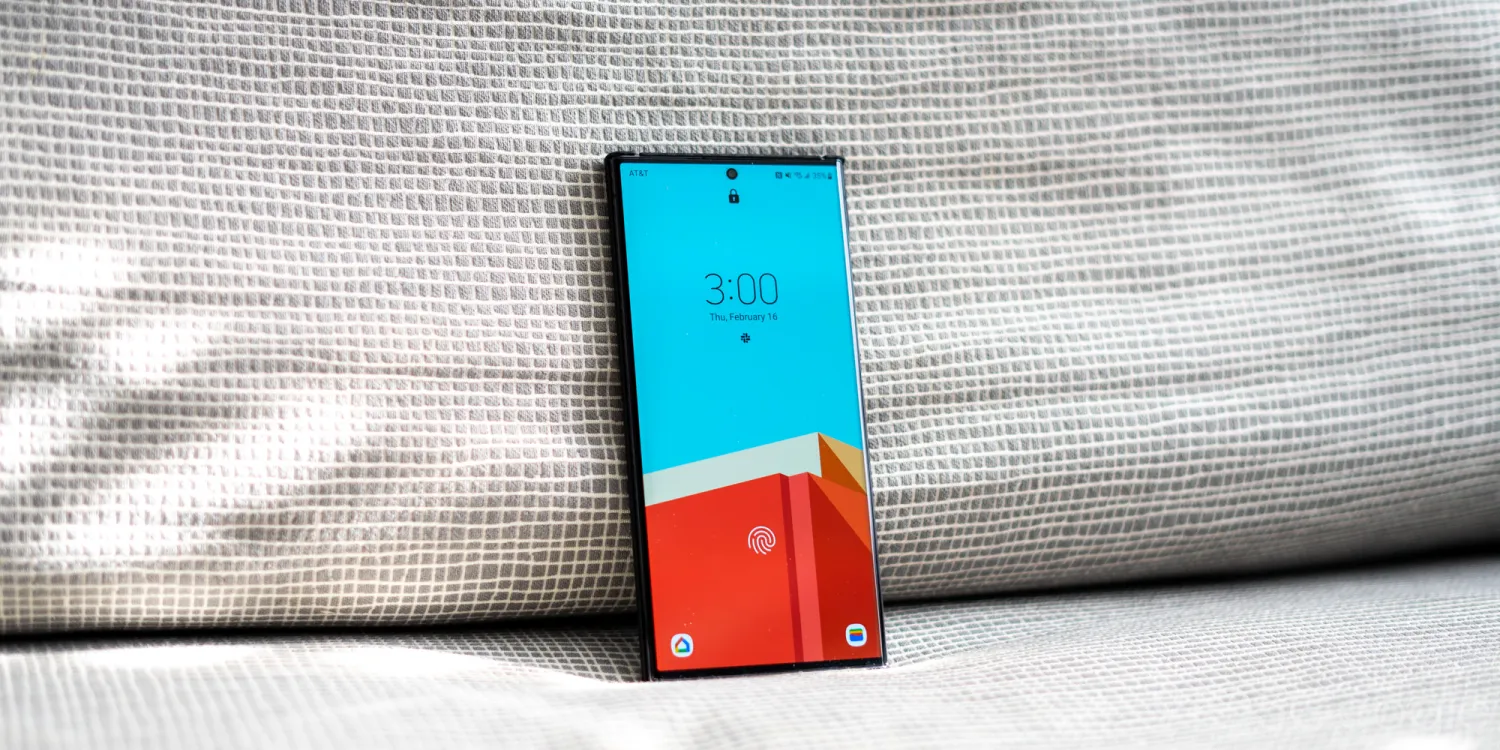
The Galaxy S23 is getting its fifth One UI 6 beta update, which could only mean One UI 6 based on Android 14 is getting closer to public release.
After a rocky start, the Galaxy S23 and a few other devices have been included in the One UI 6 beta program. So far, it’s gone through five different versions of the OS, each addressing bugs and issues common to beta versions and including new features.
Now, Samsung is releasing version 5 of the One UI 6 beta, and the Galaxy S23 is the first to see it (via SamMobile). This variant ends ZWIK and is being pushed to the Galaxy S23, S23+, and S23 Ultra – Samsung’s flagship devices.
This version of One UI 6 seems to have one purpose – fix issues introduced in previous versions. While other versions included new features, One UI 6 beta 5 only mentions hotfixes.
Bugs that have been fixed
Fixed the problem of not being able to record during a call
Fixed no touch at the bottom of the screen or ghost touch issue
Fixed the issues of stuck after entering camera, forced termination, and not being able to take pictures
Fixed the problem of not being able to use Motion Photo
Fixed infinite rebooting problem when entering Maintenance Mode
Many other improvements
Some of these fixes address experience-ending issues, like not being able to register touch input at the bottom of the screen. Another urgent fix takes on the infinite boot loop some have experienced in Maintenance Mode. The changelog seems to infer that this version brings a much more stable version of One UI 6, as the “Many other improvements” entry suggests.
This version of the One UI 6 beta was first spotted in the UK but is likely going to expand to other regions in a very short amount of time. You can keep an eye out in the Samsung Members app. A One UI 6 beta card should appear at the top if your device is eligible.
Galaxy A53 sees first One UI 6 update
As the Galaxy S23 lineup is seeing its fifth iteration of One UI 6, the Galaxy A53 is finally getting its first. We’ve seen One UI 6 make its way to the Galaxy A54 and A34, but doubling down on budget device betas with a previous generation is a great move from Samsung.
This year the company started prioritizing not only its flagship lineup but budget models as well, which make up a huge portion of the market. By requesting feedback from beta versions on these devices, it’s likely Samsung is able to round out the experience a little better for all users.
The Galaxy A53 should see the new update in the Samsung Members app under the version number A536EXXU7ZWIA.
As phones have become more and more advanced, they physically take on more components. With that, a certain phenomenon has plagued the Android market in which phones like the Pixel 7 and Samsung Galaxy S23 make rattling sounds when shaken. This would be concerning if we didn’t know why, but we do.
Of those many little parts and pieces that are secured and glued together in your device, one of the most advanced is the camera. As far as gadgets go, flagships have some of the best cameras ever to find their way inside smartphones.
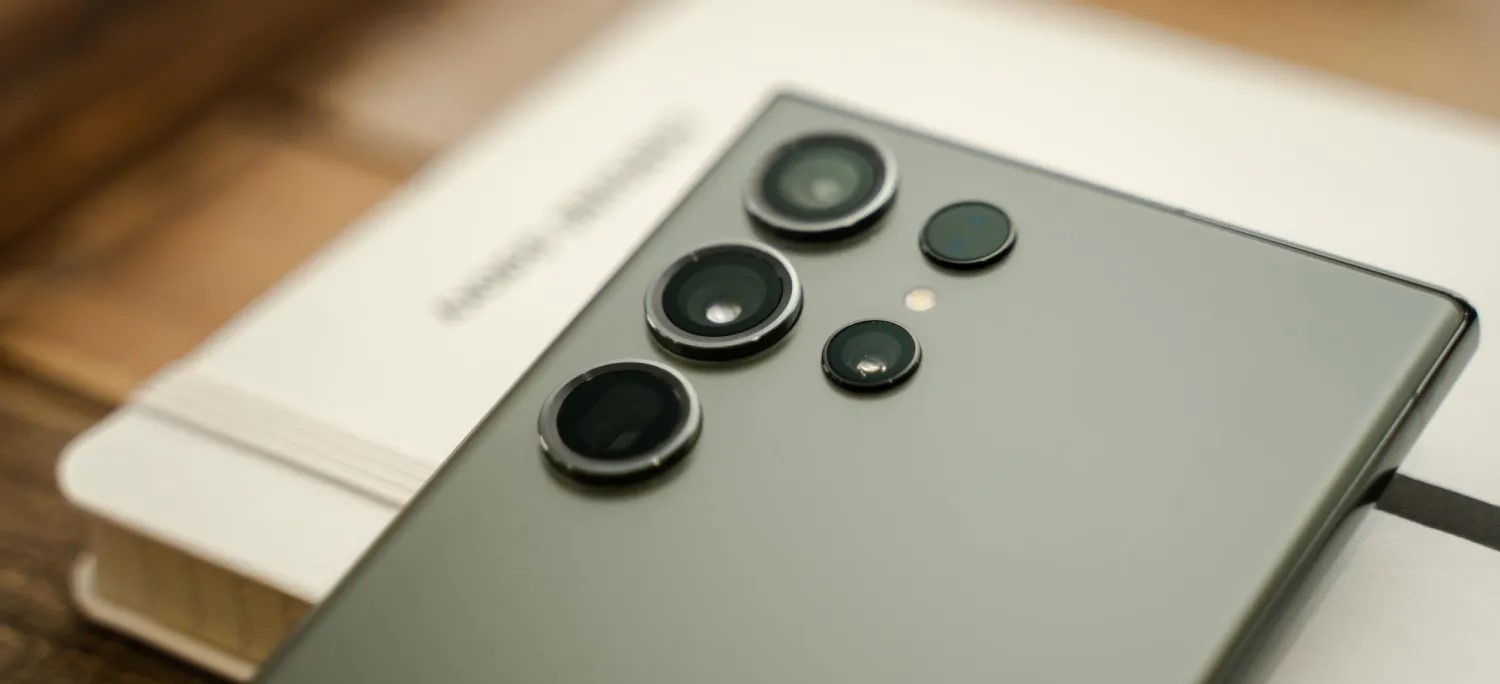
The Samsung Galaxy S23 Ultra, for example, touts a 200 MP camera sensor. Right under that set of elements and a heavy-duty sensor sits a 10 MP telephoto camera, which incorporates an even more impressive lens array. From the outside, the Galaxy S23 doesn’t look so abnormal, and the camera only seems to be a small part of the body. The actuality, however, is that the entire camera setup takes up a large proportion of the phone itself, more than most other components.
Another good example is the Pixel 6 and 7 series, which both feature a large camera bar spanning the entire width of the device. That casing is built not only to contribute to the device’s handsome design but also to protect the camera system that lies underneath. That entire bar hides much of the 50 MP sensors and robust image stabilizers. Outside of that, the rest of the phone is actually quite thin.
Here’s what every camera on the Pixel 7 Pro does
The Pixel 7 series takes a lot from its predecessor and builds on it slightly, with the biggest improvements being in the camera array – both physically and in software. This guide will take you through what the main, ultrawide, and telephoto camera on the Pixel 7 Pro does best.
The Pixel 7 has three cameras lined along the back of the device. The first is the main sensor, which takes care of your average range needs and provides you with the most detail. Next to it sits the ultrawide lens for both wide-angle shots and also the Pixel 7 Pro’s new Macro Focus mode, which we’ll touch on.
Lastly, the Pixel 7 Pro has a telephoto lens for taking shots far away from your subject. This year, the telephoto lens gains some incredible improvements, expanding its zoom capabilities by quite a margin.
When used in conjunction, the Pixel 7 Pro’s camera lineup can be quite the photography toolbelt, giving you just about anything you need to take photos anywhere.
Pixel 7 Pro’s 50 MP main camera
On a phone, your main sensor is the camera you’re going to use more often than not. It isn’t for shots with a faraway subject or even most of the time for shots with the subject close up. Rather, it’s the Goldilocks lens, providing you with just enough wiggle room to take a great photo.
On the Pixel 7 Pro, the main camera is a 50 MP sensor with an ƒ/1.85 aperture and OIS and EIS (optical image stabilization and electronic image stabilization, respectively). The 50 MP count is pretty high for a mobile lens, and it shows up well in most photos you take with the Pixel 7 Pro. Images are clear and crisp while maintaining plenty of detail. This lightens the load of the Tensor G2 chip when using tools like Photo Unblur and Magic Eraser.
The main sensor comes in at an 82-degree field of view, which is generally considered a wide lens. Even though it’s wide, it makes for a good all-around lens on the 7 Pro. Post-processing generally handles any distortion in your photos, and you’d never really notice that the main Pixel 7 Pro camera is a wide lens. One thing to note is that when zooming in to 2x, your image is cropped at 12.5 MP, rather than a full 50-megapixel count.
Pixel 7 Pro’s 12 MP ultrawide lens
Most devices on the market now come with an ultrawide lens. Its usability has been well established, especially when it comes to group shots and close-up photos of everyday objects.
On the Pixel 7 Pro, the camera array includes a 12 MP ultrawide lens, much like last year’s Google-made device. The difference here is the inclusion of autofocus in the lens and a much wider field of view at 125.8 degrees.
With that, the Pixel 7 Pro has a mode called “Macro Focus,” which allows you to turn that camera into a virtual macro lens. While it isn’t a true macro lens, the Pixel 7 Pro works hard to focus on close-up subjects and get as much detail as possible, making for some really cool-looking shots.
Pixel 7 Pro’s 48 MP telephoto lens
Perhaps the best feature of the Pixel 7 Pro is the unique telephoto lens and the heavy-lifting software behind it.
The telephoto lens comes in at 48 MP, which is just shy of what the main sensor has to offer. It has a narrow 20.6-degree field of view and can reach a 5x optical zoom. However, when combining optical and digital zoom, the Pixel 7 Pro can reach up to 30x zoom.
This year, the 48MP telephoto sensor has a new 5x optical zoom length – built from an entirely new optic layout instead of a simple sensor crop – which lets you take sharp pictures from even further away.
Impressive as it is, this feature is called Super Res Zoom, and it combines the optical performance of the lens itself and uses the Pixel 7 Pro’s Tensor G2 chip to enhance the image at great distances. Simply put, the Pixel 7 Pro will combine composite photos at different zoom rates to give you a clear photo.
Something to note is that when using the 48 MP camera at its idle 2x zoom, you’ll get full detail in that image. When moving in closer, the image becomes cropped and dives down to 12.5-megapixels. Of course, it doesn’t necessarily feel like a 12.5 MP image due to the heavy lifting Tensor does in the background.
Front-facing 10.8 MP camera
Of course, you can’t forget about the selfie camera in front of the phone. This year, the Pixel 7 Pro’s front-facing camera has a slightly lower megapixel count than last year’s device, though it won’t matter too much. The selfie camera has a 92.8-degree ultrawide field of view for just about any selfie shot you’d need. Other than that, this punch-hole camera is pretty basic.
As a whole, the camera setup on the Pixel 7 Pro works very nicely. Each camera compliments the other, and zooming in and out in the camera app on Pixel is extremely smooth. In general, the transition between each lens is more than satisfying. Together, the main sensor, ultrawide, and telephoto lens make up a great rear camera system with just about anything you might need.
What’s that rattling sound?
All that is said because it gives a little weight to the idea that the rattling sound you’re hearing in a Pixel or Samsung Galaxy phone when shaken is actually the camera. No, the sound does not mean that anything is wrong with your device. Rather than improbably loose screws or S Pens rattling around in your device, the noise is nothing but the lens and sensors within their corresponding image stabilizers.
OIS (optical image stabilizers) work in a very specific and excitable way. Built on a suspended system of shock-absorbing material, the lens or sensor is free floating. Built on the concept of absorbing the momentum of your device, a lot of that slight movement that might translate to your phone while taking pictures or recording videos is dissipated into the OIS.
Phones like the Galaxy S23 Ultra and Pixel 7 Pro have quite impressive OIS systems specifically built for telephoto lenses. With the Pixel 7 Pro hitting 30x zoom, a reliable image stabilization system is needed. When in action, that rattling sound is the sensor or lens hitting the OIS walls – its maximum extension in any direction.
Devices like the Galaxy S23 lineup and Pixel 6 and 7 series all make this rattling sound when shaken, and again, it’s completely normal. The Google Pixel 6 Pro and 7 Pro make the loudest sounds since they make use of large 48 MP telephoto lenses. The Pixel 7 Pro, in particular, houses enough hardware to facilitate 5x optical zoom, with the rest of that 30x zoom being AI-assisted.
As more devices hit the market with a focus on telephoto capabilities, there’ll be a fair share more that make sounds when shaken. Even if that is the case, you still probably shouldn’t shake them too much. The durability of OIS isn’t an exact science, and it often doesn’t seem to fail, though it’s still an internal moving piece prone to wear. Violently shaking your device just to hear the sound is probably a bad idea.
One of the best compact phones in the world just got better – the Samsung Galaxy S23 is faster, sturdier, better connected, and with more battery juice. The Galaxy S23 is still as small, lightweight and attractive as ever, and we expect it to become a fan-favorite in the compact segment.
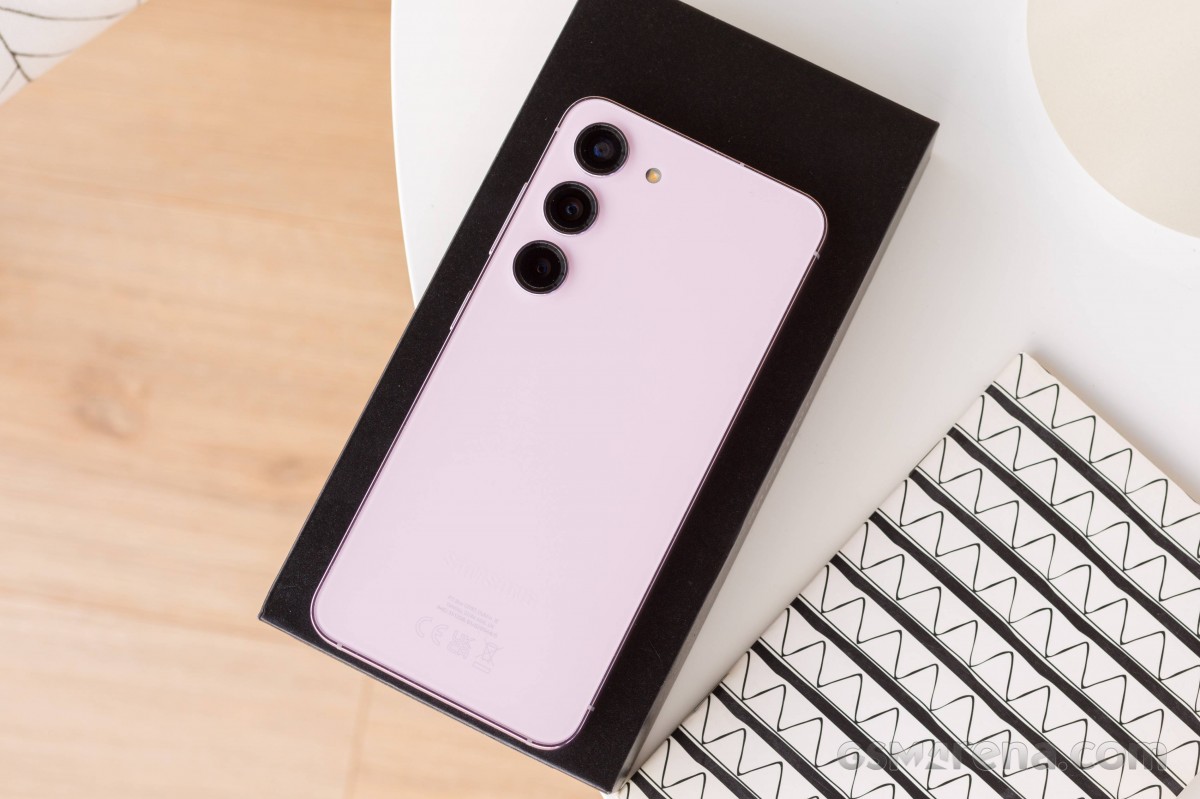
The new Galaxy S23 models introduce a refined design, and that’s the first thing you will notice. The contour-cut camera housing is no more; there are just three small rings for the lenses. Additionally, the front and rear glass panels are now made of Gorilla Glass Victus 2 sheets with improved drop resistance.
The Galaxy S23 retains the compact 6.1-inch Dynamic AMOLED 2X screen with extended 1080p resolution and dynamic 120Hz refresh rate. The peak brightness of the panel has been improved, and it’s now 1750 nits, up from 1300 nits on the Galaxy S22.
For the first time in a long time, the entire Galaxy S23 lineup uses a Snapdragon chipset, so you don’t need to import a Qualcomm-powered unit if you are not a fan of the Exynos platform (we won’t blame you). Even better, Samsung used an overclocked version exclusive to the Galaxy S23 phones with higher CPU and GPU clocks. The new models also rely on next-generation memory chips made by Samsung themselves.
The triple camera on the back has seen no improvements – the 50MP OIS primary, the 10MP 3x telephoto, and the 12MP ultrawide camera stay the same. What has been upgraded is the selfie camera – it is now 12MP and supports Super HDR, while autofocus and 4K capturing remain available.
The battery capacity has been increased by 200mAh, and it’s now 3,900mAh. The charging capabilities are the same as on the S22 – 25W wired charging, with wireless and reverse wireless options available.
Connectivity-wise, the Galaxy S23 introduces tri-band Wi-Fi with 6e support and Bluetooth 5.3. The Ultra Wideband support is still reserved for the Plus and Ultra versions.
Long story short – the Galaxy S23 is a faster version of the Galaxy S22 with a brighter screen and a larger battery. And a more beautiful design, though that is always subjective.
Disclaimer. We can not guarantee that the information on this page is 100% correct.
The Galaxy S23 is a flagship by the book; there are no two words about that – it has the build and looks, the screen, the chipset, and the cameras of a premium smartphone. The only things we consider missing are 10-bit color depth for the screen – something many high-end phones are offering, and the Ultra Wideband support – a connectivity option that would have allowed support for the SmartTag+. You can still use the regular Bluetooth-reliant SmartTags, of course.
The Samsung Galaxy S23 is a minor update over the Galaxy S22, and we doubt that many S22 owners will find enough novelties to make them upgrade. But it has more than enough new features over the Galaxy S21 and older to make it an attractive offer. Even better, it is shaping as the best compact Android phone on the market. And now it’s time to properly meet it, shall we?
Unboxing the Samsung Galaxy S23
The Galaxy S23 arrives in a thin paper box, which contains the phone itself, a USB-C cable, and a SIM ejection tool.
Samsung removed chargers and headphones from its boxes a couple of years ago, but we are glad it still provides cables (unlike Sony). And if you’ve bought a Samsung 25W charger, the one that has been available for a few years already, or any USB-C PD + PPS power adapter, you are already well prepared.
Alternative offers
Samsung has priced the Galaxy S23 at €950 for the 8/128 model and about €1,000 for the 8/256 version. Some retailers may be offering the higher-tier storage at the same price as the base one, and we do recommend getting it for the faster UFS 4.0 chip.
The compact niche, especially the compact flagship class, rarely sees new additions, and those mostly come from Samsung, Asus, Apple, and sometimes – Xiaomi. And naturally, we’d explore their most current offers.
Let’s start with the Zenfone 9 by Asus. It is €200 cheaper than the Galaxy S23 and has an identical size, but its screen is a bit smaller (5.9-inch vs. 6.1-inch), and the Zenfone runs on the Snapdragon 8+ Gen 1 chipset. The Zenfone 9 has no dedicated telephoto camera, instead, it relies on a sort of lossless zoom from its primary shooter, which may not be everyone’s cup of tea. Still, if you are after a compact flagship, and the Galaxy S23 is not in your budget, the Zenfone 9 is an excellent choice.
The Galaxy S22 price has dropped significantly and it’s not about €350 cheaper than the current S23. It has the same screen, camera department and charging capabilities, while its performance isn’t that behind either. The only thing that’s noticeably worse on the Galaxy S22 is its battery life, but then again, at €350 cheaper, we’d say that is a rather acceptable deal.
Apple’s iPhone 14 is much lighter and thinner than the iPhone 14 Pro and a good match to the Galaxy S22 because of its lightweight design. It’s a powerful phone with good battery life and top-notch performance, but it’s 60Hz OLED, and the lack of optical zoom are some big omissions, especially considering its €900 price.
The iPhone 14 Pro is 40g heavier than the Galaxy S23 – it has a more luxurious design with a stainless steel frame. It offers a better Dolby Vision display, and 2x lossless zoom in addition to the 3x optical one provided by its triple-camera setup. There are other cool features like UltraWideband support, LiDAR scanner, but, as we said, it’s heavier, and costs €350 over the Galaxy S23.
Finally, the Xiaomi 13 deserves a mention, too. It will soon hit the international markets, and it’s shaping as one of the cheapest Snapdragon 8 Gen 2 featuring smartphones with a rumored price between €700-€800. It is also among the first IP68-rated Xiaomi phones. It is slightly larger than the Galaxy S23 because of its bigger 6.36-inch Dolby Vision OLED screen, and its rear cameras are a match to Samsung‘s. The selfie department is still years behind the Galaxy’s, and that’s probably its only downside.
Asus Zenfone 9 • Samsung Galaxy S22 5G • Apple iPhone 14 • Apple iPhone 14 Pro • Xiaomi 13
Verdict
Samsung has made yet another excellent compact flagship that excels in every aspect and aces every test. The phone has an excellent 6.1-inch OLED screen with high brightness and adaptive refresh rate, the most powerful chipset on the Android market, and a superb quartet of cameras that will reliably capture whatever you put in front of their lenses.
We are glad that Samsung took the extra step and made an exclusive deal with Qualcomm for an overclocked version of the SD8G2 chip, and this will surely convince quite a few Exynos-doubting users to grab a Galaxy S23.
Throughout our review, we found that the Galaxy S23 has an excellent design with great handling experience, improved battery life and speaker quality over the Galaxy S22, it is also more powerful, too, and offers an improved camera experience thanks to faster Night Mode shooting. Things that didn’t change this year, but are still alright, are the charging speed and the camera hardware.
The Galaxy S23 has its peculiarities, too. The 128GB model uses the older UFS 3.1 storage chips. And while this year the S23+ got UWB support, it is still missing on the Galaxy S23. Then, many competitors’ displays have 10-bit or even 12-bit color depth, while the Galaxy S23 series is still stuck on standard 8-bit color. And, finally, the GPU stability is not ideal, though this is an occasional thing among phones with passive cooling solutions and top of the line chipsets.
The Galaxy S23 isn’t a major upgrade over the Galaxy S22, and we doubt many people will jump on the new generation. But we can see a lot of people using older phones chose this one for its compact design and all-around package and experience. Even better, those who chose not to get a Galaxy S because of Exynos – well, they can finally get a phone they like, with an overclocked chipset at that.
The new Galaxy S23 made our verdict quite easy this time – it’s an impressive smartphone with modern specs and capabilities. It’s a compact and lightweight phone, still priced below or around €1,000, making it much more attractive than Apple’s offers. And for all of these, the vanilla Galaxy S23 gets a big thumbs up from us!
Pros
No-nonsense sturdy and grippy design, IP68.
Outstanding OLED screen, bright and fast.
Great battery life.
Superb stereo speakers.
Top-notch performance, the fastest Android chip inside.
Excellent photo and video quality across the board.
Exciting One UI with DeX support, great connectivity options.
Cons
128GB uses UFS 3.1 instead of UFS 4.0 memory chips.
No UltraWideBand support.
No Dolby Vision or 10-bit color depth support for the screen.
The GPU is very quick to throttle under load to 60% of its max performance.
In a continued pattern, Samsung has yet again shipped its latest flagship without support for a years-old Android feature. Yet again, the Galaxy S23 series doesn’t support seamless updates.
For the sixth year in a row, Samsung has skipped out on support for seamless updates on the Galaxy S23 series. On checking our Galaxy S23 Ultra, seamless updates were reported as not available by both Inware and Treble Check, apps that check system data to report back on information such as this. We also manually checked via ADB.
Frankly, this comes as no surprise, as Samsung has shown time and time again that it clearly just doesn’t want to adopt this feature. Last year’s Galaxy S22 series also lacked the feature.
What are seamless updates? The feature, which Google introduced in 2016, allows Android to install updates in the background to then be applied in a later reboot. It’s typically slower than a regular update process, but it does provide a layer of safety for the update process as the A/B partitions can be reverted if something goes wrong.
Samsung is largely expected to skip out on seamless updates due to concerns with storage, given the feature tends to eat up extra storage. Of course, if that were the sole problem, one wonders why it’s still in place given Samsung is mostly doing away with 128GB storage tiers. Meanwhile, Samsung’s system files eat up over 50GB on our Galaxy S23 Ultra, up even more over last year’s Galaxy S22 Ultra which lost over 30GB to system files.
Meanwhile, Google is still improving on seamless updates, with information spotted late last year showing meaningful improvements to the speed of updates that should appear in future Pixel smartphones.
Why don’t Samsung devices have seamless updates?
As of late, Samsung has been on the ball in terms of releasing new OS and security updates for its newer and older Galaxy devices. While that may be the case, there is one downside to updating a Samsung Galaxy phone: no seamless updates. What does this mean, and why doesn’t the OEM make use of this method? Let’s take a closer look.
What are seamless updates?
For most modern Android devices – excluding Samsung Galaxy devices – A/B seamless updates mean one simple thing: uninterrupted use during a software update.
For instance, when a Pixel phone starts the update process, it begins first by downloading the required files. This can take quite a while depending on how big the update is. After the download, the device will begin to install the update in the background while you’re still actively using the phone and won’t interrupt whatever you’re doing.
Now, this is where the seamless update begins to play a role. In the past, the installation portion of the update would be happening while the phone is off. Of course, it would usually take quite a bit of time as well. The issue with this method is that your device is off, meaning it’s briefly unusable other than being an overpriced paperweight.
Seamless updates, on the other hand, allow you to continue using the phone while the installation process is taking place. This is done by utilizing two identical partitions in the phone, where one (A) is in use by the user and the other (B) is in use by Android’s update management tool. Once the phone begins a reboot, those updates are moved in seconds to the complimenting partition. This also acts as a safety feature wherein if something goes wrong, your phone can recognize it quickly and revert to a previous update.
In all, that’s one reboot that takes much less time than a full install. In essence, you’re getting a few seconds or a couple of minutes of unusable time with your device rather than tens of minutes while the device completes its final install.
Why doesn’t Samsung take advantage of seamless updates?
There is a flip side to that coin. While you are getting less phone downtime, the amount of time it takes to complete an update in total can take anywhere from 20 to 30 minutes, and even longer in some cases. Not to mention, you’ll be met with an “optimizing” period after boot-up, which can take a few minutes.
Comparatively, a Galaxy phone may take around 5 to 15 minutes to complete an update. Yes, that is 5 minutes of downtime, but it’s at least 15 minutes more time with a device at full speed and with a shiny new update. In addition, the early stages of seamless updates brought on the use of more storage than necessary. Google has since solved this issue and at one point planned on forcing Samsung to implement seamless updates.
This could be one of the reasons the major manufacturer hasn’t opted into A/B seamless updates. The method has been around for several years now, and while a lot of the kinks have been worked out, Samsung still hasn’t chosen to add seamless updates with the S22 line of devices. In fact, it was quite a surprise when the S21 line didn’t make use of the method and even more so when the Galaxy S22, S22+, and S22 Ultra hit the market without it.
We don’t know if Samsung will ever incorporate A/B seamless updates or if the company will continue to employ the same methods that have been working for a good while now. We can cross our fingers and hope for that to be the case with next year’s lineup, but the truth might be the company is biding by the age-old “if it ain’t broke, don’t fix it” mindset.
Gorilla Glass has been the go-to for most device manufacturers – and for good reason. Corning’s latest release – Gorilla Glass Victus 2 – is set to be used on the Galaxy S23 series, giving the device significant added protection.
The Gorilla Glass Victus lineup is known for the protection it adds to phone displays. Corning’s Gorilla Glass is highly shatter resistant and provides a decent amount of scratch protection, all while allowing the device’s display to shine through.
In November 2022, Corning released Gorilla Glass Victus 2 with improvements to drop protection when against materials like concrete, which can make for a very aggressive impact. Another added benefit is the environmental benefits, with Corning claiming that Victus 2 contains an average of 22% pre-consumer recycled content.
Today, the company announced that its latest Gorilla Glass Victus 2 will find its first home in the “next generation of Galaxy smartphones.” While Corning hasn’t explicitly named the Galaxy S23 series from Samsung, specifics can be inferred. Of course, the Galaxy S23 is part of Samsung’s highest line of devices. With that, users expect some of the best materials available on the market. With Gorilla Glass Victus 2, we’re expecting to see an improvement in shatter resistance and overall durability.
Corning® Gorilla® Glass Victus® 2 Plays Key Role in the Design of Samsung Electronics’ Next Galaxy Flagship Smartphones
Samsung’s next Galaxy flagship smartphones will be the first to use Corning’s latest generation of Gorilla Glass, which delivers improved drop performance on rough surfaces like concrete
CORNING, N.Y., January 26, 2023 —Corning Incorporated (NYSE: GLW) today announced that Samsung Electronics Co., Ltd. will use Corning® Gorilla® Glass Victus® 2 as part of their next generation of Galaxy flagship smartphones. Gorilla Glass Victus 2’s new glass composition delivers improved drop performance on rough surfaces like concrete, while preserving the scratch resistance of Corning® Gorilla® Glass Victus®.
“Today’s consumers expect damage-resistant smartphone displays,” said David Velasquez, vice president and general manager, Gorilla Glass. “For more than a decade, Gorilla Glass has met the needs of smartphone users, setting the standard for tough cover materials. We are proud to continue our long partnership with Samsung and have our latest innovations play a vital role in Samsung’s newest Galaxy smartphones.”
“We’re committed to integrating sustainability throughout our product lifecycle, working with like-minded partners such as Corning to improve performance while reducing our environmental impact,” said Stephanie Choi, executive vice president and chief marketing officer, Mobile eXperience Business, Samsung Electronics. “Our next generation of Galaxy flagship smartphones are the first devices to use Corning® Gorilla® Glass Victus® 2, offering better durability and improved sustainability at the same time.”
Gorilla Glass Victus 2 launched in November 2022. By better surviving drops on rough surfaces like concrete, the world’s most abundant engineered material, it redefines tough for consumers and OEMs. Gorilla Glass Victus 2 puts a focus on the environment and has achieved an Environmental Claim Validation for containing an average of 22% pre-consumer recycled content, as validated by Underwriters Laboratories (UL). (Products bearing the UL Environmental Claim Validation Mark undergo routine audits and testing to retain their status.)
Gorilla Glass has been designed into more than eight billion devices by more than 45 major brands. With Gorilla Glass Victus 2, Corning’s Mobile Consumer Electronics business continues a legacy of innovation that includes market-leading cover glasses as well as glass and optics for semiconductor products, which enhance performance, deliver new connectivity features, and support immersive user experiences with augmented reality and 3D sensing.
Caution Concerning Forward-Looking Statements The statements contained in this release and related comments by management that are not historical facts or information and contain words such as “will,” “believe,” “anticipate,” “expect,” “intend,” “plan,” “seek,” “see,” “would,” and “target” and similar expressions are forward-looking statements. These forward-looking statements are made pursuant to the safe harbor provisions of the Private Securities Litigation Reform Act of 1995 and include estimates and assumptions related to economic, competitive and legislative developments. Such statements relate to future events that by their nature address matters that are, to different degrees, uncertain. These estimates are subject to change and uncertainty which are, in many instances, beyond our control. There can be no assurance that future developments will be in accordance with management’s expectations. Actual results could differ materially from those expected by us, depending on the outcome of various factors. We do not undertake to update forward-looking statements.
Although the Company believes that these forward-looking statements are based upon reasonable assumptions regarding, among other things, current estimates and forecasts, general economic conditions, its knowledge of its business, and key performance indicators that impact the Company, actual results could differ materially. Some of the risks, uncertainties and other factors that could cause actual results to differ materially from those expressed in or implied by the forward-looking statements include, but are not limited to: the duration and severity of the COVID-19 pandemic, and its impact across our businesses on demand, personnel, operations, our global supply chains and stock price; global economic trends, competition and geopolitical risks, or an escalation of sanctions, tariffs or other trade tensions, and related impacts on our businesses’ global supply chains and strategies; changes in macroeconomic and market conditions, market volatility, interest rates, capital markets, the value of securities and other financial assets, precious metals, oil, natural gas and other commodities and exchange rates (particularly between the U.S. dollar and the Japanese yen, new Taiwan dollar, euro, Chinese yuan and South Korean won), consumer demand, and the impact of such changes and volatility on our financial position and businesses; product demand and industry capacity; competitive products and pricing; availability and costs of critical components, materials, equipment, natural resources and utilities; new product development and commercialization; order activity and demand from major customers; the amount and timing of our cash flows and earnings and other conditions, which may affect our ability to pay our quarterly dividend at the planned level or to repurchase shares at planned levels; disruption to Corning’s, our suppliers’ and manufacturers’ supply chain, logistics, equipment, facilities, IT systems, operations or commercial activities due to terrorist activity, cyber-attack, armed conflict, political or financial instability, natural disasters, international trade disputes or major health concerns; loss of intellectual property due to theft, cyber-attack, or disruption to our information technology infrastructure; effects of acquisitions, dispositions and other similar transactions; effect of regulatory and legal developments; ability to pace capital spending to anticipated levels of customer demand; our ability to increase margins through implementation of operational changes, pricing actions and cost reduction measures without impacting revenues; rate of technology change; ability to enforce patents and protect intellectual property and trade secrets; adverse litigation; product and components performance issues; attraction and retention of key personnel; customer ability to maintain profitable operations and obtain financing to fund ongoing operations and manufacturing expansions and pay receivables when due; loss of significant customers; changes in tax laws, regulations and international tax standards; the impacts of audits by taxing authorities; the potential impact of legislation, government regulations, and other government action and investigations; and other risks detailed in Corning’s SEC filings.
For a complete listing of risks and other factors, please reference the risk factors and forward-looking statements described in our annual reports on Form 10-K and quarterly reports on Form 10-Q.
Web Disclosure In accordance with guidance provided by the SEC regarding the use of company websites and social media channels to disclose material information, Corning Incorporated (“Corning”) wishes to notify investors, media, and other interested parties that it uses its website (https://www.corning.com/worldwide/en/about-us/news-events.html) to publish important information about the company, including information that may be deemed material to investors, or supplemental to information contained in this or other press releases. The list of websites and social media channels that the company uses may be updated on Corning’s media and website from time to time. Corning encourages investors, media, and other interested parties to review the information Corning may publish through its website and social media channels as described above, in addition to the company’s SEC filings, press releases, conference calls, and webcasts.
About Corning Incorporated Corning (www.corning.com) is one of the world’s leading innovators in materials science, with a 170-year track record of life-changing inventions. Corning applies its unparalleled expertise in glass science, ceramic science, and optical physics along with its deep manufacturing and engineering capabilities to develop category-defining products that transform industries and enhance people’s lives. Corning succeeds through sustained investment in RD&E, a unique combination of material and process innovation, and deep, trust-based relationships with customers who are global leaders in their industries. Corning’s capabilities are versatile and synergistic, which allows the company to evolve to meet changing market needs, while also helping its customers capture new opportunities in dynamic industries. Today, Corning’s markets include optical communications, mobile consumer electronics, display, automotive, solar, semiconductors, and life sciences.
While Victus 2 has appeared in Galaxy S23 rumors, this news comes as an official announcement from the company. With that, the Galaxy S23 is supposed to come with overall minimal design changes when compared to the S22 series. Fortunately, Samsung has chosen not to increase the price of the S series from the past generation to the current in the US. Though the event is less than a week away, users can still submit a reservation to get access to the S23 series before the general public.
The Galaxy S23 from Samsung is set to be announced on the first day of February. Even though that’s a given, we haven’t seen official marketing photos of the Galaxy S23 leak, at least until now. A new set of official-looking marketing photos have surfaced showcasing the device in four new colors.
The Galaxy S23 is set to be the best of the best, though not much has really surfaced other than the known release date in February and the supposed inclusion of a 200MP camera on the S23 Ultra. Of course, the S23 is set to follow suit and come in three versions: the S23, S23+, and S23 Ultra.
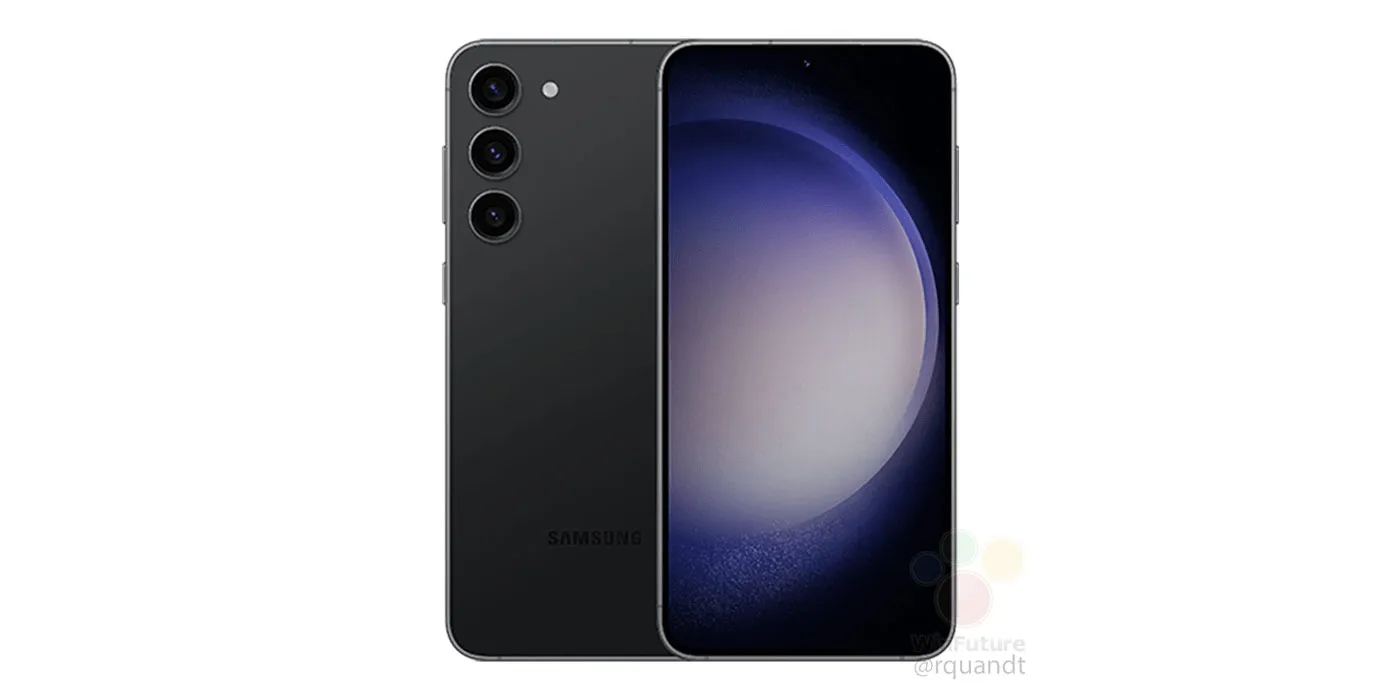
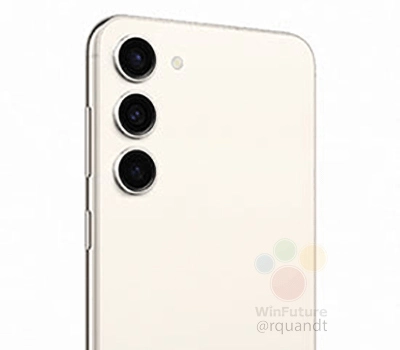
Recently, marketing images surfaced, showcasing the base model Galaxy S23 in several different colorways: Phantom Black, Botanic Green, Mystic Lilac, and Cotton Flower (via WinFuture and Roland Quandt). The Galaxy S23 leak corresponds with the earlier discoveries made in terms of the colors we should be seeing this year.
The most obvious change is the lack of a vertical camera bar we’ve become so accustomed to. Now, each lens sits attached directly to the matte glass rear of the device. With that, the entire design looks to be a little more refined and just a bit more luxury-oriented when compared to the base model S22. You can also see that in the rounded edges of the aluminum frame, which give the S23 an elegant profile on all sides.
Overall, the Galaxy S23 is set to be a good-looking device based on the surfaced leaks. Of course, we don’t know what lies under the hood and likely won’t for just a little while longer. The Galaxy S23 is set to launch on February 1, with reservations for the brand-new device open on Samsung’s website.
Samsung Galaxy S23 will launch February 1, reservations open now with up to $100 credit
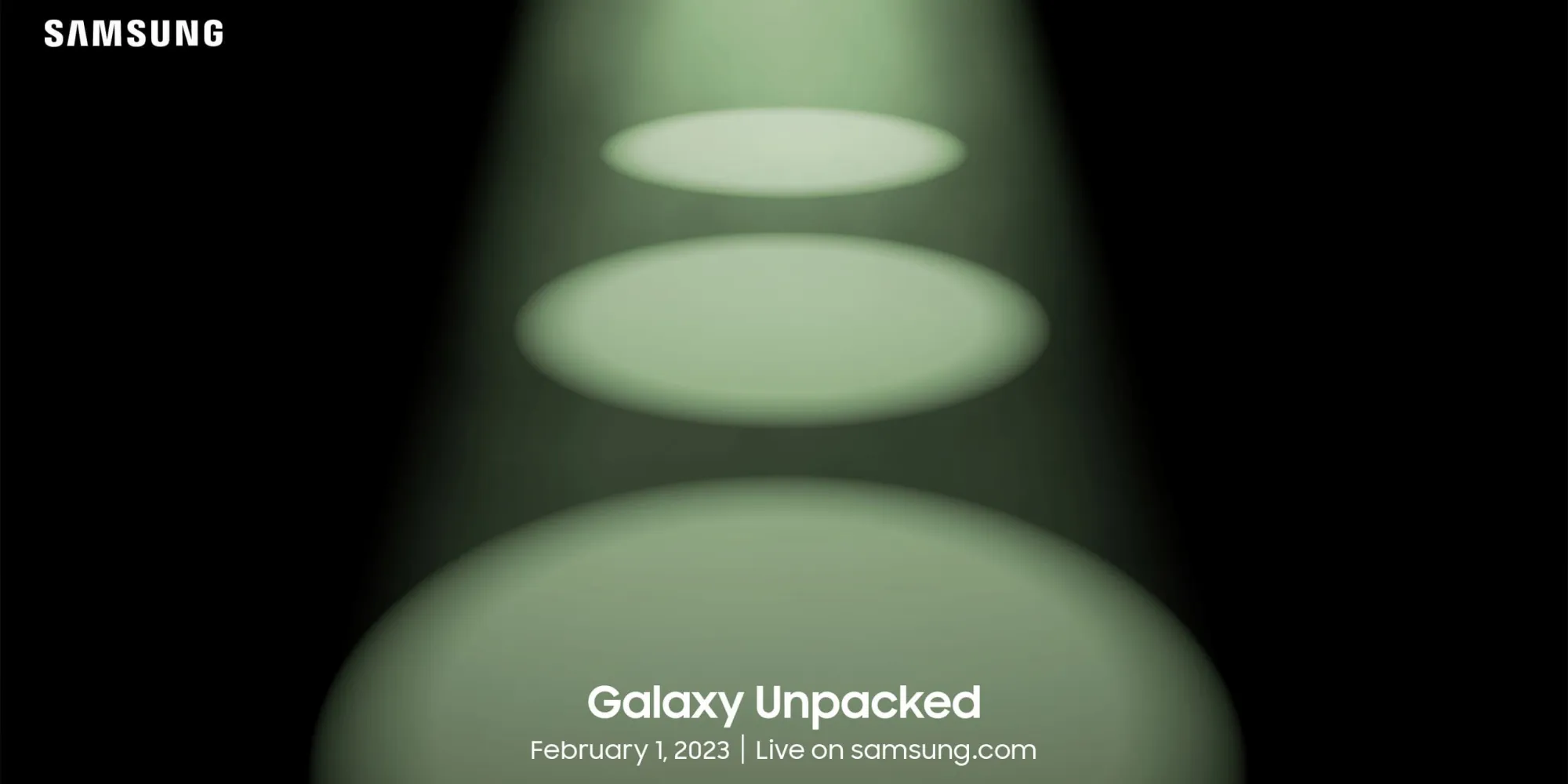
Samsung has just officially confirmed the launch date of the Galaxy S23, S23, and S23 Ultra for February 1, 2023, with reservations now available to score some extra credit with your purchase.
In its first in-person event since the COVID-19 pandemic began, Samsung will be hosting the first Unpacked event of 2023 in San Francisco. Galaxy Unpacked will take place at 10:00 am PT and will be livestreamed for fans at home to watch.
At the event, we’re expecting to see primarily the Galaxy S23 series, with three models set to arrive topping out with the Galaxy S23 Ultra. The updated lineup of flagship phones is expected to be a marginal upgrade over the Galaxy S22 series but with notable additions such as satellite connectivity and a 200MP camera on the Ultra. These will also be Samsung’s latest devices to launch with the best update policy in Android – four years of major updates and five years of security patches.
Samsung’s teaser image, above, also hints at the tweaked design of the triple cameras across all three phones that we’ve seen in leaks and also foreshadowed on the company’s budget-focused Galaxy A14.
It’s not yet confirmed if Samsung plans to bring anything else to Unpacked, but in the past we’ve seen everything from smartwatches and earbuds to laptops and even foldables. On the reservation page for Samsung’s Unpacked event, there’s a teaser for a Galaxy Book device, though.
And, if you’re looking forward to your next smartphone upgrade, there’s some good news. As Samsung has done in the past, reservations are now open to hold your spot in line for a Galaxy S23, S23+, or S23 Ultra.
You can put in a Galaxy S23 reservation through Samsung’s website now at no commitment. Just put in your name and email and you’ll get a $50 credit that can be used with your later pre-order. When you do pre-order, that credit will double to $100 if you also get a Galaxy Book.
Putting in a reservation also gives you the opportunity to lock in the trade-in value of your current device, though Samsung won’t actually show you how much you’ll get at this point in time.
The Galaxy S23 series will be the first major flagship launch of 2023 in the Android space, and it’s certainly going to be interesting to see how Samsung follows up the Galaxy S22 Ultra and standard Galaxy S22 that were loved this time last year.
Of course, stay tuned for our full coverage of Samsung’s launch – and the leaks that will inevitably come between now and then – over the coming weeks.
Samsung Galaxy S23
Samsung Galaxy S23 Ultra
Thank you for using
Themify Popup
This is a sample pop up. Themify Builder or Builder Lite (free) plugin is recommended to design the pop up layouts.