On Thursday, Applereleased iOS 16.5 to the public with new wallpaper choices, updates to Apple News, and more. As it turns out, this update also breaks compatibility with Apple’s Lightning to USB 3 Camera Adapter accessory for iPhone and iPad users.
This dongle connects to an iPhone or iPad via Lightning and has a built-in USB-A port that you can use to connect a myriad of accessories to your iPhone or iPad. There’s also a built-in Lightning port for charging the iPhone or iPad. According to users who rely on this accessory, however, iOS 16.5 breaks compatibility with both of those ports.
In posts on Apple’s Support forums, Reddit, and the MacRumors forums, users say that the Lightning and USB-A ports on this accessory are rendered useless after updating to iOS 16.5. The Lightning port does not passthrough power to charge the iPhone and iPad. Connecting an accessory to the adapter via USB-A results in an error message that says the adapter requires too much power to operate.
While Apple bills this as a “camera adapter accessory,” iPhone and iPad users actually rely on it for connecting a range of USB-A products to their devices. This includes things like Ethernet adapters, digital audio converters, and more.
One affected user explains:
iPhone 13 Pro Max here hitting same issue. I’ve been using the official Apple Lightning to USB 3 Camera Adapter for months to send lossless Apple Music to my DAC, and it’s worked flawlessly and charged my phone at the same time. As soon as I updated to iOS 16.5 this morning, the adapter not only doesn’t communicate to the DAC at all, it doesn’t even charge my phone. When I test plugging in an iPad on a previous OS version, it communicates and charges just fine.
This has to be an issue with iOS 16.5, and I hope it’s resolved quickly – very bad look for an official Apple accessory to be rendered inoperable by a step update of iOS.
Apple support has been unable to help the affected customers. The problem is likely software-related, given that it was tied to the release of iOS 16.5. This means Apple will likely have to release iOS 16.5.1 at some point in the near future to fix compatibility with the Lightning to USB 3 Camera Adapter accessory.
Following over a month of beta testing, iOS 16.5 is now available to the general public. This update includes changes to Apple News, the addition of a new “Pride Celebration” wallpaper, and more. Head below for the full release notes with details on bug fixes, new features, and more.
What’s new in iOS 16.5?
Here are Apple’s official release notes on iOS 16.5 new features and bug fixes. The build number for today’s update is 20F66.
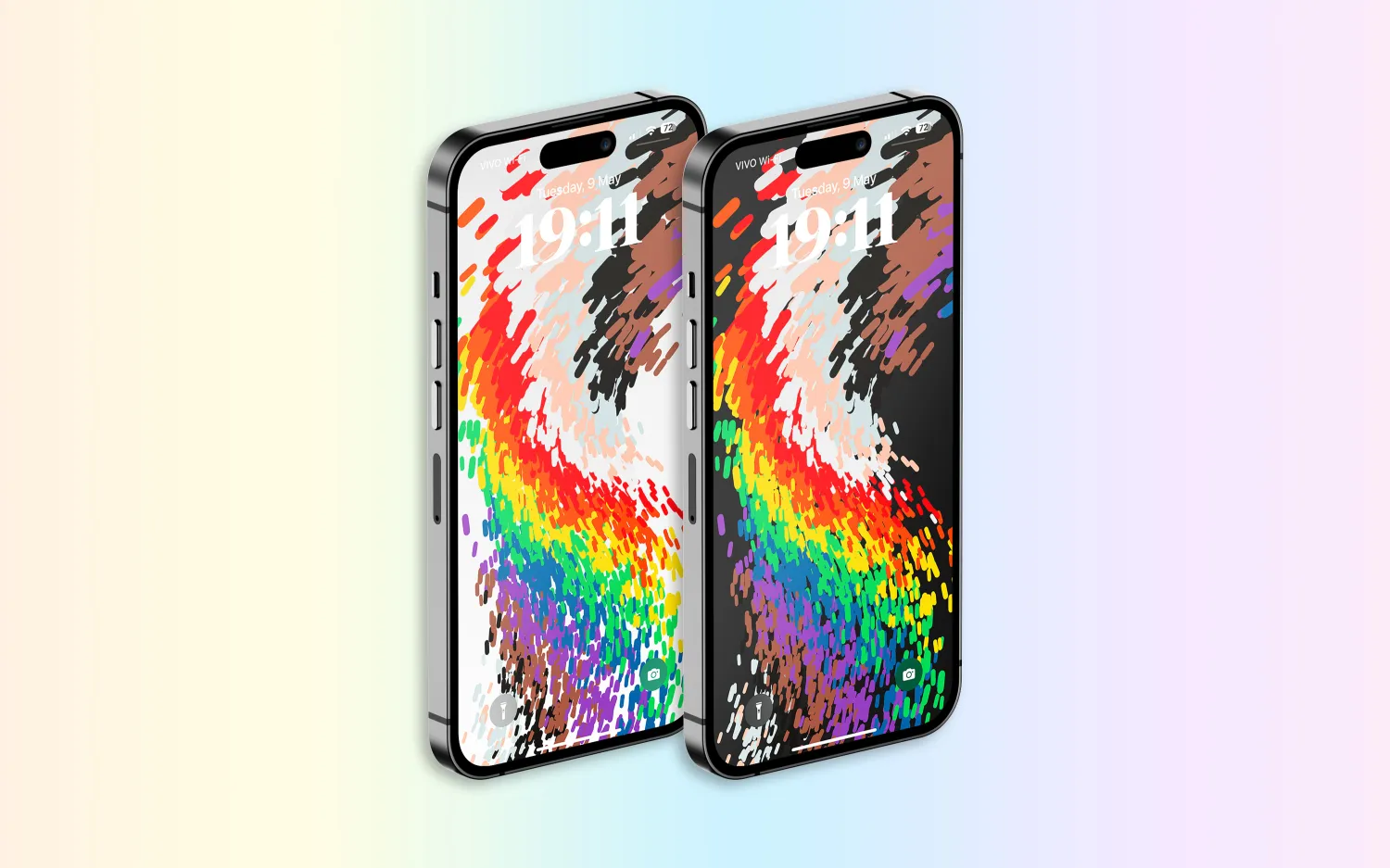
A new Pride Celebration wallpaper for the Lock Screen to honor the LGBTQ+ community and culture
Sports tab in Apple News gives easy access to stories, scores, standings, and more, for the teams and leagues you follow
My Sports score and schedule cards in Apple News take you directly to game pages where you can find additional details about specific games
Fixes an issue where Spotlight may become unresponsive
Addresses an issue where Podcasts in CarPlay may not load content
Fixes an issue where Screen Time settings may reset or not sync across all devices
Earlier iOS 16.5 betas included the addition of a new Siri command for starting and stopping a screen recording. Apple removed this feature in subsequent iOS 16.5 betas, and it’s not included in the final version of the update.
iOS 16.5 will be the final major point-release update to iOS 16 before WWDC in June. This is where Apple will debut iOS 17 and release the first developer betas.
Apple is, however, expected to continue releasing updates to iOS 16 through the summer and likely even alongside iOS 17. iOS 16.6 is expected to enter beta testing soon.
You can update your iPhone by going to the Settings app, choosing General, then choosing Software Update.
watchOS 9.5 debuts with new Pride Celebration watch face
Alongside iOS 16.5, Apple has also released watchOS 9.5 for Apple Watch users today. The headlining change in this update is an all-new Pride Celebration watch face to honor the LGBTQ+ community and culture.
What’s new in watchOS 9.5?
watchOS 9.5 is rolling out now to all users. You can update your Apple Watch by going to Settings, choosing General, then choosing Software Update. You can also install the update via the Apple Watch companion app on your iPhone.
Here are Apple’s release notes for watchOS 9.5:
watchOS 9.5 includes new features, improvements and bug fixes, including a new Pride Celebration watch face to honor the LGBTQ+ community and culture.
And some more details on the new Pride Celebration watch face:
Inspired by multiple pride flags, this new watch face combines colors to represent the strength and mutual support of the LGBTQ+ movement. Mirroring the woven loops of the Sport Loop, each strand of vibrant thread contributes to the overall composition of the watch face. The colorful threads move as the Digital Crown on Apple Watch is rotated, the display is tapped, or the user’s wrist is raised.
The new Pride Celebration face included in watchOS 9.5 pairs with the similarly-designed wallpaper for iPhone users. The new wallpaper is included with iOS 16.5, which is also available starting today.
macOS Ventura 13.4 with new sports-related features
After months of beta testing, Apple has finally released macOS Ventura 13.4 to the public. The update, which is now available for macOS users, comes with new sports-related features, as well as a new system for installing beta software. Read on as we detail what’s new with macOS Ventura 13.4.
One big change coming with macOS Ventura 13.4 is the new system for installing betas that was introduced with iOS 16.4. The operating systems now asks for the Apple ID to show and download beta software updates.
macOS checks whether the account is associated with a developer or user registered in the public beta program. It then shows the beta update available for that program. With this change, regular users will no longer be able to install developer betas, for example.
macOS 13.4 full release notes
Sports feed in the sidebar of Apple News gives easy access to stories, scores, standings, and more, for the teams and leagues you follow
My Sports score and schedule cards in Apple News take you directly to game pages where you can find additional details about specific games
Resolves an issue where Auto Unlock with Apple Watch does not log you into your Mac
Fixes a Bluetooth issue where keyboards connect slowly to Mac after restarting
Addresses a VoiceOver issue with navigating to landmarks on webpages
Fixes an issue where Screen Time settings may reset or not sync across all devices
You can install macOS Ventura 13.4 by going to the Software Update menu in the System Settings app. It may take a while before the update shows up on your computer; make sure that your Mac is compatible with macOS Ventura.
The update build number is XXXXX.
OpenAI launches free ChatGPT for iPhone app with Whisper support and more
OpenAI has announced that it is releasing a dedicated iPhone app for its ChatGPT service. The app, which is available via the App Store, gives users the ability to use ChatGPT through a native app on their iPhone. The app is free to download and includes no ads. It’s currently only available in the United States, but OpenAI says availability will expand “in the coming weeks.”
ChatGPT for iPhone now available
As announced by OpenAI in a blog post, ChatGPT for iPhone will offer the same set of features as the web version of the service. This will include ChatGPT Plus support, which lets users subscribe to pay for more advanced versions of the service.
The app will also sync your ChatGPT history across all your devices, including the web. It also includes support for Whisper, OpenAI’s open-source speech-recognition system. This integration with Whisper enables voice input for the ChatGPT app on iPhone. The ChatGPT app is also completely ad-free.
As ChatGPT has gained popularity over the last six months, a number of copycat and scam apps have surfaced on the App Store. Apple has cracked down on these apps, in part by blocking apps that use “GPT” in their name. By releasing its own version of ChatGPT for iPhone, OpenAI hopes to directly control the experience of using the service on an iPhone.
Additionally, Microsoft’s Bing app for iPhone has seen a major boost in popularity since it added ChatGPT integration.
ChatGPT for iPhone is rolling out starting today to users in the United States. OpenAI availability will “expand to additional countries in the coming weeks.”
How to turn off iPhone WiFi auto-join for public and carrier networks
Have you noticed your iPhone jump onto a WiFi network when you’re away from home without asking first? Or maybe you want to check what networks your iPhone is auto-joining? Follow along for how to turn off iPhone WiFi auto-join for public and carrier networks.
The default setting for iPhone when it picks up an unknown WiFi network is to ask if you’d like to join. However, there is a scenario where it can automatically join WiFi networks without asking.
These are called “managed networks” and they’re often provided for free by wireless providers like AT&T, T-Mobile, Verizon, and more.
Because they typically come from a reliable source, iPhone defaults to auto-join these managed networks that are found in public, but you can disable that behavior.
Managed networks can vary. For example, they may be locked networks only available for customers of a certain carrier. But even though some are not fully open, public networks, you may not want to auto-join them as they are somewhat public connections.
Separate from managed networks, you can also check the list of your iPhone’s known networks to forget them in case you’ve accidentally joined one in the past.
How to turn off iPhone WiFi auto-join for managed networks
Open the Settings app on your iPhone
Choose Wi-Fi at the top
Now tap Edit in the top right corner
Swipe to the bottom and look under Managed Networks
Tap the circled “i” on the right of any network
Now tap the toggle next to Auto-Join to turn it off
Here’s how that looks:
Of course, another option to turn off iPhone WiFi auto-join is to switch off WiFi fully, but that can be a hassle and easy to forget about.
How to manage iPhone known networks
If you’d like to audit which networks your iPhone automatically joins after having joined it at least once before, follow these steps:
Open the Settings app on your iPhone
Choose Wi-Fi at the top
Now tap Edit in the top right corner
The top section will be your known networks, tap the – icon on the right to delete one
Or tap the circled “i” on the right of any network to turn off auto-join, turn on Private WiFi Address, and more
You can also change the default setting of iPhone asking if you want to join unknown networks. Outside of the default to “Ask” you can set it to “Notify” you about available networks, or turn it “Off” which will have you manually select and join all networks.
How to check if iPhone has 5G Standalone turned on and is working in iOS 16.4
Included with the new features and changes in iOS 16.4 is the capability for iPhone to use T-Mobile’s 5G Standalone coverage in the US and with Vivo and Claro in Brazil. The new option can offer speeds as fast speeds as 3.3Gbps using the power of carrier aggregation. Here’s how to make sure 5G Standalone is turned on with iPhone and how to verify your cellular connection stats.
T-Mobile officially launched its Ultra Capacity 5G SA network in November last year, touting speeds up to 3Gbps. However, only flagship Samsung smartphones were able to take advantage of the latest network advancement at first with T-Mobile saying that it would “expand to additional devices in the near future.”
Now with iOS 16.4, we’ve seen the toggle arrive in iPhone Settings to enable the super-fast speeds. 5G SA should be enabled by default for T-Mobile customers in the US – the Uncarrier is the only stateside provider for now with 5G SA. Claro and Vivo are also showing 5G SA functionality with iPhone in Brazil. Meanwhile, this flavor of 5G has previously been available on iPhone in other countries.
As a refresher, T-Mobile says its Ultra Capacity 5G SA + carrier aggregation allows it to achieve 3Gbps speeds by merging multiple channels of mid-band 5G spectrum. Also, it’s unclear exactly which cities 5G SA is accessible through T-Mobile for now, so you need to just test it out to see.
How to make sure 5G Standalone (SA) is turned on with iPhone
Only iPhones connected to a carrier with 5G SA will see the option available in Settings
Running iOS 16.4, open the Settings app
Choose Cellular
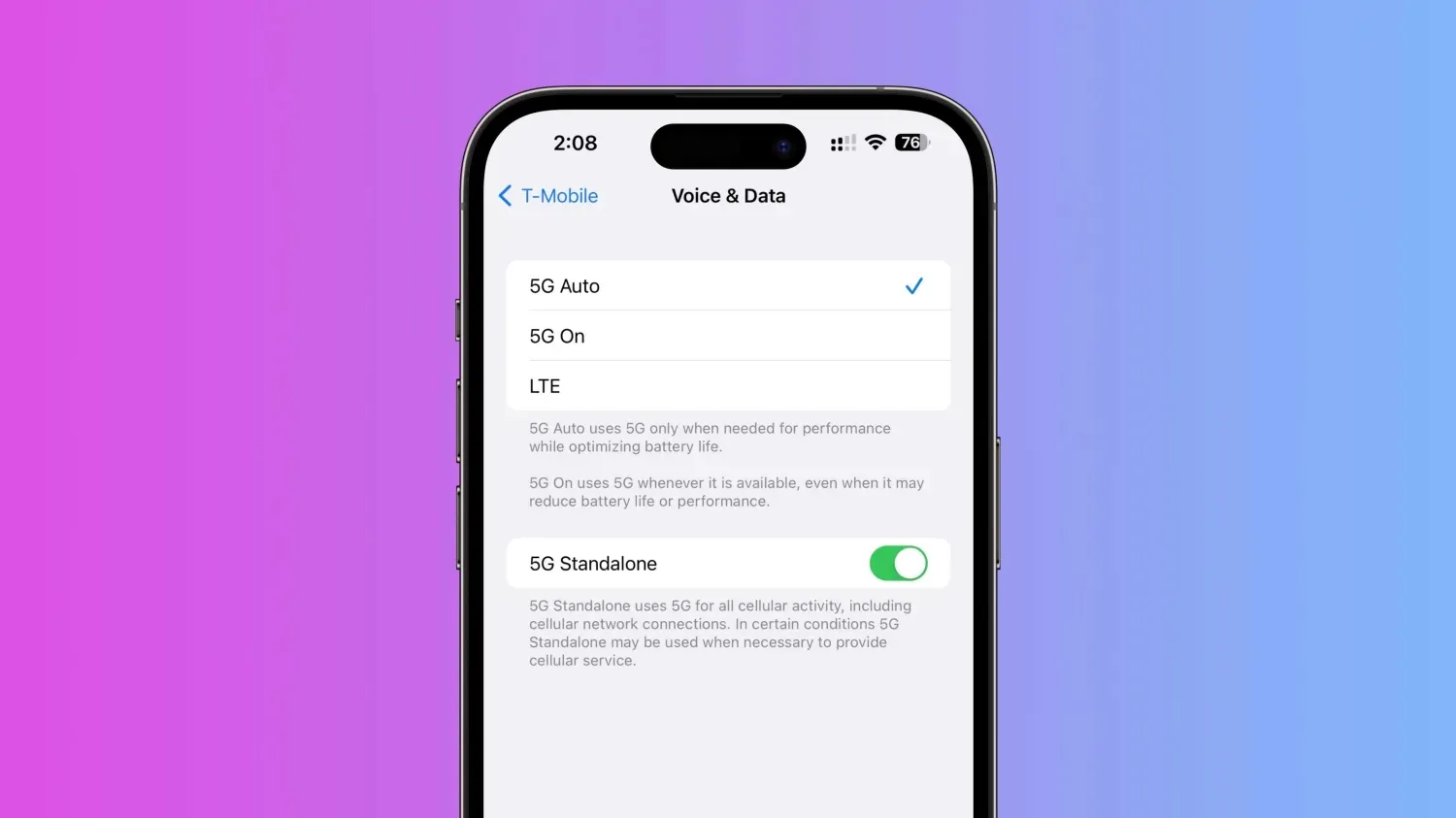
Now tap Cellular Data Options then Voice & Data
At the bottom, make sure the 5G Standalone toggle is turned on
Check your 5G SA connection stats
After you make sure 5G Standalone is turned on, you can run a speed test to see what performance you’re getting
You can dial 3001#12345# and hit call to enter Field Test mode – this will provide specific details about your 5G connection and whether or not you’re getting Standalone service
Look for SA next to connection_type
Keep in mind while 3.3Gbps has been achieved in T-Mobile tests, real-world performance will vary
Following the release of the first iOS 16.5 beta to developers on Tuesday, Apple is now rolling out iOS 16.5 beta 1 to users registered in the Apple Beta Software Program. The update comes with some minor improvements, including new Siri commands.
iOS 16.5 beta 1
Right now, iOS 16.5 seems more like a minor update focused on fixing bugs and improving the overall stability of the operating system. There are new Siri commands to start or stop a screen recording. Apple is also adding a dedicated Sports tab to the Apple News app with iOS 16.5.
Moreover, code found in iOS 16.5 shows that Apple has been working on a new quad-box Picture-in-Picture mode for streaming sports in the Apple TV app.
Beta testers can install iOS 16.5 by going to the Settings app, choosing General, then choosing Software Update. It’s unclear when Apple plans to make iOS 16.5 available to the public. Today’s build number is 20F5028e.
More updates available
In addition to iOS 16.5 public beta 1, Apple is also rolling out the following updates to users registered in the Apple Beta Software Program:
iPadOS 16.5 beta 1 (20F5028e)
watchOS 9.5 beta 1 (20T5527c)
tvOS 16.5 beta 1 (20L5527d)
macOS Ventura 13.4 beta 1
new iPhone and iPad software features coming this year, according to Apple
While iOS 17 speculation is already in full swing, there is still a few software features that Apple has announced, but not yet released for iPhone and iPad users. Head below as we round up all of the previously announced features still coming for iPhone and iPad…
Apple Card Savings Account
Continuing with the focus on financial services, Apple has also announced it will integrate a high-yield savings account directly into the Wallet application for Apple Card users. This feature was announced in October, with Apple saying it would be available sometime “soon.” Given that Apple Card is only available in the United States, the new savings account will also be limited to the US.
Apple Card Savings Account will allow you to automatically deposit your Daily Cash rewards into the account. It will fully integrate with the Apple Wallet applications, allowing you to track the balance and growth of the account over time and even make additional deposits via a linked bank account.
Apple Card Savings Account will be operated in partnership with Goldman Sachs, which is also Apple’s partner for the Apple Card itself. There’s no word on what exact percentage rate the account will pay out in interest, but Goldman’s existing online savings account offers an annual percentage yield of 3.30%.
Next-generation CarPlay
At WWDC, Apple unveiled what it described as the “next generation of CarPlay.” This is a feature, however, that even Apple acknowledged would not be available for quite a while, despite the initial announcement at WWDC 2022.
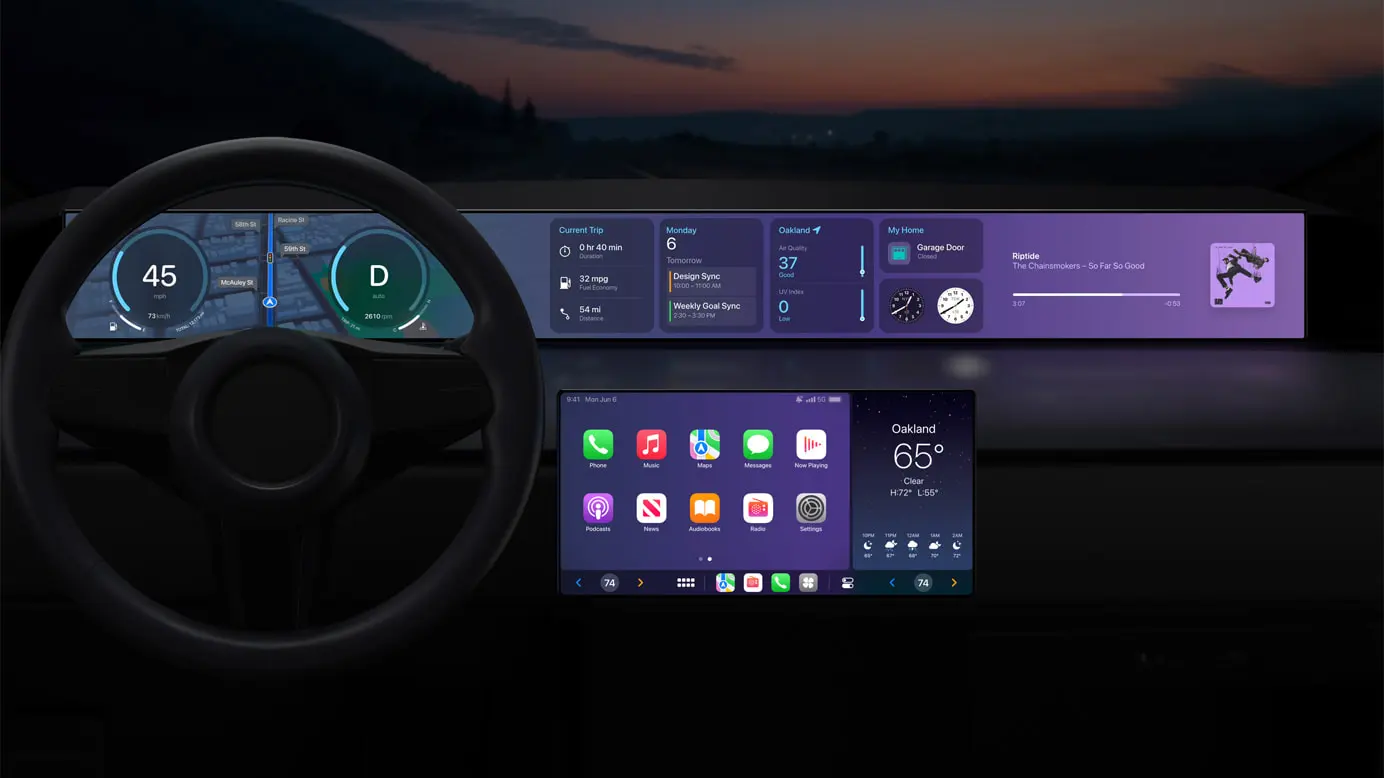
The new CarPlay interface is a dramatic overhaul compared to what is currently offered. It will offer support for multiple screens within your car and be able to deeply integrate with your car’s hardware. Essentially, this new CarPlay design can completely replace the manufacturer’s own digital interfaces:
Speed, fuel level, temperature, and more on the instrument cluster
Control the radio or change the climate directly through CarPlay
Personalize the driving experience by choosing different gauge cluster designs
With widgets, users will have at-a-glance information from Weather and Music right on their car’s dashboard
This is a big undertaking by Apple, and it will require close cooperation with automakers looking to adopt the new CarPlay interface. Apple says that more information will be “shared in the future” and that we can expect the first vehicles with support for the new CarPlay design sometime late this year.
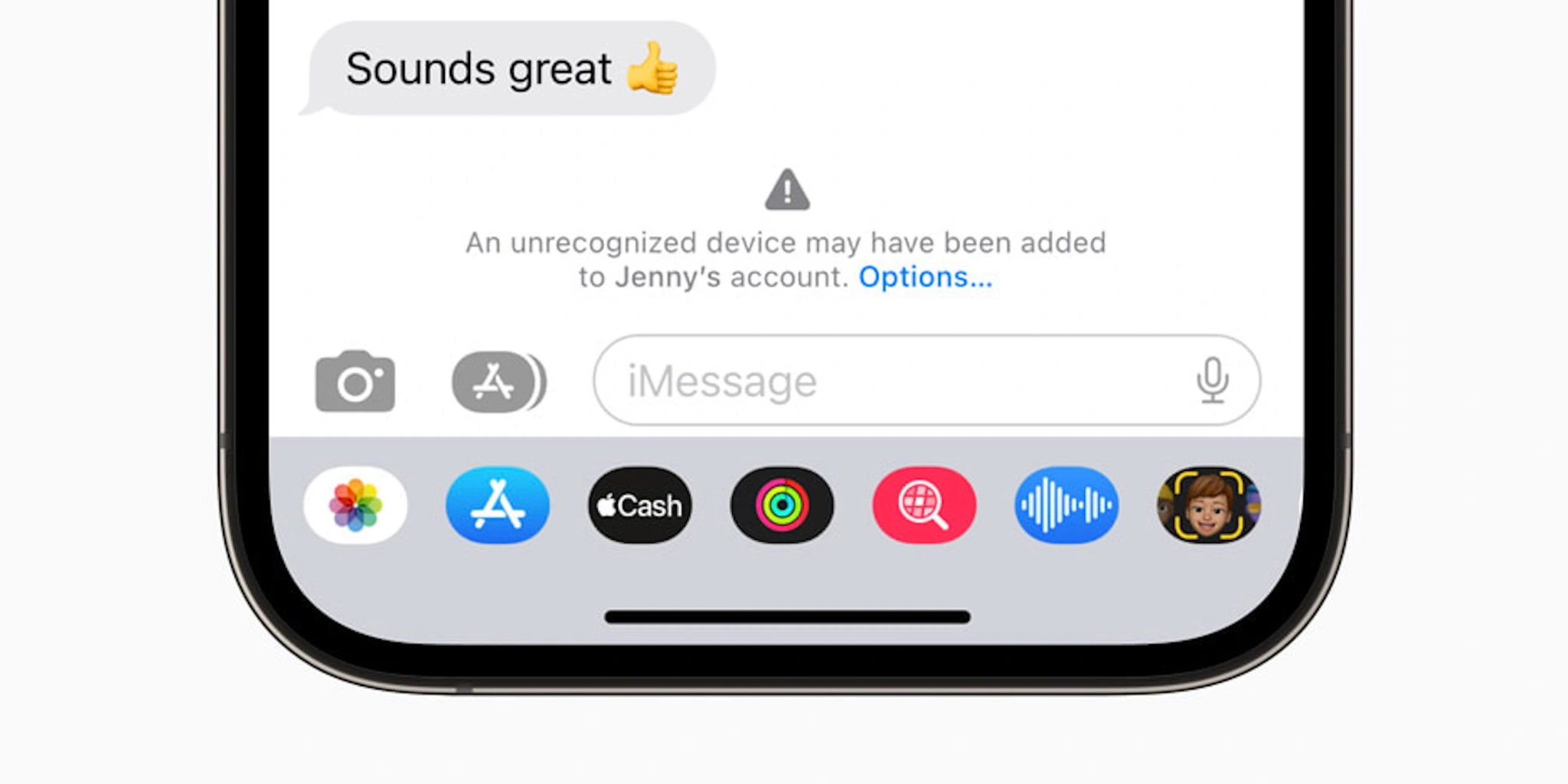
iMessage Contact Key Verification
Finally, there’s one security and privacy-focused feature that Apple has already announced is coming sometime this year. iMessage Contact Key Verification is designed for “users who face extraordinary digital threats,” including journalists, human rights activists, and members of government.
The feature works by giving those users a way to further verify that they are messaging with the people they intend. Apple explains:
The vast majority of users will never be targeted by highly sophisticated cyberattacks, but the feature provides an important additional layer of security for those who might be. Conversations between users who have enabled iMessage Contact Key Verification receive automatic alerts if an exceptionally advanced adversary, such as a state-sponsored attacker, were ever to succeed breaching cloud servers and inserting their own device to eavesdrop on these encrypted communications. And for even higher security, iMessage Contact Key Verification users can compare a Contact Verification Code in person, on FaceTime, or through another secure call.
iMessage Contact Key Verification will be available “globally” sometime in 2023, Apple says.
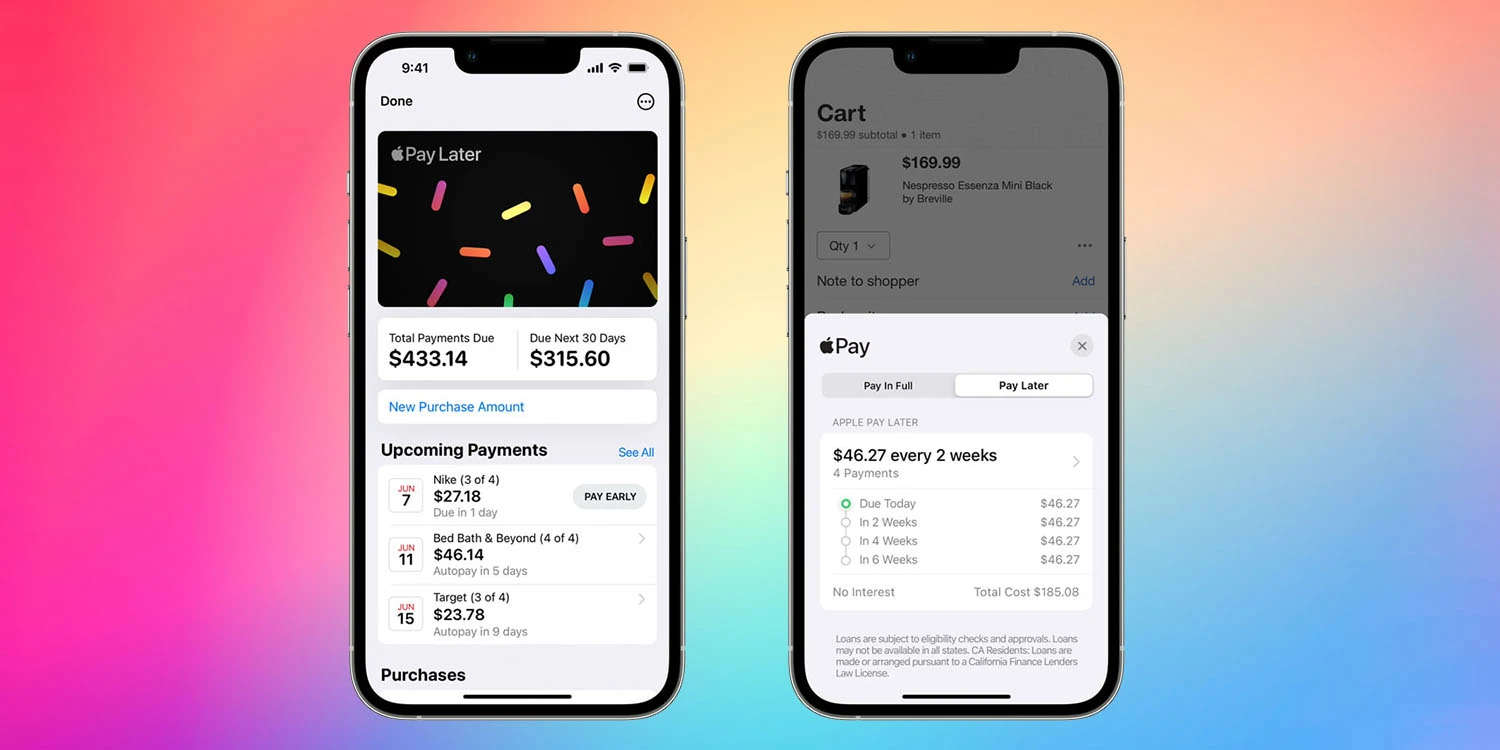
Apple Pay Later [Now available]
Update March 29, 2023: Apple Pay Later has officially started rolling out to users, but it won’t be available to all users for several months, Apple says.
Apple is ramping up its initiatives in the personal finance sector, and one of its most anticipated new features in this category is something called Apple Pay Later. Announced at WWDC 2022, Apple Pay Later will allow you to split Apple Pay purchases into four equal payments with zero percent interest, spread across six weeks.
The Apple Pay Later feature is similar to competitors like Affirm and Klarna, two of the companies leading a modern wave of “buy now, pay later” platforms. Apple, however, touts that its platform will be “seamless and secure,” with integration into the Apple Wallet application and zero fees.
When Apple Pay Later was announced at WWDC 2022, there was no clear timeline for when it would be available to customers. The feature was not included in the initial release of iOS 16 and hasn’t been added with any of the subsequent software updates. Bloombergreported that the feature faced “fairly significant technical and engineering challenges.”
Once it launches, Apple Pay Later will be “available everywhere Apple Pay is accepted online or in-app” to “qualifying applicants in the United States.”
Apple Music Classical [Now available]
Update March 29, 2023: Apple Music Classical is now available to all Apple Music users.
Ah, yes, Apple Music Classical. This isn’t necessarily a feature specific to iOS 16, but it’s something that Apple said would be available in 2022… and wasn’t. Apple acquired the classical music service Primephonic in 2021, immediately removing the app from the App Store and integrating the content into its own Music app.
Apple also promised, however, that it would release a “dedicated classical music app” sometime in 2022, “combining Primephonic’s classical user interface with more added features.” This didn’t come to fruition in 2022, and Apple is silent on when the app will launch.
At this point, we’re starting to question whether Apple Music Classical has been scrapped (or significantly scaled back in scope), given Apple’s silence on the matter. The good news is that references to the service have been spotted in iOS code. Hopefully, we’ll get an update soon.
Web push notifications [Now available]
Update March 29, 2023: More advanced web apps are now available as of iOS 16.4, which can be installed via the Settings app on your iPhone.
Here’s something that has largely flown under the radar since it was officially announced: support for web push notifications for Safari on iOS and iPadOS. This was announced at WWDC last year, with Apple saying that Safari on iPad and iPhone would support push notifications from websites for the first time.
Support for web notifications in Safari has been available on the Mac for several years but has remained notably absent on iPhone and iPhone. What jogged our memory on this feature was a post on Mastodon from Jen Simmons, who works as an Apple Evangelist on the company’s Web Developer Experience team.
In the post, Simmons asked users to share their “favorite web apps” that they’ve added to the Home Screen of their iPhone. This could signal Apple’s continued work on web push notifications for iPhone and iPad, as well as maybe some other improvements to how progressive web apps work on Apple’s platforms.
Apple says that support for web notifications on iPhone and iPadOS will be available sometime in 2023. The feature hasn’t yet materialized in betas of iOS 16.
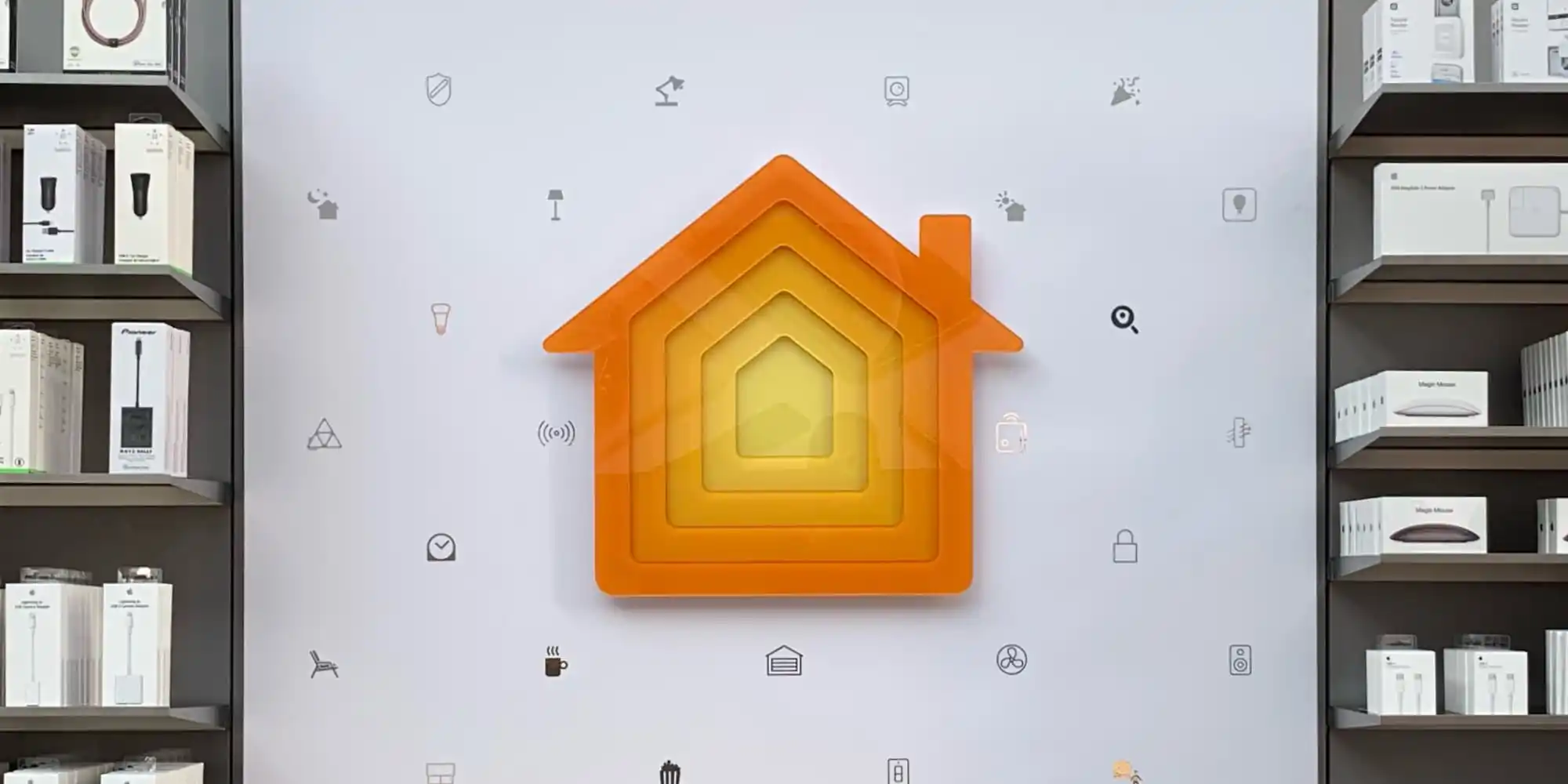
New Home architecture [Now available]
Update March 29, 2023: With the launch of iOS 16.4, the revamped Home architecture is now available to users once again.
Apple says that support for web notifications on iPhone and iPadOS will be available sometime in 2023. The feature hasn’t yet materialized in betas of iOS 16.
In response to the backlash and complaints, Apple ended up pulling the new architecture altogether last month. The company said in a statement:
We are aware of an issue that may impact the ability for users to share the Home within the Home app. A fix will be available soon. In the meantime, we’ve temporarily removed the option to upgrade to the new Home architecture. Users who have already upgraded will not be impacted.
There’s no official word on when Apple plans to re-implement this new HomeKit architecture. Evidence within recent iOS beta releases, however, shows the company is continuing to work on the platform.
iOS 16.4 was released to everyone this past week with a handful of features and changes. Now that this update has been released, Apple has started beta testing iOS 16.5. Unfortunately, it doesn’t look like this update contains any of the features we’re still waiting for Apple to release.
Just one day after the release of iOS 16.4 to everyone, Apple is once again kick-starting the beta testing process. iOS 16.5 beta 1 is rolling out to registered developers starting today, with a public beta likely to follow later this week or next week.
iOS 16.5 beta 1 will be available today to registered developer beta testers. As the update rolls out over the air within the next hour, you’ll be able to install it by going to the Settings app, choosing General, then choosing Software Update. The build number for today’s update is 20F5028e.
We’re still downloading iOS 16.5 onto our devices to check what’s new. There are, however, a few features that Apple has announced but not yet released, as well as features in development under the hood that aren’t yet available.
Apple Card Savings Account
Next-generation CarPlay
iMessage Contact Key Verification
Custom Accessibility Mode
As we approach the announcement of iOS 17 at WWDC in June, however, we expect these iOS 16 point updates to become less and less exciting.
Alongside iOS 16.5, Apple has also released the first betas of tvOS 16.5, HomePod Software Version 16.5, watchOS 9.5, and iPadOS 16.5.
iOS 16.5 beta brings highly-requested ‘My Sports’ tab to Apple News
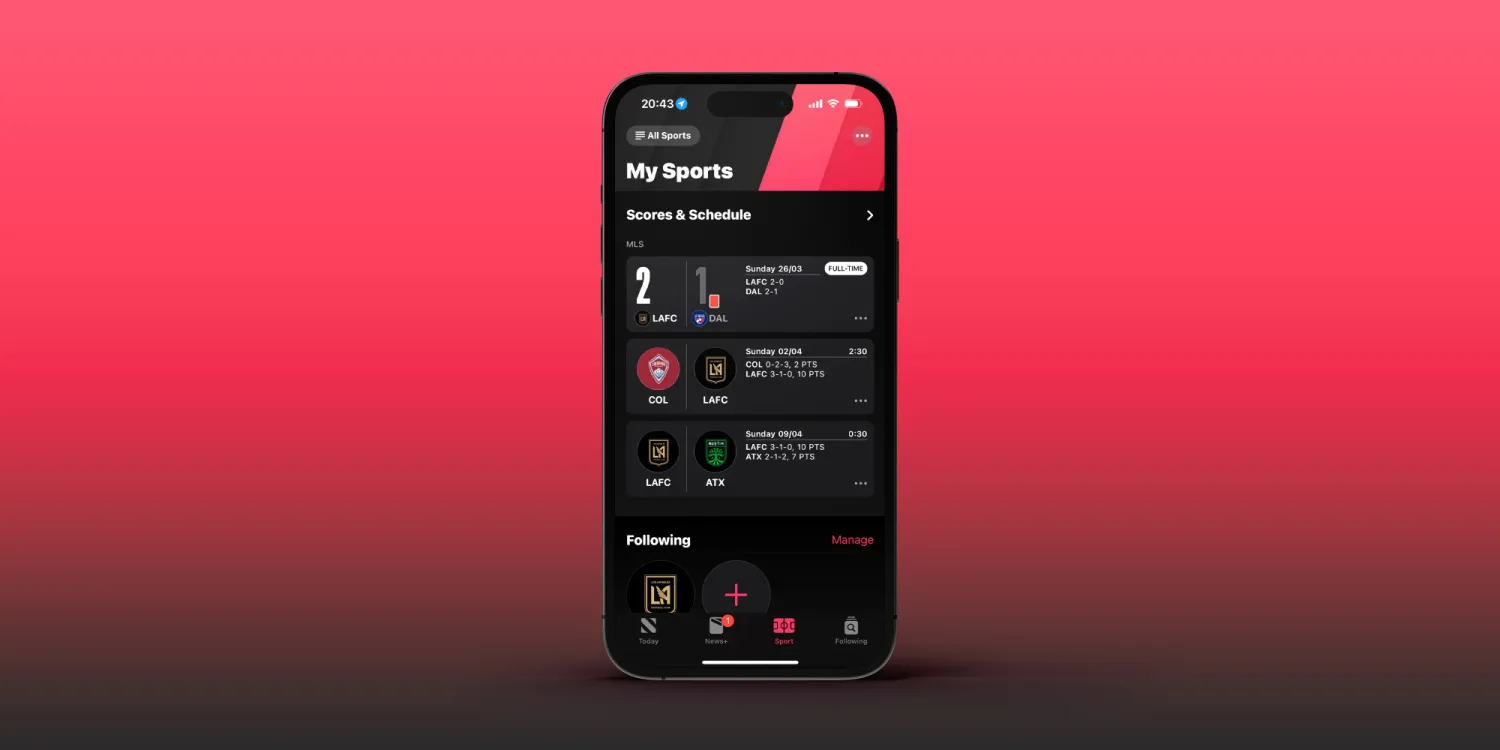
Apple released the first beta of iOS 16.5 to developers on March 28,2023, just one day after iOS 16.4 was released to the public. And while today’s update doesn’t seem like a big one, it does bring some small changes. For example, the Apple News app now has a tab dedicated to the My Sports feature.
My Sports gets its own tab in the Apple News app
iOS 16 introduced My Sports to Apple News. With this feature, users can easily follow news from their favorite teams and leagues, as well as get live scores, schedules, and more. However, My Sports was originally part of the Today tab of Apple News. Now with iOS 16.5, My Sports has become a dedicated tab within the Apple News app.
The way the tab works is basically the same as before, but now it’s much easier to find, as the tab is located between the Today, News+, Audio, and Following tabs. Here’s how Apple describes My Sports:
In My Sports in the News app , you can follow your favorite sports, teams, leagues, and athletes; receive stories from top sports publications, local newspapers, and more; access scores, schedules, and standings for the top professional and college leagues; and watch highlights.
It’s no surprise that My Sports got its own tab on Apple News, as Apple has been investing more in sports content. Apple TV+ now offers access to MLB’s Friday Night Baseball, while the company also recently launched MLS Season Pass in the Apple TV app.
It’s worth noting, however, that the Apple News app is only available in selected countries. This includes Australia, Canada, the US, and the UK.
More about iOS 16.5
Right now, iOS 16.5 seems more like a minor update focused on fixing bugs and improving the overall stability of the operating system. The only new feature found so far besides the My Sports tab is the addition of new Siri commands to start or stop a screen recording.
Developers with eligible devices can install the beta update by going to the Settings app, choosing General, then choosing Software Update. It’s unclear when Apple plans to make iOS 16.5 available to the public.
iOS 16.5 beta enables screen recording via Siri [Video]
iOS 16.5 developer beta 1 doesn’t appear to contain many new features and changes, but there is at least one new feature that will surely make some users happy – the ability to ask Siri to start a screen recording.
iOS users have been able to request Siri to take a screenshot in previous versions of iOS, but up until now, invoking screen recordings required manual intervention. In iOS 16.5, you can simply say “Hey Siri, start screen recording” and the screen recording will begin.
Unfortunately, it doesn’t look like there’s a dedicated screen recording action for the Shortcuts app yet, but we can presume that such an action will eventually make its way to end users. Until then, you’ll need to either start a screen recording manually via its dedicated Control Center toggle, or ask Siri.
Once you’re finished recording the screen, you can ask Siri to “stop screen recording” and Siri will usually comply. You can watch the brief video embed above to see an example of requesting Siri to start and stop a screen recording on iOS 16.5 in action.
With iOS 16.4 beta, which was first released to developers last month, Apple has introduced a new way to set up a device to get beta software that doesn’t require special profiles or using a computer. As the company will make this the only way to install iOS betas in the future, the latest iOS 16.4 beta 3 now lets users sign in with a different Apple ID to download beta software.
Apple changes how users will install iOS beta on their devices
However, when it comes to developers, some people have different Apple IDs for personal and work use, which could make it impossible for them to install iOS betas using the new system. But Apple is now fixing this. The iOS 16.4 beta released today adds an option to manage the Apple ID used to download beta software.
Now, when you go to Settings > General > Software Update > Beta Updates, you’ll see a menu showing your Apple ID. By tapping there, you can enter an Apple ID other than your iCloud and App Store Apple ID. This way, even if you’re a member of the Apple Developer Program or Apple Beta Software Program through another Apple ID, you’ll be able to download the latest Apple software.
The main advantage of the change is it will be faster and easier to install either of the iOS betas on your iPhone or iPad with the ability to toggle it on in Settings. It should also be faster to switch between the public release and a beta release for those who may need to go back and forth.
Last year, Apple began taking down websites that shared developer profiles to install iOS betas. Currently, developers are required to pay $99 per year to be part of the Apple Developer program, which includes early access to beta software. The Apple Beta Software Program is a free alternative for users who want to install iOS beta on their devices, but updates take longer to become available in this program.
Right now, the new method for installing iOS beta is optional, but Apple says that this will be the only way to enroll an iPhone or iPad to get beta software in the future.
More about iOS 16.4
In addition to the new system for installing beta software, iOS 16.4 comes with multiple new features. This includes dozens of new emoji, updates to the Music and Podcast apps, 5G Standalone support, new HomeKit architecture, previews of Mastodon links in Messages, and more.
With beta testing progressing on schedule, iOS 16.4 will likely be released to the general public sometime in March or April.
iOS 16.4 beta 3 and more now rolling out to developers
Apple is releasing iOS 16.4 beta 3 to developers today, just one week after the release of the previous beta. As we’ve covered in-depth over the last two weeks, iOS 16.4 includes a number of new features and changes for iPhone users.
iOS 16.4 beta 3 will be available today to registered developer beta testers. As the update rolls out over the air, you’ll be able to install it by going to the Settings app, choosing General, then choosing Software Update. The new update will be released to public beta testers later this week. The build number for today’s update is 20E5229e.
What’s new in iOS 16.4?
Roundup: Here’s every new feature and change in iOS 16.4 beta 1
iPhone Lock Screen Shortcut: How to use
iOS 16.4 to detail Always-On display battery consumption
iOS 16.4 and iPadOS 16.4 add new Emoji for iPhone and iPad
iOS 16.4 adds new capabilities for web apps on iPhone and iPad, including access to push notifications
iOS 16.4 reintroduces new HomeKit architecture
iOS 16.4 expands 5G support to new regions, plus Google Fi users
iOS 16.4 hints at HomePod launch in Israel with Siri in Hebrew
iOS 16.4: iMessage now supports rich content previews for Mastodon posts
Apple is making it easier for registered developers to install iOS betas, but eliminating profile sharing
Last week’s release of iOS 16.4 beta 2 in particular brought a few additional changes. These include the return of the Apple Books page turn animations, additional references to Apple Music Classical, and more. You can find our full recap of all the additions right here.
With beta testing progressing on schedule, iOS 16.4 will likely be released to the general public sometime in March or April. In addition to iOS 16.4, Apple is also beta testing the following software updates:
The first beta of iOS 16.4 was released to developers today, and it includes a number of new features and changes. There are new emoji, improvements to Safari and web apps, and much more. Head below as we round up everything new in iOS 16.4 beta 1.
What’s new in iOS 16.4 beta 1?
New Safari and third-party browser features
iOS 16.4 brings new capabilities for Safari web apps: access to push notifications, home screen badges, and more.
Third-party browsers are now able to show a user interface for users to add a website to their home screen.
New Emoji
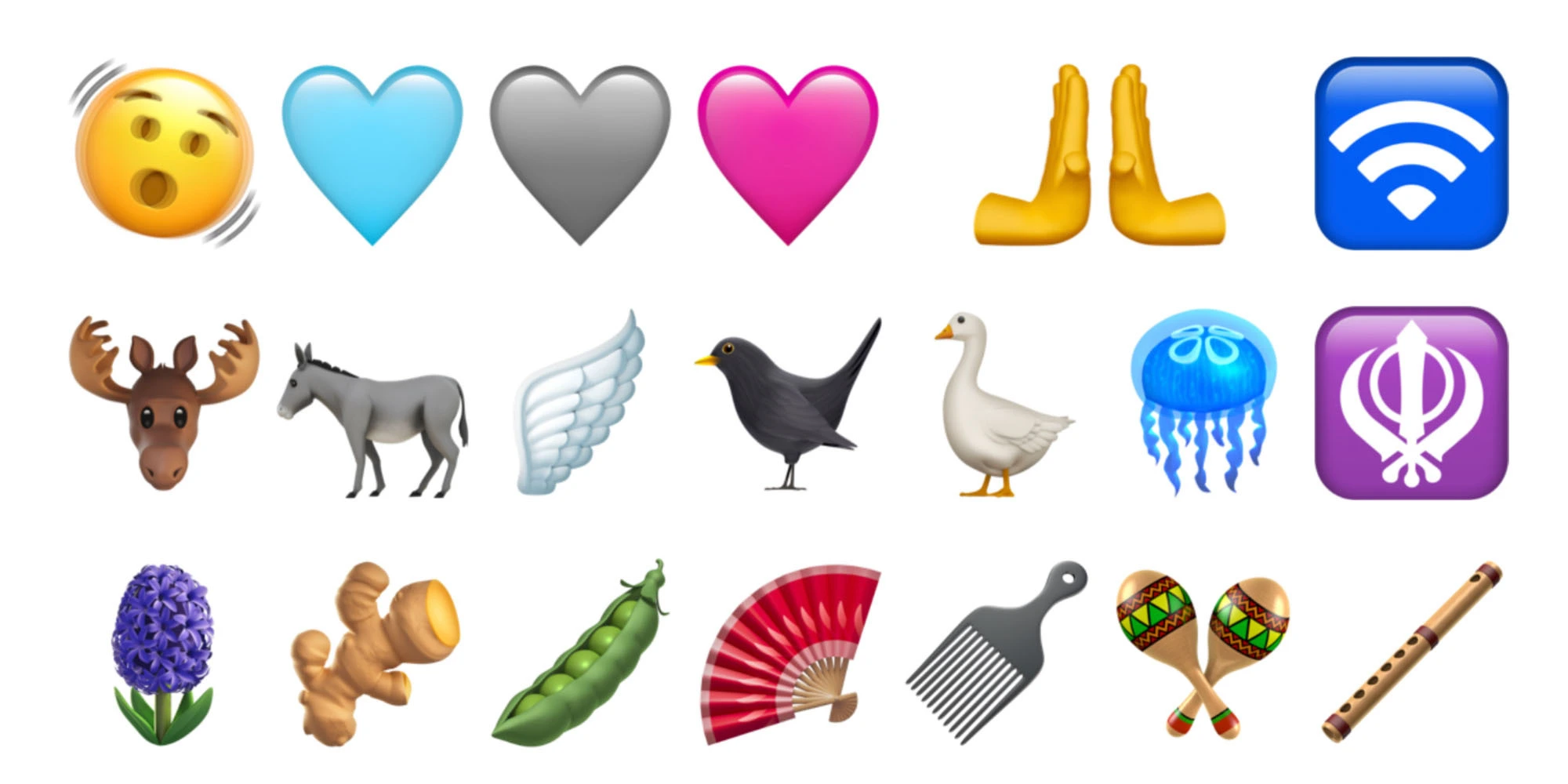
There are new emoji for things like a shaking face, a goose, a hyacinth, and a plain pink heart. These new Emoji are part of the Unicode Standard for Emoji Update 15.0, which was announced in July.
Changes to beta testing enrollment
Apple is cracking down on sharing iOS beta profiles. Now, the beta enrollment process will be tied to a developer’s Apple ID and accessed directly in the Settings app. Apple says:
Beginning with iOS & iPadOS 16.4 beta, members of the Apple Developer Program will see a new option to enable developer betas directly from Software Update in Settings.
This new option will be automatically enabled on devices already enrolled in the program that update to the latest beta release. Your iPhone or iPad must be signed in with the same Apple ID you used to enroll in the Apple Developer Program in order to see this option in Settings. In future iOS and iPadOS releases, this new setting will be the way to enable developer betas and configuration profiles will no longer grant access.
Cellular and 5G changes
iOS 16.4 adds a new “5G Standalone” feature that can deliver wildly fast speeds up to 3Gbps. In the United States, T-Mobile is the only carrier to support this feature.
Learn more: 3Gbps iPhone speeds could be coming soon as iOS 16.4 brings 5G Standalone support
Apple Podcasts updates
For Apple Podcasts, there are changes to the Library, improvements to Up Next, and new CarPlay updates.
Channels in Library: Easily access the channels you subscribe to and browse channels from shows you follow.
Up Next Enhancements: Resume episodes you began, start episodes you saved, and remove any you want to skip.
CarPlay Updates: Quickly pick up where you left off with Up Next and find new shows in Browse.
Shortcuts and Focus mode changes
For the Always On Display, there’s a new filter for Focus modes, so you can have certain Focus modes enable or disable the Always On Display automatically.
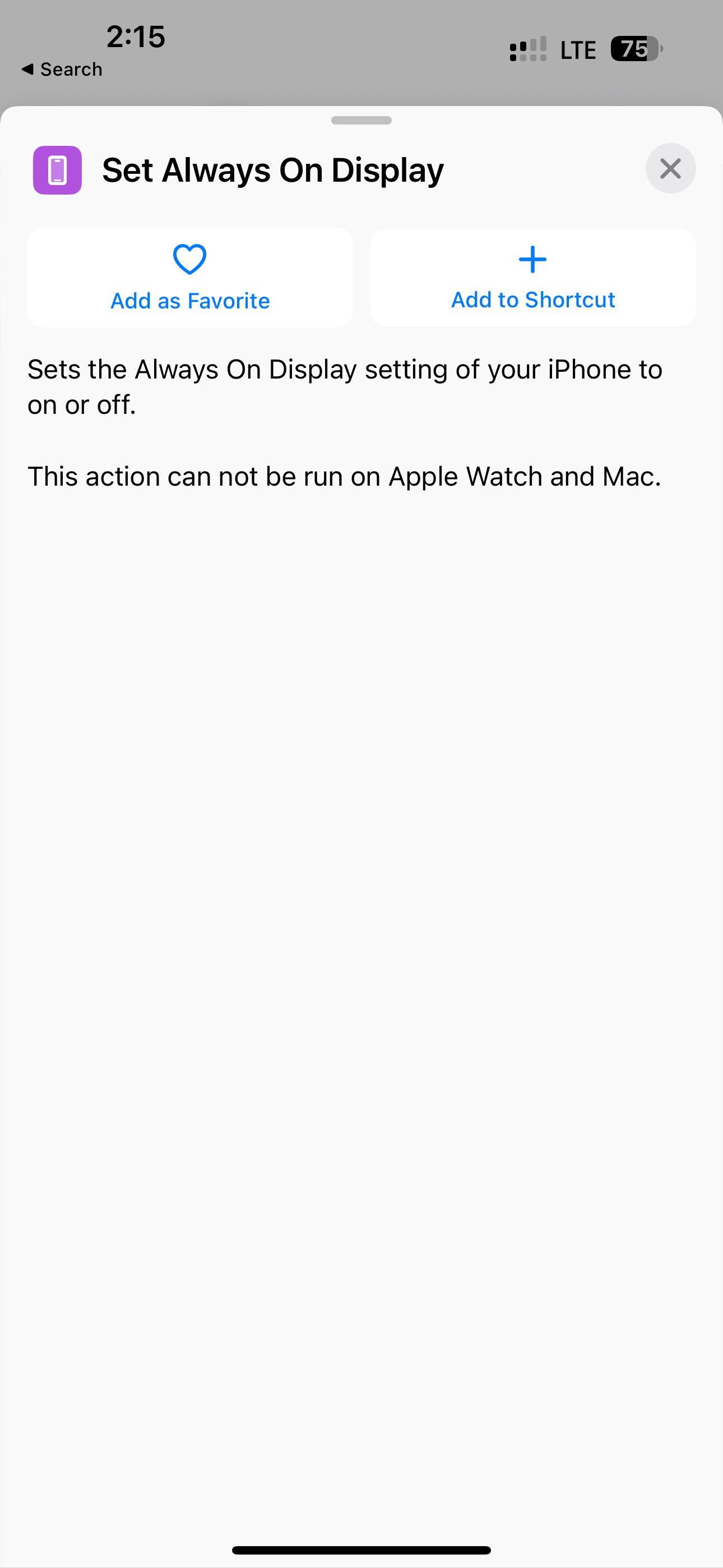
In Shortcuts, there’s a new “Set Always on Display” action, a new Lock Screen action, and a new Set VPN action.
New animations in the Music app
In the Music app, there are various interface tweaks and icon changes. For instance, adding a song to your queue no longer causes a full-screen pop-up. Instead, there’s a much smaller notification at the bottom.
There isn’t, however, any sign of Apple Classical.
AppleCare in Settings
iOS 16.4 includes a new screen in the Settings app where you can see all of your AppleCare coverage for multiple devices like the iPhone, Apple Watch, and AirPods.
Mastodon in Messages
iOS 16.4 beta enables rich previews for Mastodon links in the Messages app. This is similar to what the app offers for Twitter and other websites.
Accessibility
iOS 16.4 beta 1 adds a new Accessibility feature in the “Motion” menu for dimming flashing lights: “Video content that depicts repeated flashing or strobing lights will be automatically dimmed. The video timeline will display when flashing lights occur in the timeline for supported media.”
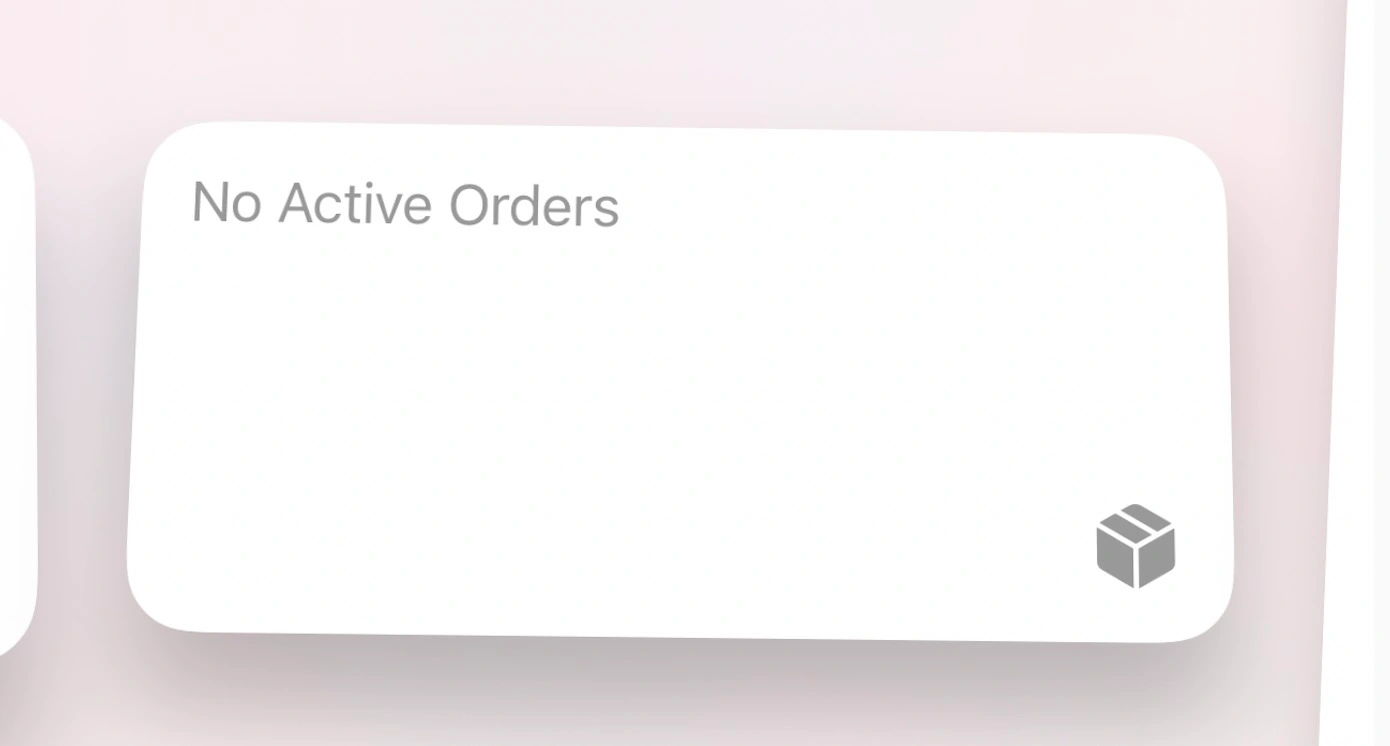
New “Order Tracking” widgets for the Wallet app
Apple has added three new Home Screen widgets for the Wallet app’s integrated order tracking features.
Other tidbits
In the Home app, Apple says both manual and automatic Software Update support is now available for Matter Accessories. The update also reintroduces the new home architecture after it was pulled due to reliability issues.
A few other changes to the keyboard:
Autocorrect for the Korean keyboard is enabled by default for testing and feedback.
Ukrainian keyboard now supports predictive text.
Gujarati, Punjabi, and Urdu keyboards add support for transliteration layouts.
New keyboard layouts are available for Choctaw and Chickasaw.
Apple Pencil hover now provides Tilt and Azimuth support.
Apple this week launched the first betas of its next round of software updates, including iOS 16.2, iPadOS 16.2, and macOS Ventura 13.1. A new report from Bloomberg today indicates that Apple is currently targeting a release date to the public sometime in mid-December for these updates.
iOS 16.2 release date
In the latest edition of his Power On newsletter, Bloomberg’sMark Gurman says while Apple is done with hardware releases for the year, it still has more software updates on the way. “The iOS 16.2 and iPadOS 16.2 updates, which began beta testing this past week, should be released around mid-December,” Gurman says in today’s newsletter.
Gurman also notes that Apple is targeting a release date of sometime between early February and the beginning of March for iOS 16.3 and macOS Ventura 13.3:
I’m told that Apple is aiming to introduce the upgraded models—including M2-based versions of the 14-inch and 16-inch MacBook Pros—in the first quarter of calendar 2023 and has tied the launches to the upcoming macOS Ventura 13.3 and iOS 16.3. Those software updates are expected to debut between early February and the beginning of March.
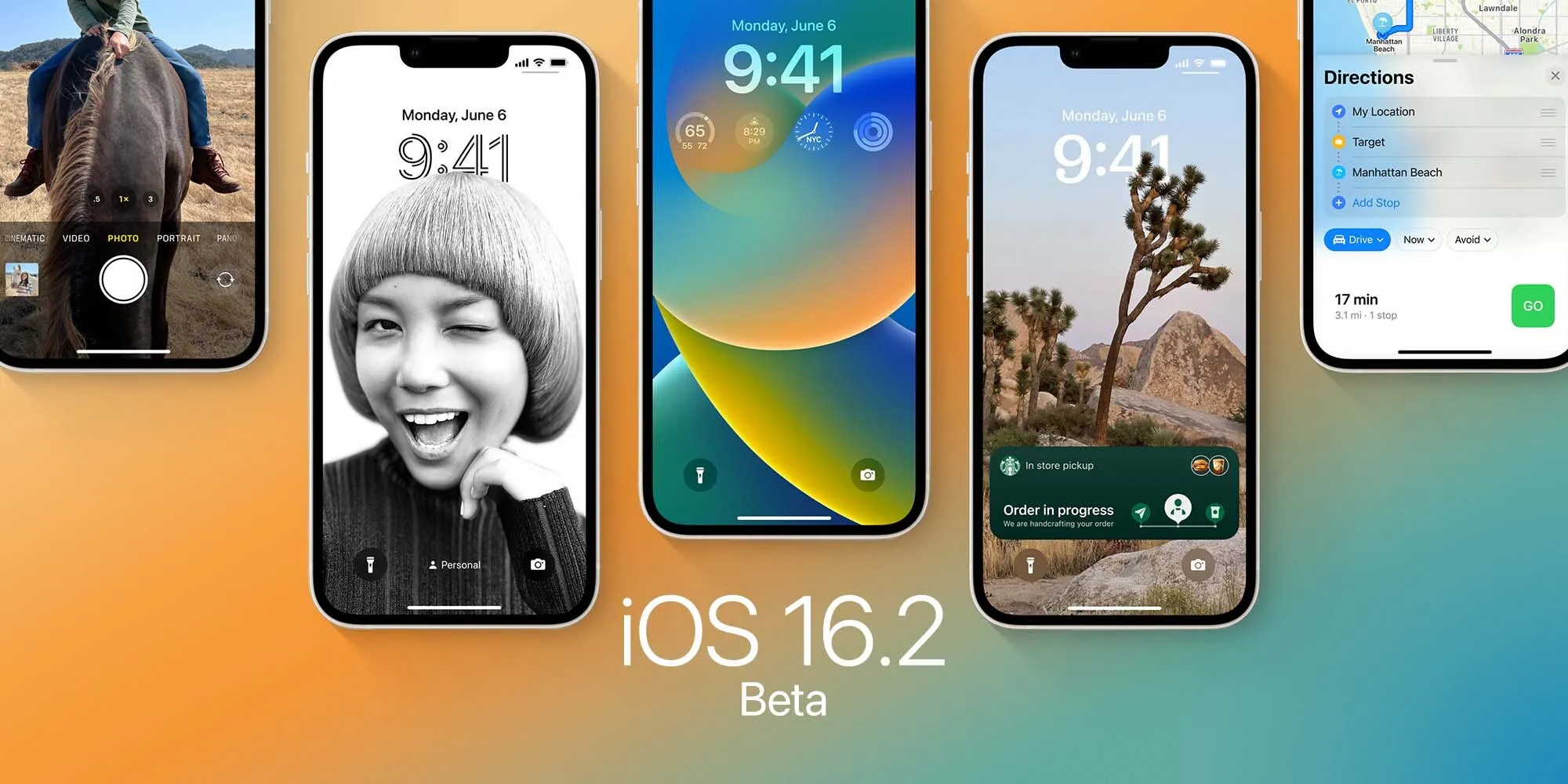
iOS 16.2 includes a handful of changes, including the new Freeform collaboration app that Apple first showed off at WWDC. As of right now, iOS 16.2 is available to developer and public beta testers.
Apple reveals how it approached redesigning the new Home app in iOS 16
One of the valuable updates that arrived with iOS 16 this fall is an overhauled Home app. Additions and changes in the fresh experience include a new UI and iconography, customizable sections, fresh wallpapers, a more seamless experience, and more. Now Apple has shared how it approached the big Home app update in an interview.
Speaking to Parade, Cecelia Dantas who works in Product Marketing at Apple detailed how the goal was to make the new app beautiful and workable for everyone from beginners to HomeKit experts:
“We took the opportunity to rethink and redesign the Home app. It has this fresh new look and it scales beautifully, even for those who are just starting out their smart home with a few accessories or for those who have an advanced setup.”
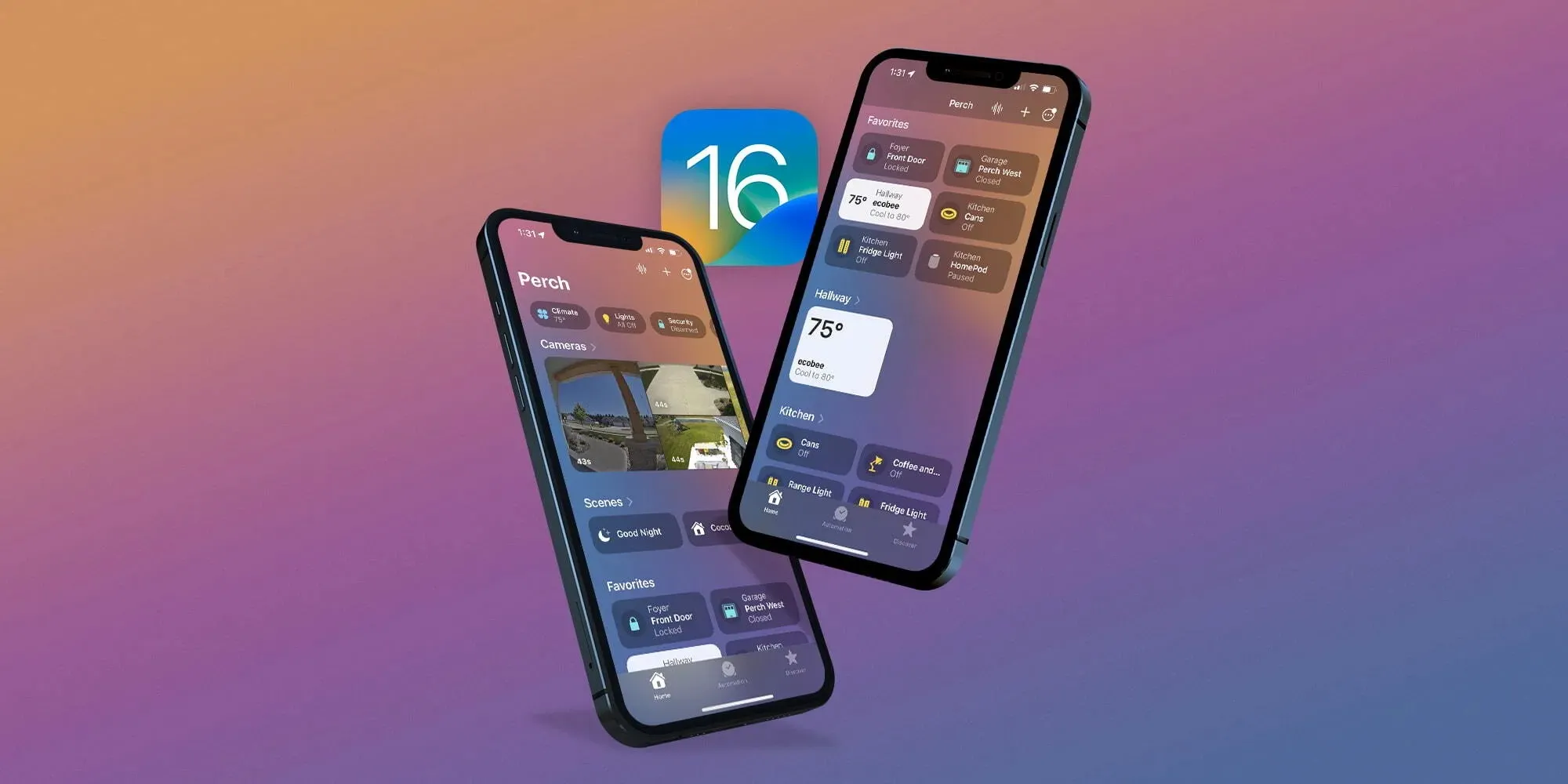
As I wrote in my detailed hands-on coverage of the new Home app earlier this year, it features a sharp default layout:
New top category buttons
HomeKit cameras are at the top of the app, below are Scenes and Favorites
Then you’ll see your other devices organized by Room
Most of the HomeKit device icons have been either totally updated or given a slight refresh
Other improvements include improved access to Home app settings, customizable sections, new wallpapers, and more.
Dantas also highlighted that while Apple had adopted Matter support with iOS 16.1, it “continues to apply the same lens for privacy that we do across all of our products and services. So all the data is stored using end-to-end encryption. So there’s no way for Apple to read this data. And Appledoesn’t build a profile around what accessories you use, or how you use them.”
As a refresher, Matter is a collaboration between Apple, Amazon, Google, Samsung, the Connectivity Standards Alliance, and many others to make it easy to use any smart home device with better reliability, speed, and performance.
An underlying technology of Matter is Thread. And we’ve already seen a number of smart device companies adopt Thread like Apple with HomePod mini, Belkin, Nanoleaf, Eve, and more.
With the official release of iOS 16.1 this week, Apple introduced Live Activities – a new way for third-party apps to provide useful information right on the iPhone lock screen or Dynamic Island. With the iOS 16.2 beta, which was released to developers on Tuesday, the company is working to let users choose to keep Live Activities updated more frequently.
More Frequent Updates to Live Activities
The new option, which is not yet enabled in iOS 16.2 beta 1, will provide “More Frequent Updates” for Live Activities. Code seen by 9to5Mac confirms that when this option is enabled, Live Activities (and consequently Dynamic Island interactions) will request updates at shorter intervals to show “more real time information.”
At the same time, the same message found in the code warns that enabling More Frequent Updates for Live Activities will also drain the iPhone’s battery faster. Here’s what the message says:
More Frequent Updates
Allowing more frequent updates lets you see more real time information, but can drain your battery faster.
Once available, the new option will be accessible to users in the Settings app. Having more frequent updates can be extremely useful for some apps like Flighty, which now has a Live Activity to show details about an upcoming flight. Delivery and ride apps should also benefit from this option. Presumably Apple will make the feature public before the official release of iOS 16.2.
What’s new with iOS 16.2?
iOS 16.2 comes with some other new features. The update introduces the Freeform app, which was announced back in June at WWDC 2022. Freeform allows users to write and draw together in a collaborative canvas. For iPad users, iPadOS 16.2 enables support for an external display with Stage Manager.
Also coming with iOS 16.2 is a new option to send feedback to Apple when Emergency SOS is mistakenly triggered on the iPhone, plus a new, more reliable architecture for the Home app.
The update is now available for developers and is expected to be released soon for users registered in the Apple Beta Software Program. There’s no word on when it will become available to the public.
iOS 16 has been available for just about two weeks, and users are continuing to complain that the update has destroyed their iPhone’s battery life. While a temporary hit to battery life is normal after a software update, something different seems to be going on this time around, with iPhone users still complaining two weeks later…
iOS 16 battery life
When you update your iPhone to a new version of iOS, there’s usually a temporary hit to your battery life immediately after installing that update. This is because iOS is doing things in the background like reindexing files, photos, apps, and more. This type of hit to your iPhone’s battery is especially notable with Apple’s yearly flagship software releases, like iOS 16, because they are such massive updates.
In general, this leads to a flood of battery life complaints immediately after a new software version is released. But once all of the background reindexing is complete, the complaints usually subside. This year, however, the complaints have not subsided and many users are convinced that iOS 16 has completely destroyed their iPhone’s battery life.
A quick search on any social media platform, including Reddit, TikTok, and Twitter, will unearth thousands of complaints from iPhone users. These users all say that their iPhone battery life has taken a significant hit since installing iOS 16 two weeks ago. And of course, there are a number of conspiracy theories about Apple purposefully reducing battery life on older iPhones to drive iPhone 14 sales.
In a poll of 63% of iPhone users said their battery life is worse after installing iOS 16. This seems to broadly line up with public sentiment regarding iOS 16’s battery life impact. On Reddit, one user writes:
My battery drain is hugely more than i usually had. I work in the office and dont use my 13 PM that much during the day, nothing has changed in my behaviour. On iOS 15 I mostly came home with between 85% – 90% left. With iOS 16 its between 65% – 75%. That’s in my opinion quite A LOT when almost not using my phone.
Another user:
Battery on 13 pro max drains like crazy. It went from 11-12hrs SOT to just 7hrs and it lags like hell when I do facetime or PiP, it just lags in general. I do know it takes a few days for the phone to be normal again but it’s already been almost a week. I’m contemplating on going back to 15.7 but I might need some opinions first.
Apple hasn’t yet commented on these battery life concerns from iOS 16 users. The company has released iOS 16.0.2 to the public with no mention of battery life improvements. iOS 16.1 is also currently in beta testing.