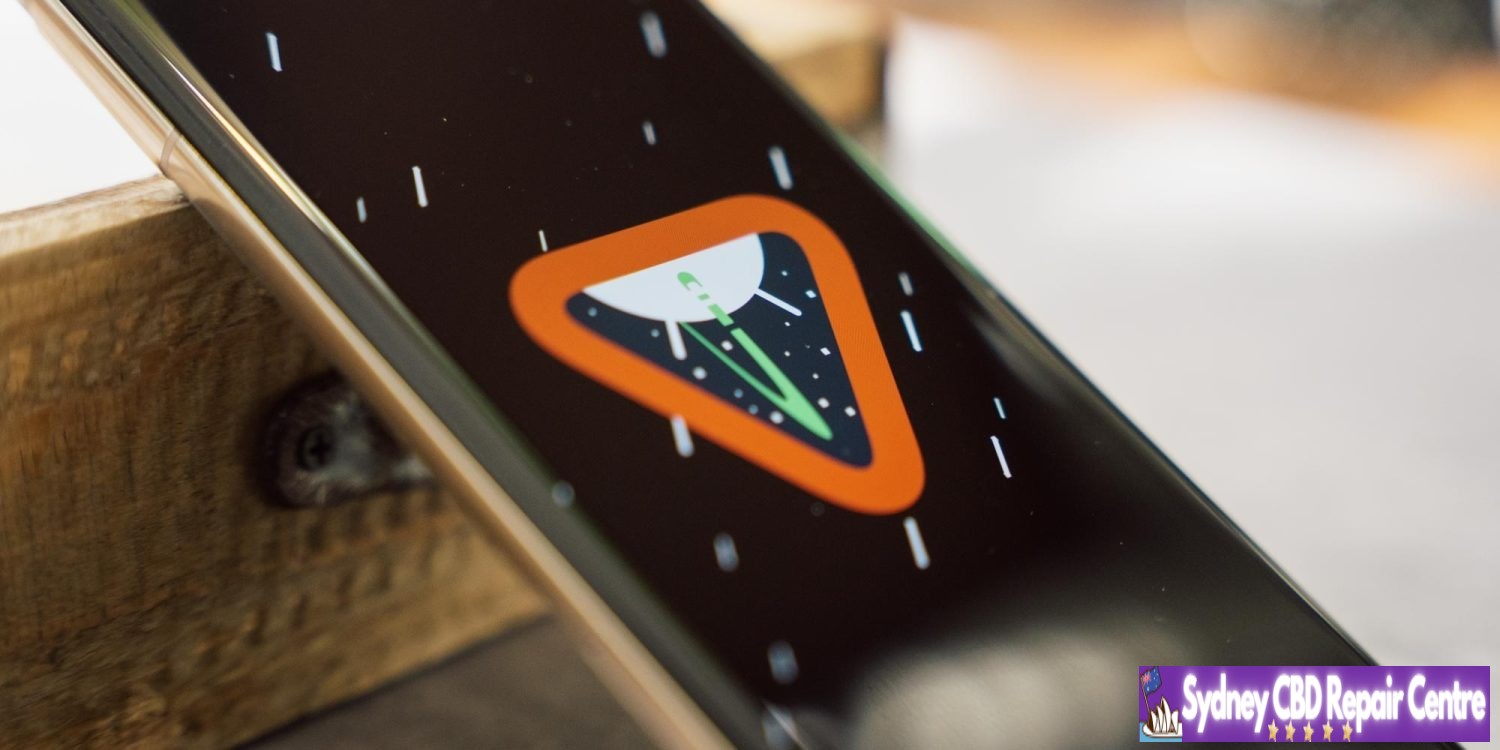
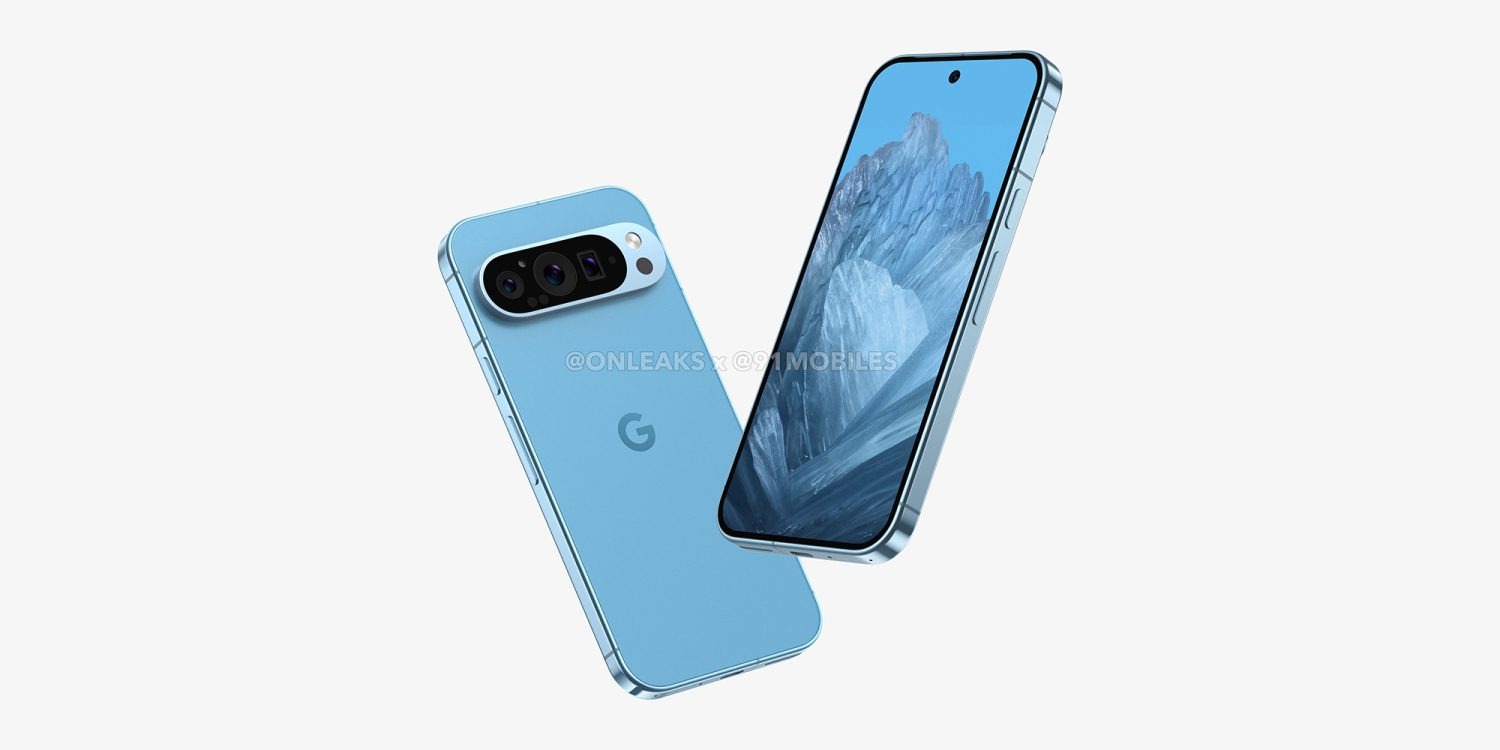
For those not on Android 15, Google has released Android 14 QPR3 Beta 2.2 for Pixel on May 23, 2024. It comes nearly two months after the last release of this track. A stable 14 QPR3 release is expected at the start of June.
AP21.240305.006 with the May — from March — 2024 security patch is available for supported devices: Pixel 5a, Pixel 6, Pixel 6 Pro, Pixel 6a, Pixel 7, Pixel 7 Pro, Pixel 7a, Pixel Tablet, Pixel Fold, Pixel 8, and Pixel 8 Pro.
There’s no Pixel 8a build, and only factory images are offered for manual install given an OTA sideloading issue.
Fixed various other issues that were impacting system stability and connectivity.
Back in April, Google said you could ignore Android 15 Beta 1 if you wanted to remain on the Android 14 Beta Program to “receive minor .x updates until the final stable QPR3 release” (in June). The on-device OTA is 18.06 MB update on the Pixel 8 Pro and 40.83MB for the Pixel 7 Pro.
All eligible devices enrolled in the Android Beta for Pixel program that haven’t taken an update to Android 15 Beta will be offered an over-the-air (OTA) update to Beta 2.2.
Last May 22,2024 the Unicode Consortium previewed the new emoji that are expected to be added to Apple’s upcoming OS updates, including iOS and iPadOS 18, watchOS 11, and more. Though the list isn’t finalized yet, it’s likely that everything outlined will be approved and added to the official set of emoji that platform owners like Apple and Google will adopt.
One standout from the list is a new ‘face with bags under eyes’ emoji that makes me feel truly seen. It’s undoubtedly bound to be one of the most popular additions. Other new emoji include a shovel, fingerprint, beet, and more.
New emoji up for approval
Here is the full list of new emoji expected to come to iOS 18:
face with bags under eyes
fingerprint
leafless tree
root vegetable
harp
shovel
splatter
With emoji that represent exhaustion, a barren tree, and a shovel, there seems to be a fairly bleak common theme here.
One important thing to note is that the images above are not representative of what Apple’s finalized emoji art will look like. Unicode creates its own representations of the emoji, but it will be up to Apple’s design team to fashion their own emoji art that’s most consistent with the other emoji on its platforms.
Timeline of emoji being available to users
Apple typically adds new sets of approved emojis to their new release of iOS, so it’s unlikely we’ll see any of these additions in September’s initial iOS 18 release. However, perhaps with 18.2 later in the year, or 18.3 or 18.4 early next year we’ll finally get our hands on the exhausted emoji we all deserve.
For reference, iOS 17.4 was the release that brought the last batch of new emoji.
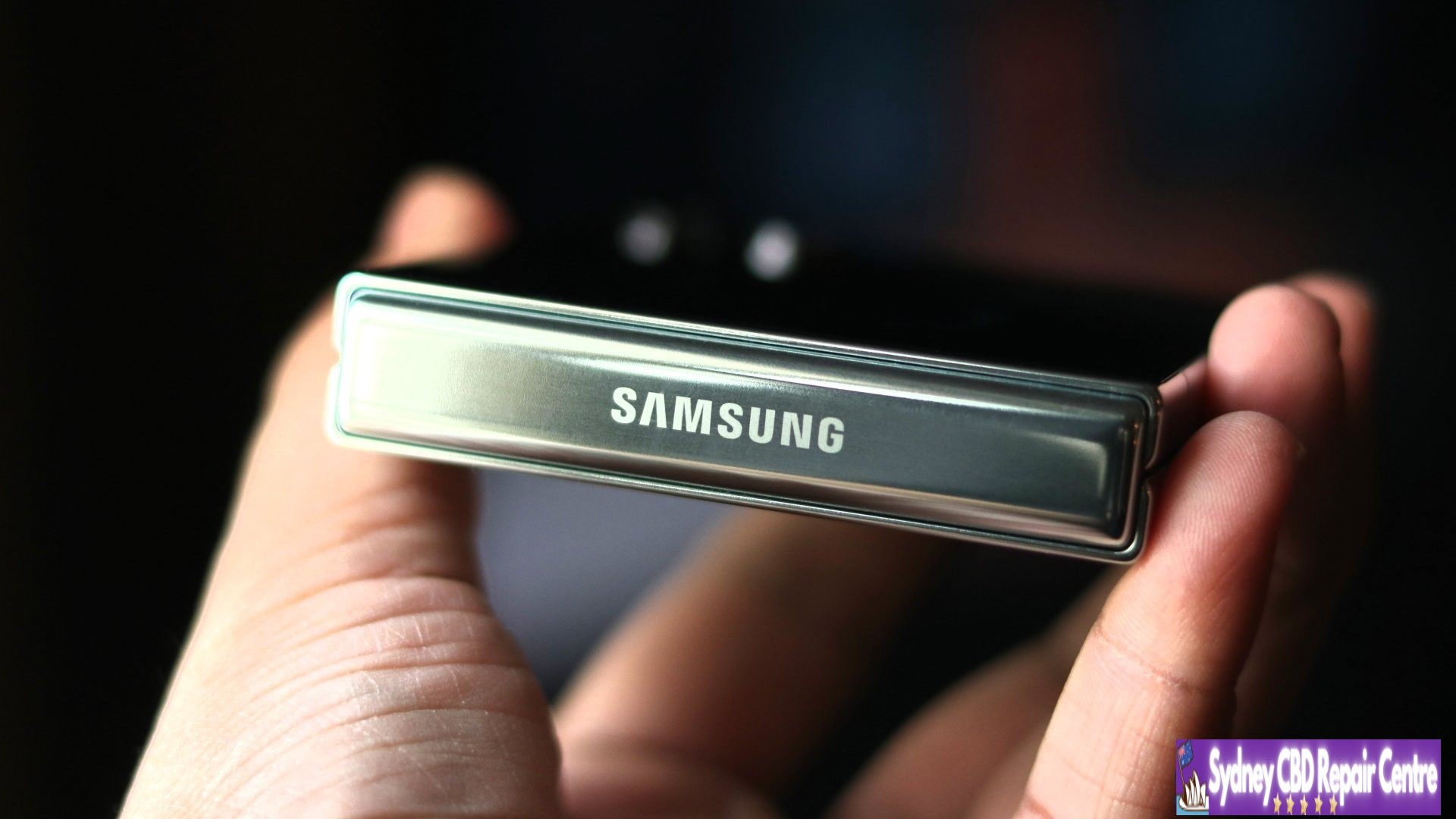
According to new reports, Samsung is planning to exclusively use Qualcomm’s Snapdragon 8 Gen 3 in its new Galaxy Z Fold 6 and Flip 6 foldables.
The Elec reports that Samsung will solely use Snapdragon 8 Gen 3 chips in the Galaxy Z Fold 6 and Flip 6 globally. Previously, it was thought that Samsung might use Exynos chips in some Galaxy Z Flip 6 models.
Realistically, this doesn’t come as a huge surprise.
Since the first generation, Samsung has been using exclusively Qualcomm chipsets in its foldables, even in regions where Galaxy S devices have been sold with Exynos chips instead. According to this latest report, gearing a new foldable model with Exynos instead of Snapdragon would actually raise the cost due to scale. “Only when foldable phones ship as many units as the S series” would it be a benefit to include Exynos, the report claims.
Samsung’s strategy around the chips in its phones have been going back and forth over the past few years. After many generations using Exynos or Snapdragon depending on the region, Samsung signed a deal with Qualcomm that saw all variations of the Galaxy S23 series sold with Snapdragon around the globe. But, merely a year later, the Galaxy S24 series re-introduced Exynos variants in some countries, though the S24 Ultra uses exclusively Snapdragon 8 Gen 3.
Galaxy Z Fold 6 and Flip 6 are expected to launch in July.
Samsung’s next Galaxy launch event reportedly takes place July 10 in Paris
Samsung is gearing up for a pretty big Summer launch event, with a new report pinpointing the next Galaxy Unpacked event for July 10.
Rumors have been floating around for a couple of months now that Samsung would be hosting a launch event in July for its next batch of Galaxy devices, but a specific date was never mentioned.
SamMobile now claims that the launch date in question will be July 10.
That date, a Wednesday, lines up perfectly with Samsung’s usual pattern even though it is a couple of weeks early compared to the year prior. That said, Samsung has good reason for moving things up a couple of weeks – the location.
According to this report, Samsung will host its next Galaxy Unpacked event in Paris, France.
That’s also the location of the 2024 Olympics, so getting things wrapped up well ahead of the torch’s lighting is definitely in Samsung’s best interest. The Olympics begin on July 26. That also lines up well with Samsung’s usual sponsoring of the Olympic Games, as the company has created special-edition devices numerous times for the Games.
Last year, Samsung hosted its foldable launch event from South Korea.
Samsung’s July 10 event is expected to see the debut of the Galaxy Ring, new foldables, and more. The Galaxy Watch 7, new tablets, and more could be incoming. There’s also a good chance Samsung introduces its first Snapdragon-powered laptop at the event.
If this July 10 date is legitimate, Samsung will likely be making some official announcements by the end of May.
Samsung Galaxy Z Flip 6 may borrow design elements from the S24
The Galaxy Z Flip series saw one of its most significant design upgrades last year when the Galaxy Z Flip 5 model introduced the folder-shaped cover screen, replacing the comparatively tiny 1.9-inch panel with a 3.4-inch screen.
Samsung is now preparing to announce the sequel to the Galaxy Z Flip 5, but judging from all the leaks, the Galaxy Z Flip 6 won’t reinvent the wheel.
Instead of bringing another leap in design, the upcoming Galaxy Z Flip 6 will most likely refine the existing formula. It won’t rewrite what the Z Flip series stands for but could borrow some design elements from the newer Galaxy S24.
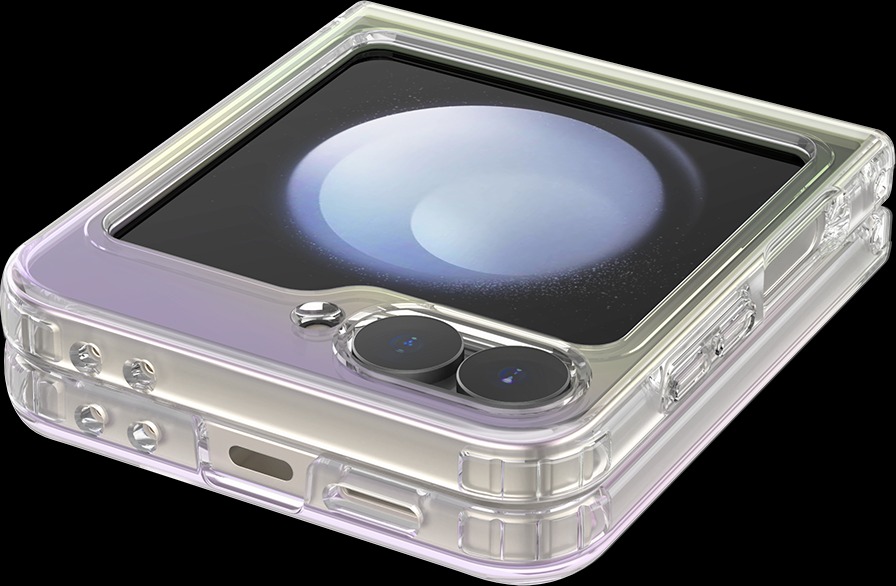
New renders (via @rquandt) belonging to a third-party case manufacturer reveal a few such minor design changes the Galaxy Z Flip 6 might boast.
According to these case renders, which may or may not reflect the Galaxy Z Flip 6’s final design with precise accuracy, the upcoming model may have an even flatter frame than the ongoing Z Flip 5. The Galaxy S24 went through a similar process earlier this year, admittedly inspired by the Z Flip 5.
Another design element the Galaxy Z Flip 6 might borrow from the Galaxy S24 lineup is the speaker grille. This element might now consists of one wide cutout instead of multiple smaller holes.
Finally, these renders suggest that the circular camera cutouts might have a slightly larger circumference for the Galaxy Z Flip 6 or that the space between the two cameras might be thinner.
However, once again, since the renders supposedly originate from a third-party case manufacturer, these finer design design details might not be entirely accurate.
An upgraded camera and a powerful Snapdragon chip
As far as hardware specs go, previous rumors indicate that the Galaxy Z Flip 6 will have an upgraded 50MP primary camera, which could explain the larger cutouts.
The phone will also share its Snapdragon 8 Gen 3 chip with the Galaxy S24 series. And only the Snapdragon chip, regardless of region. A recent report claims that Samsung is not ready to divide its foldable phones between Snapdragon and Exynos markets yet.
Samsung should lift the veil off the next-gen Galaxy Z Flip 6 in early July at Unpacked. The tech giant is expected to host the event in Paris — the host city of the 2024 Olympic Games. Which is fitting, given that Samsung is an Official Olympics Partner.
We’ve been hearing a lot of rumors about the next generation iPhone SE, which is expected to be announced sometime next year with a major redesign compared to the current model. Of course, one of the main selling points of the iPhone SE is the more affordable price – and there’s some news about that.
Apple rumored to increase iPhone SE price
According to leaker @Revegnus1, the iPhone SE could be around 10% more expensive in the US following the launch of its next generation next year. Currently, Apple sells the iPhone SE 3 for prices starting at $429 for the 64GB version. A 10% increase would take the starting price to around $469.
At the same time, the leaker also claims that Apple wants to keep the price of the new iPhone SE below the $500 mark. There’s also a chance that the company will keep the same $429 price as the current generation.
For comparison, these are the starting prices for iPhones that Apple currently sells:
iPhone SE 3: $429
iPhone 13: $599
iPhone 14: $699
iPhone 14 Plus: $799
iPhone 15: $799
iPhone 15 Plus: $899
iPhone 15 Pro: $999
iPhone 15 Pro Max: $1199
Apple has a history of increasing the price of products when they receive a major redesign. This happened with the entry-level iPad in its 10th generation, which went from $329 to $449. More recently, the company brought the price back to $349.
Verdict
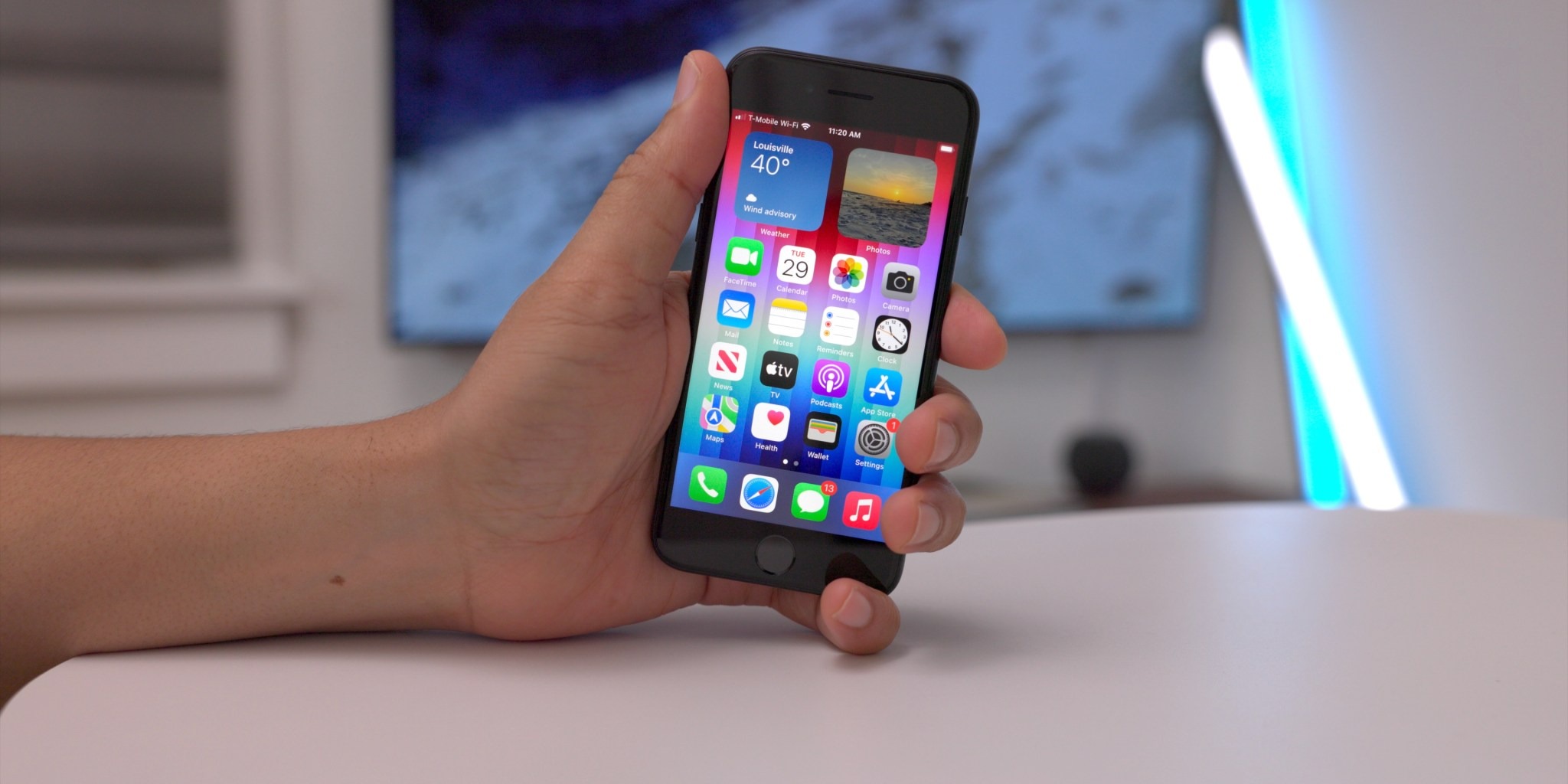
According to the latest rumors, the iPhone SE 4 will have the same design as the iPhone 14, with a 6.1-inch OLED display, flat edges, and Face ID. The current SE model is still based on the iPhone 8 design with a 4.7-inch LCD display and Home Button with Touch ID.
A price increase for the iPhone SE 4 to $469 or even $499 won’t come as a surprise. However, how Apple will differentiate the new SE from the iPhone 14 (which is expected to cost $599 when Apple launches the iPhone 16 later this year) remains unclear. The company could phase out the iPhone 14, for example.
Recent reports have revealed that Apple is working on a new ultra-slim iPhone for 2025 that would cost even more than the current Pro Max model. If that’s the case, we might see higher prices for the entire iPhone lineup next year.
The Information says Apple plans to introduce iPhone SE 4 in spring 2025.
According to a fairly reliable source, Qualcomm’s upcoming Snapdragon 8 Gen 4 could be a lot more expensive.
In a post on Weibo, Digital Chat Station says that the price of Snapdragon 8 Gen 4 will “definitely increase significantly” alongside the cost of the wafer used in production. While no means of measuring the change is cost is provided, saying that the change is “significant” certainly has implications.
While the cost of the chip used in a smartphone or device doesn’t always directly translate to the product’s retail cost, it can play a considerable role. For instance, it was claimed that Snapdragon 8 Gen 3 was roughly 25% more expensive compared to its predecessor, but that price wasn’t felt everywhere. The Galaxy S24 Ultra saw a price increase, but the Galaxy S24 and S24+ did not. The OnePlus 12 also didn’t adjust its price.
Rumors, opinions, and price information of Snapdragon 8 series (835-8Gen3).
That’s to say that, at least for now, the alarm bells shouldn’t be ringing.
But it does make some sense that Qualcomm’s prices could shoot up this year. Snapdragon 8 Gen 4 is likely to adopt a 3nm process at TSMC and is already confirmed to use a new Oryon CPU. That new CPU is also being used in Snapdragon X Elite which is beating Apple Silicon in some early tests.
In sum, that would make the new Pro lineup composed of black, white/silver, rose and natural titanium options. For the base iPhone 16 and iPhone 16 Plus, Kuo expects black, white, green, pink, and blue colorways.
These predictions generally match earlier expectations, although there had been some talk of a purple iPhone 16 model. Kuo does not mention purple in his message today.
The iPhone 16 lineup is expected to be officially announced in the fall, likely at a September media event. The phone’s design will mostly resemble their iPhone 15 counterparts, although the screen sizes on the Pro models is getting a smidge bigger. The dual-camera module on the 15 and 15 Plus is changing from a diagonal to a straight ‘traffic light’ arrangement.
The big new feature is expected to be the addition of a Capture Button, which will assist with taking videos and photos. The button is expected to be capacitive and respond to different levels of force pressure as input. For instance, users will be able to focus the camera in the viewfinder with a half-force press, and then press to actually take the camera. This is similar to how a traditional camera behaves.
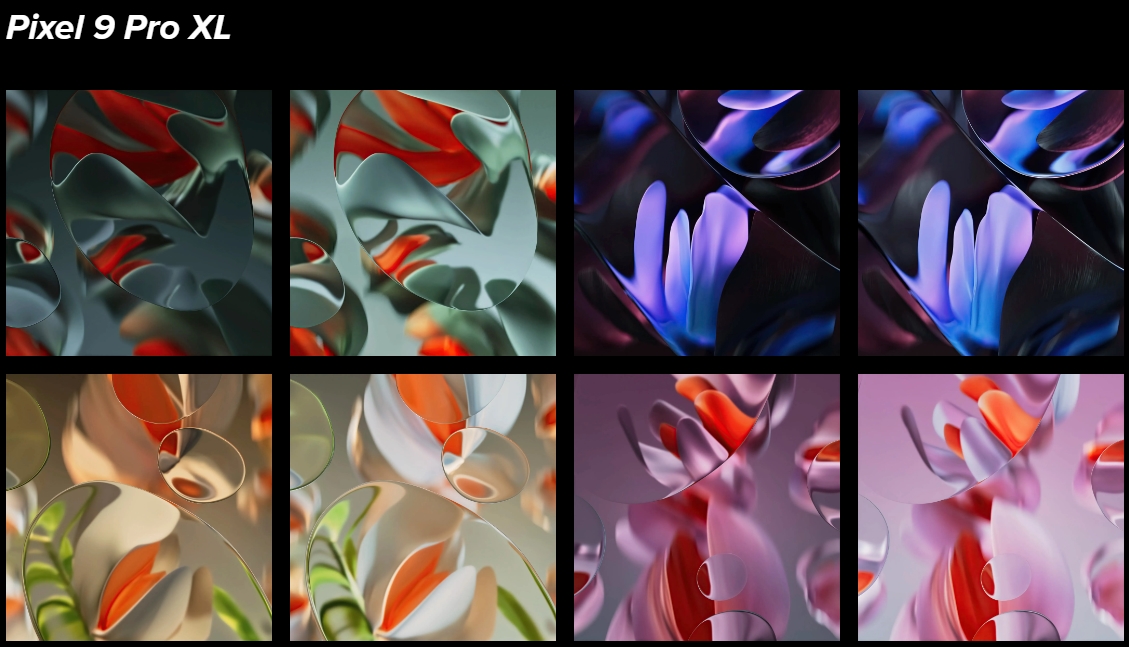
Ahead of their expected launch later this year, the wallpapers for the entire Google Pixel 9 series have leaked with a new “Swirling Petals” theme, and hinting at the color variants available.
Each year, Google’s new series of smartphones brings a new theme to its series of wallpapers. Last year, it was minerals. This time around, as reported by Android Authority, the Pixel 9 series will bring “Swirling Petals.”
This new series of wallpapers has a trippy translucent look that has petal-shaped blobs of color around the screen. The colors have plenty of contrast, but they’re not particularly vibrant (as if often the case with default wallpapers). As usual, there are light and dark versions of each wallpaper.
The series is split into four different devices. Pixel 9, Pixel 9 Pro, Pixel 9 Pro XL, and Pixel 9 Pro Fold.
The four-device flagship series is a new approach for Google, and will mark the largest number of devices launched at one time. Google’s Pixel Fold successor was originally expected to launch earlier in the year, as the original debuted in June, but with Tensor G4 under the hood, it increasingly looks like we’ll see this device debut later in the year.
The leaked wallpapers also hint at four color variants for Pixel 9 and Pixel 9 Pro’s, with only two options for Pixel 9 Pro Fold. These would line up with Google’s Pixel 8 series, though the fourth color option, “Mint,” didn’t debut until later on.
You can see the full set of wallpapers below. The whole set in full-resolution is being hosted on Google Drive.
With summer drawing near, we’re getting closer to the expected September debut of the iPhone 16 lineup. As a result, more details about the phones should start finding their way into the news.
One such update comes today from analyst Ross Young, writing on X in a subscriber post about the start of iPhone 16 display production.
iPhone 16 panels entering production soon
Young notes in his post that panels for the new iPhone 16 lineup are expected to begin in June, which would be on schedule with the timing of last year’s iPhone 15 production.
Display production taking place at the same time as last year means the iPhone 16 is on track to debut at the same time as last year’s iPhone 15, in mid-September.
Out of the full iPhone 16 line, which is expected to include four models yet again, the iPhone 16 and 16 Pro are said by Young to have the highest projected volumes in June, with 16 Plus and 16 Pro Max displays likely ramping up later in the summer.
Also today, dummy units for the iPhone 16 Pro and Pro Max were shared, revealing the expected larger display sizes on this year’s models. This will represent the first notable display size increase in several years, since the iPhone 12 line.
Verdict
With WWDC on the horizon, and Apple needing to produce millions of iPhones ahead of their fall launch, today’s news is unsurprising yet reassuring. Pending any future production issues, potentially from manufacturing new display sizes this year, the iPhone 16 should hit users’ hands around the same September timeframe that we’ve come to expect.
Android 15 is now becoming available for devices outside of the Pixel ecosystem, including from OEMs like Nothing, Oppo, OnePlus, Xiaomi, Vivo, and more.
Android 15 doesn’t look entirely new on the surface, but it houses a lot of changes under the hood. Little changes that affect overall quality-of-life and phone performance. While the brunt of what we’ve seen from Android 15 has been on Pixel phones running the beta, a healthy number of manufacturers have officially made Android 15 Beta builds available to the public.
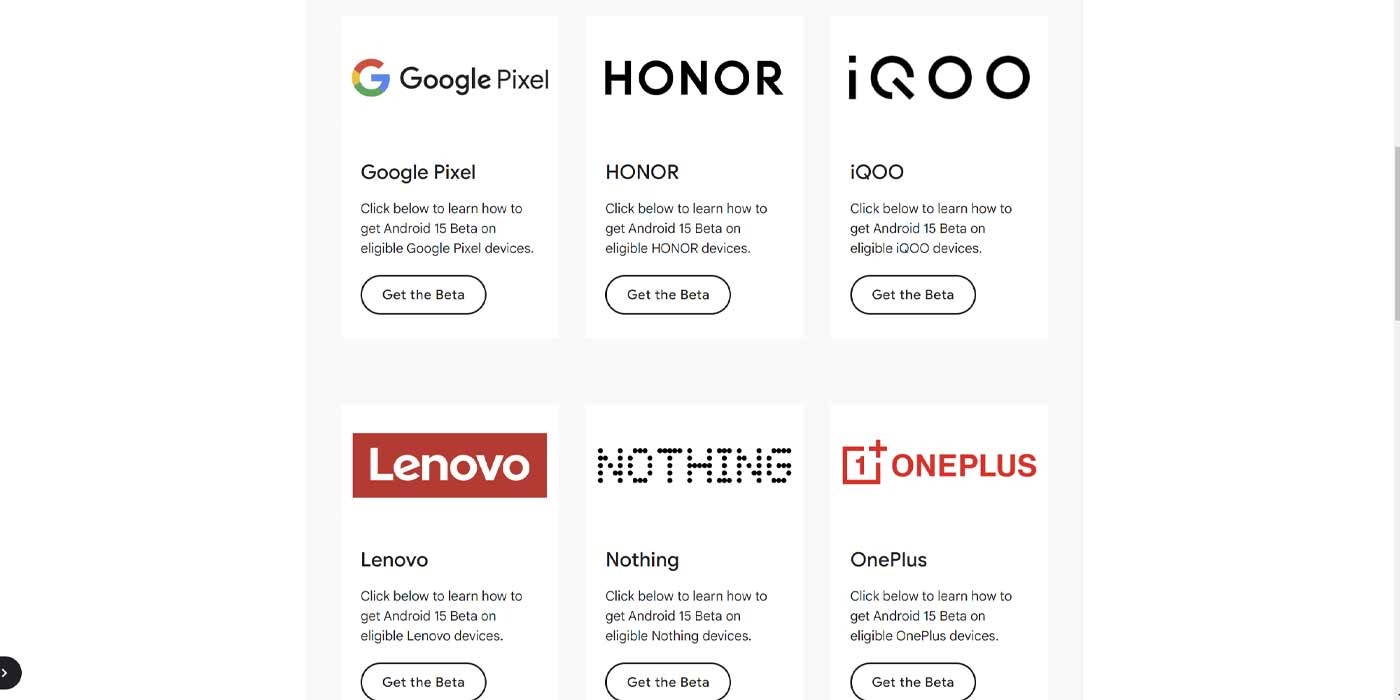
On the official Android 15 page from Google, there’s a list of manufacturers and, by extension, a list of devices that are currently able to run Android 15 in some beta form. The Pixel series has access to the Android 15 Beta 2 build previewed at Google I/O 2024. Devices running Android outside of that will very likely have a different build available, but the specifics depend on what phone you’re using.
So far, Google has populated that list with these phone manufacturers:
Honor
IQOO
Lenovo
Nothing
OnePlus
Oppo
Realme
Sharp
Tecno
Vivo
Xiaomi
How to install Android 15 Beta on your device
Whether or not you can install Android 15 on your devices is simple – if you see your device listed, you’re good to go. Each OEM will differ in what build of Android 15 it’ll offer, but a specific list of phones is listed under each name in Google’s official list.
Find your device’s manufacturer and hit Get the Beta.
Carefully read that OEM’s guide on how to install the Beta and follow it’s instructions.
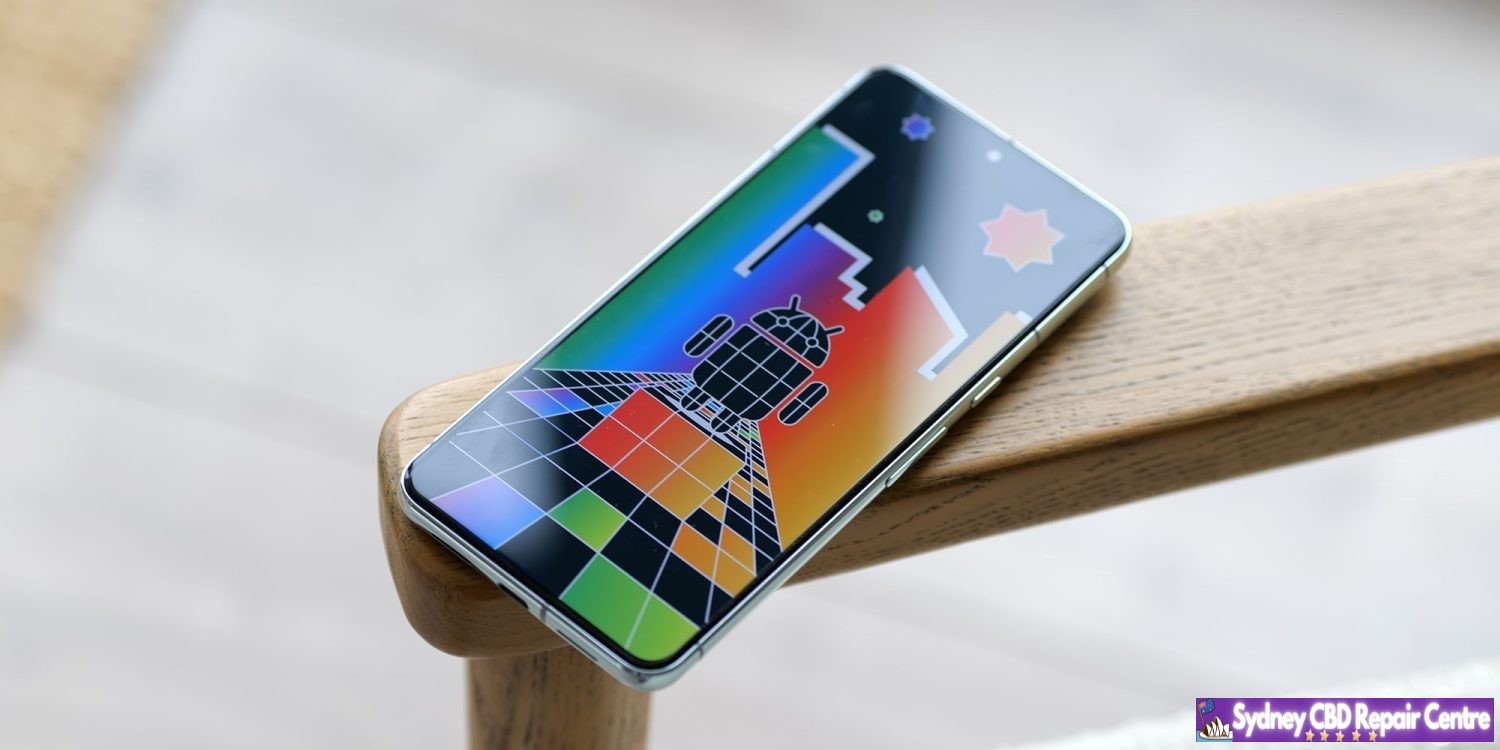
Google tends to excitedly offer up the Anroid 15 Beta as the “new thing,” and publications like Sydney CBD Repair Centre are excited to share that information with you, but we do ask that you keep something in mind: if you don’t feel comfortable installing the Android 15 Beta for your device, don’t. Beta updates like this always have the potential to brick or harm your device, even if you take every precaution. As always, take the time to read the guide for each OEM and follow the manufacturer’s instructions closely.
Apple has officially released iOS 17.5 to the general public. The update brings a handful of new features and changes for iPhone users. Head below for everything we know right now.
iOS 17.5 is now available
iOS 17.5 is now available to the public. You can head to the Settings app on your device, then choose General, then Software Update to install the update.
What’s new in iOS 17.5?
While iOS 17.5 isn’t quite as big of an update as other iOS 17 updates, it still includes its fair share of new features and updates.
Web Distribution in the EU
Within the European Union, the latest iOS 17.5 update introduces the capability to install applications directly from a developer’s website. Apple unveiled this new “Web Distribution” feature last month, explaining that it allows developers to distribute their iOS apps straight from their own websites.
To utilize this functionality, developers must opt into the updated App Store business terms, which requires paying a Core Technology Fee of €0.50 for every first annual installation exceeding one million in the preceding 12 months.
Any application disseminated through the web will still need to adhere to Apple’s notarization guidelines. Apps can only be installed from a website domain that the developer has registered in App Store Connect. Apple will also provide a range of APIs for developers to integrate with system functionality.
New Quartiles game for Apple News+
In the Apple News app, Apple News+ subscribers in the United States and Canada will find a new “Quartiles” word game after updating to iOS 17.5. The game prompts players to select from a grid of tiles to form words.
Quartiles is the third game to come to Apple News+, following the addition of daily crossword and crossword mini-games that were added last year.
iOS 17.5 also adds Game Center integration to all three of the Apple News+ games. With this feature, you can now see leaderboards for each of the three games for Daily Solve Time and Daily Score stats.
Apple News offline
Also for Apple News+ subscribers, iOS 17.5 introduces a new “Offline Mode.” This feature “makes it easy to access the hundreds of magazines, newspapers, narrated articles, and more included in a News+ subscription — no matter where you are,” according to Apple.
Apple News+ subscribers can now enjoy Offline Mode on iPhone and iPad to automatically download Top Stories, Apple News Today audio briefings, full magazine issues and narrated articles from News+ publishers, and puzzles to access later, without Wi-Fi or a cellular connection. When the device is back online, downloaded content will automatically refresh, and downloads will be optimized to maximize space on the device.
Design changes
iOS 17.5 also includes a few small design changes that are worth pointing out:
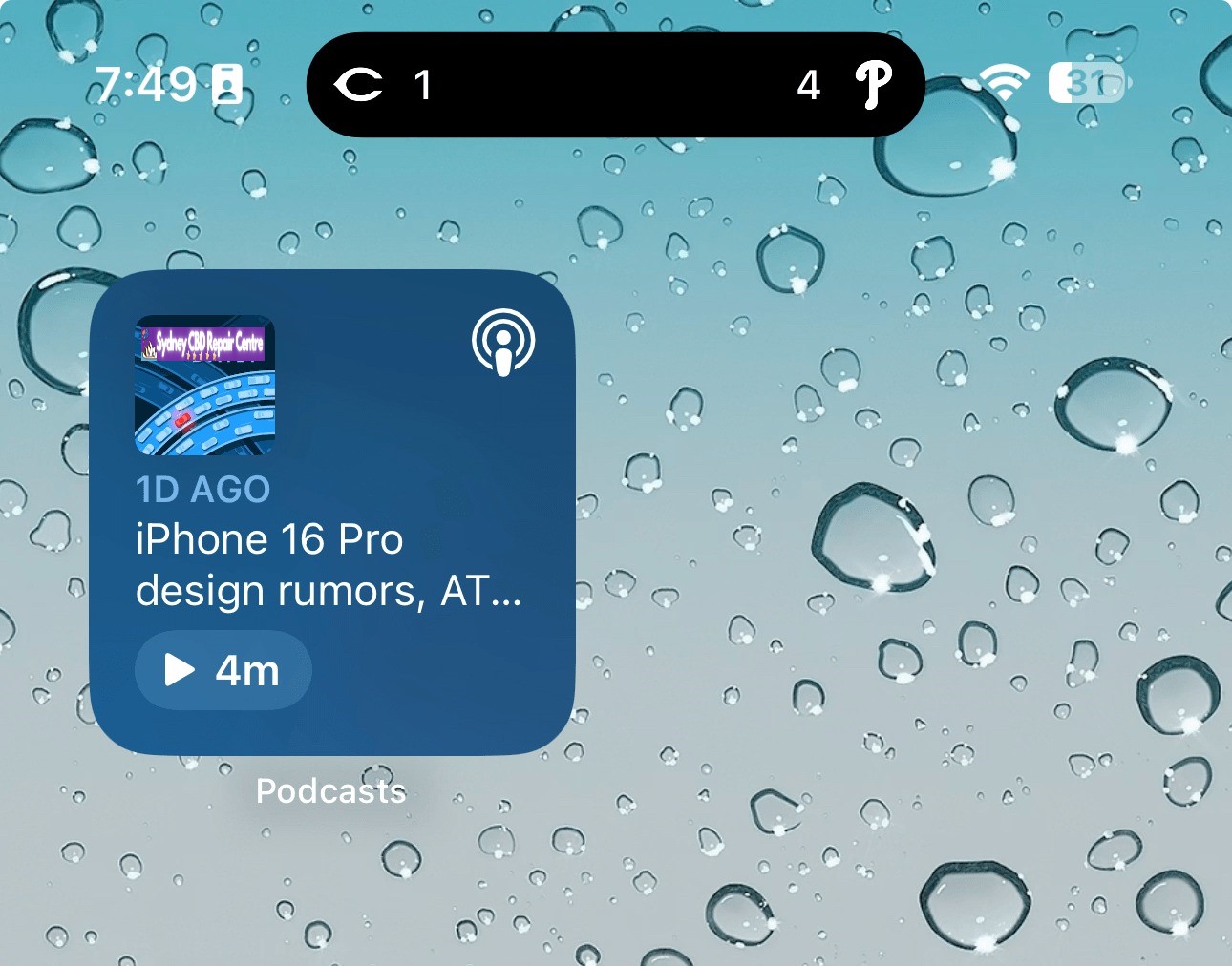
The Podcasts widget has been updated to have a new dynamic color that changes based on the artwork of the podcast you’re currently playing.
In the Apple Books app, Apple has redesigned the “Reading Goal” icon in top navigation bar.
In the Settings app, there is a new glyph for the “Passkeys Access for Web Browsers” menu under “Privacy & Security.”
New Pride wallpaper
iOS 17.5 also includes a new Pride Collection of wallpapers for iPhone and iPad users, as is tradition. The new dynamic wallpapers come as part of Apple’s goal to “champion global movements to protect and advance equality for LGBTQ+ communities.”
As explained by Apple, iOS 17.5 includes a new system centered around anti-stalking capabilities for accessories like AirTags. This development follows Apple’s announcement last year of a partnership with Google to collaborate on a new “industry specification to combat unwanted tracking.”
Strings added to the Find My app reveal that iOS will be able to identify tracking accessories, even those that are not Apple or Find My certified, and assist users in disabling them.
One of the new strings states, “This item lacks certification on the Apple Find My network. You have the option to disable this item and prevent it from sharing its location with the owner. To proceed, follow the instructions provided on a website by the manufacturer of this item.”
These changes come as Google started rolling out its new Find My Device network for Android on April 8.
New ‘Repair State’
Also in iOS 17.5, Apple has added a new “Repair State” feature to Find My. This feature lets users confirm with their Apple ID and password that they’re about to send their iPhone in for a repair. As a result, Apple technicians can confirm that the person owns the iPhone and then proceed with the repair without the need to turn off Stolen Device Protection and Find My.
Essentially, this ensures that users can still track their device using Find My while it’s being repaired. Previous, Apple required users to disabled Find My altogether.
iOS 17.5’s security fixes
Finally, in addition to all the new features and changes, iOS 17.5 also includes 15 notable security patches for iPhone users. Notably, none of the 15 vulnerabilities were reported as previously exploited.
You can find the full list of these changes in our dedicated coverage. Even if none of the new features in iOS 17.5 are tempting for you, we recommend updating as soon as possible for those security fixes.