Following several leaks in recent weeks, Vivo has officially confirmed an April 20 launch event for its next foldable, the Vivo X Flip and Vivo X Fold 2.
Posted to Weibo today, Vivo confirmed a launch event for its upcoming foldable later this month. The April 20 event will see the X Flip and X Fold 2, as well as the debut of the new Vivo Pad 2, which the company further teased on its account.
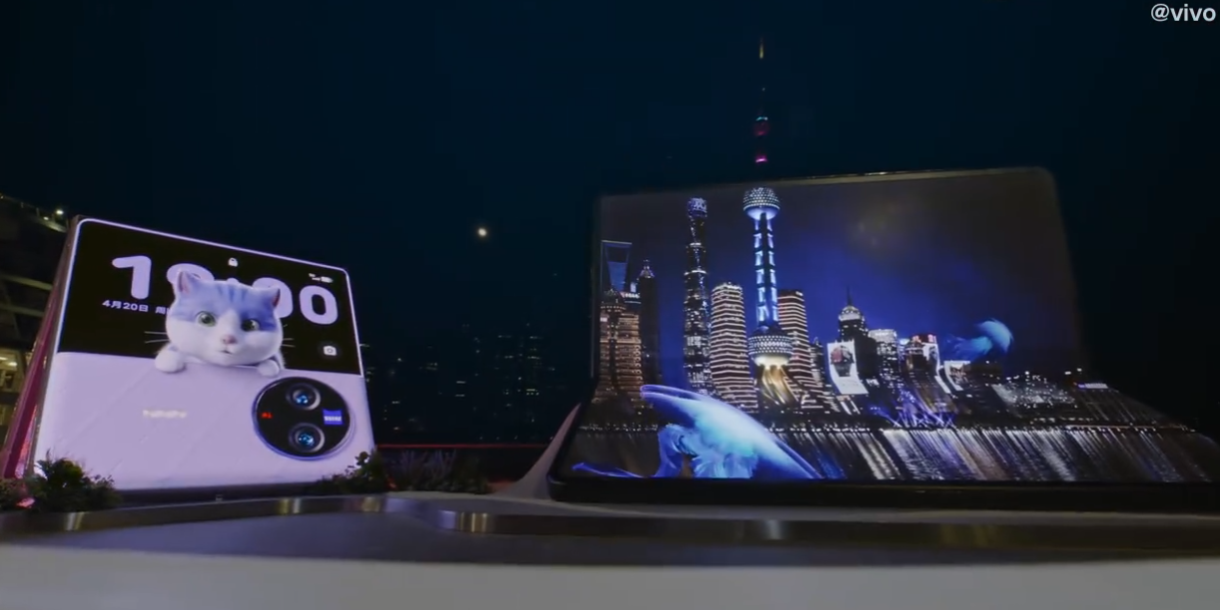
In a video, Vivo showed “giant visual installations” in the North Bund area near Shanghai. The advertisements show off both phones and use 3D tech that’s visible to the naked eye, which sounds incredibly cool.
We know that the Vivo X Fold 2 will be the first foldable employing Qualcomm’s Snapdragon 8 Gen 2 chipset and that the device will also pick up a new design that includes a red leather-looking material. Meanwhile, the Vivo X Flip has a large outer display in the same form factor as the Galaxy Z Flip series from Samsung.
What remains to be seen at this point is if either of these devices will be sold on the global market.
Vivo X Flip leaks in official-looking image with a huge outer display
As the foldable market heats up, Vivo is working on its first clamshell form factor, and a new leaked image of the Vivo X Flip shows off the phone’s giant outer display.
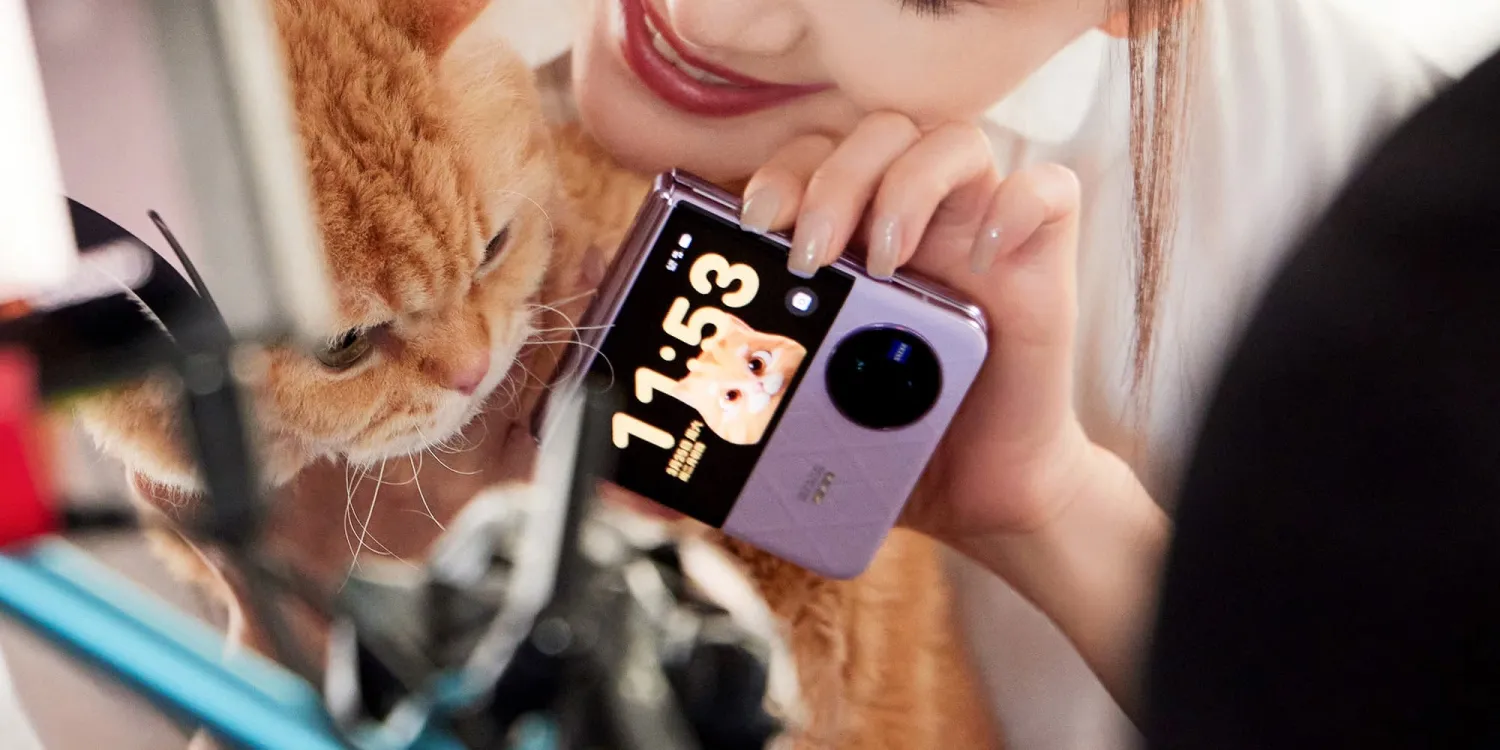
Posted by Digital Chat Station on Weibo, an official-looking image of the Vivo X Flip gives us our first look at the upcoming foldable’s design. It’s only seen from the outside, with the foldable’s outer display lit up and the camera in full view.
Obviously, the eye-catching point of the Vivo X Flip is its outer display, which is quite large. The display takes up over half of the outer portion of the phone, with a landscape placement that stretches from one side to the other. Measured diagonally this display is probably the same size as the one on the Oppo Find N2 Flip, but the landscape orientation makes for a display that’s potentially more useful.
Directly below that display is a camera module, which is round and only has a single obtrusion from the display. There are presumably at least two camera sensors in that module, but it’s hard to tell from the single picture. Previous rumours have mentioned a 50MP primary camera and 12MP ultrawide.
Notably, too, the Vivo X Flip has a diamond pattern on the design, as well as a purple colour that’s very similar to what Samsung has used on the Flip 3 and Flip 4.
The Vivo X Flip is also expected to debut with a 6.8-inch inner display and Qualcomm’s Snapdragon 8+ Gen 1 chip. A specific release date is not yet known for the Vivo X Flip, but the Vivo X Fold 2 is rumoured to arrive this month.
As Android 13 rolls out to more phones, the update is bringing the once Pixel-exclusive Personal Safety app to more devices including those from Sony Xperia and Vivo.
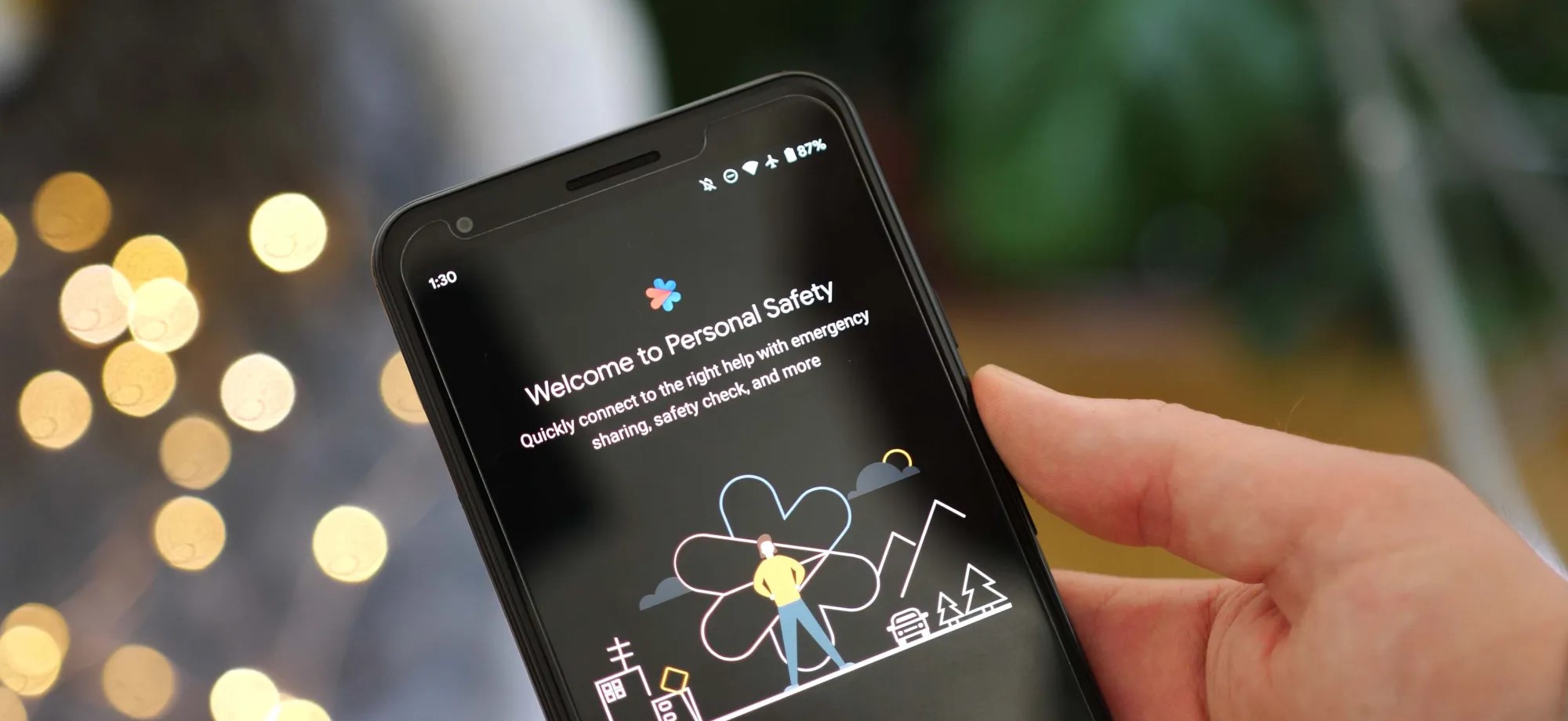
On Pixel phones today, the Personal Safety app includes a full suite of features designed to make sure you’re ready should any type of disaster strike. You can add/edit critical medical information, assign emergency contacts, get alerts for nearby crises, and on some devices even call for help when a car crash is detected.
While this was originally built as an exclusive set of features for Pixel phones, with the release of Android 13, Google has decided to make Personal Safety available as an option for other phone makers. As noted by Mishaal Rahman on Twitter, there is already a small selection of phones that are gaining access to Personal Safety as part of Android 13.
While Samsung certainly has the broadest profile of devices on Android 13 today, no Galaxy phones are currently opted in for Google’s safety suite. Instead, the current list of non-Pixel Android devices with Personal Safety contains phones from Sony Xperia, Vivo, iQOO, and Nothing.
Nothing Phone (1)
Sony Xperia 5 IV
Sony Xperia 1 IV
iQOO 7
iQOO 8 Pro
iQOO 9 SE
iQOO 9 Pro
iQOO 9T
iQOO I2202
iQOO 11
iQOO Neo7
Vivo X80 Pro
Vivo X90
Vivo X90 Pro
The actual experience of using Personal Safety on these phones is straightforward and quite similar to the app’s older (pre Android 13) experience on Pixels. Rather than appearing as a dedicated app in the drawer, you can navigate to Personal Safety through the Settings app, in the “Safety & emergency” section.
From there, as expected, you can manage your emergency information and get enrolled for alerts. However, for all currently supported phones, the Android 13 update does not bring the car crash detection that Personal Safety is best known for.
Google has opened car crash detection to non-Pixel phones, but it requires device makers to implement Android’s “Context Hub.” This feature is designed to let small, ambient programs — such as sensing a sudden stop, in the case of car crash detection — run without using excess power. As adding support for Context Hub would require a system update, it’s not likely that any of these phones will gain car crash detection in Personal Safety any time soon. Despite that, it’s still great to see Google offer some of the Pixel series’ exclusive features to more Android phones.
For the first time ever, Chinese company Xiaomi has taken the second place from Apple in the global smartphone shipments ranking during the second quarter of 2021. As shown by a Canalys research, smartphone shipments grew 12% last quarter as a result of the COVID-19 vaccination around the world.
While Samsung remains in first place, Apple lost the second place ranking in smartphone shipments to Xiaomi during Q2 2021. The Chinese company also had the most significant growth in the last quarter with an 83% increase in sales, while Samsung recorded a 15% increase and Apple only 1%.
In terms of market share, Samsung accounted for 19% of global smartphone sales in Q2 2021, while Xiaomi took 17% and Apple 14%. Oppo and Vivo vie for fourth and fifth place with 10% market share each.
According to the research, one of the main reasons for Xiaomi’s growth is the more than 300% increase in sales in Latin America, coupled with a 150% growth in Africa. Compared to Samsung and Apple devices, Xiaomi offers products that cost 40% and 75% cheaper, so they become more popular in emerging countries.
And as it grows, it evolves. It is now transforming its business model from challenger to incumbent, with initiatives such as channel partner consolidation and more careful management of older stock in the open market. It is still largely skewed toward the mass market, however, and compared with Samsung and Apple, its average selling price is around 40% and 75% cheaper respectively.
Even so, Apple is still in a good position. Morgan Stanley and JP Morgan recently raised their price targets for AAPL as they believe that the iPhone 13, which is expected to be introduced this fall, will keep up the strong sales of the iPhone 12. A recent research by Consumer Intelligence Research Partners shows that the iPhone 12 line accounted for 63% of US iPhone sales in the third quarter of 2021.
Display tech has come a long way for smartphones, but what makes a good TV doesn’t work so well on mobile handsets.
This year, we partnered with our friends at Spectracal to kick the proverbial tires on the displays of all the Android phones we tested, to see just how good they could get. For the most part, phones tend to sacrifice color accuracy for screen brightness. However, while many phones are happy to make their screen as blue as tolerably possible (looking at you, LG G7 ThinQ) for brightness, there are a handful of phones with extremely good displays. Let’s explore!
What makes a good smartphone screen?
What’s “best” generally requires a certain philosophy. That may not make a lot of sense to you now, but it will in a minute.
When you ask someone what the best TV is, you generally assume you’ll be using it in a somewhat darker room, and all your content is going to be in 24, 30, or 60fps. What makes the best TV is very straightforward: you want the most accurate screen you can find — in color, grayscale, and so on.
Smartphones go with you wherever you go. They need to work as well in bright sunlight as a dark room, so your mobile needs are very different than someone making a home theater setup.
Color temperature (K)
Closer to 6500 is better
Smartphone screens need to be accurate, of course, but they also need to be bright. This poses a lot of issues for smartphones, and satisfying both demands has frustrated many manufacturers.
Peak brightness (cd/m^2)
Higher is Better
Display makers have a tough choice to make: do you boost blue values to make the overall brightness higher, or suck it up and stick with color accuracy?
When we look at color accuracy, it’s generally accepted that anything under 1 (DeltaE2000) is pretty much where nobody can tell the difference between a perfect image and an imperfect one, however for smartphones we find that the expanded gamuts mean our eyes are a little more forgiving than that. While TV calibrators look for values as close to this as possible, it’s just not something smartphones really try to do — for a number of reasons. Mostly because nobody cares how accurate the screen is if you can’t see it.
Color accuracy is outstanding in Samsung’s Cinema mode, even in the DCI-P3 gamut.
This is why our criteria for a good screen is a lot more unforgiving than what you’d find elsewhere. A good smartphone screen should meet these criteria:
It should be brighter than 500cd/cm2, so you can see it outdoors without any help from shadows.
Its display color error should be under 5 (DeltaE2000).
Its greyscale values should be reasonably accurate (how the phone transitions from black to white).
Its refresh rate needs to be able to handle common content.
It should target a color temperature under 8000K, but above 6500K
To be clear, a lot of phones meet these criteria, but not all measurements are as important as others. This is why we needed an internal scoring algorithm. Even after feeding all this data through, every phone charted above did exceptionally well, and the differences between ranks aren’t as substantial as awarding one phone “best” would imply. About 20 out of the 30 phones tested failed one of the main criteria — it’s why that 2018 Average bar is so high in that color error chart.
The Samsung Galaxy Note 9 boasts the top display of 2018
If you’ve ever noticed your screen looks more orange or blue than it should, what you’re seeing is what’s called a “color temperature” that’s not where it should be. If a color temperature is above 6500K, the screen will look more blue. If it’s lower than 6500K, it will look more orange.
This has all sorts of consequences for picture quality, but most manufacturers are banking on the fact that most people will only notice the increased screen brightness. For an extreme example, the LG G7 does this by wildly tuning the default screen color to a bluish tint. By doing this, it can achieve screen brightness no other phone can touch — at the expense of color accuracy.
The LG G7 ThinQ’s boosted blue levels increase color error but also peak brightness.
For the record, the LG G7 ThinQ isn’t a bad phone. It gambles on the needs of general consumers outweighing the needs of hardcore movie enthusiasts, and I think it was the right call for that phone. However, the display is nowhere near where it needs to be to make this list.
The Samsung Galaxy S9 and its bigger brother the S9 Plus both have surprisingly dim screens, so if you need a little extra juice, any of the phones in the charts below will offer you a little more screen brightness with the least possible tradeoffs in picture quality among the twenty-nine Android phones and one iPhone we put through the wringer.
It may not be obvious right away, but a wonky color temperature is something you can’t unsee.
That’s just a small taste of the testing we went through, but you should start seeing more comparisons in the near future — our database is jam-packed with every measurement you can probably think of. We also tested gamma, greyscale performance, brightness, and a few other oddities that came up along the way. If you’re wondering why we don’t compare pixel densities, it’s because all of the phones listed meet or exceed the quality someone with 20/20 vision would notice during normal use.
The Samsung Galaxy Note 9 has the best screen for most
After we collected the data from thirty phones, and fed all of our results through our custom scoring algorithms, the Samsung Galaxy Note 9 just barely edged out the OnePlus 6T, Samsung Galaxy S9 Plus, and Huawei Mate 20 Pro. These phones showed their mettle by offering the most accurate colors, as well as the least gamma errors.
However I have to say, many won’t notice a difference between each display. If I could award them all, I would.
The Samsung Galaxy Note 9 only beat out the OnePlus 6T, and its little brothers the Galaxy S9 and S9 Plus because of its much brighter screen. Even against the whole field, the Note 9 only edges the other phones out for the top spot by a couple hundredths of a point out of 100 possible points.
If you find yourself in the desert, the southern U.S., or more tropical locales, you may want to go with the Huawei Mate 20 Pro instead. It has just that extra little burst of brightness with only a minor tradeoff in picture quality when the sun is directly overhead. For everyone who spends time in offices, subways, buses, and other situations where you don’t need to melt your retinas, springing for the Samsung Galaxy Note 9 is probably your best bet.
Display competition has become incredibly fierce, but Samsung still leads the way.
It tops the charts along with its smaller brethren the Samsung Galaxy S9 and S9 Plus in gamma error and color error, also nailing color temperature closer than all other phones outside of the Samsung Galaxy S9. While it’s got picture quality on lock, what sets it apart is the peak brightness. It trounces its brethren, offering a picture 20 percent brighter, and only 30cd/m2 behind the brightest display in our top eight. If you want a phone display that does everything well, the Samsung Galaxy Note 9 is the best in the biz. We also tested the iPhone XS Max for giggles, but as it’s the only phone here that uses the much narrower sRGB gamut, we didn’t want people thinking its low error scores meant it’s better than the Android phones’ DCI-P3 screens.
However, this year more than any other there are so many good displays you’ll be happy with any of the ones we listed here. Among the contestant phones, all of the following were within a few points of each other, and you probably won’t notice much of a difference between them:
Samsung Galaxy Note 9
Huawei Mate 20 Pro
Samsung Galaxy S9
Xiaomi Mi 8
Vivo V11 Pro
Razer Phone 2
OnePlus 6T (though it’s quite dim)
Google Pixel 3 XL (though it’s quite dim)
These are the leaders of the pack — unless you’re gamer.
The Razer Phone 2 has the best screen for gamers
While more and more gaming smartphones have come out, Razer’s 120Hz screen is something special. It’s not as technically accurate as the Samsung Galaxy S9, but it’s close enough. It also offers something no other phone does: a higher than 90Hz framerate (sorry, Asus). Even if that’s something not many people really need, the vast majority of phones don’t even attempt to pass 60Hz. By experimenting with this kind of power in a display, Razer is making strides others should definitely attempt to follow if mobile gaming, gamecasting, and high-framerate content picks up. In short, its screen is a bit more future-proof than the rest. Even if you don’t need it now, it’s nice to have just in case you ever want it in the future.
The IGZO IPS LCD panel isn’t going to make anyone forget an OLED’s superior quality in dimmer lighting situations, but you’ll appreciate the ability to turn up the max brightness a little further than every other model listed here — except the LG G7 and Huawei Mate 20 Pro. In a weird way, this phone is better suited for more lighting situations than the more accurate phones out there. However, the Razer Phone 2 isn’t getting our attention because it’s the winner of some Byzantine competition of hardware performance — it’s because the phone is swinging for the fences in a way nobody else is.
While the Asus ROG phone technically does better with picture quality, the refresh rate isn’t where it needs to be to future-proof for changes in content. That’s where Razer holds the edge. If the differences in picture quality aren’t as noticeable as something like the framerate, that makes this comparison a rather easy one.
A final note on testing
Obviously, if our winner’s margin of victory is as razor thin as the Samsung Galaxy Note 9’s is, chances are pretty good that you might like another display better simply because it’s attached to a phone that’s not $1,000. Our scoring is designed to meet the needs of most people, not all people (that would be impossible).
If you add money to the equation, you absolutely have standing to say a display like the OnePlus 6T’s is more appropriate for you. That’s fine! There’s plenty of data to back up the argument that another display would suit you better. Be on the lookout for comparison articles in the future to help you pick between similar phones using the data we’ve collected.
While we aren’t ready to publish our internal scores, I invite everyone to read up on how we arrive at them anyways. We go to great lengths to squish outlier data points and get a much better picture of the story, as well as properly contextualize results that might not matter all that much to your average Joe or Jane. We don’t want test results people can’t experience for themselves to skew things one way or the other, so we avoid making recommendations without being as exact as possible.
The first smartphone with an in-screen fingerprint reader will launch in a few days.
The device’s rumored specs point to a flagship, high-end phone.
Vivo’s X20 Plus is the base of the phone, heavily modified, just like what was exhibited at CES 2018.
One of the highlights of CES 2018 was the announcement of the first smartphone to feature an in-screen fingerprint reader. CES ended only ten days ago, but Vivo has just announced that the first phone to hit the market with the new technology will launch on January 24.
Surprisingly, the phone will be sold as an X20 Plus. You might be confused by the moniker since the original X20 Plus launched in September 2017. In fact, the prototype featured at CES was a heavily modified X20 Plus. It appears that this new device will be a variant of the original, which could be confusing from a marketing perspective.
While no specs for this new X20 Plus were officially released, the telecommunications certification center of China (TENAA) lists the device with the following:
6.43-inch OLED display, 2,160 x 1,080 resolution
165.2 x 80.02 x 7.35 mm dimensions and 183.1 g weight
2.2 GHz octa-core processor
4 GB RAM
Dual cameras on back (12 MP and 5 MP)
12 MP front-facing camera
128 GB memory, expandable via microSD slot
3,800 mAh battery
Color choices including Black Gold, Champagne Gold, Rose Gold, & Matte Black
The TENAA listing all but confirms these specs to be true, but no one knows for certain until Vivo launches the device in two days.
The rumored price of the smartphone is 3,998 yuan (USD $624.27). With the rumored specs listed above and the fact that the device is the premiere of one of the most highly desired features today, the X20 Plus easily falls into flagship, high-end category of smartphones.
Watch the video below to see the X20 Plus prototype at CES in action:
LG will reportedly manufacture OLED displays for Xiaomi, Huawei, Oppo, and Vivo. The OLED displays are said to be shipped by early 2018.
LG is the second largest manufacturer of OLED panels in the world and according to a report by Business Korea, the South Korean company will soon start supplying its OLED panels to Xiaomi, Huawei, Oppo, and Vivo. We can hope to see the above-mentioned companies using LG’s new OLED panels in their upcoming flagship smartphones.
About 20 to 30 percent of the small and mid-sized LG OLED displays have already been ordered by the above-mentioned companies and the company is said to start shipping the OLED displays in early 2018. LG has been using its OLED panels on its smartphones for quite some time now. Both of LG’s flagships this year, the LG G6 and LG V30 will come with FullVision OLED screen
With the launch of the iPhone X, Apple has also adopted the OLED display whereas Samsung has been using OLED panels in its smartphones from quite some time. Samsung’s flagships Galaxy S8 and S8 Plus and the recently launched Galaxy Note 8, all featuring an AMOLED display.
A recent report confirms that Google’s upcoming flagship smartphone, the Pixel 2 XL will be manufactured by LG.
OLED displays are less power consuming than traditional displays and result in longer battery life for smartphones. OLED displays have significantly better refresh rate compared to LEDs or LCDs. OLED panels also support the Always-On feature as seen on the Samsung Galaxy S8.
Thank you for using
Themify Popup
This is a sample pop up. Themify Builder or Builder Lite (free) plugin is recommended to design the pop up layouts.