The England COVID-19 passport is now more convenient for iOS users. According to a report by BBC, the NHS app has brought support to the Apple Wallet.
People in England can now store their COVID Pass in the NHS app, which, among other things, is used for COVID vaccination records. The government says this can be used at events and venues in England but not for international travel.
You can show the vaccination records contained within your NHS COVID Pass as proof of your COVID-19 status when travelling abroad.
In addition to your NHS COVID Pass, you will need to follow additional rules when travelling abroad.
For the European Union, on the other hand, the digital vaccine passport was released in June, allowing travelers from all 27 European Union countries to use their smartphone to prove that they have been vaccinated, have tested negative, or have recovered from COVID-19. It’s available for both iPhone and Android smartphones.
The increase of COVID-19 cases around the world, even in places where a great part of the population is vaccinated, has made governments step back and bring back some measures, such as wearing masks in public transportation or indoors.
In the US, some major tech companies are giving their workers the possibility to continue working from home. At Apple, the back-to-office campaign was pushed back to at least October, and masks are mandatory again for workers at its stores.
For the COVID passport in England, it’s important to note that it’s only available within the NHS app. The NHS COVID-19 app, for example, is used to inform whether you have COVID or not and ping other people you may have entered into contact with with the COVID-19 exposure notifications created in partnership with Apple and Google.
Update: An early version of this story mistakenly said the NHS app was for the UK but it’s for England only.
You can ensure your data remains safe through erasure.
One of the most powerful features added years ago to macOS and iOS was Find My iPhone—and iPad and Mac. The iCloud-connected service lets you track an accidentally misplaced item and potentially recover a stolen one. With the service active on a device, you can use Find My for macOS, iOS, or iPadOS or via iCloud.com to erase your computer, phone, or tablet or to queue an erasure signal for the next time the device is on the Internet. iPhones and iPads with a Secure Enclave and Macs with FileVault enabled simply delete the encryption keys for storage. This renders the data irretrievable. (It doesn’t affect your local or iCloud backups, so don’t worry.) On a Mac with a T2 Security Chip or M1 Apple silicon, disk encryption is always enabled even if FileVault isn’t, allowing Secure Enclave to destroy the disk encryption keys instantly even with FileVault disabled. Pre-Secure Enclave iPhones and iPads and Macs that predate the T2 Security chip and have FileVault disabled take longer to delete files, as each byte of data has to be overwritten. If you’re not sure whether your iPhone, iPad, or Intel Mac has a Secure Enclave, consult the list Apple provides here. You can determine if FileVault is enabled by going to the Security & Privacy preference pane’s FileVault tab.
How to erase a device
Apple warns you about the consequences when you’re about to erase your Mac remotely.
Apple’s tweaked the process slightly for its native apps but left iCloud.com virtually untouched for years. In macOS, iOS, or iPadOS, launch the Find My app. Tap the Devices tab and then tap your hardware. (If you have Family Sharing enabled, you can also see the devices of family members.) On an iPhone or iPad, tap Erase This Device and follow the prompts. On a Mac, right-click the device and select Erase This Device.
With iCloud.com, log in to your account and click the Find iPhone link—no “My” in there. Enter your iCloud password again if prompted. Click the All Devices menu and select your hardware:
For a Mac, click Erase Mac and follow prompts; you’ll note the text says it “may take up to a day to complete,” the worst-case example for a hard-drive-equipped Mac without FileVault enabled and neither a T2 nor M1 chip.
For an iPhone or iPad, just click Erase iPhone or Erase iPad.
If the device is connected to the internet via whatever method it has at its disposal—Wi-Fi, cellular, tethering, a…dial-up modem—erasure begins immediately after the Mac receives the signal relayed via Apple’s servers. In the cases noted above, the drive or flash storage almost instantly becomes irretrievable.
The erase command is queued by Apple, so if the device ever is briefly back on the internet, it erases itself. Once your device starts wiping its data, finding its location via Find My is no longer possible.
For devices that ne’er-do-wells have taken offline or put in a metal box, they may never return online to receive an erase command. But for iPhones, iPads, and Macs with a Secure Enclave, the stored data can’t be interacted with unless someone also obtained the password. (For a running Mac, there might be cracks that work, but it’s unlikely; if powered down and FileVault is enabled, effectively impossible.)
Find My lets you see all your devices and select among them for several purposes—including erasure.
It can be wiped, which securely removes your data—and then Activation Lock kicks, a part of Find My. (Macs have a few additional requirements.) Activation Lock prevents an erased device from being set up again without knowing the iCloud password associated with the account that turned on Find My on it.
Criminal groups have apparently figured out ways to bypass Activation Lock in at least some cases, but those methods still require erasing the device, so your data remains inaccessible.
A future of remote erasure?
I can imagine a future in which the Find My Network could be used to trigger erasure, too. Right now, the system is used entirely as a passive relay: an AirTag tracker and most Apple devices can broadcast their position over Bluetooth in a carefully encrypted manner. Nearby Macs, iPhones, and iPads with Find My Network enabled relay this data via Apple so you can get updates about location without the party relaying it knowing who you are or which device is transmitting.
But AirTags point the way to a potential two-way process. If Apple determines an AirTag has been traveling with you and you’re not the owner of it, you’re presented with a dialog on an iPhone or iPad that lets you play a sound. That command is passed via Bluetooth.
An iPhone that spots an unknown AirTag traveling with it over time can send a signal to prompt an action on the AirTag.
that preserves privacy and yet could be turned to device erasure, too. In Apple and Google’s joint notification system, your smartphone recorded all specially formatted Bluetooth signals around you and retained for those a period of time; this is quite similar to the signals emitted for the Find My Network by Apple devices.
If someone who had been near you receives a COVID diagnosis and enters a code into their smartphone provided by their healthcare provider, the encrypted Bluetooth IDs associated would then be uploaded to a database that all devices in your region or country regularly downloaded and compared to stored IDs.
Now, consider this: what if you could report your device as stolen and that you wanted it erased. That signal would then be distributed in encrypted form across all Apple hardware in your area or an expanded region. If any of those devices picked up an encrypted Bluetooth signal that matched, they could transmit a similarly encrypted erasure instruction. Thieves try to disable all the wireless on a device, but Bluetooth is often harder to block than Wi-Fi or cellular.
The safeguards around this would have to be strong, but it’s not far-fetched—just far-reaching!
If you’re concerned about recent reports of the Pegasus spyware reportedly installed by the Israeli NSO Group to hack journalists and world leaders, there’s a tool to check if it’s hidden on your iPhone. But you probably have nothing to worry about.
According to a report in the Washington Post in conjunction with nonprofit groups Forbidden Stories and Amnesty International and several others, military-grade spyware developed by an Israeli firm was used to hack some 40 smartphones “belonging to journalists, human rights activists, business executives and two women close to murdered Saudi journalist Jamal Khashoggi.”
It’s extremely unlikely that your phone has been hacked using NSO software, but there is now a way to check your iPhone for Pegasus spyware – or, at least, some tell-tale signs.
However, if you are concerned, Amnesty International has released a tool designed to help you check.
The bad news, as TechCrunch explains, is that it’s not an entirely straightforward process.
The Mobile Verification Toolkit, or MVT, works on both iPhones and Android devices, but slightly differently. Amnesty said that more forensic traces were found on iPhones than Android devices, which makes it easier to detect on iPhones. MVT will let you take an entire iPhone backup (or a full system dump if you jailbreak your phone) and feed in for any indicators of compromise (IOCs) known to be used by NSO to deliver Pegasus, such as domain names used in NSO’s infrastructure that might be sent by text message or email. If you have an encrypted iPhone backup, you can also use MVT to decrypt your backup without having to make a whole new copy.
The toolkit works on the command line, so it’s not a refined and polished user experience and requires some basic knowledge of how to navigate the terminal. We got it working in about 10 minutes, plus the time to create a fresh backup of an iPhone, which you will want to do if you want to check up to the hour. To get the toolkit ready to scan your phone for signs of Pegasus, you’ll need to feed in Amnesty’s IOCs, which it has on its GitHub page. Any time the indicators of compromise file updates, download and use an up-to-date copy.
Once you set off the process, the toolkit scans your iPhone backup file for any evidence of compromise. The process took about a minute or two to run and spit out several files in a folder with the results of the scan. If the toolkit finds a possible compromise, it will say so in the outputted files.
There has been some misreporting of the spyware, suggesting that iPhones were somehow more vulnerable. The reality is that Amnesty focused its efforts on iPhones because the improved security they offer make it easier to detect when a phone has been compromised. It is possible to check Android phones, but with many more false negatives.
The phones appeared on a list of more than 50,000 phone numbers, according to the Post. NSO has denied the allegations.
There’s a good chance your iPhone isn’t on that list. While the legality of the operation may be in question, reports say the NSO seemingly targeted high-level politicians, government officials, and journalists in the operation and were only successful less than half the time. For example, Amnesty International examined 67 phones and found that “23 were successfully infected and 14 showed signs of attempted penetration.” Of those, nearly all were iPhones, according to the investigation.
But if you’re concerned, there’s a way to test whether your iPhone has been targeted. It’s not an easy test, mind you, but if you’re using a Mac or Linux PC and have backed up your iPhone using it, Amnesty International’s the Mobile Verification Toolkit will be able to detect whether your phone has the Pegasus spyware installed on it. The tool, which TechCrunch tested, works using the macOS Terminal app and searches your latest iPhone backup on your Mac, “is not a refined and polished user experience and requires some basic knowledge of how to navigate the terminal.” You’ll need to install libusb as well as Python 3 using Homebrew. (You can learn more about the installationhere.) TechCrunch says the check only takes “about a minute or two to run” once it’s been set up.
An explosive report from Amnesty International interpreted device logs to reveal the scope of targeted malware attacks in active use targeting Android and iPhone devices, since July 2014 and as recently as July 2021. Exploited devices can secretly transmit messages and photos stored on the phone, as well as record phone calls and secretly record from the microphone. The attack is sold by Israeli firm NSO Group as ‘Pegasus’.
Whilst the company claims to only sell the spyware software for legit counterterrorism purposes, the report indicates it has actually been used to target human rights activists, lawyers and journalists around the world (as many have long suspected).
Perhaps most alarming for iPhone users, the findings show that there are active exploits against iPhones running the latest iOS 14.6 software, including ones that take advantage of a zero-click vulnerability in iMessage that can install the spyware without any user interaction.
Over the last few years, the Pegasus software has adapted as Apple fixed security bugs with iOS. However, each time, NSO Group has been able to find alternative security bugs to use instead. The lengthy report details several different variants of Pegasus that have been used in the wild.
The records indicate that, in 2019, a bug in Apple Photos allowed malicious actors to gain control of an iPhone perhaps via the iCloud Photo Stream service. After the exploit installs itself, crash reporting is disabled likely to prevent Apple from discovering the exploit too quickly by looking at submitted crash report logs.
Also in 2019, Amnesty says that an iMessage zero-click 0-day was widely used. It appears the hackers create special iCloud accounts to help deliver the infections. In 2020, Amnesty found evidence to suggest that the Apple Music app was now being used as an attack vector.
And fast forwarding to the present day, Amnesty believes Pegasus spyware is currently being delivered using a zero-click iMessage exploit that works against iPhone and iPad devices running iOS 14.6. The exploit also appeared to successfully work against iPhones running iOS 14.3 and iOS 14.4.
Apple significantly rewrote the internal framework that handles iMessage payloads as part of iOS 14, with a new BlastDoor subsystem, however clearly that has not fazed the intruders. It remains unknown whether iOS 14.7 — which will be released to the public this week — or iOS 15 — currently in developer beta — are susceptible to the same zero-click exploit. Perhaps what’s more scary is the fact that NSO Group seems more than able to find and deploy new exploits as soon as Apple patches the current holes, as shown by the five year history of evolving attack vectors reported by Amnesty.
Check out the Amnesty International post for a full detailed breakdown of all the evidence they have published.
For the first time ever, Chinese company Xiaomi has taken the second place from Apple in the global smartphone shipments ranking during the second quarter of 2021. As shown by a Canalys research, smartphone shipments grew 12% last quarter as a result of the COVID-19 vaccination around the world.
While Samsung remains in first place, Apple lost the second place ranking in smartphone shipments to Xiaomi during Q2 2021. The Chinese company also had the most significant growth in the last quarter with an 83% increase in sales, while Samsung recorded a 15% increase and Apple only 1%.
In terms of market share, Samsung accounted for 19% of global smartphone sales in Q2 2021, while Xiaomi took 17% and Apple 14%. Oppo and Vivo vie for fourth and fifth place with 10% market share each.
According to the research, one of the main reasons for Xiaomi’s growth is the more than 300% increase in sales in Latin America, coupled with a 150% growth in Africa. Compared to Samsung and Apple devices, Xiaomi offers products that cost 40% and 75% cheaper, so they become more popular in emerging countries.
And as it grows, it evolves. It is now transforming its business model from challenger to incumbent, with initiatives such as channel partner consolidation and more careful management of older stock in the open market. It is still largely skewed toward the mass market, however, and compared with Samsung and Apple, its average selling price is around 40% and 75% cheaper respectively.
Even so, Apple is still in a good position. Morgan Stanley and JP Morgan recently raised their price targets for AAPL as they believe that the iPhone 13, which is expected to be introduced this fall, will keep up the strong sales of the iPhone 12. A recent research by Consumer Intelligence Research Partners shows that the iPhone 12 line accounted for 63% of US iPhone sales in the third quarter of 2021.
In 2020, after a four-year wait, Apple finally updated the iPhone SE to… the iPhone SE 2020. Hanging on to the same name is a little confusing—Apple differentiates the new model when necessary by calling it the 2nd-generation iPhone SE, but most people either call it the iPhone SE (2020) or iPhone SE 2.
Whatever you call it, it’s not very likely to be updated in 2021. It’s also not very likely that Apple will wait another four years to update its most affordable iPhone. We currently expect the new iPhone SE (which may be called the iPhone SE (2022), iPhone SE (3rd-generation), or iPhone SE 3) to be released in the first half of 2022. Here’s a summary of all the latest rumors, leaks, and other information we’ve been able to gather about the next revision of Apple’s most affordable iPhone. All of this is subject to change until Apple officially announces it.
2022 iPhone SE: The latest rumors
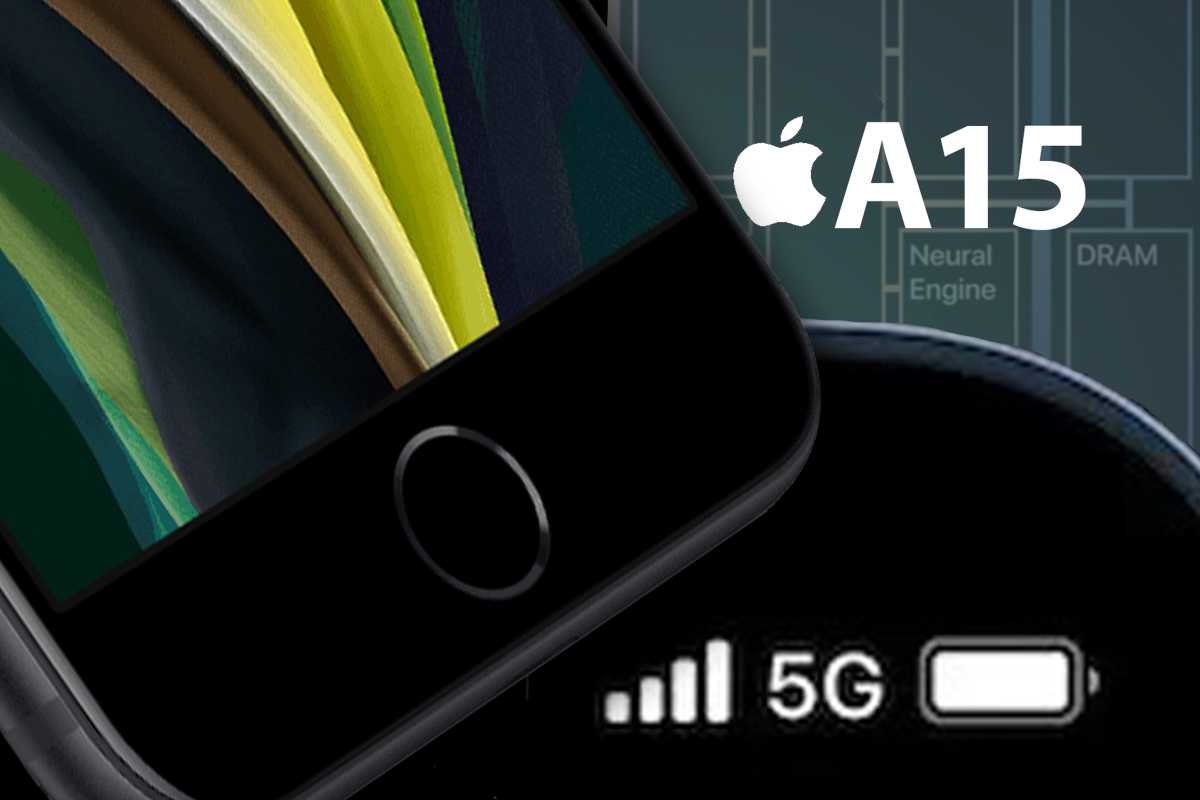
In a note to investors seen by MacRumors, analyst Ming-Chi Kuo says Apple will position the 3rd-generation iPhone SE as the “cheapest 5G iPhone ever.” (Apple will undoubtedly not use the word “cheapest.”)
2022 iPhone SE: Design and display
Currently, the most reliable analysts expect the next iPhone SE to physically resemble the current model. That’s perhaps a little disappointing—the iPhone SE is based on the body of the iPhone 8, which is now discontinued. However, analyst Ming-Chi Kuo believes Apple plans to move ahead with another SE model to feature the 4.7-inch LCD display, a Home button with Touch ID, and no Face ID. In other words, the next iPhone SE is once again rumored to be based on the iPhone 8’s shell, with select new components.
Apple is also said to be working on an updated version of the iPhone 11, which features a 6.1-inch LCD and Face ID. If this were to release in 2022, the iPhone 11 would be more than two years old, which fits in with Apple’s pattern of the iPhone SE using old iPhone bodies and screen technology with some new internal components. This potential phone may launch as the iPhone SE Plus that was originally rumored to release in the second half of 2021, but more recent rumors suggest a 2022 or 2023 release date.
2022 iPhone SE: 5G
The big selling point of the next iPhone SE is said to be that it is the most affordable 5G iPhone ever. The iPhone 12 mini is currently the least expensive 5G iPhone at $699, so you can expect the iPhone SE to cost less than that, though it may not retain the $399 price of the current iPhone SE.
It’s unknown if the iPhone SE will support mmWave 5G in addition to sub-6GHz frequencies. The iPhone 8’s body was never designed for antenna modules necessary for good mmWave reception, though it’s not clear to what degree that would be a problem, or if Apple could easily modify it.
2022 iPhone SE: Processor
Apple has historically outfitted the iPhone SE with the very latest Apple A-series processor; the one used in the most recent high-end iPhone models. That means a 3rd-generation iPhone SE launching in the spring of 2022 would have the same processor as the iPhone 13 launching later this year, which we expect to be the A15. That will make it fast, a great value, and eligible for iOS updates for a very long time, as was the case with the prior iPhone SE models. Apple’s cost-cutting comes from the body, display, cameras, and other such features (don’t expect MagSafe, for example).
2022 iPhone SE: Camera
When the iPhone SE 3 lands, it is expected to carry the same single 12MP wide-angle rear camera as the current model, along with a lone front-facing camera. The current model has a 7MP front-facing camera, which we would like to see upgraded to 12MP, but we’ve heard no rumors about it one way or the other.
Don’t expect huge improvements in camera quality from fancy new sensors, though. Apple is likely to tout the improved camera quality of the new iPhone SE, but it will come mostly from improved visual processing of the A15 relative to the A13 in the current 2nd-gen iPhone SE.
2022 iPhone SE: Price and release
We don’t know what the iPhone SE will cost, only that it should be less expensive than any other iPhone. The iPhone 12 mini currently retails for $699, and the iPhone SE for $399, each offering 64GB of storage. With the inclusion of 5G and the associated licensing costs, it’s quite possible that the iPhone SE gets a price hike to something like $449 or $499, but we don’t expect it to cost more than that.
Apple has released the last two iPhone SE models in the spring, and that tracks with the current rumors for the 3rd-generation model, which pegs it as coming in the first half of 2022. The rumored iPhone SE Plus, based on the iPhone 11 with Face ID, would definitely carry a price premium of at least $100 (placing it in the $499-599 range) and may be released in 2022 alongside the next iPhone SE, though some rumors say it may not be released until 2023.
App Clips were announced in 2020 as a feature of iOS 14, but this year Apple is expanding that feature with some enhancements. With iOS 15, developers will be able to integrate App Clips into websites as a full-screen card that will appear in Safari.
For those unfamiliar, an App Clip is a small part of an app that can be accessed without having to download the full version of that app. With this API, developers can provide a demonstration of what an app offers and even let users explore some options without having to install the app from the App Store.
Apple introduced App Clips with iOS 14 and iPadOS 14 last year, and now they are getting even better with iOS 15 and iPadOS 15. As demonstrated at one of the WWDC 2021 sessions, App Clips can now be fully integrated into websites.
Previously, developers could add a banner to show the user that the website has an App Clip available, but it was small and required more touches. Now the App Clip banner can be displayed full screen when you are browsing a website that offers this feature. This, of course, will require developers to update their websites with new code.
Apple is also making it easier for developers to test their App Clips locally and introducing new ways to discover App Clips through ARKit within apps. More details about what’s new in App Clips with iOS 15 can be found on the Apple Developer website.
Both iOS 15 and iPadOS 15 will be available as a free update this fall. Users can install the beta versions by joining the Apple Beta Software Program.
Apple introduced iOS 15 beta 2 and iPadOS 15 beta 2 to developers, which are the first updates since the initial release at WWDC 2021 earlier this month. Now that we have the new betas in our hands, here’s a look at what’s new in today’s updates.
Not available for some devices
According to the iPadOS 15 beta 2 release notes on the Apple Developer website, today’s release cannot be installed on the Wi-Fi + Cellular version of the 9.7-inch iPad Pro. The reason is unknown, but probably Apple found some serious issue and chose to skip this release for the affected iPad models.
Bug fixes for iCloud Private Relay
iCloud Private Relay makes web browsing more secure for iCloud subscribers, but this feature was causing some problems for users in beta 1. According to Apple in today’s release notes, iOS 15 beta “resolved an issue that caused iCloud Private Relay to function unexpectedly.”
New Maps icon
Apple revealed a new icon for its Maps app at WWDC 2021, but it was not included in iOS 15 beta 1. Now with beta 2, the new Maps icon is there. It also shows animated driving directions within the app.
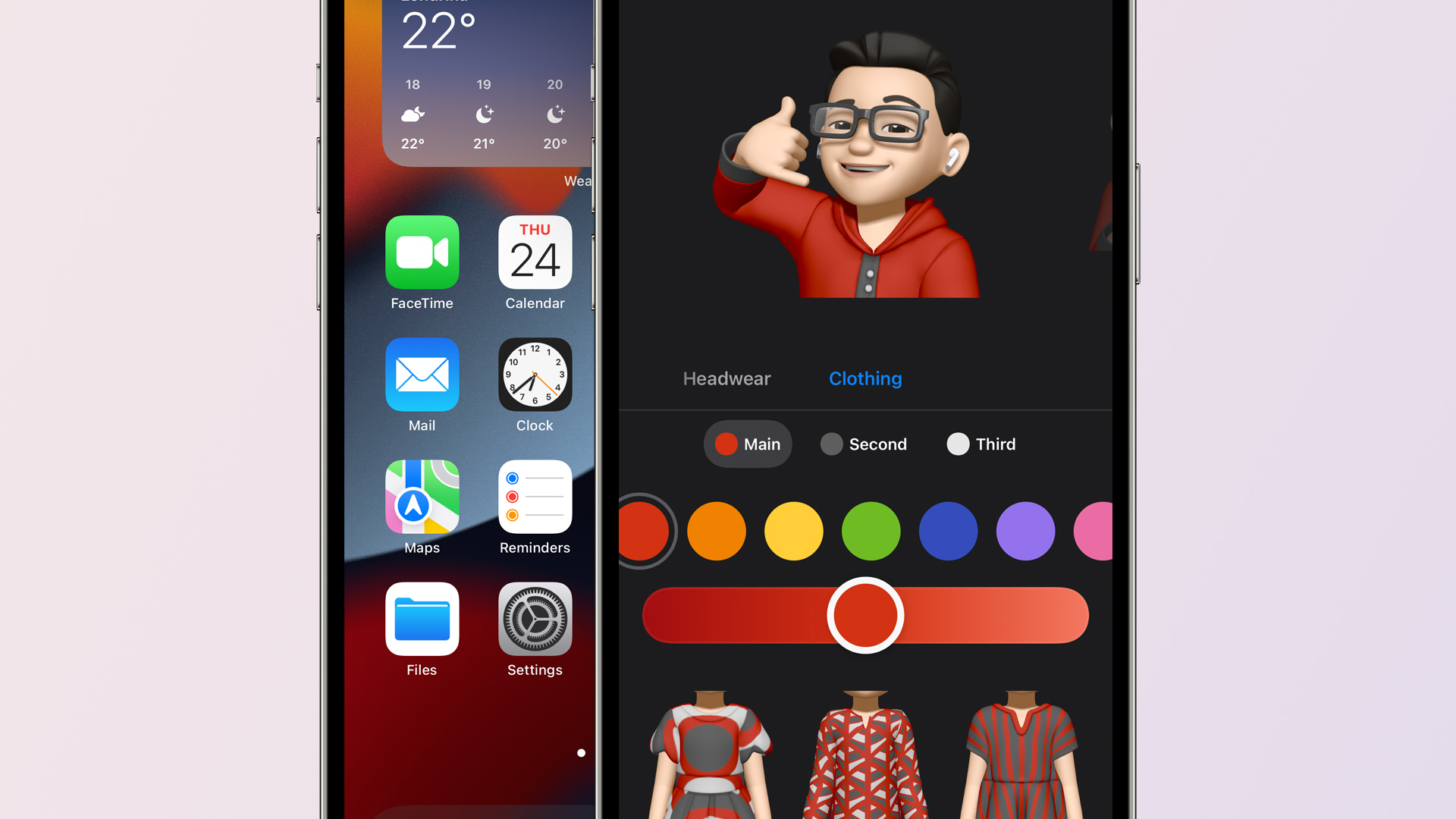
Apple also mentioned earlier this month that Memojis would be updated with new looks, including the option to set a custom outfit. These options are now available with iOS 15 beta 2.
Welcome screen in the Weather app
When you open the Weather app in iOS 15 beta 2 for the first time, you will now see a welcome screen highlighting its new features and refreshed design.
Quick Note on iPad
Quick Note was already available in iPadOS 15 beta 1, but now with beta 2 users can swipe from the bottom right corner to trigger Quick Note.
Apple’s iPadOS 15 features page claims that you’ll be able to swipe a finger to access Quick Note, but this doesn’t seem to work in Dev 1. Hopefully it makes into a future update because I don’t always carry my Pencil. (Or it’s often out of charge. 😂) pic.twitter.com/PinUT70VZF
SharePlay is a new feature to let users share a song, video, or even the screen of their devices during a FaceTime call. This feature is now working with iOS 15 beta 2.
Lossless on HomePod removed
Apple has removed the option to enable Lossless audio on HomePod with iOS 15 beta 2. Previously there was an option to stream Lossless songs on HomePod within the Home app. Most likely this option has been temporarily removed due to some issue and will return in a future release.
Safari
Apple has brought back the Refresh button for the Safari address bar, but it only shows up when using a mouse or trackpad.
The Shortcuts app can now see what is displayed on the screen for receiving input from an app without the share sheet.
Also new in iOS/iPadOS 15 beta 2: Shortcuts, like Siri, can see what's displayed on screen.
There's a new 'Receive What's On Screen' option for Shortcuts. Enable this, and a shortcut will receive input from an app without the share sheet. Right now, it works in Safari. pic.twitter.com/wxrzDlavbY
Two weeks after unveiling iOS 15 and iPadOS 15 to the public at WWDC 2021, Apple is rolling out the second developer betas. iOS 15 beta 2 and iPadOS 15 beta 2 are now available to registered developers ahead of a public beta release in July and a release to everyone in the fall.
iOS 15 beta 2 details
iOS 15 beta 2 and iPadOS 15 beta 2 are available to developers via an over-the-air update in the Settings app. As usual, if the update does not immediately appear for download, keep checking, as it sometimes takes a few minutes to roll out to all registered developers. The build number for today’s iOS 15 beta 2 release is 19A5281h .
Apple’s new software version won’t be complete until the fall, at which point it will be released to the general public. Testers should still expect performance and stability issues when running the iOS 15 beta on primary devices for the time being.
In addition to the second developer betas of iOS 15 and iPadOS 15, Apple is also releasing tvOS 15 beta 2 for Apple TV and HomePod and watchOS 8 beta 2 for Apple Watch. The second beta of macOS Monterey is not yet available.
With Apple’s Worldwidape Developers Conference firmly behind us, we’re taking our sweet time picking our way through everything coming to Apple’s platforms this fall. As usual, there were way more changes than Apple talked about onstage, and between watching the conference sessions, scrolling through long webpages of features, and keeping a gimlet eye on Twitter, even more have come to light.
But with such a preponderance of information, it can sometimes be hard to suss out which changes are likely to make a big impact on the lives of Apple users, and which will end up disappearing into the pond without so much as a ripple. Will we still be talking about iPad widgets a year from now? Will everyone have switched to Apple’s new two-factor authentication generator? Some features will have staying power; others won’t.
With that in my mind, here are my bets on which of Apple’s new features will make the biggest difference for its users.
Surfin’ Safari 15
If there’s a contentious move in Apple’s latest suite of improvements, it’s the redesign to the company’s web browser. While I don’t have metrics on hand, I’d be pretty surprised if Safari weren’t the most commonly used program on at least the iPhone and iPad. This means even a meager change is likely to make waves and, as changes go, Safari 15 is anything but meager.
Amongst its most notable updates, Safari 15 redesigns tabs as little rectangles, subsuming them into the window chrome, which now matches the color of whatever webpage you’re viewing. Apple’s stated goal is to get the browser out of the way, but there’s a reasonable question of whether this is a matter of form over function. Several common features—including the refresh button—are now hidden away beneath a single button in the location bar, necessitating an extra click. (Though you can now reload a page by pulling down from the top.) And titles in tabs are often truncated, making it hard to differentiate them, especially if you have multiple pages from the same site open. On the iPhone, the location bar has moved to the bottom, which can obscure some content and even controls.
Tab groups is one of the major tweaks to Safari coming soon.
Apple’s thought about some of these issues, it’s clear. In the company’s Design for Safari 15 WWDC session, Web Technologies Evangelist Jen Simmons mentions that if Safari detects that the color of your page might negatively affect accessibility, the browser will override and default back to white. And it advises web developers to take the iPhone location bar into account when creating their sites.
But that and other design changes will require a legion of web designers to rework parts of their sites, and with Safari only one browser amongst many—albeit a popular one—that seems like potentially a losing proposition for Apple. It is, of course, possible that further tweaks to the browser may be forthcoming during the beta period that makes these changes more palatable…but it’s just as likely that Apple stands pat.
Never taken a shortcut before?
Automation has long been a part of the Mac, from AppleScript to Automator. But while those technologies have gotten a bit long in the tooth, iOS seems to have somewhat supplanted the automation crown, thanks to Shortcuts. That’s why the addition of Shortcuts to the Mac holds such potential.
It’s not just that automating with Shortcuts is much easier than with Automator, but it’s also potentially much more powerful—thanks to broad support in both Apple’s own apps and third-party programs. Early indications suggest that many iOS shortcuts will easily make the jump to the Mac, and the Shortcuts on the Mac also supports hooking into automation tools like AppleScript and the command line, to the benefit of power users. Interoperability between Apple’s platforms here also makes it likely that future updates to Shortcuts will benefit those who live throughout Apple’s ecosystem.
As someone who has repeatedly tried to automate common tasks on the Mac only to throw up their hands in frustration, Shortcuts’ arrival on the platform lets me hold out hope that I’ll finally be able to create workflows that save me time across all my platforms.
Going splitsies
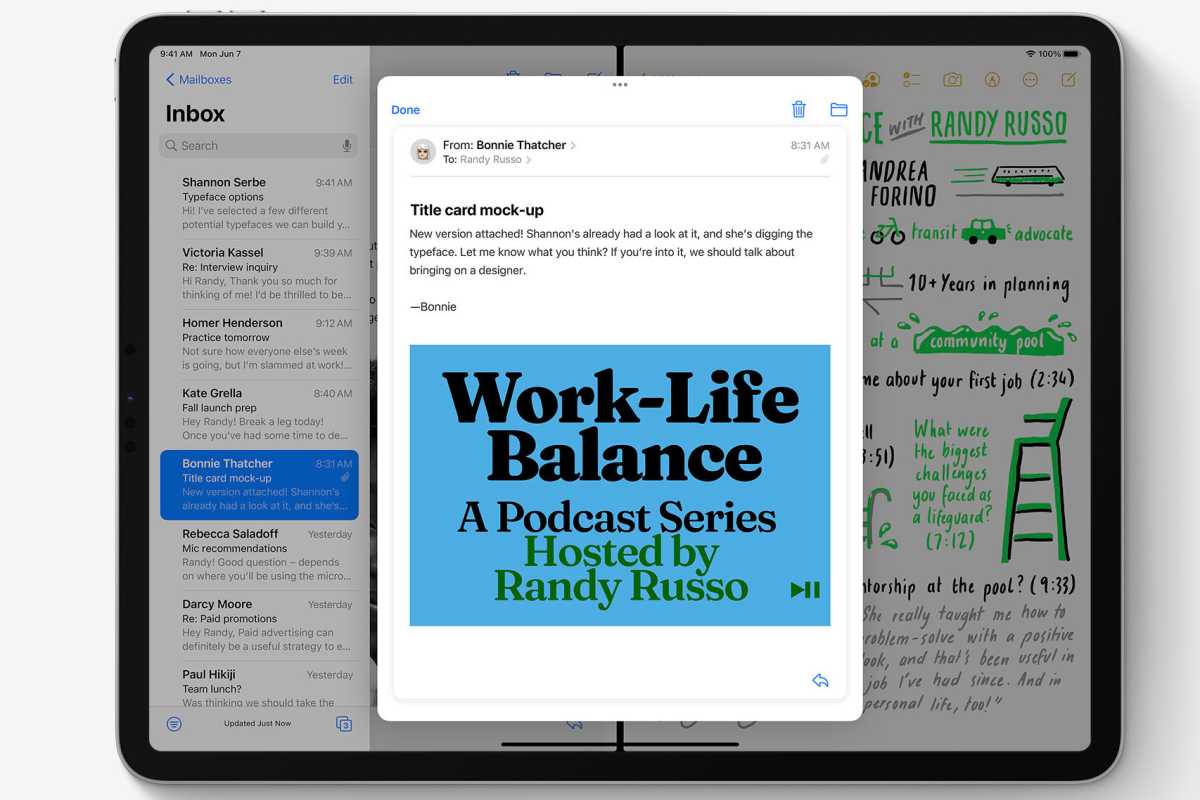
This year marked Apple’s third crack at multitasking on the iPad, and while it may not have been the ground-up rethink that some had hoped for, there are promising signs that it will still greatly improve the experience for both power users and more casual consumers.
iPadOS 15 has features to make multiasking easier.
A big part of that is simply making multitasking more visible. There’s now an explicit icon for windowing, providing controls akin to the ones you find by hovering over the green icon at the top of a Mac window. iPadOS 15 also removes some of the song-and-dance of getting apps into a Split View, letting you drag them in from a Spotlight search or from your home screen, and even if Slide Over remains a somewhat annoying feature, the addition of a floating and resizable window for the new Quick Note feature is evidence that a more powerful windowing system could work on Apple’s tablet.
Simply put, the more people who use multitasking on the iPad, the better it should get, and improved visibility and ease of use are poised to usher a lot more people into a reality of using multiple apps at once—which is a good thing, because it remains one of the iPad’s weaker qualities when compared to a Mac. As for whether Apple will decide to launch itself into a full-fledged windowing system, well, we could be waiting until iPadOS 16, at least.
Spatial Audio has officially launched on Apple Music, powered by Dolby Atmos for those running iOS/tvOS 14.6 and macOS 11.4 or later. Let’s look at how to find and play Spatial Audio, as well as how to enable the feature to work with other headphones besides AirPods and Beats.
Spatial Audio on Apple Music offers a really rich, immersive experience when listening with iPhone, iPad, Mac, and Apple TV 4K with HomePod or other Dolby Atmos supported speakers. Here’s how Apple describes the feature: “Get a multidimensional experience that goes beyond just listening to music and makes you feel like you’re inside of it.”
The great part is, it’s available to all Apple Music subscribers at no extra cost. We’ll focus on Dolby Atmos Spatial Audio for this tutorial, but you can also enable Lossless hi-res music on Apple Music with iOS 14.6 and later. On iPhone/iPad head to Settings > Music > Audio Quality > Lossless Audio. And here are more details on how Lossless works with Apple Music.
How to enable Spatial Audio on Apple Music
The default is automatic detection for Dolby Atmos Spatial Audio in iOS 14.6 and later. That works when using AirPods, AirPods Pro/Max, recent Beats headphones, and the built-in speakers on recent iPhone XR and later and recent iPad models.
However, Apple says you can also use Spatial Audio with any headphones that support Dolby Atmos with the “Always On” setting.
On iPhone and iPad running iOS 14.6 or later, head to the Settings app
Swipe down to Music > Dolby Atmos
The default should be Automatic; tap Always On if you’d like to use Spatial Audio with non-Apple/Beats supported headphones
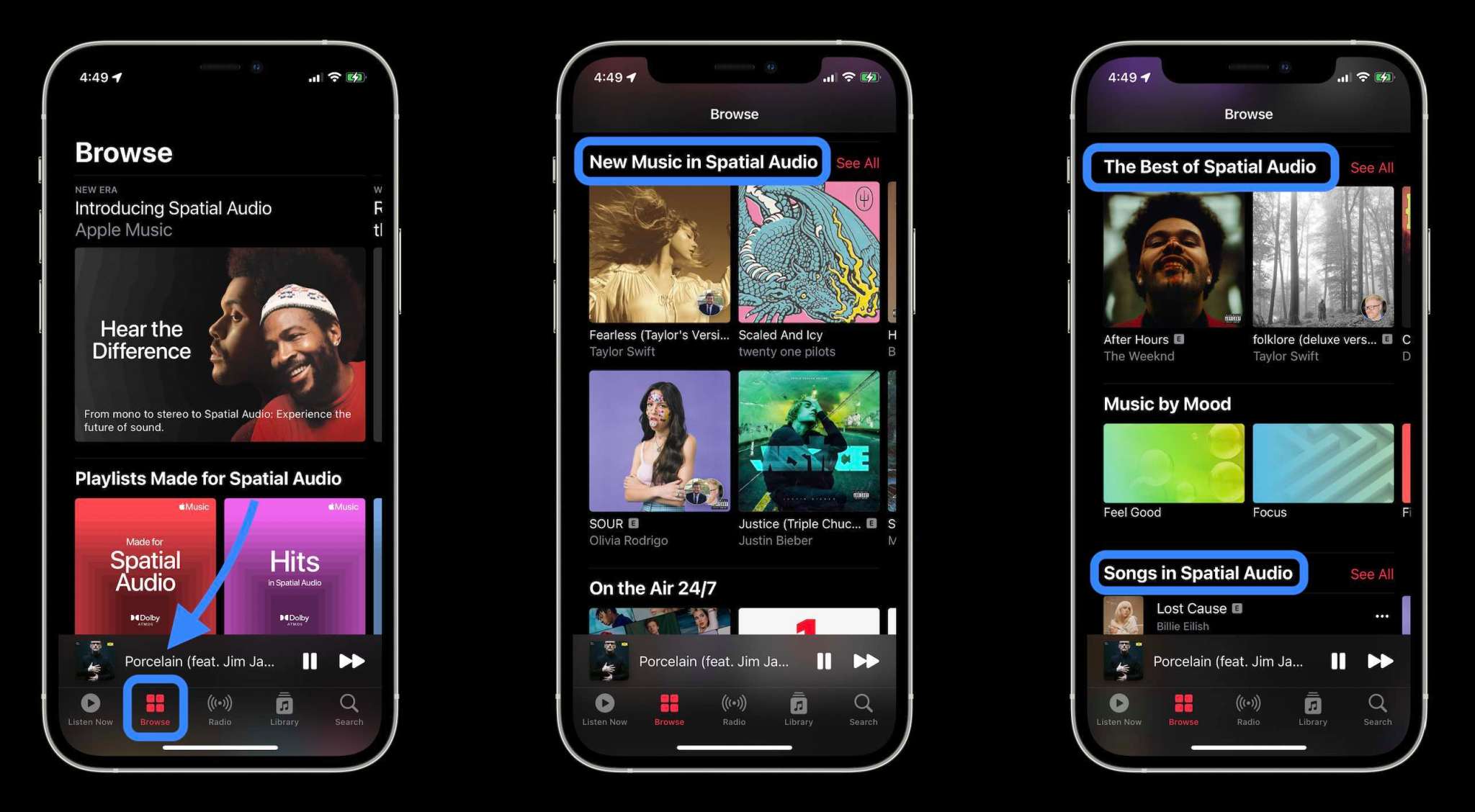
in Spatial Audio in the Listen Now, Browse, and Search tabs
In the Browse tab, check out all playlists made up of all Spatial Audio music like: Hits, Hip-Hop, Pop, Country, Rock, and Jazz
There are also sections for “New Music in Spatial Audio” and “The Best of Spatial Audio”
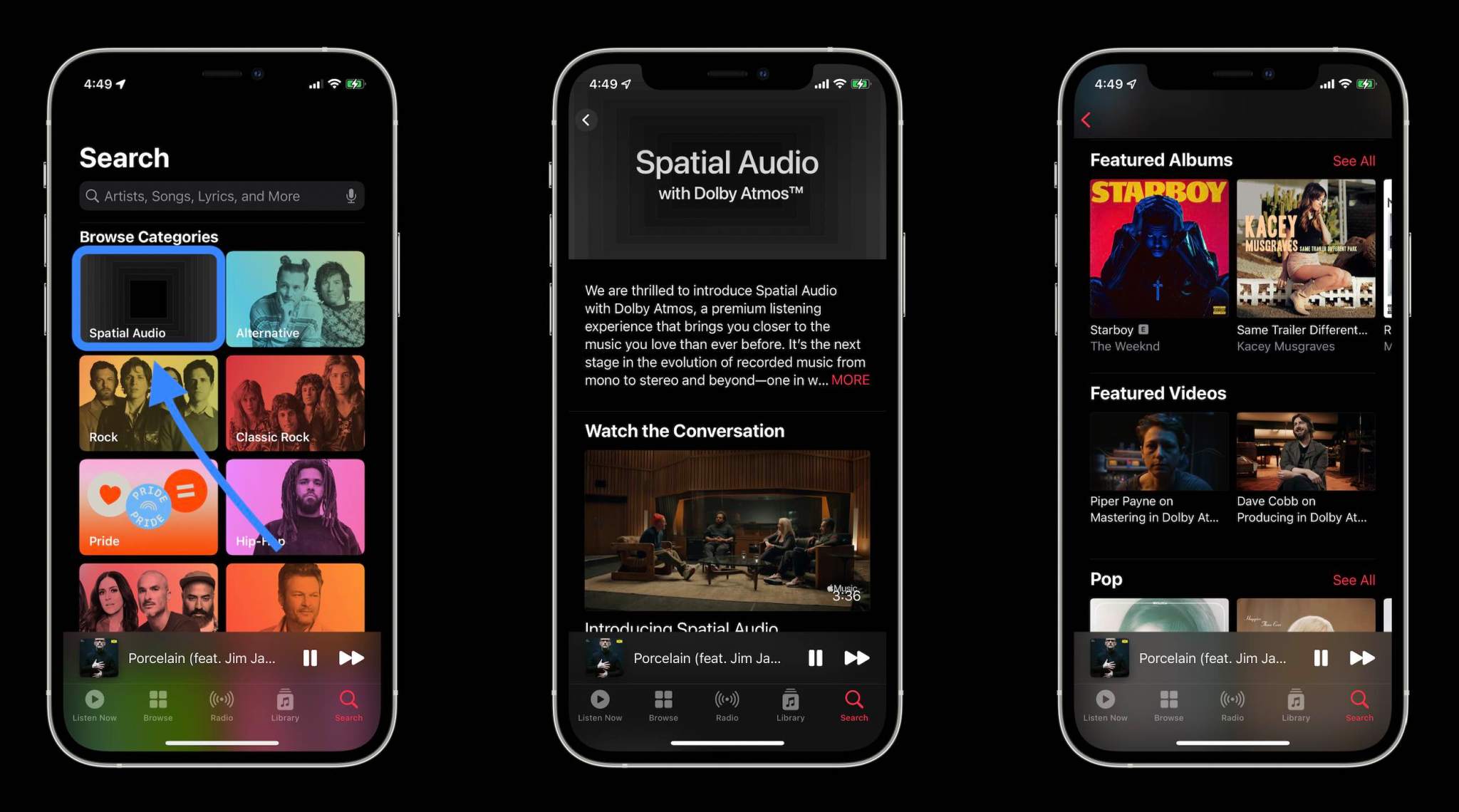
In the Search tab, there’s a new Spatial Audio category in the top left
Apple Music is using this as a hub for all the Dolby Atmos Spatial Audio content including videos, music, tutorials, featured albums, new content, and more
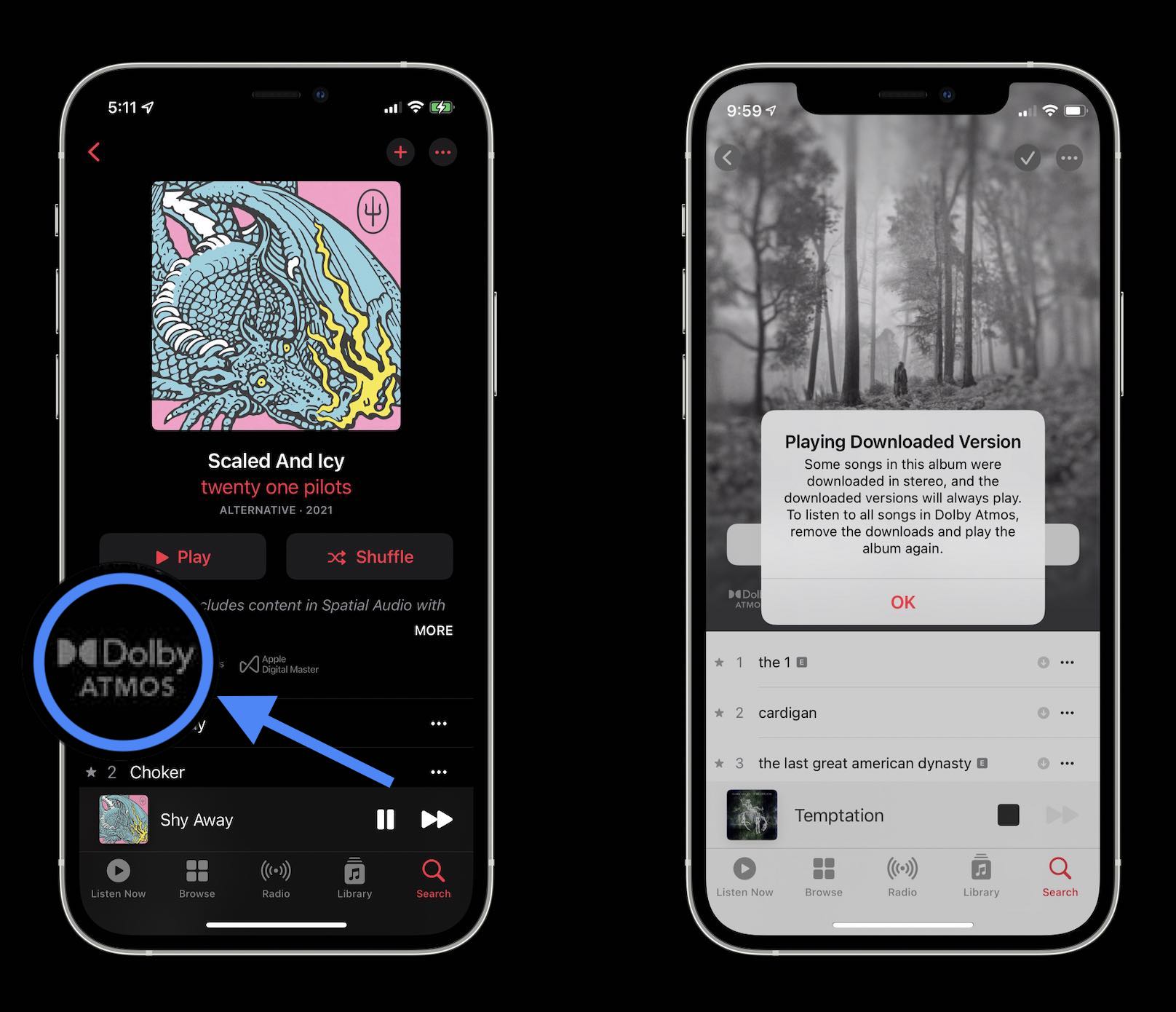
If you want to see if a specific album or song is available in Spatial Audio, pull it up in Apple Music
Underneath the album artwork and play button, look for “Dolby Atmos”
You can also quickly tell if a track is in Spatial Audio by opening Control Center (swipe down from the top right corner) and long press on the headphones icon > look for Spatial Audio playing in the bottom right and Dolby Atmos below the volume slider
And here’s how the dedicated Search category looks for Spatial Audio (you can also search for “Spatial Audio” to find lots of content) :
One more thing to know, if you’ve downloaded albums to your device, you’ll need to delete them and re-download them to enable Dolby Atmos Spatial Audio.