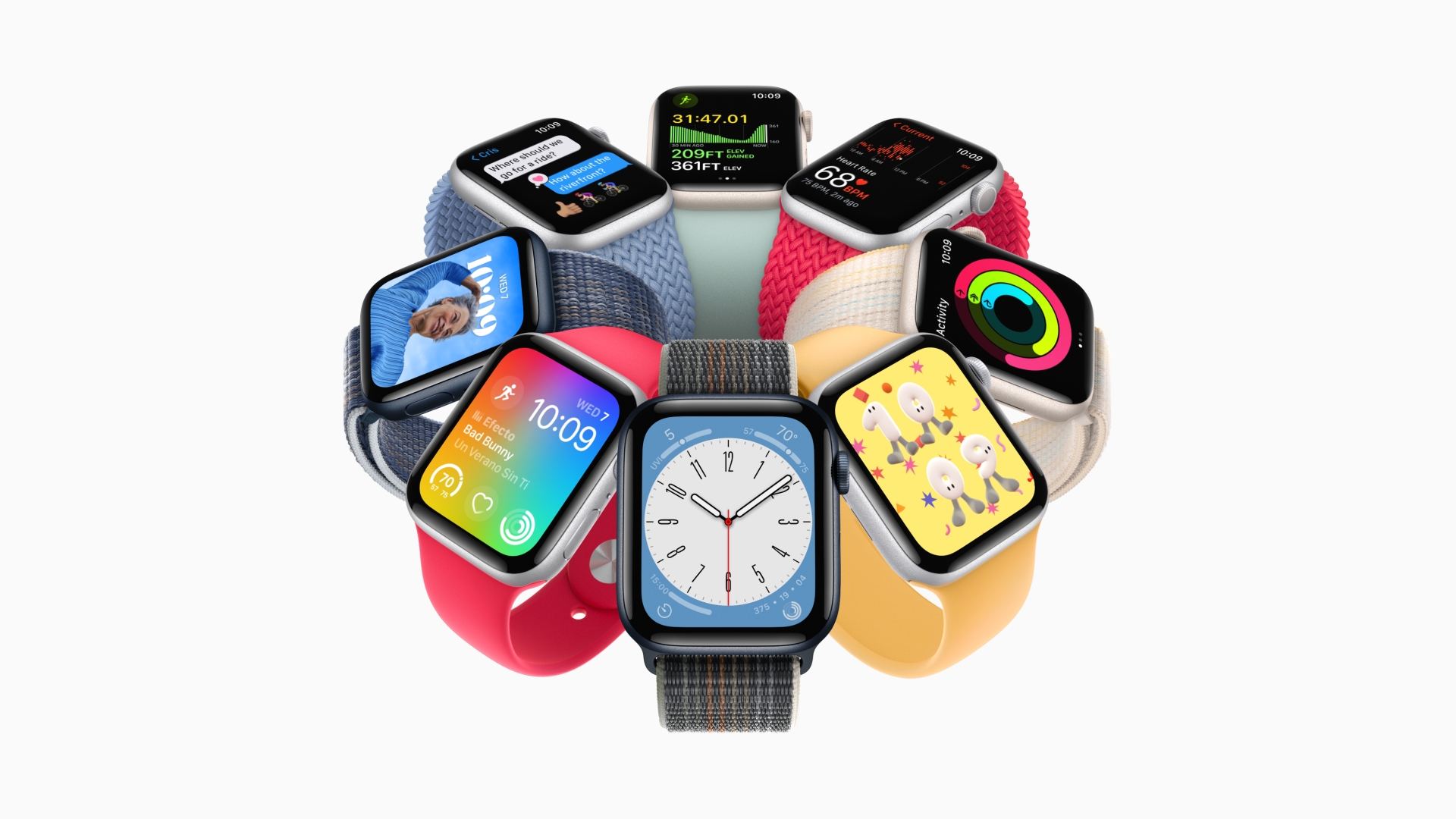
Seven native Apple Watch apps have been overhauled with watchOS 10, one of which is the World Clock app that’s received a beautiful new aesthetic. Follow along for what’s new with the World Clock Apple Watch app in watchOS 10.
watchOS 10 brings a big overhaul for the Apple Watch experience with a new widgets UI, mental health features like mood tracking, new watch faces, and redesigns coming with native apps like Weather, Stocks, Maps, Messages, Heart Rate, Home, and World Clock.
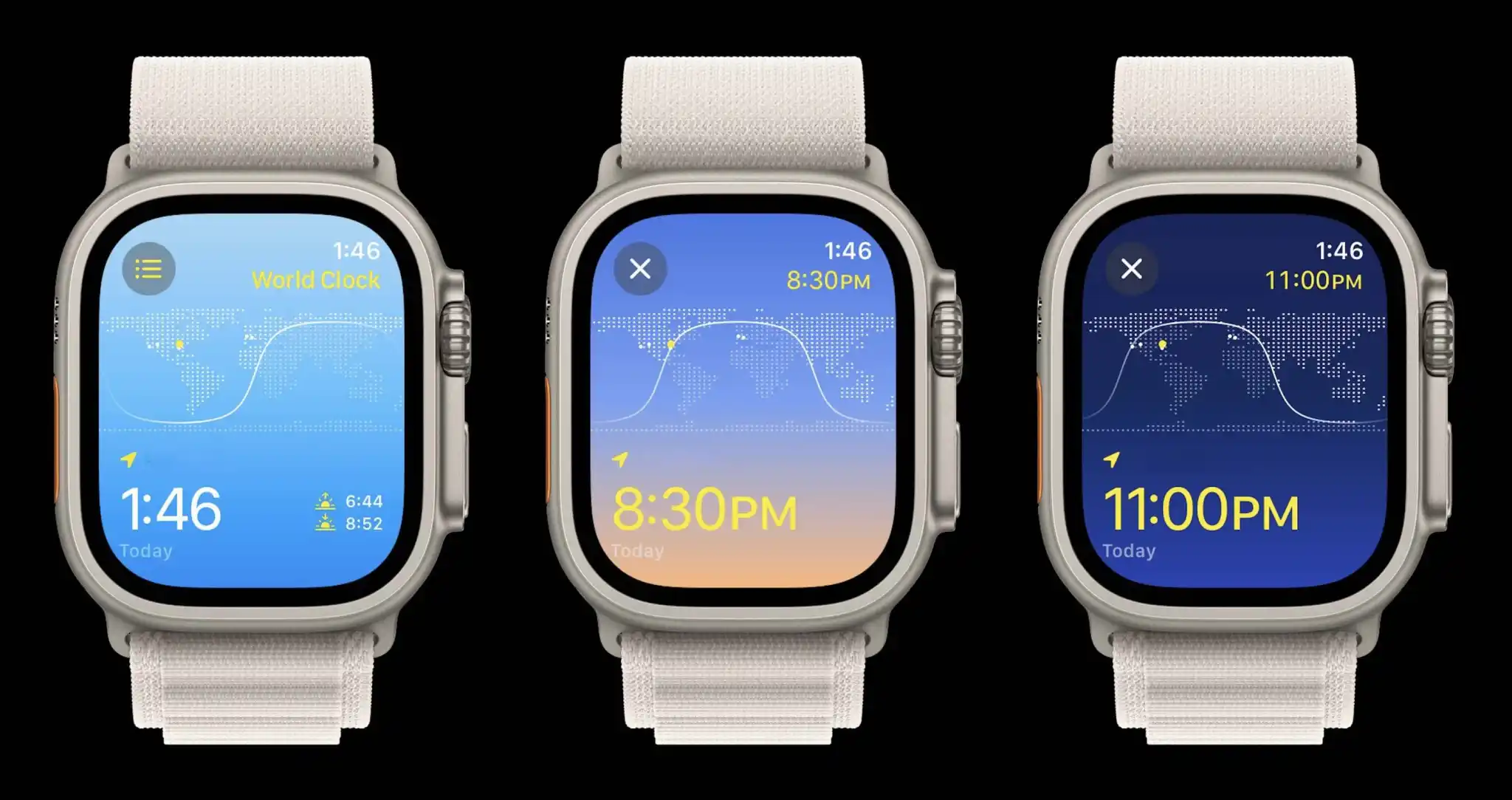
Shown above, the new watchOS 10 World Clock features a dynamic blue, white, and yellow theme that changes based on the time of day.
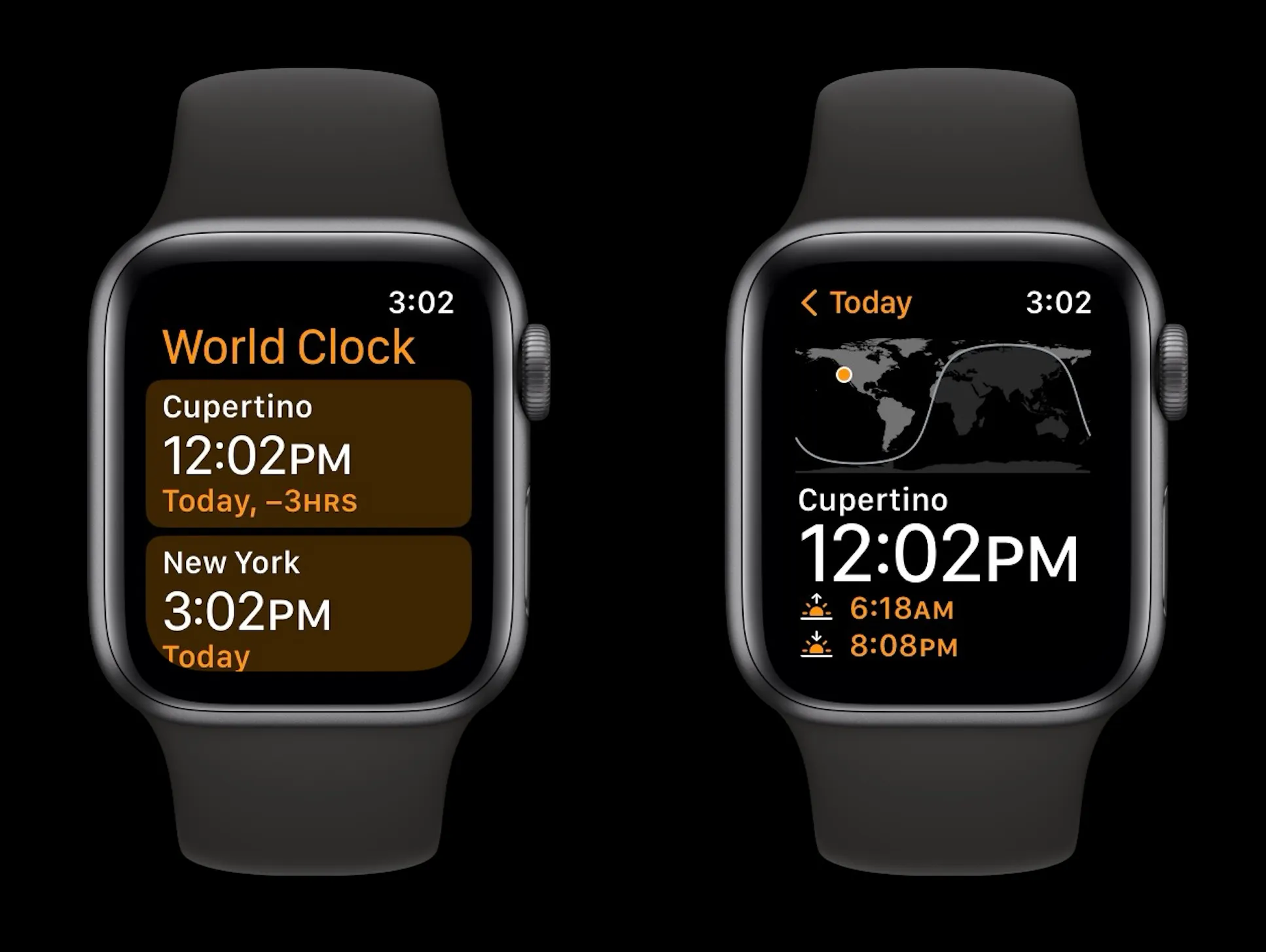
As a refresher, here’s the watchOS 9 World Clock app with the simple black and orange design:
The new World Clock Apple Watch app offers a new functionality when scrolling with the Digital Crown and also makes it easier to check the time difference between your current location and other places around the world.
What’s new with the World Clock Apple Watch app in watchOS 10?
If you’ve allowed location access for the Clock app on iPhone/Apple Watch you’ll see your current location when you launch the World Clock
The current time is shown in the bottom left (and top right) with the sunrise and sunset in the bottom right corner
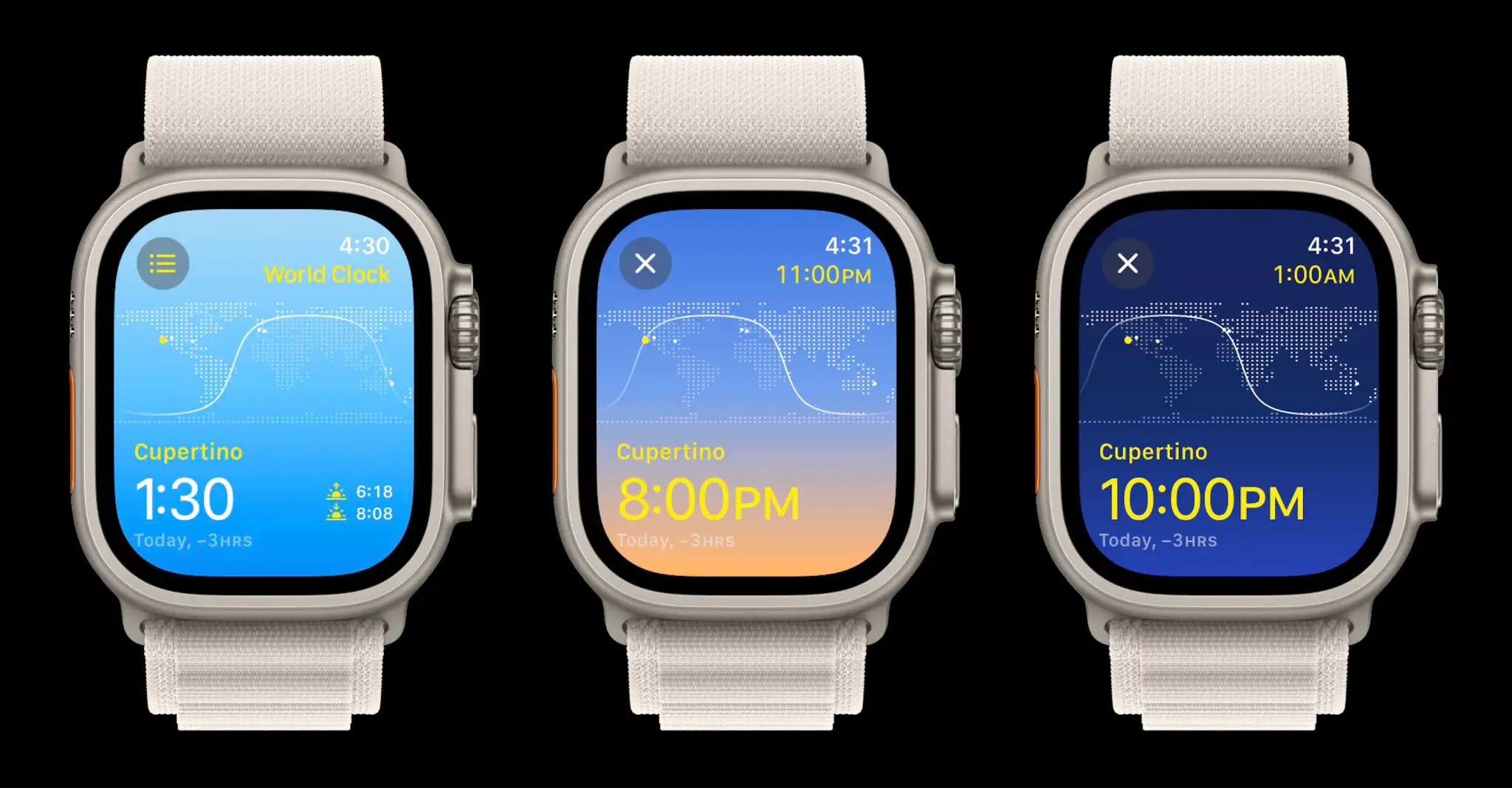
Scrolling with the Digital Crown now gives you a visual look at how daylight turns to night for the location you’re looking at based on the time
The UI moves from a light blue to a sunset gradient to a dark blue
Tap the X in the top left corner to return to the current time
Tap the three-line icon in the top left to see all of your saved locations
You can quickly rearrange locations by long-pressing and dragging them into a new order
Locations are synced between iPhone and Apple Watch, but you can add locations at the bottom of the list view
Now when you look at a location different from your current location, the relative time of your current location will show in yellow in the top right corner with the time of the location you’re viewing in the bottom left corner
The time zone offset will also appear in the bottom left corner
As it happens, the new World Clock UI is unique to watchOS 10 – the old black and orange UI remains on iPhone with iOS 17.
watchOS 10 widgets: How the new Apple Watch UI works
The new watchOS release comes with some big changes headlined by a new smart and customizable widget-based UI. Follow along for a closer look at how to use the Apple Watch widgets, edit them, and more in watchOS 10.
Apple sees watchOS 10 as “a milestone update” with a focus on bringing “users a fresh approach to quickly view information with redesigned apps, a new Smart Stack to show relevant widgets right when they’re needed, and delightful new watch faces.”
A couple of neat things about the new widget UI are that they’re quickly accessible from any watch face and the widgets automatically reorder to “display timely information that adapts to the user’s context.”
The widgets take up half the screen of the Apple Watch and there are two types, the first uses the whole widget for one app and the second widget type can be customized with three app complications.
Even though the widgets are a Smart Stack, you can manually “pin” widgets you’d like to stay put.
How to use Apple Watch widgets in watchOS 10
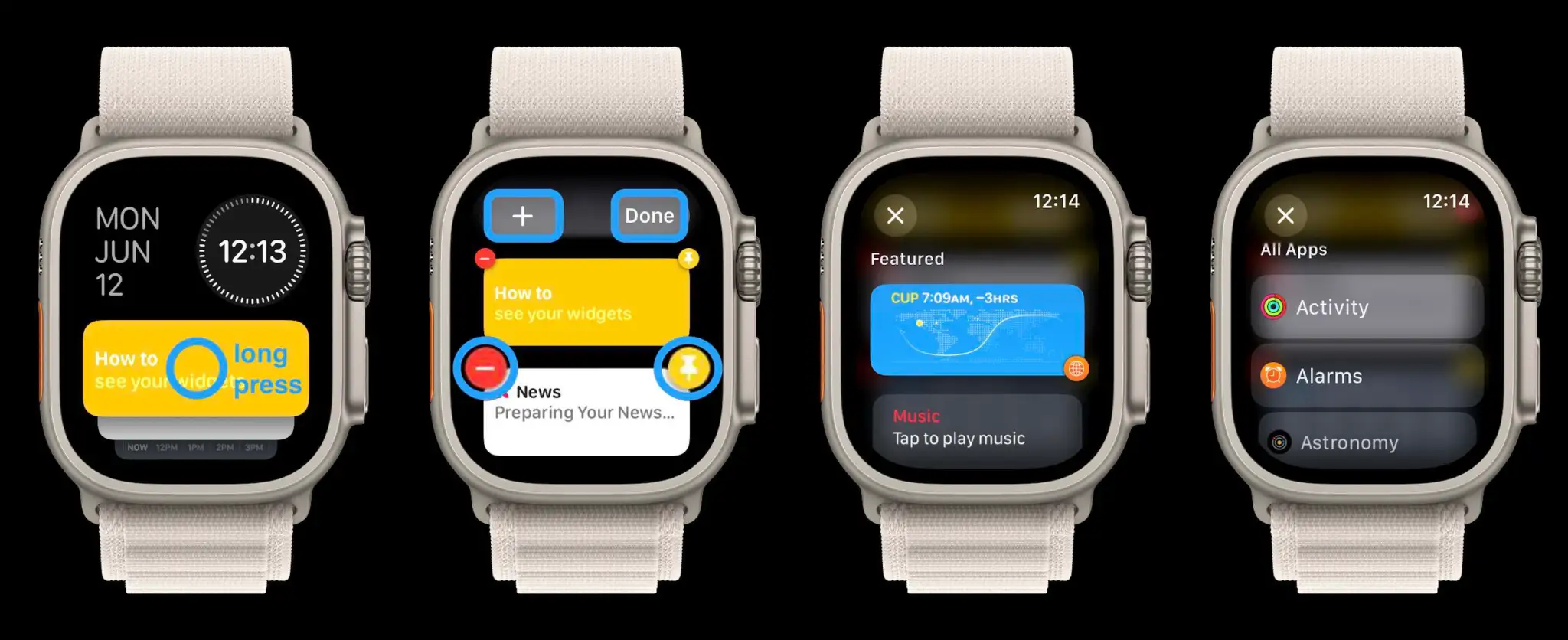
On Apple Watch running watchOS 10, scroll up on your Digital Crown or swipe up on your screen (Control Center now opens with the side button in watchOS 10)
Now you’ll see the new widget UI
Swipe or scroll to see all of the widgets in your Smart Stack (you can also tap the yellow widget to get a little walkthrough)
Long press a widget to edit them
Tap the red – icon to remove widgets and tap the + icon at the top to add new ones
The widgets are a “Smart Stack” and will automatically change through the day depending on context – but manually reordering/pinning is possible with the yellow pin icon that moves widgets to the top of the list and keeps them there
At the bottom is a triple complication widget that’s customizable
At the very bottom is a button to see “All Apps” (you can either tap it or keep scrolling or swiping to see all apps)
The date and time at the top of the widget UI are not customizable – for now at least. Once you long press on a widget to edit them, you’ll see the main options to customize them with the + up top and the remove and pin icons on each widget.
When adding a new widget, you’ll see featured choices up top with all apps below.
The triple complication widget at the bottom can be customized and also pinned if you want to move it to the top of your Smart Stack.
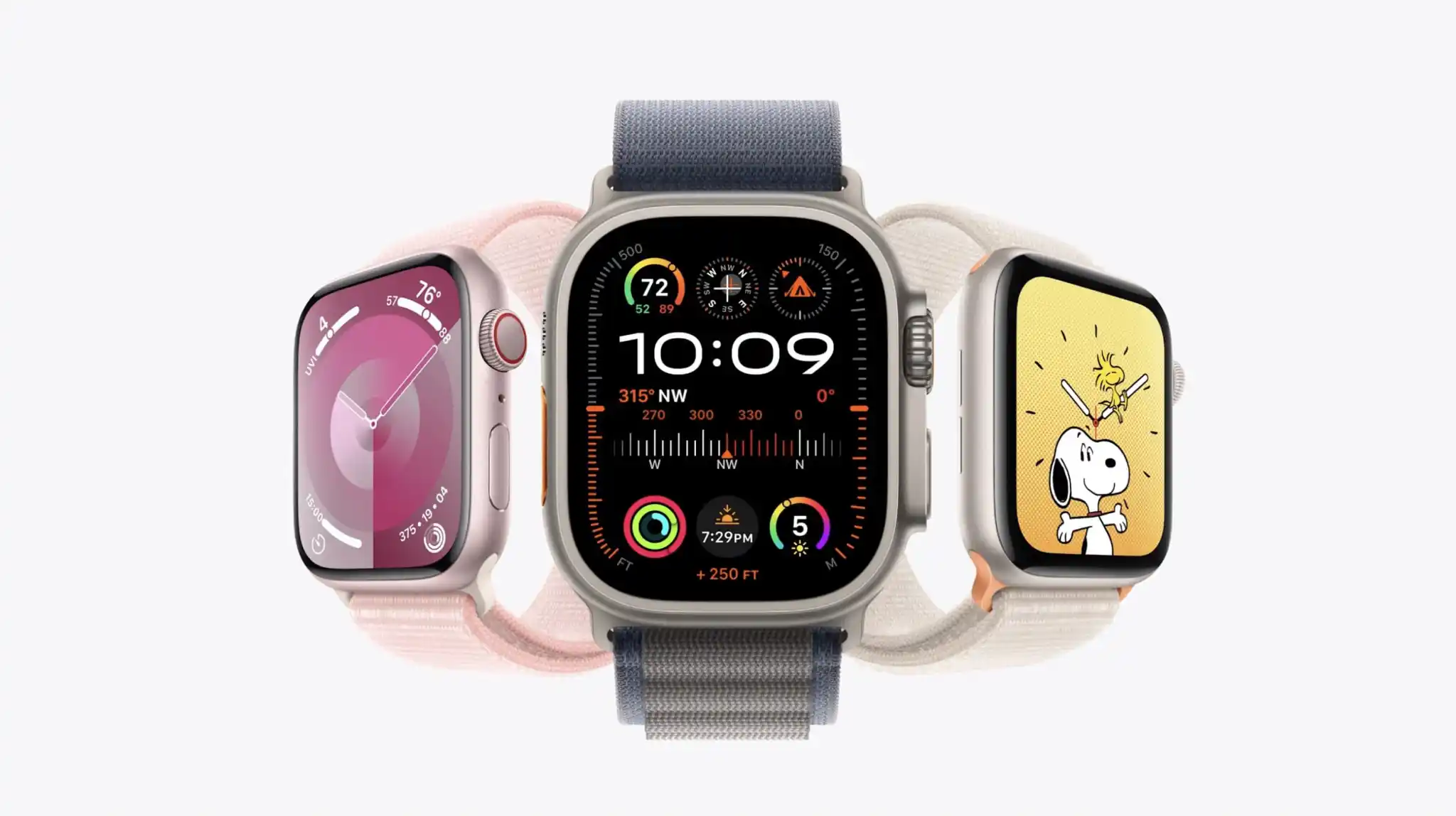
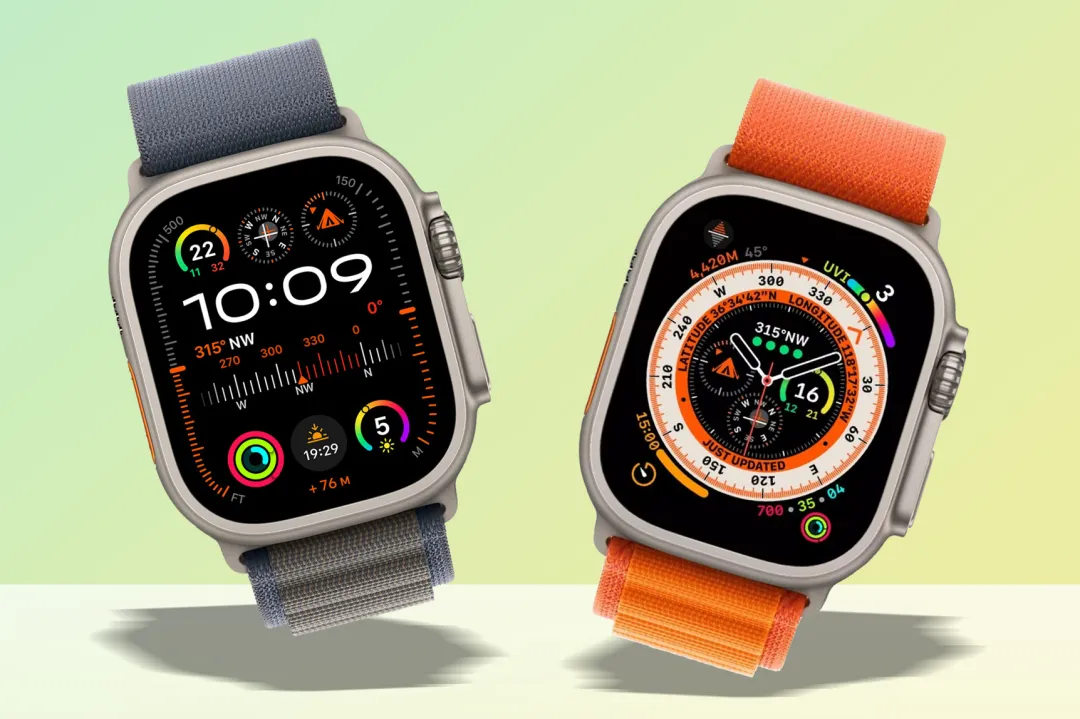
Apple Watch Ultra 2 has an identical physical design to the original Ultra and many of the core features and capabilities remain the same. But what sets them apart? Read along for a look at what’s different between Apple Watch Ultra 2 vs 1.
To be fair, the Pam “same thing” meme only applies to the exterior as there are a number of differences between the Ultra 2 and Ultra 1 when it comes to features, the SoC, and more.
But how meaningful those differences are in real-world use could end up feeling inconsequential for many people.
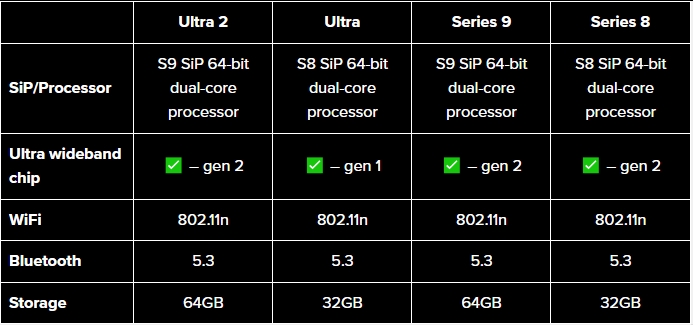
We’ll dig into all the nitty gritty details below. And to give the best perspective on the differences between all the recent models, we’ve included Apple Watch Ultra 2 vs 1 as well as Series 9 and 8 in all the charts.
Apple Watch Ultra 2 vs 1 and more
Processor, storage, more
Last year, Apple used the S8 64-bit dual-core processor in the Ultra and Series 8 which wasn’t that different from the S7 or S6 in the previous Apple Watches.
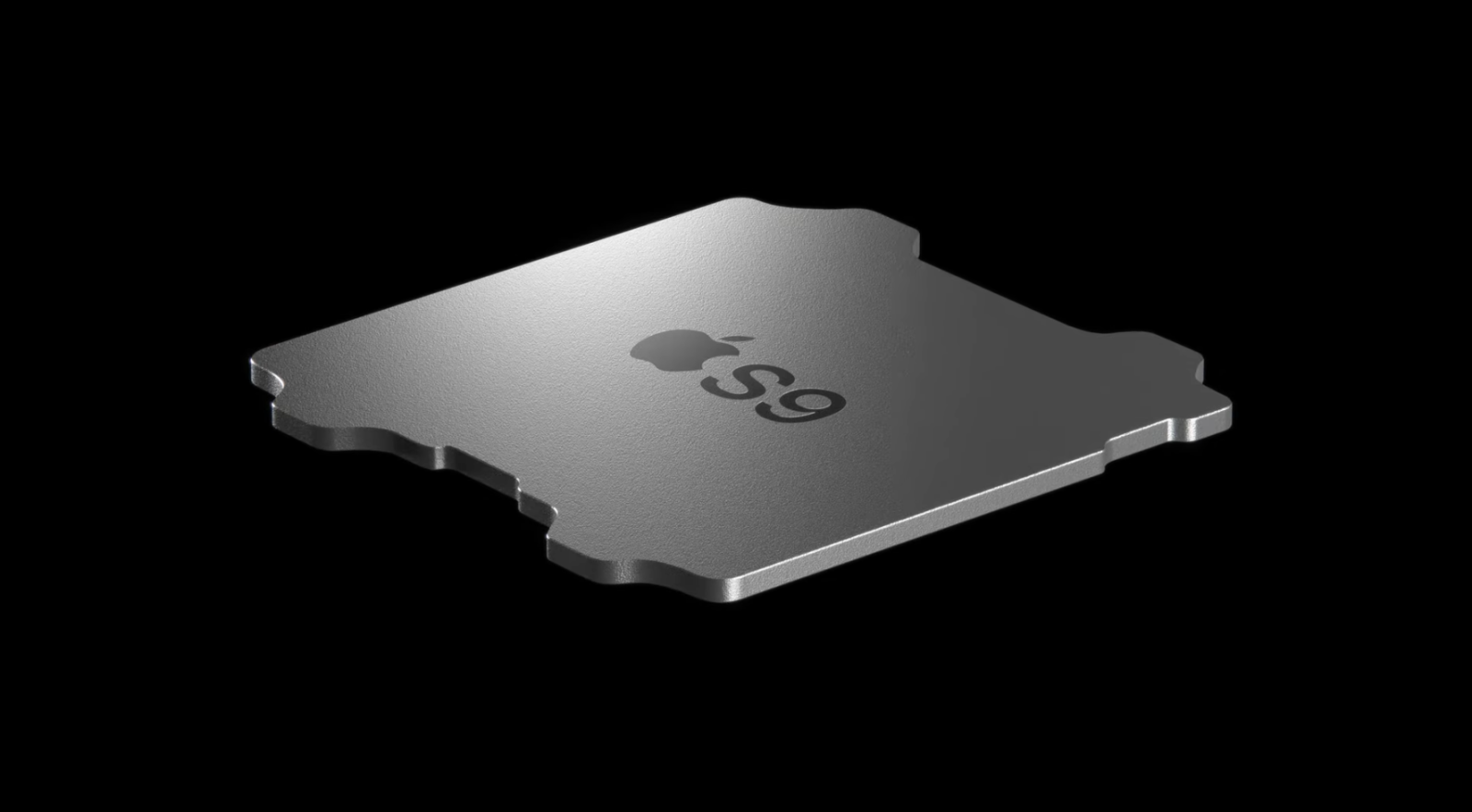
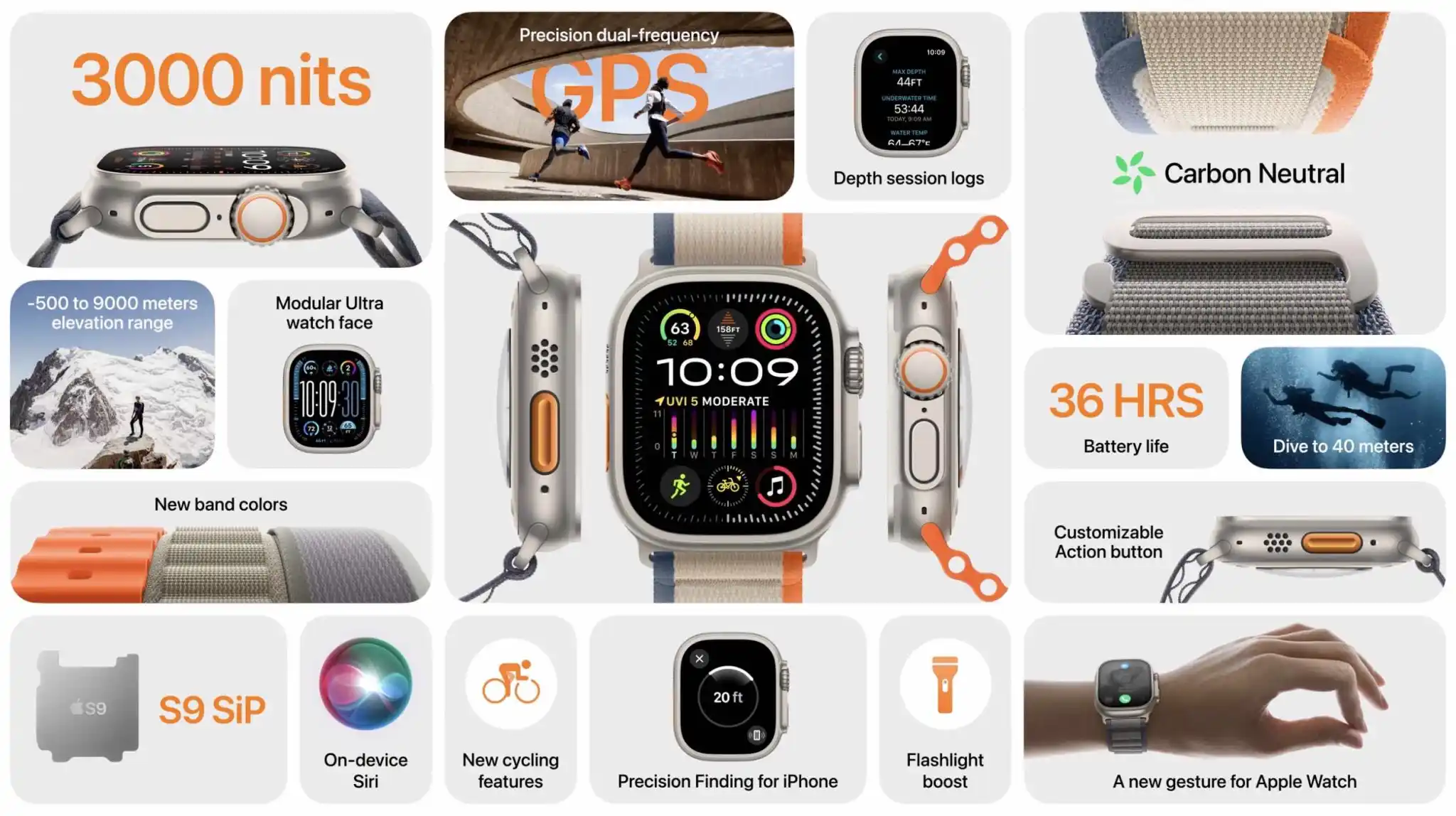
But with Series 9, Apple says the S9 SiP brings notable improvements across the CPU, GPU, and Neural Engine.
Apple didn’t share a specific measure of how much faster the CPU of the S9 is compared to S8, but it features 5.6 billion transistors – up 60% from S8.
For the S9 GPU, Apple says it’s 30% faster than the S8 and the Neural Engine is twice as fast.
Another benefit if you’re coming from a previous generation Apple Watch is a boost to 64GB of storage.
Case and display
Apple Watch Ultra 2 has the same 49mm case as its predecessor with an identical 410 x 502 display resolution. Apple says it’s 27% bigger than the display on Series 4-6/SE. However, now it’s 50% brighter at an impressive 3,000 nits.
Meanwhile, Apple Watch Series 9 carries on with the same sizes that launched with Apple Watch Series 7. That’s 45 and 41mm cases and a larger display that’s 20% bigger than Series 4-6/SE and 50% larger than the Series 3 display.
Apple Watch band compatibility
When it comes to bands, any of them designed for 49, 45, and 44mm Apple Watches will work with Apple Watch Ultra 2 and vice versa.
With no changes to the band connection, that means all previous and new bands work with Series 9 and all older Apple Watches.
Battery life and charging
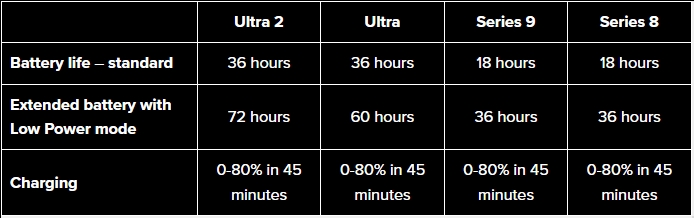
A major change with Apple Watch Ultra 1 was the biggest battery ever for the lineup. That was 36 hours of standard battery life and up to 60 hours of extended use with Low Power mode.
While Apple Watch Ultra 2 delivers the same 36 hours of standard use, it can give up to 72 hours with Low Power mode.
Notably, the Low Power mode is also available for Apple Watch Series 4 and later and doubles the battery life from 18 to 36 hours.
First introduced with Apple Watch 7 and continued with Apple Watch Ultra 2 and Series 9 is 33% faster charging than Series 6 and earlier. That means going from 0-80% in 45 instead of around 60 minutes for the other models.
If you’re interested in using Apple Watch Ultra 2/Ultra, Series 9, 8, or 7 for sleep tracking, you also get 8 hours worth of use from an 8-minute charge.
Apple Watch Ultra 2 vs 1 – Key features
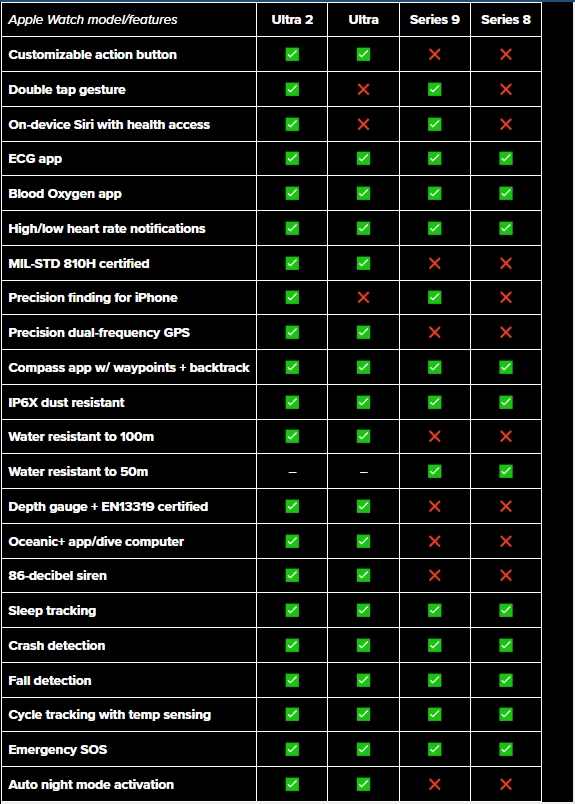
The main new features you get with Ultra 2 are:
Double tap gesture support
On-device Siri with health access
Precision finding for iPhone
While the new Double Tap feature for Apple Watch Ultra 2 and Series 9 is neat, it turns out a similar capability is available for Series 3 and later.
Price
Apple Watch Ultra 2 is priced from $799 (Apple and more)
Series 9 starts from $399/$429 and up (Apple and more)
Apple Watch Ultra 2 vs Ultra 1 wrap-up
While Apple Watch Ultra 2 is an incredible wearable, it’s probably not different enough to be enticing for those who already have the predecessor.
However, if you’re thinking of upgrading from an Apple Watch Series 8 or earlier that may be a different story. You get a larger display, on-device Siri, the longest battery life in an Apple Watch, all of the latest and greatest health features, Action button, Double Tap gesture, and more.
Over the last week, a number of iPhone 15 and iPhone 15 Pro users have complained of their new devices overheating and running at abnormally high temperatures. In response to those complaints, Apple has announced that a software update is on the way to remedy the problems.
Notably, Apple confirmed to 9to5Mac that the new titanium design of the iPhone 15 Pro is not the cause of any overheating problems.
The company also says that the software update coming to iOS 17 does not in any way reduce performance to address iPhone temperature concerns.
iPhone 15 overheating fix coming soon
In a statement first sent to Forbes and also shared with 9to5Mac, Apple pointed out that it’s normal for an iPhone to run hotter than usual during the first several days. As we’ve explained in the past, this is due to iOS indexing photos, searches, and more in the background.
Apple also says that it’s identified a bug in iOS 17 that makes the overheating problem worse for iPhone 15 and iPhone 15 Pro users. This problem will be “addressed in a software update,” the company says.
Furthermore, Apple tells 9to5Mac that recent updates to certain third-party apps are causing them to overload the system. The company says it’s working directly with those developers to fix the issues. According to Apple, some of the apps overloading the iPhone CPU and causing devices to overheat are Asphalt 9, Instagram, and Uber. Instagram issued a fix for the problem on September 27, Apple says.
We have identified a few conditions which can cause iPhone to run warmer than expected. The device may feel warmer during the first few days after setting up or restoring the device because of increased background activity.
We have also found a bug in iOS 17 that is impacting some users and will be addressed in a software update. Another issue involves some recent updates to third-party apps that are causing them to overload the system. We’re working with these app developers on fixes that are in the process of rolling out.
Apple also confirmed to 9to5Mac that the titanium design of the iPhone 15 Pro is not to blame for any overheating problems, contrary to what some reports stated earlier this week. The company says the new design actually leads to better heat dissipation than previous iPhones with stainless steel. This is likely because of the new internal aluminium sub structure.
iPhone 15 Pro design once again blamed for causing some units to overheat
The iPhone 15 Pro is now in the hands of many consumers around the world, and since then, we’ve seen multiple complaints about overheating problems. Earlier this week, analyst Ming-Chi Kuo suggested that these problems may be caused by design compromises, and new reports from Bloomberg and WSJ reveal that the problem may be worse than it seems.
iPhone 15 Pro overheating
As we previously reported, there are many iPhone 15 Pro and iPhone 15 Pro Max users complaining about how the new devices get extremely hot after using them for a while, even with basic things like web browsing. Although a number of people claim not to be affected by the problem, it’s easy to find posts on social media about iPhone 15 Pro models overheating.
A test run with an iPhone 15 Pro Max shared on a Chinese video platform revealed that downloading the popular game Genshin Impact on a 5G network caused the phone to heat up to 122ºF. The iPhone remained at a similar temperature while running the game in high-resolution mode.
A few days ago, YouTube channel TheRelaxingEnd shared a video showing how the iPhone 15 Pro suddenly started freezing and slowing down while running Genshin Impact, which could be a result of overheating. Of course, this is quite intriguing given that Apple has been marketing the new iPhone as the first capable of running AAA games thanks to the A17 Pro chip.
Apple suggests it’s a normal condition caused by software
Officially, Apple has refused to comment on the matter. But Bloomberg has heard from sources that Apple technicians have been dealing with a lot of customers complaining about iPhone 15 Pro overheating issues. Technicians are telling users to follow the instructions from an old support article found on Apple’s website about what to do when the iPhone gets too hot.
The article doesn’t include any specific instructions for the iPhone 15 Pro. Instead, it only suggests that the iPhone may get hotter than normal after the first setup, being restored from a backup, being wirelessly recharged, or when running graphics-intensive or processor-intensive apps.
While this is true, there’s a group of users who believe that the iPhone 15 Pro is heating up more than usual even under normal conditions, days after being set up or without running 3D games. And they may be right.
It could be caused by a design flaw
The Wall Street Journal heard from “people familiar with the iPhone’s design” that the overheating problems are being caused by design flaws in the iPhone 15 Pro. For instance, Apple removed the SIM tray from iPhone 14 models sold in the US, but every other country still relies on a physical SIM-compatible version of the iPhone.
Because of this, the US version of the iPhone 14 has a plastic piece to fill the gap where the SIM tray is located in the global version of the phone. With the iPhone 15, Apple has redesigned the logic board to remove this gap. But since the eSIM-only iPhone remains exclusive to the US, the rest of the world relies on an iPhone with a different logic board.
“Adding a slot to the phone’s already-cramped interior creates additional challenges for heat dissipation,” the WSJ sources reported.
But that’s not all. Similar to what Kuo said earlier this week, the sources who spoke to the WSJ mentioned that titanium also contributes to overheating, since the material has “less mass to absorb the heat” compared to stainless steel. These two factors combined with a more powerful chip make the iPhone 15 Pro overheat.
Will Apple address the iPhone 15 Pro overheating problems?
It’s unclear at this point whether Apple will do anything to address these problems. The easiest solution would probably be releasing a software update that reduces CPU and GPU performance in certain situations in order to keep the device’s internal temperature under control.
Another alternative would be to change the engineering design of the iPhone 15 Pro, which sounds more unlikely as this would require announcing a recall program for affected customers.
Apple launched the Watch Series 8 last year, upgrading the Watch Series 7 with a new S8 chip, crash detection, and temperature sensor. And since rumors point to the Watch Series 9 carrying over the same design, we figured we should inspect how the Watch Series 8 holds in the long run.
Should you wait for the Watch Series 9, which could cost more without offering much, or should you get yourself a Watch Series 8 once it gets discounted? Here’s our long-term review of the Apple Watch Series 8 after over six months of usage to help you decide.
Disclaimer. We can not guarantee that the information on this page is 100% correct.
Features and Performance
The Apple Watch Series 8 is largely identical to its predecessor but comes with a new chip (S8 vs. S7), a temperature sensor, and crash detection. It also comes with the usual slew of health and fitness features, including real-time heart rate monitoring, blood oxygen level measurement, sleep tracking, ECG, sedentary reminder, steps counter, and indoor and outdoor workouts.
Aside from that, the Apple Watch Series 8 comes with camera and music controls, weather forecast, compass (with Backtracking), phone finder, stopwatch, countdown timer, fall detection, noise monitoring, and GPS (L1). The Watch Series 8 also has temperature sensing, which is only useful for females since it’s used for Cycle Tracking with retrospective ovulation estimates to help women better understand their menstrual cycle.
The Apple Watch Series 8 has 32GB of storage onboard, allowing users to download music on the smartwatch for offline playback. You can listen to them through the watch’s speakers if you feel adventurous, or connect the watch to any Bluetooth earphones to listen to music through the Apple Watch without requiring your iPhone.
This is useful when going for an outdoor workout since you don’t have to carry your iPhone with you, more so if you own the LTE model, which lets you make and answer calls without being connected to an iPhone.
Speaking of, the Apple Watch Series 8 comes with Apple’s W3 wireless chip and the U1 chip and supports Bluetooth 5.3 and Wi-Fi (2.4GHz and 5GHz) connectivity.
Talking about the health and fitness features, the Apple Watch Series 8 measures the heart rate automatically at an interval of one minute, and there’s no way to change it, which isn’t ideal since letting users increase the gap by even a few minutes would help extend the battery life. However, automatic heart rate measurement at an interval of one minute is recommended on most wearables for more accurate results, so I understand why Apple didn’t provide that option.
That said, if you don’t want to rely on data from automatic tracking, you can measure your heart rate manually whenever you wish through the Heart Rate app on the smartwatch. It’s fast and displays the resting heart rate, with a detailed analysis available in the Health app on the companion iPhone. The heart rate sensor recorded the pulse accurately most of the time, but it’s still best not to use it for diagnosis.
The Watch Series 8’s ECG sensor can generate an ECG similar to a single-lead electrocardiogram with the ECG app on the smartwatch. All you have to do is put your finger on the crown for 30 seconds, and like heart rate monitoring, you can find the ECG data in the Health app. I didn’t have any means of checking its accuracy, but regardless, we recommend you don’t use that data as a basis for diagnosis or treatment.
The SpO2 sensor on the Watch Series 8 can also measure blood oxygen levels throughout the day like the heart rate sensor, including in Sleep Focus and Cinema Mode. However, you can also take on-demand readings using the Blood Oxygen app on the smartwatch, which takes 15 seconds for the measurement. The readings were mostly accurate, and you can find the related data in the Health app. Just don’t use it for diagnostic purposes.
Next up is sleep tracking, which breaks down the total sleep hours into four stages – Core Sleep (aka Light Sleep), Deep Sleep, REM Sleep, and Awake. You get the previous night’s sleep metrics on the Apple Watch through the Sleep app, which shows your total hours of sleep, fall asleep and wake up times, and the time you spent in the aforementioned stages during your sleep. It also shows you the average sleep time for two weeks. A detailed analysis is available through the Health app on the iPhone, where the Sleep section also displays information about your respiratory rate and heart rate during sleep, along with other data, including the time you spent in bed, which I found interesting.
However, sleep tracking on the Apple Watch Series 8 was disappointing and unreliable in my experience. It did track the Awake times accurately, but not the fall asleep time.
The Watch Series 8’s sleep tracking algorithm clocks the sleep time even when you are lying on a couch or a bed watching videos on a phone/tablet and moving regularly. I’ve used smartwatches in the past with similar behavior, and I’d have been fine with the Watch Series 8 as well for that if it didn’t give me Stand Reminders when the algorithm thought I was asleep. It’s weird. The Health app also doesn’t let you edit the sleep record, meaning you are left with an overall inaccurate sleep analysis since the data used for that is incorrect. Apple lets you add sleep data through the Health app, so I hope the company will let users edit existing sleep records with future updates.
It’s also worth mentioning that the Apple Watch Series 8 doesn’t track afternoon naps even after you turn on the Sleep Focus mode, which is a bummer since even watches that cost less than half of the Apple Watch do that. Here’s hoping Apple will bring that functionality to some – if not all – of its smartwatches with a software update.
The Apple Watch Series 8 supports several indoor and outdoor workouts. I obviously couldn’t try all of them. I mostly used the Indoor Walk and Outdoor Walk workouts. And while the steps counted by both modes weren’t entirely accurate like most other smartwatches, the margin of error was minimal enough not to be a concern. However, the Indoor Walk used GPS for some reason, which I find unnecessary as that’s something more useful with outdoor workouts. The Outdoor Walk mode used GPS, but it didn’t trace the route of my walk and instead only pinned the starting point of my walk on the map, which I didn’t find useful.
Moreover, the Apple Watch Series 8 also asked me if I’d like to end my Indoor/Outdoor Walk despite me not slowing down or pausing for a few minutes for the algorithm to show that prompt. This started with the watchOS 9.2 update and still happens with watchOS 9.6.1.
Talking about the Watch Series 8’s LTE feature, I made and received calls through the smartwatch, and the people on the other end could hear me clearly when I brought the watch closer to my face when relying on the built-in microphone. The same goes for its speakers to listen to the folks on the other end. However, in a noisy environment, you can always connect the Watch Series 8 to any Bluetooth earphones for calls without requiring an iPhone due to its LTE connectivity. This also worked when I moved the SIM card from the companion iPhone to another device (provided it isn’t connected to the companion iPhone via Bluetooth), but that didn’t work for text messages.
The Apple Watch Series 8 LTE’s ability to let you make/receive calls, send text messages, and compose emails, in addition to doing a few other things without being connected to an iPhone, makes it a true extension of the iPhone.
The Backtracking on the Apple Watch Series 8 worked fine, but I obviously didn’t test its crash detection feature. However, over the months, we’ve found reports that it proved useful.
My only major complaint with the Apple Watch Series 8 after over six months of usage is its sleep tracking, which needs significant improvements. I hope this will be fixed with the next update. I’d also like Apple to introduce afternoon nap tracking.
Verdict
The Apple Watch Series 8 with cellular connectivity is a nice extension of an iPhone since it allows you to make and receive phone calls, send and receive texts, and do a few other things like checking and composing emails without being connected to an iPhone. You can also download music for offline playback and listen to it through the watch’s speakers or Bluetooth earphones without keeping it connected to an iPhone, which could come in handy when going for a run or working out.
The Watch Series 8 has a bright screen that’s legible outdoors under strong sunlight and sturdy build, which has held up well after over six months of usage. The same goes for the bundled straps. The smartwatch’s performance is also snappy, which, paired with good haptics, offered a pleasant experience.
However, notification management needs polishing, and UI navigation could be improved for a more convenient experience. I’d also like to see Apple release an app that serves as a one-stop solution for everything related to Apple Watches, eliminating the need for users to juggle between three different apps for different purposes.
So, a year later, should you buy the Apple Watch Series 8 or wait for the Watch Series 9? If rumors are to be believed, the Apple Watch Series 9 won’t come with significant upgrades since it’s said to be “basically unchanged” from the Watch Series 8. It’s expected to get a new chip based on Apple’s A15 SoC, which could bring performance and efficiency improvements to the smartwatch.
Considering that, and if you trust Apple to fix the software issues we mentioned with the subsequent software updates, I don’t see any reason not to buy it if you find a great deal on it, which is likely to happen soon as we inch closer to the September 12 Apple event since retailers would want to clear their old stocks at discounted prices before the Watch Series 9 arrives.
Pros
Lightweight and comfortable
Sturdy build
Bright screen with nice touch response
Snappy performance
50m water resistance
Nice haptics
LTE connectivity is one very convenient feature to have on a smartwatch
Along with the new Action button on the iPhone 15 Pro comes an interesting addition to the status bar – a silence mode icon next to the time. Fortunately, Apple has included a way to hide silent bell icon on iPhone 15 Pro and Pro Max, here’s how.
The Action button sits in the same place as the side switch on previous iPhone models and works with a long press.
The default is set to turn silent mode on and off. But even if you customize the Action button to control something else, a new silent bell icon shows in the iPhone 15 Pro status bar right next to the time.
Spotted by MKBHD, the good news is there’s a quick fix in Settings to remove the silent mode icon.
PSA for everyone who leaves their phones on silent and is about to get an iPhone 15 Pro: You can turn off the annoying permanent silent indicator in settings. You’re welcome pic.twitter.com/FcOT8mnQMT
Open the Settings app on your iPhone 15 Pro or Pro Max
Choose Sounds & Haptics near the top
Tap the second toggle down next to Show in Status Bar to hide silent bell
Here’s how it looks to hide the silent bell icon on iPhone 15 Pro:
And if you haven’t customized your Action button yet, navigate to Settings > Action button. Here are the options for the new button:
Silent mode (default)
Focus mode
Camera
Flashlight
Voice Memo
Shortcut
Accessibility features like magnifier and more
No Action
Translate will arrive with an update “later this year”
If you change the Action button to activate something other than silent mode, you can turn silent on/off from Control Center or Settings > Sounds & Haptics.
iOS 17 iPhone StandBy: How to use and customize the smart display feature
One of the headlining new features with iOS 17 is a smart landscape display mode for iPhone when it’s charging. Coming with different clock faces, widgets, access to photos, and more, here’s how to use and customize the iOS 17 iPhone Standby display.
iOS 17 comes with a number of changes across Messages, FaceTime, the Phone experience, and much more.
But one of the most attention-grabbing features will likely be the new iPhone StandBy view that turns the smartphone into a mini smart display.
Here’s how StandBy works.
iOS 17 iPhone StandBy: How to use and customize
Make sure you’re running iOS 17
With your iPhone screen locked, place it in landscape on an upright charger (the mode won’t work on flat or low-angle chargers or when your screen is unlocked – and it must be charging)
iPhone StandBy will automatically appear – the feature is enabled by default
StandBy works on any iPhone that can run iOS 17 but you’ll need to tap the screen to see the clock, widgets, photos, etc. – iPhone 14/15 Pro/Pro Max with always-on will always show the StandBy display
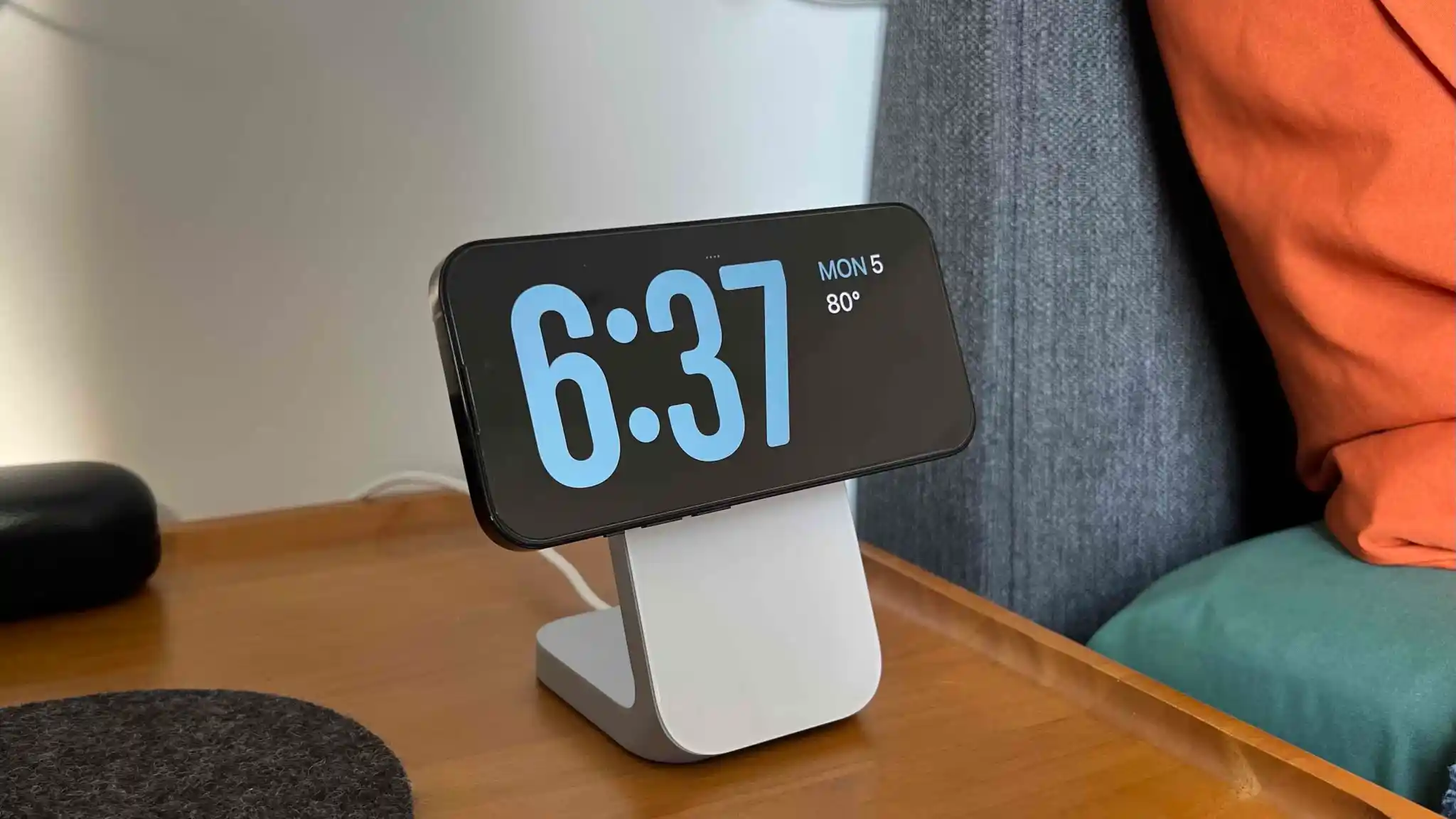
The classic analog clock plus calendar widget on the right is the default StandBy view, swipe up on either to change them
Press and hold on either one to add or remove widgets
On the first StandBy view, do a big swipe from right to left to change views
Press and hold on the other StandBy views to customize them
iOS 17 iPhone StandBy supports Live Activities, Siri, incoming calls, and larger notifications
StandBy remembers your “preferred view” and dims to red and night
You can tweak StandBy settings by heading to Settings > StandBy
Check out our round-up of the latest third-party apps to include StandBy widget support
Here’s how iOS 17 iPhone StandBy looks in use:
The first time you place your locked iPhone horizontally on an upright charger, you’ll see a welcome splash screen.
Now you’ll see this as the default StandBy view:
Swipe up on either the clock face or calendar to get more options (the calendar is a smart stack suggestion by default):
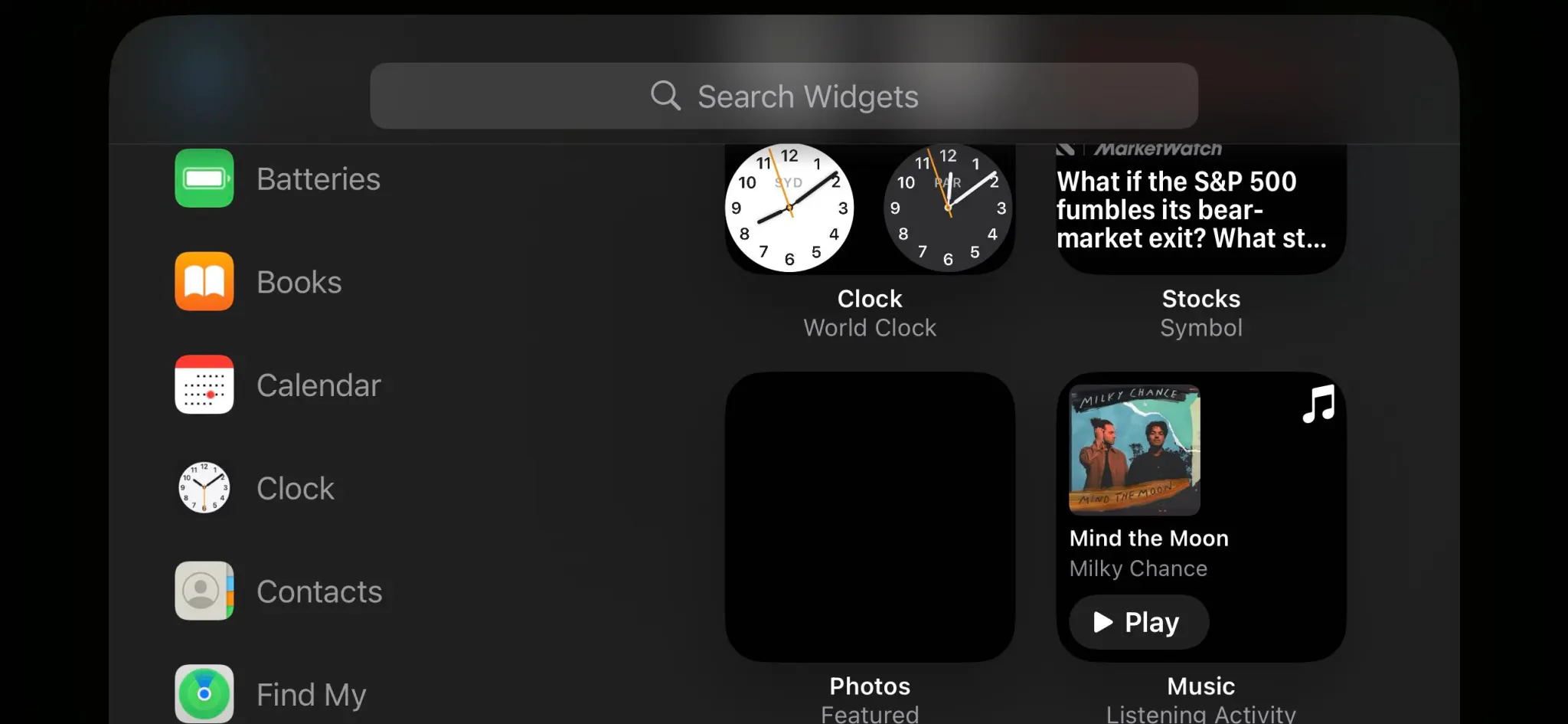
To customize this StandBy screen further, press and hold on the left or right widget. Now you can remove options or tap the + icon in the top left to add widgets:
From the first StandBy clock/widget view, you can swipe from right to left to get to the Photos StandBy view:
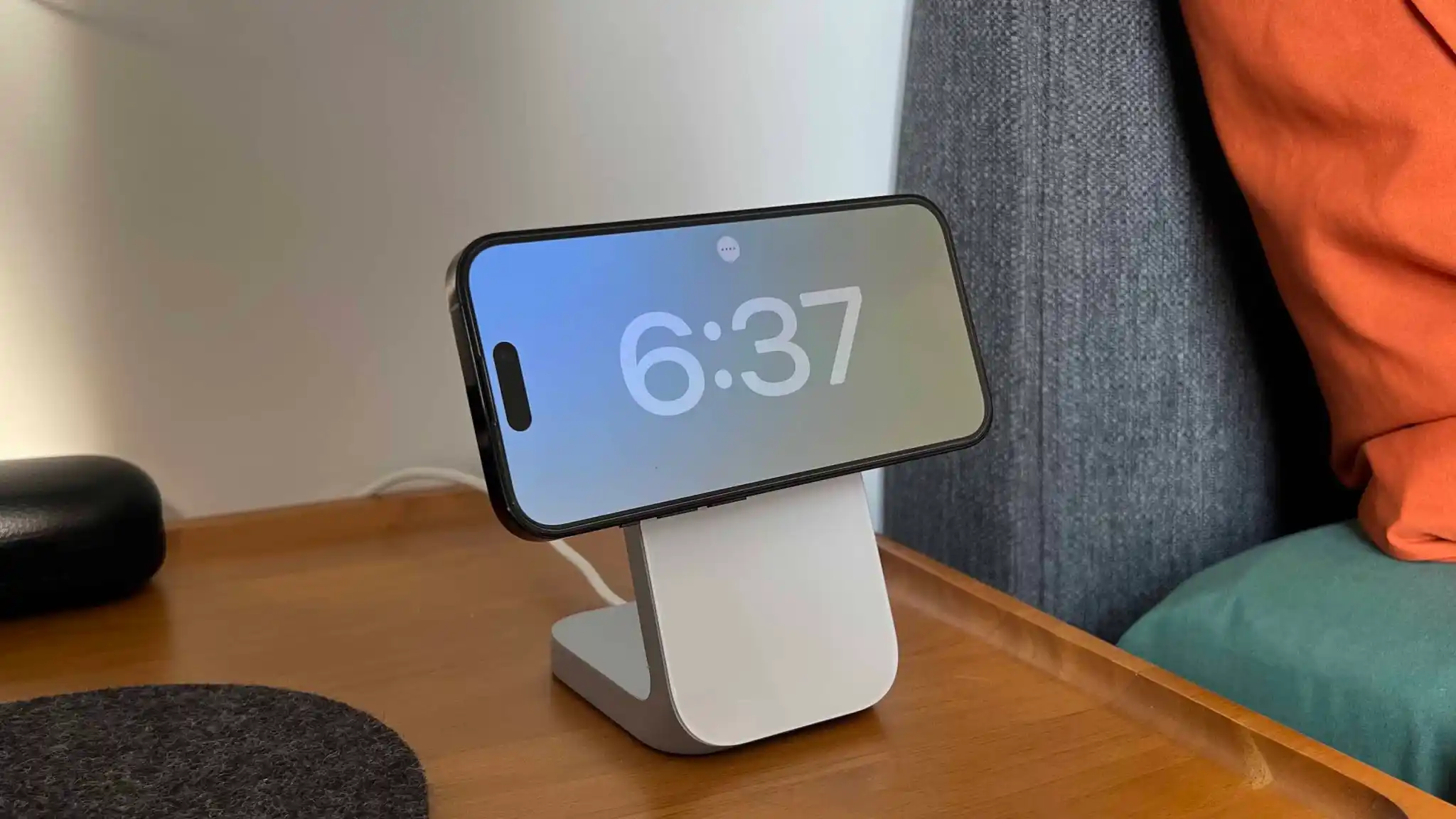
And swipe again to get different the last view that features different customizable clock faces:
iPhone StandBy on Nomad Stand One MagSafe Charger
Press and hold on any of these to customize their color schemes but you can’t add widgets to these clock faces.
But you can tap the “….” icon in the top center to access music at any time which presents a nice media UI:
And so it doesn’t disturb sleep, iPhone StandBy for those with always-on displays will automatically dim to red at night:
iPhone 15 Pro Max back glass cracks within seconds in new durability test
The iPhone 15 Pro and iPhone 15 Pro Max feature an all-new chassis design made out of what Apple says is grade 5 titanium. A drop test video yesterday raised early concerns about the durability of this new design, particularly as related to the new curved edges.
Now, JerryRigEverything has posted his annual durability test with the iPhone 15 Pro and iPhone 15 Pro Max, and he has some concerns…
Throughout the durability test, we can see the new grade 5 titanium put through scratch testing, heating testing, sandpaper, and more. As expected, the titanium does indeed scratch when you take a knife to it. The matte back glass, however, is far more scratch resistant.
The display also fares quite well during the scratch testing as well, as do the three camera covers on the back of the iPhone 15 Pro. But things get more interesting pretty quickly.
“It’s time to see if the new blended aluminum titanium grafted hybrid structure compromises the structural integrity of the iPhone 15 Pro Max,” JerryRigEverything says as he starts to put pressure on the device. Within just a few seconds, you hear a snap and the back glass has completely shattered.
“I did not see that one coming,” he says. “You’ve been watching me durability test smartphones for about 11 years now, and most phones do not break. iPhones especially do not break, like ever. And [the iPhone 15 Pro Max’s] snap was abnormally quick.”
Internally, the iPhone 15 Pro Max survives the test. The screen and frame of the device are also both unscathed. It’s just the back glass that succumbs to the pressure.
JerryRigEverything speculates that this could be due to the titanium having five times the amount of tensile strength as aluminum, leading to the glass back not being able to withstand even small amounts pressure and flex. On the bright side, Apple has made it far cheaper to replace the iPhone 15 Pro’s back glass this year.
You can check out the video below for the full details. It’s a fascinating look at the iPhone 15 Pro’s new design, but also with some interesting tidbits about titanium itself.
In David Guetta’s hit song “Titanium” from 2011, Sia sang: “You shoot me down, but I won’t fall. I am titanium.” It looks like the same can’t be said for Apple’s version of titanium in the iPhone 15 Pro.
iPhone 15 Plus takes the crown in battery life test, beating all previous iPhone models
Following the iPhone 15 release on Friday, the first battery test results are coming in. Apple touted the efficiency of the 3nm A17 Pro chip, so anticipation was high for the iPhone 15 Pro and Pro Max to take the top spot.
Indeed, the Pro Max outlasted all previous iPhones in Mrwhosetheboss’s test. But it was actually bested by the 15 Plus, which racked up more than 13 hours screen on time, and now holds the title of longest iPhone battery life on record.
Apple’s own tech specs page reports battery life in terms of longevity for continuous audio playback and video playback sessions. According to Apple’s numbers, the iPhone 15 Pro Max lasts the longest on streaming video playback with 25 hours compared to 20 hours for iPhone 15 Pro and iPhone 15 Plus.
However, on audio playback, the Max is rated for 95 hours while the Plus hits triple digits at 100 hours. Apple’s numbers give a decent benchmark to compare across models, but it’s hard to deduce real-world battery life times from them, as day-to-day phone usage is usually more taxing than just watching video or playing music.
Mrwhosetheboss attempts to simulate a more realistic daily usage pattern, cycling through power draining activities like watching TikTok videos, Zoom video chat, recording video in the camera, and playing games. The phone screen stays on the entire time until the battery is depleted and it turns off.
The previous title holder was the iPhone 13 Pro Max, as battery life dipped a little with the 14 series. As seen in the video, all iPhone 15 models beat out their previous-generation counterpart.
Of the newest generation phones, the iPhone 15 Pro died first, followed by the iPhone 15. The 15 Pro lasted for 9 hours and 20 minutes. The base iPhone 15 endured another half an hour, clocking in at just under 10 hours of runtime.
The 15 Pro Max easily lapped the field, staying alive for another hour and a half of battery life, hitting 11 hours and 41 minutes. The 15 Plus almost beat the Max by the same margin though, achieving a staggering 13 hours and 19 minutes in the test.
The previous best performer, the 13 Pro Max, managed 11 hours and 19 minutes in contrast.
Apple has identified an iOS 17 bug which may affect the iPhone 15 upgrade experience today. During iPhone setup, the Transfer from another iPhone option may fail and leave your new iPhone in a state where it is stuck booting on the Apple logo black screen. Here’s what to do if that happens to you.
The bug affects iPhone 15 and iPhone 15 Pro as these phones ship with iOS 17 preinstalled. However, it may also affect anyone switching phones that are running iOS 17 and use the transfer data option.
If you encounter the bug, during the transfer of apps and data, the new iPhone will get stuck in a boot loop on the Apple logo screen.
To resolve the issue, Apple says that you need to put the device into DFU mode and restore it using a computer.
To do this, connect your iPhone to a PC or Mac using a cable. Press the volume up, press the volume down, and then press and hold the side button. Keep holding the side button while iPhone reboots until it displays an icon on the screen that represents a computer and cable. It will look similar to this:
After you get the iPhone into DFU state, it will then show on your computer through the Finder, or through iTunes if you are connecting to a Windows PC (or older version of macOS). In Finder/iTunes, you will be able to Restore or Update; press the Restore button to reset the phone.
After the phone has been restored, you can start the setup process again. There may be an additional software update available.
Finally, you can try again. If you are upgrading to an iPhone 15 or iPhone 15 Pro, you can set up using transfer data or iCloud backup. The aforementioned software update will have fixed the iOS 17 bug, so you can safely transfer data again and finish new iPhone setup.
However, if you are upgrading to an iPhone model earlier than the 15 series, a fix for the transfer data glitch is not yet available.
So, Apple recommends that you update using iCloud Backup instead. Make sure your previous iPhone has a recent iCloud backup complete (you can force this by going to Settings -> [your name] -> iCloud -> iCloud Backup -> Back Up Now). Then, on your new iPhone, start iPhone set up and choose the ‘From iCloud Backup’ option when it asks how you want to transfer your data to your new phone. Your iPhone should then finish setup successfully.
These steps are described in an Apple support document, which first revealed the existence of this iOS 17 glitch.
You can charge your Apple Watch or AirPods using the new iPhone 15’s USB-C port
The iPhone 15 and iPhone 15 Proditch Apple’s proprietary Lightning connector in favor of USB-C, and that change has a few side effects. Perhaps most notably, you can now use the iPhone 15’s USB-C port to quickly add more juice to your Apple Watch or AirPods.
Apple made a brief mention of this during the “Wonderlust” keynote yesterday. In practice, the feature works exactly as you would expect it to. You can connect your AirPods or Apple Watch to the iPhone 15’s USB-C port, and they’ll instantly start to charge.
This works via a USB-C to Apple Watch charging puck, via a USB-C to USB-C cable for the new AirPods Pro, and via a USB-C to Lightning cable for older AirPods.
Apple has reportedly been working on reverse wireless charging for years, a feature that would let you charge up AirPods and Apple Watch by placing them on the back of your iPhone. This feature still hasn’t seen the light of day, but the support for power-out via the new USB-C port is a great interim solution.
There’s no word on the charging speed provided to AirPods or Apple Watch via the iPhone 15’s USB-C port. It’s important to note that this feature will only work with AirPods and Apple Watch, so you can’t just plug in any device to the USB-C port and expect your iPhone to charge it.
We’ll have to do more testing to see just how big of an impact using your iPhone to charge your AirPods or Apple Watch will have on battery life. AirPods and Apple Watch have smaller batteries in comparison to the iPhone.
Here’s what you can do with the iPhone 15 Pro Action button
After living its entire life with a side switch, the iPhone has evolved to feature a programmable Action button with the 15 Pro and 15 Pro Max. Here’s a look at all the ways you can customize the iPhone Action button.
Apple Watch Ultra received the Action button last year and this time around it’s the iPhone’s turn with the 15 Pro and Pro Max.
The Action button sits in the same place as the side switch on previous iPhones and is used with a long press.
Apple notes that when you change the Action button to something other than controlling Silent mode, you can head to Control Center or use Focus modes to change your ringer.
Customize the iPhone Action button
In iOS 17, head to Settings > Action button on the iPhone 15 Pro/Pro Max and you can set the Action button to launch:
Silent mode (default)
Focus mode
Camera
Flashlight
Voice Memo
Magnifier and other Accessibility features
Shortcut
Translate (arriving with an update “later this year”)
While there are eight main features the Action button can control, being able to set it to control Accessibility shortcuts or run a custom shortcut from the Shortcuts app is huge. That means the possibilities are pretty much endless.
Some features make use of the Action button once you’re in an app too. For example, if you launch the Camera with the Action button, you can press it again to take pictures. If you launch a Voice Memo recording, you can use the Action button to stop the recording, etc.
PSA: Apple Card financing not available for carrier-free iPhone 15 orders
Last month, Apple discontinued Apple Card financing for iPhones purchased without a carrier connection. Unfortunately, and unsurprisingly, that change applies to the new iPhone 15 and iPhone 15 Pro.
What this means is that in order to use Apple Card Monthly Installments to buy an iPhone 15 or iPhone 15 Pro, you must connect that phone to AT&T, T-Mobile, or Verizon.
Previously, Apple allowed buyers to purchase an iPhone with the “Connect to a carrier later” option. This option means users are free to use the iPhone without a cellular connection or via any carrier of their choosing. For instance, you could connect an iPhone purchased with this option to a carrier such as Mint Mobile or Google Fi.
That “Connect to a carrier later” option is no longer available for iPhones purchased with Apple Card Monthly Installments. Instead, your new iPhone 15 Pro will require you to connect to AT&T, T-Mobile, or Verizon at the time of setup. Note that the iPhones will still be unlocked, but the carrier connection will be required at the time of setup.
Apple points out this new requirement on the purchase page for iPhone 15. “Carrier connection with AT&T, T-Mobile, or Verizon is required to purchase with Apple Card Monthly Installments,” the company explains. “An iPhone purchased with ACMI is always unlocked, so you can switch carriers at any time.”
As said when first wrote about this change in June, it’s a huge bummer for Apple Card users. The ability to finance Apple hardware purchases is one of the biggest selling points of the Apple Card, and this change puts a big restriction on the most popular Apple hardware purchase.
iPhone 15 Pro’s new design, Action button, and more
The iPhone 15 Pro and iPhone 15 Pro Max are now official, and I had the chance to go hands-on with them inside Steve Jobs Theater. The flagship iPhone 15 Pro models pack a new titanium design, upgraded camera hardware, and more. Here are some quick first impressions…
Right off the bat, I was struck by how light the iPhone 15 Pro Max feels due to its new titanium chassis. Here’s how the numbers breakdown on paper:
iPhone 15 Pro – 187 grams (down from 206 grams)
iPhone 15 Pro Max – 221 grams (down from 240 grams)
That’s a pretty big difference on paper, and it’s an even bigger difference in real life. I’ve been using the iPhone 14 Pro Max for the last year, so I’ve grown pretty familiar with its weight. I found the iPhone 15 Pro Max to be significantly lighter and more comfortable to hold. I think this is due to both the reduction in weight as well as the new contoured edges.
The titanium design also means that the iPhone 15 Pro models have a texturized matte finish rather than the previous glossy stainless steel finish. I only spent around 15 minutes with the iPhone 15 Pro today, but I have a feeling this is going to be a very nice change in terms of durability.
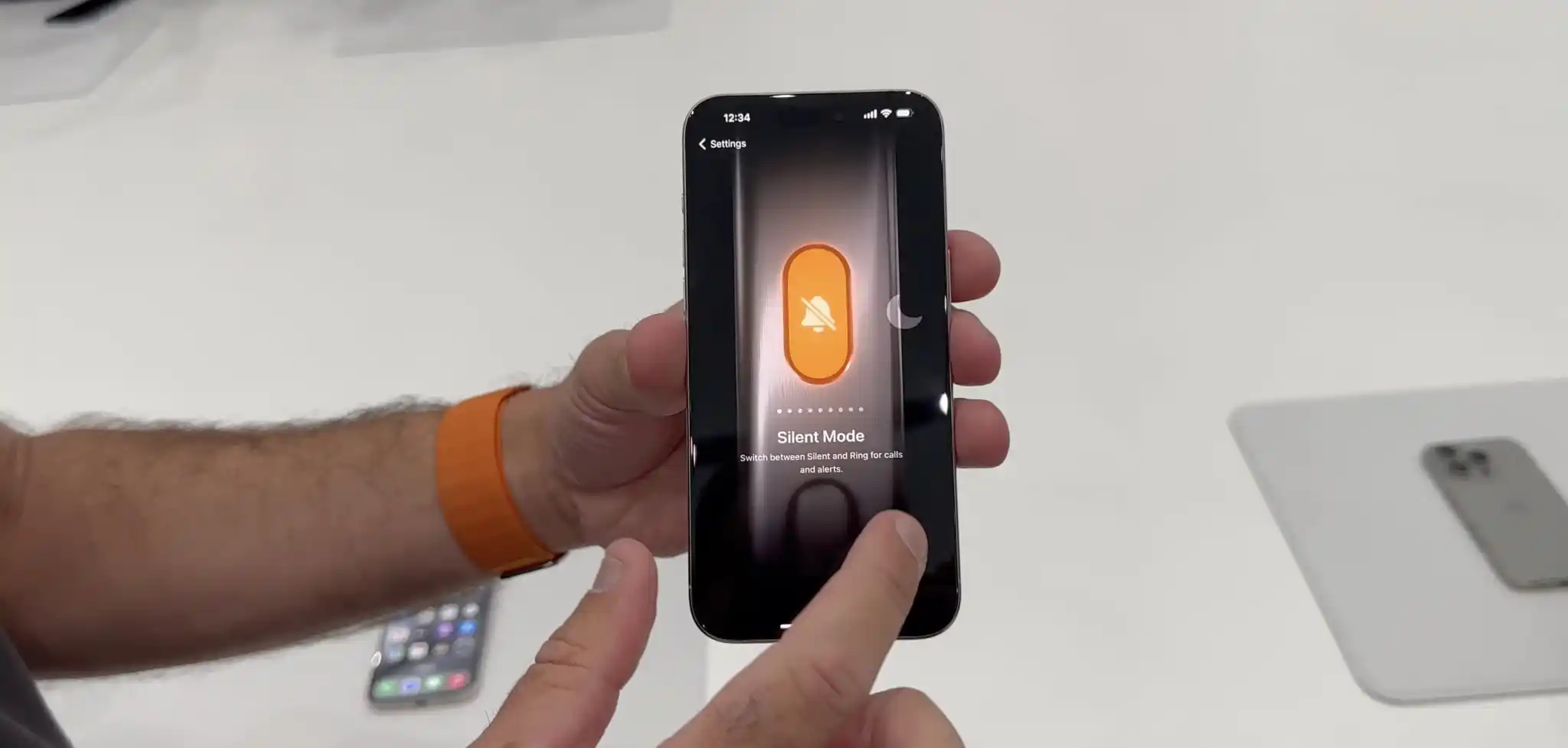
The Action button is another standout feature of the iPhone 15 Pro. The interface to customize what the Action button is linked to is in the Settings app, and it’s beautifully designed. The button can be assigned to the following things:
Silent Mode
Focus Mode
Camera
Flashlight
Voice Memos
Accessibility features like Magnifier
Shortcuts
One thing that I didn’t realize until I tried the Action button is that a press and hold is required to trigger the action. You can’t just quickly press the button. This is likely an effort to prevent false triggers, so it makes sense, but it does mean there’s an added step required each time.
I think my primary use of the Action button will be for the camera. You can press and hold to open the Camera app, then press the Action Button again to use it as a shutter in the Camera app. You can see that demoed in my video above.
Speaking of the camera, the iPhone 15 Pro Max also features an upgraded Telephoto lens with up to 5x optical zoom. I’ll have to reserve full judgment on this until I get my hands on an iPhone 15 Pro Max for an extended period of time, but the quick demos I got at Steve Jobs Theater today align with my expectations. The new telephoto lens also enables 25x digital zoom as well.
Other tidbits:
Yes, there’s a USB-C port. Apple wasn’t lying.
The colors look much better than I expected, but they are still pretty boring and there’s not a whole lot of variety.
The smaller bezels are noticeable, but not as noticeable as I thought they would be. At a certain point I suppose you just get used to the black border being there, regardless of its size.
I only got a brief minute with the new FineWoven cases for the iPhone 15 Pro, but I really liked the material and how it felt in my hands. I’m 100% in support of Apple’s move away from leather.
I’ll have much more to say about the iPhone 15 Pro and iPhone 15 Pro Max once I get to spend some more time with them. My first impressions are pretty positive, especially when it comes to the new titanium design and the benefits provided by that change.
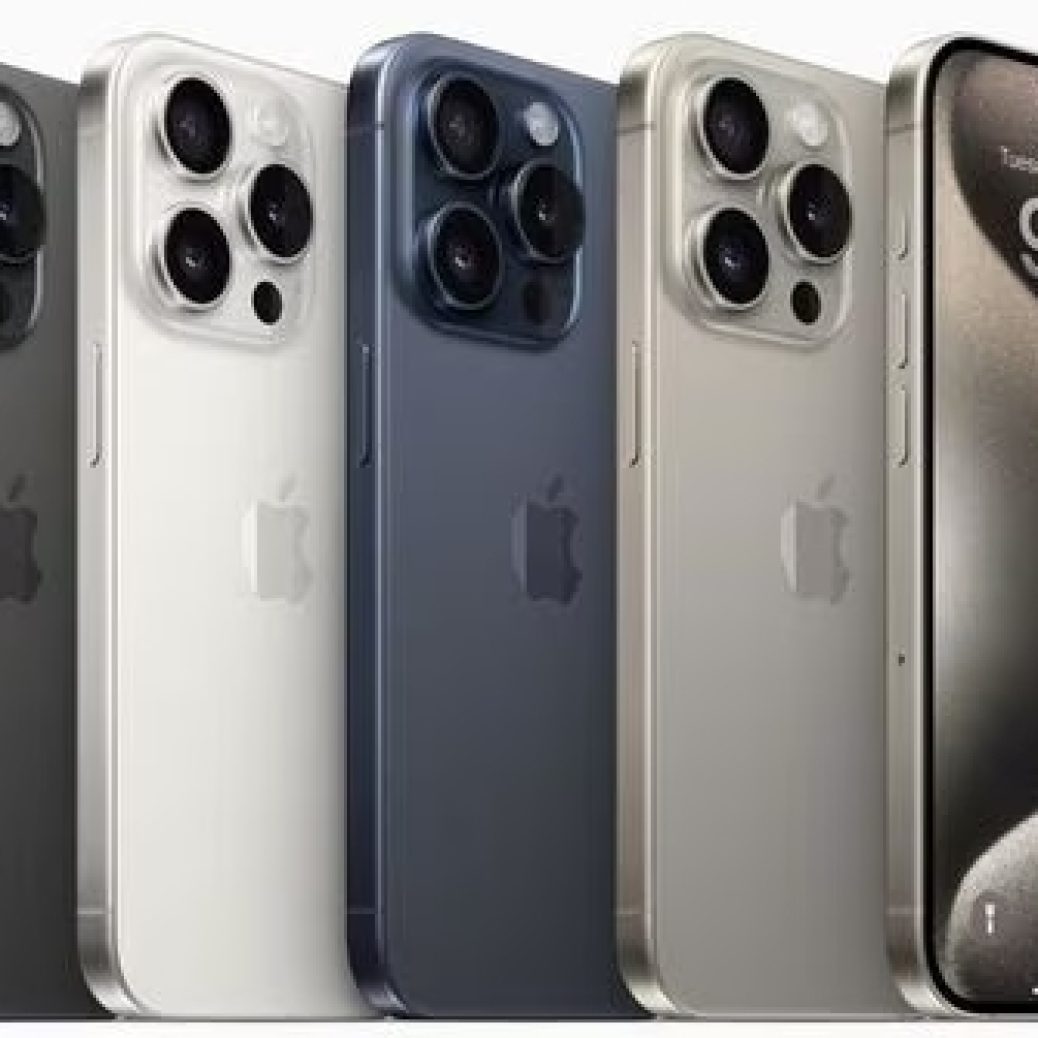
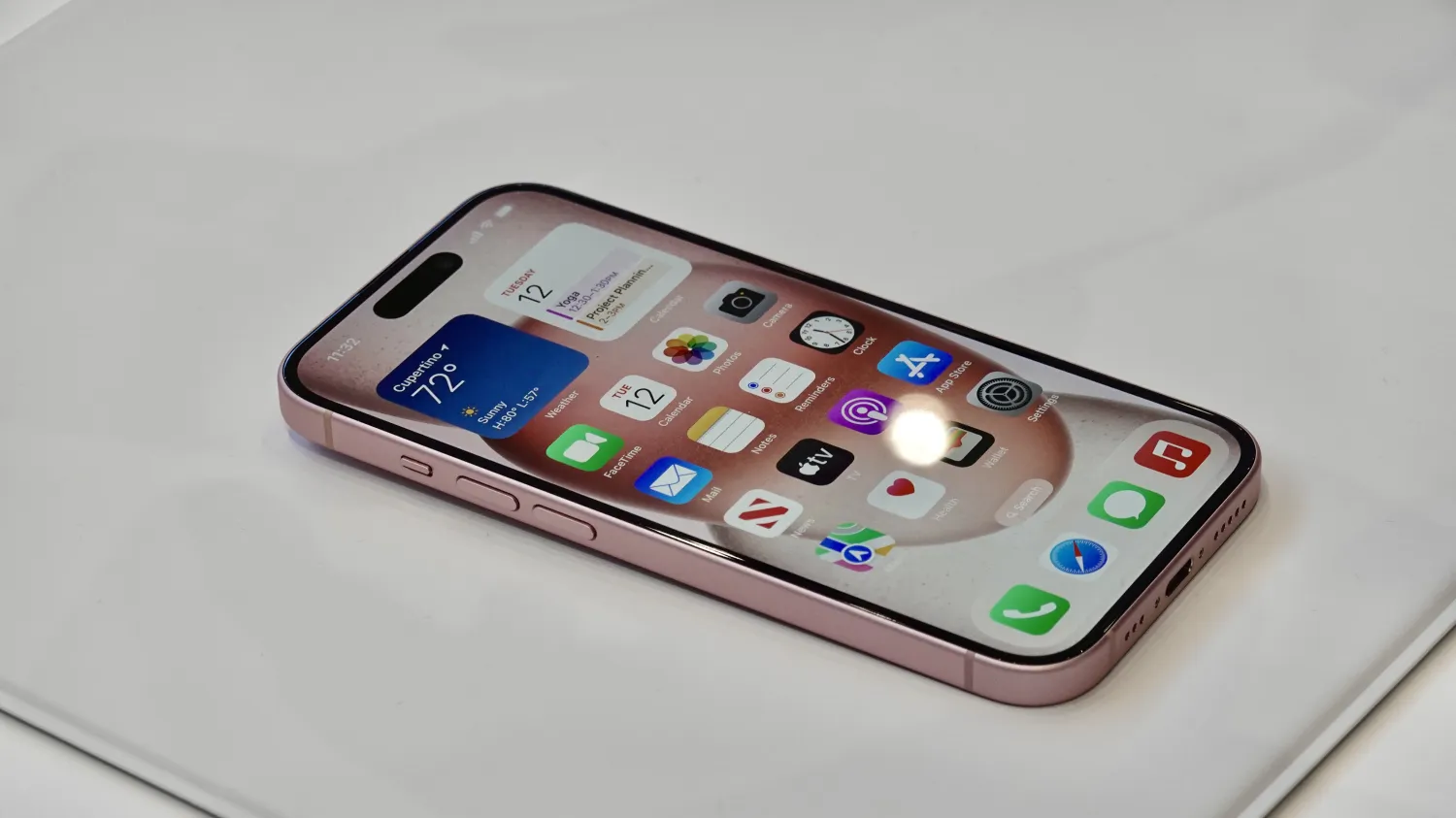
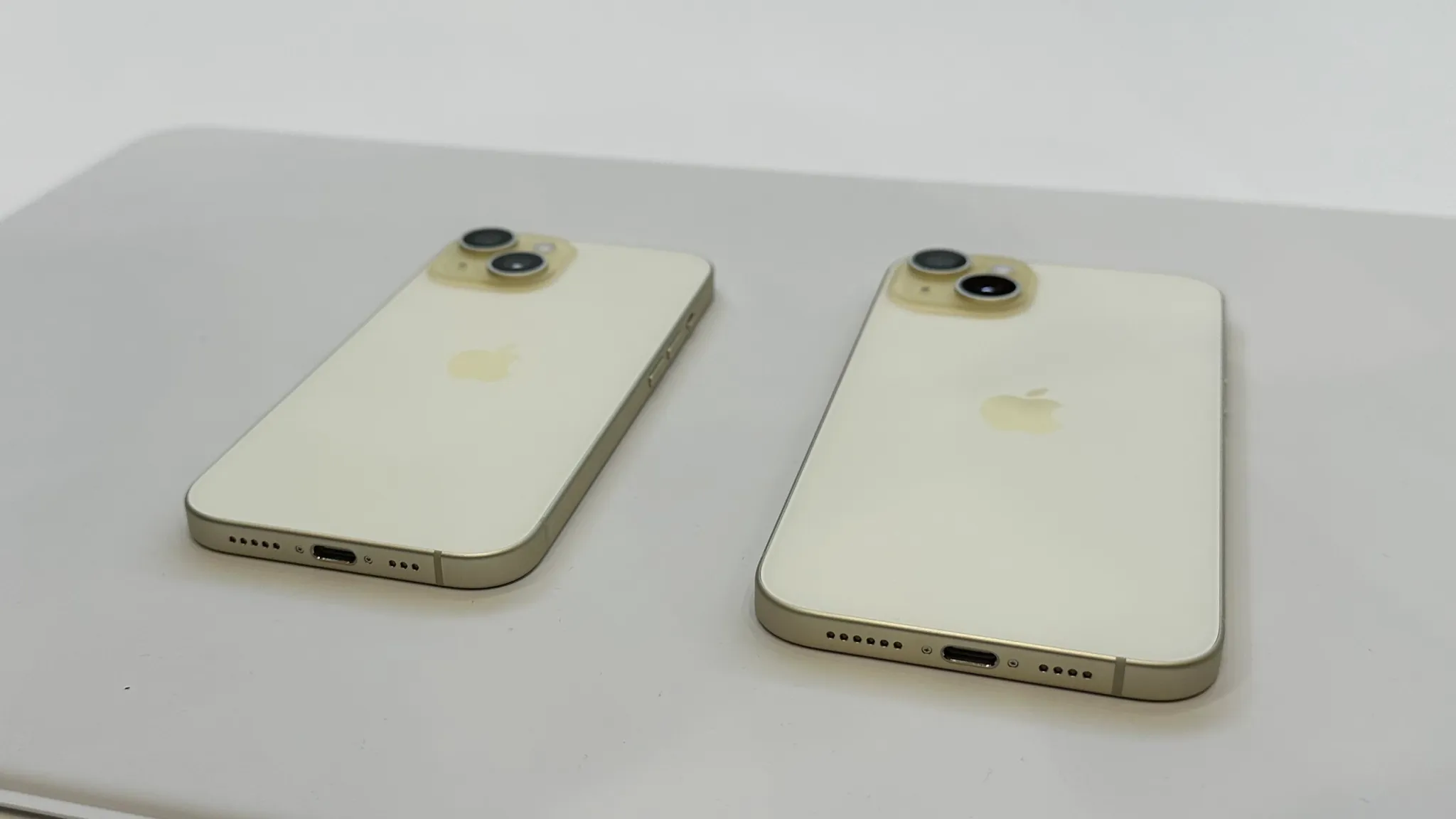
iPhone 15 and iPhone 15 Plus in every color
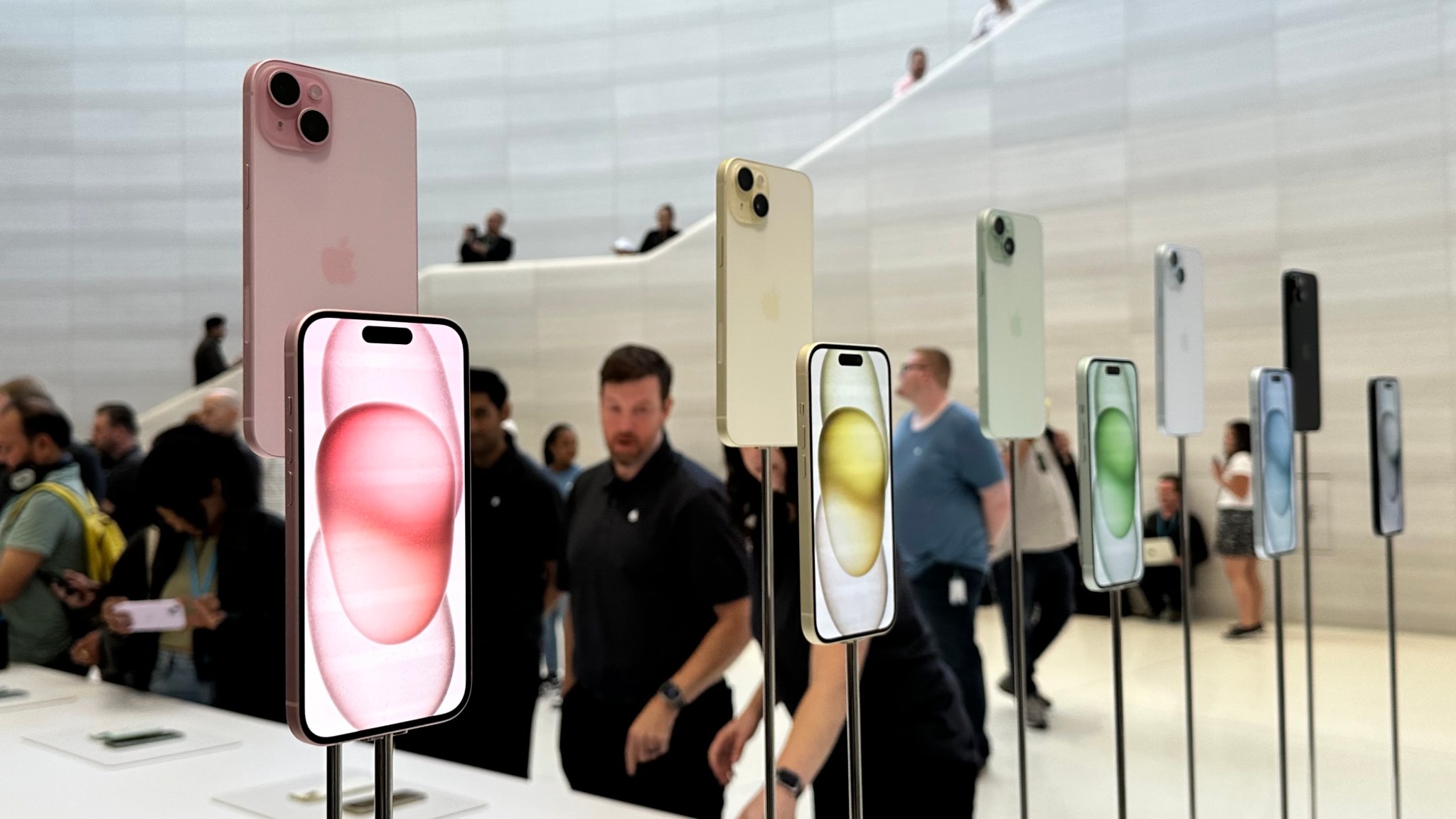
In addition to the iPhone 15 Pro and iPhone 15 Pro Max, Apple also unveiled the entry-level iPhone 15 and iPhone 15 Plus during its “Wonderlust” event today. I got to check them out at Steve Jobs Theater after the keynote today, and I honestly wish I had more to say…
The iPhone 15 and iPhone 15 Plus are great phones. They take the iPhone 14 and do exactly what Apple does: gradually trickle down what were once Pro-exclusive features to the non-Pro phones. The other big change here, of course, is the USB-C port.
The camera changes shouldn’t be overlooked, particularly the new 48MP Main camera that’s moved downstream to the non-Pro phones after first being introduced with the iPhone 14 Pro last year. What’s most notable about this, in my opinion, is that it enables a 2x zoom option in the Camera app. This is done by Apple cropping the 48MP camera down to 24MP, enabling a 2x zoom without having a dedicated Telephoto lens.
The Dynamic Island also now finds itself on the non-Pro models of the iPhone 15 this year. It’s the same Dynamic Island we’ve come to know, just inside a more affordable product.
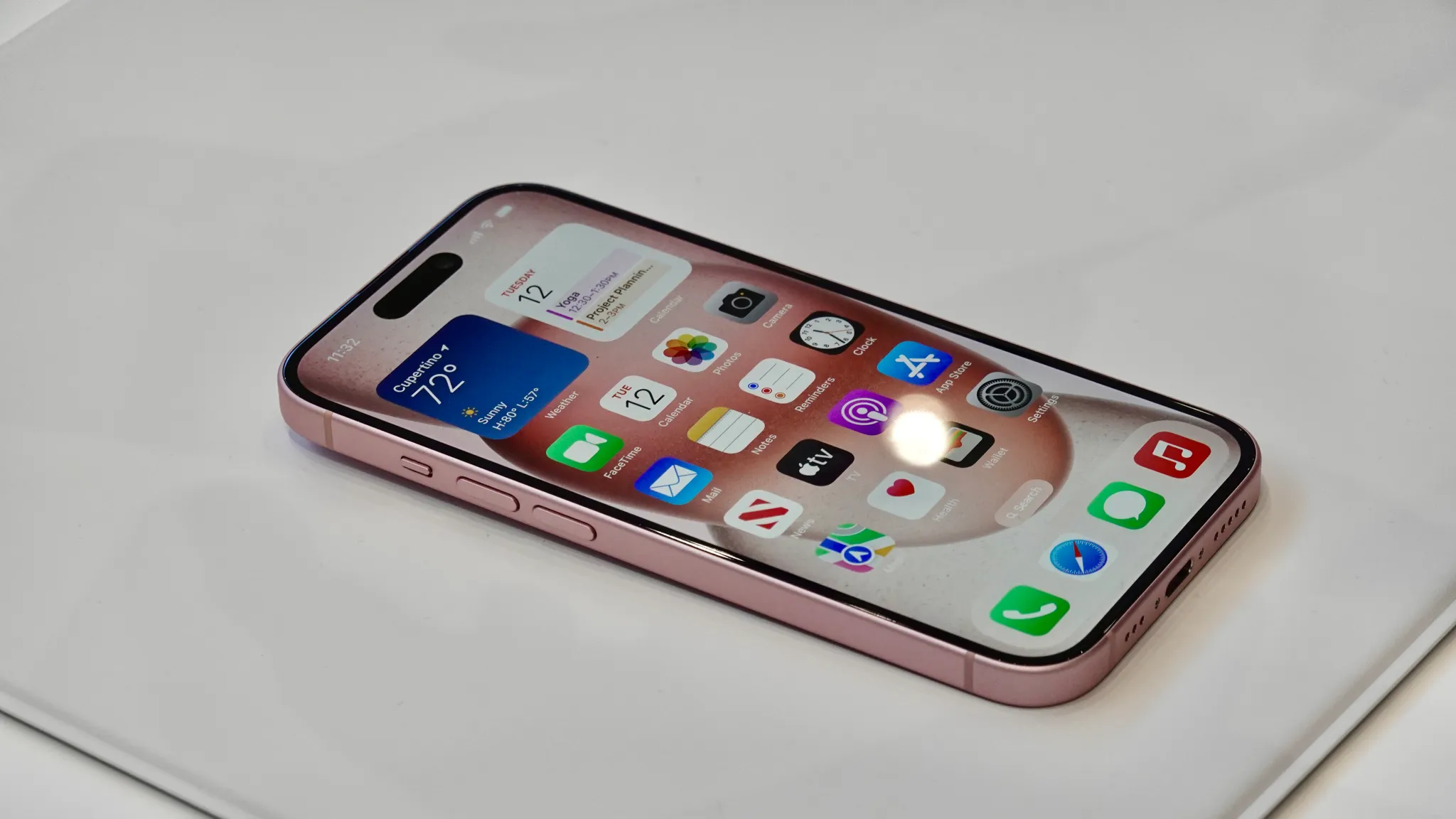
Otherwise, there’s not a whole lot to say about the iPhone 15 and iPhone 15 Plus. The design is about the same as before, aside from the slightly contoured edges. The backs of the phones now feature a matte finish instead of glossy. They are available in five new colors: pink, yellow, blue, green, and black.
I think the pink iPhone 15 is going to sell like hotcakes. And it looks fantastic in real life. It stands out among what are otherwise relatively mundane colors.
We’re just a few days away from Apple’s special event when the company will announce the iPhone 15 and also new Apple Watch models. The rumors have been pretty consistent in pointing out that we shouldn’t expect any major changes to the Apple Watch this year. However, a new report from Bloomberg suggests that the Apple Watch Series 9 will feature an updated heart rate sensor, as well as other small hardware improvements.
New heart rate sensor coming to Apple Watch
This year, Apple is expected to introduce two new Apple Watches: Series 9 (which should be available in the same current sizes of 41 mm and 45 mm) and Ultra 2 (keeping the current size of 49 mm). Both are expected to look exactly like their previous generations, with Apple planning a redesigned Apple Watch for 2024.
Based on previous rumors, both the Apple Watch Series 9 and the Apple Watch Ultra 2 will have a new chip with a faster processor. Since the Apple Watch Series 6, Apple has been using the same processor for all Apple Watch models, including Series 8, Ultra, and 2nd generation SE.
But the new chip won’t be the only hardware change coming to this year’s Apple Watch models. Mark Gurman has heard from sources that all the new models will get “various sensors and internal components upgrades,” including a new version of the heart rate sensor. While the details are unclear, Bloomberg claims that the new sensor is more accurate.
The new Apple Watch Series 9 and Ultra 2 will also feature the U2 chip, a new version of Apple’s ultra-wideband chip that will enable “improved Find My capabilities.” The new chip is also expected to be added to the iPhone 15.
Another interesting detail shared by Gurman is that the new Apple Watch Ultra will also be available in an all-black version. The first generation is only available in grey, the natural color of titanium. Since the iPhone 15 Pro is rumored to have a new titanium frame, Apple may offer similar colors between the two devices.
More about the Apple event
Apple’s special event will be broadcast online on September 12, starting at 10 a.m. PT. There will also be a press event at Apple Park.