The first beta of iOS 16.4 was released to developers today, and it includes a number of new features and changes. There are new emoji, improvements to Safari and web apps, and much more. Head below as we round up everything new in iOS 16.4 beta 1.
What’s new in iOS 16.4 beta 1?
New Safari and third-party browser features
iOS 16.4 brings new capabilities for Safari web apps: access to push notifications, home screen badges, and more.
Third-party browsers are now able to show a user interface for users to add a website to their home screen.
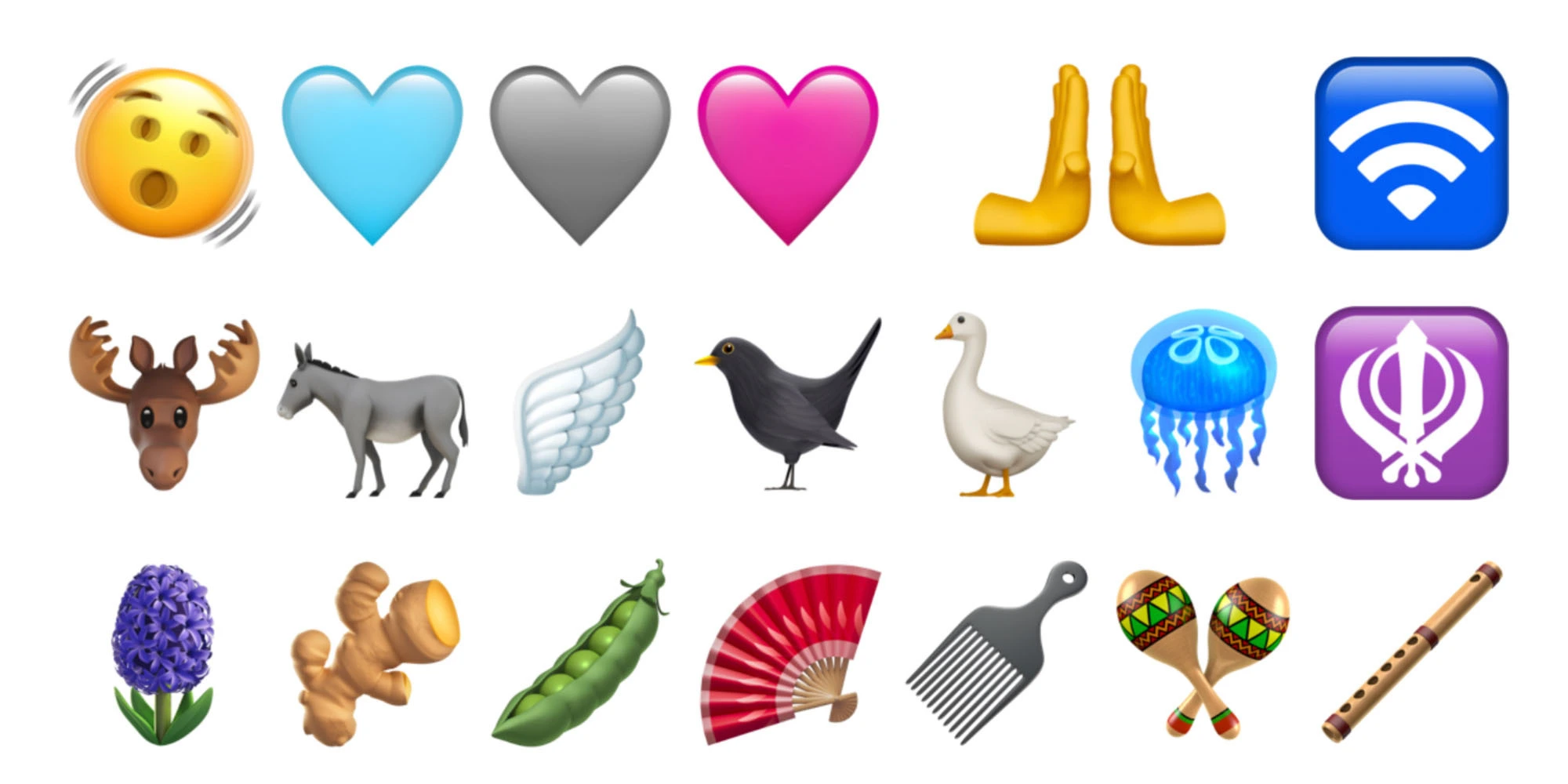
New Emoji
There are new emoji for things like a shaking face, a goose, a hyacinth, and a plain pink heart. These new Emoji are part of the Unicode Standard for Emoji Update 15.0, which was announced in July.
Changes to beta testing enrollment
Apple is cracking down on sharing iOS beta profiles. Now, the beta enrollment process will be tied to a developer’s Apple ID and accessed directly in the Settings app. Apple says:
Beginning with iOS & iPadOS 16.4 beta, members of the Apple Developer Program will see a new option to enable developer betas directly from Software Update in Settings.
This new option will be automatically enabled on devices already enrolled in the program that update to the latest beta release. Your iPhone or iPad must be signed in with the same Apple ID you used to enroll in the Apple Developer Program in order to see this option in Settings. In future iOS and iPadOS releases, this new setting will be the way to enable developer betas and configuration profiles will no longer grant access.
Cellular and 5G changes
iOS 16.4 adds a new “5G Standalone” feature that can deliver wildly fast speeds up to 3Gbps. In the United States, T-Mobile is the only carrier to support this feature.
Learn more: 3Gbps iPhone speeds could be coming soon as iOS 16.4 brings 5G Standalone support
Apple Podcasts updates
For Apple Podcasts, there are changes to the Library, improvements to Up Next, and new CarPlay updates.
Channels in Library: Easily access the channels you subscribe to and browse channels from shows you follow.
Up Next Enhancements: Resume episodes you began, start episodes you saved, and remove any you want to skip.
CarPlay Updates: Quickly pick up where you left off with Up Next and find new shows in Browse.
Shortcuts and Focus mode changes
For the Always On Display, there’s a new filter for Focus modes, so you can have certain Focus modes enable or disable the Always On Display automatically.
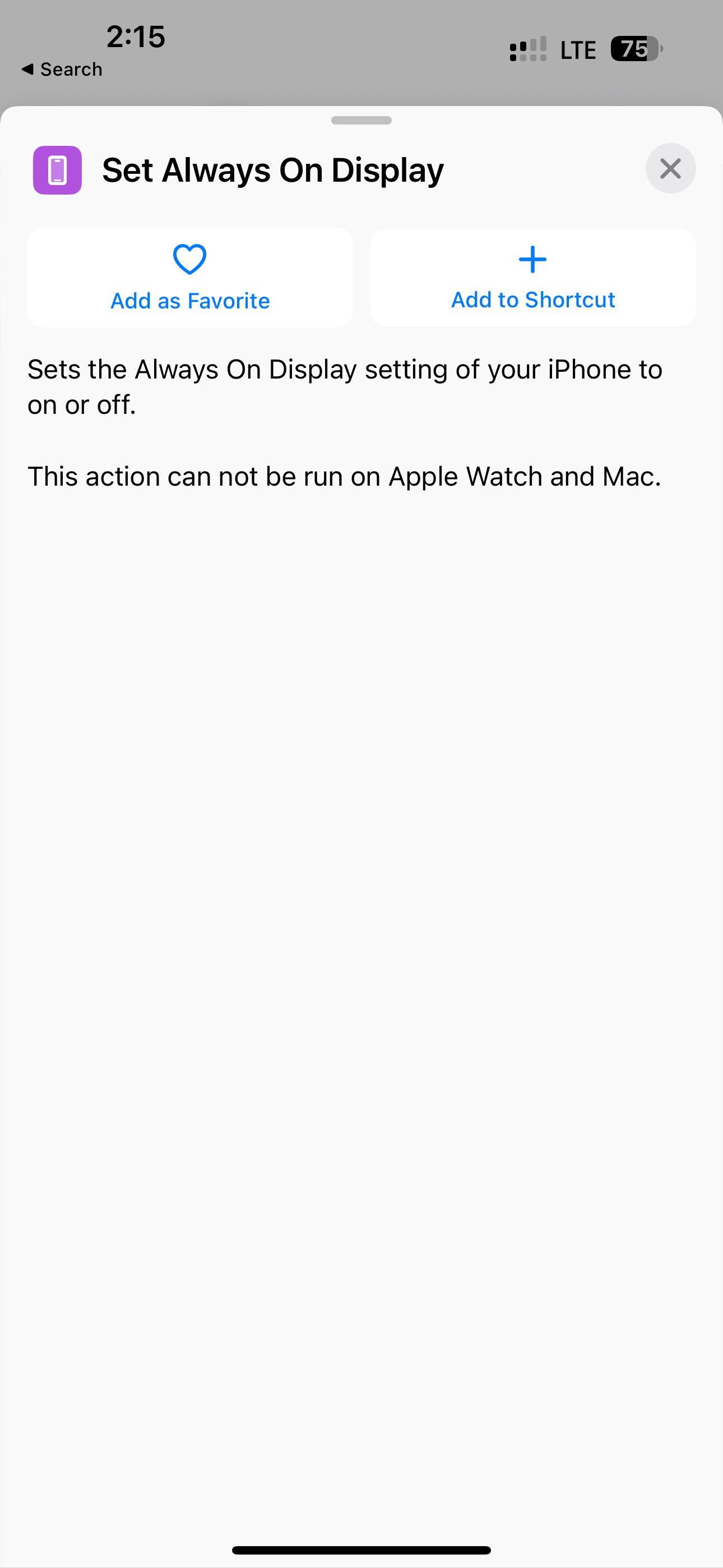
In Shortcuts, there’s a new “Set Always on Display” action, a new Lock Screen action, and a new Set VPN action.
New animations in the Music app
In the Music app, there are various interface tweaks and icon changes. For instance, adding a song to your queue no longer causes a full-screen pop-up. Instead, there’s a much smaller notification at the bottom.
There isn’t, however, any sign of Apple Classical.
AppleCare in Settings
iOS 16.4 includes a new screen in the Settings app where you can see all of your AppleCare coverage for multiple devices like the iPhone, Apple Watch, and AirPods.
Mastodon in Messages
iOS 16.4 beta enables rich previews for Mastodon links in the Messages app. This is similar to what the app offers for Twitter and other websites.
Accessibility
iOS 16.4 beta 1 adds a new Accessibility feature in the “Motion” menu for dimming flashing lights: “Video content that depicts repeated flashing or strobing lights will be automatically dimmed. The video timeline will display when flashing lights occur in the timeline for supported media.”
New “Order Tracking” widgets for the Wallet app
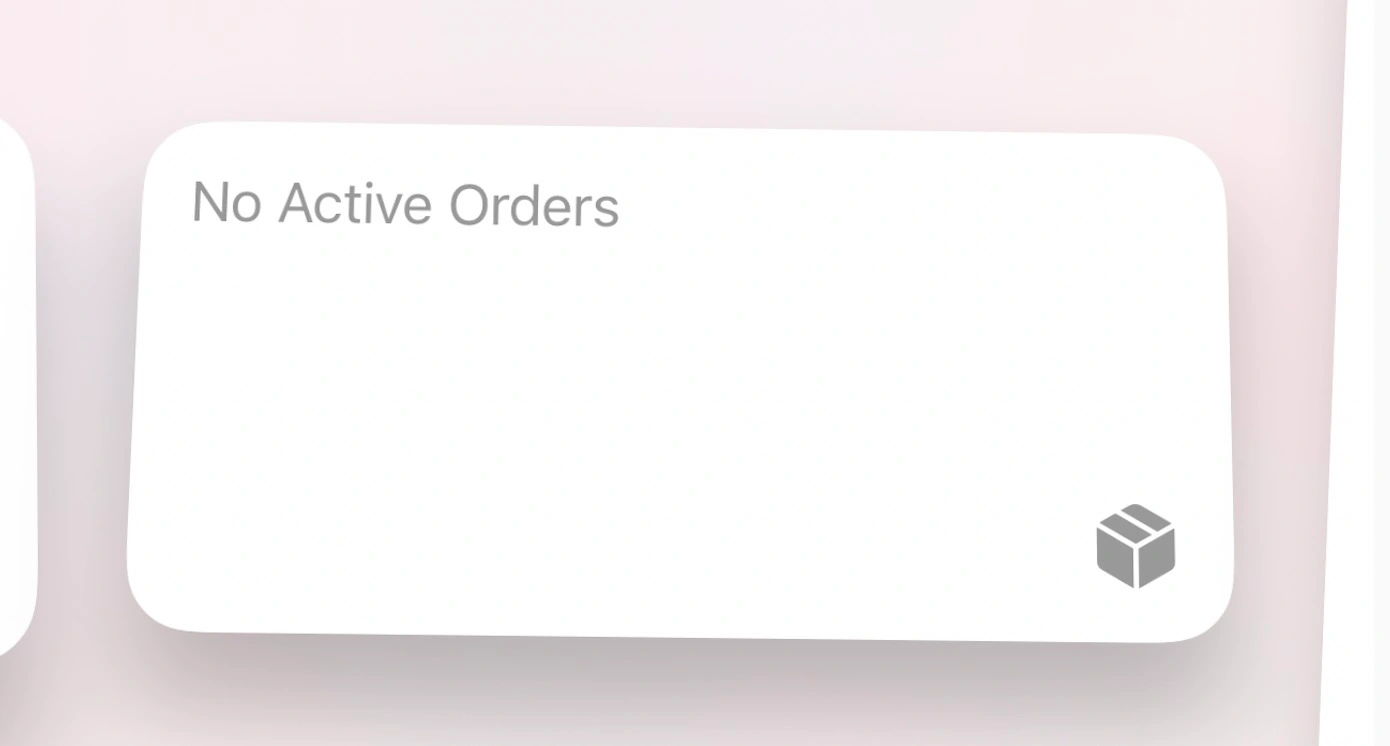
Apple has added three new Home Screen widgets for the Wallet app’s integrated order tracking features.
Other tidbits
In the Home app, Apple says both manual and automatic Software Update support is now available for Matter Accessories. The update also reintroduces the new home architecture after it was pulled due to reliability issues.
A few other changes to the keyboard:
Autocorrect for the Korean keyboard is enabled by default for testing and feedback.
Ukrainian keyboard now supports predictive text.
Gujarati, Punjabi, and Urdu keyboards add support for transliteration layouts.
New keyboard layouts are available for Choctaw and Chickasaw.
Apple Pencil hover now provides Tilt and Azimuth support.
eSIM has been around for several years at this point, but support and handling is wildly different across different Android devices and carriers. Today, Google is announcing a new tool that will help the future of eSIM on Android, with support for eSIM transfer.
Alongside announcements regarding Wear OS 3 and Android, Google revealed that Android is picking up support for an eSIM transfer tool.
Google explained that support for eSIM transfer is coming to Android “later this year,” presumably attached to a later release of Android. The company expands that the new support allows users to transfer their service between devices virtually and works off of the global standard built out by the GSMA, with European carrier Deutsche Telekom among the first to adopt support.
And later this year, building on GSMA’s global standard, we’re bringing a new eSIM transfer capability to Android that allows users to quickly and securely transfer their mobile plan to a new device, without having to swap a physical SIM card. Deutsche Telekom is taking the first step in using this industry standard to enable a simple and secure transfer with eSIM for the Android ecosystem.
Last month, evidence was uncovered within Android’s QPR2 release where Google was laying the groundwork for eSIM transfer. That version of Android should be released in the not-too-distant future, but Google’s phrasing implies we might not see the feature fully debut until a bit later on in 2023.
In any case, it’s great to see Google giving eSIM some attention, as the state of eSIM on Android is certainly ready for improvements.
The state of eSIM on Android: A labyrinth across Pixel, Samsung, and carriers
eSIM is the next big thing in cellular connectivity, and while Apple is going all in on it, it’s clear the Android world has a lot of work to do. Let’s take a look at the state of eSIM on Android and how things work across different smartphones, carriers, and more.
What is an eSIM?
eSIM is short for “embedded SIM.” A quick explanation of that is that eSIM is a virtual version of a SIM card, rather than a physical item you slide into your smartphone.
An eSIM carries basically the same information as a traditional SIM, with your customer ID, mobile network details, and more. An eSIM is built directly into your device and is thus reprogrammable as you need. Many phones that support eSIM even support multiple active connections at one time, meaning you can switch back and forth between providers.
What Android smartphones support eSIM?
But like any emerging technology, eSIM isn’t available everywhere, and it’s pretty inconsistent where the feature is available on Android at this point.
The only company that has fully embraced eSIM on Android is Google, with full support for the technology in every Pixel smartphone released since 2017. This is partially because Google’s mobile network, Fi, offers eSIM support on Pixel phones and other devices. But Pixel phones from the Pixel 4 and later can also use eSIM on carriers such as AT&T, T-Mobile, Verizon, and more.
Beyond the Pixel, Samsung has also made a big push with eSIM support on its various Android phones.
A few examples of Samsung devices that support eSIM include the company’s latest releases, such as the Galaxy S22 series, Galaxy Z Fold 4, and Galaxy Z Flip 4. Samsung also expanded support for the feature with its Android 12 update to the Galaxy S20 series, S21 series, Note 20 series, and the rest of its foldable lineup too.
All of these support eSIM
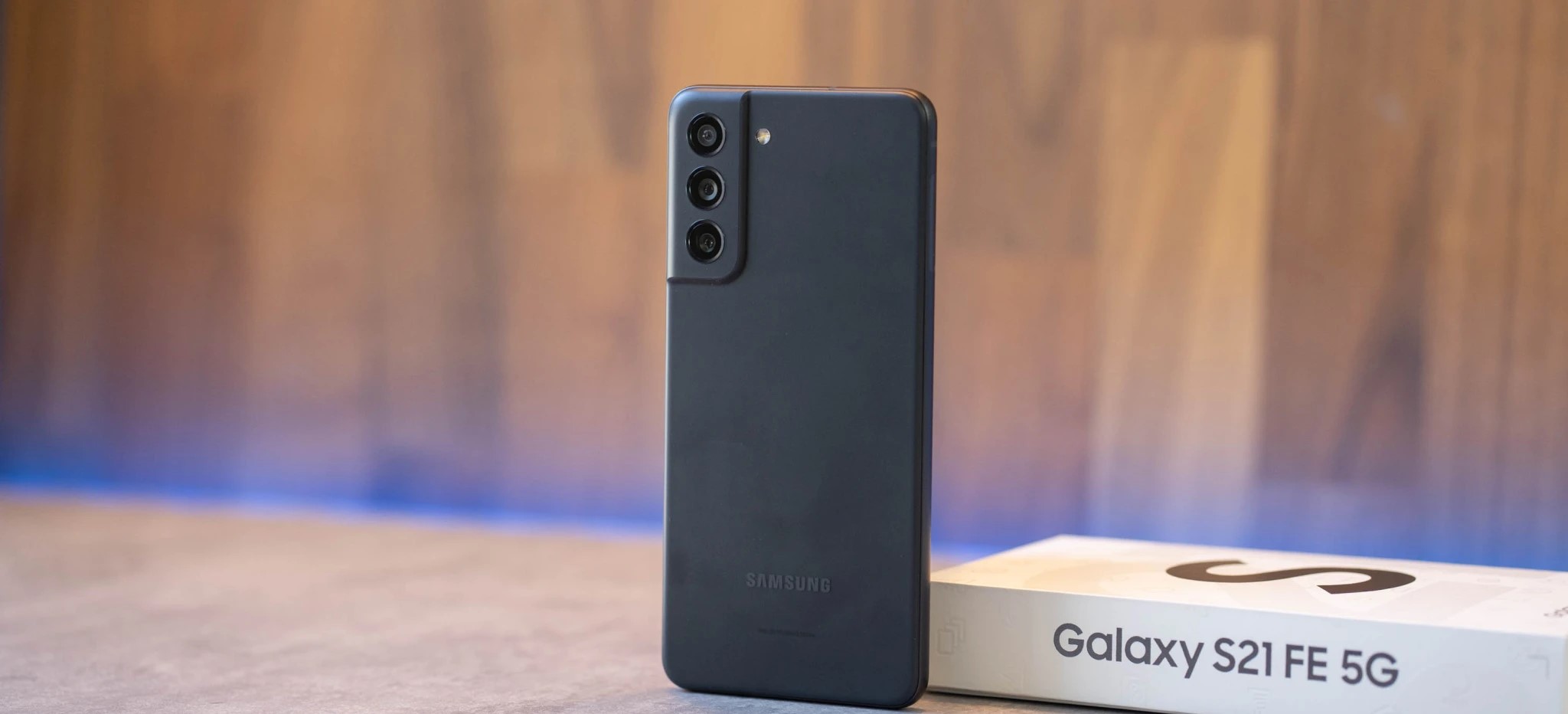
But there are still a lot of hits and misses within Samsung’s eSIM support. While the Galaxy S20 and Galaxy S21 both support the feature, the “Fan Edition” models, S20 FE and S21 FE, do not. The company’s popular midrange phones, such as the Galaxy A53, also lack eSIM.
There are some other Android phones and devices that support eSIM as well, but it’s very inconsistent.
Samsung’s LTE smartwatches, for example, utilize eSIM. Motorola also supports the feature in select devices, as do select devices from Huawei, Honor, Oppo, Sony, and more. Our Andrew Romero has a full list of Android phones that support eSIM in the United States.
How do you set up an eSIM on major carriers?
The process of setting up an eSIM on Android depends on your smartphone and your carrier, and that’s where things are even more inconsistent.
On a Pixel phone, you simply go to Settings > Network & Internet and then press the “+” symbol to add a new eSIM. You’ll get a list of carriers and a shortcut to use the camera to scan a QR code provided by your carrier.
Notably, Google Fi offers a different setup method on Pixel as well. Instead of using a QR code, you can simply download the Google Fi app and activate it with your usual Google account credentials – this also applies to transferring your eSIM to a new device. But right now, Google Fi only supports eSIM on Pixel phones. Oh, and the Pixel 2, 3, and Pixel 3a all only support eSIM at all on Google Fi – you can’t use an eSIM from Verizon or other carriers with those devices.
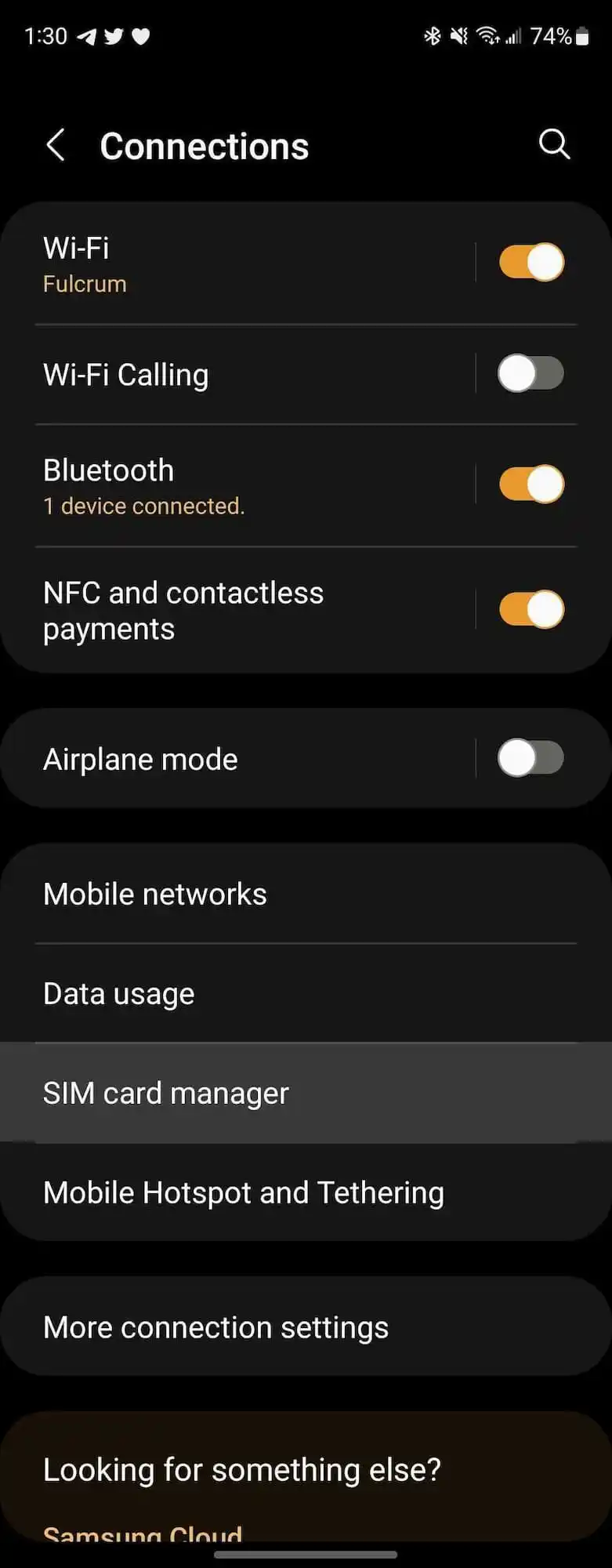
On Samsung phones, you’ll go to Settings > Connections > SIM card manager > “Add mobile plan.” From there, you can scan a QR code from your carrier or transfer an eSIM from another smartphone, but this only works on T-Mobile in the US.
But that’s just the software – what about actual carrier support?
There are several US carriers that support eSIM on Android, including the big three – T-Mobile, Verizon, and AT&T. But even within those carriers, you’ll find a lot of inconsistent messaging.
T-Mobile, for example, supports eSIM on most modern Samsung phones. But let’s say you just bought Samsung’s brand new Galaxy Z Fold 4 or Galaxy Z Flip 4. According to T-Mobile, you’ll have to activate that device on a physical SIM, but you can then convert to an eSIM after initial activation.
Beyond that, Verizon says on a support page that it only supports eSIM on Samsung’s Galaxy S21 series, S22 series, and the Galaxy Note 20 series – no foldables.
MVNOs are even more confusing in this regard. Mint Mobile’s website, which is woefully out of date with its list of Android phones, claims that none of Samsung’s phones or Pixel phones are compatible with its eSIM service, though our Max Weinbach found that he was able to use eSIM with a Pixel 6 Pro fairly easily.
Google Fi, as mentioned, only supports eSIM on Pixel phones. US Mobile is also limited to just Pixel phones. And other carriers that do support eSIM aren’t very forthcoming on what devices are supported.
Verizon-owned Visible is perhaps one of the best examples of clearly communicating eSIM support on Android phones, but even that carrier has its hiccups with the technology.
And it only gets worse from there
Really, we’re just scratching the surface so far with this. eSIM is a great technology, but the headaches it could cause without a traditional physical SIM to back it up are immense.
One of the biggest concerns around eSIM-only devices is with international travel. Often, buying a physical SIM card from a shop while traveling, or even at the airport itself, is a quick and easy way to avoid costly roaming fees while abroad. There are solutions to this with eSIM too. Services such as GigSky and AirAlo offer eSIM for international travel, which is quite convenient, but they can be a lot more expensive than traditional means in some cases. Plus, local carriers might offer promotions for extra free data that these other services don’t carry on.
Friend-of-the-site Zachary Wander pointed out that, in Portugal as an example, Vodafone offers a 5GB plan with 5GB of free bonus data. AirAlo offers access to that plan, but without the bonus data, despite being the same price. Adam Conway also points this out.
There’s also the headache of activation with anything relating to eSIM. Most services require that you dig up your IMEI and EID and input them on a website. Not really a huge hassle, but it’s much more complicated than just sticking a paper clip into your device and inserting a fresh SIM card that’s all ready to go, as Joshua Vergara pointed out in a tweet.
Or just buy a local eSIM? They’re available everywhere now pretty much
Another headache that can (and probably will) arise is when it comes to switching devices. You can’t simply transfer an eSIM from one device to another in most cases. Google Fi makes this relatively easy, as does T-Mobile on Samsung smartphones. But others simply don’t. Verizon, for example, requires customers to contact support to transfer an eSIM between devices, even on iPhones.
Is Android ready for an eSIM-only smartphone?
In short, no. Android is far from ready for any device to rely fully on eSIM.
Yet, with Apple doing just that in the iPhone 14, it’s all but guaranteed that the likes of Samsung, Google, or other brands will go all-in on eSIM within the next couple of years. One can only hope that Apple’s push with the technology will help carriers smooth out their processes and unify how the technology works on Android.
Here’s a list of every carrier that supports eSIM on Android
Physical SIM cards have been around since the dawn of the mobile phone, though that may not be the case for long. SIM cards are being replaced by eSIMs – slowly but surely. Here’s a list of every US carrier that supports eSIM on Android devices.
What is eSIM?
Simply put, eSIM is the next step in mobile carriers. Rather than relying on a physical SIM card, Android devices are capable of downloading a SIM profile, which is just a virtual version. This provides a number of benefits to the customer.
One big upside is the speed at which a SIM can be obtained. Rather than waiting for one to be shipped and then taking the time to insert and activate one, you can just download one from the carrier itself and have a new phone plan up and running within minutes.
Unfortunately, in its current state, eSIM is sort of a pain to get a hold of. Carriers are able to implement the new standard, though some face compatibility issues in being able to provide them. In my own experience with Visible, obtaining one is difficult and makes way for some other possible issues.
Of course, that’s the fun of implementing a new standard. There are a few bugs along the way, but once they’re worked out, it hopefully becomes commonplace later on down the road.
Carriers that make eSIM available to Android users
While eSIM is growing among certain carriers, it’s still a bit messy. Most carriers that do support the new standard only support it within iOS devices. If they do support Android devices, you may find that it’s limited to either Samsung-made Galaxy devices or Google’s Pixel series.
Here’s our list of every US carrier that supports eSIM for Android devices:
In order to check if your device is compatible, you’ll need to head to that carrier and likely do an IMEI check. Once you do that, the site will let you know if your Android device is compatible. As mentioned, most of these support Samsung devices.
Can I switch to another carrier with eSIM?
Remember how we said that most carriers’ eSIM setup on Android was a bit messy? Well, that may have been an understatement. In reality, eSIM is still very much a mess. Most carriers won’t let you switch with your current number and require you to activate a new one if you’re using an eSIM on their service. We’re not entirely sure why this is the protocol for some carriers, though it’s incredibly frustrating and can leave users such as myself stuck on a plan without a current way to switch my number.
The best-case scenario is if you plan on switching to a carrier from one plan to another with a physical SIM. In that case, removing the physical and activating an eSIM on the new carrier should – in theory – allow you to keep your old number and download your new eSIM profile into your device.
While some carriers do support eSIM, it isn’t nearly as widespread as we’d like to see. With the increasing demand for the new standard being implemented correctly, we’ll likely see more carriers expand support for Android devices. On top of that, we’ll be fortunate if the woes that come with the current eSIM protocol are fixed.
iOS 16 was released back in September of 2022. It brought plenty of visual changes to the iPhone and also changed how we interact with it, especially the lock screen. This update was all about personalization and customization. It brought features like lock screen customizations, widgets, the ability to edit & undo messages, and much more. So what could Apple possibly have in store for iOS 17? Parker Ortolani is back at it again with some new concepts and renders of what the future of iOS could look like, and it seems like refinement is the name of the game.
here is the refresh of my iOS 17 concept from last year! more customization. bunch of Siri stuff. ton of tweaks.
Parker posted his vision of what the future of iOS could look like, and it seems like it’s more of a refinement year than an evolutionary year. If customization was the theme in iOS 16, then further customization and frictionless interactivity is the theme for iOS 17.
iOS 17 Lock Screen updates
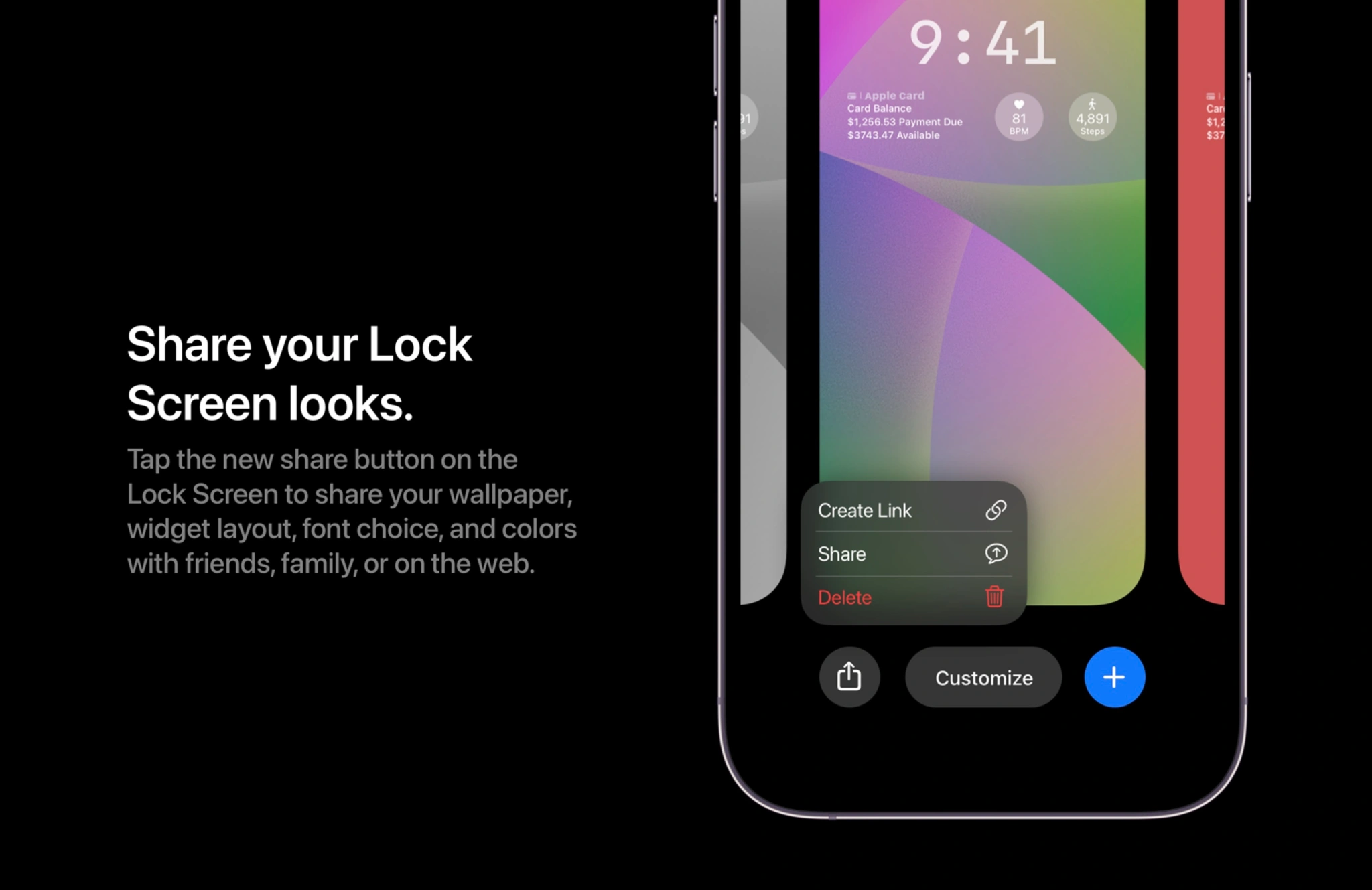
iOS 17 will most likely bring even more customization to your Lock Screen setups. Last year we got the ability to change the font on the time, add a few widgets, and even set different lock screens for different focus modes. iOS 17 should bring this to the next level with more fonts and widgets. Having the ability to possibly download other fonts and then be able to use them for your Lock Screen clock would be a great addition. Then, finally, also have the ability to fully share your Lock Screen with others. This could create a small marketplace where iPhone users could actually digitally sell their unique Lock Screen setups, similar to when the custom icon feature took over. I would love this feature to take place. I take inspiration from other people’s Lock Screens, so being able to share them would be ideal.
iOS 17 Lock Screen
New notification banners
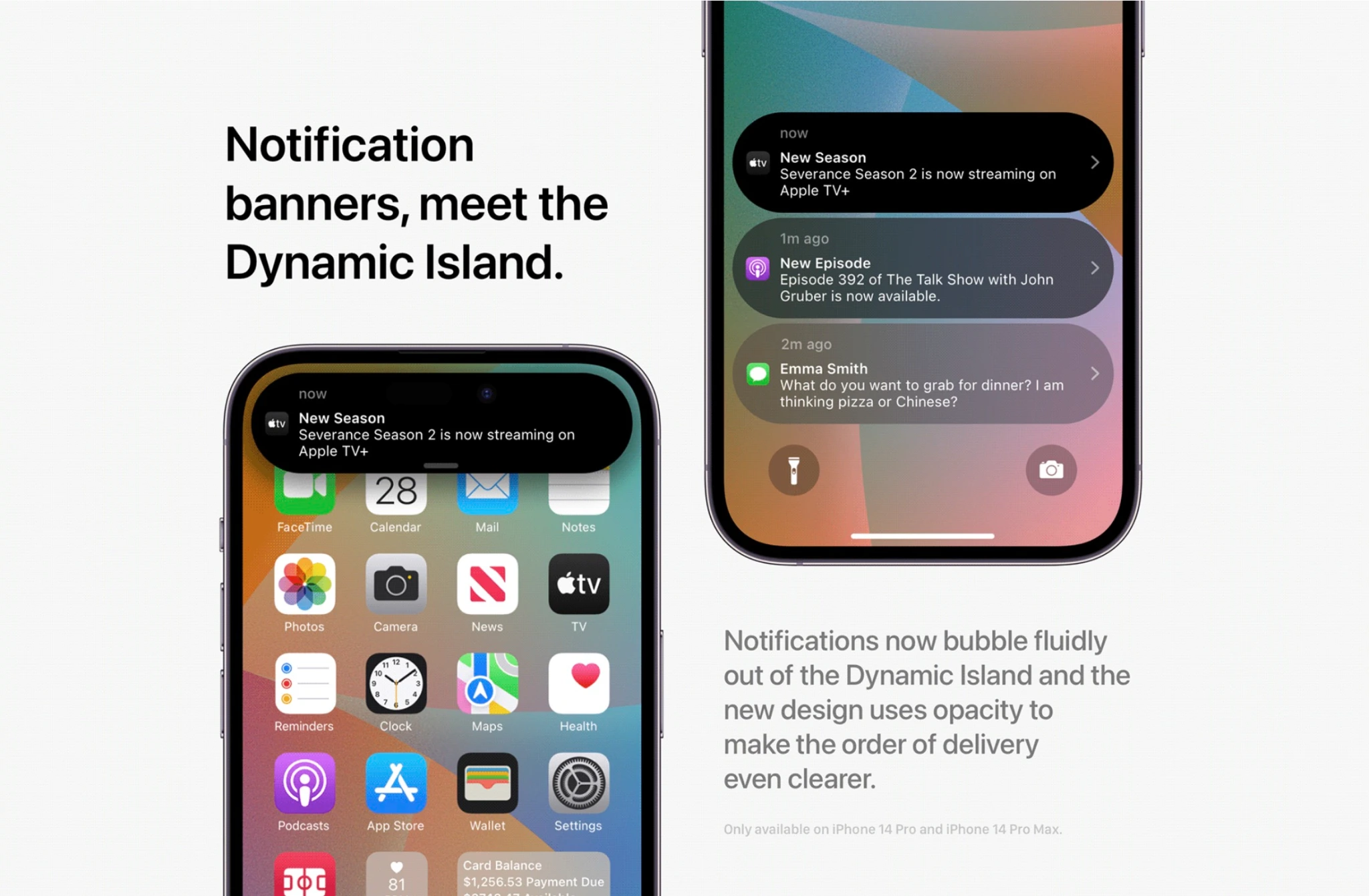
It seems as though Parker believes that iOS 17 will bring a new UI to notification banners and how it interacts with the Dynamic Island. I personally think the new look is great, but it seems like others are not a fan. To me, it makes sense to make notifications the same shape as the Dynamic Island – pill-shaped and more bubbly. The other aspect of notifications that could be updated is actually using opacity to help with notification organization. The older that notification is the more opaque it gets, indicating that it’s no longer the first notification. I can also see this being adopted for types of notifications, where the higher importance the bolder the notification looks.
iOS 17 Notifications
Live Activities & widgets come to Home screen
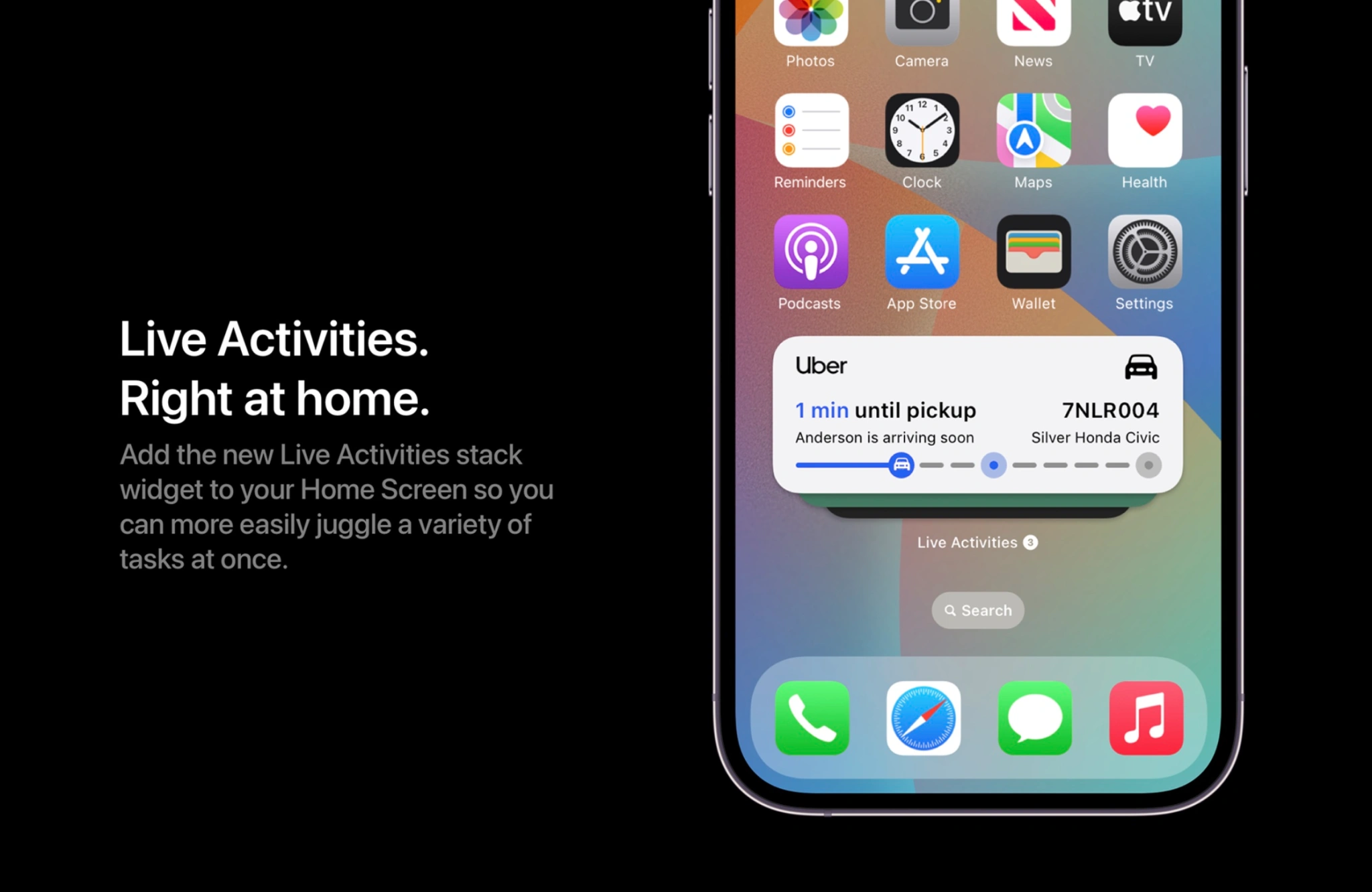
iOS 16 brought the new Live Activities feature to our iPhones. This allows us to have an active widget that shows us real-time information and data based on the app that is using it. You could see how far your Uber is in real-time, or see the score of the basketball game. Live Activities are only displayed on the Lock Screen. iOS 17 could allow us to have a section of the Home screen that has a carousel of Live Activities. Very similar to how we can create a smart stack of Home screen widgets, just flick through your Live Activities to the most relevant one at the moment.
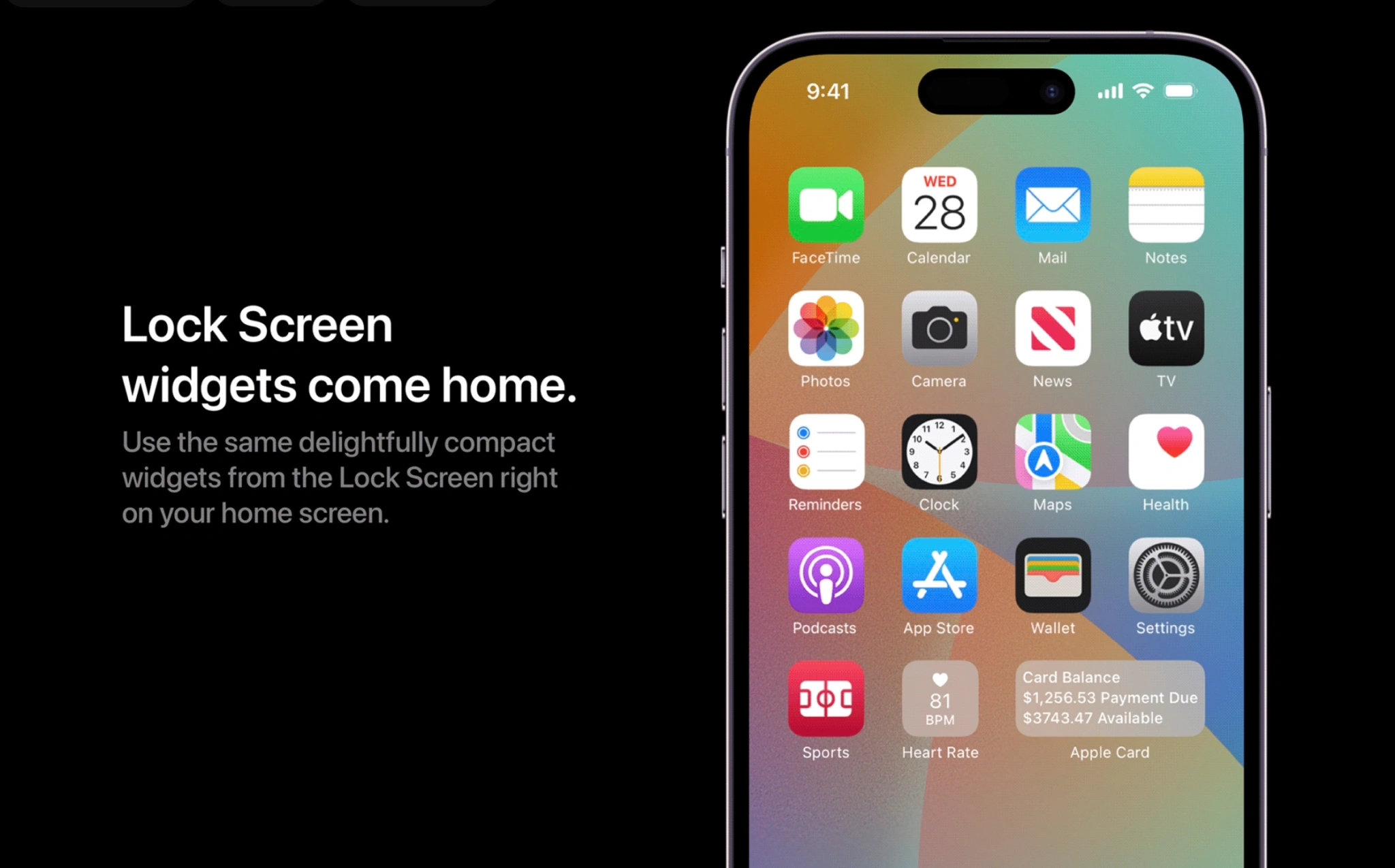
Another idea highlighted by Parker is that Apple could bring Lock Screen widgets to the Home screen. You might notice that the Home screen and Lock Screen widgets are different in how they look and where they can be used. Being able to add Lock Screen widgets to the Home screen is something Apple could easily implement.
Siri catches up to the competition
Siri has always been known as the second (or even third) fiddle when it comes to smart assistants. Google has always been the king there, Alexa has an abundance of users it’s constantly learning from, and now Bing has begun to rise with the addition of ChatGPT; improving Siri should be of high importance to Apple, which can be done in multiple ways.
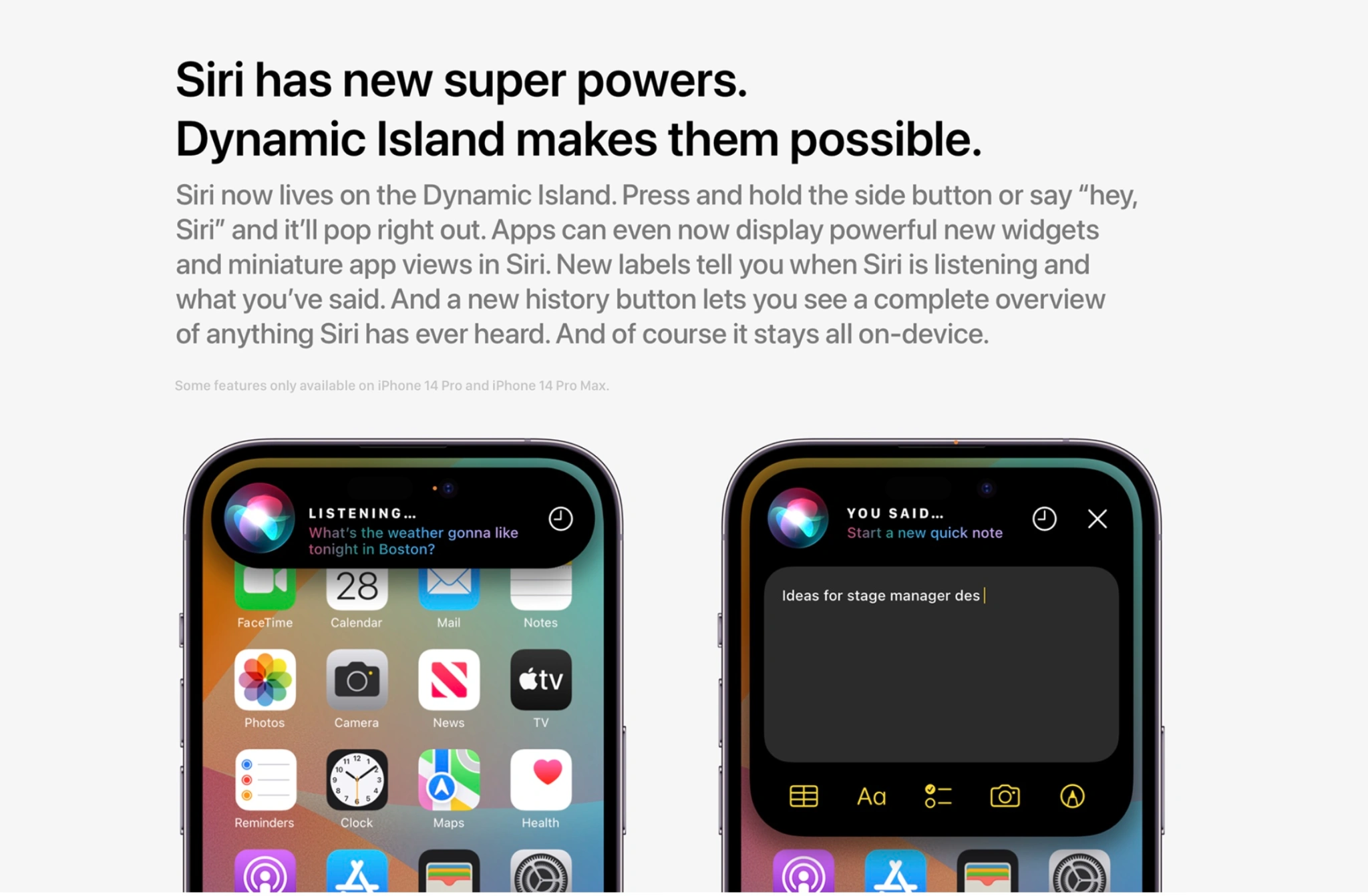
Parker suggests making Dynamic Island the area where Siri lives. Every time Siri is summoned, it will come from Dynamic Island. Adding small visual cues like a “listening” or a “you said” label to let the user know what Siri is actively doing would be a welcome addition. Being able to launch mini versions of an app like a quick note directly from Siri will also improve the user experience.
Wrap-up
Parker does a great job of highlighting some realistic updates and features that could come to iOS 17. The keyword there is realistic. We’ve learned that Apple is putting a lot of its R&D power into a supposed VR/AR headset in 2023; this means that there will be less innovation when it comes to iOS, iPadOS, and MacOS. That is why I also believe iOS 17 is going to be mostly about refining all the features they released with iOS 16.
There have also been reports that iOS 16 has been a huge battery drain and some persistent bugs and other annoyances that users were not dealing with when it came to iOS 15. iOS 15 was amazingly stable and had great optimization for battery life. That is the type of improvement we should expect with iOS 17 – refining the feature-heavy update of iOS 16.
While the most noteworthy updates for Android devices generally arrive on an annual or quarterly basis, Google has steadily worked to make more of Android upgradeable without needing a full-on system update. Rounding up the parts of Android OS updated in each month’s “Google Play system updates,” improvements to the Play Store, and new features of Play Services, Google offers monthly patch notes for what changes on Android devices each month. The company refers to improvements to this particular trio as “Google System Updates.”
The easiest way to check whether you need to update Google Play Services on your phone is to follow a direct link to the app’s Play Store listing and update from there, if available. To update the Play Store, tap your avatar in the corner, then “Settings.” Under the “About” section, you’ll see an option to “Update Play Store.” Meanwhile, Google Play system updates can be found through the Settings app, under About phone > Android version > Google Play system update.
Out of the first batch of Google System update notes, the most interesting aspect that the company has shared is that the notification for Nearby Sharing (Android’s AirDrop competitor) is now pinned when it’s shown. As has typically been the case, Google will likely add more patch notes as the month of February progresses.
Google Play System Updates for February 2023
Device Connectivity
[Phone] Pin Nearby Sharing heads up notification to screen when shown.
Google Play Store
New Features to help you discover the Apps & Games you love.
Optimizations allowing faster and more reliable download and installation.
Continuous improvements to Play Protect to keep your device safe.
Various performance optimizations, bug fixes and improvements to security, stability and accessibility.
Developer Services
[Phone] New developer features for Google and third party app developers to support Machine Learning & AI related developer services in their apps.
Even though Samsung has just launched the Galaxy S23 series, the Korean company has not forgotten about its predecessors. A growing number of Samsung Galaxy devices are getting the February 2023 Android security update – here’s the full list.
Samsung February 2023 security update – here’s what’s new
Every single month, Google releases a generic or generalized Android security bulletin. This is publically available and indicates any software fixes for potential security issues that affect Android and core portions of the mobile operating system.
Patch notes are also provided by Samsung, as the updates for its own devices include a number of Galaxy-specific fixes. The Korean tech giant has now revealed the details of the February 2023 security update that is now slowly rolling out to a multitude of Galaxy devices. The February patch notes direct from Samsung list 5 “Critical” severity vulnerability fixes, 43 “High,” and no “Moderate” resolutions.
As is often the case, the February 2023 update is focused on security improvements and likely won’t include any noticeable new features or tweaks for your Samsung phone.
Devices with the Samsung February 2023 security update
The exact sequence in which Samsung updates phones seems to vary from month to month, but generally speaking, there’s a loose pattern that the company often follows. Typically, each month’s new security patch will arrive for premium devices like the Galaxy S flagships or Galaxy Z foldable hardware.
This is followed by a roll out of the patch affordable handsets, including the Galaxy A series, M series, and F series, although this depends heavily upon global markets and availability. Similarly, Samsung tends to release updates to newer devices before older ones. However, despite this often being the roadmap, this is a fairly loose guideline that doesn’t always hold true, so be sure to check the full list below for your own device(s).
This list will include a note on where the update first debuted and if it is also available in the United States. As usual, the latest additions will be marked in bold.
Galaxy S series
Signifying the best of the best when it comes to Samsung phones, the Galaxy S-series is often seen as the pinnacle of Android. The sales figures also back that up. Being at the top of the Samsung totem pole means that Galaxy S-series phones are likely to make up the bulk of the February 2023 security patch list in the opening weeks.
What’s interesting is that the Samsung Galaxy S21 FE 5G was the first such handset to get the February 2023 security update this month. Rolling out from February 7, the early-2022 handset is technically a cheaper version of the 2021 flagship Galaxy S21. It comes in a few flavors, as the Exynos 2100 variant is the first to be updated in selected regions including Brazil. It’s not clear when the Qualcomm Snapdragon 888 version will be updated at this stage.
Galaxy S21 FE — G990EXXS3DWAA (Released first in Brazil)
Galaxy Note series
Since the merger of the Galaxy S and Note series fully with the Galaxy S22, the best days of the Note are long behind us. In many ways, this streamlines Samsung’s flagship efforts but is still disappointing for long time fans. However, several Note handsets are still updated on a regular basis.
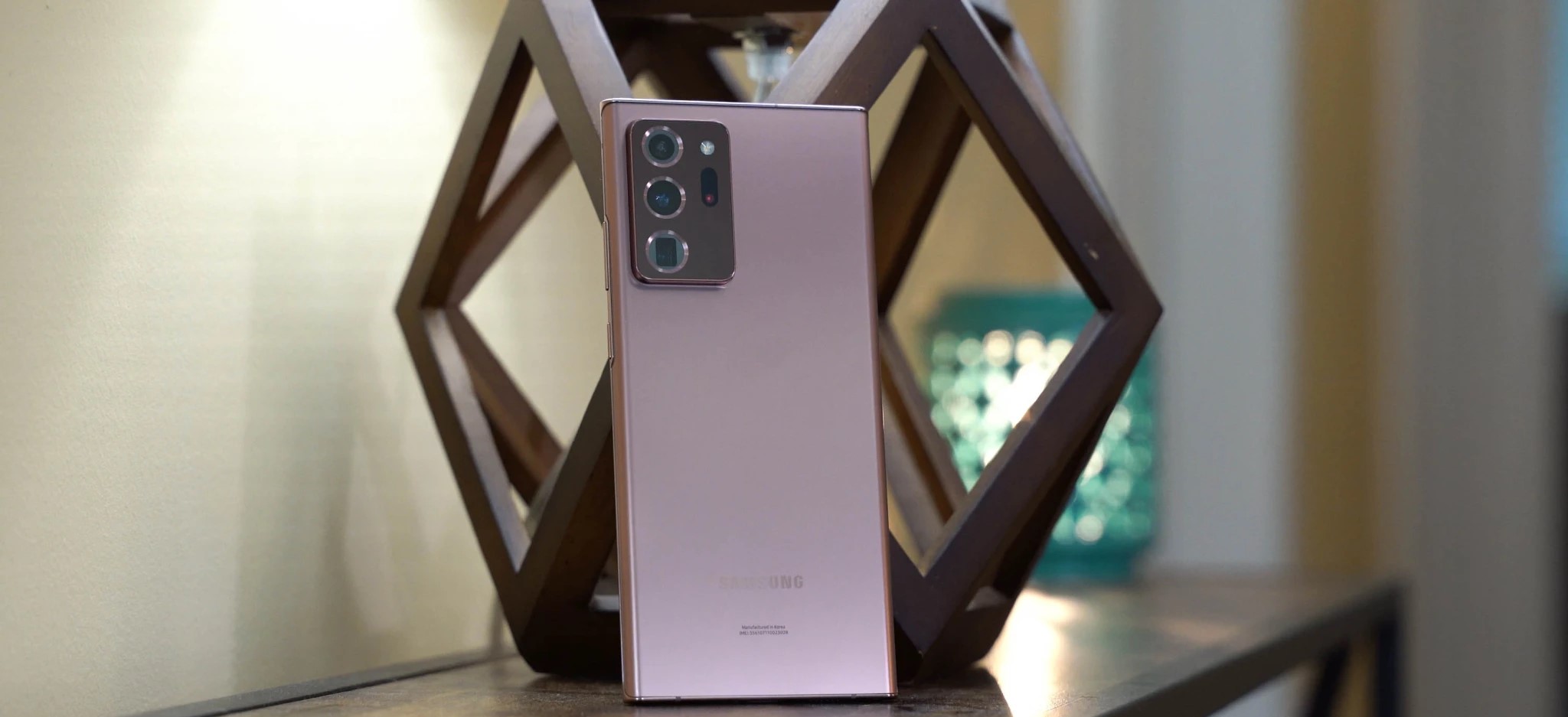
The very first Samsung phone to get the February 2023 security update is, in fact, the Note 20 and Note 20 Ultra. This patch began rolling out in Europe on February 6, with a wider rollout to US-unlocked models starting later that day. Often the Qualcomm-powered model is updated much later, so it’s a nice change of pace for the former flagship.
Galaxy Note 20 / Note 20 Ultra — N98xBXXS5GWB1 / N89xU1UES3GWA3 (Released first in Europe)
How to check for the latest OTA on your Galaxy device
If your Samsung device is slated to have been updated already, but the January patch hasn’t arrived for you personally, you can try updating manually. Simply open the Settings app, tap “Software update,” and choose “Download and install.”
Apple on Monday released iOS 16.3, macOS Ventura 13.2, and other software updates to the public. The new versions of the company’s operating systems come with new features but also bring multiple security patches. Not only that, but Apple also released updates with security patches for users running iOS 15. Read on as we detail what has been patched with the updates.
Security patches available with iOS 16.3
According to Apple’s website, both iOS 16.3 and iPadOS 16.3 fix two security exploits found in previous versions of the operating system. This includes patches in areas such as AppleMobileFileIntegrity, ImageIO, Kernel, Mail, Maps, Safari, and WebKit.
For instance, an exploit found in the Weather app could allow other apps to bypass Privacy preferences. In another security exploit related to WebKit, which is the engine for Safari and other web browsers on iOS, Apple has fixed two exploits that could lead to the arbitrary execution of malicious code. You can check some of the details below:
WebKit
Available for: iPhone 8 and later, iPad Pro (all models), iPad Air 3rd generation and later, iPad 5th generation and later, and iPad mini 5th generation and later
Impact: Processing maliciously crafted web content may lead to arbitrary code execution
Description: The issue was addressed with improved checks.
WebKit
Available for: iPhone 8 and later, iPad Pro (all models), iPad Air 3rd generation and later, iPad 5th generation and later, and iPad mini 5th generation and later
Impact: Processing maliciously crafted web content may lead to arbitrary code execution
Description: The issue was addressed with improved memory handling.
Most of these patches are also available for Mac users with macOS Ventura 13.2, Apple TV users with tvOS 16.3, and Apple Watch users with watchOS 9.3. It’s worth noting that Apple has also released iOS 15.7.3, macOS Monterey 12.6.3, and macOS Big Sur 11.7.3 with the same patches for users who haven’t (or can’t) update their devices to the latest versions of the operating systems.
There’s even an update available for iPhone 5s, iPhone 6, and other devices that are stuck on iOS 12. It’s worth noting that Apple is letting all users stay on iOS 15.7 while still receiving security patches instead of being forced to update to iOS 16. However, it’s unclear whether the company has plans to maintain support for iOS 15 for long.
All users can now enable iCloud Advanced Data Protection, an opt-in feature to get end-to-end encryption for almost all data stored in iCloud, including messages, photos, and device backups.
The feature is activatable once users upgrade to iOS 16.3, currently in developer beta, with a public release of the new software update expected to arrive next week.
Under the default setup, Apple retains the keys to decrypt your iCloud data on their servers. This is required to support account recovery and other features.
But for users wanting ultimate data protection, iCloud Advanced Data Protection allows users to encrypt their iCloud data with their own device passcode so that Apple doesn’t have a key. This means that even if Apple’s servers were hacked, the intruders would not be able to read your personal data without knowing your passcode.
iCloud Advanced Data Protection rolled out at the end of last year with iOS 16.2 in the United States. Apple said it would make the feature available around the world in 2023. iOS 16.3 delivers on that promise.
If you want to enable iCloud Advanced Data Protection, open Settings -> [your name] -> iCloud -> Advanced Data Protection and follow the steps to turn it on. When iCloud Advanced Data Protection is enabled, it is critically important to remember your password. However, the phone will guide you to set up account recovery provisions, in case you do lose access to your account, like a trusted contact or printable recovery key.
Law enforcement groups heavily rely on iCloud for data collection as part of an investigation, by simply sending a search warrant or subpoena for Apple to retrieve a suspect’s iCloud backups. With iCloud Advanced Data Protection enabled, this is no longer possible as Apple cannot simply decrypt the information.
It remains to be seen whether governments in certain regions will push back against Apple’s rollout of end-to-end encryption. If end-to-end encryption becomes illegal in certain markets, Apple would be forced to comply and make iCloud Advanced Data Protection unavailable to those users.
iOS 16.3 is set to be released next week, according to Apple. This update first entered beta testing in December and includes a handful of changes and features, though it’s a minor update in comparison to other updates from Apple over the last few months.
What’s new in iOS 16.3?
Apple confirmed iOS 16.3’s release date in a press release announcing a number of ways the company is celebrating Black History Month this year. The initiatives include a new Unity wallpaper for iPhone as well as a Unity face for your Apple Watch.
Apple says that both of these things require that your Apple Watch is running watchOS 9.3 and your iPhone is running iOS 16.3. Again, these updates are currently in beta testing, but Apple says everything will be available for update sometime “next week.”
The Unity 2023 watch face will be available next week and requires Apple Watch Series 4 or later running watchOS 9.3, and iPhone 8 or later and iPhone SE (2nd generation) or later running iOS 16.3.
The new Unity iPhone wallpaper for the lock screen will also be available next week and requires iPhone 8 or later running iOS 16.3.
Aside from the new watch face and wallpaper for Black History Month, iOS 16.3 also includes a few other changes and features. Here’s a quick rundown:
Security Keys for Apple ID: You can now use a physical hardware security key to serve as the second layer of authentication for your Apple ID.
Changes to how “Call with Hold” for Emergency SOS works: iPhone will now wait until you release the buttons to call emergency services, even after the countdown.
iOS 16.3 beta guides users on how to use Handoff from iPhone to HomePod
As you can see, this is a relatively minor release without too many changes or new features for iPhone users. That’s not necessarily surprising, given that the update hasn’t been in beta testing as long as usual.
Once iOS 16.3 is released, we expect iOS 16.4 beta testing to begin almost immediately after. We’re still waiting on a number of already announced features from Apple: Apple Card Savings Account, Apple Pay Later, Apple Music Classical, and Advanced Data Protection for iCloud outside of the United States.
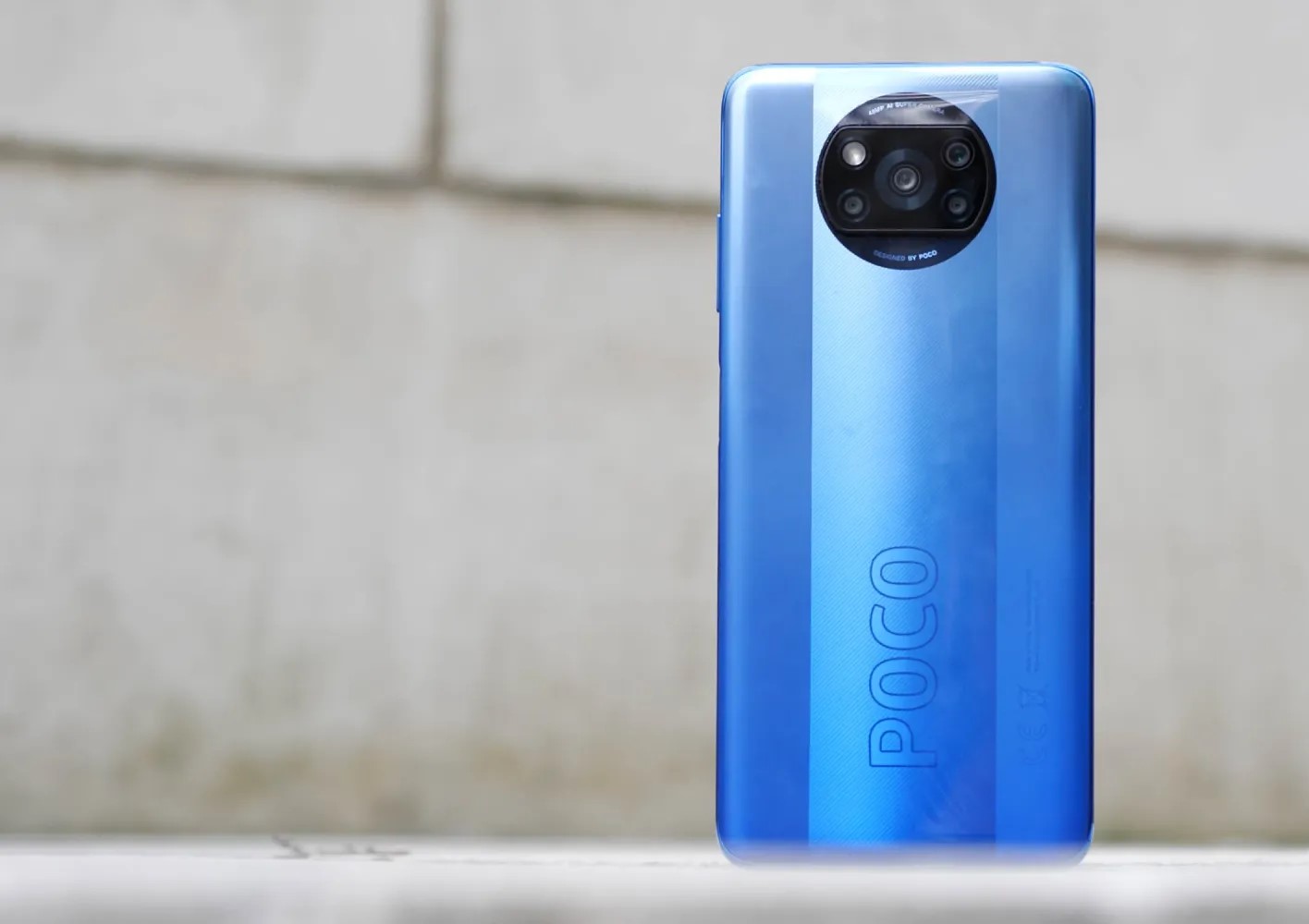
After the launch announcement earlier in the month, the Android 13-based LineageOS 20 is already adding extra support for a small pool of devices including the Poco X3 plus more Xiaomi handsets.
Arguably the biggest and most well-known third-party ROM, LineageOS 20 offers a different take on Android 13 for devices that might not ordinarily be able to run Google’s latest mobile operating system. One of the biggest changes is the addition of an overhauled default camera app called “Aperture.”
The full changelog includes the December 2022 security patch, which is just the tip of the iceberg. Given the similarities between Android 12 and Android 13, this isn’t a huge departure. That is part of the reason why LineageOS 20 was able to be released so quickly after the AOSP build of Android 13 was made available to developers.
Owners of the excellent Poco X3 alongside the Xiaomi Mi 6, Xiaomi Mi Mix 2, and SHIFT SHIFT6mq can now flash LineageOS 20 and get a full taste of Android 13 right now (via XDA). As with any third-party ROM, this is not something we would suggest just anyone sideload. However, this could give your aging device a new lease on life without any added cost.
When flashing LineageOS 20 on your Poco X3 or other Xiaomi devices, it’s important to note that you will need to manually flash the Google apps (or GApps) package to get access to the Play Store and other Google services — as these files do not come with the ROM. If you’d like to get started, you can find direct links and downloadable files for each of the newly added devices below:
LineageOS 20 based upon Android 13 officially launches w/ new camera app, more
In the world of third-party Android ROMs, LineageOS is among the most popular. Months after Android 13 was officially released for Pixel phones, LineageOS 20 has arrived based upon the latest mobile OS.
Announced in a lengthy blog post by the Lineage team, LineageOS 20 has been in the works since October 2022 but is now ready for a sizable pool of devices. Because much of the hard work has already been done and the simple “bring-up requirements” for Android 13, this has been an easier process for the Lineage team.
This build includes a substantial overhaul to the default camera application bundled with LineageOS 20. Renamed “Aperture,” this has been written by developer SebaUbuntu, LuK1337, and luca020400 with a look and feel closer to the Google Camera app found on Pixel phones. It utilizes the CameraX API, with even more precise options for the camera on your device including video frame rate control, full EIS and OIS settings, plus an image orientation level that works like the Gcam spirit level functionality.
The new camera app is just the tip of the iceberg as this ROM includes a ton more changes that you can check out via the changelog below. It’s also worth noting that all security patches from April 2022 right through to December 2022 have also been merged to LineageOS 17.1 through to LineageOS 20.
LineageOS 20 full changelog
Security patches from April 2022 to December 2022 have been merged to LineageOS 17.1 through 20.
ohmagoditfinallyhappened – LineageOS now has an awesome new camera app called Aperture! It is based on Google’s (mostly) awesome CameraX library and provides a much closer “to stock” camera app experience on many devices. Massive kudos to developers SebaUbuntu, LuK1337, and luca020400 who developed this initially, designer Vazguard, and to the entire team for working to integrate it into LineageOS and adapt it to our massive array of supported devices!
WebView has been updated to Chromium 108.0.5359.79.
We have introduced a completely redone volume panel in Android 13 and have further developed our side pop-out expanding panel.
We now support GKI and Linux 5.10 builds with full out-of-tree module support to match new AOSP conventions.
Our fork of the AOSP Gallery app has seen many fixes and improvements.
Our Updater app has seen many bug fixes and improvements, as well as now has a fancy new Android TV layout!
Our web browser, Jelly has seen several bug fixes and improvements!
We have contributed even more changes and improvements back upstream to the FOSS Etar calendar app we integrated some time back!
We have contributed even more changes and improvements back upstream to the Seedvault backup app.
Our Recorder app has been adapted to account for Android’s built-in features, while still providing the features you expect from LineageOS.
The app was rearchitected heavily.
Material You support has been added.
The high quality recorder (WAV format) now supports stereo and there has been several threading fixes.
Android TV builds now ship with an ad-free Android TV launcher, unlike Google’s ad-enabled launcher – we also support Google TV-style builds and are evaluating moving to it on supported devices in the future.
Multiple Google TV features, such as the much more appealing looking Two-Panel Settings application have been ported to LineageOS Android TV builds.
Our adb_root service is no longer tied to the build type property, which allows greater compatibility with many third-party root systems.
Our merge scripts have been largely overhauled, greatly simplifying the Android Security Bulletin merge process, as well as making supporting devices like Pixel devices that have full source releases much more streamlined.
LLVM has been fully embraced, with builds now defaulting to using LLVM bin-utils and optionally, the LLVM integrated assembler. For those of you with older kernels, worry not, you can always opt out.
A global Quick Settings light mode has been developed so that this UI element matches the device’s theme.
Our Setup Wizard has seen adaptation for Android 13, with new styling, and more seamless transitions/user experience.
At present, the build roster does not yet include Tensor-powered Pixel devices. However, the Pixel 4a through to the Pixel 5a are able to flash LineageOS 20 and get an even more flexible build of Android 13 running. Over 30 devices can now be updated with the full list found below:
As smartphones continue to balloon in size, be that in terms of dimensions or smaller screen bezels, utilizing the split-screen mode makes it easier to manage. The split-screen process has been altered slightly in Android 13, but we’re going to show you just how to master this extra mode.
This feature was first introduced back in older versions of Android and back then, the method was relatively simple thanks to the three-button navigation method. As OEMs and Android have moved on from on-screen buttons to free-form gestures, there have been several core changes that — annoyingly — make entering split-screen when running Android 11 through Android 13 just a little more cumbersome.
Android Nougat allowed you to simply enter your recent app switcher and drag-and-drop apps to the top and bottom of your display to have them running simultaneously. Since Android Pie, the recent app switcher now uses swipes to dismiss or close any running applications — which is an important reason why this split-screen method has changed since Pie through Android 13.
Those with smaller displays might not find this particularly useful; heck, you might not use the feature at all. That said, a prime example when split-screen apps are useful is if you want to watch a video and browse the web simultaneously. The split-screen mode in Android is actually a really great way to properly multitask on your smartphone, especially if you have a big phone like the Galaxy S22 Ultra or even the Pixel 7 Pro.
Launch the first app that you want to use in split-screen multitasking — this is not necessary if you have recently opened the app you want to use.
Now enter the recent apps screen.
Swipe up from the home bar in Android 13 when using gestures.
Swipe up from the pill-button if using 2-button navigation (often disabled in Android 12+).
Tap the recents (square) button if using 3-button navigation.
Navigate to the app you want to have at the top of your display in split-screen.
Tap the kebab menu (three dots) within the Recents app switcher or hold the app icon on some devices to activate the mini menu.
Now tap “Split-top” on Pixel phones or “Split-screen” on some other Android phones.
On Samsung Galaxy phones the process is streamlined further. Pressing and holding the app icon within the Recents menu in One UI 5.0 (Android 13) allows you to place at either side of your screen with a pop-up menu section letting you select a second app for a split-screen view.
Now you can select the secondary app either from the recent app view or pick an app from your home screen or app drawer.
The secondary app will now appear in the lower half of your display.
In landscape, apps will be held on the left and right halves of your display.
This will only work when viewing applications in portrait rather than landscape, though. Some apps may also not allow you to put them into split-screen — such as Pokemon Go and many other games. You may see a black or blank screen in a portion of your display if an app does not support split-screen mode on Android 13.
How to exit split-screen mode in Android 13
There are a number of ways to exit split-screen mode on your device. This makes it easier to choose between closing the dual app view and even lets you quickly return courtesy of the Recents app menu and “App pairs” functionality.
When two apps are running side-by-side, simply drag the middle-positioned black bar to scrub down or up to open the corresponding application in full-screen mode.
Alternatively, if using the gesture navigation method, swipe upward to exit to your home screen. Reopening the Recents app menu will preserve the split-screen apps as an “App pair” that you can return to or dismiss.
How to resize apps when in split-screen view
You can resize each split-screen app slice on Android Pie right through to Android 12, but Android 13 takes things a step further, as you can double-tap the separating line or bar and this will switch the positions of any apps you currently have open. Here’s how to do it:
With two apps open in split-screen view tap and hold the black bar separating both app instances. Drag up or down to resize to suit your preferences.
Dragging the separating bar to the bottom of your screen will open the upper application in full screen. Conversely, dragging upward to the edge of your screen will open the bottom application.
This method works when in split-screen landscape mode, but may differ on your specific Android 13 device.
To switch the positions of each application, double-tap the separating bar and in most cases a smooth transition will move the application. On Samsung phones, you may see a dual-arrow icon after double-tapping that you can press to switch positions quickly.
You can also “save” your favorite app pairings by tapping the “star” icon to quickly launch two of your favorite apps into split-screen mode on Galaxy devices.