Throughout February, Apple is bringing customers a variety of ways to celebrate Black History Month across its products and services.
Apple launches new editorial collections, Apple Maps Guides, the Apple Watch Black Unity Collection, Today at Apple sessions, and more
From curated features across the App Store, Apple Music, the Apple TV app, Apple Books, and Apple Podcasts, to new Apple Maps Guides, the Apple Watch Black Unity Collection, Today at Apple sessions, and more, here is a look at what is in store across Apple’s products and services this February.
App Store
Throughout February, users can visit the App Store Black History Month Hub, which will spotlight Black-owned businesses, developers, entertainment and gaming apps, and social justice apps. The App Store will also feature stories with Black developers discussing the importance of representation in apps and games, with creators from ustwo games and Zynga.
Users can visit the App Store Black History Month Hub spotlighting Black-owned businesses, developers, entertainment and gaming apps, and social justice apps.
Apple Music
To honor the Black artists, moments, and movements that have shaped global music and pop culture, Apple Music will launch a monthlong experience across Apple Music, Apple Music radio, and Apple Music TV that highlights some of the most remarkable musicians spanning jazz, blues, soul, gospel, R&B, pop, and hip hop. Throughout February, Apple Music will also feature curated playlists, essays, original videos, and more from Black influencers, musicians, authors, and directors, including Erykah Badu, Naomi Campbell, Common, Ava DuVernay, John Legend, Tracee Ellis Ross, and Jaden Smith. Apple Music also commissioned original artwork from collage artist Rob Lewis to visually weave together the music programming with the culture it represents.
Apple Maps
Customers can enjoy curated Apple Maps Guides created in collaboration with EatOkra, a Black-owned business directory app based in Brooklyn, New York. EatOkra works with local chefs to provide a food-themed directory of Black-owned restaurants in local communities.
With curated Apple Maps Guides created in collaboration with EatOkra, customers can find and support Black-owned restaurants in their local communities.
Apple TV App
This month’s theme for “Essential Stories” on the Apple TV app will spotlight the multidimensionality of the Black family and its representation onscreen. Viewers can dive into the “Essential: Stories That Honor Black Families” collection with curated sets of films and TV shows that explore motherhood, fatherhood, iconic TV families, queer chosen families, and more. This latest installment features original art by Jon Key, whose intimate illustrations depict various interpretations of family units. Viewers can also check out prior themes of “Essential Stories” with work from artists Darien Birks, Richard Chance, Dani Pendergast, and Loveis Wise, with more to come each month.
“The Oprah Conversation” episodes “Caste: Part 1” and “Caste: Part 2” from Apple TV+, featuring Pulitzer Prize-winning journalist and author Isabel Wilkerson and her book “Caste: The Origins of Our Discontents,” will be available for free on the Apple TV app. In these episodes, Oprah Winfrey, Wilkerson, and a panel of readers discuss the concept that America is built on a caste system, and readers share stories of how the themes of the critically acclaimed bestseller resonate with their lives and experiences. The “Oprah’s Book Club” interview with Winfrey and Wilkerson remains free to stream on Apple TV+, and customers can also check out the free “Caste” discussion guide on Apple Books and the Oprah’s Book Club podcast on “Caste.”
On the Apple TV app, customers can explore the “Essential Stories” collection to find movies and TV shows that celebrate Black families.
Apple News
Apple News readers can explore curated topic groups that will highlight the best journalism around race in America. Separately, a special Apple News+ Spotlight collection will feature audio articles that celebrate the Black experience. Readers can dive even deeper by visiting the Racial Justice Spotlight, an ongoing collection of articles that includes education on anti-racism, mental-health resources, and ideas to serve their community.
Apple News will feature curated topic groups that highlight the best journalism around race in America, while Apple News+ will offer audio articles that celebrate the Black experience.
Apple Books
A broad new collection on Apple Books will highlight great books and audiobooks by Black authors across a variety of genres, including literary fiction, history, memoirs, and books for young readers. Apple Books will also put a spotlight on both authors and narrators, with a special feature in which new authors, such as Jordan Ifueko, Robert Jones Jr., and Brandon Taylor, discuss their recent releases, and another feature in which celebrated audiobook narrators, including Adjoa Andoh, Guy Lockard, and Bahni Turpin, dive into some of their favorite narrating experiences.
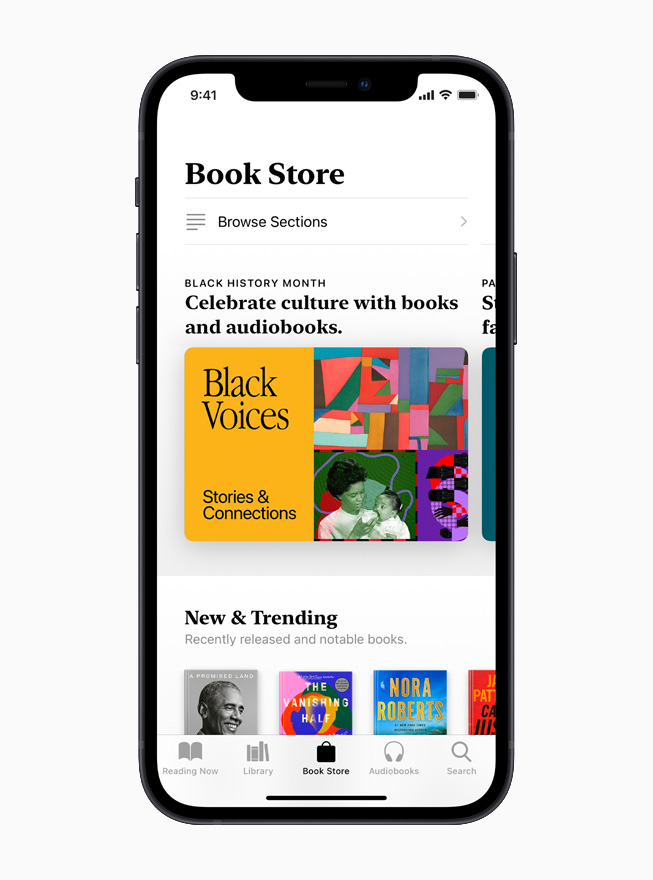
On Apple Books, customers can find special features spotlighting Black authors and narrators, along with recommended books and audiobooks across a variety of genres.
Apple Podcasts
On Apple Podcasts, listeners can enjoy an expansive set of shows from powerful Black voices including Michelle Obama, Joe Budden, Phoebe Robinson, and Baratunde Thurston; a collection of shows from creators around the world offering thoughtful interpretations of Black families; and an extended promotion of “Seizing Freedom” from VPM, a show that documents the struggle to define freedom after 400 years of slavery. Hosted by author and historian Kidada E. Williams, with firsthand accounts from diaries, newspapers, speeches, and letters, “Seizing Freedom” illustrates the stakes for the nation during the Reconstruction era as it reveals unsettling echoes in the present-day pursuit for political and social justice.
Apple Podcasts offers listeners a wide range of shows from powerful Black voices, including “Seizing Freedom” from VPM, which is hosted by author and historian Kidada E. Williams and features artwork by L.A.InkWell.
Apple Watch
Apple is introducing the Black Unity Collection, designed to celebrate and acknowledge Black history and Black culture. The collection includes a limited-edition Apple Watch Series 6, the Black Unity Sport Band, and a Unity watch face. As part of this effort, Apple is supporting six global organizations to help advance their missions in promoting and achieving equality and civil rights in the US and around the world: Black Lives Matter Support Fund via the Tides Foundation; European Network Against Racism; International Institute on Race, Equality and Human Rights; Leadership Conference Education Fund; NAACP Legal Defense and Educational Fund, Inc.; and Souls Grown Deep.
Apple introduces the Black Unity Collection, designed to celebrate and acknowledge Black history and Black culture. The collection includes a limited-edition Apple Watch Series 6, the Black Unity Sport Band, and the Unity watch face.

The Black Unity Sport Band uses colors inspired by the Pan-African flag with the words “Truth. Power. Solidarity.” laser-engraved onto the closure.
Honoring the craft of quilting, the Unity watch face creates a pattern of irregular shapes that dynamically changes over time.
The limited-edition Apple Watch Series 6 features “Black Unity” laser-etched onto the back crystal.
Members of the Black creative community and allies throughout Apple came together to design an Apple Watch Sport Band and Apple Watch face to honor the ongoing fight for racial justice. Inspired by the call to action of both the historic and current movements, the Black Unity Sport Band has “Truth. Power. Solidarity.” laser-engraved onto the interior of the stainless steel fastening pin.
The Black Unity Collection pays homage to the rich tradition and craft of quilting in the Black community and celebrates the colors of the Pan-African flag: red for the blood that unites people of the African Diaspora and was shed for their liberation, black for the people whose existence is affirmed by the flag, and green for the vibrant natural wealth of Africa, the Motherland. The Black Unity Sport Band is made from individual pieces of colored fluoroelastomer, which are assembled by hand and compression-molded into one. The Unity watch face creates an ever-changing pattern that dynamically shifts over time.
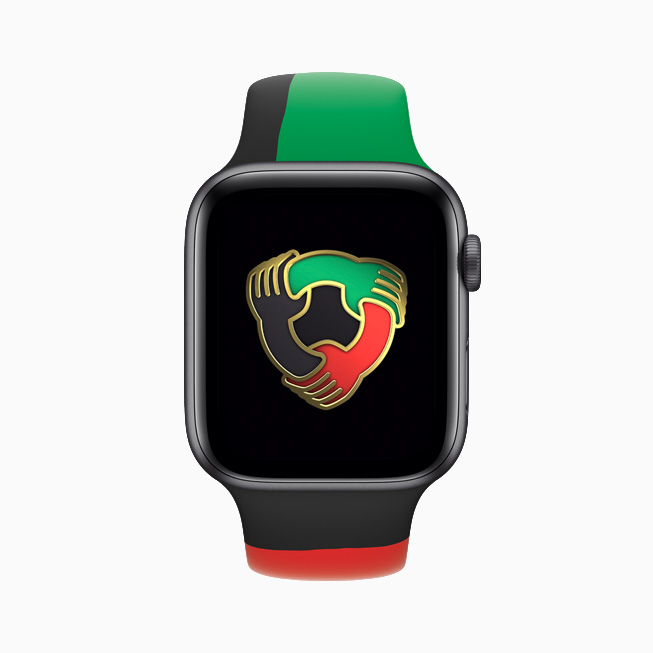
Apple Watch users can participate in a new Unity Activity Challenge and earn the limited-edition award by closing their Move ring seven days in a row during February.
Apple Watch Series 6 Black Unity and the Black Unity Sport Band will be available starting February 1, and the Unity watch face will be available as part of watchOS 7.3 coming later today.
In addition, Apple Watch users can participate in a new Unity Activity Challenge and earn the limited-edition award by closing their Move ring seven days in a row during February.
Apple Fitness+
Apple Fitness+ subscribers can enjoy a collection of themed workouts, featuring all Black artists across Cycling, Dance, High Intensity Interval Training, Strength, Yoga, and Treadmill. Fitness+ Trainers will also feature individual songs and pay tribute to Black History Month across additional workouts. In acknowledgment and celebration of Black History Month, the first Time to Walk episode in February will feature author Ibram X. Kendi reflecting on racial justice and resiliency.
Today at Apple
Today at Apple, in partnership with design group It’s Nice That, is hosting New World, a program of hands-on virtual sessions and step-by-step tutorials focused on exploring the power of creativity to bring about change. During Black History Month, curator and writer Kimberly Drew will moderate sessions led by Black creatives who will discuss their creative practices and where they get inspiration, as well as demonstrate and teach one particular skill or technique. Sessions include typographer Tré Seals; creative director, filmmaker, and photographer Joshua Kissi; and visual artist, photographer, and educator Shan Wallace. Everyone is welcome to join and can sign up at apple.co/new-world.
Today at Apple, in partnership with design group It’s Nice That, will offer a program of hands-on virtual sessions and tutorials that focus on using creativity to bring about change.
Shot on iPhone
Beginning in February, Apple’s latest Shot on iPhone campaign, “Hometown,” highlights the work of more than 30 Black photographers commissioned by Apple. Their mission was to capture amazing imagery of their “Hometown” from their own unique lens. This project covered a broad range of American cities and towns like Dallas, New York, Los Angeles, and many more.
These Black History Month activities complement the company’s ongoing commitment to honoring and celebrating Black voices. Earlier this month, Apple announced a set of major new projects as part of its $100 million Racial Equity and Justice Initiative (REJI).
Pricing and Availability
Apple Watch Series 6 Black Unity (GPS) starts at $399 (US) and Apple Watch Series 6 Black Unity (GPS + Cellular) starts at $499 (US). The Black Unity Sport Band is $49 (US).
The Black Unity Collection will be available online and in store from Apple and Target, beginning Monday, February 1, in the US and over 38 countries and regions.
The limited-edition Apple Watch Series 6 Black Unity will be available for the month of February, and the Black Unity Sport Band will be available throughout the year.
The Unity watch face will be available later today as part of watchOS 7.3, and requires iPhone 6s or later running iOS 14.4.
The Black History Month collections and content across Apple services will be available starting February 1.
Time to Walk is an inspiring new audio walking experience on Apple Watch for Fitness+ subscribers, created to encourage users to walk more often and reap the benefits from one of the healthiest activities.
Episodes feature personal stories, photos, and music from influential people to inspire Apple Watch users to walk more
Apple unveiled Time to Walk, an inspiring new audio walking experience on Apple Watch for Fitness+ subscribers, created to encourage users to walk more often and reap the benefits from one of the healthiest activities. Each original Time to Walk episode invites users to immerse themselves in a walk alongside influential and interesting people as they share thoughtful and meaningful stories, photos, and music. Time to Walk can be enjoyed anytime and anywhere with Apple Watch and AirPods or other Bluetooth headphones.
“Walking is the most popular physical activity in the world, and one of the healthiest things we can do for our bodies. A walk can often be more than just exercise: It can help clear the mind, solve a problem, or welcome a new perspective,” said Jay Blahnik, Apple’s senior director of Fitness Technologies. “Even throughout this challenging period of time, one activity that has remained available to many is walking. With Time to Walk, we’re bringing weekly original content to Apple Watch in Fitness+ that includes some of the most diverse, fascinating, and celebrated guests offering inspiration and entertainment to help our users keep moving through the power of walking.”
Country music star Dolly Parton reflects on career, family, and growing up in rural Tennessee in her Time to Walk episode.
In his Time to Walk episode, NBA player Draymond Green reflects on the virtues of failure and tuning out criticism.
In her Time to Walk episode, Emmy Award winner Uzo Aduba talks about lifelong relationships and keeping the faith.
Musician Shawn Mendes shares how a slower pace has helped him personally and creatively in his Time to Walk episode.
Each Time to Walk episode is shaped by the guest’s personal, life-shaping moments and includes lessons learned, meaningful memories, thoughts on purpose and gratitude, moments of levity, and other thought-provoking topics, recorded while walking outside or in locations that are meaningful to them. The narrative comes to life through photos that appear on Apple Watch, perfectly timed to amplify a corresponding moment the guest shares. Following the guest’s stories, the experience extends with the guest introducing a short playlist of songs that has given them motivation and inspiration, so the listener can continue their walk to a soundtrack intimately connected to each guest.
Time to Walk launches today with four episodes from the following guests:
Country music star Dolly Parton has won nine GRAMMYs and is also a celebrated actor, businessperson, and humanitarian. Dolly reflects on her career, family, and growing up in rural Tennessee. “I’ve loved walking ever since I was a little girl in the Smoky Mountains,” Parton says. “I think it’s so important to be able to get out and walk if we can during this time. I do my best thinking when I walk. And while many of us feel confined during this time, I’m hopeful that people will take a walk down memory lane with me and we can all feel a little more freedom taking the time to walk together.”
NBA player Draymond Green won three basketball championships with the Golden State Warriors, helping to change how the game is played. He reflects on the virtues of failure and tuning out criticism. “There’s nothing better than a walk in nature, getting lost in my thoughts, and taking a deep breath of fresh air,” Green says. “Take all the stresses of your day and let them blow away with the wind. I hope sharing my stories with those who go on a walk with me will give them the same drive to chase their dreams that I had in chasing mine.”
Musician Shawn Mendes went viral on social media at 15, had his first platinum album by 19, and has toured the world. He shares how a slower pace has helped him personally and creatively. “Taking a walk is a great way to clear your mind,” Mendes says. “It’s the most simple thing you can do to calm the body and soul, reflect, and slow down. I hope people get to feel the same sense of calm I do while walking and can bring that to their own experiences.”
Emmy Award winner Uzo Aduba found stardom on the series, “Orange Is the New Black,” but only after many rejections. She talks about lifelong relationships and keeping the faith. “I love walking either by myself or with my dog,” Aduba says. “It’s a time to connect and have the conversations with myself that can often get overlooked throughout the day, and bring peace of mind. The experience of walking and telling my stories gave me that familiar feeling that walking brings, answering questions that need to be answered, and addressing topics that need to be addressed. I’m so excited to share that with those who take the time to walk with me.”
Once a Time to Walk episode is selected on Apple Watch, a Walk workout automatically begins and users can go at any pace that suits them.
Guests record their Time to Walk episodes while walking outside or in locations that are meaningful to them.
New episodes will appear in the Workout app on Apple Watch from a different guest each Monday through the end of April. Users can browse and enjoy previous Time to Walk episodes when it is most convenient for them.
Time to Walk episodes are automatically downloaded to Apple Watch with a Fitness+ subscription, and users can start an episode directly from the Workout app. Once a Time to Walk episode is selected on Apple Watch, a Walk workout automatically begins and users can go at any pace that suits them while listening with AirPods or paired Bluetooth headphones. New episodes ranging from 25 to 40 minutes will appear automatically in the Workout app on Apple Watch, and users can also browse episodes in the Fitness+ tab in the Fitness app on iPhone. For Apple Watch customers who use a wheelchair, Time to Walk becomes Time to Push, and automatically starts an Outdoor Wheelchair Walk Pace workout.
Pricing and Availability
Time to Walk is the latest addition to Apple Fitness+, the first fitness service built around Apple Watch, which also brings studio-style workouts to iPhone, iPad, and Apple TV 4K or Apple TV HD, intelligently incorporating workout metrics from Apple Watch for a first-of-its-kind personalized and immersive experience users can complete wherever and whenever is convenient for them.
Apple Fitness+ is available in Australia, Canada, Ireland, New Zealand, the UK, and the US.
Three months of Apple Fitness+ are included for customers who purchase Apple Watch Series 3 or later, and one month of Fitness+ is included for existing Apple Watch users.1
Fitness+ is available as a subscription service for $9.99 (US) per month or $79.99 (US) per year.2
Fitness+ can be shared among up to six family members for the same price, making it easy for other Apple Watch users in the household to enjoy the service.
Fitness+ is included in the Apple One Premier plan, which, where available, also gives customers access to Apple Music, Apple TV+, Apple Arcade, Apple News+, and 2TB of iCloud storage for $29.95 per month, and can be shared among up to six family members.
Fitness+ requires Apple Watch Series 3 or later paired with iPhone 6s or later, or iPhone SE, with watchOS 7.2 or later and iOS 14.3 or later.
Time to Walk requires AirPods or other Bluetooth headphones paired with Apple Watch.
Once Time to Walk episodes are downloaded, a WiFi or cellular connection is not required.
It’s been two years since we unveiled the list of Apple devices that will receive the next major update. After iOS 13 and then iOS 14, it’s time to talk about iOS 15. On which iPhone, iPod or iPad can we install iOS 15 and iPadOS 15?
If iOS 14 had rolled over the same iPhones and iPads as iOS 13 (like iOS 12 and iOS 11), Apple is expected to remove five models this year, split between smartphones and tablets. Here is a first list of Apple devices that will host iOS 15 beta next June, gleaned once again from our developer friend at Apple and who works in particular on the Plans app. Obviously, needless to say that the iPhone 13 will be delivered directly with iOS 15 and an A15 chip. But for the others, there will be unhappy customers because Apple will have to part with certain models in order to facilitate the deployment of new products and to better unify its fleet.
French publication iPhoneSoft says that the information is coming from within Apple (via Apple Translate):
Here is a first list of apple devices that will host iOS 15 beta next June, once again gleaned from our developer friend at Apple and who notably officiates on the Plans app.
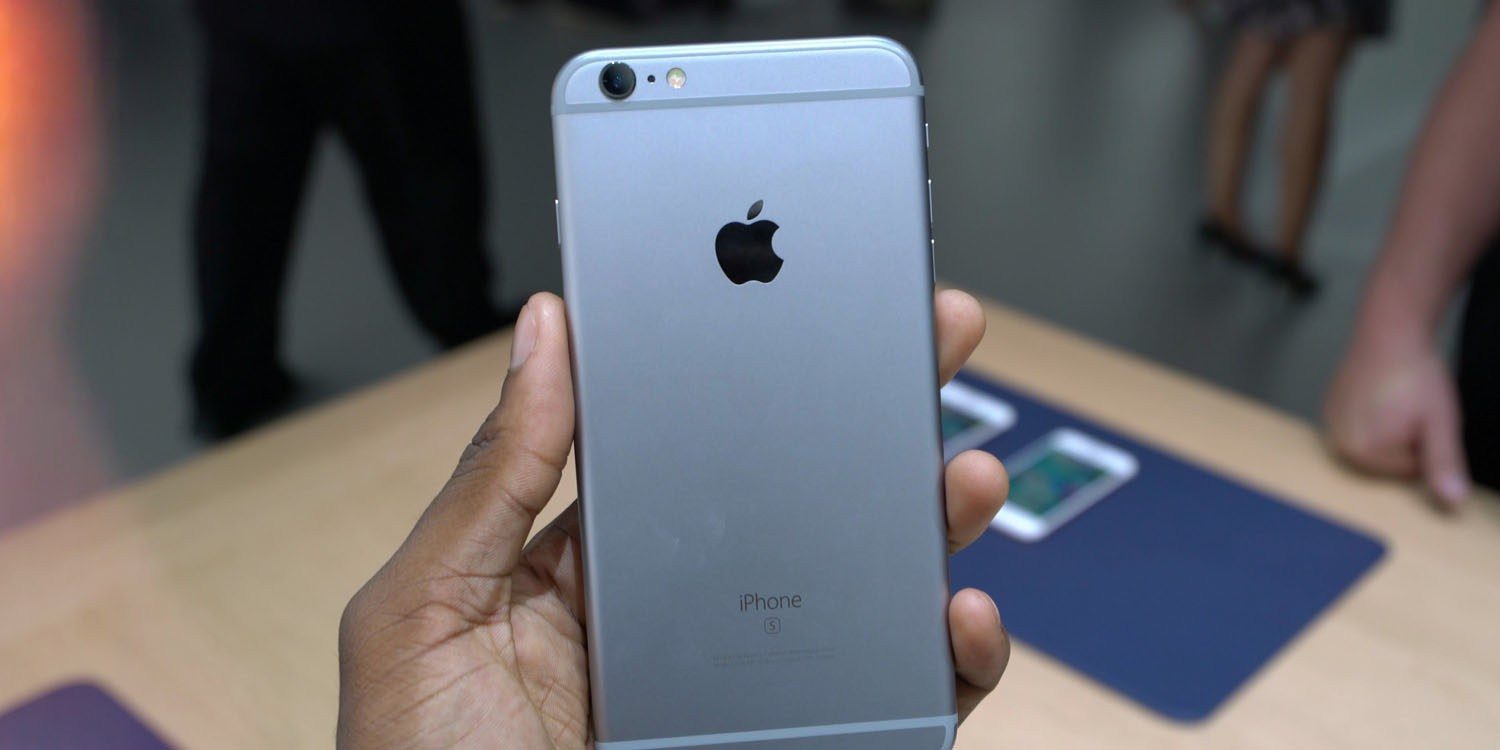
The iPhone 6s and iPhone 6s Plus were originally introduced in September of 2015, followed by the iPhone SE in March of 2016. The devices were incredibly popular and have received over four years of software updates from Apple.
With the iPhone 12 mini and the second-generation iPhone SE, Apple now sells two modern devices that match the form factor of the iPhone 6s design. The second-generation iPhone SE is actually nearly identical to the iPhone 6s in terms of design, but with the modern A13 processor inside. The iPhone 12 mini is physically smaller, but offers a bigger display because of its edge-to-edge design, alongside the A14 processor and an improved camera system.
Not compatible with iOS 15:
iPhone 6s an 6s Plus
iPhone SE 2016
That lines up with the report we saw last November from The Verifier. But going beyond that information, iPhoneSoft says that iOS 15 will also “probably not be available” on:
iPad mini 4
iPad Air 2
iPad 5
Here’s a look at what devices could work with the iOS/iPadOS 15.
Apple Distinguished Educator Mike Lang is using Dr. Martin Luther King Jr.’s legacy to show his kindergarten and first grade students at Laura Dearing Elementary School they have the power to change the world.
Neon signs are not the only things shining bright in Las Vegas. Mike Lang, technology instructor at Clark County School District’s Laura Dearing Elementary School on the East Side of Las Vegas, is putting the spotlight on his students as civic servants and activists in their local community.
“My hope for all my students is that they see and consider themselves as citizens of the world who are responsible for helping others be successful,” Lang says. This month, Lang initiated a three-part project with his kindergarten and first grade students to honor Dr. Martin Luther King Jr.’s legacy and instill a sense of civic duty in them. “That’s the ultimate goal: We want people who are going to be informed, passionate, patriotic in the true sense of that word, and who are going to be empathetic.”
The first part of Lang’s project is designed to show kids that they are valuable, using children’s book author Christian Robinson’s “You Matter” as a starting point for self-reflection. “Kids have to have a level of self-esteem to believe that their point of view matters, their story matters, their opinions matter, and their ideas matter,” he says. “It’s important for students to understand they have inherent power just because they are themselves.”
Students will use iPad to capture and edit images of themselves, their family, and their neighborhoods, and then craft their stories about why they matter using the PBS KIDS ScratchJr coding app on iPad. Next, the students will research Dr. King’s life and legacy using Brad Meltzer’s book “I Am Martin Luther King Jr.,” and compare and contrast themselves to him by creating double exposure portraits of themselves with the civil rights leader. Finally, in the “I’m a Dreamer, Too” segment of the project, Lang will ask them how they can be of service to each other and their neighbors. The students will complete interactive workbooks in Keynote for each part of the project, and he will compile their thoughts into a collated book of their ideas, which they will have the opportunity to share with community organizers and legislators in Las Vegas later this semester.
Kindergarten and first grade students at Laura Dearing Elementary School are creating speeches inspired by Dr. Martin Luther King Jr.’s “I Have a Dream.”
Incorporating interactive workbooks in Keynote on iPad, Apple Distinguished Educator Mike Lang’s three-part learning project is designed to show students they matter, help them examine Dr. Martin Luther King Jr.’s life, and encourage them to be the change they want to see in their Las Vegas community.
Lang has been teaching in the Clark County School District for 14 years. Prior to arriving in Las Vegas, the Washington, D.C.-native taught fourth graders in Pascagoula, Mississippi, before traveling overseas to teach English in the small town of Miaoli City in Taiwan. It was there that he discovered how technology could be used as a tool for learning. And it all started with an iPod. “I was trying to figure out a way to teach English to kids that spoke Mandarin in a way that would be engaging,” Lang says.
After purchasing an iPod in Taiwan in 2004, Lang leaned on American music — from classic rock to hip hop — to immerse his students in the English language. And when he arrived in Las Vegas three years later, he set out to acquire as many iPod shuffles and nanos he could get his hands on, using the audio editing software Audacity on Mac to record his lessons and distribute them to his students.
“I saw how technology could transform and transfer information to students far more efficiently than me trying to explain it,” Lang says. “I became a digital learning coach after that and started to spread the gospel of having kids make things with devices. I’ve been blessed to grow with the evolution of digital in classrooms.”
Today Lang sees himself — and all teachers, really — as architects. Paying tribute to American architect Louis Sullivan and his book “Kindergarten Chats,” in which Sullivan established the phrase “form follows function,” Lang believes every lesson plan requires the right form and function to be successful for all students. “You have to have the right blueprints for the right tasks,” Lang says. “It takes a lot of craftsmanship and looking at it from an architect’s point of view to say, how do you encourage the user to use your product and use it dynamically and use it in ways that perhaps you didn’t even intend it to be used?”
In a way, Lang’s overarching philosophy on teaching can be applied to the way his students see and shape themselves in the world. At the completion of the project, his students will have a blueprint of ideas for changing their community and the roles they can play in making that change happen.
With Lang’s project already underway, today also marks the launch of Apple’s second challenge in the “Taking Action on Racial Equity and Justice” learning series, “Make a Positive Impact in Your Community.” The “Challenge for Change” series includes a set of conversation guides based on the challenge-based learning framework and designed to help educators, community leaders, and individuals have thoughtful conversations on issues related to race and inequality. “We as educators have to enter the classroom every day with the idea that one, if not all, of our students could change the world,” Lang says. “It can be a Martin Luther King Jr., it can be a Bernice King, could be a Coretta Scott King, someone who would hopefully be a beacon to which other people rally.”
Announced this morning in a call to action from The King Center’s Dr. Bernice A. King, the second youngest daughter of Dr. King, this challenge encourages people to give back to their “beloved communities,” which Lang believes must start in schools.
“Martin Luther King Jr.’s legacy of striving to be excellent, striving to do what’s right, and striving to be fair goes beyond race. It’s economics and empathy, and this idea of solidarity with all human beings,” says Lang. “My hope is that my students come to the realization that there is a basic humanity that we need to always be beholden to, not only within their class, not only within their school, but within their community, their city, their country, and the world.”
Apple Distinguished Educator Mike Lang believes it is the responsibility of every teacher to ensure their students understand the role they can play in changing the world.
As part of its $100 million Racial Equity and Justice Initiative commitment, Apple is supporting the launch of the Propel Center (rendering above), an innovation hub for the entire HBCU community that will provide curriculum, internships, and mentorship opportunities.
Cupertino, California — Apple today announced a set of major new projects as part of its $100 million Racial Equity and Justice Initiative (REJI) to help dismantle systemic barriers to opportunity and combat injustices faced by communities of color. These forward-looking and comprehensive efforts include the Propel Center, a first-of-its-kind global innovation and learning hub for Historically Black Colleges and Universities (HBCUs); an Apple Developer Academy to support coding and tech education for students in Detroit; and venture capital funding for Black and Brown entrepreneurs. Together, Apple’s REJI commitments aim to expand opportunities for communities of color across the country and to help build the next generation of diverse leaders.
Commitments build on Apple’s $100 million pledge and include a first-of-its-kind education hub for HBCUs and an Apple Developer Academy in Detroit
“We are all accountable to the urgent work of building a more just, more equitable world — and these new projects send a clear signal of Apple’s enduring commitment,” said Tim Cook, Apple’s CEO. “We’re launching REJI’s latest initiatives with partners across a broad range of industries and backgrounds — from students to teachers, developers to entrepreneurs, and community organizers to justice advocates — working together to empower communities that have borne the brunt of racism and discrimination for far too long. We are honored to help bring this vision to bear, and to match our words and actions to the values of equity and inclusion we have always prized at Apple.”
Jared Bailey, a senior at Morehouse College, has integrated Apple’s coding and creativity curricula into his public health and community service work as part of the school’s partnership with Apple, a collaboration that is expanding further with the launch of the Propel Center.
Last June 2020, Apple announced REJI in the wake of protests around the world following the killings of Breonna Taylor, George Floyd, and countless others. The initiative builds on Apple’s work to advance racial equity in education, the economy, and the criminal justice system, and is led by Apple’s vice president of Environment, Policy and Social Initiatives, Lisa Jackson. REJI complements Apple’s internal efforts to improve diversity and inclusion at every level of the company.
“Every individual deserves equal access to opportunity regardless of skin color or zip code,” said Jackson. “For too long, communities of color have faced gross injustices and institutional barriers to their pursuit of the American dream, and we are proud to lend our voices and resources to build new engines of opportunity that empower, inspire, and create meaningful change.”
Apple’s Support for HBCUs Expands with the Propel Center
Apple is working with Southern Company and a range of community stakeholders to support the launch of the Propel Center, a first-of-its-kind innovation and learning hub for the HBCU community. Apple’s $25 million contribution will enable the Propel Center to support HBCU students and faculty through a robust virtual platform, a physical campus in the historic Atlanta University Center, as well as on-campus activations at partner institutions.
The center is designed to support the next generation of diverse leaders, providing innovative curricula, technology support, career opportunities, and fellowship programs. The Propel Center will offer a wide range of educational tracks, including AI and machine learning, agricultural technologies, social justice, entertainment arts, app development, augmented reality, design and creative arts, career preparation, and entrepreneurship. Experts from Apple will help develop curricula and provide ongoing mentorship and learning support, along with offering internship opportunities.
The Propel Center campus (rendering above) — equipped with state-of-the-art lecture halls, learning labs, and on-site living for a scholars-in-residence program — will be located in the historic Atlanta University Center district.
The Propel Center was imagined and designed by Ed Farm, a groundbreaking organization that works to promote innovation and educational equity. The initiative builds upon Apple’s partnership with Ed Farm and the company’s work with three dozen HBCUs, bringing coding, creativity, and career opportunities to campuses and communities across the US.
“We’re thrilled to be partnering with Apple on this extraordinary project,” said Anthony Oni, Ed Farm’s founder and chairman of the board, and a vice president at Southern Company. “The Propel Center will help cultivate leadership and drive innovation in tech and beyond, acting as a springboard for change in communities across America.”
As part of Apple’s ongoing partnerships with HBCUs, the company is also establishing two new grants to support HBCU engineering programs. Apple’s new Innovation Grants will help HBCU Colleges of Engineering develop their silicon and hardware engineering curriculum in partnership with Apple’s experts. The new Faculty Fellows Program will support HBCU educators pursuing R&D with mentorship programs, curriculum development assistance, and funds to equip their lab spaces.
Building on its longstanding scholarship program with the Thurgood Marshall College Fund, Apple is also now offering scholarships to 100 new Apple Scholars from underrepresented communities. In addition to financial support, the Apple Scholars program includes mentorship and career development experience at Apple.
MaKisha Funderburke will collaborate with Apple and Clark Atlanta University, where she is a professor, to create the curriculum framework for the Propel Arts program, one of the many educational tracks that will be available to all HBCU students and faculty through the Propel Center.
Hailee Bryant-Roye, an early-childhood education major at Tennessee State University, has been able to pursue new teaching and learning opportunities with Apple’s Everyone Can Code and Everyone Can Create curricula, offered through the company’s collaboration with TSU. She’ll have access to additional programming, mentorship, and internship opportunities through the Propel Center.
Apple’s First US Developer Academy to Open in Downtown Detroit
Later this year, Apple will open an Apple Developer Academy in Detroit — the first of its kind in the US. Detroit has a vibrant Black entrepreneur and developer community, with over 50,000 Black-owned businesses, according to US Census data. The academy is designed to empower young Black entrepreneurs, creators, and coders, helping them cultivate the skills necessary for jobs in the rapidly growing iOS app economy. Launched in collaboration with Michigan State University, Apple Developer Academy courses will be open to all learners across Detroit, regardless of their academic background or whether they have any previous coding experience.
The Apple Developer Academy will offer two programs in Detroit. A 30-day introductory program is designed for learners who are considering app economy careers and looking to better understand what it means to be a developer. The full academy program is an intensive 10- to 12-month program that will help aspiring developers build the skills needed to participate in the iOS app economy, and even start their own businesses. Apple expects the academy’s programming to reach close to 1,000 students each year with a curriculum that covers coding, design, marketing, and professional skills.
And next month, Apple will host the inaugural cohort of its Entrepreneur Camp for Black Founders and Developers for a virtual experience, offering one-on-one code-level guidance from Apple experts and engineers, as well as mentorship, inspiration, and insights from top Apple leaders.
Empowering Entrepreneurs Through New Funding Partnerships
To address systemic barriers to access and funding faced by Black and Brown entrepreneurs, Apple is today announcing two new investments in the venture capital and banking spaces, with both projects designed to provide capital to minority-owned businesses. The company will invest $10 million with Harlem Capital — an early-stage venture capital firm based in New York — to support its investments in 1,000 companies with diverse founders over the next 20 years. In addition to providing capital to entrepreneurs of color, Harlem Capital will also lend its expertise to Apple’s broader efforts to advance access to economic opportunity. The firm will offer guidance and mentorship to students at the Detroit Developer Academy and participants in Apple’s Entrepreneur Camp for Black Founders and Developers. Apple will also support Harlem Capital’s internship program, focused on opening doors for aspiring women and minority investors.
The company will also invest $25 million in Siebert Williams Shank’s Clear Vision Impact Fund, which provides capital to small and medium-size businesses, with an emphasis on minority-owned companies. The fund looks to support businesses that operate in or serve underserved markets, and that foster inclusive growth initiatives.
Lifting up Community Organizations
As part of its REJI work, Apple continues to build on its contributions toward community colleges, nonprofit advocates, and local organizations working to empower and expand opportunity for the next generation.
Apple is making a contribution to The King Center, a living memorial to the legacy of Dr. Martin Luther King Jr. to share his teachings and inspire new generations to carry forward his unfinished work. Next week, Dr. King’s daughter and the CEO of The King Center, Dr. Bernice A. King, will issue a call to action encouraging young people to give back to their communities as part of Apple’s “Challenge for Change” series — a set of conversation guides and learning-based challenges on issues related to race and inequality.
Apple’s contribution to The King Center joins the company’s previous donations to nonprofit organizations that advance equity and justice, including the Birmingham Civil Rights Institute and the Equal Justice Initiative in Montgomery, Alabama.
Apple’s support for The King Center will bolster the organization’s work to share Dr. Martin Luther King Jr.’s teachings and inspire new generations to carry forward his unfinished work.
Facebook continues to panic about upcoming privacy changes in iOS 14. The company has sent a new email to businesses today informing them that it has no choice but to comply with the iOS 14 App Tracking Transparency feature. Otherwise, Apple could remove Facebook from the App Store completely.
As first reported by iMore, Facebook has sent another round of emails to businesses informing them that while it disagrees with Apple’s planned changes, it has no choice but to follow them. Facebook says that the App Tracking Transparency feature, which requires apps to obtain consent from users before tracking them across other websites and apps, will have “hard-hitting implications across targeting, optimization, and measuring campaign effectiveness.”
The company also says that it believes “personalized ads and user privacy can coexist,” which is also a claim Apple has made. The two companies clearly have different versions of what constitutes “user privacy,” though.
Apple’s requirement that all apps in the App Store show a prompt to iOS 14 users in accordance with their AppTrackingTransparency framework will have hard-hitting implications across targeting, optimization, and measuring campaign effectiveness for businesses that advertise on mobile devices and across the web. Apple’s changes will benefit them, while hurting the industry and the ability for businesses of all sizes to market themselves efficiently and grow through personalized advertising. We believe that personalized ads and user privacy can coexist.
Also in the email, Facebook tells businesses that it has “no choice” but to show the prompt seen at the top of this story. Otherwise, Facebook tells businesses that it believes Apple could block Facebook and its other apps from the App Store completely.
Facebook told businesses that whilst it disagrees with Apple’s solution, it has ‘no choice’ but to show the opt-in prompt and to continue using Apple’s device identifier for advertising. The company states that it believes Apple could block Facebook and its other apps from the App Store if it doesn’t comply, bringing ‘further harm to the businesses and users that rely on our services.’
Finally, Facebook says that if users do opt out of tracking, there could be a reduction in “ad effectiveness and limitations on measurements.”
This is not the first time Facebook has warned businesses about the potential impact of the new iOS 14 App Tracking Transparency feature. Last month, Facebook was warning users about the impacts on marketing efforts. Facebook also took out a full-page ad in US newspapers to slam Apple’s changes.
The ads claim that Facebook is standing up to the iPhone maker on behalf of small businesses …
Facebook has published a blog post with more details. It also says it will back Epic Games in its ongoing legal battle over the App Store.
Facebook Inc. attacked Apple Inc. in a series of full-page newspaper ads Wednesday, claiming the iPhone maker’s anticipated mobile software changes around data gathering and targeted advertising are bad for small businesses.
The ads, slated to run in the New York Times, Wall Street Journal and Washington Post, carry the headline “We’re standing up to Apple for small businesses everywhere.” They home in on upcoming changes to Apple’s iOS 14 operating system that will curb the ability of companies like Facebook to gather data about mobile users and ply them with advertising.
The attack relates to the fact that iOS will next year force apps to ask for permission if they want to use ad-tracking. It’s expected that most users will refuse, which will mean apps won’t be able to easily offer personalized ads. Ads reflecting user interests earn more money for app developers than generic ads.
The change will significantly impact Facebook, as the ads it carries in the app will be worth less. The social network claims, however, that it doesn’t have its own interests in mind: it is instead standing up for small businesses.
The ad reads:
We’re standing up to Apple for small businesses everywhere
At Facebook, small business is at the core of our business. More than 10 million businesses use our advertising tools each month to find new customers, hire employees and engage with their communities.
Many in the small business community have shared concerns about Apple’s forced software update, which will limit businesses’ ability to run personalized ads and reach their customers effectively.
Forty-four percent of small to medium businesses started or increased their usage of personalized ads on social media during the pandemic, according to a new Deloitte study. Without personalized ads, Facebook data shows that the average small business advertiser stands to see a cut of over 60% in their sales for every dollar they spend.
While limiting how personalized ads can be used does impact larger companies like us, these changes will be devastating to small businesses, adding to the many challenges they face right now.
Small businesses deserve to be heard. We hear your concerns, and we stand with you. Join us at fb.com/SpeakUpForSmall
This is an unconvincing tack the company has taken before. Back in October, CEO Mark Zuckerberg made the claim while warning investors of the likely hit to its own ad revenues.
Facebook CEO Mark Zuckerberg took aim at Apple on Thursday over its plans to limit advertisers’ ability to track iPhone users, suggesting the proposed changes could hurt small businesses and, by extention, the broader economy.
During Facebook’s quarterly earnings call, Zuckerberg told investors that “actions planned by platform companies like Apple could have a meaningful negative effect on small businesses and economic recovery in 2021 and beyond” […]
Zuckerberg argued that “personalized advertising is helping small businesses find customers, grow their businesses and create jobs,” and that measures to limit targeted ads, such as those by Apple and lawmakers in the European Union, would hurt those businesses’ ability to reach customers.
It follows the company yesterday taking a swipe at Apple in a statement to Reuters about planned European legislation known as the Digital Markets Act (DMA), which would force Apple to offer a more level playing field between its own apps and third-party ones.
“We hope the DMA will also set boundaries for Apple,” a Facebook spokesman said. “Apple controls an entire ecosystem from device to app store and apps, and uses this power to harm developers and consumers, as well as large platforms like Facebook,” he said.
Some are suggesting that Facebook is trying to divert attention from its continuing privacy woes over its spyware app pitched as a free VPN service. Reuters reports that Australia plans to fine Facebook over the app.
Sources close to Apple tell us the company is not opposed to ad-tracking, but simply wants it to be transparent to users.
The App Tracking Transparency feature will roll out sometime in early 2021. Apple had originally hoped to launch it with iOS 14 in September, but it ended up delaying the feature to give developers more time to prepare.

a coalition of eight civil and human rights organizations penned an open letter to Apple CEO Tim Cook regarding the company’s decision to delay the release of the new App Tracking Transparency feature in iOS 14.
Apple has now responded to that letter, doubling down on its privacy practices and offering more color on the decision to delay the App Tracking Transparency feature in the first place.
In a letter sent to the Ranking Digital Rights organization, Apple’s Jane Horvath, senior director of global privacy, reiterated that the company believes that “privacy is a fundamental human right.” Horvath explains that Apple delayed the App Tracking Transparency (ATT) feature in an effort to give developers more time to prepare for the changes.
The letter also confirms that the App Tracking Transparency feature, which is designed to allow users to disable tracking between different applications, is still coming next year. Once in effect, developers will also be required to ask for permission before tracking a user across apps or websites.
“We delayed the release of ATT to early next year to give developers the time they indicated they needed to properly update their systems and data practices, but we remain fully committed to ATT and to our expansive approach to privacy protections. We developed ATT for a single reason: because we share your concerns about users being tracked without their consent and the bundling and reselling of data by advertising networks and data brokers.”
Horvath goes on to emphasize that App Tracking Transparency features don’t prevent advertising, but rather encourages advertising that respects privacy:
“Advertising that respects privacy is not only possible, it was the standard until the growth of the Internet. Some companies that would prefer ATT is never implemented have said that this policy uniquely burdens small businesses by restricting advertising options, but in fact, the current data arms race primarily benefits big businesses with big data sets. Privacy-focused ad networks were the universal standard in advertising before the practice of unfettered data collection began over the last decade or so. Our hope is that increasing user demands for privacy and security, as well as changes like ATT, will make these privacy-forward advertising standards robust once more.”
Furthermore, Horvath has sharp criticism for Facebook, saying that the social network has “made clear” that its intent is to “collect as much data as possible” on its users:
“By contrast, Facebook and others have a very different approach to targeting. Not only do they allow the grouping of users into smaller segments, they use detailed data about online browsing activity to target ads. Facebook executives have made clear their intent is to collect as much data as possible across both first and third party products to develop and monetize detailed profiles of their users, and this disregard for user privacy continues to expand to include more of their products.”
On the flip side, Facebook has criticized the App Tracking Transparency feature and said it could cause ad revenue to drop as much as 40%. Facebook has reportedly met with advertising partners to discuss the impact the change will have on advertising when users have the ability to easily opt-out of cross-platform tracking.
Apple emphasizes again today that advertising that protects user privacy is possible. For example, Apple gives users the ability to disable ad personalization based on first-party data in the Settings app. For users with Personalized Ads enabled, Apple groups together users with similar characteristics, which ensures that a campaign can’t identify a given user.
Once available in 2021, the App Tracking Transparency feature will be accessible by opening the Settings app, then looking for the Privacy menu, and looking for the Tracking section. Apple also says that its new “nutrition labels” for app privacy will be required in the App Store starting on December 8.
Following the release of iOS 14.3 last month, Apple today stopped signing both iOS 14.2 and iOS 14.2.1 — which was only available for iPhone 12 models. That means users who have updated their devices to iOS 14.3 can no longer downgrade to iOS 14.2.
Among all the changes of iOS 14.3, the most notable one is the addition of the ProRAW photo format for the iPhone 12 Pro and iPhone 12 Pro Max. Apple announced the ProRAW feature for the new iPhones during its October event last year, but the feature was only released to users months later.
As for iOS 14.2, the updates brought new emojis, more wallpapers, and support for the HomePod Intercom feature. iOS 14.2.1 arrived a few days later with specific bug fixes for iPhone 12 models.
Reverting to older iOS builds is common for those with jailbroken devices. Restoring an iPhone or iPad to a previous version of iOS can sometimes be helpful for users who experience significant bugs after upgrading to the latest version of iOS.
If you have experienced any serious issues with iOS 14.3, unfortunately you’ll now have to wait until a future update is available rather than downgrading to iOS 14.2. The only possible downgrade for now is from the recently released iOS 14.4 beta to iOS 14.3.
When it came to note-taking apps on mobile, Evernote was one of the earlier entrants. They helped popularize the idea behind the ability to sync your notes and also collaborate with other people on the same note in real-time, but this does not necessarily mean that the app is for everyone.
Some of you might have different needs and maybe you’re seeking an alternative to Evernote. If you are, you’ve come to the right place because here are some worthy Evernote alternatives that you can check out for Android and iOS.
Notion
Notion might not necessarily be an app that you have heard of, but it doesn’t detract from the app’s value and potential. In addition to being a decent note-taking app, Notion pulls double and triple duty by being an app that can help manage your workflow through Kanban-styled boards, timeline views, and more.
OneNote is an app developed by Microsoft that’s designed to be a note-taking app. It is a pretty straightforward app and comes with some features that Evernote users might actually be familiar with, but that’s a good thing. It can also sync over Microsoft’s OneDrive cloud service, so if you have an account, it can back it up to the cloud quickly and easily and you’ll be able to access it from other devices like a computer.
If you don’t need a full-fledged word processor like Google Docs and want something small and simple to jot down your notes, it would be remiss of us if we did not include Google Keep on this list. Given that this is a Google product, it quite easily integrates across Google’s other services, so if you’re tied into the Google ecosystem, this is a no-brainer.
Dropbox made a name for themselves as being a cloud storage service, but the company has been slowly expanding on its offerings and Paper is one of them. If you’re someone who uses Dropbox quite a bit, then using Paper would make a lot of sense as not only does it allow users to take down notes, but they can also sync it and collaborate with other users.
Simplenote, as the name implies, is a very simple and straightforward note-taking application. If you’re just looking for something that takes down notes well and can sync across a multitude of platforms (it’s also available on Linux), then Simplenote is a great alternative to Evernote.
These days as we work from home, being able to collaborate digitally and virtually is slowly becoming a necessity, and Notejoy excels in that regard. Users can quickly make changes to their notes and documents that can then be synced with other users in the team. There is also the ability to include reactions, threaded discussions, note views, and more.
If you’re looking to take your note-taking and productivity to the next level, there’s a good chance that you might have heard of the Todoist app. This is not only a note-taking app, but a planner, project manager, and reminder app all in one. You can use it to track your goals for your current projects, collaborate with other users, and it also integrates with other apps and services like Gmail, Slack, and more.
If you just got a new iPhone, there are lots of things you can do to make the most of the great cameras you now have in your pocket. I’ve selected some of the best camera and photo editing apps that will help you enhance your shots with your iPhone.
Halide
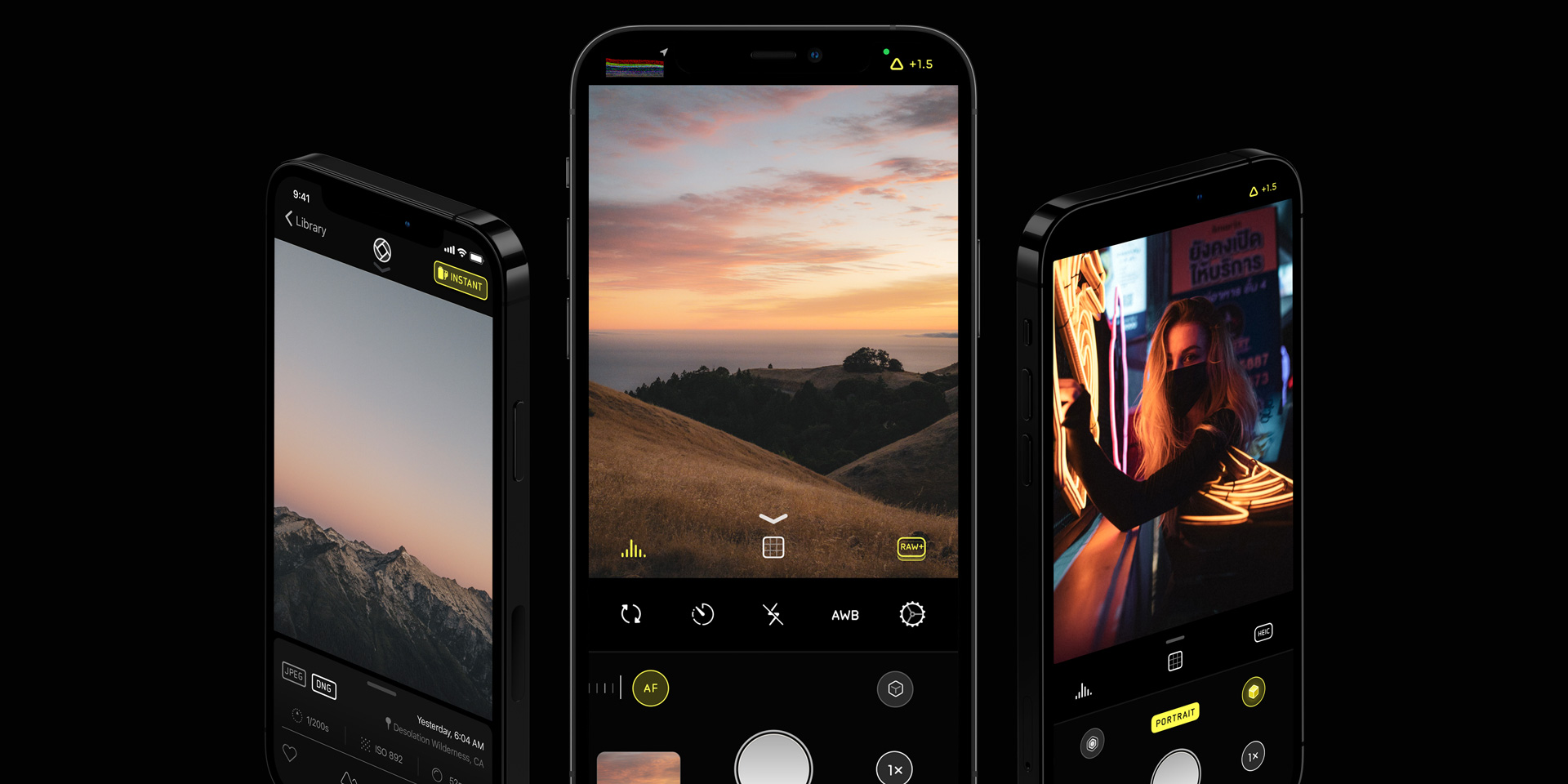
Halide is probably the most popular app for those who take mobile photography seriously — and also one of my favorite apps for iPhone. It features all the advanced controls you’d expect from a professional camera, including shutter speed, ISO, and white balance adjustments.
However, Halide is more than a camera app with manual controls. The app has some unique features to enhance photos by using artificial intelligence and other technologies. For instance, iPhone XR and iPhone SE (2nd gen) users can take portrait photos of animals and objects even without having two rear camera lenses.
You can also capture high-quality RAW photos, check histograms and metadata information, adjust focus precisely with focus peaking, export the depth map of the images, set Siri shortcuts, and much more.
You can try Halide for free on the App Store. The app requires an annual subscription of $11.99 or a lifetime license of $39.99 after the 7-day trial period.
Darkroom
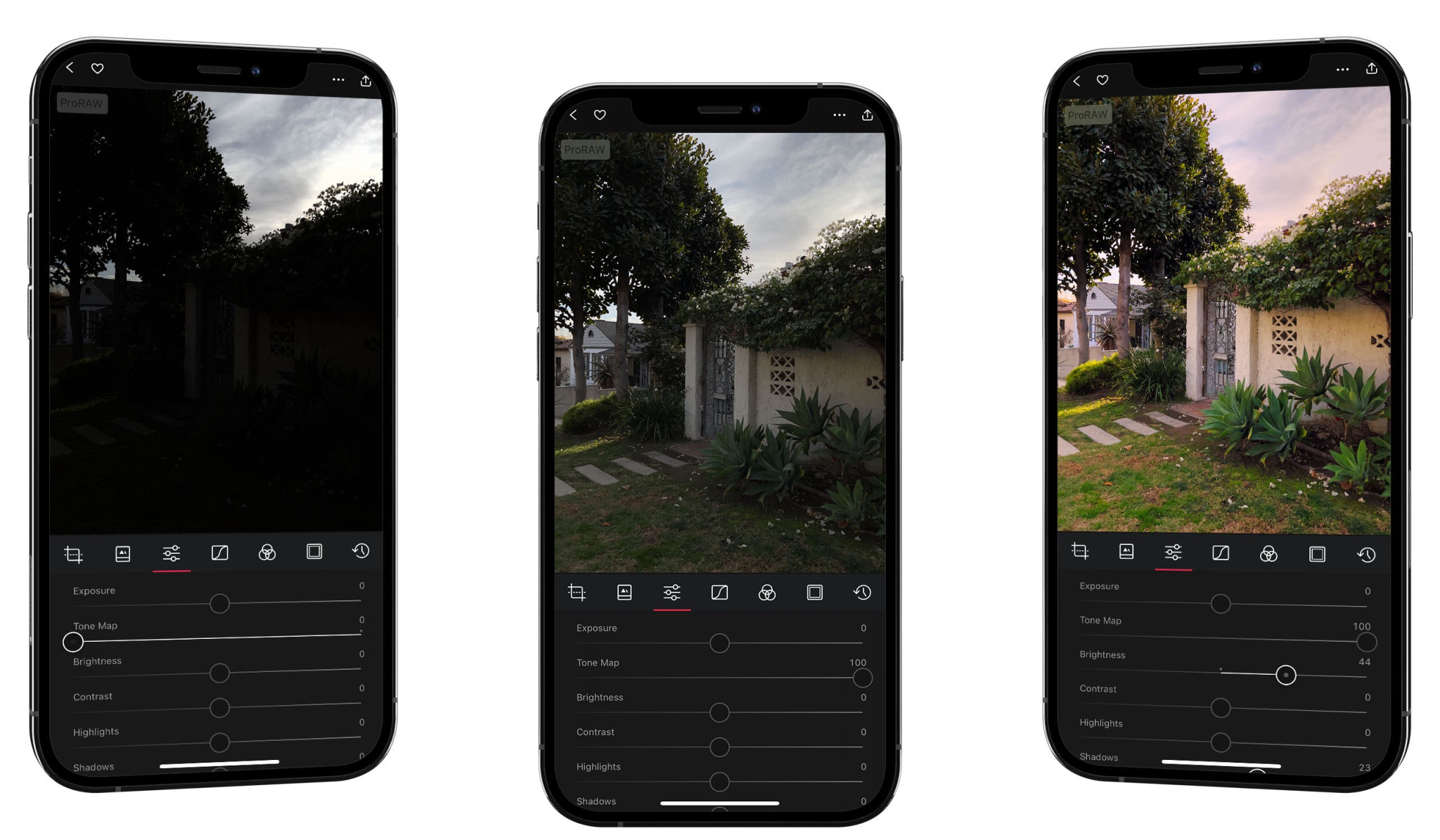
After taking some great photos with your iPhone, you’ll need some professional tools to edit them — but don’t think you need a computer for that. Darkroom is one of my favorite photo editors since it is available not only for iPhone but also for iPad and Mac.
One of the best things about Darkroom is that the app is extremely intuitive and easy to use, even if you are not a professional photographer. The app comes integrated with the iCloud Photo Library, so you don’t have to waste time selecting and importing the photos you want to edit.
With Darkroom, you can adjust the brightness, contrast, highlights, shadows, color temperature, and other details of the photos you’ve already taken. In fact, the app also lets you edit videos and even Live Photos. In addition, you’ll also find a curve editor, watermark options, advanced support for RAW photos, and even integration with the Halide app.
The best part is that you can use most of the features of Darkroom for free, which is available on the App Store. There’s a $19.99 annual subscription to unlock all the app features.
Focos
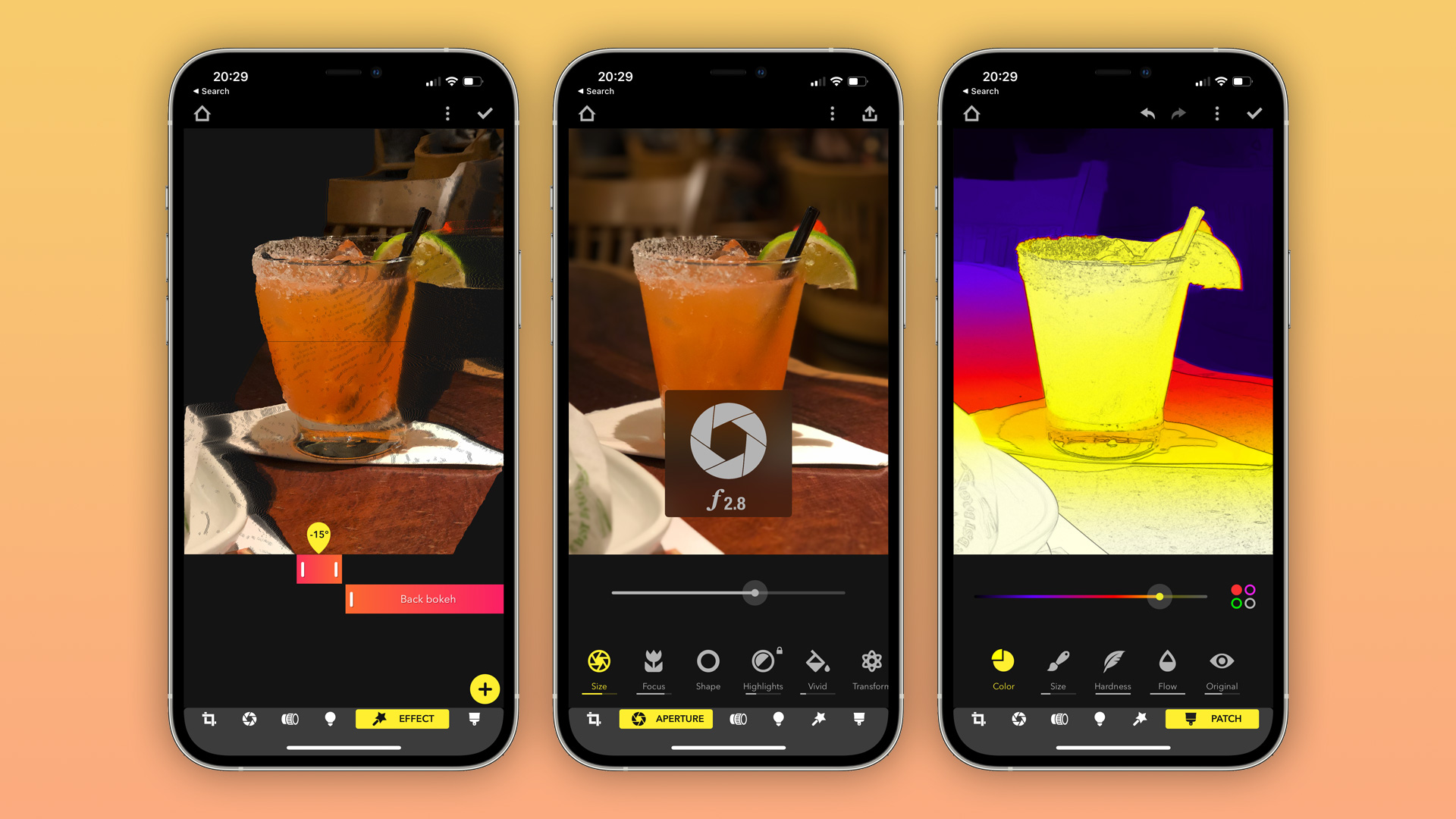
Focus is a must-have app for those who love taking portrait photos with the iPhone. While Apple took some time to let users change the level of blur in the backgrounds of portrait photos, Focos app offers this option since its release in 2017.
But Focos goes beyond adjusting the blur of the portrait photos as it generates different diaphragms with multiple bokeh spot effects and presets that simulate the feeling of professional lenses in the photos. There are even options to add 3D lighting and change the photo’s depth map to refine the blurred background.
What’s more impressive is that Focos uses AI to create an artificial depth map for any photo, even if it wasn’t taken with iPhone’s Portrait Mode. It’s amazing what you can do with your photos with this app.
Focus is available for free on the App Store, but some features require a $7.99 annual subscription or a $12.99 lifetime license.
Lightroom
Adobe Lightroom is the famous photo editor used by many professionals around the world, and although it is known for its desktop version, Adobe also offers a mobile version of Lightroom for iOS.
It’s extremely easy to edit your photos in Lightroom for iOS, even if they were taken in RAW. The app includes options to adjust lighting, colors, effects, details, and more. You can even distort photos, apply lens corrections, or use the automatic mode to set the best settings for that image. It also features different color profiles and settings presets.
If you’re subscribed to Adobe Creative Cloud, you can synchronize everything between the mobile and desktop versions of the app — so you can start editing a photo on your iPhone and then finish it on your Mac or iPad.
The mobile version of Lightroom is available for free on the App Store, but you’ll get the most out of the app by becoming an Adobe Creative Cloud subscriber.
DoubleTake
Since a camera is not made only of photos, this list wouldn’t be complete without an app to work on videos. DoubleTake is an app created by the same company behind FiLMiC Pro and it enables a new way to record videos with your iPhone.
Sometimes capturing video from just one camera is not enough, which is why DoubleTake came with a simple yet smart solution. If you ever needed to record the video from two different angles in order to create more professional-looking content, the app lets you choose two of the iPhone cameras to capture everything at the same time.
You can choose from ultra-wide, wide, telephoto, and selfie lenses to start a multi-cam video. The app also lets you switch between 24, 25, and 30 frames per second. There are no complicated settings or anything like that — all you need to do is open the app, choose the cameras you want, and start recording.
With these apps listed here, you have everything you need to start shooting and editing like a pro with your iPhone. While there are some paid apps like Halide, you can find great alternatives to enhance your photos for free on the App Store.
Apple continues its focus on privacy and security with some new resources on how to protect your devices, accounts, and personal safety. Let’s look at the recommended steps to check who can access your iPhone, other Apple devices, and Apple accounts.
Apple has published a new support guide this week that offers users an in-depth guide at managing their data and information on iPhone, iPad, Apple Watch, and Mac. The new document is entitled “Device and Data Access when Personal Safety is At Risk.”
Apple says that the goal of this new manual is to “help you identify risks, and walk you through the steps to help make the technology you rely on as private and secure as you want it to be.” The company explains that its devices make it easy to connect and share data with other users, friends, and family members, but that there are scenarios where you need to revoke previously-granted access to things like location data, photos, and more.
Apple makes it easy to connect and share your life with the people closest to you. What you share, and whom you share it with, is up to you — including the decision to make changes to better protect your information or personal safety.
If you’d like to revisit what you share with other people, or restore your device’s original settings for any reason, this guide can help you understand what information you are sharing via your Apple devices, and how to make changes to protect your safety. It includes step-by-step instructions on how to remove someone’s access to information you’ve previously granted: from location data on the Find My app, to meetings you’ve scheduled via Calendar.
If you’re concerned that someone is accessing information you did not share from your Apple device, this guide will also help you identify risks, and walk you through the steps to help make the technology you rely on as private and secure as you want it to be.
The document itself is 20 pages long, and it includes in-depth details on things like managing location sharing, using the Find My app, protecting your Apple ID, setting up or managing Family Sharing, and much more.
The company has also published a trio of separate checklists with important tips for managing privacy and sharing with other people:
This is an incredibly important document for Apple to have published. You can find the full PDF right here for easy sharing with friends and family members who might find themselves in search of these tips.
Apple published its new 20-page support guide called “Device and Data Access When Personal Safety is at Risk.” And whether you’ve got some specific personal safety concerns or are just ready for a privacy and security checkup, following along with the steps below is a great idea.
How to check who can access your iPhone, other Apple devices, and Apple accounts
Here’s what Apple recommends:
Check what devices are associated with your Apple ID
On iPhone and iPad, look at the devices that are signed in with your Apple ID by going to Settings > Your Name > Swipe down below Family Sharing
On Mac you can head to System Preferences > Apple ID > Look for your devices on the left
You can also see all your devices associated with your Apple ID at appleid.apple.com
You can tap/click any device to learn more, choose Remove from Account for anything that you don’t want to remain connected to your Apple ID
Review Face ID and Touch ID settings
Check if there is an unexpected alternate appearance or fingerprints in Face ID/Touch ID settings on iPhone, iPad, or Mac
Head to Settings > Face ID & Passcode or Touch ID & Passcode to check your settings
On Mac, you can head to System Preferences > Touch ID
If you don’t have two-factor authentication turned on, that’s a very important piece of securing your devices, accounts, and personal data
Check your apps
Check through all your installed apps looking for anything unexpected
Look for unexpected profiles
On iPhone and iPad, look under Settings > General for a Profiles section. Businesses, schools, and organizations are the most likely to install profiles but you can check to see if your device has one. The Profiles section won’t appear if there a none installed on your device. Profiles give additional access and privileges to Apple devices.
Keep in mind you won’t want/or be able to remove profiles if required by your employer/school/etc.
Going further on who can access your iPhone, iPad, more