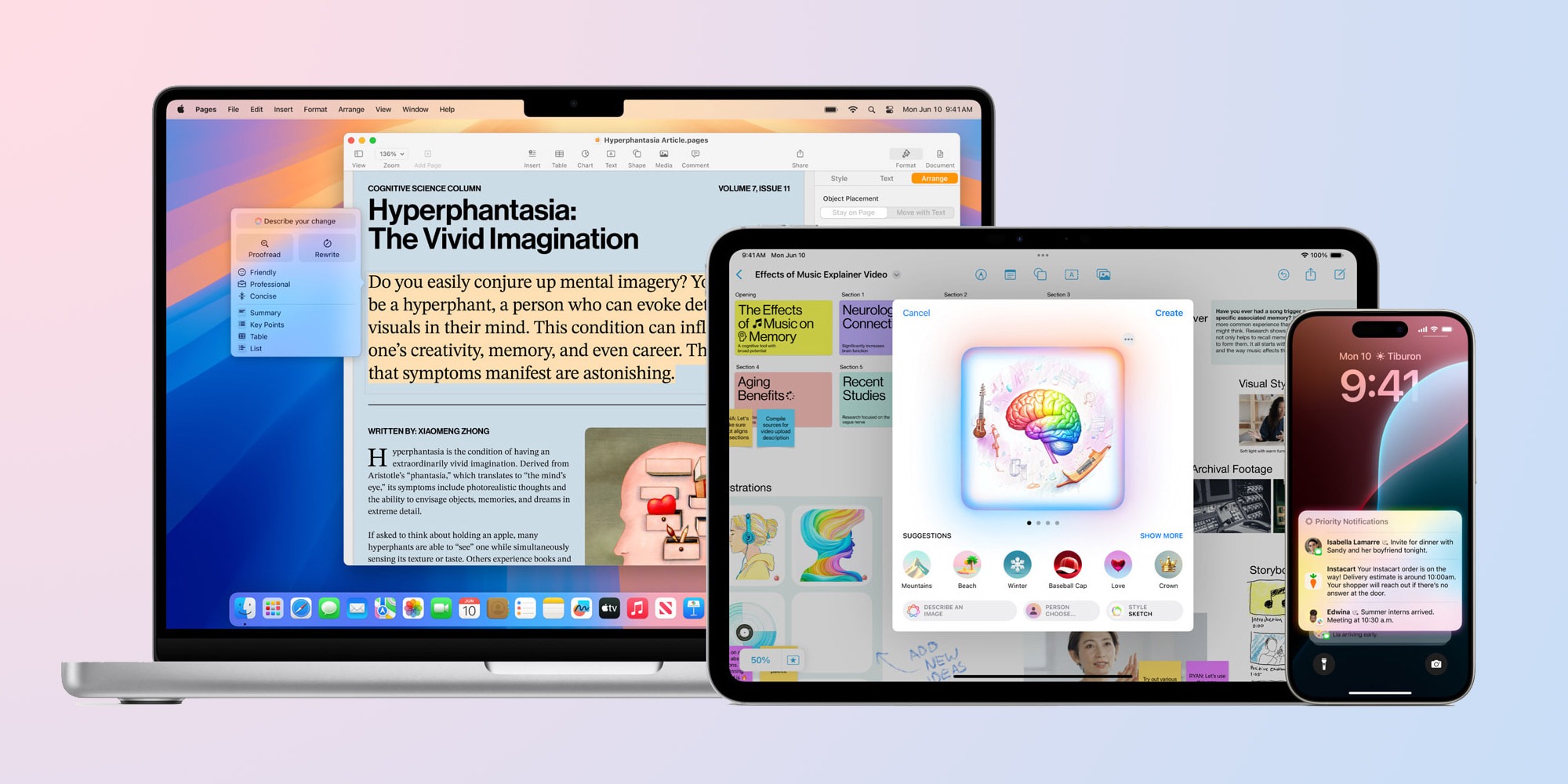
After teasing Apple Intelligence features at WWDC 2024 in June, Apple is finally releasing a developer preview with the first betas of iOS 18.1 and macOS Sequoia 15.1. However, today’s betas won’t be available for devices other than those compatible with Apple Intelligence.
iOS 18.1 and macOS 15.1 betas
As we previously reported, Apple Intelligence won’t be available with the first release of iOS 18.0 and macOS Sequoia 15.0 this fall. Because of this, Apple is now rolling out betas of iOS 18.1 and macOS 15.1, so that developers can try out Apple Intelligence in advance.
But some users may be confused when it comes to updating to today’s betas. That’s because not everyone will have this option.
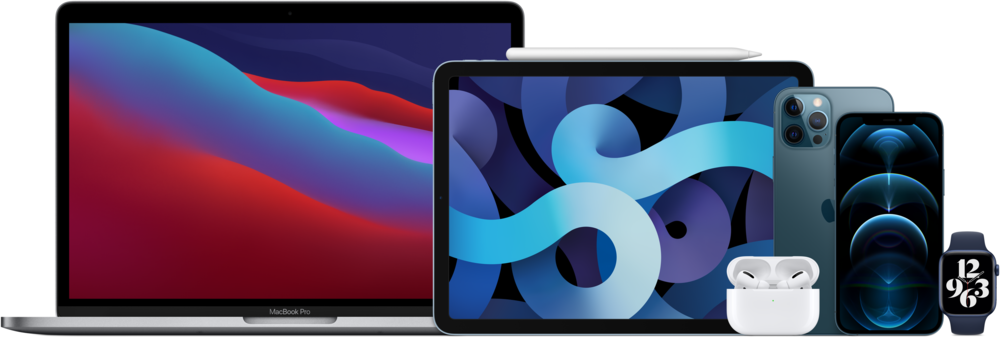
iOS 18.1 beta and macOS 15.1 beta will only be available for iPhones, iPads, and Macs compatible with Apple Intelligence. This includes:
Macs with M1 chip or later
iPads with M1 chip or later
iPhone 15 Pro and iPhone 15 Pro Max
If you have an older device (or a non-Pro iPhone 15), you won’t get the latest betas for now. Instead, your device will remain on iOS 18.0 beta or macOS 15.0 beta. For supported devices, developers will have the option of staying in the current beta or upgrading to betas with AI.
If you have a compatible iPhone, iPad or Mac running iOS 18 beta or macOS 15 beta, you can install the latest update by going to Settings > General > Software Update.
More about Apple Intelligence
Apple Intelligence is what the company is calling its new AI-based features. For example, users can now ask the system to rephrase a text, summarize messages or emails, generate images and even emoji. Siri has also been updated with AI, so that it now understands the context of what’s on the screen and lets users control more aspects of the device.
It’s worth noting that although today’s betas include Apple Intelligence, some features such as the more advanced Siri won’t be available for now.
All of the hype around WWDC this year has centred around two letters: AI.
Even though a large portion of Apple’s keynote is expected to highlight AI-related features, there will certainly be a variety of other improvements on deck for iOS 18, visionOS 2, and Apple’s other software platforms.
Mark Gurman reports that one such change will be a redesigned Settings app across the iPhone, iPad, and Mac.
New cross-platform design for Settings app
Last week reported on an expected redesign coming to macOS 15’s System Settings app, but Mark Gurman has confirmed on X that the revision will also impact the Settings app on iPhone and iPad.
A lot of people using macOS 15 and iOS 18 keep mentioning the revamp to Settings. Obviously not a huge deal, but it’s getting a new UI with a reorganized, cleaner layout that’s more simple to navigate. It also has much improved search. There are also updates to Control Center.
Details are scarce, but it sounds like Settings will receive a UI refresh on all platforms, improved search, and perhaps most significantly, a reorganization of its various settings categories.
These updates should ultimately provide a more consistent experience across iOS 18, iPadOS 18, and macOS 15.
Verdict
The biggest change at stake here is how Apple’s Settings app organizes its various categories. On that front, We have a hard time seeing how Apple can create an ideal setup that pleases everyone. We all interact with settings differently based on our different device habits.
As a result, it wouldn’t surprise us if Apple bakes some intelligence into Settings’ layout, offering up certain suggested categories based on your personal use patterns. There’s a lot the system could infer, too, from what you were doing right before opening Settings. For example, if we were using the Music app before opening Settings, there’s a decent chance we want to tweak Music’s settings. Or if we get a pop-up in an app saying Cellular is disabled for that app, surfacing that toggle in the Settings app would be great.
It sounds less drastic than the visual changes seen in the iOS 6 to iOS 7 transition, though. He writes “the company is indeed working to update the design of iOS as early as this year, but I don’t believe it will be a total overhaul that mirrors visionOS”. While Gurman says we can expect to see changes in iOS 18 this summer, the work on macOS has only just started and won’t be ready until 2025 or 2026.
Since Apple Vision Pro operating system was first unveiled, many people have wondered whether Apple will update the design of its other operating systems to match the visionOS aesthetic of 3D buttons and and glassy background textures. This doesn’t necessarily hold, as the visionOS design is specific to a platform that revolves around passthrough video. Being able to see the context of the world around you ‘through’ the open app windows is a concept that doesn’t really apply to iOS.
However, it has been a while since we’ve seen major design changes come to the iPhone and iPad. A visual refresh of any kind would make for an exciting release, that is also set to include significant AI-powered features.
Indeed, Mark Gurman previously said that Apple sees iOS 18 as its “ambitious and compelling” with major new features and designs. The company will officially unveil its next-generation operating systems at the annual WWDC conference in June. iOS 18 will be in beta over the summer and release for everyone in September, assuming Apple follows its usual traditions.
Apple on Wednesday began rolling out the second betas of iOS 17.3, macOS Sonoma 14.3 and other software updates to developers. The first betas of these versions were released on December 14, before the holiday break. The company is now resuming the beta program – and we’re about to find out what’s new in today’s updates.
iOS 17.3 beta brings Secure Device Protection and more
iOS 17.3 is a major update. The first beta introduced Secure Device Protection, which is an “additional layer of security” that protects users’ data in case someone steals their phone and gets their password. When Secure Device Protection is enabled, you can only access saved passwords using Face ID or Touch ID, for example.
This feature also makes it harder for crooks to change the Apple ID password of the owner of that device. There’s also a delay in removing Find My from an iPhone with Secure Device Protection enabled. In addition to this feature, iOS 17.3 also re-enables collaborative Apple Music playlists, now with emoji reactions.
Today’s build number is 21D5036c, compared to the number 21D5026f of the first build. Developers can update their devices by going to Settings > General > Software Update.
It’s worth noting that although iPadOS 17.3 is also available for iPads, Secure Device Protection is an exclusive feature for iPhones at this point.
macOS 14.3 and more
In addition to iOS 17.3 beta 2, the second betas of macOS 14.3, watchOS 10.3, and tvOS 17.3 are now available to developers. The first beta of these updates had no significant changes apart from potential bug fixes.
Following over a month of beta testing, iOS 16.5 is now available to the general public. This update includes changes to Apple News, the addition of a new “Pride Celebration” wallpaper, and more. Head below for the full release notes with details on bug fixes, new features, and more.
What’s new in iOS 16.5?
Here are Apple’s official release notes on iOS 16.5 new features and bug fixes. The build number for today’s update is 20F66.
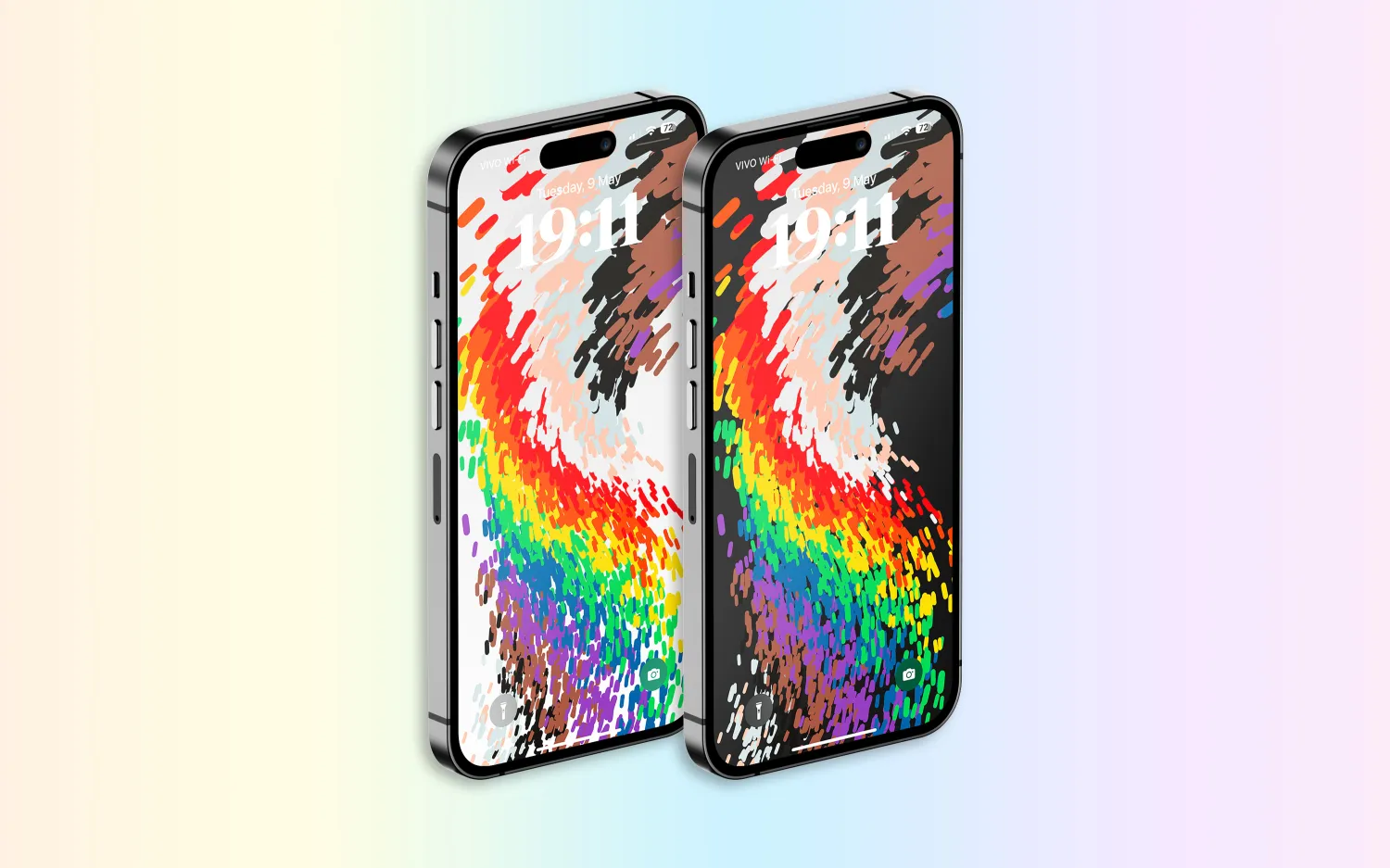
A new Pride Celebration wallpaper for the Lock Screen to honor the LGBTQ+ community and culture
Sports tab in Apple News gives easy access to stories, scores, standings, and more, for the teams and leagues you follow
My Sports score and schedule cards in Apple News take you directly to game pages where you can find additional details about specific games
Fixes an issue where Spotlight may become unresponsive
Addresses an issue where Podcasts in CarPlay may not load content
Fixes an issue where Screen Time settings may reset or not sync across all devices
Earlier iOS 16.5 betas included the addition of a new Siri command for starting and stopping a screen recording. Apple removed this feature in subsequent iOS 16.5 betas, and it’s not included in the final version of the update.
iOS 16.5 will be the final major point-release update to iOS 16 before WWDC in June. This is where Apple will debut iOS 17 and release the first developer betas.
Apple is, however, expected to continue releasing updates to iOS 16 through the summer and likely even alongside iOS 17. iOS 16.6 is expected to enter beta testing soon.
You can update your iPhone by going to the Settings app, choosing General, then choosing Software Update.
watchOS 9.5 debuts with new Pride Celebration watch face
Alongside iOS 16.5, Apple has also released watchOS 9.5 for Apple Watch users today. The headlining change in this update is an all-new Pride Celebration watch face to honor the LGBTQ+ community and culture.
What’s new in watchOS 9.5?
watchOS 9.5 is rolling out now to all users. You can update your Apple Watch by going to Settings, choosing General, then choosing Software Update. You can also install the update via the Apple Watch companion app on your iPhone.
Here are Apple’s release notes for watchOS 9.5:
watchOS 9.5 includes new features, improvements and bug fixes, including a new Pride Celebration watch face to honor the LGBTQ+ community and culture.
And some more details on the new Pride Celebration watch face:
Inspired by multiple pride flags, this new watch face combines colors to represent the strength and mutual support of the LGBTQ+ movement. Mirroring the woven loops of the Sport Loop, each strand of vibrant thread contributes to the overall composition of the watch face. The colorful threads move as the Digital Crown on Apple Watch is rotated, the display is tapped, or the user’s wrist is raised.
The new Pride Celebration face included in watchOS 9.5 pairs with the similarly-designed wallpaper for iPhone users. The new wallpaper is included with iOS 16.5, which is also available starting today.
macOS Ventura 13.4 with new sports-related features
After months of beta testing, Apple has finally released macOS Ventura 13.4 to the public. The update, which is now available for macOS users, comes with new sports-related features, as well as a new system for installing beta software. Read on as we detail what’s new with macOS Ventura 13.4.
One big change coming with macOS Ventura 13.4 is the new system for installing betas that was introduced with iOS 16.4. The operating systems now asks for the Apple ID to show and download beta software updates.
macOS checks whether the account is associated with a developer or user registered in the public beta program. It then shows the beta update available for that program. With this change, regular users will no longer be able to install developer betas, for example.
macOS 13.4 full release notes
Sports feed in the sidebar of Apple News gives easy access to stories, scores, standings, and more, for the teams and leagues you follow
My Sports score and schedule cards in Apple News take you directly to game pages where you can find additional details about specific games
Resolves an issue where Auto Unlock with Apple Watch does not log you into your Mac
Fixes a Bluetooth issue where keyboards connect slowly to Mac after restarting
Addresses a VoiceOver issue with navigating to landmarks on webpages
Fixes an issue where Screen Time settings may reset or not sync across all devices
You can install macOS Ventura 13.4 by going to the Software Update menu in the System Settings app. It may take a while before the update shows up on your computer; make sure that your Mac is compatible with macOS Ventura.
The update build number is XXXXX.
OpenAI launches free ChatGPT for iPhone app with Whisper support and more
OpenAI has announced that it is releasing a dedicated iPhone app for its ChatGPT service. The app, which is available via the App Store, gives users the ability to use ChatGPT through a native app on their iPhone. The app is free to download and includes no ads. It’s currently only available in the United States, but OpenAI says availability will expand “in the coming weeks.”
ChatGPT for iPhone now available
As announced by OpenAI in a blog post, ChatGPT for iPhone will offer the same set of features as the web version of the service. This will include ChatGPT Plus support, which lets users subscribe to pay for more advanced versions of the service.
The app will also sync your ChatGPT history across all your devices, including the web. It also includes support for Whisper, OpenAI’s open-source speech-recognition system. This integration with Whisper enables voice input for the ChatGPT app on iPhone. The ChatGPT app is also completely ad-free.
As ChatGPT has gained popularity over the last six months, a number of copycat and scam apps have surfaced on the App Store. Apple has cracked down on these apps, in part by blocking apps that use “GPT” in their name. By releasing its own version of ChatGPT for iPhone, OpenAI hopes to directly control the experience of using the service on an iPhone.
Additionally, Microsoft’s Bing app for iPhone has seen a major boost in popularity since it added ChatGPT integration.
ChatGPT for iPhone is rolling out starting today to users in the United States. OpenAI availability will “expand to additional countries in the coming weeks.”
Apple has been beta testing iOS 16.5 and other software updates since March, and now it seems that these updates are about to be released to the public. Ahead of the official release next week, the company is now rolling out iOS 16.5 RC, iPadOS 16.5 RC, tvOS 16.5 RC, watchOS 9.5 RC, and macOS 13.4 RC to developers and public beta users.
A RC or Release Candidate build is usually released to developers days before its official release to the public to ensure that the software has no major bugs.
What’s new in iOS 16.5 RC?
iOS 16.5 RC will be available today to registered developers and beta testers. As the update rolls out over the air within the next hour, you’ll be able to install it by going to the Settings app, choosing General, then choosing Software Update. RC’s build number is 20F65.
As attention starts to shift to iOS 17, which will be introduced next month at WWDC, iOS 16.5 doesn’t include many notable changes.
iOS 16.5 adds new screen recording commands to Siri, which allows you to start or stop a screen recording using the virtual assistant. The update also adds a dedicated Sports tab to the Apple News app, something which has been highly requested among sports fans in the past.
iOS 16.5 RC full release notes:
A new Pride Celebration wallpaper for the Lock Screen to honor the LGBTQ+ community and culture
Sports tab in Apple News gives easy access to stories, scores, standings, and more, for the teams and leagues you follow
My Sports score and schedule cards in Apple News take you directly to game pages where you can find additional details about specific games
Fixes an issue where Spotlight may become unresponsive
Addresses an issue where Podcasts in CarPlay may not load content
Fixes an issue where Screen Time settings may reset or not sync across all devices
macOS Ventura 13.4 and watchOS 9.5
One big change coming with macOS Ventura 13.4 and watchOS 9.5 is the new system for installing betas that was introduced with iOS 16.4. Both operating systems now ask for the Apple ID to show and download operating system beta updates.
The system checks whether the account is associated with a developer or user registered in the public beta program. It then shows the beta update available for that program. With this change, regular users will no longer be able to install developer betas, for example.
macOS 13.4 full release notes:
Sports feed in the sidebar of Apple News gives easy access to stories, scores, standings, and more, for the teams and leagues you follow
My Sports score and schedule cards in Apple News take you directly to game pages where you can find additional details about specific games
Resolves an issue where Auto Unlock with Apple Watch does not log you into your Mac
Fixes a Bluetooth issue where keyboards connect slowly to Mac after restarting
Addresses a VoiceOver issue with navigating to landmarks on webpages
Fixes an issue where Screen Time settings may reset or not sync across all devices
watchOS 9.5 full release notes:
watchOS 9.5 includes new features, improvements and bug fixes, including a new Pride Celebration watch face to honor the LGBTQ+ community and culture.
tvOS 16.5
For Apple TV users, tvOS 16.5 introduces a new Multiview feature for sports. Multiview allows users to watch up to four games at the same time in a split-screen interface. Start watching a game, and then within a video player, use the Add Game button to add another stream alongside it. The feature only works with games streamed by Apple through the TV app.
Along with tvOS 16.5 RC, Apple is also rolling out HomePod Software 16.5 RC. According to Apple, the updates will be released to the public next week.
Hands-on with the new Multiview feature for Apple TV sports streams
With tvOS 16.5 beta, Apple is testing a new feature for the Apple TV app on the Apple TV 4K set-top box: the ability to watch more than one game at a time.
Multiview allows users to watch up to four simultaneous streams at once. The feature is available for live sports streamed through the TV app, like MLB Friday Night Baseball and MLS Season Pass …
The feature is available when multiple sports are live at the same time on the Apple TV service — right now that means MLB Friday Night Baseball and Major League Soccer. Apple is rumored to be in talks to get rights to other sports streaming packages in the future.
I tried out Multiview last night with Saturday’s MLS games. MLS Season Pass currently schedules about six games each weekend with overlapping start times, so something like Multiview is essential if you are a fan of multiple teams playing on the same night.
To enter Multiview mode, start watching a sports stream in the normal full-screen player. When Multiview is available, a grid icon will appear in the controls toolbar above the scrubber.
Clicking this button minimises the video into a smaller floating window. Below, the UI presents a strip of other games to watch that are currently live. Select one of these games and it is added to the Multiview grid. Swipe up to remove the games strip and maximise with the streams of both games playing side-by-side.
You can see live video of both games at once, but you only hear the audio track of the video that is currently focused; the other is muted. Swipe on the Siri Remote to change which video you are hovering over to select the current audio source. Click on a video to temporarily take it full screen. When you press the Back button on the remote, the app returns to Multiview.
With Multiview, you can watch up to four games at once. When two or four games are active, a selector appears between the video preview and the games bar that lets you customize the arrangement of the grid. Switch between a symmetric grid or a layout where one video is larger than the others.
In practice, it all works well with smooth animations and intuitive gestures to control the action. For a feature that packs in as much complexity as it does, it feels simple. Frankly, it is harder to find a live game in the first place to serve as the entry point — the Apple TV app could really benefit from a dedicated Live tab to bring together everything live to watch right now, in a cohesive fashion.
As you might expect from a beta feature, I experienced a couple of minor bugs during testing. Sometimes, the audio or video of one stream would cut out altogether. Removing and re-adding the game would resolve it. Also, a wonky UI thing is that when you hover over a video, the interface suggests pressing the TV button on the remote to reveal some more options, similar to how you control Picture-in-Picture on Apple TV. However, pressing said TV button would simply close the app and take me back to the system’s home screen app grid. This seems like something that either hasn’t quite been finished yet, or leftover remnants of an earlier prototyped design.
The 16.5 beta cycle is ongoing and there’s time for these things to be fixed up before the 16.5 software update ships to customers. Apple hasn’t even confirmed if Multiview will launch with the 16.5 release; it could be pushed to a later version. It’s also not clear if this is intended as an Apple TV exclusive feature, or whether it will roll out to other platforms in the future.
Apple expands new method for installing beta updates to macOS and watchOS
Apple has introduced a new system for distributing beta software with iOS 16.4, which now checks whether the user’s Apple ID is participating in the Apple Developer Program or the Apple Beta Software Program. This system is now being expanded to the Mac and Apple Watch with macOS Ventura 13.4 and watchOS 9.5.
Apple is changing how users and developers install beta software on macOS and watchOS
As noted by 9to5Mac, both operating systems now ask for the Apple ID to show and download operating system beta updates. Just like in iOS 16.4 and later, the system checks whether the account is associated with a developer or user registered in the public beta program. It then shows the beta update available for that program.
Previously, anyone could install betas of iOS, macOS, and watchOS by having the right beta profile. But with this change, regular users will no longer be able to install developer betas, for example. Users who are not registered for the program will only have the option of installing public beta software.
According to Apple, the new system will become the only way to install beta software in the future. Here’s what the company said back in February:
Beginning with iOS & iPadOS 16.4 beta, members of the Apple Developer Program will see a new option to enable developer betas directly from Software Update in Settings. This new option will be automatically enabled on devices already enrolled in the program that update to the latest beta release.
Your iPhone or iPad must be signed in with the same Apple ID you used to enroll in the Apple Developer Program in order to see this option in Settings. In future iOS and iPadOS releases, this new setting will be the way to enable developer betas and configuration profiles will no longer grant access.
More about betas
Apple released iOS 16.5 beta 2 along with new betas of watchOS 9.5, tvOS 16.5, and macOS 13.4 on Tuesday. While iOS 16.4 introduced many new features, iOS 16.5 seems to be more focused on bug fixes. Still, the update adds new screen recording commands to Siri and a dedicated Sports tab to the Apple News app.
Apple is continuing to push into health care, this time striking a deal with Epic Systems for a Mac-friendly version of its health records app. As reported by Axios,the deal will see Epic Systems create a version of its health records tool that “is easier to run on Apple devices.”
Apple had reportedly pushed for Epic to create a “native version of the service” for Apple devices, but the two companies settled on this compromise of a version that is “easier to run on Apple devices” instead. Apple hasn’t acknowledged this deal, but Axios says it was confirmed by a “source inside Epic.”
The deal comes despite previous disagreements between Epic and Apple over health records and data sharing, Axios explains. Apple has pushed for easing health record sharing requirements, something that Epic is firmly opposed to. Epic argued that rule changes focused on “interoperability” will be “overly burdensome on our health system and will endanger patient privacy.”
Epic Systems is the largest electronic health records vendor in the United States, with “roughly half the population’s medical records” being stored in a system powered by Epic software and technology. The lack of well-developed Mac, iPad, and iPhone software from Epic has put inhibited Apple’s ability to tap further into the health records industry.
Given the pace at which things in the healthcare industry move — especially around medical records technology — it’ll likely be awhile before we see any results of this new deal. None the less, it could end up being good for the industry and consumers, particularly if it improves data integration with other Apple platforms and services.
Microsoft is working to make your and your family’s online experience safer. Today the company is launching its new Defender security dashboard for 365 subscribers. Users on iPhone, Mac, Windows, and Android devices have access to the Microsoft Defender security app that utilizes existing antivirus software or other protections.
Microsoft Defender is simplified online security that meets you and your family where you are by bringing multiple protections together into a single dashboard. It provides online protection across the devices you and your family use. It offers tips and recommendations to strengthen your protection further. And, as you grow your digital footprint by adding family members and devices, Defender grows with you and keeps your defenses up-to-date using trusted technology.
According to The Verge, Microsoft Defender’s features will vary by which platform. For instance, on iPhone and iPad, Microsoft Defender users won’t have antivirus protection. However, they’ll have some phishing protections alongside their dashboard that features alerts for their other devices.
Additionally, the new app includes security alerts for your devices to ensure maximum protection. While not on iPhone, you can also view Microsoft Defender’s cybersecurity tips on your Mac or Windows computer.
This is just the start. As we look forward, we will continue to bring more protections together under a single dashboard, including features like identity theft protection and secure online connection. Microsoft Defender is simplified online security that grows with you and your family to help keep you safe.
One day after seeding iOS 15.6 beta 1 to developers, Apple is now releasing the public beta version to users enrolled in the Apple Beta Software Program. Alongside the first public beta of iOS 15.6, Apple is also making available the new versions of tvOS 15.6, macOS 12.5, and watchOS 8.7.
Today’s iOS 15.6 beta 1 build is 19G5027e. Different from past versions, Apple hasn’t made available any important features so far. This will likely be the latest iOS 15 major update before the release of iOS 16 later in the fall.
Here’s what Apple announced with iOS 15.5 early this week:
Wallet now enables Apple Cash customers to send and request money from their Apple Cash card
Apple Podcasts includes a new setting to limit episodes stored on your iPhone and automatically delete older ones
Fixes an issue where home automation, triggered by people arriving or leaving, may fail.
Alongside iOS 15.6 beta 1, Apple is also seeding macOS 12.5 beta 1 (build 21G5027d), tvOS 15.6 beta 1(build 19M5027c), and watchOS 8.7 beta 1 (build 19U5027c) to public testers.
In a few weeks from now, Apple will hold its WWDC 2022 event, where the company will announce the next milestone for iOS, macOS, iPadOS, tvOS, and watchOS. Rumors so far believe iOS 16 will bring nice improvements.
According to recent rumors, iOS 16 is expected to bring significant improvements to notifications as well as a new interface for iPadOS multitasking. Reported earlier this year that Apple has been working on adding expanded settings for Focus Mode in iOS 16.
Headlined by new Face ID improvements while wearing masks and Universal Control on iPadOS, iOS 15.4 beta 1 is a noteworthy update that will surely catch the interest of even casual iPhone users. Watch our hands-on video walkthrough as we explore some of the best iOS 15.4 beta 1 changes and features.
What’s new in iOS 15.4 beta 1?
Face ID while wearing a mask
One of the most frustrating aspects of using an iPhone during the COVID-19 era involves authenticating with Face ID. Apple tried to address this issue by implementing support for Apple Watch unlock, but not everyone owns an Apple Watch, and the implementation wasn’t as fast or as capable as regular Face ID. Hands-down, the most practical change to appear in iOS 15.4 beta 1 is the ability to unlock your iPhone using Face ID while wearing a mask, no Apple Watch required.
iOS 15.4 beta 1 addresses the mask issue by ushering in periocular support for Face ID. Instead of relying on the whole face for authentication, which hindered Face ID’s capabilities while wearing a mask, new periocular support authenticates using the area surrounding your eyes.
After the initial face scan, a new Use Face ID With a Mask splash screen appears. There, you’ll find two primary options: Use Face ID With a Mask and Don’t Use Face ID With a Mask. If you opt to skip using Face ID with a mask, the initial scan is all that’s needed, and you’ll receive a message that Face ID is now set up.
If you select the option to use Face ID with a mask, you’ll be asked to scan your face for a second time. If you’re wearing a mask during this step, iOS will ask to remove the mask when you’re in a safe area to continue setting up Face ID.
Once the second scan is completed, the Face ID setup process is finished… unless you happen to be wearing glasses. If you’re wearing glasses, iOS will ask you to remove your glasses and perform a third scan before the process completes. You can also add additional scans for different pairs of glasses in the Face ID & Passcode preferences.
Unlike the Apple Watch unlock feature in previous versions of iOS, which didn’t work with Apple Pay or third-party apps, mask compatibility in iOS 15.4 provides users with the full Face ID experience. In iOS 15.4 you can make purchases with Apple Pay, or unlock apps like 1Password while wearing a mask.
New auth screen when invoking Apple Pay before unlocking
Double-pressing the Side button on a locked iPhone would previously reveal items stored in your Apple Wallet in preparation for an Apple Pay transaction. Although you’d still need to authenticate with Face ID or a passcode before completing a transaction, wallet items could still be seen without unlocking.
Apple has fixed this potential privacy issue in iOS 15.4. If you invoke Apple Pay before unlocking your iPhone, you will now be presented with a blank page instructing you to use Face ID or a passcode to open the wallet.
Add notes to keychain passwords
After adding the ability to support two-factor authentication in iOS 15, Apple continues to build on keychain features. When you go to Settings → Passwords in iOS 15.4 beta 1, you’ll find a new feature to add notes to keychain passwords. Not only can you add notes, but the notes strings are searchable using the search box.
Emoji 14.0
Last September we got a preview of the new emoji scheduled to hit our phones, and iOS 15.4 is the version of iOS that implements these new emoji 14.0 changes. In all, iOS 15.4 adds over 37 new emoji characters, such as the new peaking face, heart hands, tears of joy, and many more.
Apple Wallet widget
There’s a new Apple Wallet widget that allows users to add their Apple Card balance, spending power, and spending activity on the Home Screen. The widget has one customizable setting that lets you select between a weekly, monthly, or yearly spending activity graph. As of now, the Apple Wallet widget is for Apple Card users only.
Run Shortcuts Automations without notifications
Finally! Apple is letting us run Shortcuts Personal Automations in the background without requiring a pesky banner notification. A new toggle lets you switch off notifications for Personal Automations in iOS 15.4 beta 1.
To disable notifications for automations, opt out of Ask Before Running when creating your automation, and you’ll see a new Notify When Run Option appear. Disable Notify When Run, and your automation will run without the annoying banner notification. Now I can make it so that my wallpaper changes at random whenever connecting to power without ever receiving a notification!
Select camera in Magnifier app
Eligible iPhone models now gain access to two additional camera modes in the Magnifier app. Users can now toggle between auto, telephoto, macro, and selfie cameras in iOS 15.4.
Reset Safari experimental features
Messing around with the experimental Safari settings buried deep within Safari’s preferences can quickly get out of hand if you don’t know what you’re doing. In iOS 15.4, it’s now possible to reset the experimental settings back to default with the tap of a button. Go to Settings → Safari → Advanced → Experimental Features, and scroll all the way down to the bottom of the page where you’ll find the handy new Reset All to Defaults button.
Configure App Store notifications
A new Notifications panel can be found in the App Store after tapping your avatar in the upper right-hand corner. Inside of the Notifications Panel, you’ll find a New Features & Updates and Recommendations & Offers switch.
iCloud Mail preferences consolidation
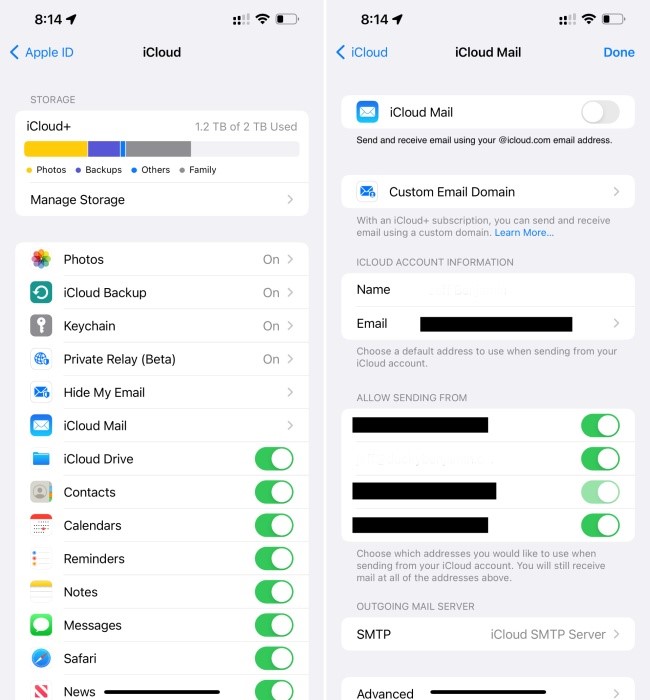
In previous versions of iOS, iCloud preferences featured a Mail toggle switch for enabling or disabling iCloud email. In iOS 15.4, Apple has merged the toggle with iCloud Mail settings, an area previously buried at the bottom of iCloud preferences.
New Custom Email Domain UI in iCloud settings
Apple has begun baking in its iCloud+ custom email domain UI into iCloud Mail settings in iOS. Previously, all such settings were found exclusively on iCloud.com, although Apple still pushes people to iCloud.com to fully configure custom email domains.
Although it doesn’t appear fully operational, Apple has started to lay the groundwork for a provision that will let users disable iCloud.com access for mail, calendar, photos, contacts, notes, reminders, files, and documents. When you visit Settings → iCloud → Password & Security, you’ll see a new Access iCloud Data on Web toggle at the bottom of the page. When you disable the toggle, a panel appears with a Don’t Access button to confirm your decision, but the button doesn’t currently do anything.
Notes and Reminders get Live Text integration
A new Scan Text option appears directly in the Notes and Reminders app, allowing you to quickly add text directly from an image to a note or reminder.
New AirPods Pro accessibility glyph
Instead of a generic headphone glyph, the Accessibility preferences for the AirPods now come with a proper AirPods Pro glyph. It’s all in the details…
Updated AirPods status
When opening AirPods or AirPods Pro near your iPhone, the status window now shows a redesigned (L)/(R) indicator when both buds and case are being shown
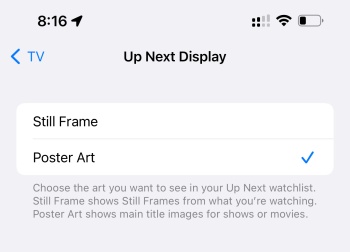
TV app Up Next Display
Users can now choose between a still frame or poster art for the Up Next watchlist in the TV app.
Tighter SharePlay integration
SharePlay from ShareSheet
SharePlay albums and songs directly from Music app
Developers can use the new API in iOS 15.4 to initiate FaceTime calls directly from their apps
iPadOS updates
Not to be left out, iPadOS gets several updates, including the most-anticipated public beta arrival of Universal Control.
Notes preferences Corner Gestures
The Notes app preferences gain the same Corner Gestures panel normally found in Settings → General → Gestures. It is here where you can toggle iPadOS corner gestures, which allow you to invoke a screenshot or a Quick Note by swiping diagonally from the bottom-left or right corner of the screen.
Keyboard brightness control toggle
Magic Keyboard users will appreciate having a new Keyboard Brightness shortcut available in Control Center. Once added, you can use the brightness slider to adjust the brightness of the Magic Keyboard. Keep in mind that brightness controls will not be available unless your iPad is in a dark environment, causing the automatic backlight to engage.
Universal Control
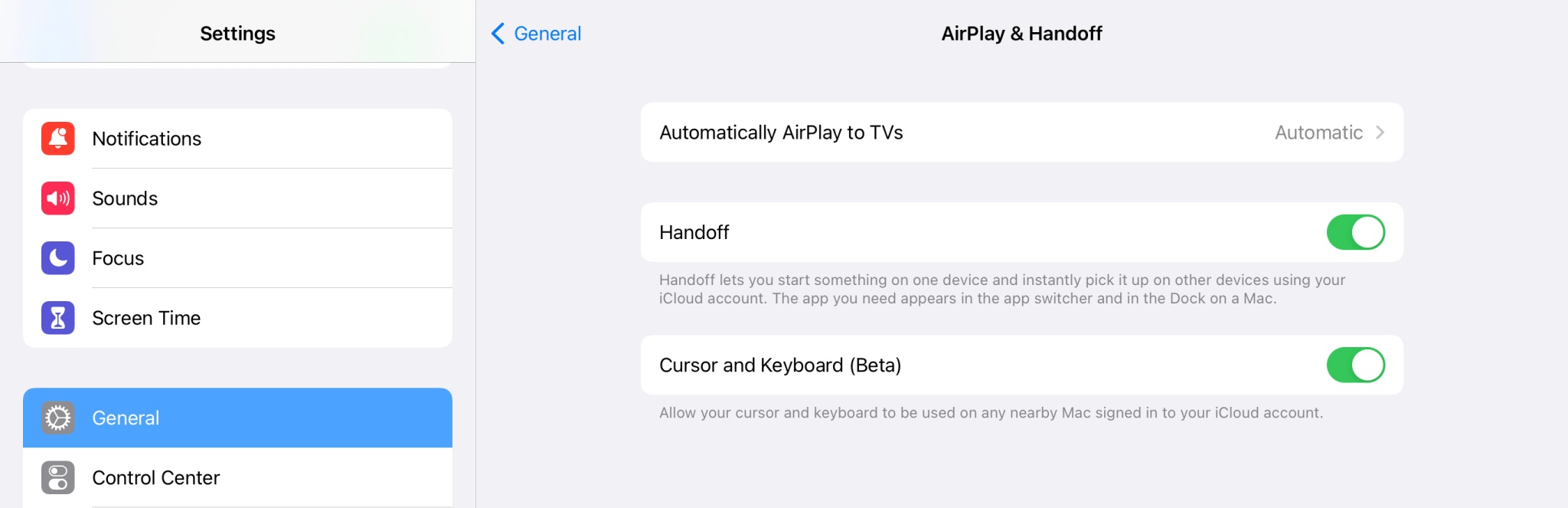
Last, but certainly not least, there is Universal Control, which can be enabled via Settings → General → AirPlay & Handoff. In the iPadOS 15.4 beta, Apple refers to Universal Control as Cursor and Keyboard (Beta). Note: You will need to be running the macOS Monterey 12.3 beta as well.
As its name states, Universal Control is all about control. It lets you control your iPad with the same mouse and keyboard that you use for your Mac. Indeed, using the same mouse and keyboard that I use to navigate Final Cut Pro on my MacBook Pro, I can scroll through my Tweetbot timeline or Apollo on my iPad Pro.
Universal Control is all about controlling two or more separate devices with the same input hardware. Thus, it doesn’t cause your iPad to function as an external display, where you can move a Mac app to your iPad, and vice versa, although the iPad is capable of doing that as well with Sidecar. But Universal Control does allow you to drag and drop files between macOS and iPad OS, which can prove to be handy in some circumstances.
iOS 15.3 arrived with crucial security updates, but relatively little in the way of user-facing features. iOS 15.4 is the substantial mid-cycle software update for iPhone that we’ve been waiting for, and it doesn’t disappoint. Practical features, like Face ID support while wearing masks, will appeal to the masses, but smaller updates, like the ability to silence notifications for shortcuts automation, will surely please a sizable swath of iPhone power users.
But if there’s one feature that worth’s upgrading for, it’s Universal Control. Similar to Apple SVP Craig Federighi’s demo back at WWDC, Universal Control is dead-simple to use, and that’s one of the things that makes it brilliant.