We’re just a few days away from Apple’s special event when the company will announce the iPhone 15 and also new Apple Watch models. The rumors have been pretty consistent in pointing out that we shouldn’t expect any major changes to the Apple Watch this year. However, a new report from Bloomberg suggests that the Apple Watch Series 9 will feature an updated heart rate sensor, as well as other small hardware improvements.
New heart rate sensor coming to Apple Watch
This year, Apple is expected to introduce two new Apple Watches: Series 9 (which should be available in the same current sizes of 41 mm and 45 mm) and Ultra 2 (keeping the current size of 49 mm). Both are expected to look exactly like their previous generations, with Apple planning a redesigned Apple Watch for 2024.
Based on previous rumors, both the Apple Watch Series 9 and the Apple Watch Ultra 2 will have a new chip with a faster processor. Since the Apple Watch Series 6, Apple has been using the same processor for all Apple Watch models, including Series 8, Ultra, and 2nd generation SE.
But the new chip won’t be the only hardware change coming to this year’s Apple Watch models. Mark Gurman has heard from sources that all the new models will get “various sensors and internal components upgrades,” including a new version of the heart rate sensor. While the details are unclear, Bloomberg claims that the new sensor is more accurate.
The new Apple Watch Series 9 and Ultra 2 will also feature the U2 chip, a new version of Apple’s ultra-wideband chip that will enable “improved Find My capabilities.” The new chip is also expected to be added to the iPhone 15.
Another interesting detail shared by Gurman is that the new Apple Watch Ultra will also be available in an all-black version. The first generation is only available in grey, the natural color of titanium. Since the iPhone 15 Pro is rumored to have a new titanium frame, Apple may offer similar colors between the two devices.
More about the Apple event
Apple’s special event will be broadcast online on September 12, starting at 10 a.m. PT. There will also be a press event at Apple Park.
Apple Watch leather bands rumored to be discontinued as Series 9 launch nears
We’ve been hearing a lot of rumors when it comes to iPhone and Apple Watch accessories recently, as Apple will be holding a special event next week to introduce new products. And while some rumors have claimed that the company will replace the iPhone’s leather cases with new ones made of a different material, it seems that something similar may happen with Apple Watch leather bands.
Apple Watch leather bands may disappear for good
According to Bloomberg’s Mark Gurman, Apple is expected to “begin moving away from leather on its Apple Watch bands as well,” following a rumor that there will be no leather iPhone 15 cases made by Apple. More intriguingly, this could also put an end to the partnership between Apple and Hermès that began in 2015.
Update on that assumption: I’m told that Apple last month started offering employees its Hermes leather accessories (and leather link bands) at up to 90% off. Clearly some inventory clearing going on. The internal deal continues but everything is out of stock. https://t.co/fBrLlTY9kC
That’s because, according to Gurman, Apple has been offering discounts of up to 90% on Hermès leather bands to its employees. Typically, when Apple gives huge discounts on a product to its employees, it’s a sign that it might be going away soon – the company did the same with the original HomePod before discontinuing it in 2021.
Last week, reported that some of the official Apple Watch leather bands – including Modern Buckle and Hermès models (which are all made of leather) are sold out on Apple’s website. The classic Link Bracelet, which was introduced with the original Apple Watch, is also no longer available.
There was some speculation on the internet last year about the Hermès Apple Watch bands being phased out (which didn’t happen). Apple usually introduces new colors for Apple Watch bands with the launch of a new generation of the product. However, given everything that’s going on, we might see a more radical change in this year’s accessories.
New FineWoven accessories
One of the reasons Apple may have decided to abandon leather for good is the environment, as the leather’s carbon footprint is considerably high. Since Apple has always positioned itself as an environmentally friendly company, it would make sense to stop making leather accessories.
At the same time, a lot of customers buy leather cases and bands because of their premium quality. So would Apple let these consumers down? Or will we see a new material for these accessories? Of course, Apple could introduce accessories made of synthetic leather, but it seems that the company is looking for other alternatives.
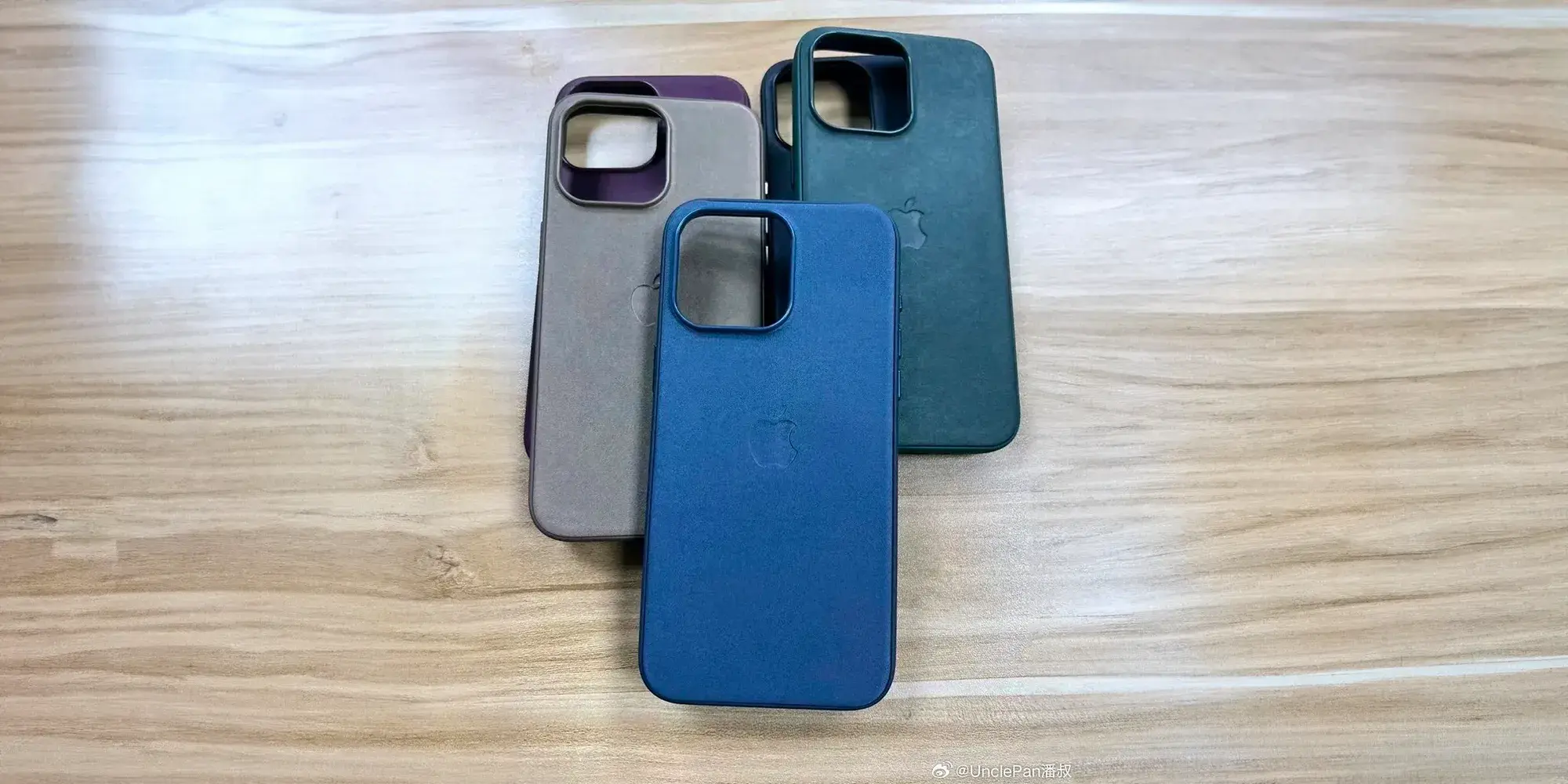
Last month, we heard from sources that Apple was going to introduce new iPhone cases made of another premium material to replace leather. Following this report, we saw images showing what would be Apple’s new “FineWoven” cases for the iPhone 15. If true, these new cases are made of a soft fabric material combined with regular silicone.
Will Apple introduce new “FineWoven” Apple Watch bands? We’ll find out the answer next Tuesday, September 12, when the company holds its special event to announce iPhone 15 and Apple Watch Series 9.
Some of the Apple Watch bands are currently unavailable ahead of Series 9 launch
Apple this week confirmed that it will hold a special event on September 12. Although the company never reveals in advance what will be announced at the event, we all know at this point that Apple will introduce the iPhone 15 lineup and also the Apple Watch Series 9, along with a new Apple Watch Ultra. And to corroborate the upcoming arrival of new Apple Watches, some watch bands are currently unavailable on Apple’s website.
New Apple Watch bands coming soon
As noted by Parker Ortolani, all four versions of the Apple Watch Link Bracelet are now unavailable online in the United States. Confirmed that the Modern Buckle bands and some of the Hermès models are also sold out. While you can still find these watch bands in stock in some of the Apple Retail Stores, this may not last long.
All four versions of the Apple Watch link bracelet are now unavailable online in the US. Handful of retail stores seem to still have stock. But they're sold out otherwise.
Typically, Apple introduces new bands with the launch of a new Apple Watch – so that’s why some bands sell out before a new Apple Watch is announced. But in this case, there’s one thing to keep in mind.
What Apple usually does is introduce new colors for existing watch bands. When it comes to the Link Bracelet, which is made of stainless steel and is only available in silver and space black, the fact that it is now sold out suggests that the Link Bracelet could be discontinued for good – these watch bands have been available since the very first Apple Watch.
Another possibility is that Apple will replace the Link Bracelet with a new, more modern version (since the current version was still made with the 38/42mm Apple Watches in mind) or simply relaunch it in new shades of silver and black.
Apple Watch Series 9 rumors
According to the rumors, the Apple Watch Series 9 won’t exactly be an exciting update. The new model will have a faster chip, but that may be the only new feature of this year’s Apple Watch. Apple also plans to introduce a new Apple Watch Ultra with the same faster chip. Other than that, both models will keep the same design as the current versions.
Apple reportedly considered introducing a new watch band mechanism with the Apple Watch Series 9, but the company is said to have postponed this change for a redesigned Apple Watch coming next year.
As for current Apple Watch bands, you can still find the Link Bracelet for sale on Amazon – at least for now.
Select Apple Watch Series 9 models will be first Apple products made with 3D printing process
Apple has been rumored to be considering 3D printing as part of its product design process, and a new report details how and when that change will happen. Mark Gurman at Bloomberg reports that Apple will deploy its first use of 3D printing as a test run of sorts with certain models of the upcoming Apple Watch Series 9.
Apple Inc. is testing the use of 3D printers to produce the steel chassis used by some of its upcoming smartwatches, according to people with knowledge of the matter, heralding a major change to how the company manufactures products.
The technique would obviate the need to cut large slabs of metal into the product’s shape.
The move is intended to both increase the speed at which product assembly can occur while decreasing the amount of environmental impact, Gurman reports. The report goes on to detail the process known as binder jetting:
The print is made with a powdered substance, which afterward goes through a process called sintering. That uses heat and pressure to squeeze the material into what feels like traditional steel. The exact design and cutouts are then milled like in the previous process.
The report emphasizes that not all Apple Watch Series 9 models will be made using the new 3D printing process. Apple is expected to contain the test run to select stainless steel models, which make up a minority of the watch hardware.
Supply chain analyst Ming Chi Kuo highlighted various firms involved in the 3D printing effort in July. Kuo pointed to the Apple Watch Ultra 2 as being the first product to use 3D printed device components, but Gurman reports that the Ultra watch casing itself won’t adopt the process until next year at the earliest.
Apple will announce the new Apple Watch Series 9 and Ultra 2 at the iPhone 15 event scheduled for September 12. Apple officially announced the event date on Tuesday, although
The Bloomberg piece also mentions Apple’s plans to drop leather from its phone case in favor of a new material, as we’ve been covering. Read the full report on Apple’s test run with 3D printing from Bloomberg here.
Rumor: Apple Watch Series 9 to be available in new color option alongside black titanium Ultra
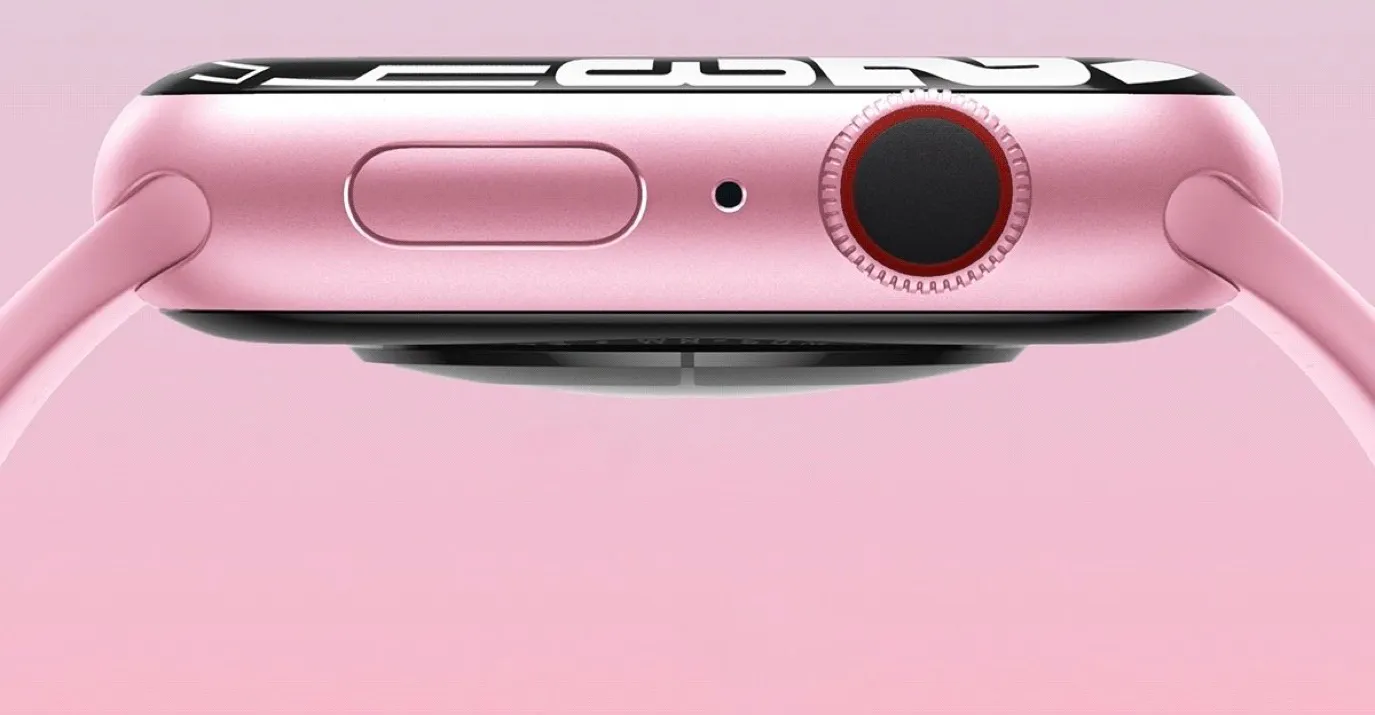
A new rumor today offers additional details about what to expect from this year’s updates to the Apple Watch lineup. For the Apple Watch Series 9, Apple is reportedly planning a new “pink” color option while the Apple Watch Ultra 2 will allegedly be available in a new black titanium color option.
The rumors come via ShrimpApplePro on Twitter, an account that has previously leaked accurate information about unreleased Apple devices.
Shrimp’s update – Apple Watch Series 9 Well, i wish i can see anything that is new outside but it looks the same
Added a pink color along with the other 4 colors with the same case material. There is a new box this time (better than nothing) more compact box. New chip i guess. pic.twitter.com/rh95TNuady
The source corroborates previous reporting from Bloomberg and says that the Apple Watch Series 9 (and presumably the Apple Watch Ultra 2) will be powered by a new processor for the first time since the Apple Watch Series 6. Bloomberg has previously said that this processor will offer a notable boost in performance.
In addition to the existing midnight, starlight, silver, and (PRODUCT)RED color options, ShrimpApplePro also says that the Apple Watch Series 9 will be available in a new “pink” color option. Stainless steel color options will remain the same, including gold, graphite, and silver.
The Apple Watch Series 9 will also reportedly use smaller packaging this year, presumably as part of Apple’s efforts to continue being more environmentally conscious.
Over the weekend, Bloomberg reported that Apple tested a black titanium color for the Apple Watch Ultra last year, but scrapped those plans. Bloomberg suggested the black titanium color could resurface this year with the second-generation Apple Watch Ultra, which ShrimpApplePro now echoes. “I can confirm this year we will have the black titanium this year along with the current standard titanium,” they posted on Twitter.
– Apple Watch Ultra 2 Same design. And I can confirm this year we will have the black titanium this year along with the current standard titanium. (MKBHD Edition) 🗿 pic.twitter.com/zxsVu0TYKX
And finally, ShrimpApplePro also reports that there’s “at least one new iPad coming,” which they say is likely the iPad mini 7. Since its redesign in September 2021, the iPad mini hasn’t received any updates, and rumors about a future generation have been sparse.
The most important questions to ask about the Apple Watch Series 7 aren’t about the Apple Watch Series 7, they’re about the Apple Watch you may already have.
That’s a gentle way of saying that if there’s nothing wrong with your current watch, there’s nothing in the Series 7 that should compel you to upgrade. If you’ve been waiting for some key features before buying your first Apple Watch.
The Apple Watch Series 7 is great. The larger screen and faster charging are the two headline features and both are welcome. The Apple Watch is in a class entirely of its own right now. Nothing else is as good for iPhone users and nothing like it is available for Android users.
Apple Watch design and screen
The Apple Watch Series 7 didn’t get a major redesign when launched. Instead, it looks almost identical to previous Apple Watches and maintains compatibility with all previous Apple Watch straps, although there are incredibly subtle changes in its overall size and curves.
There are new colour options available, including midnight (which apparently has a hint of blue in it), starlight (a cross between silver and gold), and dark green. Apple sent me the green one and in most light, it just looks grey — but every now and then it’ll pop and look visibly green.
The biggest change is the screen; it’s 20 per cent larger than the last few iterations of the Apple Watch. It does the thing all screen upgrades tend to do: make the older screen with its larger bezels look small.
When Apple first made the screen bigger way back on the Apple Watch Series 4, Some thought it made an appreciable difference in the experience and would even be worth upgrading for. Here, on the Series 7, Some just think the screen is really nice and looks better, but isn’t enough to justify an upgrade.
Apple has kept the always-on screen and says that it is brighter in ambient mode when indoors. That is: the overall max brightness hasn’t changed, but when you’re inside, the screen should look a little less dim.
The other design change on the Series 7 is that it’s more durable. The front crystal on all models is thicker and stronger against cracking. (It’s also more refractive, so you can catch a glimpse of some pixels at extreme angles.) The whole watch adds IP6X dust resistance for the first time and maintains the same water resistance to 50 meters.
Apple didn’t add any new health sensors to the Series 7. It still tracks heart rate and has a blood oxygen monitor and EKG. None of these sensors should be used for diagnostic purposes as the Apple Watch is not a medical device.
Apple Watch charging and battery
Apple is still targeting 18 hours of battery life on the Apple Watch Series 7. It’s enough to get through a day — maybe two if you turn off the always-on screen and don’t work out. In my tests, those numbers are borne out. I need to charge the Series 7 only a little less often than I need to charge my old Series 5 (which is starting to lose its battery capacity a bit).
Wish Apple had done more to improve battery life on the Series 7, especially since this is technically a redesign. Would have even taken the same size screen as last year’s model if it had meant getting longer battery life instead. There’s nothing wrong with the Apple Watch’s battery life, but I do wish that it aimed higher like the new iPhones did this year.
Instead, we got faster charging thanks to a redesigned charging puck that also uses USB-C. Lots of people have those wall adapters but may need to pick up a second one (or a multi-charger) since it’s not included in the box. (As an aside, the actual plug part of the Apple Watch charger is longer now, which Apple says is to manage heat.)
The charging is faster. Apple claims it’s 33 percent faster than the older cable and that sounds right to me. I have been able to juice up 20 per cent in just ten minutes several times and it has been easier to top off to a full charge in the morning while I putter around with coffee and breakfast. It makes it slightly more convenient to use the watch for sleep tracking since it’s easier to fit a quick charging session in.
Still and all, We would have preferred standard Qi charging to faster charging (if we had to choose). Qi charging mats are cheap and plentiful now, but integrating an Apple Watch charger adds cost and complexity. Older Apple Watch chargers will work just fine with the Series 7 but at a slightly slower charging speed.
WatchOS 8
There are a few features in WatchOS 8 that are exclusive to the Series 7, ostensibly because its larger screen makes them possible. The watch can fit just a little more text when reading a message, for example.
The two watch faces custom to the Series 7 are called “Contour” and “Modular Duo.” The former just put numbers out on the edges of the screen and would apparently look bad on screens with larger bezels, while the latter allows you to have two full-width complications stacked instead of just one.
The larger screen also allows for a new text-entry option: a miniature keyboard. You can tap or swipe on it and as long as autocorrect is doing its thing correctly, it works fine. It’s about as good as any smartwatch keyboard I’ve used, but still, others prefer dictating messages via Siri whenever possible.
Those are the Series 7-specific features, but WatchOS 8 has a few more things worth covering. It’s able to auto-detect outdoor bike workouts — and in testing, it managed to do that very well, even when I was hitting stoplights at every block. Wish Apple would make it easier to integrate the Watch’s workout data with cadence or power sensors on a bike, but cyclists are still on their own to figure out how to do that.
Apple says it’s also adjusting your calorie metrics if the watch believes you’re riding an e-bike. There’s no setting for it, it just detects if your heart rate is suspiciously low and your speed is remarkably high as you cruise up a hill. There’s also no indicator in your results if your calorie metrics were adjusted.
WatchOS 8 has a redesigned photos app and lets you send photos directly from the watch. It has an updated “Mindfulness” app with a “Reflect” feature that gives you some kind of prompt to meditate on, like “Recall a challenge you’ve overcome” and “Think about what sparks your creative energy.” As you can probably tell from the unnecessary scare quotes in the previous sentence, I don’t like it. I think meditation is a deeply personal — and for many people spiritual or religious — thing, and so I recoil whenever I see tech companies reducing the practice down to anodyne apps.
I’ve left the best for last: the Apple Watch lets you set multiple timers. You can set them in the timer app. You can set them with Siri. You can use Siri to name each timer. You can see all your timers stacked one after the other. It’s magical. It’s wonderful. It’s hilarious that it took until 2021 to make this happen and even more hilarious that the iPhone itself still can’t do it.
Seriously, though, multiple timers on the Apple Watch are great, especially for cooking. It means I don’t need to stay within earshot of the smart speaker in my kitchen if I’ve got something in the oven.
As what have said this every year for several years now because it’s true every year: the Apple Watch is the best smartwatch for iPhone users, by far. There are fitness trackers that fulfil niches not filled by the Apple Watch like Garmins for more serious athletes or Fitbits for people who want something simpler. But as a general computer-on-your-wrist, the Apple Watch Series 7 is challenged only by older Apple Watches.
If you have one of those older Apple Watches, I don’t think there’s anything here that should compel an upgrade. All the new features are very nice but not necessary. If there is something that’s bothering you about your current watch, then by all means go for it if you can afford it. Also, while the Series 3 is still kicking around for cheap, I don’t think it’s a great buy anymore. The Apple Watch SE is a better value.
There’s no reason that we should have an expectation of major year-on-year updates for the Apple Watch. These smaller iterations might not be what we’ve been hoping for — a big redesign with much more battery — but that doesn’t make the Series 7 bad on its own merits.
It’s a great watch — again, the best smartwatch. If it’s time for you to replace your watch (or buy your first one), you’ll love it. If it’s not time to replace your watch, it’s not time to replace your watch.
Apple released watchOS 9.6.1 for Apple Watch users on Tuesday but without an accompanying iOS 16.6.1 update. A new rumor today suggests that Apple isn’t planning iOS 16.6.1 and is instead planning to jump all the way to iOS 16.7. Simultaneously, Apple has also started ramping up iOS 17.1 testing.
watchOS 9.6.1 addresses a bug in Apple’s Movement Disorder API that had prevented access to that data by researchers and third-party applications.
Typically (but not always), when Apple releases an update for one of its platforms, it releases accompanying updates for other platforms. This is especially true for watchOS, with Apple generally trying to keep lock-step between watchOS and iOS when possible.
That being said, a new rumor today from a previously accurate source on Twitter suggests that Apple is instead planning to jump to iOS 16.7 with its next update. The company reportedly isn’t planning to release iOS 16.6.1.
There’s no word on when Apple might release iOS 16.7 to the public, and the update is not actively being beta tested with developers. Last year, the first and only iOS 15.7 beta was released alongside the final iOS 16 beta. The stable iOS 15.7 update for everyone was released alongside iOS 16 on September 12, with a handful of bug fixes and security improvements.
In recent years, Apple has allowed users to remain on a previous year’s iOS release instead of immediately updating to the new version. For example, Apple actively encouraged users to update to iOS 15.7 rather than iOS 16 on day one last year.
iOS 17.1 testing ramps up
As of right now, there’s no evidence of iOS 16.7. This will likely change as we inch closer to a release sometime next month.
Interestingly, there has been a subtle uptick in iOS 17.1 users on over the last several weeks. iOS 17.1 could potentially add some of the features that aren’t included in the iOS 17 initial release, such as the new Journal app, additional AirDrop improvements, and collaborative playlists in Apple Music.
Last year, iOS 16.1 was released on October 24 with new features including iCloud Shared Photo Library, Live Activities for third-party apps, key sharing in the Wallet app, and more.
Apple releases watchOS 9.6.1 update for Apple Watch users
Apple is rolling out a new software update to Apple Watch users ahead of watchOS 10’s launch in September. Starting today, watchOS 9.6.1 is rolling out with a fix for the Movement Disorder API.
This update includes a fix for an issue that prevents access to motion data for apps that use the Movement Disorder API to track tremors and symptoms associated with Parkinson’s disease.
The Movement Disorder API was first launched in 2018 as a way for developers to offer passive, all-day monitoring via an Apple Watch. The API is able to monitor two common symptoms of Parkinson’s, including Tremors, indicated by shaking and quivering detected by the Apple Watch. The API can also monitor for Dyskinesia, a side-effect of treatments for Parkinson’s that causes fidgeting and swaying motions in patients.
The bug in watchOS 9.6 prevented third-party apps from accessing this data. Apple says the issue has been rectified with today’s release of watchOS 9.6.1.
You can update your Apple Watch by going to the Apple Watch companion app or to the Settings app on the Apple Watch itself. The build number for watchOS 9.6.1 is 20U80.
As of right now, there’s no sign of other updates from Apple, including iOS 16 and macOS Ventura. We’ll be sure to let you know if any other updates are released today.
From a functionality and usability standpoint, smartwatches shouldn’t be miniature phones. Interactions should last seconds, with UI elements large and information highly glanceable, given the very physical constraints of a small screen size. One way modern apps abide by those tenets is in keeping to a single scrollable feed of content, while earlier apps opted for side-by-side windows/feeds that were roughly analogous to bottom bar tabs.
Wear OS 3 does a good job following those principles, and it’s very simple to use and pick up. In comparison, the Apple Watch tried to pack in too much, and it’s felt quite crufty for several generations now.
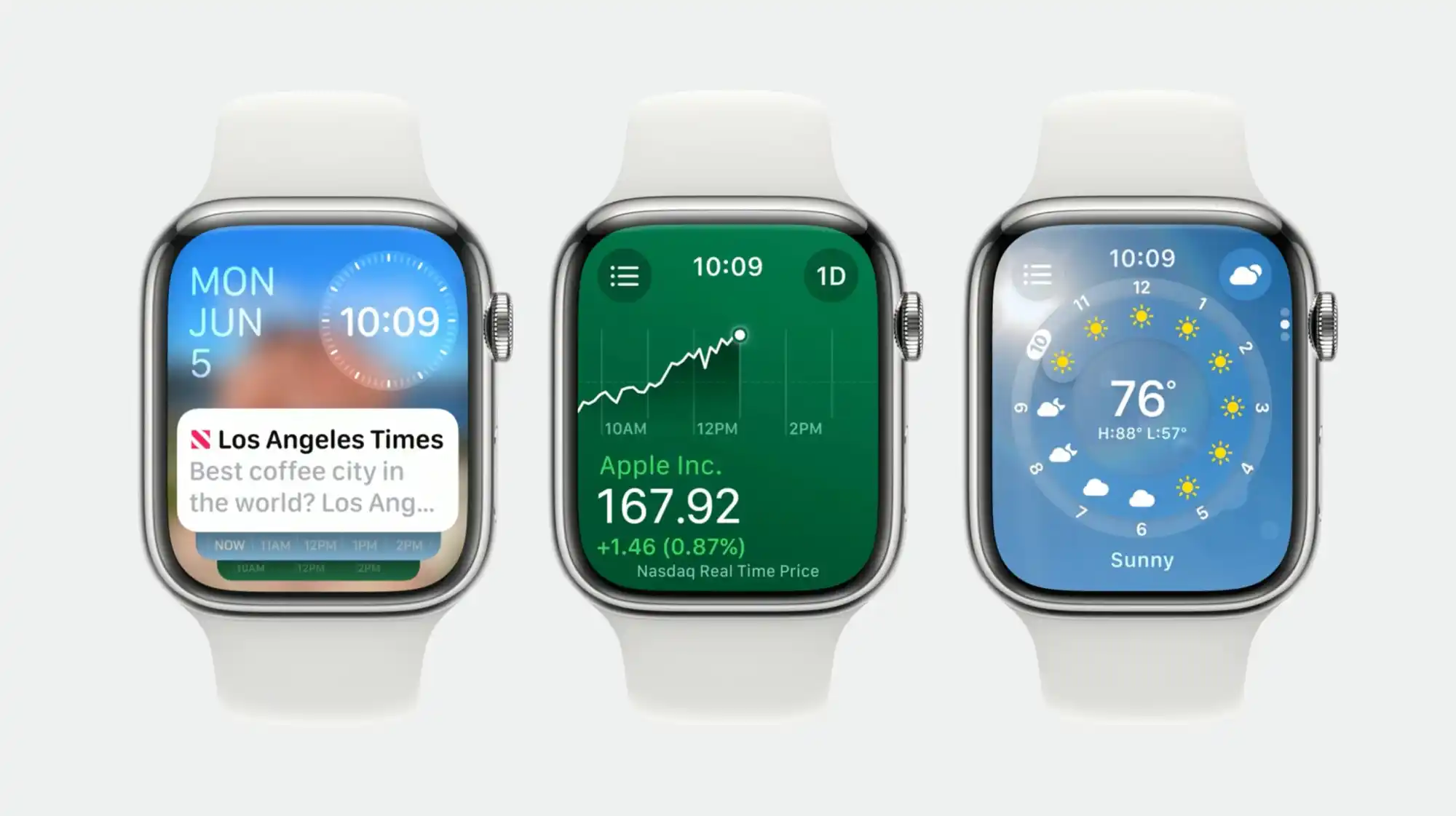
With watchOS 10, Apple has done a thorough redesign and created a design system for wearable apps. Info-dense applications don’t feel cramped, and it’s very obvious where to press. It works so well that I’m rethinking my expectations for what a watch app can be.
This layout/template works because it uses all the available space. It comes down to the Apple Watch being a rectangle and Wear OS watches being circular. The circle, while iconic and a point of pride for Google in designing the Pixel Watch, is constrained in terms of text layout and button placement.
The only Wear elements that really curve are the time and maybe watch faces that mimic analog clocks. Within the circular container, something like text and other graphics can only be placed in a square to ensure nothing gets cut off. The semicircle endcaps of a pill-shaped card do take up the left and right of the screen, but there’s no information placed there.
With watchOS 10, you’re able to place two in the top-left (back button or new message button) and right corners (now playing, etc.), while some apps even have FABs. It’s highly efficient, and the consistency trains users on where to tap.
Wear OS buttons cannot be placed in non-existent corners. For example, Messages’s Start chat button takes up a full line and is given equal importance to a conversation. The solution there would be a smaller button, like the one used for search by the Play Store. Another idea would be for apps to place vertical versions of those pill-shaped buttons on the left and right sides.
Meanwhile, the Apple Watch’s upcoming widget system is remarkably dense. In Wear OS, Tiles take up your entire screen and usually just show one piece of information. On watchOS 10, you can view two cards per screen, including heart rate with history, activity, sunset/sunrise, audio controls, timers, a compass, and much more.
This approach is so much better and is in large part due to Apple making it so that a swipe up from the watch face gives you widgets. Previously, that gesture took you to Control Center, which is now a side button press. (It’s annoying, as I think physical button presses are much less immersive.)
On Wear OS, Tiles are left/right swipes that eventually return you to the watch face. A swipe up on Google’s platform takes you to a notifications feed.
I think the approach Apple arrived at is so good that Google should consider changing its own. It makes more sense for notifications to be fullscreen, like Tiles currently, to show as much information as possible before you have to open it. An upward swipe for multiple widgets and/or mini-Wear OS Tiles would be highly glanceable.
Meanwhile, Wear OS could even consider placing circular complications here. The clever thing Apple has done with widgets always being a swipe up away is that you can set anything as your watch face. Fun options there include Mickey and Minnie Mouse, Snoopy, and fullscreen digital and analog clocks. Previously, I opted for something with a lot of complication slots, but now I just place the info I need in the widget feed.
The Apple Watch has always done more than Wear OS, but it was presented in an overwhelming manner. Now, it’s been thoroughly refined to fit elegantly. In comparison, what Wear OS has going for it is simplicity. That’s far from bad, but it might get old fast as we inevitably come to expect more from our wearables.
Apple Watch for kids is something parents are embracing more and more. The New York Times ran a story in September 2022 about Apple Watch adoption among children as young as five. Parents are finding the Apple Watch more appropriate for kids wanting smartphones.
The Apple Watch gives kids a way to stay in touch with parents, share location, and build responsibility without the full cost and risk of a smartphone. With school out for the summer, it may be time to consider adding more connectivity without the complexity of a phone.
Apple Watch for kids
The Apple Watch gives kids a way to stay in touch with parents, share location, and build responsibility without the full cost and risk of a smartphone.
With very limited access to the web and no social media apps, the watch can be a great starter device for kids if parents are looking for a manageable way to introduce technology early.
Family Setup for Apple Watch
Apple’s Family Setup feature allows parents to set up a cellular Apple Watch SE or Series 4 and higher from their iPhone. No iPhone required for the family member.
While the monthly connection fee is typically around $10 plus fees, T-Mobile has a kid-friendly plan with unlimited calling and 500MB/month that’s half the price with auto-pay. This is convenient if you’re already a T-Mobile subscriber and want to save on a watch plan for your child.
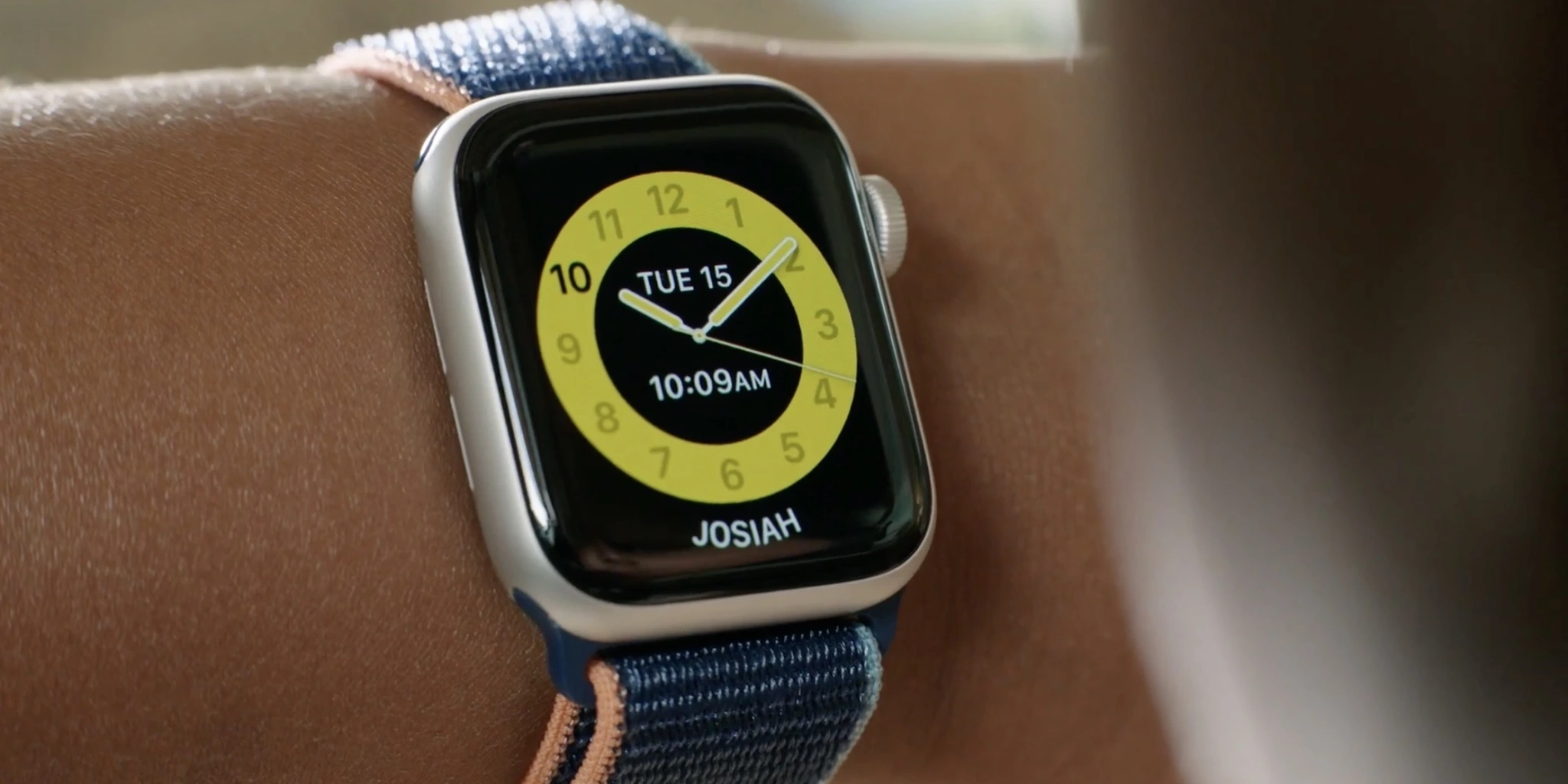
There’s even a special mode with Family Setup called Schooltime that restricts the Apple Watch during school hours. Parents can remotely manage this from their iPhone.
How to setup Apple Watch Schooltime to help improve focus
A welcome advancement for Apple Watch with watchOS 7 is Family Setup, a feature that lets an adult configure the wearable for a child who doesn’t have an iPhone. Family Setup includes multiple features to help manage your kid’s device, follow along for how to setup Apple Watch Schooltime.
Family Setup for Apple Watch is a great way to stay connected to your kids (or elderly parents) without them needing their own iPhone. And one of the new features that are focused on kids is the Schooltime mode (also available for anyone).
It allows parents to setup a school schedule for Apple Watch to remain on a simple yellow watch face that’s easy for teachers or adults to recognize and can be used whether kids are learning at home or back in their classrooms.
In addition to the yellow watch face, Schooltime mode puts on Do Not Disturb and restricts interactions to help kids (or anyone) stay focused.
What you’ll need to use Schooltime
Jump to the bottom of this post if you want to use Schooltime on your own Apple Watch.
To set it up on a child’s watch, you’ll need to be using Family Sharing and have a child’s Apple ID account setup that you’ll connect with their Apple Watch.
To use Schooltime, you need to set up your kid’s Apple Watch with Family Setup (more on Family Setup here). That requires a cellular Apple Watch Series 4, 5, 6, or SE. For the parent setting it up, you’ll need an iPhone 6s or later running at least iOS 14.
Note: You can also use Schooltime on your own Apple Watch if you are running watchOS 7.
How to setup Apple Watch Schooltime
You will get a prompt asking if you want to set up Schooltime while you’re going through the initial Family Setup, tap “Turn on Schooltime” if so (can skip to step 5 below)
If you are setting up Schooltime after Family Setup, head to the Apple Watch app on your iPhone (adult’s iPhone who did Family Setup) > Choose All Watches > Tap your kid’s watch
Tap Done, then tap Schooltime.
Tap “Turn on Schooltime”
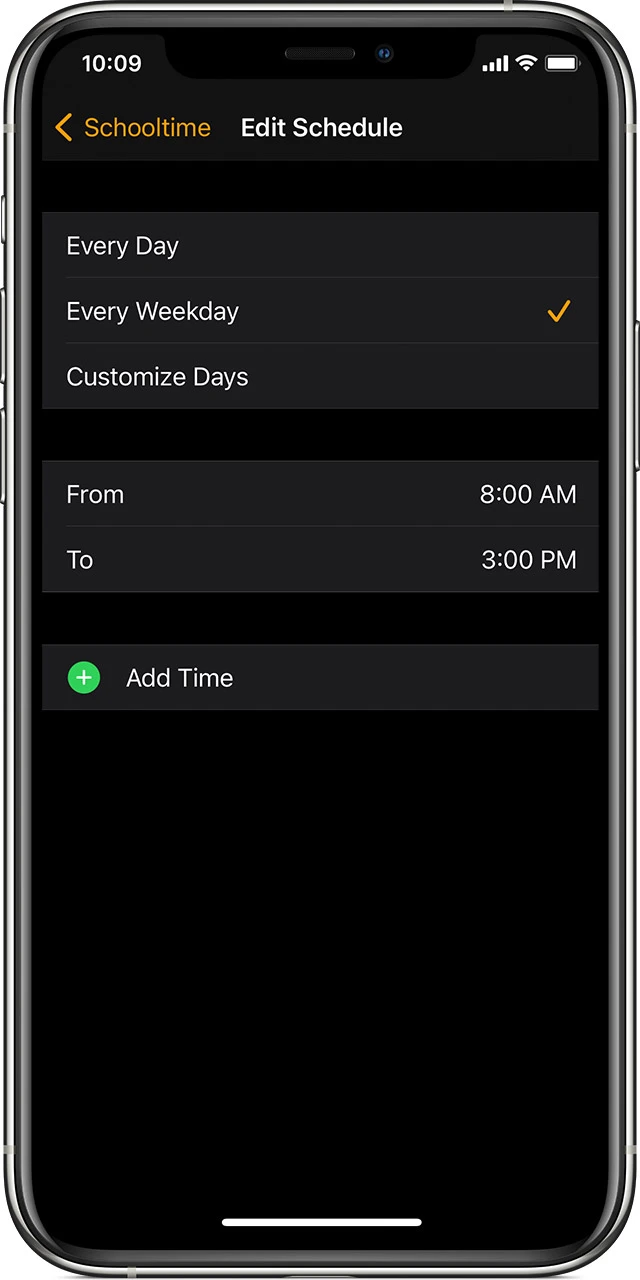
Choose “Edit Schedule”
Pick the days and times you’d like to use Schooltime for your kid
You can also choose “Add Time” to create multiple schedules like 8:00 am to 11 am — 12:00 p.m. to 3:00 pm
How to exit Schooltime
Schooltime can be exited by your child by turning their Apple Watch’s Digital Crown > tapping Exit
This is intentional by Apple so students can check Messages, Phone calls, etc.
As the parent, you can see how many times your kid has exited Schooltime during the day
Head to the Watch app on your iPhone > All Watches > Your kid’s watch > Schooltime
How to use Schooltime on any Apple Watch
If you want to use Schooltime as an alternative to Do Not Disturb or Theater Mode, you can add it to Control Center on Apple Watch
Swipe up from the bottom of your Apple Watch screen to open Control Center (can touch and hold the bottom as well)
Scroll to the bottom > tap Edit.
Tap the add button on the Schooltime button , choose Done
Now in Control Center you can tap the Schooltime button to turn it on
To exit Schooltime, turn the Digital Crown and tap Exit
Watch bands that fit kids
I happen to have a five-year-old who owns my heart. While I don’t think he’s quite ready for an Apple Watch, I was curious about watch band compatibility with kid-sized wrists. He happily let me borrow his little wrist for testing.
Any bands I already had weren’t fitting for a small wrist. Trying an Apple Watch band specifically made for kids worked great, though. For under $15, this Nike Sport style band with a buckle was a perfect fit.
Best Apple Watch prices for kids
As a trial introduction to the semi-smartphone world for kids, new Apple Watches can be a bit pricey. A new 40mm Apple Watch SE 2 with cellular goes for $299. That’s why hand-me-down watches with cellular are great for Family Setup.
Another option is shopping for second-hand Apple Watches from places like eBay, Facebook Marketplace, and Amazon’s refurbished inventory. I’ve found a 40mm cellular SE for $120 locally, and Amazon’s Renewed Store has very similar offers.
Recommended model
Just be sure to look for GPS + Cellular if you want to use Family Setup. 40mm or 41mm sizes are also more kid-friendly than 44mm or 45mm.
Also avoid Apple Watch Series 3 if you want to set up a watch for a child without an iPhone. You can find models with cellular for cheap, but they don’t receive software updates anymore. More importantly, they don’t work with Family Setup and require the wearer to have an iPhone.
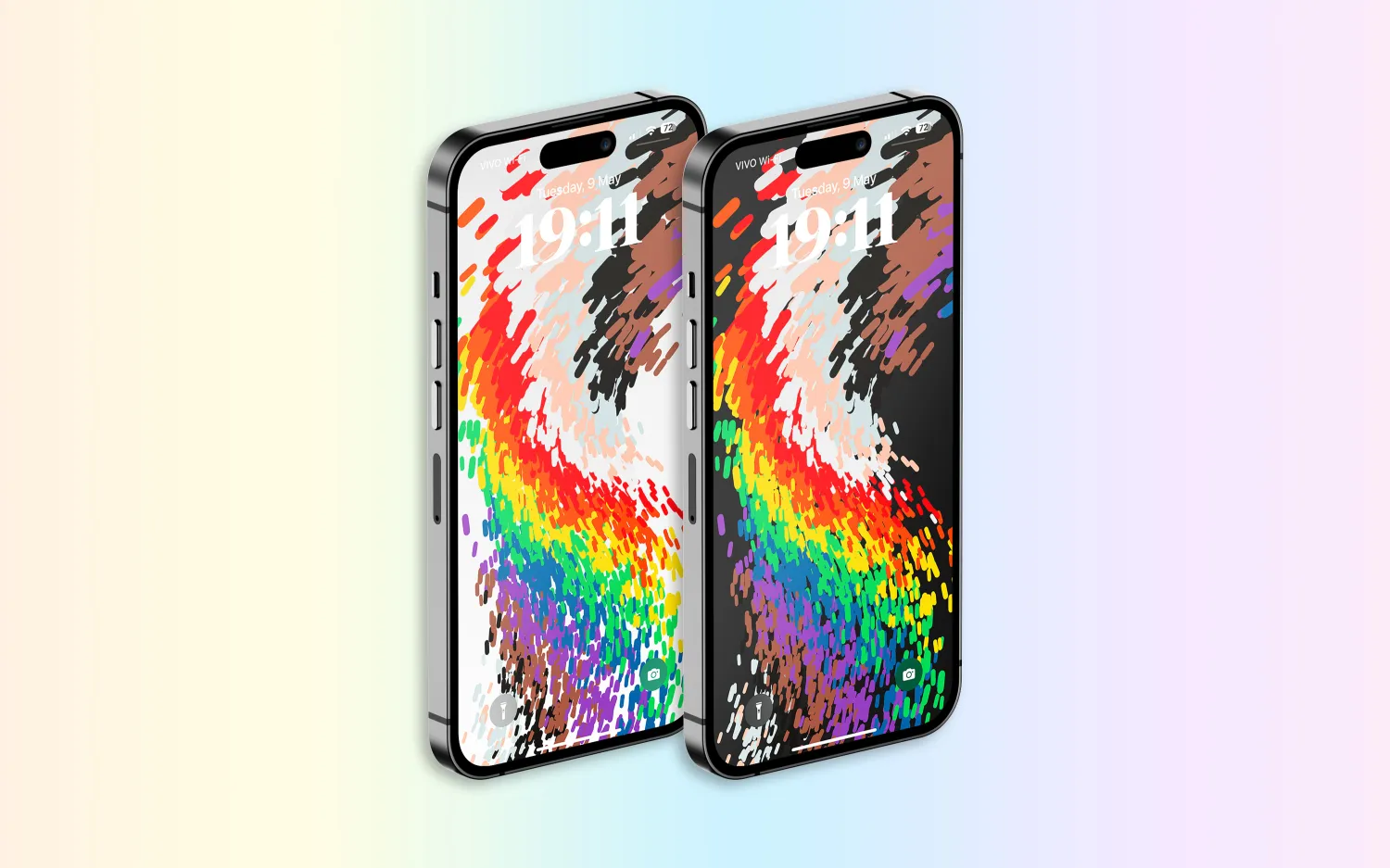
Following over a month of beta testing, iOS 16.5 is now available to the general public. This update includes changes to Apple News, the addition of a new “Pride Celebration” wallpaper, and more. Head below for the full release notes with details on bug fixes, new features, and more.
What’s new in iOS 16.5?
Here are Apple’s official release notes on iOS 16.5 new features and bug fixes. The build number for today’s update is 20F66.
A new Pride Celebration wallpaper for the Lock Screen to honor the LGBTQ+ community and culture
Sports tab in Apple News gives easy access to stories, scores, standings, and more, for the teams and leagues you follow
My Sports score and schedule cards in Apple News take you directly to game pages where you can find additional details about specific games
Fixes an issue where Spotlight may become unresponsive
Addresses an issue where Podcasts in CarPlay may not load content
Fixes an issue where Screen Time settings may reset or not sync across all devices
Earlier iOS 16.5 betas included the addition of a new Siri command for starting and stopping a screen recording. Apple removed this feature in subsequent iOS 16.5 betas, and it’s not included in the final version of the update.
iOS 16.5 will be the final major point-release update to iOS 16 before WWDC in June. This is where Apple will debut iOS 17 and release the first developer betas.
Apple is, however, expected to continue releasing updates to iOS 16 through the summer and likely even alongside iOS 17. iOS 16.6 is expected to enter beta testing soon.
You can update your iPhone by going to the Settings app, choosing General, then choosing Software Update.
watchOS 9.5 debuts with new Pride Celebration watch face
Alongside iOS 16.5, Apple has also released watchOS 9.5 for Apple Watch users today. The headlining change in this update is an all-new Pride Celebration watch face to honor the LGBTQ+ community and culture.
What’s new in watchOS 9.5?
watchOS 9.5 is rolling out now to all users. You can update your Apple Watch by going to Settings, choosing General, then choosing Software Update. You can also install the update via the Apple Watch companion app on your iPhone.
Here are Apple’s release notes for watchOS 9.5:
watchOS 9.5 includes new features, improvements and bug fixes, including a new Pride Celebration watch face to honor the LGBTQ+ community and culture.
And some more details on the new Pride Celebration watch face:
Inspired by multiple pride flags, this new watch face combines colors to represent the strength and mutual support of the LGBTQ+ movement. Mirroring the woven loops of the Sport Loop, each strand of vibrant thread contributes to the overall composition of the watch face. The colorful threads move as the Digital Crown on Apple Watch is rotated, the display is tapped, or the user’s wrist is raised.
The new Pride Celebration face included in watchOS 9.5 pairs with the similarly-designed wallpaper for iPhone users. The new wallpaper is included with iOS 16.5, which is also available starting today.
macOS Ventura 13.4 with new sports-related features
After months of beta testing, Apple has finally released macOS Ventura 13.4 to the public. The update, which is now available for macOS users, comes with new sports-related features, as well as a new system for installing beta software. Read on as we detail what’s new with macOS Ventura 13.4.
One big change coming with macOS Ventura 13.4 is the new system for installing betas that was introduced with iOS 16.4. The operating systems now asks for the Apple ID to show and download beta software updates.
macOS checks whether the account is associated with a developer or user registered in the public beta program. It then shows the beta update available for that program. With this change, regular users will no longer be able to install developer betas, for example.
macOS 13.4 full release notes
Sports feed in the sidebar of Apple News gives easy access to stories, scores, standings, and more, for the teams and leagues you follow
My Sports score and schedule cards in Apple News take you directly to game pages where you can find additional details about specific games
Resolves an issue where Auto Unlock with Apple Watch does not log you into your Mac
Fixes a Bluetooth issue where keyboards connect slowly to Mac after restarting
Addresses a VoiceOver issue with navigating to landmarks on webpages
Fixes an issue where Screen Time settings may reset or not sync across all devices
You can install macOS Ventura 13.4 by going to the Software Update menu in the System Settings app. It may take a while before the update shows up on your computer; make sure that your Mac is compatible with macOS Ventura.
The update build number is XXXXX.
OpenAI launches free ChatGPT for iPhone app with Whisper support and more
OpenAI has announced that it is releasing a dedicated iPhone app for its ChatGPT service. The app, which is available via the App Store, gives users the ability to use ChatGPT through a native app on their iPhone. The app is free to download and includes no ads. It’s currently only available in the United States, but OpenAI says availability will expand “in the coming weeks.”
ChatGPT for iPhone now available
As announced by OpenAI in a blog post, ChatGPT for iPhone will offer the same set of features as the web version of the service. This will include ChatGPT Plus support, which lets users subscribe to pay for more advanced versions of the service.
The app will also sync your ChatGPT history across all your devices, including the web. It also includes support for Whisper, OpenAI’s open-source speech-recognition system. This integration with Whisper enables voice input for the ChatGPT app on iPhone. The ChatGPT app is also completely ad-free.
As ChatGPT has gained popularity over the last six months, a number of copycat and scam apps have surfaced on the App Store. Apple has cracked down on these apps, in part by blocking apps that use “GPT” in their name. By releasing its own version of ChatGPT for iPhone, OpenAI hopes to directly control the experience of using the service on an iPhone.
Additionally, Microsoft’s Bing app for iPhone has seen a major boost in popularity since it added ChatGPT integration.
ChatGPT for iPhone is rolling out starting today to users in the United States. OpenAI availability will “expand to additional countries in the coming weeks.”
Apple has been beta testing iOS 16.5 and other software updates since March, and now it seems that these updates are about to be released to the public. Ahead of the official release next week, the company is now rolling out iOS 16.5 RC, iPadOS 16.5 RC, tvOS 16.5 RC, watchOS 9.5 RC, and macOS 13.4 RC to developers and public beta users.
A RC or Release Candidate build is usually released to developers days before its official release to the public to ensure that the software has no major bugs.
What’s new in iOS 16.5 RC?
iOS 16.5 RC will be available today to registered developers and beta testers. As the update rolls out over the air within the next hour, you’ll be able to install it by going to the Settings app, choosing General, then choosing Software Update. RC’s build number is 20F65.
As attention starts to shift to iOS 17, which will be introduced next month at WWDC, iOS 16.5 doesn’t include many notable changes.
iOS 16.5 adds new screen recording commands to Siri, which allows you to start or stop a screen recording using the virtual assistant. The update also adds a dedicated Sports tab to the Apple News app, something which has been highly requested among sports fans in the past.
iOS 16.5 RC full release notes:
A new Pride Celebration wallpaper for the Lock Screen to honor the LGBTQ+ community and culture
Sports tab in Apple News gives easy access to stories, scores, standings, and more, for the teams and leagues you follow
My Sports score and schedule cards in Apple News take you directly to game pages where you can find additional details about specific games
Fixes an issue where Spotlight may become unresponsive
Addresses an issue where Podcasts in CarPlay may not load content
Fixes an issue where Screen Time settings may reset or not sync across all devices
macOS Ventura 13.4 and watchOS 9.5
One big change coming with macOS Ventura 13.4 and watchOS 9.5 is the new system for installing betas that was introduced with iOS 16.4. Both operating systems now ask for the Apple ID to show and download operating system beta updates.
The system checks whether the account is associated with a developer or user registered in the public beta program. It then shows the beta update available for that program. With this change, regular users will no longer be able to install developer betas, for example.
macOS 13.4 full release notes:
Sports feed in the sidebar of Apple News gives easy access to stories, scores, standings, and more, for the teams and leagues you follow
My Sports score and schedule cards in Apple News take you directly to game pages where you can find additional details about specific games
Resolves an issue where Auto Unlock with Apple Watch does not log you into your Mac
Fixes a Bluetooth issue where keyboards connect slowly to Mac after restarting
Addresses a VoiceOver issue with navigating to landmarks on webpages
Fixes an issue where Screen Time settings may reset or not sync across all devices
watchOS 9.5 full release notes:
watchOS 9.5 includes new features, improvements and bug fixes, including a new Pride Celebration watch face to honor the LGBTQ+ community and culture.
tvOS 16.5
For Apple TV users, tvOS 16.5 introduces a new Multiview feature for sports. Multiview allows users to watch up to four games at the same time in a split-screen interface. Start watching a game, and then within a video player, use the Add Game button to add another stream alongside it. The feature only works with games streamed by Apple through the TV app.
Along with tvOS 16.5 RC, Apple is also rolling out HomePod Software 16.5 RC. According to Apple, the updates will be released to the public next week.
Hands-on with the new Multiview feature for Apple TV sports streams
With tvOS 16.5 beta, Apple is testing a new feature for the Apple TV app on the Apple TV 4K set-top box: the ability to watch more than one game at a time.
Multiview allows users to watch up to four simultaneous streams at once. The feature is available for live sports streamed through the TV app, like MLB Friday Night Baseball and MLS Season Pass …
The feature is available when multiple sports are live at the same time on the Apple TV service — right now that means MLB Friday Night Baseball and Major League Soccer. Apple is rumored to be in talks to get rights to other sports streaming packages in the future.
I tried out Multiview last night with Saturday’s MLS games. MLS Season Pass currently schedules about six games each weekend with overlapping start times, so something like Multiview is essential if you are a fan of multiple teams playing on the same night.
To enter Multiview mode, start watching a sports stream in the normal full-screen player. When Multiview is available, a grid icon will appear in the controls toolbar above the scrubber.
Clicking this button minimises the video into a smaller floating window. Below, the UI presents a strip of other games to watch that are currently live. Select one of these games and it is added to the Multiview grid. Swipe up to remove the games strip and maximise with the streams of both games playing side-by-side.
You can see live video of both games at once, but you only hear the audio track of the video that is currently focused; the other is muted. Swipe on the Siri Remote to change which video you are hovering over to select the current audio source. Click on a video to temporarily take it full screen. When you press the Back button on the remote, the app returns to Multiview.
With Multiview, you can watch up to four games at once. When two or four games are active, a selector appears between the video preview and the games bar that lets you customize the arrangement of the grid. Switch between a symmetric grid or a layout where one video is larger than the others.
In practice, it all works well with smooth animations and intuitive gestures to control the action. For a feature that packs in as much complexity as it does, it feels simple. Frankly, it is harder to find a live game in the first place to serve as the entry point — the Apple TV app could really benefit from a dedicated Live tab to bring together everything live to watch right now, in a cohesive fashion.
As you might expect from a beta feature, I experienced a couple of minor bugs during testing. Sometimes, the audio or video of one stream would cut out altogether. Removing and re-adding the game would resolve it. Also, a wonky UI thing is that when you hover over a video, the interface suggests pressing the TV button on the remote to reveal some more options, similar to how you control Picture-in-Picture on Apple TV. However, pressing said TV button would simply close the app and take me back to the system’s home screen app grid. This seems like something that either hasn’t quite been finished yet, or leftover remnants of an earlier prototyped design.
The 16.5 beta cycle is ongoing and there’s time for these things to be fixed up before the 16.5 software update ships to customers. Apple hasn’t even confirmed if Multiview will launch with the 16.5 release; it could be pushed to a later version. It’s also not clear if this is intended as an Apple TV exclusive feature, or whether it will roll out to other platforms in the future.
Apple expands new method for installing beta updates to macOS and watchOS
Apple has introduced a new system for distributing beta software with iOS 16.4, which now checks whether the user’s Apple ID is participating in the Apple Developer Program or the Apple Beta Software Program. This system is now being expanded to the Mac and Apple Watch with macOS Ventura 13.4 and watchOS 9.5.
Apple is changing how users and developers install beta software on macOS and watchOS
As noted by 9to5Mac, both operating systems now ask for the Apple ID to show and download operating system beta updates. Just like in iOS 16.4 and later, the system checks whether the account is associated with a developer or user registered in the public beta program. It then shows the beta update available for that program.
Previously, anyone could install betas of iOS, macOS, and watchOS by having the right beta profile. But with this change, regular users will no longer be able to install developer betas, for example. Users who are not registered for the program will only have the option of installing public beta software.
According to Apple, the new system will become the only way to install beta software in the future. Here’s what the company said back in February:
Beginning with iOS & iPadOS 16.4 beta, members of the Apple Developer Program will see a new option to enable developer betas directly from Software Update in Settings. This new option will be automatically enabled on devices already enrolled in the program that update to the latest beta release.
Your iPhone or iPad must be signed in with the same Apple ID you used to enroll in the Apple Developer Program in order to see this option in Settings. In future iOS and iPadOS releases, this new setting will be the way to enable developer betas and configuration profiles will no longer grant access.
More about betas
Apple released iOS 16.5 beta 2 along with new betas of watchOS 9.5, tvOS 16.5, and macOS 13.4 on Tuesday. While iOS 16.4 introduced many new features, iOS 16.5 seems to be more focused on bug fixes. Still, the update adds new screen recording commands to Siri and a dedicated Sports tab to the Apple News app.
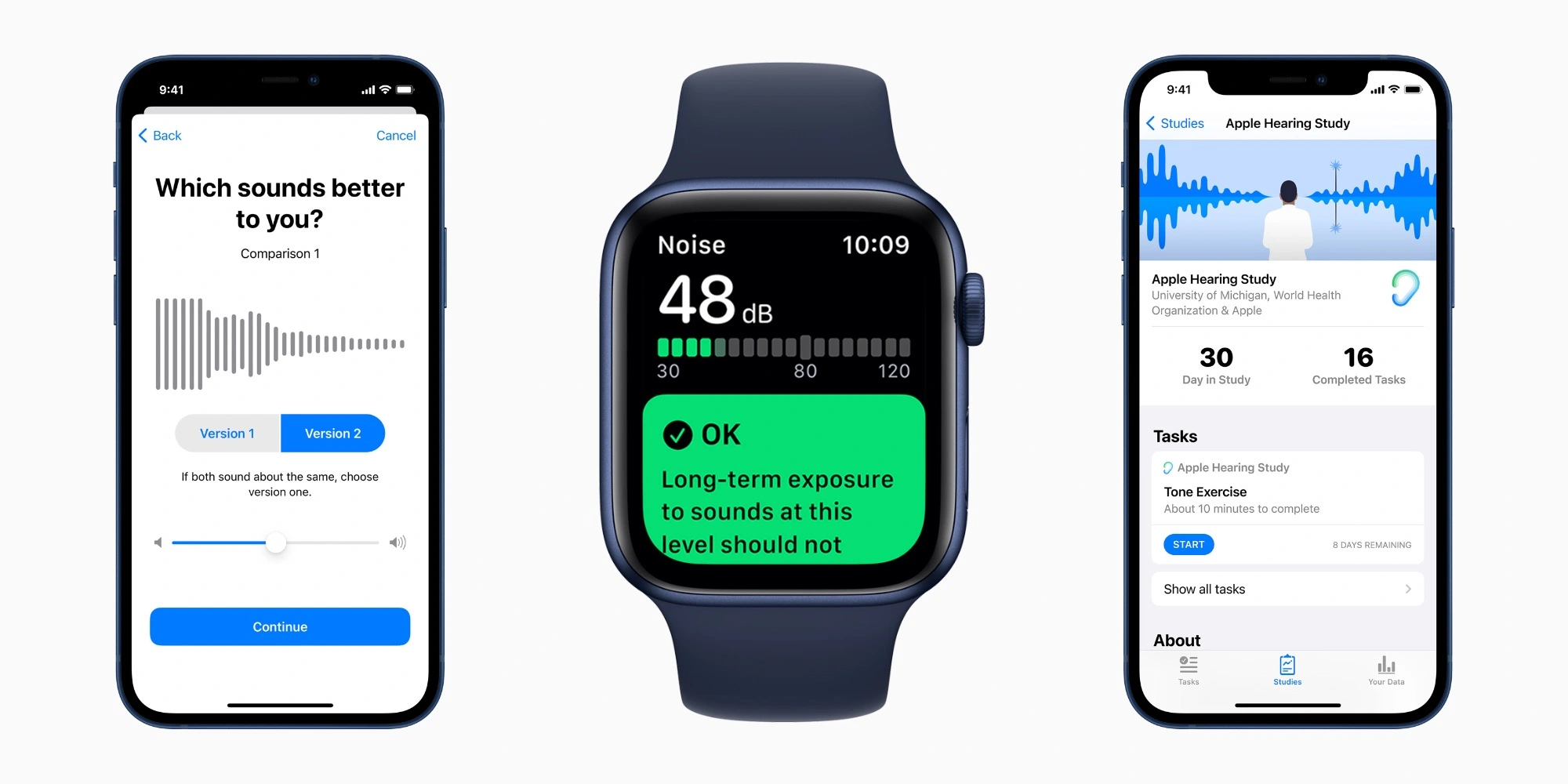
Back in 2019, Apple announced three new health research studies based on data collected from the iPhone and Apple Watch. To coincide with International Noise Awareness Day on April 26, the company shared updates on its Hearing Study conducted in partnership with the University of Michigan.
Apple launching three new research studies including hearing, cycle tracking, heart, and movement
Apple has announced three new health studies powered in part by the Apple Watch. Three new studies include hearing, cycle tracking, heart, and movement research. Apple is also launching a new Apple Research app for enrolling in each study.
Apple announces three groundbreaking health studies
UPDATE September 10, 2019
In Collaboration with Leading Medical Institutions, Apple to Examine Hearing, Women’s, Mobility and Heart Health
The new Research app displaying healthy study enrollment options on iPhone. Three new studies, available on the Research app later this fall, will explore new areas of medical research. Apple today announced three unprecedented medical studies, in partnership with leading academic and research institutions, that will reach more participants than has ever been possible. The studies will be available on the new Research app,1 which democratizes how medical research is conducted by bringing together academic medical institutions, healthcare organizations and the Apple products customers already make a part of their everyday life. Participants will contribute to potential medical discoveries and help create the next generation of innovative health products. The Research app will be available as a free download in the App Store later this year.
“With the Apple Heart Study, we found that we could positively impact medical research in ways that help patients today and that make contributions that will benefit future generations,” said Jeff Williams, Apple’s chief operating officer. “Today’s announcement carries our commitment to health even further by engaging with participants on a larger scale than ever before.”
A heart rate reading displayed on Apple Watch Series 5. The Apple Heart and Movement Study will look into the connection of heart health and mobility signals, like walking pace. The studies include:
Apple Women’s Health Study: In partnership with Harvard T.H. Chan School of Public Health and the NIH’s National Institute of Environmental Health Sciences (NIEHS), Apple has created the first long-term study of this scale focused on menstrual cycles and gynecological conditions. This study will inform screening and risk assessment of conditions like polycystic ovary syndrome (PCOS), infertility, osteoporosis, pregnancy and menopausal transition. Apple Heart and Movement Study: Apple is partnering with Brigham and Women’s Hospital and the American Heart Association on a comprehensive study of how heart rate and mobility signals — like walking pace and flights of stairs climbed — relate to hospitalizations, falls, heart health and quality of life in order to promote healthy movement and improved cardiovascular health. Apple Hearing Study: Alongside the University of Michigan, Apple is examining factors that impact hearing health. The Apple Hearing Health Study is the first of its kind to collect data over time in order to understand how everyday sound exposure can impact hearing. The study data will also be shared with the World Health Organization (WHO) as a contribution toward its Make Listening Safe initiative. The new Cycle Tracking app on Apple Watch Series 5. The Apple Women’s Health Study will explore gynecological conditions on an unparalleled scale. Apple’s support of the medical research community began with the introduction of ResearchKit and CareKit, which expanded the pace and scale at which healthcare could be studied and provided. Apple used ResearchKit to create the Apple Heart Study, which was the largest study of its kind and illustrated the impact virtual, large-scale studies can have on medical research by examining atrial fibrillation to provide validation for the irregular rhythm notification feature on Apple Watch.
“Women make up half of the world’s population, yet even today there has been limited investment in studying their unique health needs,” said Michelle A. Williams, a reproductive epidemiologist and dean of the faculty at the Harvard T.H. Chan School. “This study, unprecedented in scope, will greatly advance our understanding of the biological and social determinants of women’s health, and lead to better health outcomes.”
“This is an exciting opportunity for NIEHS researchers to contribute to the study design and use the resulting data to answer novel questions, not only important to women of reproductive age, but to women of all ages,” said Dale Sandler, Ph.D., chief of the NIEHS Epidemiology Branch.
“We are excited to be working with all the study participants and with Apple to identify the features of complex human physiology that lead to different outcomes in wellness or chronic disease, and to use this information to empower individuals to maximize their own health,” said Calum MacRae, the vice chair of Scientific Innovation for the Department of Medicine at Brigham and Women’s Hospital and associate professor of Medicine at Harvard Medical School.
“At the American Heart Association, we are a relentless force for a world of longer, healthier lives, and we are committed to educating and empowering people to be proactive in all areas of their heart health and general well-being,” said Nancy Brown, CEO of the American Heart Association. “We believe that emerging technology solutions that seek to provide deeper health insights offer great potential in getting us there. We are collaborating with Apple and Brigham and Women’s Hospital on the Apple Heart and Movement Study to explore the correlation between a broad range of physical activities and a person’s overall heart health to ultimately understand risks and interventions to improve health.”
“We are excited about this unique opportunity to partner with Apple to determine how everyday activities affect our hearing,” said DuBois Bowman, dean of the University of Michigan School of Public Health. “The information gleaned from this partnership will be critical for us to address the public health impact of various noise exposures on hearing loss in the United States.”
“The World Health Organization is pleased to note the announcement of the Apple Hearing Study which will contribute toward our Make Listening Safe initiative by improving our understanding of users’ listening behaviors,” said Dr. Shelly Chadha, technical officer of Prevention of Deafness and Hearing Loss at the World Health Organization. “With over a billion young people who could be at risk of hearing loss due to unsafe listening, WHO is addressing this challenge through raising awareness and setting new standards for safe listening. The knowledge gained through this study will contribute to future public health action in this field.”
Media
Images of Apple Health Studies
Available in the US only.
Apple Hearing Study
Since watchOS 6, Apple Watch users can rely on the Noise app, which measures the level of noise in the user’s environment, to warn of potential ear damage. According to the World Health Organization (WHO) and the US Environmental Protection Agency (EPA), people shouldn’t be exposed to an average annual noise level above 70 decibels (dBA).
The study, conducted in partnership between Apple and the University of Michigan, uses this data to measure the impacts of noise exposure on hearing health. In 2021, Apple shared the first insights from this study, which showed that 25% of participants experienced exposure to sound levels louder than the recommended limit at some point.
In most instances, this happened during common situations like being in traffic, working with machinery, and riding public transportation.
The most recent data show that 1 in 3 adults in the US, around 77 million people, are exposed to excessive noise levels. The states with the highest populations have the largest number of those affected by high-decibel noise. This includes California, Texas, Florida, and New York.
The highest percentage of participants exposed to noise levels that are often above 70 dBA reside in Puerto Rico (44%) and the lowest percentage reside in Washington DC (20%).
Apple shares first insights from hearing study based on iPhone and Apple Watch data
Apple launched three research studies in September 2019 that use the iPhone and Apple Watch to learn more about hearing health, women’s cycle tracking, and movement’s effect on wellbeing. A year and a half later, Apple has published what it describes as new insights gathered from the Apple Hearing Study.
The Research app allows iPhone and Apple Watch users to voluntarily participate in health studies from Apple and its research partners. This dramatically lowers the barrier for entry for participation. In turn, results can be based on much larger samples of the population than traditional studies.
The Apple Hearing Study is a partnership between Apple and the University of Michigan School of Public Health. Apple says data from the study is provided to the World Health Organization’s Make Listening Safe Initiative.
The first key insight from the Apple Hearing Study so far is that one in four participants are exposed to higher than recommended environmental sound levels:
The new insights generated leveraging this unprecedented data demonstrate that 25 percent of participants experience a daily average environmental sound exposure (which can include traffic, machinery, public transport, and so on) that is higher than the WHO recommended limit.
The Research app on iPhone includes questions that help inform researchers about overall hearing health. Based on that data, Apple learned that almost half of participants work or have worked in loud environments.
Also, nearly 50 percent of participants now work, or have previously worked, in a loud workplace. As noise exposure has shown an impact on hearing, it’s important to be aware of surroundings. Checking noise levels with the Noise app on Apple Watch can be an effective way to be more aware of sound exposure.
Apple is also sourcing volume level data from headphones, including AirPods. Based on this information from participants, the study has learned that 10% of participants are exposed to higher than recommended headphone volume levels.
Average weekly headphone exposure for one in 10 participants is higher than the WHO recommended limit. While catchy tunes can be tempting, listeners should consider listening to music and other media at the lowest enjoyable volume.
Other key insights realized from the Apple Health Study include these numbers:
1 in 10 participants have been professionally diagnosed with hearing loss
75% of those professionally diagnosed with hearing loss do not use a hearing aid or cochlear implant
1 in 5 participants experience hearing loss compared to World Health Organization standards
1 in 4 participants experience a ringing in their ears a few times a week or more
“Even during this pandemic, when many people are staying home, we’re still seeing 25 percent of our participants experiencing high environmental sound exposures,” according to Rick Neitzel, associate professor of environmental health sciences at the University of Michigan School of Public Health.
“The results of this study can improve our understanding of potentially harmful exposures, and help identify ways that people can proactively protect their hearing,”
Finally, Apple suggests a number of ways that people can positively impact their hearing health and reduce noise exposure to avoid hearing loss including this:
Access support for the Deaf and Hard of Hearing community: Hearing accessibility on iOS includes several features to support people who are profoundly deaf or hard of hearing, like Sound Recognition; FaceTime, including sign language detection in Group FaceTime; sensory alerts; and Type to Siri.
The Apple Hearing Study is available in the United States through the Apple Research app for iPhone.
Here’s how to protect your ears from external noise
According to Apple and the University of Michigan, there are a few things people can do to protect themselves from loud noises. These include wearing hearing protection devices such as earplugs in noisy environments, buying quiet appliances, and taking regular breaks from noisy areas when possible.
If you own an Apple Watch, be sure to check out the Noise app for a better idea of the sound noise levels in your environment. You can also enable notifications for when you’re exposed to above-recommended levels for extended periods of time.
It’s worth noting that the Apple Hearing Study is available in the United States through the Apple Research app for iPhone.
February is Heart Month in the US and the beginning of the year is a time when many people have a fresh focus on health and fitness. With that in mind, let’s look at 7 valuable ways you can check and improve heart health with Apple Watch.
Whether you’ve recently gotten an Apple Watch, are considering one, or have had one for years, you should be able to find some useful features to check and improve your heart health in our round-up.
Check and improve heart health with Apple Watch: 7 features
High and low heart rate notifications
If you’d like an alert when your heart rate dips below or rises above a certain threshold and remains there for 10 minutes while inactive, this feature is available for those 13 years old and up.
If you didn’t turn it on the first time opening the Heart Rate app or want to change it:
Open the Watch app on your iPhone
Swipe down and choose Heart (under the My Watch tab)
Tap High Heart Rate > pick a threshold
Tap Low Heart Rate > pick a threshold
Irregular heart rhythm notifications
Here’s what this feature does:
“If you receive a notification, the irregular rhythm notification feature on your Apple Watch identified an irregular rhythm suggestive of AFib and confirmed it with multiple readings.
If you have not been diagnosed with AFib by a physician, you should talk to your doctor.
To make sure this feature is set up:
Open the Health app on your iPhone
Choose Browse in the bottom right corner
Now tap Heart
Swipe down and look for Set Up under Irregular Rhythm Notifications
If you don’t see that in the Health app, open the Watch app on iPhone
Swipe down and tap Heart (under the My Watch tab)
Tap the toggle next to Irregular Rhythm
ECG and AFib History
The ability to take ECGs with Apple Watch arrived with Apple Watch Series 4 in 2018 starting in the US. In the years since, the valuable and impressive feature has expanded to over 100 countries.
ECGs are for Apple Watch users at least 22 years old. If you haven’t used it before or didn’t set it up when you first got your watch:
Open the Health app on your iPhone
Choose Browse in the bottom right corner
Now tap Heart > ECG > Set Up
You can also set up the more recent AFib History feature – this regularly checks for signs of AFib in the background
Head back to the Health app on your iPhone
Browse > Heart > look for Set Up near the bottom under AFib History
Apple highlights that after an ECG “Regardless of the result, if you aren’t feeling well or are experiencing any symptoms, you should talk to your doctor.”
Cardio Fitness
Here’s how Apple describes Cardio Fitness (VO2 max):
“Cardio fitness is a measurement of your VO2 max, which is the maximum amount of oxygen your body can consume during exercise. Your cardio fitness level is a strong indicator of your overall physical health and a predictor of your long-term health.”
Cardio Recovery
Like HRV and VO2 max, Cardio Recovery or heart rate recovery is a lesser-known health metric that’s measured by Apple Watch every time you track a workout. Cardio Recovery measures how much your heart rate decreases immediately after exercise. As with heart rate variability, heart rate recovery (HRR) offers a look at your heart health by how fast it responds to the autonomic nervous system.
Heart rate variability (HRV)
Heart rate variability (HRV) is automatically captured by Apple Watch but it’s not viewable in the wearable’s native Heart Rate app. You’ll need to head to the iPhone’s Health app > Browse > Heart.
What is HRV? It’s the measurement of how the interval of time between heartbeats changes, measured in milliseconds – notably this is a metric that changes a lot, so looking at broad trends, not daily numbers is most helpful.
HRV is considered by many in the medical field as a powerful indicator of not only current overall health and resilience of the heart and body but also a strong predictor of future mortality.
HRV is also often used as a signal to understand when the body is ready for exercise or rest. All of this is thanks to HRV showing how responsive the heart is to our autonomic nervous system.
View your heart data history
On Apple Watch
Head to the Heart Rate app on your Apple Watch to see daily data (app with heart icon)
You’ll see your current heart rate, swipe or scroll down with the Digital Crown
Now you can see your resting rate, walking average, workout heart rate, and heart rate recovery data (if you’ve done a workout recently)
Heart rate history on iPhone
Checking your heart rate history captured by Apple Watch on iPhone gives you the most data, here’s where to find it:
Open the Health app on your iPhone
Tap the Browse tab in the bottom right corner, then Heart
On the main page, you’ll see the various heart rate categories. Tap one to see your history
At the top, you can change the data window between hourly, daily, weekly, monthly, and yearly (H, D, W, M, Y)
Toward the bottom, you’ll see heart rate highlights and more information about each type of heart rate data
Further down in the main Heart section, you’ll see more data like Cardio Fitness, ECG results, blood pressure readings, and low/high/irregular heart rate notifications.
Bonus features – Vascular Age and Blood Pressure
Compatible with Apple Health, the Withings Body Cardio smart scale offers a Vascular Age feature that measures the “speed at which the blood pressure pulse propagates through the circulatory system.”
With those measurements, the smart scale is able to determine your arterial stiffness and health with a comparison to the average of people in your age group.
Body Cardio also tracks weight, BMI, body composition (water, fat, bone, and muscle), heart rate tracking, and more.
And if you want a seamless way to measure and track your blood pressure with Apple Health, the Withings BPM Connect is a great option.
Review: Withings Body Cardio smart scale with Apple Health now features Vascular Age
Hands-on: Withings BPM Connect portable blood pressure monitor with Apple Health support












 on the Schooltime button
  , choose Done