If you have AirPods and an Android device, you might be interested in knowing that you can use AirPods with Android phones and tablets too. Connecting AirPods to an Android device is pretty straight forward (thought not as seamlessly simple as the iOS setup) and once the two are connected and paired you’ll be able to use them as the wonderfully convenient wireless headphones that they are.
Requirements before beginning: be sure that the AirPods and AirPods charging case are sufficiently charged, that AirPods are inserted into the AirPods Case, and also be sure that Bluetooth is turned on and active on the Android device.
How to Connect AirPods to Android
Close the AirPods in the AirPods Case if you haven’t done so already
Now on Android, go to the “Settings” menu on the Android device
Go to “Bluetooth”
Now open the AirPods charging case lid
Press and hold on the button on the back of the AirPods Case until you see the light flash white
Back on Android, wait a moment for AirPods to appear on the list of devices in Android Bluetooth settings and then choose to “Pair”
Exit Settings on Android, AirPods will now be synced and connected to the Android
You can confirm everything is working by playing music, podcasts, or any audio from Android, and the sound will come through the AirPods headphones as expected.
As long as AirPods are connected and paired with the Android phone or tablet, the AirPods will be the wireless headphones used by the Android for audio output.
From the AirPods side of things, getting them working with Android is basically the same way as you would connect AirPods to a Windows PC (and yes they work with Windows too!) or connect AirPods to a Mac (of course they work on a Mac, setup is even easier on Mac if they’re already configured on an iPhone with the same Apple ID too), meaning you open the devices Bluetooth settings and pair them manually. Simple, straightforward, and largely like any other Bluetooth accessory or speaker.
Note that if you use AirPods with an iPhone, iPad, Mac, AND and Android, you will probably need to disconnect the AirPods from the Android or iOS device (but not remove) before the other OS platform will see the AirPods. If you accidentally removed them from any of the Apple hardware Bluetooth settings, you can setup AirPods with iOS again, and same with the Mac.
Troubleshooting AirPods & Android
If you’re having difficulty pairing AirPods and Android, you might need to reset the AirPods.
You can also try rebooting the Android device.
Ensuring that Bluetooth is enabled on Android and that AirPods and AirPods Case are sufficiently charged is also recommended as troubleshooting steps.
Some AirPods features don’t work with Android
If you plan on using AirPods with Android, you’ll want to know that not all AirPods features will be available on Android.
For example, no Siri feature will work with AirPods and Android, because Android does not have Siri. Additionally, features like AirPods auto-pausing will not work.
That doesn’t mean the two don’t work well together though, and so even if you’re missing out on Siri assistance it’s still a great experience.
Have you ever wanted to know if someone blocked your number from calling them or sending them messages? You may be familiar with the process of blocking calls, messages, and contacts on the iPhone, but have you ever wondered if YOUR number or messages have been blocked? While Apple makes the blocking feature for texts and calls fairly subtle, and blocked calls can even still leave voicemails, there are a few ways you can try to determine if someone has blocked your number on iPhone. Read on to learn more!
How to Know if Someone Blocked Your Number on iPhone
There are a few ways you can potentially determine if your phone number has been blocked by an iPhone user. We’ll show you a few ways to help figure it out.
Note that you have been blocked by the recipient iPhone, that recipient iPhone will not ring or make any notification or sound that you have called, nor sent them a message, nor left a voicemail. From the end that is doing the blocking, their iPhone stays silent and undisturbed by an inbound blocked call.
Method 1: Check for Call Block by Calling the iPhone
If you have been blocked by someone with an iPhone, then calling the iPhone results in one ring, or no ring at all, before hearing a generic message stating that the person is not available.
If the recipients iPhone has voicemail setup, the call is then directed to voicemail. (And yes, blocked callers can still leave voicemails, and you can check voicemails from blocked callers on iPhone too with these instructions).
If you hear multiple rings and eventually get to voicemail, most likely your call and number has not been blocked.
Important: getting sent to voicemail does not always mean you’re blocked!
Note that quickly getting sent to voicemail when you call someone does not necessarily mean your number or iPhone has been blocked, it can also mean a number of other things, including:
The recipient is actively on another phone call that is connecting or the line is otherwise busy
The recipient is in an area with low cell service coverage, or no cell service coverage
The recipients phone is powered off, or in the process of rebooting
The recipients iPhone does not have cellular service, or there is some other issue with the network
There is a cellular network outage or something similar
They may have their iPhone on Do Not Disturb mode (calling twice in a row sometimes gets through Do Not Disturb so you can try that too, especially if Emergency Bypass is enabled)
They may have limited inbound calls to Favorites or just Contacts or a contacts group, which is sometimes used to prevent junk calls and unknown calls
Your call was sent to voicemail manually on their iPhone
There are other reasons you may get sent to voicemail quickly too. Don’t assume getting someones voicemail is because you have been blocked by the person.
Method 2: Sending Text or iMessage to the iPhone Number to Check for Block
You can also try to check if your number has been blocked by sending the person a message.
If the iMessage never shows a “Delivered” or “Read” message, and it’s still blue, then you may have been blocked – but not always.
If the iMessage goes through and shows a “Read” receipt, then you have definitely not been blocked. Remember that Read Receipts can be disabled completely, or enabled broadly, or enabled on a per contact basis, but there is no way to determine which is the case unless you have specifically discussed it with the recipient or checked the settings on their iPhone (or iPad).
If the iMessage goes through and shows a “Delivered” message, then you have probably not been blocked.
If the iMessage fails to send and after repeated attempts at sending the message, and if the message turns green rather than blue, the person may have no cellular service, has no data connection, has a problem with their cell service, has a problem with their iPhone, has iMessage turned off, uses an Android phone (or other platform), or possibly has their iPhone turned off or is in the process of rebooting. There are many reasons why someones iMessages may not be working, and it’s no indicator of being blocked by the person.
Remember, when messages are being sent as green instead of blue, that means the phone is attempting to send a traditional SMS text message instead of an iMessage.
How can I find out exactly what happens if someone blocks my number on an iPhone?
There is no perfect solution or guaranteed way to find out if someone has blocked your iPhone without actually seeing their blocked contact list, but the next best thing is to setup a test for yourself.
A quick test is pretty easy as long as you have a friend or family member with another iPhone. Simply block the number of your iPhone from their device, then call it and send it a text message or iMessage. You’ll discover that you’re either sent to voicemail, or the messages just appear to go nowhere. Just be sure you unblock the number when you’re finished with the test so that you can actually get through to the person you tested this out with later.
Want to change the voice of Siri on a Mac? There are numerous voice options for Siri available, and on the Mac you can change the voice of Siri to be male or female, and you can even change Siri’s accent too.
Siri must be enabled for this to work, so if you turned it off you would need to turn it back on again in Siri settings. Any change made to the Siri voice, gender, or accent will apply to all Siri interaction on the Mac, so whether you summon Siri through the Dock, menu bar, keyboard shortcut, using Hey Siri, or the Touch Bar, does not matter, the voice change will apply universally.
How to Change Siri Voice on Mac to Different Accent or Gender
Go to the Apple menu and choose “System Preferences”
Choose “Siri”
Pull down the dropdown menu next to ‘Siri Voice’
Select one of the Siri voice options:
American (Female)
American (Male
Australian (Female)
Australian (Male)
British (Female)
British (Male)
Irish (Female)
Irish (Male)
South African (Female)
South African (Male)
Summon Siri to test out Siri to confirm the voice change has taken effect
Regardless of what Siri voice you choose, the Mac Siri commands available remain the same, even the goofy ones.
The Siri voice options discussed here are obviously for English speaking users, and thus they might be different for other languages and regions of the world, and depending on what language is set on the Mac.
Changing Siri voice gender is a nice and simple way to customize the Siri experience, and whether or not you prefer the Male Siri voice or the Female Siri voice is largely a matter of personal preference.
You’ll find that changing the Siri accent can offer a fun way to personalize Siri, and even if you’re not from a particular region it can be pleasant to engage with Siri using a different accent. Do note that some subtle inflections may be different and so if you’re not familiar with a particular accent it may not be the best experience to use a different one.
Whatever Siri voice you choose will impact all ways of interacting with Siri when Siri speaks, including both Hey Siri and regular Siri.
This obviously applies to Siri for the Mac, but you can also change Siri voice in iOS too for iPhone and iPad users.
Want to turn off iPhone for whatever reason? Newer iPhone models have a different method of shutting down the device to turn off the iPhone compared to earlier model devices. This article will show you how to turn off iPhone XS Max, iPhone XS, iPhone XR, and iPhone X.
Note that turning off the iPhone literally turns it off completely by shutting it down. When the device is powered off it will not be able usable in any way until it is turned back on again.
How to Turn Off iPhone XS, XS Max, XR, X
Turning off a newer model iPhone without a Home button is accomplished by holding down a button sequence to access the power off option. Here is how to turn off iPhone XS Max, XS, XR, and iPhone X:
Hold down both Volume Up button and Power / Lock button until you see “Slide to Power Off” at the top of the iPhone display
Swipe the slider right on the “Slide to Power Off” option to turn off the iPhone
The iPhone will power down and turn off completely. It will stay turned off until it is turned back on again.
Another Option for Turning Off iPhone: Shut Down via Settings
Another option is to shut down the iPhone or iPad through Settings, which does not require pressing any hardware buttons, but does still require using a slide to power off gesture:
Open the “Settings” app then go to “General”
Scroll down to the bottom of General settings and tap on “Shut Down”
Swipe on “Slide to Power Off” to shut down the iPhone
How to Turn On iPhone XS, XS Max, XR, X Again
If the iPhone is turned off, you can turn it back on again using either of the following methods:
Pressing the Power / Lock button on the side of the iPhone
Plugging it into a power source
These methods of turning the shut down iPhone back ON apply to all iPhone models, including iPhone XS, XS Max, XR, X, and even other iPhone models like iPhone 8, 8 Plus, 7, 7 Plus, 6s, 6s Plus, 6, 6 Plus, SE, 5S, and prior iPhones too.
If the iPhone won’t turn on, then read these troubleshooting steps to fix that. Note that hardware damage can prevent an iPhone from turning back on again, so if the iPhone is damaged or destroyed then it may need repair first.
Turning off the iPhone and turning it back on again can also be used as a method to perform a soft reboot of the iPhone. Hard reboots are immediate and less graceful and are a different process, though performing a hard reboot differs per iPhone (and iPad) model. If necessary you can read how to force reboot iPhone XS, iPhone XS Max, and iPhone XR, iPhone X, iPhone 8 and 8 plus, 7 and 7 plus, force restarting iPad Pro, and how to force reboot all iPhone or iPad with clickable Home buttons which includes basically all older model devices and all modern devices where the Home button can physically be pressed down.
The default keyboard settings on modern Mac OS versions include a shortcut for typing periods quickly. This means that hitting the spacebar twice will insert a period automatically at the end of a sentence or word.
Automatically typing periods comes to the Mac from the iPhone and iPad world, and while some the period typing shortcut can be desirable for some Mac users, others may not like it as much. If you do not like the automatic period typing keyboard shortcut on the Mac, you can turn this feature off.
How to Disable Auto Period Typing Shortcut on Mac
Go to the Apple menu and choose ‘System Preferences’
Select the “Keyboard” preference panel, then choose the “Text” tab
Locate the setting for “Add period with double-space” and toggle the checkbox to the OFF position
Exit System Preferences
Now when you hit the space bar twice, or type a double-space, a period will no longer be inserted automatically. Instead, to type a period you must manually hit the period key on the Mac keyboard.
For some Mac users this is entirely a matter of personal preference, but there are situations where this period typing shortcut can be problematic. For example, if a Mac keyboard is double-typing spaces at random, you may find that periods are being inserted erroneously while typing and where you don’t want them to be placed. Turning this setting off can resolve that situation.
This obviously applies to the Mac, but the period shortcut setting also exists in the iOS world, where you can turn off the automatic period typing on iPhone and iPad too.
The double-space period shortcut setting is the default on new macOS versions and with new Macs, but some users may have made the change manually to enable automatic word capitalization at the start of a new sentence, and inserting periods after double-spacing. Whether you like this setting on or off is going to be up to the user and how they type, and like all system settings you can easily change it again at any time.
Do you like using Safari Reader View on the iPhone or iPad when reading a particular webpages articles or stories? Reader View in Safari can make webpages easier to read in some situations, and if you use the feature for some websites, or all of the web, you might appreciate enabling Automatic Reader View in Safari for iOS.
With this Automatic Reader View enabled in Safari for iOS, Safari will automatically enter into Reader Mode, either for specific website URLs as chosen, or for all web sites.
How to Enable Automatic Reader View in Safari for iPhone or iPad
Want to enable Reader View automatically, either on a particular website or for all websites? Here’s how to do that in iOS:
Open Safari in iOS, then visit the website URL you want to use Automatic Reader View for
Tap and hold on the Reader button in the URL bar at the top of the Safari screen
When the ‘Automatic Reader View’ option shows up, choose one of the following: “Use on (current domain)” or “Use on All Websites”
Browse the web as usual with the settings in place
If you choose “Use on (current domain)” then anytime you load that particular website in Safari for iOS, Reader View in Safari will enable itself automatically, but only for that website domain.
If you choose “Use on All Websites” then every web site will load into Reader View automatically in Safari for iOS.
Most users will probably want to limit this feature to specific websites and domains that are either not optimized for their device or screen, or otherwise difficult to read for some other reason. That way every time such a website is visited, the Reader mode feature will trigger and legibility and readability should improve (remember you can customize the appearance of Safari Reader).
Automatic Reader View will use the last settings that were defined for the appearance of Safari Reader Mode, so if you want to change the text size, color theme, font face, or other aspects of the Safari Reader experience you can do so as described here and have those customizations carry over to the Automatic Reader mode too.
This is a particularly helpful feature for viewing webpages on the iPhone that are not mobile optimized or that don’t have a mobile website, since Safari Reader View tends to improve legibility in those situations by boosting font size and focusing on the webpages content.
How to Disable Automatic Reader View in Safari for iOS
If you had previously turned on Automatic Reader View and would now like to change that setting in iOS, here’s how to do so:
Open Safari in iOS, then visit the specific website URL that you want to disable Automatic Reader View for
Tap and hold the Reader button at the top of the Safari screen
When the ‘Automatic Reader View’ options appear, choose one of the following: “Stop Using on (current domain)” or “All Websites”
Use Safari with the previously set Reader settings disabled
These settings obviously pertain to iOS Safari for the iPhone and iPad, but the feature exists on the Mac version of Safari as well, where it can also be set to activate on individual websites or all websites, and the Reader appearance customized as needed on the Mac too.
Safari Reader Mode has been around for a while and is really quite useful, even if you don’t use it for reading certain webpages it can be useful for other purposes like printing out webpage articles without ads and other extraneous page content.
If you open iTunes and expect to access your local music library collection, you might be perplexed when you find that a music library is not immediately visible. Instead, launching modern versions of iTunes goes directly to the iTunes Store. Some iTunes users then attempt to access their iTunes music library by selecting the ‘Music’ dropdown menu but still are unable to find their local music library. Not to worry, if you can’t find your local music collection in iTunes, we’ll show you how to quickly access the local music library in iTunes on the Mac or Windows PC.
Note this tip is for accessing and seeing the full iTunes library within iTunes itself. This is not aiming to access iTunes music files which is discussed here if that’s what your objective is.
How to Access iTunes Music Library in iTunes on a Computer
Open iTunes app
Look near the top of the iTunes window and click on the ‘Library’ button (sometimes this is labeled as “My Music”)
This will switch iTunes to the iTunes Library view rather than the iTunes Store
This may sound obvious to some Mac and Windows PC users, but after visiting with someone recently I learned they were convinced their iTunes Music Library had been deleted or vanished. In fact the iTunes Music Library was still there, but because iTunes opened directly to the Store and they kept using the pulldown menu to try and access Music, they stayed stuck in the iTunes Store and never found their actual music library within iTunes. Basically they were unable to find their iTunes Music because they were looking in the wrong part of the app, so don’t go for that menu item to find a library – the dropdown menu chooses the type of content seen (Music, Movies, etc) rather than the library itself:
This might be a helpful tip for users who rely on iTunes to manage a local music library collection.
A similar difficulty for some iTunes users is when selecting an iPhone or iPad in iTunes, which can be counterintuitive or confusing for some people. Fortunately that is also quite simple. Sometimes simply learning how to do things reveals just how easy it is, even if the task is not initially obvious.
Older versions of iTunes defaulted to launching directly to a users local music library, but that behavior changed with modern iTunes releases which now default to opening directly to the iTunes Store instead.
Remember this is for interacting with an iTunes Library in iTunes itself. If you need to gain access to the actual audio files from iTunes you can follow these instructions to find iTunes files, or you can simply navigate to the iTunes library location as discussed here.
Don’t want the Emoji button on the iOS keyboard and wish it were gone? You can remove the Emoji button from the keyboard on iPhone and iPad, and by doing so you are effectively turning off Emoji in iOS so that it can’t be typed, nor can the Emoji keyboard be accessed. Disabling the Emoji button from the iOS keyboard can be desirable for many reasons, particularly if you accidentally hit the Emoji button and find that annoying, or if you simply never use Emoji and want to get rid of the smiley face button on the keyboard of iPhone or iPad.
We’ll show you how to remove the Emoji button from the iPhone and iPad keyboard, and also how to return the Emoji functionality back to the iOS Keyboard if you decide you want the Emoji button back again.
Note that if you remove the Emoji button from iOS keyboard then you will not be able to type Emoji on the iPhone or iPad because there is no longer any way to access the Emoji keyboard, unless you reverse this settings change.
How to Turn Off Emoji & Disable Emoji Button on iOS Keyboard
To remove the Emoji button from the keyboard, you must disable and remove the Emoji keyboard from iOS in general. Here’s how this is done:
Open the “Settings” app on iPhone or iPad
Go to “General” and then to “Keyboard”
Choose “Keyboard”
Tap the “Edit” button in the corner of Keyboard settings
Now tap the (-) red minus button next to “Emoji”
Tap on the “Delete” button next to Emoji
Tap “Done” or exit Settings
Now if you open any app on iPhone, iPad, or iPod touch that allows you to type and shows a keyboard, like the Messages app, Notes, Pages, or anywhere else where typing in iOS is possible, you will find the Emoji button has been removed.
By removing the Emoji keyboard, you no longer have the Emoji button on the iOS keyboard, which means you can’t type Emoji on the device. Currently there is no way to remove the Emoji button from the keyboard without also removing the entire Emoji keyboard itself, which basically disables Emoji completely on the iPhone or iPad (though anyone can continue to send you Emoji, and your iOS device will continue to render and show Emoji).
If you’re turning off the Emoji button on iOS keyboard because you are accidentally hitting it, or because you never use it, or because you find the keyboard too cluttered, you might also appreciate removing the microphone button from the iPhone and iPad keyboard too. If you remove both the Emoji button and microphone button from the iOS keyboard, the space bar takes up the available space, and for some users they may find that easier to type with.
How do I get Emoji button back on the iPhone or iPad Keyboard?
If you disabled the Emoji button and Emoji keyboard but decide you want that smiling face button back so you can type your favorite Emoji again, you can enable the Emoji keyboard on iPhone or iPad again easily with these instructions or by doing the following:
Open the “Settings” app then go to “General” and “Keyboard”
Choose “Keyboards” then “Add New Keyboard” and select “Emoji” to add, this will return the Emoji button to the iOS keyboard
You must re-add the Emoji keyboard to the iOS Keyboard settings in order to regain access to the Emoji button on the keyboard of an iPhone or iPad, as well as to regain access to the Emoji keyboard in iOS and the smiley face button.
Like basically all settings in iOS, these changes are easily reversed and adjusted at anytime.
Apple has released an updated version of their AirPods wireless headphones today.
The new AirPods include performance improvements for faster connect times and longer talk time. Additionally, the new AirPods support “Hey Siri” for hands-free voice initiated interaction with Siri.
The new AirPods also are available with an optional wireless charging case, which allow for using a Qi-based charger to charge their battery.
The AirPods with Wireless Charging Case cost $199, while the standard wired charging AirPods cost $159. The Wireless Charging Case can also be purchased separately for $79.
Orders for the new AirPods start today on apple.com and will deliver towards the end of the month.
Setting up AirPods is incredibly easy with an iPhone or iPad, and they work seamlessly with the Mac, Apple Watch, and because they’re Bluetooth they even work with Android or Windows hardware too.
The quiet release of new AirPods comes during the same week that Apple has also quietly released updated iPad Air 10.5″ and iPad mini 7.9″ and updated iMac hardware too. It’s possible that Apple will release yet another new product or updated hardware on the remaining days of the week, with various rumors circulating about the eventual release of the much anticipated AirPower wireless charging mat (which presumably would go well with the AirPods with Wireless Charging Case), a possible update to iPod touch, and updates to the 12″ MacBook.
Apple is set for a media event on March 25 where the company will apparently unveil a TV show effort to compete with Netflix and other similar streaming video providers.
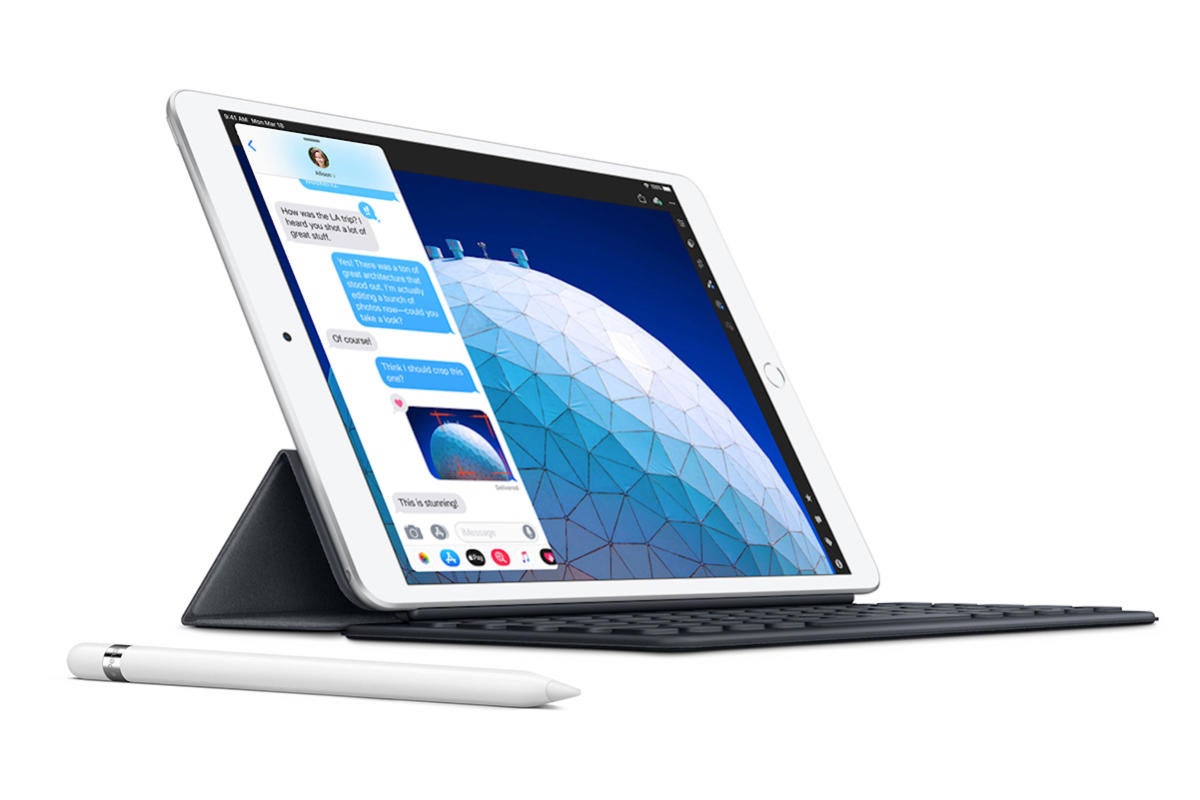
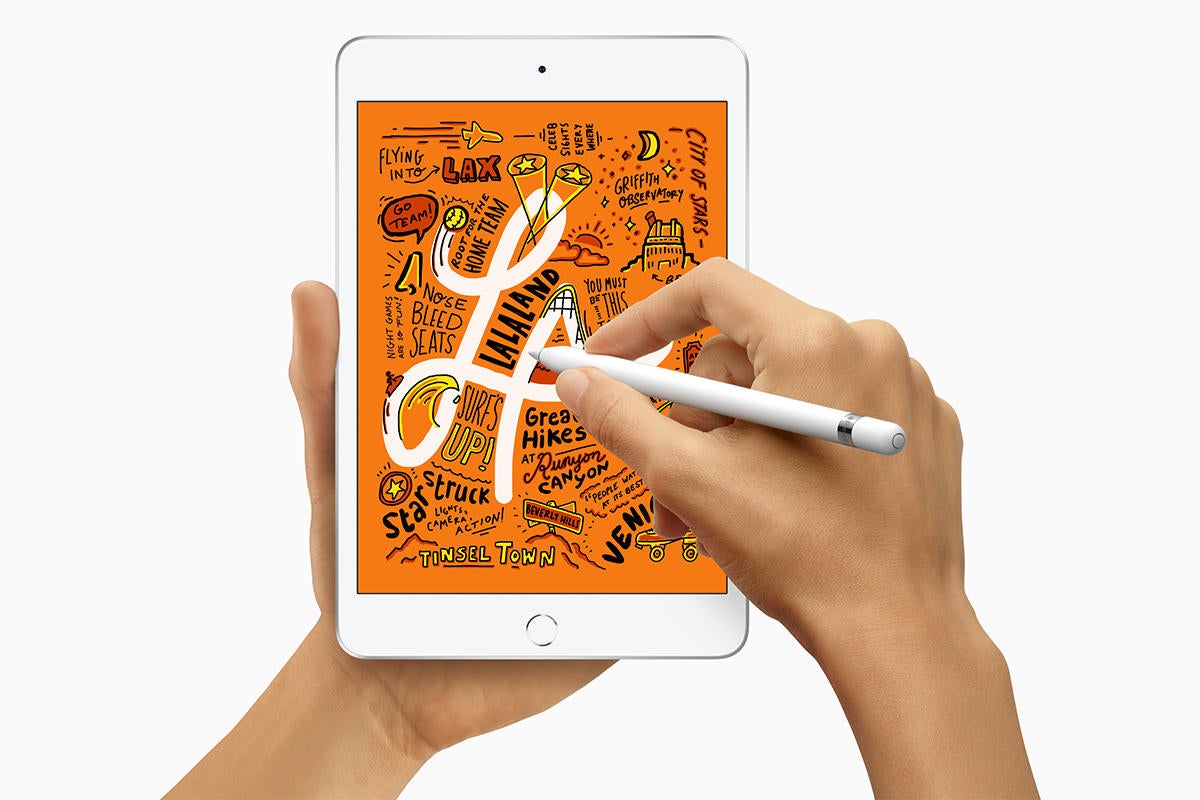
Apple has released two new hardware updates to the iPad lineup; a new iPad Air 10.5″ model, and an updated iPad mini 7.9″ model.
The new iPad models will be appealing to many users for differing reasons, as the iPad Air 10.5″ is a step closer to an iPad Pro in many ways, while the iPad mini 7.9″ is the smallest and most portable iPad.
Both the new iPad Air 10.5″ and iPad mini 7.9″ feature an A12 CPU, Touch ID, support for the 1st generation Apple Pencil (but not the new 2nd generation Apple Pencil), a laminated display, and start at 64GB storage capacities with a maximum of 256GB storage available for each. Each model can also be purchased with optional LTE cellular connectivity for an added cost.
With the addition of the new iPad Air (3rd generation) and iPad mini (5th generation), this means that Apple is now selling five different screen size iPads, including the iPad Pro 12.9″ model, iPad Pro 11″ model, the iPad Air10.5″ model, the iPad 9.7″ model, and the iPad mini 7.9″ model, with each iPad size also coming in three different color options, possible LTE cellular connectivity, multiple storage capacity configurations, and at different price points. For consumers looking to differentiate one model from another, the official iPad comparison tool on apple.comcan help.
Regardless of what iPad you go for, if you want an Apple Pencil to go along with it then be sure you get the proper Apple Pencil for the specific iPad model. This is important, because the older1st generation Apple Pencil works with the new iPad Air, iPad mini, iPad, and older iPad Pro, but does not work on the new iPad Pro (2018), whereas the new 2nd generation Apple Pencildoes not work on the new iPad Air, iPad, iPad mini, or older iPad Pro models, while it does work on the new iPad Pro (2018). Basically you want the older Apple Pencil for the new iPad models unless the iPad is a new iPad Pro, in which case you want the new Apple Pencil for the new iPad Pro only.
iPad Air: What’s new
Let’s kick off with what’s new with the iPad Air, which we thought was effectively replaced with the 10.5-inch iPad Pro in 2017. In essence, this is the iPad Air 3, but much as with the iPad mini, Apple’s dropping the numerals. It’s now just the iPad Air.
The price sees a welcome change, as Apple now sells it for a starting price of $499 instead of the $649 we saw with the iPad Air 2. There’s also a change in storage options, as Apple only sells the new iPad Air in 64GB and 256GB configurations. Before, you could buy the iPad Air 2 with 16, 32, 64, and 128GB options. It’s a smart move for a more data-hungry age.
The tablet is also bigger—insomuch it has the same 9.8 by 6.8-inch frame as the 2017 10.5-inch iPad Pro. For comparison, the iPad Air 2 measured 9.4 by 6.67 inches. And much like the old iPad Pro, the new iPad Air supports the first-generation Apple Pencil. That could be a big deal if you don’t want to pay iPad Pro prices but don’t like the smaller screen of the 9.7-inch iPad—or the new 7.9-inch iPad mini.
The iPad Air essentially looks like an older iPad Pro now.
I especially like that the new iPad Air sports the A12 Bionic processor found in the iPhone XS and XR, which marks a massive jump from the A8X chip in the iPad Air 2. Keep in mind, though, that it’s not quite as fast as the A12X chips that we find in the 2018 iPad Pros.
The display has changed, too, as the resolution is now 2224 by 1668, up from 2048 by 1536. It’s also packed with Apple’s TrueTone technology that adapts to ambient light in order to deliver a more natural viewing experience. That display is also laminated, which effectively means the glass sits on top of the display. When you use an Apple Pencil, it makes for an experience that feels slightly more like writing on paper than what you’ll get with an unlaminated display. Unfortunately, the iPad Air didn’t inherit the iPad Pro’s ProMotion 120Hz refresh rate, which makes everything from Apple Pencil strokes to scrolling through webpages a bit smoother.
The iPad Air is also brighter, as it delivers 500 nits of brightness versus the 415 in the older model. That’s great if you often have to use your iPad in the sunlight. And last but certainly not least, the front-facing FaceTime camera got a big boost from 1MP to 7MP.
iPad Air: What isn’t new
That’s a lot of good stuff, especially when you compare it to the iPad Air 2. When you compare to the 10.5-inch iPad Pro, though, the truth is that we’re basically looking at an iPad Pro from 2017 with a better chip. In other words, if you got a 10.5-inch iPad Pro two years ago, you may not need to upgrade.
The A12 Bionic chips allow the new iPads to take better advantage of augmented reality apps.
The new model still has a home button with Touch ID, and I think that’s a bit of a bummer as the latest iPad Pros have taught me that Face ID is even better suited for iPads than iPhones. It’s still LED backlit, so don’t expect the super cool OLED displays you find in the new iPhones. Even the new iPad Pro doesn’t have that. While the FaceTime camera got a boost, the rear camera hasn’t changed much, as it still has an 8MP rear camera like the iPad Air 2. It’s still got a 3.5mm headphone jack, it’s still available in space gray, silver, and gold, and it still gives you a battery life of around 10 hours. And it still supports Lightning cables instead of USB-C.
iPad mini: What’s new
Let’s move on to the new iPad mini. A lot of you have been waiting for this one for a long time, and as you might expect after a four-year wait, it’s a massive improvement over the iPad mini 4. What’s new?
First off, much as with the iPad Air, this is now simply called iPad mini—even though it’s essentially the iPad mini 5. It also sports the A12 Bionic processor, and that’s enough of an upgrade from the A8 chip to give you around three times the graphics processing power of the iPad mini 4.
It’s also got a laminated display and first-generation Apple Pencil support like the iPad Air, along with support for Apple’s TrueTone technology. It even has a wider P3 color gamut, and Apple says its pixel density of 3 million is the highest of any iPad. The display itself is 25 percent brighter at 500 nits, up from the 450 in the iPad mini 4.
At this point, you’re almost using a digital Moleskine notebook.
The camera remains at 8MP, but the newer model reportedly offers better low-light performance and HD video recording. And here again we see the boost to 7MP from 1MP in the front-facing camera.
The iPad mini 4 only sold in a 128GB configuration, but the new iPad mini comes with both 64GB and 256GB storage options. For that matter, it now supports the same Wi-Fi and gigabit-class LTE speeds you’ll find in new iPads.
iPad mini: What isn’t new
What hasn’t changed? For one, there’s the starting price, which remains the same as the iPad mini 4 at $399. I’d be annoyed with that considering that the 9.7-inch iPad supports the Apple Pencil and gives you more screen space for $329. Nonetheless, this delivers a lot of upgrades for people who want a smaller iPad.
As for the display, it may have that TrueTone tech and the wider P3 color gamut, but the 7.9-inch display itself still has a resolution of 2046 by 1536. Like the iPad Air, it also doesn’t support ProMotion.
In fact, I’ll probably have a hard time telling the iPad mini 4 apart from the NEW iPad mini when we get ours. It still has the same 8 by 5.3-inch frame, a home button that supports Touch ID, and support for Lightning cables instead of USB-C. And yes, it still comes in space gray, silver, and gold, and it still delivers around 10 hours of battery life.