If you’ve ever thought about switching your Apple Music subscription to Spotify, Pandora, YouTube Music, Deezer, or the vice versa, one thing that probably made you change your mind is “how am I going to transfer all my songs from a streaming service to another?” Well, here’s the answer.
If you have thousands of songs and lots of playlists, adding one by one doesn’t seem like a good call. And if for any reason you have multiple music streaming services, there’s a simple way to keep all of them updated with the FreeYourMusic app.
The app has two options: you can transfer one hundred songs and that’s it or you can pay for it. Here are the tiers:
Basic: One-time-purchase with the possibility to transfer an unlimited number of songs, playlists, and albums on all platforms, and with lifetime updates.
Premium: Pay per month and receive e-mail support, share playlists across streaming services, auto-synchronization of all playlists/albums, backup your playlist in the cloud, and the ability to cancel anytime.
Lifetime: One-time-purchase and you get everything available on the Premium plan.
FreeYourMusic is available on iOS, macOS, Android, Windows, and Linux and offers support to basically every music streaming service available.
How to transfer Apple Music songs to Spotify
Once you installed the app, it allows you to easily transfer your music library:
Select your current platform as a source, for example, Apple Music.
Then select the platform where you want to create a new playlist, for example, Spotify.
Find playlists, albums, or tracks you want to transfer from Apple Music to Spotify.
Confirm your action and done.
One tip I give you is if you have thousands of songs, you may want to transfer first your main playlists. The transfer between services is really fast, but if you have a lot of songs, it can take a few days.
In the same way people argue about iOS over Android, the debate between Apple Music vs Spotify has also grown since 2015. As the music streaming service war starts to bring podcasts and HiFi to the battlefield, are you planning to stay with your current streaming service, or are you considering switching?
Many been using Apple Music since it launched. Even when Apple erased a few times all my library, They didn’t care. Then, when some songs appeared duplicated, They also didn’t mind. Now, Apple Music struggles to show the correct album artwork for some artists and faces some reliability bugs. Should they care now?
On the other hand, they’ve been reporting regularly on all of the changes Spotify is making on its platform. It added podcasts, and the early data shows this has been a success. It also plans to launch a HiFi tier subscription this year and it recently revamped all of its applications.
They used to complain because they didn’t get Spotify’s user interface, but as they started to compare with Apple Music, now they see that they’re very similar. Compare for yourself :
Apple Music
Spotify
If you compare prices, they’re exactly the same: $9.99/month for an individual tier, $14.99/month for a family subscription, and $4.99/month for a student application. The difference here is that Apple now offers Apple One, so it’s easier to stay with Apple Music because you can also receive iCloud, Apple Arcade, and Apple TV+ altogether.
The Individual Apple One plan is $14.95 per month, while the Family plan is $19.95 per month: a really nice deal. On the other hand, Spotify has a free-ad-based version and a Premium Duo, for two people who live together for $12.99/month.
With any of the services, you can get a nice deal depending on your need. But if you’re an Apple kind of person, you may be asking if Spotify can integrate with all your devices. Spotify has an Apple Watch app, a macOS app, and a browser app, but the company does not yet support HomePod integration.
For example: if you enjoy sharing and know what your friends are listening to, you can do that in real-time with Spotify. If you like to combine podcasts and music in the same place, Spotify also supports that. If you want a nice end-of-year recap, Spotify can also do better than Apple Music.
We rely on Bluetooth for more and more devices, and while the wireless standard is very convenient, it can be really frustrating when our peripherals don’t work consistently. Read along for five tips and tricks to fix Mac Bluetooth issues, including resetting your Bluetooth module and ways to remove interference.
Bluetooth issues aren’t anything new, but there has been a recent wave of more Bluetooth problems with the first Apple Silicon M1 Macs and macOS Big Sur. Notably, Bluetooth reliability should have been improved for Mac users with macOS 11.2.
But whether you’ve got a new M1 Mac or are having trouble with Bluetooth on an Intel one, we’ll cover multiple approaches to fix Mac Bluetooth issues.
How to fix Mac Bluetooth issues
Software update, power cycle, unpair
You’ve probably tried these steps, but if not, start here:
Check if macOS is up to date ( > About This Mac > Software Update…)
Make sure your Bluetooth device is charged
Turn off your Bluetooth device and back on again, you can do the same with Bluetooth on your Mac (click the Bluetooth icon in the menu bar – top right of your Mac’s screen)
You can also unpair a Bluetooth device and re-pair to see if there’s an improvement (Bluetooth in the menu bar > Bluetooth preferences > hover over a device > click the “x” icon > choose “Remove”)
Reboot your Mac
Remove interference
Apple notes in a support document that if you’re seeing intermittent Bluetooth issues, it’s good to check for interference. Tips include:
Bring your Mac and Bluetooth devices closer together
Remove other devices like phones, cameras, power cables, etc. that might be on your desk or nearby
Move some WiFi devices to 5GHz since Bluetooth and WiFi both use 2.4GHz
Move USB/Thunderbolt hubs further away from your Mac and Bluetooth devices (and don’t place them on top of your Mac)
Turn off USB devices that aren’t in use
Finally, don’t have materials between your Mac and Bluetooth devices like metal, concrete
Reset your Mac’s Bluetooth module
If you’re still having trouble with Bluetooth issues, you can reset your Mac’s Bluetooth Module:
While holding option + shift on your keyboard, click the Bluetooth icon in the menu bar
Click “Reset the Bluetooth module”
On the confirmation prompt, choose “OK”
Your Bluetooth devices will disconnect for a moment as the module resets and should automatically reconnect
Here’s how this looks:
Remove all devices + reset Bluetooth module
If that didn’t work, you can remove all of your Bluetooth devices and then reset the module (keep in mind you’ll need to re-pair all of your Bluetooth devices after this):
Hold option + shift on your keyboard and click the Bluetooth icon again
This time, choose “Remove all devices” > click OK
Do option + shift on Bluetooth in the menu bar again > click “Reset the Bluetooth module”
Re-pair your Bluetooth device(s)
Have a dongle?
This isn’t always an ideal solution depending on your setup, but if your Bluetooth device came with a USB dongle for a direct connection, that often eliminates any Bluetooth issues you’re seeing.
The most common devices to come with USB dongles are third-party mouse and keyboards.
According to New Scientist (via Gizmodo), the Mars Perseverance rover uses the RISC CPUs that Apple went all in on before switching to Intel. The iMac G3 was colorful (you could see through it), and it ultimately saved Apple from bankruptcy.
The PowerPC 750 was a single-core 233MHz processor with 6 million transistors, which is now considered slow, but it was the first to incorporate dynamic branch prediction and is still used in modern processors.
Given that the Perseverance launch was in July 2020, you could be wondering why it’s using such an old processor. What it comes down to is reliability.
There’s also a pretty big difference between the iMac G3 CPU and the one inside the rover. This PowerPC 750 chip can withstand 200,000 to 1,000,000 Rads and temperatures between -55 and 125 degrees Celsius.
Given that Mars doesn’t have the same type of atmosphere as Earth, one flash of sunlight could damage the rover before its adventure can even begin.
“A charged particle that’s racing through the galaxy can pass through a device and wreak havoc,” James LaRosa at BAE Systems told NewScientist. “It can literally knock electrons loose; it can cause electronic noise and signal spikes within the circuit.”
Apple used PowerPC chips on Mac until 2005, then switched to Intel. Nowadays, Apple is making a new transition to its own Apple Silicon processors, starting with the M1 chip on MacBook Air, MacBook Pro, and Mac Mini.
Apple Photos users are reporting a bizarre issue related to geotagging. The issue, which 9to5Mac has confirmed, centers around manually editing the location of an image and using exact latitude and longitude coordinates.
A variety of threads focused on this bug have surfaced on Apple’s Support forums . When you try to manually edit an image via Apple Photos and set the location as a specific latitude and longitude, the location will automatically jump to the reverse-geocoded location.
Here’s a quick explanation courtesy of Wikipedia on reverse geocoding:
Reverse geocoding is the process of converting a location as described by geographic coordinates (latitude, longitude) to a human-readable address or place name. Reverse geocoding permits the identification of nearby street addresses, places, and/or areal subdivisions such as neighbourhoods, county, state, or country.
What this means is that when you enter the latitude and longitude into the Photos app, the Photos app will attempt to convert this into a suggested location that could in practice be far away from the actual latitude and longitude.
Other describe their experience with this bug:
Apple Photos geotagging doesn’t seem to work properly anymore since a few months.
When manually editing the location of an image and using exact GPS Coordinates (Lat, Lon) then these coordinates are not being set for the image but only a Reverse-Geocoded location which could / will be far from the original location.
Example: When I try to geotag a picture with Coordinates “36.6972,24.4707” (Airport in Milos, Greece), I can only pick one entry, but this one entry is completely wrong.
In this user’s specific example, the Photos app suggestion is for the Aegean Sea, far away from the intended airport. 9to5Mac has seen similar incorrect suggestions across locations in the United States and the UK.
The problem appears to be tied to Apple Maps. When you enter latitude and longitude details in Apple Maps, it will show a suggested location for those details. The Photos app seems to be pulling in the first suggestion from Apple Maps, which again, could be inaccurate.
Apple has published its 2021 update to its Platform Security guide today along with refreshing the Apple Platform Security landing page. The latest guide goes in-depth on the new and updated security features that have arrived with iOS 14, macOS 11 Big Sur, Apple Silicon Macs, watchOS 7, and more. Apple has also launched an all-new Security Certifications and Compliance Center website and guide.
Apple has long held that secure software necessitates the foundation of security built into hardware. With the shift to using its own custom Apple Silicon in its first three M1 Macs starting last fall, the company has been able to realize that goal across its entire lineup of devices.
2021 Apple Platform Security guide
Device security is a never-ending mission and the latest Apple Platform Security guide details all the effort and changes Apple has implemented over the last year – highlighted by the guide growing 39 pages with this edition to a total of 196.
This documentation provides details about how security technology and features are implemented within Apple platforms. It also helps organizations combine Apple platform security technology and features with their own policies and procedures to meet their specific security needs.
While there a number of security updates that apply to existing/older devices, Apple Silicon has been notable with the M1 Macs allowing Apple to step up security to new levels when it comes to Data Protection via a rebuilt FileVault, System integrity, password protection, and more.
Another notable change in the last year has been the advanced BlastDoor security for iMessage (not specifically mentioned in the new security guide). While it was just recently discovered as present in iOS 14, we’ve learned Apple has built it into macOS Big Sur as well. It’s a totally under the hood change that users won’t notice, but it’s the biggest security improvement to iMessage since the service got end-to-end encryption.
Check out all the new topics added to the Apple Platform Security guide this year:
Memory safe iBoot implementation
Boot process for a Mac with Apple silicon
Boot modes for a Mac with Apple silicon
Startup Disk security policy control for a Mac with Apple silicon
LocalPolicy signing-key creation and management
Contents of a LocalPolicy file for a Mac with Apple silicon
Signed system volume security in macOS
Apple Security Research Device
Password Monitoring
IPv6 security
Car keys security in iOS
And here are all the security topics that have been updated:
Secure Enclave
Hardware microphone disconnect
recoveryOS and diagnostics environments for an Intel-based Mac
Direct memory access protections for Mac computers
Apple has faced lots of criticism over the past few years because of the way its services get special treatment on iOS devices. They’ve also gotten lots of heat as of late over the way in which they allow customers to get sucked into service subscriptions.
There are lots of potential solutions to these problems. But first, you have to identify which problems are the most important to solve first. There are a couple of areas that are particularly important.
One of those is the default search engine for Safari. Apple has a controversial special deal with Google that makes them boatloads of money. They agreed to make Google the default search engine on iPhone, iPad, iPod touch, and macOS in exchange for billions. Other search engines are at a severe disadvantage because you need to navigate through multiple settings levels to change it to another service.
Apple could easily wash away any sort of antitrust implications by including a search engine selection screen during the setup process. Google would still be selected by default, but it would give users an opportunity upon first use to change their search engine of choice. This is also important for users who care about privacy. It should be easier for any user to change their default service to something like DuckDuckGo.
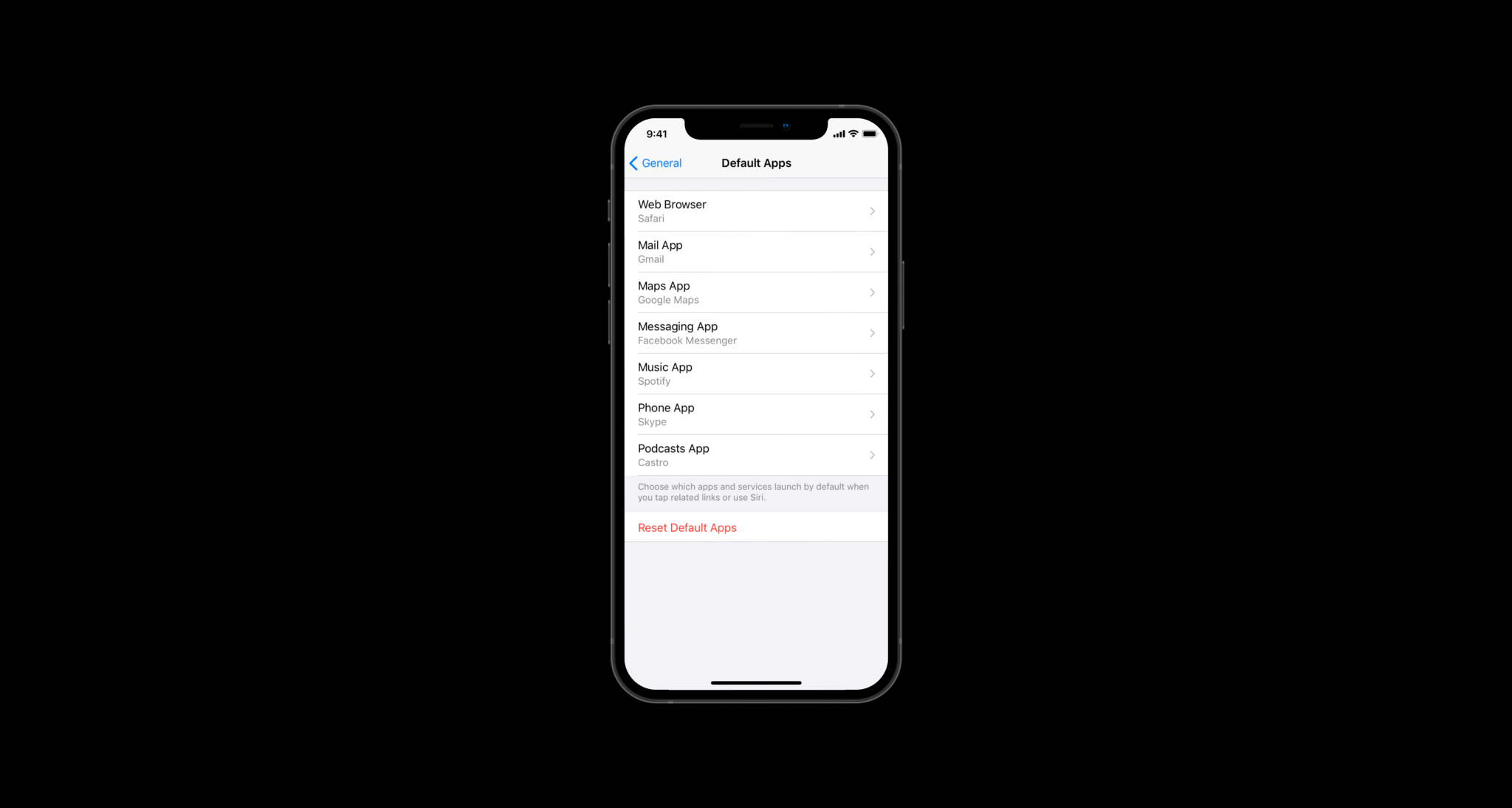
Another setting that should be surfaced during first setup is default apps and services. Apple could frame this as a way to set Siri information and content sources, but it would also change the default app in that category.
This step would appear after you sign in to your Apple ID so that you can download an alternative, Siri compatible service before set up is over.
Apple currently offers the ability to set an app as a default within its own settings panel buried at the bottom of the main Settings view. There’s no centralized place to see all of your default apps.
If they created a default apps settings panel and moved it to the top level of Settings, users would be able to find this ability much more easily. This would help alleviate some of the concerns about apps like Spotify or Gmail being put at a disadvantage.
Apple could rearrange the main Settings view and move App Store and Wallet settings right to the top below Apple ID. They could also update the App Store menu to be “Apps & Subscriptions.” Any user would be able to easily find all of their subscribed services and cancel them if they wanted to. You can also see the new “Default Apps & Services” menu with the third group of cells.
Apple also ought to update their tracking and privacy menus by merging third-party settings with first-party app settings. Apple’s own apps have their privacy settings buried within the privacy section of Settings while third-party apps’ settings are right at the top.
To complement the new subscriptions menu, Apple could redesign the sheet that appears when you tap to subscribe to a service. The new sheet would show all available plans and hides all additional copy under an information button. You would select an available plan and tap continue to move to the final step.
This additional stopgap prevents people from accidentally subscribing to a service, especially on Touch ID enabled iPhones. The second screen within the sheet lets you change your payment method and accept the terms of your subscription with a double click on the side button.
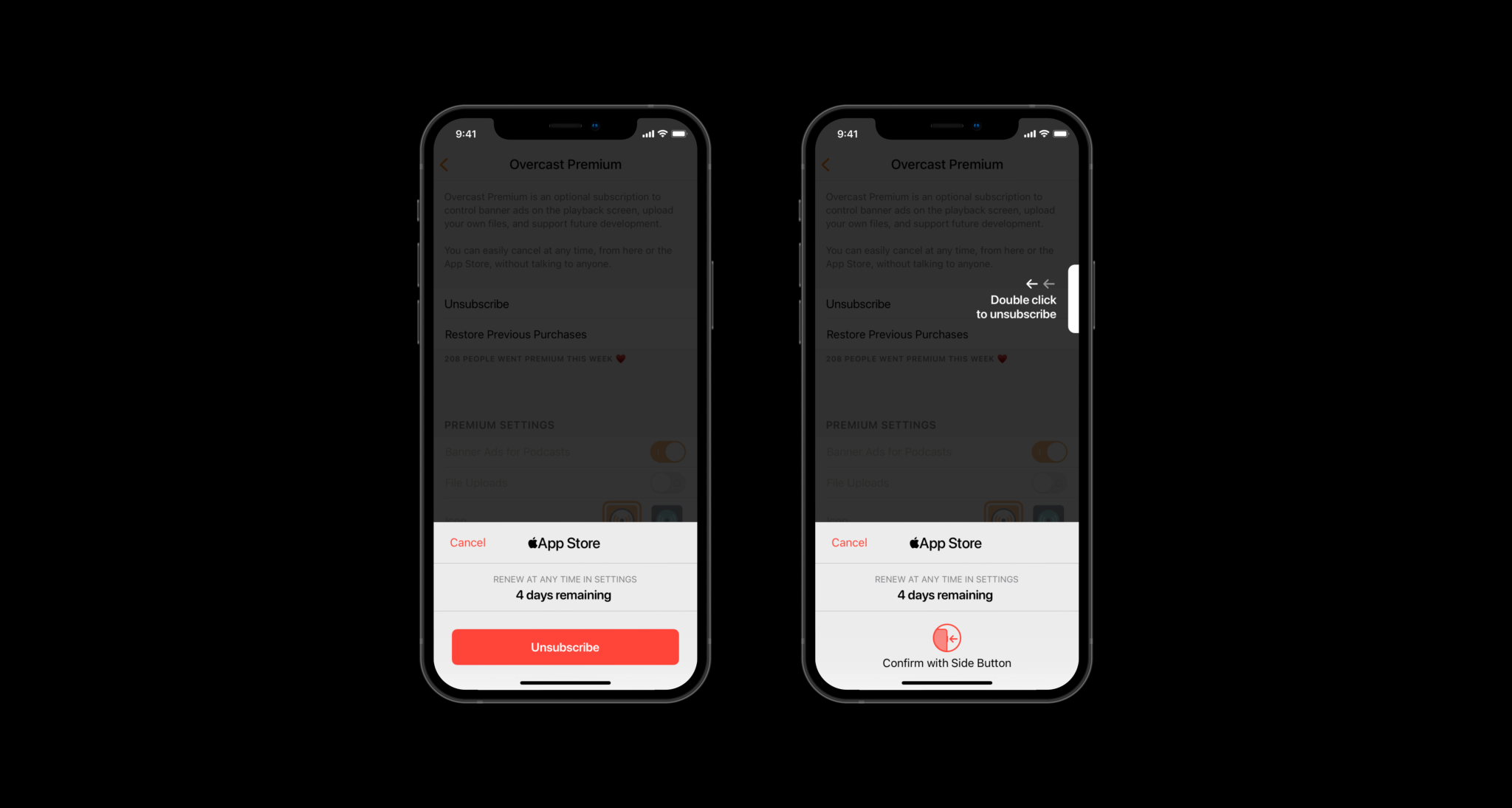
Apple could also introduce a new API for unsubscribing to services. Developers could be required to build it into their app. When tapped, a new proprietary sheet would slide up, telling you how much time is left in your subscription. You could then tap to unsubscribe and then double click the side button to confirm it.
With these changes, it would not only make it harder for people to get sucked into subscriptions, but it would help people better understand what they’re signing up for. The new top-level menu in Settings combined with these new sheets would remove the suspicion that Apple is purposefully trying to keep people subscribed to services they don’t use.
The iOS 14.5 developer and public beta includes a number of new features and changes, but one of the most exciting is the ability to unlock iPhone with your Apple Watch when Face ID detects you’re wearing a mask. Let’s look at how to install the iOS 14.5 beta as well as watchOS 7.4 beta to get access to this useful new feature and more.
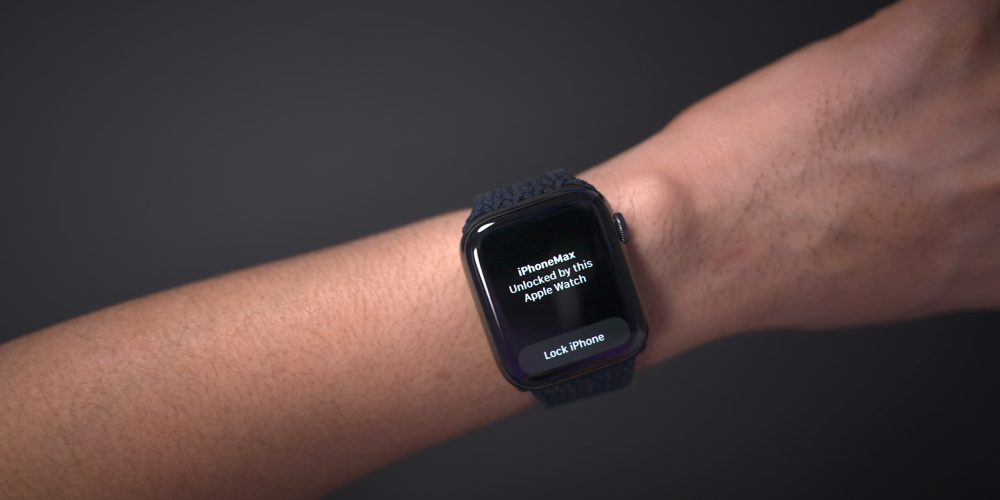
The new feature getting the most attention is the Unlock with Apple Watch feature for iPhone. It works by detecting when you’re wearing a face mask and using your watch to authenticate, letting you bypass your passcode.
How to install iOS 14.5 beta and watchOS 7.4 beta
Note: watchOS 7.4 beta required to use the new Unlock with Apple Watch for iPhone feature.
Upgrade to the iOS 14.5 public beta
Make sure you have a fresh backup for your iPhone (Apple recommends with your Mac)
Apple released iOS 14.5 beta 1 to developers, and as you’ve no doubt heard, it’s quite the update. Headlined by the ability to unlock your iPhone with Apple Watch while wearing a face mask, iOS 14.5 beta 1 brings forth a number of practical improvements and overall enhancements to iPhone. Watch our hands-on commentary as we discuss the top iOS 14.5 beta 1 changes and features.
What’s new in iOS 14.5 beta 1?
Updated Software Update screens
Both the Software Update page in the Settings app and the Watch app have received more informative details regarding updates. Apple now includes a green check mark to indicate that you’re on the latest version of software, along with a message stating that “Your iPhone is up to date with all of the latest bug fixes and security enhancements.” In addition, iOS 14.5 now displays a time stamp that shows the last time you successfully checked for an update.
Unlock with Apple Watch
As noted, the biggest feature to come to iOS 14.5 is support for Apple Watch Unlock when Face ID detects a face with a mask. Users must be wearing an unlocked Apple Watch protected by a passcode in order for the feature to work. When attempting to unlock your iPhone using Face ID while wearing a face mask, you’ll feel a vibration on your Apple Watch, along with a notification that your iPhone was unlocked successfully.
Horizontal boot screen iPad
When connected to the Magic Keyboard, iPadOS 14.5 will display the startup Apple logo in horizontal/landscape mode instead of the default portrait orientation. If you restart your iPad when disconnected from the Magic Keyboard, even if you’re holding the device in landscape mode, the startup screen will appear in portrait mode.
As a side note, iPadOS 14.5 now supports emoji search, which iPhone users have been enjoying since iOS 14’s release, but has been inexplicably missing on iPad up until now.
Cellular connectivity updates
One of the biggest changes found in iOS 14.5 is the ability to enable dual SIM functionality while maintaining 5G connectivity. In previous versions of iOS, enabling the iPhone 12’s dual SIM feature would cause cellular connectivity to fall back to standard LTE. With iOS 14.5, users have the option of keeping both connections active simultaneously while still enjoying the benefits of 5G.
In addition to 5G dual SIM support, iOS 14.5 surfaces a new 5G Standalone cellular switch in system settings. Initial 5G implementations piggybacked on existing LTE networks to speed up adoption of 5G, but this method imposes propagation limits based on the LTE limitations. With Standalone (or SA) 5G, the limits of LTE are no longer in play. Keep in mind that your carrier will need to support 5G SA, and Apple warns that enabling SA at this early stage may cause degraded performance.
Apple Music updates
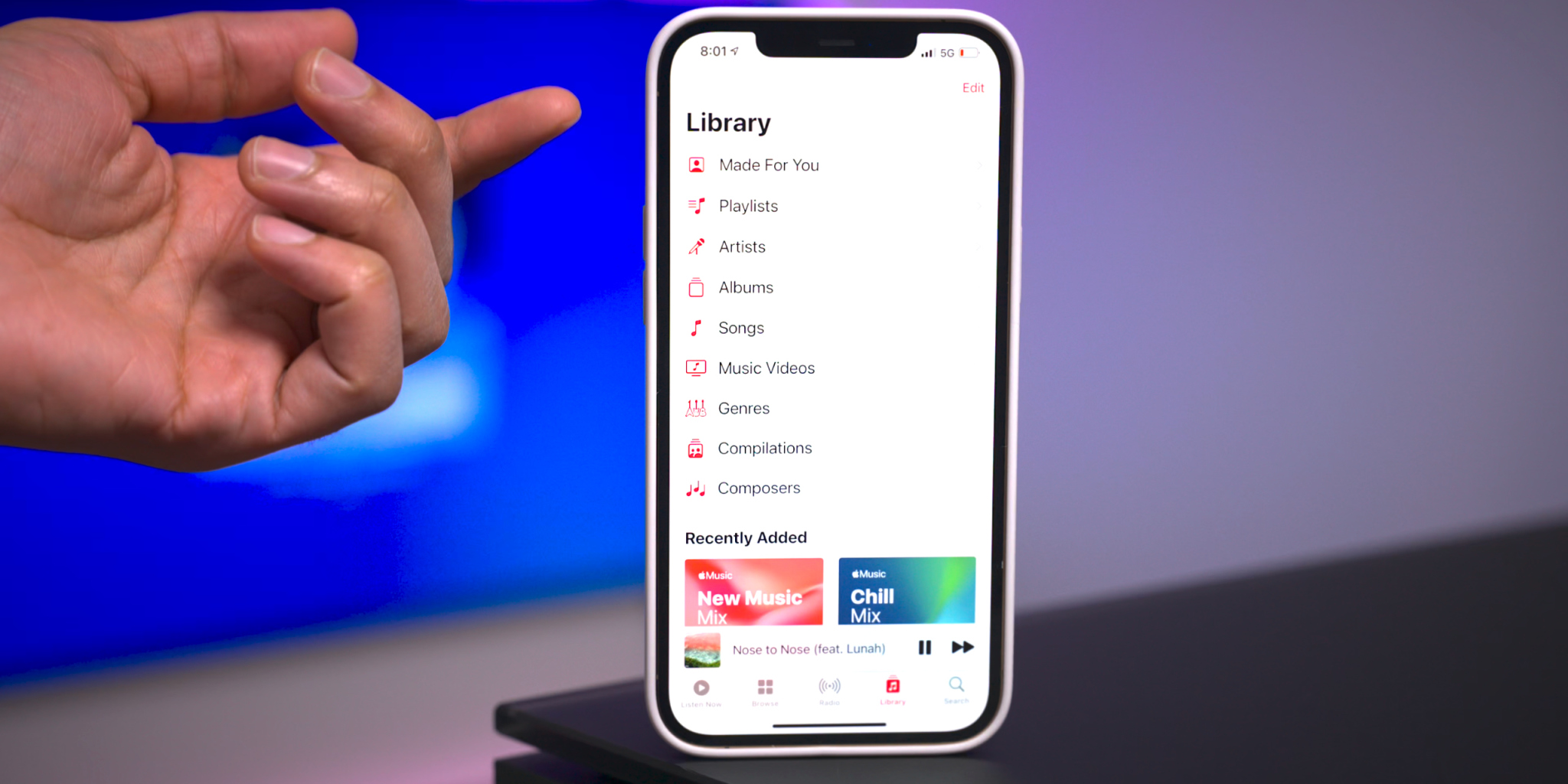
Apple Music gets some noteworthy updates in iOS 14.5, headlined by a new “Made For You” section under the Library tab. Made For You houses all of the algorithmic-curated music suggestions that are normally found within playlists like Favorites Mix, Chill Mix, and New Music Mix within the Listen Now tab.
Another handy feature found in iOS 14.5 is the inclusion of release dates for all music content featured on Apple Music. Prior versions of iOS would showcase release info, but in this latest beta version of iOS, users are treated with the exact release month, day, and year.
Users will also be happy to know that the scrolling metadata view on the Now Playing Lock Screen interface has now returned. This is a big improvement over the truncated metadata view that’s been around in the last few versions.
Reminders app enhancements
It’s crazy that we’ve not been able to sort Reminders based on parameters like modification date or title up until now, but at least we finally receive such features in iOS 14.5. Users can still sort reminder lists manually, but now there are several metadata sorting options, along with ascending and descending preferences.
The ability to directly print a reminders list joins the updated sorting options, allowing users to quickly send a list to a configured AirPrint printer.
Updated Podcast app
The stock Podcasts app gets lots of subtle changes and enhancements alongside a bigger update to the look and feel of the official show page for each podcast. New enhancements include a full-bleed header with color-matched backgrounds and a refreshed Library page with new glyphs.
Apple Fitness+ Workouts AirPlay 2 support
AirPlay 2 compatibility comes to Apple Fitness+ workouts, allowing users to stream workouts directly to an AirPlay 2-compatible set-top box or television. The problem with this method, as opposed to just playing on an Apple TV or iPad, is that you lose on-screen metric support. But that might not be a huge deal since metric details remain readily available on your Apple Watch.
Maps app redesigned guides
Apple has redesigned the Guides feature on the Maps app, which now includes a full-bleed header, redesigned buttons, and beautiful animations when minimizing and maximizing each guide.
PS5 / Xbox Series X controller support
Support for next-generation console controllers, including the Playstation 5 Dual Sense controller and the Xbox Series X controller, is now available in 14.5. Next-gen controller support is a welcome new addition for controller-compatible Apple Arcade games, and for taking advantage of console-centric remote play features.
Dedicated Search tab in News app
Similar to the Search tab in the Music app and TV app, the News app gains a dedicated search interface for quickly finding channels, topics, or stories.
Siri interface updates
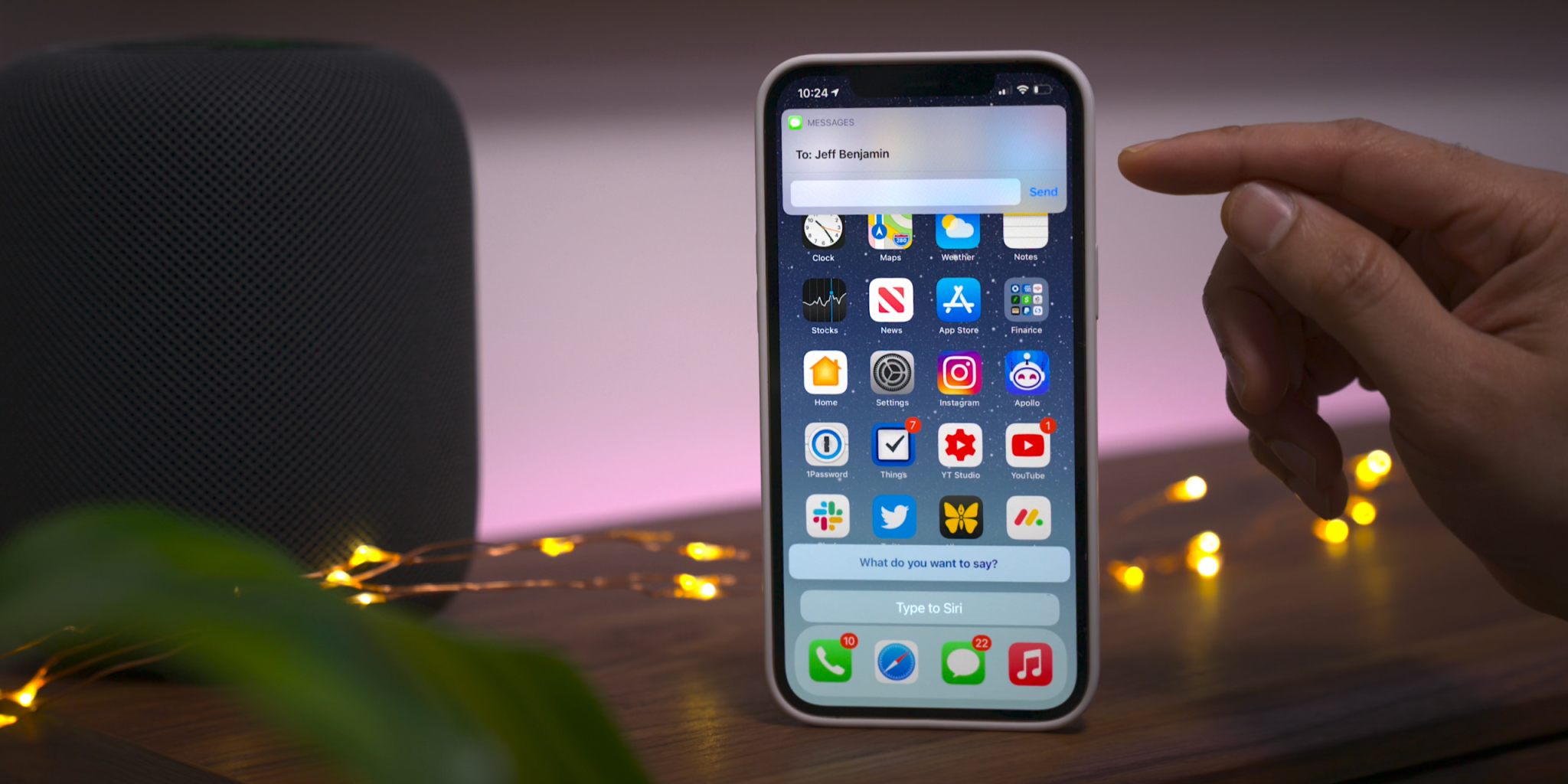
Those using the Type to Siri accessibility option will notice an updated interface that no longer opens to a dedicated Siri screen, allowing the user to maintain context of their current position in iOS. This update is similar to the changes first implemented in iOS 14 when invoking Siri using voice. You’ll also find an updated interface that appears when sending iMessages via Siri.
Apple Card updates
Although these updates are not-yet user facing, we’ve also highlighted a couple of forthcoming changes related to Apple Card:
Apple Card Family feature for multi-user accounts
New financial health features coming to the Wallet app
To commemorate Data Privacy Day, Apple is sharing “A Day in the Life of Your Data,” a report that illustrates how companies track user data.
Data tracking is more widespread than ever. Learn how Apple’s privacy features help users take control over their data
Cupertino, California — January 28 is Data Privacy Day, a time to raise awareness about the importance of protecting people’s personal information online. Apple is commemorating Data Privacy Day by sharing “A Day in the Life of Your Data,” an easy-to-understand report illustrating how companies track user data across websites and apps. The report also shares how privacy features across Apple’s products give users more transparency and control, empowering people with the tools and knowledge to protect their personal information.
“Privacy means peace of mind, it means security, and it means you are in the driver’s seat when it comes to your own data,” said Craig Federighi, Apple’s senior vice president of Software Engineering. “Our goal is to create technology that keeps people’s information safe and protected. We believe privacy is a fundamental human right, and our teams work every day to embed it in everything we make.”
“A Day in the Life of Your Data” helps users better understand how third-party companies track their information across apps and websites, while describing the tools Apple provides to make tracking more transparent and give users more control. The explainer sheds light on how widespread some of these practices have become. On average, apps include six “trackers” from other companies, which have the sole purpose of collecting and tracking people and their personal information.1 Data collected by these trackers is pieced together, shared, aggregated, and monetized, fueling an industry valued at $227 billion per year.
The new privacy nutrition label requires every app — including Apple’s — to give users an easy-to-view summary of the developer’s privacy practices.
Last year, as part of iOS 14 and iPadOS 14, Apple launched a number of important privacy features intended to help users make more informed decisions about their data. Two in particular have the potential to make a big difference in helping users protect their privacy:
With the new privacy information section on App Store product pages, a feature called the privacy nutrition label, Apple is requiring every app — including its own — to give users an easy-to-view summary of the developer’s privacy practices. Every product page on the App Store includes standardized, easy-to-read information based on the developer’s self-reported data practices. The privacy nutrition labels give users key information about how an app uses their data — including whether the data is used to track them, linked to them, or not linked to them.
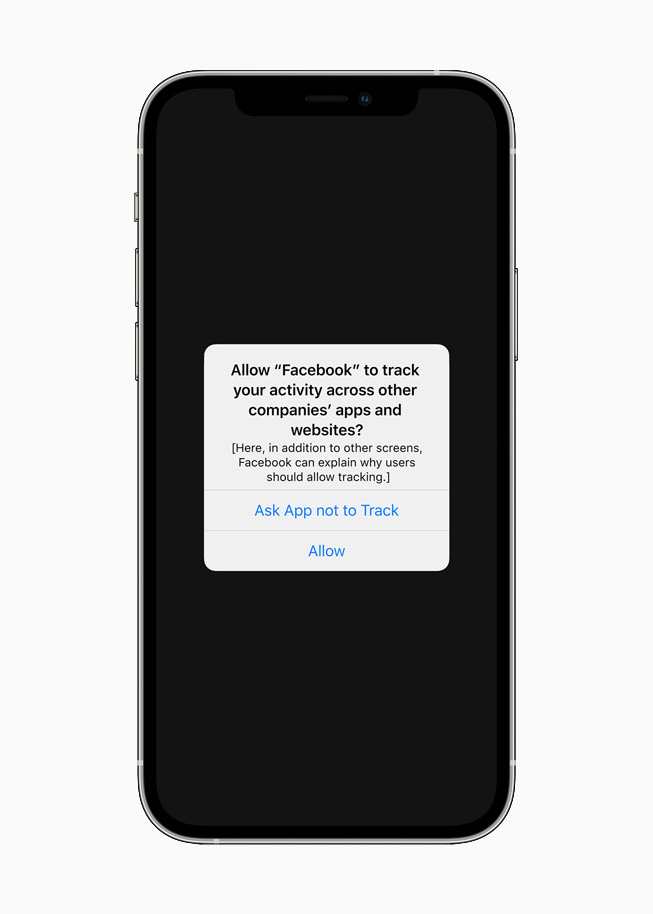
And starting soon, with Apple’s next beta update, App Tracking Transparency will require apps to get the user’s permission before tracking their data across apps or websites owned by other companies. Under Settings, users will be able to see which apps have requested permission to track, and make changes as they see fit. This requirement will roll out broadly in early spring with an upcoming release of iOS 14, iPadOS 14, and tvOS 14, and has already garnered support from privacy advocates around the world.
A new App Tracking Transparency feature across iOS, iPadOS, and tvOS will require apps to get the user’s permission before tracking their data across apps or websites owned by other companies.
Gus Hosein, Privacy International: “PI’s investigations into data brokers and ad tech companies reveal a complex, fast-growing industry that is opaque to the average user. Where there is a lack of transparency, exploitation thrives. Invisible and gratuitous data collection leaves users unable to exercise their rights and protect their privacy. Apple’s nutrition labels require industry to be clear and upfront with consumers, and tools like App Tracking Transparency will help people to assert control over the invisible leakage of their data. With these commendable innovations, industry will finally feel pressure to change. Consumer awareness and technical solutions are important parts of the solution, but in order to prevent a cat-and-mouse game between industry actors, we need substantive, enforceable regulation to stop this exploitation of our data.”
Jeff Chester, Center for Digital Democracy: “Apple’s new data privacy tools ensure that people have greater control over their personal information. Data brokers and online advertisers will now have to act more responsibly when dealing with consumers who use third party applications on Apple devices.”
Michelle Richardson, Center for Democracy and Technology: “Too often, consumers are unknowing participants in a web of data tracking and targeting. These changes will help rebalance the ecosystem so that data collection and sharing is more transparent and tracking is no longer the default. Systemic change of this breadth is a huge leap forward for consumers.”
Tristan Harris, Center for Humane Technology: “Today’s Apple announcement moves the ecosystem further away from the malicious effects of secretive profiling and microtargeting that enable many of the problems outlined in The Social Dilemma.”
Awareness of industry practices like data tracking is only the first step toward a better privacy experience. Users also need the features and controls to decide how their data is used, and by whom. Apple has led the industry by building privacy protections into every one of its products and services.
For years, Apple has introduced dozens of technologies that safeguard user privacy and help keep users’ data safe. For example, Safari was the first browser to block third-party cookies by default as far back as 2005. In iOS 11 and macOS High Sierra, Safari added Intelligent Tracking Prevention to further limit tracking while still enabling websites to function normally. In 2018, Apple introduced protections to prevent companies from fingerprinting Mac — a practice in which third parties try to identify users devices based on data like fonts and plug-ins.
These technologies represent only a small selection of the many privacy features and controls Apple has introduced across its products. For more information, visit Apple’s privacy website at apple.com/privacy.