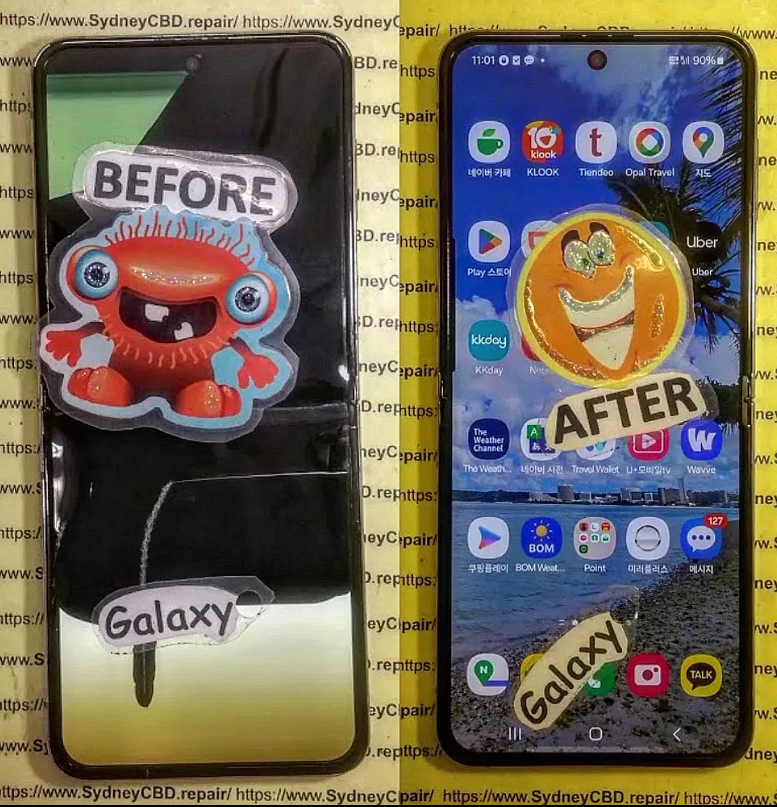
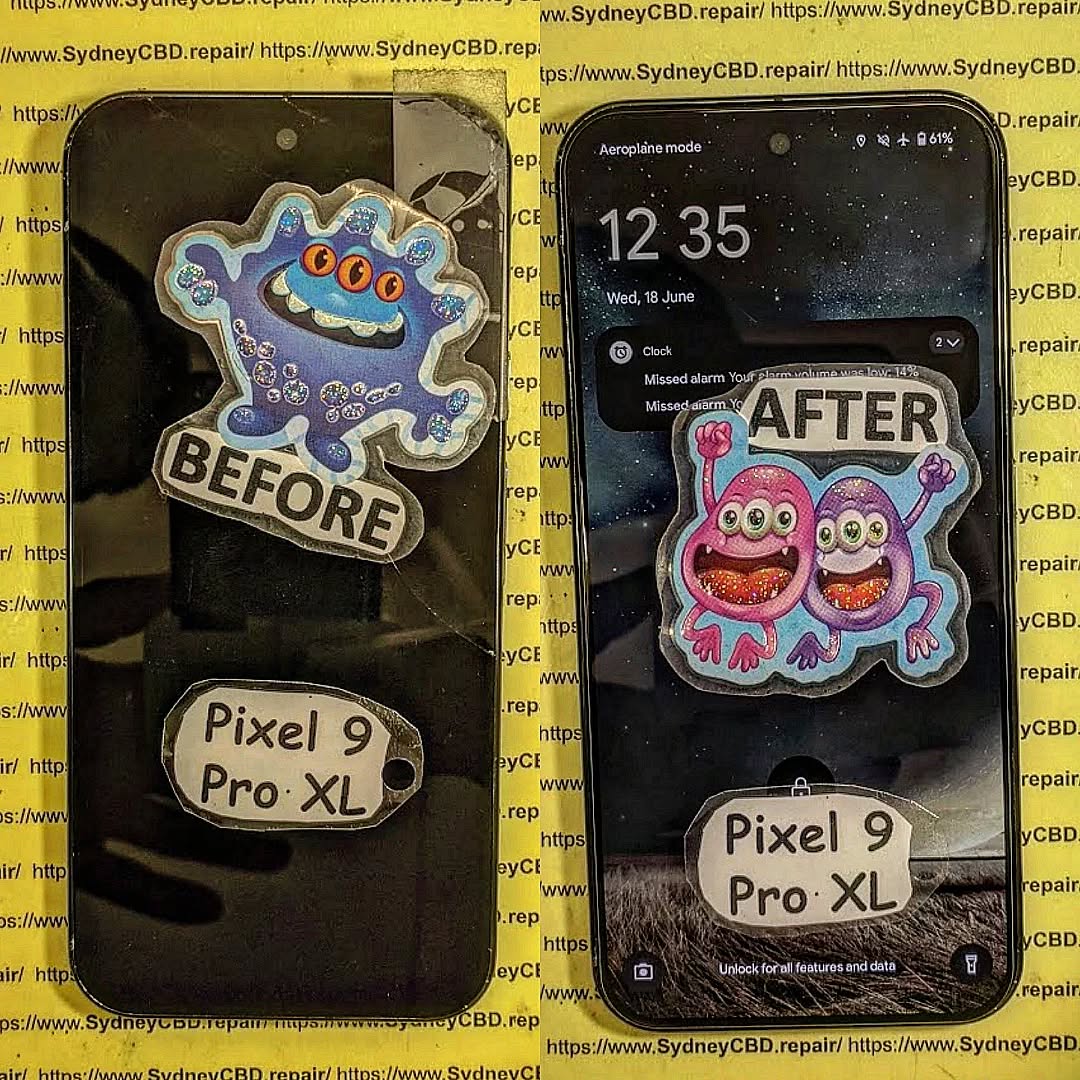
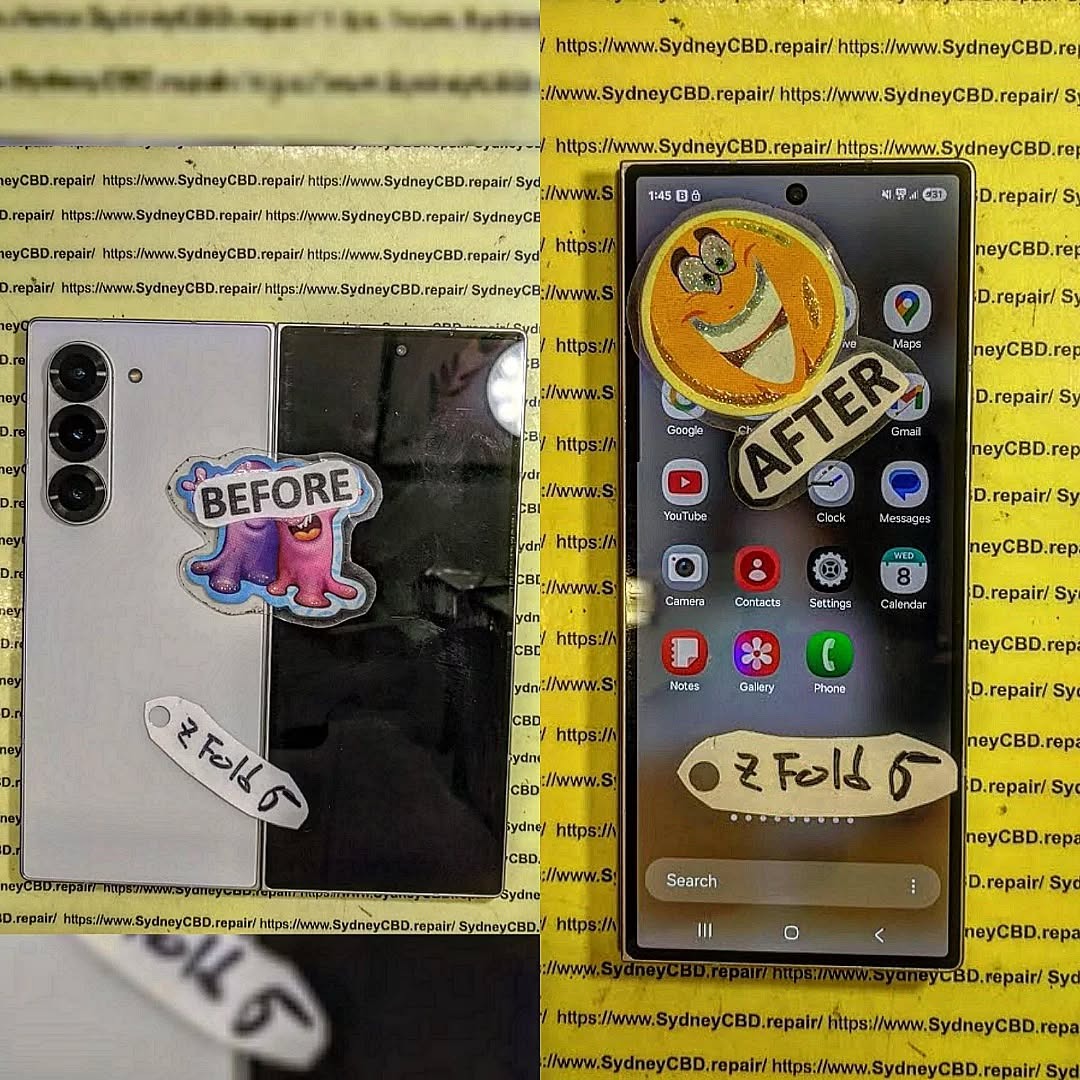
Inside Look: How We Repair The Foldable Galaxy Z Flip 5
📱 Why the Galaxy Z Flip 5 Needs Special Repair Expertise
The Samsung Galaxy Z Flip 5 is not your average smartphone. With its innovative foldable display and compact design, it’s a marvel of modern engineering—but that also makes it one of the most delicate devices to repair.
At Sydney CBD Repair Centre, we’ve developed a specialised method for repairing the Z Flip 5 that ensures your device is restored to full functionality without risking its complex folding mechanism or AMOLED display.
The Future of Phone Screen Repair: Innovations and Trends Shaping Tomorrow’s Devices
🚀 Introduction: Repair Technology Is Evolving
The world of phone screen repair is undergoing a quiet revolution. As smartphone technology advances rapidly—with foldables, self-healing materials, and AI diagnostics—the repair industry must also evolve to keep up.
At Sydney CBD Repair Centre, we pride ourselves on staying ahead of these innovations, ensuring our customers always receive cutting-edge solutions. In this article, we explore the most promising trends and what they mean for your device, your wallet, and the planet.
📱 Foldable and Rollable Displays – New Challenges for Repair Experts
The rise of foldable phones like the Samsung Galaxy Z Fold or Motorola Razr introduces new engineering hurdles. These devices feature ultra-thin glass, flexible OLED displays, and complex hinge mechanisms—all of which require specialised tools and training to repair.
Trend Alert: The future will bring rollable phones, expanding like scrolls, which will further test repair techniques and durability standards.
🔁 Self-Healing Screen Technology: Fact or Fiction?
Self-healing coatings are no longer science fiction. Companies like LG and Motorola have explored materials that can repair minor scratches over time using polymer memory or heat-activated compounds.
However, while they can restore surface-level blemishes, they can’t fix deeper cracks—yet.
Innovation Watch: As this tech matures, future screens may “heal” cracks and scratches, reducing the need for minor repairs.
🧪 Nanotechnology and Impact-Resistant Glass
Brands are experimenting with nanotech-infused glass, which offers enhanced strength without compromising clarity. Corning’s Gorilla Glass Victus and Ceramic Shield are early examples of more durable screen innovations.
The goal? Fewer cracks, fewer replacements, and more cost-effective maintenance.
🧩 Modular Phone Designs – Easier Repairs Ahead
Fairphone and Framework have championed the modular device movement, where screens, batteries, and components can be replaced individually without damaging the device. This means easier, faster, and cheaper repairs.
Modular design empowers users and shops like Sydney CBD Repair Centre to extend the life of devices—a big win for sustainability.
🌱 The Rise of Certified Eco-Friendly Repairs
Environmental awareness is reshaping the repair landscape. Certified repair centres now focus on:
Recycling old parts
Using sustainable packaging
Reducing e-waste
At Sydney CBD Repair Centre, we recycle responsibly and use energy-efficient practices to reduce our footprint.
🕶️ Augmented Reality (AR) in Diagnostics and Training
AR glasses and software allow technicians to overlay digital schematics while working on devices—leading to:
More accurate repairs
Faster technician training
Improved safety
Coming soon to advanced repair centres: hands-free AR-guided repairs for complex components.
🤖 Robotics in Micro-Precision Repairs
Automated tools are beginning to assist in tasks like:
Laser removal of back glass
High-precision soldering
Chip-level repairs on logic boards
While humans still lead the process, robotic assistance enhances accuracy and reduces errors.
Apple’s Independent Repair Provider (IRP) program and Samsung’s Self-Repair Kits mark a shift toward authorized third-party repairs. These partnerships allow centres like ours to:
Access official tools
Use genuine parts
Maintain warranty coverage for customers
Transparency and quality are becoming industry standards—finally.
🌍 Right to Repair Movement – Global Impact
The Right to Repair laws sweeping across Europe, the US, and now Australia are pushing manufacturers to make repair manuals, tools, and parts available to the public.
As a result, repair accessibility is improving, and repair costs are expected to drop for consumers.
🔄 Sustainability and the Circular Economy in Phone Repair
The shift from “replace” to “repair and reuse” is part of the circular economy model. Repairing screens keeps devices in circulation longer and reduces raw material extraction.
Did you know? Repairing your phone instead of replacing it saves up to 80% of the carbon footprint associated with a new device.
1. Will foldable phone screens be more expensive to repair?
Yes. Due to the complexity and cost of flexible OLED displays, foldable screen repairs are generally more expensive than traditional ones.
2. Are self-healing screens available today?
Not yet mainstream. Some minor scratch-resistant coatings exist, but true self-healing screens are still in development.
3. What’s the benefit of modular phone designs?
Modular designs make phones easier and cheaper to repair, improving sustainability and extending device lifespan.
4. Is Sydney CBD Repair Centre ready for next-gen devices?
Absolutely. We invest in tools and training for every new flagship release, including foldables, flip phones, and more.
5. How does the Right to Repair affect me?
It gives you more control over your device—allowing repairs without voiding warranties or relying solely on manufacturers.
6. Are eco-friendly repairs more costly?
Not at Sydney CBD Repair Centre. We combine sustainable practices with competitive pricing to benefit you and the planet.
✅ Conclusion: Future-Ready Repairs Start Today
The mobile world is changing fast—and so is the way we repair it. From flexible screens to AI-driven diagnostics, the future of phone repair is smarter, greener, and more precise than ever.
At Sydney CBD Repair Centre, we’re not just fixing screens—we’re building a better, more sustainable tech future.
In 2026, foldable smartphones are no longer just futuristic concepts — they’re mainstream marvels of engineering. Brands like Samsung, Google, and Huawei have refined their foldable models, offering users larger displays in compact forms. But as innovation surges, so does the complexity of repairs, especially when it comes to foldable phone screen repair.
These devices rely on flexible OLED panels, intricate hinge systems, and ultra-thin glass layers. While these technologies allow stunning versatility, they also make foldable screens more fragile and expensive to fix. Understanding how these screens work and how they’re repaired is crucial for both users and technicians.
Foldable smartphones have dominated the premium market in 2026, with Samsung Galaxy Z Fold 6, Google Pixel Fold 2, and Oppo Find N3 leading the charge. Each model showcases incredible flexibility, durability, and multitasking performance. However, despite these advancements, foldable phone screen repair remains one of the most challenging aspects of maintenance.
The popularity of these phones has driven demand for specialized repair centers — like Sydney CBD Repair Centre, which has spent years perfecting its techniques for delicate foldable devices.
Foldable phones introduce unique challenges that traditional smartphones never faced. Let’s explore the most common problems owners encounter.
Creasing and Cracking Problems
Over time, repeated folding can cause visible creases across the screen. In severe cases, these creases evolve into cracks that distort display quality and touch response. Early detection and professional intervention are essential to prevent complete screen failure.
Display Separation and Pixel Damage
Display separation occurs when internal layers detach due to mechanical stress. This can lead to pixel burnouts or entire sections of the screen going dark. Only trained technicians using manufacturer-approved equipment can address these issues effectively.
Touch Sensitivity Failures
The touch sensors embedded within foldable displays are thin and complex. Even minor damage can cause dead zones or erratic touch behavior. Recalibration often requires software tools exclusive to authorized repair centers.
Why Foldable Screen Repairs Are Different
Repairing a foldable screen is unlike fixing a flat smartphone. The components are layered in intricate sequences and built with flexible materials that demand precision.
Flexible OLED Display Layers Explained
Foldable screens use Flexible OLED (Organic Light Emitting Diode) panels — made to bend without breaking. These screens integrate multiple layers including a polarizer, flexible substrate, and protective coating. Damage to any layer can compromise display integrity.
Ultra-Thin Glass (UTG) vs. Plastic Screens
Manufacturers now prefer Ultra-Thin Glass (UTG) for foldable screens due to its improved durability. However, UTG is still more delicate than traditional Gorilla Glass. Proper handling during foldable phone screen repair is crucial to avoid microfractures.
Specialized Tools and Techniques Required
Repairing these displays requires specialized tools like heat-controlled separators, lamination machines, and optical adhesives. This isn’t a job for amateurs — even minor mistakes can permanently damage a $2,000 device.
How Professionals Repair Foldable Screens
Repairing a foldable screen demands surgical precision and patience.
Step-by-Step Process of Screen Replacement
Diagnosis: The technician examines screen damage and hinge performance.
Disassembly: Carefully removes the back panel, hinge covers, and flexible display connections.
Screen Removal: The damaged screen is heated and detached using controlled temperature equipment.
Cleaning and Preparation: Residual adhesive is cleaned off to ensure a smooth new installation.
New Screen Installation: A genuine replacement screen is fitted and aligned with the hinge system.
Testing: The new screen undergoes fold-cycle testing and touch calibration.
Calibration and Fold Mechanism Testing
Once installed, the phone is tested for uniform brightness, touch sensitivity, and hinge flexibility. This ensures that the device functions as if it just came out of the factory.
DIY Foldable Screen Fixes – Are They Worth It?
While YouTube tutorials might make foldable repairs look simple, DIY attempts often end in disaster. These devices require high-precision equipment and anti-static workstations. Attempting a home repair can worsen damage and void your warranty. Always seek professional foldable phone screen repair from certified experts like Sydney CBD Repair Centre.
Cost of Foldable Phone Screen Repair in Sydney 2026
The cost of repairing foldable phone screens varies depending on the model:
Brand/Model
Approx. Repair Cost (AUD)
Samsung Galaxy Z Fold 6
$850 – $1,100
Samsung Galaxy Z Flip 6
$700 – $950
Google Pixel Fold 2
$900 – $1,200
Oppo Find N3
$750 – $1,000
While expensive, using genuine replacement screens ensures durability and compatibility — something only authorized repair centers can guarantee.
Choosing the Right Repair Centre
When your foldable phone needs a screen repair, expertise matters.
Why Sydney CBD Repair Centre Leads the Way
With over 2000 five-star reviews and six consecutive awards, Sydney CBD Repair Centre is Sydney’s #1 choice for foldable phone repairs. Their technicians use only genuine OEM parts, backed by a 90-day warranty.
Genuine Parts and Warranty Assurance
Cheap imitations can cause irreversible damage to foldable phones. Sydney CBD Repair Centre guarantees that every repair uses authentic parts — ensuring quality, safety, and peace of mind.
Preventive Maintenance for Foldable Phones
To prolong your foldable phone’s life:
Avoid folding the screen with pressure or sharp objects nearby.
Keep the hinge clean and dust-free.
Use manufacturer-approved screen protectors.
Avoid exposing the phone to extreme temperatures.
Small precautions can save you from costly foldable phone screen repair bills.
Future of Foldable Display Repairs
As foldable technology matures, so will repair techniques. Companies like Samsung and Google are developing self-healing materials and modular components to make future repairs easier and cheaper. Soon, screen replacements could take mere minutes — revolutionizing the repair industry.
FAQs About Foldable Phone Screen Repair
1. Can a foldable phone screen be repaired if cracked?
Yes, professional technicians can replace cracked foldable screens using genuine parts and specialized tools.
2. How long does it take to repair a foldable screen?
Most repairs at Sydney CBD Repair Centre are completed within the same day, depending on parts availability.
3. Is foldable screen repair covered by warranty?
Manufacturer warranties usually don’t cover physical damage, but repair shops like Sydney CBD Repair Centre offer their own 90-day warranty.
4. Why are foldable screen repairs so expensive?
The materials, complexity, and calibration involved make these repairs more costly than standard phones.
5. Can water damage affect the foldable screen?
Yes. Water can corrode the delicate display layers and hinges. Immediate professional attention is recommended.
6. Are third-party repairs safe?
Only if done by certified experts using genuine parts — like those at Sydney CBD Repair Centre.
Conclusion: Where Innovation Meets Expertise
Foldable phones represent the future of mobile technology — elegant, flexible, and powerful. Yet, they require a higher level of care and technical skill when damaged. For reliable foldable phone screen repair in Sydney, trust the experts at Sydney CBD Repair Centre, where technology meets precision and customer satisfaction always comes first.