Beyond Screens: Fixing Your Phone’s Charging IC

Beyond Screens: Fixing Your Phone’s Charging IC – 7 Proven Ways to Bring Your Device Back to Life
Understanding the Charging IC
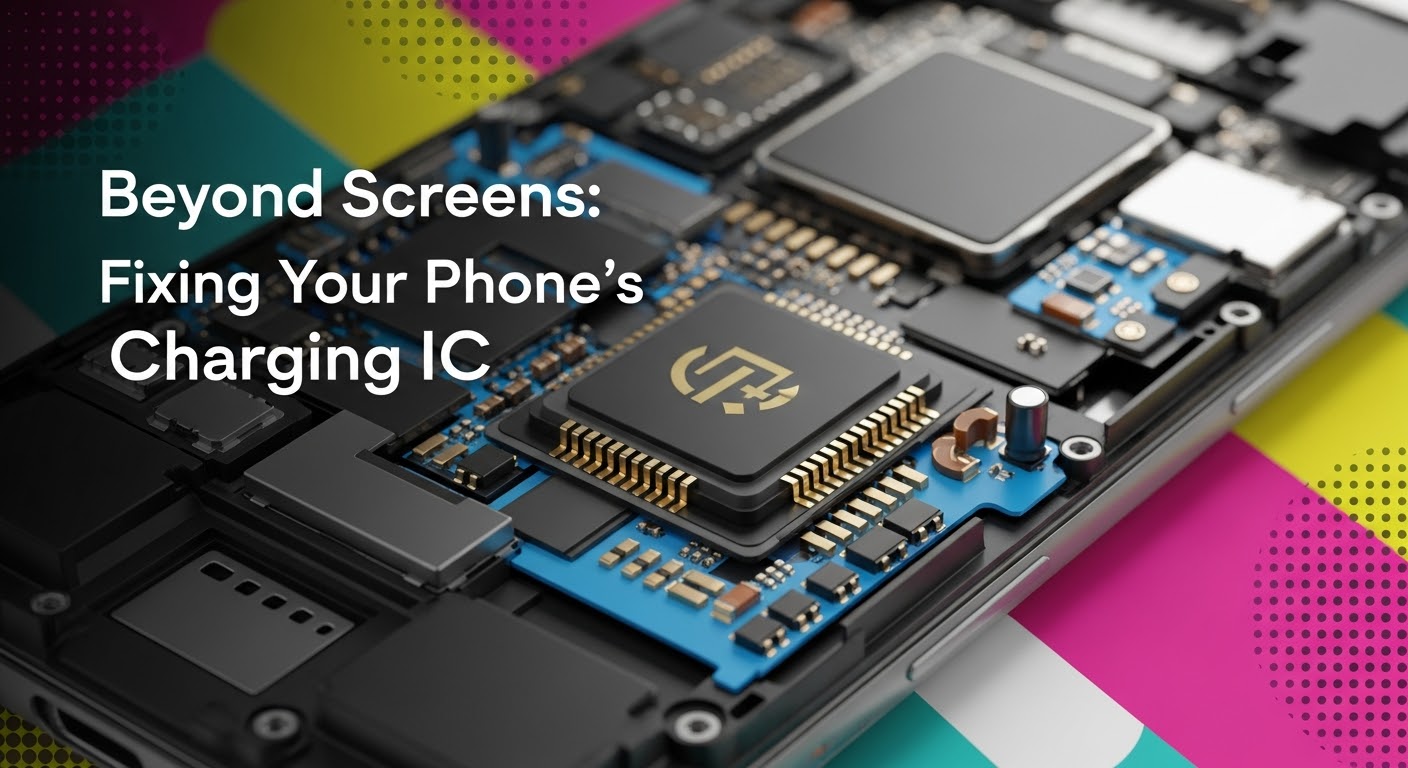
The charging IC (Integrated Circuit) is the brain behind your smartphone’s power management system. It regulates voltage and current from the charger, ensuring your battery charges safely and efficiently. A faulty IC can lead to charging failures, overheating, and even complete shutdowns.
In modern phones like iPhones, Samsung Galaxy, and Google Pixels, the charging IC is directly soldered onto the motherboard, making it a delicate yet critical component. Without it, your device simply won’t charge — no matter how many cables or chargers you try.

Signs Your Charging IC Might Be Damaged
Charging Issues and Slow Power Response
If your phone takes longer than usual to charge or doesn’t charge at all despite using different cables and adapters, it’s a major sign your charging IC could be failing. This problem often appears after a drop, moisture exposure, or power surge.
Device Overheating During Charge
Another red flag is excessive heat during charging. The IC is responsible for regulating temperature, and when it malfunctions, it can overwork, causing dangerous heat buildup that affects nearby components like capacitors and resistors.
Causes of Charging IC Failure
Voltage Spikes and Power Surges
Power fluctuations from unstable sockets or cheap chargers can burn out the IC’s tiny transistors. Always use genuine, manufacturer-approved chargers to avoid this common issue.
Liquid Damage and Corrosion
Even a drop of water inside your phone can corrode the IC’s connection points. Over time, this corrosion can lead to short circuits and irreversible board damage — a major cause of IC replacement in repair shops.
How Technicians Diagnose Charging IC Problems
Visual Inspection
Experts start with a microscopic inspection of the motherboard. Burn marks, corrosion, or lifted pads are strong indicators of IC failure.
Multimeter and Power Supply Testing
Technicians then use a multimeter or a DC power supply to test for irregular voltages. If power doesn’t flow to the battery despite correct input, the charging IC is confirmed faulty.
Fixing Your Charging IC: 7 Proven Methods
1. IC Replacement
Replacing the IC is the most reliable method. Skilled technicians desolder the faulty chip, clean the area, and install a new, genuine IC using precision tools. This process requires steady hands and advanced soldering skills.
2. Reballing the IC
Sometimes, the IC itself isn’t dead — it’s just poorly connected. Reballing involves removing the IC, replacing its solder balls, and reattaching it to the board. It’s an intricate task but can fully restore function.
3. Connector Cleaning and Rework
Charging problems might come from oxidized or broken connectors. Cleaning or re-soldering the charging port ensures proper contact with the IC, improving power flow.
4. Using a Heat Gun Properly
Controlled reflow with a heat gun can fix minor cracks or cold joints. Professionals carefully heat the IC area to re-establish connections without damaging adjacent chips.
5. Board-Level Repair Techniques
If traces or pads under the IC are damaged, micro-jumpering or track rebuilding can restore continuity. This is where experience truly matters — even one wrong connection can fry the entire board.
6. Firmware and Software Restoration
Sometimes, a software glitch mimics IC failure. Flashing the firmware or restoring system power controls can solve these without hardware replacement.
7. Full Board Replacement
If the IC and its surrounding circuits are too damaged, replacing the entire motherboard might be the only viable option. Though expensive, it ensures long-term stability.
DIY vs Professional IC Repair
While it’s tempting to attempt a DIY fix, IC repair is not a beginner-friendly task. It involves microscopic soldering and complex circuit knowledge. At Sydney CBD Repair Centre, professionals use advanced rework stations and genuine parts to ensure safe, lasting results — all backed by a 90-day warranty.
How Sydney CBD Repair Centre Fixes Charging ICs
At Sydney CBD Repair Centre, the repair process is precise and efficient:
- Comprehensive Diagnosis – Identifying the root cause before any action.
- Professional IC Rework – Using industry-grade soldering tools.
- Genuine Component Replacement – Only original IC chips are used.
- Post-Repair Testing – Ensuring the phone charges and discharges normally.
- Same-Day Repairs – Most IC issues are resolved in under 3 hours.
Their reputation — 6-time award winners and 2000+ 5-star Google reviews — speaks volumes about their service quality.
Prevention Tips for a Healthy Charging IC
- Avoid overnight charging. Continuous power inflow strains the IC.
- Use genuine accessories. Cheap chargers can cause voltage instability.
- Keep your phone dry. Moisture is the IC’s worst enemy.
- Regular maintenance. Have professionals clean and inspect your device periodically.
FAQs
1. What is a charging IC in a phone?
It’s a chip that controls how your phone charges and distributes power across components.
2. Can I repair a damaged charging IC myself?
Not recommended. IC repair requires special tools and micro-soldering skills.
3. How much does it cost to replace a charging IC in Sydney?
Prices vary, but Sydney CBD Repair Centre offers competitive rates depending on model and damage severity.
4. What are the signs my charging IC needs replacement?
Slow charging, no charging, overheating, or your phone turning off when unplugged.
5. How long does charging IC replacement take?
Most repairs are completed same-day, typically within 2 to 3 hours.
6. Does replacing the IC affect phone performance?
No — if done professionally using genuine parts, your device will function like new.
Conclusion

A faulty charging IC doesn’t mean your phone is beyond repair. With the right expertise and equipment, it can be restored to full functionality. For reliable, professional repairs, visit Sydney CBD Repair Centre — where quality meets reliability.
📍 Sydney CBD Repair Centre
🕓 Same-Day Repairs | Genuine Parts | 90-Day Warranty
🌐 https://SydneyCBD.repair/locate-us
📞 Call: +61280114119